Home Blog Page 407

Being a visually impaired student in the age of COVID-19

0
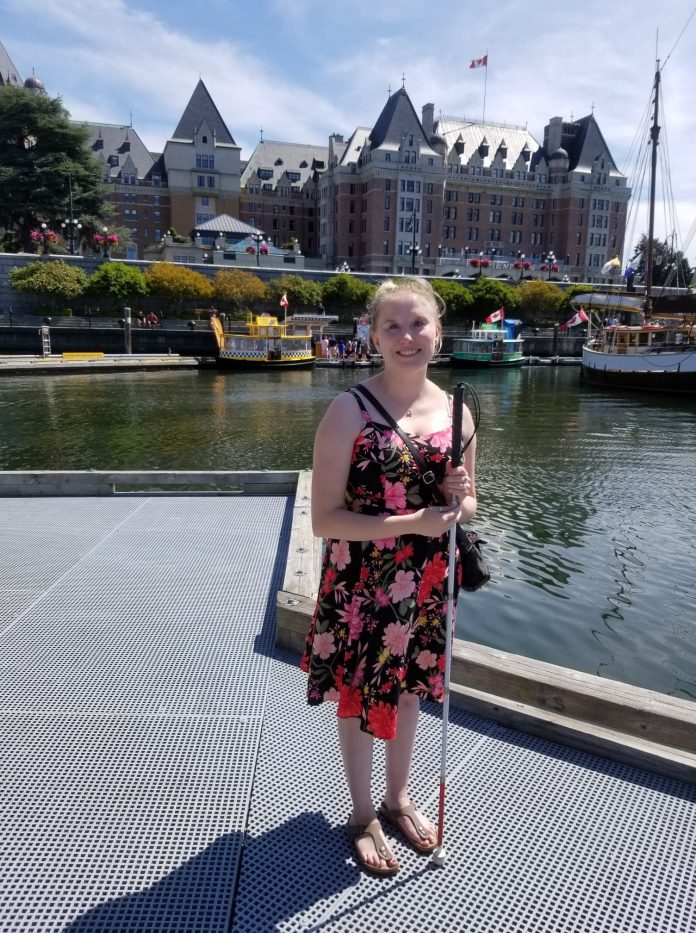
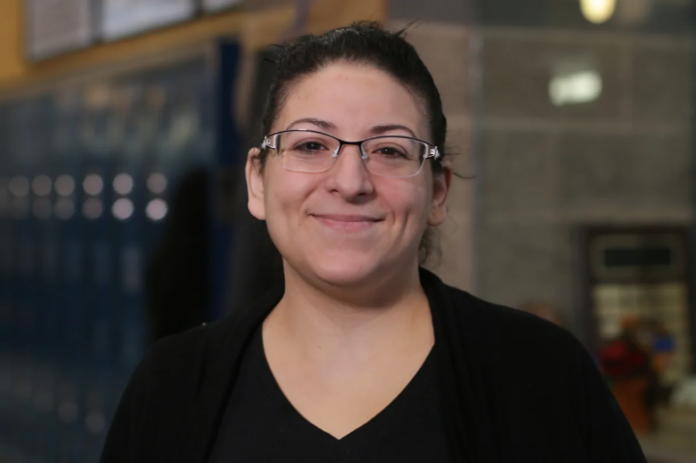
Courtesy of Jill Sloane.

By Gurpreet Kambo, Peak Associate

This article is part of an ongoing series about how disabled students have transitioned to remote learning and pandemic living.

“I’ve done a video editing course, I’ve done graphic design being fully blind,” said SFU Communication student Jill Sloane. “We found ways to make that work, which is pretty crazy if you think about it.”

Sloane has been blind in both eyes since the age of 15. As such, there are certain barriers to Sloane receiving the education that she wants, as life at SFU is designed for sighted students first. This necessitates that she receive accommodations from SFU so as to be able to overcome these barriers to education.

“It’s kind of fun to break the mold of what people think students with disabilities can do. Because like when you think of a blind person doing video editing or graphic design, it kind of shocks people,” she said, with a mischievous chuckle. 

Sloane does her visual design work with the assistance of an access aid, a person who is hired through SFU’s Centre for Accessible Learning (CAL) to assist disabled students. The aid describes the visual material to Sloane, who then directs the aid as to the changes she wishes to make onscreen. 

“She’ll start describing an image or something without me having to ask her now [ . . . ] So she’s just been a huge, huge help [with] all these different kind of courses I’ve taken,” said Sloane. 

Alongside the access aid, Sloane has a whole team of people who work to make SFU more accessible for her. This includes a caseworker, note-takers who take notes in class, transcribers who put reading materials in an accessible format for her. “They’re all willing to help me find a way to make whatever course work,” she said.

To make reading material accessible for Sloane, CAL scans her textbooks and converts them to a digital format for her, from which she uses text-to-speech software to study it. Images from readings must be noted and described manually by the transcribers however. Because of this labour-intensive process, Sloane tends to receive books chapter-by-chapter rather than all at once. 

“Sometimes it’s not soon enough. It takes me probably twice as long to read each chapter than sighted students,” she said. “So I don’t always get it done in time. So that was the main issue before the pandemic, the urgency of getting my course materials on time.”

On the topic of reading in Braille, rather than voice-to-text software, Sloane says “ I didn’t learn Braille until later on in my life, so I’m not very competent at reading with it. So I only really have the one option of electronic formats.”

On Campus Vs Online Student Life

Sloane had a bit of a difficult time adjusting to remote learning in the Spring and Summer semesters. “I don’t tend to really work from home very well,” she said, adding that she loved the experience of going to campus, and the social interaction of classes and campus.

This is despite the fact that Sloane frequently had trouble navigating campus, and finding classrooms. “What level [d]o I have to be on? [Are] there stairs or elevators? [ . . . ] Like there’s so many different things to consider, how to even get from one side of campus to the other [ . . . ] and there’s so many people,” she said. 

She added that frequent construction was also a barrier, “[e]specially when they don’t tell me it’s there. So then I walk into the middle of a construction site without even knowing [ . . . ] I [normally] use different landmarks, whether it’s like a different texture on the ground, or a different sound or something to kind of keep myself oriented to know where I am. So when they do construction, and take those away, I get really lost.” 

According to Sloane,  that part of student life has become much easier with remote learning. Despite all that, she prefers the on-campus experience. “I’m a very social person, so it’s weird for me to be at home so much, basically.”

Remote Learning Software

The online learning platforms that SFU uses has been a significant difficulty for Sloane. In particular, it is a challenge to take websites and software specifically designed for sighted persons, and find ways to make it accessible for a non-sighted person through other software.  

“Navigating around [Canvas] with all the keyboard commands, it’s so tedious and so frustrating. And it’s always been that way from, from my experience,” she said. 

With BBCollaborate, she found that the link sent out to the class to join a video session sometimes expired, and then she had a difficult time looking around the website for how to join it. “So then I have to ask a friend or the Centre [for Accessible Learning] or my access aid.”

Once one has joined the session, as BBCollaborate is an audiovisual platform, this poses its own set of accessibility issues. 

“Video is annoying because I can’t aim the camera very well. Sometimes I don’t know what the camera is pointing at. So then [professors] are always like, ‘why aren’t you on video?’” she said. “I can’t aim the camera so you’re gonna deal.” 

She adds that the chatroom that is available during video sessions, where students can ask questions, she is unable to access at all. Zoom, however, is much more accessible and less glitchy when her professors opt to use that for video sessions.

“There’s always some kind of accessibility barrier [to remote learning], which drives me insane. So even more so online now, because everything’s online,” she said “Lectures and discussion boards and posting assignments and like all the readings [ . . . ] Almost every part of the online aspect, there’s something that’s inaccessible.”

Pandemic Life

On overall feelings about how being a person with a visual impairment has changed in the age of COVID-19, Sloane has found it a challenging adjustment.

“I’m not comfortable taking transit on my own [ . . . ] because I can’t social distance from people, because I can’t see where they are, and I don’t trust people to social distance from me,” she said. “If I bump into [someone] or tap them with a cane, and they freak out because I’m not socially distancing, that is a big issue right now.” 

“People aren’t willing to guide me as much [ . . . ] like for example I went to a restaurant with a friend the other day. I usually go get the waitress to get me to the table, so I would grab onto their elbow and they would guide me through the tables. But she was uncomfortable with that so [what happened was] I’d grab one end of the menu, she’d grab the other end,” she said.

“So I almost like [being] more isolated at home because my independence is gone [ . . . ] People are a lot more hesitant to help you when they don’t want you to grab on to their elbow to guide you. It’s hard when you’re in a new place. It’s kind of hard for you to get around when you don’t know where you are,” she said. “Then you’re like, ‘what I do now?’” 

“It’s really taken my independen[ce] [a]way, and being someone with a visual impairment, independence is something that you strive for like basically your entire life.”
TransLink launches Phase 1 of Burnaby Mountain Gondola Transit project

2
PHOTO: Sierra M / Unsplash

Written by: Karissa Ketter, News Writer

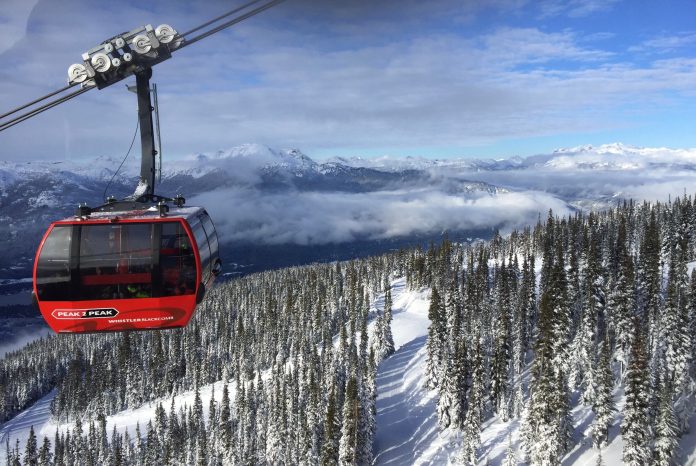
TransLink is working on Phase 1 of the Burnaby Mountain Gondola Transit project (BMGT). This centres around public engagement where commuters are asked to voice their opinions through a survey on their preferred route. Burnaby Mayor Mike Hurley noted that “this is an important opportunity for the community to have their say.”

“Public consultation will focus on the three proposed routes, including travel times, cost and environmental impacts, as well as neighbourhood interests such as noise, safety and privacy.” The survey will close on September 30, 2020. TransLink plans to begin Phase 2 of their Public Engagement Plan in late fall 2020 where they will “share route assessment results,” as stated on their website.

According to a report by the Simon Fraser Student Society (SFSS), 84% of SFU students prefered Route 1, a direct 2.7km route from Production Way-University SkyTrain Station to SFU Burnaby Campus. SFU students found this to be the best route in both “efficiency and effectiveness.” Students commented on the positive outcome of this route causing “the least impact on the Mountain grounds.” 

Route 2 received 13% of SFU student’s support. This route would be an “eastern route from Production Way-University SkyTrain Station with the gondola travelling along Gaglardi Way, changing direction at an angle station, and continuing to SFU Burnaby campus with the terminal near the bus exchange. No passenger boarding is proposed at the angle station.” TransLink also noted that this route may require tree removal, and other environmental impacts yet to be identified.  

Route 3 is the “western route from Lake City Way SkyTrain Station to SFU Burnaby campus, which would cross the Burnaby Mountain Golf Course, change direction at an angle station, and continue to SFU Burnaby Campus.” This route received 3% of SFU student support. 

TransLink is scheduled to submit their final report, which will include their official recommended route option, to the Burnaby Council and the Mayor’s Council on Regional Transportation during winter 2020. They are planning to have an Investment Plan and Project Approval from the TransLink Board and Mayors’ Council on Regional Transportation by early 2021. 

Community members can register for the upcoming Virtual Open House on the BMGT project on September 19, 2020 from 2 p.m. to 3 p.m. The public can also tune in to a Telephone Town Hall on September 22, 2020 from 7 p.m. to 8 p.m regarding the BGMT project. Both events will include a presentation and a live question and answer session with the project team. Registration and more information can be found on Translink’s website

SFYou: Annie Ohana, teacher and activist

0
Photo by Martin Diotte/CBC.

By Charlene Aviles, Peak Associate

Name: Annie Ohana

Pronouns: she / her

Departmental Affiliation: Bachelor of Arts in Political Science and Government (graduated in 2004), a Bachelor of Arts in Criminology (graduated in 2004), a Bachelor of Education in Curriculum and Instruction (graduated in 2011), and a Masters of Education in Equity Studies (graduated in 2018)

Hometown: Montréal, Québec

Occupation: Anti-Oppression Curriculum Specialist and Aboriginal Department Head at LA Matheson Secondary School

Three years after graduating from secondary school, I reconnected with my former teacher and SFU alumna, Annie Ohana. Ohana is involved in various clubs and projects ranging from charity fundraisers, such as the annual fashion show and performance showcase “Digging the Roots,” to her own social justice club “Mustang Justice.” During our interview, I realized that similar to three years ago, Ohana still continues to inspire students to become resilient in the face of adversity, donate their time to their communities, and be proud to attend LA Matheson Secondary School. Similar to this Surrey secondary school’s mascot, the Mustang, Ohana still embodies the strength required to pursue justice.

Reform in the Education System

Ohana is also actively involved with helping secondary school students to network with the BC Teachers’ Federation. This summer, students from Mustang Justice and the LA Matheson Black Student Union joined the Committee for Action on Social Justice, a panel formed by the BC Teachers’ Federation to express their concerns regarding racism in our education system.

Ohana reflected on the dynamics of student-teacher relationships and what these student panelists taught her.

“For anyone with a job that has power attached (to assess, to manage a classroom etc.), there are always blindspots. Being knowledgeable as to our content, we can forget that it is new for students, and naturally not as easy to pick up,” she said. 

Ohana explained that students’ life experiences have educational value, but a teacher’s unwillingness to connect with students “dangerously force students to disengage.” Students and teachers are interdependent, as they both learn from each other. Ohana admits that learning requires humility.

“At the end of the day, teachers need to see themselves as learners and allow students to teach us. A cycle of growth between teacher and student is much better than a top down approach.”

Inspired by the students’ involvement, Ohana acknowledges that this event is just the beginning of reform within our education system.

“I hope [students and teachers] understand that our system has yet to transform. We still have settler colonial, white [E]urocentric models that only tokenize not liberate.”

Ohana encourages other teachers to fight for reform and encourages them to “[t]ake the reigns and with student experience at the core, dismantle and rebuild education.”

Masked but Not Silent

Ohana actively incorporates social justice into all of her classes. In addition to teaching Social Studies and Social Justice 12, Ohana also teaches French and plans to use “masks with a message” for her French lessons.

During this pandemic, the use of face masks has increased and for some, masks have become a fashion statement. For Ohana, masks are a tool for activists to “spread awareness while stopping the spread of disease.”

When asked about her motivation behind collecting fabric face masks, she said, “Emergencies often lead to a silencing of voices. [I]mportant issues such as racial justice, 2SLGBTQ rights and so much more get pushed to the side. [A]s we need to wear masks, collecting non profit masks meant to aid the fight for civil and human rights seemed a natural way to bring is[s]ues forward. Our bodies our poli[ti]cial, the personal is political.”

Foreign language classes often focus on topics such as grammar and vocabulary. Ohana not only rises to the challenge of teaching language but also sees language lessons as an opportunity and platform to educate our students on languages’ role in colonization. 

“Teaching about colonization and the spread of languages which often erased original mother tongues is key in any language classroom. [T]he socio-pol[itical] historical realities in our world need to be taught in the context of languages.

My own knowledge of French is based on the French colonization of Morocco, and so the story must always begin from nuanced contexts of how we came to speak the languages we speak. English colonization of these Unceded territories of Turtle Island is the original reason why I had to learn English as well.”

A Call to Action

Younger students may be interested in electives such as Social Justice 12 but have less flexibility than senior students in terms of how many and which electives they can take. However, Ohana argues that  teaching anti-racism must remain a priority at all levels of the education system because it provides students with a solid foundation. She warns us of the danger of excluding anti-racist curriculum from other classes.

“Anti-racist practice and beliefs cannot be limited to one course. We need to teach from anti-racist perspectives and pedagogy throughout our school. From the codes of conduct we follow, the extra curriculars we offer, to each [and] every single course from Math to French and so on. [I]f you wait for one course, a lot of violence and prejudice will be allowed to exist.”

Ohana recommends that new secondary school teachers consult other teachers on how to teach anti-racist curriculum and learn from their students.

“I encourage teachers to explor[e] lived experiences and identities of [their] students, let their voices fill the room MORE than yours, do not fear opposition or difference, use it to create dialogue. Being anti-racist is a natural form of being. [F]rom how you set up your classroom, to what resources you use, encourage kids to critically analyze these realities and empower them to create the world they want to see through the application of the skills/content you are teaching.”

Most importantly, Ohana urges other teachers to “not be afraid to disrupt norms, what you are told to do or teach[ ] is not always best practice.”

Scholar Strike Canada: A cause for hope and a missed opportunity

0
Jennifer Kasiama’s words from “Emergence from Emergency,” a series of poetic installations in Toronto, curated by OCAD U’s Creative Writing Chair Catherine Black and instructor Ian Keteku, with student-artists: Jennifer Kasiama, Leaf Watson, Meighan Morson, Ehiko Odeh, Chris Markland.

By Harvin Bhathal, Features Editor

“Education isn’t about teaching students how to make the trains run on time.” said Min Sook Lee, Associate Professor at Ontario College of Art and Design University, during the first scheduled digital teach-in, Abolition or death: Confronting police forces in Canada. ”It’s about working with students to engage in the issues of our times.”

On September 9 and 10, 2020, academics across Canada participated in the inaugural Scholar Strike. The idea of the Scholar Strike originated in the United States, inspired by WNBA and NBA players striking following the criminal negligence of the Kenosha PD in shooting Jacob Blake seven times in the back. A tweet from Dr. Anthea Butler on August 26, 2020 set the wheels in motion for an organized labour action/teach-in/social justice advocacy.

The Canadian Scholar Strike was primarily organized by Lee and Beverly Bain, Professor of Women and Genders Studies at the University of Toronto.

According to the Simon Fraser University Faculty Association (SFUSA), “On September 2, the Canadian Association of University Teachers (CAUT) circulated a memo via email,” regarding the Scholar Strike. 

“I was glad to see a Canadian Scholar Strike being organized, and the teach-ins that came together over such a word window of time were incredibly powerful[,]” said Magie Ramirez, SFU Assistant Professor in the Department of Geography.

Over 2,000 scholars across Canada participated in the Scholar Strike, 34 of which are academics from SFU.

The aim of this Scholar Strike is summarized through a list of actions and commitments outlined on www.scholarstrikecanada.ca

  • “We must support the demands for defunding the police and redistributing those resources to Black, Indigenous, racialized, queer and trans communities for the creation of sustainable and healthy communities.  
  • We must support demands to remove campus police.  All agreements between policing institutions and universities must be rescinded. 
  • We must address the historic and current underrepresentation of Black and Indigenous faculty (full and part-time) in all Canadian institutions and press University Administrations to prioritize the urgency of these faculty hires. 
  • We commit to supporting meaningful efforts to recruit, admit, retain and mentor Black, Indigenous and racialized undergraduate and graduate students. 
  • We must support the campaign by CUPE 3261 to stop the University of Toronto from contracting out caretaking services thereby relinquishing its responsibility to safeguard secure and suitable paying jobs and health and safety of workers.
  • We must advocate for the creation, expansion, and maintenance of mental health and health care resources for students at our universities. 
  • We must support the demand for affordable education, sustainable jobs and housing for students and cultural professionals across all the universities.”  

A Missed Opportunity

“I would have liked to have seen more participation from faculty at SFU,” said Magie Ramirez, Assistant Professor at SFU. 

From over a couple thousand faculty members at SFU, only 34 participated in the Scholar Strike. In an interview with The Peak, the SFUSA went on record to state that no SFU faculty received any backlash for their participation. With full support from SFU President Joy Johnson in the form of a recent statement, it brings to question why more faculty chose not to participate.

Regarding those who did not participate, Johnson stated, “Other scholars may choose to incorporate these issues in their classrooms through teaching and discussion.”

Was it more effective to facilitate discussion within a classroom setting or to participate in an organized action aimed to highlight anti-Black and anti-Indigenous police brutality and violence that exists in Canada?

If education is about working with students to participate in the issues of their time, then facilitating discussion about important social issues already happens often in a university setting. Is another two days of facilitating discussion as a footnote in a lecture/seminar/tutorial more effective, or is it more effective to take an organized stand against the oppression of racialized groups?

The lack of full participation from SFU faculty and staff in the Scholar Strike calls attention to the theory of incrementalism, which in the context of social justice is a theory that values small-scale socio-political changes over time instead of large-scale. But in an effort to be ‘realistic’, incremental changes are fundamentally opposed to changes that will disrupt the status quo.

Incremental changes allow for the existing structures of power to adjust and adapt to the efforts to defund or abolish them.

In 2018, Canadain Prime Minister Justin Trudeau promised to work with Indigenous peoples for a new legal framework regarding Section 35 of the Constitution Act (1982), by October of 2019. Indigenous leaders, such as Neskonlith First Nation Chief Judy Wilson, were skeptical of his promises, noting an integral component left out of his speech — the Indigenous title to lands.

On October 24, 2019, the Government of British Columbia announced the introduction of Bill 41, Declaration on the Rights of Indigenous Peoples Act. 

Article 8(2) states that, “States shall provide effective mechanisms for the prevention of, and redress for: [ . . . ] (b) Any action which has the aim or effect of dispossessing them of their lands, territories or resources; (c) Any form of forced population transfer which has the aim or effect of violating or undermining any of their rights [ . . . ]”

Unfortunately, recent events such as the invasion of the Wet’suwet’en territory by the Coastal Gaslink pipeline and RCMP, and the continued construction of the Trans Mountain pipeline during the pandemic, show that Bill 41 is nothing but an incremental change designed for the Canadian Federal government to maintain control over Indigenous peoples.

Almost 100% of injunctions filed against First Nations by industry and governments involve resource extraction or development, and most are granted in their favour,” said Desmond Cole, during the teach-in Abolition or death: Confronting police forces in Canada, referencing a report from the Yellowhead Institute. What follows is the militarization of Indigenous lands, and criminalization of land defenders.”

This is not to equate the lack of full participation in the Scholar Strike to the Federal government actively oppressing Indigenous peoples. The point is, incrementalism will not produce fundamental change.

Considering the current climate and circumstances surrounding anti-Black and anti-Indigenous racism in Canada and the United States, SFU faculty members had an opportunity to participate in a country-wide action approved by the SFU President, and they lost an opportunity to advance this dialogue.

Advancing the Dialogue

Evelyn Encalada Grez, SFU Assistant Professor in Labour Studies, had the opportunity to be a speaker on the teach-in, Migrant Workers in Canada: Unfree Labour on Stolen Land. In an interview with The Peak, Grez provides a synopsis of the teach-in.

I presented about our work and knowledge about the structural and every[d]ay racism that migrant farmworkers are subjected to in rural Canada to the invisibility and indifference in mainstream Canada. Migrant farmworkers have been participating in government run guest worker programs since 1966 and form a part of Canada’s legacy of a white settler nation because workers are from the [G]lobal South and cannot claim permanent residency status in the country no matter how long they have been living and working here, basically they are permanently temporary in the country.”

“Our panel consisted of Adrian Smith, Ossgoode Hall Law Professor, Chris Ramsaroop, OISE PhD student and Min Sook Lee. Adrian and Chris are Justice for Migrant Workers, organizers. It was Chris actually who invited me to the farms on a fact finding mission to a town called Leamington, Ontario back in 2001 where we first met with migrant farmworkers and started to learn about their conditions of work and life. We never stopped going. Adrian has been an ally and organizer with us along the way, having an important role in the legalities of these guest worker programs and challenging the ways that the law allows for migrant workers exploitation and exclusions from basic human rights.” 

“Min Sook Lee has been coming out with us to the farms over all these years and she filmed two documentaries with our collaboration in rural Ontario, namely El Contrato and Migrant Dreams. It was the first time the 4 of us were in a panel together and we shared of our historic memory of the movement for migrant rights and many stories and analysis of what systematic racism looks like in the lives of migrant workers and their families too who we cannot forget in the configuration of agriculture and as part of our communities that we are connected to transnationally.”

A teach-in that stood out to Ramirez, an urban geographer whose work explores how racial capitalism, art-activism, and urban space intersect, was Two Crises: A Virus and Labour.

“Dr. Rinaldo Walcott’s lecture on [T]hursday resonated with me quite a bit regarding the anti-Blackness inherent in the university, and what this moment asks of us as critical scholars in pushing back against the recalibration that the university is doing in this moment of pandemic and mass uprising,” said Ramirez.

“I think this applies to faculty, but also more broadly to graduate and undergraduate students [—] the demands we make of the university are imperative and necessary as we work towards building more just futures.” 

While this was a missed opportunity to have a larger impact, it was still a historic strike according to Grez because it allowed them “to engage in these [discussions] beyond the ivory tower and reach a wider public [ . . . ] all the conversations were archived and we will be able to refer to them constantly over the next few weeks and months.”

“The discussions centered [on] the voices of BIPOC scholars and thinkers who often have to fight for spaces to be heard. Our voices get muted by a deafening liberalism imposing a type of respectability politics. Also, when we do speak we get dismissed for being biased or too angry while other[s] who are constructed as [W]hite can discuss issues of privilege and racism without the same backlash as many of [us] have experienced in our careers and activism. “

Ramirez notes that “there is a general feeling that we cannot return to “business as usual” in the wake of the global pandemic and the ongoing uprising against anti-Black violence and carceral systems.”

“[W]e need more knowledge sharing among us and to open the paywalls and borders of the university and communities to expand our spaces to reach more people and include more voices of those who have been excluded for too long,” said Grez.

For more information about the Canadian Scholar Strike, visit www.scholarstrikecanada.ca. To watch the digital teach-ins, visit their YouTube channel, Scholar Strike Canada

Student groups organize anti-Trans Mountain Expansion letter

1
Image Courtesy of Trans Mountain via Facebook

Written by: Mahdi Dialden, News Writer

Several student-led groups at SFU have collaborated in an attempt to stop the Trans Mountain Expansion (TMX) project. The SFU anti-TMX collaboration has “gained the support of 13 student unions representing over 180,000 post-secondary students in Canada and in the United States,” according to Iulia Zgreabăn, a member of the anti-TMX group called Justice, No Pipeline. 

The SFSS, Justice, No Pipeline, and DogwoodSFU have worked together to protest the project. They launched an initiative that started in May to write a letter urging Prime Minister Justin Trudeau to meet their demands. 

The main demands are to put a stop to the expansion project, honour Indigenous sovereignty, and “invest in Indigenous-led green infrastructure and green job-retaining initiatives.” The letter also urges Trudeau to start “implementing the call to action and the final report of the national inquiry into missing and murdered Indigenous women and girls,” according to Zgreabăn.

In an interview with The Peak, Zgreabăn explained the reasons for their stance on the issue: “Number one is that it undermines Indigenous sovereignty by pushing a pipeline through [their land], without the full consent of all concerned nations.

“It endangers Burnaby Mountain, including students at Burnaby campus [ . . . ] and it’s located 800 meters away from SFU. There are also two elementary schools nearby, which would also be in danger if in case of a spill or a boil over or similar events,” Zgreabăn said. 

Elaborating, Zgreabăn added, “It counteracts Canada’s climate change goals and endangers the environment [as] it would increase the amount of greenhouse gases in the atmosphere, and it also increases the risk of spills. And it just doesn’t make sense to invest in fossil fuels today to invest in renewable energy tomorrow.”

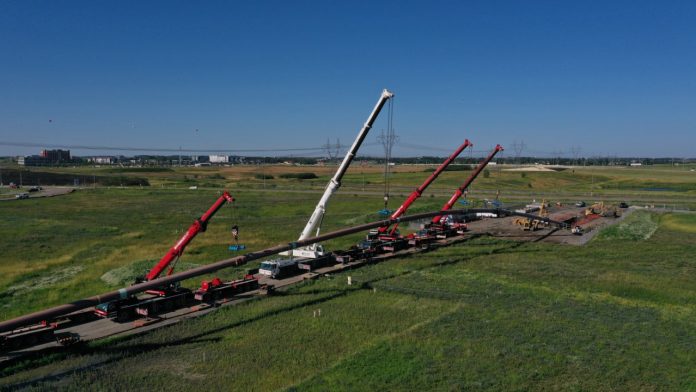
The Trans Mountain Pipeline is one that spans from Alberta to British Columbia, transferring oil to BC’s coast. The expansion aims to create a second pipeline almost parallel to the original, which will pass by Burnaby Mountain along the way. The $12.6 billion project will include 12 pumping stations and 980 kilometres of new pipeline.

In an email statement to The Peak, Trans Mountain said, “Since the beginning of the Expansion Project, we have had extensive engagement with neighbours, landowners, residents, and local businesses to ensure feedback is heard and respected. The safety of our people, our facilities, and the environment is paramount in everything we do.” 

The statement continued, “The most critical and responsible emergency management strategy is to prevent a spill from occurring. However, if there’s a spill, Trans Mountain is prepared to respond quickly with detailed emergency procedures and trained professionals.”

Tiny House Warriors, an Indigenous anti-TMX group, are leading an initiative to keep the pipeline from passing unceded Secwepemc territory. A statement on their website says, “We have never provided and will never provide our collective free, prior and informed consent — the minimal international standard — to the Trans Mountain Pipeline Project.”

According to Kanahus Manuel, a spokesperson for the Tiny House Warriors, “The Trudeau government does not have the right to put a pipeline through unceded Secwépemc land [ . . . ] To try to legitimize this illegal act, Canada uses what legal scholars call [ . . . ] misinterpretation of ‘consent’ which is inconsistent with Indigenous, constitutional and international law.”

Trans Mountain stated that they “respect the constitutional rights, unique culture, diversity, languages, and traditions of Indigenous People in Canada.” They added, “We acknowledge the significance of culture and language for Indigenous People and the considerable traditional knowledge that has been passed on for generations. Trans Mountain has signed Agreements with 59 Indigenous groups in BC and Alberta that represent more than $500 million in benefits and opportunities for Indigenous communities.”

The letter organized by the SFSS, Justice, No Pipeline, and Dogwood SFU can be found here.

A gondola will mean improved accessibility to SFU

0
ILLUSTRATION: Johanna Jucutan/The Peak

by Devana Petrovic, Staff Writer

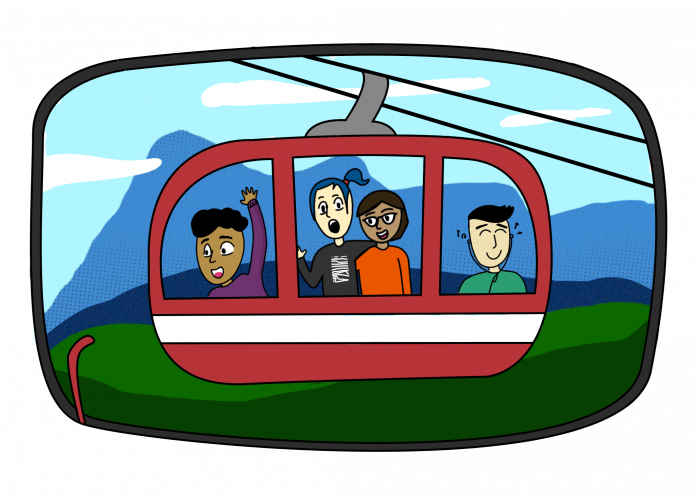
If you don’t fall under the miniscule category of students who have their own vehicle, snow tires, and are able to afford and find parking on campus, chances are that you’ve probably been through the horrors of public transit during a snowfall on Burnaby campus. The idea of a gondola as a solution to this annual disaster has been somewhat of a daydream for years now in the SFU community — the project has always been sort of just “up in the air,” and up until recently, it hasn’t really seemed like a priority. It has been clear that SFU students are struggling in many ways during the pandemic — a big one being financially. So, the gondola may not seem like an immediate priority in these times. However, it is still a necessary project that SFU should be considering to improve access to Burnaby Mountain and a project that has valuable long-term benefits. 

We don’t know what the future of the campus will look like in the next few years as we adjust to the “new normal,” but the long-term benefits of this project are undeniable and will serve future generations of SFU students. Some of these predicted benefits include improving transit reliability to and from Burnaby Mountain, cost-effectiveness, reduction in greenhouse gas emissions, and improved safety during snowfalls. There is a lot of uncertainty in these times, but the trek up Burnaby Mountain is a constant for SFU students. 

The 2018 Burnaby Mountain Gondola Transit Feasibility Study indicated that overcrowding, on-time performance, and bus bunching was amongst the worst with the 145 bus compared to all other bus routes, and that the Gondola Project could improve bus reliability at similar rates and average bus times as current bus services — while also improving transportation during harsh weather conditions. 

The study also outlined environmental objectives like reducing the overall carbon footprint that is left from the heavy usage of buses to and from Burnaby Mountain, and a plan for using sustainable materials and methods of operation. Budget estimates and specifics are detailed in the document, but it is apparent from the overall plan by TransLink, that the vision is to plan for the gondola to not only benefit (future) SFU students by not leaving them stranded on Burnaby Mountain during a snowfall, but the general public in the long run as well. 

While it’s still publicly unclear where all the funds for the gondola construction will be coming from, given that this is a TransLink project, it is unlikely that SFU students would be footing the bill through the dreaded tuition raises. Considering that virtually all on-campus SFU students and community members would benefit from this, even a small (and unlikely) financial investment on our part would be far outweighed by the long term benefits. Students still deserve the university’s support around COVID-specific barriers, but there is no reason that these supports cannot co-exist with the long-term goal of creating a more accessible and green campus for SFU’s future. After all, increased accessibility is a form of support for students as well and this gondola will benefit all of us in the SFU community. 

Not offering ASL classes is an accessibility issue

1
Courtesy of Dynamic Language

by Molly Lorette, Peak Associate

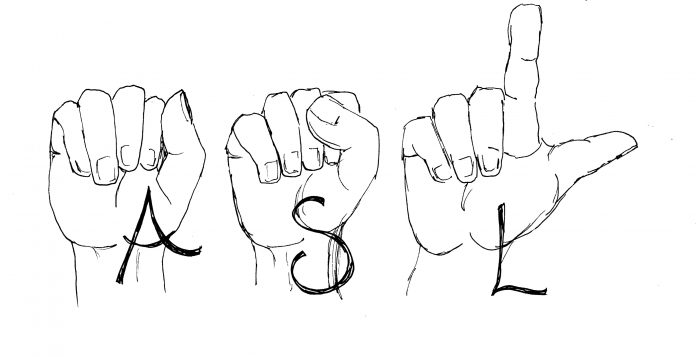
Personally, I think that it is absolutely atrocious that SFU does not offer courses to learn American Sign Language (ASL). Currently, VCC, UBC, and Douglas College have all taken steps to ensure further accessibility for their students, so why hasn’t SFU?

From personal experience, I took French in high school as well as in university. While having a basic knowledge of how to communicate in French helped me plenty when I was in a French-speaking environment, I have never had to utilize those skills when out and about in the Lower Mainland. On the other hand, I have had multiple occasions where I have encountered someone who was either hard of hearing or deaf, particularly in my customer service job, and I have had difficulty communicating with them. 

Granted, I’ve found a few YouTube videos online with some basic signs to use in a work setting, but I find that as soon as the time comes to use the signs I come up blank. This is because I have never had the opportunity to learn ASL in a classroom setting.

Beyond my own experiences, the lack of ASL classes at SFU goes farther than a communication barrier. It is completely an accessibility issue.

Look at it this way. If I were originally a French speaker, I always have the ability to learn another language, or I can navigate my way through environments with the use of Google Translate or other devices. For those with hearing impairments, however, the range of navigation is far more limited. While the spectrum of hearing ability is vast, there is not always the option to have hearing aids for some individuals, nor is there the ability to lipread given the current circumstances (though seriously guys, keep wearing your masks). What remains is communicating through one’s phone or through pen and paper, which cannot always be feasible in certain situations. 

Further, before the point gets raised: “Isn’t ASL just a way of speaking English with your hands?” ASL is a completely unique language which harbours its own grammatical and lexical structure, as well as certain words and phrases with no English counterpart. There are even several families within the sign language sphere depending on where you’re from! It is quite literally its own language and culture which undeniably warrants its own academic program. Students of such an academic program could even provide more potential applicants for a career as an ASL interpreter, which is currently high in demand. 

According to a CBC article posted in 2018, the population of deaf individuals living in Canada sat at 340,000, whereas the number of individuals who were hard of hearing sat at 3.15 million. 

To me, it’s clear that SFU needs to take the extra step and implement a program to bring ASL to a wider array of students, for both the sake of Deaf/hard of hearing individuals, as well as hearing individuals. 

Apocamoth Now

0

By: Paige Riding, Humour Editor

September 1 (Day 1):

Dear Diary,

New year, new me, baby. 

I don’t know what it is, but something feels funny about coming back to campus. I’m all settled in my dorm room, ready for the school year, but something feels — off. I’m not just talking about the COVID-19 stuff, either; it’s more like something is going to go south real quick. I bet it’s that physics class that Reddit said would be an easy B-Sci credit. Hmm.

Anyways, maybe it’s just the start of school jitters. I’ll try to keep a positive attitude.

September 6 (Day 6):

Dear Diary,

I think it’s going to be a great semester, despite the circumstances. My positive attitude is really paying off, I think. My roommates and I ordered boba and watched The Silence of the Lambs. What a classic!

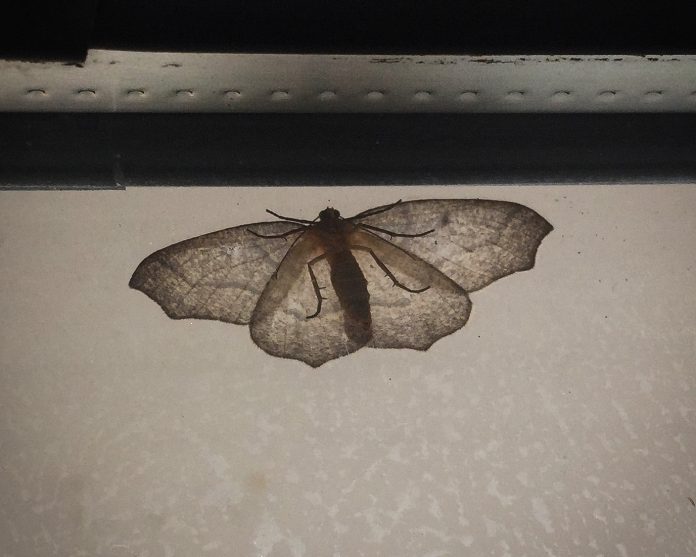
Awe, a little moth landed on my page as I write this! How cute. 

September 7 (Day 7):

Hey Diary,

Uh, this may sound weird, but I swear there are like four moths in my room just fluttering around. That doesn’t sound like a problem, per se, but they make me so uneasy . . . How did they even get in here when my window is closed? Ha, look at me, writing about moths. Who cares. They’re harmless.

. . . Let me just Google if moths can bite.

September 8 (Day 8):

I woke up when it was still dark out this morning to go to the washroom. I look out my window and all I see are moths! They’re everywhere. Streetlights just clogged. And why is it so smoky out? What the hell is going on?

I need to calm down. What could 2020 throw at me at this point that could hurt me any more? How could it get worse? It can’t.

Well, classes start tomorrow. Time to prepare.

September 9 (Day 9):

So, it turns out online courses fucking suck. I thought in-person tutorials were awkward when the TA asked a question and no one made eye contact. It’s much, much worse. I feel my morale resting at a zero right about now. At least there’s a cute little moth here chilling with m— wait.

September 17 (Day 17):

This is a warning to anyone planning on going to campus . . . don’t do it. It’s impossible to see. It’s like Margaret Atwood meets that one Shrek song that talks about the world being on fire. Yeah, it’s smoky as balls out. But on top of that are all the MOTHS. On walls, ceilings, doors, tables, floors — wherever you look: m o t h s. Dystopian novel content, man. It’s terrifying.

September 21 (Day 21):

My roommate Sara braved the cloud of smoke and moths to go do laundry yesterday.

She hasn’t come back since.

September 27 (Day 27):

I don’t have much time to write. The moths hijacked the campus. The lowered student population and campus security stood no chance. If you’re reading this, I have a stash of Oreos in the drawer under my bed. You can have them. Tell my mom I love her.

October 3 (Day 33):

The moths took over my Townhouse. I’m currently hiding in the adjacent laundry room. It’s littered with dead moths. All I have to eat are fabric softening sheets and Tide pods.

Wait . . . under those thousands of moths . . . is that . . . ?

Sara? 

October 27 (Day m o t h):

NO MORE HUMAN. ONLY MOTH.

Removing statues is essential in accurately recounting history and bringing justice for oppressed racial minorities

0
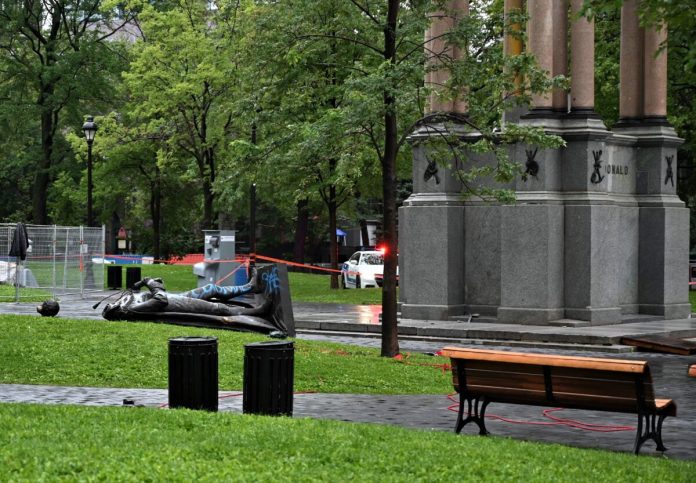
PHOTO: Eric Thomas / Getty Images

PHOTO: Eric Thomas / Getty Images

by Serena Bains, Staff Writer

A series of statues have been taken down and vandalized both worldwide and in Canada as increased attention is being brought to the racial injustices BIPOC face. A part of the movement has been identifying where power is currently held and how to effectively remove power from the police-state and its functions of upholding white supremacy, colonization, and capitalism. Statues are essentially symbols of these ideas which inform the status quo. Thus, the removal of statues is a preliminary step to address the inequalities created as a result of not only the individuals depicted, but the interests they were serving. 

An individual whose life’s work consisted of white supremacy, colonization, and capitalism was John A. Macdonald. The first Prime Minister of Canada’s statue was recently removed in Montréal by activists who cited his continuation and escalation of the genocide against Indigenous peoples as making him not worthy of being immortalized.

Those opposed to the removal of the statue, including Prime Minister Justin Trudeau, say that the action is one of lawlessness and vandalism. Where the perpetrators are not only criminals, but those looking to whitewash or erase history. Trudeau, who pledged his support to help implement the recommendations of the Truth and Reconciliation Commission in 2016, now apparently refutes actions consistent with the basis of the commission to dismantle the “paternalistic and racist foundations” that Canada currently operates from. 

The irony of whitewashing the history of an individual who more effectively implemented the cultural genocide of Indigenous peoples is staggering. Not only is the “history” that the offended parties are referring to inaccurate, but it is purposeful in its point of view emphasizing the systems in place that abuse minorities and glorifying whiteness The events that have actually been erased from history are the same omissions that allow an individual like John A. Macdonald to be idolized by the general population. 

The argument that removing a statue is an attempt to erase history is absurd as well. In Germany there are no statues of Adolf Hitler, but the history of WWII and the mass genocide that occurred is not forgotten. Rather, the history of his actions are taught appropriately.

In Canada, however, the history told of John A. Macdonald is one of a heroic arc. His story omits the past and present effects of the Indian Act and the creation of the colonial state of Canada. This revisionist history is present in textbooks written from colonalial perspectives, where the reader is asked to determine the pros and cons of an act that resulted in the genocide of generations. If someone refuses to believe the fairytale of John A. Macdonald being a brilliant leader and him purposely starving Indigenous peoples being congruent, is that individual erasing history? 

The removal of statues of abhorrent figures is necessary. They are a symbol of not only their actions, but the acceptance and idealization of the actions they perpetuated and the ideology those actions serve. Further, reconciliation is not possible when the founder of the colonial state of Canada and the pioneer of the residential school system, and thus genocide is seen as a figure worth memorializing. 


Students shouldn’t have to use their webcams in lectures

1

By Alex Masse, SFU Student

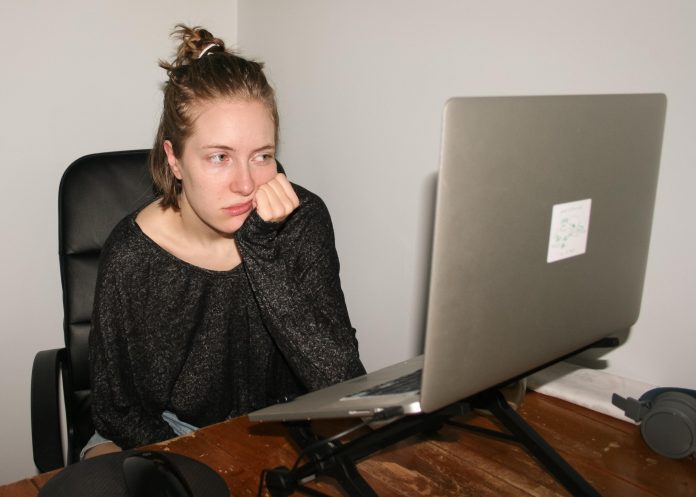
So, I’m neurodivergent. I won’t get into my whole medical history, but it means I do things differently — especially when I’m stressed. In case you haven’t noticed, this year has been stressful for literally everyone. What with the pandemic and all. 

Sometimes, stress causes me to have flare-ups of certain symptoms. For example, I might struggle with picking at my skin obsessively, which can leave me with blemishes. I also have a lot of fidget toys, which I often end up using so my idle hands are kept busy. 

In the old world, I had the strength to hide these habits, but that’s not the case right now. With all classes being moved to remote and Zoom lectures becoming the norm, it has almost become an expectation that students appear on camera for their classes — whether this is to simulate the sensation of being within each other’s presence in a lecture hall or merely for professors to see their students is unclear. What I am certain of, however, is that I don’t believe the use of webcams in lectures should be necessary and enforced.

I don’t want people to have to see me like this, and in the case of fidget toys, I don’t want to be a distraction to other students — or worse, get scolded for using them. Besides that, the idea of having to look camera-ready is a whole other stressor. That could mean so many different things! And as a woman, it makes me nervous: are we expected to put on makeup for an hours-long lecture in our bedroom? Because a lot of us get judged for showing up barefaced. 

Speaking of bedrooms, it’s also bold to assume everyone has some space where they can appear on-camera confident they won’t be disturbed. And even if they do have their own room, maybe they don’t want a lecture hall’s worth of peers seeing it. People are prone to subconscious biases, and a peek into everyone’s bedrooms is a minefield. Some rooms will be messier. Some will look poorer. Are we expected to put that on display and let assumptions fly? 

When I have a depressive episode, my room falls into disarray. I lack the energy to clean it. I kept going to school during these low points, but if school had included everyone getting a peek into my messy inner life, it might’ve been a different story. 

And truth be told, using a webcam simply won’t be viable for some people. They might have computers with webcams that stopped working ages ago, or internet that struggles when you broadcast yourself. Even I’ve had days where Zoom would lag and glitch until I turned my camera off. 

Professors really shouldn’t be forcing students to turn on their webcams. It’s uncomfortable, it’s pretty much a breach of privacy, and it opens up a whole bunch of potential subconscious biases. I just want to learn without facing potential judgement.