Home Blog Page 406

Grad Minutes: September 8

0
Illustration by @Reslus

Editors note: This article initially stated that the GSS would be moving into the Student Union Building (SUB) on October 1. This was a error, and it is the SFSS who will be moving into the SUB on October 1. The article has been updated to reflect this.

Written by: Michelle Young, News Editor

Approval of merging the benefit plan and benefit contingency fund 

The benefit plan, valued at $257,344.14 and the benefit contingency fund, valued at $242,932.64 at the start of the 2019/20 financial year, have been approved for a merge. 

Director of Finance Farina Fassihi explained, “The benefit plan is used for providing bursaries [ . . . ] but with the benefit plan contingency fund we need to pay increased premiums [ . . . ] so the idea is to merge these two funds and create more interest, which would mean more burarises.” 

Advocate and Policy Advisor Harjap Grewal added, “One of the things that we’ve heard a lot from people is that our benefits plan is very good, but [ . . . ] for things like mental health, [ . . . ] [they] often run out of the allotment of what [they] have under the plan fairly quickly.” 

The merger would allow for more students to become eligible for new bursaries “particularly [with] mental health,” according to Fassihi. 

The motion passed with 20 in favour and four abstaining.


“International Students Full Immigration Status for All” endorsement

In response to COVID-19, the Migrant Rights Network requested for the “restructuring of Canada’s immigration system.” The campaign was launched in July and calls for “a single-tier immigration system, where everyone in the country has the same rights.” 

Director of Academic Relations Rahil Adeli elaborated, “International students comprise of [a] considerable portion of the Canadian migrants with temporary status and they face many restrictions and unfair conditions because of their status [ . . . ] including access to scholarships and government grants [ . . . ] They can face detention or deportation for simple reasons like working too many hours, changing schools, or even failing a course [ . . . ] [This system results] in 1/23 people — which includes 1.6 million people — [without] access to fully labourised healthcare or income support.” 

The letter demands that “all migrants, refugees and undocumented people in the country must be regularized and given full immigration status now without exception. All migrants arriving in the future must do so with full and permanent immigration status.” 

The GSS voted in favour of endorsing the initiative. The motion passed with 20 in favour and four abstaining.


Completion of the Student Union Building (SUB)

Director of External Relations Matthew McDonald stated that the Student Union Building has been completed and that the SFSS will be moving into it on October 1. 

The next Graduate Council Meeting is scheduled to take place on October 13

SFU study on homelessness focuses on older adults

0
PHOTO: SFU Communications & Marketing / Flickr

Written by: Emma Jean, Staff Writer

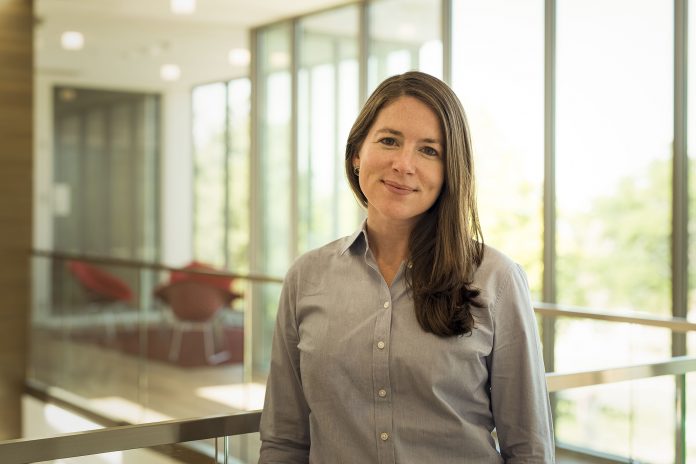
SFU adjunct professor Dr. Sarah Canham is leading a study that documents the causes behind the sharp increase of homelessness in people over the age of 55. 

Aging in the Right Place (AIRP) focuses on “housing for those in greatest need, which we defined as older people with experiences of homelessness,” according to Dr. Canham in an email interview with The Peak. She added that this age group in particular is very under-researched.

Dr. Canham described the necessity of treating homelessness as a multi-faceted issue with no one solution: “What ‘works’ for younger persons experiencing homelessness may not work very well for older adults. She added, “For instance, older adults are typically managing multiple challenges, including poor physical and mental health and/or the loss of loved ones and social support. As well, older adults are more reliant on fixed incomes and less able to keep up with the rising costs of living — and the costs of housing.”

The study is part of a greater research initiative called Collaborative Housing Research Network, with the intended goal of finding new information and insight into the housing crisis, as well as evaluating potential solutions to help bring it to an end. It is one of five projects within the greater Network across Canada.

While major research is yet to begin, Dr. Canham says that the preliminary research suggests a societal shift is needed to “advocate for housing to be considered a basic human right.” Additionally, the study suggests that different models of accessible housing will be necessary to decrease the amount of people living unhoused.

Dr. Canham notes that most older people require specialized housing regardless of income, often in the form of retirement communities and care homes, and that removing the income barrier would be a key practice to ensuring a healthier older population. “While housing and support models exist, they are most available to older adults who have the financial security to afford them. What’s needed, however, are affordable, accessible locations where older adults can safely live regardless of their income,” she said.

While the onus is on a collaborative group of entities to ensure housing for all, as Dr. Canham remarks, there are things anyone can do to make sure we get there: “Begin interacting with your elected officials and emphasizing the importance of housing and the need for there to be housing affordable to persons of all ages and all income levels. More housing needs to be built and this will require partnership and collaboration across multiple sectors — government, non-profit housing associations, senior-serving agencies, health authorities, and more.”

SFU offers sustainability program to bring fresh produce to students

1
PHOTO: ja ma / Unsplash

Written by: Karissa Ketter, News Writer

Editor’s note: a previous version of this article stated that the distribution schedule was on the Embark Sustainability website, while the sign-up for the program was on the SFU Food Hub website. This article has been edited for clarity to reflect that sign-ups for the Burnaby and Surrey campuses are on different websites.  

SFU’s Farm to Campus program supports local farming by purchasing discounted off-grade produce. They then distribute the fresh produce to students on the Burnaby and Surrey Campuses.

In an interview with The Peak, Coordinator, Civic and Community Engagement in External Relations Tara Flynn, said that at the Burnaby Neighborhood House, there were “quite a few SFU students [who] were coming down and [ . . . ] requesting food.” 

Ali White, Executive Director at Embark Sustainability Society, told The Peak that the project initially began last year, however, “Because of the pandemic [ . . . ] food security has been even more of a challenge for students.” 

Community partners such as Embark, TD Community Engagement Centre, the Simon Fraser Student Society (SFSS), and Offbeat Produce, amongst others, have worked together to organize the program. White noted that “food security is social sustainability” and “ensuring that [the] students are nourished” is a top priority for Embark Sustainability.

White said that this initiative combats local food waste. Due to preference for symmetrical produce in grocery stores, “Mounds of produce” end up “[rotting] on the fields.” In addition, local “farmers are often in debt or not making the proceeds that they need to sustain themselves because they are not able to sell a bunch of their crops,” according to White. 

Due to the restrictions set in place for COVID-19, Farm to Campus is currently operating out of the SFU Food Hub on the Burnaby campus and in the SRYE building on the Surrey campus. White outlined that their protocols ensure all volunteers are wearing masks, regularly using hand sanitizer, and maintaining distance. 

Flynn said that at Burnaby Campus, students are asked to “sign up a week in advance so that [they] know roughly how much food to bring up the mountain.” At the Surrey Campus, students can pay for a weekly subscription ranging from $3 to $8 to support the program. Volunteers separate and hand out food in brown paper bags to each student, limiting the amount of people handling the produce.

While the project is currently aiding between 25 to 75 people per week, it aims to expand in the near future, according to Flynn. She added in an email statement that while the Greater Vancouver Food Bank “makes up a very large proportion of the food that is given to students” they have a difficult time obtaining fresh produce. Flynn hopes to have the Farm to Campus Program, Embark’s Food Rescue program, and the GVBF run Food Hub through the SFSS to join together in a collective program, permanently bringing food to students. 

Students can sign up for Farm-to Campus Burnaby here, and Farm-to-Campus Surrey here

Community partners for the SFU Food Hub include: The SFU Office of Community Engagement, SFSS, Burnaby Neighbourhood House, United Way of Lower Mainland, GVFB, Offbeat Produce, Embark, Sustainability Office, and Food Systems Lab.

Community partners for the Farm-to-Campus initiative in Surrey include: SFU Surrey-TD Community Engagement Centre and Embark Sustainability Society, and is supported by the Plot Sharing Garden, Offbeat Produce, the SFU Office of Sustainability, and the SFU Food Systems Lab. Flynn gives special thanks to the Simon Fraser Student Society (SFSS) and SFU Surrey Administrative Office.

New Music Review: In A Dream by Troye Sivan

0
Courtesy of Universal Music Australia Pty Ltd.

By: Tiffany Chang, Peak Associate

After two long years since his last album, Australian singer Troye Sivan released his new EP, In A Dream, at the end of August. As a long-time fan, I was really excited to hear it. Sivan is primarily known for producing pop music with evident melancholic and autobiographical elements.

While many of the tracks on In A Dream include these elements, I found that none truly evoke the same kind of intense emotion as his first studio album, Blue Neighbourhood (2015) — a beautifully crafted masterpiece for songs combining heartbreaking messages and stunning tones. 

On In A Dream, the focus seems to be less on lyrics. Though “Take Yourself Home” possesses meaningful lyrics like, “Got everything and nothing in my life” and “Who you really tryna be when you see your face,” it concludes with a lengthy instrumental that, albeit interesting, extends for slightly longer than necessary. This takes away from the potential this song has in terms of having a stronger emotional impact. “STUD” is fun and includes just the right amount of sultriness. Nonetheless, the excess of added effects in its latter half ultimately cause a lack of overall cohesion.

“Easy” and “Rager teenager!” with their upbeat tempos remain the best and catchiest tunes on the EP. The pure nostalgia they evoke make them shine amongst the rest. As well, “Rager teenager!” is the closest to Blue Neighbourhood’s storytelling level as Sivan fluidly describes an incident where encountering a person he hasn’t seen for years causes him to want to relive the fun he had as a teen. “IN A DREAM” is also fast-paced, and the component of In A Dream that gives Sivan the most room to showcase his vocal prowess.

Undoubtedly, Sivan consistently speaks his unapologetic truth through quality tunes. What I love the most about him is how his distinct, ethereal sound encompasses cool textures and gives off vibes that I don’t feel from any other chart-topping artists. Although In A Dream is not my favourite project of his, listeners can always count on him for refreshing contributions to the music scene. 

Opinions in Dialogue: Importance of incorporating Black history into education

1

Editor’s Note: Names used in conversation have been changed for the sake of anonymity

As Black Lives Matter protests continue in the US as well as here in Canada, the questions of ways to bring more awareness to the oppression Black Canadians have faced comes up. Education is one way to do so, but school curriculum currently doesn’t include Canadian Black history — or at least, not to the extent it should be taught. Why is it that the education students in Canada are given does not include the oppression Black people?


Manisha: I was having a conversation the other day with Rick, a caucasian male in his 60s, who had questioned why I went to the Black Lives Matter protest in Vancouver in June. I simply said that it’s because I support the movement, which led to a conversation about the racism Black people face in Canada. He stated he didn’t think Black people face racism and discrimination in Canada anymore. To this, I was bewildered. I listed off all the various reasons on how racism and discrimination against Black people is still prevalent today. He seemed super unaware of this information, and when I brought up racism against other ethnic minorities like Indigenous peoples, asian people, etc. he acknowledged that he was aware of the atrocities that these groups faced in Canadian history like residential schools, the Komagata Maru incident, and the Japanese internment camps. He had stated that what those people went through was horrible . . . but why did he not acknowledge the atrocities Black people have faced? 

It dawned on me that this was not out of complete ignorance on his part, but the lack of education. He hadn’t heard or learned about Canada’s racist past towards Black people so he therefore didn’t think it existed or is a problem in today’s society though he does acknowledge racism against Black people in America is a huge issue. Lack of education on this subject has led to unintentional ignorance in some and intentional ignorance in others. 


Shina: Well, I think that Canada likes to uphold its reputation of not being a racist country. This goes back to the perception that Canada didn’t contribute to slavery — atleast to the extent that the States did. To uphold that and keep that reputation they prevent adding Black history to school curriculums. By upholding this reputation the country is achieving what it wants, which is for people to believe that Canada isn’t a racist country but also to prevent people from learning about Canada’s racist past. 

When you consider that racism has existed for hundred and hundreds of years and that segregation was legal when my father was a child, residential schools had legally been forbidden only in the mid 90s. To say that racism no longer exists would be to suggest that racism is resolved and we’re done with that in a matter of about 25 years. If that sounds ridiculous, that’s because it is. 


Manisha: I agree, it is extremely ridiculous. We see the impacts of Canada’s racist past still today and the years of trauma being carried from generation to generation. The whole point about learning about history is to learn from the past and to educate ourselves so the same mistakes are not repeated. Canada as a whole cannot learn from the past if we continue the pretense that we ourselves do not have a dark past entrenched in racist policies, laws and ideologies. And just because the States’ racist history against Black people is so much more atrocious then that of Canada’s does not mean Canada does not have a racist past and that Canada is pardoned. 

Canadian’s need to be aware of this past so we can work towards making a better today and a better future for all Canadians — including Black Canadians. Including Black history in the curriculum would make it harder for Canadians to turn a blind eye to the injustices the Black community faces. This inclusion in our education system would help spread awareness on a subject many people may not really even think is an issue.


Shina: I remember one of my teachers mentioning that we need to learn history in the hopes that we never repeat it. I would like to add that it is also important to understand our nation’s past so that we can better appreciate the land that we reside on, and how it was built on the torturing and killings of not only the majority of indigenous peoples, but also Black people that were brought over as slaves. Having the right to learn about this history is not only beneficial for unaffected racial groups (such as white people) but also for the affected racial groups as well. Black and Indigenous people deserve to know everything their ancestors endured and the differences they made throughout history especially during the Civil Rights movement. When we are unaware of this history, we do not understand who we are. 


Manisha: I’d just like to point out that for those who do not believe that institutionalized racism or systemic racism in Canada isn’t a thing then they need to look back at Canadian history and recognize that there were members of parliament who were slave owners. These people who are supposed to govern people and encourage democracy are more concerned about making money fast through cheap labour by enslaving people. It’s inhumane and disgusting and it still happens today. 

The whole power dynamic between white people being in high status positions and ethnic minorities still not being a significant percentage in powerful positions is evidence towards the effects of systemic and institutionalized racism. There is still this belief that coloured folks are not smart enough, not good enough and that is just not true. I think some people don’t even realize how deeply rooted these racist and discriminatory beliefs are in our society.


Shina: For instance, from childhood up until age 15, I absolutely hated my 4b type hair (I am a Black woman). I genuinely believed for the longest time that straight hair was synonymous with beauty and anything “kinky” was undesirable and unkempt. Now that I am an adult and have done more research, I finally learned about the reasons why I hated myself and my race. 

When several Africans were being stripped from their homes and taken aboard on slave ships, their abusers did not understand their hairstyles because it was far too unique and therefore were forced to shave their heads. Since the slave era, Black people were shamed for their natural hair and any other physical features that did not resemble Eurocentric features. In fact, in the 1700s, the Tignon Laws banned Black women from displaying their hair in public because the beautiful hairstyles were deemed to be socially threatening and distracting since it attracted many White men to them. Had I been taught this painful past in my classrooms, my self-perception would have been very different and I probably would not have felt as insecure as I did at the time.


Manisha: Look around us, there are so many different cultures and ethnicities present here in Vancouver and in general all over Canada. Of course it is going to look like we’re multicultural and we are — but not in all aspects. The education we are taught in Canada does not excel when it comes to teaching about oppression, Black history, and even on indigenous peoples. I have to say I had not been taught an ounce of Black history throughout high school at all. Most of what I have learned about Canada’s history in terms of Black history is from other sources like the Canadian encyclopedia. They have tons and tons of information. Information that should be taught in schools, to help anti-racism efforts and to bring awareness to people who do not face discrimination and racism. 

Canada needs to step up and take ownership for its past.

Exploring space and place with SCA MFA’s work-in-progress exhibit

0
An image of Ybarra from her exhibit Archive of Embodied Displacement. Photo courtesy of Faune Ybarra

By: Devana Petrovic, Staff Writer

For their fall exhibition this year, the SFU School for the Contemporary Arts’ (SCA) second-year Master of Fine Arts (MFA) cohort is presenting their works-in-progress show online. The exhibition, within & outside, is based on how creating art during the COVID-19 pandemic has led to a renegotiation of how art is communicated, particularly through individual screens. As the description states, “In within & outside, we share the ongoing adaptation of what could become our graduation projects understanding that they might be experienced by a ‘new audience’ moving forward.” 

The exhibit highlights the multimedia projects of Rahul Bader, Jean Brazeau, Charlie Cooper, Karla Desentis Rodríguez, Aakansha Ghosh, Somayeh Khakshoor, Giselle Liu, Mansi Patel, C. Olivia Valenza, and Faune Ybarra. Many of the pieces explore in their own way movement through spaces or time. They renegotiate how to interact with an audience that can no longer experience their art other than through a screen. So this being said, the entirety of the exhibition is made up of works that explore art through sound, videography, photography, or any other creative forms. 

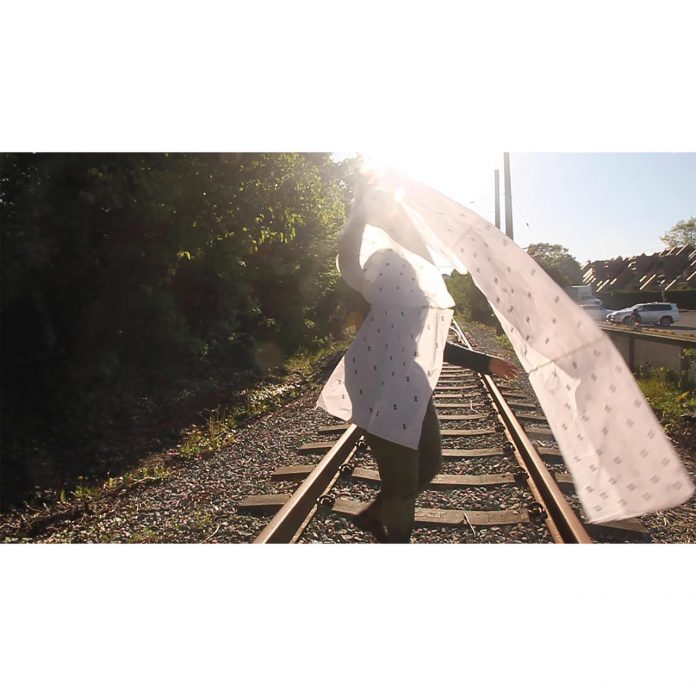
One of the works by Ybarra’s, Archive of Embodied Displacement, looks at the diasporic experience and the movement across spaces through migration. The projects are primarily photos and videos that explore time and places, and the role that history plays in immigration and displacement. I found it particularly fascinating how these works include a collection of archived pictures of the Canadian East and West Coast, that are contrasted with the artists’ personal artistic modernity. Ybarra describes it as “actions to ground oneself to the currently inhabited land [ . . . ] a conversation with the book Through Newfoundland with the Camera, published over 100 years ago, responding from the new land I’m trying to adapt to, Vancouver.” There are several other fascinating works that explore concepts like the one Ybarra has tackled in a contemporary form, all of which are worth exploring. 

Another work, by Cooper, uses sound as a means of communicating art. The Neighborhood is an installation of sounds picked up by microphones and natural radio receivers, which Cooper had set up in his community park. In the audio clips, sounds like that of insects, small animals, and rustling of plants can be identified, while there are also other mysterious noises that are less auditorily identifiable. As described on his website, “Charlie’s work encourages listening as a means of understanding and appreciating the world we live in.”

As we find ourselves engaging online more than ever and using social media to connect in innovative ways, this exhibition and its medium come at the exact right time. The online medium communicates the changing times and the ways we’ve had to renegotiate engagement and connection. 

Many of the installations in this exhibit explore the concepts of place and space. These are concepts we have had to navigate in the last few months as many of the spaces we once moved in became virtual. We have had to ask what this means for our education, for connections and interactions, and for how we move through the world. This exhibition also asks how we can experience art through a screen and what this means for art and for the experience of visual arts. 

within & outside is running from September 1 to 30 and is taking place online and on Instagram. For a fuller and more gallery-like experience, I recommend checking out the exhibit on the SCA’s website as the instagram page is also used for alternative posts. 

Need to Know, Need to Go September 21-27

0
Illustration of a blue calendar, with "Need to Know, Need to Go" written on top
Arts & Culture events to catch around the city. Image courtesy of Brianna Quan

By: Charlene Aviles, SFU Student

18th Annual Renfrew Ravine Moon Festival | September 1–27 | Online and Renfrew Park @ 3690 Vanness Avenue, Vancouver | Cost: Free except for Lantern Workshops

The Renfrew Ravine Moon Festival is back to celebrate the “full moon, harvest abundance, and diverse cultural traditions.” Enjoy origami lessons and dance performances via livestream, as well as lantern workshops, live music, and moonlit walks around the Renfrew Ravine — one of the only places in Vancouver with an open stream. Workshops offered will include Indigenous knowledge on water conservation and harvesting. For in-person events, registration is required with a maximum party of five people. Donations are encouraged.

Vancouver International Film Festival (online and in theatres) | September 24–October 7 | Cost: $9–$15 

The Vancouver International Film Festival (VIFF) is offering over 100 feature films both online (available via VIFF Connect) and in-person at the Cinematheque and Vancity Theatres. Films being screened span a variety of genres including horror, drama, documentaries, animation, and romance — various topics/themes are covered such as Indigenous storytelling, bullying, and more. Digital screenings can be purchased for $9 while tickets for in-person screenings start at $15. This festival is age restricted with viewers needing to be 18 years of age to watch. In addition to films, VIFF is offering a variety of talks and events such as Totally Indie Day during which VIFF invites attendees to learn more about the behind the scenes action of cinematography and the film industry from leading experts.

Surrey Fusion Festival (online) | September 25–October 25 | Cost: Free

The City of Surrey is hosting a cultural festival showcasing different foods and music from around the world. Visit each country’s pavilion online to learn more about their cultural heritage. The festivities include a wide variety of performances, cooking videos, and much more. To kick off the festival, there will be a livestream on September 26 from 10:30 a.m. to 12 p.m. on Facebook and YouTube Live. 

Monday Music: Songs with overt political messages just loud enough to ignore

0
"Monday Music" in giant yellow block letters with a red background
Monday Music: your weekly themed playlist. Image courtesy of The Peak.

By: Serena Bains, Staff Writer

Politics in music has always been present, especially in the punk, rap, rock, and metal genres. However, anytime a political artist makes a statement about the politician they are supporting that is consistent with their political ideology, there is significant backlash. This backlash comes from fans who must have been listening to the music for the sound, while ignoring the overt political messages in the lyrics of the artist’s repertoire. So, if you are looking for songs with overt political messages that are just loud enough to ignore, or maybe even pay attention to, give these songs a listen.


“Testify” by Rage Against the Machine

Courtesy of Epic Records

Written ahead of the 2000 U.S. presidential election, the war in Afghanistan, and the war in Iraq, this song was something of a premonition of the United States’ continued imperialism in the Middle East. The rock song became an anthem of a series of protests which preceded and succeeded the 2000 election. Which made it all the more surprising in 2020, when conservatives were shocked to find out the band’s political views were antithetical to theirs. What machine did people think they were raging against exactly? 


“White America” by Eminem 

Courtesy of Aftermath Records

Eminem is no stranger to controversy, given the misogynistic and homophobic lyrics that were especially prevalent in his earlier works. “White America,” which was released in 2002, provided a more conscious perspective that was previously limited. The song, which speaks to Eminem’s success being a result of his skin colour rather than his skills as an MC, was one of his first overtly political tracks. In 2017, the Detroit rapper made his stance against racism known to his largely white audience, when he drew a line in the sand between his fans and people who support Trump.


“Holiday” by Green Day

Courtesy of Reprise Records

The band best known for “American Idiot” wrote “Holiday” in response to the war in Iraq. The song, which compares George W. Bush to Hitler, speaks to the military-industrial complex and people’s apathy regarding invading a sovereign nation, was the most politically charged song on the album. Yet somehow, the band’s political views were still unclear to some when the band’s frontman Billie Joe Armstrong told supporters of Trump, “Don’t listen to my fucking records.”


If you are looking for more songs that have loud political messages, but have not had outrage expressed at them just yet, check out the following:

“Parasite Eve” by Bring Me the Horizon

“Greater Omaha” by Desaparecidos

“JU$T” by Run the Jewels

Two recently launched food trucks worth noting for their creative and delicious fare

0
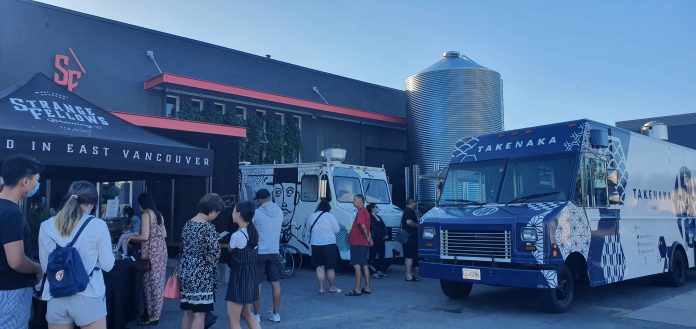
Line ups at the new Takenaka truck. PHOTO: Sara Wong / The Peak

By: Sara Wong, Peak Associate

Food trucks are one of very few businesses that have flourished in Metro Vancouver despite COVID-19. The purpose of food truck fare is to go with takeout-friendly menus and none of the seating angst. Additionally, as the weather has become warmer and COVID-induced restrictions have subsided, Vancouverites have happily embraced the outdoors (pre-smoke) and headed to the parks and beaches, where food trucks can easily sell their cuisine.

Even before 2020, Vancouver had a great food truck scene, the popularity of which has only increased over the years due to social media. Now, in the midst of a pandemic, an influx of new food trucks have materialized. Two newcomers to the food truck scene are Crema Ice Cream and Takenaka.

Crema Ice Cream 

Latin and East Asian fusion ice cream. PHOTO: Sara Wong / The Peak

Crema is owned and operated by Heidi Arellano and Joe Lee, life and business partners. They offer unique ice cream flavours that celebrate the couple’s Latin and East Asian heritage. Currently, the menu consists of three seasonal flavours — mangonada (a take on a popular Mexican street food that combines the sweet, refreshing taste of mangoes with the spicy kick of Tajín Chamoy), coconut passionfruit, and tres leches (milk) and berries. They also have three regular flavours: cafe con leche (AKA Spanish coffee), milk tea, and vanilla chocolate chip. There are also new, limited edition batches being thrown into the rotation as more recipes are perfected. 

Locations for the food truck vary from week to week, so you’ll have to keep up with their social media to know where to go. Crema is also at the Burnaby Artisan Farmer’s Market on Saturdays. They charge $5 for a single scoop and $7 for a double; cones cost $1 extra. While these prices are on the higher end, they’re comparable to what Earnest Ice Cream and Rain or Shine charges, and the quality of Crema’s ice cream is on par with these two places. Trust me, once you taste the bold mangonada flavour (my personal favourite and the one I would recommend the most), that’s all you’ll be focused on.

Follow them on @cremaicecream on Instagram and Crema Ice Cream on Facebook.


Takenaka

Fancy sushi on wheels. PHOTO: Sara Wong / The Peak

Making sushi is an art, one that takes a delicate and precise hand in order to master. You can imagine how surprised (and a little skeptical) I was when I found out a food truck specializing in high-end sushi (think uni or wagyu beef) was coming to Vancouver. The chef and owner — or as I like to call him, mad creative genius — behind this concept is Shogo Takenaka, previously associated with Kingyo Izakaya and its sister restaurant, Raisu

The Takenaka food truck opened for business at the end of July, and has had a steady lineup of customers every week since, in part because of continuous hype over social media. The truck operates from 4 p.m. to 8 p.m., Friday through Sunday, at different breweries around East Vancouver. When I visited them, it was early August and they were at Strange Fellows Brewing. After an extensive number of dishes, both hot and cold, based on taste, portion size, and cost, I found the best deal to be the bara chirashi bowl ($16.50). If you’re a fan of poké, you’re definitely going to like Takenaka’s chirashi. Layers of rice, sashimi, and various toppings combine to give you bites with varying textures that invite you to keep digging for more. The seafood is plump and fresh, the rice is perfectly cooked, and the presentation is absolutely breathtaking.

Follow them on @takenaka_yvr on Instagram and Facebook.

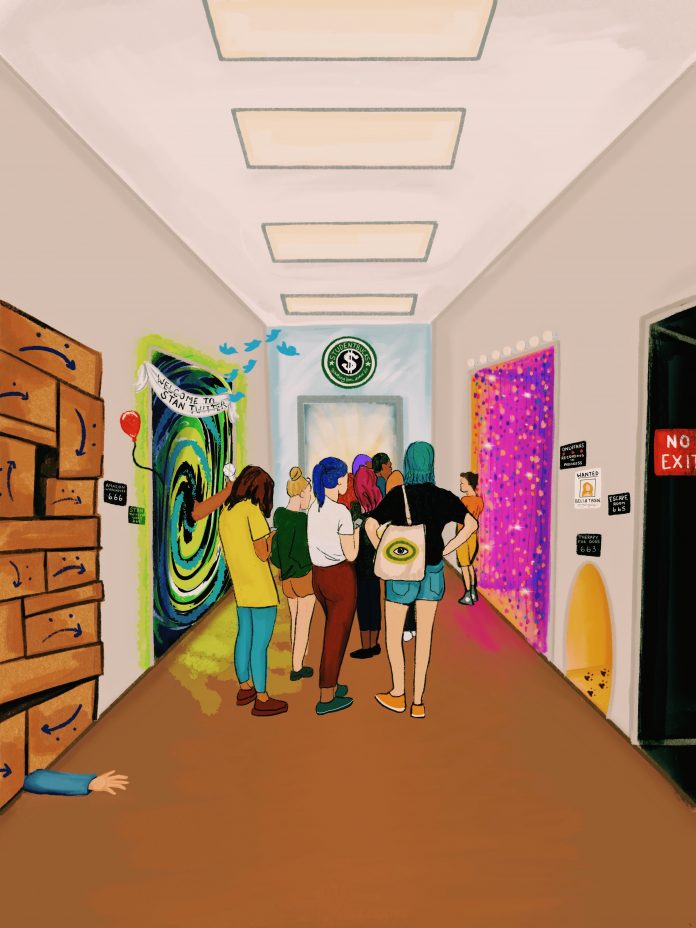
Rejected ideas for the Student Union Building (SUB)

0
Illustration: Heather Wootton / The Peak

By: Juztin Bello, Carter Hemion, Emma Jean, Paige Riding, Nathan Tok, and Sara Wong

Escape room (By Juztin)

As any SFU student knows, being on campus is already kind of like being in an escape room: you’re anxious, have the overwhelming need to escape, and you can’t help but feel like you’ve wasted money on being confused in a room for 50 minutes. It might be nice to have a room where your intelligence and patience are tested by your adaptability to an environment and your success depends on the skills of the people around you. But then again, something like that already exists: it’s called a tutorial room.

PROS:

  • A good way to escape your other problems 
  • Quirky photo opportunity with definitely-not-cringey “we did it!” Or “we tried!” signs 
  • Can potentially indulge in your secret Stockholm syndrome kink 

CONS:

  • Your needs for assistance will most likely be ignored (thankfully, if you’ve been a student here long enough, you’re used to it by now) 
  • You get very little in return for having to think
  • You’ll have to pretend to be interested in escape rooms
  • Who actually enjoys doing escape rooms?

OnlyFans filming room (By Carter)

After walking in on peers having sex in the occult sciences aisles of the library, being emotionally ruined by hearing my dorm neighbour and his girlfriend banging while the only thing I’m banging out is an English paper due in 14 minutes, and struggling to get the best lighting for my own nudes without a friend showing up at my door for an impromptu study session, I propose a solution to everyone’s problems: an OnlyFans filming room. 

PROS: 

  • Encourages sex positivity, unlike most of SFU.
  • Increased safety for sex workers by reducing in-person meetups with that weird guy who lives on Commercial Drive named Kris.
  • Supports student jobs so that less students apply to suffer as TAs.
  • Keeps fans home and masturbating instead of going out and prolonging this damn pandemic with mediocre hookups that are not worth the risk whatsoever.
  • Increased solo sex means less pre-marital sex! Less unwanted pregnancies and STIs so even the evangelical Neo-Nazis can’t protest it.

CONS: 

  • Bella Thorne may find her way to SFU and take the room from us.

Stan Twitter war room (By Emma)

You know ‘em, you love ‘em, you see ‘em in the replies of every goddamn tweet. For the army that has everything, I propose that the SUB gifts Twitter stans a war room built for plotting their next moves and canceling their rivals. With laptops and deluxe albums (poster included!) as far as the eye can see, they truly keep winning. #StanLoona.

PROS: 

  • Collaborations result in the best fancams the world has ever seen.
  • With the ability to stream like never before, all fandoms get to number one.
  • Can pivot to political organizing if necessary. If anyone knows how to win a poll, it’s them.
  • Keeps the BTS fans in one controlled environment.

CONS:

  • Their resources and teamwork may make them too powerful, resulting in a campus take over. Move over, Petter. Megan thee Stallion’s hotties are invading. There’s a war in this house. There’s some whores in this house.
  • They may literally kill each other. Someone will say Future Nostalgia is “kinda overrated idk :///” and all hell will break loose. One group will overpower the others, creating a brutal authoritarian rule. All hail Dua Lipa. 

Amazon warehouse (By Paige)

As if students grinding out two minimum wage jobs don’t get exploited enough, let’s continue lining the pockets of CEO Jeff Bezos with an Amazon warehouse conveniently located where students desperate to keep up with tuition hikes for an online semester reside. From slave labour bath mats to textbooks that are nowhere near a “very good” condition despite being advertised as such, this warehouse really does have it all — except ethical working conditions for those who keep it running!

PROS:

  • Amazon packages delivered quickly to those on and near campus for the student. unwilling to support local or, I don’t know, any other store.
  • Your textbooks that the Bookstore does not actually carry may arrive before mid-October with such a close location.
  • Increased job opportunities for students already used to being hurt.

CONS:

  • Amazon cares more about incorrect products being placed in a bin than their workers. literally dying in their warehouses. But they have such good sales on paper towels!
  • The combination of exploitative hours and wages AND the dangers of parcels falling on workers even makes the exploited TA and RA jobs look good.
  • Forklift go brr really loudly during class.

Puppy petting centre (By Nathan)

Basically, an area for students to play with puppies and to have puppy therapy permanently on campus (not just before exams when no one can make their puny time slots, anyway). Students with huge gaps between classes will be offered opportunities to work there so they can kill time and keep the centre open for most of the morning and afternoons. 

PROS: 

  • SFU gets points for placing a place for student wellness inside their brand new state of the art building.
  • Huskies housed in the centre can double as sled dogs when it snows and buses inevitably stop running. 

CONS: 

  • The dogs that professors and SFU staff bring to their offices will no longer be the stars of the workplace.
  • Everyone will skip class to hang out here and get even more miserable seeing how happy the dogs are compared to students. 
  • Trusting students to care for other living creatures may be problematic when they consider two iced coffees sufficient fuel for six hours of lectures and two hours of commuting.

Yet another Starbucks (By Sara)

Given that Starbucks is on a quest for world domination by opening new locations within blocks of existing ones, I wouldn’t put it past them to steal an opportunity away from a local business in order to have space in the SUB. While another coffee shop would be a welcomed addition to campus, I’m not sure a Starbucks is the best choice . . .

PROS:

  • If you’re in the SUB and need coffee, you won’t have to walk the excruciating 40+ steps to the AQ for Renaissance Coffee or battle the elements (i.e. pouring rain) to get to the painfully similar cafes in WMC or UniverCity.

CONS:

  • Droves of Doc Martens-endowed, floppy-haired Tame Impala fans will descend upon the new Starbucks and spend five minutes holding up the line while they order their non-fat, no whip, light iced mochas . . .
  • Or a matcha latte, heated to exactly 392 degrees (and not a degree higher, they will check), with 5 pumps magic mushroom syrup and no foam . . .
  • Or a grande salted caramel frappuccino, sub the salt in the salted caramel for the tears of philosophy students leaving their highly ambiguous “what does epistemology really mean?” midterm, double blended, in a venti cup with oat milk instead of regular milk.
  • Seeing as the two Starbucks already on campus are closed due to COVID-19, a new one probably won’t open for a while (go find your oat milk elsewhere, ya hippies.)