Home Blog Page 360

BC NDP’s misleading policy regarding the protection of old-growth forests

2
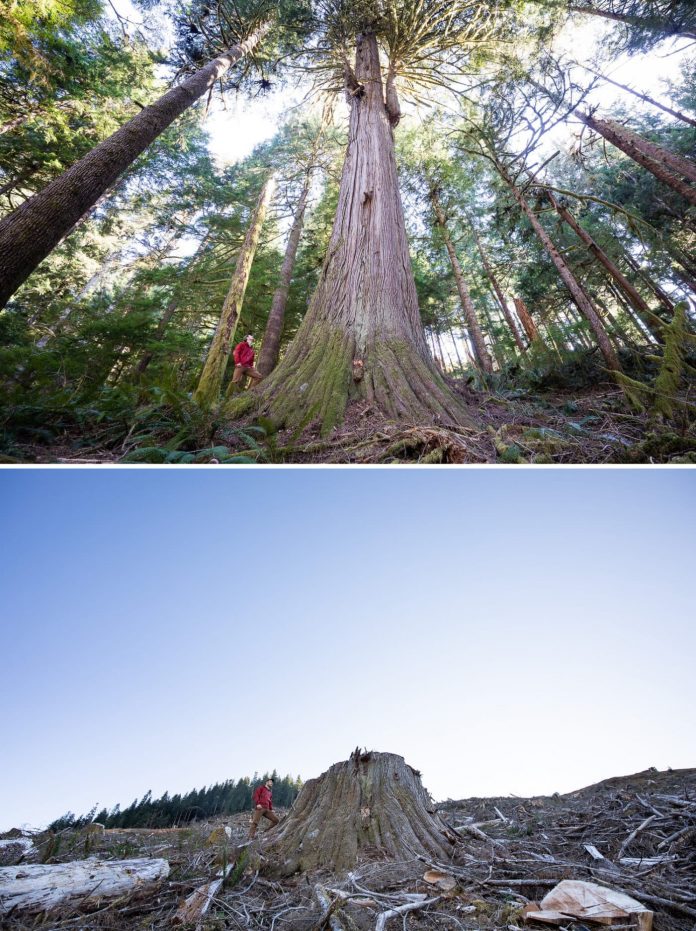
PHOTO: Before and after of old-growth in Caycuse watershed. TJ Watt / The Narwhal.

Written by: Harvin Bhathal, Features Editor

One of the most significant ecological challenges in BC has been the conservation of old-growth forests — BC’s ancient forests. Their conservation is synonymous with protecting biodiversity, and the cultural practices and ways of life for many BC First Nations. However, just as important is how these forests act as reservoirs of carbon — carbon that increases global temperatures if released into the atmosphere. 

The conservation of old-growth forests is essentially to protect humans from themselves. 

In September 2020, the BC NDP government embarked on a new approach to old-growth forests with a policy that sanctioned the deferral of old-growth logging in nine areas throughout the province, equalling 352,739 hectares (approximately 260,000 hectares from the Clayoquot Sound). However, these deferrals are temporary protections and are set to expire after two years. 

The provincial government’s promises to conserve nearly 353,000 hectares of old-growth forests are factually incorrect and misleading, according to a report by The Narwhal. There are environmental, spatial, and cultural consequences to this pressing issue and the lack of a meaningful policy response by the BC NDP government.

Additionally, according to Tzeporah Berman, international program director of stand.earth, the deferrals were for areas that “weren’t even threatened by logging or made up of big trees.”

Not to mention, mapping by geographic information systems (GIS) mapper Dave Leversee and conservation organizations found that approximately 137,000 of protected hectares in the Clayoquot Sound “were already under some form of protection” and on the government’s map of protections in the area, much of approximate 260,000 acres include non-forested areas such as rocks, mountain peaks, swamps, etc.  

The reason the provincial government was able to get away with claiming their policy will conserve nearly 353,000 hectares of old-growth forest is that the definition is highly contested. Some define “old-growth” by the age of trees while others define it through physical characteristics or ecological functions. 

When The Narwhal asked the province’s Ministry of Forests to clarify their definition of old-growth, they directed the publication to a strategic review titled, “A New Future for Old Forests.” In that review, old-growth was described as “a generic term to describe forests with old trees” and more specifically (for management purposes), forests which are “250 years [old] on the coast and 140 years [old] in the interior” of BC.

The Narwhal’s report explains that of the near 353,000 conserved hectares, only approximately 196,000 hectares are actually considered old-growth forest according to this definition. The remaining approximately 157,000 hectares are considered second-growth forest, which is open to the logging industry. 

Second-growth refers to native forests that have regrown after being cleared due to human (or natural causes) but the differences between these forests and old-growth go much further than this. Old-growth forests are structurally different in that that they have multiple-layered canopies with gaps. This means that the trees are of diverse ages and heights, and that sunlight can permeate through to create understories that are richer in biodiversity than second-growth forests.

This retroactive clarification raises concerns that the current protections in place for old-growth forests are inadequate.

The 196,000 hectares of protected old-growth is even more inconsequential when the differences between high-productivity and low-productivity forests are considered. High-productivity forests are critical to the conservation of biodiversity in BC as they are much more biodiverse than low-productivity forests. The largest trees are found in high-productivity forests, and endangered species such as mountain caribou, northern goshawk, fisher, and marbled murrelet call these forests home.

Of the 196,000 hectares that the provincial government marked for protection, a team of independent scientists analyzed that only an estimated 3,800 hectares of BC’s remaining high-productivity old-growth were included. A mere 1.94% of high-productivity old-growth is included in this policy’s protections, a far cry from what the BC NDP government is presenting themselves as doing. This policy is incredibly misleading and fails to contextualize its supposed protections within the productivity of the forests they planned to conserve.

This failure by the provincial government to conserve old-growth forests in BC will have consequences that will contribute to the ongoing climate crisis. A research study comparing the carbon stocks of old-growth and second-growth forests in central BC concluded that “harvesting of old-growth forests in sub-boreal [BC] lowers total [carbon] stocks by 54–41%.” 

Through analyzing BC provincial government data, Sierra Club BC reported that while the forests of BC acted as a carbon sink between 1990–2002, they had become a net carbon source by 2003. This means they have gone from keeping in more carbon than they were releasing to storing as much carbon as they were releasing. In the years since 2003, they have been emitting more than they have sequestered (stored). The factors that have contributed to this include the increasing rate of forest fires and the mountain pine beetle outbreak that killed a large number of trees. 

Where old-growth forests come into this equation is that these trees have developed adaptations that make them more resistant to burning — they absorb water and retain moisture, essentially regulating the climate within a forest. The fire resistant capabilities of second-growth forests do not match those of old-growth, but because of widespread old-growth harvesting, it’s second-growth trees that dominate the landscape of BC today.

BC’s ongoing transition from a forest landscape comprised of old-growth forests to second-growth forests will likely continue to contribute to the rising rate of forest fires and the decreasing capabilities of their forests to sequester carbon.

Additionally, incorporating the voices of Indigenous peoples in decision making, especially regarding issues that are affecting them directly, will be paramount to BC protecting themselves from their own action (and inaction). Of the forestland in BC, 95% is Crown land, most of which has been stolen from the many First Nations in the province (198 bands, over 200,000 individuals) who are forest-dependent peoples.

When conserving old-growth forests, as well as addressing the broader issue of the climate crisis, “supporting the capacity of Indigenous governance and management is likely to have multiple benefits [ . . . ] including avoiding over-exploitation, achieving effective ecosystem-based management, and enabling local monitoring for climate impacts.”

A spokesperson from the Ministry of Forests told The Narwhal that engaging with Indigenous nations is a priority for the ministry. However, their policy of conserving only 1.94% of BC’s high-productivity old-growth forests is contradictory to that statement as these forests are important for how First Nations sustain themselves, as outlined on the Government of British Columbia’s website

Stating that “the diverse ecosystems of old-growth forests provide water habitat for the fish, wildlife, and ecosystems that are vital to many Indigenous communities” and that they are “important to Indigenous cultural practices that have been passed down for generations” must go along with policies that reflect those acknowledgments.

The very report the provincial government referenced for their definition of old-growth forests discussed the importance of engaging with local Indigenous leaders and creating an “entire system grounded with a Provincial-Indigenous government-to-government framework.” This would represent “a new governance approach that relies upon cooperation rather than regulation for situation-specific problems.”

For forestry management, this intergovernmental system would entail adapting to how different BC First Nations have developed their own ways to monitor forest health and climate impacts. More specific adaptations include increasing the age of rotation ages (waiting longer to harvest from one part of a forest to another) as the rate of cut for logging companies is too high to be sustainable, and selective logging instead of clearcutting to minimize soil erosion.

 However, a counterargument to this would be that not all First Nations in BC share the same ideas regarding old-growth forests. Indigenous peoples have been deprived of economic opportunities due to settler-colonial practices that still persist today. These practices include racism and discrimination in many areas, such as healthcare, the environment, and more, as well as the ongoing issue of missing and murdered Indigenous women. 

As a result, many Indigenous people seek revenue and employment opportunities where available. Since old-growth forests often overlap with First Nations territory, logging old-growth forests is one of the most accessible opportunities. 

However, First Nations who are in favour of protecting their ancient forests are working with conservation groups “on solutions that strengthen First Nations’ governance and provide financial support for sustainable economic alternatives for First Nations, such as cultural and eco-tourism, non-timber forest products harvesting (e.g. wild mushrooms and berries), sustainable seafood harvesting, renewable energy projects, and value-added second-growth forestry [that incorporates Indigenous values].” 

There is a dichotomy that exists within the different First Nations in BC regarding this issue, and it underlies the dialogue surrounding land use in the province. 

Nonetheless, it is a fact that this policy is not going to accomplish what it is being presented to accomplish.

The BC NDP government’s misleading and factually incorrect policy was either gross disingenuousness or accidental. Regardless, the 353,000 number is what first registers from headlines, not that:

  • Of the supposed 353,000 protected old-growth hectares, only approximately 196,000 of the hectares is actually old-growth
  • Only 1.94% (3,800) of that 196,000 was high-productivity old-growth
  • The deferrals areas didn’t contain big trees and hence, weren’t threatened by logging
  • 137,000 hectares of protected areas in the Clayoquot Sound were already under some form of protection
  • Of the 260,000 protected hectares in the Clayoquot Sound, much of them included non-forest area

This policy will not be effective in conserving old-growth forests and the provincial government should make the necessary changes to reflect its supposed commitment to the environment and Indigenous peoples. The necessary changes should be implemented together with Indigenous leaders, beginning with implementing Indigenous frameworks of forestry management to BC’s forestry management system. 

Regarding this specific policy, the necessary changes include increasing the number of hectares protected in high-productivity old-growth forests, which will conserve the province’s biodiversity, resistance to forest fires, and the ways of life for BC First Nations. 

It will be a step in the right direction in conserving BC’s environment.
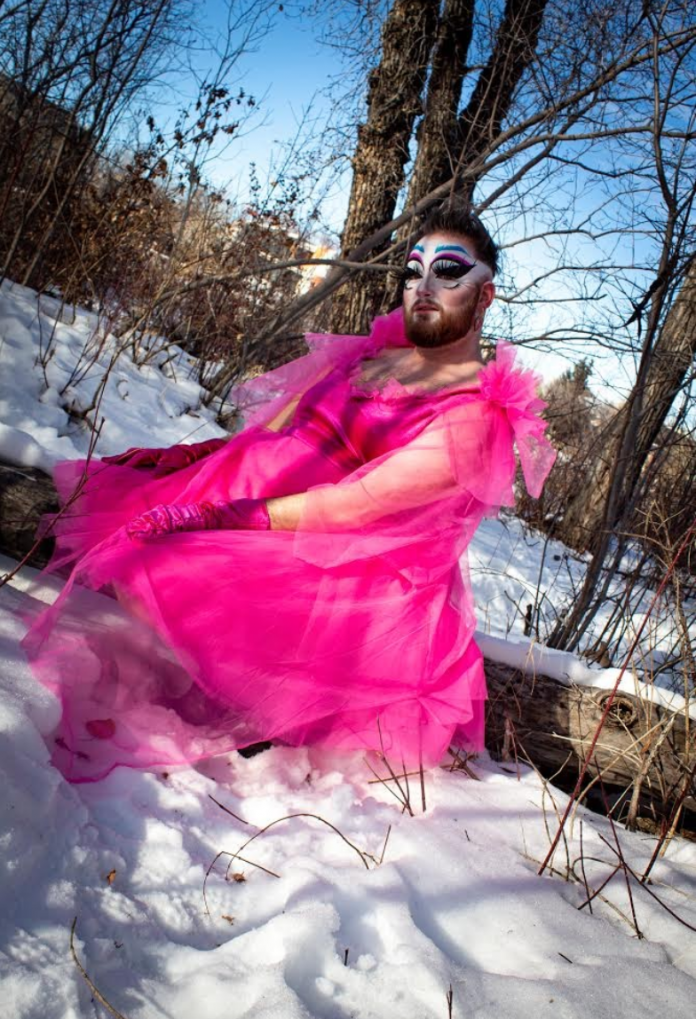
Local drag performer Dust is making queer art thrive in quarantine

0
Dust shares their journey of creating a studio album. Photo courtesy of Mac Jefferies Photography

By: Alex Masse, Staff Writer

While the COVID-19 pandemic has brought much of the local art scene to a screeching halt, some have seen this as an opportunity. Local drag performer Dust is one such performer. They are taking this time to work on their first studio album. 

Dust began drag in June of 2016, doing two shows on their first night of what was supposed to be a one-off event. However, they enjoyed it a lot and continued to receive offers, so they kept to the craft. Within around six months of beginning drag, they had started their own show, Commercial Drag. Dust currently runs this show along with co-hosting Off Tune, an all-singing drag show. 

“As my drag evolved, so did my interests,” Dust said. “I really like singing in drag [ . . . ] I don’t want to lip sync, I want to sing live, be weird, and have fun.” This is why Off Tune was born. Dust has also produced three different drag musicals through Sleepy Queers Productions, which they also founded. 

When the COVID-19 pandemic struck, Dust took this fascination with musical drag to the next level. Their friend and fellow drag artist, Zit Poppinz, suggested they record an album. 

“They were like, ‘Yeah, you’ve always talked about wanting to do that,’” Dust recounts. 

At first, Dust only recorded a demo, though they soon realized they wanted to do more. This desire was only strengthened by a number of major life events. “I feel like now I’m genuinely ready to do this for real,” Dust said. They reached out to Josh Eastman at Vancouver’s Helm Studios, initially for a single studio track which soon evolved into an album. 

“This has happened to me a few times,” Dust said. “I think small, and the people around me are like ‘no, go bigger!’” 

They defined their personal relationship to the art form as “an opportunity to be expressive, and to create entertainment and bring community together.” 

Dust added, “As a nonbinary person, my drag persona lives in a genderless, ambiguous area, that is very open and expressive and supportive of all genders.”

They also said they wanted to add something new to the world of drag music, one currently dominated by “club bangers, that you want to pat your pussy to at the gay club.” Instead, they want to bring their own tastes to the medium.

“I don’t want to make that kind of music,” Dust said. “That’s not the kind of music I listen to. So, a lot of my music is pop-based. There’s going to be some ballads on there, there’s going to be some higher energy pop songs, but it’s not going to be a club album at all.” 

The album started as an entry to Revolverfest, but didn’t make it in. This, however, did not discourage them. “I don’t need to get in this year,” Dust said. “I can try again next year, you know?”

Meanwhile, Dust is hoping to complete a minimum of nine tracks and to use them as the “framework of a one-person musical show.” Dust is currently working with dramaturg Davey Calderon and director Dominique Wakeland to finish the foundation. 

It’s been a tumultuous year for the local drag scene, but Dust continues to persevere. The world of digital drag has been “really difficult on people.” Dust actually stopped running online shows due to them being “inequitable for everyone,” with some artists having more resources than others, such as higher-quality web cameras. 

That said, it’s not all doom and gloom. Pride societies within Canada helped fund drag content during the pandemic, and networking has continued despite social distancing.

“It’s more powerful now, more than ever,” Dust said. “I’m excited to see what happens post-pandemic, with those relationships.” 

Dust is currently raising money for their studio album, and accepting e-transfers at [email protected].  

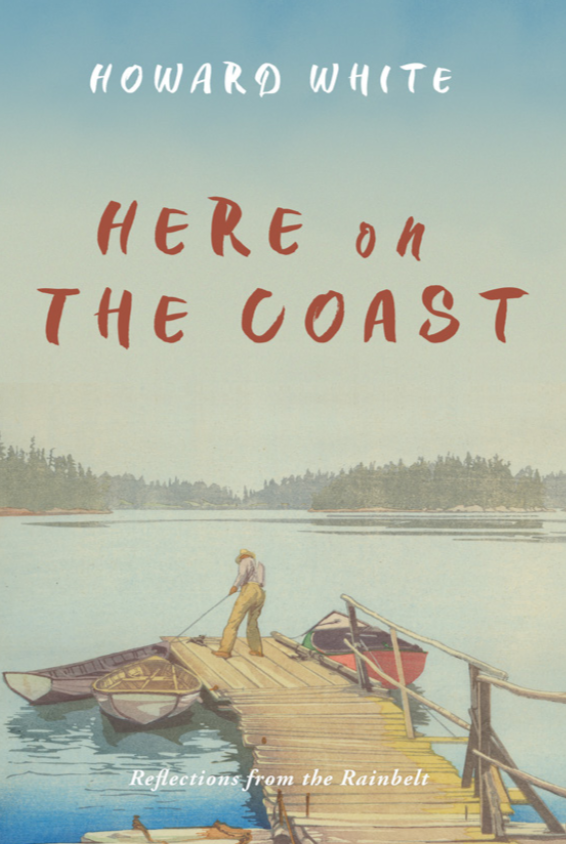
“Here on the Coast:” a masterful tapestry of stories

0
The renowned author shares a slice of life. Photo courtesy of Harbour Publishing

By: Kyla Dowling, Staff Writer

Editor’s note: Here on the Coast is a collection of essays. Any references to the book as a novel have been corrected.

Being from Ontario, I’ve never known much of BC outside of the SFU campus. Howard White’s stories from his upcoming collection of essays Here on the Coast: Reflection from the Rainbelt gave me a humorous — and often moving  — view of the Sunshine Coast. From the dreamlike descriptions of the “Eighth Wonder of the World” (Princess Louisa Inlet) to the strikingly familiar cast of zany characters, it all far surpassed my expectations of the Coast. I read the collection of semi-connected stories in one sitting, unable to put it down. At the end, I found it hard to remember that I was physically in Toronto. My mind was 4,500 miles away, stuck on stories of mountaineering journeys, trucks falling off of the ferry, and loggers who made surprisingly profound poets. 

In Here on the Coast, White does a remarkable job of blurring the lines between the far past, his own past, and the present. A frank discussion of how parts of the Sunshine Coast were named after an 1800s explorer’s ten favourite racehorses is followed by a 1950s-era anecdote about the chaotic tendencies of trees. After that, White veers into modern territory, discussing his pitiful attempts at gardening, his trouble understanding technology, and how he flooded his office by trying to install a dishwasher. 

All that is written within the first section of five, aptly titled “A Non-Place on the Map.” The title is accurate, given both the geographical confusion of what exactly the Sunshine Coast is and the fact that every little community along the coast of BC refers to itself as the one true coast. Despite these battling claims as to which monsoon-rich shore is the best, readers from all along the West Coast will find something familiar in these pages. In this collection of 50 unique stories, there is something for everyone: an ode to outhouses, the tale of Pender Harbour’s best doctor (who had many a child named after him), a compelling testament to cats, or an honest soliloquy about climate change. 

My personal favourite of all the anecdotes? “Muse in Caulk Boots,” a lovely remembrance of White’s Aunt Jean, who strictly asked White not to write about her after her passing. Luckily for us readers, he did. Within a single short essay, he writes about fragments of her life, and how she taught him the art of storytelling. He explains it as “scientifically enlarging facts by shifting them along in the direction they want to go anyway.” That is the heart of this book — White marginally stretching the truth to create a compelling read that you can’t put down, full of humour, candidness, and the spirit of the West Coast. 

Here on the Coast will be published on March 27, 2021. You can buy it from major book retailers.

SFU celebrates Black womanhood through art

0
Photo of un/settled art installation at night on the Belzberg Library's windows. Photo courtesy of SFU.ca

Written by: Linda Kanyamuna, SFU Student

Since November of 2020, Vancouverites have been consuming the resilience, energy, and beauty of Black womanhood through visual art in the form of a 240 foot photo-poetic art installation un/settled. The piece, which resides at the intersection of West Hastings and Richards Street occupying SFU Belzberg Library’s large windows, embodies Blackness and everything that celebrates Black creativity. 

The artwork features stunning poetry written by writer and academic Dr. Otoniya J. Okot Bitek, and portrait imagery of artist-educator Chantal Gibson. On February 10, both Black creatives, along with SFU Belzberg head librarian Ebony Magnus, shared dialogue for upholding Black voices through art in an enticing panel that aimed to unpack the presence of Black bodies in urban public spaces. 

un/settled encompasses overlapping significances: from Black women representation, to challenging notions of visible blackness in public spaces, and encouraging solidarity between communities. The atwork exhibits poetry excerpts from Dr. Okot Bitek’s 100 Days which were written in response to the horrors of the Rwandan genocide in 1994:

Some of us fell between words

& some of us onto the

sharp edges

at the end of sentences

& as if we’re not impaled

we’re still falling

through

stories that don’t make sense

In discussion, Dr. Okot Bitek emphasized the use of the word “we” (which is bolded in text as a part of the installation) to symbolize solidarity. Although un/settled was created in the light of Black womanhood, the artwork is for everyone to indulge and cultivate narratives for solidarity and unity. 

It’s important to recognize the urgency of solidarity in the scope of racial justice, and that standing in solidarity for Black lives is a communal effort, that requires an ongoing willingness to support and attain equality. Moreover, unsettled means to be disturbed by what is happening around us, to question, and object to the humanity behind discriminatory enforcement.

“I want us to continue to be unsettled by the horrors [ . . . ] what will it take for us to be unsettled?” asks Dr. Okot Bitek after she recites the excerpt to the audience. 

As simply as she put it, this statement proposed so much more dimension to the artwork in the sense that even Dr. Okot Bitek, one of the artists behind this work, questions the extent of its impact on society. Similarly to when people chant “Black Lives Matter” in a protest, one’s intent is determined and confident; but simultaneously, there is that doubt of whether or not that pain and anger is valid enough to spark systemic change — what will it take? This uncertainty exemplifies what it means to feel unsettled: the dread of not knowing if things will be different, and the frustration of stagnancy. 

Another interesting angle introduced by un/settled is that the installation is presented as a temporary piece, hence, unsettled in its placement. Where un/settled is mounted up in Vancouver, there happens to be an abundance of permanently “settled” art pieces surrounding it, be it inside the SFU campus or in nearby areas. The temporary nature of un/settled plays on the lack of Black art within Vancouver. 

This juxtaposition speaks to the current decolonizing moment in history, where we allow people to be uncomfortable about the realities of racial inequalities. As a result, we are able to shift those emotions into learning items to actively dismantle and restructure systems that derive from, and uphold white supremacy. In any event, to see Black culture on this scale is indeed a valuable step towards acknowledging this restructuring. 

Having been closed since the pandemic, Magnus brings up the fact the SFU Belzberg Library as a social construct has always been closed for some, alluding to the exclusion of institutions built upon white supremacy. 

That being said, un/settled is so much more than a 12 foot tall Black body at a busy intersection Black womanhood is depicted in the artwork through the strands of braids, representing her crown, her history, her heritage, her protection, and her identity, all the while acknowledging her inner void through the dark, empty space on the inside of this art. The installation reminds us that Black bodies are allowed to occupy space, in a world where they are so confined. 

Mounted onto the library building, the presence of un/settled  holistically speaks to the absence of representation and Black voices within SFU as an academic institution, as well as within urban spaces in the city of Vancouver. The real estate that un/settled takes up engages the community in a special way, embracing solidarity through art.

SFU physics professor Eundeok Mun appointed one of Canada’s Research Chairs

0
Photo courtesy of Simon Fraser University

Written by: Emma Jean, Staff Writer

Assistant professor Eundeok Mun, a member of SFU’s physics department, has been awarded as one of Canada’s Tier 2 Research Chairs. Appointed for his work on material physics, the award grants him $100,000 in research funding annually for five years. 

The funding from the program will go towards Mun’s continued work leading the Emerging Materials Lab, which aims to create new materials that could aid in future technological advancements. Alongside Mun are several graduate students who work towards the same advancements.

“I am designing new materials to discover new phenomenons, new physics or new science, while also considering the application,” he told The Peak. He focuses on frost-treated magnetism, and freezes it to the lowest possible temperature to understand its properties. 

To contextualize the nature of his work, Mun discussed the lab’s current study, which seeks to find a room temperature superconductor which can conduct electricity without resistance, even in freezing temperatures. 

“There is some optimism,” he explained. “Based on my past five years, I am seeing some clues that I can make a connection between a superconductor and magnetism. This is a tiny clue but I have to seek the further, big picture.” 

This would be a significant tool in creating a room-temperature superconductor, Mun said.

This is the second time Mun has been granted the Tier Two award, having been first awarded it in 2015. Its renewal comes along with 150 other Research Chairs across Canada, each with a specific area of study. 

The Canada Research Chairs program is an initiative that funds post-secondary research across the country, and aims to draw international researchers to Canadian institutions. It provides $295 million in funding for researchers each year.

For Mun, the program is what brought him to SFU after previously studying at Iowa State University in the United States, as well as Sungkyunkwan University in South Korea. He has been working to find material breakthroughs for nearly 25 years. 

“I’m putting in a lot of labour to find proper, really good material. Then, with the Canada Research Chair, I have a big plan, but who knows. With people doing my research, rolling the dice, there may be some success or maybe all fail, but who knows! I just keep working. This is the reality.”

Valorie Crooks discusses neighborhood vulnerability to COVID-19

0
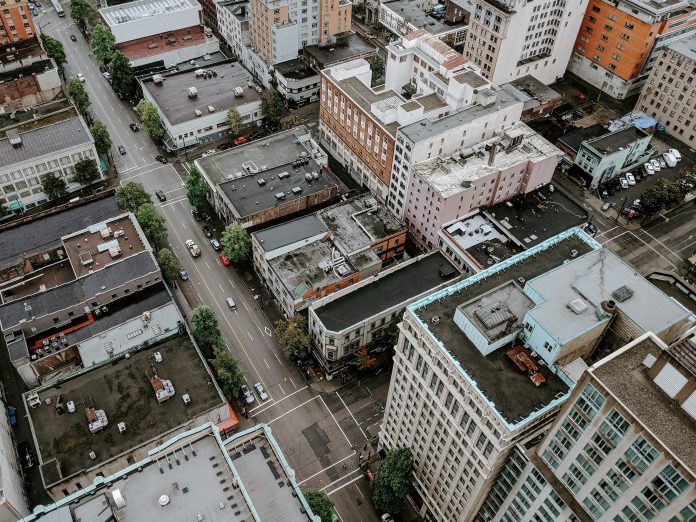
PHOTO: Aditya Chinchure / Unsplash

Written by: Karissa Ketter, News Writer

Health geographer Dr. Valorie Crooks was featured as the guest speaker for SFU’s February 24 Lunch ‘n’ Learn, which highlights SFU research. Crooks — who leads a team based out of the department of geography at SFU —  spoke about personal and location-based neighborhood vulnerabilities to COVID-19. 

Together with co-investigator Dr. Nadine Schuurman, Crooks’ team works on models “to produce a series of maps that really help to identify specific locations in British Columbia that are at risk of experiencing potentially high rates of COVID-19 infection.” 

“The risk of contracting coronavirus varies between people and places, which makes some British Columbians more likely to develop COVID-19 than others” due to factors such as socioeconomic status, personal behaviours, and community’s population density, their website states.

Crooks’ models are broken down into three categories. 

Personal risks are determined by factors such as living in crowded households, lack of English fluency, working outside the home, and being socioeconomically disadvantaged. 

Place-based risks include community factors of neighborhood’s percentage of farmland, population, density of schools and homeless shelters, and density of tourism destinations. 

The final category — overall vulnerability to risks — combines the first two sets of data to create overall risk data. 

One of the key uses for this data is to compare it with COVID-19 case numbers in communities. If the team finds that very high risk places are seeing low transmission and infection rates, “one of the things [worth] pointing out is that the public health interventions are actually working well,” said Crooks.

Since there is no access to neighborhood case numbers, “people should be using these maps in combination with other information sources,” said Crooks.

She warned, “We do not want people to use this model to attribute blame for transmission to specific people or specific places.”

The project’s website “acknowledge[s] that all models have limitations and can never fully capture all the complexity that surrounds an issue.” 

Much of the information used to create the models and maps comes from the recent Canadian census. “This means that the variables we have included here are limited to ones we can explore with data recorded by Statistics Canada or that is publicly available.”

Moving forward, Crooks’ team will look at “identifying neighborhoods where people are likely to [face health risks] of the pandemic at large, as opposed to being directly [infected] with COVID-19.” She acknowledged there will be numerous COVID-19 health effects associated with lasting economic challenges, social factors, and policy measures — such as “housing insecurity, job insecurity, occupational burn-out, loneliness, [and] isolation.” 

“[When] a call came out from the Michael Smith Research Foundation [ . . . ] a BC based research health funder —  and they put out a call for rapid responses to the COVID-19 pandemic,” Crooks knew she had to step forward.

“I think that [ . . . ] the timing was right to really step forward and show how a geographic framing, and a geographic approach to thinking about the pandemic, can assist with shaping the information that’s available and solutions that we can offer,” said Crooks.

“Once the last case of COVID-19 is no longer active, we’re not done with dealing with the health impacts of this pandemic.”

Valorie Crooks welcomes questions, comments, and feedback from the community and can be reached at [email protected]

Graduate Student Society holds 2021 annual general meeting

0
ILLUSTRATION: Siloam Yeung / The Peak

Written by: Jaymee Salisi, News Writer 

On February 23, 2021, the SFU Graduate Student Society (GSS) held their annual general meeting over Zoom. The event was open to graduate students in good standing to vote on matters surrounding their experiences at the university. 

Opposition to tuition increase

The motion called on SFU administration to reconsider raising tuition costs amidst COVID-19. Graduate student tuition generally increases by 2% every year for domestic students, and by 4% for international students, Director of External Relations Matt McDonald explained. Students voiced concerns that tuition continues to rise, despite the reported decrease in quality of online education, according to McDonald. 

When asked about the GSS’ role in setting and mitigating fees, McDonald said that “fees are set by referendum,” so they are adjusted according to a fixed rate and set by revenue. He explained that the cost of standard health coverage contributes to membership expenses but the April 2020 Simon Fraser Student Society (SFSS) emergency funding aided students and reduced graduate medical and dental fees. 

McDonald emphasized the motion would put pressure on SFU to reconsider costs by encouraging conversation at a provincial level — 98% of voters supported the motion.

Financial report

Auditor of the GSS 2020–2021 fiscal year, Gary Wozny stated that the membership’s financial strength improved over the past year. He said this can be attributed to remote learning’s restriction of in-person services, which caused revenues to exceed expenditures.

Additional income also came from the SFSS April 2020 emergency fund which provided the GSS with $17,500 with emergency assistance. $10,000 in SFU bursaries were also distributed to graduate students. 

Expenses for 2020 were very similar to the previous year and investments did well, according to Wozny. He said expenses such as office administration varied due to remote learning. The Society’s finances increased by $434,394, which Wozny believes will continue for the rest of the year.

A detailed summary of the GSS’s 2020 financial statement can be found here.

Support of research assistant (RA) unionization

With this motion, the membership aimed to pressure SFU to uphold their agreement of recognizing RAs as workers. Teaching Staff Student Union (TSSU) Chief Steward Katie Gravestock explained that SFU and the TSSU signed an agreement in 2019 recognizing them as a union for research assistants. 

According to Gravestock, the university “has continued to violate almost every term of the agreement,” including the “transition of RAs to employee status,” beginning collective bargaining, and providing them with the same rights and benefits as other SFU employees. This led the TSSU to file for arbitration in May 2020, but the university continues to delay bargaining, they said. 

The petition demands that SFU:

  • Recognize all RAs as workers
  • Provide all RAs, including international students, with health and dental benefits
  • Provide immediate relief for RAs by reimbursing the International Student Health Fee
  • Start bargaining with TSSU for RA benefits

The GSS membership voted in favour of denouncing SFU for their treatment of research assistants.

TSSU organizer Lea Hogan welcomed those interested in getting involved with union organization to email them at [email protected], in which organizers would receive a stipend for their work.

What Grinds Our Gears: The gondola getting more attention than the pipeline expansion

1
Supporting the gondola is great, but it isn’t the most pressing issue on Burnaby Mountain. Photo courtesy of Translink

by Madeleine Chan, Opinions Editor

Ever since a Burnaby Mountain gondola seemed like a very real possibility, broadcast news, web, and social media have been non-stop. Their focus is valid, not having ignored Trans Mountain Expansion Project (TMEP) issues for four years like SFU. Albeit mainstream news always has its issues around newsworthiness, but SFU? Literally no excuse. Their lack of action on the TMEP and their enormous effort into promoting the gondola is so indicative of their true priorities.

SFU helped organize an open letter to Burnaby’s mayor and council, getting the support of a shit ton of on-campus businesses — creating a decked-out gondola support website to match. They constantly post about it on their social media pages. Even president Joy Johnson tweeted how “thrilled” she is over gondola feedback. But when the SFSS rallied 13 student unions nationwide after actively fighting against the pipeline expansion for years? Nothing. Where’s this kind of action from the school on the TMEP when they are literally preparing to drill through Burnaby Mountain right now?

Of course, the gondola would be a great addition to campus. But I cannot fathom the sheer amount of effort SFU is putting into its promotion when the TMEP — which would invalidate Indigenous sovereignty, bring catastrophic environmental consequences, and put students in harm’s way — isn’t also part of this action. Maybe it’s that building the gondola seems closer to reality, but that doesn’t mean the same effort and support shouldn’t go towards stopping the TMEP.

SFU finally broke their four year silence in December 2020 with a short statement that essentially said “we won’t try to stop the TMEP, but we can try to keep you safe from it’s hazardous fallout.” And they had the audacity to call professor Dr. Tim Takaro’s 10-day tree pipeline protest “fearless” only a few months prior? Amplifying his bravery doesn’t cover SFU’s own cowardice around public action.

It’s not hard to speak your mind, SFU. But I know you have trouble with that considering you only make statements on campus incidents when they could look bad for your image.

Russian and Iranian internet trolls caused political interference in Canada’s 2015 election

1
PHOTO: G20 Argentina / Flickr

By: Karissa Ketter, News Writer 

SFU assistant professor Dr. Ahmed Al-Rawi is leading The Disinformation Project to study the effects of international state-run trolls. These are government sponsored internet trolls who are “magnifying controversial false claims, pushing negative views, and attacking any voices critical of their own regimes,” according to an SFU email. 

“I was surprised to see that the Iranian, Russian, Arabs, as well as the Chinese state-run trolls, [had been] talking about Canadian issues for a very long time. This has been ongoing for probably a decade,” said Al-Rawi in an interview with The Peak

Throughout his study, Al-Rawi found that “the term ‘fake news’ on social media is like a hollow term — it’s lost its meaning.” While it can be a weaponized term to attack opponents, it is commonly used for memes and jokes, he explained. 

From analyzing Twitter and Facebook, Al-Rawi discovered some patterns in the rhetoric pushed by trolls. For instance, Russia and Iran “were trying to sow division in Canadian society.” 

Al-Rawi said when discussing socially sensitive topics, such as immigration policies or controversial political elites, “the Iranian state-run trolls affiliated themselves more with the far-left, whereas the Russian state-run trolls affiliated themselves more with the far-right.”

A prevalent example of this was the hundreds of memes and images created by Russian trolls to attack Justin Trudeau before the 2015 feneral election. The Iranian trolls — critical of Stephen Harper — perpetuated claims that he was supportive of ISIS and planted by the CIA, Al-Rawi said. 

Through this analysis, Al-Rawi found it was interesting that two state-run trolls used fake websites and distributed news items through social media.

“No one knows whether this kind of disinformation affects us” and our democracy, said Al-Rawi. “We know for sure that exposure to disinformation can influence certain people, but no one knows to which extent [ . . . ] Exposure to fake news does not mean influence.” 

However, “as long as there is a potential and possibility of influencing people, we should be concerned about it,” said Al-Rawi.

“Many people assume that Canada is not involved in the manufacturing and dissemination of disinformation. I would beg to differ.” 

Part of the study “examine[s] the way Canadian journalists cover stories about [ . . . ] fake news, disinformation, and misinformation.” 

To accomplish this, Al-Rawi collected and analyzed over 100,000 news stories from Canadian journalists that mention key vocabulary such as “fake news” and “misinformation,” from the 1970s to 2020.  Al-Rawi found that each decade had a “highlight.” For example, in the 1980s,  the media discussed fake news in relation to HIV; in the 1990s, it was the war on Iraq. 

Part of this study also involved over a dozen Canadian journalists to determine “what they think should be reported about fake news and their own idea of what fake news is.”

Through social media sites such as Twitter, Instagram, Facebook, and Discord, Al-Rawi said he sees evidence that users are involved in creating and disseminating fake news. “That’s a very worrying sign,” he added.  

Al-Rawi hopes to see the findings of his studies published in the form of a small book in the future. 

Four female protagonists who display resilience and strength

0
Here are four women to watch (literally!). Composite image by Sara Wong

By: Charlene Aviles, Peak Associate

Fairy tales are an opportunity for the audience to delve into a world of adventure. However, stories such as Snow White and Sleeping Beauty typecast female protagonists as “damsels in distress.” These types of plots overlook female accomplishments and fail to provide youth with role models who fight for their rights and dreams.

Movies and TV shows have the potential to showcase unique stories by including women from different backgrounds. Below are four movies and shows that challenge the traditional narrative.

Akeelah Anderson from Akeelah and the Bee

Akeelah Anderson is an 11-year-old Black American girl from an inner-city Los Angeles neighbourhood. She joins a spelling bee after her principal, who hopes the spelling bee’s publicity will increase school funding, encourages her to participate. Along with the school’s lack of funding, many of Anderson’s neighbours are in financial need, which implies she lives in a redlined neighbourhood. Despite the challenges she faces, such as her spelling coach’s unexpected resignation, she perseveres in honour of her role model, her late father. Anderson is determined to win, but she also remains humble. For example, the night before the national spelling bee, she invites her rival Dylan Chiu to bond with her friends in her hotel room. Amazed by Anderson’s dedication and resilience, the neighbourhood and school community see her as a symbol of hope. 

Chihiro Ogino from Spirited Away

After Chihiro’s parents eat food in an abandoned town, they transform into pigs. During the night, Chihiro discovers that her family is trapped in the spirit world, so she independently devises a plan to save her parents. When her employer Yubaba initially denies her a job at the spirit world’s bathhouse, she successfully persuades Yubaba to give her a chance. Despite the culture shock and exhausting work, she perseveres because her love for her parents empowers her. At first, Chihiro’s co-workers shun her for being the only human living in the spirit world, but her selflessness and humility — shown when she rejects  a customer’s bribes for special treatment — win them over, and they demand that Yubaba tear up Chihiro’s employment contract and set her parents free.

Deborah Dobkins from Drop Dead Diva

After passing away in a car accident, Deborah Dobkins, a model, is reincarnated as another woman. As Dobkins adapts to her second life as Jane Bingum, a private lawyer, she acknowledges her former privilege as a model and becomes empathetic. Despite only having Bingum’s knowledge of the law but not her memories, Dobkins successfully defends her clients. Other characters try to intimidate her, but she outshines them with her integrity, loyalty, and compassion. When pressured to offer legal advice that would solely benefit the law firm, she prioritizes her clients’ rights instead. For example, in one case, she defends a client who was unfairly laid off due to sizeism. Rather than accepting a settlement offer, Dobkins negotiates for a pay raise and anti-discrimination hiring policies. By refusing to compromise ethics, Bingum goes above and beyond to win her cases. 

Misaki Ayuzawa from Kaichou Wa Maid Sama

To ensure that the female students are represented in school activities, Misaki Ayuzawa becomes her high school’s first female student council president. She is the school’s backbone, as she often takes on additional tasks beyond her job duties and is the last student to leave campus. Besides her student council responsibilities, she also begins financially supporting her single mother and sister after her father abandoned them. Her dedication to her family motivates her to endure the fatigue she feels from her school and work commitments. Because of her adversity, she displays maturity and wisdom beyond her years.