Home Blog Page 332

The new climate emergency parking plan is ineffective

1
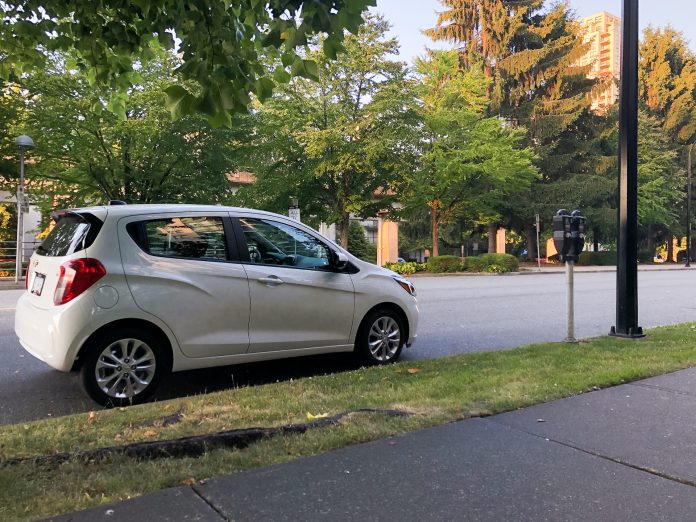
Annual gas-powered vehicle parking permits are part of The City of Vancouver’s new parking plan. PHOTO: Allyson Klassen / The Peak

By: Nancy La, Staff Writer

The City of Vancouver is planning on implementing additional parking barriers as part of its Climate Emergency Parking Program. The plan includes a “pollution charge” of $500 (for “moderately polluting” vehicles, like gas-powered sedans) or $1,000 (for “high-polluting vehicles, like gas-powered sports cars and SUVs) and introduces annual parking permits for residents. The implementation of financial barriers to road accessibility and parking is not a fair solution to combatting climate change, nor is it a solution that tackles the root causes of the global warming crisis such as corporations and their industrial emissions. 

Instead of going for bigger, more effective strategies against large corporations, the City is leaving the burden of fighting climate change on small consumers such as renters and low-income households. This makes the new parking plan an ineffective solution and will also worsen Vancouver’s affordability. 

Parking fees are a high source of revenue for the City, along with property taxes and development license fees. What sets the three apart is that, for the latter two, the primary targets are people who can afford to pay the price without much grief, such as land developers. If the plan to implement street parking fees comes into effect, residents will have to pay for $45 annual passes to park where they live. The people who will be affected most are renters and/or low-income families who live in places where there is no parking included. I was a long-time renter in East Vancouver. From my experience, there is no other way to park your car but on the streets since the owner occupies the garage. 

The parking plan also suggests an additional “pollution charge” on new gas models. Instead of placing the burden on companies that produce these gas models or oil corporations, the City is punishing its residents and small consumers for not buying an electric car. Putting aside the affordability question of electric cars versus gas-powered cars, there is a glaring problem with this parking plan: people who have to park on the streets will not have access to a charging station; therefore, they will not be able to choose an electric car even if they want to. This punitive approach towards small consumers as an effort to tackle climate change is logically flawed and not effective in fighting the climate crisis. 

The City promises to use the increased revenues from permit fees to fund road infrastructures such as sidewalk renovations and the building of more electric vehicle charging stations in major commercial areas. These new additions are nice to have, but they do not hold major polluters accountable. Take industrial manufacturers, for instance: BC’s wood manufacturers are responsible for the vast majority of particulate emissions (air pollution), so instead of financially punishing residents for parking and not owning an electric car, the City should shift their focus to the companies that can afford to pay the fees. 

Another drawback of the climate emergency parking plan is the additional administrative involvement — from fee collectors to more parking patrol — that will also cost taxpayers and residents. By reinforcing the idea that people have to financially suffer to fight climate change, the City is further alienating its residents from choosing greener ways of living. If Vancouver is truly willing to fight the climate crisis, the City needs to stay away from small consumers and residents. Instead, it should start making industrial factories, such as cement producers and the forest industry, think twice about polluting our environment. Stricter implementation of the carbon tax and the elimination of fossil fuel subsidies would be good starting points to combat climate change with a significant impact. 

The City’s increase in revenue from the carbon tax can be used as an incentive for consumers to move towards electrical or greener sources of energy. Using financial incentives will make residents much more likely to approach the climate crisis in a positive light, taking away a hurdle in Vancouver’s effort to be the greenest city

The plan is still in the stages of debating and drafting, and the City is putting out a survey for the public to voice their concerns. If you would like to get involved, you can contact city councillors on the Vancouver city council website. 

SFU Creatives Spotlight: Episode 1

0

Monday Music: Summer bops for polyglots

0
"Monday Music" in giant yellow block letters with a red background
Monday Music: your weekly themed playlist. Image courtesy of The Peak.

By: Michelle Young, News Editor

Whether you’re learning a new language or just want something to freshen up your playlist, there’s a variety of international music scenes yet to be discovered. Indulge in this versatile playlist to find the right mood to set the rest of your summer.

Spanish: “Tú” by maye

Image courtesy of EO Entertainment & Pink Poetry

Venezuelan-American artist maye released the sweet and summery “Tú” in 2019. Her voice is like honey as she sings “amor eres tú” over dreamy guitar chords and relaxed percussion. The sound blends alt-pop with Latin beats for a warm song of yearning. maye coos “you are love” and “I want to be where you are” (of course, this all sounds more romantic in Spanish). It’s the perfect piece for all the longing, lovesick lovers out there.

Thai: “พื้นที่ว่าง” by Inspirative

Image courtesy of Inspirative

This one is for rainy summer nights — warm, sticky, and full of nostalgia. Thai rock band Inspirative blends smooth guitar with soft vocals that make you want to weep into the distance — the kind of crying where you feel relief after. The song picks up its pace for a rock-style guitar solo mid-song, leaving the listener hooked on angsty sorrow.

Cantonese: “因講了出來” by my little airport

Image courtesy of my little airport

Upbeat and carefree, Hong Kong’s my little airport crafts a piece made for dancing in your pajamas at home. The song is wistful and easygoing all at once. The vocals are smooth and subtle as lead singer Nicole Au Kin-ying sings of daily life. Paired with pleasant percussion, this piece is perfect to appreciate small joys.

Finnish: “Kesäyö” by Pariisin Kevät

Image courtesy of Sony Music Entertainment Finland Oy

You know how some songs fit certain seasons? “Kesäyö” suits all of them — wintery sunrises, spring afternoons, crisp fall mornings, and, of course, long summer sunset drives. Starting slowly, and then building itself up with an electric intensity, the song’s energetic guitar and percussion are beautifully juxtaposed against lush vocals to set the scene for your defining coming-of-age moment.

Hindi: “Baarishein” by Anuv Jain

Image courtesy of Anuv Jain

For the broken-hearted, I recommend the soulful ballad “Baarishein.” I don’t know an ounce of Hindi, but Jain’s voice transcends language. Set against simple chords, his vocals are the highlight of the piece. They move from softly singing into a passionate cry at the song’s climax, conveying the pain of missing someone you love.

SFU students develop automated irrigation system to preserve water consumption

0
PHOTO: Henry Be / Unsplash

Written by: Karissa Ketter, News Writer

An automated irrigation monitoring (AIM) system to reshape the agriculture sector’s water management was made by School of Sustainable Energy Engineering students. In an interview with The Peak, project co-lead Mackenzie Calder said the team aimed to “reduce how much water is needed by trying to shift the perspective on how farmers water fields in the first place.”

Calder explained crops are currently watered on a timer-based system, often not considering climate or daily rain patterns. The AIM system helps to water crops with only the volume of water they require. It does so by monitoring soil moisture levels with a sensor that controls watering systems.

The team reported some countries use as much as 85–90% of their extracted freshwater for their agriculture, with most of that becoming runoff and contaminating the environment. 

Over-watering crops leads to massive amounts of water runoff that returns to natural water systems such as streams, rivers, and lakes. The water runoff is “carrying a whole lot of nitrogen, and pesticides, and things that harm the ecosystem beyond the agricultural sector,” said Calder. By using a sensor-based system, farmers can limit the amount of excess water and the amount of runoff contaminating the surrounding area. 

Pesticides are potentially harmful to humans and can cause chronic and acute health effects. They can also be toxic for other organisms in the environment. The Safe Drinking Water Foundation reported that pesticides can remain in soil and water networks for years. 

BC’s agricultural water management website states that 3% of water consumed in BC is used for drinking water, the industrial sector, commercial sector, or agricultural sector. Calder estimates that this 3% does not include the large volume of extracted water that becomes runoff.

The team includes co-project lead Rajat Agrawal, Harleen Dhillon, Jacob Erickson, Erfan Ferdosian, and Paula Themmen.

“The way we approached it was, what if we made the agricultural watering process smarter?” said Calder. 

The AIM system “would allow farmers to track their water usage over seasons and compare current watering requirements to previous years,” according to the team’s report. This would mean changes to soil’s ability to hold water or factors such as climate change fluctuations could be tracked and recorded. 

Calder said the exact data for how much water could be saved with this method of watering is unknown as more research would be needed.

It’s time to treat the climate crisis for what it is: a crisis

0
Taking action and holding governments accountable are important steps in fighting the climate crisis. PHOTO: AFP / Getty Images

By: Marco Ovies, Features Editor

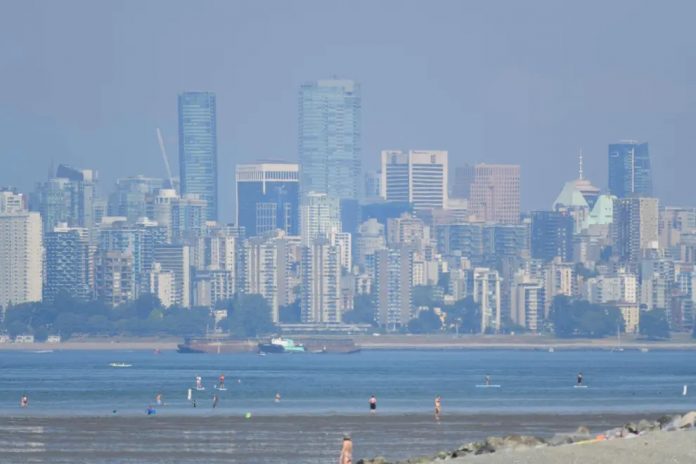
I was disappointed this weekend after watching multiple news outlets talk about the heatwave without a single mention of the climate crisis. Additionally, conversations about how unhoused folks are dealing with extreme temperatures seem to be non-existent. Addressing ways to keep (middle class) citizens safe and reporting on record-breaking temperatures is important; however, it seems we are ignoring naming the climate crisis as the cause of these record-breaking temperatures and refusing to acknowledge it as a serious issue we need to take action on.

From June 25 to 29, there were over 100 reported deaths linked to the heatwave. Additionally, there were 486 unexplained deaths during this time period. According to BC’s Chief Coroner Lisa LaPointe, this is a 195% increase over the number of deaths that would usually occur during the same timeline. 

In addition to the amount of deaths, there was an overwhelming amount of 911 calls — 55% more than a normal weekend in June, E-Comm’s Jasmine Bradley told News 1130. E-Comm is the company in charge of handling BC’s 911 calls. On Saturday alone, there were over 8,000 calls and 1,850 dispatches. To put it in perspective, there are only 1,440 minutes in a day, meaning there was a dispatch every 45 seconds. 

These are record-breaking numbers for BC, alongside record-breaking temperatures. And it’s only expected to get worse from here on out. During an interview with News 1130, UBC Professor Dr. Steven Sheppard said, “It’s pretty clear that this is part of the trend. It’s been projected and expected, and quite frankly we’re seeing around us — this decade especially — heatwaves, droughts, things like that are becoming more frequent. It’s very consistent with the climate change projections.”

Lytton, BC also was decimated by a wildfire in “minutes” after the heatwave, according to a town councillor. MP Brad Vis stated on Facebook that 90% of the village had burned down, including the town centre. BC’s Wildfire Service Fire Information Officer Erica Berg said high winds in combination with scorching heat gave the fire the opportunity for this explosive growth. But again, there was no mention of the climate crisis.

While some people have been prioritizing the fight against climate change, a lot of work still needs to be done, especially with others dismissing the impact of climate change. This includes BC Premier John Horgan, who recently said that “fatalities are part of life.” He then essentially victim-blamed those who died, saying, “it was apparent to anyone who walked outdoors that we were in an unprecedented heatwave and again, there’s a level of personal responsibility.” This completely overlooks unhoused people and lower-income folks who cannot afford air conditioning or those who do not live close to a cooling centre. I live in Newton, BC and saw no advertising for these cooling centres.

What’s worse, the record of deaths Horgan talked about is expected to increase as coroners receive more information. Any amount of death is tragic, but over 100 in one weekend is not something we can dismiss as coincidental. If we continue to avoid talking about the climate crisis, it will continue to get hotter, and the number of deaths will increase each year. How many more people do we need to let die before we take the climate crisis seriously?

Horgan’s response also overlooks the reality that 100 companies are responsible for 71% of all of the world’s greenhouse gas emissions. Instead of holding these polluters accountable, governments are unfairly putting the onus on the individual. Additionally, cutting down our old-growth forests is not helping Canada reach its Paris Climate Agreement carbon reduction goals. At the forefront of these companies and decisions is our Canadian governments who, instead of forcing companies to reduce their carbon footprint or deciding not to cut down old-growth forests, are pinning the blame on us. 

These 100 companies should be mandated to reduce their carbon footprints, but time and time again we see governments pointing fingers at their citizens instead. This is seen by the recent toll implementations for driving downtown or increased paid street parking around the city.

While it’s important to look at ourselves and integrate green solutions into our lives, it is even more important to hold our local politicians and government officials accountable for their actions. If they don’t take action against the climate crisis, it’s just going to get worse. People are dying. It’s time to wake up.

Living Hyphen provides a platform for multicultural Canadians to share their culture

0
Justine Yu, founder and editor-in-chief of Living Hyphen. Photo courtesy of Living Hyphen

By: Charlene Aviles, Peak Associate

In 2015, Filipina-Canadian Justine Yu attended the Toronto Feminist Art Conference. The stories she heard there from authors discussing their barriers to publication inspired her to take action. She then founded Living Hyphen to address the lack of media representation of hyphenated Canadians: those with multicultural identities. After establishing Living Hyphen, Yu continued to amplify these voices through magazines, podcast episodes, and writing workshops. In an interview with The Peak, she explained the importance of providing platforms such as these.

“I thought I was the only one who felt this way, who felt like I was straddling these two different cultures and places and struggling to fit in, or struggling to embrace my culture more wholly. But when I started Living Hyphen and I started to connect with more groups — not just within the Filipino community, but in different diasporas around the world — I realized that I’m not the only one,” explained Yu.

If we can act as a support network for each other, I think that is really, really important. I think that’s something that everyone can play a part in,” she continued.

Yu recalled that, growing up, Filipino representation was limited to health care. She would like to see representation spread to other industries as well. 

“Representation to me means being able to see people who look like me, who sound like me, in not just the shows that I watch, not just in the movies or the books that I read, but in different positions across different industries,” said Yu.

Recognizing the lack of multicultural representation in the writing industry, Yu decided to bridge that gap through Living Hyphen’s initiatives. During the COVID-19 pandemic, the brand transitioned from in-person to online events, and their scope expanded as participants from across Canada and the United States joined their writing workshops. Online platforms, such as the Living Hyphen podcast, also helped promote the stories of hyphenated Canadians.

In the podcast episode “Digging Roots,” spoken word poet Desiree Mckenzie uses a plant as an analogy for immigrating to Canada. Similar to a plant that has been transferred into new soil, newcomers in Canada also require nourishment to adapt. When asked about what resources would help newcomers adjust, Yu explained settlement agencies need to consider newcomers’ diverse experiences.

“I think that there are so many nuances that exist and that we can’t treat all newcomers as a generalization under one blanket,” said Yu. 

Acknowledging that adaptable resources are also key to this transition, Living Hyphen partnered with the Department of Imaginary Affairs, an organization dedicated to increasing representation for newcomers. Their recent project, The Stories of Us, provides newcomers with English Language Learner (ELL) curriculums based on their cultures. Yu mentioned ELL programs require more input from newcomers on incorporating diversity into the curriculum, which is what The Stories of Us aims to address.

In addition to intersectionality, Living Hyphen values anti-racism and decolonization. At the Living Hyphen’s writing workshops and open-mic nights, participants are given a safe environment to discuss topics ranging from identity to culture. 

These events tie into Yu’s motto, “You can’t pull a thread without unravelling the entire tapestry.” Living Hyphen recognizes the consequences of colonialism are interconnected and must simultaneously be addressed.

“All of these issues around racism are all interconnected, and it’s really difficult for us to just pick one problem and try to solve it without disrupting the entire system,” she said.

Supporters can stay updated with Living Hyphen by following their Facebook, Instagram, and Twitter, @livinghyphen and pre-order their second issue Resistance Across Generations, which will be released July 15, 2021. The Living Hyphen podcast is available for streaming on Apple Podcasts, Spotify, and wherever podcasts are found.

United Way’s Period Promise Campaign reveals the extent of period poverty in BC

0
PHOTO: Natracare / Unsplash

Written by: Gurleen Aujla, Peak Associate 

Period poverty is “the lack of access to menstrual products and facilities to use them safely.” It is a “symptom of poverty” due to the cost of menstrual products and their classification as a “consumer good” versus an essential item. 

The Period Promise Research Project report from United Way reveals that 26% of people who menstruate in BC have experienced a period without access to menstrual products.  

According to United Way, the data collected in this campaign provides the “most comprehensive image of period poverty in BC.” The data on the challenges people in BC face when attempting to access menstrual products comes from a public survey and information from 12 community organizations. 

The Peak spoke with Neal Adolph, the campaign’s staff lead, to discuss the issue.

Adolph said period poverty requires “a more nuanced bundle of solutions,” which doesn’t stop after gaining universal access to free products in washrooms. Approximately 51% of survey respondents indicated they had struggled to purchase products for themselves. 

United Way found disposable products were important, as they’re accessible for people without “access to [the] secure housing or clean water” needed to clean reusable products.

However, the survey revealed when some people received reusable products,  such as a menstrual cup or menstrual underwear, “they were able to substantially reduce their anxiety around when they would menstruate and be able to support themselves.”

Adolph explained universal access to menstrual products would be “a huge leap forward” and an “incredible achievement,” but “there’s a real risk that we set that as the end goal.”

Instead, he said it should be to reduce the prevalence of period poverty in the province, “so that people don’t have to make choices between what they’re going to do with menstrual products and what they’ll do without menstrual products.” 

Period poverty is systemic and impacts a person’s lifestyle. Survey findings revealed 36% of respondents had left school and 22% had missed work due to the inaccessibility of sanitary products. 

The impacts of period poverty are not equally dispersed, and inaccessibility is heightened for many marginalized groups. For instance, compared to the 26% average, 47.14% of Indigenous respondents reported going through a period without menstrual products. 

Adolph highlighted around “80% of people with disabilities in our province are struggling to purchase menstrual products for themselves, [which] isolates people.”

He explained gendered awareness for people who have transitioned or are non-binary must be considered because “if we’re actually building solutions that are trans-focused, you’re sometimes building solutions that will work for supporting everyone.” 

For post-secondary institutions, period poverty also “becomes a barrier for access to education.” 

There are several institutions providing free menstrual products, including University of Victoria and the University of Northern BC. Thompson Rivers University plans to provide them starting in the fall.  

It doesn’t have to be so hard for students to access menstrual products on campus, Adolph explained. Change can occur to allow people to “continue to focus on the work that they’re paying for the opportunity to focus on.

“Change is possible, and change is happening. We just oftentimes need to convince people to go through that change with us.” 

Read the full report here.

Skincare tips for the summer heat

2
PHOTO: The Creative Exchange / Unsplash

By: Paige Riding, Copy Editor


Tip #1: “Open” your pores with steam

You can’t. You can’t open your pores. That’s not how they work. They don’t have muscles or anything, weirdo.

You can, however, save yourself the utter agony of turning on an oven in this heat. Boil some water on the stove and open up that good, good Kraft Dinner box, baby. 

Lean over the pot. Let the steam hit your face for no reason. Feel even hotter. Regret taking skincare advice from a person who checks commas for a living. 

Wow, you’re glowing! Ah, nope, that’s the neon orange cheese reflecting off your sweaty forehead.


Tip #2: Try a mud mask

Whatever you do, don’t go into the garden. You thought I’d steer you that wrong? I’d never ask you to put such filth on your gorgeous mug. (I thought about it. Really, I did. The mud was dried out.)

For the best effect, you’ll need to go to the most slug-infested marshy area you can find. Pick up a whopping handful of brown gunk you can only pray is mud, realize this is a God-awful idea, and go make yourself an ice-cold mudslide instead. No, the sugar won’t make you break out. Neither will the alcohol. Don’t worry about it. Please.


Tip #3: Just stop sweating

It’s not hard?


Tip #4: Don’t forget sunscreen

People who brag about never using sunscreen are the same people who refuse to use the air dryers after washing their hands in a public restroom because they “take too long.” They just waltz out, dripping water everywhere. You’re sick. Sick and twisted. 

Anyway, this piece of advice isn’t a joke. As a recently graduated English major looking for a job in a pandemic, I know a joke when I see one. Just put on sunblock.

Bright-er Side: The pandemic helped me see who my real friends are

1
ILLUSTRATION: Siloam Yeung / The Peak

By: Sara Wong, Arts & Culture Editor

In my senior year of high school, I was the type of person who was friends with everyone but never had a tight-knit circle. It made all the grad group activities, like Artona photos and prom, feel more awkward than fun because I was constantly questioning where I belonged. 

Maybe that’s the reason why, after starting university, I spent so much energy keeping in touch with everyone. The insecurity I felt over not having a core group of friends resulted in me being on my phone for hours at a time, trying to be emotionally available to upwards of five people at once. Then, the pandemic hit. With so much of my world thrown into chaos, sending my usual round of “Hi! How have you been?” texts slid further down my priority list. I’m used to being the person who reaches out first, so during the first few months of the pandemic, I was always pleasantly surprised when someone messaged me to check in, especially when they asked about my family. 

I’ve always been open about having a parent who’s immunocompromised: my mom has lupus, a chronic disease that — in her case — affects her kidneys. Having friends keep tabs on my family’s wellbeing made me realize I wasn’t on the fringe of every social circle like I had imagined. 

In contrast to my super sweet, supportive friends, others at that time treated me like I was the problem for not wanting to risk COVID-19 exposure. I was told I needed to worry less. Suffice to say, I don’t talk to those people anymore. 

Getting rid of toxic friends allowed me to focus on myself and also have deeper, more meaningful conversations with people. And with everyone at home more often, it was easier to plan fun group activities too, like monthly cocktail nights over Zoom

Now that the COVID-19 restrictions are easing once more, I’m looking forward to seeing my real friends and not wasting my time in toxic relationships.

Art plays a vital part on the road to decolonization

0
Art gives a voice to those who have been silenced. Photo: Sam Javanrouh

By: Vrinda Kapadia, SFU Student

Content warning: mentions of violence against Indigenous communities

Despite persistent and deliberate human rights violations and abuses, Indigenous communities across Canada have shown tremendous resilience and solidarity throughout the years. Major art projects, initiatives, and campaigns by members of Indigenous communities are influential in illuminating the hardships Indigenous peoples face and start conversations around decolonization. These artistic endeavours are more than just nice to look at. They play an important role in telling Canada’s colonial history and are needed to remind us there is still a lot of work that needs to be done. Through art, Indigenous peoples who have been previously silenced have now found a voice. 

One of the most recent initiatives is the 215 shoes currently arranged on the steps of the Vancouver Art Gallery. These 215 pairs of shoes symbolize the lost lives of 215 children at the Kamloops Indian Residential School. This exhibit was assembled on May 28, 2021, just one day after the heartbreaking and painful discovery of the remains of these children. The memorial shines a spotlight on the undocumented deaths of Indigenous children across Canada. Additionally, similar memorials are emerging from coast to coast in honour of these children. 

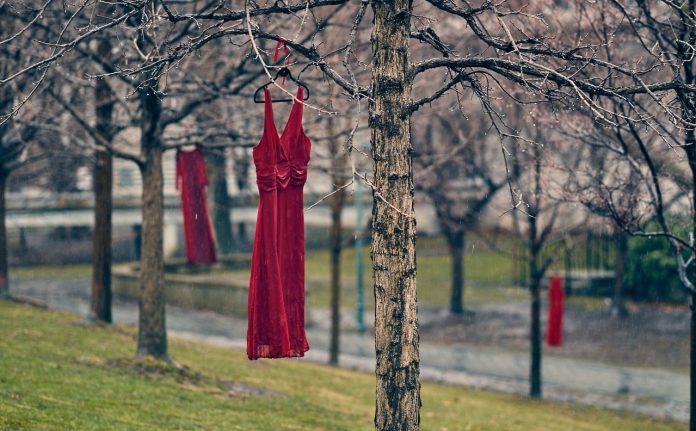
Another one of these artistic campaigns is the REDress Project founded by Jamie Black in 2010. Black is a Métis artist determined to spread awareness about Missing and Murdered Indigenous Women and Girls (MMIWG). Black ventured to collect 500 red dresses donated by community members and aimed to hang them in and around the city of Winnipeg. Since then, fiery red dresses have been installed in several parks across Canada and have been part of exhibits in museums and other academic institutions. The bright red dresses, intensely fluttering in the wild or silently lurking among other exhibits, leave a striking impression on spectators. Black explains, “People notice there is a presence in the absence.” The REDress Project “calls in the energy of the women who are lost” and speaks for silenced Indigenous women.

The Faceless Doll Project, launched in 2012 by the Native Women’s Association of Canada (NWAC), is another one of the creative responses for raising awareness on the epidemic of MMIWG. It was envisioned as a travelling art exhibit in honour of the 582 cases of MMIWG accounted for in a research commissioned by the NWAC. Community Engagement workshops were set up across Canada and community members were educated on the crisis while they crafted their own dolls to contribute to the exhibit. The deliberate lack of facial features on the dolls reflects society’s continued lack of regard for these women and girls. The representation of lost Indigenous women and girls as faceless dolls depicts how they are deindividualized and devalued by society. The Faceless Doll Project sends a simple yet powerful message about the violent history against MMIWG.

There are numerous instances of creative programs founded by individual artists, groups, and organizations created to raise awareness on the issues plaguing Indigenous peoples in Canada. The history of Canada is filled with targeted violence, systemic racism, discrimination, purposeful denial and attempted abolition of cultures and languages, and more. It is in all of our hands to shape a better present and strive for a better future. These art projects are not only reminders of the hardships Indigenous communities have faced, but also a reminder of their incredible resilience. As such, these art projects are crucial in reflecting back to us the condition of our society and augment the acknowledgement of the experiences of our community members.