Home Blog Page 321

My Dining Hall disaster

0
A woman sits eating sushi while a raccoon enjoys a piece of sushi next to her. The person is white with long brown hair and wears ripped jeans, a pink shirt, and a red hoodie sitting with her legs crossed and a plate of sushi. The raccoon stands on its back legs smiling back at her while holding sushi too.
Maple Sukontasukkul / The Peak

By: Tamanna T., Staff Writer

My name is Hella Enderson, and this is the story of how a raccoon and I bonded over our love for sushi.

I was walking towards the Dining Hall when I saw the raccoon for the first time. It was hanging out with its buddies near the tables in front of the Dining Hall building. I had been craving sushi since finals ended and now was the time to reward myself. I entered the Dining Hall and the smell of different foods hit me like a wall of bricks. I quickly asked for a box full of California rolls, three stale pizza slices, rubbery yam fries, and a diet water to balance it all —  your typical gourmet Dining Hall meal. I turned and encountered the raccoon again.

It had those sunken eyes with huge dark circles; it reminded me of myself during finals season so much that I first mistook it for another student waiting in line. 

I ignored it and went ahead out with my food when it came charging towards me, its tiny, grubby hands outstretched. A little unsettled, I set my food on a table and looked around for help. Sure, raccoons are adorable —  but only when they aren’t trying to snatch your comfort foods right out of your hands because they’re greedy and they want everything you have ever wanted to eat! 

As I tried to call out for help, the little trash panda saw its opportunity and jumped on the table to shove its hands into my sushi box, and I almost cried. It seemed like it wanted those California rolls just as bad as I did, because it proceeded to stuff its mouth like a chipmunk, packing food into its cheeks. Horrified, I moved towards the table and the food fell off the edge and onto the ground, and the raccoon went along with it.

It looked at me as if to ask what in the world was I doing, interrupting its meal like that? That made me almost laugh out loud in anger. All I wanted was my sushi, and between us stood this raccoon who was about to catch these hands if it did not walk away. 

I quickly gathered my soggy fries and diet water (I still wanted to eat, OK?) and grabbed another box of sushi before rushing towards the door. As fate would have it, I tripped again — the sushi falling on the ground in front of the door — feeling like Bella from Twilight. Regretting my entire existence, I bent down to pick it up, but then I saw the raccoon again. While the doors did not open automatically for me, they surprisingly did for the racoon, also mistaking it for a human. This time, it just kept staring at my sushi, and now I felt bad. 

I could have whatever type of food I wanted, but what did this poor ringtail know about the world’s cuisines? Sympathizing, I wondered, how would I feel if I could never have sushi? Absolutely awful and downright miserable!

Then, I felt a connection between us. Our eyes locked and our souls synced over mutual love for California rolls. We were just two beings, yearning for a good roll of sushi in the middle of a barely- occupied university.

I ended up naming it Chonky, the sushi-loving raccoon. Now we have sushi every Tuesday morning outside the Dining Hall, right before the construction workers show up. Sometimes its mother joins us too, and I am more than happy to share. Next time, maybe we will try Togo Sushi at Cornerstone.

SFU350 calls on SFU to declare climate emergency

0
Unsplash/Chris Leboutillier

By: Karissa Ketter, News Writer

On August 11, climate action student group, SFU350, released a Climate Emergency Declaration Open Letter urging SFU to take action against the climate crisis on social media

They demand that SFU declare a climate emergency, take a stance against the Trans Mountain Expansion pipeline, ensure students graduate with an understanding of the climate crisis, and decarbonize and divest from fossil fuels. 

Divesting from fossil fuels involves removing SFU’s monetary investments from endowments of fossil fuel extraction, processing, and transportation companies. The letter states, “Divestment has always been about revoking the social license the fossil fuel industry has to operate; it is a moral opposition to a particular sector.”

SFU350 plans on presenting to the Responsible Investment Committee on November 19, 2021 to discuss reinvestments. 

Their letter states that “a climate emergency must be accompanied by action that challenges the status quo and the colonial capitalist system.”

SFU350 is calling on SFU to fulfill their responsibility of educating students, creating and supporting climate justice, and establishing a student-led climate hub to “guide sustainability policy and action on campus and provide a space for advocacy and agency that empowers the student body.”

The Peak reached out to SFU350 for a statement, but did not receive a response by publication deadline. 

In a statement to The Peak, SFU vice-president research and international Dugan O’Neil said that SFU is aware of the Climate Emergency Declaration Open Letter. He noted there was a meeting on the week of August 26 with himself, vice-president finance and administration Martin Pochurko, and SFU350 team members to discuss their demands.

“SFU is strongly committed to sustainability and climate action in particular. We demonstrate that commitment through our operations, research, academics and community engagement; however, we can do more,” said O’Neil. “As we return to campus this fall, we will be announcing some new initiatives and projects that build on and strengthen our commitment to sustainability.”

SFU350 attributes the climate crisis to “the racist, ableist, colonial, and capitalist systems” Canada was built on. They are calling on SFU to take an “intersectional and anti-oppressive approach while challenging deeply-embedded colonial and capitalist systems in order to tackle climate change.”

In Spring 2020, SFU announced a 2025 Sustainability Plan that will guide their climate actions for the next five years. SFU said their plan is designed with a “justice, equity, diversity, and inclusion approach.” They outline target areas such as reducing emissions, shifting 50% of their remaining fossil fuel usage to renewable energy, reducing waste, restructuring their investment portfolio, and establishing curricular and co-curricular climate action opportunities for students. 

The Intergovernmental Panel on Climate Change released climate targets that need to be fulfilled in order to combat climate change. These include reducing 2010 emissions by 45% in 2030 and reducing all emissions to zero by 2050. They categorize emissions into three scopes. Scope one refers to direct greenhouse gas emissions, scope two involves indirect emissions via the production of electricity, heat, and steam, and scope three includes all other indirect emissions. 

SFU has announced that it will complete its first comprehensive greenhouse gas inventory to include scope three emissions. 

SFU350 is calling on SFU students, staff, and faculty to sign their Climate Emergency Declaration Open Letter.

SFSS approves motion to give departmental student unions permanent space in SUB

0
Kriti Monga / The Peak

By: Kelly Chia, Staff Writer

On August 25, SFSS voted for the Science Undergraduate Society (SUS) and Society of Arts and Social Sciences (SASS) to permanently occupy the two largest rooms in the Student Union Building (SUB). “The motion passed with 35 in favour, 11 opposed, and 2 abstentions,” reported SFSS president Gabe Liosis.  

The SUS and SASS previously launched a campaign requesting common room spaces in the Student Union Building (SUB). 

In an interview with The Peak, the SUS and SASS talked about what they picture in these spaces. “These rooms will serve as open, inviting spaces for students to mingle and socialize with those in and outside of their department, or even their faculty. 

“We hope that this central location will serve as an anchor for our department student unions on campus, and will bring more foot traffic to the [SUB].”

In their campaign letter, one of the concerns they previously expressed was that students would not have a common hub. 

“SFU is labelled as a ‘commuter school,’ meaning that a high proportion of students commute to school rather than living on campus, there is less opportunity for students to have interactions with their peers, especially those that would not necessarily be in the same classes as them,” they wrote. “Having a common hub for students allows for a space to host these interdepartmental interactions that are not likely to take place in open places like the library or the few DSU common rooms that currently exist.”

They also expressed that Council had been supportive of the movement. “When the motion to launch the Student Deserve Space campaign during the 2020/2021 term was put forward, Council voted overwhelmingly in favour of launching this initiative,” SUS and SASS said.

“This is a win for not just science students, but for all students at SFU as well as the SFSS as a whole.”

When asked to give a statement on the campaign, Liosis said, “The next steps include starting a working group to be chaired by the vice president internal and organizational development to create a Memorandum of Understanding with the two Faculty Student Unions, and to work out the finer details of the two groups’ stay in the SUB.”

“This does not mean the campaign to push for student spaces across campus has finished,” the SUS and SASS said. 

“With the return to campus, our work is just starting, and we will continue to work with all willing DSUs to help them secure spaces of their own on campus.”

Early federal election called for end of September

0
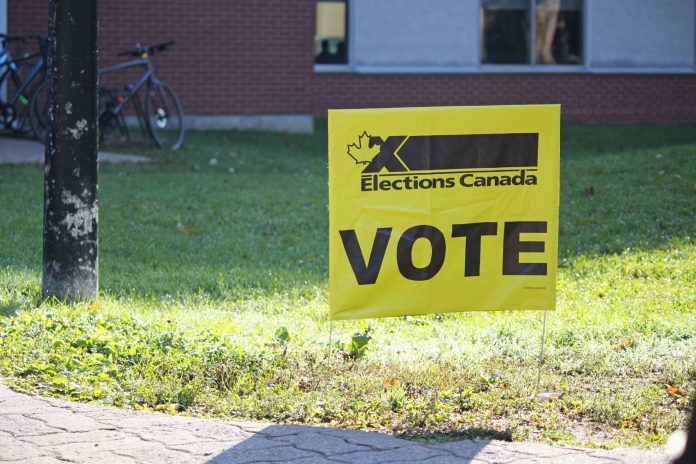
Courtesy of Elections Canada

By: Karissa Ketter, News Writer

Prime Minister Justin Trudeau called an early federal election for September 20, 2021. This creates one of the shortest election campaigns of 36 days

The last federal election was two years prior. The voter turnout was 66%, and turnout amongst young people was “just over half.” Young people in the 18 to 24 age group noted concerns that youth voting will continue to decrease as challenges created by the pandemic continue to affect accessibility. 

Elections Canada is not running the Vote on Campus campaign for this election, which included polling stations on campus. They cite the early election as the reason because these stations require planning that cannot be accomplished during this time. 

SFSS president Gabe Liosis called on Elections Canada to bring back on-campus polling stations in a tweet:Youth are the largest voting block in this election — yet Elections Canada decided against having on-campus polling stations. Youth already experience barriers in voting. Democracy must be as accessible as possible.”  

Research by Elections Canada shows young people are less likely to vote due to disinterest in politics, the belief that their vote will not make a difference, or their view of “voting as a choice rather than a duty.” Additionally, young people are not voting because they are less likely to be aware of ways to vote. The voting process — accessing the polls and providing identification — is perceived as too difficult and they are less likely to receive voting information.

Different political parties have been using social media, such as Instagram, Twitter, and TikTok, to connect with young voters and encourage voter engagement. 

Non-partisan campaigns — such as the Get Out the Vote campaign created by the Canadian Alliance of Student Associations — continue to encourage students to vote by outlining close polling stations, voting by mail options, and the ID students need to vote. 

On August 15 at a press conference, Trudeau asked, “In this pivotal, consequential moment, who wouldn’t want a say? Who wouldn’t want their chance to decide where our country goes from here?” He claimed Parliament requires a majority government to implement a strong recovery plan from COVID-19. 

NDP leader Jagmeet Singh posted a tweet criticizing Trudeau for his decision: “The pandemic isn’t over, calling an election is selfish.” Singh also released a letter calling on Trudeau to “back off the pre-campaign trail.” He added, “Telling Canadians that minority governments can’t work is misleading and breeds cynicism in our democracy.” 

What Trudeau called a “dysfunctional” Parliament, Singh noted as a “Parliament working the way Canadians expect it to — MPs from different parties working together in a time of crisis.”

A survey done over August 17, 2021 to August 22, 2021 projected the Liberal Party of Canada is leading with 33% of the vote, followed by the Conservative Party of Canada’s 29%, the New Democratic Party’s 23%, and the Green Party’s 3%. 

Five locally-made desserts to help you battle the first week scaries

0
Side view of a dessert display case
Dessert: a simple solution for school stress. Image courtesy of nicoletaionescu / iStock

By: Victoria Lopatka, Staff Writer

Welcome back to SFU! And a not-so-welcome back to grey concrete architecture, the rainy season, and Canvas deadlines that give you heart palpitations. Maybe you’re feeling nervous about transitioning back to in-person classes or worried about your ability to keep up in live lectures — regardless, I think you deserve to treat yourself! Here are five local desserts to help you de-stress and indulge a little. 

1: Fresh mango cake from Michele Cake Shop

Image courtesy of Michele Cake Shop

If you’re a fan of light and fluffy desserts, I recommend the fresh mango cake from Michele Cake Shop. I buy myself a slice for any occasion or accomplishment: good grades? Mango cake. Bad mental health day? Mango cake. Trying to impress someone? They’ll definitely appreciate some mango cake. The fruit tastes fresh and has a soft texture — no frozen or unripe mangos here! Michele Cake Shop also delivers to Vancouver, Richmond, Burnaby, and West Vancouver through an online store

2: Gulab jamun from All India Sweets & Restaurant

Image courtesy of All India Sweets & Restaurant

The gulab jamun from All India Sweets & Restaurant is the dessert version of a great hug: soft, warm, and sweet-smelling. Gulab jamun are small fried dough balls soaked in sweet syrup with hints of cardamom and rose — best served warm. After a day of navigating SFU’s concrete kingdom, grab a warm blanket, a tub of gulab jamun, a good book, and have yourself a relaxing evening. If you’re looking to enjoy gulab jamun without leaving the comfort of your home, All India Sweets & Restaurant can be found on DoorDash. 

3: Chocolate decadence cake from Trafiq Café and Bakery

Image courtesy of Trafiq

Chocolate lovers, prepare yourselves for a major food-gasm.  A slice of this cake combines devil’s food cake, chocolate mousse, and chocolate ganache. If you want to snag this bad boy, visit Trafiq early in the day, as they sell out really quickly. Alternatively, the café has an online store where you can purchase whole cakes, slices of cakes, cookies, tarts, and other pastries. 

4: Ice cream sundae from Glenburn Soda Fountain

Image courtesy of @glenburnsoda via Instagram

I discovered Glenburn in my freshman year on a particularly depressing rainy day. The neon signs of the confectionary shone brightly through the downpour, and I felt drawn to them. This family-owned shop is a blast from the past, with vintage décor and old-timey products lining the shelves. Step inside and order yourself a big ice cream sundae. You can combine any of their available flavours and toppings to satisfy your innermost ice cream-related desires. Glenburn is currently takeout and delivery only, but hopefully they’ll be open for dine-in again once it’s safe, to give students a cheerful break from studying. 

5: Belgian dark chocolate fondue from ARC Restaurant

Image courtesy of @arcdining via Instagram

After over a year of solely ordering takeout, I decided to visit ARC, drawn by a yummy-looking menu of cocktails and bites. What I remember most from my visit, though, was the dessert: Belgian dark chocolate fondue. This decadent dish comes with banana bread, donuts, strawberries, pineapple, banana slices, and coconut macaroons. The portion was big enough to feed three.

SFU opens pop-up vaccine clinics

0
Unsplash/Mika Baumeister

By: Nancy La, News Editor

Following BC’s new health mandates for COVID-19, SFU will be hosting popup vaccine clinics on the Burnaby and Surrey campuses starting August 27. Students on the Vancouver campus are encouraged to book appointments with Vancouver Coastal Health online. 

Locations for these popup clinics include Burnaby’s Convocation Mall and Surrey’s Sustainable Energy Engineering building and will be open from 10:00 a.m. to 4:30 p.m. 

SFU’s partnership with Fraser Health will provide vaccines for both international and domestic students on campus. The clinics will also provide COVID-19 immunization for anyone over the age of 12 with their first or second shot. These clinics are walk-ins and do not require prior booking.

SFU president Joy Johnson announced the opening of vaccine clinics in an email addressed to students, staff, and faculty on August 24. The email also announced a mask mandate in all indoor areas of SFU’s campuses, and the implementation of BC Vaccine Cards at SFU starting on September 13.

Students will be required to show proof of vaccination to live in campus residence, “participate in varsity and intramural sports, use gyms or recreation facilities, attend student clubs, sports, theatre, performances” and other events. Those living in residence must already have their first dose of the vaccine by September 7

Students are not required to be vaccinated to attend classes on campus, according to provincial health guidelines for post-secondary studies. For students in health science programs, full immunization is required to participate in clinical placements and practicums.

Proof of vaccination, such as the BC Vaccine Card, will be required to access certain events and services in the province. By September 13, BC residents must be vaccinated with one dose of the COVID-19 vaccine, and by October 24, they must be fully vaccinated with two doses.

“We are so pleased with the steps that our provincial health officer announced,” Johnson said in a CBC’s On the Coast podcast.

SFU will also implement self-disclosure of vaccine status for staff, students, and faculty. This is to be followed by regular rapid testing for those who are not vaccinated, or choose not to disclose their vaccination status. 

At the time of writing, approximately 75% of all people in BC are vaccinated with at least one dose, and 68% of all people in BC are fully vaccinated. 

The “Stalkaya – Ḵ’elhmáy̓/X̱ápay̓ay” exhibition highlights importance of ancient forests

0
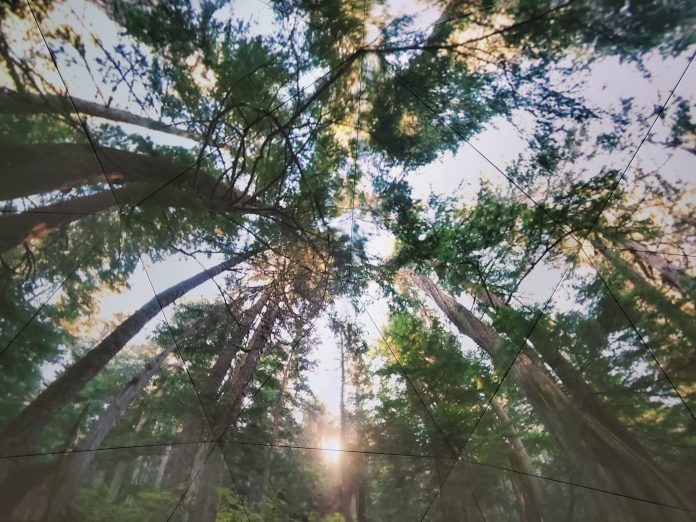
Picture of an ancient forest, angled upwards to showcase height of trees
A look up through the Dakota Bear Sanctuary. Photo: Kelly Chia / The Peak

By: Kelly Chia, Staff Writer

Stalkaya – Ḵ’elhmáy̓/X̱ápay̓ay is an exhibition based on the Skwxwu7mesh (Squamish) people’s relationship with cedar trees in old growth forests. The exhibit’s title refers to the traditional names for the Dakota Bear Sanctuary, yellow cedar, and red cedar, respectively. 

Co-curated by T’uy’t’tanat (Cease Wyss), and featuring the works of fellow Indigenous artists Tsawaysia Spukwus and Sesemiya (Tracy Williams), Stalkaya – Ḵ’elhmáy̓/X̱ápay̓ay centres around the ways Skwxwu7mesh peoples have used cedar for time immemorial. It encourages love and respect for ancient forests which have protected our climate and wildlife. 

When visitors first enter the exhibit, they are greeted with objects Skwxwu7mesh artists made with cedar such as clappers (a musical instrument), bailers (used to scoop out water from canoes), and clothing.  

Williams’ work considers her use of cedar and the patterns she weaves, interspersing them with her reflections of home. 

“This tunic and leggings were made for my son when he was six years old. Ten years later, and he is so much taller than me [ . . . ] that I look up to him. They are made from yellow cedar that was gathered from our homelands,” she says.

Spukwus’ work shows how every part of the cedar tree is used in diverse ways. One of their pieces is a bailer, made using red cedar. Spukwus also has clappers and hoops for display, which are used for music and dance. 

Altogether, these displays pay homage to the importance of cedar trees to Skwxwu7mesh peoples and hold a unique sense of warmth.

To further showcase cedar’s significance, Wyss guides visitors through Stalkaya in SANCTUARY: The Dakota Bear Ancient Forest Experience, a film made by Wyss and collaborators Damien Gillis and Olivier Leroux. 

In a promotional video about the exhibition and film, Wyss says Stalkaya is “a small sliver of what’s left of this ancient forest, and this ancient forest has been there since the Ice Age.” The video explains how the trees clean the carbon atmosphere, and provide homes for a variety of wildlife. 

“To put it very bluntly, there is one-third of the natural world left on this planet. And a majority of that is through the Americas, and specifically here on the Pacific Northwest coast, we are so fortunate to have probably a third of that third,” Wyss says. “My hope is that through our community learning about Stalkaya [ . . . ] our people will be able to stand up and have a voice together and see how important it is that we allow this sliver of a forest to remain intact for centuries ahead.”

The film is a simply breathtaking experience. It is projected onto a dome, so viewers are immersed in a 360° view of Stalkaya as Wyss narrates. Watching SANCTUARY, one of the most memorable points is when Wyss brings the audience into a two thousand year-old trunk hollow, where black bears make their dens. The viewer takes in lichen, moss, and the massive roots of these magnificent trees where sunlight streams through. 

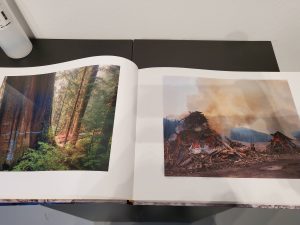
That beauty is what makes the second part of the film all the more evocative: it cuts from a gorgeous overview of the ancient forest to the jarring sights and sounds of clear-cut logging operations. Instead of luscious trees, we see a mess of trunk limbs and machinery. We explore artificial forests built with trees that are unsustainable for wildlife. 

Wyss explains the trees are short, weak, and too close to each other. They don’t let much sun into the forest grounds, and are crowded compared to the ancient forests in the first part of the film. As she guides us back to Stalkaya, Wyss emphasizes the history of these forests — which have stood for millennia — and the necessity of protecting them for future generations. 

Photo: Kelly Chia / The Peak

While BC recently signed an agreement with the Skwxwu7mesh peoples to protect Stalkaya, Wyss says we need to continue supporting efforts to conserve these forests. 

Wyss hopes bringing awareness to Stalkaya will motivate people to protect other old growth forests like it. Sierra Club BC, an organization dedicated to supporting abundant ecosystems, says that there are “only about 400,000 hectares of old-growth forests with big old trees remaining across all of B.C.” 

One way to protect BC’s ancient growth forests is to call your MLA and pressure them to commit to defer logging at-risk ancient growth forests. Sierra Club BC has listed a few talking points for these calls on their website. They also encourage writing to forests minister Katrine Conroy, and asking her to fund the 14 recommendations made by the Old Growth Strategic Review Panel. The panel’s report lays out ways to work with Indigenous governments to protect these forests within three years. Though Premier John Horgan promised to implement these recommendations over a year ago, there have been little changes

As a result, more of BC’s old growth forests — like Fairy Creek Watershed — are endangered. Environmental activists have gathered at Fairy Creek for over a year now. A list of action items has been created to help support the Fairy Creek Blockade, which include emailing the RCMP Public Safety Minister, Mike Farnworth, at [email protected] about the RCMP’s conduct, especially as BIPOC protestors are targeted at the frontlines of this blockade. This online fundraiser provides general and legal expenses for communications and personal support for marginalized land defenders. 

Most importantly, in conversations about protecting ancient forests, it is important that Indigenous sovereignty remains at the forefront. Indigenous peoples are the stewards of these forests, and supporters’ role is to stand in solidarity with them as they defend their land. Help fund Indigenous governance authority by supporting the Nuchatlaht, a nation taking the BC government to court on their title to reclaim their role as stewards of their land and waters. 

SANCTUARY: The Dakota Bear Ancient Forest Experience is playing at the Museum of Anthropology (MOA) on Fridays and Saturdays until September 26. For more information, visit MOA’s website.

Need to Know, Need to Go: Sept 7–12

0
Illustration of a blue calendar, with "Need to Know, Need to Go" written on top
Arts & Culture events to catch around the city. Image courtesy of Brianna Quan

By: Gurleen Aujla, Peak Associate

North Shore Artisan Market | Sept 10, 5:00 p.m.–10:00 p.m. | FREE | Pipe Shop, 115 Victory Ship Way

Check out a variety of handmade goods from dozens of local artists at the North Shore Artisan Market! This pop-up shop features candles, desserts, pottery, craft spirits, and more. While you’re in the area, enjoy the picturesque views at the Shipyard Commons or check out a nearby restaurant. This market is the perfect place to find unique gifts you won’t find anywhere else. Masks are mandatory at this event. 

Art Downtown Eco-Arts Festival | Runs until Sept 30 | FREE | Various locations 

To encourage stronger connections within the community, the Vancouver Visual Art Foundation presents an outdoor summer festival showcasing the work of local artists. Audiences can expect live painters, art demonstrations, and musical performances. Look forward to art inspired by social and environmental justice issues. Art Downtown runs Tuesdays at the Vancouver Art Gallery and Wednesdays and Fridays at the Jack Poole Plaza. The event is weather-dependent; check out their Facebook page for the latest updates and COVID-19 protocols. 

Hands of Knowledge exhibition | Runs until Sept 26 | FREE for SFU Students | Bill Reid Gallery of Northwest Coast Art

Curated by Joanne Finlay, from the Ts’msyen Nation, this exhibition features six contemporary women Indigenous artists sharing their experiences and traditional knowledge. Finlay’s primary motivation behind Hands of Knowledge was increasing the presence of women Indigenous artists in galleries and museums across Canada. The paintings, carvings, and robes in this exhibition tell powerful stories of family and personal history, tying in themes of “sight, time, supernatural energy, and spirituality.” More information on the exhibit and COVID-19 protocols are available online

Serisa Fitz-James: We Can Ask For More | Runs until Sept 16 | FREE | PoMoArts | Online and in-person

The Port Moody Arts Centre is currently presenting the work of Serisa Fitz-James, a second-generation half-Filipinx immigrant settler. Their solo ceramic exhibition explores the impact of the colonization of the Philippines on culture and identity. Fitz-James describes this exhibition as therapeutic, allowing them to reflect on their non-binary/gender non-conforming identity. It also allowed them to learn about their family history, life before colonization, and their family’s immigration journey to Canada. Viewers can see the complete exhibit virtually or during gallery hours.

The roots and lost radicalism of Labour Day

0

by Meera Eragoda, Editor-in-Chief

If you’re anything like me, you’ve viewed the first Monday of September as nothing more than your last day of freedom before the Fall semester begins. Though Labour Day has been thoroughly divorced from its roots, its history is an important one. In an age when labour has lost more rights than it’s gained and is largely exploited, this holiday is a reminder of the power labour once held.

Labour Day was officially deemed a statutory holiday in Canada in 1894. There are competing theories for how the day came about. 


Radical Roots or Sellout?

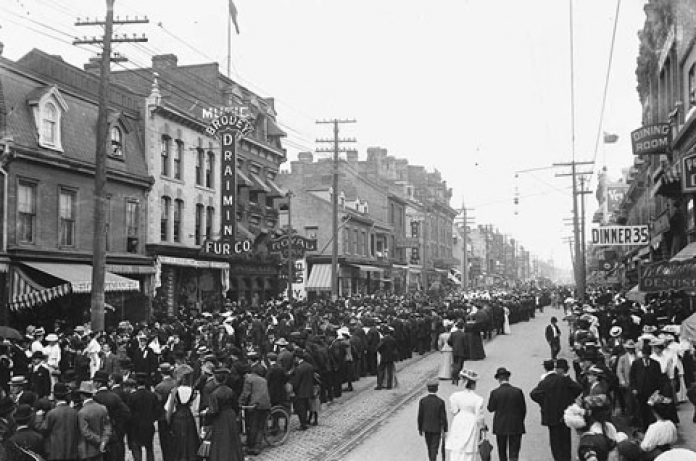
The Canadian Encyclopedia hypothesizes the catalyst for Labour Day was an Ontario printers’ strike in 1872 referred to as the “Nine Hour Movement.” True to its name, workers were fighting for a nine hour workday instead of the more common 12 hour day. The Toronto Typographical Union advocated for the workers but their demands were turned down by the owners of the printing shops, leaving them no choice but to strike. On March 25, 1872, they did just that. 

The owners retaliated by bringing in strikebreakers (replacement workers). One of these owners, George Brown, brought a lawsuit against the union for “conspiracy.” Brown was relying on a law from 1792 which deemed union activity criminal, resulting in arrests and jail time for 24 of the striking members.

Hope eventually came from then prime minister John A. Macdonald who passed the Trade Unions Act on June 14, 1872 to provide protections for union activity. Macdonald, however, did not do this out of the kindness of his heart but did so because of a rivalry with Brown.

Following the printers’ win, most other unions included demands for a nine hour day and a shorter work week and eventually led to demands for the eight hour workday. It also resulted in annual celebrations, one of which inspired American labour leader Peter J. McGuire to organize America’s first “labor day” on September 5, 1882. 

Though celebrated unofficially since 1890, pressure from labour organizations made Canada finally declare Labour Day an official holiday on July 23, 1894.

However, many, like SFU history professor Mark Leier, see Labour Day as a bone thrown to workers by Macdonald who was trying to stop the rising militancy of labour groups. Leier has written extensively about Labour Day in The Tyee. They write that long before any official declarations of Labour Day or May Day, workers held parades, marches, and the like to emphasise the message of there being no wealth without labour, as well as to enjoy a day of recreation.

They believe the real history of Labour Day cannot be attributed to just one event but was a culmination of years of labour activism. As a response to an increasing wage gap, Canada saw a rise of radical unions like the Knights of Labor, labour as a political motivator and election issue, and increasing strikes. To try and stop the rising discontent, Macdonald formed the Royal Commission on the Relations of Labour and Capital. The commission made several recommendations for improving work conditions but instead of making any material conditions, the only recommendation eventually adopted was the one to recognize Labour Day as a statutory holiday.


Decline of Labour Day

The Canadian Encyclopedia notes Labour Day “tread a fine line between politics and pleasure,” acting as a way for unions to express demands and unify workers. But after it was officially enshrined as a holiday, celebrations changed and were increasingly co-opted by local businesses.

The decline of Labour Day became evident in the 1950s with the rise of consumerism. Additionally, there was also an increase of “unskilled” workers who didn’t identify with the movement in the same way as those in craft unions, the view of Labour Day as a sellout holiday, and a growing emphasis on May Day — born out of the Haymarket Affair — as the real workers’ holiday. While there are still parades today, attendance has drastically waned.

Governments have since worked hard to restrict the rights of labour and corporations have only continued their exploitation of labour — especially that of racialized workers, women, Indigenous peoples, workers in the Global South, and more.

Most recently, COVID-19 has meant an increasing wealth gap while billionaires continue to capitalize off the pandemic and unemployment grows. Many workers are choosing not to return to jobs with terrible conditions. Grocery stores who were applauding their workers and increasing pay quietly took that pay away not long after.


Why Celebrate Labour Day?

So what does Labour Day mean in this context? Is it still worth celebrating?

Leier thinks “any renewed interest would be great!” 

They share with The Peak, “The emphasis should be on the fact that labour — workers — won this holiday through militant, radical organizing and resistance [and] to remember and celebrate that.”

But labour movements, such as the ones that led to the creation of May Day and Labour Day, haven’t been perfect. They’ve largely been spearheaded by cis, white, male workers, excluding many others. 

The labour movement tended to be led by so-called skilled workers in trades. And that element, and particularly the leadership, was uninterested in organizing the unorganized, the so-called unskilled, and the female, non-Anglo working class [ . . . ] However, other labour movements existed and offered a better model: the Knights of Labor, the Industrial Workers of the World, and industrial unions. These movements explicitly set out to organize all those the conservative trade union movement ignored and betrayed. They had a much harder job, though, and were fought much more viciously by bosses, the state, and often the conservative union movement.”

Since the beginnings of labour movements, workers have been employed in precarious labour. Today, we see this labour utilized in areas like the gig economy or in programs like the Seasonal Agricultural Workers Program. Leier says this can also be seen in the past such as when longshoremen had to make bids to work every day or when railway workers were contracted for short amounts of time. “By 1905 or so, there were literally 100s of 1000s of workers” travelling across North America in search of different jobs.

As Labour Day is rarely celebrated, the blank slate it offers might actually be beneficial in imagining a more inclusive movement. 

“Labour Day might help us remember that labour — workers — have always faced problems [ . . . ] of divisions of occupation, race, sexuality, gender, ethnicity — and have always sought ways to build unity and solidarity across those divisions to fight for better lives. That record of militancy and radicalism needs to be re-emphasized and rebuilt to recognize and reflect the working class of today,” says Leier.

They added Labour Day should be more than a celebration. We should also remember that labour movements were “quickly co-opted, often with the cooperation of conservative labour leaders who were looking out for their own jobs and connections with capital and government at the expense of workers.”


Labour at SFU

One of the ways we have seen issues of labour play out is close to home. SFU administrators have dragged their heels on giving RAs or contract workers rights. They have also been slow to implement COVID-19 restrictions that would make staff and students comfortable. Additionally, they generally underpay and overwork lecturers and other non-tenured staff. 

It’s important to remember that universities are run like businesses, Leier explains.

It is literally the job of top administrators to run SFU — all universities — according to the principles of capitalist business: lower costs, especially labour costs, increase revenue by speeding up the work process and ‘producing more units,’ that is to say, students,” they say. 

“They always fit ‘doing the right thing’ into that framework, and so we should not expect them to act differently on their own. They need to be pushed and confronted and people need to organize to push and confront them to do more.”

Leier makes it clear labour was once a force to be reckoned with, and still can be. For students looking to engage in Labour Day, Leier says, “Students come from all sorts of places, physical and mental and political places, but three ways they might start thinking about Labour Day are:

  • to reflect on their own jobs and to work with others to fix them; 
  • to recognize, respect, and help improve the work of all the people: cleaners, food servers, TAs, everyone who makes their education possible; and 
  • finally, to connect these issues with other groups and people and struggles locally, regionally, nationally, and globally.”

Some initiatives on campus to support are the tuition freeze, contract workers justice campaign, and the research assistants petition for healthcare.


Fall 2021 courses to guarantee your survival

1
A stack of textbooks against a blurred grey background
PHOTO: Kimberly Farmer / Unsplash

By: Victoria Lopatka

SA 421W – Greetings, Flirting, & Transit in SFU Society 

This course will re-introduce students to the study of socializing, post-social isolation. Students will be challenged to talk to their classmates, say “hi” to people they don’t know, and follow social conventions on transit. Please keep in mind this is a 400-level course and should not be attempted by students unfamiliar with such concepts. Prerequisites include SA 103 (Existing in Public), SA 202 (Eye Contact), and SA 338 (Talking with People You’ve Known for Many Years). Macro, meso, and micro forces will be considered, including the fact that SFU campuses clear out completely by 5:00 p.m. on weekdays. The end goal for this course is to create a student body that seems interested in making friends at all. 

BISC 206 – Animal Populations and Conflict Strategies 

Animal Populations and Conflict Strategies emphasizes the importance of co-existing with the animals that have overrun the campus, including deer and trash pandas. This course is a necessary prerequisite to many 400-level BISC courses, including BISC 320 (Wildlife to Dorm Room Pet). The class has an extensive field component, allowing students to observe animals in their natural habitats, such as rats digging through Tim Hortons trash. For the first day of tutorials, students are encouraged to bring a wild animal of their choice for show-and-tell. 

STAT 362 – Statistics of Finding a Good Seat

This course will give students the opportunity to theorize how to find a place to sit or study on SFU’s Burnaby campus, given social distancing practices. Writing about and discussing such topics requires an in-depth understanding of multiple aspects of Burnaby campus. It is assumed students are already familiar with: 

  • Shamelessly moving someone’s jacket and bag off a computer chair in the library because you need to print out a last-minute assignment
  • Glaring at people who play loud music without headphones
  • Walking through active construction zones because you can’t find classes anymore
  • Feeling the hot breath of a hungry student on your neck while an MBC microwave half-heartedly heats your food
  • Selling your soul to president Joy Johnson to get a comfortable seat and table with a nearby outlet in West Mall

BPK 100 – Foundations of Pandemic Survival 

An introduction to the foundations of pandemic survival. Students may enter with an understanding of wearing masks, washing hands, using hand sanitizer, and social distancing, but the four-month course requires use on campus. The material is presented in the context of a familiar concrete kingdom, specifically referencing elbow-to-elbow lecture halls and soap dispensers that are perpetually empty. The first week will be dedicated to instructing students on discriminating between reliable and unreliable COVID-19 sourcesfor example, your aunt’s WhatsApp group chat is not a reliable COVID-19 source.

POL 111 – Introduction to All Political Shit

A comprehensive introduction to all the political shit you hear about on Twitter, but don’t understand at all. This course will explain major concepts, methods, approaches, and issues, including the upcoming election and why everyone is so mad about it. The selected topic for students’ term paper will be Justin Trudeau’s bicep tattoo. Students who have watched a full CBC News segment within the last year may not take this course for further credit.