Home Blog Page 260

When it comes to Vancouver’s comedy scene, it’s no laughing matter

0
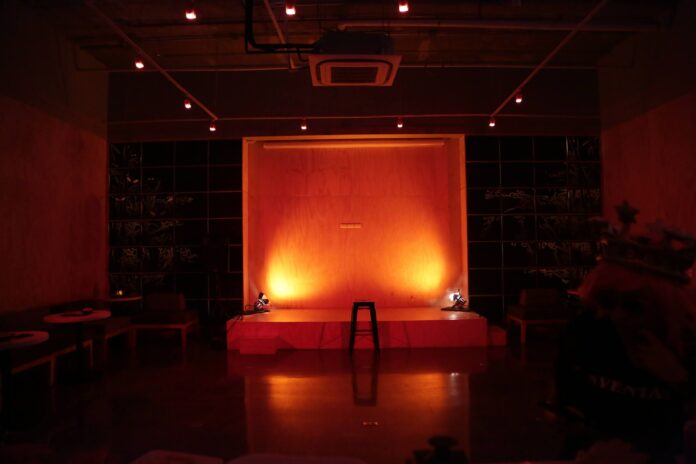
An empty stage in an empty room with orangey-red mood lighting.
Stand-up comedy spots are quickly disappearing. Photo: Brands&People / Unsplash

By: Craig Allan, Peak Associate

In 2017, I did stand-up comedy for the first time. After seeing comedians performing in front of audiences — on stages that I had no idea existed — I knew it was something I wanted to do. In less than a month, I got my jokes together and found a venue (Yuk Yuk’s). My first set received some solid reactions from the after midnight, mostly drunk crowd. Wanting to perform more, I made a plan for where I wanted this newfound interest to go.

However, by April 2019 that dream died, as The Comedy Mix announced it was closing. The Mix, which is currently looking for a new location, was one of the largest dedicated comedy venues in the downtown core. Its fall is indicative of a problem with comedy not just in the city, but the entire Lower Mainland. Vancouver is losing its funny backbone.

Comedy may not seem as valuable as a play or concert, but it’s an important artform. Apart from its entertainment value, humor is an effective tool for promoting social change. Humour helps us discuss and debate with others on an emotional level using a “nuanced social tone” that keeps listeners engaged. It’s for this reason that the role of humor in activism, for example, should not be underestimated.

Before the pandemic, I used to love going to comedy shows. To be able to sit down and hear jokes from people with various backgrounds and experiences was some of the most fun you could have in this city. The highlight of Vancouver’s comedy scene was the surprise celebrity appearances. Because so many movies and TV shows are filmed around the Lower Mainland, major comedic acts would sometimes stop by the clubs to test out their jokes. I remember one night going to The Comedy Mix and seeing a surprise set from Damon Wayans Jr. — you can’t have that kind of experience in every city. Often viewed as being a “No Fun City,” Vancouver’s comedy scene was never very big to begin with. There are only a handful of dedicated comedy venues, like Comedy After Dark, left in the city.

The pandemic no doubt has had an effect, as seen with the closure of places like Yuk Yuk’s (Cambie St. location) and Kino Café. But evidence shows that this decline was happening before the pandemic started. The Comedy Mix and Foxhole Comedy ceased performances in the months before COVID-19 hit. Another location, Little Mountain Gallery (LMG), closed because of the enemy of every artistic venue — redevelopment.

I don’t know if I will ever have my comedy dream realized in this city, but I think others should have the opportunity. It is my hope that, when this pandemic is over, the comedy scene will rebound. That will only happen if city management gets involved by actively supporting more venues than its largest mainstream stages, and maybe even mandating a few newer developments to have a comedy stage. Individually, we can make efforts to attend and participate in comedy nights — showing city planners that Vancouver’s comedy scene is still alive, and is deserving of support.

This is a problem with not just the comedy scene, but in every Vancouver-based entertainment venture; from nightclubs to music venues. Many leases are too expensive, and the affordable places are often in the shadow of the wrecking ball. Sure, some arts and culture venues — like the Rio Theatre — have been able to fight for and win building ownership, but many others are not as successful. In a Vancouver Magazine piece on the closure of LMG, Stacey McLachlan, said when it comes to arts and culture in Vancouver, it’s the big, flashy venues like ballet and music halls that get all the attention, while little places like LMG tend to get lost. In a city with an abundance of movie theatres, performance art venues, and even strip clubs, we need to remember that comedy is just as important — and local comedy stages are crucial in sustaining this community.

SFU Burnaby is doomed to always be a commuter campus

0
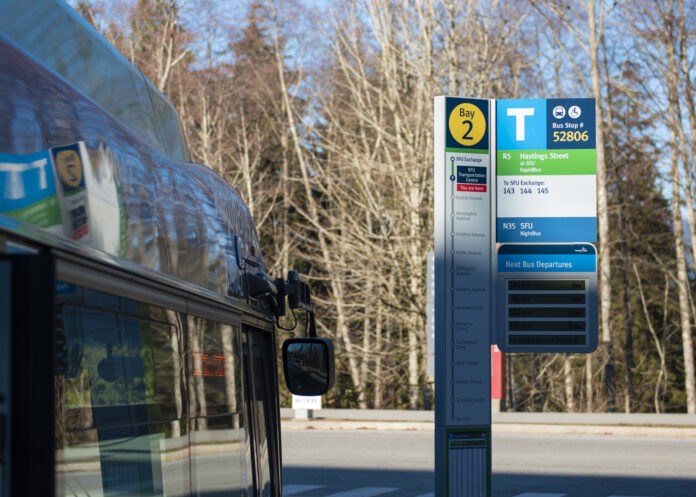
A photo of one of the bus stops at SFU. A bus is pulled up beside it. It looks like a nice day.
Go to class, go home, and very little else. Photo: Sarah Kushneryk / The Peak

By: Craig Allan, Peak Associate

In 1963, after achieving formal assent in the BC Legislature, Dr. Gordon M. Shrum, first chancellor of SFU, decided that the best place for the new SFU would be atop Burnaby Mountain, ensuring two things: that we’d have beautiful views, and that that’s about all we’d ever get. Being built on a mountain guarantees no matter how hard student groups and administration try, SFU will always be a commuter campus.

A commuter campus is one in which the majority of students live elsewhere. Though SFU offers student housing, it can only accommodate 1,500 students; much less than the 30,000 that attend the school. This generally results in students heading home after their classes are done. SFU at 1:00 p.m. and SFU at 8:00 p.m. are vastly different places because of this. UniverCity, the mountain’s supposed commercial district, is most often characterized by people rushing to complete their errands in between classes, and the SUB seems more like a place to burn time in between classes than to actually hang out.

This is in part due to how SFU’s expansion is limited by its location. Not only is it at the top of a mountain where construction is forced to contend with uneven land and higher material shipping costs, but Burnaby Mountain in particular is a conservation area. This means that development is restricted to what space at the top has already been deforested. Moreso than other universities, SFU is limited in the ways it can expand, often requiring decisions between one amenity and another: we can build more housing, food options, or social spaces — but all three might not be feasible.

Under a traditional university infrastructure model, SFU’s Burnaby campus has been described as an acquired taste. But by opening spaces for students to use as needed, we might be able to move past this label. By using the resources available, and by adapting to the current climate, we could make Burnaby campus a place the people actually want to stay at. Maybe then, we’d be able to make our first strides away from being a commuter campus.

Dear Doctors: Not everyone is a (cis) male

0
A woman has her hands over her uterus, signalling pain. The photo is cropped so as to not include her head, or below mid-thigh.
Human anatomy — and its afflictions — extend beyond that of a cis male. Photo: Cottonbro / Pexels

By: Hannah Kazemi, Peak Associate

After seeing a dermatologist, an endocrinologist, and enduring three months of blood tests and ultrasounds, I was diagnosed with Polycystic Ovarian Syndrome (PCOS). PCOS is a common hormonal condition that affects the internal reproductive system and menstrual cycle, and also puts those affected at a higher risk for other health issues such as diabetes and infertility.

I was lucky to have been diagnosed with PCOS at the age of 20 — most people who have PCOS don’t actually get their diagnosis until they’re in their late 20s or even their 30s, after they try and fail to conceive for the first time. Over 50% of cases of PCOS go undiagnosed because symptoms are disregarded as insignificant or exaggerated, and many cases of PCOS are misdiagnosed as something else. There are many illnesses specific to those with internal reproductive systems which contain ovaries or uteri. These can have similar symptoms, requiring extensive testing to differentiate, and yet many people are sent home with instructions to take Advil for the pain and hope that it gets better. We’re told to just deal with it, lacking resources and education on the issues that are plaguing our own bodies.

Healthcare presents many difficulties for people who don’t fit a narrow identity. Women, trans and non-binary people, and POC regularly face worse results than white men when accessing healthcare — if it’s even accessible in the first place.

Often, issues with uteri and ovaries are not discussed or seen as “important” enough to be taught, so going to see a doctor who isn’t well-versed in this area can prove to be more frustrating and disheartening than it is helpful. Advocating for yourself shouldn’t be this difficult; people with uteri shouldn’t feel afraid to express concerns to a doctor — they should feel confident that their worries will be addressed and taken seriously.

Medicine is an area that is historically male-dominated; not just in the way of doctors and medical school professors, but also in the study of health and the body. The White Male has perpetually been the standard and main focus of study, leading to a severe lack of research for any other identity. This has been going on for centuries, and is rooted in the idea that cis men are biologically superior.

Healthcare is a system built by men for men that has painted women as “hysterical” people with the idea that their problems aren’t real and don’t need to be addressed. When people with uteri are constantly dismissed by doctors because they’re made to believe their symptoms aren’t as bad as they say they are, that can take a toll on mental health. If medical schools aren’t teaching about these things, how are patients supposed to get the right support and treatment when they need it?

This level of medical care isn’t good enough. So why is it the standard?

What grinds our gears: A lack of campus study spaces

0
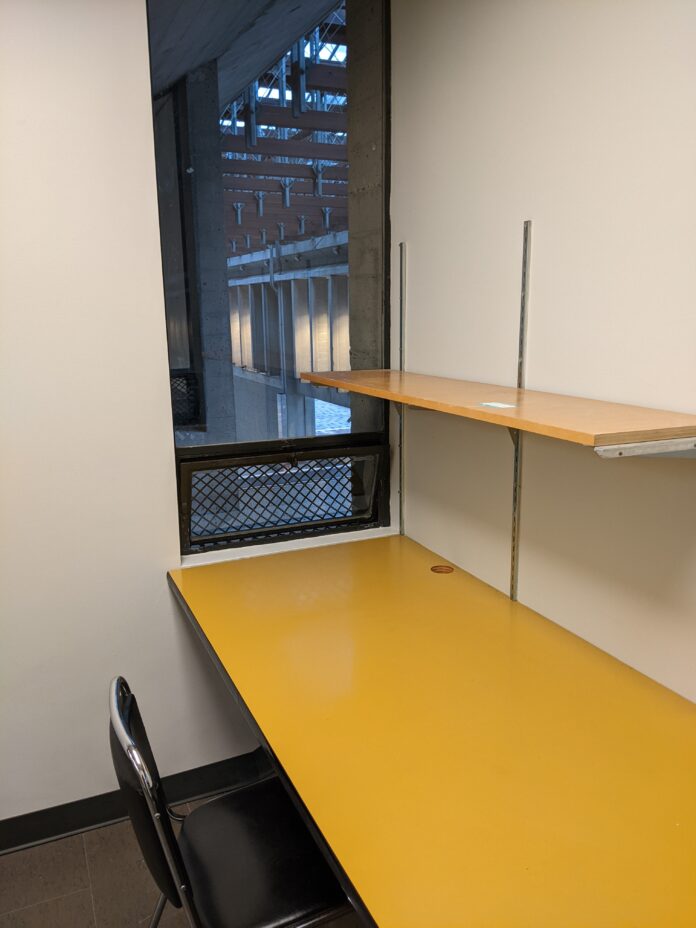
A study room, as described in the piece. The table is broad, and a window looks out from the side of the room.
Rooms like this one scatter the library, but are often booked or inaccessible. Photo: Jacob Mattie / The Peak

By: Craig Allan, Peak Associate; Jacob Mattie, Opinions Editor

As a student whose home has more distractions than it does workspace, I usually come to school to get my work done. My favourite place to work at the SFU Burnaby campus is the fifth floor of the library. It has these cozy little enclave desks that you can set up in, and work in what feels like your own private space. However, recently I found one of the study rooms on that same fifth floor with an unlocked door; containing the study area of my dreams. A private room with actual windows! Such a space is much better than a boxed-in desk. Of course, it’s not for my use, as these rooms are reserved for graduate students.

But this got me thinking. Why is it so hard to find a good study spot? SFU has well over 20,000 undergraduate students alone, and nowhere near as many desks. If they’re forcing us to return to in-person classes, it’s only right that we have somewhere to actually work. Burnaby campus is often packed, and finding a peaceful space is difficult enough without having to worry about social distancing. Surrey and Vancouver campuses aren’t better. The Surrey Library won’t even book study rooms to single students!

For all the time SFU encourages us to study, they really should offer us some facilities in which to do so.

Anything can be a kink if you believe in yourself

0
A photo of someone from behind. They are wearing handcuffs, and their jacket is pulled up to reveal zebra-striped underwear.
Kinks can be as elaborate or as simple as you can imagine. Photo: Pars Sahin / Unsplash

By: Jacob Mattie, Opinions Editor

There’s no kink police — unless you’re into that.

Roughly, a kink can be described as an unconventional sex behaviour, and there is little further clarification. The result of this is that anything you enjoy — be that citrus fruits, avoiding your responsibilities, or thrift shopping — can become a kink. All it takes is a little creativity and the involvement of sexuality.

The most familiar kinks fall under the umbrella of BDSM: Bondage/Discipline (or Domination) /Sadism (or Submission)/Masochism. It’s from here that the images of a sex dungeon arise; full-body leather suits, riding crops, and wall-mounted anchors are most common under the BDSM term. But such conspicuous styling has caught the eye of popular media, and has really blown things out of proportion. The vast majority of kinks are more mundane, and are shockingly common — with about a third of people reporting some experience with sexual creativity.

I don’t think the statistics are as clean as that. A kink like sensory deprivation can be taken to an extreme with things like blindfolds and noise-cancelling headphones, but has its roots in something as accessible as closing your eyes. If you find yourself closing your eyes during intimate moments, then congratulations! — you’ve made a foray into the world of kinks.

Spanking falls under the terms of sadism/masochism, and even labels as consistently exaggerated as domination/submission can manifest in a relationship dynamic as mundane as one partner consistently being the one to choose what film to watch during your movie nights, or which restaurant to eat at.

So great — we’re all kinky to some extent. But how does this relate to getting off in a thrift shop? That’s skipping a few steps, but the motivation behind a kink is a collection of actions or circumstances that make sex more pleasurable. Pleasure and sex are inherently subjective terms, and so all that’s needed is a way to combine them. Do you think it might be fun to find a cute outfit at a thrift shop and seduce your partner with it? That could be defined as a mix of roleplay and dressplay — similar to what motivates lingerie — or you could forego the labels entirely. Have fun with it! There are no gatekeepers to sexuality, so get creative with what you’re into.

I won’t go into detail about all the ways you could use citrus fruits, but if you end up getting arrested for public indecency — well hey. Handcuffs are great for bondage. Keep up the communication and have fun out there.

Philanthropy isn’t the golden ideal we might picture it to be

0
An aged white man in a suit sits in front of a laptop. He is staring at the camera, and is fanning out a large number of bills in his hand.
Philanthropy is an easy way for the wealthy to mold their surroundings however they feel is best. Photo: Andrea Piacquadio / Pexels

By: Craig Allan, Peak Associate; Jacob Mattie, Opinions Editor

SFU’s business school goes by the name Beedie School of Business. It would be reasonable to assume Beedie is the name of a faculty member; similar to how the Maggie Benston Centre and Robert C. Brown Hall are named after former faculty of SFU. However, the school is named after Ryan and Keith Beedie, two former students. The reason their names adorn the program is because they gave a $22 million dollar “gift” — the largest in the school’s history. It came attached with the request that the school of business be renamed in their honour. This is the nature of philanthropy: while it signals that the wealthy are giving back to the community, there are often ulterior motives such as legacy preservation (and consequently advertisement) and tax evasion.

In Vancouver, the Carnegie Library in East Vancouver got its name from Arthur Carnegie, a New York City industrialist and known philanthropist. He believed only a few select people were entitled to wealth, and so he underpaid his workers, many of them children. Under his assumption that concentrated wealth — at the expense of his employees — was the best for development, buildings with his name were the true showing of his “guiding hand” to progress. Much like how “benevolent donations” changed how people perceived the Carnegie name, philanthropy was also used to soften the image of some of history’s most awful people. People like former Cincinnati Reds owner and noted racist Marge Schott, and the Sackler family — heads of Purdue Pharma and Pfizer — who are the main culprits of the opioid epidemic.

The problem with much philanthropy is that it is tax deductible. This means that money that could have gone to helping the houseless, or bringing down student debt were instead spent at the whims of the rich. Certainly, libraries and concert halls have value, but not enough to replace such things as social wellness programs.

Of course, philanthropy in and of itself is not always a bad thing. It can fund worthwhile causes which may not be on the radar of most people. However, the nature of philanthropy is that it gives even more influence to the rich. The layouts of museums, dorm rooms, and other social structures affect how we live, and how we establish our behavioural routines. When these are set by the wealthy — who have a vested interest in promoting or discouraging certain behaviours — this can become deeply problematic.

The issues inherent in capitalism are broad and complex, and will take a concerted effort to overcome. However, it’s important to realize that philanthropy is not helping. Rather than moving us towards a society in which we can all meet our basic needs, it affixes the role of the wealthy as our benefactors.

A final farewell from basketball seniors Jordan Lyons and Julian Roche

0
Seniors Jordan Lyons and Julian Roche giving each other a handshake while smiling at one another.
The road ahead: the duo will look to take their talent to the big leagues next year. Photo: Krystal Chan / The Peak

By: Isabella Urbani, Sports Editor 

On March 2, seniors Julian Roche and Jordan Lyons competed in their last college basketball game. SFU lost in overtime to Alaska Fairbanks in the Greater Northwest Athletic Conference quarterfinals by a score of 91–83, bringing an end to their season. 

Roche and Lyons had a strong outing, finishing the night with 10 and nine points, respectively. The stakes were even higher for Roche, who hit his career-high point total against Western Washington — his most memorable moment of the year.

His close family in New Brunswick travelled over 5,000km to take part in the celebration. He voiced his appreciation for their trek to The Peak, “I am grateful for those memories, and I will remember them for the rest of my life.” 

After earning a two-point lead to start the second-half, SFU found themselves down with dying seconds left on the clock and the ball in the hands of sophomore David Penney. 

Penney sunk a shot way beyond the three-point line to send SFU to overtime. Lyons, who was unsure if the shot went in on time, spoke on the season-saving play. “It was definitely a huge momentum shift when they counted it, and it felt like we had a second chance at winning the game.” 

Although the game didn’t end up shifting in SFU’s favour, the team did end their regular season on a high note. In front of a packed crowd of friends and family, SFU’s seniors pulled out a well-deserved 78–76 victory over Western Washington. 

Lyons settled on the crowd favourite win against UBC for the Buchanan Cup for his favourite memory of the year. 

Looking forward, both Lyons and Roche have expressed their ambition to play professional basketball next year, and recognized their time at SFU in improving their game. Roche said he learned how to perfect his regiment through training, dieting, and better grasping his emotions.“I also had the opportunity to lead and to be led.” Lyons added on top of finding his sweet spots on the court, he was able to develop as an individual, “becoming more mature, patient, and mentally tough.” 

Now that their time is up, who’s going to bring the star power next season for SFU? Lyons says Penney or soon-to-be senior Jahmal Wright. In order to perform at their peak, Roche emphasized work habits. “Take care of your body through how you work and what you eat, but also take care of your mental health and take care of yourself.”

Despite Lyons only playing one season at SFU, both he and Roche appreciated the culture cultivated among the team, especially the senior core. “We know that we will always have our SFU experience to keep us bonded together for whatever is in store going forward,” said Roche. Lyons shared similar sentiments. “I think each senior brought different life and basketball experiences that brought us all together and made us a special group.”

We wish the two all the best in the next chapter of their career! 


We need more classes at the Surrey and Vancouver campuses

0
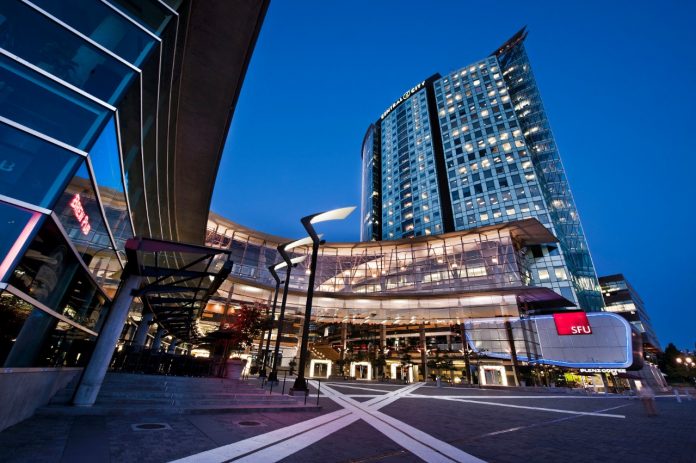
A photo of the outside of SFU Surrey campus’ entryway atrium. The image looks slightly stretched out, but is otherwise pretty recognizable. The photo was taken at dusk, accenting the building’s lighting.
Students have expressed interest in the further development of SFU’s Surrey campus. Photo courtesy of Simon Fraser University

By: Charlene Aviles, Staff Writer

If you’re an SFU student, you’ll likely find yourself having to take a course at the Burnaby campus at some point in your academic career; however, because of the Burnaby campus’ often harsh weather conditions and distance, it is not as accessible to many students. To keep SFU accessible for all students, there should be more classes at the Surrey campus.

As the SFU community waits for the Burnaby Mountain gondola to be built, students and staff need reliable access to campus. Every year, the Burnaby campus accumulates at least 50 cm of snow, resulting in difficult road conditions for commuters.

More classes at the Surrey and Vancouver campuses would address these accessibility issues. Unlike the Burnaby campus, the Surrey campus is within walking distance from the Surrey Central Skytrain Station and multiple bus stops. The same goes for the Vancouver’s Harbour Center campus, which is just across the street from the skytrain, West Coast Express, and Sea Bus at Waterfront Station. Better transit access makes in-person education more accessible to students from across the Lower Mainland.

The Surrey and Vancouver campuses have a few important features that make them a safely travellable campus: multiple stair railings, wheelchair ramps, elevators, and escalators throughout the campus. This offers students many more options to meet their access needs. In contrast, Burnaby campus has staircases without railings, which pose a safety concern for staff and students.

While SFU students might have felt overwhelmed by the school’s construction and renovations, the 2022 SFSS referendum results indicate students are open to projects that create hubs outside of Burnaby. The results reveal students want the school to pursue an expansion of the Surrey campus, as well as new subsidized student housing.  The popular motion suggests the construction of a Surrey campus Student Union Building, which would provide students more study space and access to SFSS resources. The demand for a more involved set of campuses exists; SFU just needs to act on it.As Canada’s engaged university, SFU aims to focus on community engagement. Increasing accessibility to communities throughout the Metro Vancouver area would be a huge asset to this goal.

Kirubel Bogale shares his track story

0
Kirubel Bogale in his starting position on the SFU track.
From basketball court to track: Boagle is finding his footing with the track team after making the switch during high school. Photo: Krystal Chan / The Peak

By: Luke Faulks, Staff Writer

Hometown: Delta, BC 

Favourite Athlete: Lebron James 

Kirubel Bogale, a freshman on SFU’s track and field team, picked up running in high school. Despite getting a late start to his career, Bogale’s spot on SFU’s track team is nothing short of impressive. 

The middle-distance runner has found success in his first run with the team. Bogale placed ninth in the mile at the Indoor Greater Northwest Conference Championship on February 26, and has consistently improved his personal best. 

“I started running in grade 11, after what felt like a millennium of constant hounding from my Ethiopian parents and high school basketball coaches to give track a try,” Bogale said in an interview with The Peak. He turned competitive the following year.

Bogale said he likes to prepare for a race with an “easy warmup jog followed by some drills and strides to get the legs loose.” To keep him dialed in, Bogale pictures himself along different points in the race. “I always visualize how I want the race to play out before the gun goes off which keeps me mentally locked in and ready to go.” 

He noted that while not all of his wins came with a medal, “A good chunk of high school athletes train their entire lives and don’t end up running post-secondary.” He added, “I’m very fortunate to have been given the opportunity to make a college team with such little experience at the time.” 

Bogale also spoke about his experience in and out of the sport.

“I think that track is a sport where being Black doesn’t mean there are any extra barriers to get over, but I wouldn’t say the same for other sports that are dominated by one race, such as baseball or hockey,” he said. “This isn’t to say that these barriers don’t exist, but rather that I find it hard to try and marginalize a community that excels to such a high degree in the sport — [which] Black people do in track.”

With a larger Black student population, SFU has been a breath of fresh air in comparison to high school for Bogale. He said, “It gives the slightest bit more of a sense of belonging knowing that you’re not the only person that looks like you. 

“I would say that the experience of being a Black athlete at SFU is different than it was in high school, but still relatively representative of being a Black person in the Vancouver area in general. With such a small Black population in the Lower Mainland, it’s very easy for someone like me to stand out in any setting I’m in.” He added this means he’s more likely to experience  “microaggressions and subtle things that remind you that you’re still a minority in the community.”

In addition to his coaches and family, the track team is a pillar of support for Bogale. He describes a close-knit track team. “I think that there are many extra barriers to being a Black person in society, but as an athlete, I’ve been fortunate to have not seen those same barriers in my training environment.” 

While he’s still undecided on what to pursue after earning his computing science degree, Bogale ensures he plans on staying attached to his sport. “I know well in my heart that I’ll be running and staying fit regardless of if I pursue anything professionally or competitively.” 


SFU co-hosts series on Islamophobia with the Ismaili Centres

0
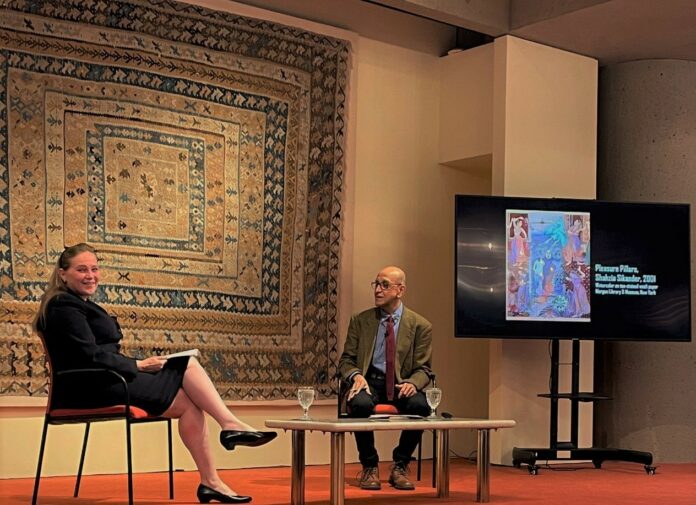
two people, one sitting on the left is Dr. al-Khamis, and Dr. Sajoo sits on the right
The conversation, hosted at the Ismaili Centre Vancouver, features miniature artworks at the Aga Khan Museum. PHOTO: Courtesy of Amyn Sajoo

By: Nancy La, News Editor 

Editor’s note: This article was updated on April 6, 2022 to clarify this event was co-hosted by SFU and the Ismaili Centres.

On March 26, 2022, SFU co-hosted “Art as Dialogue: Ethics of Citizenship and Identity” with Drs. Ulrike al-Khamis and Amyn Sajoo. Sajoo is an international studies lecturer and visiting scholar and al-Khamis is the director and CEO of the Aga Khan Museum in Toronto. This conversation opened a five-part series on Islamophobia hosted by SFU and the Ismaili Centres. 

The event focused on historical Muslim art and their representation of the Islamic world in relation to Western perceptions.  

Sajoo opened the conversation by discussing the necessity of art in addressing Islamophobia. “Culture matters. It can’t be an elite top-down change. We can pass all the hate crimes laws, and all the public policies against Islamophobia or anti-Semitism, or the intolerance of any group, but until it peters down into the social imaginary, into the culture, we’re not quite there yet.” 

Al-Khamis spoke about how the public’s opinion on Islamic art is a Western invention from late 19th to early 20th scholars and enthusiasts. This invention does not reflect the artwork but focuses on Western ideas “than the reality within the Muslim world itself,” she said.

As an example, Al-Khamis showed a miniature painting from Delhi, India and explained the misconception of the Middle East being the central location of Islam when India had the third largest Muslim population in the world.   

“The same scholars also made popular the notion and the misconception that images are forbidden in Islam. So these two problems we have were actually created by Western scholars,” she said. 

Sajoo added, “And it’s totally contrary to the evidence. There’s no shortage of images in Muslim art absolutely from the beginning.” 

Despite the geographic distance, al-Khamis pointed out the spiritual connections between Muslim art and Indigenous culture. “It really comes down to the relationship with the divine [ . . . ] and within that, our relationship with the environment, with nature, and with all living beings in harmony.” 

She added, “We do all face similar, if distinct, issues of alienation, of not being accepted, of being discriminated against.” 

Al-Khamis pointed out the importance of “intangible heritage” within a culture. Instead of the Western focus on materiality, intangible heritage focuses on wisdoms, culture, and collections that many pre-modern cultures possessed. 

Throughout her discussion, aAl-Khamis showcased various paintings from the Aga Khan Museum, one of which, The Court of Kayumars, she used to discuss a culturally diverse existence. “We are all yearning for enlightened leadership, we are all yearning for a land and a society where we can all live together, shoulder to shoulder, as is in the case in the in the picture, in peace across differences, not only tolerating our differences but actually realizing that our differences enrich us and make us stronger and more exciting as a society.”

The event is available to view on YouTube. The Onstage Conversations will take place at various locations, including SFU Harbour Centre and the Ismaili Centre Toronto, until September 2022. Interested parties can visit their website to find out more information on registration.