Home Blog Page 240

The memefication of the Queen’s death

0
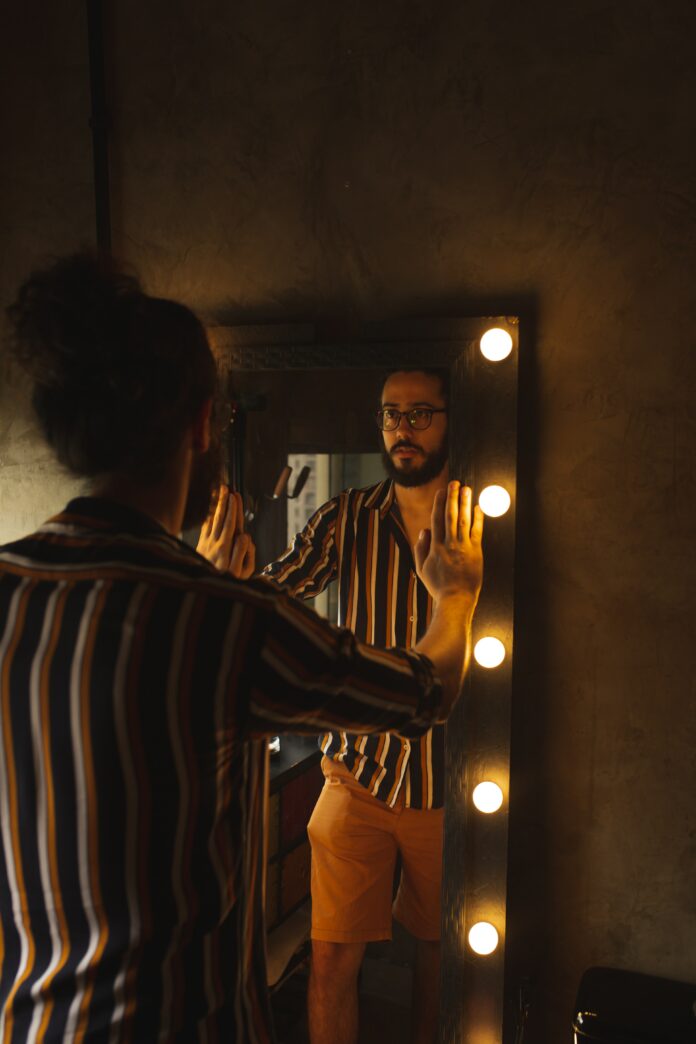
Many will not grieve, they will celebrate Photo: Annie Spratt/Unsplash

By: C Icart, Staff Writer

Content warning: mentions of colonialism, genocide, and sexual assualt 

Queen Elizabeth Ⅱ is dead and I feel like I’m one of the only people who didn’t find out through a meme. On the morning of September 8, almost immediately after the news broke the monarch died, the memes started filling my social media timelines. 

I’m not talking about the confusing ways brands like McDonald’s, Domino’s Pizza and Heinz chose to post about her. I’m referring to the slew of celebratory memes: Princess Diana fighting the Queen when they meet again in the afterlife or the Queen in hell with Prince Phillip. Even the hashtags “SHE DIED” and “RIP BOZO” quickly started trending on Twitter after the announcement.

The memefication of Elizabeth II

Are these memes just disrespectful celebrations? Or do they point to something more? The increased usage of political memes on social media is the continuation of long-standing traditions of humour and satire in politics. Scholars like Marina Bulatovic have found that memes on social media have made political humour accessible to more people than ever before. They’re participatory and even those who aren’t creating them can participate by liking, sharing, and commenting. 

Some memes were simply celebrations of her death while others were critical commentary about her reign and the people it harmed. 

The memes offer funny and accessible insight to the experiences of many marginalized communities. They are an opportunity for people from different backgrounds to find common ground over their dislike for the monarchy. The violence provokes this animosity that their families have experienced at the hands of the British Empire. Specifically, “Black Twitter” and “Irish Twitter” trended during this time. The memefication of the Queen’s death was likely not meant to be an educational moment but it exposed millions of people to criticisms of the monarchy. This is important because there is a stark contrast between the way mainstream media reported on her death and the way many chose to talk about it online. 

The memes are funny, the history they refer to is not

For so many people, the queen was not a “spiritual grandmother.” She was a colonizer, in a very literal sense. After WWI, the British Empire which started as “an island smaller than Kansas,” ruled a quarter of the globe. How does this happen? Professor Kehinde Andrews offers the answer: “it was genocide, slavery, and colonialism that propelled a small island nation into a global leader.” 

As of September 2022, the Queen was still the head of state in 14 countries of the Commonwealth of Nations. Canada is one of those countries. Most of the countries in the Commonwealth are former British colonies. 

The story of colonialism perpetuated by Britain cannot only be told in past tense. On top of the ongoing effects of colonialism, former colonies around the world have not received reparations. Economist Utsa Patnaik “calculated that Britain drained a total of nearly $45 trillion from India during the period 1765 to 1938.” There are only 22 countries today that have not been invaded by Britain. As a result, many of us are the children and grandchildren of people the British Empire could not kill or enslave. Our family histories are deeply impacted by war and occupation caused by the British. Even conservative estimates say that millions of people died at the hands of the British Empire.

For many, the queen was “the number one symbol of white supremacy.” Many of the artefacts stolen by the British empire have not been returned. This includes the Koh-i-Noor diamond that British Prime Minister David Cameron said could not be returned to India because “if you say yes to one [request], you suddenly find the British Museum would be empty.”

Here in so-called Canada, Justin Trudeau has announced a national day of mourning on September 19. That is just 11 days before National Day for Truth and Reconciliation, a holiday to honour “the children, survivors, families and communities affected by residential schools.” Those schools were part of the systemic abuse and genocide sanctioned by the monarchy. What does that mean when it comes to us as settlers truly addressing the harms of colonialism against Indigenous nations across Turtle Island?

All you can do is laugh

People are free to say anything on social media, but some are still off limits. For instance, Twitter removed the following tweet about the Queen from professor Uja Anya for “abusive behaviour:” “I heard the chief monarch of a thieving, raping, genocidal empire is finally dying. May her pain be excruciating.” Her anger was specifically about the role the queen played in the Nigerian civil war. Despite the backlash, Anya has reiterated multiple times that she is not sorry. Lack of remorse is something she has in common with the Queen, who has never apologised for the Jallianwala Bagh massacre, nor many of the Monarch’s other crimes against humanity.

Despite Anya’s wishes, the queen did not have an “excruciating” death. She lived a long life and died peacefully surrounded by her loved ones. She has not suffered any consequences for the harm she caused globally. In light of this, the memefication of her death may be embarrassing for the royal family on a PR level, but it’s not the worst possible outcome.

“​P​olitical humour often flourishes in oppressive political regimes as a form of morale boost. Memes become outlets for expressing frustration with the political situation.” 

Creating and sharing memes, for many, was a way to express themselves and connect. Watching the world mourn her brought up painful feelings of anger and sadness for a lot of people. And whether the meme creators were aware of this or not, it was a way to avoid having their posts taken down for the sentiment they were expressing. In a world where the consequences of colonialism are felt worldwide, being able to laugh can feel like a revolutionary act. Are folks choosing to laugh after her passing nearly as violent as what she has done and sanctioned? 

It is not to say that no one truly used the September 19 holiday to mourn the late Queen but many of us did not. As uncomfortable as it may be for some, many did the exact opposite: “It was about celebration: That resistance will outlive colonialism and the British Empire, just as we’ve been doing.” The queen is dead, but unfortunately the monarchy’s violent legacy lives on. However, if the memefication of her death teaches us anything, it’s that those who have resisted and survived her colonial efforts are determined to have the last laugh.

SFU surpasses emission reduction targets

0
The photo is of the outdoor staircase leading into Convocation Mall at SFU Burnaby. The Academic Quadrangle can be seen.
The union has outlined several demands for RA’s as the university agrees to work on the bargaining table. PHOTO: Gudrun Wai-Gunnarsson / The Peak

By: Chloë Arneson, News Writer

Editor’s note: This article was updated on October 7, 2022. Originally the article attributed the statement to SFU’s external communication director Will Henderson and has been updated to SFU chief facilities officer Larry Waddell. 

On August 31, SFU announced they had cut greenhouse gas emissions by over 50% from 2007, exceeding both provincial targets and the university’s Race to Zero targets

The Peak interviewed Larry Waddell, SFU’s chief facilities officer, to learn more about SFU’s climate commitments. “The objective is to build momentum around the shift to a decarbonized economy,” he said. “SFU has set ambitious emission reduction targets for Race To Zero that will see 85 percent greenhouse gas (GHG) emissions reductions by 2030, net zero reductions of direct emissions by 2035, and net zero of all emissions by 2050.”

SFU joined the Race to Zero initiative in October of 2021. The global campaign is backed by the United Nations to encourage “rigorous and immediate climate action” with the goal of halving global emissions by 2030. SFU is one of 130 organizations and communities who have joined the program and pledged to fight climate change. 

In addition to joining the Race to Zero campaign, the SFU Board of Governors officially declared a climate emergency in February 2022. “After years of lobbying from student climate advocacy group SFU350,” SFU agreed to align themselves with six of the seven demands from the students’ open letter. These demands include divesting from carbon-intensive investments, decarbonizing university facilities, and creating a climate hub to engage students on the subject.

“Aligning with this global campaign builds on decades of sustainability work at SFU to address climate change,” Waddell said. SFU began measuring, reducing, offsetting, and reporting on its carbon emissions in 2007 as part of their strategic energy management plan. In compliance with the Climate Change Accountability Act, SFU submits a report to the ministry of environment on their annual GHG emissions.

The SFU facilities services energy committee is leading SFU towards their emission targets alongside many other organizations, students, and staff. BC Hydro, the Ministry of Advanced Education, and Corix are also involved in helping the community reach their goals. The Corix biomass plant was opened on SFU Burnaby in June 2021 and allowed SFU to provide more energy from a carbon neutral source. According to SFU News, “Instead of using natural gas to heat SFU’s campus, the fully operational biomass plant, located on South Campus Road at SFU Burnaby, transforms clean wood waste, once destined for landfills, into a low carbon energy source.”

In order to reach their ultimate goal of net zero emissions by 2050, Waddell noted they will be implementing their current strategies on a larger scale. “This includes energy efficiency and conservation, a renewable energy system, [and] a district energy infrastructure upgrade and high-performance building standards for new builds,” Waddell said. 

He explained the SFU 2025 sustainability plan will be redesigned and brought to the SFU Board of Governors later this month. Using the United Nations’ sustainable development goals, they hope to “embed sustainability across all SFU’s activities and campus,” said Waddell. “It is designed to be a living document that continually evolves to address new institutional commitments and emerging local, national and global sustainability challenges.”

The Peak reached out to SFU350 for a comment, but did not hear back by the publication deadline.

New 90-Unit Family Housing opens on SFU’s Burnaby Campus

0
The photo is of the outside of one of the new buildings. There is a construction crane and trees behind the building.
The buildings include study spaces on each floor and outdoor courtyards for resident use.

By: Hannah Kazemi, Staff Writer

SFU’s residence and housing community has grown steadily over the years, with the most recent development plan being two new family-oriented rental buildings in UniverCity. According to the media release put out by SFU, the 90 new units are part of their five-phase Residence and Housing Masterplan. These units are set to open to students with spouses or common-law partners and/or children this fall. The Peak reached out to SFU’s Residence and Housing team to learn more about these new buildings and what SFU students can expect.

According to Residence and Housing, the need for family-oriented housing on campus has been in the works for a while and they “have known for some time that there is demand for family housing.” This came from “requests, enquiries from students, and student surveys conducted by Residence and Housing” over the years.

SFU already has an extensive network of undergraduate residence buildings on the west side of campus, however “students with families have specific needs that our current inventory of student housing cannot easily meet, and our hope is this dedicated family housing will increase the options available and help create an inclusive environment for all students,” they said.

Residence and Housing told The Peak they regularly seek student feedback in order to determine the needs of current students. The feedback gathered is used to “determine a variety of outcomes, including types of amenity spaces as well as other student needs such as Wi-Fi, furniture, usage of space, dining services and more.”

The two new buildings were designed with the goal of “supporting an inclusive and vibrant on-campus student community” in mind. Students can expect common areas and study spaces on each floor of the buildings, as well as an outdoor courtyard and various other outdoor spaces for resident use. The idea is that students with families can engage with the SFU community while also having access to spaces where they can make connections with students in similar situations. 

With the location of the buildings being part of the UniverCity community, they are also in close proximity to “childcare, [an] elementary school, stores, and other amenities of UniverCity [that] makes it particularly convenient for parents of young children.” 

The Residence and Housing team also noted the buildings are “designed to Passive House specifications, meaning they are designed for thermal efficiency and will stay warmer in winter and cooler in summer, minimizing energy usage.” As stated on the Residence and Housing website, the units come unfurnished; however, the cost does include high-speed Wi-Fi, heat, hot water, and electricity.

In order to qualify for family housing, “one adult resident must meet SFU’s academic credit requirements, and have a spouse or common-law partner, and/or one or more children under 19 years old.”

When asked about what’s next in terms of on-campus housing, Residence and Housing noted they are “continuing to deliver on [their] Residence and Housing Master Plan, which aims to house 3,250 students at the Burnaby campus by 2035,” a major increase from the 1,900+ students that currently live on campus. 

“The next major addition to campus will be Phase 2, scheduled for completion in Spring 2023, which will add 369 single-occupancy rooms for undergraduate students. Residence and Housing is also taking on projects to upgrade and improve our older buildings, ensuring they will continue to be available for many years to come.” 

They also have plans to improve housing opportunities for students across more than just the Burnaby Mountain campus, with a survey currently being conducted through students’ SFU emails about housing needs for students attending the Surrey campus.

For more information on the family unit housing, visit the SFU Residence website.

Rilakkuma’s Theme Park Adventure doesn’t live up to its predecessor

0
Half the plot points didn’t make any sense. IMAGE: Netflix

By: Michelle Young, Editor-in-Chief

Rilakkuma is an adorable brown plush bear from Japan, loved by many. His friends, Korilakkuma and Kiiroitori also feature in the giant line up of merchandise created by San-X, “one of the largest character manufacturing” companies in Japan. The plushies are well-loved, and extremely soft, with bean-padded paws. Despite the simplistic character designs, Rilakkuma himself has “reached a total of $10 billion throughout Asia since its launch by San-X in 2003, as well as 14 dedicated shops and a Rilakkuma café in Japan.” 

So, when Rilakkuma and Kaoru, aired in 2019, I jumped to watch my favourite stuffies come to life in a beautifully animated stop-motion series. It was a delight. It had gorgeous scenery and a bittersweet approach to real life issues like finances and apartment demolitions. It wasn’t without its flaws, but it definitely exceeded my expectations for a series about plush bears. 

Obviously, when Rilakkuma’s Theme Park Adventure premiered on Netflix at the end of August, I rushed to watch it, expecting the same amount of care and delicacy from the first series. However, between the overly-bright pastel palette to the dysfunctional theme park staff, I was left underwhelmed. 

The series functions on the premise that the characters are trying to spend a nice day at a soon-to-be-closed theme park, but are split up and left to find each other for the rest of the season. Along the way, we meet the theme park cast and fellow park go-ers. 

What could have been a cute and heartwarming series falls flat from the lack of depth put into the plot and characters. For eight minutes per episode, the series tries to do too much. They introduced at least seven additional characters, but really should have only focused on two or three. Since Rilakkuma and Kaoru takes its time to understand Kaoru (the bears’ roommate and caretaker) and neighbour Tokio — the series revels in its simplicity. However, Theme Park Adventure rushes the stories of everyone, only granting one or two characters a decent amount of development. The bears themselves don’t get enough spotlight, either. 

Not only are the characters rushed and often cliché, but the plot falls apart when you begin to question anything it stands on. A kid runs away from her parents and they just nonchalantly wander the park trying to find her? Perhaps it’s possible, but it probably isn’t a good sign. A mechanic takes the kids and bears on an abandoned ride? Questionable at best. Someone else literally takes containers straight out of Kaoru’s purse thinking they’re his? Increasingly absurd. Kaoru’s love interest is also mistaken for theme park staff for most of the series and never says one word to correct anyone. Kaoru doesn’t even try to call him until episode seven (of eight)! 

I know this is a show about plush bears, but seeing how none of these things would work in reality pulled me out of the series too much to be able to enjoy it — especially when Rilakkuma and Kaoru felt so seamlessly real and human. 

However, my biggest issue with the whole thing lies in Suzune. She works at the ticket booth, the dango stand, and also performs as an idol for attendees. She’s exhausted due to the short staffing of the theme park, and makes mistakes until she decides to run away from her overbearing boss. 

Upon taking a ride during the sunset, she suddenly remembers her love and passion for her work. Looking at the crowd that waits for her to perform, she happily gets ready to sing. What is supposed to feel heartwarming, feels like a bitter message to put aside your own needs for the sake of other people. Because the park is closing, there is no real solution as to hiring practices or proper compensation for her work. Her boss simply apologizes and that’s supposed to resolve the issue. It made me wonder if Suzune could actually go into the world and advocate for her needs in a future job, or if she’s simply supposed to accept mistreatment because of her own passion. That’s not a message to be sending to kids or working adults. 

The show isn’t a complete write-off: it has some heartwarming scenes, a detailed set, and the cuteness of the kumas to keep you engaged. However, it’s largely missing the aspects that made the previous series so lovable: internal growth, the feelings of life passing by as you age, and the formation of strong friendships.

Monday Music: Upbeat Japanese electronic artists

0
“Monday Music” in orange block text on a yellow rectangular background with rounded corners and an orange border.
Monday Music: your weekly themed playlist. Image courtesy of The Peak.

By: Olivia Visser, Opinions Editor

Whether you’re studying or riding the SkyTrain, upbeat electronic music is an unbeatable way to pass the time in peace. Japan is home to a wide array of influential ambient and electronic artists who paved the way for the modern electronic scene. All these artists produce different styles of music, but they’re united by their meditative melodies that invite listeners to pay close attention to the smaller details. 

“GREEN” by Hiroshi Yoshimura

Hiroshi Yoshimura is an iconic Japanese electronic artist who pioneered the Japanese genre of kankyou ongaku — roughly translating to “environmental music.” Yoshimura’s songs feature melodic ambient tunes alongside nature sounds like bubbling creeks and birds. His 1986 album, GREEN, is internationally appreciated for its unique approach to ambient music. The title track invokes an indescribable sensation of serenity that truly takes talent to create.

“Yellow Magic (Tong Poo)” by Yellow Magic Orchestra 

Yellow Magic Orchestra is world renowned for their impact on early video game soundtracks and the broader electronic music scene. Their self-titled album features creative upbeat melodies and funky rhythms that shift constantly, and uses the Roland MC-8 microcomposer. I bet you won’t be able to get this song out of your head!

“White Wall” by Sakoshi & Makoto

Sakoshi & Makoto is a modern band that creates mellow yet vibrant ambient music. “White Wall” is from their LP, CZ-5000 Sounds & Sequences. Reminiscent of artists like Brian Eno, this track is a progressive blend of airy synths amongst an energetic ambient soundscape. I look forward to seeing what Sakosho & Makoto will put out in the future. 

“lust” by Rei Harakami 

Rei Harakami made significant contributions to Japan’s electronic scene in the late ‘90s and early 2000s. Harakami made a name for himself with his abstract approaches to electronic music that emphasize complexity and tone. His songs blend inquisitive, alternating drums alongside moody synth lines. You’ll definitely be hitting the replay button on this one!

SFU hockey starts the journey to a second consecutive title win

0
Photo of the SFU hockey team posing after winning the championship.
Winning aside, new recruits and NCAA competition are an extra incentive to this year’s campaign. PHOTO: SFU Hockey / Twitter

By: Simran Sarai, Sports Writer

After an undefeated 2021–22 regular season, the SFU men’s hockey team emerged as BC Intercollegiate Hockey League (BCIHL) champions for the first time in 11 years. With the team gearing up to defend their title, The Peak reached out to head coach Mark Coletta and returning forward Logan Bromhead for some insight into the team’s expectations for the season ahead, and how they plan to build upon last year’s storybook season.

Coletta spoke realistically about the road going forward for the team after amassing an impressive 14–0 record during the regular season and playoffs. “Of course, it’s always good to win and get a championship under your belt, and obviously doing it in an undefeated fashion was good [ . . . ] But now we move on to a bigger and better year.”

The team has started to mentally prepare for the task of repeating last year’s success by recognizing, this time around, they’ll be on every team’s radar. “I think the boys definitely know there’s a target on their back.” With a “good returning core” for this season, Coletta will have the advantage of having seasoned players who know what it takes to win. “Good people make that transition into the next year a little smoother,” Coletta explained. He referenced veteran Mitch Ledyard and former professional hockey player, and current SFU coaching staff member Jim Camazzola, as some of the strong leaders readying the team for the upcoming season. 

Bromhead, who racked up 14 points in 12 games last year, shared his excitement for the new recruits: “We brought in a bunch of new guys who are elevating our team and pushing the pace,” the forward explained. While new additions will keep competition high amongst the team, both Bromhead and Coletta pointed to games against opponents not in SFU’s league as a tool to help grow the program.   

“It shows that we are doing things for junior hockey players to come and make SFU their home academically and on the hockey side,” Coletta said. Bromhead spoke to the importance of playing USPORTS and National Collegiate Athletic Association (NCAA) Division I teams to showcase what SFU has to offer to potential recruits. “As long as we’re ready for those, it’s a big opportunity for us, and it can definitely build our program.”

SFU hockey kicked off their preseason with a match-up against the USPORTS UBC Thunderbirds on September 9 with a 3–0 loss, but quickly rebounded with a 5–1 win over the Okanagan Lakers the next day. SFU will have another opportunity to play against a USPORTS team when they face the Trinity Western Spartans on September 17. Following that, the team will host an NCAA Division I hockey team for the first time since 2014 against the University of Alaska Fairbanks on January 13 at Bill Copeland Sports Centre.

The game through a goalkeeper’s eyes

0
Photo of goalkeeper Jordan Thorsen in net
The luxury of being the only player in your position comes at the price of being put under a microscope. PHOTO: SFU Athletics

By: Clarence Ndabahwerize, Staff Writer

In soccer, the goalkeeper is the sole figure at the back of their team’s side of the pitch. In a fixed position and constantly close to the stands, they either receive support or harangue from fans of the opposition. Some might say this makes them the “odd one out” on the team. We interviewed Jordan Thorsen, #26 on the SFU men’s soccer team, to find out whether there’s any validity to these claims. 

“There’s a much finer line between good and bad performances as a goalkeeper,” said Thorsen. For an outfield player, making a few mistakes isn’t magnified as much, he explained. On the other hand, a mistake from a goalkeeper could “sacrifice their [team’s] result.” It’s a lot of responsibility for one player to handle at any given time in a 90-minute game. “Goalkeeping is polarized that way,” Thorsen admits, “You really are the hero or the villain. You are essentially an individual in a team sport, which can feel lonely, especially when you haven’t been playing well.”

Despite the position’s spotlighting nature, Thorsen knew he wanted to be a goalkeeper from the time he started playing soccer. Growing up, his biggest inspiration was Danish Manchester United goalkeeper, Peter Schmeichel. His love for the goalkeeper came from his father, who grew up in Denmark and showed him highlight videos of Schmeichel in his formative years. It’s no wonder Thorsen’s current favourite club in the English Premier League is Leicester City — the same team Kasper Schmeichel, son of Peter Schmeichel, plays for.

When it comes to training, Thorsen acknowledged the athleticism required for a goalkeeper is remarkably different from outfielders. “Whereas outfield players are more endurance-based athletes, goalkeepers are all about explosivity, and training reflects that.” He likened training days to doing burpees for an hour. “Training as a goalkeeper reflects the perfection which is demanded by the position,” said Thorsen, “Repetition. Repetition. Repetition, until you can do it almost perfectly every time, because perfection is what is demanded from us.” 

So, how does Thorsen push down these thoughts of perfection during a game? Although he confessed to feeling nervous before matches, instead of letting it get the better of him, Thorsen has learned to turn the nerves into focus. “As soon as the starting whistle sounds, a lot of those nerves melt away. You’re still [nervous], but again, if your mental game is sharp, it’s far more of a blessing than a curse.” Being in goal has also allowed Thorsen to see everything on the pitch, like “team morale dropping in the face of a great challenge.” 

So, sure, goalkeepers may be hanging by themselves in no-man’s land for the majority of games, but it’s anything but quiet on their side of the pitch. Having the best seat in the house forces goalkeepers to have a “very vocal presence,” and be “great leaders in times of adversity.” Sometimes, it can be a much-needed save, and other times, it’s keeping your head up for the team because “no challenge is insurmountable in [soccer]. You have to believe that.”

What Grinds Our Gears: Why are we still using iClickers!?

0
hand holding an iClicker device
Can't we just use our phones for this!? PHOTO: Alan Wolf / Flickr

By: Nercya Kalino, Staff Writer

Throughout our university degrees, we’ve all been in a course where the professor clearly states that not having an iClicker will affect your attendance grade. That isn’t fair. Quite frankly, I think iClickers are a waste of time. We go through all that clicking in class only to have another canvas discussion, quiz, or module that achieves the same goal of boosting your grade.

Now more than ever, the iClicker is a useless device. Most activities nowadays, like using a calculator, can be done on your phone. If your professor requires you to buy an iClicker for their course — nine out of ten times, you’re unlikely to use it much in the future. Live quizzes hosted on Canvas or even the new iClicker app, would be a more reasonable advancement.

I’ve had my pricey iClicker, which I purchased myself, since the Summer of 2019. I have only used it once  that’s it! Now, many of us have sold ours after realizing just how much the iClicker is a waste of money.

Disabled and Disbelieved: People with invisible illnesses still aren’t taken seriously

0
hands of someone in a hospital gown holding a medical hair net
Inclusion doesn’t start with telling people they’re lying. PHOTO: Alexander Grey / Unsplash

By: Olivia Visser, Opinions Editor

Content warning: ableism, online bullying

Disabled people still experience considerable social stigma in modern society. Although online awareness is on the rise, communities still face backlash by able-bodied people who are uncomfortable with the way some people express themselves. Online communities dedicated to calling out “illness fakers,” and defamatory news articles discourage invisibly disabled people from seeking like-minded support.

Recently, the Daily Mail published an article titled “Addicted to being sad: Teenage girls with invisible illnesses — known as ‘Spoonies’ — post TikToks of themselves crying or in hospital to generate thousands of likes.” If the article’s headline didn’t raise enough red flags for you, its content is just as disturbing. Ignoring the fact that the piece takes much of its content from an equally harmful Common Sense article, it upholds a fallacious rhetoric about disability. To older generations who might not understand Gen Z and millennial social media culture, this piece of writing anchors ignorant readers in their already troubling beliefs. The idea that young people are faking their identity for attention is a narrative that harms marginalized communities in many ways, from queer and trans people, to disabled people. For disabled readers, the message is clear: shut up and suffer in silence because your pain “isn’t real.”

The term “spoonies” refers to spoon theory — a concept created by invisibly disabled activist Christine Miserandino. For no particular reason besides being in a café at the time, she picked spoons to illustrate to a friend what it’s like to live with a chronic illness. To her, everyone starts their day with a set number of spoons, which represents their ability to expend energy. Disabled people often start with fewer spoons, so they have to limit or adjust their activities in order to prevent exhaustion and burnout. The simple yet effective analogy spoke to many people online, who dub themselves “spoonies” as a way to identify with other disabled people.

Emma James, Daily Mail senior news reporter, asserts the spoonie community “encourages [people] to lie to doctors in order to get the diagnosis that they want.” However, she never gives any examples of someone encouraging others to lie to doctors about their symptoms.

In any community, there will be some who lie or are misguided, but such a small fraction of spoonies actually fit that bill. Why should an entire community suffer from stigmatization because of a few outliers? I’d be inclined to say almost everyone who complains to doctors about disabling physical symptoms has some sort of undiagnosed medical illness. Perhaps James never considered that people are not seeking diagnoses they want to have, but answers to very real and life-altering symptoms they experience.

It’s easier to judge disabled people when you’ve never had to deal with regular stigmatization from doctors, friends, and now strangers online. A subreddit dedicated to calling out “illness fakers” has over 125,000 followers. Behaviour like this, which targets the infinitely small percentage of “fakers,” vilifies everyone sharing their disabled experience online. It inevitably ends up targeting people who are actually disabled in the process. One autistic TikToker, Raven DeRose, shared her experience with being called a faker by redditors for . . . wait for it . . . dancing for the camera. It’s ridiculous.

The Daily Mail article follows shortly after J.K. Rowling released her new novel, The Ink Black Heart, which has received backlash for targeting trans and disabled communities. Critics suggest her writing is driven by disdain for the massive criticism she regularly receives after sharing her transphobic beliefs on Twitter. Now, she’s targeting the disabled community, which is increasingly receiving its share of online cruelty and discrimination.

Articles that call disabled people “addicted to being sad” grossly underestimate the isolation that comes with physical or mental illness, and the genuine comfort social media can bring. Online communities can offer meaningful support for those who find themselves unable to socialize in-person, especially during COVID-19. Able-bodied people don’t need to fully understand this, but they do need to respect it.

Nobody has the right to decide whether someone is faking their illness, and it’s none of their business anyways. The fact that this even needs to be said should spark concern. Considering 22% of Canadians over 15 have a disability, we must let go of our mindset that tells us disabled people are a rarity — we’re not. Disability sits at the intersections of all identities and communities. The spoonie community doesn’t represent anything toxic, besides reflecting back a society that’s guilty of excluding and misunderstanding those with chronic illnesses.

September 17 is set to be a big day for the SFU football and volleyball team

0
Photo of the SFU volleyball team in a huddle.
The volleyball team looks to exercise some demons on the road, while the football team hopes to beat a nine-year streak. PHOTO: Paul Yates / SFU Athletics

By: Simran Sarai, Sports Writer

For SFU’s football and volleyball teams, September 17 is a date that’s been circled on their calendar. It’s all about opportunities for the football team. After four of their five home games were relocated to Blaine, Washington, September 17 will be men’s first and only home conference game at Terry Fox Field. For the SFU volleyball team, it’s a shot at redemption. The team will come face to face with Western Washington University (WWU) in Bellingham. The last time these two teams met, Western Washington eliminated SFU from the playoffs. We reached out to members from both teams to understand if these storylines were a focal point in preparation for their matchups.

SFU Football

This may be SFU’s first game in the Lone Star Conference, but it’s against an all too familiar opponent in Central Washington University. SFU hasn’t won a game against Central Washington dating all the way back to the 2013 season. The best chance to do so last season was at home, when SFU found themselves trailing their opponent by one point at halftime. This time around, the team is hoping to get a win in front of friends and family. 

When asked about the team’s unique border situation, senior kicker Kristie Elliott says the team will have to do the most with what they’re given. “Obviously, it’s not the most ideal situation for us. We were so excited to have five home games, and now we’re only down to the one home conference game. It sucks, but what can you do about it? We’re still gonna go across the border and do the best that we can.”

The only home game of the season bears extra importance to Elliott, who is one of many seniors taking to the field to play one last game at SFU. Normally, you wouldn’t expect the first game of the season to carry such bittersweet sentiments. Because this will be the team’s final home game, graduating seniors will be honoured at the start of the season, as opposed to near the end. “It’s a big night for me,” Elliot said, “I’ll probably start crying.” 

While it might not be the team’s first choice to sub out their home games to go across the border, Elliott is excited to get the chance to experience the football culture in southern American schools, which mainly make up the Lone Star Conference. “Football is completely different down there [ . . . ] There’s so many people there. Each football [team] has their own little football town.” She also spoke to the excitement and anticipation of the whole team, who are preparing to play against a slate of new teams this season. “I think it’s going to be a challenge, but I think we can take it on.” 

SFU Volleyball

The volleyball team had a strong 2021 season, going 17–9 and making it to the West Regionals for the second time in program history. However, the team was eliminated in the quarter-finals matchup in four sets by WWU. The Peak spoke with junior libero and defensive specialist Kalissa Beltran on the team’s hopes for redemption against WWU, and the team’s goals for the 2022 season.

Speaking to their elimination last season, Beltran highlighted the team’s gratitude in advancing to the playoffs in a highly competitive Great Northwest Athletic Conference (GNAC). This preseason alone, the GNAC teams had a .700 winning percentage. What makes these two matchups even more challenging is the compatibility in their playing style. “Western Washington does a lot of things well [ . . . ] Both WWU and our team are gritty and passionate, making for a great match.”

When asked whether taking on WWU in Bellingham upped the stakes for the team, Beltran spoke clearly about the team’s focus on their own play, regardless of the opponent. But, she did acknowledge away matches can “create more of a fire” to hand the home team a loss in their own building. Beltran assured us the team is “less focused on expectations and more on simply getting 1% better every day.” The team is also heading into the 2022 season with the desire to represent SFU and its adopted name to the best of their abilities. “We are excited for this season under the new name and we will be focusing a lot on our side of the court and playing for each other.”