Home Blog Page 237

Horoscopes: July 25–31

0
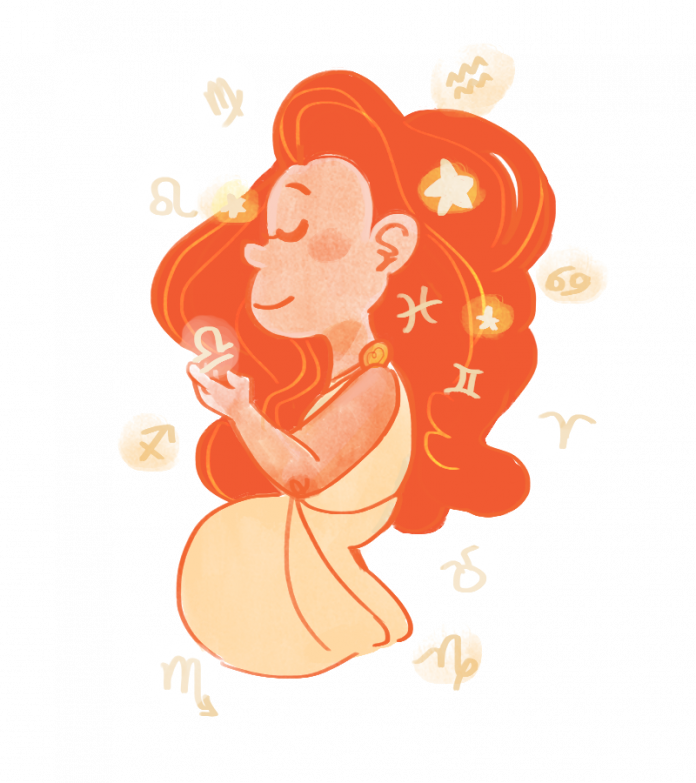
An illustration of a girl with long flowing hair. Astrological signs and stars shine around her.
ILLUSTRATION: Marissa Ouyang / The Peak

By: Hannah Kazemi, Peak Associate

Aries

You go to enroll and all of your courses are full except for one, so you choose three alternate courses that are not at all anything that you’re interested in. You suffer all semester, and end up with an even shittier enrollment date for the next one. Sucks to suck. Have fun in MACM 101!


Taurus

Somehow you always manage to get every class you want without having to waitlist, which by SFU standards, is magic.


Gemini

The stars are unsympathetic to your need to graduate. You come up with three possible schedules two weeks before your enrollment date, all of which are made up of different courses, but still somehow have to pick two replacements because most of your alternates are already full.


Cancer

You’re used to being hurt. You just know that you’re going to pull the short straw by the time your enrollment date comes around, so you already start emailing profs and advisors to ask for permission to enrol in courses a week before you even can. They all say no.


Leo

Enrollment is a breeze for you, Leo. You’re one of the lucky ones. But don’t get too comfortable — your luck will probably run out by the time next semester’s enrollment comes around.


Virgo

Hahahahaha, oh, Virgo. Nothing matters anymore. Are schedules even real? Is there even any point in trying to plan your classes ahead of time?! There should be a class called “The Secret To Course Enrollment At SFU” where all they teach you is that there isn’t one and it’s all a trap.


Libra

No issues to report for you, Libra. Easy, breezy, beautiful, Covergirl.


Scorpio

Your friends ask you what classes you’ve enrolled in because your enrollment date was days ago. You tell them you haven’t looked yet, and that you’re sure PSYC 300W will have spots left. Do you even go here??


Sagittarius

You register in all of the courses you want, but that means you’re on Burnaby Mountain once a week, Vancouver once a week (on the same day you’re in Burnaby!), and Surrey twice a week as well. The courses may be interesting, but seriously, is the commute really worth it? And why does SFU schedule stuff this way??!!


Capricorn

You are the single most unlucky person when it comes to course enrollment. Like ever. The one (one!!!) class you need to take to graduate had one (one!!!) spot left ✨literally✨ten minutes before your enrolment appointment, but when you went to enrol somehow that spot had been taken and two people were already on the waitlist. Seriously, it’s a cruel joke.


Aquarius

Aquarius, you are yet another lucky one. You only have to waitlist for one course, but you’re second in line and the rest of your courses have you on campus twice a week. Life is sweet for you, babe.


Pisces

How is it that all of your upper level seminars are full and enrollment isn’t even halfway over?? You give up after three semesters of trying to take the same four courses and register in a completely distance education schedule. Fuck it.

Cooling centres are not a solution to climate change

0
Flooded traffic sign
We are watching the world burn from the comfort of a cooling centre. PHOTO: Kelly Sikkema, Unsplash

By: C Icart, Peak Associate

Are you ready for an extreme heat wave? Last year’s heat dome made many British Columbians painfully aware that they weren’t. Upwards of 600 people died in what was deemed “the deadliest weather event” in Canadian history. As a response, cooling centres began to pop up around the Lower Mainland. That those centres are so necessary is hugely dispiriting. They’re a sign that we’ve accepted warming as a factor in our day-to-day lives, and have resigned ourselves to middling strategies aimed at making the summer season livable. 

Projections show that temperatures rising above 30°C will only become more and more common in the coming decades. The latest Intergovernmental Panel on Climate Change report also warned the rate of warming is outpacing our response. What this means is we won’t be able to adapt our lives and infrastructure quickly enough to prevent climate change from dramatically changing the ways we live our lives. In essence, cooling centres will not save us from climate catastrophe. And while they’re an important initiative that will save countless lives, they’re still flawed for reasons outside of climate action.

Not everyone is at the same risk during warmer weather. People with pre-existing health conditions, limited mobility or other disabilities, and people who are poorly housed are among the most at risk from extreme heat. For these people and others, cooling centres aren’t the silver bullet. A 2022 report to the BC Climate Action Secretariat on the need for mitigation strategies isolated a number of hurdles to cooling centres’ effectiveness. These barriers to the service include poor awareness of the facilities, limited accessibility, worries about discrimination, and a lack of guarantee that visitors could bring belongings and pets with them. Cooling centres, far from being a climate solution, aren’t even widely deployable enough to protect the most vulnerable.

If we’re resigning ourselves to climate catastrophe, there are some mitigation strategies that could be more effective than cooling centres. Preventing buildings from overheating needs to be considered in the design stage. For instance, using lighter coloured materials helps reflect the heat off buildings. Ensuring that trees surround buildings also helps reduce in-building temperatures. The restoration of urban tree canopies helps improve heat resiliency. Air conditioning will save lives in the short term. Still, it will significantly increase greenhouse gas emissions and contribute to climate change, ironically increasing the frequency of extreme heat events. These are just the beginning of cooling alternatives that should be applied across the province.

Members of our communities are dying, and the longer our governments remain inactive, the more it signals that the most vulnerable members of our communities are disposable. The City of Vancouver recommends frequently checking on “older adults, people with chronic illness, people living alone, and vulnerable neighbours” to ensure they are safe in the summer heat. I will follow those recommendations; however, like cooling centres, it’s the tip of the iceberg when it comes to climate adaptation, and a call to action to address the more pressing and critically necessary task of mitigation. We don’t have to resign ourselves to a future where cooling centres are the only things keeping a large contingent of the population from dying. We can, and should, demand better.

Women’s Center organizes solidarity rally for Roe v. Wade

0
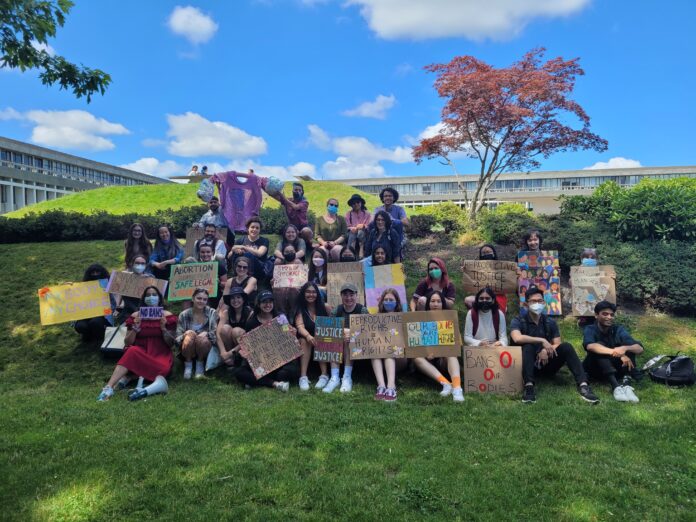
Roughly 35 students sit on the grassy hill at the SFU Burnaby Campus. They are collected, smiling for the camera. They hold signs that read, “No Bans,” Reproductive Justice for all,” “Reproductive Rights are human rights,” and more.
The rally took place around the Burnaby campus from Convocation Mall to Cornerstone. PHOTO: Pranjali J Mann / The Peak

By: Pranjali J Mann, News Writer

On July 13, the Simon Fraser Student Society (SFSS) Women’s Center organized Bans Off Our Bodies, a solidarity rally in the wake of  the US Supreme Court’s (SCOTUS) verdict to overturn Roe v. Wade. The verdict overturned this precedent set in 1973 which constitutionally protected the right to abortions in the US.

This rally stood in support for those who do not have access to safe and legal abortions worldwide. It ran from 11:30 p.m.–1:00 p.m., followed by refreshments and food at the Women’s Center in the Student Union Building (SUB). 

Nimrit Basra, Women’s Center Collective Council representative, opened the march by saying SCOTUS’ decision “is steeped in gendered, economic, and racialized oppression, and those from historically excluded and marginalized communities will face the brunt of this oppressive legislation.” 

As mentioned in the rally’s press release, 24 countries completely prohibit abortion and over 90 countries only allow abortion in case of health risk to the mother or medical complications.

The rally route began at Convocation Mall and marched throughout the campus until ending at the Terry Fox statue at the Reflection Pond. This was accompanied by march chants such as, “Our body, our choice.” 

Various community organizers and student led committee heads gave speeches at the end of the rally. This included a speech from SFSS president Helen Sofia Pahou. She noted prejudices on abortions “got us a male-dominated and patriarchal-infused stack of US Supreme Court justices who cannot separate their politics from the goodwill of accessing safe and legal abortions.”

She emphasized the overturning of Roe v. Wade is a “systematic oppression and invasion against the bodies, the rights, the choices [ . . . ] perpetuated by the state.” 

She continued, “The SFSS upholds the precedence in our issues policies that support anyone seeking access to abortion and their reproductive rights and condemns any entity that chooses to intimidate anyone from utilizing their rights. Anyone who enters our SUB building and goes to our Women’s Centre in need of safe space — please know that you are always welcomed.” 

Nebula Shen, a Board member of Simon Fraser Public Interest Research Group and member of the Out on Campus collective, discussed the importance of having bodily autonomy. Critiquing current policies in place, they stated, “Colonially known as BC, Canada, there are politicians in this province who are against abortion [ . . . ] But it’s not OK for them to ever force that on anyone else’s body.”

Allyson Soriano, organizer for SFU350, laid a direct link between climate change and reproductive justice. She asked, “What does it mean if anyone with a uterus will be forced to bear [a] child when we are experiencing unprecedented heatwaves, floods, landslides, and forest fires?” She added, “Indigenous, Black, and brown peoples’ homes are being used as sites for dumping toxic waste. Many Indigenous communities across Turtle Island still live without access to clean running water [ . . . ] Are these the conditions that we should be raising children in?” 

To find out more on the organization of the rally, The Peak interviewed Basra from the Women’s Centre. 

She shared the planning and creation of the rally started in late May. “There was unanimous support [ . . . ] every single committee in our collective stepped up and did their part [ . . . ] because we were frustrated and we were upset, and we had to channel that frustration into something.” She quoted Mariame Kaba: “Let this radicalize you rather than lead you to despair.”

Basra was inspired and grateful to see the turnout and support from attendees in creating a space with shared solidarity. She reported 50 people attended the rally. 

Highlighting the goals of the initiative, she noted that while the issue seems distant from home, it is present for people around the world, “including here at home.” Through the rally, they aimed “to really give folks a space to channel their passion and their anger and their hurt.” 

She added, “Even during our speeches, it was a circle. It was really important to us that everybody was looking at each other and everybody was able to see each other and hold that space with each other.” 

Through this solidarity rally, she hoped to signify that people are “not alone in this fight, and they’re not alone in how they’re feeling right now.

“This is something that is worth fighting for, and it’s something we need to fight for, not only for ourselves, but for others as well,” she said

Basra reiterated this is a collective and ongoing effort. She noted events and information sessions will be held moving forward. “This is something that we’re going to be working on and fighting for and keeping the momentum going.” 

Women’s issues shouldn’t just matter to women

0
Man distracted from women talking
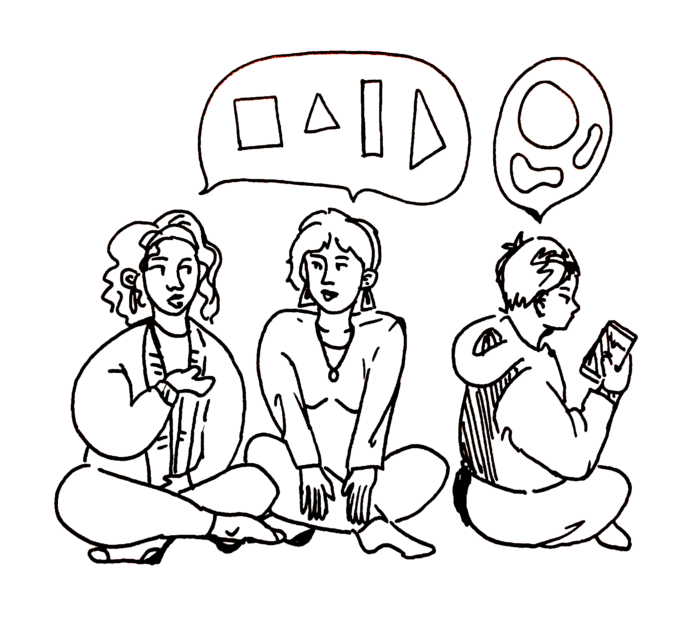
Why suffer alone when we could make others suffer with us? ILLUSTRATION: Angela Shen, The Peak

By: Hannah Kazemi, Peak Associate

I was laying half-naked on a crinkly white sheet of paper with my legs spread, waiting to get a little T-shaped plastic device put into my uterus, when I opened Instagram and learned that Roe v. Wade was overturned. There I was, getting a particularly invasive procedure done to help regulate my irregular hormones — which I treat with hormonal birth control — when the right to get an abortion was stripped from people in the US. They said that birth control could be next. The irony, right?

“Reading this shit makes me feel sick,” wrote my boyfriend as I laid there with my feet in cold metal stirrups. I appreciated the sentiment. 

Normalising discussions about “women’s issues” and making those issues matter to men is a thought that has been percolating in my brain for a while. I’ve made sure to be really open with the men in my life about my experiences. I’m grateful that I’ve been consistently met with support and genuine curiosity from them about the challenges I’ve experienced — but I know many women who have not been so lucky.

Since my boyfriend and I started dating I’ve always been very open and honest about what I’ve been feeling and experiencing. Painful periods, mood swings, changing birth control, hormonal issues, the list goes on. He knows it all. Most recently, those conversations have included how nervous I was to get an IUD, how the procedure went, and how I felt in the days following. 

I don’t tell him these things to make him feel bad or to guilt him for being a man; I tell him these things because he’s in a relationship with a woman, and living in a society where issues that affect women are predominantly seen as only our own does not often allow men to be exposed to these things.

Reproductive health affects men as much as it affects women. While pregnant people will bear the physical impact, there is an emotional toll an abortion can have on both partners. The same goes for contraceptives. Using birth control is a shared responsibility. If the condom breaks or the pill fails, the blame is often placed on women despite the fact that sex is something that both partners have to consent to — not to mention the body-altering, life-long implications pregnancy has on someone’s life.

And traditionally gendered concerns don’t stop with reproductive health. Last year saw the Canadian gender wage gap, measured by comparing average hourly wages earned by women and men, increase from 10.9% in 2020 to 11.1% in 2021. Articulating this disparity against it helps male partners recognize their role in perpetuating an oppressive system. As an ally fully informed of the wage gap, they can help to make change in the workplace — or at the very least, they can be understanding towards a pervasive gendered problem. 

The impact of tackling “women’s issues” is positively felt by men, too. A 2020 World Health Organization study found that gender inequalities are tied to worse health outcomes to everyone. That’s because efforts to address gender inequality, including greater funding for social services like education and family planning, contribute to men’s success. Without efforts to combat gender inequality, men have poorer health and live shorter lives. Not confronting “women’s issues” by ensuring gender equality is quite literally killing men. Beyond wanting to be a good partner, men have a vested interest in ameliorating traditionally gendered issues. 

Men should be part of these conversations, even if they are not in a relationship with a woman. Of course, the onus should not rest solely upon women to educate their friends and family members on the issues and challenges that we face, though many women do take on that responsibility and feel like it is up to them to teach others about their struggles. The simple truth is that society doesn’t care to make “women’s issues” matter to anyone other than women themselves, so the responsibility ends up falling onto us.

Women should not be made to feel like they’re alone in their struggles. Partly because a positive relationship means both parties support one another, and partly because the importance of “women’s issues” actually transcends gender.

The default male

0
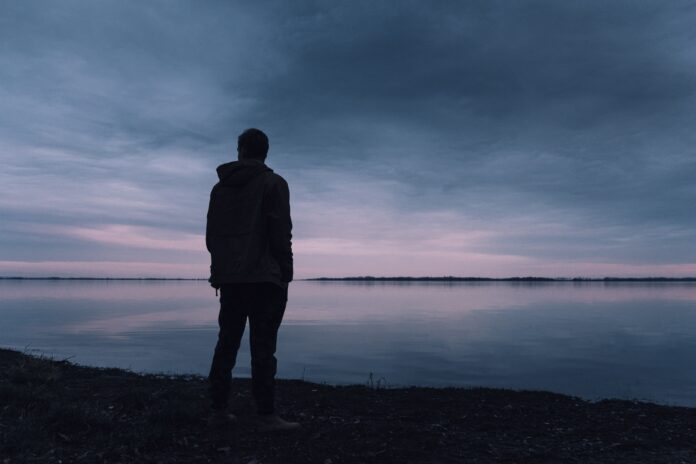
A silhouette of a cis man looking out over a lake.
The world is built for men and it’s resulting in some serious consequences for everyone else. PHOTO: Lukas Rychvalsky / Pexels

By: Yasmin Vejs Simsek, Staff Writer

The “default male” is a term that describes males as the norm in our society and in data collection. This results in research being done only on cis male bodies with effects on other bodies not even being considered. You might have heard about the standard office temperature being set for a male metabolic resting rate and therefore being five degrees too cold for cis women. And this, quite frankly, is the least of it.

Caroline Criado Perez has written an incredible, informative book called Invisible Women that explores the gender gap — how society systemically ignores over half of its population, makes us invisible and ultimately how we live in a cis man’s world. It’s also important to note most of the data is focused on cis men and cis women, and while I recognize that we need more research on cis women, the need is even greater for inclusion of non-binary and trans folks.

I recently had a discussion with a cis man. Let’s call him Bo. He argued that cis, white, straight men have it harder in today’s society, due to quotas and the push for representation. One of my many arguments against this bizarre statement was the “default male.” His response — with a victorious look on his face — was that the “default male” also discriminated against cis men, by making kitchen counter tops a more appropriate height for women than cis men so his back hurt when he was in the kitchen. Confused by the fact that this person unknowingly had started arguing my cause by emphasizing the idea that women belong in the kitchen, I said, “Well that’s part of the problem, isn’t it?”

Yes, kitchens have been standardized to fit women bodies — but a supposedly standardized woman body at 5’7”. The average Canadian woman is 5’4”. So even though the sexist intention was there to create a better workspace for the person who is expected to spend most of their time working in the kitchen, it well and truly failed.

I also gave Bo the example of how cis women are more likely to die in car crashes than cis men. Even though cis men are more likely to be involved in a car crash, women are 47% more likely to be harmed in one and a whopping 17% more likely to die in one. When testing out cars with dummies, the US has, since 2003, been considerate enough to also use female testing dummies — in the passenger seat only. The obvious problem with this is it doesn’t reveal the impact of a car crash on women if they are in the driver seat, where there is both a wheel to protect from forward momentum and more control of the situation. Also, female testing dummies are not a replicate of cis women’s bodies, simply a smaller version of the cis male dummy. To top it all off, seatbelts are not effective on pregnant people and no one has bothered coming up with a solution. 

The car is not the only place women are more likely to die than men. The same goes for heart attacks. Research on heart attacks has always been done on cis men even though some of the symptoms can differ from cis men and women. In fact, only one in eight women feel the infamous chest pain associated with heart attacks, but they can feel pain in many other places instead, such as their jaw and back. This results in women receiving worse care, getting poorer aftercare and, in the UK, being 50% more likely to be misdiagnosed. 

The “default male” doesn’t just impact health care but also everyday inconveniences, down to cis women having a harder time reaching every corner of their smartphone. That’s right, smartphones are also designed for the cis male, generally larger hand, so that is why our faithful devices keeps getting bigger. And don’t even get me started on how voice control is 70% more likely to recognize a male voice.

The world is inherently male-focused and a lot of us are working to change our own internalized perspective. I spoke to a man in Nepal in 2016 who posed the question: “Who won the last soccer World Cup?” I cockily answered Germany, and he just shook his head and said, “No, that was in 2014, but the US women’s team won the World Cup in 2015.” I’ve been taught to think that the world is by default male.

There is a war on trans folks, non-binary people, and women. But the gender gap resulting in the default male is probably not some supervillain masterplan to bring down all women. It’s likely that whoever is in charge has simply not thought that it was necessary to include women — if the thought even went that far. Ultimately, it’s the result of a society that has suffered under the patriarchy for way too long. The simple solution is to collect both sex and gender-separated data. To ensure that medicine works the same way on everyone, that cars are safe for everyone, that symptoms are being distinguished between sexes and genders and yes, Bo, also that kitchen counters are a suitable height for cis men.

Army of Lovers celebrates the histories of local lesbian feminists

0
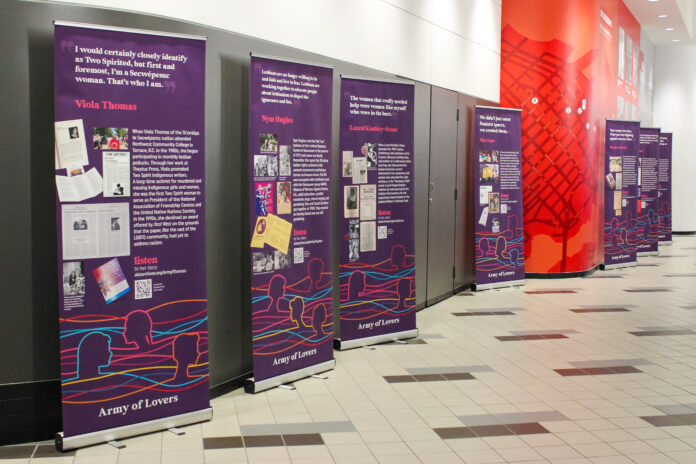
The photo is taken in the hallway of the SFU Vancouver Harbour Centre building. There are three boards that have biographies of Christopher Moore, Nora Randall, and Nancy Pollack.
The exhibit is being held at Vancouver Harbour Centre until August 21. PHOTO: Gudrun Wai-Gunnarsson / The Peak

By: Olivia Visser, Staff Writer

Army of Lovers: Lesbian, Bisexual, Two Spirit, and Queer Women, 1970s and 80s is an oral and visual archival exhibit taking place at SFU’s Harbour Center campus. Running from July 14–August 21, the exhibit focuses on interviews conducted by students in professor El Chenier’s oral history class. 

Chenier explained those who participated in the feminist and lesbian communities in the ’70s and ’80s “have a lot of hard-earned wisdom to share,” and created this project as a two-way conversation between young and old generations. 

The archive itself is a trans-inclusive representation of the narratives that shaped Canada’s early queer and feminist movements. Its in-person component consists of posters lining the halls of Harbour Center, which include short biographies of prominent queer figures and quotations from interviews conducted by students. The content is available in its entirety on the Army of Lovers website, which includes audio recordings taken from the interviews. 

The in-person exhibit included other activists who were engaged with feminism and LGBTQIA2S+ activism. On its opening night, Chenier hosted a panel featuring the stories of Cyndia Cole, Pat Hogan, and barbara findlay. All three are heavily involved in BC’s lesbian and feminist movements, and have made significant cultural and systemic contributions.

Cyndia Cole is a “published writer, an educator, a feminist, an activist, and an artist.” During the Vietnam War, Cole came to Canada as a war resister. She “worked closely with women’s studies founder Maggie Benston” during her time as a SFU student. During the panel, she described her story as interesting because she “became a feminist first” before realizing she was a lesbian. 

Despite being involved in the feminist movement and feeling an urge to participate in the lesbian feminist movement, Cole didn’t believe she belonged in it. She realized she was a lesbian after having a dream about one of her friends, and subsequently sharing a kiss with her after explaining the dream. 

After a lesbian couple was kicked out of Vancouver’s Joe’s Café for kissing in 1990, Pat Hogan opened up Josephine’s Cappuccino Bar for the lesbian community. In addition, she founded the feminist business, Sounds & Furies Productions, as well as BOLDFest Bold, old(er) Lesbians and Dykes. Hogan recounted being involved in the British Columbia Federation of Women, where she was surrounded by lesbians for the first time in her life. She explained that a lesbian caucus formed within the federation because at the time many feminists were in support of women’s rights, but not lesbian rights. 

“Lesbians are no longer willing to lie and hide and live in fear,” read a quote from Nym Hughes, one of the activists featured at the exhibit.

barbara findlay is a queer feminist lawyer who became an activist after her “forced incarceration in a mental health institution for being a lesbian.” After falling in love with a woman for the first time, she “didn’t know that [they] weren’t the only ones.” She emphasized to the younger generations in the audience it was terrifying to “live from one day to the next” when she grew up. People would make educated guesses on others’ sexuality or speak in code, asking questions that referred to queer culture, such as, “Do you know Jane Rule?” Like Hogan, findlay also remembered dealing with homophobia from straight feminists. 

Despite the barriers faced by lesbians in the early feminist movement, the panellists agreed that the lesbian experience still comes with its own joys. Cole and Hogan fondly recalled attending lesbian dances in their communities, while findlay said, “It’s not sex that first comes to mind,” when thinking about the pleasures of being a lesbian. 

“The biggest thing was all of a sudden I had a mirror in which I was reflected,” said findlay. 

Still platformed: You’re not cancelled enough if I’m still subjected to you whining about it

0
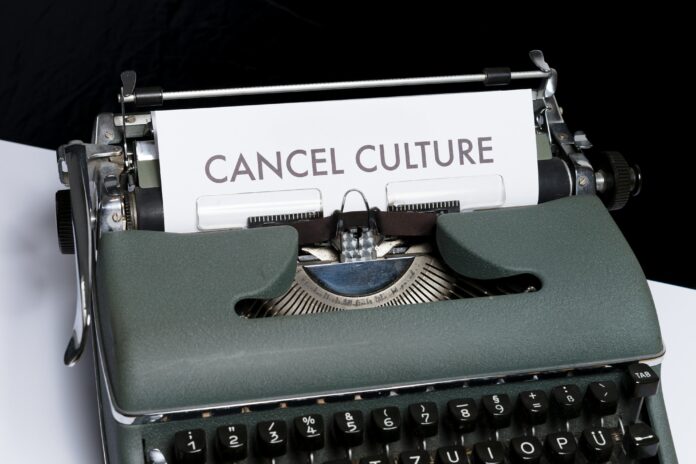
"cancel culture" on typewriter
“Cancelled” people usually end up keeping their platforms. PHOTO: Markus Winkler / Unplash

By C Icart, Peak Associate

It’s long past time we stop indulging right-wing pundits and problematic celebrities by pretending cancel culture is real. Reactionaries vehemently condemning cancel culture makes it sound like there is, in fact, an epidemic of liberal Gen Zs ending people’s careers over political correctness. There isn’t. The fact that we keep having to hear problematic influencers and right-wingers complain about being cancelled proves they still have a platform. 

What is cancel culture? Do we need it? Does it work? Is it real? Politicians, commentators, influencers, and celebrities are some of the most outspoken critics of cancel culture. But the fact that we keep hearing their outbursts means that “cancellation” isn’t the calamitous event it’s made out to be. 

The actual act of cancellation refers to the public shaming that happens after a person or company says or does something offensive. It can occur years after the events, often when someone’s old social media posts are uncovered. It can cost people their job or further career opportunities. Being cancelled is also associated with receiving large amounts of hate, mainly online.

The problem is that the term “cancelled” makes it sound like there is no recovery from it; it is the death of that person’s career or social status. But this is rarely the case when it comes to the rich, the privileged, and the powerful. They often find themselves to be even more popular afterwards, as in the case of Joe Rogan. It’s not uncommon for “problematic” celebrities to even claim they’ve been “cancelled” multiple times which of course shouldn’t be possible if the cancellation had the permanent, long-term impact it’s often implied to have. 

So, why are the rich and powerful critical of cancel culture? Because they don’t want their offensive actions being brought up. If you did something to harm someone, we can and should talk about it. Forgiveness and support should be secondary to addressing the hurt and comforting the victim. Receiving criticism and suffering the consequences for your actions is not a bad thing. We need to be able to identify when people are using the phrase “cancel culture” to delegitimize criticism. In part, because the people being silenced are often marginalized citizens trying to speak about oppression

Censorship is a real issue. But if you’re dedicating a comedy special to joking about it, you’re not experiencing it. As of February 14, there were 177 anti-LGBTQIA2S+ bills proposed in the US. These bills propose, in part, bans on books and conversations about LGBTQIA2S+ issues. This should be at the center of discussions about free speech and cancel culture, not Mr. Potato Head

Overemphasizing the need to condemn cancel culture or calling for an endless reservoir of compassion for people who are “learning” only feeds into the rhetoric that the left is too sensitive and this generation can’t take a joke. It also implies that the people negatively affected by offensive jokes or violent behaviour must prioritize the perpetrator’s feelings and well-being and contribute to their “rehabilitation.” 

Sure, Dave Chappelle’s show was moved to another venue due to the “impact” of his performance. However, he still sold out a show and performed, which proves that being transphobic will not end your career. Indulging in cancel culture debates distracts us from whose free speech is really under attack. You can complain about “not being able to say anything these days” all you want. As long as hate is still being perpetrated, we will not shut up. 

Bukola Balogun’s storytelling transcends traditional music genres

0
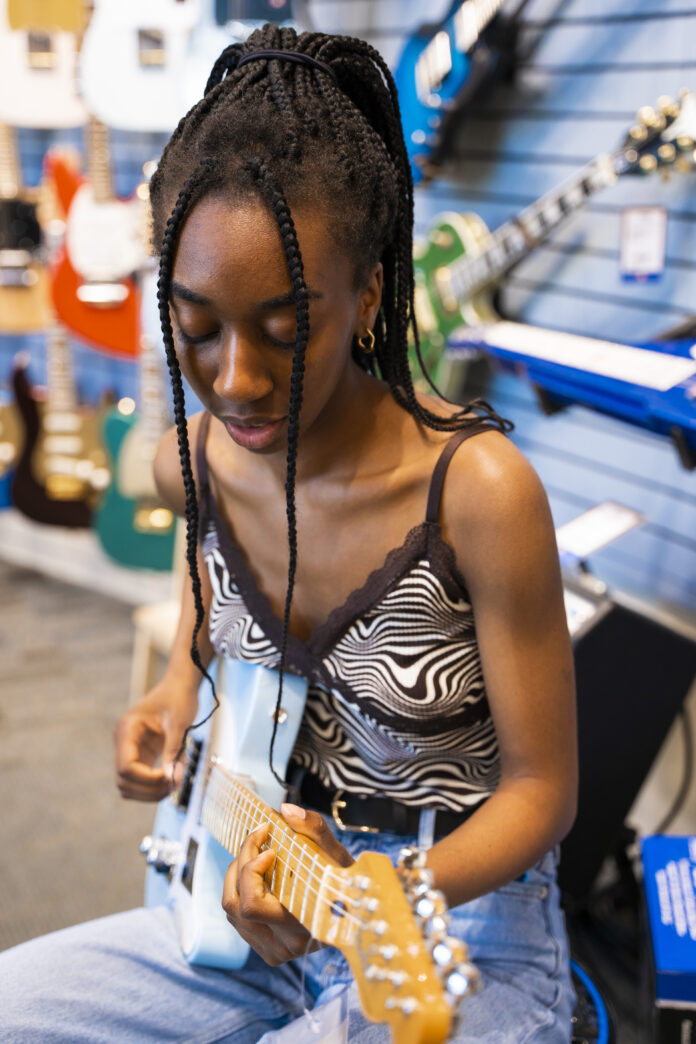
Bukola Balogun pictured at a music store playing on a guitar
Listening through the catchy EP, I felt like I was having a sit-down conversation with the artist. PHOTO: Victor Tran / The Peak

By: Isabella Urbani, Staff Writer

It’s been one year since the release of local talent Bukola Balogun’s debut EP, The Chronicles of a Teenage Mind. The SFU student was hailed by CBC as “one of the top 10 soulful female artists” during their 2020 Searchlight competition. She also had the opportunity to work alongside Grammy Award and JUNO Award winning producers for her EP. Since then, Balogun said she learned to take the reins more on projects, including more risks musically, finding her sound, and trusting her vision. 

Balogun began her music career when she was just nine years old and emerged on the scene in 2018 with her first big performance at The Roxy. Just over a month later, Balogun was a performer at the JUNO Awards pre-show and she quickly garnered the attention of the local and national music scene.

Balogun draws a lot of inspiration from combining a trio of sounds: jazz, ‘90s/early 2000s R&B, and acoustic soul. 

“I’ve really admired artists like Ms. Lauryn Hill, Tiana Major9, H.E.R., and Summer Walker,” Balogun shared. “Their ability to incorporate the guitar into their songs in such a fresh way has inspired a lot of the newer music I’m creating right now.” When it comes to crafting her own music, the guitar is an “essential part” of her music. Jazz chords and harmonies are also a must for Balogun as she is a fan of jazz chord progressions. 

However, when it comes to the future, Balogun is looking to tap into afrobeat. Listeners may get a chance to experience this shift this summer when Balogun will release what she’s referred to as her favourite song. When it comes to her music, Balogun hopes that listeners can appreciate all the elements individually that make up a song. “From the melody, to the lyrics, to the vocal delivery. All the parts of the song help to tell the story.

“I think what sets me apart from other musicians is honestly me, if that makes sense. The way I play guitar, coupled with my musical influences, my writing and singing style makes me unique,” said Balogun, admitting this has been a lesson she learned along the way. “It took me a while to realize that by being true to myself, I am different from other musicians because no one else can be me, but me.”

Balogun’s opening track on her debut EP, “Dear Diary Lessons,” is a testament to coming of age, opening with a near two minute monologue about how the singer perceived herself from childhood to her teenage years. This included understanding that love isn’t always a two-way street, finding her own “armour,” and coming to embrace the way she looks instead of “altering her mannerisms” and appearance for others’ approval. 

What stood out most to me after a full listen through the EP is how it makes you want to dance gleefully. Although each song is unique, it’s clear how Balogun pays homage to various artists. When I listen to her song “Fight For Me,” I feel the same uncontrollable smile creep onto my face as I do when I hear Corinne Bailey Rae’s “Put Your Records On.” When I listen to Balogun’s most streamed song “I Am Enough,” I hear the incredible harmonies that made bands like Destiny’s Child and TLC so likable. 

Balogun makes challenging topics, like self-worth, into music beautifully crafted for the ears. Her storytelling effortlessly translates into song, aided by the smooth jazz and R&B backing tracks. Somehow, it feels like more than music. It feels like sitting down with a friend and having a soulful conversation — chronicling the inner workings of a teenage heart. 

You can find out more about Balogun by heading to her website or listening to her music.

Monday Music: Chinese Classics

0
“Monday Music” in orange block text on a yellow rectangular background with rounded corners and an orange border.
Monday Music: your weekly themed playlist. Image courtesy of The Peak.

By: Cristina Liao, Peak Associate and Nancy La, Copy Editor

Many Chinese songs have a place in our hearts as a symbol of home and culture. Some featured in this list are gems that withstood the test of time. Others are classics that many Chinese students would know. Either way, enjoy this playlist of songs that we hold near and dear because every song featured in it is special to us in some way. 


by Wang Feng


Photo Credit: Music Nation Records Co. Ltd. 

CL: The title of this song directly translates to In Spring. This is a song that has shaped my music taste to what it is today. I have a distinct childhood memory of listening to this as my family and I drove along the highways of the Californian seaside while we were on vacation. It’s one of those incredible pieces of music that I continually come back to because I am obsessed with the singer’s raspy voice and the tune’s rock-like production. Wang sings about his past and reminisces about a time when he was young and naïve. 


告白气球 by Jay Chou


Photo Credit: JVR Music International Ltd. 

CL: “告白气球” by Jay Chou is a song that I’ve been listening to since middle school and something that Chinese students will be familiar with. The song’s title is word play on the term 告白, which is a romantic confession, translating to “White Confession Balloon” in English. Chou’s music ranges from Chinese rap like “Now You See Me” to pop, such as this song. In fact, both of the mentioned tracks can be found on the same record! Chou is known for his time as a coach on The Voice of China, a singing competition that is extremely popular in both Mainland China as well as Taiwan. This particular song has a cute and relaxing summer feel to it with an uplifting beat and simple lyrics about coffee shops by the sea side. It’s a perfect track for listening on a warm August afternoon or a bedroom karaoke party. It’s one of those rare Mandopop songs that I know all the words to. 


江湖天 by Silence Wang


Photo Credit: The Sound Times Entertainment Media

CL: I first heard this beautiful song in a popular Chinese drama called The Legend of the Condor Heroes. The show in question is based on an iconic book written by Chinese author Jing Yong, and has multiple editions made from as early as 1983. The production on this has influences from traditional Chinese music with cultural instruments that sound like guqin and bamboo flute found throughout the song, and the style of piano the backing track. Its lyrics are infused with imagery and idioms. It is difficult to translate the song’s title into English because Wang wrote the title as an idiom but my best attempt would be “Immortal Life by the River.”


Nancy 

佳损” by Eason Chan


Photo Credit: Cinepoly Records Co. Ltd. 

NL: Eason Chan is considered to be one of Hong Kong’s top singer/songwriter, and his songs are always so well written. “最佳损友,” or “Best Bad Friend,” will instantly punch you in the gut with lyrics full of adulthood resignation. The song is about mourning for a best friend who is no longer in one’s circle as life has split in different ways. I’m sure we all have people in our lives whom we once thought would stay with us forever. However, when reality creates irreconcilable differences between two people, there is nothing to do but to drift apart while wishing them the best. The lines that moved me to tears translate to, “I can no longer tell whether we are friends or foes / pushed around and moved by everyday life / in the future, that stranger that I see / is yesterday’s dearest person.” 


消愁 by Mao Buyi


Photo Credit: 北京智慧大狗文化傳媒有限公司

NL: This song perfectly captures the various growing pains a person experiences throughout their lives. The song is sung from the perspective of a middle-aged person looking back and forth from their life, to the moments of bright, seemingly eternal youth, to the heartbreak of moving away from home, the slowly aging body, and finally, the freedom that death promises. While Mao’s timbre grounds the listener, the song’s lyrics washes them with sadness and grief of a life with too many regrets. With lines such as, “Life is bitter and short, why must we hang on so tightly?” this song will make you reflect on the life that you’re living.

What the Buddha Never Taught showcases outdated narratives

0
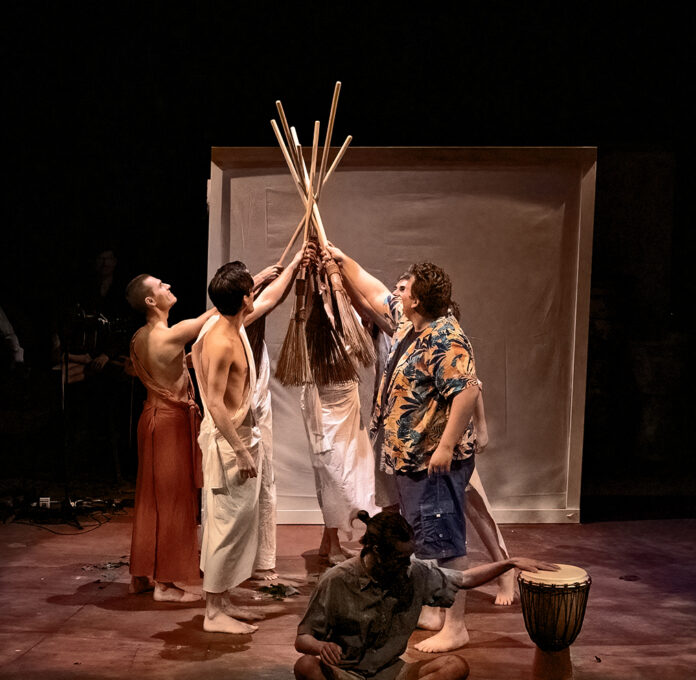
A group of white men holding sticks and pointing them together facing each other, with one man at the front playing a drum
The play rendition of the 1990s book felt culturally outdated to say the least. PHOTO: Jill Raymond / WTBNT Productions

By: Yasmin Vejs Simsek, Staff Writer

What the Buddha Never Taught is advertised as a “rock opera” and is based on the book with the same name by Tim Ward. Playing at Jericho Arts Centre until July 10, this show was not what I expected. I was imagining something like We Will Rock You meets Waiting for Godot and my anticipated version might have turned out more thrilling than the actual “rock opera” written by UVIC professor Martin T. Adam.

The story begins with characters Tim and Jim arriving at a monastery in Thailand, where they expect to “find themselves” in one way or another. They meet like-minded people and are thrown into the lifestyle of the monks who reside there permanently. But that is about it as far as the storyline goes, with no inclination towards a traditional narrative arc or similar story arcs. Written with the intention of celebrating the “western encounter with Buddhism,” it came across as white people pointing out loopholes in the religion and trying to be lighthearted and funny while doing so. Rather than a respectful encounter, the play delivered tired western ethnocentric narratives.

What the Buddha Never Taught didn’t keep the audience on their toes, with audience members calling it slow in the interval. It was actually a perfect example of why to “show, not tell,” as everything that Buddha never taught was verbally pointed out in most conversations throughout the performance. This juxtaposes one of the central teachings of Buddhism — to learn the importance of silence and stillness in order to discover inner peace.

When I attend musical theatre performances, I expect the songs to further or enhance the story in a meaningful way. The songs in this show seemed randomly plopped in and was more a fun, musical interlude than a necessary part of the story. There were also very few rock aspects in the music, with maybe two or three songs I would identify as rock and even fewer opera aspects, with zero opera songs. It would have been better to leave it as What the Buddha Never Taught The Musical to establish appropriate expectations for the score. 

My biggest problem, however, was not with the music. As I flicked through the programme before the start of the show, I quickly noticed that out of the nine cast members, there was only one woman and one visible person of colour — who happened to be the same person. It screamed tokenism and realizing just how small her part was only made that feeling stronger. Upon hearing the title of the show, I did not expect to spend two and a half hours on a sunny Sunday, watching white men gather around and joke about one of the widely practiced religions of the world. There is no shortage of western/white voices drowning out the voices of BIPOC cultures and religions. We don’t want to see this repeated anymore, even when posed as a revolutionary or original thought.

When all that has been said, I don’t believe any of this was caused by this particular production of the show. I think the problem started from the book it was based on, published in the 1990s. In a review of the book, local author Michelle Barker wrote, “I felt like much of his criticism was in fact cultural, aimed at a society that he is not from and perhaps doesn’t understand all that well.” Although Barker identified that the book brought up interesting questions about the life of monks, she said most of it sounded like a judgemental monologue rather than a respectful observation.

I think the problem lies in creating a piece of art that does not consider representation or nuance — especially when it could so easily have been much more diverse, being set in Thailand and all. Not only do I expect casts that are true to representation in 2022, I also expect a level of respect for other cultures as well as careful avoidance of cultural appropriation and thoughtful critique. I believe this to be the bare minimum, which I do not feel this piece delivered. I don’t think theatre like that has a place in our century and I believe you have a social responsibility when you put art into the world to be perceived by the masses.