Home Blog Page 201

Protesting against nuclear energy in India

0
This is a photo of Dr. Ajmal Khan A. T. This headshot depicts Dr. Khan staring into the camera, smiling.
PHOTO: Gudrun Wai-Gunnarsson / The Peak

By: Olivia Sherman, News Writer

Content warning: mentions of police brutality.

According to India’s minister of state, Jitendra Singh, “nuclear power plants are likely to generate about 9% of the country’s electricity by 2047.” This year will also mark 100 years of independence from Britain’s colonial occupation of India. Nuclear power will help India achieve an emission rate of “Net-Zero by 2070.” 

However, Dr. Ajmal Khan A.T., author, environmental scholar, and postdoctoral fellow of Harvard University, explained that things aren’t as idyllic as they seem. In his most recent lecture, hosted by SFU and the David Lam Centre, Khan presented a dialogue on India’s climate crisis and anti-nuclear activists from across the nation.

Power plants are costly to build, both in terms of economics and in the amount of land they require. “In most of these locations, normally uranium is being mined,” Khan said, which is damaging to the environment and the people living in its vicinity. Despite promises of better jobs and ways of living, many residents of India haven’t seen improvement. Figures from India’s department of atomic energy calculate that nuclear power plants generate only about 2% of India’s total electricity

Khan quoted S. P. Udayakumar, an anti-nuclear activist: “If India was getting half or a third of its energy from nuclear plants, then maybe there would be an argument for it [ . . . ] But after all this, after years of crushing the peoples’ protest at Idinthakarai, is it really worth it?” 

Khan focused his conversation on two nuclear power plants in India: the Kudankulam Nuclear Power Plant (KKNPP) in Tamil Nadu, in the south of India, and the Jaitapur Nuclear Power Plant (JNPP), Maharashtra, on the west coast. Both these power plants are ripe with controversy, he explained, and resistance from the people living in the surrounding areas have created a lasting legacy. “The movements in India are substantially different from the movements in Europe, North America, and any place outside South Asia. They have a different history,” Khan said. 

In 1988, then prime minister Rajiv Gandhi and Soviet head of state Mikhail Gorbachev signed an inter-government agreement to build two nuclear reactors. Construction of the KKNPP then began in 2002. From its beginnings, the KKNPP was deemed controversial: the reactors were set up without the publication of the Environmental Impacts Assessment Report or the Safety Analysis Report. Over one-million people live within 25 kilometres of the power plant, exceeding the recommendations from the Atomic Energy Regulatory Board. Its location is also in violation of the Coastal Regulation Zone, as it’s built just 500 metres from high tide. This location has been proven to be a concern for local fishers. 

There were also concerns about its safety, as the agreement between Gorbachev and Gandhi was made only two years after the infamous Chernobyl disaster in 1986. After the 2011 Fukushima disaster in Japan, these concerns turned to dissent. Protests broke out in India, and police fired back with violence and tear gas. At least two were killed in these protests in 2012, while several thousand were arrested for sedition, or “waging war against the state.” 

While the KKNPP was created with the help of Russia, the JNPP was in collaboration with a French nuclear company called Areva. The location along India’s west coast proved to be lush and fertile, with unique wildlife. Clearance was given for six nuclear reactors to be built on top of this land, destroying crops and grazing land, and contaminating fishing waters. Public hearings were one-sided, concerns were dismissed, and the clearance to construct the plant were proven to be fabricated. Protests spanning from 2010 to 2018 were once again met with violence. These reactors proved not only detrimental to the environment, but also to “life, lands, livelihoods.” 

Khan explained how the series of protests shaped protestors into a community of grassroots activists. “It can even be said that, over the course of the movement [ . . . ] farmers and fishers [ . . . ] became a group to challenge the powerful Indian establishment.” 

These anti-nuclear protests are covered in a series of essays edited by Khan. The book, People Against Nuclear Energy: Anti-nuclear Movements in India,  can be accessed online through the SFU Library.

Five series to watch based on your favourite cult classics

0
Four library staff with pronounced facial expressions in a library office.
PHOTO: Courtesy of CTV

By: Payal R., SFU Student

If you liked Abbott Elementary (2021), you may like Shelved (2023)
Where to watch: CTV 
Number of seasons: 1
Genre: Comedy

CTV’s Shelved is a single-camera workplace sitcom that follows a group of librarians in Parkdale, a working class neighbourhood in Toronto. The library is managed by Wendy Yarmouth (Lyndie Greenwood), an upbeat and overly sweet head librarian who searches for creative solutions to keep her underfunded branch afloat. Similar to Abbott Elementary’s Janine Teagues (Quinta Brunson), Wendy finds herself stuck in situations she’s dug herself into, albeit with good intentions. Whether it’s organizing a Women’s Day bookshelf or a collective community mural, Wendy often exhausts herself from overthinking. She relies on quirky co-workers to keep her grounded, from a quick-witted and aspiring writer, to a loud-mouthed assistant manager, a heartbroken new transfer, and an easygoing business consultant with very little business to manage. Shelved manages to highlight structural, socio-political issues using humour so viewers can see the importance of supporting public libraries. It’s also uplifting to watch with the ease of knowing everything will work out in the end, with heartwarming characters who become like family.

If you liked Arrested Development (2003), you may like Succession (2018)
Where to watch: HBO (Crave)
Number of seasons: 4
Genre: Drama

HBO’s Succession is a satirical drama that follows the employees of Waystar RoyCo, a multimedia company founded by Logan Roy (Brian Cox). This family-led business shares a similar dynamic to Arrested Development as it begs the question of who will run the family company when their aging father’s health declines. Like George Bluth Sr., Logan Roy has sunk the company into a great amount of debt which causes his power-hungry son to take charge. The Roy siblings include an eccentric older brother, a conniving workaholic, an immature playboy, and a smart and savvy sister trying to prove her worth, all joined by their needy cousin Greg. Similar to the Bluth siblings, the Roy family struggles to find common ground between each other which results in poor negotiation of company contracts. If you know nothing about the stock market, it’s okay: Succession is just 27% more serious than Arrested Development

If you liked Columbo (1971), you may like Poker Face (2023)
Where to watch: NBC Peacock, Citytv+ via Prime Video
Number of seasons: 1
Genre: Crime drama

If anyone over the age of 55 is reading this and has watched Columbo, NBC’s Poker Face is a crime mystery that reimagines the classic WhoDunIt — while we know who’s done it from the start. The series is led by Charlie Cale (Natasha Lyonne), a sarcastic but tough casino server who possesses the ability to tell when people are lying. When Charlie is unknowingly entangled with her employer’s shady business, she is forced to flee and seek odd jobs to support herself. Similar to Columbo, this case-of-the-week series starts off with the crime and follows up with Charlie’s investigation, illustrating how she pieces evidence together to find the culprit. The series is created by Knives Out director, Rian Johnson, and includes a stellar guest cast in the first season, like Orange is the New Black’s Dascha Polanco.

If you liked Insecure (2016), you may like Sort Of (2021)
Where to watch: CBC Gem
Number of seasons: 2
Genre: Dramedy

CBC Gem’s Sort Of follows Sabi Mehboob (Bilal Baig), a non-binary Pakistani-Canadian millennial who balances life as a bartender and babysitter in Toronto. In the first season, Sabi tries to navigate their relationship with the children they babysit after their mom falls into a coma. This propels Sabi to reconcile their own relationship with their mother. Similar to Issa Dee from Insecure, Sabi experiences the highs and lows life has to offer all while trying to combat cultural and gendered expectations placed upon them in a heartwarming and hilarious way. Writer and actor Baig told The Star, “I think what I love about this form of art the most is that it kind of proves that people are complicated and love often is too.”

If you liked The Society (2019), you may like Yellowjackets (2021)
Where to watch: Showtime, Crave
Number of seasons: 2
Genre: Drama

Inspired by William Golding’s novel, Lord of the Flies, Showtime’s Yellowjackets follows a high school girls’ soccer team who become stranded in the woods after a plane crash in which they must learn how to survive without any parental supervision. The show’s narrative shifts from the time of their plane crash, sometime during the ‘90s, to the present, 25 years later. As they attempt to reconcile and cope with their complicated cannibalistic past, a journalist starts snooping into their lives. The adult cast features a sharp-witted housewife, a senator suffering from insomnia, a sarcastic burnout, and a sickeningly sweet nurse with attachment issues. If you liked seeing the way anarchy plays out amongst a diverse cast of characters and theorizing what actually happened in the wilderness in The Society, Yellowjackets is your show.

The golden rulebook for being a golden roommate

0
A group of people sitting around a living room
PHOTO: Microsoft 365 / Unsplash

By: Izzy Cheung, Staff writer

At some point during all our lives, we end up having to share a living space with someone else. Whether it be with family, friends, or school-assigned individuals, we’re bound to share a living space with someone other than ourselves. A person’s roommate can make or break their experience living in a certain place, so as potential roommates, we want to make sure we’re well-equipped to make both our living experiences go as smoothly as possible. After all, being one’s roommate means you have a relationship with them — you’re a physical presence in one another’s lives. So, without further ado, here are some golden tips on how to be a golden roommate. 

Compromise is key 

With all relationships — professional, familial, or really anyone with whom you’re sharing a living space — compromise is a major determinant of success. It’s not often that everyone involved in a situation can get what they want, hence the need for some flexibility. Your roommate may not like the same things that you do, and vice-versa, so figuring out common ground is important. If you and your roommate would both prefer to grocery shop over doing the dishes, then you can establish a schedule that allows you two to switch chores every week, which brings me to my next point.    

Establish set guidelines 

People live their lives differently from others. Your roommate might be an early bird, while you prefer to sleep past the morning hours (same). Figuring out some rules, guidelines, or even a physical schedule is important for determining who does what. This can vary from a chart detailing who does which chores for which week, to a verbal agreement on what time friends are allowed over. Having a whiteboard or sheet of paper with these details is super helpful — especially if it’s colour-coded. Keeping it posted on a common space such as on the fridge, on a bulletin board near the front door, or in a shared office space makes it easier for both of you to go back and check if needed. 

Be considerate 

This rule plays off of the previous one. When setting guidelines, or even just sharing a space with another person, you want to keep their interests and habits in mind to give them the most comfortable experience possible. Consider things like respecting your roommate’s sleep schedule, being mindful of their diets and food choices, and avoiding touching their stuff. If you finish a product that you often share, replace it with a new one (such as cleaning supplies or detergent). Even something as small as picking up a pint of your roommate’s favourite ice cream for them to have after a long day will do wonders. My mom always tells me to treat others how you’d want to be treated — so keep this in mind when sharing a living space with others. 

Get to know each other 

You don’t have to be friends to be roommates, but it’s definitely a good idea to get to know them as you live together. When sharing a living space with someone it’s inevitable that you’ll get to know them. For some people, sharing a living space in a dormitory-type setting is a new (and occasionally scary) experience, so being friendly and making an effort to learn about them will make everyone’s experience that much more positive. Getting to know your roommate will allow you to have an idea of what kind of person they are, making it easier for you to be mindful of their preferences and interests. If you know that your roommate prefers clean spaces, it’ll be easier for you to remember to put things back where they belong. You’re living with this person for a decent amount of time every day, so getting to know them is important — if not mandatory. 

Clean up after yourself 

I can’t stress the importance of this one enough. Having lived with a teenage boy, I know what it’s like cleaning up after others (spoiler: it’s not fun). Make sure you clean your dishes, pack up any leftover food, and dispose of your empty wrappers and bags. A little chaos is okay, but just make sure it doesn’t look like a tornado ran through your living space, especially if your roommate prefers cleanliness. Large piles of crumbs are a no-no (we don’t want any bugs or animals eating those up). Shared living spaces reflect on everyone — even if you have your own room, it doesn’t hurt to keep it clean. 

Communication is (also) key 

Constant communication — for example, about meal plans for the night, or who is having people over and when — is exceedingly important. Make sure your roommate is aware of what’s going on at all times regarding your living space. Letting them know that you have a big exam the next day and need to study will remind them to be cognizant of noise levels in the living space, and will likely encourage them to do the same if they have one coming up as well. It rarely hurts to have too much communication between you, but a lack of it will definitely have some negative impacts. Whether you’re borrowing something or bringing someone over, make sure your roommate knows; after all, it’s their space too! 

Commuting outside of Metro Vancouver sucks

0
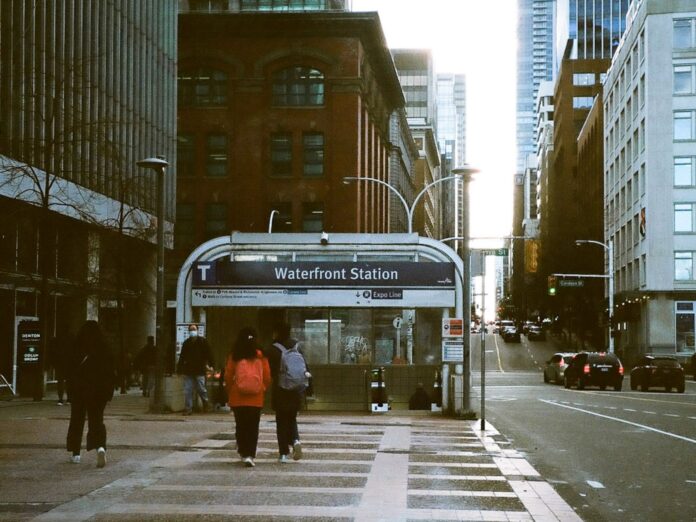
A sign of Waterfront Station
PHOTO: Lauren Kan / Unsplash

By: Kelly Chia, Editor-in-Chief

Having lived in Maple Ridge for three years, I know firsthand how inconsistent buses outside the Metro Vancouver area are. To this day, transiting to where I lived is still an awful affair of waiting for only one out of the three buses headed to Maple Ridge, because the 701 Maple Ridge East was the only bus that went to my street. This meant I’d sometimes wait an upwards of an hour for that specific bus to come so I could go home. 

Although the R3 now goes to Haney Place at a much faster rate compared to the 40 minutes it used to take via the 701, this route doesn’t change the commute time of people living past Haney Place. For some commuters, those bus stops are still too far from them. In my case, it’d take at least an hour to get to Coquitlam from Maple Ridge — not accounting for how late the bus could be before I could take the SkyTrain. Maple Ridge is not the only city to have poor commuting options, and it’s frustrating that TransLink hasn’t provided more routes. Reliable public transit across the Metro Vancouver region is vital for commuters.

Imagine heading to a job interview or doctor’s appointment, dreading that buses might come late, or, as I’ve been unfortunate enough to experience multiple times, not at all. As a bus driver in Abbotsford reported, bus inconsistency is an issue if it means that the next bus comes over 45 minutes later than when you planned to leave: “When you run for a bus in Mission or Abbotsford, and see its red taillights pulling away, it’s not like Vancouver, where you’ll know the next bus will be there in the next five to ten minutes.” Speaking with bus drivers on my way home, they told me that sometimes, there weren’t enough buses on the route because there just weren’t enough drivers.

On Reddit, a user commented that though a bus route comes to 88th avenue in Surrey, it only runs from 2:45 p.m. to 7:20 p.m., which is an abysmally small time frame. Their comment is in response to fellow commuters dissatisfied with the public transit service covering Surrey. Concerningly, BC Transit manages public transportation services outside of the Metro Vancouver area. Many commuters currently face significant transportation fees because transit drivers are on strike, and they’re unable to take the bus. Transit drivers should not be blamed for striking poor working conditions, nor can they be blamed for not having enough support from TransLink and BC Transit. After all, drivers are being paid 32% less than other drivers in the Metro Vancouver area.

It’s not for lack of commuters taking these routes, either. In a report on Metro Vancouver’s 10 most problematic bus routes written in 2019, commuters complain that routes like the 410 don’t have enough buses running, with one commuter reporting to wait two hours in one instance. This is despite the 410 having “the 12th most boardings last year — nearly six million.” That’s far too many people who can’t rely on public transit to leave their cities. We should be able to expect public transit to be reliable, especially because so many people need to use it for work, for school, and much more, without worrying we’ll be an hour late to our destinations because of the bus’ unreliability. The BC government should be cooperating with transit companies to provide more service to these areas. 

Compared to when I lived in Maple Ridge, Port Coquitlam has multiple bus routes headed to Coquitlam Central Station — a major transportation station connected to the SkyTrain. This should be standard. Public transportation is the only commuting option that some have, and transit companies should make more of an effort to prioritize the thousands of riders that use the bus every day. This includes making sure their drivers have serviceable wages and support, so that these important routes have the service they deserve.

Soak up spice n’ umami with this cold noodle salad

0
A photo of a bowl of noodle salad on a wooden table. The bowl has lettuce, tofu, mushrooms, and more vegetables.
PHOTO: Petra Chase / The Peak

By: Petra Chase, Arts & Culture Editor

This cold noodle salad exists in the middle of a venn diagram of everything you might look for in the perfect recipe. There’s NO COOKING involved (except for boiling the noodles), it’s easy to prep in bulk (add freshly-cut vegetables to serve), and it follows an easy formula that you can customize to your liking or whatever produce you have available! When I first made this, I was craving the cold noodles and sesame flavours of the Korean dish, japchae, but didn’t want to eat out, so I improvised with the ingredients I had on-hand. I’ve tweaked it a tinge over time, and now it’s one of my go-to’s!

The sponge-like ingredients, like tofu and mushrooms, steep in the tangy, umami flavour to make each bite mouth-watering. The texture of sticky sesame-seed coated rice noodles paired with hydrating cucumber and a kick of mint brings a refreshing touch perfect for hot summer days. This is such an easy way to get a variety of veggies in your system. Plus, it’s got plant-based protein and iron sources!

Ingredients (Makes 2–3 servings)

Base

Sauce

  • Sriracha (3–5 tbsps, depending on desired spice level)
  • Soy sauce (3 tbsp)
  • Sesame oil (1–2 tbsp)
  • Rice vinegar or lemon juice (1 tbsp)

Toppings

  • Sesame seeds
  • Mint leaves
  • Spring onion (also known as scallion)

Additional suggested components

  • Avocado
  • Tomato
  • Lettuce
  • Other vegetables as desired

Recipe

  1. Combine and mix ingredients in a large bowl. Add a few tablespoons of water, enough to coat the base ingredients.
  2. Cut your tofu puffs into quarters and separate mushrooms into individual pieces by cutting them from the base. Then, add to the sauce bowl. Make sure everything is coated in the sauce and let them soak while you continue the recipe.
  3. Boil the vermicelli noodles according to the package instructions. You may want to stir occasionally to avoid them sticking to the bottom of the pan. Once soft, strain and immediately run cold water over them to avoid clumping or sticking. Add them to the rest of the base ingredients with sauce once they’re no longer hot.
  4. Crush peanuts into small pieces using a mortar and pestle, or you can crush them under a can. Julienne the cucumber by cutting it into thin, long slices (almost like cucumber noodles — of course, this just makes for a cohesive texture but you can cut your cucumber any way you like). Add to and mix the peanuts and cucumber to the base ingredients, making sure to coat everything.
  5. Optional — add additional suggested components according to your preference. You may find you need to add more sauce to coat more ingredients. If you’re prepping this to eat for a  later time, you should add freshly-cut vegetables closer to the serving time.
  6. Serve with chopped mint leaves and spring onion, and sprinkle (or drench if you’re like me) with sesame seeds.

MP Patrick Weiler proposes M-83 to end old-growth logging

0
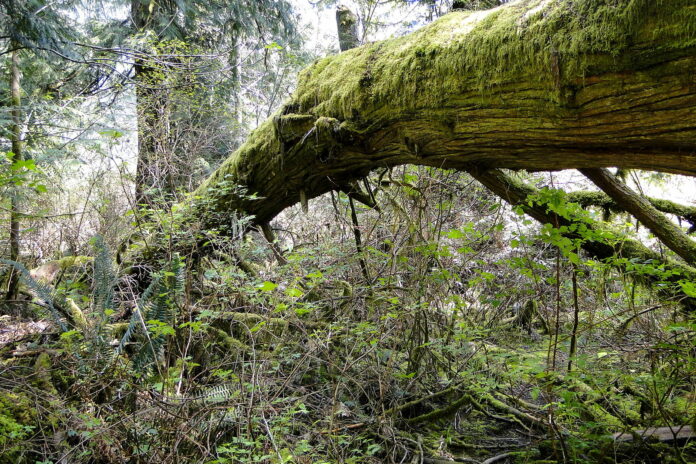
This is a photo of an old growth tree in a BC provincial park.
PHOTO: Wikimedia Commons

By: Isabella Urbani, Staff Writer

On May 3, Liberal MP Patrick Weiler initiated a private member’s motion, or M-83, to make forestry more sustainable in BC. The motion calls for three demands: the end of old-growth logging on federal lands, a ban on the selling of its exports, and a $27 million increase in the environmental and sustainability budget from $55 million to $82 million. 

Weiler, who represents West Vancouver, Sunshine Coast, and Sea to Sky Country, has been passionate about protecting old-growth forests ever since he took a camping trip to Carmanah Walbran Provincial Park when he was seven years old.

In an interview with The Peak, Weiler said it’s been “hard” to watch the federal and provincial governments cut down old-growth trees — trees 250 years and older — for the past 30 years. He noticed old-growth logging becoming a topic of concern in BC after the Fairy Creek protests in 2021. 

“I feel kind of powerless as a federal MP,” said Weiler. “So much of this is really up to the provinces, given that old growth, and forests generally are on provincial crown lands. But there are things that the federal government can do.” 

In 2019, the federal government promised that 25% of federal lands will be considered conservation areas by 2025, and 30% by 2030. Currently, only 13.5% of federal land is protected. 

Private member motions are the only way non-cabinet members, like Weiler, can have their motions debated in the House of Commons. All private member motions are ordered through a lottery. Motions can only move up if adopted by an MP higher on the list. With 70 motions already seen by the cabinet, Weiler’s M-83 motion, picked 144th, is 74 spots away from the front of the line. However, Weiler remains optimistic that the “cross-party support” his motion has received so far, will move him closer down the list.

Weiler referred to old-growth forests as, “integral to who we are as Canadians, but also, especially, for Indigenous peoples.” 

According to Weiler, Indigenous communities will be consulted on old-growth forests residing on Indigenous lands, and will receive compensation if said land becomes permanently protected under M-83. 

“This is not an issue where you have unanimity across Indigenous peoples,” said Weiler. “There are many nations that are involved in the forestry sector, where this is a key source of livelihoods, and then there are many others that are wanting to do everything they can to protect these old-growth forests.”

Aside from “natural heritage,” Weiler explained how old-growth trees are home to at-risk species like the marbled muralists and spotted owls, and are a “nature-based solution to climate change” because they absorb carbon. A study conducted at the University of Hamburg in Germany found almost 70% of carbon absorption occurs later in a tree’s life. So old-growth trees “are worth way more standing than they can ever be when they’re cut down.” 

The increase in sustainability government spending, also a part of the motion, is meant to transition companies dependent on old-growth logging to second and third-growth forests, which are forests that have been previously logged and grown back. M-83 will also stop the export of old-growth trees. 

It’s incumbent upon us to make sure the type of products we’re shipping are not contributing to the type of environmental degradation that is increasingly of concern for countries all around the world.”  

When a forest degrades, it’s unable to provide the same benefits it previously supplied to an ecosystem. “We have governments, particularly the European Union, that are very concerned about the imports of products that are leading to forest degradation,” said Weiler. 

But some forestry workers aren’t seeing eye-to-eye with Weiler’s vision. Joe Namath, project manager for the BC Pulp and Paper Coalition, said M-83 would “sink the industry” and “[destroy] rural communities” if passed. Weiler said otherwise, calling the response “emotional” and a “little bit ridiculous.” 

“To make the case that the only way the forestry industry can survive in BC, is by harvesting areas that are, by their very nature, finite and increasingly being lost, is to say that there is no sustainable forest industry in BC. And I reject that premise,” said Weiler. 

How to accept you will always be a passenger

0
Person standing in front of a terribly parked car smiling and giving a thumbs up
ILLUSTRATION: Hailey Gil / The Peak

By: Izzy Cheung, Staff writer

So, you’re a new driver looking for some advice. I’m here to let you know you’ve come to the right place. As a two-time learner’s license holder, I’ve been on the road lots of times these past few months — as a passenger, of course. Do you seriously think I’m going to drive? On these roads? 

My advice comes from the place of a certified passenger princess and observer of all things road. I’ve sat in many different cars, from friends’, to parents’, to Ubers — and lucky for you, I’ve collected the most extensive and thorough advice from a multitude of different vehicles. Here are a passenger princess’ tips on how to survive the daunting Metro Vancouver roads.

Driving means you either make it or BRAKE it

During my two stints with a learner’s license, one of the biggest problems I had was remembering which pedal was the brake and which was the gas. Don’t make the same mistakes that I did. To remember that the GAS pedal is on your LEFT, and the BRAKE is on your RIGHT, find a clear spot on both of your legs where you can write which pedal is which. 

Another tip: when you want to hit top speed, make sure you’re not pressing the brake. The result may be a vehicle malfunction — a real BRAKE-down, if you will. 

Parking is always a problem

Ever been to an event only to find that the allotted parking spaces are all taken up, forcing you to drive over a block away to park? Keep in mind, you’re the one with the vehicle — to you, any space is free space. Need to park in the middle of a ridiculously busy street? Park it there. Intersection stuck on a red light for a long time, and you want to duck into the nearby store to use their bathroom? Park it there. Tired and need a nap, but you’re stuck bumper-to-bumper on the freeway? Park it there. Anywhere can be a parking spot if you put your mind to it. Just be sure to put your vehicle in “park.” 

Red does not mean go 

Colours can take on many different meanings. The colour red symbolizes unbridled anger, fiery passion, and stop. Green stands for fertility, the lushness of nature, and go. Yellow means you’ve got to stop being indecisive. 

What to do when you start crying 

We’ve all been there before — you’re practicing driving with your parents, and you accidentally hit a curb or turn when you aren’t supposed to. Like Achilles during the Trojan War, all hell breaks loose. Your parent is berating your driving skills, and you’re sitting in the driver’s seat, hands clutching the steering wheel like you’re going to float away if you let go (dad, if you see this, I’m exaggerating — so please don’t get mad at me). If you’re going to cry, make sure you’re not driving while doing it. The tears will blur your vision, making it even harder to do an already impossible task. 

Face it, driving is tough. It’s not for everyone, but why not just bite the bullet? Fight through the tears and get your license now, or be like me and strap yourself to the passenger’s seat for the rest of your life. 

Horoscopes May 29–June 4

0
An illustration of a girl with long flowing hair. Astrological signs and stars shine around her.
ILLUSTRATION: Marissa Ouyang / The Peak

By: C Icart, Humour Editor

Aries: Like a true fire sign, you will burn if you do not forward this message to everyone on your contacts list. As in, you will get a sunburn with embarrassing tan lines because you will fall asleep on the beach with your book on your tummy. 

Taurus: Co-star says Tauri “just [want] to cuddle.” But if you don’t forward this message, all the cuddles you’ll give your Squishmallows will feel just a tiny bit off for the next 7 years.  

Gemini: You’re such a little social butterfly, aren’t you? Well, if you don’t forward this message, your coworkers will start hitting reply all on emails that definitely don’t need to be sent to everyone. Hope you have fun with all the extra people in your inbox!

Cancer: I hope this won’t make you too crabby, but if you don’t forward this message, your hands will get a little clammy every time you try to open a jar for the rest of your life. Wouldn’t that be annoying when you’re in a pinch!

Leo: Leo, Leo, Leo . . . You know what to do, just share this message with 10 friends! It’s that easy. But if you don’t, you will run out of toilet paper in every public bathroom you use for the next month. 

Virgo: Did you know your sign is “historically represented by the goddess of wheat and agriculture?” You know what this means, right? That’s correct. If you don’t forward this message, every loaf of bread you buy for the next year will be a little bit stale. 

Libra: It just now occurred to me that Libra rhymes with zebra. What does that have to do with anything? Well, if you don’t send this to 7 friends, all the shirts in your closet will develop stripes overnight.  

Scorpio: Are you looking for a new place to direct your passion? Consider forwarding email chains as your new hobby! After all, if you don’t, you will accidentally step on something wet while you’re wearing socks.

Sagittarius: Please show a little compassion and share this with all your chosen family. I would not like to alarm you, but if you don’t, you will hit snooze in your sleep and be late for class this week. 

Capricorn: Capricorn, you would be the GOAT if you sent this to your grandmother, who learned how to use social media just last week. I’m not quite sure what will happen if you don’t oblige, but I have a feeling it would be baaaaaad (get it?). 

Aquarius: You probably think you’re so clever. Riddle me this, then. Who’s going to constantly find themselves stuck behind slow walkers taking up the entire sidewalk for the next three months if they don’t share this with at least 11 friends? That’s right, it’s you! 

Pisces: Justin Bieber is a Pisces, and baby, baby, baby, you can make one of your besties feel like one less lonely girl by forwarding this to her. If you don’t, there’s a chance you’ll be transported to a 2010 Belieber’s bedroom, complete with a cardboard cutout and an assortment of Bieber-themed pillows.

SFU films to watch at the Vancouver Short Film Festival

0
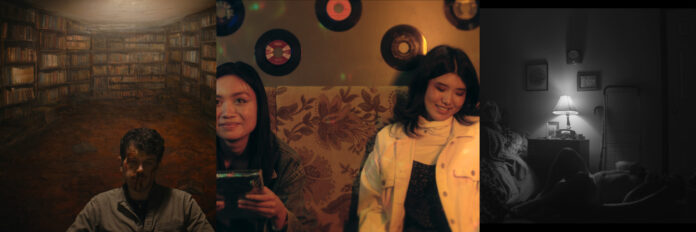
A collage of a photo stills from each of the short films.
PHOTOS: Courtesy of Anastasia Itkina, Catherine Huynh, and Sean Brennan

By: Isabella Urbani, Staff Writer

Content Warning: mentions of pet death  

Cathy Huynh, Sean Brennan, and Anastasia Itkina were some of the SFU film graduates selected from over 250 submissions to be featured in the 13th annual Vancouver Short Film Festival from June 2–11. The event, which can be enjoyed online or in-person at the Vancity Theatre for the first two days, consists of 57 short films. By purchasing a ticket — which is $12 for students — attendees will be able to watch all the short films that are featured for that day’s screening. More SFU graduates’ work can be viewed online. 

The Peak had a chance to interview Huynh and Brennan about the inspiration for their films, the directorial process, and the months of preparation that went into their end products. 

Cathy Huynh, Adrift (2022)

Huynh began writing the script for the film in fall 2021. The thesis film debuted in May of last year alongside her SFU classmates, which included Itkina

The film, titled Adrift, tells the story of two best friends reconnecting after one of them returns home from school. Now in completely different places from where they were before college started, the duo try to rekindle their friendship by attending some of their favourite hang-out spots. As the night draws to a close, viewers come to see that the former friends have more in common than they once believed. 

Huynh said the film is both a personal ode to the “female friendships” in her life and a reminder of the “sad, yet normal, by-product of growing up, which unfortunately includes drifting apart from your friends.” She said it was her love for storytelling that led her to pursue filmmaking. She took inspiration from the Vancouver area for the film and was able to shoot scenes at Roundel Café and Fantacity, which the friends visit on their list of nostalgic comfort spots. 

Huynh’s favourite scene to film was done at Fantacity, a karaoke bar downtown. “Our team breaking out into song with “I Want It That Way” was definitely a set highlight! I’m super proud of this scene in particular, since it was one of those fulfilling moments where you get to see something you’ve been visualizing in your head for so long actually come to life.”

Huynh hopes viewers will be “affirmed” by watching the two leads in the film come to terms with how their lives have panned out. “It’s more than okay to not have your whole life figured out,” said Huynh. “Feeling like youre stuck in limbo is a collective experience that almost everyone experiences as a young adult.” 

As someone who has watched a best friend turn into a stranger in a matter of months, Huynh perfectly captures the silent battle between wanting to salvage a friendship and leaving things best unsaid. One of the more moving scenes in the film happens when the two main characters meet up for the first time at dinner and can barely hold a conversation, when just moments ago, in a memory sequence, they were planning their future together. 

Adrift will be a part of the final day of in-person screenings on June 4 at 4:15 p.m. More information about Huynh, including her 2021 film Caleidoscope, which appears on the CineAsian Films website, can be found online.

Sean Brennan, Holly (2019)

Brennan’s film Holly also taps into the intrinsic human experience: losing a loved one. The film, completely shot in black and white in 2019, begins with Holly’s owner, Olga, reminiscing about her pet’s life as she goes about her morning routine without her animal companion. To cope with the loss, Olga visits a therapist named Arlo, who goes to unconventional lengths to keep Holy’s memory alive, in more ways than one. When Olga comes to, she turns to a new coping method with the help of a newfound friend. 

Although Brennan began making films with his sister when he was 10 years old, and continued to do so with friends during high school, he originally was a sociology major at UVIC. Brennan says the loneliness and desperation Olga feels when her pet Holly passes away mirrors how he felt when he first moved to Vancouver to attend SFU. “That kind of isolating experience can make people more okay with maintaining toxic relationships,” said Brennan. 

He also shared how the inception of the film took twice as long to come up with than the filming itself. “What you don’t see when you watch this project are the endless notebooks filled with rejected ideas.” He explained the feeling of wanting to do something special, and being frustrated while thinking of ideas. “Eventually, I had to pick a project and ‘Holly’ had a script that got a really good response from readers.”

Shot in downtown Vancouver, the film has a montage of actual dog walkers Brennan saw on the street and asked to be included in the movie. Not only is it super endearing, but it illustrates the unique character of each dog, its owner, and the bond they share. As sweet as this moment is, Brennan’s film touches on the unsettling nature of the stages of grief, particularly focusing on denial, demonstrating just how blissful ignorance can be. 

Holly will be a part of the “After Dark” screenings on Saturday, June 3 at 8:15 p.m. All films featured in this screening will include unsettling themes that may be triggering, and or stories with dark elements and horror. You can learn more about Brennan and his projects through his Instagram, @hellothisissean.

Anastasia Itkina, A Week to Rosh Hashanah (2022)

The longest of the trio of films is Itkina’s A Week To Rosh Hashanah. Leading up to Rosh Hashanah, “the calendrical New Year” of the Jewish religion, David, the film’s main character, “develops an unusual disorder and becomes determined to put an end to it.” 

The Peak reached out to Itkina for an interview but did not receive a response in time for publication. 

A Week To Rosh Hashanah will be a part of the 5:30 p.m. screening on Saturday, June 3. More information about Itkina and her extensive producing projects, including Huynh’s film Adrift, can be found online.

Top 10 tips to be happy in Vancouver

0
Woman holding a cup and making a peace sign with her hand beside a red car
PHOTO: Bii Photography / Pexels

By: Saije Rusimovici, Staff Writer

  1. Don’t root for the Vancouver Canucks 

I get it your grandfather’s grandfather was a fan. You spent your childhood looking up to FIN, watching the playoff games in the background during dinner (though those days are long gone). You can’t help but feel the itch to wear the team’s merchandise even though the jersey you have in the back of your closet is from 1991 (oh, how we miss dear Pavel). I think we all feel inclined to want to root for our home team (or maybe we just want something somewhat interesting to do on a Saturday night). Still, the continuous letdowns make it difficult to continue to do so — wait, was 2011 really over 10 years ago? 

2. Get comfortable in the 1,000 sq ft apartment you’ll be renting out for the rest of your life 

Housing costs in Vancouver are outrageous. So, prepare yourself to still live in the apartment you thought you would temporarily rent while you finish your graduate degree long after you’ve baby-proofed things. I suggest looking up video tutorials like: “Maximize use of your small space,” and, “how to keep your small home organized.” Unless, of course, you plan on moving to Abbotsford (AKA Abbots-FAR) . . . 

3. Don’t live in Abbotsford  

Unless you’re making frequent US trips, there’s absolutely no reason one would want to go there. Aside from visiting the pumpkin patch every fall, there isn’t much to see. You’ll spend the entire drive there asking are we there yet? And the whole ride back, asking, why did we go there? You might even get torticollis from craning your neck out the window for any signs of modern civilization: a Cactus Club, a Starbucks drive-through, give me something! Don’t plan any trips to downtown Vancouver unless you feel like making it a staycation. 

4. Gas cards are the new currency 

Ah, inflation. Filling up my little FIAT 500 for nearly $70 leaves a bitter taste in my mouth. One of the main reasons I bought this car was to save a little money on gas. If you find someone who gifts you gas instead of flowers, that’s how you’ll know they’re the one. I’m adding gas cards to my wedding registry, my baby registry, my Monday, Tuesday, and Wednesday registries . . . and you should too. Still, I don’t think I’m driving out to any pumpkin patches any time soon . . . 

5. Dress for the weather 

As cliché as it may sound, an essential part of living in Vancouver is dealing with the constant rain. And spontaneous heat waves. And frosty snowstorms (is it really the holidays if the entire city hasn’t been shut down due to road conditions?) So make sure you have at least one waterproof jacket in your wardrobe (make it a SuperPuff if you really want to fit in) and a pair of clothes that are easy to change into in the back of your car. That way, you’ll be prepared if the forecast says it will be cold and windy, but half of the city has gone out to tan in the afternoon heat. 

6. Don’t apply to UBC 

There’s no need to go here. Seriously. I know, I know it’s a top research facility, or something or other. They have their own hospital there. They throw a few good parties. But hear me out. I know people who go to UBC who don’t even like their school. You practically have to drive across campus to get from one class to another. Not to mention that attending this school becomes your only personality trait.

7. Go to as many lakes as you can this summer (there’s nothing else to do) 

Since happy hour prices are what regular-priced items used to be two years ago, spend this summer by a lake of your choice: Cultus, White Pine, Buntzen — we’ve got them all, and the ocean too. This is a cheaper alternative to sipping a spicy margarita at an overpriced and overhyped restaurant. This is BC, after all. It’s time to explore the great outdoors (also, it’s the cheapest activity you’ll find in this city). 

8. Make friends with the wildlife 

There’s nothing like stopping at a red light on Burnaby Mountain and coming face-to-face with a deer (I swear they try to make eye contact just to freak me out even more). I’m all for embracing nature, but I have to admit, Bambi got a little too close for comfort there. Vancouver has so many wild creatures running around that it shouldn’t be too unexpected. My suggestion is to befriend as many animals as you can — leave some nuts for the squirrel circling your porch, offer a polite wave at the black bear sifting through your garbage, and take some time to introduce the family pet to the raccoon family that seems to have made up its lodging in your yard. What, did I take being friendly to your neighbours too far?

9. Grow your own produce (groceries are so expensive)

Want to start a herb box this summer? You’re going about this the wrong way. Herbs are relatively inexpensive to get at the store. What you really need to do is figure out how to maintain some strawberry plants (but do they even grow here??), or you’ll have more debt from grocery shopping than your post-grad education. Some fruit trees would probably be a good idea too . . . maybe you could consider farming life. I hear there are some great properties available in Abbotsford . . .

10. Wear a glass helmet like Sandy from SpongeBob

Not only will this offer protection from the wildfire smoke and the virus that shall not be named, but it’s also a stylish alternative to a mask! No more smudged makeup. PRO TIP: the helmet can double as a container when you inevitably forget to bring reusable bags to the grocery store and as a mug when you want to avoid the cup fee at cafés still charging it (sneaky, sneaky).