Home Blog Page 199

Q&A with Elvira Chan on her independently-published novel

0
Elvira Chan holds her book, displaying the cover with an illustration of two shadows of people walking against a backdrop of tall buildings on each side of the book. Between them is a watercolor gradient of a blue, cloudy sky. They are each on opposite sides of the book— one on top and one on the bottom. The one on top is upside down. Chan is smiling wearing an orange knit sweater.
PHOTO: Elvira Chan

By: Petra Chase, Arts & Culture Editor

Elvira Chan is an SFU graduate student in the area of counselling and human development. She holds a bachelor’s degree in communication with a minor in print and digital publishing. The following is The Peak’s conversation with Chan about her self-published debut novel, The State of Us.

The Peak: How did your undergraduate education at SFU shape and inform your experience of writing and publishing this novel?

Elvira Chan: My background in communication and publishing at SFU helped me gain a clearer understanding about how storytelling can be such a unique blend of lived experience and imagination! Nobody tells a story exactly the same way, and the idea of gathering my own experiences and memories and turning them into a work of fiction through new characters and plot ideas was really compelling to me when I first started writing. In my courses, I was often taught how to design covers, properly format dialogue, pitch a manuscript, and pull off a lot of research to support my writing. My background gave me the technical tools and skills that I needed to get started, but it was actually the people and places I had come across during my time at SFU that made the biggest difference and gave the greatest inspiration when it came to writing and publishing my novel!

P: That sounds like the perfect learning environment to successfully publish a novel! Was this something you planned to do from the beginning of your education and did your vision of what that process / final product would look like change at all along the way? Side note — the cover looks beautiful!

EC: Putting a novel out into the world has been a goal of mine for as long as I can remember; it’s something I have always wanted to do! I used to write and draw on plain paper, staple it all together, and call it a book when I was a little kid. I wrote hundreds of those “books” back then and it has been incredibly rewarding to be able to bring my dream to life. 

My vision of the final product changed more times than I can count! One of the most interesting things about the process is that I didn’t write it from beginning to end in a linear fashion. It was actually quite the opposite, where I pieced together chunks of dialogue and scenes over time, almost like a puzzle. It was a challenge to weave everything together, but one of my favorite things about the book now is that it threads through the characters’ lives over the years, and you get a glimpse of all these little moments and memories that might have been cut out completely if I had written the book from beginning to end without finding a special place for them.

Interestingly enough, the idea for the cover came quickly and stayed very true to the original design! I wanted the cover to show a different perspective depending on which way you were holding the book and to show the two characters crossing paths despite being in different places and phases of their life.

P: I want to know more about these characters! What was your inspiration for them? Can you tell us a little about your favourite moment from the book?

EC: Like my main character, I was also in a long-distance relationship during my time at university. Five years can feel like a really long and impactful time when you’re in your twenties! I wanted to write about that past experience through the eyes of new characters. I was also inspired by other people’s relationships at the time, and everything from my favorite movies to song lyrics inspired different parts of the book as well. It’s like a collage and time capsule in one, which I really love. 

One of my favorite scenes has to be when my two characters first meet! They’re both stranded overnight at a Seattle airport during a snowstorm on New Year’s Eve, and that’s when the reader discovers that the characters are struggling to accept the reality of loss in their lives (for very different reasons), and they end up bonding over it. That chapter jumps to different times over the course of that first night, and you gain insight into their past, and a lot of empathy for their situation. I think losing someone you love is a very universal and human experience, which many people may relate to in the book.

P: I’m looking forward to reading it! What is your current area of study and what are your plans for the future? Do you have more characters and moments you hope to bring to life in fiction?

EC: Yes, a hundred percent! My current book is categorized as adult fiction and leans toward a modern romance, but I’m so intrigued by different genres such as fantasy, paranormal fiction, and thrillers, and I’ve already got the gears in my head working overtime for my next one. Putting myself in a different character’s shoes and trying to understand their mindset and motivations is one of my favorite things about writing. You can elicit a wide variety of emotions and reactions through something completely made up, something you created with words and your own imagination!

I’m currently in the PBD program at SFU for counselling and human development, and my goal is to work in the mental health field by becoming a registered clinical counsellor. 

Whether it’s counselling, storytelling, or writing a book, there’s the common thread of connection at the core of it! I think it’s fair to say that I’m very intrigued by other people and what they have to share with the rest of us. 

The State of Us is available as a paperback or Kindle ebook on Amazon. Follow Chan on Instagram at @littlelvira.

New Music: “Sinisin” is melancholic and full of yearning in the very best way

0
Emét is seated and signing a guitar. They are wearing a gray sweater vest on top of a white T-shirt with tattoos on their arms. Behind them, there is a window that shows snow outside.
PHOTO: Jayka (Jay) Herrera

By: Hannah Kazemi, Staff Writer

Emét gives off soft indie-folk vibes with their single, “Sinisin,” their most recent release following their EP, Carlin’s Farm. “Sinisin” was my introduction to Emét’s funky discography, and it sent me down a rabbit hole searching for more. I reached out to Emét to learn about their inspiration for the song. 

According to Emét, “Sinisin” tells the story of a “relationship doomed to fail” and “the heartbreak of accepting less than what you deserve, the heartbreak of being complacent instead of truly content.” 

“Sinisin” hinges on the emotional impact of the tone and meaning of both the instrumentals and the lyrics. The different feelings and buildup of emotions is really interesting and definitely caught my attention. 

“It’s a different kind of heartbreak,” they said. “Jealousy is a really strange emotion when you think about it.” You can feel this gut-wrenching sentiment settle into your soul as Emét sings.

“Growing up in Ireland, folk music has always felt like the most authentic way to tell a story,” they said. They cited Phoebe Bridgers, Leonard Cohen, and Damien Rice as inspirations. The song’s strong guitar presence and poeticism also reminded me of Hozier. 

I was intrigued especially by the hypnotic guitar instrumentals in “Sinisin,” and how well it blends with Emét’s harmonies. There are some consistent melodies throughout the song, but Emét also incorporates different guitar accents and motifs to add personality to an otherwise constant and steady beat. Emét’s voice has a sense of anguish in it — it’s a lower, deeper sound that lulls and swells with the instrumentals. Because of this, there’s a bigger impact when they start to hit some of the higher harmonies. 

“Sinisin” feels dark in some ways, while repeatedly coming back to that sense of melancholy with the steady rhythm.

The end of “Sinisin” introduces an epic, angsty electric guitar solo. Emét said that they recorded every part of the song themself:  “The recording process was a lot more about letting the track swell, stripping it away in places and giving it enough depth to stay interesting [ . . . ] The guitar solo at the end is so ridiculous compared to where the song started out, definitely a departure from ‘folk’ in a lot of ways.”

To listen to “Sinisin” and more of Emét’s music, you can find them on all streaming platforms. They’re also on all social media as @itsemetofficial.

Listen to The Peak’s regularly-updated “New Music” playlist on our Spotify profile.

Blaming women for filming gym harassment misses the point

0
photo of exercise bikes in a gym
PHOTO: Manmeet Sagri / The Peak

By: Saije Rusimovici, Staff Writer

Content warning: mentions of assault and harassment

From my experience, the gym is a place where I can thrive. I feel confident in my skin and glow after a good sweat on the treadmill. Likewise, lifting weights makes me feel powerful and strong. Even though I workout in the women-only section, I still often find myself looking over my shoulder, feeling like there are eyes on me. I can only imagine what I would feel like exercising in the co-ed section. With recent discussions about filming unwanted gym interactions, we should focus on the deeper issues that lead to discomfort in gyms.

Gym culture has always been something that’s difficult for many people to find their place in. Significant efforts have been made in the past decade that encourage women to take part in activities that have historically been dominated by men. Additionally, some gyms now use branding strategies that encourage inclusion for all body types and fitness levels. However, there are still many toxic components of gym culture that are ingrained into the way we perceive fitness. According to The Globe and Mail, the gym can be a place where you’re very likely to find yourself surrounded by ageist, ableist, racist, and homophobic behaviour — not to mention the sexism and fatphobia. These issues can lead to unsafe conditions for many people in gyms, particularly women who work out alongside men.

The ongoing TikTok trend #gymcreep has become a viral sensation with over 240.5 million views and counting. This hashtag has become a way for women to share harassment from male gym-goers while they work out. Something to keep in mind is that women have been subjected to unwanted advances from men in more instances than just gyms. At least 30% of women over 15 have experienced some form of sexual assault in Canada. For this reason, women have to be “on-guard” in their daily lives, thus bringing this trend to the gym. 

Video surveillance can be used to offer protection for women in gyms. Recently, a 24-year-old woman was attacked while working out alone in her apartment gym. Surveillance recordings provided a way for the attacker to be identified, arrested, and charged. When it comes to the sharing of personally recorded videos attempting to address this issue, Leilani Carver, “director of undergraduate communication at Maryville University,” told USA Today that these videos can be a mechanism for exposing problematic behaviour and harassment in gyms. She also mentions video recordings can empower women to report these individuals. Sharing their experiences with others shows that the harassment they experience is real. 

However, Carver notes that the act of filming other people in gyms is a complex issue that can also be considered a form of harassment itself, as people are being filmed without their consent. If the harassment is not explicit, it’s difficult to see what’s actually happening in these videos. She also points out that the “pile-on effect” of digital shaming may have the power to shift the narrative and create sympathy towards an offender. For this reason, it’s important that these videos are directed towards encouraging people to speak out about gym harassment, not just gaining views on social media. It’s also crucial to recognize that gym harassment still exists despite the occasionally questionable recordings that may circulate online.

The culture that’s been upheld in gyms for years has made women hyper-vigilant, turning to social media as a tool to express their long built-up discomfort. The root of this problem is a misogynistic culture that’s reinforced by media and social expectations. Going forward, it’s important that gym organizations and gym-goers work together to change this culture that has been ingrained in fitness for so long. 

The existence of wisdom teeth

0
a close-up shot of a pile of teeth
PHOTO: Tima Miroshnichenko / Pexels

By: Karissa Ketter, News Editor

I’ll say it: wisdom teeth are ridiculous. Why are they even called “wisdom” teeth? They aren’t so wise growing sideways, are they? A couple years ago, I went down to the surgeon’s office and he removed all four of my wisdom teeth while I had a little anaesthesia nap. For the next few days, I had a purple and puffy chipmunk face while ice packs and jello were my two best friends.

Now, my partner is about to get his wisdom teeth removed, only for me to find out he only has three wisdom teeth. What an absolute scam! Only three!? What about my family, you might ask? My brother doesn’t have any wisdom teeth at all. 

Why did evolution curse me with all four wisdom teeth while my brother gets away scot-free with none!? Mother Nature, c’mon, couldn’t we have split them 50/50 — two each? 

I feel like I’ve been cursed with a life of dental hell. I’ve had multiple gum graft surgeries, braces, teeth expanders, and now four teeth yanked. Both my partner and my brother have had nothing wrong with their teeth — ever

Look, I understand that being able to take care of my teeth is a huge privilege that not a lot of folks have. I’m incredibly grateful that my surgeons have always done great work, and I’ve healed quite nicely. In reality, yeah of course, wisdom teeth aren’t the worst thing to go wrong. 

But come on, Mother Nature. Humans haven’t needed those molars for thousands of years. It’s time to phase them out and move on. 

BREAKING NEWS: SFU Road Report cameras capture emotional story

0
Illustration of a person smiling at the camera. Behind them, the snowy Gaglardi Way going up to SFU, and students visibly grimacing as they push the bus up the hill.
ILLUSTRATION: Hailey Gil / The Peak

By: Hannah Kazemi, Staff Writer

SFU News — There was a heartwarming display of strength at Simon Fraser University’s Burnaby Mountain campus last week as students were seen pushing a bus up the mountain. SFU’s traffic cameras caught the whole thing on tape. It was leaked and posted on TikTok, with the video gaining over 50,000 views within only a few days.

The video depicted a wet and dreary day at the cusp of the intersection of Gaglardi Way and University Drive. We see the 143 make its way up Gaglardi Way and then come to a sudden stop. The hazard lights go on and the door opens as the bus driver steps out to walk around the bus to see what went wrong, then the video shows her staring blankly at the bus as the sleet continues to pour down. 

A few minutes later, we see the passengers from the bus get off and take position behind the bus and through the intersection with begrudging looks on their faces, ultimately terminating at SFU’s lower bus loop. The students have been commended for their leadership — SFU has noted that in times like these, validation is the ideal acknowledgement for the brave students accustomed to the nasty weather on the mountain every winter. 

Readers, SFU is unique for its location atop Burnaby Mountain, and heroic students. The mountain is also notorious for its accessibility challenges — particularly in the winter months when snow and ice are on the ground. The transit system suffers in these situations as well, and in times like this, there is nothing like seeing our intrepid students taking matters into their own hands — literally — to get their bus up the hill.

Students Ari and Jordan* were part of the team of students pushing the 143 bus, connecting SFU to the Burquitlam Station, up Burnaby Mountain.

*Names have not been changed to reflect student bravery.

“All of a sudden it just stopped and started rolling backwards a little bit,” said Ari. “It was like the gas just, like, stopped working.” Jordan noted that they were almost to the crest of the hill when the bus stalled and the driver got out to investigate. “She looked super pissed, like it had happened before. All of us just sat there for a minute waiting for her to come back and tell us what happened, but she never did.”

The students had looks of agitation on their faces as they recounted the conditions of the day. “The bus driver came back on the bus and told us to start pushing,” said Ari, bewildered.

“None of us moved for a minute because we thought she was bullshitting us. Before we knew it, we were standing in the rain and snow pushing the fucking bus up the mountain. My socks were squishy and moist for the rest of the day. It was so gross. I’m never taking that bus again!”

“It’s almost like all of this could have been preventable if SFU had made an announcement,” Jordan nodded. 

What bravery shown by these students! Jordan and Ari both said that “it was unlike anything that has happened before,” which highlights the tenacity of SFU’s students. Their willingness to step up is commendable and highlights just how well-rounded and full of initiative they are. They certainly exemplify SFU standards.

This has been SFU News, where we know student’s groans of frustrations just translate into their willingness to engage with their work! Until next time.

SFU student updates: March 13 – 18

0
"Student Updates" text in SFU red
You’ve already made it farther through the article than 97% of the student population. ILLUSTRATION: Siloam Yeung / The Peak

By: Kelly Chia, Humour Editor

Deeeeeear friend (because student just sounds so . . . stiff!), 

OMG! Happy March, students! [Insert relevant and cute joke about the passage of time to relate to the students.] Besties, we are so sorry that you are struggling with allergies, papers, assignments, the whole sha-bam. Here at SFU, we are so very pleased to announce this very special student update we’ve been working so very hard on. I think you’ll agree that we have truly slayed.

THE MOST IMPORTANT UPDATE:

SFU Board (I know, I’m bored, too!) unanimously agrees to print assignments and syllabi in pastel

After several months of deliberations, we are SO proud to tell you that the Board has voted in favour of printing all of your assignments and syllabi in aesthetically pleasing pastel colours. We really think this will cure your seasonal depression — if you just believe — and we congratulate every member of the Board, especially the student representative, [insert random student name here], for pushing this motion forward. 

For this, we will be adding a meagre “bestie” fee to your student tuition! Just an extra $250 for every student, for the printing costs and our heartfelt thoughts and gratitude. LOVE YOU!

ANNOUNCEMENTS AS GRAND AS THE NEXT CELEBRITY TOUR:

New aesthetic for our Pinterest board

Students will be pleased to hear that after several not-so-slay years, we’ve curated the perfect aesthetic for SFU students! We affectionately call it, “Lovey-Dovey Academiacore,” because you can almost hear how much we care about you every time you gaze up Gaglardi Way on a snowy day. Make us a part of your perfect winter day — we’d love to spend the night with you looking at Road Report together, bestie!

Tim Horton’s to be replaced with Timothy Chala-ton’s

[Gasps dramatically.] I know. We can hear the questions from your curious whittle brains: “How did they?” “Aren’t there a lot of legal messes to deal with if you involve celebrity names?” “Is this even moral?!” Well, loves, we’re pleased to tell you that we flat out do not know! We just wanted you to have some cheap coffee and donuts with your favourite celebrity crush. 

In other news, we will be ~ spicing ~ up campus lectures to make up for the glitz and glamour from our legal team!

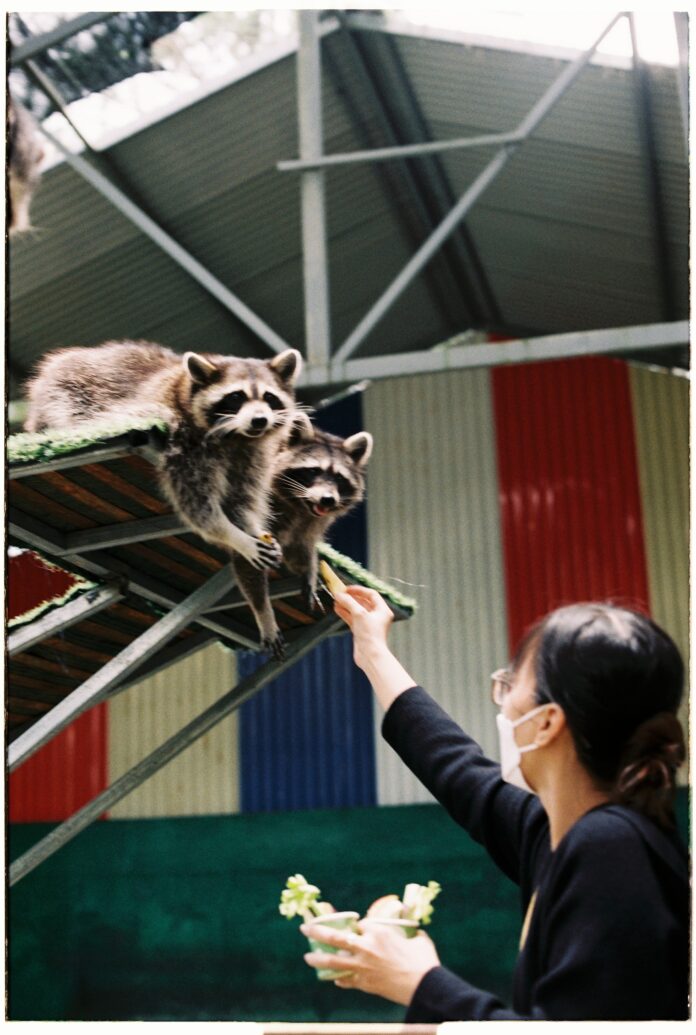
Lecturers to be fully replaced by raccoons in Spring 2033

Here at SFU, we are so big into sustainability and hiring in-house! Clearly, we have a good track record of doing just that. We’ve decided to make use (read: befriend) our lovely neighbours, who have so much to teach us about engaging with nature. We feel this is the most sustainable choice SFU can make, and we hope you can accept us as we are, as we’ve accepted every single one of you.

Okay, that’s it for now!! We love you so very much, like, if you were to ask how much, we wouldn’t even be able to tell you! That’s so POGGERS. 

Love,

Bestie

Dear Peakie

0
A photo of someone looking prim in an office chair with a thick book in their hands.
PHOTO: Pexels

By: C Icart, Staff Writer

Dear Peakie,

I’m looking for new ways to express myself in my room, and my 2014 Free! anime posters are just not doing the trick anymore. I just want people to know more about the real me. What should I be getting into? What posters do I need to be putting up?! I JUST WANT TO BE COOL!

Sincerely,

Unhip and Afraid


Dear Unhip and Afraid, 

You’re so lost that you’re asking the wrong questions. Being cool is not about asking about trends, being cool is about setting trends. But given how lost you are, I guess I’ll give you some advice. Pinterest boards. You have to start pinning bedroom decor pins like your life depends on it. Once you have a board that does not give you the ick you must RUN to IKEA before it’s too late. It’s only a matter of time before whatever you choose becomes cheugy as well.

Afraid for you, 

Peakie


Dear Peakie,

To my great chagrin, I have discovered that . . . I . . . have feelings for someone. The very thought makes me shudder! WHAT DO I DO?

Sincerely,

My Thoughts Are Fogging Up


Dear My Thoughts Are Fogging Up, 

Do nothing. You do not chase, you attract. Repeat that in your head until you’ve convinced yourself that you are way too cool to experience feelings. Alternatively, you should raise your hand in class and profess your love for them, it’s better if you bring a ring and propose as well. If they can’t handle your sudden passion, they do not deserve you. 

Lovingly, 

Peakie


Dear Peakie,

It’s me, your favourite conspiracy Peekie! This time, I’ve recovered real* proof that your masthead is made of fake names. I mean, no one has even seen your offices. I bet you are a ghost publication, made of ghosts. I bet all your articles are spat out from a generator! I mean, no way this is real. What do you say to that?!

(In)sincerely,

Peekie

*My very thoughtful 3:00 A.M. research


Not so dear Peekie, 

The tinfoil hat you’re wearing does not quite cover how ridiculous you sound right now. I, too, have never seen The Peak’s offices but I know they’re real, just like the air we breathe. It’s called faith. But I’ll humour you; maybe none of this is real. You focusing on our publication is distracting you from the larger simulation we live in. What do you say to that!

Conspiringly yours, 

Peakie 

SFU awards professors for powerful media communication

0
This is a photo of a lecturer standing in a lecture hall speaking to students
PHOTO: Yan Krukau / Pexels

By: Natalie Cooke, News Writer

Editor’s Note: The article was updated on March 24, 2023 to correct that Sharon Mah is not a professor, she is a staff member with the faculty of health sciences.

The SFU Newsmaker Award recognizes achievements and excellence in media and communications. This year, there were five winners of the award: Darren Byler, John Clague, Andy Yan, Lara Aknin, and Sharon Mah. The Peak interviewed the award winners to learn more about their impacts in the media.

“The award provides an encouragement to academic experts to develop relationships with media and to speak out authoritatively on societally important issues.” As an earth sciences professor, Clague is often called on by the media to comment on natural disasters and earth science issues. He explained to The Peak, “I enjoy being an SFU media ‘go-to guy’.” He explains the science of natural disasters and hazards to all ages “in an understandable, jargon-free way.” Clague has worked on communications regarding the 2021 atmospheric river disaster in BC and the February 2023 earthquake catastrophe in Turkey and Syria. He has also worked on communicating human-induced climate change.

Winning the Newsmaker Award left Clague feeling “stunned.” He said, “It means a lot to me to be recognized in this way because, while I am a scientist first and foremost, I am a one who is accessible and cares very much about communication and people.”

The Newsmaker Award recognized a variety of topics this year. While Clague focused on earth sciences, other award winners vary in their specialties. Psychology professor Aknin specializes in human happiness and social connections. Her work as the chair of The Lancet’s COVID-19 mental health task force showed findings that mental health early in the pandemic was better than what most people believe. However, Aknin noted “that some groups suffered substantially more than others — and need our attention.”

Other research in her lab is intended for people “to recognize that engaging in kind or helpful behaviour can improve our own happiness.” Aknin shared, “I’m both delighted and humbled that findings from our Lancet COVID-19 task force and my lab are reaching those who can benefit.”

The manager of communications and marketing for SFU’s faculty of health sciences, Mah, was another award winner. She works within the overall theme of communications and storytelling. “My role is to facilitate storytelling throughout a broad range of media. Sometimes I am writing these stories, and sometimes I’m working with the SFU Media Relations team and the vice-president research and international and health sciences’ partners to put our faculty, staff, and students in front of reporters, podcasters, or radio producers [ . . . ] I’m working with my team to try and make sure that as many stories as possible find their audience(s).” 

The award not only recognizes strong researchers and communicators, it also promotes truthful and factual communication. Mah distinguished her work as evidence-based, which means the research can be verified and trusted. “People want to be [able] to make informed decisions for themselves about their health and the health of their communities — it’s up to us to provide them with reliable information that is accessible and engaging.”

“Misinformation has been a problem for hundreds, even thousands, of years, but the problem has become more serious over the past few decades in the ‘echo chamber’ enabled by instant access through the web and social media,” said Clague. “Trusted voices are needed to counter misinformation. I strive to be one of those voices.”

To read more about the winners and their achievements, visit SFU News. The Peak also contacted Darren Byler and Andy Yan for interviews, but did not receive a response by the publication deadline. 

Alice Mũrage discusses the diversity among Black people in BC

0
This is a photo of the Academic Quadrangle on the SFU Burnaby campus.
PHOTO: Allyson Klassen / The Peak

By: C Icart, Staff Writer

Alice Mũrage is a health researcher, health sciences PhD candidate, part of the Gender and COVID-19 project, and the director of the African Ancestry Project. The Peak attended a talk where she presented her findings from her report for the African Ancestry Project. The project is “a community research and dialogue project she initiated in 2020 in partnership with the BC Black History Awareness Society.” In the event hosted by the SFU faculty of health sciences and BC Centre for Disease Control, Mũrage discussed the health implications of her findings. 

Mũrage noted, “The idea of the project is really to highlight the diversity of Black people. This was done by engaging 162 participants in a survey, and then in focus groups and interviews.” These participants came from a wide range of backgrounds. The group as a whole “spoke 56 different languages.” 

Mũrage acknowledges that although race “is socially constructed, it is something that has real-life consequences.” In addition to race, “Black people have other factors that are really dominant in their access to healthcare, in their healthcare outcomes.” 

According to Mũrage there are gaps in the way data about race is collected in Canada. For instance, she highlights the various terms “used in health research to identify Black people” such as “Black Canadians,” “African Canadians,” and “African, Caribbean, and Black (ACB).” The first two are “not very representative because it has the implication of nationality. Not all Black people in Canada are Canadians or have the rights that come with citizenship.” The term ACB, while being more inclusive, has been criticized by Dr. Jude Cénat for its lack of specificity as it may be “potentially including people from Africa who do not identify as Black and people from the Caribbean who identify as Latino.” 

The distinction between how Black people are categorized in studies, and how they personally identify, stood out to Mũrage. “There is an assumption that everybody who is categorized as Black actually identifies as Black, but I realized this is not the case.” She found that “nationality or continental affiliation” was a common way for individuals to self-identify. In addition, generational connections impacted people’s cultural identity. For instance, identifying as a first-generation immigrant versus a multi-generational Canadian. 

By digging deeper into the issue of self-identification, Mũrage found that “participants spoke of the Black identity as an identity that is contested [ . . . ] This identity changes and you need to adapt and take it on as it changes. So, it becomes an identity that was described as one that was imposed.” This can be true for some individuals who have grown up in Canada but also, people who have lived experience in places where they are not a racial minority. “Immigrants from Africa, for example, said that ‘for the first time, I actually realized I’m Black when I came here.’” Mũrage noted not every Black person views being Black as an identity.

For some, “Black identity was also noted as an identity of erasure. That it really erases whatever identity in terms of culture in terms of nationality that people come with.” Mũrage highlighted a quote from a participant that said, “I think the moment I stepped foot into Canada my identity as an African was erased because when people see me, they see the colour of my skin, which is Black. So I am referred to as Black not as African, not unless I speak up and say so.” For Mũrage, these findings are important for researchers across several fields “because as you go into your research, this is the diversity of Black people you will be engaging with if that is your population of interest for your research.”

For more information on Alice Mũrage’s work, consult her report on the BC Black History Awareness Society’s website. 

Memorable Moments: Italy wins the 2020 EURO Cup

0
Illustration of a family gathered anxiously on the couch with Italian flags all around them.
ILLUSTRATION: Noah Jozic / The Peak

By: Saije Rusimovici, Staff Writer

The tension in the living room was thick. Nobody uttered a word. It was as if we were in that stadium halfway across the world, the weight of our goalkeepers’ task heavy on our shoulders. For my grandfather, this team meant everything. The living room was decorated with banners and scarves he had collected over the years. The pride of the Italian flag dangled from several corners of the room. It was the first soccer game my family had watched together in years, brought together by not only an exciting match, but something to celebrate since the start of the pandemic. 

In 2020, Italy had become one of the worst affected countries by the COVID-19 pandemic. The death toll had been at its highest since World War II, with 10% of these deaths being attributed to COVID-19. The Italian national football team represented something more than just a gold medal to the people of Italy — they were a symbol of hope. 

We were on the edge of our seats. The score was 1–1; Leonardo Bonnuci’s sole goal in the 67th minute was keeping Italy’s chances of winning the championship alive. I still get goosebumps when I think about the penalty shootout. My family and I stood in a line, our arms wrapped around each other like the players on the field watching Bukayo Saka, an excellent midfielder for Arsenal, prepare for his shot on Italian goalkeeper Gianluigi Donnarumma. Saka had to score to keep the shootout going. 

When Saka came in and pummeled the ball hard to the right, meeting the hands of Donnarumma — it was all over. None of us had really processed what had happened until we saw the goalkeeper emotionally embraced by his teammates. The reaction after that was something I will never forget. 

The joy on my grandfather’s face was like something I’d never seen. He’d picked my grandmother up off her feet and spun her around. We ran out to the balcony and started cheering, banging pots and pans as if our team would be able to hear us all the way in England. Our Italian neighbours rushed out to greet us, yelling and screaming with excitement.

In the week that followed, the Italian national team returned to Italy, bringing the Euro Cup to Rome. After several lockdowns in Italy, isolation, and pain brought on by the pandemic, the victory was an inspiration, uplifting the Italian people at home and abroad. 

Prior to the tournament, national team head coach Roberto Mancini said, “The national team is a symbol of a country that in difficult moments has always known how to get up again.” 

And they did.