Home Blog Page 182

Horoscopes September 18 – 24

0
An illustration of a girl with long flowing hair. Astrological signs and stars shine around her.
ILLUSTRATION: Marissa Ouyang / The Peak

By: C Icart, Humour Editor

I spent the past couple days watching Selling the OC trying to acquire wealth through osmosis. What out of context quote from the Selling universe will predict your week?

Aries: “When in doubt, hide behind your empanadas.” — Bre Tiesi. ‘Nuff said, honestly. There’s nothing a yummy filling and deliciously savoury pastry cannot fix. You cut someone off with your car? Empanada. You accidentally wore non-matching shoes to class? Empanada. You tripped and fell in front of your crush? Em-pa-na-da!

Taurus: “We’re both eagles. Eagles fly alone, and birds fly in flocks. And they’re a bunch of birds.” — Alexandra Jarvis. Canadian icon Nelly Furtado did not sing “I’m like a bird” for you to not belt it. Grab your hairbrush to use as a mic and gather your stuffed animals to be your audience. Go on, I’m waiting . . .

Gemini: “She can sit on the floor until she proves herself.” — Chrishell Stause. Babe, you were born worthy of a chair. I better see you taking the time to sit in every single chair in that lecture hall. Better yet, play musical chairs during class. 

Cancer: “Jason, he says he does about 20% growth. I’m like, cool. I’ll do about 40% growth every year.” — Mary Fitzgerald. Cancer, that plant in your room is begging for a sip of water. She is so thirsty she literally came to me begging me to help her. Do better. 

Leo: I lend trust on credit, but I’m not afraid to call in a debt.” — Alexandra Jarvis. Um, like maybe don’t do that . . . No one likes a debt collector! I know I’d hang up on you. So, yeah . . . Put the monocle down and don’t engage in your Monopoly fantasy this week.

Virgo: “Sharelle Rosado is a boss ass bitch that makes shit happen. Point-blank, period.” — Sharelle Rosado. The only way for you to get through this week is to always refer to yourself in the third-person. I don’t make the rules. If you’ve got a problem, take it up with the stars.

Libra: “I’m so tired of talking about everyone else’s issues. Now we can focus on me.” — Christine Quinn. I think that’s a pretty solid line to open your therapy session with this week. I talked with the planets or whatever, they said you’re allowed to be selfish as fuck this week. You’re welcome.

Scorpio: “I drive an orange Porsche, it’s my homage towards Orange County.” — Gio Helou. Someone is going to say something pretentious in class this week and you will be forced to witness it. Inexplicably, something will possess you to face Mr. Full-of-Himself and tell him you’re wearing red today as an homage to the flag he’s waving. 

Sagittarius: “I’m closing deals in heels.” — Anne-Sophie Petit and Colony Reeves. You will be reaching new heights this week, mostly because you actually need to go to class. I know you took a little syllabus week break, but them 8:30 a.m. lectures are not going to attend themselves. I better see you on the R5.  

Capricorn: Something about being a vegan — Heather Rae El Moussa. You are going to say irrelevant things all the time this week. That’s okay, though. That’s what makes you endearing. In the reality show that is your life, you deserve allllll the screen time.

Aquarius: “That bitch should own a sunglass hut cause she’s so fucking shady.” — Christine Quinn. I would love to tell you that this means you’ll somehow win a tropical vacation and get to lounge on the beach all day, but I’m pretty sure it just means you’re going to misplace your sunglasses. 

Pisces: “That’s all I needed to talk to you about. Meeting adjourned.” — Sharelle Rosado. Dust off your suit because serious business is happening this week. No, wait, actually this means you should interrupt your boss during a Zoom meeting and end the meeting. He made you stay late the other day! This is you reclaiming your time.


Need to Know, Need to Go: Free events at BC Culture Days

0
Illustration of a blue calendar, with "Need to Know, Need to Go" written on top
Arts & Culture events to catch around the city. Image courtesy of Brianna Quan

By: Saije Rusimovici, Staff Writer

BC Culture Days brings over 350 community-centred events across the province. The programming artists appointed by the organization are “dedicated to making art that is accessible, approachable, and inclusive to all.” Each event offers a unique way to experience art, from interactive exhibitions to artistic workshops. 

Interactive Exhibition: Lost & Found

Where: Grunt Gallery, 116 350 E 2nd Avenue, Vancouver
When: Saturday, Sep 23,10:30 a.m.–4:30 p.m.
Accessibility: Free with optional pay-what-you may donations upon admission. Offered in English and Mandarin. Wheelchair accessible, gender-neutral washrooms, and offers audio description. ASL translated video installation. 

Visual artist and art educator, Peisen Ding, is presenting an interactive exhibition at the Grunt Gallery this month, using mixed media to share “an artistic way of finding inner peace through courage and love from being disoriented in life.” The artist unravels his experience “living in between diverse cultures, identities, and disabilities” as a queer immigrant. Through a visual representation of their journey, Ding “shares an artistic way of finding inner peace, courage, and love.” Audience members are encouraged to reflect on their own lived experiences through the interactive parts of the show. 

Indonesian Batik Making Introduction to Traditional Method

Where: Consulate General of The Republic of Indonesia, 1630 Alberni St, Vancouver
When: Monday, Oct 2, 11:00 a.m.12:30 p.m., 1:30 p.m.3:00 p.m.
Accessibility: Pay-what-you may donations upon admission. Offered in English, Japanese, and Indonesian. Wheelchair accessible, gender neutral washrooms, relaxed performance. 

Batik fabric, a traditional Indonesian textile, is created using several tools and dyeing techniques dating back to nearly 2,000 years ago. Today, the art of Batik is crafted all over the world, however it’s particularly influential in Javanese culture, as patterns and motifs are used for specific purposes. Batik designs can often be used for celebrating nature, signifying social class, and recording history. In this introductory workshop, learn how to use a canting tool to design patterns by hand. Through this process, you will also learn about how Batik patterns can tell stories. 

Coquitlam Public Library’s Indigenous Film Festival

Where: Poirier Library, 575 Poirier St, Coquitlam
When: Wednesday, Sep 27, 6:00 p.m.8:00 p.m., 2:00 p.m.5:30 p.m, and Friday, Sep 29, 12:00 p.m.4:30 p.m.
Accessibility: Wheelchair accessible. Gender-neutral washrooms.

Visit the Coquitlam Public Library for its first annual Indigenous Film Festival featuring a variety of films emphasizing the histories, cultures, and experiences of Indigenous peoples. On Wednesday, learn from Indigenous narratives through a selection of documentaries and short films. A feature-length film will be showcased on Friday, followed by a Q&A session with a film industry professional. While these events are open to all ages, Wednesday’s feature length presentation is intended for audiences over the age of 14. Viewer discretion is advised for all films as some of the films cover sensitive topics. 

Remix Family Photos

Where: Clayton Community Centre, 7155 187A Street, Surrey 
When: Saturday, Sep 23, 1:00 p.m.5:00 p.m.
Accessibility: Wheelchair accessible. Gender-neutral washrooms.

If you love scrapbooking, this event is for you. Transform old photographs into beautiful pieces of art in this creative workshop that celebrates cultural diversity and family history. You’ll learn photo-enhancing techniques using watercolour paints to bring new life to your favourite family photos. This workshop will inspire you to connect with your roots through an immersive experience that’ll bring out your artsy side. 

BC Culture Days runs from September 22–October 15 across British Columbia. Visit their website to learn more about events in your area.

The Peak’s tips to survive the semester

0
PHOTO: Deleece Cook / Unsplash

By: C Icart, Humour Editor; Hailey Miller, Staff Writer; Izzy Cheung, Staff Writer 

Whether you’re entering your last semester at SFU or starting your first-ever year of university, the beginning of the school year is always a daunting time. Making friends, securing the best study spots, or starting courses off properly are some of the big issues that all students face at some point in their academic careers. Never fear — The Peak staff are here to offer some advice! Follow along as editors and writers share their tips to surviving the start of the semester. 

C Icart, Humour Editor — Communication, PhD student

Planning out time to do readings and work on assignments is probably a fairly intuitive practice. However, I’ve found that blocking out time for hobbies, rest, and fun, and committing to not working during those times has been so valuable. You can always do a closer reading or make more edits to that essay, but working on schoolwork 24/7 is a sure way to burn out. Being as serious about your free time as you are about coursework will help you pace yourself and maintain a good school/work/life balance. 

SFU Transit Exchange for the win. If you use transit to commute back home from Lhuḵw’lhuḵw’áyten — that’s the Squamish place name for Burnaby Mountain — you might want to catch the bus from the Transit Exchange close to Blusson Hall instead of the Transportation Centre by West Mall Centre. This is the first stop and you have a much higher chance of getting a seat.  

Exchange contact information with at least one person from each course. Some of the people I’ve met in university over the years are my closest friends. It is also great to have people you can work through course material with or vent to about a difficult course. You can keep each other in the loop if one of you has to miss class, and you never know when these connections can come in handy from a networking perspective! 

Use all the facilities and resources at your disposal. None of this is free. You already paid for it through your tuition fees. Attend presentations that interest you! Access the Student Learning Commons! Borrow video games from the library! If you’re studying at the Vancouver or Surrey campuses, there’s a chance you’re eligible for a Parks & Recreation membership in those cities and you wouldn’t have to come to the mountain to get your gym on.

Izzy Cheung, Staff Writer — Communication and English, Year 4 

Baking or preparing food always seems to help me de-stress, so oftentimes I’ll do some de-stressing food prep as a way of making snacks for class. If you have the time to do so, make some trail mix, granola, or oat bars. Keep them in the fridge and bring them to class for a mid-lecture energizer. 

Everyone needs a warm drink during these rainy fall days. I like to save a buck or two by making brown sugar americanos at home and carrying them up to campus in a high-quality insulated mug. A lot of café drinks that typically cost a small fortune can be made at home with the right ingredients (syrup, plus your choice of milk) and I find that even brewed coffee does the trick! 

I know tote bags are cute (and they give off the best fall vibes) but, I find that carrying my stuff in a backpack is a lot better for my wrists and shoulders. Our limbs suffer enough from the not-quite-comfortable lecture seating, so minimize the damage by having the weight of your laptop, water bottles, and supplies supported by both shoulders. 

When dressing for class, be sure to bring layers! Rain, cold, and especially snow can be unpredictable up on Lhuḵw’lhuḵw’áyten — particularly closer to winter — so, if you’re tempted to ditch the raincoat in favour of a cute outfit, don’t do it. 

To me, the best thing to do after a long day of studying sessions is to get some fresh air or get moving. If it’s dry out, go for a short walk — if it’s not, even just some quick stretching or yoga does wonders for the body and mind. One of the highlights of stressful work days for me is plugging into one of my favourite podcasts and de-stressing with some light pilates. 

Hailey Miller, Staff Writer — Music & Sound Major, Kinesiology and Creative Writing minor, seasoned university student (too many years to count)

Try to formulate a schedule and stick to it. Outside of class, chalk out specific times to study, socialize with friends and family, be active, and work (if applicable). Whether you’re a full-time or part-time student, being in university is stressful enough, so setting time aside for each activity makes your schedule less daunting and lightens the load. Factoring in social activities around your scholarly commitments allows for variation in your schedule, and gives you time to look forward to upcoming events and plans while still focusing on your school workload. Brain breaks are just as important as hitting the books, and self-care is a must. These practices will help you succeed in aspects outside of school, too — trust me.

Get involved in the university community outside of your studies. SFU offers many clubs to join that can help you socialize, meet new people, and de-stress from everyday demands. It might seem a little intimidating at first to join a club and try something new, but it’ll be worth engaging with people who are in the same boat as you. Plus, SFU’s clubs hold a variety of events each semester, so that gives you something to look forward to and break up all those study sessions. If clubs aren’t your thing, try swinging by one of the many coffee shops or places to eat around campus. Opt for more nutritious options to stay energized and fuel those long study hours.

Take advantage of student discounts! From streaming and social platforms such as Amazon Prime, YouTube Premium, and Spotify Premium, to coffee shops such as Bean Around the World’s Cambie and Hastings location by SFU’s Vancouver campus, you’ll be set to save in no time. Partaking in student draws and surveys on campus also allows you the chance of winning prizes and gift cards, like for SFU’s bookstore/spirit shop

Degrees are valuable, regardless of their economic opportunities

0
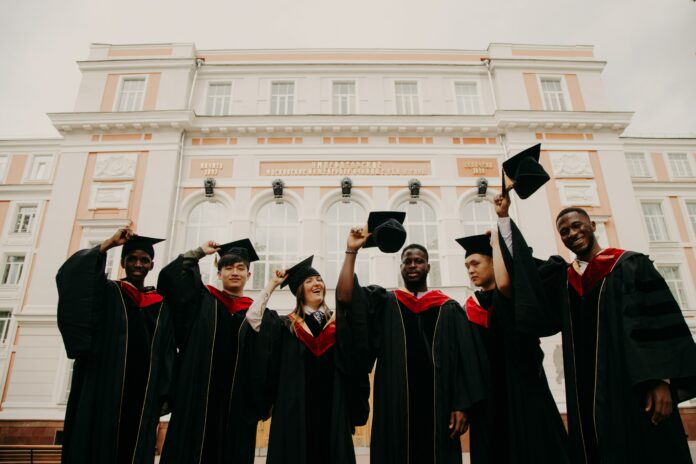
A group of graduates in their graduation gowns
PHOTO: RUT MIIT / Unsplash

By: C Icart, Humour Editor

What do you want out of your degree? Have you considered that not everyone’s answer may be the same? Starting my third degree in social sciences has prompted nosy questions and unsolicited comments all over again: What job do you plan on getting with that? Are your job prospects worth the debt? You can get a better-paying job by going into the trades! 

Sure, I could respond by saying I can get a well-paid job, and fortunately for me, I am not one of the millions of Canadians drowning in debt to the federal government. However, this response doesn’t address my real problem with this line of thinking. Like many of my fellow Gen Z folk, I do not dream of labour. I reject the idea that the only way of assessing value is through capitalism. I resent that money plays a massive role in choices regarding post-secondary education because of capitalism.

If you’re attending university for better job prospects, you are not alone. The rising cost of living and tuition are valid things to consider. But there are other reasons to learn. I’m really passionate about my research interests and would be miserable studying business, for example. What is the value of knowledge, life experience, and skills? Do we, as a society, remember how to quantify those things in non-monetary ways? Degrees have value beyond the economic opportunities they may provide.

Using job prospects to rank degrees is a problematic practice. For one, the amount of money related to a career is not directly proportional to the value that career provides to society. If you wouldn’t argue that we don’t need English teachers, you shouldn’t be putting down English majors. 

Fields typically associated with women, such as education, are systemically undervalued. This is one of the reasons behind the gender pay gap that still exists in so-called Canada. Women largely outnumber men in many health care and social service related occupations —  sectors that are notoriously underpaid. Women entering fields dominated by men with no additional support is not an adequate solution because these industries are often hostile towards them. They regularly face barriers such as discrimination, hostility, and harassment in STEM.

I will not downplay what getting a degree can do for you financially, nor do I think it’s responsible to encourage people to enroll in certain programs without being transparent with them about job prospects in that field. Everyone deserves to afford to live, regardless of their educational background. People from all fields make valuable contributions to our communities. You are not better than someone else because you are not “going to become a barista,” especially if you regularly go to coffee shops. You shouldn’t be using a service while also looking down on the people who provide it. 

As the cost of post-secondary goes up and many online news sources and academic journals are behind paywalls, I worry about the accessibility of learning. That being said, our local libraries are still precious sources of information.

I fear that, as a society, we have forgotten that knowledge is inherently valuable in unquantifiable ways. This is why I believe we shouldn’t use the phrase “not using a degree” when speaking about people who work in fields that are different from what they studied. You still learned all those things. You still had the life experience of attending university. You still met people and developed skills. All those essays you wrote likely improved your writing and critical thinking skills, which are highly useful in a number of workplaces. You did not waste your time.

The “hard sciences” and “soft sciences” debate, and the jokes and ridicule towards certain majors must end. They’re elitist, misogynistic, and don’t point to the real problem. The problem is not people getting arts degrees. The problem is that arts, and fields associated with the social sciences, are often devalued. Universities are not solely spaces to produce workers. How would we interact with universities if our perspective framed them as spaces to develop knowledge or community improvement? Most importantly, what economic changes would need to happen for that perspective to be accessible to everyone, without having to worry about gaining that money back? 

Advocacy group calls for stronger COVID-19 measures this fall

0
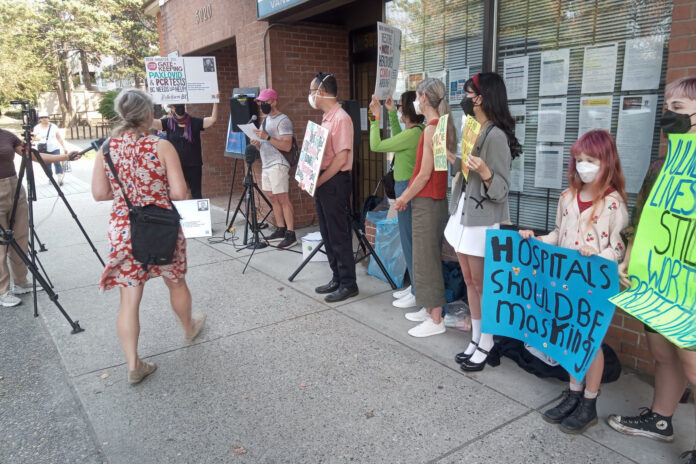
News crews congregate outside Adrian Dix's MLA office, gathering around protesters wearing respirator masks and holding signs demanding masks back in healthcare, access to Paxlovid and PCR testing, and holding some of the names of those impacted. In the centre, a young person stands at a microphone telling her story. She holds a yellow sign saying she has had Long Covid for 20+ months.
PHOTO: DoNoHarmBC

By: Michelle Young, Opinions Editor

On August 28, DoNoHarmBC hosted a protest in front of the Minister of Health, Adrian Dix’s office to call for the return of universal mask protections in healthcare settings. The in-person protest featured 25–30 people, but thousands of postcards were mailed to MLAs as part of a campaign to amplify the experiences of those affected by the removal of masks in healthcare. The event organizers read some of the submitted stories to represent those who could not attend. 

“Advocacy is vital because part of the issue right now is erasure. Without consistent, evidence-based safety measures, thousands of people are being excluded from public spaces, including healthcare. Those who are sickest are the least likely to be visible or to have a voice. This leads to survivorship bias, and the inaccessibility cycle: we can’t participate, so we don’t get a say,” a DoNoHarmBC organizer, who chose to be anonymous, told The Peak.  

The uncontrolled spread of COVID-19 has caused unbearable isolation for many people,” they said. “COVID safety is community care. We aren’t okay with leaving vulnerable people by the wayside. Instead, we choose to work together, tackling this collective problem that has an impact on us all.” 

“DoNoHarmBC did a wonderful job organizing different ways to participate in this protest, even virtually,” said Kayli Jamieson, an SFU research assistant who attended the event. “It felt like a morale boost to be around people who are passionate about the same things as myself: following the science, and encouraging community care, and anti-ableism,” she added. Jamieson was previously an MA student at SFU but has been on and off medical leave due to Long COVID

Among other demands, DoNoHarmBC also calls for the improvement of indoor air quality, education around COVID-19 transmission and its long-term side effects, and improved COVID-19 data collection. Because COVID-19 is airborne and can be transmitted without or before symptoms, DoNoHarmBC has focused its demands on precautionary principles. This approach emphasizes preventative measures to avoid unnecessary harm to others, and in the case of COVID-19 or other viruses, avoid preventable infections. 

Multiple COVID-19 infections can increase the chances of adverse health effects, such as organ failure and neurological damage. This can occur even in those vaccinated and previously healthy, months after an infection. 

While masks serve as an effective preventative measure, the increased ventilation and filtration systems in indoor spaces can add an additional layer of protection. This would reduce “airborne contaminants” so any viruses in the air aren’t lingering for long periods of time — where others could inhale airborne particles and become infected. As someone with Long COVID, Jamieson explained she’s been avoiding taking blood tests at LifeLabs due to their poor ventilation, which she measured with a CO2 monitor. A tweet from 2022 showed the monitor measuring CO2 levels at 1462 parts per million (ppm) at a LifeLabs in BC. Levels above 1,000 ppm are typically associated with poor air quality and “complaints of drowsiness.”

“It has been extremely restrictive in how I access healthcare — or in other words — I cannot access healthcare because these settings are often poorly ventilated, and full of extremely sick maskless people — all a recipe for danger as the virus is airborne,” Jamieson explained.

Dr. Karina Zeidler, a family physician in BC who has worked with DoNoHarmBC and is the co-founder of Protect Our Province BC, explained in an interview with The Peak the necessity of implementing protective protocols. “Since the last protest in April, healthcare has further collapsed. And it’s about to get knocked on its knees with another COVID-19 wave starting, a new highly-mutated variant identified in BC, and respiratory syncytial virus and influenza on their way. What’s changed is now, all protective measures like healthcare masking have been dropped, even as doctors and nurses are told they can work while positive for COVID-19.” This month alone, hospitalizations have tripled in COVID-19 cases since August.

Those from the SFU community have also spoken on the action SFU should be taking for the safety of staff, students, and faculty. “The university needs to stop pretending the pandemic is over,” Jamieson said. 

“I remember hearing other immunocompromised students — or living with high-risk family — saying they were forced to risk infection so that they could finish their degree,” she added.

“It has felt like we have been abandoned by SFU, given the institution’s complete lack of [regard] or care for maintaining COVID-19 community protections and following the science.” 

The Peak reached out to SFU for a statement on their COVID-19 safety plan for the fall. They cited that the university takes “direction on public health requirements from BC’s provincial health officer” and “to get vaccinated when eligible.” Jamieson noted, “COVID-19 protections require multiple layers, especially masking, distributing rapid tests, and not hosting super-spreader events.” She added SFU should “encourage more hybrid/remote opportunities,” reinstate protocols for airborne disease, and better inform the community of COVID-19 transmission and risks. 

“Particularly in schools and post-secondary settings, it’s absolutely vital to reinstate protective measures against not only SARS-CoV-2, but other airborne viruses and health hazards. We need masking, PCR testing availability, and financial assistance to support staff sick at home,” Dr. Zeidler explained. 

“SFU can’t pretend to not be complicit in mass infection and disability. Education should be a safe essential to access along with healthcare settings,” Jamieson said. 

She added that “hosting super-spreader events ‘with food provided indoors’” doesn’t align with SFU’s values alongside equity, diversity, and inclusion and it’s been an “upsetting thing to consistently witness despite the progressive tendencies of some student organizations, unions, or departments.

“SFU claims to be an engaging university but is seemingly busy engaging in ableist policies.” 

The #Postcards4PublicHealth campaign is ongoing. You can mail postcards to your MLA and the Minister of Health’s office for free or submit your story to @DoNoHarmBC, who will mail on your behalf. Find more of DoNoHarmBC’s first-person stories online.

Please stop coming to class

0
Someone standing in front of a bulletin board in a crowded hallway
ILLUSTRATION: Alyssa Umbal / The Peak

By: Sude Guvendik, Staff Writer

Okay, it’s been a week; please stop being on campus all at the same time. 

Ah, the start of a new semester! There’s nothing quite like the buzz of activity in the AQ. Well, actually, there’s nothing quite like the absence of that buzz. Suppose you had plans to revolutionize your academic life this semester by religiously attending classes and making the library your second home. In that case, I’m here to tell you it might be time to throw in the towel. The architectural marvel that is the Burnaby campus is simply not big enough for all of us.

SFU Burnaby is where we expand our minds, exchange a few awkward pleasantries with classmates we only vaguely recognize, and, of course, spend an obscene amount of time searching for a parking spot or waiting for 145. It is also a place that was clearly designed for a game of sardines rather than for serious studying. 

So, my friend, let’s chat about the possibility of you packing up your backpack and heading home. And while you’re at it, don’t forget to grab your hater hat to ward off unsuspecting study buddies.

Just imagine: the AQ — that bustling heart of campus life. Or at least, it used to be before the stampede of students turned it into something resembling a beehive on caffeine. As for the SUB, good luck finding a seat in there without resorting to bribes, tears, or possibly ninja-like manoeuvring skills. I know you had lofty ambitions of embodying academic dedication this semester, but let’s face it: these spaces were not designed for us all to be shoulder-to-shoulder, battling it out for elbow room.

Finding an empty seat in the AQ feels like discovering a unicorn casually sipping tea. If you’re tired of dodging backpacks and giving impromptu speeches on why your elbow should be granted a seat, it’s time to say goodbye to the land of musical chairs. Sure, you might miss the thrill of competing with raccoons for a coveted spot, but let’s face it: no one needs a classroom rivalry that involves foraging for crumbs and comparing the size of your backpack to determine dominance.

So, here’s the deal: consider the alternative. How about embracing online learning with open arms? Picture this: no more alarm-clock battles, no more perilous treks through the labyrinth of parking lots, and certainly no more contorting yourself into a human pretzel to access a power outlet. Plus, you get to attend lectures while rocking your most comfortable pyjamas — a win-win situation if you ask me.

Now, before you label me as the harbinger of doom for the on-campus experience, let’s take a moment to remember the positives. Opting for a quieter campus doesn’t mean surrendering your student status; it just means you’re a master of efficiency, a maestro of minimalism, and a virtuoso of versatility.

You’re not shying away from academic challenges — you’re embracing them in the coziest way possible, swaddled in your favourite blanket.

So, here’s to you, fearless student. Here’s to a campus where you can actually hear your own thoughts instead of a noisy crowd and where the library chairs sigh in relief as they escape the perpetual siege. 

Top five back-to-school tips *potty edition*

0
Sparkling toilet with a spotlight on it
ILLUSTRATION: Jill Baccay / The Peak

By: Cam Darting, SFU Student

We’ve all had those days when you’re attending a lecture, and BOOM, you feel your stomach brewing up a storm. I get it. It’s uncomfortable. These five tips will save you in these times, allowing you to easily deal with that brown situation.

1) Sorry, no cow juice for you
Cheese, ice cream, yogurt, oh, it all sounds amazing, doesn’t it? But you know what doesn’t? Explosive diarrhea, cramps, the sweat dripping down your forehead as you struggle to clench your buttocks to keep your number two caged in. To avoid these unfavourable circumstances, I recommend one thing: AVOID DAIRY. Now, this may not apply to everyone (lucky you), but for those of us who aren’t so blessed, AVOID. 

2) The flush lever = your new best friend
Don’t you hate it when your number two is so loud? When you’re using the washrooms on the library’s second floor, you can’t help but be worried if the people outside the bathroom can hear you blowing up the toilet. If you have this fear, do not worry, as I am here. Right before you make your big doo, you’ll want to flush, masking the orchestra that is your bowel movements. If you want to go above this, try coughing simultaneously. With the sound of the toilet flushing, this will surely hide the noises. Genius, no? I recommend doing this in one go because you don’t want to waste too much water! #EcoFriendly

3) Find your version of heaven on earth, or in this case, on campus.
I get it. We all have those devilish poops that ruin our day and need to come out. In situations like these, it’s important to find yourself a sanctuary on campus where you can let it rip in peace. Now, I obviously won’t share my go-to spot, but a close second is the bathrooms on the first floor of the SUB, right under the cafeteria. Not only are there multiple single stalls, but they are usually clean and very cozy. If you ever see me come out of one of those stalls, don’t go in after me.

4) What is that smell?
Sometimes, when you use one of the many one-stall bathrooms on campus (accessible and gender-neutral? Slay), you leave it smelling like a porta potty that’s never been cleaned. Let’s be real; most of the time, you don’t care, and you walk out of that bathroom like you just conquered a war. But sometimes, there’s a line waiting outside, and you get  embarrassed (especially if you don’t actually need an accessible stall). So, I recommend carrying around a travel-sized perfume with you at all times. Spray that in the air and, bam, leave the bathroom smelling like Bath & Body Works for the next victim.

5) Thank God I got rejected from UBC
What is great about the Burnaby campus is that most buildings are connected. No matter where you go, a washroom will always be near you. If you were at UBC, you’d have to walk for who knows how long to find the nearest bathroom. This one isn’t really a tip but more so a reminder of how lucky we are to be surrounded by a toilet 24/7. Hell on Burnaby Mountain-1, beautiful garden campus in Vancouver-0.

Productivity is a trap

0
A white ceramic mug holding a liquid inside. A book is besided the mug, all resting on textiles.
PHOTO: Toa Heftibe / Unsplash

By: Olivia Visser, Copy Editor

Content warning: mentions of car accidents and brain injuries.

The other day, I made a post on my Instagram story saying that your productivity isn’t defined by how many activities you do each summer. The amount of friends who replied telling me they needed to hear this was equal parts disheartening and uplifting. Most of us are aware that social media is often a curation of the best moments from everyone else’s lives. Despite how many people have highlighted the impact this has on our self-image, we still find ourselves wrapped up in feelings of inadequacy. I know this because my own Instagram account is a snapshot into some of my favourite days — summit shots from mountain climbs, homely staycations, and progress photos from my work-outs. I’m well aware this isn’t an accurate reflection of my day-to-day life, and I hope my followers are, too. Yet, it wasn’t until I lost all these things that I realized I needed to do some serious self-reflection. 

Earlier this year, I was in a car accident that resulted in a sizable brain injury. Since I’ve navigated my entire adult life with chronic illness, I naïvely figured healing from a concussion would be inconveniencing yet manageable. I didn’t expect my final undergraduate semester to be one of my hardest endeavours, even though the content was relatively easy. For the first few weeks following my accident, I was too dizzy and out of it to do anything besides melt into my bed and watch the days pass. I didn’t feel like myself at all. Once I was capable of getting out of the house, I began attending multiple rehabilitation sessions a week. It was difficult to accept that a mere physiotherapy session was all I could handle in a day, and would leave me feeling sick for the rest of the evening. Every time I tried to push myself in hopes of feeling better, I got worse. 

I’ve always been a relatively active and passionate person, and others have pointed out my idea of fun is very “type 2” according to the “fun scale” developed in the ‘80s by geologist and mountaineer Rainer Newberry. Type 2 falls into the category of high effort, high reward outings. Outdoor adventures (and particularly type 2 excursions) make for very Instagram-worthy photos, which can paint an unrealistic picture of what someone’s life is like. Realistically, these moments make up such a small percentage of my daily activities. Between work, school, and caring for myself in general, I’m not out hiking every other day like my social media profiles may suggest. Don’t get me wrong: I think it’s great to collect memories in the form of photographs, and exhilarating moments are great ones to immortalize. There’s nothing inherently wrong with sharing our best moments on social media, but we also can’t ignore the ways in which we may contribute to a culture of Fear of Missing Out (FOMO). Or worse, trap ourselves in a shame-driven cycle of perpetual “productivity.”

Social media leads us to believe that productivity is defined by how many activities you can squeeze into your schedule, rather than your personal progress — whatever that may look like. This year, I was quite literally hit in the face with the fact that I was conflating my personal goals with my expectations. I had an entire summer of exciting plans ahead of me, and was hoping to progress in my alpine climbing skills. Beyond that, I wanted to give my all and finish strong in my last semester. These weren’t just goals — they were things I expected of myself, which led me to believe that failing to achieve these things constituted personal failure. Who was I without the ability to pursue my dreams and hobbies? 

It’s not just adventure photos that lead people to feel like they’re doing nothing with their lives, either — it can be discouraging to see friends go out for drinks every weekend or lounge at the beach, all while you’re stuck at home or work. I desperately wanted to catch up with old and new friends, but found myself barely capable of even responding to messages over the summer. And you don’t need to go through a life-changing injury to feel inadequate — capitalism, disability, personal stressors, and the general business of life make it difficult for many to find time for themselves. My solution? Separate your goals from your expectations, and give yourself the grace you deserve. Because of my brain fog, I still struggle to keep up with conversations like I used to, but I’ve learned to let go of my old expectations. There are always going to be things in life you can’t easily change, so why hold yourself to unrealistic standards that overlook your individual situation?

It’s great to have big dreams, but it’s also important to leave room for the mundane. Over the last few months, I regained my ability to take joy in simplicity. I reveled in the progress I made walking to the end of my block and back, to gentle forest walks. I spent more time with my family than I had over the last year altogether, and made peace with the whole “C’s get degrees” mantra. My morning coffee and book are now a highlight of my day. I haven’t given up on my goals, but I’ve given myself permission to slow down and enjoy the ride — and you should, too. 

The best decision I’ve made this year was to disengage from my phone during memorable moments; going for hikes, climbs, and coffee dates without posting to my story. There is liberation in knowing that it doesn’t matter one bit if people don’t know what you’re up to. Now and then I’ll send my friends something neat that reminds me of them, an intentional gesture that’s much more personable than an Instagram story. And if I snap a particularly nice photo that I’d like to share with the world, that’s cool, too. Engage with social media in a way that works for you, but remember — pictures aren’t alive, you are. 

Ranking the six sporting arenas I visited this year

0
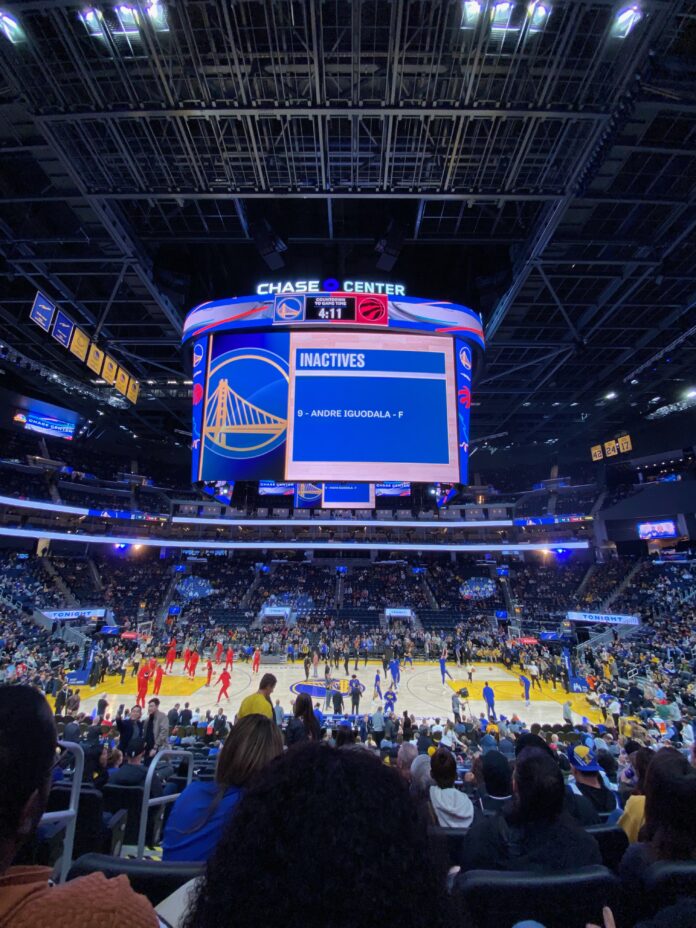
A photo of the jumbotron at Chase Center
PHOTO: Izzy Cheung

By: Izzy Cheung, Staff Writer

This year, I’ve had the privilege of visiting six major sporting arenas across North America. I watched a Colorado Avalanche playoff game in Ball Arena, saw Pitbull (Mr. Worldwide himself) in concert at the Saddledome, took a tour of the world-renowned Madison Square Garden, and saw Aaron Judge, Elias Pettersson, and Steph Curry play their respective sports in their home arenas. I’ve ranked each of these arenas based on five different categories — concession, historical background, efficiency, aesthetic, and my overall preference.

  1. Scotiabank Saddledome 

Home of the National Hockey League’s (NHL) Calgary Flames, and National Lacrosse League’s (NLL) Calgary Roughnecks. 

While I’m a firm Calgary Flames hater, this ranking is completely unbiased. It’s no secret that the Saddledome is in need of some repairs, and luckily, those will be coming soon. A new arena is coming to cowtown, financed in part by the Flames.

My visit to the Scotiabank Saddledome was to see Pitbull, who was headlining one of the first nights of the Calgary Stampede. Before going to Calgary, I’d been warned plenty of times about the rough shape the Saddledome was in, and in this regard, my visit didn’t disappoint. The concourse was relatively outdated, the stands didn’t feel particularly safe, and the only food options available were burgers, pizza, and other variations of typical festival fare. Overall, this venue did what it was asked to — hosting a concert — but didn’t particularly wow me. Kind of like NHL’er Jonathan Huberdeau this past season (if you know, you know).

My favourite part: watching Pitbull put on a cowboy hat for “Timber.”

  1. Rogers Arena

Home of the NHL’s Vancouver Canucks, and NLL’s Vancouver Warriors.

Rogers Arena is the perfect definition of “mid” for me. It’s not terrible, but it could definitely be better. The arena made a few changes over the summer, making improvements to the scoreboard and adding a new dining area that allows visitors to watch players take the ice at the beginning of each period. Of all the arenas on this list, Rogers is the one I’m most familiar with, so it’s hard to really review it from one specific experience. However, after visiting some of the other arenas across North America, I’d have to say it takes a backseat to some of the wonders provided by the others. In a way, Rogers Arena is the same spot as its home team — middling about in mediocrity.

My favourite part: Cin City mini donuts.

  1. Ball Arena

Home of the NHL’s Colorado Avalanche, National Basketball Association’s (NBA) Denver Nuggets, and NLL’s Colorado Mammoth

If this were a biased review, this arena would be at number one. As mentioned, my visit to Ball Arena was to watch the Colorado Avalanche in a playoff game. While they did eventually end up losing that game (as well as the series, unfortunately), the energy and excitement of playoffs was unlike any other. But this is an arena review — not an “experience” review — so review the arena, I shall.

Ball Arena was okay. It was large, clean, and had a decent selection when it came to food. I ate tacos while taking in warmups. I could tell that the arena itself was on the older side, but the design and layout of the jumbotron made me reconsider that for a second. One of the cooler parts of this arena was the main entryway, which had a large, hanging sculpture depicting various sports.

My favourite part: pom poms on each seat to celebrate Avalanche goals. 

  1. Yankee Stadium

Home of Major League Baseball’s New York Yankees.

This stadium gets its ranking largely due to the history associated with it. I know next to nothing about baseball, but upon arriving at Yankee Stadium, I could quite literally feel the importance of the franchise in the air. Seeing the large, gold “Yankee Stadium” signage above the gate made me feel like I was Percy Jackson coming to return the lightning bolt to Olympus in Rick Riordan’s The Lightning Thief (which is an interesting comparison, I know — but it just makes sense).

Options for concession were alright — nothing to phone home about, but also not completely devoid of options — and the stadium itself was clean. We got seats in the grandstand, so we could see pretty much everything on the field that needed to be seen. As a sports fan, the allure of this stadium came from the various signs and old logos that served as a reminder of how important the Yankees are to sports culture.

My favourite part: golden hour occurring in the background of the game.

  1. Madison Square Garden

Home of the NHL’s New York Rangers, and NBA’s New York Knicks

You know an arena is important when people are paying good money to go on tours of it (guilty as charged). Madison Square Garden is one of, if not the most famous arena in the world. While I didn’t get to see a performance or sporting event here, doing so is definitely on my bucket list. The arena is massive, with a capacity of around 20,789. Level 100 is stippled with various athletes’ memorabilia and placards of important events that have occurred within its walls.

My favourite part: seeing at least 20 banners hanging from the rafters. As a sports fan, it’s surreal seeing all those names and knowing everything that’s occurred in this very arena. 

  1. Chase Center

Home of the NBA’s Golden State Warriors

As great as each arena on this list was, Chase Center was on a different level. Ball Arena was about the playoff experience, Yankee Stadium and Madison Square Garden were centered around history — but Chase Center checked all of my boxes. The exterior of the arena was a sleek, modern white, with a couple of sit-down restaurants and a stair-like seating area out front.

If I could describe this arena in one term, it’d be high-tech. The walls and floor were all as white as polished enamel, and concession stands were clean, hosting a variety of foods. I grabbed tacos (yes, again) and sat down to watch the Golden State Warriors warm up. The jumbotron was, well, jumbo — and the bright lights made the arena appear much more modern.

My favourite part: fan interactions, bright lights, and not having to wait in a long line to go to the bathroom.

Disabled people in BC need marriage equality

0
A couple, one in a wheelchair, on the beach
PHOTO: Mikhail Nilov / Pexels

By: Hailey Miller, Staff Writer

Many disabled people in BC rely on Persons With Disabilities (PWD) benefits — monthly income assistance from the provincial government. Though some income assistance is better than nothing, these benefits are not nearly enough to sustain people with today’s cost of living. Such benefits are so minimal that many people still cannot afford daily living expenses, let alone added medical expenses of uninsured assistive devices, appointments, and medications. Moreover, if a person on PWD enters a “marriage-like” relationship with someone who does not receive these benefits, the disabled person’s monthly PWD assistance is removed. This includes serious common-law, spousal, or marital relationships that last a minimum length of 12 months.

While this only applies if the relationship becomes known to the government, and the partner makes over $18,000 a year, the province assumes a disabled individual’s expenses can be covered by their partner. This forces those who are disabled to rely on someone else’s income, or lose other financial support. This should not be the case, especially considering the outrageous expenses of today’s housing market

As of August 2023, the monthly PWD amounts are typically up to an estimate of $1,480, including the allocation of a $52 transportation supplement, and a measly $375 for rent. The remainder is designated as support expenses to cover other monthly costs. Aside from this, an excess unearned income deduction — noted on someone’s PWD account — is factored in based on how much income an individual declares per month. And, yes, filling out monthly reports is expected in order to receive designated benefits each time, which can be an exhausting process for a variety of disabilities. Disability income assistance rates are different for relationships where both individuals receive PWD, if someone or the couple has a child, or if multiple family members receive these benefits.

Evidently, these amounts are not enough to cover everyday costs, let alone medical or unexpected expenses. Today, the average person spends between $2,000$3,000 per month on rent in the Lower Mainland. Pair that with about $360 in groceries and your monthly expenses are already through the roof. 

It’s difficult enough to manage as an individual without a disability in today’s market. For those of us with disabilities who rely on monthly income assistance just to get by, it’s disheartening to know that our benefits are essentially eliminated if and when we enter a relationship that becomes known to the government. This leaves minimal options and a lack of income security for those of us on PWD who want to save for a house or car, start a family, factor in appointment costs, and personal expenses such as travel and going out.

The elimination of these benefits leads to unfortunate options for a couple: not declaring their relationship and risking lying to the government, living in the same household but pretending to be roommates so it doesn’t seem like they’re together, or not getting married to preserve these benefits. The lack of marriage equality in BC for disabled people forces a choice between receiving income assistance or pursuing a relationship. In other words, we must choose between love and survival among modern-day inflation. 

It is completely unacceptable to remove benefits that are awfully minimal to begin with. Removing these benefits restricts disabled peoples’ independence and increases the risk of potentially entering or getting stuck in abusive relationships out of necessity for financial assistance. 

To safely and securely manage financially within a relationship or cohabitation between an interabled couple, marriage equality for disabled people must be implemented for equity, financial security, and basic human rights. PWD should allow people with disabilities to enjoy relationships with their partner without falling into debt or poverty, and perhaps even expand the minimal benefits they offer. PWD support should allow individuals to live their life independently, without relying on their relationships for financial care.