Home Blog Page 175

Sumaiya Tufail to deliver TEDxSFU talk on poetry as resistance

0
A headshot of Sumaiya Tufail smiling in front of an emerald ocean backdrop. She is wearing a pink head covering, and a dewy red lipstick.
PHOTO: Courtesy of Sumaiya Tufail

By: Saije Rusimovici, Staff Writer

Editor’s note: The Peak would like to note that Josh Ralla, one of our staff members, is an executive director of TEDxSFU, but had no involvement in writing this article. 

Sumaiya Tufail began the Slam Poetry Club at SFU last summer as a way of creating a safe space for racialized artists to express themselves through poetry. Growing up in Surrey, Tufail was inspired by her Grade 11 Humanities teacher after introducing her to spoken word poetry as a way for students to speak their truths. 

Tufail found it “a cool way to express [her] emotions and find power through art,” and began performing slam poetry. At the age of 20, she began to post her poetry on Instagram. Tufail has been blogging, writing, and building her platform over the last seven years. 

She said one of her biggest goals was to eventually become a TED Talk speaker, adding that she can’t believe it’s happened so quickly. The TEDxSFU annual program organizes independent TED conferences for “industry professionals, advocates, educators, and storytellers” in Vancouver. Tufail’s TEDxSFU Talk “unveils poetry as an act of resistance and advocacy,” informed by her journey as a slam poet.

Slam poetry, otherwise known as spoken word poetry, is an arts movement that began in the 1980s as a stage-based way for vocal delivery to convey the emotion in language, as opposed to formal written poetry. The roots of spoken word are linked to the anti-colonial Négritude movement, “a literary and ideological movement led by French-speaking Black writers and intellectuals from France’s colonies in Africa and the Caribbean in the 1930s.” Modern poets continue to carry on this tradition by divulging themes such as injustice in sex, race, and gender.

“In the Lower Mainland it is very difficult to find a poetry space with majority BIPOC representation,” Tufail said. The poetry club has become a space for many individuals to express themselves through the artform. Through poetry, members of the club can share their stories, hardships, triumphs, and experiences. 

“Poetry has always been a way for me to heal and resist,” Tufail explained. “It is deeply an intergenerational manifestation of truth telling for me.” As a second-generation Canadian Muslim settler, Tufail said that “to be the generation of dispossessed, displaced, and racialized within the Canadian context post 9/11 is symbolic.” She describes being “in a place of possibility and oppression simultaneously” as a result of Islamophobia and systemic racism. Tufail refers to poetry as “an art form of resistance through [her] body and her voice.

“It is deeply an intergenerational manifestation of truth telling for me. The previous generations of women in my family had their voices silenced or ignored but the women further back had been louder.”

One of the most impactful moments she’s had with SFU Slam Poetry was when one of the performers expressed to her that she no longer suffers panic attacks when performing. Tufail said this experience solidified to her that “creating this type of space does bring out the power in people who may have been shut down throughout her lives.”

This year’s TEDxSFU conference will be held on Saturday, November 11, 2023 at The Centre for Performing Arts in Downtown Vancouver. Tickets will go on sale in August. 

Anyone can attend or perform at a poetry slam, held on Burnaby campus. The next slam takes place on July 27. Visit SFU Slam Poetry on Instagram @sfuslampoetry to learn more about becoming a club member, and events. 

A letter to my TA

0
A group of people in a room with a projector screen.
PHOTO: Kenny Eliason / Unsplash

By: Hailey Miller, Peak Associate

I’ve often wondered how teaching assistants find the time to actually manage being a TA. As if university isn’t tough enough, somehow you squeeze enough time into your schedule to assist in one more course — not to mention undertaking such a feat while still furthering your own studies. Clearly, you must have some kind of scholarly superpower, as it takes a special kind of person to relive such materials all over again. Granted, you’re probably assisting in a course you once excelled in, or a topic you found interesting, but regardless, props to you. 

Student or TA, we’re all in the same boat — the only difference is that you’re getting paid to talk to a fraction of the class about the course content you’ve already learned. We’re all just trying to make it through the semester without the tuition draining our bank accounts and the stress diminishing our degrees. It makes sense that you’ve secured yourself a TA side hustle in hopes of avoiding the ever-dreaded nightmare that is student debt. 

Being on the student side and not knowing what on earth goes on your end, there are a couple of things I want you to know. It’s not your fault that the material is brutally dry, or the criteria is preposterously vague. You’re doing your best to just make an extra buck on the side and cover those graduate costs. But between you and I, are the tutorials really that mandatory? 

Sometimes I wonder when we’ll ever get our grades back. Is there an unspoken rule between yourself and the professor regarding the lack of a reasonable turnaround? Sometimes it’s two weeks, sometimes it’s four. Sometimes we don’t even get to see what we got wrong on an exam, or what marks were docked on an assignment. On that note, some constructive feedback would be nice too — anything better than just a plain, old “well done” or “needs work.” But don’t worry, as much as I hate the anticipation of waiting for a grade, I get it. You’re busy and you’ve got a lot of papers to go through. 

Do you ever feel as exhausted and confused as we do? Do you get tired of being a teaching assistant for the same course, or are you just teaching the material as if you know it like the back of your hand at this point? Maybe you should consider being a professor next. Then again, maybe that’s why you’re a TA, and this kind of thing is in your wheelhouse.

On another note, I don’t want to waste your time, but do I really need to wait to attend your office hours? Speaking of, do you ever bother with your office hours, or do you dread them as much as the students do? Being the squeaky wheel that I am, though, I’m just going to stick around to bug you after class and beg for clarification on the brutally vague criteria that the professor didn’t even bother to explain. I’m sorry to be that student, but I want to succeed this semester as much as we both want it to be over.

Not to change the subject, but ever since I walked into your tutorial on the first day, I figured we’re probably the same age. The only difference is that you somewhat have your ducks in a row, and I, most certainly, do not. And by that I mean that you’re doing your graduate studies, while I’m over here still barely putting a dent in my undergrad. Did you start university a year early? Did you overload your full-time schedule? Burn through summer semesters? Study while doing co-op semesters at the same time? I wonder how you’re so far in advance.

All jokes aside, you really are doing a great job. I couldn’t do what you do if I were in your shoes. If it weren’t for your tutorials, the class probably wouldn’t have bothered keeping up with the course materials. You’re actually putting in the effort to make the material less dry — something that the professor could really take a note of. But don’t worry, I’m sure the class will put in a good word on your evaluation. After all, you deserve it. 

So, cheers to all the TAs, and best of luck with the rest of your studies.

5 things that actually deserve to be on the $20 bill

0
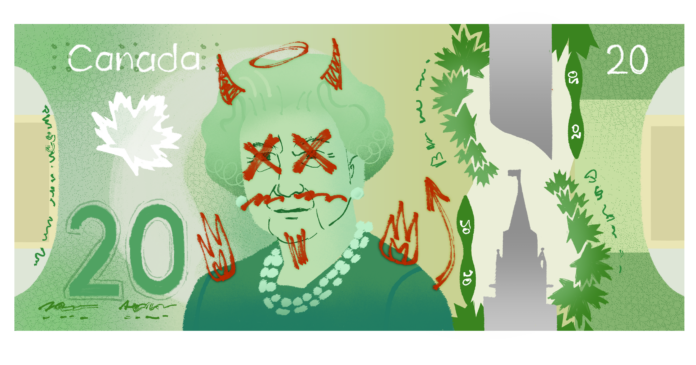
Image of a $20 dollar bill. Queen Elizabeth’s face has been defaced.
ILLUSTRATION: Jill Baccay, SFU Student

By: Hannah Kazemi, Peak Associate

Here ye, here ye. The Bank of Canada has announced that we should expect to see brand new $20 bills circulating in the next few years featuring none other than King Charles’ face. How lovely a thought that is! In honour of this announcement and how I visibly cringed when I heard the news, I present to you five things that I think actually deserve to be on the $20 bill and in the hands of Canadians immediately.

Barbie and Ken

Barbie has so many jobs. She’s an astronaut. A doctor. A fashion superstar. She slays in every outfit! Charles can’t do any of those things. Who better to be on money if not Barbie and Ken? To top it off, Ken is played by Ryan Gosling in the Barbie movie a true Canadian king! I say Barbie and Ken should run the world and replace all three corporations that have a monopoly over Canadian everything. While we’re at it, we should just rename the $20 bill to the Kenergy bill. We all need a little more Kenergy in our lives so why not give some to the $20 bill?!

Tim Horton’s Sprinkle Donut

Tim’s has some delicious treats, but there’s nothing better than biting into a soft, fluffy donut and crunching the sprinkles between your teeth. They’re so sweet and satisfying to eat. They deserve to be on the $20 bill as a display of patriotism. I dream of that sweet crunch, the way that the sprinkles fall half into your mouth and half down your shirt. It’s a god-like experience, if you will. I’m convinced the only good thing to come out of Canada’s history is this goddamn sprinkle donut. Write about this in the history books!!!

Razor Scooters

They’ve done less damage than colonialism and the monarchy ever has. And we know very well that most of the population have had their ankles absolutely fucked up by a razor scooter as a kid. Do I need to say more?

Shirley Temple (the drink, not the girl)

The feeling I get at a restaurant when I remember Shirley Temples exist is euphoric. My mom used to make a bootleg Shirley Temple for my sisters and I as a special treat when we were little, so it’s played a bigger part in my life than Charles (or any government leader, for that matter) ever has. It’s sweet. It’s bubbly. It’s what dreeeeams are made of! It’s only right that the Shirley Temple gets its time to shine on the $20 bill let it live on in the hands and happy tummies of Canadians forever.

Baby Highland Cows

COME ONNN, DO I HAVE TO EXPLAIN? I love scrolling on TikTok and coming across a video of little Highland cows frolicking around and munching on grass. They’re so floofy, and their little bangs cover their eyes in the most adorable way. Highland cows are a gift to this Earth, and baby Highland cows bring me so much joy and childish glee that it would be BLASPHEMOUS not to put them on our money!!! Heck, let them run the corporate world alongside Miss Barbie and Mister Ken. Oh, what I would do for a baby Highland cow . . .

But I’m a Cheerleader brilliantly satirizes heteronormative society

0
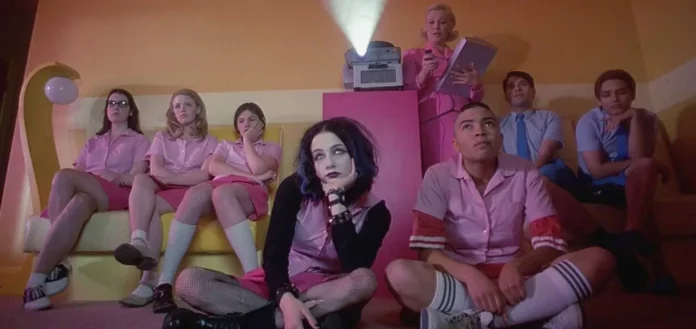
A film still featuring a group of bored-looking teens sitting on a couch looking up at a projected video. The projector is shown pointed towards the camera and an older woman is clicking the remote. The girls are dressed in pink button-ups and skirts, and the boys are dressed in blue button ups with ties.
PHOTO: Courtesy of Ignite Entertainment

By: Cameron Palmer, SFU Student

Content warning: conversion therapy and queerphobia.

The first time I watched But I’m a Cheerleader (BIAC), I was a passionate “ally” of my high school gay-straight alliance club. Celebrating queer identities and making straight people the butt of the joke was controversial in the ‘90s, but even in 2014, watching it for our club’s first movie screening was the first time I saw a romcom that centered queer experiences. While Mean Girls and Clueless went down as household names, BIAC is a hidden gem in mainstream culture. As a hilarious, self-aware satire that tackles growing up queer in homophobic environments, it’s a comforting classic in queer communities.

The film follows Megan (Natasha Lyonne), a cheerleader and goody two-shoes straight-A student whose family, friend, and even boyfriend, suspect she’s a lesbian before she discovers it herself. After an intervention, they send her to True Directions, a gay conversion camp where boys and girls are separated, follow a five-step program, and are trained to perform normative gender roles to “fix” their sexuality; things like cooking and cleaning, for the girls, and fixing cars for the boys. It’s there where Megan meets Graham (Clea DuVall), who’s unapologetically lesbian, and confusingly endearing. Her defiance clashes with Megan’s naïvety and obedience.

With campy costumes that feel like a Dr. Seuss pastiche, a Barbie house style set, and hot pinks and baby blue contrasts which comically depict the rigidity of gender norms, the film’s over-the-top-ness accurately reflects the absurdity of conversion therapy and gender norms. The deadpan delivery of the campers professing their sexuality’s roots in group therapy, like being born in France and being vegetarian, is extra hilarious because it highlights how irrational these stereotypes are when they’re being regurgitated by teens.

The film touches on taboo topics like masturbation, and I’ll admit, a few jokes went over my head when I watched it as a teen, as I was very sheltered growing up. For instance, Megan learns she can shock herself with a small taser everytime she thinks about girls, and discovers why fellow camper, Sinead, says she likes pain and shocks herself under the covers throughout the night.

Megan’s character is cartoonish (when she realizes she’s lesbian, her jaw drops for so long, she drools), but you root for her because she’s simply gullible, and a product of a harmful environment. This is something I can relate to when I think of my younger self.

Watching this as an adult for the first time since high school, I could understand some of the themes better. Compulsive heterosexuality (comphet), coined by Adrienne Rich, means we often don’t have the same opportunities or motivations to explore non-heterosexual attraction, and therefore don’t question our sexuality until later in life. I considered myself an “ally,” and didn’t grasp I was bisexual until adulthood, because the possibility hadn’t even crossed my mind. Or, maybe it had, but I pushed those thoughts away due to the shame surrounding queerness that was conditioned by my religious upbringing. 

Megan’s response to the accusations of her lesbianism, “But, I’m a cheerleader!” exemplifies how gender stereotypes reinforce comphet — she assumed that being feminine and popular made her straight. On the flip side, Jan is a masc-presenting character who “likes balls,” and is sent to True Directions even though she insists she’s attracted to men. However, no one believes her because she looks stereotypically lesbian.

While the characters are one-dimensional and the plot follows typical formulas in the genre, like enemies-to-lovers, it’s self aware, playing into these expectations to subvert them. Plus, sometimes you just want to watch something familiar and easy, especially for processing difficult or traumatic experiences.

SFU’s “What’s Next” report outlines their upcoming priorities

0
This is a photo of the SFU Burnaby Campus. A small pond in a courtyard is surrounded by buildings and small trees.
PHOTO: Kriti Monga / The Peak

By: Eden Chipperfield, News Writer

SFU released their second “What’s Next” report on March 8. The 2023 report provides insight into what the SFU community can expect their faculties to be actively working on. This includes online discussions, and round table talks from the community to understand how the university can evolve to better serve its community. 

Central topics SFU addressed included: embracing accountability for student learning, promoting and protecting the mental health and well-being of students, advancing social justice, inclusion, and climate action. Each topic included various action points to create a strategy that addresses those goals.  

We are living through a critical time in history. From a global pandemic and growing inequities to shifting geopolitics and the climate crisis, the challenges we face are complex and daunting, said SFU president Joy Johnson in a statement announcing the report’s release. 

The report highlights accountability as a key priority. It noted the strategies used to address challenges will succeed through implementation. Various working groups and appropriate resources will be introduced to ensure these issues are appropriately discussed. Implementation reflects the conversations occurring through the working groups aligning with executive and governance processes.However, no specific details were provided about said working groups.

To aid in establishing the action items in What’s Next?SFU identified four priorities: upholding Truth and Reconciliation, engaging in global challenges, making a difference for BC, and transforming the student experience, according to a statement provided by the SFU administration to The Peak. 

Reconciliation is a primary subject of interest, and will be addressed under Chris (Syeta’xtn) Lewis, director of Indigenous Initiatives and Reconciliation, and president Johnson. The report stated its goal is to strengthen Indigenous faculty and staff attraction and retention through targeted hires and permanent positions, embedding Indigenous knowledge systems and ways of knowing.An Indigenous Strategic Plan is also in development and will be shared in time.

The report also touches on climate action relating to SFU’s progress with the Sustainability and Climate Action Plan released in September 2022. SFU has already made significant progress toward reaching net-zero greenhouse gas emissions by 2050, including announcing it will divest from fossil fuels,the administration statement reported. SFU cut greenhouse gases by more than 50 percent from 2007 levels in 2021, exceeding provincial interim targets and our own Race to Zero targets as well.

Regarding their goal of making a difference for BC, the strategy describes a future medical school at SFU’s Surrey campus. SFU is working closely with many partners, including First Nations Health Authority and Fraser Health Authority, to develop a medical school focused on educating community level specialists, including family physicians and being accountable to the province’s diverse communities it will serve, the administration stated. SFU plans to begin student intake for the medical school in September 2026. It will facilitate evidence-informed public dialogue that fosters pluralism and shared problem-solving across the province, as featured in the report. 

The last priority discussed in the report is transforming the SFU student experience. This priority aims to break barriers, reduce biases, and create systems that promote student success, improve campus vibrancy, and create space for everyone to do their best work”. The strategy includes actively changing the curriculum and providing service enhancements for the changing needs of learners, including more information on mental health, affordability, and flexibility.  

SFU will need to remain agile as the next months and years unfold, and this strategy serves as a vital compass to guide the university,” according to the “What’s Next” report. 

For more information on the What’s Next report, visit their website at sfu.ca/about/sfu-strategy.html. 

Summer just started and it’s practically over

0
Someone walking away from summer items (ex: beach balls, watermelon, sunglasses) wearing fall colours, a jacket, and holding a pumpkin spice latte
ILLUSTRATION: Alyssa Umbal / The Peak

By: Hailey Miller, Peak Associate

Well, the longest day of the year has already come and gone. The day erupted into the sky at the crack of dawn, like a fleeting shimmer as the seasons pass by. If you blinked, you probably missed it, because summer just started, and it’s already on its way out. It’s been preparing for this all year — it knows Vancouver is the perfect place to throw some shade and keep us weather-complaining locals on our toes. So, the season comes and goes, and no one even knows. It’s a literal flip-flop, after all. But you better make sure those flat-footed, ergonomic hazards of a sandal (if you can even call them that), accompanied by a brutally uncomfortable toe piece, stay on your feet. Otherwise, you’ll get burned by the sizzling sidewalk underneath. Oh, but don’t worry, those improper flip-flops will slide right off in the sweaty summer heat. 

June 21 may have been the longest sunlit 24 hours the Northern Hemisphere had to offer, but it sure didn’t show it. As the clock struck midnight, the sky swallowed the wistful days of summer’s rays, leaving behind melted ice cream drips and spontaneous road trips, impatiently awaiting their turn to conquer the dog days. You want to enjoy a nice night at the beach and take in the summer breeze? Forget it. The wildfire smoke is too thick for that, and the only breeze you’ll feel is your useless fan working overtime as your hair sticks to the back of your neck, heavy with sweat. The only sunset you’ll see is the fiery haze in the sky as you watch from inside your house, quarantined from climate change. Nothing says summer like being locked down in the heat. Gone are the days when you jumped in the ocean without the thought of an E. Coli outbreak. 

What’s not to love about summer when the days are already shorter, and the ocean water is still colder than your frigid air conditioner kicking into overdrive? One minute it’s a torrential downpour, and the next, the sun’s rays are searing down so hot you might as well cook your breakfast outside on the sidewalk. Who wants to turn on the stove and transform their kitchen into a furnace when you can fry an egg on the pavement instead? Why bother wasting energy when climate change is right on your front doorstep! The walls of your house are already crumbling in the heat — accompanied by a cesspool of sweat — so you might as well go outside and enjoy the blistering sun for an entire two seconds before it’s too hot to handle. Good thing fall is just around the corner. Just kidding, we’ll probably get a “second summer” in October while pumpkin spice runs through the city streets, slides down the pipes, and into the kitchen sink — readily available on tap.

But before you enter into your pumpkin spice, Libra-living, vampire-vanquishing, Halloween-haunting glory, just remember: swirling a copious amount of the infamous autumn sauce (basic latte code for pumpkin spice, obviously) into every drink imaginable is a law that must be abided by, following the immediate fall of summer. That’s why it’s called fall, after all. Whether your special spice recipe is concocted via Witches’ Brew or handpicked from the pumpkin patch in your backyard, the irresistible autumn elixir will surely work its magic to remedy the summer disappointment of relentless heat. The crisp autumn air will soon whisper upon the horizon, enticing pumpkin spice connoisseurs and witches alike, leaving the dog days long behind.

Fast-paced reads perfect for poolside reading

0
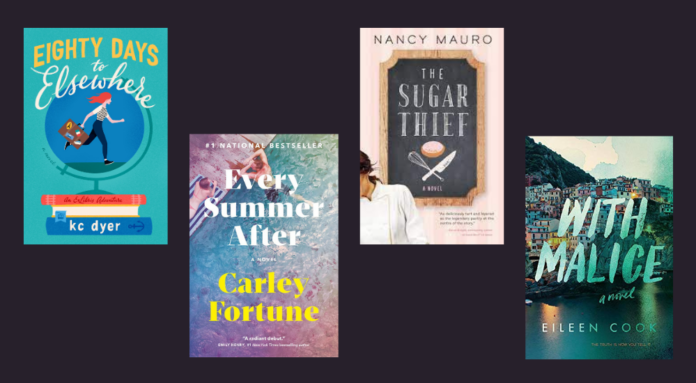
A banner featuring the book covers of the titles in this list.
PHOTOS: Courtesy of Berkley, Courtesy of Clarion Books, Courtesy of Penguin

By: Saije Rusimovici, Staff Writer

There’s nothing like opening up a good beach read and completely forgetting about real life for a couple hours. This selection features authors who capture the reader and transport them into each story. From a feel-good travelling tale to an edge-of-your-seat thriller set in Italy, these enticing reads are sure to catapult you into your summer reading groove. So sit back, grab yourself a cold drink, and dive into these reads (don’t drop your paperbacks in the pool though)!

PHOTO: Courtesy of Berkley

Every Summer After by Carley Fortune

I’m not normally a big fan of romance or the friends-to-lovers trope, but the way Fortune writes is captivating and not only feels relatable, but real. Tragedy brings Persephone Fraser back to the small town of Barry’s Bay in Eastern Ontario, where her family used to vacation when she was a teenager. It also brings her back to the place she met and fell in love with her best friend, Sam, whom she hasn’t spoken to in more than a decade. The story carries the reader back and forth through time, the chapters alternating between past and present, through all the stages of Persephone and Sam’s relationship, up until the reason it ended. But the story doesn’t only focus on romantic love; Fortune also explores themes like friendship, family, loss, and mental health. 

PHOTO: Courtesy of Clarion Books

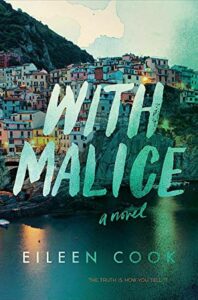
With Malice by Eileen Cook 

Content warning: mention of car accidents and death.

Get ready to be transported to the Italian coast and sucked into a thriller that keeps you hooked from the first page to the last. Jill Charron had been looking forward to visiting Italy on a high school trip with her best friend, Simone, for months. Only now, she has no memory of it. After waking up in a hospital bed, Jill is informed that Simone has died in a car accident and she was the one driving. Devastated, Jill attempts to piece together what happened on their trip, while dealing with the allegations that she tried to hurt her best friend on purpose. This is one of those books that keeps you flipping the pages until you realize you’ve finished the whole thing in one sitting. Cook keeps you on the edge of your seat, over dangerous twists and turns that keep you guessing the entire way through. 

PHOTO: Courtesy of Berkley

Eighty Days to Elsewhere by K.C. Dyer

I had the opportunity to meet my mom’s favourite author, K.C. Dyer, at a book signing in Coquitlam last year. This novel is the first book in the ExLibris Adventure series, starring protagonist Ramona “Romy” Keen. Desperate to save her uncles’ bookshop from going out of business due to high rent increases, Romy applies for a job at ExLibris Expeditions, a company that recreates famous literary journeys and creates feasible travel itineraries for prospective clients. Romy is tasked with retracing the steps from Phileas Fogg’s trip in Jules Vern’s Around the World in Eighty Days — and her competitor is none other than the nephew of the landlord trying to run the bookstore out of business. Dyer is witty, comforting, and writes with a flair you can’t help but gravitate towards. The spine is completely creased from how many times this book has been flipped through in my house. Travel with Romy this summer and you might learn a little bit about life, the world, and even yourself! 

PHOTO: Courtesy of Penguin

The Sugar Thief by Nancy Mauro 

What first drew me to this book was the pastel-pink cover. As a baker that’s slightly obsessed with cooking tutorials and a sucker for a good mystery, this book grabbed my attention instantly. I have to admit, it was a bit of an impulse purchase. With that being said, I’m so glad I did. Mauro crafts the story of Sabine Rose, YouTuber and baker, masterfully. Just as Sabine is about to launch her own television show, she decides a well-documented trip to her family’s bakery in Thunder Bay is exactly what she needs to get that final push to stardom. However, after learning her father, an acclaimed pastry chef, has recently died, Sabine begins to uncover dark truths about the family bakery and secret recipes. Mauro takes you on a journey from the modern, sometimes cutthroat world of the media industry to the humble beginnings of her father’s legacy in Italy. 

Alternative music has a misogyny problem

0
PHOTO: amirhossein hasani / Pexels

By: Isabella Urbani, Staff Writer

Content warning: mentions of sexual harassment, grooming, sexual assault of minors, misogyny, and queerphobia. 

There are a few ways in which women are generally framed in alternative music — usually rock, punk, and metal. They’re playing hard to get, they’re too young for the singer but the singer “can’t resist” the urge to pursue them, they’re slut shamed for “lusting” over the singer, or they’re ridiculed for not “understanding” the singer’s angsty past. 

Songs of this nature were customary as the rock genre gained traction throughout the ‘50s, with lyrics that were disgustingly straightforward in their predatory advances, and at their peak in the ‘80s and ‘90s

Elvis Presley’s 1968 track, “A Little Less Conversation,” includes the lyrics “close your mouth” and “satisfy me,” as he tells a woman to stop “fighting” and talking because it’s “aggravating” him and taking away from his “satisfaction.” 

The so-called Rock ‘n Roll king groomed his ex-wife Priscilla Presley, pursuing a relationship with her when he was 24 and she was just 14. During their marriage, Elvis was known to control what Priscilla wore, and sexually assaulted her. Even before Priscilla, Elvis was known to bring 14-year-olds with him on tour and sleep with minors at different stops of his tour, and was brash about it too.

As disgusting as this is, it didn’t turn many heads in the ‘60s. “A Little Less Conversation” was seen as romantic for the times, and apparently even so in 2009, when it was featured on the first-ever Just Dance game. A quick look at the song’s Youtube comments proves people are still willing to overlook and make excuses for Presley’s known pedophilic behaviour to protect their nostalgia for his music — which glorifies his actions. 

He’s not the only one being protected by nostalgia. The Beatles threaten to kill a girl in “Run For Your Life.” The Rolling Stones sing about controlling their girlfriends. Rock band Kiss’ song, “Christine Sixteen” is about lusting over a 16-year-old schoolgirl, and continuing to do so, while admitting that it’s wrong, as if that makes it any better. The song “My Sharona” by The Knack talks about how younger girls are sexually arousing and although it’s “dirty,” the band’s “never going to stop.” Distracted by a good tune, people rarely listen to the lyrics and ignore the sinister intentions laid out right in front of them. These songs are still commonly played on alternative radio stations, and “My Sharona” is a hockey game staple, fitting for the numerous allegations and sexual assault court cases against professional hockey players.

Songs are more often than not written from personal experience. With how negatively women are portrayed in alternative music, it’s not surprising that countless alternative bands have grooming and sexual assault allegations against them. Despite this, many of these abusers end up remaining in the band. These allegations include large names in the genre, such as Pierce the Veil and Of Mice and Men

Years later, nothing has changed. So, no, you can’t justify a song by referring to it being socially acceptable for that time. It’s still gross. Morals don’t work like that! Bands may not be as upfront in their lyrics about being misogynistic predators, but you don’t have to listen very closely to pick up on it. However, so many of these songs receive mainstream recognition and aren’t called out for being criminal. 

Blink 182’s song “Dumpweed” from their most popular album, Enema of the State, talks about the band wishing they could train women to take commands like a dog. When touring to promote that album, the band would shout expletives to women, asking them to show their chests

More recently, in 2022, Jacob Hoggard, the former lead singer of Canadian rock band Hedley, was sentenced to five years in jail for sexually assaulting a woman in Ottawa in 2016. That same year, Hoggard was engaging in a sexual relationship with a 15-year-old online, arranging for her and her friends to see a Hedley show in Toronto, where he subsequently groped her. This isn’t isolated. Multiple bands and popular singers in the alternative music scene are fraught with sexual assault allegations. Evidently, there’s a sexism problem — women in the industry themselves have spoken up about facing harassment, too. 

The solution to this problem is pretty simple: bands need to stop grooming and manipulating fans. Better yet, just respect women and girls. Less than 10% of inductees into the Rock and Roll Hall of Fame have been women. It’s nearly impossible to find a mainstream rock band consisting of all women. Most women-led bands, including Paramore, No Doubt, the Yeah Yeah Yeahs, and Tonight Alive, only have one member that’s a woman. 

With few women-fronted rock bands compared to men-fronted bands, fans, many of whom are teenagers, are looking up to the same individuals who are using their trust and position of power to take advantage of them. These aren’t good people, and however much you like their music doesn’t excuse that fact. All it actually does is keep survivors from speaking out.

There’s no need for misogyny in music — ever. Rock music doesn’t get a pass just because its music is vocal about being anti-establishment and pushing boundaries. Members of Nirvana, the band who “saved rock music from itself,” were outspoken feminists and 2SLGBTQIA+ allies. In 1992, they performed at an Oregon benefit concert, which was protesting a motion that would allow schools to teach children that being gay and being a pedophile were one and the same. The bill was called Measure 9, and was thankfully never formally adopted. 

Nirvana said they wanted to perform at the benefit concert to “end bigotry and narrow-mindedness everywhere.” True to their word, earlier in the year, the band refused to tour with Guns N’ Roses due to some of the band’s racist and homophobic lyrics. When a fan jumped on stage to ask Nirvana to change their minds during the Measure 9 protest, lead singer Kurt Cobain told them that Axl Rose “is a fucking sexist, racist, and a homophobe, and you can’t be on his side and on our side.” He also spoke about teaching men to respect women amid the oppression they face. While the band faced controversy on some of their own songs, Cobain always maintained his intentions were to empower women. While intentions and execution are not one and the same, you would think those influenced by him would also listen to his sociopolitical commentary, for someone so influential in the genre. 

Rock songs are perfectly capable of not shaming and objectifying women. “Rock ‘n Roll” culture needs to take a stand against violence towards women. Historically, the genre has been not only problematic, but malicious — it needs to change. 

A FIRE Story About My Day at SFU Burnaby

0
Bathroom stalls. You can see someone's shoes. Alarm is going off. Text bubble of person in stall swearing.
ILLUSTRATION: Andrea Choi / The Peak

By: Izzy Cheung, Staff Writer

Disclaimer: This is a true story. I wish I could say it isn’t. 

Everyone’s heard about the fire that rocked the world (or just the Burnaby campus) on Wednesday, June 28. You might have been studying in the library when the alarms went off. Maybe you were with friends in the SUB. Maybe you weren’t even on campus, and instead heard about it from classmates or coworkers. Well, I, my friends, was there — only floors away from the scene of the crime, tied up in an awfully unfortunate situation. 

I don’t go up to SFU Burnaby that often, usually because my classes are at Harbour Centre. Especially since it’s summer now, my excursions to Burnaby Mountain are few and far between. On this fateful and unfortunate day, I went up to check out a couple of exhibits on display at the library, which I wrote about last week. That went fine — heading up to the library’s seventh floor was daunting, but whatever. That was okay. 

I went to see the exhibits, took some photos,  then headed into the SUB to get some work done (by work I mean leaving my laptop screen open while scrolling through TikTok). One of my friends works at a place in UniverCity, so I made plans to have a corporate girl lunch with them (AKA sitting at the same table and not talking to each other while checking our emails and crying). I was going to grab tacos from Guadalupe, head up to their workplace, then eat lunch with them outside. It was supposed to be a fun little day up on Burnaby Mountain. 

Around 12:40 p.m., I decided to pack up and start heading out. I planned to stop by the bathroom, grab my tacos, then walk to UniverCity. Foolish, naïve, innocent me — I went down to the main floor of the SUB, headed into the bathroom, and picked out my stall. 

I was sitting on the porcelain throne when the goose-like apocalypse horn went off like a seagull at the beach. Now, I feel like most fire alarms have a distinct sound  — the shrill, bell-like warning similar to that of a high school lunch bell. Well, this one didn’t have that. I’m not sure if anyone else has heard the SUB fire alarm before, but prior to that moment, I hadn’t. 

You can imagine how that went. 

Luckily, after briefly reflecting on the life decisions I made to get me to this point, stuffing my phone into the back pocket of my shorts, and very quickly washing my hands (sure, I might’ve caught on fire, but I wouldn’t have been doing it with dirty hands), I left the bathroom. Thankfully, people were exiting one of the nearby offices, so I followed them out of the building. There was a very kind stranger who held the door open for everyone. Of course, I was too far away for either of our comfort — but she held it open anyways, pressuring me into doing the awkward little half-jog, half-speedwalk to get to the door in an amount of time that didn’t make it look awkward. 

Taco-less and cursing my luck, I made my way toward UniverCity to meet up with my friend. Walking up the steps to the reflecting pond, I saw a small cloud of smoke billowing up from beneath the library. Yes, it was another car fire. Yes, it’s happened before. No, it has never happened while I was in the bathroom — not until now. 

And people wonder why I don’t come to the Burnaby campus that often . . .

The Art of Dimension reveals Indigenous knowledge through Haida metalwork

0

A photo of a corridor on the mezzanine of the Bill Reid Gallery featuring glass cases, Haida-style wood carvings depicting abstract faces and creatures on the wall, and a totem pole emerging from the first floor.
PHOTO: Amirul Anirban / The Peak

By: Kelly Chia, Editor-in-Chief

One of the featured artists in the newly opened The Art of Dimension exhibit, Skii Xaaw Jesse Brillon, writes that repoussé is a method of art where you hammer out metal from the inside. You can see that in the elements around each curve in Jesse’s hammerwork: the details of each facial wrinkle convey stories and folklore. Jesse’s art is displayed alongside his niece’s, Haaylingtso Marlo Wylie Brillon, who debuts her art in this exhibit in the Bill Reid Gallery of Northwest Coast Art. Marlo has been working in textiles since a young age, but credits learning how to create original Haida art to her uncle. Marlo’s sculptural works, rendered and sculpted in cedar, reflect her close relationship to Jesse as her artistic mentor. The selected carvings in this exhibit call to their experiences and stories.

As I walked into this exhibit, I was drawn to the intense expression on a silver bracelet Jesse had named, “‘WaasGo & The Three Fishermen Bracelet.” Jesse describes ‘WaasGo as a supernatural figure. It’s part-wolf, part-whale — and you can see these features carved in the large wolfy ears and lips adorning the front of the bracelet. ‘WaasGo is known to “sometimes capsize canoes.” Jesse wrote on the bracelet’s plaque that he and the Martynuik brothers were shipwrecked on Banks Island in 2012. The trio were forced to subsist themselves on clams and seaweed for eight days awaiting rescue. He carves and represents the small group above ‘WaasGo’s ears, caught in roaring waves. Stories like this persist through Jesse’s other featured works in the exhibit, expertly carved with stunning abalone inlay, which shines iridescently against silver and gold. 

A sculpture of an abstract creature, its face carved in metal, whiskers sticking out from its head, and a white fur coat covering its head and falling back. It’s in a metal case and placed in front of a turquoise-blue fabric hanging on the wall with a Haida-style abstract painting.
PHOTO: Amirul Anirban / The Peak

These stories persist, too, in the cedar works Marlo had carved. A particularly evocative piece, called “Kalga Jaad and Xuuya,” features a woman with a serene, maternal expression, breastfeeding a raven. She was beautiful: I couldn’t help staring at the grooves in the aged red cedar, the calm look in Kalga Jaad’s eyes as she looked on benevolently. Marlo wrote that she had based this piece on the “story of Kalga Jaad soothing the fussy Raven by breastfeeding them to keep them quiet and calm.

“The story resonated with me for two reasons, one is that my mother and great-grandmother’s name is Kalga Jaad. While this name has been passed down over generations through our matrilineal line, I also feel the story of Kalga Jaad conveys beautiful imagery and captures a moment that highlights the role of women in motherhood,” she wrote. Marlo dedicates this piece to her uncle, Jesse, her partner, Karver Everson, and her step-father, Andy Everson, thanking and acknowledging the matrilineal Laana Tsaadas clan for guiding her continual work in upholding their culture. 

On a larger scale, this piece, through retelling Kalga Jaad and the Raven’s story, exemplifies Indigenous connection through storytelling in art. Bill Reid, the Haida artist that the gallery is named after, is a member of the Raven clan. He was often compared to the Raven, who he’d describe as a “mischievous trickster, [playing] an important part in transforming the world,” and would receive the Haida name, Yaahl Sgwansung, in 1986: “The Only Raven.” The Raven’s mischievous expression in Marlo’s piece made me think of Reid, whose artistic influence is evident in the works displayed in the gallery.

The Art of Dimension showcases Indigenous storytelling by Jesse and Marlo’s impressive carving work and art, as well as their appreciation and connection to one another. It is open to the public from July 4–October 15, and the gallery is free to Indigenous peoples, and SFU students and if they provide ID. Tickets are otherwise $13 for adults.