Home Blog Page 160

Horoscopes October 16 – 22

0
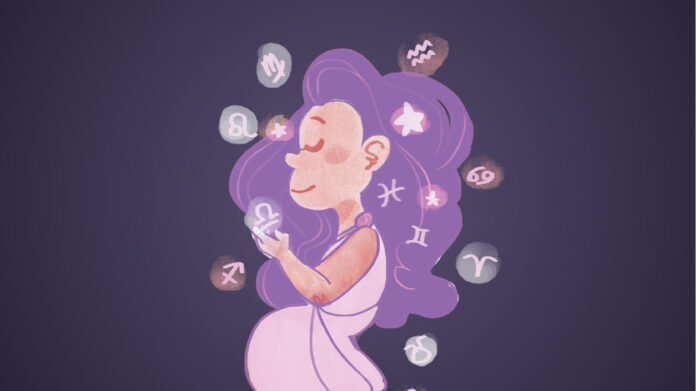
An illustration of a girl, stars and astrological signs strewn in her hair.
ILLUSTRATION: Marissa Ouyang / The Peak

By: May Chee, SFU Student

October 31 is coming up fast, and there’s a cheap Halloween costume with your name on it. If you’ve been scavenging Pinterest for a last-minute idea, get some quick and easy inspo that’ll guarantee your outfit is the only one of its kind. 

ARIES 
March 21–April 19
A really good CoolMath game 
You may have seen Fireboy and Watergirl couple costumes floating around, so why stop there? Think Snail Bob couture. All you need for Papa’s [Blank]-eria is a chef uniform, a moustache, a bald cap, and literally any food you get your hands on. Bring back possessing a sense of childlike whimsy at the ripe age of 19. 

TAURUS 
April 20–May 20
Your Spotify Wrapped from last year 
Listen, the whole point of costumes is to embody some sort of alter ego, but you already do that the other 364 days a year. Let’s be fully vulnerable this time and show others your most unfiltered self — your Spotify activity. If they can’t love you at your 103,481 minutes of Box Fan Noises or Lo-Fi, they don’t deserve you at your best. 

GEMINI
May 21–June 20
Old texts 
If this holiday’s all about scaring and getting scared, what’s more horrifying than reliving a talking stage? You didn’t need Halloween to get your DMs ghosted. It’s time to print out your most down horrendous texts and dig up that old clown wig because reaching that level of delusion was scarier than any horror flick.

CANCER
June 21–July 22
One of those sad Bart Simpson edits 
Yeah, the ones where he has all those broken heart emojis above his head with a VHS effect and a caption like, “You broke me.” Lean into your feelings this season by being unapologetically emo. If you start making a playlist now, you can have a tracklist of sad songs to play in the background every time you enter a room. 

LEO 
July 23–August 22
A hard launch on Instagram Stories 
Halloween’s the perfect time to be something you’re not, so go all out and dress up as someone who got hard launched on their boo’s Instagram. No close-up cropping, sticker over the face, or vague song lyrics this time. Bonus points that you’d simultaneously be their biggest fear — commitment. 

VIRGO
August 23–September 22
Charles Entertainment Cheese 
Perfect for a group costume where your friends can be all the other creepy animatronics that sing to children at their birthday parties. The actual mascot suits are going for around $600 online. But even if you had the cash to spare, surely you would get possessed by an angry (and sweaty) minimum-wage worker the second you put it on. Opt for some ears instead.

LIBRA
September 23–October 22
That pattern on bus seats and mid-2000s arcade floors  
If you rummage through your closet, you probably have something that resembles this. It’s fun, funky and a conversation starter — as long as you’re fine with the conversation always being about that one time they won Street Fighter with their eyes closed. The best part is you can spill whatever mysterious liquids over yourself, and no one will be able to tell. 

SCORPIO
October 23–November 21
The boulder Sisyphus was pushing 
Some may be going as ancient Greek figures this Halloween, but no one would stop to think of Sisyphus. Even fewer people would think of his boulder. Sure, you might have to explain your costume all night and feel like you’re in an identical never-ending uphill battle. Still, one must imagine the boulder happy, too. 

SAGITTARIUS
November 22–December 21
A psychic  
Buy a crystal ball and start telling people’s futures on the curb. So what if you don’t know how to do that? No one actually does. They probably won’t remember it anyway, and as long as you don’t start something you can’t finish, lying is both fun and free. Tip: a cool robe and wizard hat make you 25% more credible.  

CAPRICORN
December 22–January 19
Schrödinger’s cat 
If you want something mysterious, elusive, and thought-provoking, this is precisely that. Are you actually at the party? Are you not? Are you even real? You’ll have them wondering this the whole evening. This costume transcends simple worldly planes and exists as a metaphysical figment of their imagination. Probably a metaphor for something. 

AQUARIUS 
January 20–February 18
The death of Twitter 
Nothing instills fear into the heart of the public quite like a perfectly good service enjoyed by millions falling into the hands of corporate greed. As an homage to the late platform, print out some of your favourite tweets and consider renting a casket for your friends to carry you around. Here’s one to start: “Baby, this is Keke Palmer.” 

PISCES 
February 19–March 20
The scraggly Garfield plush that’s been well-loved 
Like him, you are just a little guy who’s kind of crumpled but full of love. If you wear a cheap orange catsuit, run through a sprinkler a couple of times, and get people to squeeze the water out of your damp coat, you’ll probably get as close as you can to capturing his essence — a little pathetic but perfectly friend-shaped. 

Union Street captures Vancouver’s vibrant Black community through history

0
Two young Black men sitting casually and smiling in front of a display of garments hanging on a rack, with colourful patterns.
PHOTO: Courtesy of Jamila Pomeroy

By: Balqees Jama, SFU Student

Content warning: mentions of systemic racism and displacement.

Union Street is a documentary film highlighting Vancouver’s historic Black neighbourhood located in Strathcona. Known colloquially as Hogan’s Alley, it was systemically disrupted and displaced by the City of Vancouver’s construction of the Georgia Viaduct in the 1970s. Union Street features archival visuals and local Black community members’ current efforts in building Black community spaces. The film was directed by Jamila Pomeroy, a “Kenyan-Canadian writer, director, actor, and producer.” It debuted at the Vancouver International Film Festival (VIFF) in September and sold out all three showings weeks beforehand. I could feel the lineup for the premiere buzzing with anticipation, and let me tell you — it was worth the hype.

This film is a beautiful blend of history, storytelling, and artistic vision. The high production quality immediately stood out; stunning cinematography conveyed warmth, both visually and metaphorically, and the groovy soundtrack was also very fitting. The interviewees represent some of the diverse range of cultures within Vancouver’s Black community. I enjoyed hearing from people in various sectors making a positive impact through their personal and professional interests via fashion, entertainment, cuisine, government advocacy, and more. 

The documentary provides insight regardless of how informed you may be about the history of Hogan’s Alley. It takes audiences through a journey with charisma and a refreshing candidness. Unfortunately, systemic displacement of Black communities in Canada and the United States is common throughout history. In Nova Scotia, a thriving Black community named Africville was also disrupted by their municipal government. We can even find an example closer to home within the SFU microcosm. In 2018, there was an attempt to evict the Black student union, SFU Students of Caribbean and African Ancestry (SOCA), from its space on campus that has been a key community resource since 1994. The student group successfully resisted displacement, albeit with so much harm sustained, but most Black communities in North America do not recover easily (if at all) from systemic displacement. 

It’s important for Vancouver to reckon with its ugly realities and redress harms inflicted on the Black/African diaspora here. Canada has only recently started acknowledging that systemic racism is pervasive in this country and is not just an “American problem,” as Canadians like to point fingers down south. However, even discussions about Black communities in Canada tend to focus on Eastern Canada, operating under the assumption that there are few Black people in British Columbia. Union Street reminds us that there was, and still is, a multifaceted Black community here supporting each other while also contributing to wider Canadian society.

It effectively outlines the lasting impact systemic displacement still has on the Black community today, and the barriers still in place on micro and macro levels. Black people in Vancouver resisted the city’s Ku Klux Klan local chapter and faced red-lining, where the municipal government and urban developers deliberately withheld resources from the community. I appreciated how the documentary depicted wins driven by Black mothers at the time, and also recent successes in rebuilding spaces for Black joy and connection.

I think the film could have taken the opportunity to shine a spotlight on more Black youth (under 25) shaping their communities in novel ways, like through arts, advocacy, and science. Youth-driven initiatives today such as the Vancouver Black Library and Daily Dose of Blackness have significantly changed the landscape of what it means to be a young Black person in this city. However, there’s only so much one could fit into 79 minutes. If there’s ever another production about Vancouver’s Black community, I would love to see more inclusion of young change-makers, as youth contributions are often overlooked by society. 

I would highly recommend Union Street to everyone. There’s so much to appreciate artistically and educationally. The film serves as a celebration as well as a call for everyone to support Black-led initiatives today, including calls for sustainable funding and physical community spaces. Union Street showcases an important subject relevant to Black and non-Black communities. 

BC’s new masking guidance isn’t enough

0
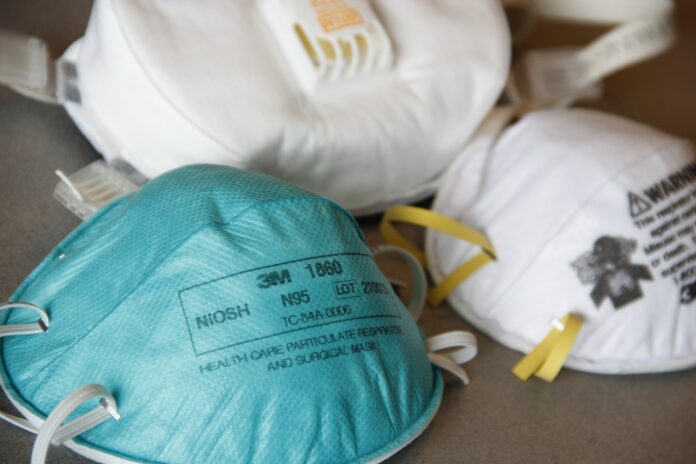
A group of respirators on a table
PHOTO: CDC / Pexels

By: Michelle Young, Opinions Editor

As of October 3, masks are mandatory for healthcare workers and visitors in settings that are accessible to patients, including areas where they receive care. This includes spaces like the rooms where doctors and nurses serve patients directly, or areas where patients may stay while waiting, such as lobbies. The policy also extends to contractors or volunteers in the area, but does not include private clinics or patients themselves. 

It’s a step forward, but there’s not much of a reason to shy away from universal masking, which would include asking patients to mask. It makes sense for healthcare workers to mask as they care for a variety of people. But, it doesn’t make sense for them to interact with unmasked, sick patients. While healthcare workers may direct those with symptoms of respiratory illness to mask, it unfairly places this burden on an individual worker and ignores the spread of illness without symptoms

Cases are drastically rising across BC, and masks should have never been removed in the first place. Hospitalizations recently went up 58% in just two weeks. They increased from 133 recorded cases to 877 cases from the second week of August to the end of September. The true rate of infection is likely much higher, too.  

While a medical mask provides some protection — it isn’t enough to guarantee there won’t be transmission. One-way masking does reduce risk — around 60%, according to the National Institute of Health. However, this is also dependent on the surroundings and ventilation in the area. It doesn’t take very long to become infected. COVID-19 lingers in the air for hours, and infection risk isn’t limited to person-to-person contact. Medical masks are a significant step up from no masks, but healthcare workers should be provided with respirators, such as N95s, to protect from airborne disease. They are significantly more effective. With a good fit, “N95 respirators should filter at least 95% of virus particles.” All those in healthcare settings — including patients — should be provided with respirators to truly curb infections to the best of our ability. 

Dr. Bonnie Henry says the new guidance “is the best we can do.” As already noted by multiple doctors across BC — it isn’t. There are plenty more steps healthcare could be taking to prevent the spread of COVID-19, RSV, and the flu. Public health needs to implement airborne protocols, such as ventilation and filtration, which both reduce airborne contaminants that could be inhaled. 

Removing masks in healthcare during the summer and bringing them back in the fall falsely reinforces the idea of COVID-19 being a “seasonal illness.” It is not seasonal. What good did removing masks from healthcare settings do for the past few months? Nothing. It led to breakouts and inflicted harm on vulnerable patients that could have been entirely avoided. In August, The Toronto Star reported a patient with lung cancer had contracted COVID-19 eight days after her hospital stay. She had shared an area with someone who tested positive for COVID-19. There are multiple accounts of vulnerable patients being infected with COVID-19 after visiting healthcare settings, but with proper precautions in place it could have been avoided. 

The rationale behind removing masks to begin with was absurd. Minister of Health Adrian Dix noted it was important to “see each other’s faces.” Please get your priorities straight. “Seeing faces” cannot protect patients from a severe disease that is easily preventable with the correct precautions in place. Healthcare workers themselves are sometimes not well-informed of the current pandemic — I’ve heard folks discuss COVID-19 as a part of some distant past and ponder why patients still wear masks. We are trying to protect ourselves from the not-distant-past pandemic.

BC has previously tried to push their “vaccine-only” strategy, while continuously downplaying the severity of COVID-19. Why would people get vaccinated if they have the understanding that COVID-19 is “mild” and no longer a threat? This creates uncertainty. People are still dying from COVID-19 and suffering from severe long-term illness from unmitigated spread. Public health isn’t protecting their patients or healthcare workers the way they should.

The new guidance is confusing and does not inform or explain the rationale behind a half-baked policy. On City News, someone questioned why masks are required in healthcare settings and not in busy public spaces, such as transit or concerts. They correctly pointed out a logical flaw in the policy: if COVID-19 is circulating, leading to the re-introduction of masks in healthcare, why wouldn’t masks be required elsewhere? While one could argue healthcare settings are filled with those who are most vulnerable to COVID-19 — vulnerable people are everywhere: grocery stores, transit, and schools. 

The reality is, most people are OK wearing a mask when they are directed to by officials. They trust that official guidance is going to keep us safe and is based on logic. This new policy is neither sufficient nor logical. People are confused. They are finding gaps within official guidance, and it continues to undermine any future steps to reduce infection rates. This lack of clarity paves the way for misinformation. We do not need more confusing guidance. We need clear guidance on the state of the pandemic, COVID-19 transmission, and long-term health effects. 

Media, and at times, public health, continue to propel the idea that those who continuously protect themselves are somehow “terrified of moving forward.” To move forward is to adapt our behaviour to the data we have available, and acknowledge this as reality. Healthcare workers are the last group of people that should be unaware. It’s because of such ignorance that vulnerable folks continue to be scrutinized for continuing to take COVID-19 precautions. Henry continues to speak on “being realistic.” Frankly, it is our public health that is being unrealistic. It seems to ignore that reducing the spread of COVID-19 entirely feasible. Instead, public health seems to be happy to sacrifice lives instead of implementing protocols to keep us safe. The inconsistent guidance around COVID-19 has left many uninformed and lost. Public health officials need to do their job. 

Dr. Lyne Filiatrault discusses masks in healthcare

0
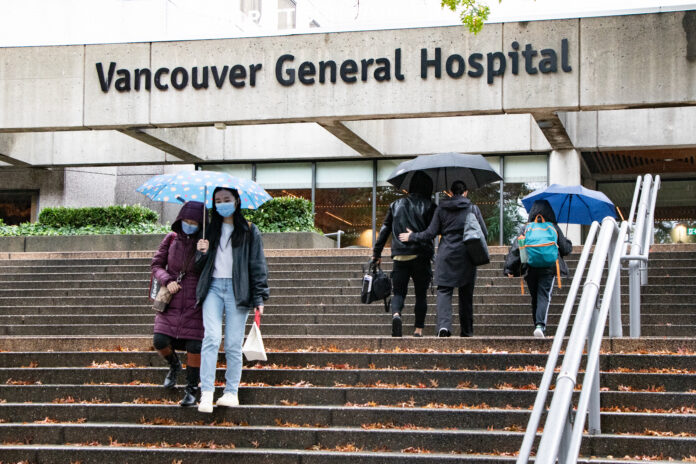
This is a photo of the outside of Vancouver General Hospital. As it is raining outside, there are people walking in and out of the building holding umbrellas.
PHOTO: Aria Amirmoini / The Peak

By: Eden Chipperfield, News Writer

On September 27, BC provincial health officer, Dr. Bonnie Henry, and health minister, Adrian Dix, announced mandatory masking would be re-established in healthcare environments as COVID-19 cases are rising at a rapid rate. Starting October 3, masks became mandatory once again in healthcare settings.

This decision came after the BC government had announced they would remove mandatory masking protocols on April 6, 2023. The public immediately began to voice their concerns. This included an open letter addressed to the BC section of emergency medicine from Protect Our Province (PoP) BC. They pressed physicians who work in BC emergency environments to wear masks for multiple reasons, including protecting themselves, their colleagues in the emergency departments, patients, and visitors. With COVID-19 rising significantly again in the province and the flu season approaching, PoP urged the BC section of emergency medicine to take action. During the week of September 2430, there were 877 reported cases.

To discuss the contents of the letter and the severity of the situation the province is facing, The Peak connected with Dr. Lyne Filiatrault, a retired emergency physician and a member of PoP, as well as a co-author of the open letter

Filiatrault explained there are three factors that contribute to the increase in COVID-19 cases: the environment, the host, and the virus. “For environment, we’re congregating indoors. We have not addressed ventilation air filtration. There is no airborne mitigation in any settings right now except now in the green state of the health care,” said Filiatrault. “So our immunity to infection is essentially gone because the vaccine that we have now protects for a shorter duration of time against infection.” 

“It’s important to know COVID-19 never went away,” said Filiatrault. She likened COVID-19 particles in the air to wildfire smoke. “The fire might be burning in Kelowna, and yet here, sometimes in New Westminster or Burnaby, you could see the air. There were fine particles in the air.” The particles of wildfire smoke are visible in BC, which Filiatrault used as an analogy to show how even invisible COVID-19 particles can spread throughout the province and affect entire populations. 

Filiatrault also stressed that the media is complicit in spreading public health’s messaging that schools were a safe environment. “They were never safe.”  Filiatrault explained how, since the return to school, COVID-19 cases have spiked significantly. Children are the “primary, or the index case, for viral transmission in households,” and a major reason why COVID-19 is spreading from family to family. She expressed concern that schools are not addressing “ventilation and air filtration,” as well as children no longer having to wear masks in their classrooms.  

The virus constantly evolves into new variants because of the lack of personal protection. Filiatrault addressed vaccination status from the past year: “The vast majority of people were last vaccinated last fall [ . . . ] there was a big rush after we started to vaccinate our seniors in long-term care in assisted living,” she explained. Since then, “nobody has had a booster.  

“The clinically extremely vulnerable as well were invited in the spring. So you had the high-risk groups in long-term care, clinically extremely vulnerable, that did get a spring bivalent booster. But the vast majority of British Columbians did not. Our immunity to infection is essentially gone.” 

Shortly after the interview with Filiatrault, the BC provincial government announced they will start to send COVID-19 booster invitations this fall. They will begin with “seniors, residents in long-term care facilities, Indigenous peoples, pregnant people, health-care workers and people with chronic health conditions,” before moving onto the general population

Filiatrault and other members of PoP have called out politicians and health authorities on the lack of response to the worsening situation. “Public health officers across Canada have not followed the signs and have been basically at the mercy of politics, and the politics in each province is dictated by short-term focus. The focus of a politician is reelection in four years.”

The Peak inquired how individuals can protect themselves and access masks during the new wave of COVID-19. Donate a Mask “is a volunteer-run charity that ships free N95 equivalent respirator masks to anyone in Canada who requests them” with a form on their website. Filiatrault also recommended Community Access to Ventilation Information, a group that supports the increased usage of CO2 monitors to monitor air quality. Lastly, they recommended Corsi Rosenthal boxes, which can be built from the home, to help filter the air from airborne particles.

The rules of curling as explained by a non-curler

0
A photo of two players curling across the ice.
PHOTO: SHVETS Production / Pexels

By: Hailey Miller, Staff Writer

Here’s to the sport of curling — the underrated activity of throwing granite rocks down a rectangular sheet of ice, and sweeping the stones as hard as possible toward the bulls-eye target at the opposite end. Seems safe, right? Supposedly, I should know a thing or two about the sport, considering that I have family who play it, but, do I pay attention to the game and know the rules inside out? Not exactly. 

So, what even is curling, and how do you play it, you ask? Well, curling is a team sport where two teams play against each other. Groundbreaking, I know. Apparently, there are a few types — traditional curling, mixed doubles, and wheelchair curling. According to the World Curling Federation, traditional curling consists of four members per team, whereas mixed doubles is, you guessed it, a pair of two — and usually mixed gender. It goes without saying that the wheelchair version of the sport is, well, for those who play in a chair. Someone really needs to come up with an adapted version for those of us who stand with bad balance. And, by “someone” I mean me. Just kidding. Can you imagine me sliding down the ice with my crutches, chasing down a rock at full speed, yelling “hard!” just as I’m about to lose my balance? 

To play this little thing called curling, each team member must throw a hefty granite rock that’s about the weight of a boulder all the way down the ice toward the target zone. These rocks are painted different colours to differentiate between teams. Each teammate has to throw two consecutive rocks down to the target at the other end of the ice. Now, I’m not talking about a bowling throw here. Hurling a granite rock at high speed takes great effort and skillful technique. The “thrower” crouches down into a deep lunge position, wearing a foot slider and shoes with traction for the ice. They give the rock their best thrust, and once it begins spiralling its way down the ice, two other members (from the same team) sweep the living hell out of the ice until the rock gets closer to its target. This is called the house,” because what better way to name this marking than the home structure of a miniature-sized boulder hurling down the ice at full speed? As the stone flings toward the target, the thrower continually yells “haaaaard” until the rock stops. If you ever feel the urge to let out some steam, curling just might be the sport for you! 

Team members’ positions consist of lead, second, third, and fourth. The lead throws the first two stones, and consecutively the second throws the next two, and so on and so forth until the fourth member throws the last two. There are eight throws, which are called “ends.” Opponents try to knock each others’ stones out of the target zone — or house — and by the end of each round, whichever team has their stone closest to the target and not knocked out of the house gets the point for that end. The particularly interesting thing about curling is that the players actually do the tallying of these points themselves. The team with the most points at the end of the ten ends wins the game. At least I think that’s how it goes, but don’t ask me, I’m not a pro. 

Xiao Lu and the “fight for authorship” over her art

0
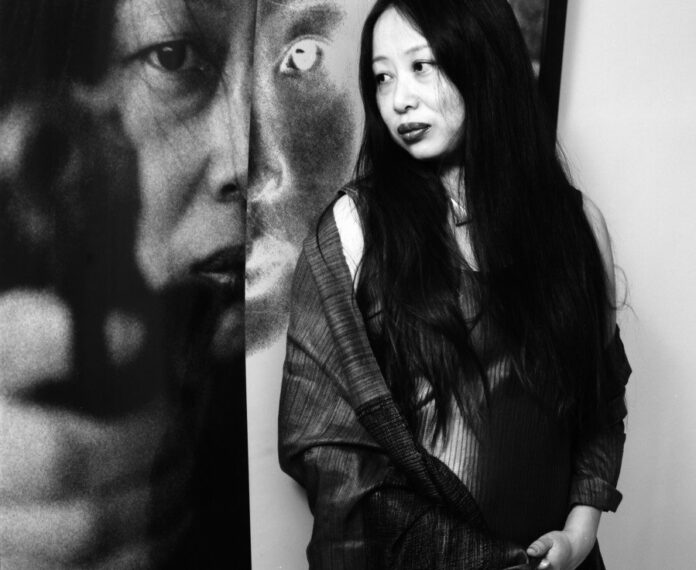
Black and white portrait of Xiao Lu.
PHOTO: Courtesy of Xiao Lu

By: Izzy Cheung, Staff Writer

Content warning: mentions of gunshots used for art-making. 

Note: quotations taken from Xiao Lu were translated from Mandarin to English by a translator at the event. 

Nestled deep in Sun Wah Centre on Keefer Street is Centre A, a public art gallery displaying “contemporary Asian and Asian-diasporic perspectives.” On September 29, the gallery hosted a talk by Chinese-Australian artist, Xiao Lu, done in partnership with SFU’s David Lam Centre. The presentation, delivered in both Mandarin and English, captured the stories behind some of Lu’s most thought-provoking works of art, such as “Polar,” “Holy Water,” and “Skew.”  

Lu is an artist who does performance works, installations, and other forms of art. She studied at the China Academy of Art (formerly the Zhejiang Academy of Fine Arts), with a specialization in oil painting. However, her graduating work, “Dialogue,” was an extra-credit installation that didn’t use a single brush of paint. The installation came about due to Lu’s “[reflection] upon some personal and emotional struggles.” She noted that the piece features the backs of a man and a woman displayed on two separate telephone booths with a telephone standing between them, showing the “impossibility of dialogue.” This piece underwent many changes over the course of time, but also became key in her fight for authorship over her works of art. 

The “unusual” aspect of “Dialogue” became a main reason for faculty members to see the installation. She recalled how one teacher called the visual composition “too clean,” which caused her to consider placing a “break” in the glass. Open discussion resulted in her decision to use a gunshot to break the glass. 

Initially, Lu had been interested in firing a bullet into the work during the exhibit. To do so, she reached out to a friend in the firing squad who ended up sneaking a gun; however, they were unable to meet up for this exchange. 

On February 5, 1989, during the opening day of the China Avant-Garde Exhibition at the Beijing Art Museum, Lu fired a gunshot into the installation. However, as police didn’t see the actual shot being fired, they made the assumption that the man she was with had fired the gun, and apprehended him instead of her. This resulted in various news publications and sources inaccurately reporting that the exhibit was created by Lu and her friend, rather than Lu herself. 

The struggle over authorship of “Dialogue” was only made greater by the patriarchal systems of the contemporary Chinese art world, which fought against her individuality as a woman and the authorship she was asserting with her own creation. The public exhibition-turned-movement, “Bald Girls,” which was done in conjunction with artists Li Xinmo and Jiny Lan, and curated by German-Chinese Yong Xian, stood as a “feminist exhibition” that helped Lu “awaken.”   

“When I had to fight for authorship in 2005, I had to open myself up,” Lu said. “Not only [to] confront myself, but confront the world around me and connect directly with society on all sorts of different levels.” 

Lu’s novel containing her experiences in regaining her authorship, titled Dialogue, can be found on her website, xiaoluart.com

SFU should revive their Latin American courses

0
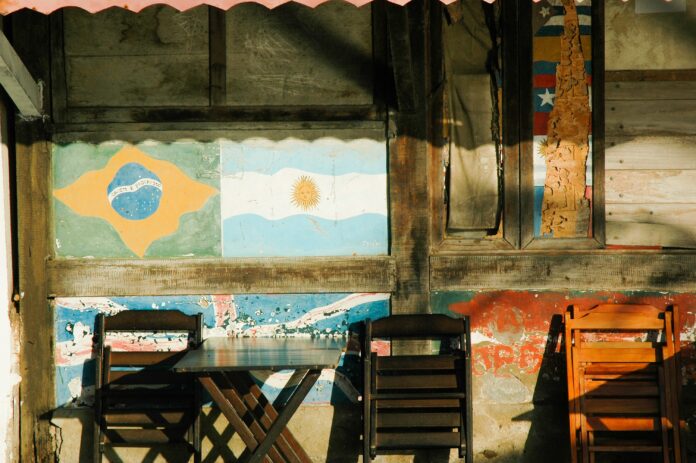
The flags of Argentina and Brazil painted on a wall
PHOTO: Roberto Huczek / Unsplash

By: Michelle Young, Opinions Editor

In 2020, SFU suspended their Latin American studies program. There was little explanation for this, and since it’s been three years, I can only assume they aren’t prioritizing its return. As someone who had been hoping to further understand my own heritage through these courses, to say I’m disappointed is an understatement. 

Growing up, I was given a history education that was centred on colonial Canada and Europe. Sure, learning about World War II is important world history. However, our classes were lacking. Beyond little recognition of Indigenous perspectives, I knew little about where I came from. I only knew what my parents and family told me. Venezuela was once a rich country until an economic collapse. 

The things I knew about Venezuela are what I heard about on the phone from my family who still lived there: there is less food, less electricity, and crime is rising. But there were so many things I didn’t know or understand about Latin America. As a child, I didn’t know how deeply white supremacy had influenced Venezuela. I didn’t know how Brazil’s bossa nova was influenced by samba. I didn’t know some Colombians didn’t want Venezuelans migrating to their country. There is so much I still don’t know about Latin America

SFU has some very specific history courses. They have one on “Imperial Japan,” “Japan from 1603 to 1867,” “History of Greek Civilization,” “The Ottoman Empire and Turkey,” “Victorian Britain,” and much more from many parts of the world. However, in their entire catalogue of history courses, there is only one course that even touches any part of Latin America. You might say that’s because there are Latin American studies courses you can take individually, outside the program. There are two. They are both upper division and require you to take the lower division prerequisites, which no longer seem to exist. I only know because I have been checking for years to see if I could enroll in them. 

The program likely needs to be revisited anyways, since the curriculum is generalized at best. The courses in the program seem far off from what it’s supposed to focus on. Lower division courses include subjects like “Introduction to Business” and “Introduction to Communication Studies.” I’ve only taken the latter, and while it may be helpful to the general program, it had nothing to do with Latin America. There are only three courses in this entire program listed as having a “primary Latin American focus” — two of which are those upper divisions locked behind a non-existent prerequisite. The other one is “Archeology of The New World,” which examines “prehistoric cultures of North and South America.” That’s a lot of cultures to cram into one course. 

In comparison, the Global Asia program is much more tailored and specific to, well, Asia. It includes courses like “The Nikkei Experience in North America,” “Women in Japanese History,” and “Nationalism, Democracy and Development in Modern India.” The program should be specific to the plethora of cultures and countries in the continent. 

While not as prominent as the US, there are still Latin American communities here, in Vancouver. I would love to learn more about the Mexican Revolution, the Pinochet government, the history of Indigenous peoples in these places, and more. I’m very lucky to live with the privileges I do because my parents immigrated. However, I would love to explore Latin American culture and literature in an academic setting without trying to dig out whatever I can find through the internet. I’ve tried to make a specific effort to engage in these things to appreciate all the diversity of the area. As much as I’ve enjoyed indulging in films and books I’ve found on my own, I would revel in a professor who could just tell me, “Hey, you know this? It was really important to this time period in this country, I recommend reading up on it.” 

Latin American history is important. Through studying it, we further understand issues like immigration and colonialism. While most people are likely aware that Latin America isn’t all about spicy food (plus not all of our food is spicy, and can vary by region), I’ve noticed a large disconnect in how well others are generally informed. Sometimes this manifests as a preconceived notion of Latinas, or other times it’s thinking all of Latin America is made of rural villages. While there are definitely cultural similarities, there is especially a lack of understanding about how diverse these countries really are. 

At some point, I took a Japanese history course and learned so much — not only about Japan, but also about how their position relates to other countries globally. It helps put things into context, and even just one course that’s more accessible to students can be a step in the right direction. There are still lots of places I want to learn about, but in these cases, the academic option is actually there. 

The complete discardment of the program has made it feel like SFU frankly doesn’t care about Latin American history or our communities. The silence from SFU sinks a hole into my stomach. While they rightfully commemorated Asian Heritage and Islamic Heritage Month, there is nothing on Latinx Heritage Month. Does SFU think we don’t exist? Sure, a statement from a university who isn’t properly compensating their research assistants might not mean much on the front of commitment. But I’d like to at least be acknowledged, because we are present. We are here.

“Whites-only moms and tots” ad causes outrage across Metro Vancouver

0
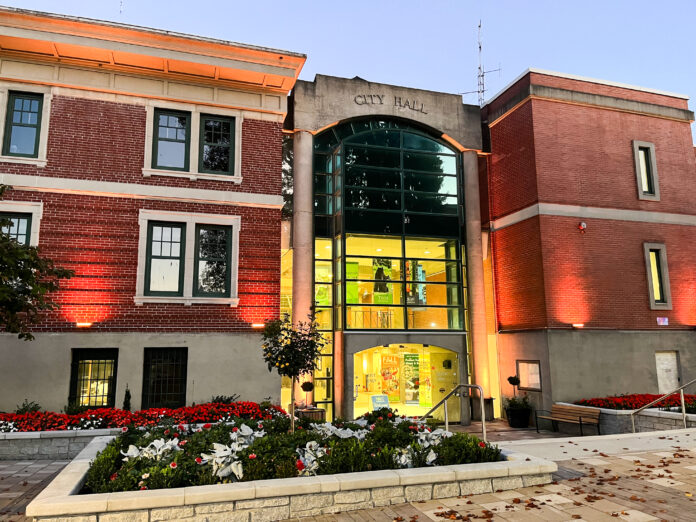
This is a photo of the Port Coquitlam city hall. The building is made of bricks, and the entrance has large windows. There are flowers outside the building in large flowerbeds.
PHOTO: Jonadan Cheun / The Peak

By: Saije Rusimovici, Staff Writer

Content warning: mentions of racism and white supremacy.

On September 23,  partially removed signs advertising a “whites-only” playgroup for “proud parents of European children” looking to “escape forced ‘diversity’” were found at Coquitlam Centre mall and in Port Coquitlam. The City of Port Coquitlam released a statement in response to the “hate-motivated incident” on September 25. They “condemn this in the strongest terms and promote an environment without hate.” The City urges anyone to report incidents like these to local law enforcement.

Upon learning about these signs, Port Coquitlam mayor, Brad West, declared that bylaw officers immediately began to search the area for the racist signs, which had apparently already been taken down by another party. West said in a media statement, “this vile garbage isn’t welcome in our community, or anywhere else.” 

The flyer for the “whites-only” playgroup alarmed Syreeta Moore, Black mother and long-time resident of Port Coquitlam. She had been deeply angered by the signs posted so close to her home. “I was really upset because my daughter is 20-years-old. This is her community that she was raised in, and that sign was a block away from my house,” Moore said in an interview with Vancouver Sun

The group had promoted themselves on Telegram, a messaging app. According to a report from the Institute for Strategic Dialogue (ISD), there are thousands of members linked to white supremacist groups on Telegram. “Our mission is to support privacy, free speech, and peaceful exchange of ideas. Calls to violence are not welcome on our platform,” a Telegram spokesperson told CNN. Yet, the ISD refers to the platform as “a safe space to hate” in their report, mobilizing white supremacist movements.

Tara Preece, a friend of Moore’s, joined the group and screenshotted several of the members’ conversations. Moore told the Vancouver Sun her initial suspicion was that the group chat was “just one jerk out there” trying to “stir the pot.” After seeing what Preece had found in the group, Moore concluded it was well-organized and “took some time and effort” to put together. Before the group was shut down, it had attracted over 200 users. 

Since the extensive media coverage and public outrage regarding the signs, the group has been shut down. Moore commented that she knew this extent of racism existed, but said, “to see it like this, is different.”

Coquitlam RCMP urges residents to report hate-motivated incidents “whether experienced or witnessed” to report.RCMP.ca. They are working in an effort to support a “culture of inclusivity and belonging” and maintaining public safety. You may also anonymously report an incident by calling 1-800-222–TIPS (8477) or online at solvecrime.ca.

My mom made me break up with my watermelon toothpaste

0
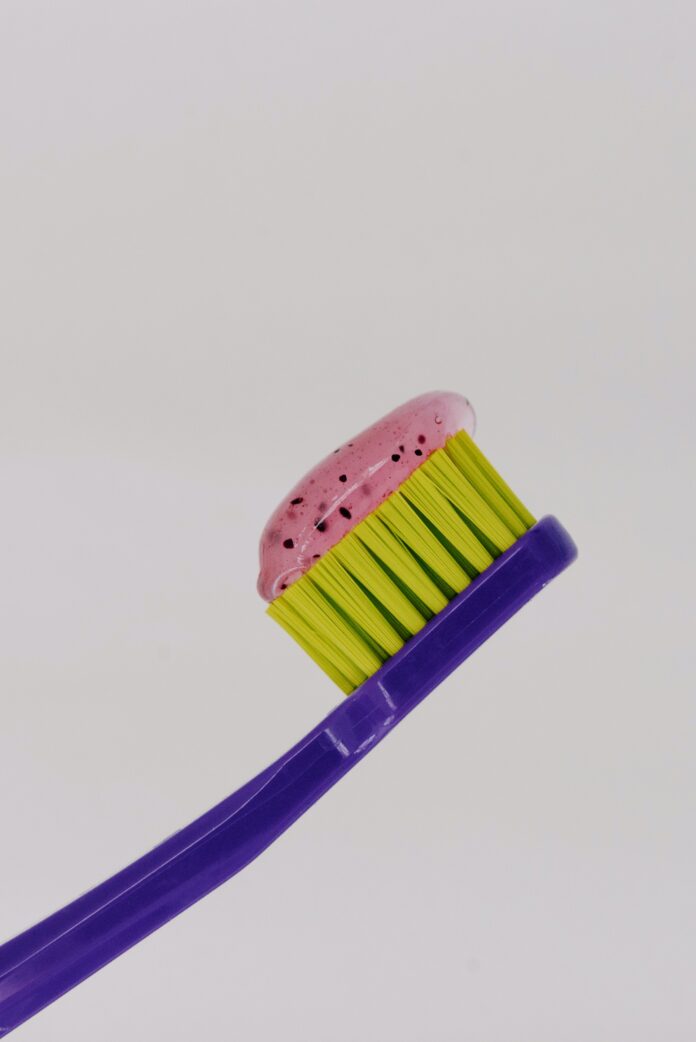
Purple toothbrush with yellow bristles and pink toothpaste on it.
PHOTO: Ksenia Chernaya / Pexels

By: WatermelonToothpasteLover, SFU Student

Disclaimer: I am not an employee of any toothpaste company, nor am I one of the 10 dentists who give out toothpaste recommendations. I am just a devastated student forced to side with the enemy.

Recently, my mornings have gotten ten times worse. I wake up to my alarm, fall asleep, and repeat that process until the millionth alarm has pissed me off enough to get out of bed. I stand up and contemplate skipping class before heading to the bathroom. And there it is, sitting next to my sink. That red, blue, and white tube of mint toothpaste. I gag at the mere sight of it. It tastes vile. If I had the money, I would sue whoever decided mint would be the default flavour of toothpaste.

In short, that godforsaken teeth bleach on my tongue is like nails on a chalkboard to someone’s ears. It’s disgusting. It’s shit.

Now you may ask, “Why would you use it if you think it’s shit?” You think I want to? If I could have it my way, I would burn every single mint toothpaste factory to the ground. But no. I have to use it since I am now a full-grown adult.

“Watermelon toothpaste is for kids. You’re not a child anymore,” my mom said. “You’ll never get a girlfriend if you keep acting this way.” Joke’s on you, mom. I’ll probably never get a girlfriend anyways, regardless of how fresh my breath smells. She also said “adding sugar to your mouth defeats the purpose of toothpaste.” Tsk tsk, mother. If you had actually paid attention when shopping, the label reads “sugar-free.” All her points are invalid, and she’s dead wrong. Of course, I’d never say that to her face. I don’t want my ass to get beat.

Before anyone says my mom is right, hear me out. Watermelon toothpaste is unbeatable. Two-in-one cavity prevention? The delicious taste of fresh watermelon after a heavy summer BBQ? What more could anyone ask for? Sure, the taste of mint may be “refreshing,” but nothing hits the same as that sweet, sweet saccharin (once again, not sugar). If it’s safe for children, it’s safe for me. What does mint toothpaste have that watermelon doesn’t? Nothing.

My mom knew her talk with me was in vain. I would never voluntarily part with my watermelon goodness. So, one day, when I was in class, she swapped out my yummy watermelon with revolting mint. I almost had to call an ambulance for myself when she told me she had thrown it out. I was too shocked to cry. My one true love was gone forever.

But I’m strong. I’m brave. I’m a big boy. I can do this. I just don’t want to. Maybe gaslighting myself into thinking it’s just the frozen version of watermelon will make it better. But NOTHING will ever replace my beloved watermelon.

For the readers who are going through or have been through my situation: stay strong. I’m with you out there. We can get through this together, one step at a time. Although we may miss the old toothpaste flavour, we will eventually get used to the new one. I believe in you all.

Climate change fuels human-caused wildfires too

0
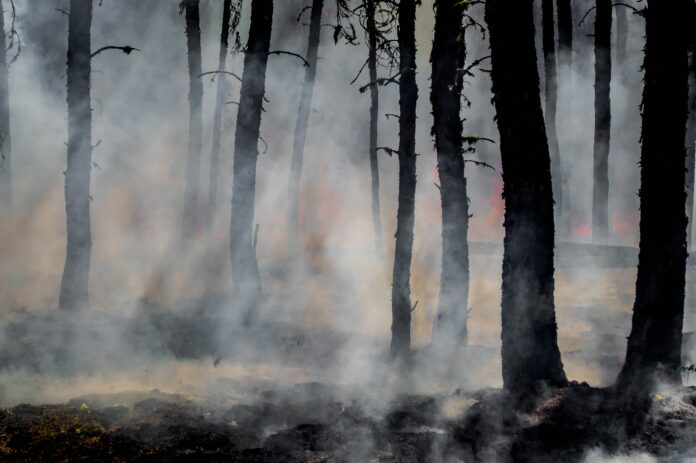
A smokey forest, after a fire
PHOTO: Joanne Francis / Unsplash

By: Olivia Visser, Copy Editor

You don’t have to look far to find news about wildfires impacting communities across Canada. It seems like every year BC experiences its “worst wildfire season” on record, and the issue isn’t just local. Greece, Spain, and Hawaiʻi endured devastating fires this year, among other locations. What’s concerning isn’t just the fact that many sit back and act like nothing can be done in the long-term — news headlines and social media posts severely underscore the role climate change plays in large-scale wildfires, arson or not. 

Recurring extreme heat events result in “dry weather” and dry vegetation, which is a perfect environment for wildfires to both ignite and spread. Climate Atlas of Canada explains that the increasing number of hot summer days makes BC forests “much more flammable.” They also point out extreme heat provides a suitable climate for the destructive mountain pine beetle, which has damaged over “18 million hectares of forest” since the 1990s, further drying up vegetation. Resources Canada asserts these “fire-prone conditions” could double the “area burned by the end of this century.” And don’t kid yourself into thinking this is a problem for the future — we’re watching these predictions unfold in real-time.

Large-scale wildfires have occurred in BC for hundreds of years, before colonizers ever stepped foot on this land. Indigenous fire keepers have used traditional knowledge to “cleanse” dry, fire-prone land for ages. Today, Indigenous fire knowledge holds significant value that finds itself overlooked following colonialism. Many of today’s fire suppression techniques actually exacerbate forest fires, compounding the effects of climate change. Indigenous peoples have long been excluded from forestry decisions, which disproportionately impacts their communities. Including Indigenous input is a step towards a more sustainable and decolonial approach in our forest management response. 

Some believe historical fires are evidence these most recent fire seasons are “natural” climate events. However, the last 40 years point to a more concerning “era of mega-wildfires,” according to The Globe and Mail. BC’s wildfire season summaries reveal the area burned by wildfires each season has increased from 265,000 hectares in 2003 to 1,354,284 in 2018. Numbers vary each year, but the continuous upward trend points toward a serious problem. The BC Wildfire Service told CBC that 1,458 of this season’s fires were caused by lightning, compared to 450 human-caused wildfires. Why are people giving more attention to human factors than the climate crisis itself, which exacerbates these factors? 

News outlets are often preoccupied with platforming all ideas, without context, regardless of their credibility. A recent headline from National Post, titled “Stop blaming forest fires on climate change,” illustrates this point. And if you’re wondering whether headlines like these are simply clickbait, the text boasts equally reactionary rhetoric: “Eco-activists and environmental NGOs want us to believe that there is a climate crisis.” (Spoiler alert: there is). Other publications like CBC are more forthcoming about the science behind wildfire events, but they still can’t entirely divert the damage caused by misleading content. It also doesn’t help that even the most credible publications still use titles that undermine the climate crisis; CTV News published an article last year titled, “Nearly all fires started so far this year were human-caused.” 

Of course, there is truth behind claims of human-caused wildfires. Publications generally aren’t lying when they state these facts. Brazil’s ongoing Amazon arsons come to mind, but BC forests also suffer from arson, as well as preventable fires from folks who throw cigarettes on the ground or have illegal campfires. Since climate change contributes to ideal wildfire conditions, something as small as a tossed cigarette can start a large-scale wildfire rather than a smaller bushfire. But when news sources only briefly elaborate on climate change in a single paragraph halfway down the page, can we really expect most readers to thoughtfully examine the facts, or even care at all? 

A 2022 study for the Journal of Consumer Psychology found that 59% of people who share links on X (formerly Twitter) don’t even open the articles they post. Headlines that prioritize human involvement in wildfires are like gold to climate deniers. You don’t need to actually read an article to share it and say to yourself: “See? The climate crisis is exaggerated.” Excessive or unbalanced coverage of human-caused wildfires doesn’t just foster complacency, either. It feeds into “climate hoax” conspiracies, ending up on social media timelines as evidence climate activists are overreacting. 

In a more extreme example, when wildfires devastated communities across Maui this August, social media users claimed the fires were intentionally set by the Hawaiian government. Another tweet from a popular US-based account claimed to have “irrefutable evidence” of “directed energy weapons” being used by the Chinese government to cause wildfires. Replies ranged from people agreeing but questioning China’s involvement, to pointing out that “Oprah’s place was untouched in the surrounding destruction,” as if that means anything. And while it’s easy to assume these people are a loud minority, climate change is increasingly becoming a partisan issue, even though Republicans like George H.W. Bush promoted environmentalism and cautioned against what was then-known as “global warming” in the 1980s. 

Fast forward 40 years, and the climate situation has only deteriorated. Politicians have taken anti-climate stances to stir division, and news companies have happily hopped onto the clickbait bandwagon to soak up shares from conspiracists. There’s no single solution for climate change, but it’s clear the way we approach these conversations isn’t working. News companies: it’s time to do your part in dispelling misinformation, even if it comes at the expense of your extremist readers. There’s no reason why climate change should be excluded from wildfire coverage. Social media users: be careful about the media you consume and share. Go beyond “thoughts and prayers” and make climate activism a priority on your timeline and in your personal life when possible. Indigenous peoples have been caretakers of this land since time immemorial, and it’s time to recognize that.

It’s easy to feel defeated when corporations and governments are the main contributors to climate change, but don’t let yourself forget that real change often follows community activism. You do have a voice amid the climate crisis. Attend protests, have conversations, support mutual aid, and pressure your local government to divest from the fossil fuel industry and recognize Indigenous sovereignty. 

Check out the links below for local non-profit and grassroots organizations fighting climate change:

BC Climate Alliance

Coast Protectors

Fridays for Future Canada

Indigenous Climate Action

SFU350

Stop TMX

Wilderness Committee 

350 Canada