
Home Blog Page 1192

New posters really going to spruce up never-visited dorm room

1

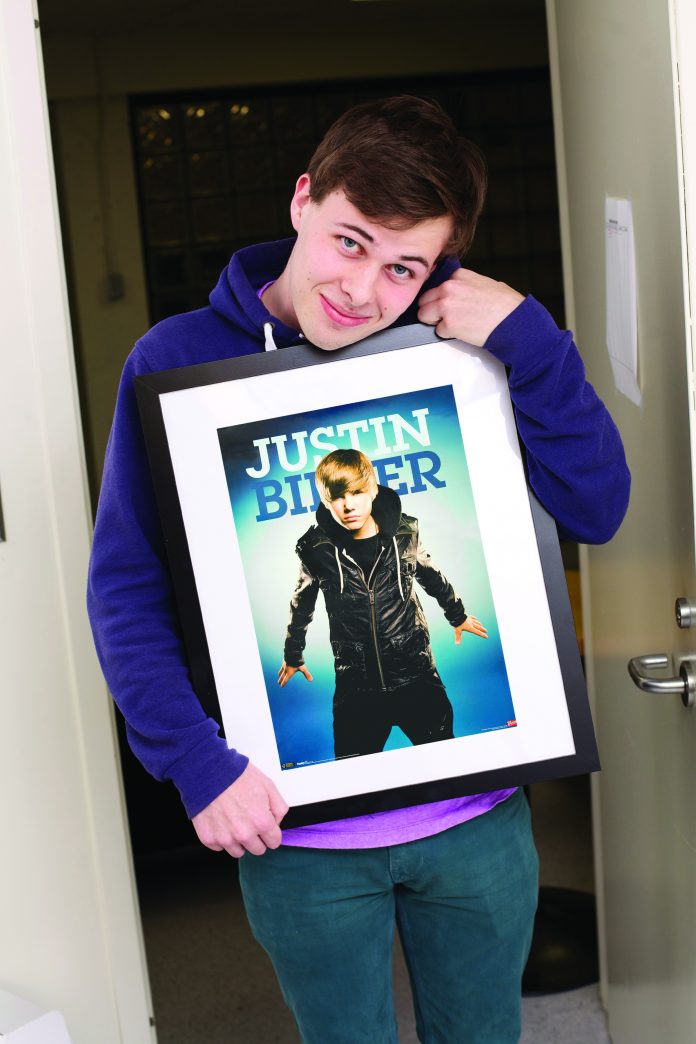
BURNABY —  With SFU’s semesterly Imaginus Poster Sale in full swing, a local first-year student believes that he has found the perfect selection of decorations to liven up the dorm room that only he has ever seen.

According to his own testimony, Harry Watson, who lives in a tiny, awful room in Towers purchased the “perfect collection” of posters that represent all his hobbies and interests, and can’t wait for them to be enjoyed by himself, the only one who ever spends any time there.

“I got a Dark Knight poster to show that I love films, a Bob Marley one because I’m a huge music-nerd, and this Che Guevara one because I’m a really into t-shirts,” Watson explained, going through his $89.99 receipt. “If anyone ever came to my dorm, I think they’d really have a good sense of who I am.”

While Watson still hasn’t finished mounting them all to the wall, he says the posters have really made his place look a lot nicer and believes they’ll inspire a fair number of conversation starters he imagines while lying there alone.

“I used to just stay in that room by myself all night, depressed, staring at the walls,” he told The Peak solemnly. “That’s all behind me now . . . now I can stare, depressed, at a life-sized image of Lebron James instead!”

While Watson is very impressed by the selection of posters he was able to acquire at the Imaginus sale, he doesn’t think that he is done decorating.

“Now that I see how it looks with a couple things up on the wall, I just want to keep adding stuff to really give it a cool vibe that will attract me to stay here at all times,” he said, flashing a huge grin. “Soon you won’t even be able to see the walls . . . well not you, but I won’t be able to see the walls.”

When asked at press time what accessories he was considering adding to the dorm, Watson didn’t know for sure but mentioned the possibility of either getting a cactus, a lava lamp or a decorative noose.


Saving face online

0

Want a job? Clean yourself up online.

Over the past few years, I’ve read through numerous articles on how employers must straighten up and stop internet-profiling their potential employees. Employers should draw solely from the information presented directly to them when determining who to hire. Those seeking jobs have the right to keep their private lives separate from their work lives! Right?

Not necessarily.

The Internet is ubiquitous. It’s much too easy to access, and employers feel that it’s an effective tool for discovering who you “truly” are. This ease of access only feeds the burning temptation employers have to find out more about their prospective employees. So, it’s time for us to face the truth: employers are not going to stop Face-creeping us any time soon, therefore it’s our job to comply with this notion and maintain positive images of ourselves online.

Facebook, Twitter, Instagram, and other social networking sites present to the world various glimpses of our lives outside of work. Selfies, careless Facebook statuses, accidental party photos, embarrassing videos and the like, are all shamelessly posted online without any regard for the people really viewing this information.

In a sense, any argument for our “right to privacy” is empty if we continually violate this right by publicly posting such unflattering, personal visuals.

For some reason, many employers correlate the things we do in our spare time with our time spent working, regardless of how they actually affect work performance. Put simply, I have yet to know an employer who is against profiling prospective workers online.

I once asked a previous employer, who was sorting through a small stack of resumés, whether or not the hiring process would stop at the cover-letter stage. The hasty reply was: “Are you kidding? We have to check them out online first.”

While we may disagree with employers’ reasoning, we cannot force them to stop screening online profiles.

This was unsurprising to me; his second comment, however, was: “I’ll make sure to get my daughters to Facebook them and tell me who they think is best.” This shows not only employers’ intent for undercover examination, but also the extent to which carelessness and unprofessionalism can play a role in doing so.

While we may disagree with employers’ reasoning, the fact of the matter is there is no way we can stop this from happening. We are confident individuals who are conscious of our rights, but cannot force employers to stop defacing proper hiring technique.

Some would say we are completely powerless to stopping them. But we are not. We do have power over ourselves in controlling how we look online. And this, I can safely state, is the only way to avoid the judgmental eyes of employers.

I understand that we want to make ourselves look popular, that party photos with all our friends are of utmost importance, that videos of us doing embarrassing things convey the cool “rebellion” that is so dear to our young adult society. But at what cost? Would you rather look good, or have an actual job?

While employers may be in the wrong, we can be as well. So if you want to find work, delete all of your unflattering photos, heavily monitor your privacy settings, and make yourself respectable to the eyes of the public. Save the videos and stories for somewhere else, as your income could seriously be at stake.

Security breach

0

Learn from the Harper security team: don’t underestimate busboys.

This was exactly what allowed for an alarmingly close encounter between two environmental protesters and Prime Minister Stephen Harper on Monday, January 6.

Harper was in town for a Q&A with the Vancouver Board of Trade at the Fairmont Pacific Rim hotel; as soon as he had gotten comfortable in his chair awaiting his introduction, two protesters, Sean Devlin and Shireen Soofi, calmly walked on the stage dressed as wait staff. They held up signs, one reading “Climate Justice Now,” and the other with the phrase “Conservatives Take Climate Change Seriously” crossed out with a thick black line.

The prime minister’s security acted quickly removing the two from the stage; Devlin fell down the short set of stairs and was briskly ushered to the kitchen. Witty Stephen Harper then chirped, “It wouldn’t be BC without it!” The two protesters were arrested, and have been released without charges.

In a CBC interview, Devlin said, “People are shocked that a citizen can access one of their leaders,” and brushed off any security concerns by adding, “I wasn’t there to hurt the prime minister.” Well, we know that now.

All of this has raised concerns about the adequacy of security around our country’s leader. The solution to this particular incident would not be hiring more security for Harper, but rather improving the work being done by his existing team.

The $20 million spent on Harper’s security is double what it was in 2006, yet a situation such as this can occur? The individual efforts at every smaller press conference and meeting need to be improved. In this case, the hotel wait staff were not screened, showing the security’s naively trusting assumption that outside visitors are the only threats.

Security was a little too relaxed for a situation in which the prime minister is in a crowded room -— screening everyone in the room is absolutely necessary. This close encounter with the PM could have been worse or even deadly because of such leniency.

If our prime minister simply hires excessive amounts of security, he is only a law-making figure rather than a representative that listens to the people, reflective of Delvin’s comment that “this government is really closing itself off.”

A happy middle ground needs to be found in the PM’s security, one in which he can interact with the public and be protected from sudden violence.

Yet, considering that Harper’s $20 million security still has some wrinkles, we as Canadians should be thankful for the predominantly safe country we live in that allows for security slips that don’t end in disaster.

Rejected Album Review

0

When I first came across Pet Sounds, it was quite a relieving moment. I used to think that I was the only one who loved to listen to sounds of dogs barking, cats meowing, roosters roosting and chimpanzees making whatever sounds monkeys make. But when I saw this album at my local record store, I thought not only was I not alone, but men — boys, actually — thought to make an entire album of them.

That’s what I thought, at least. I popped in the album and heard an instrument, not an animal, but a musical instrument. Well, I listened a few seconds further — perhaps it was an intro, and then I would hear a few oinks — but next I heard melody, beautiful melody.

Here I was expecting disorganized, dissonant pet sounds, and instead I’m hearing well crafted songs that are catchy and make you feel upbeat! I wanted music to rage to, music to make me wonder why I live in a barn (without actually living in a barn), not pleasant sixties surf-rock!

If the misleading title wasn’t enough, the cover shows these “beach boys” feeding animals. I assumed this was one of those behind the scenes shots of them preparing the animals for recording.

I mean, maybe I should have known better, because why would “beach boys” make an album with pet sounds? You would expect a name like . . . “The Pet Shop Boys” or something, but I thought that maybe they were just being ironic. Certainly, they aren’t going to the beach in those clothes and they clearly appear to be well above the age of boyhood.

Listening to the whole album, I did hear some pet sounds but was still disappointed that the pet noises were not at the forefront of the project. Unless you are a fan of well-done vocal harmonies and interesting arrangements, I cannot honestly recommend this album.

Verdict: I would pass on this one, and buy the upcoming Dog Barking Vol. 2: Six More Hours of Just Barking. Hopefully, that one will have actual pet sounds and not be just another ruse from a sycophant group of “beach boys”.

Time is key to successful online learning

0

clock_RachelleTjahyana

A recent study conducted by researchers from SFU’s faculty of education suggests that online courses may not be the easy A’s that students bank on.

SFU researcher Alyssa Weiss, whose work involves improving online collaborative learning, warns students against existing misconceptions about the online learning method. She explained that these can extend from the belief that online courses are easier and that they require less work, when in fact they demand the same types of work effort, deadlines, and exams as face-to-face courses.

Weiss feels that it is this type of misguided assumption that causes students to struggle and fail. “Student engagement in online discussions is hugely varied . . . there are important differences in how students pace and distribute their online learning time,” said Weiss.

According to the SFU Centre for Online and Distance Education (CODE) website, SFU is considered to have one of the largest programs in Canada for online learning. It offers university credit courses in undergraduate and graduate programs, as well as non-credit continuing studies.

Building on this new wealth of learning, Weiss’ research, published in Assessment and Evaluation of Time Factors in Online Teaching and Learning, examines how time management affects online learning. She and her team have demonstrated that during online discussions, both students and educators need to be aware of the amount of time students are putting into the course.

In her research, Weiss outlines four important factors that determine the value of the type of learning that is occurring: duration, salience, pace, and sequence. These involve students’ awareness of time spent, their rate of learning, and the order in which they are completing their tasks.

In spite of the challenges, Weiss feels that an enjoyable and successful online learning experience can be obtained. Since these courses provide all the resources and information from the start of the semester, students can plan out their work and know that there are no hidden surprises.

Weiss advises that students should set up an uninterrupted, scheduled time slot to work on an online course, thereby not falling behind. Weiss’ opinion is that starting these courses on time, staying consistent, investing energy and effort, and asking for help from online instructors and TA’s are key to successful online learning.

That which we call a rose

0

romeoandjuliet

Promoted to principal dancer in 2012, Amanda Green has danced many coveted roles with the Royal Winnipeg Ballet, including Odette/Odile in Swan Lake and Princess Aurora in The Sleeping Beauty. Dancing as Juliet tops off her list of great Royal Winnipeg Ballet roles: “We only have a select few full-length ballets, and this is the last one I haven’t done.”

Green follows in the footsteps of previous well-known RWB principals who have danced this role, such as Evelyn Hart, Tara Birtwhistle, and Vanessa Lawson.

The Romeo to her Juliet is Liang Xing, a guest artist from the National Ballet of China, where he has been a principal dancer since 2011. Although Green has only been dancing with Xing since the start of this season, she said things are going very well.

“I have an amazing partner; it’s been great to work with Liang. We’ve been together only a couple of months, but [have] connected really well.” With many impressive credits and a couple of silver medals from international ballet competitions, Xing will be a worthy Romeo.

Preparing for a role of this magnitude requires many hours of background work as well as lengthy discussions with one’s partner to make sure everything is comfortable.

“There’s an evolution on stage; a development of the character. It won’t be the same each time I perform it.”

Amanda Green, Juliet

Green said that among her research methods are watching YouTube videos of other dancers, and breaking things down step-by-step to figure out how she wants to feel or what she wants to be thinking at a particular moment.

Even after opening night, she is always working on her performance and dancing in front of an audience adds another aspect to the role. “There’s an evolution on stage; a development of the character. It won’t be the same each time I perform it,” she said.

Shakespeare’s classic play is an intense emotional journey for the main characters, and Green said that while this role requires a great deal of endurance, the emotional aspect is the most tiring. “I’ve learned to pace myself a bit better; I’m not as hyper at the beginning,” said Green.

She also described the difficulty of getting into character during the rehearsal process, as the ballet is danced in segments; when rehearsing the death scene, for instance, it’s hard to conjure up the same emotion as when she’s danced the whole ballet.

The choreography is by Rudi van Dantzig of the Dutch National Ballet, who was friends with RWB artistic director André Lewis before he passed away in 2012. “I think he’s a genius,” said Green, “his choreography is extremely organic.”

Along with the grand Prokofiev score, gorgeous sets, and stunning costumes that set the scene for 16th century Verona, Amanda Green and Liang Xing will show audiences why this remains one of the most popular classical ballets.

Team Canada could be better

0

If there are two people in hockey that Canadian fans can trust, they’re Steve Yzerman and Mike Babcock.  The two were, and are, instrumental in instilling unprecedented playoff success with the Detroit Red Wings, and Yzerman, most recently, has built a surprisingly formidable Tampa Bay Lightning squad.

The two, Babcock as head coach and Yzerman as executive director, were tasked with picking 25 names out of the richest talent pool in international hockey to represent Canada at the 2014 Sochi Olympic Winter Games.  As much as the two men, and a litany of others, deserve Canada’s trust, the selection of Team Canada has many Canadians scratching their heads, and rightfully so.

Selecting Canada’s top six forwards, top four defensemen and goaltender probably only took about four minutes. Sidney Crosby, Steven Stamkos, Jonathan Toews, John Tavares, Corey Perry and, to a lesser extent, Matt Duchene, were inked onto this roster before this year’s NHL season even began.

The same goes for defensemen Shea Weber, Drew Doughty, Alex Pietrangelo and Duncan Keith.  Returning gold-medalist goaltender Roberto Luongo was also always going to be the starter, despite national media outlets suggesting otherwise.

Any country would be lucky to boast even close to the same amount of talent as Canada’s top 11 players provide, but depth reigns supreme in hockey and that is where Yzerman obviously had trouble.

Filling out a couple of spots on the bottom half of the roster was easy.  For example, forwards Patrick Sharp and Jamie Benn forced Yzerman’s hand with their strong play over the first half of the season. Further down, however, questions seemed to arise.

Yzerman’s strategy in picking this team was based on pre-existing chemistry and balance.  Chris Kunitz does not make this team playing anywhere else other than on Pittsburgh’s first line along with Crosby. The same goes for Jay Bouwmeester, as he logs his minutes alongside Pietrangelo in St. Louis.

The case can be made for the inclusion of Kuntiz and Bouwmeester, along with a couple of other fringe player’s; Dan Hamhuis makes this team because Canada’s management wants four left-handed and four right-handed defenseman in order to keep the back end balanced (Hamhuis plays the left side), but his play this season has been very up and down.

Then there are a couple of selections that just do not make sense, especially when compared to players Yzerman left out. The biggest question mark is Rick Nash as opposed to Martin St. Louis. Playing in Russia means a bigger ice surface therefore speed is needed; Nash possesses an incredible combination of skill and size, but his production in New York leaves much to be desired. On the flip side, St. Louis is small, nimble, and has been putting up monster numbers all season.

Also, James Neal in ten fewer games has seven more points than Jeff Carter, and Neal possesses an incredible shot, which would mesh incredibly well with the number of playmakers on Team Canada.

Even after those mentioned, questions still exist. No Joe Thornton? No Claude Giroux? Mike Smith over Corey Crawford?

The sheer number of questions only arises when a talent pool is as deep as Canada’s, and critiquing a team with this amount of skill is a problem most countries would love to have. But if Canada can win gold, there won’t be much to argue.

Tarantino Burlesque revives the Grindhouse

0

tarantino-burlesque-little-miss-risk

Considering Quentin Tarantino’s affinity for powerful female characters, it’s fitting that the vivacious ladies of Vancouver’s burlesque scene would shake their tassels in a salute to the genre-bending director. In burlesque, confidence is everything. A great backdrop story also helps, and Tarantino’s imagination offers the perfect sharp-shooting and sword-wielding femme fatales to emulate.

If you couple this with a bit of cinematic history, a Tarantino-inspired burlesque show was inevitable. A grindhouse is a (mainly defunct) theatre that showcases the B movies and exploitation films that Quentin is so fond of echoing. Due to their graphic nature, grindhouses were named after the burlesque theatres in New York City where stripteases and bump ‘n grind dances were performed.

Following on the heels of Beatles Burlesque and Dirty Dancing Burlesque, Tarantino Burlesque featured some of  Vancouver’s best known burlesque dancers, backed by the Blue Morris Band: Voodoo Pixie, Little Miss Risk, Sparkle Plenty, Mama Fortuna and Ariel Helvetica.

It’s Friday night and the lineup for the show stretches far past the front doors of Fanclub on Granville Street. Show-goers huddle under umbrellas, but some may be disappointed — the venue is already packed and the show is scheduled to start in two minutes. Every seat is full, bodies line the staircase and faces peak over the wrought-iron balcony.

They pull off Voodoo Pixie’s shirt, and the first of the nipple tassels are exposed.

A few fans wear Tarantino-inspired costumes and red wine is ubiquitous. The Blue Morris Band steps out, beginning the show with one of the most quintessential tracks  — really, it couldn’t have started any other way — the opening number from Pulp Fiction, “Miserlou.” The crowd cheers in anticipation.

First up is Voodoo Pixie, the choreographer of the show, but the other dancers quickly hit the stage, expressing a Tarantino-like penchant for violence; they pull off Voodoo Pixie’s shirt, and the first of the nipple tassels are exposed.

More show-goers are let in, and the place is filling to the brim as Little Miss Risk takes the stage. Sauntering around as Jackie Brown, Little Miss Risk is skilled as a dancer, but strangely has a distressed look throughout her performance. One act quickly melds into the next, rotating between the dancers and the band performing solo. The band is fronted by Red Heartbreaker, and her soulful crooning definitely begins to steal the show.

Perhaps fuelled by the ever-flowing red wine, the crowd begins to bump ‘n grind amongst themselves as Mama Fortuna takes the stage as the highly anticipated Mia Wallace. “You Never Can Tell” plays as she dances to her moderately-nude version of the Jack Rabbit Slims Twist Contest.

Red Heartbreaker, slowly losing clothes herself, sings a fantastic rendition of “Girl, You’ll be a Woman Soon.” One excited fan, obviously lost in a Tarantino reverie, runs to the stage and begins to dance as close to the spotlight as possible.

Tarantino Burlesque finishes strongly with Voodoo Pixie showing the crowd that one doesn’t need to be a vibrant vixen to be sexy. Instead, Voodoo Pixie plays Marvin Nash from Reservoir Dogs, and dances to “Stuck in the Middle With You” before throwing a cut-off ear into the crowd.

With killer tunes and a powerful performance from the Blue Morris Band, Tarantino Burlesque was a huge success. The crowd was pleased, the place was packed and every performer sauntered with overwhelming confidence. With this amount of popularity, these performers may have to start looking for a bigger venue.

Or perhaps a grindhouse of their very own.

TransLink: not that bad

1

Over this past winter break, I felt like all my social media news feeds were clogged with complaints of travel troubles. Whether it was cars turned around by shut down roads, cancelled flights or delayed busses, the time of the year when everyone wants to get around coincides, of course, with the most impossible time to do so.

I empathize with my fellow student traveller; we are all trying to get to family that most of us don’t see any other time of year. I cannot even begin to imagine how bad things have been for those trapped in eastern Canada trying to get back in time for the new semester.

When considering travelling, I think about the day-to-day travelling we do in Vancouver. I actually don’t find the transit in Vancouver to be all that bad, at least for me in the city and getting to SFU.

Coming from a substantially smaller city, I am used to buses that come every 45 minutes — if they bother to come at all –— with many major neighbourhoods not being connected to public transit lines at all because they are “too new” and not developed enough to expand bus lines. Although, last time I checked, a ten-year-old development isn’t really all that new.

Considering the chaos of transit in winter, I feel my sour expectations in Vancouver changed.

On winter break, considering the chaos of Canadian winter weather and transit, I feel my sour transit expectations in Vancouver changed. The city is trying, at the very least. The new Evergreen line is expected to go in sometime in 2016. If I miss my bus, there is another one in 15 minutes. If the lines for the 145 are super clogged at Production, they send extras.

Consider Greyhound: they won’t even call ahead to your connecting city to see if you’ll make your next bus if your current one is running four hours late! But I digress.

There are definitely problems with Vancouver transit, but there always will be. We all want to get somewhere, preferably faster than what is possible.

I have a long list of resolutions this New Year, and one of them is to be a little more patient. To maybe leave my house a little earlier to account for possible transit delays, to give transit police the benefit of the doubt — being just normal people doing a crappy job — and to accept that, overall, the transit in Vancouver isn’t that bad.

We get to transit in fairer weather than most of Canada, and we have a city that is actively trying to encourage its occupants to travel greener. Let’s make the best of what we have.

This modern love

0

her-movie

In Her, Spike Jonze’s latest film set in the not too distant future, the colour blue almost never appears. The men dress in 30’s style high-waisted pants with no belts, and no scenes take place in a car or within view of a street. No one uses keyboards or cords, and the film’s love interest — a hyper intelligent OS who names herself Samantha — is never seen.

Yet the film’s greatest strengths are in its subtractions; in what it hides from us as viewers, and the images and conceptions it forces us to create for ourselves.

Our protagonist is Theodore Twombly, a lonely, recently divorced writer who pens incredibly personal letters for other people. Beautifully portrayed by Joaquin Phoenix, Theodore has a knack for understanding other people’s desires but has trouble pinning down his own — he spends his nights aimlessly surfing the web, playing high tech video games, and browsing chat rooms for anonymous phone sex.

However, Theodore meets his match in Samantha (Scarlett Johansson), the first artificially intelligent operating system. With the help of an earpiece and a vintage chic iPhone equivalent, Theodore and Samantha quickly bond. She questions whether her feelings are even real, while he questions whether he’ll ever feel the same way he did with his ex-wife, Catherine (Rooney Mara).

When an ill-advised blind date set up by best friend Amy (Amy Adams) falls flat, Theodore retreats to his Art Deco loft to consummate his budding relationship with Samantha — we’re left to imagine what this might look like, just as they do.

The film’s greatest strengths are in its subtractions; in what it hides from us as viewers.

Scarlett Johansson’s tender performance as Samantha is at the heart of Her’s success — she makes us feel the way Theodore does, as though she is right there in the room, and her chemistry with Phoenix more than makes up for their lack of physical intimacy. There are many moments of tenderness, argument, and heartbreaking honesty between the two, made no less powerful by Samantha’s lack of human form.

Jonze never shows his hand — the unnerving subtext of Theodore and Samantha’s union is never far from the surface, and Catherine’s scorn towards Theodore’s perceived solipsism proves just as persuasive as Amy’s wholehearted support.

But Theodore is no different from the rest of us, and his romantic notions no more unrealistic; the unconventionality of his love for Samantha only highlights the same fears and insecurities that we all share.

In one scene, Samantha writes a piece of music to capture a beautiful afternoon shared between her and Theodore. “We don’t really have any photographs of us,” she tells him. “I thought this song could be like a photo, that captures us in this moment of our life together.” Samantha is expressing the film’s key theme: the need to connect and share one’s life with others — be they human, or artificially intelligent.

Like Theodore and Samantha, Jonze has found a way to capture that sentiment, and to share it with the world. Her is a beautifully shot and impeccably crafted film that, like the best science fiction, tells us more about our present than its future. It asks nuanced, complicated questions about what it means to live and to love, and offers the answers through the story of two souls who undertake the journey together — and like all the best relationships, both parties better themselves in the process.

It isn’t just Her. It’s Them.


