Home Blog Page 1183

It’s Canada’s Arctic

0

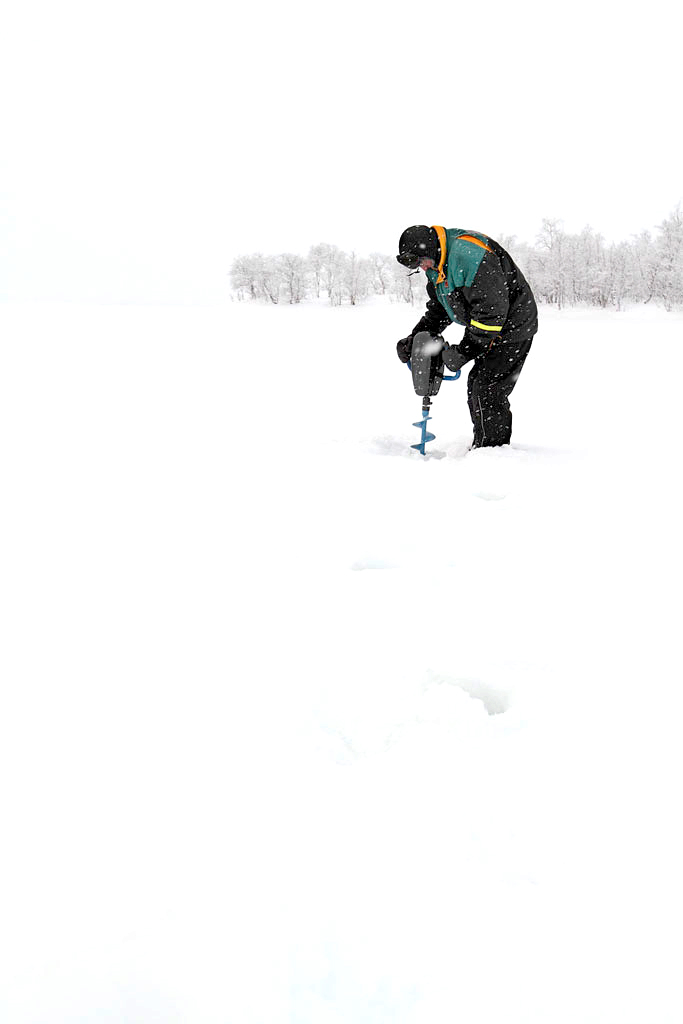
WEB-arctic drilling-flickr-nate2b

During Parliament’s winter break, Prime Minister Stephen Harper was making headlines. Though one would have expected that his trip to the Middle East would have garnered the most attention, when he became the first Canadian PM to address the Knesset, the national legislature of Israel, this was overshadowed by the media coverage of the first part of his winter break.

Many articles were written on his annual trip to Arctic Canada, questioning why the area matters, and if Canada should be using valuable resources and gaining international prestige over this frozen land. Those writers could not be more wrong about the importance of the Arctic to Canada’s future.

For starters, the Conservative government is emphasizing developing the land, making this more than just a flag-waving exercise designed to show the world who’s in control of the territory. In fact, Canada’s current term as the chair of the Arctic Council has been devoted to sustainably developing the eight states and six indigenous populations that are members.

The continued presence of Canadians, including our indigenous Inuit populations, give Canada a strong claim on the Arctic territories. But this claim is under threat. Foreign submarines travel under the Arctic ice pack as a shortcut to move from the Pacific to the Atlantic, often, apparently, without explicit Canadian knowledge.

Pierre Leblanc, a retired colonel and former commander of the Canadian Forces’ northern command, told the National Post that “for decades” the Canadian government relied on other countries’ “goodwill to know if they’re in our waters or not.”

One could imagine the outrage that would occur if a Canadian Navy vessel took a shortcut through the Florida Keys without informing the United States government. It sends the message that we are not willing to defend our sovereignty, which may become important in future years as the Arctic becomes more accessible and desirable for mining.

A much as I hate the melting of the polar ice caps, there is a great economic opportunity here for Canada if we act on it. Along with the possibility of the opening up the fabled Northwest Passage, the Arctic also provides an opportunity for huge economic gains.

Over time, Northern Canada has given us gold, diamonds, and uranium along with other minerals. As the ice caps melt, more resources will become available; the United States Geological Survey, in fact, estimates that 22 per cent of the world’s “technically recoverable” oil and natural gas could be located in the Arctic Circle.

Granted, there are many environmental concerns to be addressed here, but it should come as no surprise that Canada recently submitted a proposal to the United Nations to extend its territorial sovereignty to include the North Pole, where the Russian Federation planted its flag in 2007. If the Arctic territory that we currently control is any indicator, the vast store of untapped wealth there has the potential to turn Canada into an economic power in the world if we manage to focus our attention on the region.

In 2008, there was a proposal from the European parliament to place the Arctic under international control similar to Antarctica. While the current Antarctic Treaty does not support nor deny territorial claims to Antarctica, Arctic territories have a variety of countries involved in their administration, simply because they are part of the sovereign territory of the nation.

As the Canadian Arctic territory has belonged to our nation or its British colonial predecessor for hundreds of years, we should stand strong on our true north Arctic territories.
BC expansion causes fish farming fury

8

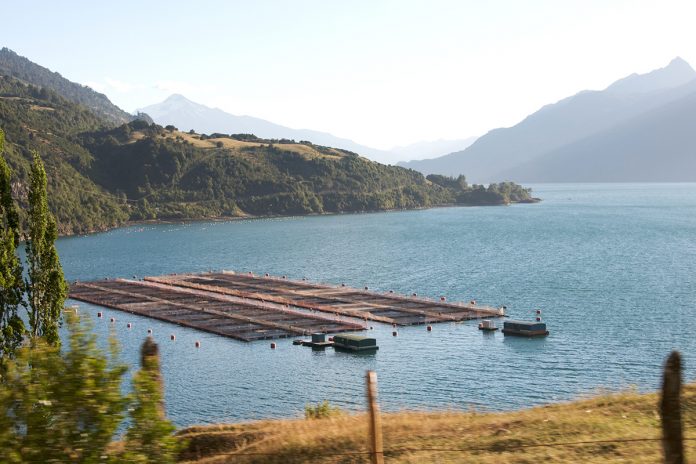
Farmed salmon pens 8

Recently, several letters to local First Nations groups announced that the federal government will be accepting applications to expand fish farming in the BC area.

The decision is highly controversial and critics claim it represents a lack of transparency in the federal government. Yet, according to an irate Green party, the government has already accepted twelve applications for farming in environmentally sensitive areas.

BC Minister of Fisheries and Oceans, Gail Shea is under particular scrutiny. When asked whether Shea had previously spoken publicly or issued any statements about the moratorium being lifted, a spokesperson claimed via email that the minister “talked about it openly” but was unable to provide evidence of a press release, a statement, or a quote according to the Vancouver Sun.

Further contention surrounds the possible impact on wild salmon populations if the expansion goes through. Applications for expansion from all areas of BC have been accepted, with the exception of those from the Discovery Island archipelago located near Campbell River on Vancouver Island — this area was deemed especially fragile in the 2012 Cohen report, which called for a moratorium on fish farm expansion after the collapse of the Fraser River salmon population in 2009.

Shea has assured the public that the government is making “major investments in research” to “bolster . . . environmental protection in the aquaculture sector through science, enhanced regulatory regime, and improved reporting.”

According to the Vancouver Sun, Department of Fisheries and Oceans spokeswoman Melanie Carkner said, “All applications . . . will continue to be evaluated through the lens of environmental sustainability and engagement with First Nations and other stakeholders.”

In response, SFU professor of statistics and director of the undergraduate environmental science program, Rick Routledge, said, “The federal government’s claim that such decisions will be made ‘through the lens of environmental sustainability’ is not credible.”

Routledge told The Peak that the federal government has shown no signs of paying attention to environmental impacts on wild salmon populations in the past; in fact, “in the past they have hidden away evidence [of this],” he said. According to Routledge, in the fall of 2011, his research demonstrated positive readings for ISAv disease in local wild salmon. ISAv (or infectious salmon anemia) is a viral disease affecting Atlantic salmon populations in Canadian fish farms.

Routledge proceeded to alert the media in a press conference, and it was later revealed that Canadian government labs had found similar evidence of disease in 2002 and 2003. However the information had not come forward and was never supplied to Cohen as information for his report, even though some of the positive testing samples had been sockeye salmon.

The Positive Aquaculture Awareness society (PAA) published a statement on Jan. 17, stressing the need for fish farm expansion. They argued, “The Federal Minister of Fisheries, Gail Shea gave a clear signal for the orderly expansion of the industry which is vital as a provider of employment and business opportunities for many coastal communities.”

The PAA claims that the concerns of critics such as Routledge are “hard to justify” since the 2012 Cohen report never revealed a “smoking gun.” The PAA further backed up the government’s decision by calling into doubt the validity of their critics’ expertise saying: “As expected, the usual suspects of salmon farming critics rose to the occasion and flooded the mainstream media — most of whom (both critics and media) don’t know the slightest thing about salmon farming.”

“Coastal communities rely on commercial and recreational fishing. If you ask whether they would rather have a chance to fish or work in a facility they’d rather fish,” said Routledge. He went on to accuse the government and the PAA of “misusing the precautionary approach” and attempting to cause a “campaign of doubt”.

When asked about the effects this expansion will have on local wild salmon populations, Routledge explained, “There’s very little evidence of direct impact on wild salmon, but lot’s of evidence on ISAv and other diseases are turning up.”

These diseases are related to fish farm prevalence, and over-farming. “In my opinion, conservation of wild salmon takes priority, period,” said Routledge.

Routledge continued we “vigorously explore land facilities” as an alternative solution. Land facilities would eliminate any interaction between farmed and wild salmon, and a more controlled environment would lower infection risks. The Save Our Salmon Initiative is currently working with the Namgis First Nations community in testing one such facility, to see whether it is a viable option.

Groundbreaking discovery may reveal course of evolution

0

WEB-cave archeology

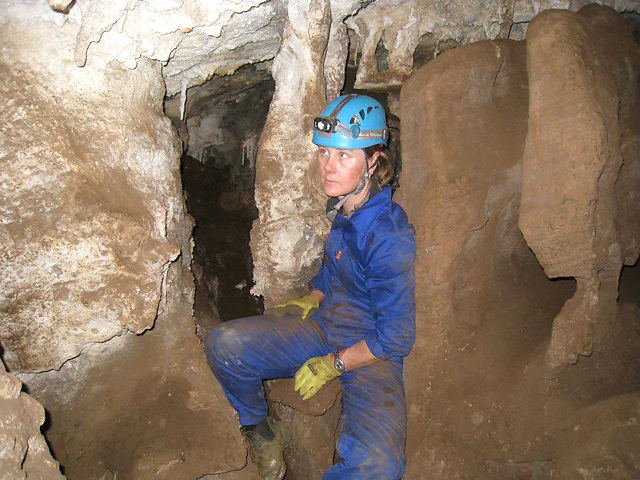
Dubbed “underground astronauts,” a team of six female excavators — including a PhD candidate from SFU — has unearthed over 1200 fossil hominid fragments from Rising Star cave in South Africa.

The excavation zone, nestled in South Africa’s Cradle of Humankind World Heritage Site, has been known as a hotbed for hominid remains since the 1800s, but has not revealed a find this impressive for decades.

Due to the volume of material, the find is one of the most significant discoveries ever made in paleoanthropology.

Two recreational cavers, primed as initial investigators, were the first to stumble upon the remains. An expedition was quickly organized, and scientists were hailed to join the team.

Prospective applicants for the Rising Star Expedition had to have a master’s degree or PhD in paleontology or a related field, be an experienced caver, and also be able to squeeze through an 18-centimetre wide passage leading to the chamber of the cave.

Of 57 applicants, Marina Elliott, an SFU PhD candidate of archeology, was one of the select few to meet the full requirements. Backed by the National Geographic Society, the project was organized and led by Dr Lee Berger of the University of the Witwatersrand, in Johannesburg. The excavation lasted for three weeks in November 2013.

Elliott joined four Americans and one Australian in the underground search that she said was “a major undertaking — not only in danger, but also in the complication of the excavation.”

While the findings cannot be declared until the final analyses have been done, Elliott does offer some details: “The number of individuals [found] is somewhere above twelve . . . but they don’t have a set number of minimal individuals just yet. Age wise, the remains are tentatively between one or two million years old, but this could change considerably once the final analysis gets done,” she said.

Well known from previously unearthed hominid samples, South Africa’s Cradle of Humankind World Heritage site has had a powerful impact in terms of understanding human evolution and human origin. In a field where discoveries are few and far between, the Rising Star Expedition is a momentous operation for current paleoanthropology research.

However, Elliott refrained from early speculation until more research and analysis has been completed: “Material like this is rare. It’s really important because it represents a large number of individuals, and it’s definitely a major find in paleoanthropology, but it’s too early to know the full impact,” she explained.

Academic papers are expected by the end of 2014, but for now all theories are tentative: “We will hopefully find out the type of species in the next couple of months. We are probably not talking human, probably for sure, and probably not even in the genus homo . . .  but it’s possible that these individuals are something like an australopithecine [which is any of several extinct humanlike primates].”

As an all-female team, the Rising Star Expedition didn’t simply make literal ground-breaking discoveries — the team also promoted female scientists: “It’s a nice opportunity to showcase women in science. This was dirty and physical work, and that doesn’t always get told . . . [but] this work is just as much part of a lab or academic setting.”

Elliott continued, “It’s also nice to tell people that if they have a daughter, it’s not only bookwork. There’s a lot of work like this in the sciences and that’s great to be able to say.”

Legal implications of Google Glass

0

Colour - google glass - Andrew Zuliana big2

The tech nerd in me loves the idea that Google’s new eyewear device “Glass” has been developed and will soon be on the market. A part of me is astonished that such technology can be developed, while another part is unnerved, afraid of this invention’s social and political consequences.

Google’s new gadget has already made some cracks in our legal code. The device has been distributed to thousands of lucky beta users — some of whom have met with legal confusion surrounding its use. Unfortunately, I think these instances have only marked the beginning of what will be a long series of court-cases, as lawmakers battle to keep pace with today’s fast evolving technology.

For those of you who don’t know, Glass is an eyepiece that is similar to a pair of glasses. The device sports a small, transparent screen that sits just above the right eye so as not to obscure the user’s vision. Users can use voice-command to record pictures and videos, engage in live video-chats, send messages, use GPS, and even translate languages.

But despite these interesting features, some beta-users have gotten in over their heads. Last October, a San Diego woman was pulled over in her vehicle for speeding. When the officer saw she was wearing Glass, he also gave her a ticket in belief that she had been driving “with monitor visible to the driver.” Later, the court decided to throw out the citation due to lack of sufficient proof that she had been using the monitor.

Just last week an Ohio man was suspected of recording a film he was watching while at the cinema. After the cinema had him reported, he was drilled by officers from ICE Homeland Security Investigations. While the man proved that the recording feature was inactive, this does not mean that other users can’t at least use the same excuse.

Glass is the first gadget on the market that is truly secretive in its execution, and this secrecy has made authorities suspicious.

While it’s easy to tell if someone is using a cellphone while driving or a camera to record at the cinema, it’s nearly impossible to tell if a user is doing so with Glass, as it carries similar features. This apparatus is the first truly personal accessory. Only the user knows what is happening through the lens.

Furthermore, it’s far too easy to evade legal trouble if one is using Glass to break the law. If questioned by authorities, the user could simply state that he or she was not using the gadget for those intended purposes. Officers, like the one who took the speeder to court, will not have proof beyond a reasonable doubt that the device was in use. In other words, expect more “Glass-Criminals” to hit the headlines in the near future!

Google Glass makes me nervous. Because it is such a leap in technological advancement, Canada’s lawmakers need to get their asses in gear and discuss modifications to our current code. Considering the pace at which our society evolves, I can’t imagine the stress these people go through. But laws must reflect modern technology. Glass is only the beginning of a series of personal, wearable gadgets and the abundance of problems they will cause.

Saudi Arabian revolution? Not so fast.

0

Saudi Arabia is one of the least free and least democratic nations on Earth, in my opinion. As such, it is understandable that dewy-eyed idealists would be tempted to project their dubious prophecies of the inevitable global march towards democratic utopia on this quintessential mascot of tyranny. But the world is not so simple.

Revolutions are rarely solely the result of spontaneous populist revolts against an unpopular government. Funnelling anger into coordinated political action is a difficult process, particularly when under the scrutiny of well-equipped internal security services, something the Kingdom of Saudi Arabia certainly possesses.

Dissent needs some sort of direction, usually supplied by a class with some autonomous organizational capacity — such as the bourgeoisie salons of 18 century France, indigenous bureaucracy in the British Raj, or the Shi’a clergy in Pahlavi Iran.

Revolutions are rarely solely the result of spontaneous populist revolts against an unpopular government.

However, Saudi Arabia has a level of elite integration that most authoritarian states can only dream of. Few positions of administrative, economic, or coercive power fall outside the control of the royal family. And while the House of Saud is not a monolithic entity, it closes ranks when it needs to, bound together by kinship and interest.

Any non-royal factions who could form the nuclei for dissent are continuously bought off with concessions. The Wahhabi religious establishment is given free rein over moral policing and coveted access to state media. Tribal leaders are placated with prestigious royal marriages. Commoner merchants are given enough of the economic pie to be kept complacent, particularly in the oil industry. Ordinary citizens are effectively robbed of their potential articulators of opposition, since all elites find relative comfort in the status quo.

While it is true Saudi Arabia has an overextended welfare system, it is hardly the first nation to do so. Many far more impoverished and financially mismanaged regimes have managed to prolong fat welfare states well beyond their expected expiration dates.

Next to no one wants to see the Saudi state implode. Not only is it the world’s second largest oil producer, but any unrest in the kingdom would cast a shadow over the rest of the Gulf as well, endangering the stability of the world’s most critical energy hub.

The international community, which would loath to see oil prices skyrocket or jihadists establish a new base, would be willing to move heaven and earth to prevent this from happening. When the time comes that Riyadh exhausts its own pockets, it will always have the fallback option of tapping others.

Finally, it must be acknowledged that while revolutions can be infectious, so can the fatigue of them. Certainly the results of the Arab Spring have left little in the way of inspiration. Tunisia struggles to establish a working political system. Syria is torn apart in bloody civil war. Libya has decentralized beyond recognition as a cohesive state. And chaos-plagued Egyptians saw the restoration of what I would call their ancien-régime this past summer.

In today’s Middle East, the ever-invoked mantra of tyrants “après moi, le deluge” has never looked more attractive.

Planet perjurers

0

flickr-jpstanley

Would you drop everything to go live on Mars? Yesterday, my younger brother informed me that a not-for-profit Dutch foundation, Mars One, is accepting applicants from around the world to be the first human colonizers of Mars.

I chuckled. Yes, I watch Doctor Who, and I love Star Trek, but the actual reality of another human civilization on Mars — is that really so close in our future? The organization claims it is.

The Mars One mission will send crews of four every two years starting in 2024, with the first unmanned mission starting in just four years — 2018! Applicants have been submitting and posting videos of themselves stating why they feel they should go to Mars, all of which are visible on the organization’s website, www.mars-one.com.

Funding is being provided by donations made to the organization through an independent fundraising site, and potentionally by the creation of a reality television series based on the lives of the first Mars colonizers. A living environment will be built on the planet for the soon-to-be martians by rovers and cargo missions being sent up in coming years.

I feel a bit skeptical about this whole movement, however. Massive groups of people are donating money to fund a propagated mission to Mars via an independent fundraising site? Why have I never heard of this before?

In addition, their fundraising goal is currently only $400,000 in total. That would be nice to personally receive, but is hardly feasible for a credible space exploration. So who would apply to a recently created and generally unknown space trip with a guaranteed no-return agenda?

$400,000 would be nice to personally receive, but is hardly feasible for a credible space exploration.

Apparently Joanna Hindle, an English teacher from Whistler, would. She is one out of 75 Canadians and over 1000 global competitors that has been chosen to go on to the next stage of the application process. Other known successful applicants include third-year physics student Ryan MacDonald, aged 20, science technician Alison Rigby, aged 33, and a 23-year old PhD student, Maggie Lieu.

All participants seemed to be enthused about the opportunity, but some share my hesitation about the reality of leisure space travel. Lieu, for instance, stated in an interview with The Guardian that the trip “is definitely feasible but delays are pretty much inevitable. So we will be able to go to Mars one day, but on this timescale? I’m not so sure.”

Buzz Aldrin, the second man to walk on the moon, is also skeptical about the idea. He said, “I don’t think there’s that much technology that indicates that the Mars One corporation, with over 150,000 people applying, really knows how to get four people to Mars by 2023 [sic], even if they don’t bring them back.”

Despite their dubious nature, the Mars One corporation has just confirmed partnerships with two companies: Lockheed Martin, which will provide a robotic landing device for the event, and Surrey Satellites, which will provide a communications satellite, according to Mars One.

Despite the general lack of public support and my own questions on the reality of this mission coming to fruition, I am hopeful that Mars One is a success. If anything, it looks like this may be one small step for mankind, and one huge leap for reality television.

Author profiles: Family history

0

Eufemia Fantetti was already an accomplished playwright when she transitioned to fiction and non-fiction writing. Fantetti grew up in Toronto and, as a teenager, attended a school for the arts. From there, she worked with a number of theatre companies in Victoria and Vancouver on the Fringe circuit as well as across Canada. While continuing to work full time, Fantetti decided to enrol in The Writer’s Studio at SFU.

“It was the best thing I ever did,” she unabashedly states, explaining that some people have the drive to write on their own but she needed the structure, feedback, and community of a writing program.

“I got all of those at The Writer’s Studio. You come in wanting to write and they give you the time and space and community,” she said. Fantetti graduated from the program in 2007, with a focus on non-fiction under mentor Wayde Compton. She also co-hosted the Writer’s Studio Reading Series for one year while she was a student.

Fantetti describes writing as her biggest joy and passion as well as biggest frustration, which explains how she was able to publish a book of short fiction while she was working on her memoir thesis project.

Last year Fantetti completed her MFA in creative writing at the University of Guelph. Her thesis project examined her own history as the daughter of a mentally ill immigrant. Fantetti’s parents are Italian and they made a lot of sacrifices for their family.

With a memoir thesis so close to home, Fantetti found one project was wearing her down, so she resumed writing non-fiction and fiction.

“It’s a hard story to write,” admits Fantetti, “there is a lot of chaos and heartache.” Fantetti’s mother suffers from mental health issues, which, even by the early 80s, the medical community hadn’t accurately identified. In her writing, Fantetti struggled to find a balance between heart and humour that “reaffirms the human sense of resilience and survival.”

With a memoir thesis so close to home, Fantetti found one project was wearing her down, so she resumed writing non-fiction and fiction. When she heard Mother Tongue Publishing was looking for short fiction for a quick turn-around, she threw her hat in the ring.

A Recipe for Disaster and Other Unlikely Tales of Love, Fantatti’s debut collection of short stories, was published in November 2013.

Now, Fantetti is working on non-fiction essays and new fiction stories about Italian Canadians. She has also recently completed a certificate to teach English as a second language. Having grown up straddling two cultures, she is  exploring the question of identity through writing and teaching immigrants who — like her parents — had no opportunity to learn English literacy.

She says that for her, this passion has “opened up a whole new way of thinking” about culture, identity, and language. But it’s clear that the wonder of words is natural to her: Eufemia is an ancient Italian name from a Greek word that means ‘well spoken’. “It’s a lot to live up to,” Fantetti laughs.


jordan_scott_poet_3

Jordan Scott was introduced to poetry by his mother, a student at SFU in the 60s. From a very young age the house was “full with poetry books,” reminisces Scott. By the time he was in university — also at SFU — he had amassed a stack of writing and asked English professor Stephen Collis if he would read it: “Steve was very kind, and it was the start of a friendship. He was really a mentor and a guide.”

In 2005, New Star Books published Scott’s debut book of poetry, Silt, which was shortlisted for the Dorothy Livesay Poetry Prize. In Silt, Scott traces his family history back from Canada and his birthplace of Port Moody, to Poland and his grandparents’ struggles during WWII. After attending readings and local book events, he discovered “you always have an audience.”

By the following year, Scott was already working on his next collection about the poetics of stuttering, entitled blert, as part of his masters at the University of Calgary. Silt had touched on the topic of stuttering in relation to his family history, but Scott couldn’t find any other poetry collections that fully addressed the subject.

Growing up with a stutter affected Scott’s life and, although it has diminished with age, as a child he was teased and attended speech therapy. But after reading his work aloud in class at the Kootenay School of Writing, Scott discovered he was most comfortable surrounded by other poets.

Scott polished the last parts of blert while writer in residence at the International Writers’ and Translators’ Centre in Rhodes, Greece. blert was published by Coach House Books in 2006 to wide success — including production of a short film by ArtistBloc for Bravo and an online interactive documentary commissioned by the National Film Board of Canada entitled Flub and Utter.

“It began with a simple idea,” explains Scott, “leave a book outside and see how nature interacts with it.”

Since returning to the West Coast, Scott has taken up a position at Fraser International College teaching literature and composition. During this time he continued his friendship with Stephen Collis, and they recently collaborated on a new book.

“It began with a simple idea,” explains Scott, “leave a book outside and see how nature interacts with it.” He notes that we typically associate books with warmth, indoors, curling up and reading — he was curious to see how vulnerable it was. Collis and Scott took copies of Charles Darwin’s Origin of Species and left them in various corners of the province.

“BC is unique in that it has five distinct regions, each with a different ecosystem,” he said. After bushwhacking and hiding multiple copies off the beaten path in the summer of 2009, they waited a full year for Mother Nature to do her worst. When they went to retrieve the books, they discovered how different climates modified the printed pages.

“In the copies from Tofino, we couldn’t read anything. But the Nicola Valley is a desert region, and the pages were dry, curled, torn, and chewed by mice, but readable.”

Coach House Books published the resulting book, Decomp, in September 2013.

The book includes photographs of the bushwhacked books, as well as journal entries of the process and poetic contributions from Collis and Scott. “It was a really intense collaboration, and was strange when we saw the final pieces. Any stylistic traits that we have — that we can distinguish in our individual writing — were mulched up.”

Scott is currently working on a long poem that explores the linguistic character and rhetoric of interrogation, both in popular culture as well as archival and police records from Guantanamo Bay. His interest in the subject stems from his experience with his own stutter and a scene from A Fish Called Wanda, where the interrogated character’s stutter was assumed to be indicative of guilt.

Scott recently read with Daphne Marlatt at Lunch Poems at SFU and will be participating in the SFU Centre for Dialogue event as part of the City of Vancouver’s Year of Reconciliation honouring Chief Robert Joseph. Scott will be reading with five other poets as part of the 2014 Jack P. Blaney Award for Dialogue on Feb. 27 at the Vancouver Public Library.

Fair Trade learning day brews dialogue

0

WEB-fairtrade starbucks-mark burnham

Just a few months after the opening of a predominantly fair trade Starbucks at SFU Burnaby, Sustainable SFU, Engineers Without Borders and Dining Services invited students to attend a Fair Trade learning day at Canada’s first of its kind location.

The event was held in the Starbucks itself last Tuesday, where students and Starbucks staff learned more about the fair trade initiative while enjoying complimentary refreshments. Guests also received dining services sporks and a gift certificate for a free fair trade coffee on location.

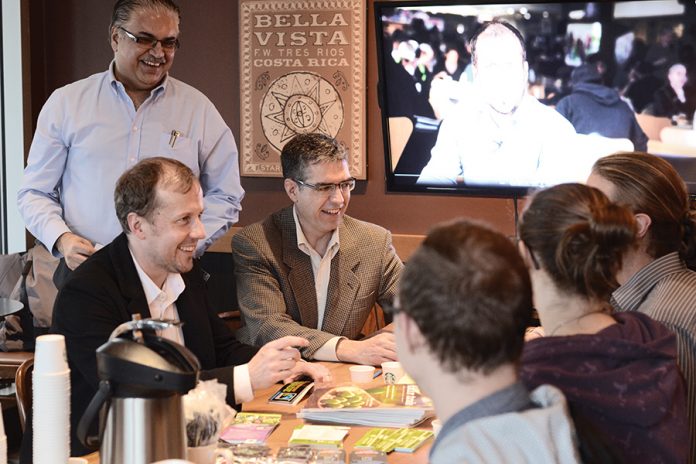
For executive director of the Canadian Fair Trade Network, Sean McHugh, the most important goal of the day was education and dialogue: “People kind of get lost in the complexity of it all, but at the end of the day it’s really about starting a conversation about where a product is coming from.”

McHugh was joined by Dan Traviss, manager of dining services at SFU, who organized the day with specific objectives in mind. He told The Peak, “We wanted to do two things: open it to the community but also have staff training for our dining services staff, teach them more about fair trade.”

The two fielded questions from dining services staff and Starbucks customers, most of which were about how to explain the idea of fair trade to customers and friends.

“Fair trade kind of exists as an idea, or a concept, something that someone generally likes to support but doesn’t necessarily have the opportunity to think about,” said McHugh. “This is great today to kind of discuss some of that. The history, where things are at in Canada, internationally, and just how important this Starbucks is in Canada.”

This Starbucks is the first in Canada to offer fair trade options, and it has already achieved success in that 80% of espresso beverage sales come from fair trade products. Although the myth exists that fair trade products might be more expensive than non-fair trade, there is no price differential at Starbucks.

Overall, Traviss and McHugh were pleased with the day. “It was fantastic. We did basically four rounds with the different staff from Starbucks, and [there was] a ton of interest,” McHugh said. “They were definitely more up to speed on stuff than I had anticipated, which was fantastic.”

“It’s a growing movement,” explained McHugh. “There’s interest from all the universities now that Starbucks has come to the table and is excited to be working with [SFU].”

Traviss echoed McHugh’s sentiments, concluding,“This is a pilot project. Our hope is that it does well here, which it really has so far, so it can roll out to other campuses.”

Transit referendum gains momentum

0

WEB-transit-Mark Burnham

SFU students, along with the rest of Metro Vancouver, will be able to weigh in on improving transit in an upcoming November referendum. Although it is unclear exactly how the issue will be framed, the referendum will mean an opportunity to vote to put more provincial funding into TransLink.

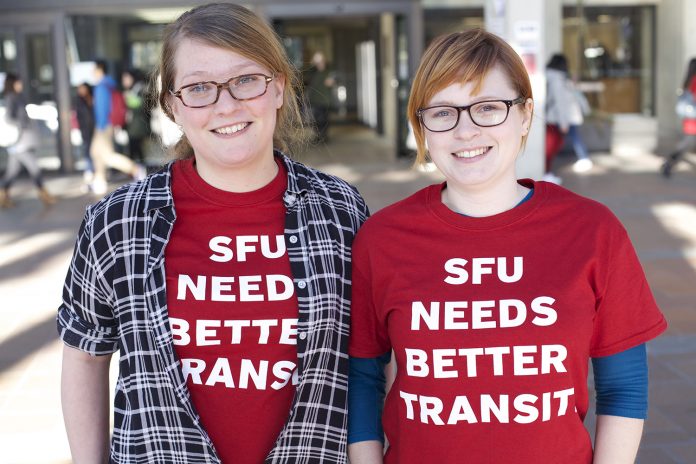
The Simon Fraser Student Society (SFSS), the Graduate Student Society (GSS), and Sustainable SFU have collaborated to bring a transit advocacy campaign to the SFU community. The campaign aims to make students aware of the upcoming referendum and to encourage them to be informed voters.

The campaign emphasizes the potential this vote has to improve the transit situation between SFU’s different campuses. Chardaye Bueckert, SFSS external relations officer, told The Peak that in the undergraduate survey for the past 10 years, transit has consistently been in the top 10 list of how to improve the university experience.

“Everybody has transit horror stories,” Bueckert said.

Julia Lane, coordinating and external relations officer for the GSS, and Bueckert both commented on how happy they were with the progress of the campaign. Lane said that they have had a lot of people show interest and get involved.

The two organizations advocated awareness at Clubs Days earlier this month as well as in Convocation Mall last Wednesday. Students could sign up to receive information and enjoy a free cup of hot chocolate. Students who showed interest will receive information catered specifically to them based on certain factors, such as whether or not they were registered to vote and how much they already knew about the referendum. There is also a survey online where students can access similar information.


“Everybody has transit horror stories.” 

– Chardaye Bueckert, SFSS external relations officer


Bueckert mentioned how encouraging it was to see students she talked to “go from being frustrated when [asked] about their transit experience to feeling like they can actually do something to change it.” Lane stressed the importance of “opening people up to what could be.” She continued, “We get so stuck in what is, and we get so defeated by it.”

The organizations have been in discussion with TransLink and the provincial government. Bueckert explained that TransLink reported that they have “no funding to do any of the ideas and any of the initiatives that [were] brought to them.” According to her, this referendum is the only medium for increasing funding for transit.

The projects that these student organizations have presented include an increase in frequency for the 143 bus route to include weekend service, improvements to the 135 route, and the implementation of the Burnaby Mountain Gondola — affectionately referred to by SFU President Andrew Petter as “the skybus.” They would also like to see an extra stop added to the 135 route, as well as the implementation of a more efficient express bus between Burnaby campus and downtown.

A business case presented by TransLink and corporate management company Price Waterhouse Cooper predicted that transit demand in 2021 will be so high that it will necessitate a 145 bus leaving Production Way – University Station every 57 seconds. “We don’t have the facilities for that to occur,” said Bueckert.

If the “skybus” were implemented, replacing the 145 bus, there would be a gondola car leaving every two minutes; this trip would take approximately six minutes, a significant departure from the 10-15 minute travel time one can expect on the bus.

For Bueckert, this advocacy is a means to effect change as the considerable voting pool of students at SFU could have a real influence in this referendum. In a broader sense, she wants the campaign to “empower students to feel like they have the ability to actually improve things.”

Say “no” to coyote fur

0

WEB-coyote-Jess Findlay

“Authentic, iconic, Canadian” are words used by the Canadian brand Canada Goose, and words with which we love to identify. But would we continue to do so if they were stained by a connection to inhumane, unnecessary killing?

On the first Saturday of February, a group of animal activists from Ontario known as The Kitchener Ontario Animal Liberation Alliance (KOALA) held a protest outside of Channer’s Apparel store for men in Waterloo.

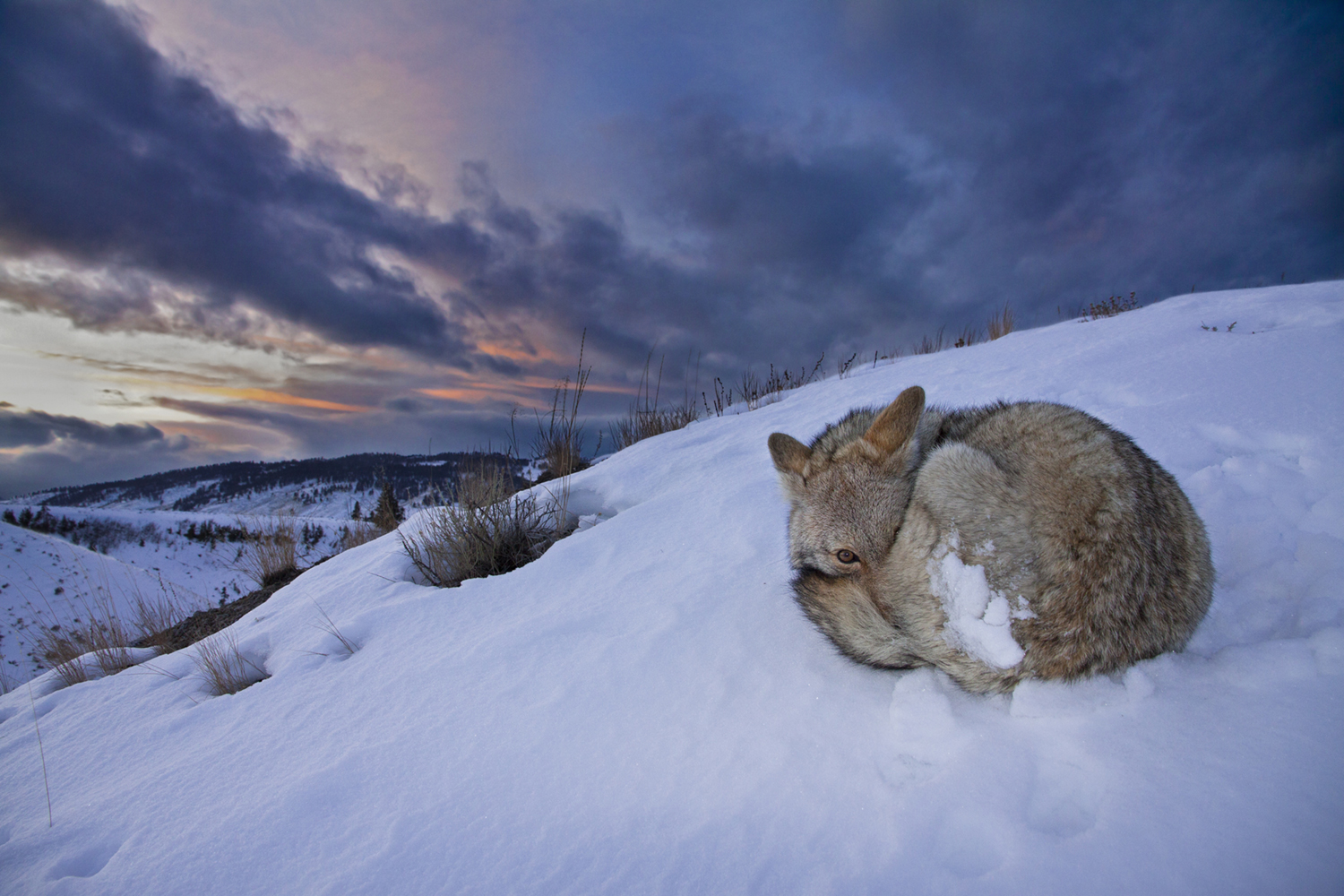
They were opposing the unnecessary use of coyote fur on the hoods of premium jackets made by the company Canada Goose, stating that the company uses inhumane practices to catch the coyotes with foot traps.

Malcolm Klimowicz, a member of KOALA told The Cord that once the coyote is trapped “they could be out there for weeks sometimes,” which means they either, “freeze or starve to death.” There is also a high risk of the injured animals chewing off their own legs to escape, he said, or being painfully “eaten by other animals.” Either way, death by trap probably results in a coyote’s suffering and torment.

Yet, this torture leaves many unfazed. An employee of Channer’s, Bill Townsend, ignorantly stated that the fur “is acquired in a humane fashion,” as it is done through a “managed process.” He continued, “This fur trade is providing jobs for people and it is creating commerce.”

As if we haven’t heard this argument before. A well thought-out and perfectly rational reason for murdering animals — the economy.

In this situation, though, the one to blame for such cruelty is not Townsend, his fellow employees, or the customers buying the fur. It is the president of Canada Goose, Dani Reiss. He is the person of power choosing to build a business that incorporates unnecessary death into its product.

I’m convinced that the company would still thrive without killing coyotes.

Nevertheless, Canada Goose does offer another reasonable explanation for the presence of the coyote fur: Reiss explains that the fur, “provides warmth around the face in a way that no synthetic fabric can.” Their website also states that coyote fur “doesn’t freeze, doesn’t hold moisture, retains heat and is biodegradable.”

All of these qualities are absolutely positive. However, there are alternatives that provide similar if not the exact same qualities such as cruelty-free versions of wool, for example. Even if other materials do not compare to real fur, there still needs to be an aspect of tolerance that we carry with us. Warmth or comfort doesn’t have to come at such a high price.

We need to ask ourselves whether these animals are being killed for survival or adornment. We no longer live in a world where high status is determined by whether our clothing was once able to walk.

As Klimowicz points out, “the majority of people who wear these things live in southern Ontario where it’s really not that cold.” Compare this to southern British Columbia, and wearing fur for warmth is simply ludicrous.

We as consumers can display our knowledge of the fur industry’s cruel origins and opt to buy non-fur coats in general, or at least Canada Goose jackets that do not use coyote fur. Better yet, we can invest in a good pair of long johns and a rain coat, clothes that actually suit our West Coast climate.