Home Blog Page 1182

Wrong reform

0

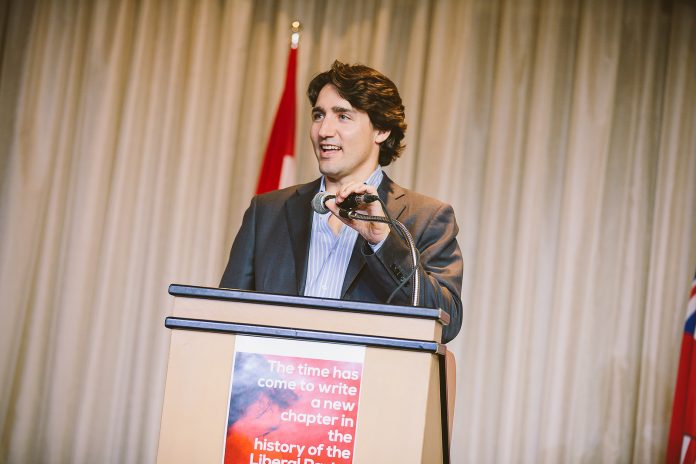
WEB Trudeau talking - Justin In Markham-Unionville flikr

On the morning of January 29, Liberal party leader Justin Trudeau made an announcement in the House of Commons that shocked the political community of Canada. In this Wednesday morning massacre, he announced that all 32 Liberal senators would be removed from the party caucus, and would now sit as independents. This was an unexpected move to say the least, one I can’t see being advantageous for the man who wants to become prime minister next year.

The first attack on Trudeau’s announcement came later that day, and from, surprisingly, Tom Mulcair, leader of the Opposition. One would expect that the leader of the NDP, who wants to abolish the Senate altogether, would be happy about any proposal that made changes to that institution.

Mulcair questioned, though, why Trudeau would make such an announcement now, when less than six months ago, he voted against an NDP proposal to remove all Senators from party caucuses. Both Trudeau and former Liberal leader Stephane Dion suggested that the reform disrespects the constitution of Canada, because it makes changes to it. How can Canadians trust someone who doesn’t stay consistent on his ideals in such a small period of time to be the prime minister?

This is far from the only criticism Trudeau received after this bombshell announcement. Prime Minister Stephen Harper suggested that the change is merely cosmetic, saying, “the change announced by the leader today is that unelected Liberal senators will become unelected senators who happen to be liberal.”  While these Liberals will not be allowed to call themselves Liberals in the Senate, many will remain members of the Liberal party.

With this change, “unelected Liberal senators will become unelected senators who happen to be liberal.” – Stephen Harper

To make matters worse, removing these senators from party caucus removes a level of accountability expected of them. Over the last year we have heard about many of the problems regarding the Senate’s accountability to Canadians. Independent senators are accountable to no one, since the Senate polices its own members. At least prior to this change they would have to be somewhat responsible to the party’s elected representatives.

Furthermore, independent senators are devoid of most of the power that comes from being in the Canadian Senate. Under Senate rules, independent senators cannot sit on committees. In a single stroke, Trudeau has handed the upper chamber over to the Conservatives, who will continue to remain part of the party caucus despite Trudeau’s pleas to Harper to follow suit.

As if this debacle was not enough, Trudeau also announced: “If I earn the privilege of serving Canadians as their Prime Minister, I will put in place an open, transparent, non-partisan public process for appointing and confirming Senators.” In other words, voting for Justin Trudeau means the process of appointing Senators will become even more undemocratic. Instead of being chosen by the elected Prime Minister, they would be appointed by an appointed committee, which would completely remove Canadian electorate from the process.

Nobody disputes that the way Senators are currently chosen is not the best system. But Trudeau’s proposal does not fix the situation. It was Justin’s father, the late Pierre Trudeau, who put so much red tape around the reform of the Senate that it has taken Stephen Harper eight years just to be able to bring the issue before the Supreme Court.

As the NDP calls for abolition, and the Liberals for a less democratic Senate, we must hope that the Conservatives can call for an elected Senate without the consent of the provinces. Otherwise, we are in for a long struggle to reform an institution that desperately needs reorganization.


Inheriting movement

0

cooper_workshop_2011_0499

Adapted from their previous version of this work, the 605 Collective have re-mounted Inheritor Album with some new cast members, allowing the work itself to symbolise the theme of inheritance and succession. I saw the previous version at the Dancing on the Edge Festival in 2012, and I was eager to see it again in its new form.

           The choreography itself has not changed much, but the first thing I noticed when the collective took the stage was the absence of a few of their key members. I was disappointed to not see Shay Keubler, Justine Chambers and David Raymond, but it seems that the collective is growing and evolving just as this show did.

I’ve been a fan of the 605 Collective for a few years, and it is hard to think of dancers other than the original six cast members as being a part of it, but despite my initial apprehension, the performance was very impressive. I realized that the idea of the collective is to incorporate new members and to always be evolving.

           Inheritor Album is an hour-long barrage of high energy dancing, fast-paced and bass-heavy electronic music, and beautiful animated film projections. The 605 Collective have a unique, athletic style. Some sections of the show were reminiscent of waves moving smoothly back and forth across the stage, slowly gaining momentum.

The 605 Collective have a unique, athletic style.

They were perfectly synchronised and their movements were so in tune with the music, creating a work infused with energy. Their unique fusion of urban and contemporary dance, pure rhythm, and stamina is what sets them apart from other contemporary dance groups.

            The show began in low lighting with the dancers anxiously running across the stage, and then all six of them began frantically running in a circle, overtaking one another and propelling each other forward by pulling on another dancer. They were running on top of an animated circle resembling a vinyl record that was projected onto the stage.

           There is a common theme running through the different sections of the show, as they all pulse to the beat and seem very aware of each other. The show is about the interpretation of inheritance and succession, and the dancers play with these ideas in various ways.

For example, one section of the show has the dancers standing in a line and, one by one, they are inspected as they are pass along and then tossed in a pile. The last one standing ends up with the other five dancers hanging off of him as he walks slowly, letting them fall one by one.

           While most of the show was very fast paced and required a huge amount of endurance from the dancers, there were a couple of slower, more thoughtful sections, such as a solo by Laura Avery, which was a nice contrast to the constant energy of the group dances. There was also an exquisite group number that grew from small subtle movements and gradually became huge broad movements filling the entire stage. The 605 Collective’s ability to take a simple gesture and turn it into a grand sweeping movement is one of their greatest strengths.

           Miwa Matreyek’s beautiful animations were projected onto the stage and backdrop to add an urban street vibe to the show, which complimented the strong beat of the music and the urban/contemporary dance style very well. As shadows of the pulsing group of dancers flashed onto the back wall and they walked off stage one by one, I was left with the feeling that the new members of this cast have inherited the spirit of the original members.

The Collective received an enthusiastic standing ovation, and I’m sure anyone in the theatre who saw them for the first time is now in agreement that they are one of the best contemporary dance groups in Vancouver.

Inheritor Album was presented as part of the Push International Performing Arts Festival from January 30 to February 2 at the Scotiabank Dance Centre. For more information, visit 605collective.com.

Deconstructing Woody

0

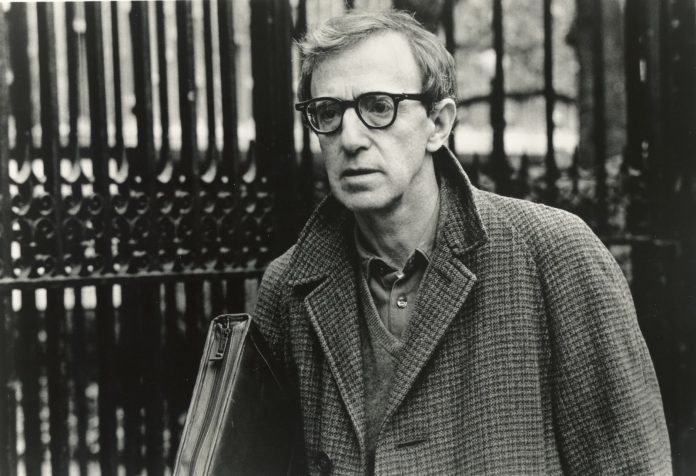
woodyallen

I’ve been a Woody Allen fan for as long as I can remember. My first Allen picture was Annie Hall, which I watched before I was old enough to understand any of its dense cultural references. From there, it was Manhattan, Broadway Danny Rose, Hannah and Her Sisters, Interiors, and Bullets Over Broadway. The music, the performances, the wry self-awareness of the characters — all of these aspects, common themes in Allen’s filmmaking, appealed to my preteen sensibilities.

I was hooked. I’ve spent the latter decade of my life loving Woody Allen’s films, and in their own way, they’ve influenced my view of the world around me. There’s an everyman quality to Allen’s neurotic avatar that seems to speak volumes about my own life, and to this day I consider these films to be among my very favourites.

Unlike many of those who have written similar pieces to this one in recent weeks, I had very little knowledge of Allen’s sexual abuse allegations until Dylan Farrow, his adopted daughter, penned an open letter earlier this month detailing her experience, which was published in part in The New York Times. “When I was seven years old, Woody Allen took me by the hand and led me into a dim, closet-like attic on the second floor of our house,” she writes. “He told me to lay on my stomach and play with my brother’s electric train set. Then he sexually assaulted me.”

For those of you who haven’t, I encourage you to read Farrow’s letter, which is posted in full on Times writer Nicholas Kristof’s blog. Though one might question whether it is fair that Kristof — a personal friend of the Farrow family — used his position at the paper to give Farrow’s message a platform, it’s hard to know whether such a thing would have gained attention anyway. Farrow’s account is harrowing and detailed, calling to task Hollywood, and particularly artists who have worked with Allen, for silencing her and other abuse survivors.

“What if it had been your child, Cate Blanchett? Louis CK? Alec Baldwin?” She asks. “You knew me as a girl, Diane Keaton. Have you forgotten me?”

I do not know what happened between Woody Allen and Dylan Farrow — nor do any of the journalists, lawyers or family members making statements, one way or the other. There are only two people who know for sure, and a wide range of opinions and speculations in between.

Allen apologists will cite the Yale–New Haven Child Sexual Abuse Clinic, who testified in March 1993 that no abuse had taken place. Those on the other side will counter by saying that a state attorney at the time stated there was “probable cause” to convict Allen, but the case was dropped in order to spare Dylan unnecessary trauma. In a custody case between Farrow and Allen, Judge Elliott Wilk called Allen’s relationship with Dylan “grossly inappropriate.” Mia would go on to win custody over Dylan, as well as seven more of her nine children.

But without much in the way of concrete evidence, how should we choose to judge the Woody Allen case? Your first instinct might be to say that it’s wrong to side with either party, and that it’s none of our business, anyways. But there is no middle ground here. You’re either with Allen, or you’re against him.

~

Days before Dylan’s letter was published, Woody Allen was awarded the Cecil B. DeMille Award for lifetime achievement in filmmaking from the Hollywood Foreign Press. At the Golden Globes Award ceremony, Diane Keaton fumbled through a sentimental speech in praise of Allen’s artistry and his female characters who, in her words, “can’t be compartmentalized.” Winning the Best Actress in a Drama statuette for her role in Allen’s latest film, Blue Jasmine, Cate Blanchett echoed Keaton’s praise, saying “we take him for granted.” Applause filled the room.

Allen’s lawyers have argued that Farrow’s account, which they believe was “implanted in her” by mother Mia Farrow, was timed to coincide with the awards season, in order to undermine Allen’s chance of winning accolades for Blue Jasmine. Others, such as documentarian Robert B. Weide in a now-infamous article for The Daily Beast, have suggested that the scandal was a strategy to promote Ronan Farrow’s upcoming show on MSNBC, as well as a chance for Mia to publicly lash out at her former partner. Moses Farrow, Dylan’s brother, has publicly defended Allen, saying that Mia forced Dylan into believing that Woody had assaulted her.

But though Weide and others — including Allen himself, in a written response published just days ago in The New York Times — are quick to question the motives of Mia, Ronan, and other public detractors of Allen, their arguments are borderline ad hominem: whatever any second or third party’s feelings or motivations towards Woody, this isn’t about them. It’s about Dylan Farrow — whose name change is offhandedly revealed by Weide, despite her clear intention to keep it hidden — and her testimony.

I don’t know what happened, but I know that I stand with Dylan Farrow.

This may seem counterintuitive to many of you, but we must remind ourselves that we aren’t lawyers, judges, or jurors — the court of public opinion is not a court of law, and if my belief that Allen is guilty turns out to be untrue, no one will have spent undue time in jail, and I will apologize for my error. But if I believe the opposite, and I am proven wrong, I will have been complicit in letting a survivor’s story fall on deaf ears, as these accounts too often do in our society.

For every Dylan Farrow, there are thousands of men, women, and children whose stories will never be told. For me, the well-meaning Woody Allen fan who only recently learned of the allegations against him, Farrow’s story might never have reached me. Given that it has, I am inclined to believe it.

A recent article by Michelle Dean for Flavorwire touches on the uncomfortable truth of issues such as these: that there is no such thing as an impartial stance. “If you find Farrow’s letter easy to dismiss, because you like Allen’s movies,” she argues, “you’re just as guilty of this so-called ‘rush to judgement’ as anyone else.” Aaron Bady’s piece in The New Inquiry raises a similar point: “The damnably difficult thing about all this, of course, is that you can’t presume that both are innocent at the same time. One of them must be saying something that is not true.”

For every Dylan Farrow, there are thousands of men, women, and children whose stories will never be told.

Some will choose to ignore the debate entirely, not to get involved and to wait for the issue to sort itself out. But, like the Hollywood Foreign Press, who have supported Allen’s art without so much of a mention of Farrow’s allegations, you are implicitly devaluing her story. Not to pay attention is to allow Allen, and indeed all others like him, to get away with it. To do nothing is to support him.

~

All of us live in a rape culture. Many of you will have heard this term, but not all of you will know what it means — a rape culture is one where we question Farrow’s account before we question Allen’s guilt, one where unfounded accusations of rape are cited over unreported assaults, one where we are taught to avoid attracting sexual violence but rarely reminded not to perpetuate it. A culture where, according to the Rape, Abuse and Incest National Network, an estimated 60 per cent of rapes go unreported, and only three per cent of rapists ever see the inside of a jail cell.

Our culture is one that devalues the experience of victims and protects those who are accused of sexual violence. Though it would be inaccurate to presume that statistics have a direct bearing on Woody Allen’s case, they are illuminating nonetheless: on a worldwide scale, the National Centre for the Prosecution of Violence Against Women estimates that between two to eight per cent of rape charges are later determined to be unfounded.

This number is often assumed to be much higher, as our cultural conversation tends to hinge on the veracity of a victim’s story and their corresponding mental state. Look at Wiebe, whose article cites descriptions of Farrow as “mentally unstable.” Look at Stephen King, whose quickly deleted tweet concerning Farrow’s “palpable bitchery” focuses the debate squarely on her person rather than her experience.

In these instances, Farrow is not a human being but an archetype on which our assumptions about women and the sexually abused are projected.

Arguments claiming Dylan’s status as a pawn between quarreling exes Mia and Woody further depersonalize her: entrenched in the culture of celebrity, she is faceless, and has no iconic presence to be measured against. She is a statistic; Allen is an icon.

Too many of these debates have centred around Allen as a filmmaker and a cultural presence while framing Dylan as an outsider, a troubled child turned troubled adult who was either brainwashed by her mother or otherwise fundamentally disturbed. But it’s important to set a precedent of believing those who speak out against sexual assault: there is less to lose in the occasional unfounded accusation than there is in fostering a culture where survivors are encouraged to stay silent, and made afraid to share their stories.

In arguing for her case — which, even if untrue, she inarguably believes to have happened — Dylan has shown remarkable bravery and heroism. In supporting it, we can advocate for a more tolerant society which accepts and embraces those who survive sexual abuse.

Hollywood has a talent for marginalising the voices it doesn’t want to hear. It’s the reason that African-Americans so rarely win awards, and stories of slavery and colonialism are so rarely told. It’s the reason that challenging films like The Master and Amour lose out to crowd pleasers like Argo. It’s the reason popular films fail the Bechdel test year after year, and it’s the reason artists that beat their wives and spew racial slurs are quickly and overwhelmingly forgiven.

But we as viewers have the opportunity to reject the homogenized “reality” that Hollywood presents to us. We can choose to give voice to the voiceless, even if it means risking being wrong about a public figure whom, two weeks ago, I would have counted among my favourite artists without second thought.

Still, the question remains: can I still include Allen on that list? If we are to believe Dylan Farrow, and accept the belief that Woody Allen is a sexual predator who molested his seven-year old adopted daughter, how should we look at his films? His plays? His music? Is it possible to separate, as is so often debated, the art from the artist?

~

The great Jewish conductor Daniel Barenboim once said of Richard Wagner, “he never composed an anti-Semitic note.” Wagner, one of the staunchest anti-Semites of his time, is generally looked down upon in Israel and other Jewish communities. If we are speaking of overtly anti-Semitic artists, we must also mention T.S. Eliot, Ezra Pound, and Edgar Degas, all of whom wrote extensively on their negative views of Judaism.

The list, of course, does not stop there. D.W. Griffith’s 1915 film The Birth of a Nation, arguably the cinema’s first masterpiece, was so strongly in favour of the Klu Klux Klan that the organization went on to use the film as a recruitment tool for decades afterward. Twenty years later, Leni Riefenstahl’s Triumph of the Will depicted the 1934 Nuremberg Rally in Nazi Germany with striking beauty and brilliant filmmaking technique — you’d be hard pressed to find a modern documentary or advertisement whose approach can’t be traced back to the Riefenstahl.

Hollywood has a talent for marginalising the voices it doesn’t want to hear.

Lord Byron engaged in incest. Gustave Flaubert paid for sex with underage boys. Norman Mailer tried to kill his wife in a drunken rage. John Lennon and Pablo Picasso, among many others, were said to physically abuse their family members. I could go on, but my point has been made: if you eliminate artists whose views and personal lives you disagree with, you end up crossing a lot of names off of your list.

As Jay Panini wrote in “Room for Debate”, The New York Times news blog, “Being an artist has absolutely nothing to do with one’s personal behavior. Wonderful human beings can be dreadful poets, painters, filmmakers, musicians. The reverse is equally true: hideous people can make great art.”

This is a fundamental truth. Even if Woody Allen the person and Woody Allen the artist prove to be incongruous, Manhattan is still the same film I’ve seen a dozen times. As much as I’d like to retroactively detach myself from my emotional and intellectual reactions to Allen’s art, I don’t know if I can. If Allen is a bad person, he is a bad person who makes good art, even if that art is fundamentally altered by revelations about his character.

So what are we to do with Allen’s filmography? We can boycott his movies, in order to deny him the royalties and fame that come with his ongoing success — but is this fair to the artists who have worked with him, such as the immensely talented film editor Susan E. Morse, who worked with him from 1977 to 1989? What about all of the actors involved in his works, from Diane Keaton to Cate Blanchett, from Dianne Wiest to Scarlett Johansson? They may be implicit in silencing survivors, as Farrow argues, but is this enough reason to boycott their work as well?

Perhaps the most often cited analogue to Woody Allen’s case is that of Roman Polanski, who pleaded guilty to the sexual assault of a 13-year-old girl in 1977. His films are among the most celebrated in Hollywood: Rosemary’s Baby, Chinatown, and The Pianist — which won him Best Director in 2002 — have all been lauded as masterpieces. As in Allen’s case, the Hollywood elite has gone to great lengths to minimise the effect of Polanski’s crime. Whoopi Goldberg even went so far as to refer to the assault as “not rape-rape,” and many have expressed similar defenses.

Unlike Allen, I have been aware of Polanski’s crimes since before I ever watched one of his movies. I have not boycotted them, and have not decried Polanski’s status as a famous filmmaker as a result of his actions. However, each viewing is tempered by my knowledge that Polanski has committed horrifying acts, and that his status as a gifted and sometimes brilliant filmmaker does nothing to diminish this fact — how could it?

~

I applaud those of you who will decide, unselfishly, that you would rather deprive yourself of Allen’s artistic work than support a man who may have raped a seven-year old girl. However, I can’t count myself among you. It’s likely that I will rewatch many of Allen’s films in the next year with a new perspective, and I have no idea whether or not this will affect their value. It’s hard for me to reconcile the 10-year old kid who fell in love with Annie Hall and the 20-year old undergrad who just wrote an article condemning its director — maybe I’ll never be able to.

But this is our relationship with art: as we evolve and our viewpoints change, so too does our reaction to and opinion of the cultural products that we hold most dear. Maybe Allen will still make my list of best-ever filmmakers in a month; maybe not. All I can say for sure is that I’ll never see Annie Hall the same way again.

Update: Read Dylan Farrow’s response to Woody Allen’s op-ed here.

Woohoo, Boohoo

0

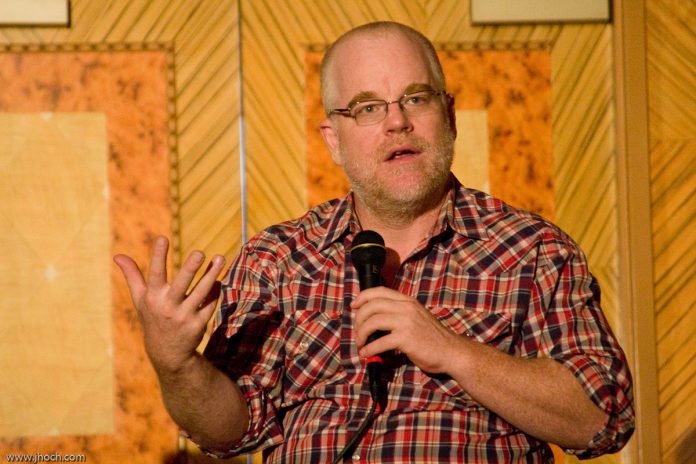
Philip Seymour Hoffman - Flikr justinhochWoohoo: celebrating Philip Seymour Hoffman

Last week we lost one of the best actors of his generation, Philip Seymour Hoffman, to drug addiction. After spending two decades of his life sober, Hoffman relapsed two years ago, eventually leading him to an overdose in his apartment. He was 46.

Hoffman gave pretty much amazing performances across the board: Almost Famous, The Master, Boogie Nights, Capote, 25th Hour — the list goes on and on. He disappeared into his roles like a modern-day Brando, and we should be thankful that we have so much of his amazing work to revisit.

Pretty much everyone in Hollywood has weighed in on Hoffman’s untimely death, admiring his acting talent as well as his kind-hearted personality. For those of us who didn’t know him, we can still watch him perform and be reminded that he was, and remains, one of the greats.

Boohoo: criticizing his disease

Unfortunately, some people have taken Hoffman’s death as an opportunity to criticize his addiction, calling his death “selfish” or “a waste” or wondering “how could he do that when he had children?” Those of us who haven’t lived with addiction — myself included — can’t possibly understand the challenges faced by those who suffer from it.

It’s a disease of the brain like any other, and living with addiction is a constant battle against the power of temptation. It’s why programs like Alcoholics Anonymous teach you to use the present tense when describing your problem: “I am an alcoholic”; “I am a drug addict.”

Hoffman was such a one, and after 20 years of sobriety, all it took was one misstep for him to lose everything he had worked so hard to achieve. We lost a brilliant actor to addiction the way we lose our friends, our loved ones, and our family to disease and illness. Rest in peace.


Election Results

0

SFU photo-1

The results are in! Here are the students you elected as your representatives to the Senate, the Board of Governors, and the Senate Graduate Studies Committee. Those elected will serve from June 1, 2014 to May 31, 2015.

Board of Governors

The Board of Governors is responsible for business decisions concerning university property, revenue and policies.

Jesse Taylor was elected as graduate student representative for Board of Governors; his platform outlined availability of student housing, rising tuition rates, student space on Surrey and Vancouver campuses, and student engagement at the university level as areas to focus on improving during his term.

Deven Azevedo was elected as undergraduate representative for Board of Governors. Azevedo expressed his desire to advocate for greater transparency in SFU’s investments, a review of the risk of SFU’s investments in fossil fuel companies, and the creation of a mechanism by which students can better attain the ear of the board. Azevedo was also recently recognized as one of two SFU recipients of the $60,000 Schulich Leader Scholarship in 2013.


Senate

The Senate is responsible for the academic governance of the university, meaning all matters excluded from the purview of the Board of Governors. These include teaching and research, with a specific focus on the development of new initiatives, the formation of priorities, and the consideration and approval of policies.

Ting Liu and Amelia Huang were elected by acclamation to the Senate, being the only students running from the faculties of Education and Environment.

The following 14 students were elected by the student body for the remaining positions on the Senate.

Paul Yoon – Applied Sciences

Chardaye Bueckert – Arts and Social Sciences

Dion Chong – Arts and Social Sciences

Sarah-Sophia Flodr – Arts and Social Sciences

Ehsan Jozaghi – Arts and Social Sciences

Dimitri Ossinsky – Arts and Social Sciences

Athina Pilarinos – Arts and Social Sciences

Madelaine Simpkin – Arts and Social Sciences

Brandon Chapman – Business

Shirin Escarcha – Communication, Art and Technology

Colin Chu – Health Sciences

Kayode Fatoba – Health Sciences

Nicholas Chapman – Science

Barbara Szymczyk – Science

Senate Graduate Studies Committee

Four students (two regular, two alternate) were elected to the Senate Graduate Studies Committee, which meets monthly to discuss issues and pass motions relevant to graduate students.

Elected as the regular representatives were Ehsan Jozaghi and Jasneet Singh Sabharwal.

Jozaghi served on SFU’s Senate twice previously, and his platform stressed advocacy for more funding through scholarships, fellowships and bursaries, lower tuition fees, smaller class sizes, more funding for TAs and TMs, and the implementation of a Burnaby mountain gondola.

Sabharwal outlined in his platform a desire to foster a better relationship between all students and SFU as well as boost inter-disciplinary research and improve funding opportunities for students.

The alternates elected were Jayme Lewthwaite and Paul Yoon.


L.A. Party: A night of madness and tranquility

0

la_party_page

L.A. Party, presented by the PuSh International Performing Arts Festival and SFU Woodward’s from Jan. 21 to 25, transcends the tedium of a tired, clichéd storyline with its quirky, self-aware dialogue and sense of discovery.

A lonely, inexperienced (i.e. he’s never had a girlfriend and desperately wants one) vegan who needs to get out more finally gets his first taste of ‘the dark side’. Temptation calls in the form of a house party with slacker surfers with Australian accents asking him if he’d like a beer, some weed, some mushrooms, and the list goes on. The audience sits in captured time watching his descent into madness, enamored by the theatrical display of his inner turmoil and the hayride his mind takes.

Perhaps it’s the draw of the ‘city of dreams’ — the burning vibe that you could be anyone you want to be.

The story is only one half of the show. Performance wise, L.A. Party was pretty darn fantastic. The arrangement was a completely original innovation. It took me a while (I’m embarrassed to say) to realize that there were actually three actors building off of one another to create one character; such was the smooth synchronization of the performance. I love how this visual demonstration of disembodiment reflects the main character’s disconnection from his old personality.

It was like nothing I’d seen before or even imagined — the actress sitting in the middle of the stage had her face bandaged up, and on the screen that was her face, a live video played of a man making facial expressions to the timing of yet another actor doing the voiceover, speaking with a passion and intensity that was mirrored in the actress’ movements and the other actor’s exaggerated facial movements.

There was something magical and startlingly intimate about listening to this witty, sometimes long-winded and at all times self-absorbed, vegan unfold and sit up in a dark room. And when the spotlight recast itself on the voice actor — whose solo entailed him screaming utter nonsense about monkeys and pancakes in various accents and intonations for five minutes — the room erupted with the silence of shock and the uproarious laughter of incredulity. Well done, performers.

This man could be anyone and everyone; just change the face projected on video and the faceless entity adopts another personality.

I must pause to wonder why the writers chose to set such a commonplace occurrence specifically in LA. Perhaps it’s the draw of the ‘city of dreams’ — the burning vibe that you could be anyone you want to be.

This man could be anyone and everyone; just change the face projected on video and the faceless entity adopts another personality. You can pretend, you can act, you can transform and take on another mask for one night, or for the rest of your nights.

Maybe that’s why it speaks to the audience. It seems pretty poignant that a man’s journey overnight to self-discovery should take place in a culture of inherent vanity, of perpetuating laziness, of pretense and lust for fame and status. Perhaps it is not just the city of dreams, but also the city of second chances. In his fall into madness, there was tranquility.

L.A. Party was a work of art — storytelling on a children’s playground — where imagination ricocheted to life in a small dark room. A little satirical, L.A. Party combined an upsized dose of talent in an enormously enjoyable and hugely hilarious show.

Clan football pegs Jacques Chapdelaine as new head coach

0

Greg Ehlers Jacques Chapdelaine

*Updated as of Wednesday, Feb. 5*

The Clan have found their man.

On Tuesday, Feb. 4, SFU filled its football head coaching vacancy with former BC Lions offensive coordinator and SFU graduate Jacques Chapdelaine.

The deal had been rumoured for some time, but was officially announced this week. Chapdelaine replaces Dave Johnson, who was fired Nov. 19 following a disappointing 3-7 in the NCAA Div. II’s Great Northwest Athletic Conference. Johnson amassed a 20-44-1 record in seven seasons at the helm of SFU football, split between the CIS and NCAA.

Chapdelaine and the Lions parted ways on Nov. 27, shortly after Johnson was let go, which lead to immediate speculation that the Clan alum might return to his alma mater.

The knock on Chapdelaine is his lack of experience with American rules. Though he hasn’t been around the four-down game since graduating SFU (then part of the NAIA) in 1982,  he has a wealth of football experience nonetheless.

The former SFU slotback has over 20 years of CFL coaching experience to his name, including spending the last four seasons as the Lions’ offensive play-caller. He brings a championship pedigree to Burnaby Mountain, too: Chapdelaine has won three Grey Cups (2001 with Calgary; 2006 and 2011 with BC) as a coach.

He also spent six years playing in the CFL, from 1983-1989.


From Out of a Dream

0

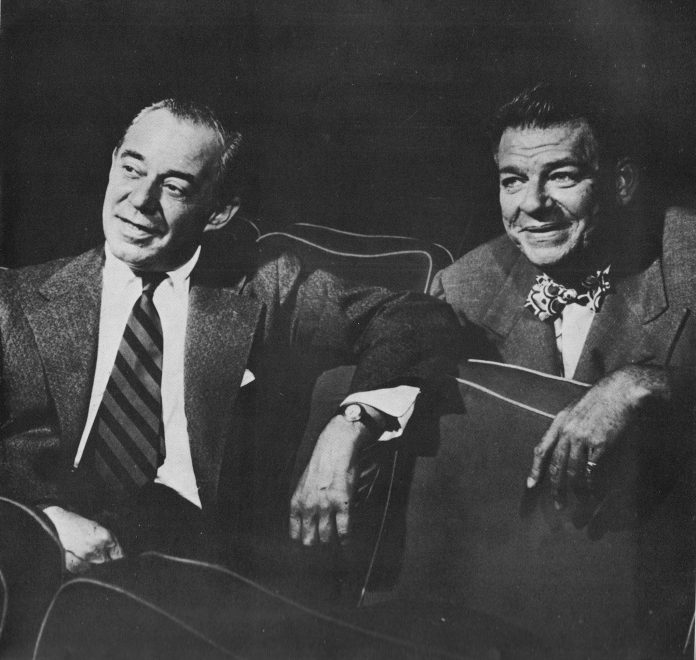
R_and_H

The careers of Rodgers and Hammerstein encompassed 11 musicals, 34 Tony Awards, 15 Academy Awards, two Grammys, and one Pulitzer Prize. What the duo also did was leave a lasting legacy in the musical theatre community, spawning a lineage of artists who continue creating work in the same spirit.

From Oklahoma! to The Sound of Music, Patrick Street Productions’ new revue show, Rodgers and Hammerstein: Out of a Dream, will take audiences on a nostalgic journey through songs from their entire oeuvre.

Peter Jorgensen, artistic producer of Patrick Street Productions, had been working on a similar show involving Rodgers’ and Hammerstein’s work when he gained a new appreciation for the duo. “I wanted to do something that honoured their work and them as contributors to musical theatre,” he said.

The decision to produce this show also coincides with their other events this season: Floyd Collins and An Evening with Adam Guettel. Guettel, who wrote the music and lyrics for Collins, is Rodgers’ grandson and an accomplished composer and lyricist of musical theatre in his own right.

Guettel won two Tony Awards for The Light in the Piazza and has created many other successful works. His mother, Mary Rodgers — Rodgers’ daughter — is also a composer as well as an author of children’s books.

“Hammerstein was an amazing human being for the time. He was progressive and cared about social issues.”

Peter Jorgensen, artistic producer

“It’s an amazing lineage,” said Jorgensen, “they were really mavericks and took a lot of risks — took the form into uncharted territory. Adam Guettel is continuing in the same spirit,” a spirit that is demonstrated in Out of a Dream’s timeless songs.

As Jorgensen explained, “Hammerstein was an amazing human being for the time. He was progressive and cared about social issues. There are themes of intolerance and racism in the work. It was entertaining and had something to say.”

Each show started with Hammerstein: he wrote the lyrics and libretto, and then Rodgers wrote the music. “Hammerstein crafted the story, which was always sensitive and nuanced, and then,” Jorgensen continued, “Rodgers made those lyrics sing and gave them more meaning and depth. He was a master of the craft. You don’t think about the dramatic structure of the music; it just sounds inevitable, so you don’t question it.”

When working on this show, a structure began to emerge for Jorgensen as well. “I listened to every cast recording of their work,” he said. Once he had chosen which songs he wanted to include, he placed them into a rough order based on the trajectory of a love story. There is a section about evolving relationships, then passion, complications, and separation.

“The songs they wrote are a direct result of the story they were telling,” said Jorgensen, “it wasn’t just for the song’s sake.” With this in mind, he wanted to make sure they came alive when separated from their original production: “The songs had to be contextualized so they could be received both theatrically and musically.”

Since the show covers the whole Rodgers and Hammerstein canon, there will be some songs that everyone knows, from shows like Carousel, South Pacific, The King and I, and Cinderella, in addition to some that many have never heard: “There are some absolutely astonishing songs from their lesser known works.”

“There is so much hope in their shows and their songs,” said Jorgensen, “Hammerstein was an eternal optimist. He saw the darkness, but always had hope and saw the good, too.”

Out of a Dream will give audiences a taste of their career and show why the two have left such a mark on the art form. “I want the audience to come and get swept away in the stories and romance,” he said. “It’s a romantic, nostalgic trip through their work. If some people get a better appreciation for their work, that’s great.”

Rodgers and Hammerstein: Out of a Dream will be presented from February 5–16 at the York Theatre. For more information, visit patrickstreetproductions.com.

The Peak Goes to a Sex Show

0

We sent a few of our staff to cover the annual “Taboo Naughty but Nice Sex Show” here at the Vancouver Convention Centre. We encountered a wide range of individuals, including one of our very own Peak alumni.

Got your own story? Contact us at [email protected]

Hosted by Alysha Seriani
Created by Brandon Hillier

Official 2014 Olympic Anti-Gay Policies Revealed

4

While there’s been a lot of talk about Russia’s ban on “non-traditional sexual relations” during the upcoming Olympic games, up until now there has been very little practical information about how they will go about maintaining their country’s 100 per cent not-gay claim to fame. You might be asking yourself, for example, how could these games possibly be more straight than Nagano ‘98? Well, fortunately for you, Peak Humour was able to obtain a list of changes to the Sochi games that will keep this celebration firmly inside the Iron Closet.

LOGO:

The first and most important step taken against blatant Olympic homosexuality was of course revamping the “obscenely gay” Olympic rings logo. Not only has Russia replaced the “queer rainbow colour scheme” with the far more butch “black-and-white” but Russia also took steps against the suspicious commingling of circles suspected to be a representation of the “gay conspiracy”.

rings
The Olympic rings logo has received some serious rebranding.

ICE HOCKEY:

“Too many men” now subject to death penalty

While Russia was happy to see rules already in place to prevent the game being overrun with a more than comfortable number of men, they thought the sport’s punishments were too soft. Unlike the two-minute “minor” penalty hockey fans are accustomed to seeing when one too many guys join the party, the guilty team will now have to choose a player to be publically executed. Sorry, Dan Hamhuis.

HockeyRules
Excerpt from new edition of Olympic Hockey Rulebook.

“Mandatory Fighting” rules implemented 

Although fighting in international hockey is typically not a common occurrence and in the past has come with heavy repercussions, Russian Olympic organizers have done away with these rules in favour of a much more macho code of conduct. Instead, heavy punishment will follow if teams do not engage in at least one manly bout of fist-a-cuffs per period. Teams who do not beat each other up with at least this frequency will risk disqualification — which also may be enacted if two opponents ever make eye-contact lasting over three seconds.

BOBSLEIGH

Compulsory “Bible-width apart” rule adopted

Inspired by only the finest Christian summer camps, Russia has instituted a rule requiring that each teammate be at least the width of one standard Russian Orthodox Bible (24”) apart from another. Russian officials have made it clear that they hate to have to enforce these kinds of rules and wish they could just trust everyone but that some (French) teams have ruined it for everyone

Bobsleign-CHEN
New required sitting positions.

LUGE

Doubles required to sit “Back-to-back”

After extensive research into the possible seating arrangements for two-man luge, Russian officials settled on a “back-to-back” configuration that they believe will be most effective in limiting “impure thoughts”.

luge
These positions are now banned.

SPEED SKATING

Mandate on 90% less-tight suits 

While Russian olympic advisors say that they understand the practicality of speed skaters’ skin-tight spandex uniforms in accordance with their long-standing anti-”tight and bright” policy, they are requiring all teams to loosen up their suits to be at least 90 per cent less tight. According to the new uniform guide, a pair of relaxed jeans and an oversized army jacket are now recommended wear for the renamed “medium-speed skating” events.

BIATHLON

Targets to be replaced with members of the Village People

Although pleased with a sport that involves so much nonsensical gun use, Russia isn’t satisfied with any ambiguity in Biathlon’s staunchly heterosexual image. In order to combat any possible rumours that the sport is not only for “straight shooters”, the typical targets will be replaced with cardboard cutouts of the Village People, a suspected group of homosexuals whose music just arrived in Russia this past year. They have also considered eliminating the sport’s “skiing” element.

Biathlon-CHEN
Hatred for the “YMCA” is now a key component to being a successful Biathlete.

FIGURE SKATING

Spinning, twirling and enthusiasm forbidden 

While Russia isn’t pleased at all with the existence of the solo male-version of this sport, they have decided to let it take place as long as competitors refrain from any “spinning, twirling, fancy tricks or displays of any kind of emotion.” According to officials, skaters who step out, do a couple of laps with their heads down and get off the ice will receive perfect scores.

fig_skate
New rules hope to combat signs of “gay” emotions.

Ice dancing limited to traditional waltz

Fearing a possible emergence of frightening and “ungodly” ice grinding and ice twerking which could confuse their nation’s youth into “alternative lifestyles”, Russia has laid down the law that the “Traditional Waltz” will be the only acceptable form of Ice Dancing. The Russian Olympic committee says they will also work to ensure that every competing “couple” is contractually married before being allowed to compete.

ALPINE SKIING

Ski poles eliminated, skis replaced with snowboard

After overhearing some snowboarding high-schoolers, an emergency meeting of Russian Olympic officials decided to take great actions against what they had discovered was widely acknowledged as a “gay sport”. While the group couldn’t understand what particularly made going down a mountain on two planks so appealing to homosexuals it was decided the sport had to be reinvented. What they came up with is basically just snowboarding, which is already an Olympic event.

Alpine Skiing-CHEN
Depiction of new “less gay” version of Alpine Skiing.

CROSS-COUNTRY SKIING

cross copy
Cross-country skiing has been eliminated outright from the Sochi Games.

CURLING

Male Sweeper position eliminated

Uncomfortable with the idea of men using brooms, fearing that they might give off the impression that males have the capacity to perform housework, the “sweeper” position has been removed from men’s curling for the Sochi Olympics. While the women’s game will stay the same due to officials’ designation of “sweeping and yelling” as “female activities”, the men’s game will be completely restructured. Instead of sweepers, the sport will now only feature a thrower who will no longer attempt to gently place the rock but launch it as hard as he can in an attempt to knock over ten pins.

curling
Rule changes to Men’s Curling are expected to infinitely increase the number of “strikes” per game.

MEDALS

Medals-CHEN
The new “less flamboyant” medal system.

As part of the elimination of overly-flamboyant costumes and accessories associated with the “gay lifestyle”, Olympic medals will be replaced with congratulatory clumps of raw iron. The 1st place winner will now receive 25 lbs of iron while 2nd and 3rd place will receive 15 and 5 lbs respectively. These prizes will be taken away in the event of a congratulatory hug or even lingering high-five with any member of the same sex (including teammates, coaches, fans and parents).