
Home Blog Page 1175

Album reviews: St. Vincent, Angel Olsen, and Phantogram

0

St_Vincent colour

Artist: St. Vincent

Album: St. Vincent

If there’s a trend in Annie Clark’s recording career as St. Vincent, it’s an attempt to better articulate herself. Instead of broadening her scope, Clark narrows the margins, tosses the inessential and keeps the bare essentials.

This is what made Strange Mercy a better record than Actor — the former felt like the finished product to the latter’s rough draft. It’s also what made Love This Giant, Clark’s collaboration with Talking Heads’ David Byrne, such a bore. Their relentlessly rigid songs, like miniature structures unto themselves, left no room to breathe.

Though St. Vincent is an improvement, it suffers from similar problems: Clark has stripped down her sound so fundamentally, there’s barely anything left. A claustrophobic sort of modernity haunts the album’s 11 songs — the brassy rattle and hum of “Digital Witness,” the rotary phone dial of “Bring Me Your Loves” — and there’s very little in the way of release that doesn’t feel humourless or static.

What made Clark’s two previous records so good was that her porcelain doll poise was always paired with a wink and a nod. St. Vincent, on the other hand, is sealed so tight it becomes suffocating. One begins to grasp for the instances when Clark sounds like a real person — the crack in her voice during closer “Several Crossed Fingers,” for example, or the airy high notes she doesn’t quite hit in “Regret.”

Even the elegiac “I Prefer Your Love,” written for Clark’s mother during an illness, is unblemished and aerodynamic; each note is measured and micromanaged for potential effect. Unfortunately for Clark, albums aren’t equations to be solved, or numbers to be crunched.

The record is pitch-perfect alternapop, just like its predecessors, but it’s missing the self-awareness and spontaneity that made those records sound so natural, so authentic. With St. Vincent, we’re no longer in on the joke, no matter how funny it is.

jag246.11183

Artist: Angel Olsen

Album: Burn Your Fire For No Witness

When I first shared Angel Olsen’s latest album with my friend, his immediate reactions, accounted for via Facebook chat, were: “Well this is beautiful,” “And kind of sad,” and finally “Ok, really sad. But really quite beautiful.” It sounds like a loaded spectrum, but an appropriate one. I mean, the opening track is called “Unfucktheworld.”

After the emotional opener — a simple guitar-led song with vocals reminiscent of a more folkish singer — Olsen immediately swaps melancholy for angst, channeling all her frustrations into the heavy, beat-ridden “Forgiven/Forgotten.” And we’re only on the album’s second track.

The rest of Burn Your Fire follows a similar trend of “mellow song” followed by a feisty one, but never grows wearisome. While the lower production quality on the album can be distracting, it adds an organic layer to Olsen’s music that might otherwise be lost. The album may peak early with “Forgive/Forgotten,” but the tracks that follow after are still worth your attention.

For reasons I can’t isolate, “Dance Slow Decades” also stands out as an album highlight. The name suggests a slower track, which the song delivers on, but it’s the pacing throughout that makes it rewarding. It’s hardly the longest track on the album but it feels just as sprawling as songs nearly two minutes longer.

I’ve always admired Olsen’s ability to combine folk with upbeat sounds and country with rock. Often these genres come at a cost, one for the other, but Burn Your Fire shows that you can have your folk and rock it too. Already Olsen’s third full-length, I couldn’t recommend this album more.

Phantogram colour

Artist: Phantogram

Album: Voices


It’s not that I always expected Phantogram to dissolve into indie pop obscurity, I just always assumed that the Greenwich-based duo would gradually drift into the background, destined for a rotating spot on the Old Navy corporate playlist. It’s changeroom music that occasionally ends up on your iPod.

However, I’m more than happy to report that any doubt I may have had about the group has been sonically drop-kicked out of me after the first listening of Voices.

Phantogram’s sophomore effort straddles the fine line between fuzz rock and ambient pop without committing to either, to an effective degree. From the glitchy opening of “Nothing But Trouble” to the album’s lingering finale, Voices boasts a diversity I found missing from Phantogram’s previous releases.

While the change of pace makes for an engaging format, the album shines brightest on the more upbeat tracks, such as “Black Out Days” and “The Day You Died,” both of which seem ripe for single-hood in the near future.

As is often the case with Phantogram’s genre, the album suffers during the middle tracks from a few meandering songs — “Bad Dreams” stands out as noticeably unremarkable, but Voices jumps back immediately after.

While the name implies wackiness, “Bill Murray,” encompasses the album’s emotional core; it’s a sombre ballad that demonstrates just how much Phantogram have matured as a band.

For the 11th and final track, all the electronica and droning accumulates in proper send-off fashion with “My Only Friend,” a melodramatic stadium-rock anthem that spends over a minute echoing the lyrics, “You’re all I have / My only friend” before getting in the last word with “All the stars with you.”
Manhattan and Monopoly: Sleeper, Stuart Hall, and the downtown eastside

0

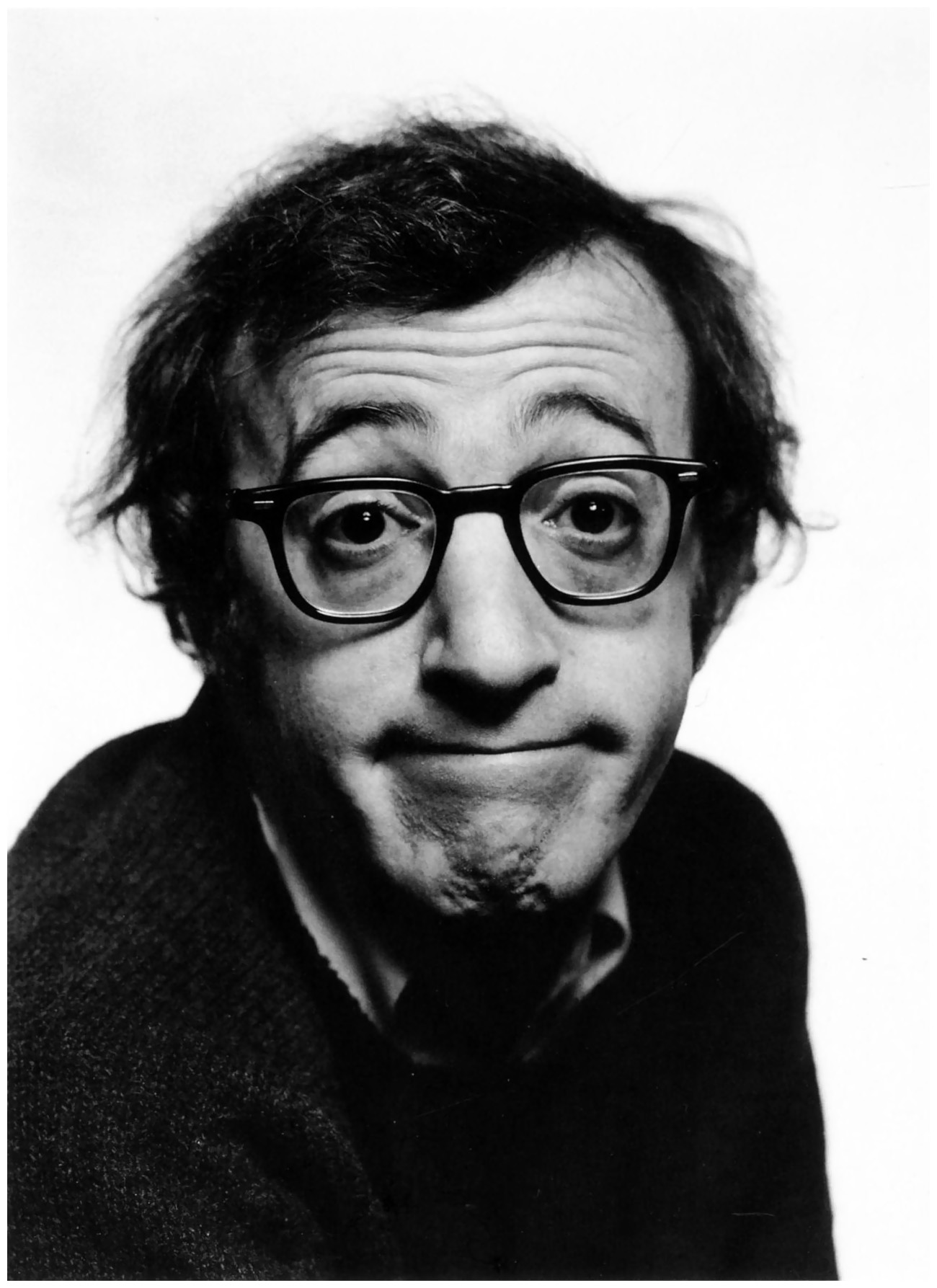
woody-allen-2

“I believe there is something out there watching us. Unfortunately, it’s the government.”

One of Woody Allen’s silliest films, Sleeper (1973), delivers 87 minutes of comical genius through slapstick humour and politicized romance.

Sleeper is set 200 years in the future: America has evolved to a hedonistically ignorant society where independent thought is effectively removed and everyone is a different variation of the same person. Amidst the slapstick humour and bizarre plot twists lies a sly political commentary on the effects of government surveillance on society.

Surveillance is not only a useful tool to the rulers in Woody Allen’s fictional dystopia, but has a long history as a government tool in social control.

On Feb. 10, the world lost one of the 20th century’s most brilliant academics. Stuart Hall was an eloquent left-wing theorist, and one of the founding fathers of modern cultural studies. His work rejects visions of fixed regional cultures in favour of a fluid cultural identity, ever changing and moving towards new possibilities, but incessantly reminiscing about a past that cannot be changed.

This era advanced free markets through privatization and deregulation, laying the structural framework for the radically commodified cultural industries that exist today.

Hall recorded the role of police presence as a government tool of social management. His work visits the scene of marginalized communities of Great Britain during the neoliberal Thatcher era in the 1970s, which inspired his take on the social construction of culture.

This era advanced free markets through privatization and deregulation, laying the structural framework for the radically commodified cultural industries that exist today.

Hall saw cultural industries as a critical site of social interaction where power relations are both established and unsettled. The media reaps lucrative benefits from sensationalizing lurid aspects of current events, and manipulates these events for economic and political purposes — this creates moral panic, fabricating public support to “police the crisis.” Therein lies the social constructs of marginalized communities.

Maria Wallstam and Nathan Crompton of The Mainlander bring Hall’s ideas to life in a recent illustration of Vancouver’s downtown eastside. An area now trivially characterized by poverty and crime, the city of Vancouver continues to increase funding for police presence in the downtown eastside, despite recent reduction in crime. The city uses police surveillance as a means of social control over the low-income residents of the DTES, marginalizing them in the eyes of Vancouverites.

Commodified cultural industries lay the historical context for racial, ethnic, and class conflict. In Sleeper, Woody Allen parallels Hall’s ideas on surveillance as a tool for social control — but what makes Hall stand out from Allen and other cultural theorists is that Hall was an optimist. He believed we will always carry a part of the past, but through our independent thought we have the opportunity to change the future.

Stuart Hall once wrote: “The way to go back is to go forward. That is going to take a lot of hard thought, not just sentimentality.”

SFU places seventh at Coyote Classic

0

The Simon Fraser University men’s golf team had a strong finish to the CSU-San Bernardino Coyote Classic nabbing seventh place at the event.

After two rounds of golf on Monday, the Clan were in 10th position, but climbed back up the leaderboard during Tuesday’s third round.

Chico State University’s Lee Gearhart took the tournament’s individual title with a three round total of 209, but Clan senior Mike Belle led the way for SFU with a final round of 71, and a tournament total of 214, putting him in a tie for fourth place, just five strokes back from first.

Sophomore Jon Mlikotic wasn’t far behind, shooting 219 at the event with scores of 74, 70, and 75 over the three rounds, but was only tied for 20th at the end of Tuesday.

Meanwhile, freshman Kevin Vigna saved his best round for last, shooting 73 on Tuesday after scores of 77 and 81 in the first two rounds. If his game can grow as it did between rounds two and three, the Clan could be in good hands when Belle — who has been the Clan’s best for a few years now — moves on.

Just behind Vigna’s 231 was sophomore Bret Thompson, who shot 232, and senior TJ McColl, who finished with a three-round total of 234.

SFU’s team score of 889 was well behind leader, Chico State, who, led by Gearhart’s impressive outing, finished at 855.

The Clan will get a shot at improving that number when they return to the links on March 10 and 11 in Belmont, CA at the Notre Dame de Namur Argonaut Invitational.

Leave the nest

0

WEB-Moving out-flickr-Gabriel Saldana

To the increasing number of post-secondary students choosing to live at home: if you’re on the fence about moving out, I suggest you give it a try.

The fact that you’re considering it is probably a sign that you want to take on more responsibility in general. I lived at home for most of my post-secondary experience, and have never felt more satisfied than after leaving the proverbial nest in December, when my parents moved to Alberta.

I should preface this article by saying that I recognize how very privileged I was to be able to live at home for as long as I did. My parents’ support made my post-secondary experience virtually debt-free, and I can’t overlook what a serious hurdle debt is to those wanting to pursue higher education.

For me, though, moving out has given me a measure of responsibility necessary — I feel — for living life after school.

Where else but home is cushiness so well-facilitated?

Perhaps the most prominent of the lessons I learned was the new-found drive to further my career. I realized in a tangible way what it means to need money to eat, to buy books for school, to have soap, etc. — to buy necessities, not superfluities.

Needing money and needing a job became, in the fullest extent of the word, a realization. Pursuing a career that I will enjoy is now a drive, more than a vague notion of what should be done, as it was when I had a nearby family home to fall back on.

With this encouragement to work, I am forced to manage my time better, balancing work and other necessities that arise from single living — who knew sweeping and dishes were a never-ending void?

I can’t blame being messy on anyone but myself, now. Also, as a host, it means more to give friends hospitality that comes straight from my pocket.

This situation also removes lifesavers: irresponsible planning can result in both superficial and serious ramifications. One late Saturday night downtown, I missed the last SkyTrain, and it sucked to wait in the dark, take several night buses, and walk from Port Moody to Coquitlam; it was worse pulling myself out of bed to do work the next morning after three hours of sleep.

The fact that these lessons of responsibility were revelations to me might suggest that I lived a pretty cushy life in the home. No question, I did. But where else is cushiness so well-facilitated? Parents are both easy to blame and natural to rely upon.

Only by moving out was I forced to experience this hands-on adult education, something which school alone can accomplish only to a limited extent.

It warrants repeating that student loans are ridiculous, and I’m not arguing that getting into a silly amount of debt to escape your parents is a good idea. It’s really not.

But if you’re starting to feel like an adult-child, moving out might give you the responsibility you desire. You might be a bit more in debt, you might sleep less, you might discover that you’re not compatible living with certain types of people. But there’s no better way to prepare for life after graduation than jumping straight into responsibility.

Cult sensation Geekenders present The Wizard of Bras

0

Wizard of Bras

This past week the Geekenders theatre troupe took to the Rio stage with their first nerdlesque production since the wildly popular Star Wars: A Nude Hope. Given past successes and their “cult sensation” status, the pressure was on for Geekenders to deliver a unique creation.

In a bold move, they took on The Wizard of Oz, providing the audience with a sexually charged musical parody of the original 1939 film.

This Geekenders production, aptly named The Wizard of Bras, offered a vibrant blend of theatre and burlesque, breathing new life into the beloved fantasy. The storyline and characters were reincarnated with a modern carnal twist, and the musical score was adapted to include everything from Disney to Gwen Stefani.

The show opened with IZ’s “Somewhere Over the Rainbow” as eight scantily-clad dancers emerged from behind sheer sheets, forming a nearly nude rainbow. This juxtaposition between wholesome melody and bare bosoms was anything but discreet, setting an overtly cheeky tone for the evening.

Nerdlesque show inspired by The Wizard of Oz musical fills Rio Theatre.

The performance continued in this fashion, introducing the Kansas personalities with a Geekenders twist. This included a racy number between Dorothy and her male companions, as well as a creative representation of the tornado scene that takes Dorothy to Oz. This last number, set to Ke$ha’s “Blow,” combined an exciting light show with the chaotic twirling of the ensemble cast dancing circles around Dorothy.

Having landed in Oz, Dorothy and Toto — reincarnated as a life-sized bondage dog (Steven Price) — begin to explore their new surroundings. One of their first encounters is Gilda the Good, portrayed by burlesque performer and Geekenders artistic director, Trixie Hobbitses.

For this role, Trixie adopted a slightly condescending and entirely unhelpful persona, highlighting some of the more frustrating aspects of Glinda’s character with wonderful comedic timing.

The remainder of the first act followed Dorothy on her yellow brick road adventures, which included a neat performance by the ensemble cast who formed the “cups” rhythm section for Anna Kendrick’s “When I’m Gone.”

Finally, we are introduced to the scarecrow (Graeme Thompson), the Tin Man (Draco Muff-Boi) and the Cowardly Lion (Stephen Blakley). Of these, a highlight was Thompson’s boylesque number, performed with amusing panache.

Having made it past the lusty apple trees and stripping poppies, Dorothy and her entourage are tasked by the Wizard (Nathan Fillyouin) with stealing the Wicked Witch’s bra, bringing the first act to a close.

The second act was shorter in length, with the high point being the destruction of the voluptuous Wicked Witch (Vicky Valkyrie) and the violent yet sexually charged brawl that ensued between flying monkeys and “good guys.” The play wrapped up nicely with the Wizard’s pantless gifting, the return home to Kansas, and Dorothy’s first and (almost) last striptease of the show.

The production was met with a standing ovation from its audience. While the cast comprised a range of abilities, the amount of energy and effort that each member put into this show was astounding.

Nerdlesque performer Dezi Desire in particular stood out in the ensemble case owing to her fantastic facial expressions and ability to hit every movement. The lighting design was done fairly well, and the make-up for the Tin Man and Wicked Witch in particular was impressive. I also appreciated the creative choice of props and inspired collection of pasties which made an appearance.

Not only did The Wizard of Bras provide a rousing burlesque show, but through the use of innuendo, satire, and social commentary, Geekenders delivered a unique performance that appeals to a range of audiences.

Unfortunately the show only had a two-day run, which seems a bit short considering how much work must have gone into the production. For those who missed it, however, rumour has it that Geekenders will be back come May in a debaucherous sequel to their Star Wars tribute.

Woohoo, boohoo

0

Woohoo: hippos

Have you seen these things? They are flipping weird animals.

Hippopotamuses are the third-largest land mammal, and the heaviest of hoofed animals. Despite this, they can run 30 km/h in short bursts. They look like giant, cuddly guinea pigs (although their aggression would suggest that they are, in fact, not).

Sometimes I feel like we live in the world of Pokémon. Or we could, if we just lost our sense of normalcy. Do you remember the first time you saw a bulbasaur? How about a flamingo? Look up how a kangaroo gives birth, and remind yourself that those things really exist.

Hippos, or massive, swimming, naked guinea pigs, are a reminder of how amazing, weird, and ultimately unknowable our world is. Or at least how much it can be with a slight change of perception.

Know what else hippos are? Threatened. Like so many of their strange animal brethren. Let’s not forget to respect the world in which these creatures can exist.

Boohoo: hipsters

Don’t get me wrong, I have nothing against hipsters, precisely because they don’t exist. They stopped existing when this word lost all meaning.

“Hipster” seemed to first describe the pretentious people who care solely about irony and the teenaged dream of nonconformity. They are supposed to be those who put themselves on a pedestal, looking down on the rest of the world for not having heard of . . . that band.

But now, the word means anything. Like a local band? That’s hipster. Rolling up your sleeves? Don’t even ask.

Can’t we just accept that, to some extent, everyone is fashion-conscious, interested in arts, or exceptionally passionate about one thing, without that necessarily making them an ass-hole?

When you say “hipster,” ask yourself if you’re really thinking of those people from the past who seemed to think they were better than you. Ask yourself how much you built them up in your head, and remind yourself that they don’t matter.

Let go of those memories with which you only judge yourself, and go wear an ironic hat. Embrace fun, before you make yourself equal to the elusive “hipsters” we all love to hate.

Clan double up the Huskies

0

Lax week 8

The road to a National Championship continued for the Clan lacrosse squad with a win against Pacific Northwest Collegiate Lacrosse League (PNCLL) opponent University of Washington last Saturday in Seattle.

It wasn’t a game for the faint of heart, mired by dirty hits, questionable calls, and a steady parade to the penalty box — but the Clan maintained their composure to double up the Huskies 16–8 and improve their record to 2–0 in the PNCLL and 3–1 on the season.

The Clan’s speed and aggressive play were key factors in the win, going on several four- and five-goal runs and outshooting the Huskies 56–17 over 60 minutes. Leading the way again for the Clan was Burnaby native Tyler Kirkby, netting four goals and two assists.

Other multiple goal scorers included Ward Spencer (four goals, one assist) and Lyndon Knuttila (three goals, one assist). Five other players netted goals for the Clan, including Brandon Farrell and Clayton Fenney, who both scored their first of the season.

Though the shot totals and final score may suggest otherwise, the game wasn’t a cakewalk. The Huskies came out hard, attempting to intimidate the Clan with physical play and several late hits, but couldn’t match the Clan’s speed or precision and SFU dominated the possession game.

Penalties plagued the Clan, however, as the Huskies went on a four-goal run on consecutive powerplays to claw back into the game. But despite being shorthanded for 10:30, the Clan’s offence gave them a big enough cushion to withstand the barrage. The Huskies’ run cut the score to 14–8 late, but SFU quickly shut the door, firing two more past UW goaltender Ryan Asbury to end the game.

Both Clan goaltenders faced limited shots: Darren Zwack stopped four of eight shots, earning him a 0.500 save percentage in first 41:30 minutes and Jeremy Lasher stopped five of nine shots, good for a 0.556 save percentage over the remaining 18:30 minutes. Zwack, the Clan’s primary goaltender, maintains a save percentage of 0.654 on the year.

With a 3–1 record on the season, the Clan has moved up the MCLA rankings, with the latest poll showing the team up three spots to #14. With upcoming games against ranked opponents #3 Arizona State, #11 Texas, #21 Oregon State, and #24 Arizona, the Clan will look to continue their success and move up the rankings even more.

SFU continues its season with eight games in the month of March including three at home and four against divisional opponents. The next home game for the Clan will be March 7 on Terry Fox Field against division rival University of Idaho Vandals.

University Briefs

0

 WEB-universitybriefs-Newtown grafitti

Free speech wall covered by leftist club

In response to being named the worst university in Canada for free speech by the Justice Centre for Constitutional Freedoms (JCCF), U of O established a wall of free speech on Feb. 5 and 6. The wall as meant as an outlet for all students to express their opinions, however the Revolutionary Student Movement (RSM) has covered the wall with leftist slogans.

As quoted by The Fulcrum, third-year economics student Omar Benmegdoul, who was responsible for the wall, said, “They covered the wall entirely in an effort to stop others from being [able] to write on the wall as well.”

RSM member Jean-Philippe Ouellet responded that the slogans were the work of one club member, and that the member used the wall as a billboard, which in itself is free speech.


With files from The Fulcrum


Students propose course credit for internships

Students in Queen’s political science department are pushing for external political work to be recognized as course credit by the university.

The student behind the reform, Isabelle Duchaine, explained the idea: “I dropped a 400-level seminar on political communications because I was spending […] the entire month of March, when I was supposed to be having class, in Toronto meeting with MPPs.” The proposal would count outside internships as academic work, to be graded on a pass or fail basis.

The proposal has been approved by the Political Studies Undergraduate Committee, and now faces the political studies department and the Faculty of Arts and Science for final approval.


With files from The Queen’s Journal


Fall reading week for U of S

As of the 2014-15 school year, several colleges at the U of S will enjoy a fall reading break based around the Remembrance Day long weekend. The medicine, dentistry, nursing and veterinary medicine colleges will not have a break.

U of S students’ union president Max FineDay was disappointed by the feedback from these colleges. “I had one dean tell me, ‘It’s a choice between students going skiing for a week or students learning to deal with heart attacks,’” FineDay said.

FineDay argued that a fall reading break is essential for students’ mental health. Brock University, Western University, McMaster University and Carleton University have all recently added a fall reading break to their schedules.


With files from The Sheaf

Psychopathic murderer shocks public with revelation that he is a respectable member of the community

0

DALLAS — An entire northern Texas community has been left in shock this week after known murderer, Lee James Watson, outed himself as a decent member of society.

Believed for years to be nothing more than a focused and evil psychopathic killer, Watson admitted to being an upstanding citizen after police spotted him picking up trash near a sidewalk not adjacent to his own house.

Following an inquest, Watson admitted that when he’s not committing violent crimes, not only is he an active participant in his neighbourhood’s Adopt-a-Street program but he also coaches a local peewee hockey team and has even made numerous charitable donations over the past five years.

“Well I knew he couldn’t just kill 24/7, but I assumed that he at least did other bad things in his spare time”

– Colby Monroe, Neighbour

Residents of Pinewood Grove, the small town in which Watson resides, are dumbfounded that the man they always knew as nothing more than “the Playground Strangler” could possibly be behind such noble and selfless acts.

“Well I knew he couldn’t just kill 24/7, but I assumed that he at least did bad, nasty or sexually deviant things in his spare time,” said next-door neighbour Colby Monroe, whose first-born son Daniel was among Watson’s victims. “It just goes to show that you never truly know who your neighbours are.”

Local Pastor Steve Williams was also in utter disbelief that such a terrible, one-dimensional villain could have perpetrated this sort of alleged decent behaviour.

“We accepted this man into our hearts as an evil heartless child killing bastard, and now we find out that he’s actually going behind our backs and donating to charities,” Williams said shaking his head. “I don’t know if our community will be ever be able to get past this.”

Watson, however, has denied accusations that his acts of decency impede his ability to tear families apart.

“I’m still the same child killing monster that everyone knows and loves,” he stated to the media holding back tears, a display of earnest emotion that disgusted onlookers. “It just happens that I also like to keep our community’s streets clean, is that such a non-crime?”

He did concede that it would be tough for him to continue in Pinewood Grove, a place where his reputation seems to be irreparably tarnished.

“I need to find somewhere that I’m just known for my talents in strangulation, and not for my ability to motivate children in sports,” Watson said of his future plans.

“It’s going to be hard though to find another place where the police will just be disappointed if they find out about my community service and not arrest me for being a known-murderer.”

SFU Acronyms Explained

0

Here’s the meanings behind a couple of SFU’s most frequently used acronyms.

AQ: 

Shorthand for “at Quiznos,” most commonly used in text messages followed by the exact amount that was spent.

“Hey man, you in class now or where are you?”

“AQ 5049”

“K, see you later then”

SIAT: 

Stands for “so I ate tacos” or occasionally “School of Interactive Arts & Technology”

“So what program is it that you’re in again?”

“SIAT”

“You’re really just going to change the topic, just like that?”

“No, I mean SIAT as in the School of Interactive Arts & Technology”

“Oh, well you should’ve just said so, don’t you realize how confusing that is?”

“Sorry, I got to go to class”

“Okay, where are we meeting later?”

“AQ?”

“Sure, no confusion there”