Home Blog Page 1167

Satellite Signals

0

surrey

Surrey


On Saturday, March 8, SFU’s LOVE Club hosted a free event called “Why Don’t Vegans Eat Cheese?” The evening began with a presentation on cruelty in the dairy industry. Following the talk, guests were invited to sample various dairy and cruelty-free products, such as dairy-free cheeses, milks, butters, and pizza from Vegan Pizza House. One did not need to be a vegan or vegetarian to attend as it also pertained to those with a lactose intolerance or an interest in cruelty-free lifestyles.


WEB-woodward

Woodward’s


Somewhere Else is Here, a film produced by independent artists, Marina Leblhuber and Jasmina Hirschl, is comprised of messages from residents of Vancouver’s downtown eastside. The residents willing to contribute were asked to share what they would like to see communicated in a message to the public. The film, which was screened last Tuesday, March 11, features many culturally, politically, and artistically diverse individuals. It also highlights the ambivalent nature of the neighbourhood itself and the resilience of the community.


vancouver


Vancouver


The world might be ending, and we all might die relatively soon. At least, that is the possibility “Deep Time, Global Change, and You: The Past as a Guide to the Future” attempted to address. The lecture series, hosted by the faculties of science and environment, wrapped up last Thursday with the final talk by Prof. Anthony Barnosky of UC Berkeley. Barnosky’s lecture, like every talk in the series, looked back into the history of the earth. The aim of the lecture series was to explore solutions for how we should manage our environment and ourselves in order to sustain life on earth.


Clan finish second at NDNU Invitational

0

They may not be first to spring to mind when it comes to Clan varsity sports, but perhaps they should be. The SFU golf teams may be small, but the hard work put in by these dedicated athletes is paying off.

Coming off an impressive fall season that saw the young squad improve 44 spots for a 28th ranking in the NCAA Division II, the Clan men’s golf program has hit the spring season strong.

As of early March, the Clan have earned their first top-20 ranking in the nation since joining the NCAA in 2010, sitting in 19th position.

“This is an incredible accomplishment for the team,” said head coach John Buchanan. “We are a small team, and lack the depth that allows many of our competitors to be successful, but we have very dedicated players here at SFU.”

Since the turn of the calendar year the Clan have continued to excel, earning a seventh place finish at CSU-San Bernadino Coyote Classic, before finishing second at the Notre Dame de Namur (NDNU) Argonaut Invitational, which earned them their top-20 ranking.

At the NDNU Invitational, the Clan had a strong showing with two athletes finishing in the top 10 and four finishing in the top 20.

Bret Thompson, the 2013 Great Northwest Athletic Conference Freshman of the Year, and freshman Kevin Vigna led the way coming in fifth and seventh respectively. Thompson had rounds of 71-75-72 (+2), while Vigna had rounds of 76-74-71 (+5) to lead the team on the road.

Senior Mike Belle finished in 13th position, and John Mlikotic finished 18th, while TJ McColl rounded out the field for the team. Chico State, ranked second in the NCAA Div. II, won the tournament just 22 strokes ahead of the Clan, proving how tight the competition truly is.

“We finished only 22 strokes being Chico,” continued Buchanan. “Mike [Belle] had a rough first day which would have helped us out there, but it really shows how close we are coming this season. I am very optimistic looking forward to the rest of this season and onto 2015.”

The Clan men will be back in action with two more events in California, as they prepare for the GNAC Championships, where they will look to advance onward to the West Regional Tournament.

Woohoo, boohoo

0

Woohoo: automatons

I am so okay with automatons, i.e. robots, being a thing. They’ll probably only make life better, or at least maintain the status quo, for everyone in the future. And by “everyone,” I include the automatons who will eventually assume citizenship status.

What reason do we have to fear robots aside from fearing being intellectually inferior to another species? The curiosity behind this idea will surely always exist with or without robots, and shouldn’t stop us from advancing technology.

We need to trust that automatons will be designed to do good. Now, I know what you’re thinking: “But ‘Good’ is an arbitrary concept created within societies! We can’t program ‘good’ as much as we can’t program ‘happy’!” Friends, I agree.

We have to believe these beings with superior intelligence will know what’s best for everyone. At least, surely, intelligent beings couldn’t justify destroying other sentient beings, right?

Humans can’t, and we’re pretty smart.

We all need to just relax. By the time robots live among us, they’ll have convinced us that it doesn’t matter, anyway.

Boohoo: autocorrect

On the other hand, this lower form of technology that I, for one, struggle with everyday has done no favours for the human/automaton races. Not only does it make typing frustrating as hell, it symbolizes technological apathy.

By autocorrect, I mean a phone’s automatic process that corrects misspelled words, replacing them with words typed in the past or typed frequently. For me, this often translates to missing one letter in “cool,” and it being corrected to one way I emphatically spelled it in the past: “coooooooooool.” Shenanigans result.

Keyboards simply don’t work on touchscreens, and autocorrect serves as a daily reminder of that fact. Continuing to struggle with it every day also represents a reluctance to change to technology that isn’t spoon-fed.

Want a great typing system? Check out the keyboard alternative 8pen. Learn to use this intuitive system, and let’s make cool, freeware systems such as this the norm.

While you’re at it, erase Windows 8 and download Linux, the freeware software designed for the people by the people. If something is broke, and no one is fixing it, then we users need to find something better.

SFU professor testifies in same-sex marriage case

0

WEB-Same sex marriage - flickr-kathleenjoyful

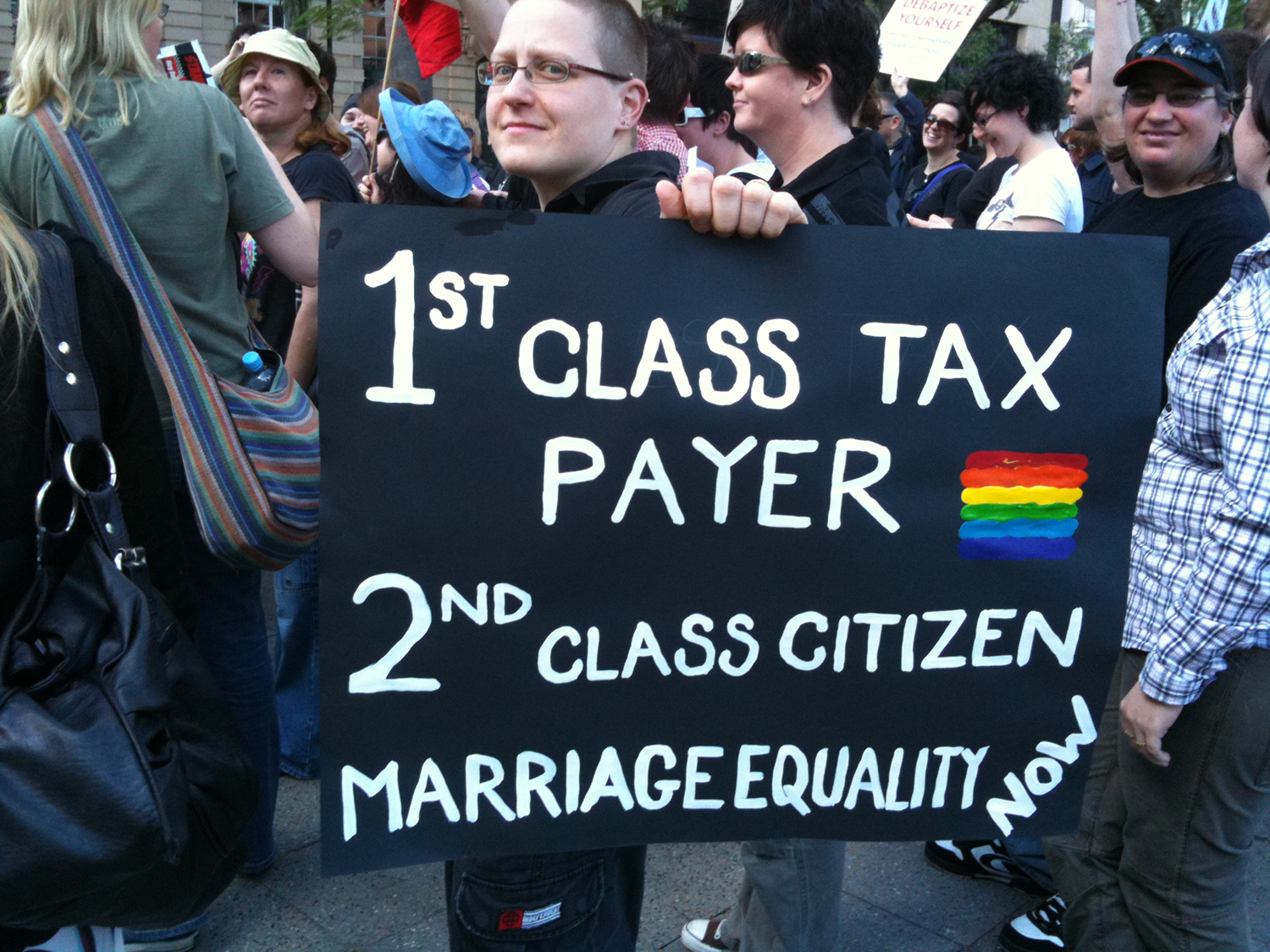
An SFU professor has testified in a federal court trial in Detroit, Michigan, which is challenging the definition of marriage as one man, one woman. The state has claimed that children of same-sex marriage do not do as well in school as those raised by heterosexual couples.

The case is a response to an initial challenge to Michigan’s definition of marriage, which was brought to court by a lesbian couple who wanted to marry and secure adoption rights as a couple for their individually adopted children.

Four social science researchers were called upon to testify in defence of Michigan’s ban on same-sex marriage: one of those researchers is SFU economics professor Douglas Allen.

Allen was called to speak on three research topics: his survey of 60 papers on child outcome research published between 1995-2013, a replication of the Rosenfeld study, and his own paper on high school graduation rates among children of same-sex households.

For the latter, Allen looked at data collected from the Canada census and concluded that children in same-sex households were less likely to graduate high school than children from households with heterosexual parents.

He says of his results, “I am not aiming to make any conjecture about why this was found to be the case. I am only presenting what I found.”

Allen initially aimed to correct the findings of a study conducted by Michael Rosenfeld, a sociologist at Stanford University, whose results showed that children of same-sex and heterosexual parents show the same levels of educational achievement. Summarising a range of research in the field, Rosenfeld testified, “It’s clear that being raised by same-sex parents is no disadvantage to children.”

In his criticism, Allen cited problems with the child outcome literature in general as it draws conclusions based on small, biased samples, making it easy to conclude that children from all households achieved the same rates of academic success.

Allen has come under fire for his response to a question posed at the end of the trial: The plaintiff’s attorney asked if he thought homosexuals were eternally damned, yes or no, to which Allen replied, “Without repentance? Yes.”

Allen explained to The Peak that he was only allowed to give a yes or no answer to the question, and that sexual orientation was not a factor in his testimony. His reply was based in his beliefs that all sinners, if they do not repent and turn to Jesus, will go to hell, no matter their sexual preference.

A long time researcher of the economics of family dynamics, Allen sees the relationships of every household as unique. He said, “I am not opposed to same-sex marriage. I just don’t think that there should be one rule governing different types of relationships.”

Nevertheless, Elise Chenier, a professor in the SFU Department of History and the director of the Archive of Lesbian Oral Testimony, challenges this view. Her research involves the study of sexuality and gender in 20th century United States and Canada, as well as aspects of same -sex marriage.

Chenier is not affiliated with the proceedings of the case, however she says of the defence’s argument, “I think that when you’re opposed to something, you will marshal whatever resources you have to argue against it.”

Regardless of the nature of the research, Chenier has issues with the general focus of the trial. She said, “[The defendants] are equating how well you do in school with your overall quality of life. I don’t necessarily think that’s the single determining factor on a child’s life. Whether they succeed or they fail, this will prevent same-sex couples from having the same legal rights and benefits that opposite sex couples currently enjoy.”

Final closing statements for the case were given last Friday, March 7. The trial’s verdict is expected to come out within the next two weeks.

Terms and conditions may apply

0

WEB-terms and conditions- Mark Burnham

A film screening at SFU Burnaby suggests that Internet users are signing up for more than the latest iPhone app when they check off “I agree” to the Terms and Conditions.

Before leaving on vacation to the US, Irish tourist Leigh Bryan tweeted that he was going to “destroy America.” Once his plane landed, Bryan and his girlfriend were interrogated by the Department of Homeland Security, detained, handcuffed, and even put in a detention center before being sent back to Europe.

Bryan’s is just one example shown in the documentary Terms and Conditions May Apply of social media and government surveillance working together with user consent but not necessarily awareness.

The film was screened on March 12 as part of an event organized by the Teaching and Learning Commons called “What Don’t You Know about the Social Media You Use.”

The event explained that Internet users are putting their personal information up for grabs by agreeing to the terms and conditions — contracts that are long and full of enough technical terminology to put off even the most well-intentioned.

Once users agree to the terms and conditions, online services have the authority to record every upload, tweet, search and click. As SFU student Adam Van der Zwan put it, “We really have no Internet privacy.”

Free social media like Facebook, Instagram and Twitter rely on data mining to generate income, but the dissemination of users’ personal information rarely stops there.

Van der Zwan, a third-year communications major, sat on the discussion panel along with Jon Festinger, a law professor at UBC, Kevin O’Neill, associate professor of education technology at SFU, and Stuart Poyntz, an SFU communications assistant professor. All four panelists agreed that this breach of user trust becomes much more threatening when the government gets its hands on supposedly private information.


Hoback described Facebook as “the CIA’s dream come true.”


The director of the film, Cullen Hoback, described Facebook as “the CIA’s dream come true,” and said that government agencies like the NSA and Canada’s CSEC continue to monitor Internet users based on information that they’ve willingly provided to their favourite websites or service providers.

As in the case of Leigh Bryan’s tweet, this can lead to the harassment of civilians for crimes that they haven’t committed.

Festinger claims that Canadians are even less aware of government surveillance than our US counterparts. “We haven’t really had our own Snowden,” he said, however that doesn’t mean that our online activities aren’t being monitored.

While many argue that they don’t have anything to hide, the film claims Internet users don’t know what could be considered a threat to national security. Either way, by simply having an online presence, hiding is no longer an option.

After watching Terms and Conditions May Apply, Van der Zwan said, “I’ve definitely become more hostile toward the Internet.”

Van der Zwan says he believes government surveillance is necessary to national security, but not to the extent it’s happening at the moment, and not without informed consent. He said, “If the government needs to survey everything we do online, we should at least be issued an official statement, or reason, that will notify us in advance.”

“The answer is law and regulation,” Festinger agreed. However, he worries that corporate lobbyists will continue to evade any baseline privacy law for online services. Online services are only as valuable as the user data they have compiled, and anonymity doesn’t bring in a profit.

Van der Zwan says Internet users must first be made aware of how they’re being taken advantage of before things can change — in other words, users must understand that terms and conditions always apply.

Tippy Top Ten: St. Patrick’s Day

0

Here are the Tippy Top Ten Signs Your St. Patrick’s Day Party Sucked…


10. Green beer didn’t have any dye in it

9. Leprechaun only gave out one wish each

8. Celtic dancing was based entirely on Rajon Rondo moves

7. There was a potato chip famine

6. Playlist was exclusively from Adam Clayton solo albums

5. Guests fondly reminisced about Bloody Sunday  

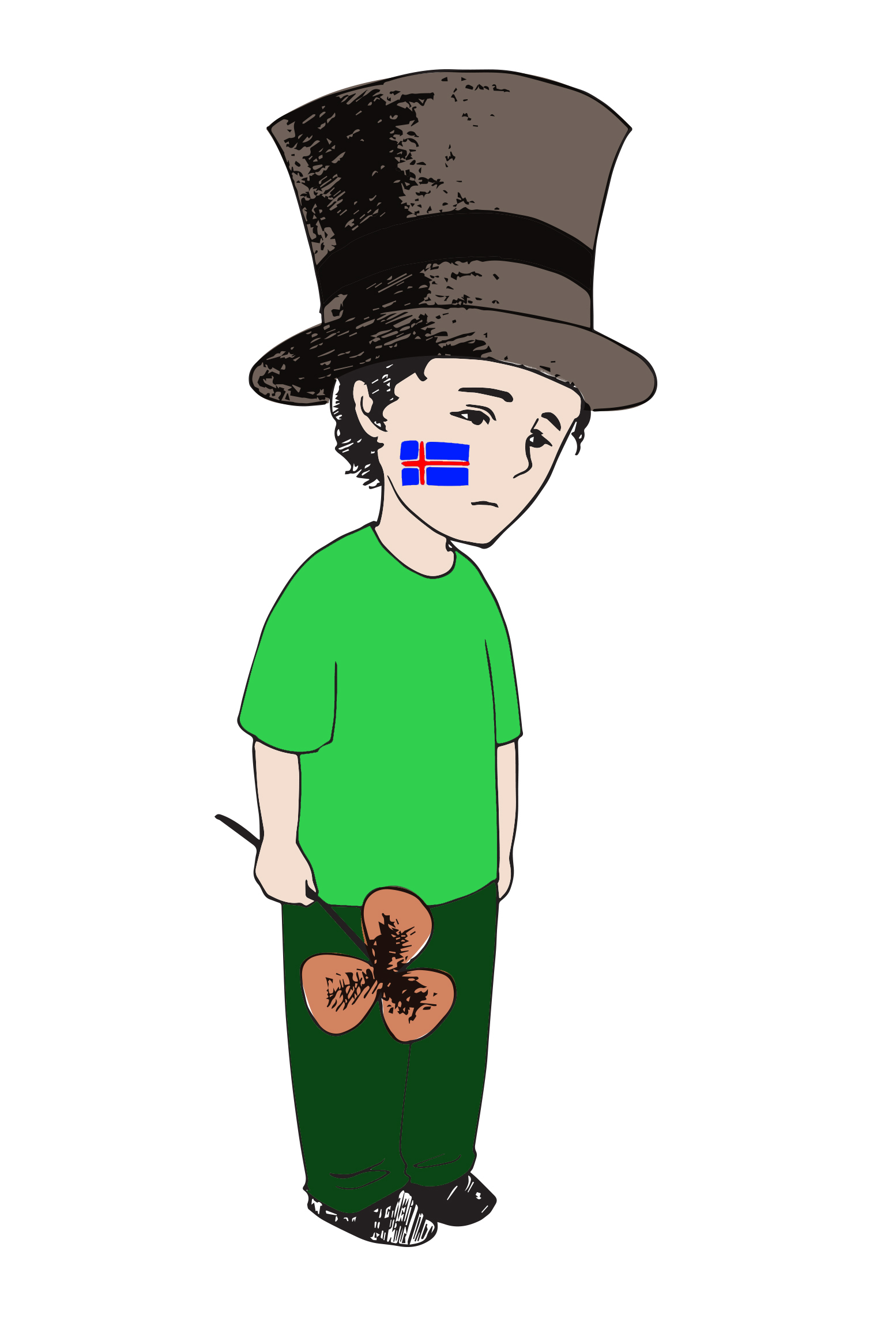
4. Confused Ireland with Iceland

3. Bunk-ass shamrock was all seeds and stems

2. There were only 15 fights before 8 o’clock

1. You remember it

Questionable Information: Apple

0
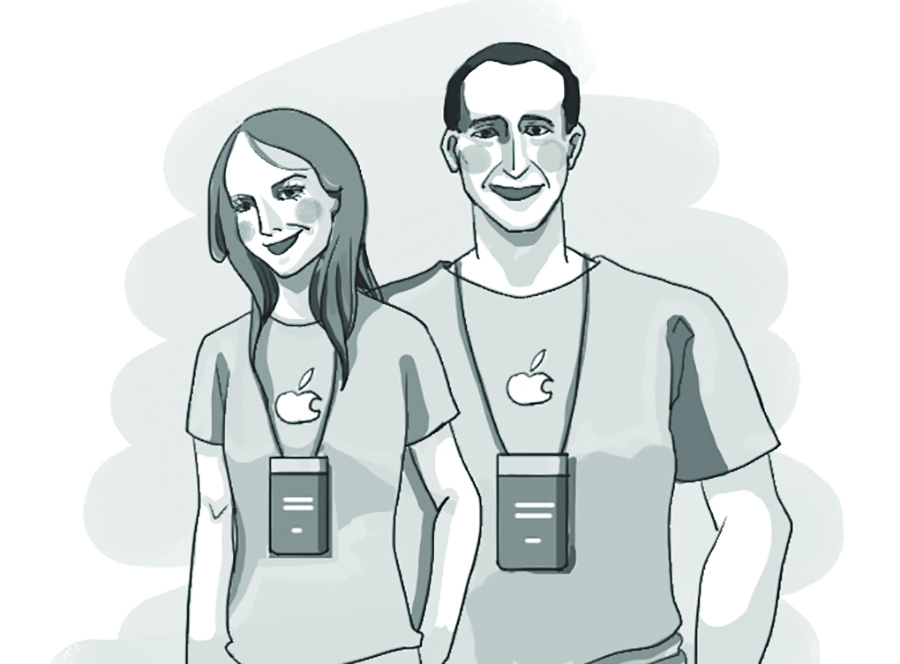
The average “Mac Genius” only has an Apple IQ of 103.

”Great energy,” “good vibes” at Surrey open house

0

WEB-surrey open house-Anderson Wang

SFU Surrey opened its doors on Mar. 6 to showcase some of SFU’s most prestigious programs and research projects; the event also featured entertainment and ethnic foods from around the globe.

The annual open house was a crowd-pleaser for both the young and old, attracting approximately 3,000 guests, including prospective students, parents, alumni, and community members.

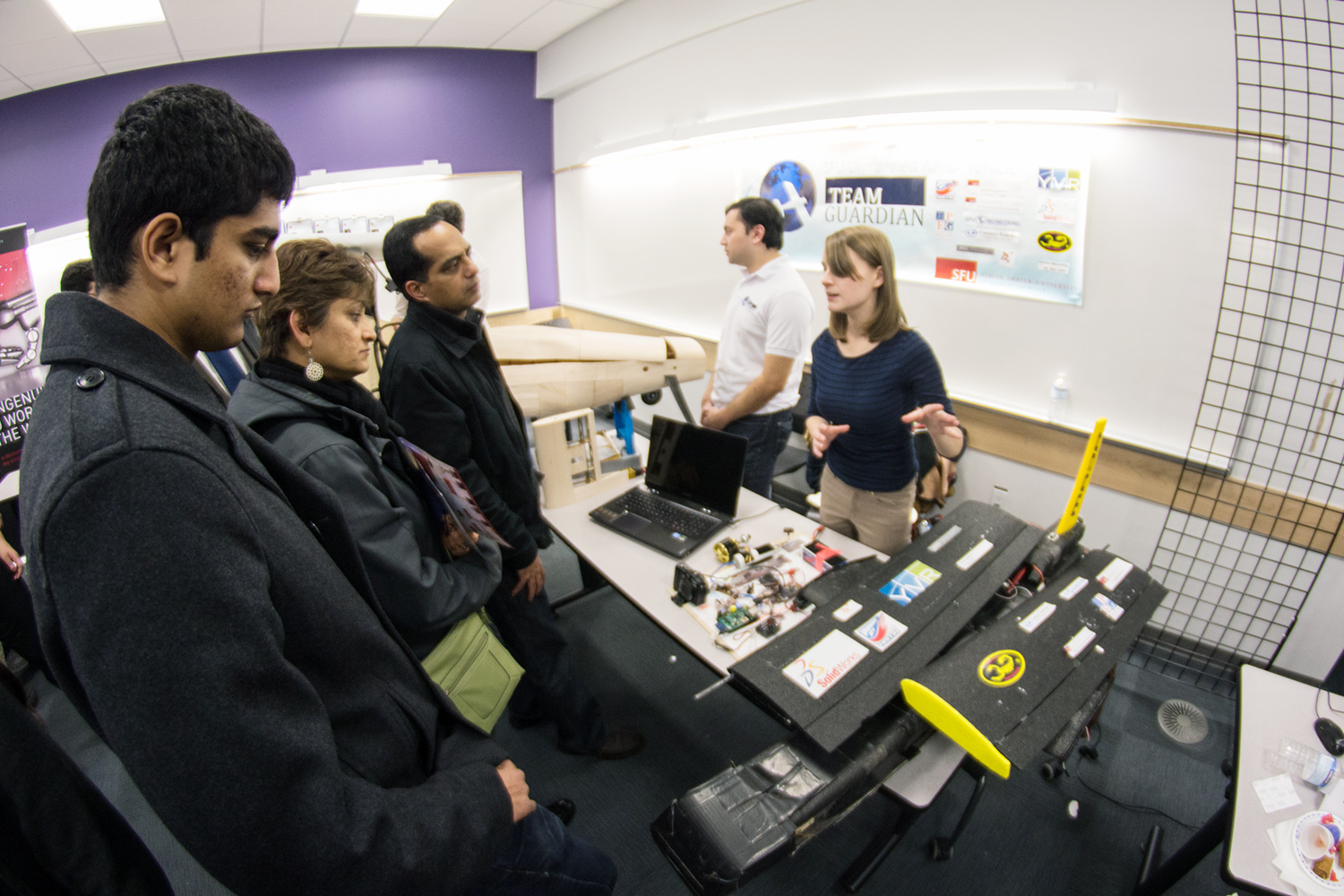
Over 60 exhibits and interactive displays were sprawled across the second and third floors of the campus, and for the very first time in the event’s history there was representation of each of SFU’s faculties. According to SFU Surrey’s associate director of marketing and external affairs, Matthew Grant, this year’s open house celebrated the diversity of the entire university, making it an SFU-wide event held at the Surrey campus.

Rachel Nelson, SFU Surrey’s community relations and engagement coordinator told The Peak, “This year… all of it was amazing. I’m always pleasantly surprised by the vibrancy and the energy [ . . . ] [The event] just creates a really good vibe at the campus.” Nelson felt that the various displays and entertainment were especially engaging and successful this year.

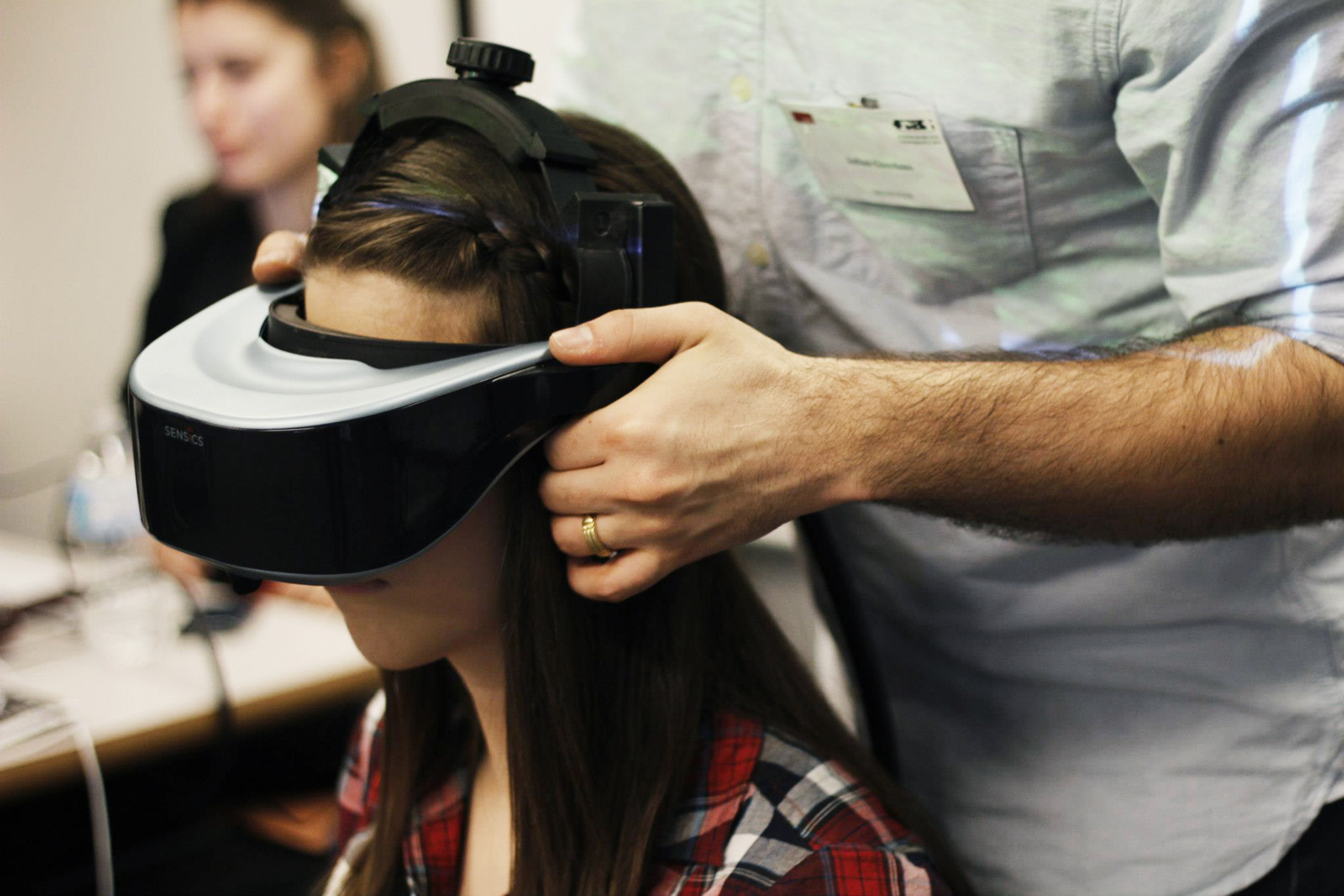
The various exhibits and presentations were fascinating, unique, and radiated enthusiasm. Sea creature touch pools, a literary character photobooth, virtual simulations, a robotic lawn mower, and a distracted driving obstacle course were just a few of the notable displays.

SFU Surrey’s executive director, Stephen Dooley, had only positive words for his very first open house experience: “What I really liked about it was just the great energy, the sense of community, and for me I learned a lot by going around to all the different displays that were on [ . . . ] it was a really good way to learn about what’s going on at the university.” President Andrew Petter also graced the stage, welcoming the entire community to SFU Surrey.

The SFU community shone throughout the entire event, particularly on the centre stage, which featured a renowned SFU piper, highland dancers, a steel drum show, Sri Lankan dancers, singer and songwriter Gio Levy, a bhangra team, and SFU student and R&B artist Alisha Pillay, among others.

Grant expressed his appreciation for the partnership between SFU and the greater community, exemplified by the success of the open house: “When it comes to open houses, I’ve been involved in a lot of them. It’s only been over the last couple of years that we’ve been able to put together an event that embraces SFU’s vision and mission when it comes to engaging the world.”

FCAT conference challenges “The Machine”

0

WEB-2013 SFU FCAT-FCAT

What is “The Machine” and how does it affect our day-to-day lives? SFU undergraduates tackled this question using various creative approaches at the Faculty of Communication, Art and Technology’s (FCAT) fourth annual Undergraduate Conference, held on Mar. 5 at the Goldcorp Centre for the Arts.

Open to students from the School of Contemporary Arts (SCA), Communications (CMNS), and Interactive Arts and Technology (SIAT), the conference showcased papers, installations, and performances based on the theme of “The Machine.”

Undergraduate students had unlicensed freedom to submit a proposal based on their interpretation of what “The Machine” could mean, as long as it was based on academic research. The submissions were subcategorized into three genres: Security, Patterns, and Reflection.

SFU President Andrew Petter and vice president, academic and provost Jon Driver both made appearances at the conference. Driver spoke of the event as an “experience of refined and genuine” presentations. He also discussed the “distinguishing features of SFU,” which, as “innovative education, cutting edge research and community outreach,” are utilized in building significant knowledge and insight for the students.

Driver also took the opportunity to congratulate the participating students directly for “all they have achieved and all they will achieve.”

Many presenters had notable and interesting concepts, which intrigued their peers, instructors, and any curious attendees. SIAT students Justin Chan, Jong Won I’m, Kateryna Jones, Bobby Soetarto and Bianca Zhu created an Interactive Projectional Environment which challenged the way people view their surrounding environment.

They used “‘The Machine’ that we use everyday — the computer — to encourage people to acknowledge their environment and consider the implications of high technology in our world.

Two other SIAT students, Lam Kwan and David Yang Li, presented “an advanced mind-controlled robot called IRobo.” IRobo aims to aid the disabled, helping them to “experience a richer life and be a part of the community again.” Furthermore, the project “explores the idea of an advanced mind-controlled robot that allows the user to live in an idealized form.”

By contrasting the positive and negative aspects of such a device through their video, the team explored the ideas that arise from frequent use and control of machines and technology.

SCA student Alex Stursberg created a two-part sculptural work entitled “The Political Economy of Painting,” which “considers the relationship of art-making and labour, while reflecting on manufacturing, industry, and the economics of art.” Stursberg said that, as an art assistant, he sees this “other end of the creation process” after the painting is finished.

The “waste material” used in the structure, such as paint tubes, represented the other end of the industry. By comparing the labour structure, he scrutinized this machine as being a societal representation. As the forces of labour shift, as the way with which society relates to work changes, so does the machine we fit into.

Beth Padfield, program coordinator,  was excited by the day’s interdisciplinary efforts. She mentioned this conference as a way of getting different faculties together, working for similar interests, and developing a fascination for technology and society.

In the end, Padfield felt the conference’s greatest success was the collaboration of creativity and critical thinking, all because it “got [the students] in the same room so they can start talking to one another.”

Students duke it out in Three Minute Thesis finals

0
3 min thesis
Last year’s winner of the 3MT, Mike Henrey, wrote his thesis on gecko-inspired robots.

In just three short, action-packed minutes, SFU grad students were challenged to present the sum of their graduate work — no easy task. The SFU Three Minute Thesis Finals were held last Monday, March 10 in the SFU theatre.

The Three Minute Thesis (3MT) is a competition in which graduate students, from any program, prepare and present competing theses in a maximum of three minutes. Although it originated at the University of Queensland in 2008, at least 60 universities across the world have participated, with SFU being the fourth Canadian university to hold a 3MT competition.

The winner as picked by the judges, including SFU President Andrew Petter, will go on to represent SFU at the Western Regional 3MT Competition held in Calgary. First place also received a $1,000 prize, with second place earning $500 and third place receiving recognition.

One victor was chosen by the crowd (the People’s Choice winner) and was awarded $250.

Thirteen contestants entered the final round of the competition. It opened with Kimberly White, a Canadian geography student, who presented a thesis on how natural disturbances — specifically pine beetle infestations and wildfires — affect the lives of birds. She presented evidence that, after a wildfire, the bird population increases, at least in the short term. This is due possibly to increased exposure of insects after wildfires.


Though 3MT originated at the University of Queensland, at least 60 universities across the world have participated.


The contestants presented a diverse array of subjects, with topics ranging from biological studies to social issues. For instance, archaeology grad, Camina Manychief, presented on the possible benefits of cradleboards — a traditional device for helping mothers care for their babies — to the Blackfoot identity.

One thesis, by Vanessa Kong, on the importance of designing better public washrooms, suggested increased security in not only female washrooms, but male and unisex washrooms, so as not to discriminate.

Although contestants were limited to three minutes for their initial presentations, they were able to answer any questions related to their theses afterwards. However, the question period was not evaluated by the judges.

Some of the best questions came from fellow competitors. After Dominic Tresevan did a presentation on the difficulty of undergraduate programs, specifically STEM (Science, Technology, Engineering and Mathematics) faculties, Pradeep Reddy Ramana, a fellow presenter, questioned whether dropout rates were related to economic status.

In the end, final presenter Aviva Finkelstein, won first place for her thesis on portable x-ray fluorescence (pXRF) analysis —— the only “100% non-destructive” and cost effective way to determine the origin of artifacts. Used on human bones, it could help native families locate their ancestors.

“This method has yet to be tested on human remains, and that’s where my research comes in,” she explained. “I have had some promising results,” she added, remarking on the machine’s accuracy.

Allison Cornell and Bekka Brodie, both American biologists, took home second and third place, respectively, with Pradeep Reddy Ramana taking home the People’s Choice award.