Home Blog Page 1159

University Briefs

0

Data

Student loan data of 583,000 Canadians left unsecured, report finds

A report from the interim privacy commissioner Chantal Bernier has found that a lost hard drive containing the names, social security numbers, and personal information of over 583,000 Canadians who took out student loans from 2000 to 2006 was left unencrypted and without password protection.

This revelation has come out of an investigation launched January, 2013, when Human Resources and Skills Development Canada reported the hard drive to have been missing for two months; an HRSDC employee first discovered that the drive was missing on Nov. 5, 2012.  According to Bernier’s findings, the hard drive was kept in an often unlocked filing cabinet in an open cubicle.

Currently, there are three pending lawsuits against the federal government over the breach, despite authorities’ claims that the information was not used for fraudulent purposes.

With files from The Ubyssey

U of T students question validity of student union elections

Some U of T students are questioning the results of the recent University of Toronto Student Union (UTSU) elections. Issue has been taken with the use of ballots that included a withdrawn candidate’s name, the addition of an extra voting day at University of Toronto Mississauga, and an additional polling station at the Davis Building at UTM.

One slate, Team Unite, complained that they had not been informed about the extra polling station added at the Davis Building on the extra day of voting. The opposing slate, U of T Voice, was apparently aware of the addition and encouraged voters via Facebook to head to the polling station. According to a source who prefers to remain anonymous, Voice received more than 90 per cent of votes made at the Davis polling station.

Votes have been recounted six times since the elections. Some members of Team Unite are demanding that UTSU either discount any votes gathered at UTM on March 14, or annul the results of the election and order a new election.

With files from The Varsity


U of M students draw attention to homelessness

Four University of Manitoba Asper school of business students camped outside campus for five days participating in the Canada-wide Five Days for the Homeless (5DH) campaign.

The four campers were joined by many other students who collected donations around campus for Resource Assistance for Youth (RaY), a local non-profit organization. A former beneficiary of RaY’s services visited the U of M on the last night of the campaign to share his own experiences with homelessness.

While the campaign has received much support, some students questioned whether a five day simulation is really an accurate reflection of the plight of homeless youth. Sam Davidson, one of the campers, replied, “This isn’t really to simulate homelessness. It’s to create attention.”

With files from The Manitoban


International brief: Course offered on the sociology of Miley Cyrus

 This summer, students at Skidmore College in New York may actually be able to use the word twerk in their papers.

Taught by visiting assistant professor Carolyn Chernoff, the course will examine “The Sociology of Miley Cyrus: Race, Class, Gender and Media.” Chernoff says she’ll focus on the 21-year old performer and all her incarnations as a lens through which to examine gender, race, class, fame and power.

The course will examine topics such as the rise of the Disney Princess, gender stratification and the hyper-commodification of childhood, and what happens to Disney stars as they age.

With files from CBC

To Shave and Shave Not

0

2b816236a342bd21f36f2c245879b4af

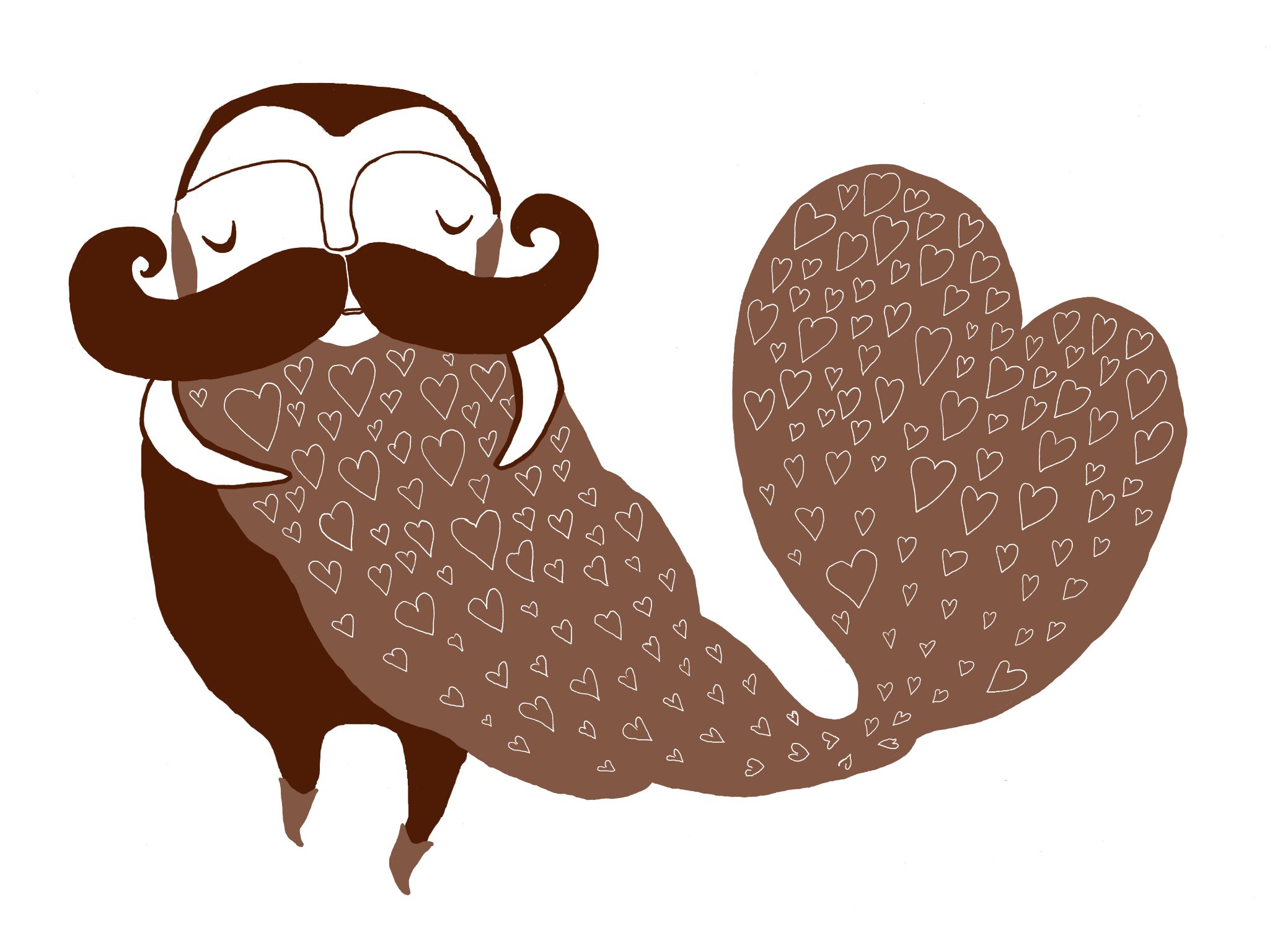
To my Ex-Beard,

I’m not sure how to begin. We had a fabulous four months together, I want you to know that — but I won’t beat around the bush. While I miss you, I simply can’t be with you anymore.

Maybe I’m too impatient. I get bored too easily. With you on my face, my appearance just isn’t malleable enough. I need to be able to grow short, sculptable scruff for sideburns, chin-straps, or cleft tufts to keep myself entertained. And I like being able to clean up quickly, in case of an emergency job interview or the like.

I guess I don’t know why I feel you make me appear unkempt. It’s almost like a beard grown simply for style, not for religion or necessity, is an excuse for laziness. And, no doubt, I would get lazy. With you, I often wouldn’t trim for days; I’d have a mess of random hairs extruding perpendicular from my face, making acquaintances, friends, or onlookers say with their words (or their stares): there goes an apathetic man.

But a beard signifies more than laziness, to say the least. It signifies devotion. It can show respect to our bodies, respect enough to not destroy anything which comes from us — including the hairs we grow. My body became a temple. A hairy, prickly temple.

Of course, my reasons for growing you were less than divine or religious, but I respected the high maintenance you required. You gave me an entirely new body of hair to condition, brush, crimp, and occasionally braid, to keep myself looking, on better days, like more than just a mountain man. I was Ernest Hemingway, Abraham Lincoln and Charles Darwin, all rolled into one unkempt undergrad.

Beard, I will miss the comments that I received because of you, that were surely meant for you alone, but that I accepted as my own. I will miss the nicknames, the “nice beard, man!” refrains, the pats on the back from fellow scruffy gentlemen (and occasional ladies). Sometimes, I felt a part of something bigger than myself — and that was all because of you.

But was it just sarcasm? You were patchy! You were weak at the cheeks! You grew unevenly and tangled about my visage!

I’m . . . sorry. That’s unfair. I can be patchy, too. And there’s no reason why a beard has to have the same surfeit as Justin Vernon’s or Doug Martsch’s to be legitimate. I admit that I sometimes expected too much from you, and for that, I only have myself to blame.

Maybe I’m really trying to work through why a beard grown purely for style is always viewed as ironic. Beards were once surely grown out of necessity, for warmth. The beard’s current shape on the human, though, appearing almost solely on the lower region of the face, suggests that it has evolved for style — scruff chic. Much like a finch’s feathers, or a butterfly’s wings.

Is this why beards are funny? Do they poke fun at the silly simplicity of attraction? Are they a reminder of the fact that we humans are just animals — and that the concept of being a human is merely a play we put on for each other in an attempt to combat the inevitability of death?

Perhaps an ironic beard is a reminder of the condition of humans striving to understand that which never can be known. Socrates, one of the first and foremost historical beardos, once said “I know that I know nothing” — was his beard a reflection of this paradox?

But I digress. Regardless of any one specific meaning, it seems that a beard is a means to think through what it means to be human.

So why, you might ask, did I bid you adieu? Maybe I’m just tired of my own vanity, of counting the stares and the comments. Maybe desiring that attention became too much a part of my identity.

But having a beard was always something beyond my ego — it was about becoming a part of human history and connecting with every beard in the past, present, and future. It was supposed to be about understanding the human condition, about finding common ground with my fellow human beings.

Maybe I’m just not ready for that kind of responsibility yet.

Let’s not say goodbye. I think of you often. Every time my fingers unconsciously search for you in a moment of deep contemplation only to be met by the stubble scratching my fingers like sandpaper, I’m reminded of you.

I miss you, Beard. And I almost find comfort in that longing, in the empty five o’clock shadow you left in your wake — because I know you’re still with me. And you always will be. But I simply can’t live with you any longer.

Yours truly,
Untitled-1
Joel MacKenzie
Former SFU Beard Club Founder and President

You can watch a video of Joel’s scruffy love affair here.

Passions aren’t gendered

0

As it says in my byline above, I write about sports. And to do so well, to know what the hell I’m talking about, I watch a lot of sports. Maybe too much. I care about sports. If everyone has a “thing,” sports are mine. I think we can all agree that that’s a normal thing for a guy to be into, especially one in his early 20’s.

Ballet, however, is not. I would know; I was a ballet dancer for a large portion of my life, and I’ll be damned if I wasn’t pretty good at it. That’s no secret — there are pictures on Facebook of me during my time with the Royal Winnipeg Ballet — but it’s hardly something I broadcast. Not because I’m embarrassed, but because it’s such a big deal to so many people.

A girl I dated wouldn’t let me bring it up because it wasn’t manly enough. An editor from The Peak from a few generations ago couldn’t believe I was a ballet dancer because I “write about football and stuff,” as if the two were mutually exclusive. As if one was “less straight” than the other.

You can think of me and other male dancers how you will; I’ve been called a “faggot,” enough to not care anymore. But keep your gender roles out of my sports, please and thank you.

Sports, especially team sports, have been defined by their masculinity for so long. How often do you hear “it’s a man’s game” being thrown around during a football broadcast? And then, when one of those football players comes out as gay, there are questions of his masculinity, despite his talent.

University of Missouri star Michael Sam announced to the world that he is gay three months before he was scheduled to enter the NFL Draft. CBS Sports had Sam, fresh off being named a first-team All-American and his conference’s Co-Defensive Player of the Year, ranked as a third-round prospect prior to his announcement. Now, there are questions of how far he’ll fall in the draft, if picked at all.

Women in football have it worse: you’re a sex symbol, whether you’re cheering on the sideline or playing in the Lingerie Bowl. There’s nothing even close to equality in football, and when you break away from the alpha-male stereotype, as Sam did, you don’t belong.

When a woman breaks through to a man’s world, she must either be lesbian or willing to bare skin. It’s too easy to call female hockey players “butch” or “dykes,” and I’m sure those stereotypes are as accurate as those surrounding male dancers. Then there are the Danica Patricks of the world, who I’m sure you all know more for kinda-sorta taking her clothes off for GoDaddy than anything she’s done on the race track.

Too often gender roles define athletes off the court, field, track, or ice. They shouldn’t, because none of it matters. I don’t want to hear about Michael Sam, Gay Football Player’s draft journey. I just want to watch Michael Sam, All-American, play football in the NFL.

Then I’ll go see Romeo + Juliet with my mom.

Tanking is for losers

0

Despite losing in overtime to the Colorado Avalanche, the Canucks have shown that this late-season resurgence was not just taking advantage of weak teams like Buffalo and Florida. Rather, the Canucks have shown that they can still hold their own against playoff teams.

We have yet to see how the Canucks fare against the hard-to-play Californian teams but at the very least the Canucks are defeating the teams they should beat, and aren’t fodder for the other teams competing for the last two wild card spots. Heck, Colorado is well above the wildcard threshold, and the Canucks still got a point out of that game (and should have had two.)

With how the Canucks are currently playing, they are least as good as Dallas, Phoenix, and Minnesota, if not better. These Canucks would probably have beaten all three of those teams for a spot, for a seventh spot in the playoffs. Despite all the injuries, they have somehow found a new source of energy, at least in part thanks to the call up of rookie Nicklas Jensen.

Unfortunately, it’s a lot easier to lose ground in the playoff race than it is to gain it, and the Canucks gave up plenty in a horrendous January and February. Not to mention that Phoenix, currently the final Western playoff team, is up five points with a game in hand that gives them the possibility to go to seven up.

But the point is that they are winning, and for the most part winning games with scoring, not grinding out 1–0 victories (the 2 – 0 win againast Nashville an exception). The prospects appear to be making strides with Nicklas Jensen, Zack Kassian, and Shaun Matthias all hot right now. Even David Booth, whom I thought was adapting well to a third line role laying hits but seemed to have lost his scoring touch, has scored three goals in this stretch and looks confident with the puck again.

Even if this is a mirage, be it that they are winning because the pressure is off, or that inconsistent performers like Kassian and Booth will revert back to inconsistency, this is a lot better than tanking, as some fans suggest the Canucks do. They are fighting right until the end, providing something exciting hockey, and the younger prospects including Kassian are learning to persevere as a team rather than submit to defeat.

Who wants the Canucks to be known as the team who threw in the towel, anyways? I personally preferred when they were hated, apparently, by everyone outside of Vancouver because they were the best team in the league.

Besides, although it is unlikely, it is still possible for them to make the playoffs. Until they are eliminated, anything is possible.

Campaign Follies

4

The Independent Electoral Commission (IEC) has been flooded with complaints from both candidates as well as concerned SFU students regarding the current SFSS elections. To date, the IEC has made 24 decisions regarding potential campaign violations. Here are a few that stood out to The Peak.


Alexander Morris distributes unapproved campaign materials

On March 10, printed handbills promoting the candidacy of presidential candidate Alexander Morris were discovered in The Peak newspaper stands, slipped into individual newspapers.

Morris explained to the IEC that he disliked that The Peak described his refusal to submit a statement to their elections article as a failure, and as such wanted to slip his handbills into the papers to “demonstrate his strength as a presidential candidate.”

As the handbills were never sent to the IEC for approval, the IEC decided that Morris had violated the rules of campaigning. Morris was thus prohibited from using printed materials for the remainder of the campaign period.


Chardaye Bueckert campaigns in SFSS space

The IEC penalised presidential candidate Chardaye Bueckert for campaigning in the Rotunda on March 18, as that area of campus is official SFSS space. The IEC bylaws prohibit candidates from campaigning in areas such as the Rotunda, Convocation Mall, and Maggie Benston Centre, to name a few. Upon being questioned, Bueckert acknowledged that she was in the wrong. The incident resulted in a deduction of $6.00 from Bueckert’s remaining campaign budget


Brandon Chapman apologises for defamatory comments

Presidential candidate Brandon Chapman has issued an apology to education rep candidate Gloria Mellesmoen following accusations that Chapman, along with VP Finance candidate Adam Potvin, made defamatory comments about Mellesmoen to students.

A student reported to the IEC that when Potvin and Chapman approached her, “They began to say along the lines that [Mellesmoen] was the worst one to preform [sic] on the team, they don’t even know how she got that position, and she clearly has no idea what she is doing in terms of her position.’”

Upon further investigation, the IEC said that the student who made the accusations did not mean to accuse both Potvin and Chapman, only Chapman. Potvin appealed the accusation and was found not guilty. The IEC penalized Chapman $5.00 and required him to apologise to Mellesmoen for the comments.

SFU Fashion Week makes it work

0

WEB-fashion-Mark Burnham

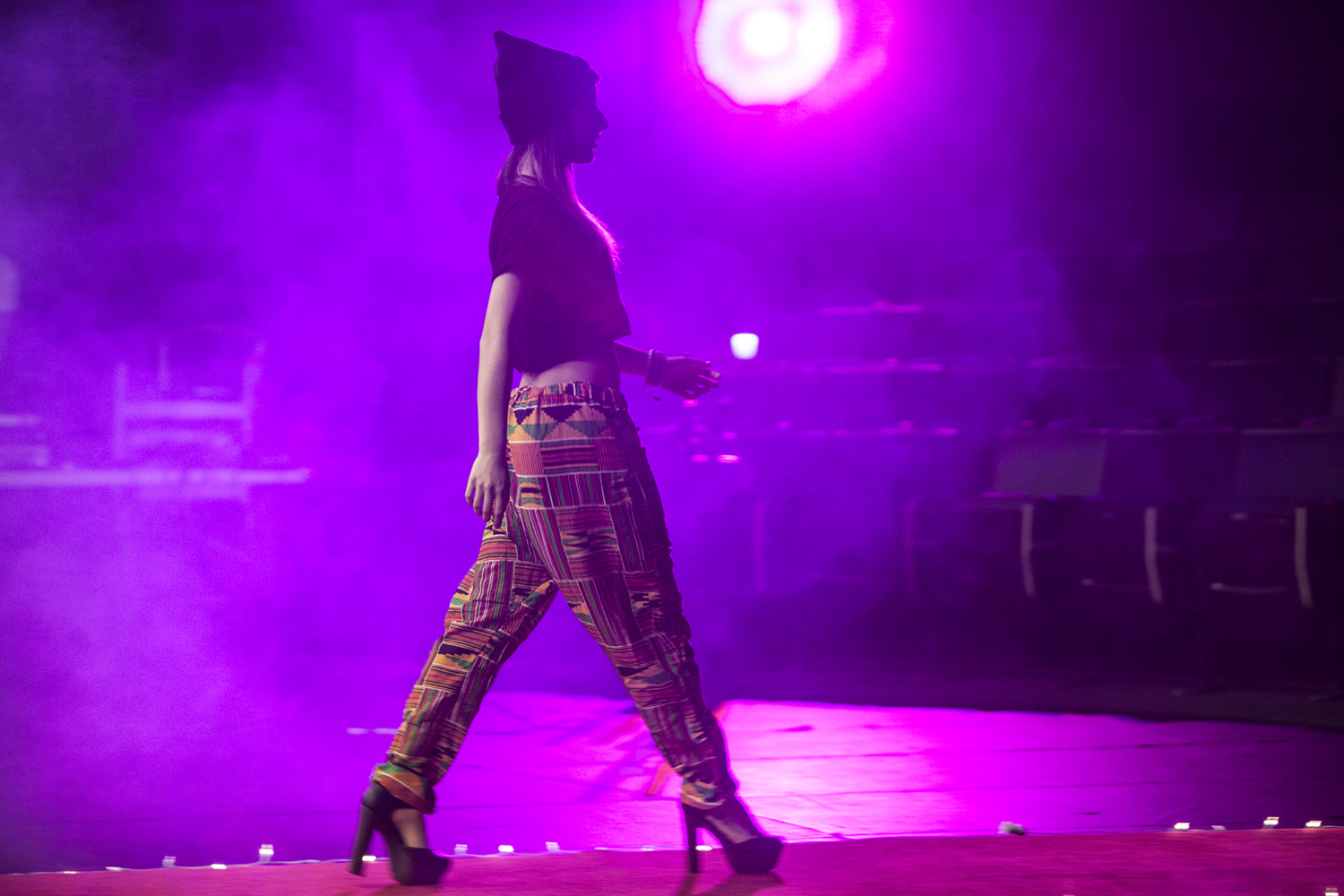
Anyone who attended or heard about SFU Fashion Week will know that it was about a lot more than just glitz and glam. What began as one student’s vision to create a tangible SFU identity through fashion evolved into a three-day event, beginning on Wed. March 19, that deconstructed, analyzed, and showcased various facets of the fashion industry.

Kayode Fatoba, creative director and visionary behind SFU Fashion Week, told The Peak the event was really about “showcasing SFU students in their beauty, in their pride, in their fashion, to promote a new sense of school spirit.”

“Recruiting individuals to be a part of the initiative wasn’t easy, given I had nothing but my words,” said Fatoba. However, with just over two months of planning and a limited budget, the core group of student volunteers was able to produce the first university fashion week in British Columbia.

Arjan Mundy, SFU Fashion Week’s director of external relations, explained that the aim was to create an event that catered to various crowds and gave people a reason to stay up on the mountain for more than just class.

“There are a lot of pub events, [ . . . ] barbeques and stuff like that,” said Mundy. “We wanted to have an event that catered to a different sort of crowd who doesn’t really want to come out to pub nights all the time. There’s a real drive to make our campus more fun for everybody.”

According to Mundy, what set this university fashion week apart from any regular fashion week was its emphasis on university life. “We wanted the designers to be [ . . . ] from within SFU and around SFU.”

“There’s a real drive to make our campus more fun for everybody.”

– Arjan Mundy, director of external relations, SFU Fashion Week

“Students are broke,” he acknowledged. “We’re not showcasing stuff that’s really expensive. [ . . . ] It’s good looking stuff that students can actually afford.”

The main fashion show, on Friday March 21, featured pieces from individual fashion students and bloggers, as well as companies such as LavishTee Clothing (founded by a third year SFU communications student), SFU Athletics, and the SFU Bookstore.

However, the highlight of the week for Fatoba was the second day, which was comprised of presentations and breakout sessions on the controversies surrounding the fashion industry and the portrayal of fashion in the media.

“It [was] us coming critically at the issue of fashion, and all that’s been [discussed] within the school of how to increase self-expression,” Fatoba explained. “The keynote speakers were pointing out that fashion was [a] way for individuals to actually be able to communicate their thoughts and emotions to others.”

One of Thursday’s keynotes was a genocide victim, who employed his sense of fashion and creativity to start a clothing brand at SFU. He has since been able to use some of the funds he raised to empower peers in his home country.

In the future, the team hopes to make SFU Fashion Week a sustainable initiative and to engage even more of the SFU community, including the satellite campuses. This year’s event was able to make a small profit, which, in the spirit of engaging and giving back to the SFU community, event organizers donated to the concurrent Relay for Life.

Open letter re: three reasons why you should vote yes for SASS

0

In this week’s election you will have a chance to make history, empower students, and solidify a change in structure that will fundamentally change the way our student society is organized.

The Society of Arts and Social Sciences (SASS) has been operating as the Faculty Student Union for the Faculty of Arts and Social Sciences since 2011. In that time they have created the legendary frosh event SASSquatch, organized over 100 events — both academic and community related, and given hundreds of students opportunities to practice leadership, organizational, and team building skills that result in more community and engagement here at SFU.

SFSS by-laws needed to be changed in order to allow for Faculty Student Unions to officially be part of the structure of student governance at SFU. This was achieved in April 2013, and this year SASS is finally able to take the next step for the students of this faculty and become the first official Faculty Student Union at our University

SASS needs your to vote, here are three reasons why you should vote yes.

1) It will help SFU grow

SASS will be become the first official Faculty Student Union at SFU. This model of having student organization and representation at a department and faculty level is structure widely used across Canada at older institutions. The Faculty of Arts and Social Sciences has over 20 departments with over 10,000 students. Many students cannot declare into their department until after the second year, meaning they have little support and fewer opportunities. Moreover, it is important to have a place where students in the arts can come together, organize, and discuss. The Arts are interdisciplinary by nature, and by building connections with each other we can begin to build a larger, more coherent community.

2) More events

At UBC, the Arts Undergraduate Society (SASS equivalent) is responsible for organizing the largest student organized concerts in Canada. McGill’s Arts Society has brought out world-renowned speakers and owns its own multi-million dollar building. By voting “yes” to SASS, you are helping this SFU student organization grow into something that is able to do much more. Philanthropic, academic, environmental, community-related, SASS will be able to organize both large and small events that will raise the profile of our University and make our degrees worth just that much more.

3) More Representation

The more representation students have, they better off they are. By electing students to represent you at the faculty level they are better able to lobby for specific department and faculty needs. This means that if your department funding is being cut, if you can’t get into classes, if there are just enough professors, there is another organization that is mandated to support you.

I have been at SFU for almost 4 years now and I have watched SASS develop into a reputable organization that has done incredible things for students. Voting “yes” will help SFU to become a more reputable university, will bring more events and a better sense of community, and give more unity and representation to students in the largest Faculty at SFU.


Sincerely,

Kyle Acierno, SFU student, a co-founder and the first president of SASS

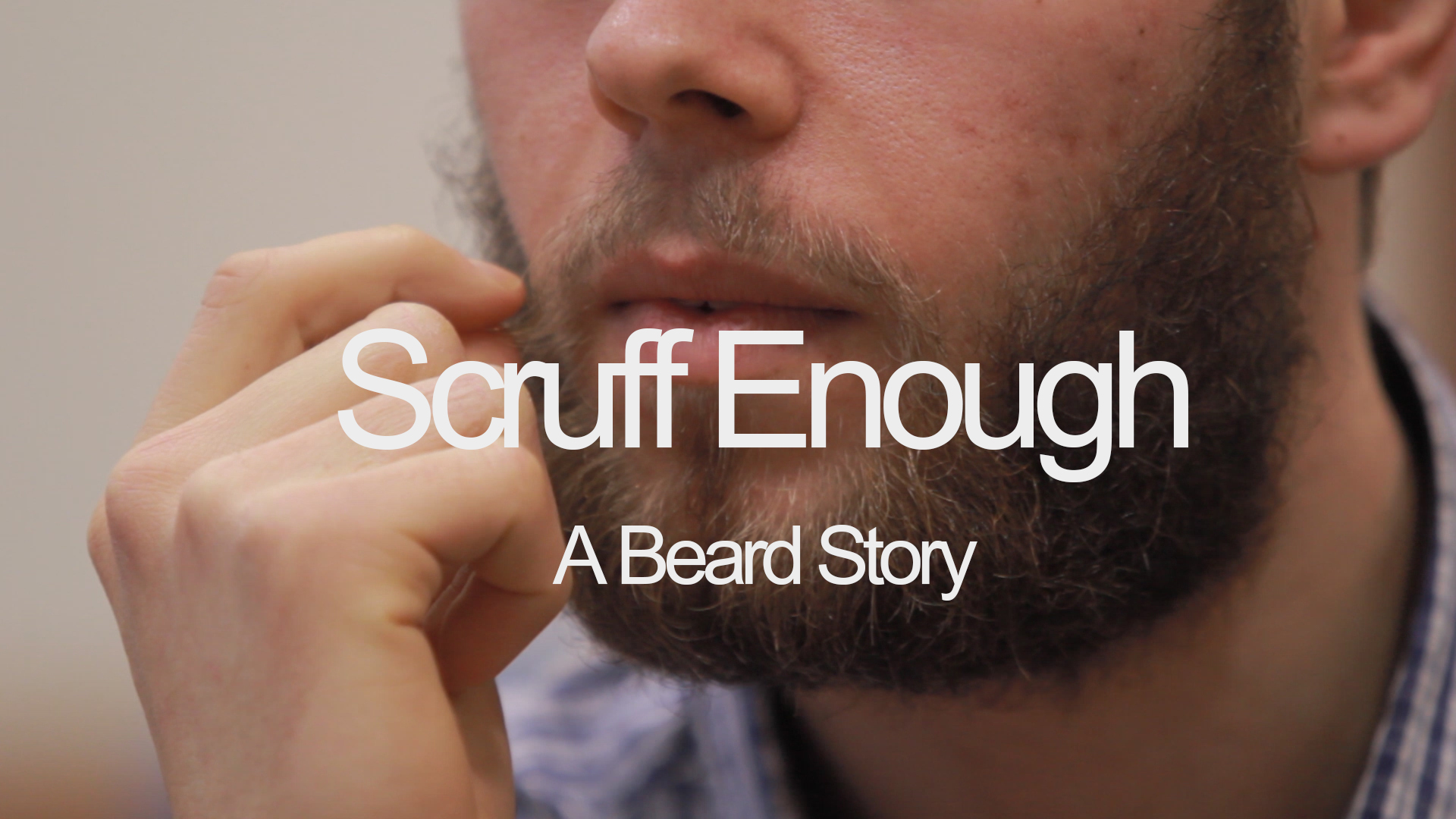
Scruff Enough

1

The Peak met with Joel, president and founder of the SFU Beard Club. We follow Joel in his efforts to be recognized by the SFSS as an official club.

Starring Joel Mackenzie
Created by Brandon Hillier, Alysha Seriani and Brad McLeod

Staying Sharp: Tips for Running A Student Society

0

A few years ago I ran for president of the SFSS. I sat where today’s candidates sit and I have heard what they heard. This type of experience is exceptionally rare and has resulted in me carrying a level of expertise that most people can only dream of. It would be a shitty dream, but a dream it would be.

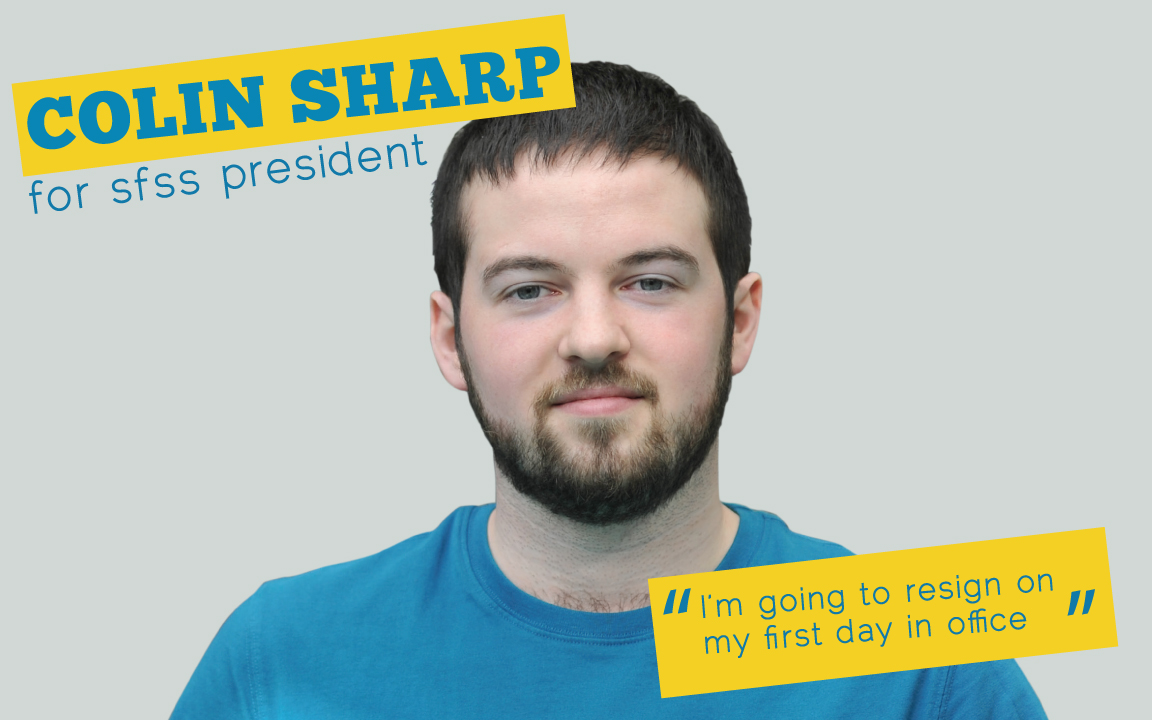
Alright, so maybe my campaign was just an excuse for me to make jokes. And maybe my one and only campaign promise was that I would resign on my first day in office. And maybe one of my posters extensively quoted the inspiring Black Eyed Peas song “My Humps”. That might make my campaign slightly different than today’s candidates, but like it or not, I still have more experience than them. Pretty dumb, right?

Anyways, read away candidates, because I have some dumb tips for your dumb faces.

1. Don’t drop out of the race.


Many pundits consider my decision to drop out the main reason I lost the election. Don’t make my mistake. On that note, don’t decide that “not writing the next essay” is a way to get back at your TA for being unfair: he had less work to do and you failed a class about TV shows. Who won there Colin? Who won there?

2 . Don’t bite off more than you can chew.


Oh, you’re going to throw the sweetest party ever with the most popular and critically acclaimed bands and beers are only going to cost $1 and Fox Field will be full of thousands of SFU students praising the organizational, budgetary, and email-sending capabilities of their fearless SFSS leaders?

Nope. Not going to happen. It’s just not. Start small. That’s how a culture of fun events works. If you throw an event for 300 people, and 400 people show up, that’s good. Now you have 300 people that want to bring their friends to the next awesome sold out event and another 100 that will be dying to get in next time. However, if you try and throw an event for 5000 people and 1000 people show up you just have 1000 people who were at a lame party. Keep your events small and frequent, not big and disappointing.

3. Register in classes.


You can’t represent students if you are not actually registered as a student. It’s the same reason that I, as a young male, can’t be the president of Mothers Against Drunk Driving. No amount of hating drunk driving and loving Ellen DeGeneres will change that.

4. Follow @colin_sharp on Twitter


I mostly just tweet jokes and comments about hip-hop, but I fail to see how this will harm your campaign, so just do it. I probably won’t follow you back.

5. Remember that none of this matters.


Did you know that BC Premier Christy Clark was President of the SFSS? Yeah, neither did the rest of the province. No one is paying attention to you. You could probably moon the crowd right now, go skinny dipping in the AQ Pond, and then go knock on Andrew Petter’s door to personally ask him for a towel and 90 per cent of SFU students would never hear about it. That means you can relax.


Alright candidates, I hope you feel as though you learned something here. To whoever wins this election, I hope you aren’t a complete failure. To whoever loses this election, congratulations! You don’t have to be president. And to the skinny dippers, remember that the AQ pond is super shallow and the bottom is really slippery.

There will be blood

0

3258182065_b219a73767_o

One of the happiest days of my life was the day I realized I had gotten my period for the first time. To me, my menarche was like being initiated into a club that I had been admiring my entire life.

So, naturally, as any excited-beyond-belief 11-year old would do, I went to school the next day fully intending to tell all my friends. Much to my dismay, everyone met my excited whispers of “I got my period last night!” with various levels of disgust and reproach. For many years afterwards, I would conform to the “normal” way of dealing with my period: treating it as a secretive burden.

As a teenager, I found tactful ways of hiding tampons at all times, and began to refer to my cycle as “the curse.” It wasn’t until I turned 19 that the financial strain, social stigma, and inconvenience of tampons lead me to do some digging on how I could make my period a less miserable part of my life.

Why was I spending more than $15 per month on products that didn’t really work for me? Where does that money go? Is there anyone else out there who is struggling with this? What did women do before tampons? And why should I have to be secretive of something that happens to about 50 per cent of the population?

Herstory

I explored the history of the taboo behind the period — I found that in Judaism and Christianity, menstruation is described as being part of the punishment for the disobedience of Eve for eating the Forbidden Fruit. According to the Orthodox Christian Information Center, “These bodily functions are not sins, but they represent and emphasize the consequences of our fallen states.” Some Christian churches even refused communion to women on their periods.

In Nepal, women have traditionally been kept in in “menstrual huts,” or cow-sheds, for days while menstruating. Japanese Buddhism considered menstrual blood to be pollution — women were sentenced to Blood Pool Hell for their “sin.”

Why should I have to be secretive of something that happens to about 50 per cent of the population?

In Western Africa, the Asante considered menstrual blood to be powerful, and used it in harmful supernatural rituals. For them, menstruation was analogous to the inherent danger of the cycles in nature.

Much 19th century writing argues that women should not attend university because menstruation debilitates them and their capacity to learn. In 1883’s Sex in Mind and Education, Henry Maudsley argued that women are “of another body and mind which for one quarter of each month, during the best years of life, [are] more or less sick and unfit for hard work.”

Five years earlier, the British Medical Journal published a report about the chance of meat spoiling when touched by menstruating women, and argued that women may not be fit to practice medicine while menstruating.

While some progress has been made, menstruation remains a taboo for much of the world today, and that makes information on the history of menstrual products few and far between. Yet, there are rumours of tampon-like tools in ancient Egypt, Rome, and Japan made of materials such as papyrus, wool, and paper.

During the 19th century, European and American women may have simply bled onto their clothing or washable menstrual pads which fastened from the waist with a belt. At the turn of the century, though, new products appeared as a result of the industrial revolution.

Patents for products such as menstrual cups (which are reusable and hold the menses to later be poured out), and still-popular disposable tampons, were born during this era.

By the 1930s, the taboo of menstruation had been solidified in the US and Canada: “Advertising such a sensitive topic to a national audience would require just the right touch, a combination of aggressive selling and delicate good taste.” And it did. In 1936, led by Ellery Mann, Tampax boasted 11 million buyers of its new product.

Predictably, advertising has played a big role in popularizing the feminine hygiene industry throughout the 20th century. But many of these advertisements have both euphemized and vilified menstruation, to make it more easily marketable. A 1965 magazine ad from Tampax cites the “freedoms of Tampax [. . .] the swimming, the sunning, the poise, the comfort, the cool, clean, fresh feeling [. . .]” Later ads have involved women running through open fields in white dresses, usually with cheesy adult contemporary chiming away in the background.

All these ads have sent the same basic message: menstruation is unclean and undesirable, and buying menstrual products that can be easily disposed of is the only way to avoid social and cultural transgression.

Things aren’t much better in the Internet age. Tampax’ website includes a storied history of “The First Tampon” on the “About Us” page. It tells the tale of the modern tampon being invented by a man named Dr. Earle C. Haas in 1929, and how Tampax was co-founded by Thomas F. Casey in 1936.

The description reads, “Mann had the good sense to select men with the expertise and temperament to compliment his own special talents and personality.” The subtext here is clear: women are too hysterical to design and sell products they’ll be using. That, of course, is a job only a man can handle.

The feminine hygiene industry

Fast-forward to the present day, where Tampax’s parent company Procter & Gamble controls over 30 per cent of the global market share in the feminine care category. In 2013, P&G made $22 billion on its disposable products, including tampons, pads, toilet paper, and diapers.

Kimberly-Clark, another FemCare conglomerate, reported that its brand Kotex is an over $1 billion business. Energizer Holdings, owner of both Playtex and o.b., came in at over $2 billion in sales in 2013. The best part? The CEO of each and every company I listed is, as far as I can tell, a non-menstruating person.

So, with all this money being made, there must be a lot of products. Where do all those little cotton torpedos end up?

When I used disposable tampons, I generally went through about 25 each month. So that’s five tampons a day, for five days every month, for about 40 menstruating years. That would be 13,000 tampons and about 150 kg of waste in my lifetime. Factor in nearly all other menstruating people on the continent, and about 20 billion tampons, applicators, and pads are sent to North American landfills every year.

About 20 billion tampons, applicators, and pads are sent to North American landfills every year.

If you’re still asking yourself, “what’s the big deal,” consider this: What’s in that Tampax tampon you use every month? These things are going inside your vagina, an orifice like your mouth, ears, and nostrils — if it contained harmful chemicals, wouldn’t you want to know about it? Maybe not. Tampon companies are not required to display or reveal the ingredients of their products to the general public in the way that food products, pharmaceuticals, and cosmetics are.

How are disposable pads and tampons made? Well, they start from wood pulp, which is treated with chemicals such as viscose to create the fiber rayon. The rayon and pulp are further processed with a variety of bleaching agents and other chemicals to render them white, absorbent, and fluffy.

All the major FemCare brands (Tampax, Kotex, Playtex, o.b., etc.) use this method, which combines rayon and bleach. This combination creates dioxins which are proven cancer-causing agents that can disrupt the hormone system and have been linked to endometriosis — a once-rare disease that can cause internal bleeding, permanent scar tissue, and infertility.

The pesticides used to treat cotton for menstrual products have been linked to infertility, neurological dysfunction, and developmental defects. To top it off, the “fragrance” found in some tampons and pads has been known to contain dozens of secret chemicals, which are linked to skin irritation and reproductive harm.

Alternatives to disposables 

How can you avoid harming your bank account, the environment, and your body? Ditch the disposables! There are countless companies all over the world which provide eco-friendly options for menstrual health. For the inside scoop, I sat down with Madeleine Shaw, one of the founders of Lunapads: a natural FemCare company based right here in Vancouver.

“We specialize in natural feminine hygiene products, which is to say reusable alternatives to single-use, mainstream pads and tampons that are sort of ubiquitous in our culture and world,” said Madeleine, when I sat down with her at the East Van Lunapads HQ.

Lunapads makes reusable, washable cloth pads, pantiliners, and underwear, while also selling reusable menstrual cups. “We also have as part of our mission, an obligation to have a positive social and environmental impact,” Madeleine explained.

“It’s all part of a liberation and a truth-telling which leads to empowerment, which leads to healthier lives — because, really, this comes down to health. This comes down to our reproductive health and the health of our planet, which is also a reproductive organ that we need to take care of.”

Whether or not you get your period, menstruation affects everyone economically, environmentally, and socially.

In addition to their products, Lunapads runs a non-profit organization called One4Her, which supports “better access to education for girls in developing nations by providing sustainable, affordable menstrual care products for girls in need, as well as improving menstruation awareness.”

In case you don’t know, millions of girls in the developing world stay home from school during their periods due to lack of access to menstrual products. This can equate to missing up to 20 per cent of their education, making them more likely to drop out, which in turn can lead to early marriage and a greater risk of contracting HIV or dying in childbirth.

This is why we need to change the way we look at menstrual health and hygiene: by advocating a safer, destigmatized, and sustainable system, millions of people’s lives can be changed for the better.

Period power

Reusable products, such as menstrual cups, adhere to the greater societal trend of reusability and recyclability: cloth shopping bags, reusable coffee mugs and water bottles.

Companies like Lunapads also offer a product that recognizes that not all women menstruate, and not all who menstruate are women. “Lunapads users and community members are cisgender, transgender and genderqueer individuals who span the gender spectrum.”

There’s a growing cultural movement aimed towards promoting menstrual health and crushing the period taboo. Toronto-based artist Petra Collins has inspired praise and controversy for her American Apparel T-shirt entitled “Period Power,” which features a line drawing of a vulva, pubic hair, and a manicured hand with watercolour menstrual blood.

In an interview with Vice, she said, “[. . .] we’re so shocked and appalled at something that’s such a natural state — and it’s funny that out of all the images everywhere, all of the sexually violent images, or disgustingly derogatory images, this is something that’s so, so shocking apparently.”

Petra and other artists involved in the Period Power movement help break down the taboos that limit the way we talk about menstruation in our society. How people feel about their periods should be as unique as their bodies — whatever the case, these are conversations worth having, and they can’t happen until we eliminate the stigma that has haunted menstruation since day one.

The truth is that whether or not you get your period, menstruation affects everyone economically, environmentally, and socially. It’s a natural and healthy process, and one that should never be shamed or stigmatized.

So, if someone says to you, as I did to my classmates when I was 11, “I got my period today,” consider opening the discourse about a taboo topic of global health. You’ll be glad that you did.