Home Blog Page 1147

Israel/Palestine: one state solution

3

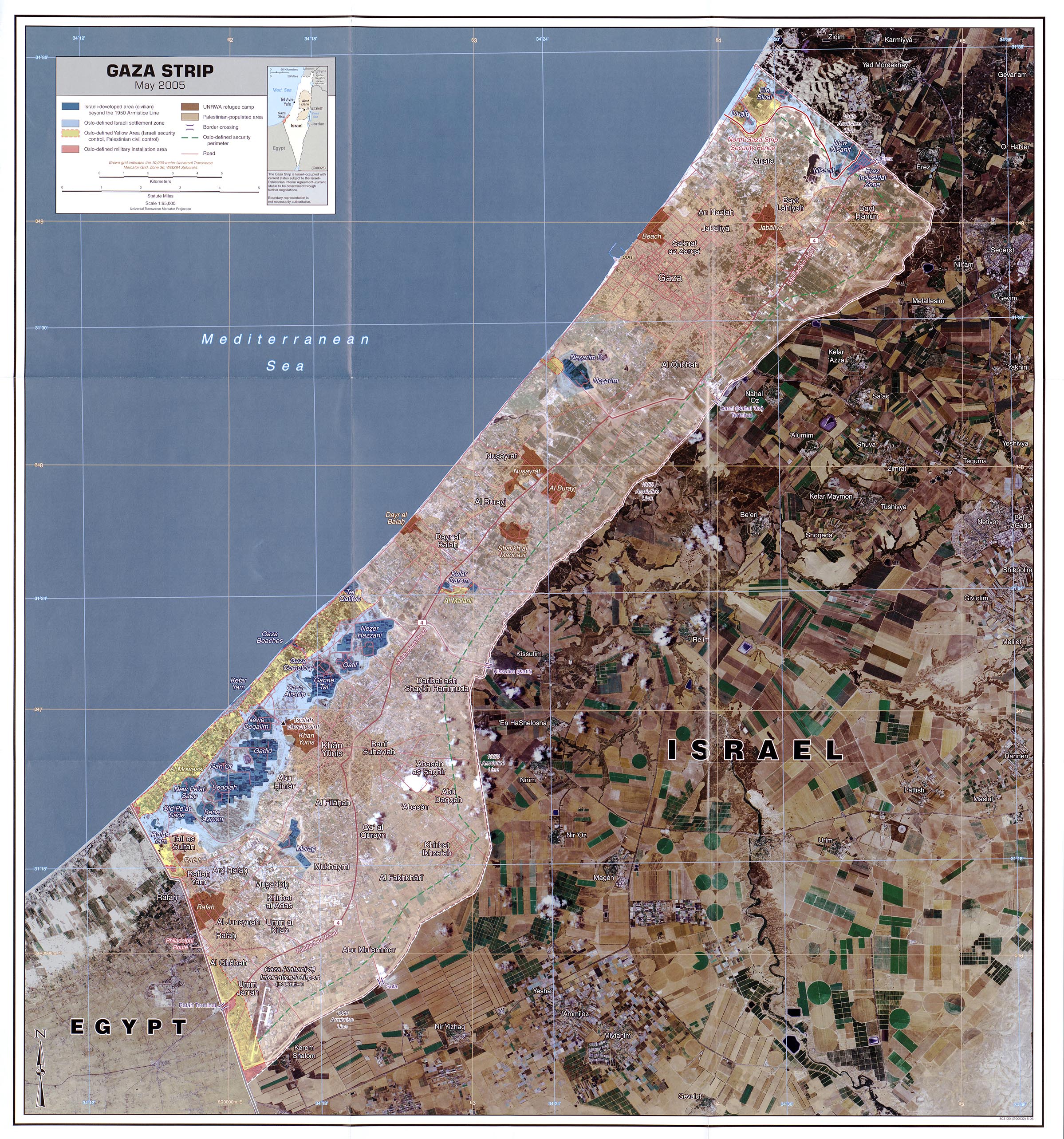
Gaza strip - wikimedia commons

It is easy to label the erupting crisis in the Israel-Palestine corridor as a meaningless tragedy; in many ways, this is correct. What began as a small Israeli incursion into the West Bank to rescue three Jewish teenagers from a suspected kidnapping by Palestinian radicals has quickly escalated.

Palestine’s influential Hamas faction has sought vengeance for the heavy-handed tactics of the Israeli incursion, responding with a hail of largely ineffective rocket attacks. Israel has responded in kind, and now, has initiated a ground invasion, targeting the rockets’ epicenter in the Gaza Strip. Negotiations between the Palestinian Authority and Israeli state have been cast asunder, optimism forgotten.

But, there may be a silver lining to this mayhem. With peace negotiations dead for the moment, it may be a long time before trust between the two sides is sufficiently rebuilt for peace negotiations to begin again. By then, Israeli settlement into West Bank will have likely expanded extensively, leaving the possibility for neatly separating Jews and Arabs cleanly into two states much more doubtful.

If Palestinian political forces abandoned aspirations for independence, they could further the interests of their own people.

The longer negotiations wait and settlements continue, the more impossible a two state solution will seem. Indeed, even now the prospects are dim. Israel, with a decisive military advantage, has little reason to offer Palestinians anything more than a territorially gutted rump state. Under such circumstances it is difficult to imagine the entirety of Palestinian society being left satisfied enough to give Israel the peace it desires.

Still, both sides cling to the prospect of two states. Many Palestinians, hardened by conflict, remain nationalistic — hardly enthusiastic to take up the passports of their archenemies. And many Israelis neither want to make territorial concessions nor have to deal with diluting the Jewishness of the Zionist project their ancestors worked so hard to create.

However as hopes for a two state solution continue to wane, perhaps hopes for a one state solution may wax. This would offer a far more meaningful path forward for the region. For if Palestinian political forces were to embrace Israeli annexation and abandon aspirations for independence, they could further the interests of their own people far more significantly than their current course.

For the Palestinians, official Israeli annexation could offer access to participation in the labour markets of one of the region’s most advanced economies, and relief from Israel’s robust welfare state. Israelis, too, could benefit from such a path. Given access to meaningful economic opportunities that Israeli citizenship would afford them, Palestinians would likely become less receptive to the seductions by violence advocates.

Israelis seek security. Palestinians seek a future. The status quo does not offer this, but nor does the two state peace plan both sides currently aspire to. However, as each successive crisis crumbles hope in these aspirations, the peace discourse may veer toward a healthier direction.

Social housing provides shelter from mental illness and addiction

0
Image credit: Kenneth Uzodinma.

CMYK-cityscape-kennethuzodinma

SFU health sciences professor Julian Somers recently released new findings that demonstrate the effectiveness of supported housing in assisting those with drug addictions and mental illness in Vancouver neighbourhoods.

Conducted by Somers along with the Mental Health Commission of Canada, the five-year study provided apartments to participants throughout Vancouver. Results showed that the situation of formerly homeless people improved both in a financial sense and in overall health.

These improvements included fewer emergency department visits, reduced time spent in institutions due to criminal convictions, improved quality of life, and less time on the streets. Overall, these indicate an across-the-board improvement caused by the new interventions that were introduced by the study in Vancouver.

The research showed that the costs of providing these individuals with housing and support versus leaving them on the street where they may end up in shelters, emergency rooms, and jails, were roughly equivalent.

For every $10 invested in providing housing, there was an average savings of $8.55 in avoided use of social services.

In discussing the overarching research program, Somers stated, “We conducted some experiments to try to discover effective housing and support models for people who had been excluded from existing services.”

The study looked at 500 participants who had been homeless for roughly 10 years — people that were chronically homeless and oftentimes experiencing mental illness.

Analyzing each individual’s mental status, Somers said, “The most common diagnosis that people met criteria for was schizophrenia. The majority also had significant problems with substance abuse.”

Somers described the living conditions for the participants of the study: “The housing itself is market housing. It isn’t the house that is built for homeless people or anything of that sort.  It is just regular housing from the existing stock. And in order to make that work, people are provided with support.”

Somers continued, “[That support can manifest as] a team, individuals with different expertise, or, if individuals do not have needs that warrant that, they could be a case manager.”

A large aspect of the research was giving people some choice in their circumstance.  Somers explained, “It is client-centered in the sense that it gives people choices in [. . .] getting involved in health or mental health treatment. It also gets them involved in places around their home.”

Somers spoke to the importance of the study, but mentioned its limitations in a population that can often find itself trapped. “Homelessness includes a diverse group of people, most of whom, fortunately, will find their own way out of homelessness, but there is a subset [. . .] who don’t find their own way,” Somers said.

Somers said that one of the biggest challenges to homelessness is the stigma surrounding mental illness. “Stigma concerning mental illness is profound. It is evident, not only among members of the public — it is evident even among health care providers.

“Neighbours being able to welcome people into their mix, accommodate people who happen to have been homeless. That is an example of the stigma of mental illness being overcome. [. . .] Simple and straightforward acts like talking to people.”

Religious, irreligious, whatever

0

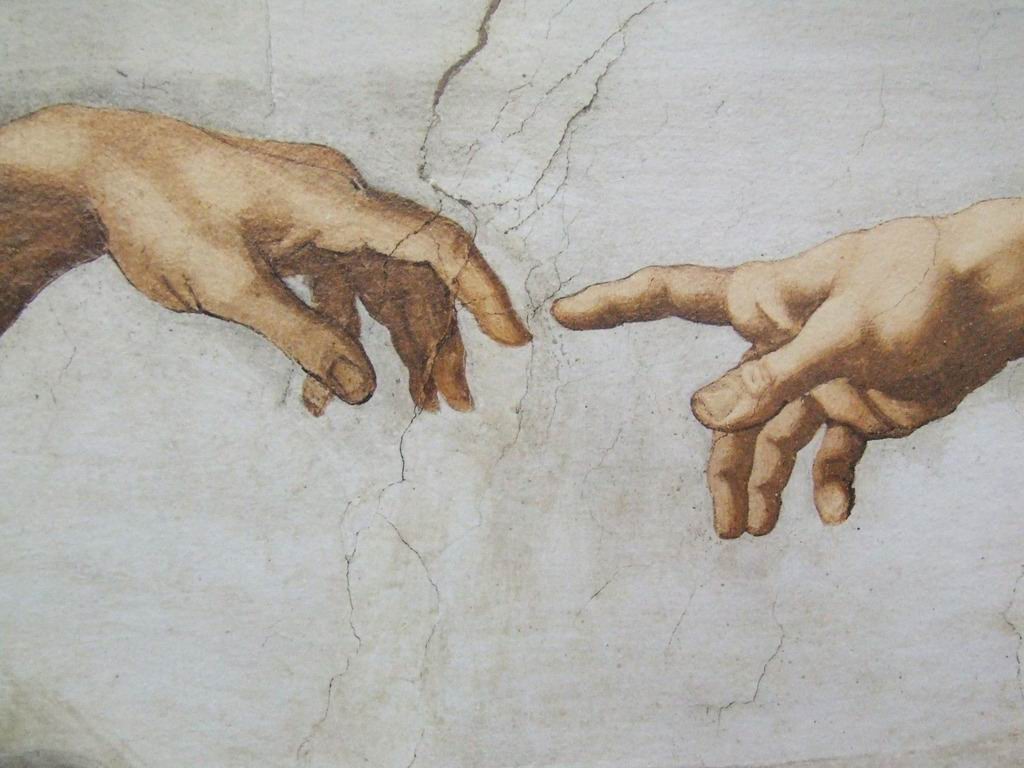
Web - The_Creation_Michelangelo - Wikimedia commons

I suppose I am what we call irreligious, or perhaps a humanist, maybe even an atheist.

I bring this up now to stress that I do not know whether my beliefs can be categorized, and also to make a point: it is easy to get lost in the semantics of religious debate, but we need to realize that by doing so we are avoiding the bigger questions. So, let us dispense with semantics and divorce this article from nitpicking and categorization and look at my beliefs for what they are.

There are no gods, nor god, nor God. There are no beings that are capable of defining our way of living. Faith unnecessarily obstructs the lives of the faithful, and believers are reliant on a predefined way of living, one developed separately from their own experience. Thus, they live incomplete, unfulfilled lives, deprived of experiences because they were denied by faith.

For me, life is about the totality of experience, and I see religious teachings as an obstruction to this goal. Experience should dictate the principles that bind you; you should discover what is right and wrong on your own. You will suffer. You might act immorally. But you will acquire a nuanced and more complete understanding of what makes these principles right and worthy of adherence. Observing the doctrine of faith might permit an agreeable life, one perceived as prosaically moral, but ultimately this morality exists only within the context of that faith.

And thus is my belief summarized. At least, it was my belief. I believed strongly this way for a while, but have recently found myself to be hypocritical. Unravelling my own doctrine, I find myself in the same boat as the conventionally religious.

A truly pious individual will have faith in their principles, but sometimes struggle to respect them.

There are certain things that I do not need to experience in order to understand their moral content. I do not need to kill to know that killing is bad, nor do I need to be killed. To find a reason more basic than simply, “because life and experience have an inherent value,” is impossible, and ends in a circular logic. This makes me no different than the religious. For them, a god is worthy of devotion because they are god, just as I find life worthy of experiencing simply because it is life.

My opposition to adhering to religious principles, because they are unnecessarily limiting, is also narrow-minded. To have structure and predetermined responses where you do not have experience allows for an opportunity for internal conflict. To be faced with a choice where an external force, your god, has defined the supposed correct action, and to disagree with this action, allows for a striking dialogue to occur within you.

I made the mistake of believing that the faithful do not struggle enough. But I believe that a truly pious individual will have faith in their principles, but sometimes struggle to respect them. These struggles permit an internal dialogue that allows for an even greater understanding of themselves and their faith. In short, religion provides a moral awareness and gives rules that you are meant to struggle against in order to eventually understand their roots.

To sum up my thoughts, I realize now that those practicing religion seek the same totality of understanding that I seek, but with perhaps more structure. I do not find my way of living any worse than an individual of faith, nor do I find it any better. It is simply a different method of adopting a moral and virtuous way of living; ultimately, everyone is trying to understand life, and perhaps only differences of culture and birth define the way we go about it.

Be kind and humble to other faiths, and be accepting of those without an institutionalized faith.

Instagram’s nudity policy is an insta-no

0


Web - bewbs - Twitter

Considering Instagram’s conception and birth happened in modern society, it baffles me that their nudity policy is archaic and works hard to strengthen classic double standards concerning female bodies.

In recent news, celebrities such as Scout Willis and Rihanna have had their Instagram accounts suspended for posting topless pictures. Willis’ major Insta-indiscretion came in the form of a sweatshirt that depicted two topless women, while Rihanna’s fatal post featured her topless magazine cover for Lui.

In response to the punishment, Willis tweeted out a photo of a man showing his nipple, posted by Tracy Morgan, one that passed Instagram’s merciless “no nipple” clause, contrasted by Rihanna’s magazine cover with the caption “This….. but not this…. Pardon my confusion.”

As a defense, the CEO of the popular social media app was quick to proclaim, “Our goal is really to make sure that Instagram, whether you’re a celebrity or not, is a safe place and that the content that gets posted is something that’s appropriate for teens and also for adults.”

The policy seems to me like a thinly veiled reincarnation of enduring double standards.

Perhaps if, like Instagram’s CEO stated, the app enforced policy with an even and fair hand, I would not be writing this article. Unfortunately, that is not the case. While Instagram’s vigilantes continue to suspend and ban photos of art, photos of those who are or were battling breast cancer, and photos of new moms, popular accounts like billionaire Dan Bilzerian’s, who has over three million followers, go untouched.

Apparently photos of bare-chested women, hugging guns and draped on Bilzerian’s bed wearing nothing but a thong is what Instagram considers content that contributes to an appropriate and safe environment “for teens and also for adults” . . . as long as Bilzerian graciously blurs our their nipples with a cute blue star!

Or how about his photo of a girl covering her lower half with a plaque that reads “Dan Bilzerian Pulls The Bitches” while her companion crouches down and covers her nipples with her hands? If you ask me, parents can sleep soundly knowing that Instagram has banned sexually explicit baddies (like breastfeeding moms) while allowing Bilzerian’s mild and almost pious content to perforate this safe Insta-environment.

Frankly, I don’t believe Instagram’s nudity policy has much to do with creating a safe and appropriate experience for all ages. Instead, it seems to me like a thinly veiled reincarnation of enduring double standards with one important lesson: sex sells, ladies and gentlemen, while reality does not.

Either Instagram steps up to the plate and cracks down on those who violate the principles of their nudity policy with an even hand, or they should do themselves a favor and leave all the Insta-boobs alone.

Compass card delayed due to technical difficulties

2

CMYK-compass translink-Mark BurnhamTranslink recently announced that the official rollout of the new compass card system is to be further delayed due to speed and reliability issues, with no firm date in sight.

There are already 85,000 cards in circulation and the system just received its 25 millionth tap, but since the system is being introduced in phases of consumer groups, it is not yet available to the entire public.

The compass card is designed to be convenient and easy for transit users on the go, requiring only a quick tap in and out. However, some card-users have experienced trouble with delayed card reading and failure to tap in or out. Card readers are reported to have an eight to 10 per cent error rate.

Translink’s director of operational initiatives, Mark Langmead, stressed the importance of ensuring the desired level of speed and reliability before introducing the card to the next group: The compass card’s ideal scan time should be under half a second, he said. Translink is in the process of improving its mobile validators to meet this standard before the next phase.

For the next phase, Langmead said that Translink plans to provide cards to people who use the West Coast Express and then to U-pass holders after that. “We’ve committed to providing an update in October. At that point we’re going to be advising the timing for the next customer group.

“We’ll know better [then] as to the exact timeframe in [which] U-pass customers will be receiving cards or able to get cards,” he explained.

Langmead assured The Peak that the transition will not come without notice. Translink aims “to make sure that we have a good communications plan, we [will] provide lots of notice for people who are about to be able to receive the card, and we [will] give all the information about how to use the card. So, we’ll certainly give a lot of notice ahead of introducing the card for the U-pass.”

He also mentioned some of the anticipated features of the card, such as the capability to load the card via the Internet. “You can do it while you’re sitting in a lecture, or you can do it while you’re sitting at a bus stop. It just makes it a lot easier to facilitate your getting a fare product,” said Langmead.

Other attractive features include a security element. “If you lose your card, you’re able to — if you’ve registered your card — have balance protection, where the card balance can be transferred to another card.”

The card is also equipped for auto-loading. If the balance dips below a threshold set by the cardholder, it will automatically load itself.

Langmead concluded, “We’re really excited to be offering this product and we’re confident that students will really appreciate the benefits of it.”

Bull$#!+: China treating Internet addiction ‘disorder’ at militant style facilities; eating

0

China treating Internet addiction ‘disorder’ at militant style facilities

By David Ly

It’s been highly debated in the psychological associations, but Internet addiction disorder (IAD) isn’t officially classified as a mental disorder (seriously. Wiki it.). Though one can be addicted to computer gaming, cyber relationships, and sex, and other net-related compulsions, IAD is uncertain — possibly just a term or category of disorders. So, how can someone — let alone a nation — treat such a disputed disorder with one concrete method?

Earlier this year, a Youtube video called “China’s Web Junkies” was released about people apparently afflicted with such a disorder. One word comes to mind upon viewing: disturbing. Addictions are harmful and should be treated with supported networks — not in environments where you’re heckled by an officer-like facilitator who wakes you up before the sun rises in a dingy bunk by shining a red laser into your eyes.

Some of the boys in the video are shown in tears, traumatized –— one even having been drugged by his own parents and taken to the facility. It’s ridiculous: this country uses a borderline abusive method that tears down emotions to treat a disorder that isn’t even professionally defined yet.

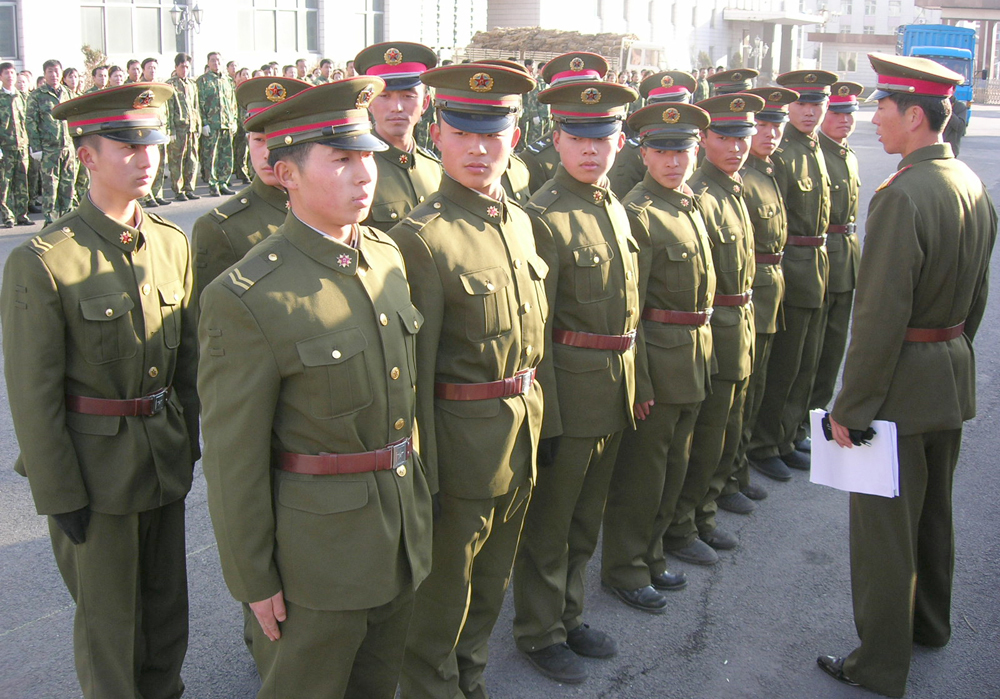
At facilities like the one in a suburb of Beijing, the attire is head-to-toe in camo as if preparing for routine militant training: walking in straight lines with synchronized steps through locked cell doors.

Facilities to treat individuals with harmful disorders are essential to the safety of patients and those close to them. But, honestly, when it’s an extreme and disturbing method to cure someone of a disorder that isn’t even established, the entire thing is ridiculous.

Eating? Bullshit.

By Joel MacKenzie

I am so done with eating.

I can’t count how many times in the day I wish I wasn’t hungry so I could keep doing whatever I was doing.

I wasn’t always like this. Years ago, I remember explicitly thinking that someone who considers eating a chore (Anderson Cooper) was insane. Eating was the best. Eating was magic. Everything else sucked because it stopped me from eating, from feeling completely chalked-full of energy, from fulfilling one of the most basic drives in life, to attain energy, to live, to thrive.

But I fought that desire. I wanted to know that there was more to life than being full. Outside of school, I found passions: I filled my mornings with exercising, but that only lasted an hour, tops. I took up Chinese, writing, and music.

And now I’d be completely content being fed by IV lines so I could keep working all day. There’s more to life, and I’m gonna find it.

Bhangra helps women dance their way to health

0

WEB-bhangra-PAMRSFU PhD candidate Iris Lesser is currently conducting a study on the health benefits of Indian bhangra dance in postmenopausal Southeast Asian women.

Lesser said of the study, “We were originally interested in seeing whether physical activity improved the women’s cardiovascular health. We wanted to make sure that the activity was something that they wanted to do.”

Although the results are not yet conclusive, women who have completed the 12-week session bhangra program say it is having positive mental effects, Lesser told the South Asian Link.

The study is being conducted by SFU’s Community Health Research Team (CoHeaRT), an organization composed of researchers who are developing community-centered strategies to improve disease management and residents’ physical activity levels.

The women are participating in this program as part of the South Asian Exercise Trial (SAET), a project that tests the effectiveness of various exercise programs for South Asian women. This population’s physical activity levels are generally quite low and have been shown to contribute to more than 20 per cent of heart disease deaths within the population.

Lesser currently has 75 women enrolled in the program, after calling for participants via radio and TV ads in the South Asian community.

“The [positives] extend beyond obvious physical benefits they are receiving from their exercise.” 

Iris Lesser, SFU PhD candidate

The program was made possible in part thanks to Lesser’s connections with the Vancouver International Bhangra Festival (VIBC). One of the emcees of the event, Mandeep Patrola, serves as the fitness instructor for the program’s bhangra classes.

According to Lesser, it is an activity that the women really relate to. “The women are drawn to it,” she explained, “because there is something culturally significant about bhangra that brings them together. The [positives] extend beyond obvious physical benefits they are receiving from their exercise, as they develop a sense of community and friendship as well.”

Before starting the program, Lesser and her colleagues measure a participant’s eligibility via a health assessment, monitoring their cardiovascular risk factors and their muscle mass. The participants then go on to bhangra classes three times a week for three months, before they are taken back to the lab and monitored for changes to these aspects of their physical health.

While the exact results and conclusion of the study are still being analyzed, they are expected to be available to the public by early 2015.

Lesser said of this involvement from media outlets and community members, “We [. . .] expect the translation of knowledge from this study to be fluid because of our partners, and to find ways to start increasing physical activity in the community through interventions like this one.”

Nobody unfreezes pizza like my Nonna, okay? Nobody.

0

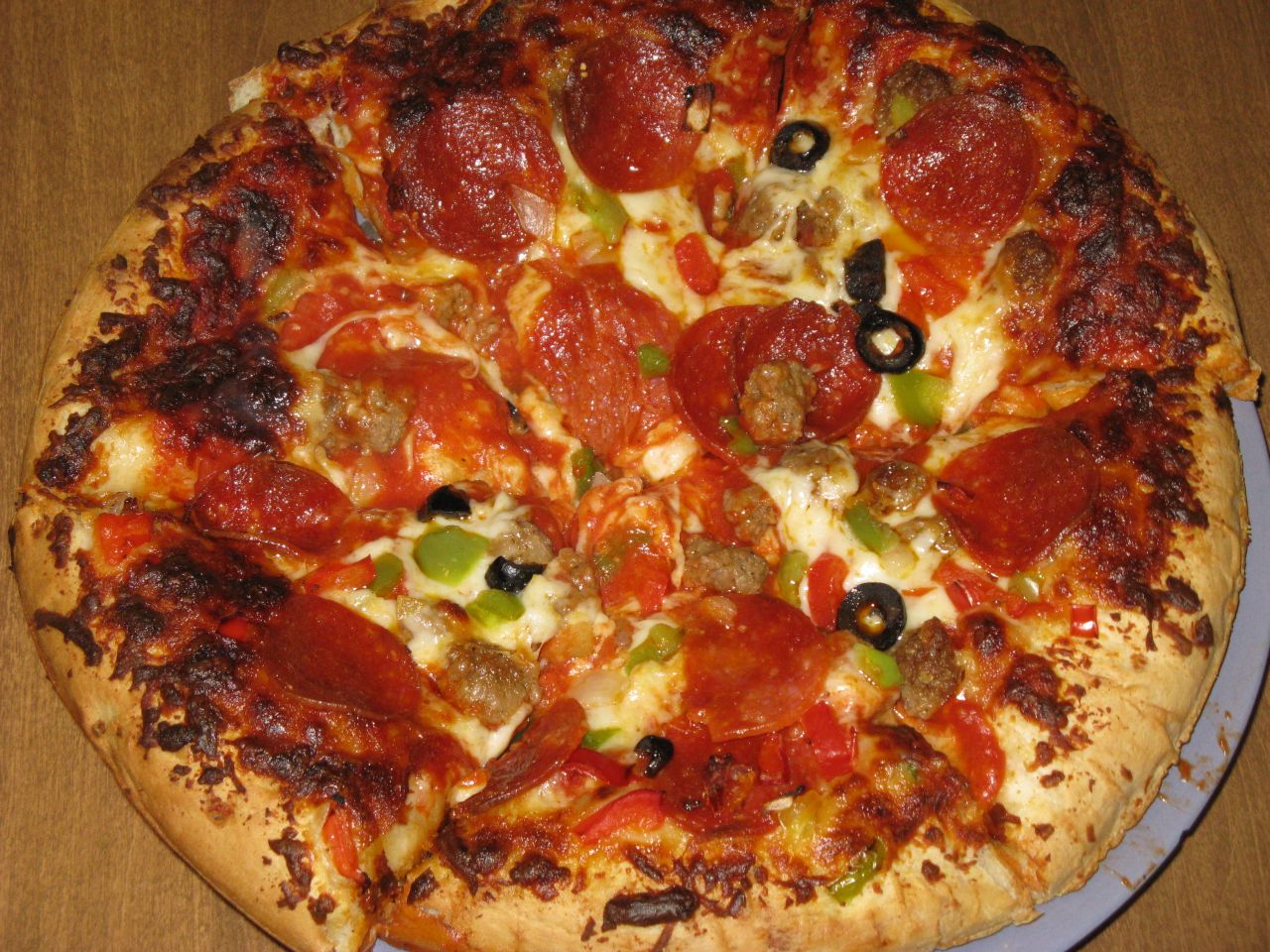
Let me start out by making things completely clear. This pizza you served me is wonderful and I really appreciate it. You are not a bad cook at all. The way you slid this pre-made dish in the oven was outstanding, but I’m just saying that my Nonna unfreezes pizza like no one else.

Honestly, she’s from the old country (Edmonton) and they just know how to do it better there. She has a certain je-ne-sais-quoi to her broiling technique and she cools it down for just the right amount of time.

I’ve tried to replicate her technique at home, but I just can’t do it. She won’t tell anyone her secret. I think it’s got to be the temperature settings and how long she keeps it in the oven. She’s figured out the perfect time in between 14 and 17 minutes, I know that, I just don’t know what it is!

Don’t get me wrong, your pizza was unfrozen pretty well but it’s just like comparing an authentic Safeway-brand frozen vegetable bag to a Save-on-foods frozen vegetable bag. Yours just isn’t the real deal, you know?

You’ve really got to come over and try her pizza sometime. She buys the thin-crust version, just like they thaw-out in Italy! It’ll change your life, seriously it’s that good.

Oh, and for dessert she might even make her famous Dr. Oetker Tiramisu. She follows the instructions on that package like no one else! I’m telling you, the best!

I know a lot of people might think this about their grandmother’s cooking but my Nonna really does make the best food.

No one heats up a Hungryman quite like she does. I could study the culinary arts for my whole life and I still wouldn’t be able to toast an Eggo waffle like she does.

I’ve got to say the only cooking of hers that I don’t enjoy is when she makes something from scratch. God, her ‘Spinelli family rice casserole’ tastes awful. But still that pizza she unfreezes is like nothing else. I’m telling you, it’s just the best. There’s nothing quite like it.

Group of sexy 20-somethings excited for cabin getaway and definitely no serial killers

0

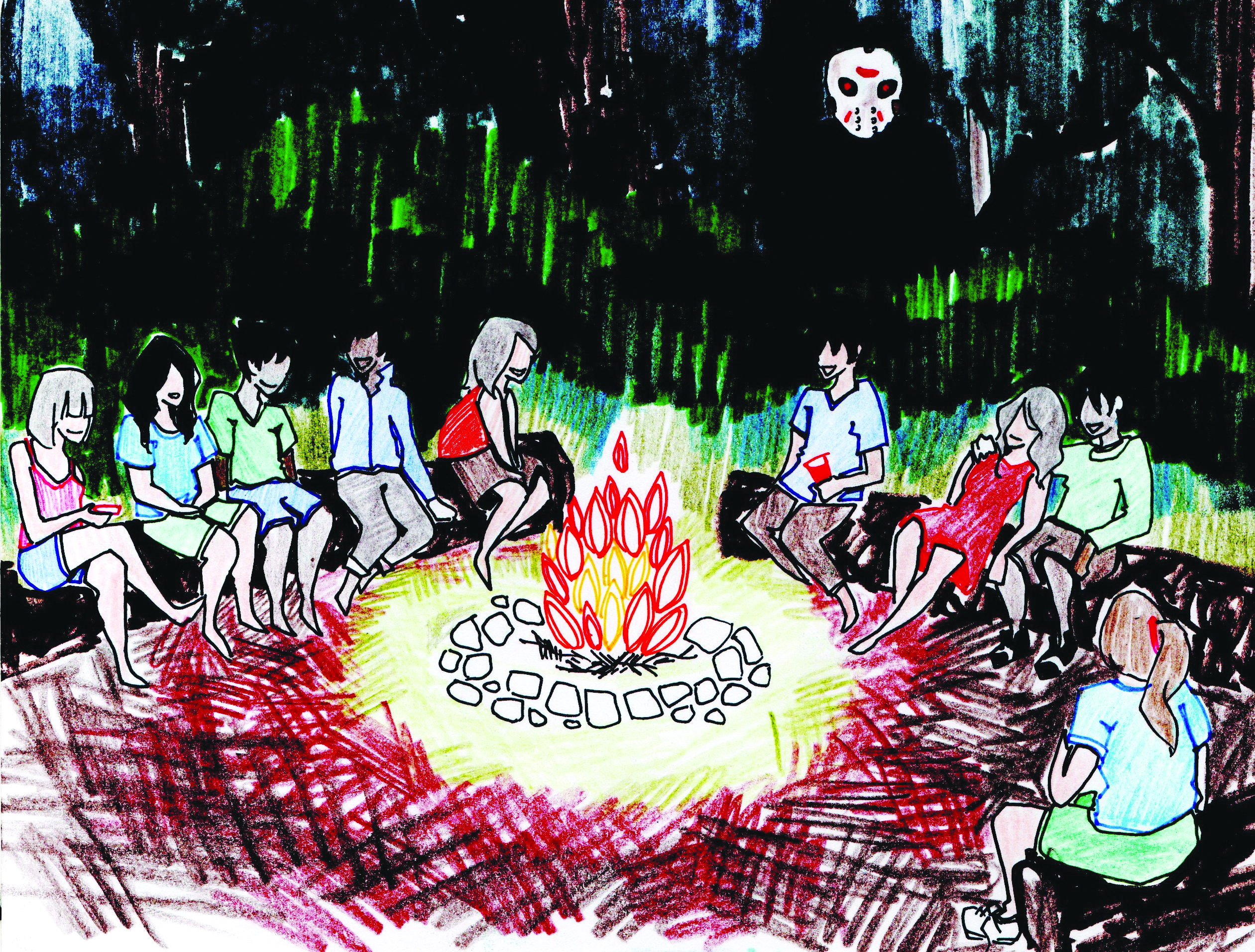
A group of local college-aged youths are reportedly excited to spend the upcoming weekend at their friend Joe Fresca’s cabin, where there will be drinking, plenty of sexy escapades, and positively no serial killers picking them off one by one.

“The next three days are going to be all about chilling with my best friends and not getting murdered in an elaborate fashion,” Fresca told The Peak. “It’s going to be a blast!”

Fresca’s family cabin, which may or may not have been built on an Indian burial ground, includes such amenities as three bedrooms, a full steam room, a 12-person hot tub, and a dimly-lit cellar from which mysterious noises sometimes emanate.

“Yeah, I’ve heard Joe’s cabin has this really freaky cellar,” said dumb cheerleader Catherine Williams, one of the weekend’s young and attractive attendees. “I’ll probably check it out late at night when everyone’s asleep, just so I can enjoy it all to myself.”

The cabin, which has its own attached tool shed full of sharp things to murder unsuspecting victims with, is located deep in the British Columbia interior and is notorious for having unreliable cellphone reception, meaning the group can relax knowing they won’t be bothered by bosses calling or emergency operators. There are also no neighbours within a 20-mile radius of the cabin, meaning any attempts to run for help will likely end in the sexy teen being murdered in the woods.

Perhaps least excited for the trip is self-described bookworm Rachel Auburn, a level-headed and fast-thinking friend of Fresca’s who is planning to remain sober for the whole weekend, is a former track star, and also has some kind of tragic flaw that audiences will find sympathetic and/or relatable. 

It has been speculated –— but not yet confirmed –— that Auburn will likely have to face her inner demons at some point during the weekend if she’s going to defeat whatever supernatural evil probably won’t be waiting for her and her friends at the cabin.

“I’m sure it’ll be a fun weekend but I can’t shake the feeling like something bad is going to happen,” said Auburn. “As long as everyone steers clear of any mysterious Latin inscriptions and doesn’t try to read it out loud, we should be good!”

Horoscopes for Busy People

0

At Peak Humour we understand that you’re probably a very busy person who doesn’t have time to waste reading the typical vague statements about what you might want to do or may want to avoid in your day as found in your typical horoscope. So, just for you, we cut the fat and got straight to the exact guidance that you, the busy astrology-believing idiot, need!

Aries (March 21 – April 20)

Get the low-fat.

Taurus (April 21 – May 21)

Stop blinking so much.

Gemini (May 22 – June 21)

Watch Wheel of Fortune, skip Jeopardy.

Cancer (June 22 – July 22)

Apologize.

Leo (July 23 – August 22)

Answer every question you receive this week in this order: yes, no, no, yes, yes, yes, toasted, yes, yes, I said toasted, yes, yes, no, yes. Repeat from beginning if necessary.

Virgo (August 23 – September 23)

Don’t buy that, the other one is on sale and it’s like the same thing.

Libra (September 24 – October 23)

Stop at red lights.

Scorpio (October 24 – November 22)

Loft the boomerang bird so that it hits the TNT in the middle of the level directly. 

Sagittarius (November 23 – December 21)

Don’t bother reading this whole thing.

Capricorn (December 22 – January 20)

Wear blue.

Aquarius  (January 21 – February 19)

Put three chips on black and one on “00.”

Pieces (February 20 – March 20)

At 10 a.m. on Wednesday, yawn and stretch your arms in the air.

Born on this week (July 21 – July 28)

Eat some cake.