Home Blog Page 1146

Former professor to represent Burnaby North-Seymour riding

0

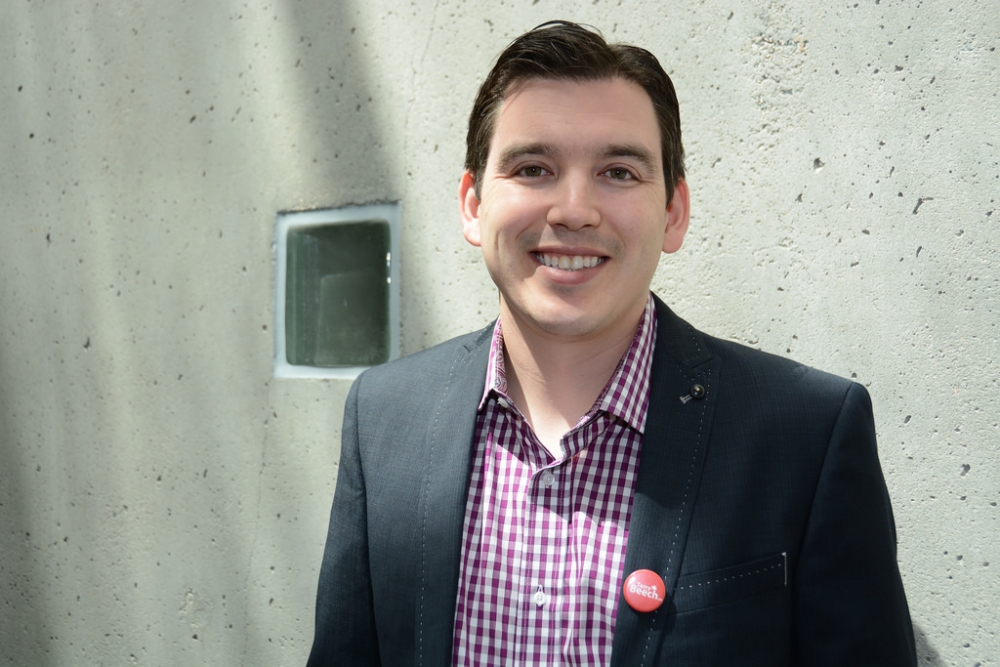
WEB-Terry Beech-Stephen HuiSFU alumnus and former Beedie School of Business adjunct professor Terry Beech has been chosen to represent the Liberals in the Burnaby North-Seymour riding for the 2015 Canadian Federal Election.

Beech was officially named the Liberal candidate at a Nomination Meeting held at the Confederation Centre of the Arts in Burnaby on July 16. The meeting included a vote, however, the process of was a formality as Beech was the only person running, winning by default.

Beech, who graduated from SFU in 2006 with a BBA in Business and Economics, is the CEO of Hiretheworld.com, an organization that calls itself “an online resource that connects employers with professional designers from around the world, allowing businesses to access top design talent quickly and easily.”

He, along with his twin brother Doug, also run the non-profit organization, Twinbro, the mission of which is “to inspire youth to be confident individuals who see the value of post-secondary education and believe in their ability to attain it.”

Beech’s motivation to run for office stems from growing up in a lower income household and having to work hard to go to university. He told The Peak, “We came from, like a lot of people, a poor background. My dad and my mom had to struggle to make ends meet [. . . and] when my parents got divorced, things got a little rocky and things got a bit harder. And because both of my parents didn’t go to university, [post-secondary education] wasn’t really talked about at the dinner table.”

“There’s a lot of potential we can unlock in our own citizens.”

– Terry Beech, 2015 Liberal candidate for Burnaby North-Seymour riding

He continued, “We were able to get the education that we wanted; we had to scrimp and save to get it, and eventually we got it. We were able to leverage that to build pretty good careers for ourselves. I want to make sure that everybody, no matter what their situation is in life, has a similar opportunity to be successful in Canada.”

Beech also stressed the importance of entrepreneurs entering government, stating, “I think there’s lot of opportunities to modernize and do things differently. There’s a lot of potential we can unlock in our own citizens to be more entrepreneurial and be more innovative.

“I think we’ve come from the last couple of generations, as a society, from where a safe career job was the way to go, and that isn’t necessarily available anymore.”

The Burnaby North-Seymour riding was recently created by the 2012 federal electoral boundaries redistribution. The new riding will be comprised of what is currently the northern part of the Burnaby-Douglas riding and a south-east portion of the North Vancouver riding.

These ridings are currently held by the NDP and the Conservatives as a result of the 2011 election, in which the Liberals, who have have traditionally lost elections in these ridings, finished second and third.

Although such circumstances may complicate Beech’s desire to become the first MP of Burnaby North-Seymour, he has beaten the odds before, running for city council at 18 — and winning. “I was captain of my debate team and we were using the city council agendas as kind of an agenda, as a way to test the group, and after a while, we didn’t agree with everything they were doing,” he said. “So, I talked to my law professor and told him I was going to take a run at this, and we took a serious shot.

“We built a campaign team, worked hard, and knocked on doors and [I] was fortunate enough to get elected.”

Although he eventually quit to focus on his studies at SFU, he believes that his experience in municipal politics has shaped him to best represent the community.

He concluded, “I think that my background, coming from municipal politics, is going to make me a better representative and I know what it takes to communicate with all the citizens in the riding, put together complex views, complex interests, and move forward doing what’s best for everyone.”

SFU alumnus finds the romance in job hunting

0

BW-Job date-xianrendujia-Flickr

University students may tend to focus their energies on courting romantic interests, but a recent column by an SFU graduate suggests that they should court career interests in a similar fashion.

Adrian Papara, an economics graduate from SFU and current MBA student in Ottawa, recently wrote a column for The Globe & Mail describing how applicants need to approach the job market like they would the dating scene.

In his column, Papara emphasized the need to stand out in interviews just like one would when trying to get a date. He wrote, ”When it comes to getting noticed at business or school-related networking events, I have adopted the habit of wearing vivid coloured neckties to make myself increasingly memorable and attract attention.”

Much like dating, searching for a job can be daunting for students, explained Tony Botelho, the director of SFU’s Career & Volunteer Services. He explained, “There are a group of students who raise secured work before they graduate, [but] there is a percentage of students who are completely intimidated and find the whole job search process intimidating and absolutely frustrating. Then there’s a huge bulk in the middle.”

Botelho, who helps students get “their best shot at ending up in employment in line with what they might want to be doing,” expressed the advantages of sorting out career priorities early. Botelho suggests students take into consideration the value they place not only on things such as income, travel, time-off, balanced lifestyle, but also believing in the work they do. “Students who start early and [are doing] activities and sort of thinking of things [. . .] tend to do better.”

According to Botelho, there are three tiers of “any effective work search,” the first of which aligns with Papara’s arguments in his column.

The first tier is what Botelho calls the “online portion.” Similar to how people search through online dating profiles, this includes searching for job postings through websites such as Craigslist. However, he cautions, “Very few people get career related jobs from job postings.”

Papara upheld the importance of a well made Linkedin account which serves as a “digital resume,” saying that “crafting a well-thought personal description always helps you stand out among other users.”

The last two tiers of Botelho’s strategies revolve around “you as a human being interacting with other human beings.”

The second tier is making connections, whether they are through networking events or one-on-one meetings.

Although Botelho agreed with Papara’s statement that standing out can be good, he noted that it has to be “in a positive way,” saying, “there’s no one thing; it is overall thinking and strategy.”

He did warn against simply networking, saying, “Networking opportunities are just part of a strategy but the bigger point is getting into situations where you are interacting with people and the type of people you want to interact with and doing it in an authentic way.”

This leads to his third tier, which he feels is perhaps the most important: making active connections. These include volunteering, serving on a board, internships, and co-ops. Botelho describes this as “put[ting] yourself into situations where people see you do something really well.

“When someone sees you do something or contribute, that raises their view of you even higher, and they’ll work harder for you, supporting you with other people or within the organization as well,” he said.

In spite of all of the planning and preparation, Botelho says finding a job really depends on the mindset of a student, as a negative mindset can hinder any search for work. Botelho shared some advice that could be applied romantically, and professionally: “It’s important to stay optimistic, to be flexible, [and] open minded.”

The Underground Sound

0

Cover-finished

What are some of my favourite music venues in Vancouver? I’d love to tell you, but I can’t. If I published their names and gave away enough information so that anyone reading this could find them, they would be shut down within the week. That’s because a lot of my favourite venues aren’t even considered venues by municipal law: my favourite venues are illegal.

Outside the club mecca of Granville Street, beyond the cobblestones of Gastown, and away from the rest of downtown culture, illegal music venues are peppered throughout the Lower Mainland. You won’t find them being reviewed on Yelp and their shows won’t appear on livevan.ca, but these bustling counter-culture hubs do exist, and thrive, under the radar.

Featuring plenty of local bands and after-hours parties, illegal venues are a way to escape the monotony of bar culture. The only problem is in their name: they’re illegal — and sooner or later, the city always catches up with them.

The Law

What do I mean when I say underground venues? It’s a loose definition by any means. Some are art galleries or practice studios that occasionally host live performances; others are industrial spaces that exist in a sort of gray area between performance space and party location, and a surprising amount are just regular households that give bands a place to play and audiences a place to listen.

The common thread between all of them is the cultural aspect, and the way they float under the city’s radar. For most of these underground venues, there are two main legal hurdles standing in their way: various Vancouver city by-laws, and the province’s liquor laws.

These bustling counter-culture hubs exist, and thrive, under the radar of Vancouver police.

On the city of Vancouver’s website, there’s a section dedicated to outlining the particular by-laws that would come into conflict with things such as underground venues. There’s nothing that directly singles out illegal venues, but there are multiple by-laws meant to prevent them, including the Noise Control By-law, the Fire Control By-law, and the Zoning & Development By-law.

The last one is particularly important because this by-law decides how the city is geographically planned through zoning districts: every part of Vancouver is divided into districts, including residential, commercial, and industrial, limiting the kinds of uses a building within each district can have. The majority of underground venues are located in either the commercial or industrial zoning districts, where rent is cheaper and they’re less likely to garner noise complaints.

The other headache for illegal venues is liquor licensing, which is notoriously bureaucratic in British Columbia. Despite the ongoing struggle to reform many of the province’s archaic liquor laws, it remains expensive and difficult to acquire licences for many smaller events. But because liquor sales are where most venues make their money, many underground venues opt to simply sell alcohol without a licence. 

I Fought the Law…

Of the people I wanted to interview about Vancouver’s illegal venues, Samantha* was at the top of my list. I felt it was important to talk to her for a couple of reasons: she’s been involved with the art and culture scene in Vancouver for several decades now, and she’s currently operating a venue under the city’s radar.

Though any further detail would give away too much, Samantha is one of the most qualified people to talk to about running an underground venue. “What was your favourite underground venue that was closed down?” I ask her. She replies after a moment of hesitation, “Well, probably one of the ones I used to run.”

I can’t list the venues she used to run because it would reveal her identity — this is the kind of secrecy I have to operate in during all of my interviews. While there are a few people willing to speak candidly and on the record about things like their past or present involvement with illegal venues, there’s an understandable hesitancy. These venues and those behind them have enough to worry about without drawing additional attention to themselves.

Samantha’s reason for helping curate a space for local shows is simple: she believes that the only way to help grow the arts community in Vancouver to provide a safe space for artists to do so. She points to the systematic dismantling of the 100-block of West Hastings over the last decade — which saw artist hives such as the What Gallery, Red Gate, the Church of Pointless Hysteria, the Dynamo, and others either shut down or forced to relocate — as an example of how the city is failing to provide opportunities to emerging musicians and artists.

Many of these buildings would host shows and function as community art spaces in the meantime. Without these affordable spaces where artists can develop their craft, Samantha worries that there will be a negative impact on Vancouver’s culture and community.

“[Many notable artists] spent a significant amount of time there working on stuff, making mistakes and fucking up and improving their thing,” she tells me. “You need to have spaces like that. People think about supporting the arts, and they say, ‘We need to put a billion dollars into the Vancouver Art Gallery where we can showcase this art made from other places.’ Okay, that’s great, but if you don’t have places where people can spend five or 10 years improving their skills, then what are you going to have to show?”

Many of these venues host shows and function as community art spaces in the meantime.

She continues, “Culture is an interesting thing. Maslow’s hierarchy of needs says you need your basic needs fulfilled before you have time for culture, which is like the last thing on the list. Before you can enjoy cultural things you need to be able to eat and have clothes and whatever, all these necessities. But the way I see it is that culture is the reason you bother doing all of that stuff. It’s the thing that motivates people, to make them get out of bed in the morning. 

“What is it that makes you get out of bed in the morning?” she asks. “It’s your relationship to other people and the things you do together. I would flip the hierarchy around; if you don’t have any reason to live, then why bother eating and all that?”

“If someone’s reading this article,” I ask, “and they don’t know a lot about underground venues, what’s the one thing you’d want them to know about these kinds of venues?”

“It’s basically the R&D lab for culture,” she replies. “And culture is self-generating. You can create all kinds of bureaucracy and institutions around the results of that process. What needs to get supported is that ground layer and it doesn’t have to be active support — just don’t actively destroy it.”

… and the Law Won

While the name 333 may not ring a bell, it was one of Vancouver’s most prominent underground venues between 2013–14. I had the chance to catch up with the proprietor of 333, Chris Merrell, and he told me about what happened the night the police finally came to shut things down.

“Toward the end of the night when everything was dying down, three or four police cars quietly rolled up and they kind of just ruffled our feathers a bit. Looked through everything, asked us a million questions, and ultimately told me clearly, ‘You can’t just do this.’

 “[The officer] spoke to me for nearly an hour and was pretty upfront, there wasn’t any hidden agenda. He was like, ‘You know how this works, you can’t just do this. You can’t just be open all the time and be a busy venue.’”

Once known for its late hours and eclectic range in shows, varying from hard-core punk-rock to EDM, 333 was shut down back in April of this year. It wasn’t a shock to the rest of the underground community, since that’s what usually ends up happening to these sorts of venues, but it still stung. But Merrell hasn’t given up just yet.

“The reason I think this is an issue and why artists should care about it isn’t because I think it’s cool to not follow the law and not play by the rules in the city you live in,” Merrell explains, “but because this all happened because me and any other venue like mine are expected to abide by licensing and permitting that even [some of the bigger venues] are struggling to keep up with. It’s difficult to open up a business and keep open that business and thrive for people who aren’t coming in with tons of capital.

“At the risk of making some generalizations here, artists don’t tend to have money when it comes to the independent art scene,” he continues. “It’s not economically possible for there to be a punk-rock venue that’s the right space, the right room for it, and in the right neighbourhood and can cost what it needs to cost for people to see that show so it can support touring bands. It’s not economically possible for it to be done and to not be constantly struggling to stay open.”

Where Do We Go from Here?

After a three-month hiatus from 333, during which time most people in Merrell’s position would probably have moved on to other projects, the landlord dealt with the city and has returned with a new occupancy permit for the building. Merrell is now free to start hosting shows at his venue again, with a few restrictions in place: no liquor sales without the proper permits, and the promise that every show be all-ages.

“I can do as many all-ages gigs as I want, as long as I keep it at a safe capacity and everything. My plan for the future is basically to just get it rolling, book high-quality live music gigs, and try and stay within a reasonable limit so that the city is happy with me,” Merrell says.

“We’re going to go for it and it’s going to be way harder, but we’re going to play by the rules.”

Public safety is important, and the city does a thorough job ensuring that buildings are up to fire code and other safety regulations — but restrictions have become a double-edged sword for many of these venues, which are arguably safe but not always up to the specific standards held by by-laws.

“[The city] generally shuts places down on the basis of fire code and safety-type of regulations,” explains Samantha, when I bring up why so many of these spaces are disappearing. “That’s certainly the thing that’s brought up the most. When there’s ever a public discussion on it, people say ‘Oh, well places have to be safe.’

“Safety is important but I can go skydiving if I want to [. . .] I can take that risk, that’s an acceptable risk. How many people have died from cars in Vancouver in the last five years? How many people have died or been injured at an underground party in the last five years? What are the relative risks that we’re talking about here? [. . .] It’s kind of a sacred cow, they can say ‘Well, we don’t want people to die in a fire.’ Well, I don’t want people to die in a fire either.

“If people come to us asking to have a show here and we say ‘Sorry, the city won’t let us; go somewhere else’ then they will go somewhere else and it’ll be somebody’s basement or some place that’s hiding. A lot of the scene in Vancouver is actively hiding from the city, and so that’s why people don’t know about it.”

Will there ever be a day when venues like Samantha’s or the old 333 are welcomed into the Vancouver culture scene, instead of being forced to operate on the outskirts or underground? It’s hard to say for sure — with the by-laws and restrictions currently facing Samantha and other owners, it seems like we’re a long way from seeing underground venues spread into the mainstream of Vancouver’s music scene. But as long as there are fans and bands willing to support it, this underground scene will continue to thrive, with or without police intervention.

It’s easy to get caught up in the city’s infamous reputation as No Fun City, but drop the moniker and preconceived notions for a moment: you may find there are a considerable number of amazing people in Vancouver doing amazing things for the arts community — if only you’re willing to look a little closer.

*Name was changed at the request of interviewee.

Researchers generate a buzz around wild bees

0

CMYK-Bombus_cropped

SFU biology professor Elizabeth Elle and PhD student of biology Kyle Bobiwash are currently studying Lower Mainland and Fraser Valley pollinators in order to help conserve the bee population and improve how they are used in agricultural practices.

The two are especially interested in gathering information on wild bees, a species that is often left out of farmers’ consideration due to the lack of research that has been conducted on them.

Due to increased pesticide use, there has been a recent decline in the bee population in North America. As Bobiwash explained, farmers often “only think of the crop and not at all [about] the free services we get from the bees.” Bees spend their time pollinating the crops we eat every day, creating honey, and ensuring that a large variety of foods continue to exist.

In order for bees to continue to survive in our changing agricultural landscape, many researchers, including Elle, feel that harmful practices need to be changed.

Of special interest to the duo is a particular Abbotsford farm, which has a unique partnership with their black and yellow striped friends. Most farms, Elle explained, rely on the purchase of honeybee colonies to pollinate their crops.

Often, farmers will use two honeybee colonies per acre, with each colony costing them as much as $100. This farm in Abbotsford, however, is entrusting care of their crops to wild bees alone.

image_2

These wild bees, most of which are wild bumblebees, not only help free of charge, but are also often better pollinators than their expensive counterparts.

At SFU, Elle and Bobiwash are working towards understanding which pollinators are important to different crops, what the species diversity has to do with the area and farm system in place, and how it all relates to the farm’s landscape and the pesticides it uses.

From this, they hope to enhance wild bee populations by creating alternative food and nesting sources for them, including ‘bee pastures’ to sustain them when crops are no longer in season. These pastures are areas of land planted with flowers where bees have access to nourishment in colder months.

The two also plan to inform people of the key significance wild bees hold in our agricultural practices, and how we should be managing our lands if we want our practices to be sustainable in the long run.

BC has approximately 450 different species of wild pollinators, and the goal is to ensure they all have as much assistance as possible, so that they might, in turn, assist us.

This is a multifaceted project, explained the two, both at SFU and throughout the province in general; it is a project that will not happen overnight. However, there are ways people can encourage wild bee population sustainment and growth: The simple act of putting a pot out on your deck or balcony can provide food for a passing bee, who in turn might pollinate a plant in your vegetable garden.

As Elle said, “When you provide food for the bees, they provide food for us.”

The Real World

1

Family_watching_television_1958-1

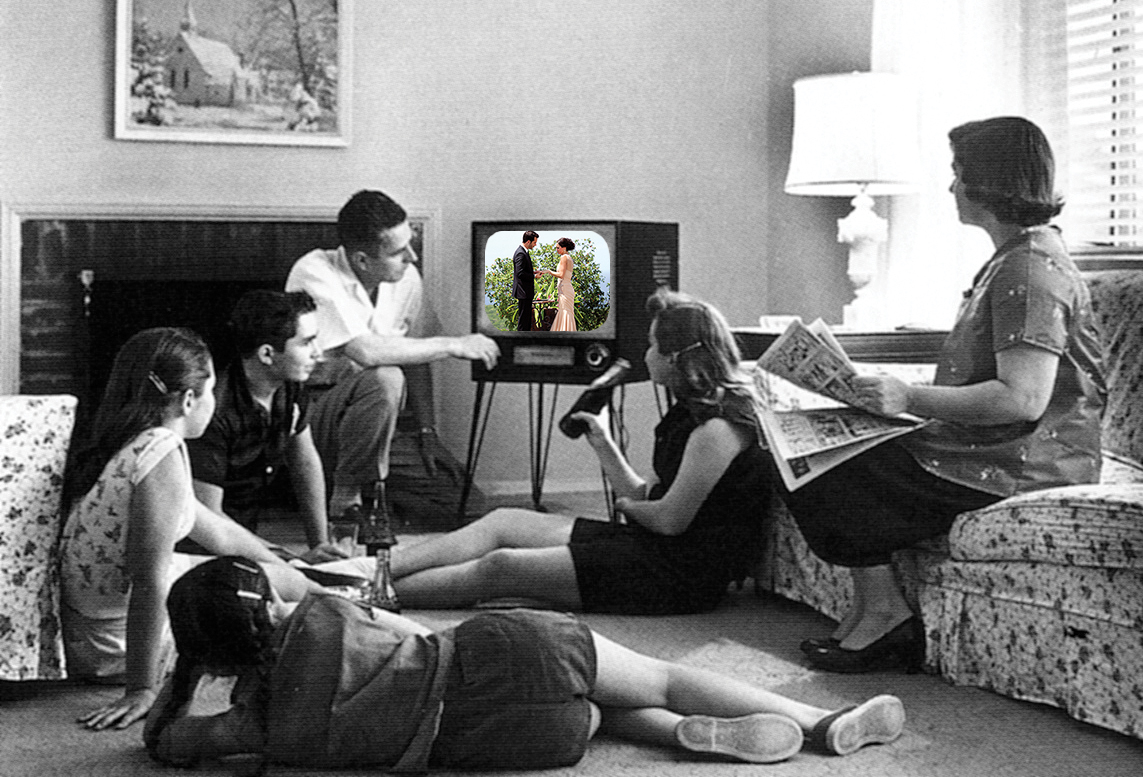
Sitting with my roommate on a Saturday night while having dinner, I decided to join her in one of her favourite activities: watching reality TV. That night, it was The Kardashians. As I quickly realized, this may not have been the best place to jump into the strange, convoluted world of reality television. Every time someone had a happy moment or broke down in tears, cameras would appear, zooming in on people’s faces while dramatic music swelled.

Something about this seemed about as far from ‘reality’ as anything. I had two choices: either I could burst my roommate’s bubble by arguing that all of this had to be elaborately staged, something I’m sure she’s aware of, or I could just quietly step away. I chose the latter.

The promise of a reality TV show is a view into people’s private lives: unscripted situations, real life drama, and uncoached stars. However, a little research regarding the genre proves this is pretty far from the truth. Recently, entertainment writer and former reality star Anna Klassen wrote a firsthand account of her experience with reality TV and, suffice it to say, it’s about as bad as you would imagine.

From fake dressing her dog to transforming her entire personality to better suit the reality TV genre, nothing about Klassen’s experience rings as true as TV producers would have you believe. As Klassen tells it, she wasn’t being filmed as a real person: “I was playing a version of myself — a character — and with a nudge here and a shove there, it was clear what character the producers wanted me to play.”

This is exactly what reality TV is: a cheap, reproducible format where actors are told to appear as ‘normal’ as possible, with enough glitz and glamour thrown in here and there to keep viewers interested.

Reality TV offers a level of wish fulfillment that keeps countless viewers glued to their screens night after night.

It reminds me of my older cousin, snapping at my wrestling-obsessed younger brother: “You know it’s all fake, right?” My brother, too young to know better, simply denied it and continued to watch it as if it didn’t bother him. Sitting with my roommate waiting for The Kardashians to end, I eventually confronted her with a similar reality check. Why, I asked, did she still insist on watching these barbie dolls play out fictions of their lives on national TV?

“I don’t know how to answer that, honestly,” she replied. “I watch The Bachelorette, for example, because it has a fairytale-like concept with a pinch of reality thrown in, and that just makes it believable. It’s fun to watch, and it’s still more realistic than Cinderella!”

To be clear, my roommate isn’t dumb. She knows this is all fake. But there’s still that level of wish fulfillment — of suspending one’s disbelief long enough to believe that shows like The Bachelorette are about real people — that keeps her and countless others glued to their screens night after night.

Film producer and television director Gavin Polone, writing for Vulture, spoke about how he was sure of the fact that the finale for The Real Housewives of Orange County was staged — the plot, camera angles, and dialogue were too perfect to not be written, he said. His experience in the industry suggests he knows what he’s talking about, and it helps to know I’m not the only one who has a hard time believing any of what I watch in these shows is real.

Polone goes on to write about a discussion with a top TV executive, who told him that “reality characters self-produce, knowing that they need to be a heightened version of themselves [. . .] Sometimes we’ll leak information to them [meaning things each character wouldn’t know that the other characters said or did, which may instigate a conflict], but we won’t tell them what to do.”

This recalls what Klassen wrote about her experience with reality television; she was told to be a more glamorous version of herself, one that appealed more to the camera and to the audience.

In the past decade, reality TV has become one of the most popular forms of entertainment in the Western world. But if we know it’s all staged, why do so many still watch it?

Polone suggests it may have something to do with the spontaneity of the form: though most reality TV shows are at least partly scripted, their use of untrained actors in semi-real situations can still result in some genuinely surprising and unexpected moments. Others, like my roommate, are willing to pretend what they’re watching is real, even if they know deep down that it isn’t. And, in a sense, we do this no matter what we’re watching. Otherwise, how would we be able to connect with characters we know are fictional?

It reminds me a little of my childhood, when my parents would start recording me and I would instantly change the way I was standing, sitting, or doing whatever I was doing. The minute you put a camera in front of me and press “record,” I’ll still alter my behaviour and actions accordingly: to look good, to be more camera friendly. This, to me, is a little like being on a reality TV show, except that, in the latter case, the camera is rarely off.

Ultimately, reality shows are cheap and formulaic enough to ensure that, as long as people are willing to watch them, producers will be willing to make them. And as long as we’re well aware that what we’re watching is not as real as it seems, what’s the harm in a little drama or a happy ending once in a while?

Doctors require the right to refuse treatment based on beliefs

0

The College of Physicians and Surgeons of Ontario (CPSO) is currently reviewing its policy which accords doctors the right to refuse to treat a patient based on religious or moral grounds in non-life threatening situations.

While at first I was in favour of this re-evaluation, I have since come to realize that this situation is not a simple one.

I initially thought that this policy change could stop a doctor from denying a woman contraception or an abortion, and stop any discrimination based on homophobia, racism, or sexism; it seemed to allow for more respect and equity toward everyone.

But there is a question lingering in the back of my mind: have we forgotten the rights of the health professional? And if so, could that make them less effective at their work? Forcing someone to undertake a task that they find to be incompatible with their moral beliefs doesn’t seem to be the right course of action.

Carolyn McLeod, a philosophy professor at the University of Western Ontario, is part of a research team studying conscientious objections in health care — the team plans to submit their work to the CPSO as a part of its review.

She explained to The Globe and Mail, “We argue that [doctors] need to provide referrals for health services that they morally object to, [and] we talk about the importance of not demeaning or humiliating a patient while they’re refusing to provide the service the patient seeks.”

She has the right idea here. By denying the right to refuse treatment, we could prevent some doctors from doing their jobs to the best of their ability. Furthermore, doctors, regardless of their decision to treat the patient themselves, should be responsible seeing have that their patient receives the proper care.

To force a doctor to do something they don’t agree with is to make many situations too methodical, to take the humanity out of the situation. A textbook or machine can outline what’s wrong with you and what the possible solutions are, but there is a reason we don’t completely rely on that kind of objective discretion. There is comfort in knowing that you are being handled by a person who cares about their decisions and the outcomes.

If a doctor is biased by beliefs that are against what the patient desires, then their treatment options will be made under that shadow of doubt. Medicine is a science and in the end a medical decision should be based on scientific reasoning, not on the will of God or any other belief system. Doctors should feel obligated to think beyond this, and give a referral if they don’t agree with a procedure.

All doctors should be aware going into the profession that they will be working with all kinds of people, and that sometimes they will have to make decisions that they may feel uncomfortable with. If it is going to be a common problem, then maybe they should consider another profession.

Doctors need to care about the outcomes of their choices in order to provide their patients with confidence. And while they should have the right to do so, any doctor should be very careful about denying treatment to a patient. We put ourselves in a position of vulnerability with our doctors, and they shouldn’t forget that. They are, after all, there to provide medical aid, not judgement.

Planet of the Apes sequel is all action and no plot

0

DAWN OF THE PLANET OF THE APES

The long awaited sequel, Dawn of the Planet of the Apes, has finally hit theatres nationwide, and this ardent fan had the opportunity to watch the premier. 

Set 10 years after the events of the previous installment, the deadly virus known as the Simian Flu has spread and killed much of the human population. Only pockets of immune humans survive and try desperately to rebuild their lives in the hope of returning to the lifestyles they enjoyed before the outbreak. The genetically modified apes, meanwhile, managed to escape into the forest, and while the humans were dealing with the virus, these apes built their own society, religion, literacy, and traditions without interruption or further conflict. 

Their uninterrupted peace comes to an end when a group of humans looking to revive a dam for their potential energy stumble upon two hapless apes. The events that follow throw into havoc the human and ape communities. Caesar, the leader of the apes, tries desperately to maintain peace, but his efforts are thwarted by a human-hating ape known as Koba, who usurps Caesar and declares war against the humans. 

This sequel provides an action packed, suspense filled thrill ride to complement its predecessor. This viewer was on edge the entire movie, as every moment of the film provided a unique experience into how these apes lived. As human society deteriorated, the ape society thrived, providing a unique parallel between these two communities. 

Appropriate attention was also placed into understanding why these apes might hate humans. The captivity they endured and the cruel animal testing that they suffered has irrevocably scarred them; as a result, their reasons behind wanting to live in isolation and only with other apes resonates with the audience. As the movie progresses, however, the viewer sees just how similar these two species are. 

Despite all the praise, there is an issue with this movie, but it is not specific to this one franchise. As Hollywood has moved into the trend of seemingly endless sequels to generate as much profit as possible, this franchise has fallen victim to this mode of thinking. Its simple plot and small advances from one movie to the next make this viewer question if this franchise will ever come to an end; and if it does, it might be from a jaded audience and not from a well thought out story. 

Nonetheless I do recommend this movie to fans and to the general audience. The movie on its own will not disappoint, and you will come out wanting more. 

World Cup: the beautiful connection

0

WEB-World cup-A C Moraes-Flickr

I don’t usually watch soccer.

I am not saying this as some badge of honour in some attempt to put myself ‘above’ soccer, nor am I trying to make the argument that hockey is 10 times better (at least not now.)

No, I am just stating that for some reason I, along with many other North Americans (or north of Mexico really), just never really caught the soccer bug. It’s a fun game to play, but normally, you would not catch me watching a match for more than a minute before changing the channel.

That being said, the World Cup was pretty cool.

I, again, am not going to claim that I went all out and watched every game, or even most games, and the fact that Canada did not have a team competing took away some of that connection that perhaps some of the international community here had. But at the end of the day, it did not really matter.

The fact that it is only every four years, like the (Winter) Olympics, makes it quite a spectacle. Even though I am not much of a soccer guy, I still wanted to be a part of it. It felt like I would be missing out if I did not catch at least a game or two.

You could argue that we should bond over more than what we watch. Maybe. But who cares?

Perhaps the greatest thing that the World Cup, or really any sport, does is to evoke a sense of community.

Whether it be seeing people at the pub wrapped up in the game, cheering after a big save or goal, or just seeing it being discussed on facebook, it was just fun to watch the community engage in such a spectacle.

To me, one of the great things about sports is the avenue of communication they open up. One of the reasons I watch hockey, beyond the excitement of the fast pace, is the connection it provides to others.

You cheer together, you revel in disappointment together; it gives you something to talk about. That’s what does it for me, that bond that connects a lot of us really.

And certainly the World Cup is no different. As a matter of fact, that connection I speak of is probably magnified with the amount of people watching and how much of an international event it is.

It was just fun just having a conversation with the person next to you, possibly a complete stranger, asking them to clarify the rules or asking them what team they were rooting for.

Perhaps it’s silly, you could argue that perhaps we should connect and communicate over more meaningful things. You could argue that perhaps we, as a people, should bond over something more than just something we watch.

Maybe. But at the end of the day, who cares?

Anything that promotes people coming together and becoming closer as a community is good in my books (except for some mass crime, I guess). And to me, that’s what sports do, whether you’re talking about playing or watching.

And despite its country vs. country theme that could be divisive, the World Cup instead brings people together. In my opinion, it is the epitome of this quality.

For now, however, it’s over for another four years and maybe next time I’ll get more into it, catch more than just a game or two. Just maybe.
(A)side Jab: “I’ve been with Germany since they won” sounds remarkably similar to “I’ve been with Germany since day one.” Use this, and you, too, can be a clever bandwagon jumper like me.

Coffee, Tragedy, History: Forty Ninth Parallel

0

Coffee and a good donut: A beautiful combination. The only problem with this pairing, however, is that so many of the places that make great donuts don’t make very good coffee and vice versa. Forty Ninth Parallel is the solution to that problem.

The atmosphere of the Main street cafe is just toeing the line of feeling like a warehouse, but they pull it off. The exposed brick, rugged wooden beams, and muted metal piping combined with the sleek glass and finished wood surfaces give a sophisticated and modern look to the cafe. The overall effect on the inside is very comforting and very much a part of the experience that keeps me coming back.

At the 4th Avenue location, wood grain peeks out from behind patchy teal paint, weathered window sills and faded colours recall someone who spends an hour each morning styling their hair to look like they just got up, but it works. Both locations provide an enjoyable experience and the quality of the goods is the same at either cafe.

At Forty Ninth Parallel, they take their coffee very seriously. Various roasts and blends are available, the brewed coffee is characterful and rich and the specialty drinks are made with the utmost care. Their cup of coffee is not the cheapest in Vancouver, but it is one of my favourites around town and a surefire solution to the pounding headache I get if I’m jonesing for another cup of java.

At Forty Ninth Parallel you can get a wide variety of donuts and other sweet confections to satiate that aching sweet tooth. Choices range from classic glazed, to peanut butter and jam, to maple bacon (with actual pieces of bacon sprinkled on top). Regardless of my own disdain for that last option, the donuts are truly delightful. I recommend the Classic Cinnamon, which is reminiscent of the classic fairground mini donuts.

Forty Ninth Parallel unfortunately does not support the arts much other than providing a quiet place for artists to work away from home. There are, however, various coffee related events open to the community, such as coffee tastings and other informational events that show customers the process (bean sourcing and roasting) behind the coffee.

The cafe is the offspring of two companies. The donuts are made by the locally based Lucky’s Donuts while the coffee is made by Forty Ninth Parallel Coffee Roasters. Together these companies create the perfect cafe experience. In fact, the cafe was recently awarded the title of Best Coffee House by Vancouver Magazine. Great Coffee. Great Donuts. Forty Ninth Parallel is everything a certain Canadian donut chain wishes it was and more.

Forty Ninth Parallel is located at 2902 Main Street and 2198 West 4th Avenue in Vancouver.


Couture: It ain’t so juicy

0

Say it loud: the Chanel show at Paris Fashion Week womenswear spring/summer 2014.

For many of us, the word “couture” brings to mind a bedazzled velour tracksuit, an exposed mid-drift, and a chihuahua popping out of a fake Louis Vuitton bag. 

We flashback to 2006, when The Simple Life of Paris Hilton and Nicole Richie was a trend-setter for us pre-pubescents, and an eyebrow wider than two millimeters was a cry for help. This Throwback Thursday is over, but the misconception of couture still remains. Well, buckle your seatbelts and unzip the Juicy because you are about to be shown the world of true haute couture. 

Close your eyes and imagine a woman. She is the uber-wealthy heiress to a French something-or-other empire and has just seen the Chanel Haute Couture collection at the Grand Palais in Paris. She wants one of the dresses, but one does not simply walk into the Chanel store and pick one of these garments off the rack. Those garments (that most of us are familiar with) are known as prêt-à-porter or ready-to-wear. 

For couture, she first has to make an appointment with a woman known as a vendeuse, a specialized sales person who knows the exact details of each client’s taste, figure, and budget. Once the dress is selected, meticulous measurements are taken and the work begins. On average it takes a team of pattern makers, seamstresses, embroiderers, and other craftsmen 120 to 150 hours to complete a couture garment, and the work is all done by hand! 

The most astonishing aspect of couture is the fit. Feeling like a second skin, couture garments are fitted a minimum of three times to ensure a perfectly snug and sensual silhouette. The garments are so well-fitted that all of the seams, buttons, and hems are adjusted to the exact proportions of each body. With the hand stitching, the fittings, the finest fabrics, a simple day suit with blouse can start at $10,000 to $15,000. Adding embroidery, laces, and 800 hours of manual labour (required for many of the finest dresses) can increase the price to hundreds of thousands of dollars. 

Paris Haute Couture Fashion Week took place this past week and did not disappoint. Couture has always been a fine and delicately embroidered balance between the Golden Age of Hollywood fashion and the constant nuances of modern style. 

One designer to note this year is Marco Zanini of Schiaparelli. What most love about Zanini is his unsuspecting rise to couture creating fame at the helm of the house of former surrealist couture giant, Elsa Schiaparelli.

This 40-something, with a Smiths tattoo and rugged looks, brings a rebellious and electric edge to his creations, which hasvebeen setting the trend for the rest of the couture world. Zanini is all about the mixing of things that traditionally wouldn’t go together. To give you an idea, the opening look featured a loose fitted cheetah print coat that sported sculpted mink sleeves — a distinct cross between glamour and the Michelin Man. 

Another favourite was from the seasoned house of Chanel and their quirky kaiser, Karl Lagerfeld. This most ‘un-couture’ couture collection was based off the apartment of visionary Swiss-French architect Le Corbusier who was a true pioneer of modern architecture. Generally, sandals, bike shorts, and concrete don’t come to mind when thinking of couture, but it was these words that Lagerfeld used to concoct his collection, and what a sumptuous feast it was. 

Couture: it is a jacket for the rich or a dress for the Prince of Monaco ball but, more importantly, it is the epitome of craft, care, creativity, and beauty — even if we can only afford to admire from afar. It reminds us that looking good is an artform and that wherever you are in life, there is always room for beauty and fantasy.