Home Blog Page 1076

Undersea pig carcasses provide forensic breakthrough

0
Analysing the pigs will provide clues as to how human bodies decompose in similar environments.


New research from SFU’s criminology department shows that the level of oxygen in the ocean has a significant impact on the decomposition of submerged bodies.

The study involved the three-year observation of three underwater pig carcasses in the Saanich Inlet, submerged at a depth of 100 metres.

Carcasses placed in the water were scavenged after about a month, when dissolved oxygen levels were “tolerable,” but when the inlet was anoxic, or without oxygen, the pig lasted many months before all soft tissue was consumed.

Gail Anderson, an SFU professor of criminology, led the study, with fellow SFU professor of criminology Lynne Bell as a co-author. Bell examines the effects on the bones remaining after ocean scavengers, like shrimp and crabs, have done their work.

The underwater observation technology, Victoria Experimental Network Under the Sea (VENUS), enables researchers to watch a live video feed of the carcasses, and frequently measures the level of dissolved oxygen, temperature, salinity, density and pressure in the water.

“Saanich Inlet is hypoxic (deficient of oxygen) most of the year and anoxic (without oxygen) at some times,” explained Anderson.

These findings also show that this shift in oxygen levels dictates which scavengers are in the area at a given time of year. When larger scavengers are driven away by low oxygen levels, scavenging is left to smaller creatures, such as Squat lobsters. However, these animals can’t break through the skin as easily and have a harder time scavenging the body.

“This gives us a better understanding of what happens to bodies in such waters,” said Anderson.

“These studies have provided valuable information for underwater death investigations.”

– Gail Anderson and Lynne Bell, study authors

In the published study, they explain the relevance of their findings to crime-solving efforts: “These studies have provided valuable information for underwater death investigations, describing conditions of bodies over time in hypoxic and anoxic environments.”

It continues, “These data will be valuable in forensic investigations involving submerged bodies, indicating types of water conditions to which the body has been exposed, identifying post-mortem artifacts and providing realistic expectations for recovery divers and families of the deceased.”

This study is one in a series of pig carcass deployments at various depths and locations. Anderson and Bell’s latest deployment can be viewed via VENUS online at venus.uvic.ca.

The duo’s next step forward in this research will take them east of Vancouver Island to Barkley Canyon.

Canada’s recent attacks have brought out the best in our country

0

During the week of October 20, Canada’s role in the ongoing War on Terror reached a new level, as the country was the victim of a pair of terror attacks. Two members of the Canadian Armed Forces were killed on home soil while another was injured in what appeared to be targeted attacks by ISIS sympathizers. Amazingly, these attacks have not seemed to damage the Canadian psyche, but have instead drawn out the best qualities that Canadians have to offer.

On Wednesday morning, when a rifle shot claimed the life of Corporal Nathan Cirillo as he stood ceremonial watch over the Tomb of the Unknown Soldier, bystanders rushed to his aid and attempted to save the reservist’s life — delivering CPR to the fallen soldier while the shooter was still in the area.

As the shooter entered Parliament, we saw police and security services perform their duties with incredible calm under pressure. While our elected members of Parliament prepared to defend themselves with whatever was at hand, retired police officer Kevin Vickers, the Parliamentary Sergeant-at-Arms, shot and killed Cirillo’s murderer before he could claim any more lives.

While many news networks, including CNN, gave into hyperbole and emotionalized coverage, Canada remained calm in the face of the unknown threat. CBC, anchored by veteran broadcaster Peter Mansbridge, kept Canadians informed of the situation developing in the capital without allowing the story to devolve into wild speculation.

Amazingly, these attacks have not seemed to damage the Canadian psyche.

Other Canadian broadcasters were also quick to focus on the heroes of the day, and on what makes this nation and its people great. Our political leaders were on hand to remind us that now is the time for the Canadian people to stand firm, with Prime Minister Harper informing the world that “Canada will never be intimidated.”

When Parliament reopened the following morning, it did so with increased security measures, including lack of public access, but our government representatives were prepared to do their duties. Kevin Vickers was honoured with a standing ovation from a grateful House of Commons, as he performed his daily ceremonial duties. Opposition Leader Tom Mulcair acknowledged the previous day’s actions, stating “We don’t know the names of all the heroes, but we all saw heroic gestures yesterday.”

In true Canadian fashion, Liberal Party leader Justin Trudeau extended a hand to the Muslim community with the statement that “yesterday was a terrible perversion of your faith” and further reminded all of us that we are “a nation of open minds and open hearts and we won’t be intimidated into changing that for anybody.”

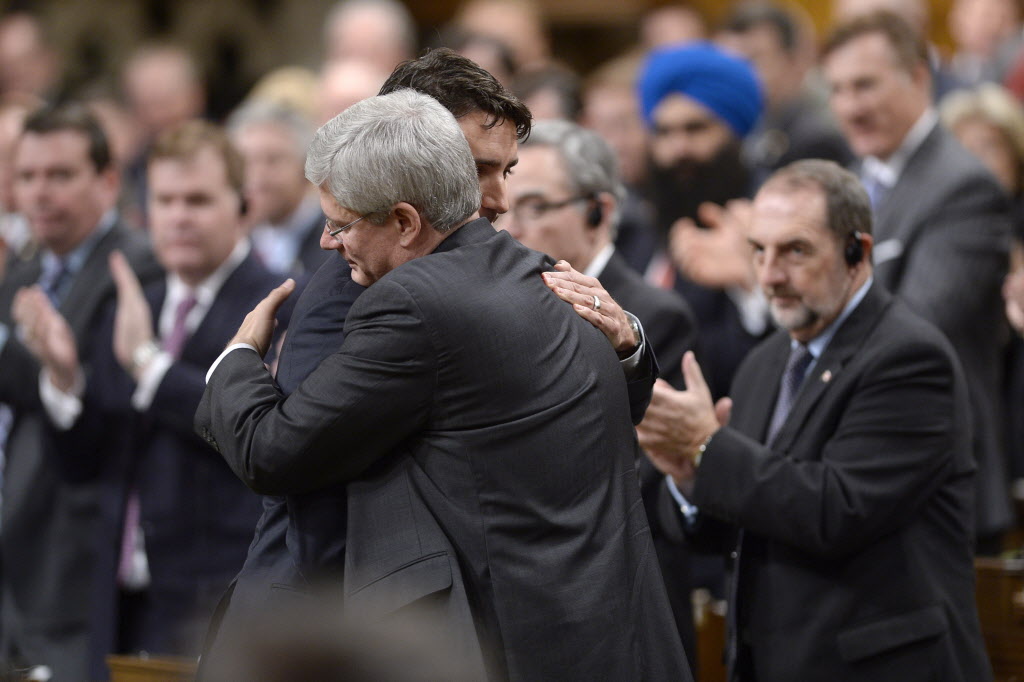
But the strongest display of unity was to come from the Prime Minister himself. Anyone remotely familiar with Mr. Harper knows that he is not one for public displays of emotion, which makes what we saw on Thursday even more impressive, as he crossed the floor to deliver a pair of handshakes, which he then transitioned into hugs, to both Mulcair and Trudeau.

For a brief moment, Canadians were witnesses to three men — who by all accounts can’t stand each other — unified in the face of tragedy and adversity, providing a microcosm of the unity that is occurring across the country. Canada will continue to stand, the True North strong, free, and united in defence of the principles that have made this nation great.

Canada’s free trade agreement with Honduras isn’t the problem

0

Recently, Honduras became the eighth individual state to have a free trade agreement with Canada. Rabble’s Don Davies was quick to call out the government for providing “economic backing to an undemocratic regime that commits, or tolerates, wide-spread human rights abuses.”

This deal has become part of an ongoing discourse on the ethics of cooperating with morally reprehensible regimes around the world, but also seems to highlight the hypocrisy surrounding such a discourse, as well as the weakness of nation-focused approaches to human rights.

Economic partnership with Canada remains such a minuscule imperative for Honduras that, whether or not this partnership exists, Honduras’ domestic policy is unlikely to change. By opening up Canada’s markets to Honduras and vice-versa, we are not condoning the policies of the pseudo-democratic government, nor are we supporting them.

Similarly, by withholding a free trade agreement based on our amorphous moral code, we would not be encouraging Honduras or similar states to change their ways. The moral statements that we make, though they seem resolute and strong, bear little significance; a debate which centres around Canada’s enabling of the brutal Honduran government to commit various atrocities and human rights abuses, rather than taking a stand and making a moral statement, is unimportant.

The key to addressing human rights issues is multilateralism, not bilateral free trade agreements.

It would, however, be wrong to say that Canada is powerless against morally corrupt regimes, like in Honduras. A multilateral approach to dealing with human rights globally would involve cooperation from all states, a democratic consensus as how to approach such topics, and a concerted effort to put aside petty political agendas for the common good of the international community.

Human rights abuses in Honduras are not Canada’s problem. The international community must be far more prudent about applying its norms and developing its institutions to adequately deal with human rights issues, which are global in nature.

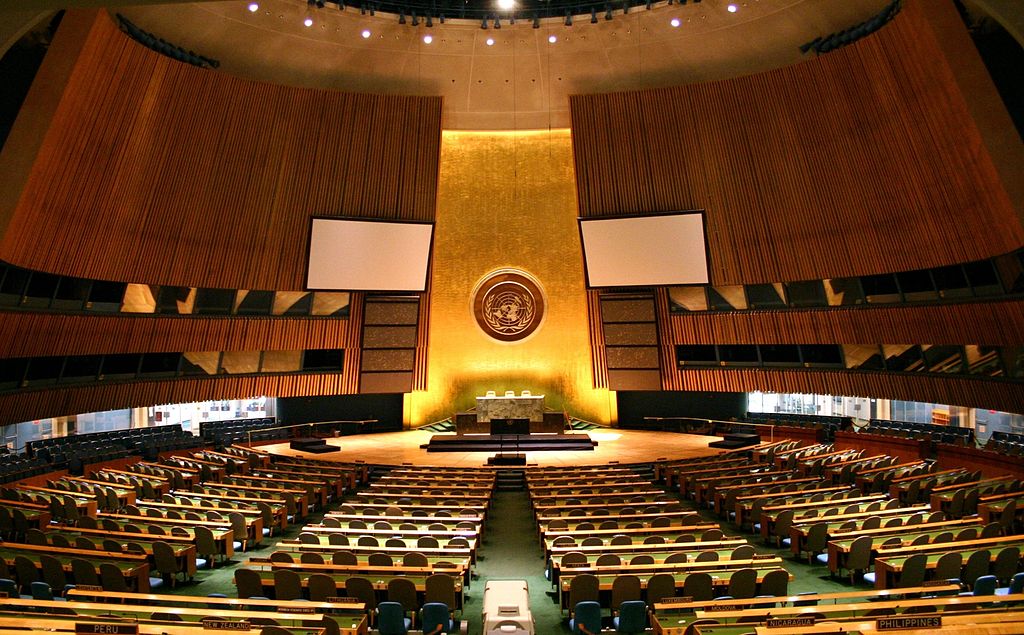
Empowering institutions such as the United Nations to implement elections monitoring, to add enforcement measures to ensure adherence to conventions, and to expand the scope of the UNHRC’s Universal Periodic Review would be a good start. This would ensure that human rights issues around the world are looked at equally, making human rights a dimensional issue — an ever-changing and evolving discourse in international relations.

Furthermore, Canada has its own issues with human rights to address — the NSA’s PRISM program which Canada supports, and the abhorrent discrimination against Aboriginal peoples, for example. Canada is in no position to criticize the human rights situation in other nations. Thus, a multilateral approach is not only the most effective way to deal with human rights, but it is the only morally defensible way.

When states imply the rhetoric of morality to condemn the actions of other states, it is almost always in the self-interest of the former. If Canada reversed its free trade agreement tomorrow, we would still import products from China and export weapons to volatile regions around the world.

The agreement is inconsequential, but the discourse around it is revealing. One thing is clear: civil rights are not commodities that Canada can export.

Making the cut doesn’t cut it

0

Picture me in the fourth grade — a little girl in a bubble vest, sobbing over a report card while eating chocolate. I had failed to get an A in one of my courses, and all my shame and disappointment came in a flurry of tears and an amplified sweet tooth. I can look back at this memory now and have a good chuckle, but even as a child, I always set high expectations for myself.

These lofty expectations, you see, have been the love and bain of my existence. Growing up, my dad always pushed me to do my best, and fed my (then) ambitions to become a civil engineer-humanitarian lawyer, who also animated for Disney. I had big dreams for myself, and I thought that this was great. To have a goal to work towards is a healthy and beneficial thing, especially if it’s something that is meaningful to you. Self-efficacy — the strength of one’s belief in one’s own ability to accomplish tasks or goals — is also critically important to actually accomplishing these goals.

However, while high self-expectations motivated me to put forth my best work, I developed a cycle of confirming my own self-worth, in the process. Each time my work was assessed, I believed it was an assessment of who I was as a person, and as my parents’ marriage deteriorated, I began setting expectations for myself that were out of my control, and assumed responsibilities that weren’t mine to bear.

I believed that I could hold my parents’ marriage together by being the ‘perfect daughter.’ I had put their happiness into my own hands, and I tried to reassure myself that doing enough good things would fix our broken family; but when my parents finally divorced, I was met with the crippling truth that it would never be enough. To me, this translated as, “I’ll never be enough.” Though it felt good to earn that little ounce of self-worth from doing good deeds, a wave of shame and guilt for not trying harder would come rushing after.

When I began to self-harm, I had slipped into a major depression that made me all the more susceptible to feelings of worthlessness. I believed that every cut would compensate for each one of my failures. But of course, cutting didn’t solve any of my problems, and only made me feel more ashamed and empty.

Each time my work was assessed, I believed it was an assessment of who I was as a person.

As I look at my surroundings, I realize that we live in a society that tells us that we need to be more than who we are. We hear that we’re not pretty enough, or muscular enough, or smart enough, and it hurts. It takes a lot of effort to reach that bar, and when we miss and come tumbling back down, it takes a lot more to get back up again.

Yes, oftentimes I still slip, and fall, and it takes awhile to stand up. But I am grateful for my faith, and amazing friends and family who tell me that I am enough, and support me the whole way through. My ambitions have changed, but I’ve learned to revel in the big accomplishments as well as the small, intimate ones of daily life. Over time, I’ve become better at recognizing what I can and can’t handle, and on a good day, I’ll even get a decent amount of sleep. Though it’s a bumpy slope, I am ever so slowly learning to become more content with who I am.


Smothering Science

0
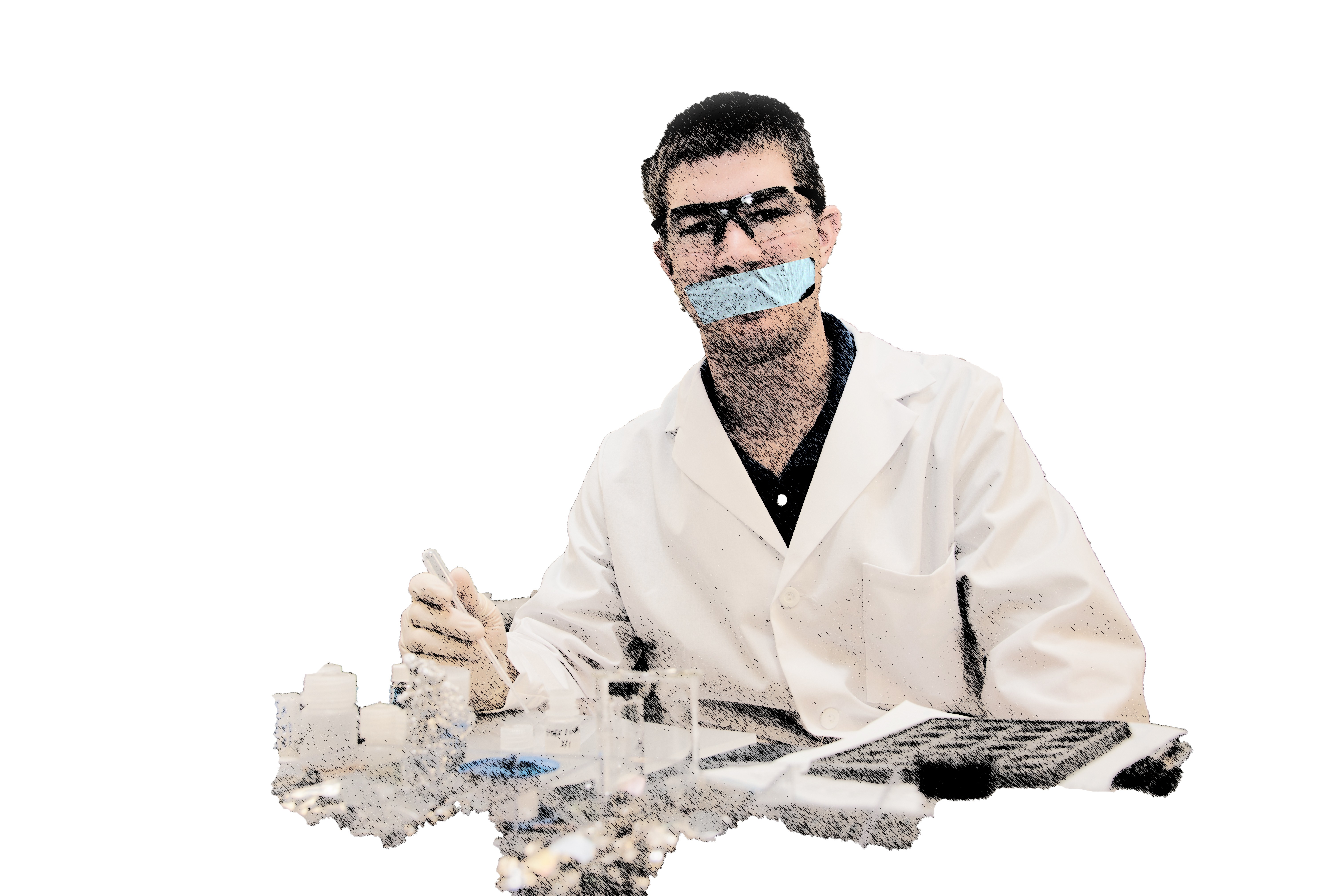
Mmph mmph!
Across the country, scientists are kept from communicating with the media about their research.

“Everything here is important to me. This is my life.”

This was the answer that Dr. Patricia Sutherland, a federal archaeologist working on a site in Baffin Island, gave to her employer after being asked if there was anything important that she needed to get from her office. Sutherland had just been dismissed from the government project that she had been working on for many years. The reason for her abrupt dismissal? She had spoken to the media about her research without her employer’s approval — research which includes data proving that the earliest recorded contacts between Aboriginals and Norse explorers  occurred roughly 1,000 years ago.

The Canadian government’s attempt to maintain arctic sovereignty by promoting 19th century British naval expeditions proved to be at odds with Dr. Sutherland’s
project. Her findings also proved contradictory to the revamping of the museum where she worked, which was rebranded as the Canadian Museum of History, with a decreased focus on new research. She has since been denied access to her work by the museum.

Dr. Sutherland is only one of over 2,000 scientists and researchers who have been dismissed from their government jobs over the past three years after sharing their research with the media in spite of government policies.

These dismissals are the result of the enforcement of a country-wide gag order that prohibits federal scientists and researchers from talking to the media. Under our government’s system, journalists requesting interviews from federal experts are re-directed to federal government communications workers in the information services sector.  Their requests are then passed on to the government director of the relevant ministry, under which the researchers and scientists in question work.

“Canadians are being made more ignorant about our country and ourselves.”

Other processes used to limit the dissemination of information include having federal employees read off of a script during interviews or responding to a list of questions pre-approved by a communications worker, sometimes requiring that a communications worker sit in on the interview. This gag order policy effectively keeps scientists and researchers from providing information to the public, and as a result, has significantly harmed the average Canadian’s understanding of scientific research and advancements.

Two weeks ago, Karen Magnuson-Ford, a research assistant in SFU’s Department of Biological Sciences, released an analytical report on the issue of government muzzling of scientists and researchers. The report was published by Evidence For Democracy, a non-profit group promoting evidence-based public policies.

Dr. Magnuson-Ford said that she was driven to pursue the issue after hearing stories from some of her SFU colleagues who had been prevented by the government from talking to the media about their work. She felt that a formal assessment, made fully accessible to the public, was necessary to help solve this problem.

This report analyzed and graded media policies from 16 federal departments, based on how well they promote openness and timeliness of communication, how much protection they offer scientists from government interference, how well they protect scientists’ rights to free speech, and how much protection they offer.

Its conclusions were sad but predictable; the report found that government media policies did not support open and timely communication between scientists and the media, that they do not protect scientists’ rights to free speech and whistleblowing, nor do they protect them from political interference. In fact, 14 of the 16 departments assessed received a ‘C’ grade or lower, with five departments given a failing grade.

Dr. Magnuson-Ford explained that the public needs to be made aware of the consequences of government muzzling of scientists.
“Scientists are the ones on the ground doing the work in health and environment,” she says. “They need to get information to the public through the media without political interference.”

The work of scientists and researchers is crucial to our understanding of our world. They provide information on important issues, such as drug safety and climate change, and taxpayers have a right to know how the government is using science in its decision making. Furthermore, the government must be held accountable if their decisions are at odds with science.

Margrit Eichler, president of the collective Scientists For the Right to Know, argued in The Toronto Star, “Canadians are being made more ignorant about our country and ourselves. Good policies must be based on solid evidence. Democracy requires an informed electorate.”

Recently, several scientific reports — long kept under wraps by government constraints — have come out, showing just how valuable much of this research is to the public. Fifteen years of Dr. Peter Ross’ toxicology research on marine mammals in Canada’s north — specifically his discovery of the high levels of toxicity in fish that the Inuit were eating — had been buried for many years, much like Dr. David Schneider’s work on the pollution of the Athabasca watersheds in Northern Alberta, caused by the oil sands.

Though the government has created a huge problem by restraining communication between scientists and the media, Dr. Magnuson-Ford is confident that there are solutions. She explained that the federal departments need to work together, promoting policies which allow scientists more freedom to discuss their work. “Different policies had different strengths and weaknesses,” she says, based on the wide range of grades given to these departments in the report.

Next, she suggests looking towards the United States as a model of how to build a better relationship between the media and scientists. US departments regularly score much higher on scientist-media transparency than Canadian departments, due to improvements in policies made during the past few years.

Dr. Magnuson-Ford also asserts that the public can be part of the solution by sending messages to MPs, informing them that this is an issue that must be addressed. She suggests signing a petition on the Evidence for Democracy website, which sends a letter to government representatives in support of scientists.

“Scientists are the best spokespeople for their own work,” Dr. Magnuson-Ford told The Globe and Mail. “Barring rare instances where information is highly sensitive, it is essential that they be able to communicate their expertise to the media and the public.”


The week in comics

0


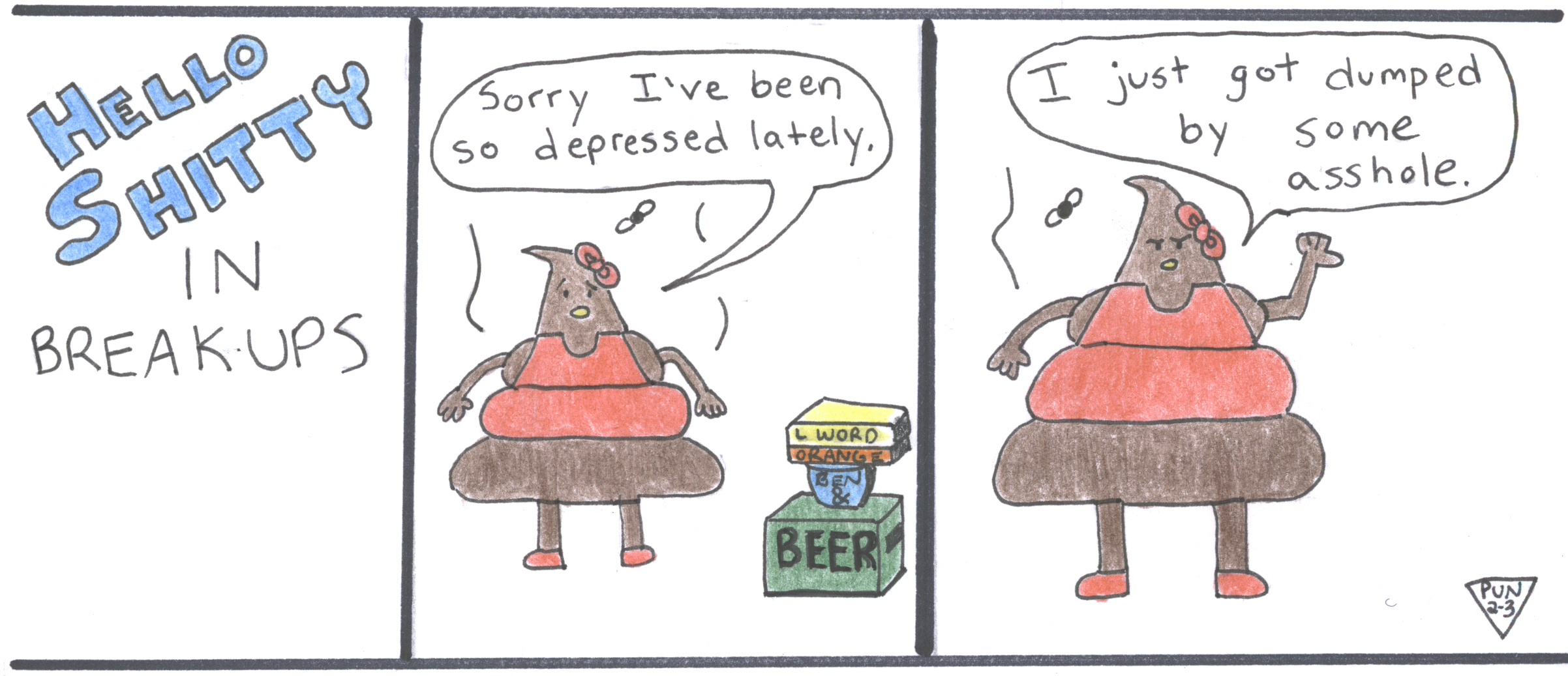
Pun 2 3 (by Sarah Walker)Comic_Pun 2 3 (Sarah Walker)

The Adventures of Agoraphobia Man: World Defender (by Jacey Gibb)The Adventures of Agoraphobia Man (Jacey Gibb)

Road Rage: Vancouver Edition (by Daria Evans)Road Rage Vancouver Edition (Daria Evans)

The five types of people you’ll encounter on the bus

0
Buses become an incubator of awful behaviour.

When riding the bus, you can’t help but notice an array of flamboyant personalities — and the backpacks they’re still wearing — being shoved in your face. It’s impossible to anticipate what kind of crazy you’ll encounter next, but here’s a brief cheat sheet to help you identify some of the various transit riders bound to spice up your commute.

Dwight Schrute: They know the exact location and degree of the angle at which the bus doors will open. Always at the very front of the line, they insist on being the first person to get on and inhale the intoxicating never-been-washed-or-disinfected bus smell. They keep their bus pass in a see-through pocket at a convenient location around their neck, on their backpack, in their jacket breast pocket, or stapled to their forehead. This isn’t their first rodeo — and by rodeo, I mean bus ride.

The Rebel: You know that person in your tutorial who never does the readings? The Rebel is similar, but only when it comes to reading signs. They believe they’re disabled, 50-years-old, and/or pregnant, so they’re clearly the most qualified to sit in the priority seating. Don’t worry though: once someone calls The Rebel out on their insensitivity, The Rebel will miraculously recover from his/her temporary dyslexia and plead ignorance.

’Murica: This person loves to shove their way through a crowded bus, take up the majority of the leg room, and use five hand holders. One of ‘Murica’s signature moves is to put their groceries on the seat beside them instead of on the floor. (In their minds, groceries are people too. People who just want to fit in with everyone on the bus and have a lot of feelings.) If you ask ‘Murica to move the groceries so you can sit down, they’ll react as if you just asked to cut their dog with a fork.

Window Tapper: In case you didn’t know, transit operates entirely on the Window Tapper’s schedule. If they ever see a bus leaving a stop without them, the Window Tapper will be profoundly shocked. Convinced this is the last bus that will ever leave from this stop again, the Window Tapper will use everything in his or her arsenal to get on the bus. Screaming, yelling, swearing, crying, waving, and (of course) window tapping, the Window Tapper will try everything, until going into shock and curling up in the fetal position — at least until the next bus comes eight minutes later.

Foodie: The soul-less individual who decided that their Subway tastes so much better if enjoyed while in an enclosed space, like a bus. Sweet onion chicken teriyaki, with extra onions please.

Of mutton chops and men

0
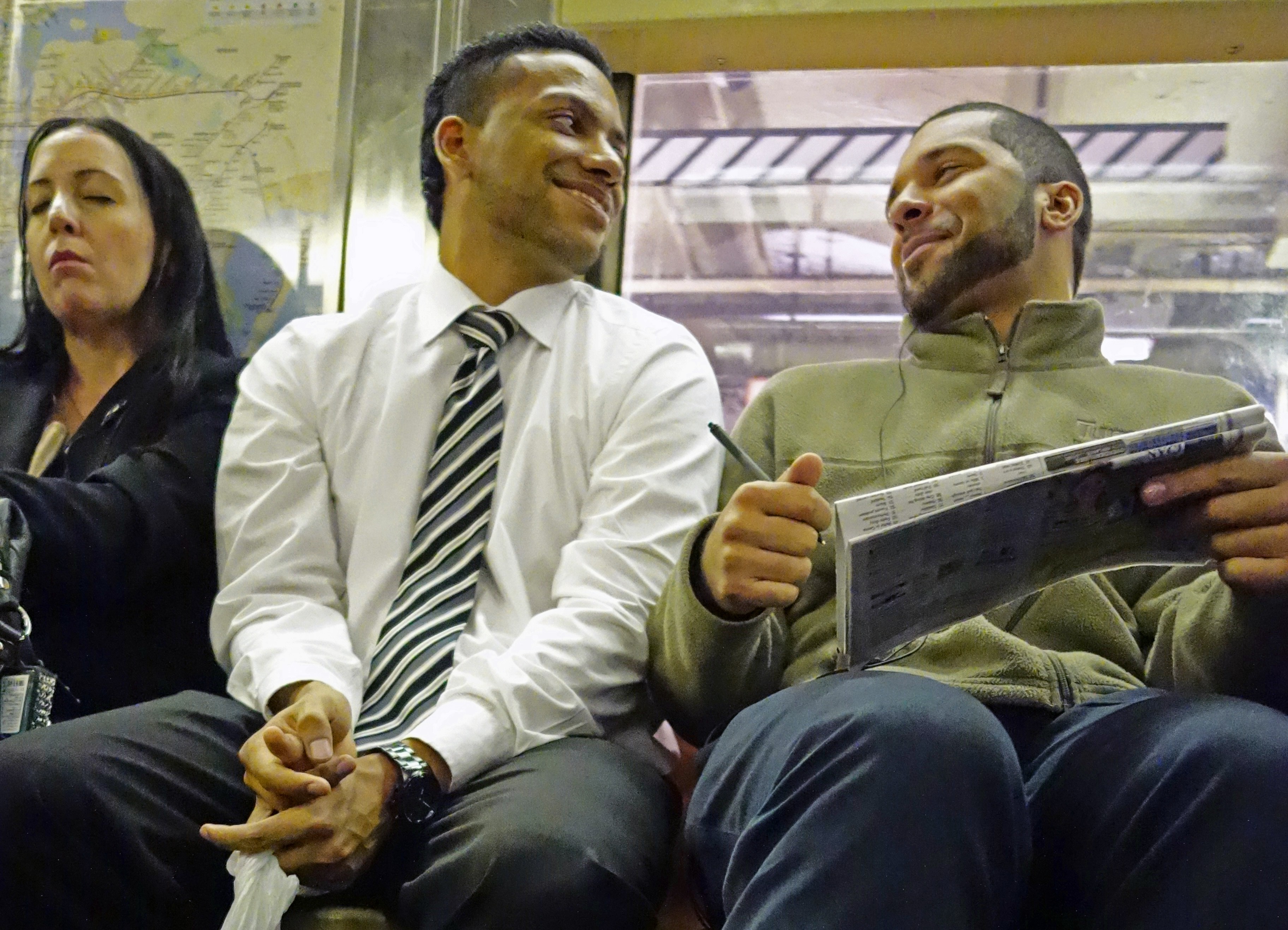
Settle down and snuggle up with a facial-haired fella like this hairy hunk.

Winter’s approach — perhaps faster than I would like — means different things for different people. For some, it means comfy sweaters, sipping hot drinks without sweltering, and fleece onesies; for males of the species, the colder weather leads to a tendency towards growing facial hair.

To say that I love facial hair is an understatement. Beards, moustaches, chin curtains, ducktails, or hulihees, facial hair is arguably my favourite thing. Men who can pull off facial hair in the least are glorious, though I believe everyone should try growing a beard at least once in their lives. Finding my love of facial hair hard to understand? Here are a few of the many benefits to sprouting facial follicles.

1. If I’m drunk and I want to kiss you, there’s something to guide me to your mouth. Like landing strips of the face.

2. One word: Movember. A dirty moustache is one of the prime forms of facial hair. Why not keep your upper lip warm and happy while raising money for a good cause?

3. When well cared for, it can be quite soft.

4. Lumberjacks are a West Coast girl’s dream. Ready for some rudimentary facial hair arithmetic? Plaid flannel + beards = a winning combination. Bonus points if you can also build a log cabin with nothing but your bare hands.

5. Makes you look older and more mature. If you have baby face, then you don’t need to worry — and neither do I.

6. In a moment of deep or reflective thought, you can rub your face without looking completely mad. You’ll actually look wise while doing so.

7. You’re probably not shaving as much, which means you can allot more time to my appreciation of your beard. I can also borrow your razor because mine is horrible.

8. Your general mouth region has more things to incorporate during any upcoming oral presentation, academic or beyond.

9. Food still left on your plate, or want to save some for later? Take it to go a la beard.

10. Emphasizes your jaw line, which we know is the most beautiful of naturally occurring lines.

Youtube server shutdown accidentally leads to increased productivity and havoc

1
Some streaming websites just want to watch the sworld burn.

Youtube’s servers were temporarily offline last Monday, leaving many devoted viewers and users in the dark. Following the 22 hours and 13 minutes of Youtube-less existence, news outlets across Canada reported increased business productivity, uncharacteristic substance abuse among teens, and several untimely deaths.

Multiple corporations — including the Royal Bank of Canada, Telus, and the Ford Motor Company — reported record-breaking productivity last Monday during the outage.  A district manager from Telus, who wished to remain anonymous, said that during Monday’s strategic planning session, his employees’ eyes stayed focused on the meeting and never once strayed to trending videos on their iPhones.

“It was a blessing to have my team focused on the meeting, and not staring down at their phones watching ‘May 2012’s fail compilation’ or ‘Cat jumps over gate. Though it was a little nerve-wracking to have everyone so attentive the whole time. It meant I couldn’t secretly text behind a notebook or under the table.”

Although Youtube’s day-long server shutdown led to unprecedented productivity in the business world, Cody Villain, chief of police in Sacramento, reports that drug use among teens and young adults skyrocketed. “If anything, Youtube has kept kids away from crime and drug use. Like television once did, it gives them something productive to do, a purpose in life,” said Villain.

Michelle Weeps was one such victim of Youtube’s server meltdown. A promising young student and athlete, Weeps was set to enter the Summer Olympics in 2016 for swimming.

“Every morning, alongside breakfast, I used listen to relaxing nature music on Youtube. This calmed me before training. When Youtube’s server was down, I didn’t know what to do. Without being able to listen to eight hours of nature sounds, I couldn’t relax. I saw no other way out, I turned to heroin,” said Weeps. Throughout the day, her Youtube withdrawal became worse.

“I was shooting up and drinking a 40 of Silent Sam every three hours that day, but it just didn’t  compare to the high I get from eight hours of soothing relaxation sounds,”  she explained.

On Tuesday, when the Youtube server came back online, Weeps quickly quit her heroin and alcohol binge — though she has since been hospitalized, after suffering a Youtube overdose. Doctors say she will never be the same as she has suffered cerebral hemorrhaging, a common side effect of a severe Youtube binge. 

Another report claims that a team of engineers failed to adequately fix a column of a bridge, leading to its collapse. After investigating an eroded column supporting the bridge, the team was stumped as to how to fix it. They admitted to going on Youtube and searching “how to,” but since the server was down, they were on their own.

Kevin Bobb, head of the team of engineers, turned to his undergraduate degree to find a solution. Looking at his old popsicle-stick and glue models of bridges, he determined that these didn’t offer any help.

“It seems like my whole undergraduate degree didn’t teach me anything useful. Everything I’ve learned was from hands-on training,” said Bobb.

Without knowing how to fix the problem, the team of engineers left the column untouched. Later, the bridge collapsed causing 1,654 deaths. The team of engineers is now filing a lawsuit against Youtube for its inability to provide life-saving information.

Women’s soccer falls 2-1 to Seattle Pacific

0
The Clan have not won a game since September, when they won two in a row — their only wins of the season.

On an incredibly wet Saturday night at Terry Fox Field, the women’s soccer team lost to the visiting Seattle Pacific (SPU) Falcons by a score of 2-1. The Clan came into the match with a 2-13 overall record, 2-9 within the Great Northwest Athletic Conference (GNAC). They were looking to play the role of spoiler against a solid Falcons side, who held a 9-4-2 overall record and a 7-3-2 record inside the conference, good enough for third place.

The Clan got off to a poor start in the first half, conceding an early goal in the seventh minute. Off a low cross, Seattle Pacific’s Isabel Farrell rang a shot off the right post. The rebound wasn’t properly handled by SFU, and Falcon forward Hannah Huesers put the ball into the net to make it 1-0 Seattle Pacific.Screen Shot 2014-11-06 at 3.40.49 PM

The only other great chance of the half was by the aforementioned Farrell of Seattle Pacific, who had a long range shot deflect off of an SFU defender and almost go in. It seemed like the weather was also affecting Clan keeper Priya Sandhu; twice, she had chances to get off her line and challenge for the cross, but elected to stay in her net, making for some nervous moments in the SFU area.

The visitors once again got an early goal in the second half. In the 47th, SFU goalie Priya Sandhu attempted to catch the ball, but it slipped out of her hands. Seattle’s Huesers once again gladly deposited the ball into the back of the empty net to make it a 2-0 lead for the visitors — just an unlucky play in pretty terrible conditions.

SFU managed to get one back in the 50th when Elishah Jilling took the shot off the bounce and put it past a sprawling keeper to make it a 2-1 game. SFU’s Sandhu made a great save off a terrific free kick in the 58th, but after that the Clan didn’t have any standout chances to tie the game up. They did seem to play with more purpose and intensity after the goal, though, to put them within one.

The Clan then traveled to Billings, MT to face Montana State University Billings (MSUB). They were shutout by a score of 3-0, and dropped to 2-15 overall, and 2-11 within the GNAC.