Home Blog Page 1061

Sports Briefs

0

Men’s Basketball

Clan men’s basketball lost 108–86 to the Alaska Anchorage Seawolves last Thursday. SFU played a closer game than the score indicated, with much of the game neck and neck between the teams. However, a stretch in which they allowed the Seawolves to score 11 points in the first half created a gap which proved too large to overcome. This game marks the first time that the Clan scored less than 90 points this season (including exhibition). Freshman Patrick Simon led the team in scoring with 19 points.

Men’s Soccer

On December 2, SFU men’s soccer head coach Alan Koch announced that former Whitecaps midfielder/defender Kevin Harmse will join the Clan as an assistant coach. Harmse had played with the Whitecaps as recently as 2011 before retiring in 2013 due to injury.

With files from SFU Athletics

The week in Comics

0

CMYK-Peers
Peers (Leslie Lu)

Agoraphobia
The Adventures of Agoraphobia Man: World Defender (Jacey Gibb)


Everyday fears
Every day fears (Paige Smith)

Ski Ninjas

PuSh Festival fights winter blues

0

Over the past decade, the PuSh International Performing Arts Festival has become an acknowledged and respected event, both locally and internationally. 

For their 11th year, the PuSh Festival begins their next decade by reinforcing their motto, “cross the line.” The festival’s organizers once again bring together a diverse line-up of performing artists from local, national, and international communities. “I think this year is a bit of [a] transition year for us,” artistic director Norman Armour told The Peak. “It’s kind of a fulcrum point between the last 10 years and the next 10 years.” 

The PuSh Festival has undergone multiple changes this year, but each new feature contributes to the festival’s growing identity and serves as a development of its vision, values, and priorities. Connecting with the younger generation is an important aspect of the festival, and one of the organizers’ long-time desires is to collaborate with the Vancouver International Children’s Festival to open new avenues for innovative work developed for a younger audience.

This year the festival welcomes The Adventures of Alvin Sputnik with puppeteer and animator Tim Watts, a piece that is suitable for all ages — “that’s the kind of new thing that we seek to introduce this year, and it puts a new spin on the festival,” Armour explained.

The continuation of the youth pass program further shows the festival’s commitment to younger audiences. The program allows youth aged 16–24 access to rush tickets for $5. The festival also aims to sustain an open and inviting atmosphere where artists can seek opportunities, connections, and experiences.

For instance, local theatre company Theatre Conspiracy commissioned another local company, Hong Kong Exile, who will be presenting their show eatingthegame at Club PuSh. Hong Kong Exile was established in 2011 by three SFU contemporary arts graduates: Milton Lam (theatre), Remy Siu (music), and Natalie Tin Yin Gan (dance). Along with the headlining shows of the festival, Club PuSh offers additional avant-garde performances in the less formal atmosphere of Performance Works on Granville Island.

One of the biggest changes of the year was the relocation of the PuSh main office into the downtown core, where it will occupy a new facility with three other groups. To celebrate the transition is Sequence 8, presented by Montréal’s circus group, Les 7 doigts de la main. After the show there will be an outdoor dance performance in the Queen Elizabeth Theatre Plaza, Sylvain Émard’s Le Grand Continental, which involves 70 local community dancers.

The festival was created as a platform for innovative ideas to converge and develop. In a sense, the festival also provides a glimpse into some of the current trends and interests of performing arts in different parts of the world. As a place where artists can present their work side-by-side, it is an opportunity for relationships or connections to exist between “seemingly discreet and distinct disciplines,” explained Armour.

The festival presents “a concentrated glimpse into a particular scene” and the opportunity to view how multiple artists from the same art scene create unique and varying pieces. For example, Dutch artists Lotte van den Berg (Cinema Imaginaire) and Dries Verhoeven (Fare Thee Well!) actually knew of each other before becoming involved in the festival. According to Armour, they share many of the same resources, and there are “lots of parallel in terms of their work.”

Another pair who have preexisting knowledge of each other’s work are Belgian artists Lisbeth Gruwez (It’s going to get worse and worse and worse, my friend) and Kate McIntosh (Dark Matters). 

In order to gain the fullest experience from the festival, Armour encourages people to trust their curiosities and to choose something they wouldn’t normally see. At its heart, the festival aims to provide a challenge and an inspiration for Vancouverites and visiting artists alike.

The PuSh Festival will run from January 20 to February 8 at various venues. For more information, visit pushfestival.ca or pick up a copy of the PuSh brochure.

The best records of 2014

0
  1. Angel Olsen – Burn Your Fire for No Witness (Jagjaguwar)

Expanding on the sound of her folksy debut, Angel Olsen’s newest is as exhaustive as a landscape and as specific as a diary entry. Pairing smart, confessional lyricism with a soulful warble not unlike a female Leonard Cohen, Olsen’s Burn Your Fire for No Witness makes an indelible impression on first listen and reveals new layers each time it’s revisited.

Angel-Olsen-Burn-Your-Fire-For-No-Witness1

  1. Cloud Nothings – Here and Nowhere Else (Carpark Records)

Here and Nowhere Else does little to tinker with the careful balance the band struck with 2012’s masterful Attack on Memory — what it does do is break down the band’s exhilarating alterna-rock ethos to a science. Album closer “I’m Not Part of Me” is one of the year’s best and most enduring pop songs, while “Now Hear In” and “Pattern Walks” make quick work of anyone who thought the band might have lost their ability to shred.

Cloud Nothings

  1. FKA twigs – LP1 (Young Turks)

British singer-songwriter-producer FKA twigs’ LP1 is less a debut record than a mission statement — a fully realized aesthetic attack on a relatively lacking pop music market. Tightening the songwriting spark of her previous EPs, twigs offers some of the most direct and invigorating pop in recent memory, without pulling back the curtain on her enigmatic persona.

FKA twigs

  1. Aphex Twin – Syro (Warp)

Like most of Aphex Twin’s work, Syro is divisive, a love-it-or-hate-it record if there ever was one. It should be fairly obvious by now which side my bread is buttered on; few records in 2014 came with as many expectations as this one, and for me, Syro checked off every box. Borrowing heavily from Richard D. James’ discography, this long-awaited LP manages to make something fresh and surprising out of the warmly familiar.

Aphex Twin

  1. Perfume Genius – Too Bright (Matador)

“No family is safe when I sashay.” So croons Mike Hadreas on Too Bright, the third and best record he’s made under his pseudonym Perfume Genius. Whereas his previous LPs carved out a comfortable space in delicate piano-led art pop, Hadreas’ latest aims for the bleachers, trusting listeners to hang on for moments both more tender and more dissonant than we’ve heard from him. The result is the sort of emotional gravitas most musicians can only dream of.

Perfume-Genius-Too-Bright1

  1. Ariel Pink – pom pom (4AD)

It’s almost a shame that pom pom is Ariel Pink’s finest and most immaculately imagined batch of songs ever, since he’s made it his mission to alienate as many listeners as possible through a series of recent PR disasters. All trolling aside, the songs on pom pom speak for themselves; bathed in a distinctly ‘60s psych-rock haze, there’s enough pitch-perfect pop here to instantly overshadow each of the songwriter’s many faux pas.

Ariel Pink

  1. Run the Jewels – Run the Jewels 2 (Mass Appeal)

Improving on just about everything that made their first collaboration successful, underground emcees El-P and Killer Mike bring their A-game to each of RTJ2’s tantalizingly short tracks. El’s skeletal, confrontational production fits the duo’s style perfectly, and their chemistry is stronger and more palpable than ever. Each song offers a handful of instant quotables, and the LP maintains a sense of pressing urgency throughout that puts the bulk of this year’s hip-hop to shame.

Run the Jewels

  1. Parquet Courts – Sunbathing Animal (What’s Your Rupture?)

New York foursome Parquet Courts will probably never escape comparisons to Pavement and the Velvet Underground, but that’s only because they’re two of the only bands to have set a precedent for the kind of cerebral, inventive rock at which the band excels. Their debut record Light Up Gold was one hell of a wake-up call, but Sunbathing Animal is smarter, sadder, darker, and just plain better than anything they’ve released so far.

WYR0514tubejktnoguidlines

  1. D’Angelo and the Vanguard – Black Messiah (RCA)

A long-awaited follow-up record that few expected would ever be released, D’Angelo’s newest ended the year not with a bang, but with a bassline. Black Messiah is even better than fans could have hoped for, a record that recreates Voodoo’s effortless grooviness while amping up the production and injecting a distinctly 2014 message of tolerance and equality. No record this year was fresher, funkier, or more of-the-moment.

DAngelo-And-The-Vanguard-Black-Messiah-608x608

  1. Grouper – Ruins (Kranky)

This is a record that forces you to listen closely, to consider the trickle of rainfall on a window and the beep of a microwave during a power outage as integral a part of the music as anything else. Liz Harris’s music has always commanded singular attention, but Ruins, recorded three years ago during a stint in a small Portuguese town, is at once her most delicate and self-assured work to date. In a year when countless acts strained to make themselves heard, Harris’ quietude spoke volumes.

Grouper-Ruins

Where are all the flying cars?

0

I dare you to read The Future and Why We Should Avoid It in public. If you do, prepare to stifle spontaneous giggles, smirks, and bursts of laughter as you try not to draw attention to yourself. Covering topics such as technology, health, leisure, travel, politics, aging, and death, Feschuk has compiled his thoughts into a witty analysis of what is to come based on the current innovations in these fields. He wonders why, when he was promised jetpacks and flying cars as a boy, we instead have things like the Roomba and Wi-Fi enabled fridges.

Feschuk has a distinct sense of humour and a casual, incisive writing style that grabs the reader right from the opening paragraph and holds their attention throughout. It’s easy to see why he is a two-time winner of the Gold Award for Humour at the National Magazine Awards.   

While critiquing the state of modern innovations, Feschuk also manages to work in many clever jabs at celebrities including Nicolas Cage, Cher, Ryan Seacrest, Jude Law, Rob Ford, and Kirstie Alley.

When you think about all the brainpower being used to create consumer products, it makes you wonder what could be accomplished if those minds were put to more productive use. For example, as Feschuk points out, Procter and Gamble have recently come out with a breakthrough in razor technology — a handle that pivots. “Gillette’s Fusion ProGlide razor with FlexBallTM Technology is so powerful that it allows capital letters to be placed in the middle of made-up words,” explains Feschuk.

The future of air travel also looks bleak to the author: “Business-class passengers will receive a complimentary bag of nuts. Economy class passengers will receive a complimentary bag of nut. Rest assured that even in these difficult economic times, a majority of our planes continue to feature free coffee and trained pilots.”

Along with Feschuk’s predictions of Canada’s political future if Rob Ford became Prime Minister and his analysis of the 2012 US election campaign, the book features a few sections that I think show Feschuk at his best. “The Seven Stages of Winter” is written in a seven stages of grief-style list, with three of them being “despair.” I also found his letter of advice to post-secondary students quite useful, including this gem: “Slice of bread, peanut butter, slice of processed cheese, layer of BBQ Fritos, second slice of bread. You’re welcome.” 

There are a couple of chapters that read like a collection of ramblings or complaints about society, and these don’t quite fit in with the rest of the book and its theme of discussing innovations for our future. For instance, I found “Arts and Entertainment” to be the weakest section — unless, of course, you really want to know what Transformers 6: The Hangover would be like.

Inevitably, talk of the future leads to talk of aging and death. Feschuk discusses the many wonderful things we can look forward to in old age, such as memory loss, hair loss, and various other kinds of loss. On the upside, there may be hope for immortality thanks to Ray Kurzweil and his nanobots.

But would we really want to be immortal? As Feschuk points out, the present was once the future and it’s not that special — so don’t get your hopes up.

Cinephilia: Your review sucks

0

Why listen to movie critics when I can offer an equally informed and competent opinion? Aren’t they just talentless hacks bashing other people’s work because they can’t make any of their own? Why follow a movie critic’s recommendation since most of their choices are artsy snoozers? The truth is, most critics’ reviews lend credence to these objections.  

Movies are like George W. Bush: everyone has an opinion about them, but some are far better than others. I’m reminded of my mother who, after every sad conclusion of a film, states “I didn’t like that ending.”

As a rule, film critics ought to use objective analyses that go beyond this kind of subjective response. If I were to only write about my feelings or experiences while viewing a film, what would differentiate my opinion from that of the masses?

The film critic’s competence and craft lie, at the very least, in an analytical approach to assessing film form, storytelling, and how the two fit together. Film form has to do with the choosing a close-up instead of a long shot or something in between, along with the lighting, set design, and performance of the actor,s among other aspects. Storytelling has to do with the narrative — a film’s theme and plot.

Ideally, there should be a happy balance between subjective experience and objective analysis when evaluating a film. But too many reviewers sway too far to one side.

Recently, I howled with laughter as I watched the Schmoes Know YouTube review channel, with reviewers Kristian Harloff and Mark Ellis talking about the recent film, Unbroken. Their review focused mainly on their emotional responses, while occasionally attempting to assess the film form with buzzwords.

“It’s just [the] combat that she shows in a different style that I felt was very interesting and very intense,” Harloff says. Ellis immediately interjects, “I felt like I was inside the plane!” They did not explain why it was “very interesting and very intense” or why “it felt like [he] was inside the plane.”

Reviewers like Ellis and Harloff are the reason film criticism is perishing. On the Internet, where every schmo has a voice — and sometimes a very loud one — popular criticism has overshadowed good criticism. The film criticism found in popular print publications is often no better, and many reviews are padded with buzzwords meant to be on DVD covers and TV ads. For instance, in his review of Foxcatcher, film critic Peter Travers of Rolling Stone uses adjectives like “mesmerizing,” “masterwork,” “hypnotic,” “haunting”, “revelatory,” “unique,” and “unforgettable,” without ever explaining why these terms are appropriate.

Before I start to sound too cynical, let me say there are some critics doing tremendous work. One I always enjoy reading is Matt Zoller Seitz, the editor of rogerebert.com. His prose is funny, informative, touching, and sometimes more enjoyable than the films themselves. His writing may be inaccessible for some, but at least he offers insightful reviews which supply reasons why a film is good or bad that go beyond his emotions.

It is integral that the critic understands storytelling, film form, and the relationship between the two; this is what separates them from those who evaluate films based on their emotions.

Critics should interpret stories for the readers so that when they see a film working on multiple levels, they can understand its artistic value instead of writing it off as a pretentious critic movie.

The best films of 2014

0

10. Men, Women & Children

Masterfully written and directed by Jason Reitman, the genius behind Juno, this film perfectly encapsulates our era by examining the effects of social media, texting, and the Internet on the psyche of society.

9. Tusk

In all my time spent watching movies, I can’t say that I have ever seen anything quite like this. Kevin Smith’s daring and chilling horror film is about a podcaster who is surgically transformed into a walrus. Part fable, part comedy, all horrifying, Tusk is far better than it has any right to be.

8. Gone Girl

This is a twisted and often hilarious satire on western life; it’s also the best thriller of the year. Gone Girl twists and turns, changing perspectives and the audience’s opinions of each character. Rosamund Pike and Ben Affleck deliver memorable performances in their archetypal roles, as they challenge our perception of the hard-working American white man and his hot, blonde wife.

7. Boyhood

Shot over the course of 12 years with the same actors, Boyhood jumps from one year to the next as the actors age on screen from scene to scene. Never has a film reflected reality and time so closely.

6. Ida

Ida is an understated and subtly powerful film about not only an orphaned teenager’s identity but also the identity of an entire nation. At first glance, this is a simple story of discovery — but look closer, and it becomes a haunting portrait of Poland in a crisis of identity.

5. The Immigrant

I haven’t cried during a movie for a long time, but this story of a Polish immigrant who moves to America during the 1920s is an exception. The Immigrant offers up a palette of characters that are battered, broken, and stuck in horrible places while treating their decisions and backgrounds with respect and compassion.

4. The Lego Movie

The best animated film since Wall-E follows an average Lego person as he fulfills an ancient prophecy to help defeat the evil Lord Business who wants to glue the world on Taco Tuesday. The film deserves its popularity for its humour and playfulness, but it’s also worth noting the profundity of its themes and messages.

3. Citizenfour

This documentary by Laura Poitras takes place over eight days in the confinement of a hotel room in Hong Kong, where Edward Snowden and other journalists sort out how they are going to release confidential NSA documents. Poitras has made a thriller out of real life that acts as a wake-up call to those unaware of government intrusions on personal privacy.

2. Enemy

Denis Villeneuve is the greatest Canadian director working today. Enemy, starring Jake Gyllenhaal, is his most remarkable achievement to date — a dense and stylish examination of the internal psyche of a man caught in an affair. This surreal and eerie film gets in your head and refuses to leave.

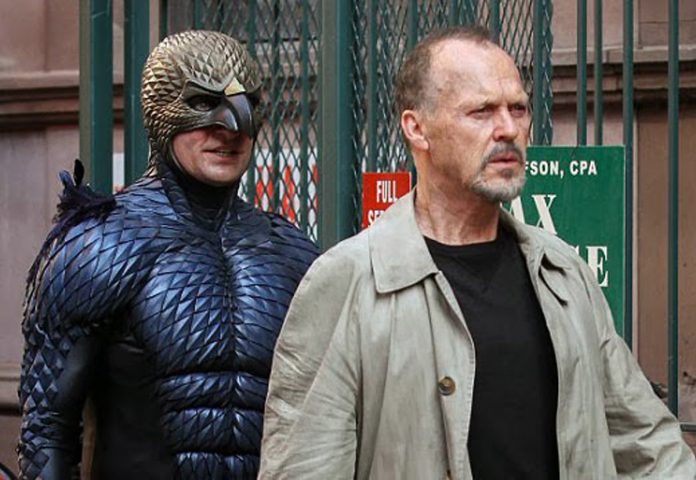
1. Birdman or (The Unexpected Virtue of Ignorance)

The glory of Birdman is that it never ceases to entertain while remaining a profound artistic statement. It’s a movie that demands to be seen by film buffs and popular audiences alike. Birdman is technically innovative, intellectually challenging, gut-bustingly funny, and entirely dazzling.

Honourable Mentions:

The Babadook, Dawn of the Planet of the Apes, Foxcatcher, Frank, Hide Your Smiling Faces, Inherent Vice, Noah, Mommy, Top Five, and Two Days, One Night.

Food Finds: Fresgo Inn Restaurant is a diamond in the rough

0

One of the great things about living in the Greater Vancouver area is the number of options one has for mealtime. It’s a great area for going on dining adventures or avoiding repetitive trips to ubiquitous chain restaurants. With the advent of services like Groupon, exploring the rich culinary tapestry of the Lower Mainland can be both fun and affordable.

To get you started on escaping the routine and on your way to new and unique dining experiences, Food Finds will showcase a different restaurant every other week, highlighting just what makes them worthy of heading out your door and through theirs.

Without further ado, let’s get started with our first entry: Fresgo Inn Restaurant and Bakery in Surrey.

Fresgo has been serving Surrey residents since 1963, and if you’ve ever been there, its easy to see why. Though it may not look like much, it would be a grave mistake to judge this book by its cover: it’s clear that the folks who work here put everything into the food rather than the decor. Personally I think the atmosphere itself is not bad — but simply dated — which gives Fresgo the feel of a ‘60s or ‘70s diner. The staff love to chat with their customers, and this really gives it a homey feeling.

As mentioned, the staff at Fresgo put everything into their food, and create culinary delights from what many would consider to be standard fare. Their clam chowder is among the best I’ve ever eaten, as is their fried chicken. If you find yourself there when their prime rib is on the menu, you will find it cooked to perfection. I have never been disappointed with any order I’ve made here, and neither has anyone I’ve introduced to the restaurant.

In addition to having excellent food, the portions are huge — as in, so big that my wife and I can order a schnitzel dinner and split it with neither one of us leaving hungry.

As part of their commitment to quality, the onsite bakery supplies their restaurant with every hamburger, sub, hot dog bun, and loaf of bread used in their kitchen, all baked fresh on a daily basis. This bakery also does the same for its incredible selection of desserts, which can be split just as easily as a dinner.

As a bonus for all of the SFU Surrey students who are tired of the mall food court, Fresgo is just across the street. Check it out!

Rejected plot pitches for the upcoming Jurassic Park movie

0

After spending the last decade in development hell, the fourth installment of the Jurassic Park franchise is ready to be extracted from amber and resurrected in theatres June this year. While some of the earlier scripts contained hilariously bad plots — including one draft about dinosaurs who could use military weapons — these were nothing compared to the ones Universal Studios tried to bury. For the first time ever, here are four abandoned plot pitches once considered for Jurassic Park 4.

1) Homo sapiens Park: Set in the year 120,000 AD, the world’s first human theme park is about to start welcoming visitors. However, after some of the park’s investors (who are dinosaurs!) express a concern over the attraction’s safety, a pair of paleontologists (dinosaur paleontologists), a lawyer (he’s a dinosaur), and a chaos theorist (he’s a human. . . kidding!) assess if the park is ready for visitors. At the film’s climax, a giant Jeff Goldblum will become the movie’s unlikely hero and save the day — and our protagonists — by facing off against three ferocious Laura Derns.

2) Jurassic Park: Electric Boogaloo: Tim and Lexi Murphy, now adults and co-managers of the Isla Nublar youth centre, discover a nefarious plot by InGen to buy the centre and convert it into a frozen yogurt emporium —  unless they can raise the $50,000 needed to cover the centre’s operating costs. With their backs against the wall, the siblings set out with their trusted dog Spot to find the one thing that can help save the Isla Nublar rec centre: the fabled, but never captured, breakdancing Tyrannosaurus rex.

3) Jurassic Park 4: Back to the Cretaceous: Ian Malcolm, grief-stricken from the loss of his wife Sarah Harding, invents the world’s first time machine and attempts to go back in time to prevent her death. However, a slight glitch in his equation accidentally transports Malcolm and Nick Van Owen back to the Cretaceous period, where they struggle to blend in until Malcolm fixes his time machine — all while trying to avoid changing the past!

4) Jurassic Park 4Ever After: After losing a high-stakes poker match against the Chinese mafia, the only way a now-retired Dr. Alan Grant can convince them not to cut off his arms is if he takes them to the mysterious island of Isla Nublar. Upon his return, Grant discovers that his former girlfriend Ellie Sattler has become a deity of sorts for a local tribe, who were revived by DNA found in amber. With Sattler arranged to marry to warrior chief,  Grant has to figure out a way to remind Sattler of what they once shared.

North Korean defector reveals that the size of Kim Jong-un’s threats subliminally reveal how small his penis actually is

0
Kim Jong-un has been accused of hiding weapons of mass overcompensation.

The secret is out: a North Korean defector now living in Seoul, South Korea, is claiming that the size of Kim Jong-un’s threats is connected to his small genitalia.

With North Korean hostilities escalating in recent years — from repeated threats of invading neighbouring countries to suspicion from the recent Sony Pictures hackings in response to the Seth Rogen/James Franco film The Interview — actions against the United States and its allies have become increasingly ambitious. Despite speculations over why Kim’s reign as Supreme Leader of North Korea has been so volatile, analysts have been left without definite reason — until now.

An interview with the high-level North Korean defector is shedding light on why Kim Jong-un has been acting in such a threatening manner.

“He has a really small penis,” the defector stated very bluntly, “and that is what it all boils down to.”

When asked if there was any other explanation for the young dictator’s hostile behaviour, the defector simply shook her head. She then proceeded to describe rumours within North Korea of how the once-adequately endowed Kim had his size reduced in an accident involving a prototype shrink ray at an experimental weapons factory. During a test run, the shrink ray became unstable and exploded; the blast killed everyone on site except Kim, who miraculously survived.

Unfortunately, his joy was short-lived, as it was quickly overshadowed by the horrifying revelation that the blast had left him with a micropenis.

“He cursed the world for what had happened to him,” the defector described the Supreme Leader’s radical change in personality. “After days of sulking in his palace suite while listening to early-era Coldplay songs, he decided to enact vengeance on the world that cursed him with such a tiny penis.

“The more ambitious he gets with his threats, the more we know about his nether regions.”

The defector further revealed that Kim’s wife, Ri Sol-ju, was so unimpressed with the size of his penis that she was forced to marry him at gunpoint. Other sources confirm this information, adding that a state holiday is prepared in case Kim is ever able to successfully bring her to orgasm.

When asked how she knew all these details so well, the defector stated that she had been a former mid-level government worker in North Korea when she was propositioned for sex by the Supreme Leader. However, the defector made the faux pas of laughing at the Supreme Leader’s micropenis and was immediately terminated from her position.

“I knew laughing was a mistake,” the defector said at the end of her interview, “but like Rogen, I couldn’t help it. I’m surprised anyone takes him seriously at all.”