Home Blog Page 1004

Inspiring movement at Dancing on the Edge

0
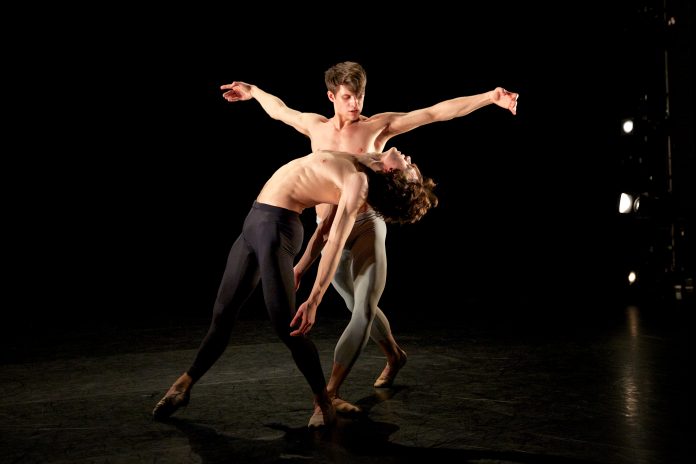
Nicol Edmunds and Matthew Ball in Burrow. Photo courtesy of Alice Pennefather

For 27 years, Dancing on the Edge has presented both up-and-coming and established choreographers showcasing current contemporary dance, as well as allowing artists the perfect platform to present their work. This year was full of inspiring, daring, and original works representing a wide range of dance styles and influences. They all had one thing in common, though: edgy dance that breaks boundaries.

Misfit Blues — Fortier Dance-Création

Paul-André Fortier is very well respected in the world of contemporary dance, and this opening night work made it clear that his reputation is justified.

Along with Robin Poitras, Fortier created a humorous world for a couple that was very comfortable with one another but also not afraid to let loose and express their anger. The duo was also very comfortable on stage as they did a couple of on-stage costume changes, and looked completely at ease throughout. Their experience was evident in their confident performance.

I really enjoyed the scenes that had the two of them unabashedly yelling at each other — it was quite cathartic. The most humorous scene involved the two of them laying over a bench upside down and looking back at the audience with funny expressions while speaking gibberish and pointing as if trying to figure something out.

Photo courtesy of Xavier Curnillon.

Another highlight was them sitting on the bench beside a fan and competing to get a tissue to travel in the fan’s air stream. Their unique facial expressions and gibberish transcended language, just as dance does as a form of expression.

The piece began very slow, deliberate, and silent, with them moving as one intertwined unit. They moved over, under, and through each other with ease, and the piece ended with them sitting comfortable on a bench laughing. The stark contrast of very light humorous moments and very heavy, intense moments of anger and frustration made this work stand out.

Joshua Beamish/MOVE: The Company — 10th Anniversary Celebration

Beamish’s company has toured extensively and collaborated with the likes of The New York City Ballet and The Royal Ballet, but it all started here in Vancouver. The show opened with a powerfully moving solo by Beamish himself, showing exactly where the company’s aesthetic stems from. He came on stage after the solo to explain the show being entirely duets: his favourite thing to choreograph is relationships. He also spoke about how grateful he is to have made it to 10 years and to have worked with so many talented dancers in his time.

The show was a mix of dancers who were with the company from the beginning returning for the show, others who are current members, and guest artists from the Royal Winnipeg Ballet and Royal Ballet (London). All of the works presented were remounts except for the world premiere of The Other People in Your Party.

Jo-ann Sundermeier and Joshua Reynolds of the Royal Winnipeg Ballet performed Pierced, a stunning display of strength and precision that was absolutely beautiful. Their technical grace coupled with pure emotion is what every dancer strives for. Matthew Ball and Nicol Edmonds of The Royal Ballet performed Burrow, an untamed, aggressive piece that was also captivating.

Stay was a quixotic pas de deux with less polish than Pierced, but it suited the piece and Jedidiah Duifhuis and Cristina Graziano performed it with the right amount of unbridled passion. The Other People in Your Party, while it was the only new work, seemed the weakest. I didn’t find it technically sound or emotionally present as the other pieces, although the choreography was lovely.

With his beautiful long lines and intricate choreography, Beamish’s company will surely be around for at least another 10 years.

Cuckoo — Theon Glover

At Edge Up, Theonn Glover presented a beautiful solo about identity and the control of outside forces. Portrayed through the disparate personalities of three characters, Cuckoo explores the unconscious parts of the human psyche that steer the direction of our lives. It was fascinating to watch Glover interpret this concept as the three characters of her subconscious fought for control.

This hallow space has a corridor — Katie DeVries, Nathan Todd, Antonio Somera, Lindsey White, Michael Kong, Meredith Kalaman

This group of young BFA grads presented a solid composition with a cohesive tone and multiple scenes. The movement vocabulary seemed a bit derivative of the 605 Collective’s style, and I had the feeling that I had seen many of the sequences before, but I still enjoyed the piece. They splendidly evoked the dark, eerie tone of long dark hallways and spooky corridors.

Re:Play — Naomi Brand

This duo began with Hilary Maxwell and Walter Kubanek standing on a small black cube, dancing around each other, careful to stay on the cube. Once they came down from there, they transitioned into very fluid, broad work with intricate contact work that kept my attention throughout. I loved their smooth transitions and ability to feed off each other’s momentum. The duet explored the tensions that lie in the space between two bodies, and took advantage of the heightened state of responsiveness that being in close proximity to another dancer allowed. They ended the piece inside the upturned cube, their legs squished together while sitting on the edge.

NINEEIGHT — Hong Kong exile

This bold work from choreographer Natalie Tin Yin Gan is inspired by the phenomenon of absurdist comedy that dominated 1990’s Hong Kong cinema, known as 無厘頭 (mo lei tau) or by the idiom “nine doesn’t follow eight.” The work reflects on personal fractures, disorientation, and the significance of a “motherland” at times of social, political, geographical transition.

Michelle Lui, Alex Tam, and Milton Lim got plenty of laughs from the crowd as they seemed to sarcastically impersonate anime characters and repeat some things until they physically couldn’t anymore. Featured at the back of the stage were projections of words flashing in quick succession along with pulsing music. I enjoyed the dry, absurd sense of humour, political message, and unique composition of this work.

Nobody Likes a Pixelated Squid — Tentacle Tribe

Along with Kuebler’s piece, Tentacle Tribe performed their work for Edge 5. Emmanuelle Lê Phan and Elon Höglund presented a stunning display of fluid movement inspired by hip-hop, breakdance, and other forms of street and contemporary dance.

They explained after the shoe that their creation was about the possibility of alternate realities, and it was beautifully constructed to end the same way it began. Extremely smooth, flexible, and musical, this was one of the coolest pieces of choreography I’ve seen. Their intricate partner work, quick stops and starts, and ability to incorporate so many styles into a beautiful mosaic of movement was very impressive.

This Canadian-Swedish creative alliance between LêPhan and Höglund is based in Montreal. The two have worked together since 2005, but Tentacle Tribe was founded in 2012 while they were performing with Cirque Du Soleil.

Feasting on Famine — Shay Kuebler

This preview of a Kuebler’s full length work in development is a study of the physical and emotional effects of bodybuilding. The work is all about extremes, and hilariously parodies the world of bodybuilding. Kuebler explained that he views bodybuilders as a metaphor for a corporation — imbalanced and always striving for constant growth.

He began the piece with a grandiose shaving sequence set to opera music before moving into an extreme aerobics workout and posing for the audience. All this was done in a speedo, making it that much more hilarious — particularly for the family and friends watching. There was plenty of spontaneous laughter throughout, especially when Kuebler stared directly at audience members in the front row while posing for them.

Representing the extreme amounts of food that bodybuilders consume, Kuebler set to work on a barbequed chicken, stuffing his face so much it looked like he might choke. He washed it down with a large bottle of water, pouring it over his head before continuing with some jumping jacks.

The full length solo will premiere in 2016 at the Firehall Arts Centre, and I look forward to seeing to what other extremes Kuebler will go.


Supreme Court legalizes gay marriage in U.S.

0
Large crowds gathered to celebrate across the country. - Guillaume Paumier

The week of June 26 saw people dancing and waving rainbow flags in streets across America, celebrating a win for the rights of homosexual people.

The United States Supreme Court made a five to four ruling legalizing gay marriage in all 50 states — a historically significant move that Canada made 10 years ago.

After decades of fighting for this right, the LGBTQ+ community gained a victory under the 14th amendment that affords equal protection for all citizens under the law. The court ruled that it would be a violation of this amendment to deny them of the right to marriage when it is granted to heterosexual couples.

Many debates still surround this ruling, especially as it only affects state laws and all religious institutions are still entitled the choice of whether or not to marry same-sex couples.

“It’s important to pay attention to the reasoning used by those opposed to justify denying the vote,” said Elise Chenier, SFU professor of history and director of the Archive of Lesbian Oral Testimony, “There’s still a powerful minority who strongly oppose equal treatment of homosexuals.”

Chenier expressed that although many contemporary struggles remain, this legislation was extremely significant as it was a step towards full citizen rights for homosexual people.

When asked about why it took the U.S. 10 years longer than Canada to legalize gay marriage, Chenier said it’s mainly based on how the two political systems are structured, and that in Canada, gay marriage was presented as a charter challenge and never subjected to a vote. “The Charter of rights and freedoms allowed for a different legal avenue for Canadians,” she said.

Although many are jubilant over the victory of the legislation, people are recognizing that there is still a lot of work to be done. One criticism is that marriage equality is an issue that benefits a minority of people and that the queer community is much more diverse than those who would benefit directly from the legislation. “We need to be careful of not letting the conversation end,” said Devyn Davies, SFU Out on Campus’ (OOC) Interim Office and Volunteer Coordinator. “There are still many challenges that the queer community faces both in the U.S. and abroad.”

OOC representatives collectively expressed their optimism for this legislation to be the turning point for a better future, but that there is still a long way to go. “Vast amounts of resources were spent on marriage equality but not nearly as much is put into supporting transgendered people or queer homeless youth,” explained Davies. “We need to start working to include those most vulnerable and marginalized in our community.”

The new Raincity Juicery is a gem

0
Photo courtesy of Yelin Gemma Lee.

Raincity Juicery is the place to visit this summer. As a resident of New Westminster I celebrate chic local finds like the Hide Out Cafe, Brick and Mortar, and Old Crow Coffee, but the community has long been anticipating the opening of Raincity Juicery — a delicious cold-pressed juice bar.

Seizing the opportunity to check out a new local business, I was able to try some of their products and hang out with Tylan Fraser, one of the three business owners, as well as the lovely recipe creator, Jill. 

Tucked away on Front Street, large wooden double doors lead into a space that is both sophisticated and irresistibly inviting. Along with a wide variety of cold-pressed juices, they also have smoothies and yummy bites like guacamole and zucchini noodles. The ambiance of the place is devotedly comfortable and makes you feel free to drop in and pick up a quick to-go juice or stay a while reading a good book.

“It all started with wanting a juice or smoothie in the morning,” Tylan Fraser said, emphasizing the inclusivity of the business towards all lifestyles — raw, vegan, otherwise. “The menu is constantly developing.”

Like many others, I had heard about Raincity Juicery many months back through pre-grand opening Instagram posts. I was surprised and impressed, however, to find that social media and word of mouth have been the main marketing method, with only booths at social gatherings to support the effort.

The most difficult part of opening a local business, Fraser explained, was “not knowing what to expect. Every day is a new thing, and it takes work just to get it open, but it really takes work to keep it open.” Fraser also expressed gratitude towards his welcoming and supportive customers and neighbouring local businesses.

As a business that recently opened and is still figuring out their systems, everything on the menu is fresh, unique, and effectively prepared. I tried all of the juices through two flights (healthy flights — not beer flights, folks — that’s what’s up), and I thoroughly enjoyed most of them. The 6UP and Pinks were tangy and sweet like an imitation of sour candy; Remedy and Tropical Express are both fruity drinks with a unique but strangely delectable kick, one from cayenne and the other from jalapeno. Sounds weird, but don’t hate it until you try it.

The only one that was too intense for me was All Greens — a green juice that was a little too savoury for me. If you like Caesars or are used to green juices, it’s definitely worth a try. My favourites would have to be the New Beets, New West Sunset, and OJ: smooth, sweet, and an agreeable companion to have in surviving the hot summer sun.

Along with the juices, I tried the Zucchini “pasta”: spiralizer zucchini with fresh tomato and cashew cheese sauce. It was undeniably satisfying for a summer palette that craves more cold than hot — you don’t miss the wheat, or remember that you’re essentially just eating a salad. The dish is filling, rich, and raw vegan.

Raincity Juicery is well worth the visit. The people, the products, the decor, and the ambiance all go above and beyond and are refreshingly down-to-earth. Don’t miss out on this hidden local gem.

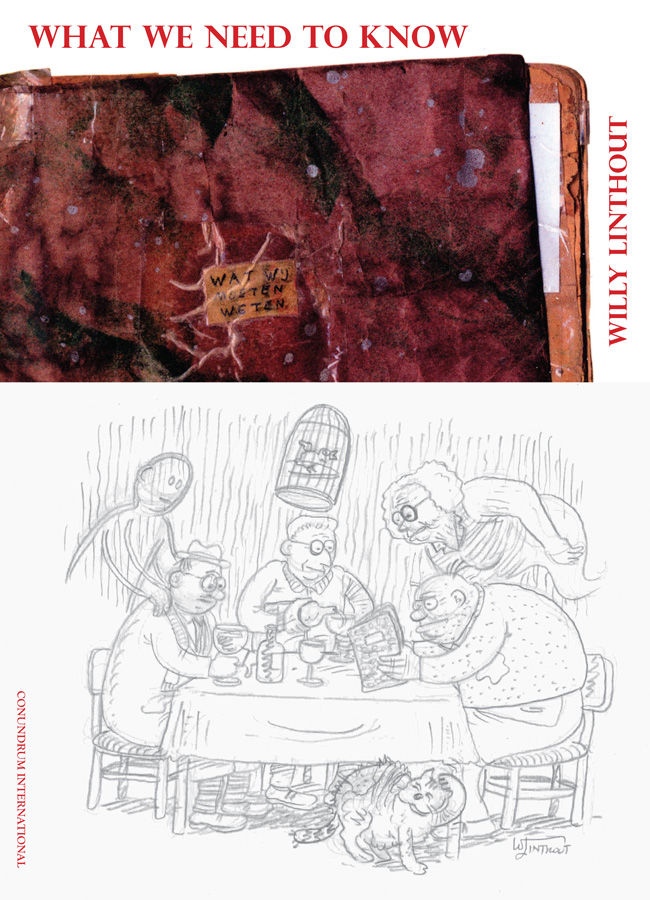
Comic Connoisseur: What We Need to Know is an endearing character study

0
Photo courtesy of Conundrum Press.

Flipping through What We Need To Know, a reader might come to the conclusion that this is an unfinished work — and to a certain degree, they wouldn’t be wrong. The art is only pencilled; it lacks the inks and colors that bring everything together nicely.

Rest assured, Willy Linthout’s reasons for this were not out of laziness or succumbing to a deadline; he does this to symbolize the haze of psychosis his characters feel as they combat the ghosts in their lives. The art is unfinished and needs development, not unlike the characters whom we follow in this melancholy tale.

What We Need To Know follows the story of three estranged brothers coping with their aging mother’s slow decline in health. With their ma at death’s door, long-gestating issues among the siblings begin to manifest like never before. Each brother faces his own inner demon in the story  — and each deals with it differently.

Carl, a man haunted by the suicide of his son, has exiled himself from his wife and the world. He writes poetry at his desk secluded from everyone. When his mother’s health concerns come to pass, he is forced to leave his protective shell and reacquaint himself with the world he left behind.

Roger, on the other hand, battles alcoholism — and not very well, either. With his mother falling to sickness, his drinking issues become further exacerbated. Ignoring his doctor’s and wife’s cries for him to cut down on his heavy drinking, Roger secretly sneaks to his barn to get drunk sharing in the company of a hallucinatory chicken, enabling him to drink more.

Lastly, Walter, who lives with his ailing Mother, is a controlling and lazy man who often secludes himself from others. He is an inadvertently humorous character who often makes the declaration that he does not need others to take care of him, and yet shows no proficiency in self-efficacy whatsoever. Of all the brothers, Walter is the most humorous, but also the most tragic.

Willy Linthout writes an endearing and heart-wrenching drama sprinkled with dark humour. But as engrossing as this story is, it is not without its flaws. The most notable one being that the time dedicated to each brother is inconsistent. For example, Walter’s story arc has many pages dedicated to it, whereas his brother’s storylines are significantly fewer. Granted, What We Need To Know is a sequel to Years of the Elephant, for which a considerable amount of time was dedicated to Carl’s character.

With that though, I bring up my second critique: for those unaware of the first in the series, the book can be a little confusing at times. As readers continue to dive into the lives of the characters continuing plot threads become clearer, but not as clear as they could be.

What We Need To Know is an endearing slice of life filled with both tasty and bittersweet morsels. It does not sugarcoat life, nor does it hold back from the often depressing truth that not everyone can face their demons with success.

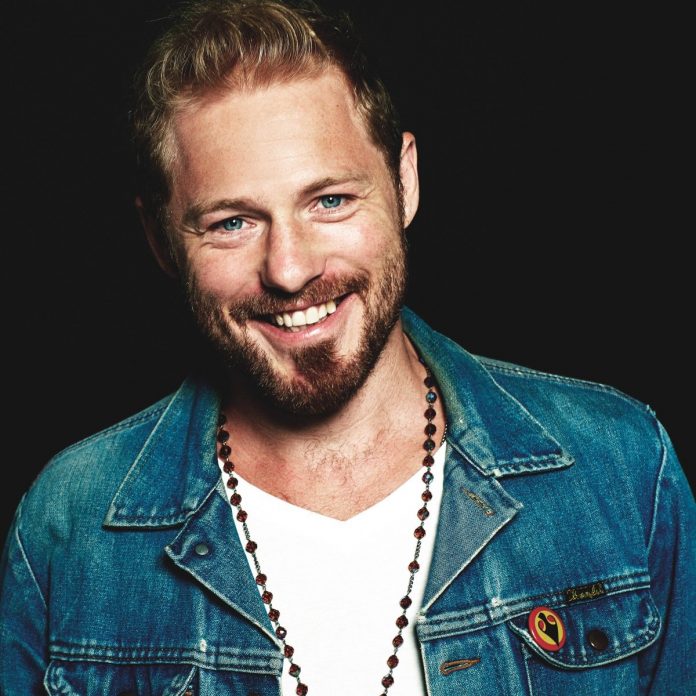
Matt Epp is Ready in Time

0

Returning with a new take on his folk-pop sound, Matt Epp released his full-length album, Ready in Time, on June 23. The record was foreshadowed by his EP Luma last October. Hailing from Winnipeg, Epp’s Canadian content has been showcased on CBC Music this past month. The songs off Ready In Time maintain a lighter pop sound, despite their serious undertones that diverge from his folk roots.

Epp’s songs follow a narrative style; they tell the listener a story. His sound for this album is mellow and relaxed, with some catchy guitar riffs thrown in. He has power behind his vocals, and he shows that off in songs like “Aftermath” and “Cash & Blood.”

What this album does lack is some cohesion between the themes of the songs. Half of the songs, such as “Let Her Know,” “Go Somewhere,” and “Something Better” seem to address themes of relationships and love, straying the furthest from his original folk sound. Other songs such as “Ready In Time,” “Hard to Say,” and “Cash & Blood” deal with more serious themes and work with a stronger narrative.

“Ready In Time” and “Hard To Say” have clichéd narratives, which feel too simplistic, and as if they are attempting to be more moving than they actually are. “Let Her Know” and “Cash & Blood” have been done before as well. A man loses a girl in “Let Her Know” because he doesn’t value her, and surprise, the “good guy” swoops in and wins her over because he admitted to his feelings. That has been sung before. In “Cash & Blood,” the guilt of first world living when people across the world are suffering feels like too obvious a choice for a “deeper” theme.

Just because the lyrics can be simplistic or cliché at times doesn’t mean the album isn’t enjoyable though. “Cash & Blood” consistently gets stuck in my head, and Matt Epp provides us with some catchy choruses. If you’re interested in some light, fun, summer tunes, there are definitely a few tracks on this album for you, as well as some more thoughtful pieces for you to mull over.

Five films to see this summer

0

Sun’s out, guns out — that’s the summer movie motto. While Jurassic World, Terminator: Genisys, and Magic Mike XXL have flaunted their junk to wide audiences, these five upcoming films, which don’t feature time travel, strippers, or dinosaurs, unclothe all exaggerations to tell grounded, human stories. Hiding in the shade of the summer blockbuster season, these are five hidden gems.

About-Elly-filmAbout Elly (July 18)

The Iranian director behind masterpieces like A Separation and The Past, Asgar Farhadi, made this film in 2009 before breaking out as one of cinema’s most powerful and complex filmmakers. Having never been released theatrically, About Elly is now being distributed across North America.

Like Farhadi’s other films, About Elly begins with mundane interactions that eventually lead to reflection on political status quos and complex moral situations. A group of friends go to a beach resort and Elly, an acquaintance who has been brought along for mysterious reasons, disappears. Farhadi is as concerned with exposing insidious and sexist moral traditions as he is with telling a compelling and grounded thriller. This is the best film I’ve seen this year.

the-look-of-silenceThe Look Of Silence (July 24)

In 2013 Joshua Oppenheimer’s nauseatingly powerful documentary The Act Of Killing was released to widespread critical acclaim and controversy. The film traced a few gangsters involved in the Indonesian genocide of 1965–1966 where one million people were killed for their alleged allegiance to communist ideology.

The Look of Silence, the follow-up documentary to The Act Of Killing, centers on an optometrist who interviews the gangsters who killed his brother. Oppenheimer’s debut created a discourse about this dark patch of Indonesian history as well as America’s involvement in the genocide. The Look Of Silence adds more fuel to the discussion on Indonesia’s nefarious past and dark present.


Irrational Man
(July 24)

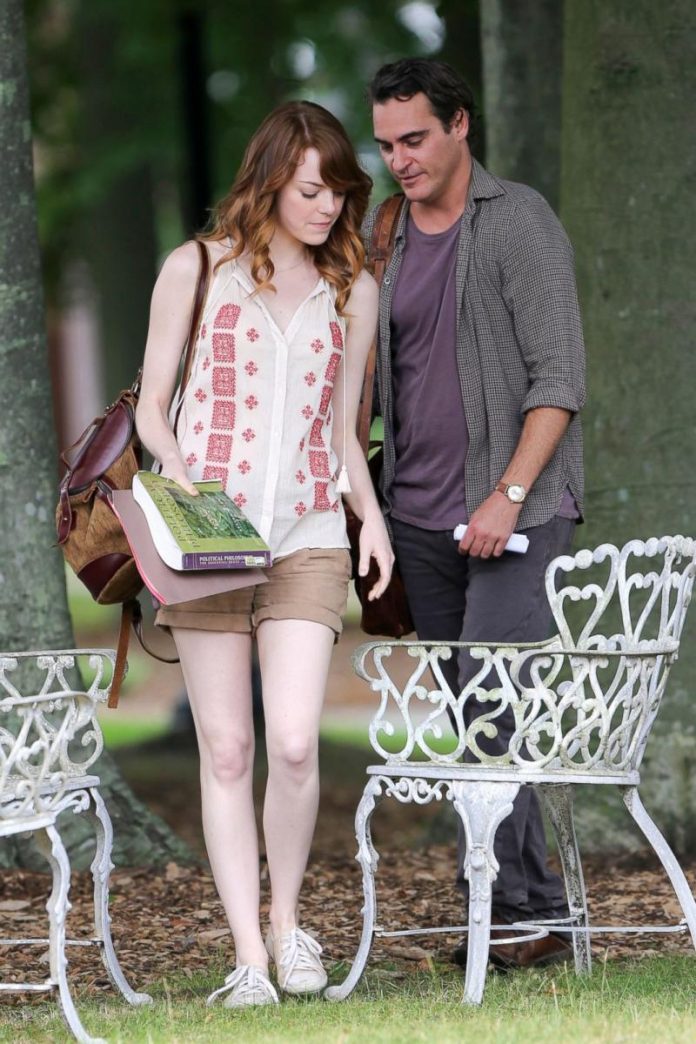
The general rule for Woody Allen is that every second film he makes is the good one. Midnight in Paris was solid, To Rome With Love was not; Blue Jasmine had widespread acclaim, Magic in the Moonlight wasn’t lauded. Irrational Man should be another return to form for the prolific director. The film, which debuted to mixed reviews at this year’s Cannes Film Festival, is about a tormented philosophy professor who gets out of his existential crisis when he meets a young and attractive student. This movie couldn’t sound any more Woody Allen, so let’s just hope it’s the good kind.

edenEden (August 1)

Mia Hansen-Love’s film is about the rise of house music during the ‘90s, and a young DJ who navigates the scene. This film shares many similarities with last year’s Boyhood: the plotless structure, the deliberate pace, the epic sweep of time. Eden takes place over two decades and the film begins to find its thematic focus as the world around the protagonist continually changes while he stays the same. At about two and a half hours, Eden is quite long, but by the time it’s done you can’t help but want to start it all over again.

Dope filmDope (TBA)

Along with Me and Earl and the Dying Girl, Dope emerged from this year’s Sundance as a favourite for both critics and audiences. The film has already had a wide release in the US and Toronto but no date has been set for Vancouver — however, it should make its way to the west coast before September. Dope tells the story of Malcolm, a nerdy high school student who lives in the ghetto of Los Angeles with dreams of attending Harvard.

Hairspray is the ultimate feel-good musical

0
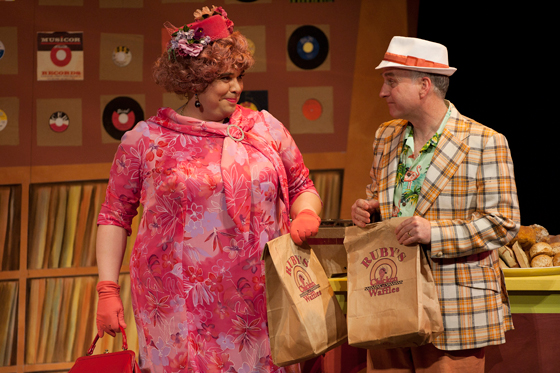
Photo courtesy of David Cooper.

Andy Toth has played Edna Turnblad in Hairspray before, but this time he actually had a chance to rehearse. Last time, he was filling in at the Arts Club and prepared for the role in only 17 hours. “It’s luxurious,” he said with a laugh, explaining that reprising the role at Theatre Under the Stars has been a lot of fun and the production feels just as professional.

The character of Edna Turnblad was created by John Waters for his 1988 film, and was written for his good friend, the drag queen Divine. Since then, Edna has always been played by a man, and the cross-dressing element is important to the role. If the role was played by a woman, Toth explained, “it wouldn’t be the same as the original. He wrote the role with [Divine] in mind and it metaphorically accentuates that she doesn’t fit into society.”

While Edna’s character is a prominent figure, her daughter, Tracy, is the protagonist of the show. Tracy wins a spot to dance on a popular television show and becomes an instant celebrity, using her new status to try to convince the show to be racially inclusive.

Hairspray has been described as the ultimate feel-good musical, and Toth chalks that up to its themes, which everyone can relate to. “There’s a universality in needing to belong and hoping for the best, and Tracy has that in spades.” Everyone has their moment of triumph — even the antagonists finally accept racial integration, and it sends the message that everyone is welcome and this ideal world is possible.

Edna is an endearing character, and Toth said that he enjoys the relationship she has with her husband, Wilbur. “She and her husband are in each other’s corner. He kinda supports her crazy, and she loves him for it.” His favourite song to perform, he says, is “Timeless to Me” because it’s about the strength of their relationship and that they can never be apart.

Playing Edna is not all fun and games, though. “I’m not looking forward to getting into the polyester wig and clothing,” laughed Toth, describing the sweat-inducing costume as providing a large physical transformation.

The uplifting feeling is continued by the live band rocking out with key changes and an explosive pop of joy at the end. The final song, “You Can’t Stop the Beat” is very uplifting, but Toth explained that Broadway performers refer to it as “You Can’t Stop to Breathe” because it is six minutes of nonstop dancing and singing.

“The show’s a blast,” said Toth. “Even if you’ve seen Hairspray, people will find something in this one that they haven’t seen before.”

Hairspray is presented by Theatre Under the Stars in Stanley Park’s Malkin Bowl July 10 to August 21. For more information, visit tuts.ca.

Cinephilia: Self/Less fails to be philosophical

0

Donald Davidson is casually going for a stroll in a swamp when — bang! — a flash of lightning comes down and kills him. Another bolt carrying all of Davidson’s DNA hits the swamp and creates his perfect replica: Swampman. If the naturalist and materialist were correct, Swampman would go on to finish writing Davidson’s essays as though nothing had happened.

This famous philosophical thought experiment — an imaginary situation that examines the consequences of a theory — seeks to support the dualists’ view that personal identity is not identical with anything physical.

I mention this thought experiment in relation to Tarsem Singh’s new science fiction film Self/Less for three reasons. First, it’s a really strong argument against those that think personal identity is solely a cause of the material body and not the result of an immaterial mind with memories and consciousness.

Second, the best and most thought-provoking science fiction is like a thought experiment. Freed from the constraints of natural laws, filmmakers are free to imagine paradoxical and absurd consequences that stem from certain philosophical theories.

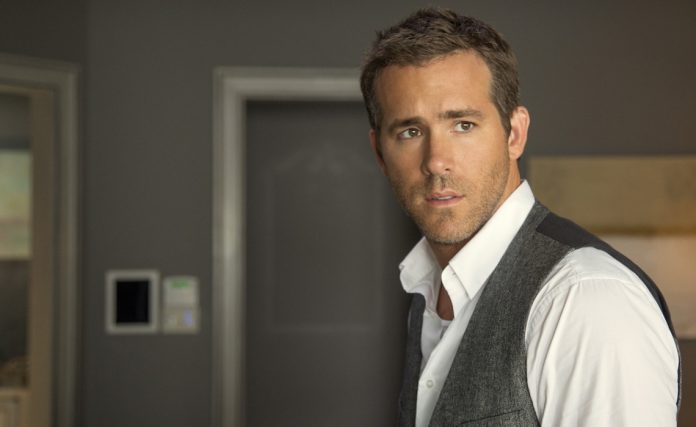
Third, Self/Less, the story of a dying rich man, Damian (Ben Kingsley), who wants to save himself by transferring his mind into another body (Ryan Reynolds), engages with the philosophical debate alluded to by Swampman.

It’s a film which, on the surface, seems to simply be a thought experiment sci-fi, but Self/Less abandons philosophical inquiry after a fascinating opening hour in favour of a more generic genre film with predictable guns and car chases. This is a dumb film that begins by engaging with some very smart ideas.

I am conflicted. I recognize that Self/Less’s screenplay by David and Alex Pastor could have lent itself to a more complex and cerebrally thrilling film, yet I’m stuck evaluating the one with a safer, more mediocre narrative. For all the promise of the first act, Self/Less would rather be just another man-on-the-run thriller and should therefore be evaluated as such.

The director, Tarsem Singh, has made bad films before, but never a bad looking one, and this is no exception. With a background in music video direction, his imagery is always distinct, unique, and stylized, and his previous films all take place in fantastical worlds. What’s interesting about Self/Less is how he shoots and edits an imaginative film with a more grounded framework. The narrative may ignore the higher realms of science fiction for conventional beats, but the direction is far from generic or lazy.

Singh pays attention to architecture and the emotional responses it elicits: a gold-plated apartment in New York city reeks of cold detachment; an exotic mansion in New Orleans feels like a second chance at life; the underground lab where Damien’s consciousness is transferred into another body is sinister and shady, but also exciting and futuristic. If his characters are sometimes stoic, Singh’s visual energy expresses the feeling that his characters lack.

Simple hand-to-hand combat sequences display a careful attention to space. Montages that are used to efficiently progress the narrative are expressions of the protagonists’ subjective experience. Many scenes in this film don’t work on an intellectual or narrative level, but their visceral intrigue comes from the inspired bravado of the aesthetic.

In many ways Self/Less works like a muddled non-narrative experimental film: any attempts at plot are pointless and the ideas are hard to follow and half-baked, but the intrigue comes from experiencing how the filmmaker can paint rapturous imagery with juxtapositions of light, movement, time, and music. I would have preferred to see an adaptation of Donaldson’s Swampman, but you will see worse and less visually inspired films this summer.

HUMOUR: Courses we’d like to see offered for the upcoming Fall semester

0
Photo by Tanel Teemusk

Last week marked the beginning of course registration for Fall 2015, which means you’ve probably already sifted through the uninteresting crap being force-fed into your timetable. An unfortunate reality is that picking a course load for the next semester quickly dissolves from an exciting period where you peruse course descriptions into taking basically any required course that isn’t already waitlisted and won’t cripple your work availability. But a dreamer can dream, can’t they?  Here are some of the courses now open for enrollment in my perfect world.

ARCH 101: Introduction to Archaeology

The fundamental skills of archaeology will be covered in this course, including how to measure your head-size for future fedora purchases, both practical and impractical uses for a whip, and how to grow just the right amount of facial hair to appear scruffy (but not too scruffy).

ENGL 412: Advanced Sarcasm

In this four-credit course, students will study the rise of sarcasm as a form of storytelling for modern audiences. We will also look at the various ways in which literary writers have tried — and failed — to convey the tone of sarcasm and some of the most famous examples of how sarcasm led to a big miscommunication. Wow, sounds like a really insightful course.

PHIL 214: Dreamed Thoughts and Theoretical Existences

This altered consciousness-heavy course will look at the multiple realities that are produced whenever humans fall asleep during class, as well as the peculiar thoughts that manifest whenever we let our minds drift to something more interesting. Like, have you ever considered that when you’re going between time zones, you’re technically travelling through time?

CRIM 360:  Locomotive Investigations

Intensive study of what to do if your life ever takes an Agatha Christie-style turn, and you’re forced to solve a crime whilst aboard a fast-moving train in an exotic country. Fifty per cent of the final mark will come from coursework, while the other half will be based on applying the learned knowledge to a real-life scenario. Please note that this course is reserved for Criminology honours, majors, and people who have just always wanted to do something as cool as this.

LING 352: Virtual Languages and Online Linguistics

An investigation into the dialects used on your Facebook newsfeed, as well as those found on Instagram, Twitter, and whatever other dumb social media platform is trendy now. Course requirements include having Internet access at home and a smartphone with data, as students will be expected to access social media regularly and excessively.

BUEC 131: Economic Developments and Money Bags

Introduction on how modern economics influence our society, as well as how to use this first-year knowledge to become instantly rich and successful. We will also look at what to do when you simply have too much money and no clue what to spend all of those fat stacks on.

GSWS 203: Exploration of the F-word

An assessment of the term feminist, as it should already apply to everyone. Examples of why people say they’re not a feminist will be examined, along with logic-filled rebuttals students can use to discredit the anti-feminist movement. Prerequisite: common sense.

EDUC 368: Educational Institutions in Pop Culture

An in-depth look at how schools often serve as the backdrop for countless successful television shows and films, despite none of the actors’ ages correlating with the characters they’re portraying. Please note that this is a viewing-intensive course, with students required to binge-watch many of the shows they were probably already watching anyways.

This week in comics

0
ItsBarbecueSeason (Serena Chan)
It’s Barbecue Season (by Serena Chan)


Seagull Square 9Seagull Square (by Jill Mandrake)

updated agora week 10
The Adventures of Agoraphobia Man (by Jacey Gibb)

Worth a shot
Pun 2 3 (by Sarah Walker)

Screen Shot 2015-07-24 at 10.16.41 AM
C
reator’s Pet (by Destiny Hsu)