Home Blog Page 10

Reimagining the outdoors as more inclusive and accessible spaces

0
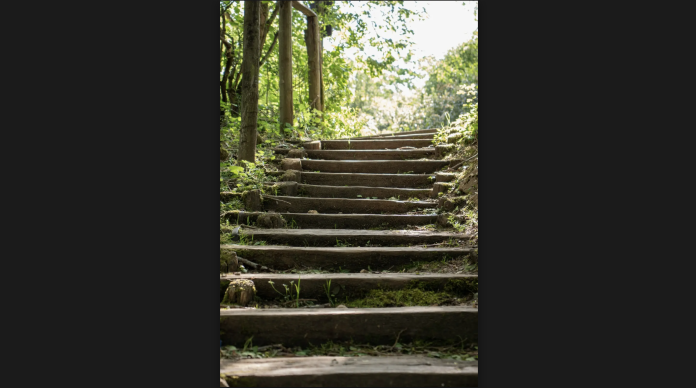
A flight of stairs on a hiking trail in the forest
PHOTO: Guillaume-QL / Unsplash

By: Heidi Kwok, Peak Associate

Pristine towering snow-capped mountains, old-growth forests, and majestic coastal fjords are just a few of the natural wonders we have here on Turtle Island. Outdoor activities are now synonymous with the province’s identity. Summers are for overnight camping trips in the remote BC wilderness, while winters offer skiing or snowboarding in local mountains and resort towns.

Vancouver’s culture is tied to its natural landscapes, landscapes we owe to the caretaking from Indigenous Peoples — and yet, only a subset of the region’s multiracial population is adequately represented in using these outdoor recreational spaces.

The fact that the outdoors remain overwhelmingly white in representation brings us to question: where are all the BIPOC nature enthusiasts?

It’s undeniable that racialized folks are heavily underrepresented in the North American outdoors. In BC, for instance, a 2023 BC Parks visitor satisfaction survey found that an overwhelming 84% of respondents identified as white/Caucasian, while less than 0.1% and 1.1% identified as Black and Indigenous, respectively. These statistics are not exaggerated but experienced tangibly in real-life. As a person of colour, I can’t help but feel alienated in a sea of white people when frequenting Vancouver’s natural spaces. There are deeper reasons for this lack of representation which can be traced back to colonial portrayals of untouched wilderness: an oxymoron which has shaped an outdoors-oriented recreational culture that excludes participation from racialized and low-income folks. 

Protected areas and national parks in both Canada and the US are sites of green colonialism, an ongoing form of land grabbing that depends upon the forceful removal and displacement of Indigenous Peoples from their traditional territories in the name of wilderness and ecosystem conservation. Since the establishment of Yellowstone National Park in 1872, national parks were marketed as leisurely retreats and playgrounds which were politically marketed to wealthy white settlers. When recreation became the only acceptable form of use on managed lands that have been reduced to sites of tourism, Indigenous Peoples were then prohibited from living, hunting, and reconnecting with their ancestral spaces. These colonial and state-sanctioned acts of violence continue to reverberate on current generations, as the erasure of Indigenous cultures combined with intergenerational trauma adds to a further detachment from the land. A CBC article summarizes this succinctly by commenting how a “lack of minority representation means some people feel unwelcome in the outdoors,” which adds to further reluctance towards heading out onto the trails. 

Paradoxically, the expectations of living in Vancouver are tied to the assumption that nature is right on our doorsteps, free and accessible to all within a blink of an eye — which is not untrue for the most part — the city alone has more than 250 parks. The real issue here are the financial barriers that prevent meaningful engagement with the outdoors. Gear is incredibly expensive. Provincial parks in the Lower Mainland such as Cypress and Mount Seymour Park are both inaccessible by public transit, instead requiring travellers to pay for a private shuttle bus service. Don’t even get me started on winter sports. Ski tickets cost $199 for a two day sky card at Cypress Mountain and $152 at Whistler for a day pass. Local nature spots are either privatized or run like they are, and catered to tourists or people with the means. The Grouse Grind may be a free hike but the gondola down costs $20. Even as a student, the Capilano Suspension Bridge entrance fee still costs between $48–$64, depending if it’s a day or evening visit. As a low-income student without a personal vehicle, the outdoors is simply out of reach.

Outdoor recreation doesn’t just exclude BIPOC and low-income individuals but also people with disabilities. The experience of connecting with nature should be a right that all humans are able to enjoy, however, a lack of accessibility in the built environment of trails means that people with mobility challenges get left behind in the face of expensive specialized gear, lack of information on accessibility features, and steep or poorly maintained trails. 

Living in a city with a place identity strongly associated with the outdoors, we must consider how these spaces can be transformed to become more inclusive and accessible for all of its inhabitants. 

Indigenous place names in so-called Greater Vancouver

0
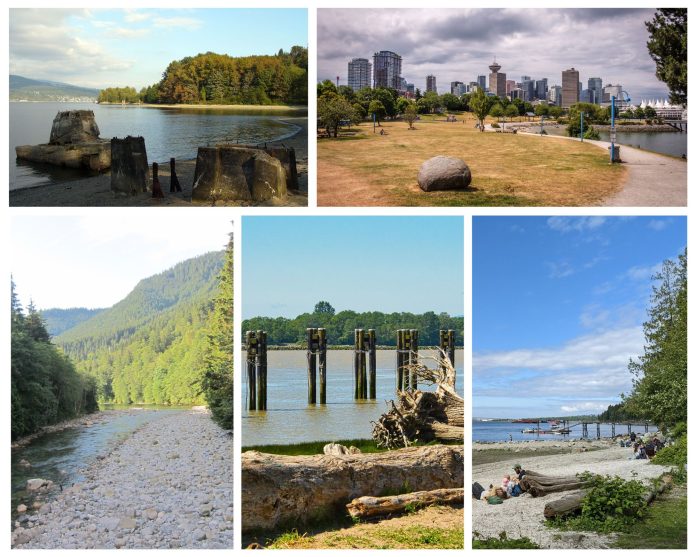
A collage of photos of places in the lower mainland: Lhuḵw’lhuḵw’áyten (Barnet Marine Park), K’emk’emelay (CRAB Park), Xwmélch’sten (Capilano River and Capilano Indian Reserve No. 5), and Whey-ah-wichen (Cates Park)
PHOTOS: Philippe Giabanelli / Wikimedia Commons (Barnet Marine Park), MikoFox Photography / Flickr (CRAB Park), Mike W / Flickr (Capilano River), Ruth Hartnup / Flickr (Cates Park), and Ted McGrath / Flickr (Steveston/Fraser River)

By: Ella Pendlington, SFU Student

The phrase “Beautiful British Columbia,” the slogan stamped on all BC license plates, is often used to describe BC. From the Pacific Coast to the Rocky Mountains, the landscapes here are no doubt stunning. What is now known as BC exists on unceded land that has been cared for by Indigenous Peoples since time immemorial. Greater Vancouver is located on the Coast Salish territories of the Skwxwú7mesh (Squamish), xʷməθkʷəy̓əm (Musqueam), səlilwətaɬ (Tsleil-Waututh), kʷikʷəƛ̓əm (Kwikwetlem), qʼʷa:n̓ƛʼən̓ (Kwantlen), q̓ic̓əy̓ (Katzie), Qayqayt, Semiahmoo, sc̓əwaθən məsteyəxʷ (Tsawwassen), and Stó:lō Peoples. But overwhelmingly, regions and landmarks in BC are known by colonial names, rather than their Indigenous ones. 

The importance of decolonization

Colonialism in Canada has brought prejudicial legislation and continues to threaten Indigenous ways of being. The genocide against Indigenous Peoples contributed to targeted acts of Indigenous linguistic erasure, from the Indian Act’s prohibition of Indigenous dance and ceremonies, to residential schools, in addition to the false notion that English and the written word were superior . 

Oral history involves the passing of history and knowledge to new generations through speech. In many Indigenous traditions, this is often done by highly respected individuals in communities like Elders and knowledge keepers. Land acknowledgements, for example, are a practice in oral history. They teach recognition and respect of land occupancy, Indigenous history, and cultures, which allows for deeper connection to place and home.  

For settlers, decolonization can begin with learning more about this connection, and taking steps to amplify Indigenous voices, storytelling, and languages. One way is to replace colonial language used in daily life, by actively learning and incorporating Indigenous perspectives in their place. The First Peoples Map of BC is a resource that allows people to learn more about Indigenous Nations, place names, and their pronunciations. SFU also has a Host Nation Pronunciation Guide, and the ímesh mobile app, developed by the Bill Reid Centre. The app includes a Coast Salish place names walk and an Indigenous art walk of SFU’s Burnaby campus.

Indigenous languages are alive

As documented by the Canadian Language Museum, there are eight Indigenous language families in Canada, which are distinct languages that descend from a common language. They are: Inuit-Yupik-Unangan, Na-Dené, Algonquian, Iroquoian, Siouan, Salishan, Wakashan, and Tsimshian. There are also three unclassified languages (those which are isolated) — Haida, Ktunaxa, and Beothuk. Salishan, Wakashan, and Tsimshian make up the three families of the Pacific Northwest.  

While some languages have large speaker counts — like Cree (around 96,750) and Inuit languages (around 40,000), many Indigenous languages may no longer have many speakers or be frequently spoken. However, it is a misconception that Indigenous languages are no longer alive. “Linguists consider a language to be extinct when it no longer has fluent native speakers. This does not mean that all traces of the language have disappeared,” writes the Canadian Language Museum. Beothuk is one such language. “There may still be people who can passively understand the language or people who are trying to learn to speak it. Fragments of the language may also be preserved in songs or fixed phrases such as greetings.” The term “sleeping” has been suggested in place of extinction because it “acknowledges the potential for the language to be revived.” 

Indigenous place names celebrate the connection between Indigenous Peoples and the natural world that is rooted in respect and reciprocity. In the hən̓q̓əmin̓əm̓ language (pronounced HUN-kuh-MEE-num), Musqueam, spelt xʷməθkʷəy̓əm, translates roughly to “place where the məθkʷəy̓ grows.” məθkʷəy̓ is a type of flowering plant, pronounced muth-kwey. Squamish, spelt Sḵwx̱wú7mesh in the Sḵwx̱wú7mesh sníchim (Squamish language, pronounced SNAY-chim), translates roughly to “mother of the wind” and “people of the sacred water.” Tsleil-Waututh is spelt səlilwətaɬ. In hən̓q̓əmin̓əm̓, səlilwətaɬ translates roughly to “People of the Inlet.” 

Both hən̓q̓əmin̓əm̓ and Sḵwx̱wú7mesh sníchim are in the Salishan language family. These are historically oral, and writing systems were only recently introduced using the North American Phonetic Alphabet, which is adapted from the Latin alphabet. Special characters and accents are used to accommodate distinct sounds, such as the glottal stop. Others, like Inuit languages, have their own writing systems.

The following list presents Indigenous names and histories of five locations in the Lower Mainland. It’s important to note that many areas may have different names to different Nations, as many Peoples have historically relocated according to season and environmental changes, so any given land could have multiple distinct histories and Indigenous connections.

Lhuḵw’lhuḵw’áyten, meaning “where the bark gets peeled in spring” (Barnet Marine Park and Burnaby Mountain) 

Pronounced: Thluk-Thluk-Way-Tun

Barnet Marine Park, located at the foot of Burnaby Mountain, is known as Lhuḵw’lhuḵw’áyten by the Sḵwx̱wú7mesh Úxwumixw (meaning village, community, or Nation). Sḵwx̱wú7mesh and other Coast Salish Peoples have long harvested bark from the lhulhuḵw’ay (arbutus) tree to use, for instance, medicinally, to treat colds and tuberculosis by chewing on the leaves. Lhulhuḵw’ay means “always peeling tree,” and is derived from lhuḵw’, meaning “peel.” 

Skwxwú7mesh Úxwumixw councillor, Khelsilem, told Vancouver is Awesome, “One of the things about our place-naming culture historically is that a lot of the place names are based off of sightlines from the water.” Therefore, Burnaby Mountain, where SFU’s Burnaby campus is located, is known as the mountain of Lhuḵw’lhuḵw’áyten in Skwxwú7mesh sníchim.  

Leḵ’leḵ’í, meaning “many leaves dropping” or “leaves falling to the ground” in Sḵwx̱wú7mesh sníchim (CRAB Park at Portside)

Pronounced: LEK-Lek-eye 

What is now known as CRAB Park at Portside is located along the south waterfront of səl̓ilw̓ət (pronounced suh-ley-l-wut, meaning Burrard Inlet in hən̓q̓əmin̓əm̓). For thousands of years, Coast Salish Peoples fished, clammed, and hunted along səl̓ilw̓ət, travelling by canoe and gathering seasonally. 

In 1886, there was a fire that began on the downtown peninsula, where settlers were beginning to build their new city on Indigenous territory. Sḵwx̱wú7mesh people came to rescue many of the settlers in their canoes, and brought them to the north shore, saving their lives. A descendant of one of these first responders, Kristen Rivers, told CBC about the friendships formed with the settlers: “During holidays, they would have dinners with them or the families would bring treats like cakes and all of that sort of stuff to my great-great-grandmother.” The details of this event are preserved in Sḵwx̱wú7mesh songs and storytelling. 

Create a Real Available Beach (CRAB) was the name of the committee that advocated to make CRAB Park in the 1980s “to establish a Downtown Eastside waterfront park on a vacant site owned by the federal government,” according to advocate Don Larson. In July 1987, the park was officially established. Anishinaabe Elder Veronica is an advocate and member of CRAB. “I have always found the sense and feeling of home,” shared Elder Veronica, “with so much Indigenous community that are there.” 

Xwmélch’sten, meaning “fast moving water of fish” or “the place of rolling at the mouth” (Capilano River and Capilano Indian Reserve No. 5) 

Pronounced: Homulchesan

What’s now known as the Capilano River is located on Sḵwx̱wú7mesh territory. Xwmélch’sten (Capilano Indian Reserve No. 5) is located at the northern shore of səl̓ilw̓ət at the mouth of the river. Skwxwú7mesh Úxwumixw know the river as “The Place of Rolling at the Mouth” due to the many salmon that swam up the mouth. “Capilano” comes from the name of Skwxwú7mesh

Chief Kiapalánexw, whose successor S7ápelek (Chief Joe Capilano) is remembered for advocating for Canada’s recognition of Indigenous rights and title. In 1906, S7ápelek led a group of BC Chiefs to Britain to discuss their fishing and hunting rights in front of King Edward VII. His advocacy had an influence on consequent Indigenous leaders, including S7ápelek’s great-grandson, Chief Joseph Mathias. S7ápelek is also known as a Warrior Chief, who “travelled up the Xwmélch’sten river to capture Smaỳlilh (Sasquatch) in order to gain its power,” according to Skwxwú7mesh stories. Oral storytelling about Sasquatch, or Big Foot, originated from different Nations across the Northwest Coast, each with their own interpretations of his role and teachings.

Whey-ah-wichen, meaning “facing the wind” in hən̓q̓əmin̓əm̓ (Cates Park)

Located in North Vancouver, along the səl̓ilw̓ət, what’s now known as Whey-ah-wichen/Cates Park is east of the Iron Workers Bridge and south of Deep Cove. The village was used in the spring and summer months by the səlilwətaɬ to hunt and gather. səlilwətaɬ people could access much of the səl̓ilw̓ət, North Vancouver, North Coquitlam, and North Burnaby by canoe and trail systems from the site. Found in the ground were “rockfish, salmon, goldeneye and mallard ducks, harbour seal, and mussels, urchins, and clams.” Also hunted were “beaver, black bear, wapiti (elk), and mountain goat,” according to the ímesh mobile app. 

səlilwətaɬ culture is kept alive today at the park. Tayaka Tours, owned and operated by the səlilwətaɬ, and Deep Cove Kayak Centre, co-manage Cates Park Paddling Centre. They offer canoe tours, where groups go out in traditional canoes and learn from guides about local Indigenous history. Since 2001, the park has been co-managed by the District of North Vancouver and the səlilwətaɬ. 

stal̕əw̓ (Fraser River and Steveston)

Pronounced: STALL-oh

Much of xʷməθkʷəy̓əm territory is located in the Fraser River estuary. “Many of our members live on a small portion of our traditional territory, known as the Musqueam Indian Reserve, located south of Marine Drive near the mouth of the Fraser River,” reads the xʷməθkʷəy̓əm website. “Our ancestors had many villages and moved throughout our territory, but their main winter village was always located at the mouth of the Fraser River. Nine thousand years ago, that village was səw̓q̓ʷeqsən (Glenrose).”  

The Fraser River is “one of the largest salmon-producing areas in the world” with five species — “st̕ᶿaqʷəy̓ (spring), kʷəxʷəθ (coho), hu:n̓ (pink), sθəqəy̓ (sockeye), and k̓ʷal̕əxʷ (chum)” — harvested, according to the xʷməθkʷəy̓əm First Nation. The south arm of stal̕əw̓ (now known as Steveston, located in Richmond) is particularly rich in xʷməθkʷəy̓əm history. Jason Woolman, manager of Musqueam Archives shared with Richmond News: “As sediment was carried downriver and the delta grew, the location of the river mouth shifted westward and Musqueam moved with it, establishing an extensive village network covering nearly 145,000 hectares that included sites in Terra Nova, Steveston and Garry Point, among others.” 

As settlers began building cannaries in Steveston, the once local xʷməθkʷəy̓əm fishing region became an industry, which displaced many xʷməθkʷəy̓əm people and altered their ways of life. Now needing to obtain fishing licenses, and forced into hard and underpaid labour, Indigenous fishers helped teach Chinese and Japanese labourers their “knowledge of millennia on the river,” Woolman told Richmond News

In 1984, under the Federal Fisheries Act, xʷməθkʷəy̓əm man Ronald Edward Sparrow was arrested for fishing with a net longer than his license allowed. Sparrow later took his case to the Supreme Court of Canada and in 1990, his ancestral right to fish was cleared by the Supreme Court. This was a monumental decision as it affirmed Section 35 of the Constitution Act, which validates Treaty rights.

Today, the Britannia Shipyards National Historic Site aims to tell the stories of the Indigenous, Chinese, and Japanese people who lived and worked in Steveston over the years. 

 

Searching for identity amid ongoing reconciliation

0
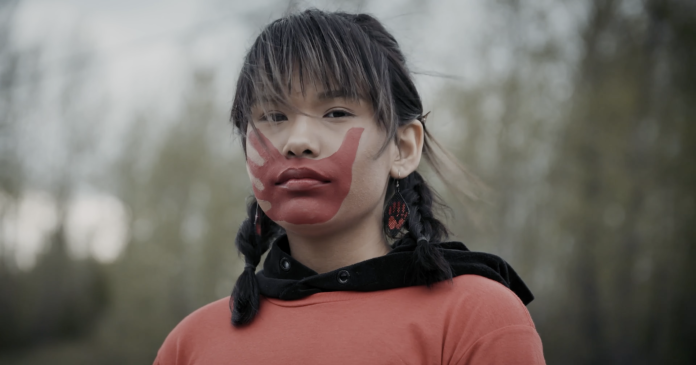
A scene from I Am Gitxsan showing a person with a red hand on their mouth
SCREENSHOT: Courtesy of SR Socially Relevant Film Festival New York / Youtube

By: Diya Brar, SFU Student

Content warning: mention of residential schools.

Directed by Iranian Canadian filmmaker Hossein Martin Fazeli, I Am Gitxsan was screened at the Vancouver Public Library on June 4 alongside a post-film Q&A. The documentary follows Phoenix Apperloo, a 17-year-old, who travels to Hazelton, BC, in a quest to find a more concrete connection to his ancestral land and Gitxsan heritage. During this time, he notes down diverse stories of residential school survivors, learns from community members, and gains a greater understanding of the culture, as well as the trials and tribulations that have shaped his People. Motivated by his knowledge and experiences, Apperloo wrote a letter to former prime minister Justin Trudeau in 2023, calling for an honest conversation about the ongoing impacts of colonization and the limitations of reconciliation efforts that stop short of meaningful change. 

One of the documentary’s most compelling qualities is its visual storytelling. It opens with sweeping shots of rivers, fish, forests, and mountains accompanied by reflection on the Gitxsan relationship with the land. These calm, immersive images are sharply contrasted with footage of environmental destruction, residential school realities, and modern industrial development. The score expertly follows a similar pattern, shifting from quiet natural soundscapes to more dissonant and unsettling tones during discussions of colonial violence. This juxtaposition never feels forced; instead, it reinforces I Am Gitxsan’s central concern: the consequences of disconnection from the land, culture, and community.

The documentary is equally strengthened by the range of voices it incorporates. Perspectives from Chiefs, Elders, family members, survivors, and experts lend both emotional weight and historical depth to the narrative. Particularly powerful are the discussions of residential schools and their lasting effects on families and communities. Rather than relying solely on archival footage, the film combines survivor testimony with stark animated imagery to convey the loss of language, identity, and belonging imposed through these institutions. These sequences are difficult to watch, but they are among the documentary’s most important moments.

Despite its heavy subject matter, I Am Gitxsan is never consumed by despair alone. Moments of humour, communal connection, and scenes of fishing traditions and storytelling emphasize continuity rather than solely loss. At the same time, the film challenges audiences to think critically about reconciliation efforts in Canada, arguing that apologies alone cannot meaningfully address ongoing inequalities. 

This message was reinforced during the Q&A, where Fazeli emphasizes that the project was “about trying to create real change,” not simply collecting awards or festival recognition. He expressed hope that the documentary would only be the beginning and would inspire others to tell their stories, stating,

“We’re a small island in this ocean of physical and social justice, and we’ve got to come together and make it a big island.”

— Hossein Martin Fazeli, Director of I am Gitxsan 

By balancing difficult truths with a powerful sense of perseverance, I Am Gitxsan offers a thoughtful and necessary contribution to conversations surrounding Indigenous history, culture, and justice. It also brutally showcases the realities of colonialism and intergenerational trauma in the Gitxsan community, while simultaneously highlighting its cultural resilience and continued resistance.

Nutritious Nibbles: Tapsilog

0
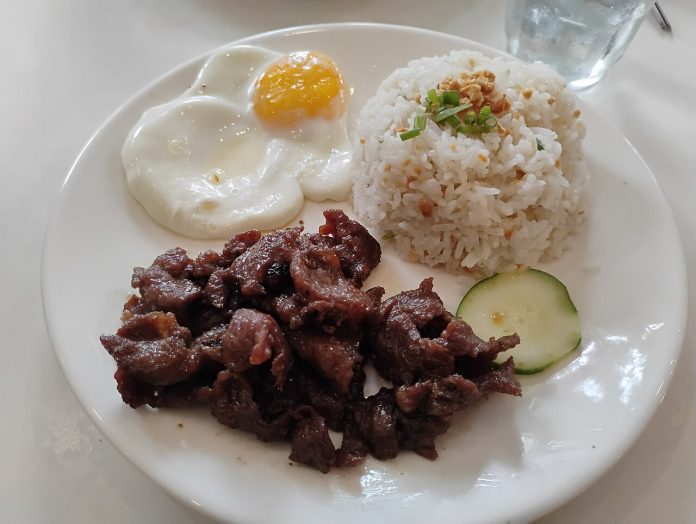
A photo of tapsilog
PHOTO: Ralff Nestor Nacor / Wikimedia Commons

By: Marie Jen Galilo, Staff Writer

Silogs are an everyday breakfast favourite of Filipino households, consisting of three main components: sinangag (garlic fried rice), pritong itlog (fried eggs), and your choice of protein. Traditional silog proteins include tapa (marinated beef), pritong daing na bangus (fried milkfish), longanisa (Filipino sausage), and tocino (sweet cured meat, usually pork).

The word “silog” is basically born out of “si” from sinangag, and “log” from itlog. In addition to the key silog components, there’s also usually a side of fresh produce, such as diced tomatoes. Some people (including myself) also use “sawsawans,” or dipping sauces, such as vinegar. In honour of Filipino Heritage Month, I’ll be sharing a recipe from my mom for one of my favourite silogs: tapsilog.

Ingredients: 

For the tapa: 

  • 1.5 lbs beef sirloin or flank (sliced thinly)
  • 4 tbsp soy sauce
  • 4 tbsp lemon juice or calamansi 
  • 2 cloves crushed garlic
  • Salt to taste 
  • 2 tsp sugar 
  • Vegetable oil for frying  

For the sinangag:

  • 3 cups leftover rice (I like using short-grain white rice with a soft and sticky texture, but you can use any rice you prefer)
  • Salt to taste 
  • 3 cloves of garlic
  • Vegetable oil for frying    
  • 1–2 eggs and vegetable oil for frying eggs 

Optional:

  • Your choice of fresh produce (e.g. diced tomatoes or cucumbers) 
  • Vinegar (often spicy vinegar, but I also use apple cider vinegar) 

Instructions: 

  1. In a bowl, combine the soy sauce, lemon juice, crushed garlic, sugar, and salt. Add the beef afterwards and massage the sauce into the meat. Marinate the meat in the fridge overnight. 
  2. To cook the tapa, add oil to a pan over medium heat and cook the beef for about 3 to 5 minutes, or until the sauce has caramelized.
  3. For the rice, add oil to a pan over low-medium heat and saute the garlic until light brown. Add in the rice and stir fry until the rice is heated through. Add salt and mix. 
  4. Fry the egg(s) sunny-side up in a pan with oil over medium heat.  
  5. To serve the tapsilog, place the tapa, sinangag, and fried eggs on a plate. Enjoy with vinegar sauce to balance out the tapsilog’s rich flavours, and a side of refreshing tomatoes or cucumbers.

Notes: 

  • If you want the tapa to have a lighter flavour, marinate it for a few hours instead of overnight.
  • Use thin slices of meat if you want the marinade flavour to soak in more.
  • Pour some of the marinade into the pan when cooking the beef and let the marinade caramelize for a more intense umami flavour.  
  • Let the rice get a bit crispy for that toasted, crispy rice texture and flavour.

Tapsilog is a meal that I grew up eating, and it’s one of my favourite foods. It’s the perfect trinity that promises flavour and texture — a spoonful of garlic fried rice topped with tangy tender beef and crispy edges of fried egg, all glazed in golden runny yolk. I hope you enjoy this meal as much as I do, and I hope this dish inspires you to try other silogs and Filipino dishes too.

Between suffering and saviourship

0
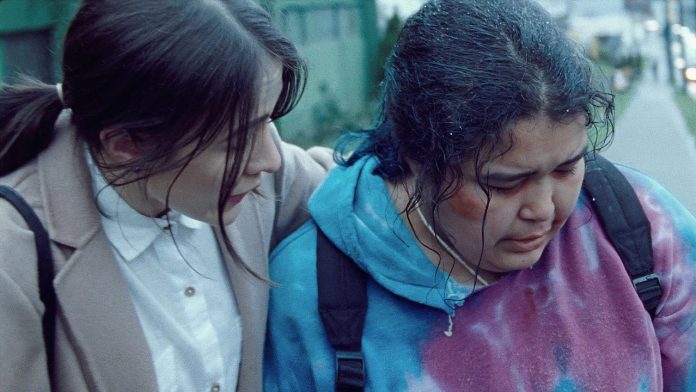
A still from The Body Remembers where one of the characters, Aila, is comforting another, Rosie
IMAGE: Courtesy of Experimental Forest Films and Violator Films

By: Maya Barillas Mohan, Staff Writer

Content warning: mention of domestic abuse.

If the 104-minute movie The Body Remembers When The World Broke Open feels like a lifetime, it could be because it offers a completely undiluted clip of one. The movie could also feel that way because it breathes at the same rate reality does: at red lights, you idle, and during awkward conversations, you stall while you find the words. The film is based on a real encounter director Elle-Máijá Apiniskim Tailfeathers had.

While fictitious in its specifics, The Body Remembers handles issues facing Indigenous women throughout the unceded lands of Vancouver with nuance. 

Pregnant, barefoot, and soaked from the rain, 19-year-old Rosie (Kwakwaka’wakw) meets Áila (Niisitapi/Sami), who following a particularly aggressive attack from Rosie’s boyfriend, scoops Rosie under her arm and guides her to temporary safety. Despite both being Indigenous women, their circumstances vary: Áila is white-passing and returns to a clean apartment and a gentle boyfriend of her own; motherhood is a challenge Rosie anticipates tackling independently, whereas Áila is not sure she wants to tackle it at all. 

The movie’s handheld, continuous-take style deposits the viewer between two characters trying their best. Each cut is seamlessly concealed because one camera is swapped out for another when a film cartridge is spent. The real-time tracking of the film’s events grounds them in lifelike motivations. Yet, it’s hard to tell if Áila is speaking fully from a place of empathy, or if a glimmer of perceived (white) saviourship — underpinned by class difference — cuts through efforts to connect Rosie with support services. At the same time it’s difficult to sympathize with Rosie due to her repeated offences of theft and hostility towards Áila, but the movie unravels the unseen struggle of abuse facing Indigenous women. Rosie’s hostile boyfriend dominates much of her (and the plot’s) narrative despite limited time on screen. His rage is the reason she flees, but it is also the reason she returns home. This pattern is not unique, and the characters know this: pulled along bleak Vancouver streets in the backseat of a yellow cab, Rosie is reluctant to reach the safe house destination. 

As the viewer becomes familiarized with the women, it’s hard not to notice the stereotypes imbued into the characters. Áila is a blandly dressed millennial with an apartment adorned by subtle Indigenous motifs, clearly aware of how her marginalized identity fits on top of her position of privilege. Her kindness seems to be an obligation to her Indigenous heritage, and courtesy to Rosie’s vulnerability. Rosie has a heavier body with matted hair both of which compounds the abuse she experiences, implying the correlation between affordable food and its negative health impacts for impoverished communities. I think it was a stylistic choice intended to make composites out of Rosie and Áila, but the movie seems to imply that abuse victims or those that offer help look a particular way. I don’t think this is a flaw, but I wonder if it perpetuates a stereotype rather than identifying the traits a vulnerable person could carry. 

The characters diverge quietly because the movie doesn’t really end. It almost feels like the 16mm film simply ran out for the final time. As a viewer, you might want stories to draw to tidy resolutions, but for Indigenous women facing violence, there is really no satisfying end. I recommend this movie even though it can be a confrontational watch; it shows two different realities on streets the viewer recognizes in a third way of endless possibilities. It’s immersive and evocative, but most of all, I think that 104-minute runtime is the gestation period for empathy to grow.

Reflections of an arts student at SFU prior to graduating

0
PHOTO: Courtesy of Tracey Ho

By: Tracey Ho, SFU Student

While I had always enjoyed arts in high school, being a student at SFU’s School for Contemporary Arts (SCA) for the past five years made me realize just how much more there was to learn about the art world. My first few classes with the school were focused more on artistic concepts, which allowed me to develop a strong base knowledge of different techniques such as durational (time-based) media, painting, and sketching. During my third and fourth years, I got to take a lot more practical classes that involved hands-on application of such techniques. While these courses allowed me to become a well-rounded artist in watercolour and oil painting, sketching, multimedia video-making, and sculpting, my time at the SCA also showed me what a student artist can do outside of the classroom.

One of my most memorable moments was getting to take CA 306, where I got to do a practicum with SFU Galleries. Eventually, I helped select several works to be displayed as part of a piece called “The Moon Project” at the Teck Gallery (now renamed “Harbour Centre Lounge”) from March 2024 to March 2025. Through these experiences, I was welcomed into a family of artists and arts enthusiasts, and more specifically, they created a community for me at SFU outside of the lecture halls. My times with SFU Galleries and the Gibson Museum were also personally instrumental in showing me my future career path — becoming a curator. CA 306 paved a long way in rejecting the false stereotype that students who pursue arts in university go unemployed.

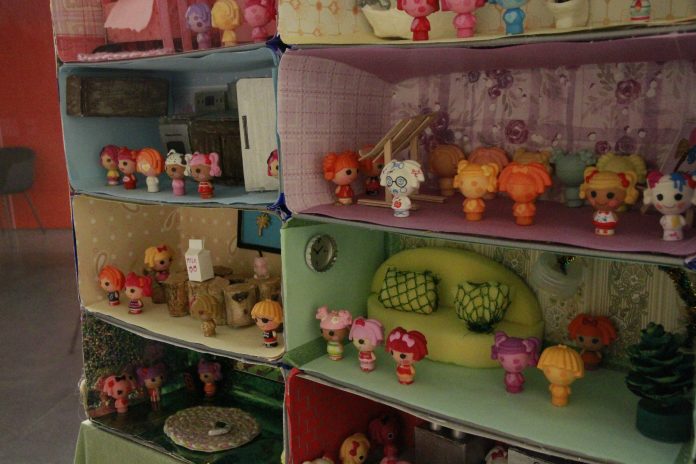
I also fondly remember participating in two visual arts shows that helped me become the artist that I know today. The first, The City of Many, at the end of my third year, and the final graduation show called KerPlunk!. For The City of Many, my cohort worked in collaboration with professor Sabine Bitter and Spring 2025 Audain Visual Artist in Residence Sandy Kaltenborn to explore the role of art and artists in an ever-shifting urban landscape, through looking at themes such as diversity, identity, architecture, and urban dynamism. This show was the first time I got to show my artwork to the public with my video, “Burnaby Malls Changing Before My Eyes,” that showcased the transformation of the three Burnaby malls (Lougheed, Brentwood, and Metrotown) over the years. For KerPlunk!, held just a few months ago, I got to explore the evolving responsibilities of contemporary artists to keep the integrity of galleries and media and how we, future professionals in contemporary art, adapt to these responsibilities. This art show provided me with one last chance as an undergraduate student to publicly display my arts with, “Handmade Dollhouse Mansion,” an eight-section mansion made using recyclable items I collected, representing that old items can be given new meanings in the right environment. 

As I head into graduation, I will always cherish the confidence that my times at the SCA have provided me

Both in forming personal communities, and in showcasing my arts to the wider public. As I reflect on my life after graduation, I plan to keep visiting local galleries and pursuing curatorial positions. Motivated by what I saw at the SCA, in the longer term, I hope to inspire future generations of SCA students to pursue their passions in contemporary arts and reject the notion that arts deters career prospects. 


Backlash reportedly not the British Museum’s tea and crumpets

0
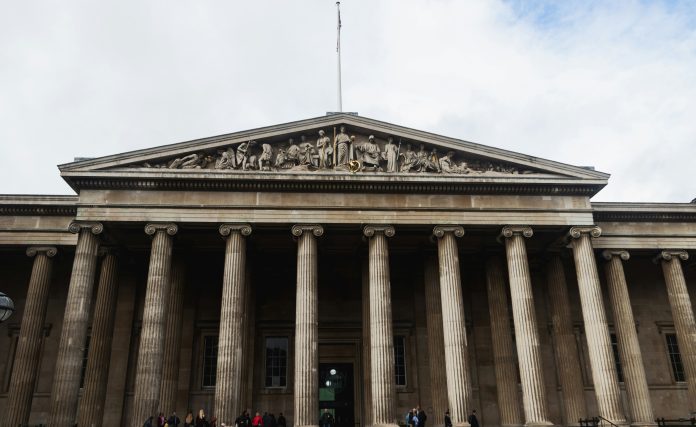
The exterior of the British Museum.

By: Sasha Rubick, Fact Checker

In 2025, the British Museum unveiled an online exhibit titled Colonialism: A Digital Experience. The paywalled, by-subscription-only website was created to make stolen artifacts more accessible, and held the controversial mission statement, “History belongs to everyone, as long as it is nailed to the floor in London.” After facing severe backlash, the museum has released a statement, which is as follows:

In the spirit of democracy that Britain has historically propagated worldwide via peaceful invasion, the British Museum welcomes socratic dialogue. An itty-bitty verbal tiff between neoliberals — why, that’s our tea and crumpets! But myself and my wigged compatriots at the British Museum have been quaking in our wellies seeing the insurrectionist whinging of the tabloids this past year concerning our online exhibit. Nonetheless, in an act of gracious neighbourliness, we have axed the website [hold for applause]. We thusly present our defence of our actions to our noble countrymen; esteemed representatives of the Nobel Foundation; and the mob of complaining, unsavoury internationals; in that order. In the spirit of settler-colonialism, ‘tis high time that we situate this kerfuffle behind us and pretend it never existed. Off we go! 

Firstly, we at the British Museum have been positively knackered by the ludicrous idea that we should somehow “return stolen artifacts to their rightful owners.” Hast thou no sense at all? The foremost concern of the British Museum is the protection of stolen artifacts. The prerequisites of a nation to protect its own artifacts are as follows: 1) an arsenal of nuclear weapons, and 2) a squadron of silent soldiers in very tall hats. Until one possesses both, they are in no position to protect their own cultural lineage, and we shall benevolently undergo the task on their behalf. By God, imagine if somebody threw soup at it, or misplaced it with their improper archival skills. Nothing like that would ever happen in London

Moreover, we at the British Museum think that one culture is being neglected amidst this dialogue — why has nobody mentioned British culture? Theft is our great nation’s most beloved pastime; we love it even more than football and transphobia. Be it the Benin Bronzes, the Rosetta Stone, or the Parthenon sculptures; what is consistent is that we rob indiscriminately . . . or maybe a tad bit discriminantly (shhh). The British Museum has borrowed artifacts, and now we’re stealing money by loaning those artifacts to the very people we borrowed them from! Likewise, it is time-honoured British cultural practice to keep old, dusty artifacts around and claim that they’ll rake in tourist dollars. Just look at our monarchy! And do pray tell, why oughtn’t an upstanding institution such as the British Museum partake in traditional British ritual? 

Our online exhibit was truly ingenious, and we will not apologize for it. After all, we achieved our ultimate goal: stealing the credit for stealing! When you think of “stolen artifacts,” you think of the British Museum — that’s what we call a mighty-good PR move. We’ll gladly steal away your tourist dollars, because we profit from the belief that one needs an aeroplane ticket to see stolen artifacts. By all means, languish in the futility of seeking repatriation across the pond; and forget that collections, museums, and universities right in your neighbourhood do the exact same thing. Ta!

A letter from your old friend, GERD

0
A personified stomach crossing their hands at the sight of pizza, burgers, and fries.
ILLUSTRATION: Jackie Peng / The Peak

By: The one and only GERD 

Dear — no, let’s skip the formalities, we’ve known each other long enough. You probably know who it is already, but just to make sure you don’t mistake me for the other guy you hate — AKA lactose intolerance. It’s me, Gastroesophageal Reflux Disease (GERD for short). You call me “the ultimate life ruiner,” and while it lowkey stings, I try to convince myself that it’s just a term of endearment for you at this point. You may be wondering why I’m suddenly reaching out to you, considering that we’ve technically known each other for a good couple of years now, but we never had a proper conversation. Like a real, one-on-one, heart-to-heart talk. They say “better late than never,” right? So here I am, being the bigger “person” so to speak, and initiating this difficult but much needed conversation . . . via a letter. Finally, GERD gets heard.  

It’s truly upsetting seeing how estranged we’ve become and how much you’ve come to despise me, when all I’ve ever done was be here for you through thick and thin — I’ve always been the one constant in your life. Who was there for you when you’d pull all nighters studying, while eating spicy instant noodles just to stay awake? That’s right — me. Who did you use as an excuse to avoid consuming culinary biohazards, like the suspicious chocolate chip cookies made by your coworker’s five-year-old who wipes his runny nose with his hands? ME. “Sorry — I can’t have chocolate, it’s a GERD trigger,” you said, just last week. And not once, in all these years of our union, have you ever thanked me. One might say I’m close to your heart, because . . . you know . . . the heartburn. But I don’t think you feel that way, and it really hurts my feelings!

I’d also like to point out that framing me as the villain in this story has been more than unfair. From your perspective, I ruin the fun by giving you stomachaches and heartburn, but have you ever considered how your actions affect me? I want to have some peace and quiet around here, but how can I when you consume foods that summon me from the pits of the intestinal chambers? Your doctor gave you a list of trigger foods to avoid, and yet you actively choose to consume said trigger foods. And don’t get me started on those disgusting fruit-flavoured calcium carbonate tablets that you take whenever you get acid reflux. Would you want to be doused in powdery fruit-flavoured chalk? The golden rule is to “treat others the way you want to be treated,” so why is it okay to do that to me? And remember when you unfairly blamed me for giving you a stomachache after eating triple cheese pizza, when it was — Id argue — mainly lactose intolerance’s fault? And yet I took all the blame until you finally decided to get that checked out. You complain about me being “sour,” but wouldn’t you be sour too if you were me?

As heartburn-inducing as it was to write this out, it had to be done, because you really ought to reflect and take responsibility for your own actions rather than blaming me for this whole ordeal. I hope that after reading this letter, you finally see the situation from my point of view and show me a bit more compassion. 

— GERD


Horoscopes June 15–21

0
ILLUSTRATION: Olivia Blackmore / The Peak

By: Abbey Perley, Assistant Production Editor

Aries

March 21–April 19

Tangerine matcha latte

Aries, tangerines may be as bright as you, but the novelty is getting a little out of hand. When was the last time you even ate a tangerine? This combination is what you thought could kickstart your summer, but all it will really do is stoke the thrill of being a trailblazer. At least you’ll know you’re meeting your Vitamin C intake. The stars are taking bets on if you’ll gatekeep this or make a TikTok about it (or both, somehow, for social validation).

Taurus

April 20–May 20

Banana bread matcha latte

Just because you like to be cozy doesn’t mean your drink orders must follow suit. The stars are seriously wondering if you even wanted a matcha at all or if you were just craving banana bread. Now you have both. Please consider taking up baking instead of drinking whatever this is. 

Gemini

May 21–June 20

Dirty matcha latte

Gemini, you don’t have to drink dirt just to stay relevant! When indecisiveness has been ruling you to the point where you have to layer two caffeines on top of each other, you should know something needs to be re-evaluated. The stars believe in your ability to get through one full drink of one kind without getting bored, and are simultaneously concerned about how FOMO is impacting your lifestyle. Check in with yourself once the caffeine from this doozy wears off. 

Cancer

June 21–July 22

Usucha

It’s OK to admit the world can be a bit too much for you. You can’t be bothered with all the toppings and syrups and cold foams and milk substitutes that modern society possesses. Sometimes you just want to reconnect with how all of these drinks began in the first place. The stars think this is a good time to return to your roots and remember where you started. Some people may call you boring, but the word they should be looking for is classy. 

Leo

July 23–August 22

Raspberry danish matcha latte

Your desperation for success can get a little out of hand sometimes (all the time). This is another case of that desperation making itself known. This drink is the embodiment of throwing synonyms at your essay just to hit word count and look pretentious. Raspberry? Doable. Danish? Not unless they blend up a pastry to make it (which is unlikely, but would maybe contribute to it being $9). Like your essay, this drink sounds intriguing but just by the name, we all know you’ve lost the plot.

Virgo

August 23–September 22

Pumpkin spice matcha latte

Pumpkin spice as a matcha flavouring should be a recession indicator, and perhaps it’s time for you to chase this trend. Instinctually, pumpkin might be up there with the last things you would consider pairing with matcha. However, the stars (or a sponsor?) would like you to look a little closer and consider that the warm earthiness of both ingredients make for one robust drink that would suit your equally-as-earthy nature. Please try it! This entry has been sponsored by Big Pumpkin!

Libra

September 23–October 22

Strawberry matcha latte

To bond with the enthusiastic strawberry matcha community, you are completely OK with being like other girls and romanticizing your daily life beyond belief (mostly to remain functional). As endearing as this is, the stars urge you to find your matcha-life balance elsewhere; they are afraid a less-than-average latte may be your last straw(berry)

Scorpio

October 23–November 21

Mango matcha latte 

Like you, this drink can be quite temperamental depending on if it’s mango season or not, but it’s a staple that you’re always determined to try regardless. At times, the mango’s sheer strength can make the matcha nearly invisible to the tongue. The stars would like to ask if you feel more like the mango or the matcha in this scenario, and possibly consider how that affects other people. 

Sagittarius

November 22–December 21

Ube matcha latte

You’re a risk-taker, and what better way to prove it than trying one of the most volatile combinations possible? The success of this drink depends entirely on the quality of both compounds. The high-risk, high-reward nature makes for an adrenaline rush — just don’t crash and burn when it inevitably tastes artificial at least 50% of the time. Big Pumpkin has sponsored this entry to remind everyone that pumpkins grow in the ground just like ube.  

Capricorn

December 22–January 19

Double shot matcha latte 

You’re someone who needs to ensure everyone in your life knows you’re a busybody. You might think the L-theanine in matcha makes you seem morally superior to a coffee drinker, but just because you can doesn’t mean you should. The stars urge you to check how many grams of matcha are in one shot so you don’t spend the next five hours vibrating instead of addressing your to-do list (which they know is long; you have a lot to accomplish, after all). 

Aquarius

January 20–February 18

Blueberry matcha latte

Usually, the stars see blueberry paired with hojicha, but you seem to want all that is different. You might experience disappointment more than the average person. You say that builds character, but this just means you get to talk about experiencing disappointment in your daily life. Big Pumpkin has sponsored this entry to tell everyone that pumpkins have a longer shelf life than blueberries and therefore have a higher ROI(FM) (Return on Investment (For Matcha)).

Pisces

February 19–March 20

Matcha milk tea with pearls 

Let’s be honest. You were at a bubble tea shop and didn’t feel like a fruit tea. None of the other milk teas had the specific energy you were looking for. For someone as nostalgic as you, the fond memories of your matcha experiences persist even when away from matcha cafes, which influences your order everywhere else you go to an alarming degree. It’s debatable if this even counts as matcha and you probably knew that while ordering it, but unlike some matcha snobs, you’re just here for the vibes. 

Recent Andes virus outbreak on the MV Hondius cruise

0
Hantaviruses under a microscope
PHOTO: CDC and Cynthia Goldsmith / Public Health Image Library

By: Marie Jen Galilo, Staff Writer

On April 1, the MV Hondius cruise departed from Argentina with two Dutch passengers who were carrying the Andes virus, leading to a boat-wide outbreak. In their latest update, released on May 28, the World Health Organization (WHO) shared in a report that there are 11 confirmed cases, two probable cases, and three deaths linked to the hantavirus. 

On May 16, BC provincial health officer Dr. Bonnie Henry announced the first confirmed case of Andes virus in BC. Four passengers from the cruise were brought into BC. Initially, they were asked to isolate for 21 days. One passenger, who is a Yukon resident, tested positive for the virus but has since recovered, according to BC health officials. Following this confirmed case, the isolation time for the other passengers was extended to 42 days, the maximum incubation period for the Andes virus. The other three passengers are currently asymptomatic but remain in quarantine until June 21. 

Hantaviruses are a group of viruses — submicroscopic bodies that require a host to reproduce — that include more than 20 species. The viruses primarily use rodents, “such as rats, mice, and voles,” as hosts. According to the University Health Network (UHN), common modes of transmission include inhalation of air particles from “rodent droppings, urine, or saliva,” as well as the consumption of “contaminated food or water.” The Andes virus is the only identifiable species known to have the capacity of human-to-human transmission: following prolonged, close contact with an infected individual, although these transmissions are rare. According to the WHO, this is “defined as being within 2 meters for a cumulative period of more than 15 minutes.”

The specific species of hantavirus on the MV Hondius cruise was identified as the Andes virus, which may “cause a condition called hantavirus pulmonary syndrome (HPS),” according to the UHN.

The Peak spoke with virologist and SFU associate professor of health sciences, Dr. Masahiro Niikura to learn more about hantavirus. He shared, “The severeness of the disease and the transmissibility — how contagious a virus is — [are] totally different things. 

“The virus that can cause a pandemic is [one that is] easily transmitted in the human population. Hantavirus is not.”

— Dr. Masahiro Niikura, virologist and SFU professor of health sciences 

Hantavirus is shed mostly in the urine.” COVID-19, for example, is primarily spread through airborne particles or respiratory droplets. Although both viruses can spread in multiple ways, the current understanding of how the Andes virus spreads makes it “easier to control, to contain.” 

Dr. Niikura emphasized that the location in which the virus replicates is often where it will be transmitted. “If the virus is replicating in the upper respiratory tract, the virus is more likely to be shed from the mouth, like cough, sneezing, or saliva,” he shared. Currently, “it is not clear whether the virus is present in this way or how long it might survive in respiratory particles,” according to Scientific American. “In many cases, hantaviruses are replicating deeper inside of the body.” 

Currently, there is limited progress in the development of vaccines and treatment for the hantavirus, which Dr. Niikura said may be due to a lack of demand. “Because this virus is not highly contagious and human cases are so rare in developed countries, the demand for an effective vaccine is limited,” he shared. In Argentina, Andes virus cases are numerous, especially in tight-knit rural communities. More cases are cropping up in the country’s populous capital, Buenos Aires.

The Peak also reached out to BCCDC for a statement, who shared that “the risk of being exposed to hantavirus in BC is low,” but advised people to “avoid dust that could be contaminated with the saliva, urine, or droppings of infected deer mice.” In BC, “Workers and homeowners can be exposed in crawl spaces, under houses, or in vacant or occasional use buildings, such as cottages, trailers and garden sheds, that may harbour mice. Campers and hikers can also be exposed when they use infested trail shelters or camp in other deer mouse habitats.”

For information on how to identify and protect yourself from hantavirus pulmonary syndrome, visit the BCCDC website and HealthLink BC.