
Go back

The Book Nook: 100 years of literature on Black liberation

By: Yildiz Subuk, Staff Writer

Content warning: this piece centres around racial segregation and systemic oppression. 

Over the past century, Black writers have produced some of the most impactful works of non-fiction examining race, prejudice, and oppression. The three books chosen were all published nearly 50 to 60 years apart. When read in order, they paint a picture of systemic racism and oppression across the US.

The Souls of Black Folk (1903) by W.E.B. Du Bois

book: The Souls of Black Folk by W.E.B. Du Bois
IMAGE: Courtesy of Penguin Random House

Du Bois’ collection of essays are some of the most profound accounts of Black life during the horrifying Jim Crow era, when laws that upheld racial segregation and the systemic oppression of African Americans still existed. Du Bois argues the abolishment of slavery does not ensure the liberation of Black individuals, while highlighting systems of oppression that still exist despite the belief that progression was happening. He weaves together personal narrative and observation with a larger framework of analysis on Black life. In chapter four, Du Bois highlights his experiences as a teacher in an underfunded Black community where students and parents were faced with the oppressive, racially segregated reality. It’s a heartbreaking personal narrative that contextualises how young Black students are forced to prioritize economic stability over their own education — which stems from a system that seeks to oppress them. Du Bois gives us the root of the problem — we cannot expect little progression to go a long way, as it cannot undo the horrors produced throughout centuries

Notes of a Native Son (1955) by James Baldwin
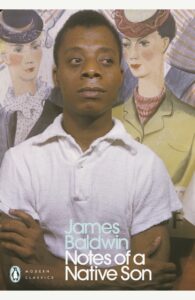
Book: Notes of a Native Son by James Baldwin
IMAGE: Courtesy of Penguin Random House

Baldwin’s prose is so emotionally resonant, making anything he writes carry weight. While Baldwin has a range of brilliant non-fiction and fictional works, Notes of a Native Son is his most unabashedly perceptive work. In this essay collection Baldwin writes about being Black in and outside of the US. He compares his experiences as an accomplished writer living abroad to his experiences as a youth growing up in Harlem during the 1940s. His experiences are more than just beautifully written autobiographical accounts, but also offer thoughtful insights on his identity. Baldwin’s self-titled essay reflects on the complex relationship with his father after his passing. The essay tackles generational trauma as Baldwin dismantles his father’s bitterness — which was a direct result of the trauma he inherited due to the oppression he faced. Baldwin’s honest depiction of his father’s flaws is not a critique of his character, but an intuitive look at how the past affects the present. Baldwin’s writing combines heightened emotions with astute critical thought.

Caste (2020) by Isabel Wilkerson

Book: Caste by Isabel Wilkerson
IMAGE: Courtesy of Penguin Random House

Caste is a remarkable work of non-fiction that highlights the existing nature of systemic racism today. Wilkerson demonstrates how straightforward writing can be just as emotionally impactful as elaborate prose. Caste is essential for understanding how racist structures marginalize not just Black individuals, but many others. Wilkerson presents us with the concept that the US is built on a racially-hierarchical caste system. She traces the roots of this hierarchy by examining seminal periods of history and relating it to the contemporary context. The book begs the question of whether we have truly progressed, or if racial inequities are just more hidden. Wilkerson’s ability to present historical evidence in a way that shows the sequential masking of the caste system in the US is what makes Caste so powerful. The structure of the book is remarkable, as it is not only clear, but incredibly compelling. Some particularly brilliant ways in which Wilkerson’s writing contextualises her argument is by educating the reader on how Nazism was derived through German fascists studying the American South (found in chapter eight of the book). She puts into perspective how the American division of race influenced the Nazi agenda, a shocking yet effective way of enlightening the reader on the brutal reality of racial segregation. Wilkerson’s writing, which contrasts the past and the present, makes her book synonymous with the term “getting educated.” 

Was this article helpful?
0
0

Leave a Reply

Block title

Dining workers speak to poor working conditions

By: Lucaiah Smith-Miodownik, News Writer On October 7, a Reddit user posted to r/simonfraser concerning the possibility of a dining worker strike across SFU’s Burnaby campus. The message, which is from Contract Worker Justice (CWJ) @SFU, asserted that SFU “hasn’t budged on insourcing workers and is now trying to walk back its commitments to living wage.” The post also mentioned “a very heated labour environment on campus with several possible strikes and actions for precarious workers upcoming.”  The Peak corresponded with Preet Sangha, a UNITE HERE Local 40 union representative, who spoke with two dining hall employees and forwarded their responses to us via email. Local 40 “represents workers throughout BC who work in hotels, food service, and airports.” Names have been changed to protect their...

Read Next

Block title

Dining workers speak to poor working conditions

By: Lucaiah Smith-Miodownik, News Writer On October 7, a Reddit user posted to r/simonfraser concerning the possibility of a dining worker strike across SFU’s Burnaby campus. The message, which is from Contract Worker Justice (CWJ) @SFU, asserted that SFU “hasn’t budged on insourcing workers and is now trying to walk back its commitments to living wage.” The post also mentioned “a very heated labour environment on campus with several possible strikes and actions for precarious workers upcoming.”  The Peak corresponded with Preet Sangha, a UNITE HERE Local 40 union representative, who spoke with two dining hall employees and forwarded their responses to us via email. Local 40 “represents workers throughout BC who work in hotels, food service, and airports.” Names have been changed to protect their...
Picked For You

Today’s Top Picks,

For You

photo of Skytrain expo line

TransLink’s fare enforcement blitz is a terrible idea

By: Yagya Parihar, SFU Student In my lifetime of using public transit, I only remember having been fare checked three times. All three times were in BC while exiting SkyTrain stations in late 2024. I tapped my pass on the fare gate, and the transit cop asked to see my…

This is a photo of an empty SUB hallway that features the “SFSS Admin Offices” room. Next to the room is a big bulletin board with about 30 neatly lined-up posters and a big red number 3 to indicate the level of the SUB.

Five SFSS full-time union staff receive layoff notices

By: Corbett Gildersleve, News Writer and Hannah Fraser, News Editor The Simon Fraser Student Society (SFSS) has initiated staff layoffs, with five out of eight full-time union positions affected as of July 25. All the positions either support student activities or the SFSS’ operations, and do not include SFSS executives.…

This is a photo of the SFU Surrey Engineering Building from the inside. There are numerous levels to the building, artificial trees, and a wide staircase in the photo.

TSSU speaks on latest updates to IP policy

By: Corbett Gildersleve, News Writer As recently reported by The Peak, the Senate reviewed and discussed a new draft version of its intellectual property (IP) policy solely focused on the commercialization of inventions and software. Based on community feedback, they split the IP policy into two: one for inventions and…

Block title

Dining workers speak to poor working conditions

By: Lucaiah Smith-Miodownik, News Writer On October 7, a Reddit user posted to r/simonfraser concerning the possibility of a dining worker strike across SFU’s Burnaby campus. The message, which is from Contract Worker Justice (CWJ) @SFU, asserted that SFU “hasn’t budged on insourcing workers and is now trying to walk back its commitments to living wage.” The post also mentioned “a very heated labour environment on campus with several possible strikes and actions for precarious workers upcoming.”  The Peak corresponded with Preet Sangha, a UNITE HERE Local 40 union representative, who spoke with two dining hall employees and forwarded their responses to us via email. Local 40 “represents workers throughout BC who work in hotels, food service, and airports.” Names have been changed to protect their...

