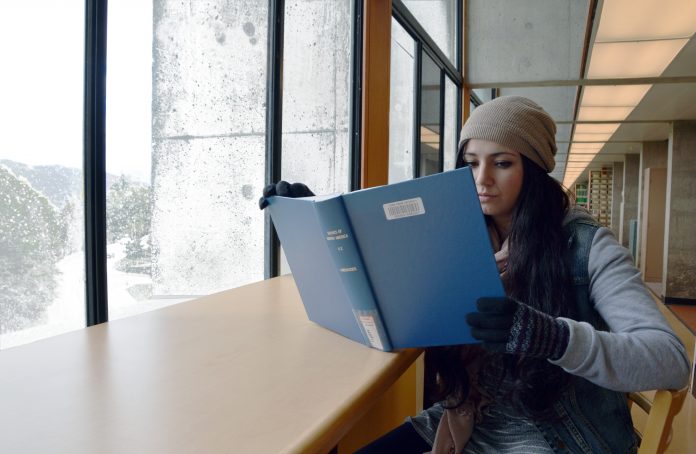
We are lucky to live in the southern portion of Canada, as we have relatively decent weather, closely spaced communities, and easy access to postsecondary education. However, this is not the case for the majority of Canadians living in the North. While there isn’t a lot that can be done about the weather or community-spacing, to establish an accredited research university is a very achievable task.
For years the only option open for any Northerner wishing to complete a bachelor’s degree has been to travel south for this type of schooling. Communities in the North are small and isolated; their strength and survival comes from the bonds forged by having a close-knit community. And while there is impacted stress on many of the students who relocate to one of the provinces for school, there is also added stress placed on the communities that they came from.
The need to maintain a strong community to be able to survive the harsh winters could be one of the major issues surrounding the poor graduation rates of those from the North. This is one of the major concerns that any northern Canadian university would have to deal with — how should a school be structured to not only meet educational goals, but the goals of communities that these students come from?
Satellite campuses could house small libraries, community centres, health centres, and other services lacking within a community.
I feel the most feasible option would be one that combines traditional learning models that any student from the south would recognize, with satellite campuses and distance learning methods supplementing the traditional university structure. The satellite campuses could also serve multiple purposes in the communities in which they are located. They could house small libraries, community centres, health centres, or any other services that might be lacking within a particular community. The goal would not be seen as a service catering to only the student population, but to the community as a whole.
Moreover, given that the Arctic has a very small population, it would not make sense for the Yukon, the Northwest Territories, and Nunavut to all have their own individual institutions, but one that is centrally located — probably in Yellowknife, as it’s the largest city among the territories. While the centrality of the university could pose some relocation problems for students, the key to retention would not be in the location but in the local knowledge and community collaboration used to structure the yearly school calendar.
Local knowledge could be preserved and utilized as a resource for gaining a deeper understanding of the ecological and geographical concerns in the region. Community collaboration would mean the students would not have to make a choice between school and the survival of their communities and families. The university could count community learning as an elective and grant credits based on that, or structure the year so that breaks coincide with peak hunting and fishing seasons.
A university in the Canadian Arctic would be unfeasible using the structure that higher education takes in the Canadian provinces. To establish a model that takes into account the needs of communities could rectify the problem of poor post-secondary education in the North, along with recognition that the university system is just as unique as the area in which it is located.
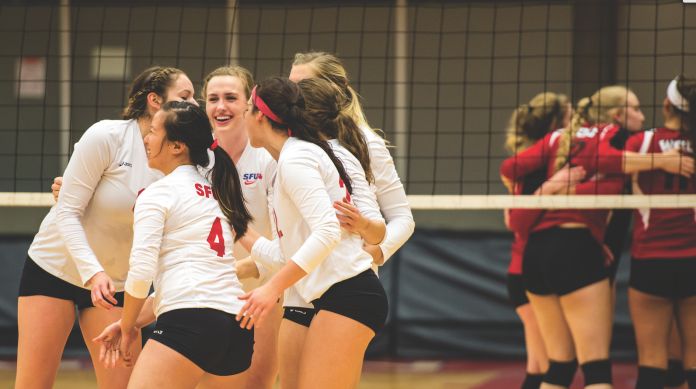
Last season was a milestone year for SFU’s volleyball team. They finished with an 11–7 record in conference play — their best ever — and finished 5th overall in the standings. It was a huge improvement over the previous season, where they finished with a 6–12 record. The challenge now for the team is to improve on that, given the high expectations from fans.
“I think we learned a lot going through last season,” remarked head coach Gina Schmidt. “Although we lost several seniors who contributed a lot last year, we have a solid core of returners that I think gained experience throughout the season and will be ready to step in and fill in the roles that have been vacated.”
Coach Schmidt also discussed the change in mindset of the team heading into the season, now that their rebuilding years are behind them. “We have that mentality of being able to compete with anyone in the conference. With the players we’ve brought in, we’ve added some size and athleticism, and I think we have added a good balance of experience and skill.”
A number of new players have joined the team this year, including Emma Jennings, a native of Port Moody who spent the last two seasons at the University of Toronto. “[Emma] brings some good experience and an all-around game,” according to Schmidt. “I see her contributing a lot this season.” Middle blocker Tessa May is also expected to play a fair amount of minutes.
One of the challenges this season will be to quickly integrate all of the new faces, if the team hopes to have another winning season. “It starts with our fall training. For two weeks we do double days (two practices a day), so it’s a lot of works on fundamentals, team systems, and also opportunities to spend time together and bond as a team. So we try to play a lot; it’s just a matter of getting players up to the speed of the game in terms of what we are trying to accomplish on the court.”
For the team to improve this season, they will have to have a better showing against the top three teams in the conference, Northwest Nazarene, Alaska Anchorage, and Western Washington. “Last year we took some strides, but we were not able to get over the hump of the top three teams. We looking to take some strides and hopefully win some games there if we can.”
Last year, the Clan was counting on a similar core group of player to help them improve. With four different seniors graduating and with significantly higher expectations, the team will be hoping to make a solid push for the top three this season.
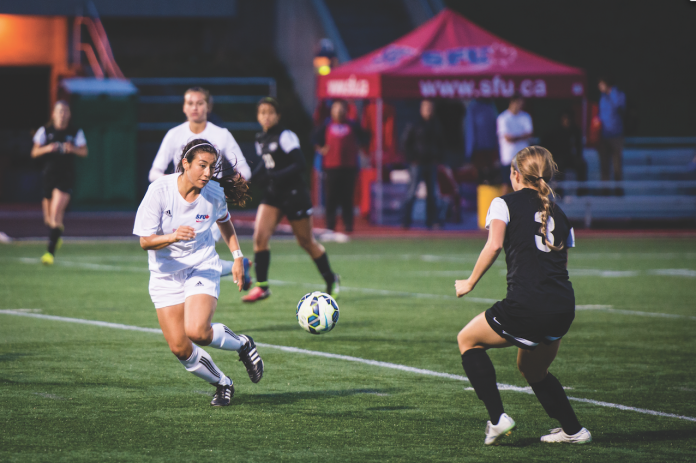
Last season was a terrible one for the women’s soccer team, to say the least. The team finished with a 2–-16 overall record, 2–-12 within the GNAC and ended the season having lost 10 straight. During that time, they only scored three goals while conceding 27. Needless to say, there is a lot work that needs to be done to turn the team around. Despite all the challenges, head coach Annie Hamel is confident that this year, more wins are in the cards.
“Last year was more of a transition year,” said Hamel. “We established a team culture and philosophy. . . but now we’ve done that, and now we’re looking for executing and results. We want to win.”
One of the main concerns that needs addressing this year is goal scoring. The Clan only managed six goals in conference play all of last season, partly because of a defensive 4–-5–-1 formation the team employed. “We’re playing a more attacking [formation], a 4–-4–-2 diamond. I think our players now are better suited to going forward, so we’re playing a formation that better suits the personnel that we have.”
To help become a more offensive team, coach Hamel and her staff recruited more attack-minded players this year. “I tried to recruit goal scorers this year. It’s been an issue here for a number of years, so we certainly have a number of players who can do that now. Hopefully we generate more attacking opportunities.”
Ten new recruits come into the program this year, and coach Hamel is excited about what they can bring to the squad. “They were all recruited here for a reason. They all come from good clubs where I know their coaches personally and I know how they have been trained. . . so far I’ve been actually surprised by a couple of them, in a very positive way.”
The new players will need to contribute quickly, as there is a high turnover with this year’s squad. “We have a small roster this year — 20 players who are eligible, and three of those are goalkeepers. So we only have 17 field players, which is a very low number. We are going to need everybody, playing loads of minutes, and in terms of fatigue.”
Not surprisingly after last season, the Clan were picked to finish dead last in the GNAC. That doesn’t seem to bother Hamel, who isn’t the biggest fan of the coaches polls. “I won’t be using it for anything. Whether we had been picked last, first, or middle of the pack, it’s not something I place value on. These polls are useless, honestly. We don’t have time to do it. I’m not going to sit there and analyze statistically whom they recruited and such. So you just pick literally where they finished last year [in the standings] and vote that way. It’s not a motivational tool for me. It’s nothing, it’s nonexistent.”
The Clan will have a tough test to start conference play, as they will play last year’s number one team, Western Washington, on September 19th.
When I told my friends at UBC Okanagan three years ago that I would be attending SFU to study communication, I was met with distaste.
“You know that SFU has the highest suicide rate in the whole country, right?”
“It’s foggy, dreary and everything is made of concrete. Everyone’s apparently really sad.”
I was surprised to learn that this institution is often defamed as one without a sense of community, especially given its ‘radical’ history, proudly embellished with rallies, protests, and gatherings of like-minded individuals who’ve defended what they believe in.
By this history, I was intrigued. My interest piqued. I craved a change in atmosphere; a taste of diversity; a place to express whatever values I had in new ways. Maybe SFU brought me this, maybe Vancouver lent its helping hand, but the experience here has been far from dreary walks down depressing, concrete halls.
The sunny Thursday morning I took a place in Residence, I felt as though SFU had been unfairly labelled. SFU isn’t a single community, it’s a vast collection of them. To be more specific, the multi-day student orientation program I was thrown into was wonderfully jam-packed with vibrant people and activities — so much that it was a little overwhelming; SFU rightfully boasts one of the best orientation programs in the country.
I feel that many people on this campus are so quick to take to heart this visage of a helpless, solitary, fog-ridden SFU lacking any substantial community, that they don’t bother to put their foot forward and actually explore their options. In reality, there are endless club, job, research, community space, and campaign options.
This university has no fewer components to creating community atmosphere than any other institution.
It was difficult, and still is, for me to fall into the sheep-herd of false beliefs regarding SFU as a sad hollow for the dead. I quickly learned that people need to stop criticizing the cracks in the concrete and realize this university for what it really is: an institution with no fewer components to creating community atmosphere than any other place.
Just to be clear, I’m not approaching this idea from the usual ‘get involved’ and ‘make connections’ standpoint, but rather a place that’s more meaningful to us as people. SFU communities are about gathering experiences which will help you sculpt the kind of individual you are.
While I’ve certainly developed qualms about some of the bureaucratic processes at this school, I’ll say that any advertisements you see about vibrant student life actually have merit, and that the various opportunities I’ve cautiously stepped into over the past few years have not only exposed me to new perspectives, but encouraged me to be more open and upstanding with the personal values I’d developed before I began studying here.
University is a valuable time and place to shape yourself as the adult you will be; it’s the limbo you float in, the conflicts you face, as you discover the person whose feet will finally touch that daunting yet exciting new ground. Beyond textbooks and iClickers, it’s an environment for us to embrace honesty, sincerity, work-ethic, passion — traits that will hopefully propel us into our future as the confident, genuine people we strive to be.
I understand that not everyone will hold the same beliefs about SFU’s community atmosphere, and that you might smirk and shake your head at all this dramatic nonsense, but I encourage you to be open-minded. All cheese aside, SFU’s rainy mountain is a pedestal of pride and accomplishment, of challenges to the status quo, of individuality, creativity and bravery that make it stand out.
In light of SFU’s 50th birthday, I’m glad you chose this radical, concrete campus and I hope you strive to find your niche here, especially if you feel this unique institution aligns with your values and beliefs. You have one lucky life; make the most of SFU’s true sense of community in whichever way you see fit.
[dropcap]I[/dropcap] close the box and retie its pretty red ribbon. The box sits quietly on the table, the triumph being slowly sucked out of it. I lean back and place my hands upon my belly. I still feel as if there is something there, moving around inside of me. I still cannot believe that there is not. Everything had felt so real – the agitation had been real, the way I had felt; surely some of it must have been a little real, even in an obscure kind of way. The doctor explained to me what had happened, how my belly had bloated up then collapsed back down, like air being let out of a balloon. Air. Nothing more. Simply air. What am I supposed to do with air? I picture the look on his face when I told him. He was so shocked he started laughing, and he has yet to stop. I pretend not to notice. We can always try again. This time I’m sure it will work, it has to. I tell this to him too but he hears only himself.
I want to take out the shoes and draw them to my face, feel them solid against my skin. Maybe we should keep them, in case things work out better next time. No, he won’t like it. He’s tossed them aside already; they’re no use to him in this condition. Never used means not yet used up, doesn’t it? But I don’t think he believes this. No, we had better rid ourselves of them and start again. I can straighten myself out and he can… well he can keep himself coming home every night. That’s supposed to be enough, I think, if I cannot even manage such a thing as keeping the shoes.
All I ever wanted was a family. A family to prove we’re not just playacting. I know they all snigger into their hands behind my back, as they pass off baby after baby to their nannies. He shrugs it off like it doesn’t matter, but it does! It does to me. And it should to him. Our garden’s growing full of little buried holes. The doctors don’t have an answer for that. I cannot wrap my head around it, nor spend my time thinking about it. It’s a terrible dream. I thought this time we had gotten it right. Instead all we got was air. Cold, harsh, dried up air. I’m beginning to think he had a right to laugh. Hysterical – lord knows it is hysterical, absurd even. But still I wish he wouldn’t laugh quite as loud. It makes us strangers. And all strangers could ever whisk up after everything is air. Hysterical.
I pick up the paper and start writing out the ad for those perfect little shoes, holding the pen firmly in my hand. We can always get another pair.
[dropcap]I[/dropcap] was watching Judge Judy on the TV or at least pretending to watch. Out of the corner of my eye, from the couch and through the fake wooden door, Bradford was standing in front of the mirror, trying to think up jokes. I could tell that he was doing it because he always had a serene and violent look in his eyes when he tried to think up jokes. He would practice his jokes for hours and they were never funny. I had never seen Bradford do anything remotely funny except for the time he fell down the staircase naked in front of Miss Vatas, in the summer of ’96. That summer was hot and Bradford was waiting for a package from his Mother, from Vermont. She would always send Bradford a birthday package that would contain jams and sweet breads and a lot of different kinds of breads.
We were smoking cigarettes and watching the funny tape, a collection of strange moments that we recorded off of cable. There was a segment dedicated to Mean Jean Burger, where the famous wrestling announcer would travel to small towns and open burger joints and hold burger eating competitions. Bradford had a very large penis and would sometimes get completely naked and dance around the tiny one bedroom apartment we shared, waving the thing around, for the neighbours and such. Miss Vatas always hated seeing Bradford’s penis and would always complain if she saw it too many times in a month. That day, UPS guy couldn’t get ahold of Bradford, but we both went to high school with him, so he knew us, but we didn’t know him. Sometimes that’s how high school works. The guy yelled up from the street, “Braddy, get the hell down here and get your package, I gotta go!” Bradford, who was already naked, gave me a wink and took off out the door and down the hallway, leaping over some old bum who was passed out. I remember seeing his hairy, ape ass bouncing around and I was laughing hard. Bradford got down to the bottom of the first flight as Miss Vatas was carrying up a load of laundry. She never used the dryer because it interfered with her fabrics so me or Bradford would usually help her up the stairs. She was struggling pretty hard and I couldn’t breathe, I couldn’t shout, it wasn’t like I wanted to see anyone get hurt, it was just the whole magic comedy of life unfolding before my eyes.
Bradford skipped to the right, but so did Miss Vatas, her hair pulled back in a religious bun and they hit each other, not square on, but just a bit to the side. Miss Vatas lost her load. Though she remained safe, Bradford slipped on a silky, pink negligee, the kind that the women wore in the ’40s, the real sexy ones and he went ass-over-teakettle down the last flight and out into the road and was knocked unconscious and everyone on the street gathered around and looked at Bradford, at his huge penis and his monkey legs twitching and he was moaning about jams and jellies and discounted cheeses and the breath finally escaped him and I thought I could see a little bit of his life move up, towards the sky, parting the clouds and continuing on farther to a place where dead people go.
I threw the sexy negligee over top of Bradford, I’d been holding it for some reason and the neighborhood all thought he was some kind of pervert or fruitcake and he was in the hospital, in traction for 4 weeks and he just got insurance. He met his first real girlfriend at Marymount, Garfield Heights. Her name was Tammy and she was really into Bad Religion and NoFx and those other punky bands. They dated for the entire time he was being treated and he never took her out once. That was the kind of guy Bradford was. He was all bad luck, but with just enough good luck mixed in that you loved him and wanted to be around him. He doesn’t dance around naked anymore due to his foot problem, but he still gets by.
Bradford was pacing around the room and mumbling like a caveman and I could make out a few words in between the bellows and panting and I could tell he was feeling a bit nervous about his set the next day. Since we got laid off from Hagen he got really into wanting to be a stand-up comedian and his girlfriend Lorna, she got really sick of him always talking about it so she bet him that he wouldn’t give it a try, mostly because she was a bitch but maybe there was some goodness in there. She gave him one month and that was 29 days ago and she gave him a copy of all the open mics and comedy jams from downtown and their times and locations, and everything. Lorna was really mean occasionally, but sometimes she was an angel. I don’t think all women are like that. I don’t try and fit them into little perfect boxes. I used to but I stopped. Nothing ever worked out for me with women. If Bradford didn’t get up on stage and try out his material, then he’d have to pay her rent for the next month and vice versa for her if he got up there. The problem was that Bradford had no jokes. And also no money. So I sat around, collecting my cash from the Feds and he spent his time in front of the mirror, giving himself breathing problems and acne.
Ever since high school, whenever something bad would happen, Bradford would get these huge breakouts of zits across his forehead and sometimes, during class, he’d pick at them and people would stare. That’s the reason why he didn’t lose his virginity until he was 24. For some people, the horrors of high school will just fade off into the distance. All the terror you inflicted on gentle souls, all the things you stole from house parties or people you kicked while they were down, all that can be erased. All you have to do is move away for a few years. That’s what I did. I left and then I came back and was a new person, to my family, my friends and that was cleansing, but Bradford stayed and no one ever forgets if you are always around. Bradford became progressively quieter, which was disturbing so I went into his room to check up on him and he had the blankets all torn off and his fan was stuck, making a noise like a dying robot and he was begging for a cigarette, but not with words. I handed him a puff of mine and he carefully took the smoke from my yellow hands and he began massaging his feet, where his eleventh toe was coming in.
“It’s sore today.” Bradford said.
“It looks very red.”
“It’s gonna happen soon man.” Bradford said and he started to shake all over, so I went to him and put my arms around him and held him and smelt his scent and felt the filth from my body transfer to him and I rejoiced. Bradford fell asleep, exhausted and I slid out from underneath him and moved to the couch and watched a little more TV.
It was a Thursday and also the 30th, so I was on edge because I didn’t like too many things starting with the same letter. Just like when it was the 20th on a Tuesday, a few months ago. I hate that so I knew instantly that something bad was going to happen, yet I didn’t go back to bed, I got up and went about my daily things. I always thought that was an odd trait in people, that even though all of their instincts say that today is going to be bad, they still get up and face the day. Maybe that’s why humans don’t really have many instincts left anymore, because we all learned how to ignore them. I mean we still fuck and eat and sleep and cry and go get coffee and ride a bike through Perk Plaza.
I was riding my bike through Ralph J. Perk Plaza and I stopped to enjoy my coffee, it was spilling all over my hands and making my t-shirt brown. I needed to get out of the apartment and away from Bradford for a few hours. He knew that tomorrow was just a day away and that he had no jokes and he was constantly swearing and talking to his eleventh toe, which was forming quite nicely now, developing a toe nail and little hairs and all. I was smoking a cigarette when I noticed an old junkie, Boobs, walking in my direction. A few years ago I tried my hand at being a bootlegger. I got a big check from the Feds because I paid too much tax so I spent it all on cheap booze. I thought that I knew enough people that liked cocaine and alcohol, so I was figuring that I could sell the booze to them after hours, at a heightened rate, maybe 20 percent over market value. I used to be kind of tough too so I thought everyone would pay, but no one did. Boobs in particular owed me at least a hundred bucks. He sat down beside me and his hair was starting to dread in the back and he had a Bart Simpson “I Didn’t Do It” t-shirt on and I was glad he was alive nonetheless. “Boobs.”
“Chrissy, long time.” He said and he handed me a ticket to a roller derby match.
“So?”
“Wanna go?” He said.
“What you drinking?” He reacted like I’d just busted open his face and he pulled out a bottle of Hermits and we walked over to the parking garage down the street and got smashed and I watched him smoke crack and saw how he changed and became the person he had always wanted to be and I felt good for him.
We got to the arena late and the place was going crazy and I tried to get Boobs to smoke some crack with me but he said he was out and that if I gave him money, he’d grab some and I laughed and we took our seats. The announcer was also the DJ and he kept playing old NWA tracks and everyone, even the old timers would cheer when “Fuck Tha Police” came on and it was all very exciting. I went to buy a few pints of beers for me and Boobs and quickly snuck into the good seats and watched until I got kicked out. On the way back I saw into the dressing rooms and there were weak girls acting tough and beautiful women acting ugly and it was a nice. I got back to the seats and Boobs was gone, along with my jacket, so I stretched my legs out and drank the giant Buds and waited for the next match to begin. It was all women, dressed up like different characters. It was futuristic and silly.
The women would occasionally collide with each other the crowd would cheer or boo depending on who they supported. I hate seeing woman subjected to violence and that’s always been one of my finest qualities. As the two groups of women went around and around the track, they gained more speed and a girl with strawberry blonde hair got flung to the front of the pack. When I knew her, her name was Elizabeth, but the announcer called her Messy Bessy. I thought back to the night when I was a teenager and I took Elizabeth out to the Pizza Hut, when Pizza Huts were sit down restaurants, special occasion places and I gave her a rose and told her I loved her and she was only fourteen, but still knew enough that she didn’t love me and I cried when my Mother picked me up. Its funny how my Mother knew something was wrong, like she knew me better than she knew herself and it only took her asking “What’s wrong” for me to break down, but she didn’t tell my Father. Messy Bessy collided with a black woman named Princess Kalish. She was dressed like an African Queen and had barely any clothes on and wore a cheetah print cape and the crowd really seemed to dislike her. Both women were flailing on the ground, but Messy Bessy got up first and extended her hand to the African Queen. Princess Kalish grabbed Messy Bessy’s hand and she helped the villain up from the track, but then Kalish slapped Bessy across the face and it made me think of Montreal.
When I was seventeen I hitchhiked up to Canada, to Montreal. I met an old, gay, truck driver who liked the look of me and he gave me a lift from a gas station and a few days later, he dropped me off at the Cote Vertu Metro station. The snow was really coming down and
I had an Aunt that lived on the outskirts of town and she came and picked me up. I had no money and I couldn’t speak French, so her family was getting kinda sick of me. I went out and found a job at a dusty hamster cage factory. Everyone would always be smoking really strong French cigarettes and listening to loud French pop music on the radio, so it was strange and fragrant. My job was to trim the ends off the wires that were left over after the soldering had taken place. There were two sharp jaws slamming shut twenty times a minute and I had to feed the cages through and pile them neatly onto a palette. The French guys got all the good jobs there, but I got to sit down for 8 hours a day and the pay was fine. I still kept in touch with Elizabeth, even though my Mother begged me not too. She would send me regular
letters and I’d send her back love letters and everything was fleeting. After a few months, Elizabeth said she was gonna come up and visit me, so I sent her some cash and she took the greyhound bus to Montreal. I was still living with my Aunt, but was paying rent, so things were a little better. Still, we lived far away from downtown. Elizabeth had to take a rail train out to meet me, so I met her at the station and we hugged and laughed and everything was fine and I thought that this was my chance and that everything was gonna be normal for me and that she’d fall in love with the person I was when she was around. That’s one thing I always think about, is how I’d change when I was around her. I’d become the best man that ever lived. I’d pay for everything and make her laugh and I would be sweet and caring and give money to the homeless and be positive and light and I wouldn’t smoke so much. It wasn’t like I was putting on a show or anything, it was like I altered myself just enough to be lovable. It was April and we were sitting under a tree by the train station and she was gonna stay with me for a few days, then stay with her friends back in the city.
“You look different” she said.
“I am” I lied. I remember she was wearing these tiny white denim shorts and had her hair down, straight and long and her freckles were just starting to sprout. I had a few bottles of cheap wine that I picked up from the depanneur, Sur du Lac or something sweet and strong and we were drinking it under the tree. My friend Mike went by on his skateboard and stopped to talk about some vampire card game that he was really into, where you collected bloods or something, for points. He asked me if Elizabeth was my girlfriend and I said yes and things got cold so he took off to go roll dice somewhere. Everything got quiet after that. The traffic stopped making sounds and the rail cars passed without any interference and Elizabeth got up and started walking towards the station, carrying a bottle of wine and her book bag.
“Where are you going?”
“Back to Cote Vertu” she said without turning around. I followed her closely and could see the wet patch from the grass on her ass and it turned me on.
“Wait” I said but she kept on walking so I sped up, but so did she and this continued on for a few minutes, until I got sick of it, of everything, of wondering who she was with and what she was doing, if she’d been fucking anyone and if her room was still messy and I came up behind her and grabbed her by the wrist and spun her around too roughly and she dropped her bag and started running for the station and I started running after her and she was crying so I stopped and stood there, holding her bag while she ran. I went back over to the tree and waited for the train to take her back downtown and drank the wine and watched, hours later as the Cote Vertu train ambled out of the station and down the tracks and I hugged her bag and went through it, smelling her clothes and underwear until all the scent was inside of me. Years later, I found out that Cote Vertu means odd virtue in English, so I sent her book bag to her parents’ home address. Her Father died and her Mom remarried some car salesman, I’d heard. Princess Kalish and Messy Bessie were screaming in each other’s faces so I got up and left and took a cab back to my bike and my seat was missing so I rode it standing up, letting the wind mess up my hair. When I got back to the apartment, Bradford was heating up knives on the stove top, but they weren’t our blade knives.
“What?”
“I’ve gotta get him out.”
“How do you know it’s a he?” I asked and he looked at me with ruddy eyes and he spat on the floor.
“Don’t.” he said and he grabbed the red hot steak knives off the burner with one hand and tossed me a rag with another.
“Get some ice” he said and I did and watched him lower two knives into his flesh, where the new toe was peeking out from the side of his foot and as the metal touched his flesh, there was a scream, but it didn’t come from Bradford or me and he dropped the knives to the carpet and they smouldered on the plastic fibres and the room filled with poisonous smoke so I opened a window and held the cold rag against his eleventh toe and felt it squirm and flex underneath my hand, like a newborn baby girl and for a while there was a muffled sound of crying and speaking and when I pulled away the wet rag away from Bradford’s foot, I looked down at the eleventh toe and it looked back at me and it told us something, as if bartering for its life and we laughed and laughed.
Hilarities on East 4th was filled to the brim and I had a table up front with Lorna. We sipped strong drinks and were running up quite a tab because it was looking like Bradford would be rent free for a month and we both were happy. It was open mike night and a lot of bad spirited people would come and heckle the new comers or just watch the failure. The lights went down and we endured lots of terrible comics getting destroyed and our anxiety grew until the guy on the PA announced for Bradford to come onto stage. He had his hair all greased back and was limping around, trying to prop up the microphone stand because he was too tall and had a “Property of the Cincinnati Bengals” T-shirt on, which the crowd booed as he stood in silence.
“I watched a movie the other day.” Bradford said.
“I love watching movies. I watch movies all the time” He continued and his voice was shaky and the crowd prepared themselves for blood.
“I just watched that movie, you know, the Never Ending Story?” Bradford said as he waited for just the right moment.
“Waaaaaaay too long.” he said and the crowd sat silently as Bradford took a swig from his drink.
“I’m sorry. My eleventh toe told me that joke last night.” he said and the crowd went wild and me and Lorna stood up and cheered on Bradford, a man more brave than anyone I’d ever known.
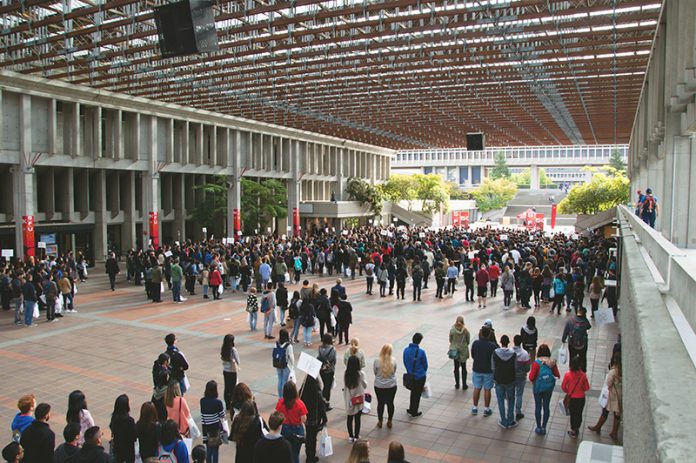
Assemble an outfit of your finest SFU swag and get ready to school spirit like you’ve never school spirited before: this year, our fair university turns 50 and the coming months are chock-full of events to celebrate the milestone. Starting the semester’s festivities off is the 50th Anniversary Campus Kickoff, happening September 9 at Freedom Square. Here are a few of our predictions for some of the wackiness sure to go down.
1.During the event’s special address, President Andrew Petter uses the word “engage” or one of its derivatives more than 20 times, besting his old record for “most engages used in a single speech.” (The previous number being 17.)
2. Attendees playing the Presidential Special Address Drinking Game (take a shot every time Petter says engage) will all experience at least some form of mild alcohol poisoning.
3. In line with its age, the university announces plans to purchase a fancy, new, probably red sports car, and drop hints that hair plugs might not be that far off.
4. During the festivities, the SFU Pipe Band has one of their best performances to date, causing a micro-resurgence of pipe band popularity on campus that lasts for several hours.
5. On the day of festivities, the Lower Mainland will experience both the hottest day of the year and a torrential downpour that causes partial flooding. Because summer isn’t going without a fight.
6. In an unexpected upset, the winner of the SFU Legacy Song Contest will be “School Spirit,” an often underrated track from Kanye West’s 2004 debut album The College Dropout. When press reach out to West for a comment on the announcement, he will respond with an annoyed “What took so long?!”
7. The only food options available at the kickoff will be instant ramen and cups of coffee, the two official foods of SFU students.
8. Tired of always playing second and third fiddle to Burnaby Mountain, both the Vancouver and Surrey campuses will use the celebration as a platform to announce a united sovereignty movement from SFU. (Response to the announcement will be generally apathetic, because no one was paying attention to those two campuses anyways.)
9. For a brief, fleeting moment, you’ll be so impressed with the kickoff festivities that you’ll forget all about how much you’re paying for your degree.
In the past 50 years, a lot of people have passed through this university’s halls. From students to teachers to administrators, athletes, mascots and more, so many people with strong connections to SFU led fascinating lives. While we wanted to write a comprehensive countdown of the top 50 SFU people ever, there’s no way we could honestly have the proper knowledge to make that list.
Regardless, here’s a list of 50 great people who are connected to SFU. Past the first couple, the order doesn’t hold any real meaning. And of course, these aren’t the only 50 amazing people our school has to offer, but each one of them represents something about SFU that makes it such an unbelievable institution.
1. Terry Fox
At 18 years old, Terry Fox was a young kinesiology major just trying to make SFU’s junior varsity basketball team. At 19, he was just trying to beat cancer. And at 21, he was changing the world.
Fox is without a doubt the greatest person to ever attend Simon Fraser University. His 1980 ‘Marathon of Hope’, in which he attempted to run across Canada with a prosthetic leg, inspired global events that have since raised over $650 million for cancer awareness and research. His number four might be raised to the rafters in the gym, but he’s definitely number one in our hearts (and on this list).
2. Maggie Benston
While most students are more familiar with her as a building name than a person, Margaret Benston is one of the most amazing people to ever set foot at SFU. Not only was she a faculty member in SFU’s Department of Chemistry in 1966, who switched to Computer Science in the late 80s, but she founded the university’s Women Studies program in the mid-70s.
Beyond her academic work she was a notable feminist and social justice activist, not to mention a musician who played a leading role in establishing the Vancouver Folk Music Festival. Although in 1991, at only 52 years old, she tragically passed away after a long battle with cancer, she will never be forgotten at Simon Fraser.
3. Gordon Shrum
Love him or hate him, this university wouldn’t exist without him. After being called up out of the blue by Premier W.A.C. Bennett in May of 1963 offering him the Chancellorship, he was put in charge of selecting the site for SFU, building it and getting it going by September of 1965.
Although he may not have left on the best of terms (he retired following a ton of turmoil involving student and faculty protests, which forced the dismissal of his friend and inaugural president Patrick McTaggart-Cowan) there was rarely a dull moment when he was around and his legacy remains strong to this day.
No, SFU was NOT designed to be a prison. While its architecture might seem a little cold at times, the man who designed it was trying to do something revolutionary, not imprison students. His idea to house all the departments in a single structure (the AQ) instead of separate buildings was unheard of and genius. He went on to have a distinguished career in architecture, but SFU was his first masterpiece.
5. Lorne Davies
At SFU, athletics are synonymous with the name Lorne Davies. Despite being a surprise choice for Athletic Director in 1965, he went on to change not only SFU but university sports across the entire country. Although for the first few decades his decision to offer athletics scholarships was shunned, it has since swept the nation. Clan athletics are what they are because of Davies.
6. Jack Lee
Before a merger with the Port Moody Pipe Band in 1981, SFU’s Pipe Band was just a student club like any other (read the full story here). As the pipe sergeant since that time, Jack Lee has led the Simon Fraser name on to six World Pipe Band Championships. He is also an accomplished solo piper and in 1999, along with his brother Terry, he received the Meritorious Service Medal from the Governor General of Canada.
Even now that we have a couple of Starbucks, Renaissance Cafe is still like the Starbucks of SFU. They are everywhere! Parminder Parhar founded the SFU coffee hot spot back in 1996 and has been a beloved member of our community ever since. He is also a champion of fair-trade, a philanthropist, and without him we wouldn’t have Subway.
9. Simon Fraser
Although the explorer who discovered the nearby Fraser River was not well educated and never dreamed of founding any sort of educational institution, he managed to become the namesake of a top university. He almost became the face too, but a planned monument was axed in 1968 (read the full story here). His Scottish heritage has inspired the majority of SFU’s traditions including our world-famous Pipe Band.
10. Shad
Years before he earned international recognition as the new host of CBC’s flagship interview show Q, Shadrach Kabango was working on his Master’s degree in Liberal Studies at SFU. The Canadian “rap sensation” was a part-time student at SFU’s Vancouver campus even while winning Junos in 2011, when he beat out fellow Canadian rap artist Drake for ‘Rap Recording of the Year’ for his album “TSOL.”
In 1999, while he was still a Computer Science undergrad at SFU, Minh Le created a mod for the popular video game Half-Life called Counter-Strike. The game spawned a popular franchise and Le, nicknamed online as ‘Gooseman’, has since gone on to develop and work on several more popular games.
13. Iain Baxter&
As a contemporary artist who was hired to teach at SFU in 1966, Baxter& had some unique ideas. When asked to instruct a two hour class once a week for 13 weeks, he instead decided to do a single 26 hour straight class (read more here). He’s gone on to do a lot of interesting things including legally changing his name to include an ‘&’ symbol in 2005.
14. Nadine Caron
Caron did it all at SFU, and then went on to do even more after she left. As a Kinesiology undergraduate student she was a star basketball player and the winner of more than 20 academic awards. She then went on to become the first female First Nations student to graduate from UBC’s School of Medicine and completed her Master’s at Harvard.
15. Tony Buzan
An eccentric genius, Buzan was the first student society president at SFU. During his tenure, he was known to play five classmates at chess, at the same time, and win every game. He left graduate studies at Simon Fraser after only a year, but went on to become the inventor of ‘Mind Mapping’, and the writer of over 100 books about the brain and thinking.
16. Ryan Beedie
In 2011, Ryan and his father Keith donated $22 million to his alma-mater and SFU Business was renamed the Beedie School of Business. It was the largest gift the school ever received and Ryan, who took over as president of Beedie Industrial in 2001, is known not only for his innovation and vision, but his charitability.
17. Christy Clark
She may not have graduated or become student society president, but Clark has definitely managed to scrape by. An intimidating politician even as a 20-something year old SFU undergrad, Clark served in the BC legislature for almost a decade before leaving to host a radio show and then returning to become Premier of the province in 2011.
18. Patrick McTaggart-Cowan
Although the man who was affectionately nicknamed ‘McFog’ was quite popular during SFU’s first couple years, as he had a reputation of being approachable and nice to students, McTaggart-Cowan’s run ended pretty poorly. After a number of protests concerning the wrongful firing of five TAs and a CAUT (Canadian Association of University Teachers) censure, the Board of Governors had him dismissed. Despite this unfortunate ending he was a great first president who is responsible for a lot of the tradition we carry on to this day.
19. Stan Wong
One third of the famous SFU Wong brothers who were highly involved in everything during SFU’s formative years, Stan is now the CEO of the Hong Kong Competition Commission. While at SFU, Wong served as the university’s fourth student president and was one of SFU’s inaugural student senators (SFU was unusual at the time for allowing students to be on the Senate).
20. Ken Strand
Look back at old articles of The Peak and you get the impression that this guy was the devil incarnate. Listen to old faculty members or administration reminisce about him and you’d think he was the second coming. As the eventual replacement of McTaggart-Cowan as president, Strand started his term by calling the RCMP on students ‘occupying’ the faculty lounge. For better or worse, his presence settled down the raucous campus into becoming what it is today.
21. Wilf Wedmann
During his time as a student at SFU, Wedmann was a member of the Student Council, was Editor-in-Chief of the student newspaper, was on the track and field team and was an Olympic athlete, representing Canada in high jump at the ‘68 games in Mexico. To cap it off, in 1972 he was the university’s first ever Rhodes scholar, which paid for two years of postgraduate studies at Oxford. He later served as the school’s athletic director.
22. Orville Lee
In the late 80s, Lee was recognized as quite possibly the greatest running back ever developed in Canada. He held 15 Clan records when he graduated and once had a game so good where he rushed for 422 yards of offense, scored five touchdowns, set seven records and was the first SFU athlete to be named NAIA national player of the week, a feat which earned him an appearance in Sports Illustrated. He was taken first overall in the 1988 CFL Draft by the Ottawa Rough Riders.
23. Robert Turner
After receiving his PhD in Physics from SFU in 1973, Turner went on to join a global group of his peers and helped create MRI (magnetic resonance imaging), the most widely used method of mapping brain function. His further contributions to MRI scanners earned him the Nobel Prize in Physiology or Medicine in 2003.
24. Jo-Ann Archibald
A member of the Sto:lo nation, Archibald is a notable Indigenous scholar who has dedicated her 40-year career to creating culturally relevant education programs for Aboriginal students. In 2004, she was a panelist alongside the Dalai Lama and Desmond Tutu and she was also the recipient of the 2000 National Aboriginal Achievement Award for Education.
25. Don Pulsford
As the first Student Union Building committee chairman at SFU, he inspired a dream that is still being fought for to this day. Pulsford was also fundamental in the evolution of the student newspaper, as well as bringing a number of early student services to SFU. He tragically died at age 25 due to his struggles with hemophilia (read his story here).
26. Ron Baker
The first faculty member hired by President McTaggart-Cowan, Baker was the Director of Academic Planning and the first head of the English department. Although his contributions often go unheralded behind characters like Shrum, he was integral to the unique early course offerings and is responsible for the first trimester system in Canada.
27. Bing Thom
When Arthur Erickson was busy designing SFU’s Burnaby location in the mid-60s, Thom was still a student at UBC working his way to a Bachelor of Architecture. By 1972, however, he had joined Arthur Erickson’s architecture firm. Ten years later he had his very own firm who went on to design SFU’s new Surrey location in 2004.
28. Wayne Holm
Despite being SFU’s first major football star and a first overall CFL draft pick, Holm never made it into the BC Football Hall of Fame. He did however make it into the BC Restaurant Hall of Fame as the co-creator of Spectra Foods who helped develop The Boathouse Restaurant and Milestones.
29. Martin Loney
On July 17, 1968 an article in the Vancouver Sun entitled “Who is he?” profiled SFU’s biggest radical, a 24-year old rabble rouser from Lancashire, England named Martin Loney. Before arriving at SFU in the summer of ‘66, Loney had already been involved in two university ‘revolutions’ in England. From leading the charge in getting president McTaggart-Cowan removed, to becoming student society president and trying to change the school’s name to Louis Riel University he certainly was a bundle of excitement and turmoil.
30. Natverlal Thakore
An integral part of erecting the bust of Mahatma Gandhi (read the full story here) in a courtyard just off the AQ, Thakore was a devout Hindu who earned a Master’s degree from SFU. He taught the philosophy of education in the early 1970s and has an annual award named in his honour which has been presented every year since his death in 1997.
31. Katy Hutchison
A passionate advocate for restorative justice, Hutchison wrote a book in 2006 entitled Walking After Midnight. It told the true story of the 1997 murder of her husband, a fellow SFU grad, and her search for the killer. Inspired in part by the writings coming out of SFU’s Centre for Restorative Justice she has reached out to the man responsible with compassion. She’s transformed this into a speaking career which has played a big role in the lives of thousands of teenagers.
32. Tom Bottomore
Hired by Gordon Shrum as the first head of the Political Science, Sociology and Anthropology department, despite being a well-known Marxist, Bottomore was one of many early radical SFU faculty members. He left in 1967 following the first academic freedom crisis. He went on to teach Sociology at the University of Sussex from 1968 to 1985.
33. Liisa Fagerlund
As a librarian who worked at SFU from the beginning under head Donald Baird, Fagerlund was SFU’s first University Archivist. She worked half-time in this position from 1968 to 1975, when she left the school. After retirement from the library, Baird would become the first full-time archivist when it became its own separate administrative department in 1978.
34. R. Murray Shafer
Both the term ‘soundscape’ and its academic study, originated with Shafer who developed his ideas as faculty at SFU’s Centre for Communication and Arts in the late sixties. He’s also a notable artist and composer and his ideas about acoustic ecology are widely studied across the world and still particularly at SFU.
35. McFogg the Dog
The other ‘McFog(g)’, our school’s hilarious scotty-dog mascot, was introduced in 1996 after replacing SFU’s unofficial gorilla character. McFogg has had his ups and downs: he’s been beaten up at football games, tipped over because his head was too big and at one point really had trouble keeping his kilt from falling off. He’s a beloved figure on our campus and getting a picture with him should definitely be on your bucket list.
36. Madge Hogarth
When SFU opened in 1965, it only had one residence building: a women’s only pad named “Madge Hogarth House”. The woman it was named after was a notable Vancouver philanthropist and put up the money for it. Unlike the rest of campus, ‘the Madge’ was always a place of calm and tradition with Hogarth visiting once a year to drink tea with the girls.
37. Daniel Igali
During his time as a student athlete at SFU from 1997 to 1999, Igali won 116 consecutive wrestling matches for the Clan. In 2000, he won Canada’s first ever gold medal in wrestling which earned him the Lou Marsh award as Canada’s top athlete of the year. He has subsequently been inducted into the BC Sports Hall of Fame, the Canadian Wrestling Hall of Fame, the Canadian Sports Hall of Fame, the Canadian Olympic Hall of Fame, and the World Wrestling Hall of Fame.
38. Jim Chu
Retiring this year, SFU alumnus Chu was the first non-white Chief Constable of the Vancouver Police Department. Splitting his time between the police force and university, following graduation, Chu rose through the ranks of the VPD and in 1996 developed their first website. After years of hard work and service beyond the call of duty, in 2007, he was not only named Chief Constable, but was awarded the Order of Merit of Police Forces by the Governor General.
39. Carlos Basanta
The artist behind “Oval Reflections”, better known as the Avocado-Egg thing in the AQ, Basanta is a prolific local artist originally from Spain. Part of SFU’s Millennium project, the split oval with a mirror inside has entertained, delighted and confused students for the past 15 years.
40. Ted Dobb
SFU’s longest serving head librarian, during his 20-year career (1978–1998), Dobb was responsible for a great deal of innovation at SFU, including overseeing the opening of the Belzberg Library at Harbour Centre and creating an online catalogue for the library.
41. Margaret Trudeau
Her sister Rosalind may have been the first winner of the Miss Simon Fraser pageant, but it was Margaret Sinclair who would become a Canadian household name after she married the Prime Minister of Canada at 22 years old in 1971. She had met him years earlier while on vacation when she was an English Literature major at SFU.
42. James Felter
When the SFU Art Gallery went public in 1970, it was under the direction of James W. Felter. He was both the first curator and director, positions he served until 1985. Under his leadership, the gallery presented 127 exhibitions on campus and developed its own program of circulating exhibitions to other public art galleries, principally in western Canada.
43. Todd Wong
What happens when Robert Burns Day and the Chinese New Year happen to be two days apart? Normally nothing, but Wong — who has adopted the moniker “Toddish McWong”, and had helped out in the Robbie Burns celebrations the year before — decided to combine the two cultures in one grand celebration: Gung Haggis Fat Choy.
44. The SFU Gorilla
While not a professional looking mascot like his successor McFogg, the Gorilla was briefly the most electrifying being on campus. He was known to do backflips at football games, get in fights with UBC’s T-Bird and was famously knocked out while trying to do a trampoline slam dunk during the halftime show of a basketball game.
46. Louis Riel
Despite being a historical figure closely associated with Manitoba and the prairies, Louis Riel’s name has played a significant role on campus. After Martin Loney’s radical 1968 summer council weren’t able to get his name to replace Simon Fraser’s, who they called “ a member of the vanguard of pirates, thieves, and carpetbaggers which dispossessed and usurped the native Indians of Canada from their rightful heritage”, the name was chosen for the apartment style residence which opened in 1969 and closed in 2015.
46. Chengman
Although he was not an SFU student, the Youtube celebrity who describes himself as a “Prankster, Part-time Asian Gangster, Vlogger, and Batman Pajamas Collector” used SFU as the location of several of his biggest “pranks” including dressing up as a Power Ranger and interrupting classes in the AQ.
47. Hayley Wickenheiser
Considered by many to be the female Wayne Gretzky, Wickenheiser briefly played softball for the SFU Clan in 2000. As a hockey player, she holds the distinction of having the most gold medals of any Canadian Olympian and in her year at SFU helped the Clan finish 3rd in the NAIA.
48. Allen Garr
Described with great fondness by inaugural student society president Tony Buzan as “a mini Fidel or mini Che Guevara”, Garr was the original outspoken opposition to the student government. A columnist for the student newspaper while at SFU, Garr has had a lengthy career in journalism, both on the radio and in print. He is also a notable beekeeper.
49. Mark Little
Always interested in comedy, Little was The Peak’s Humour section editor in 2004. He’s gone on to make a name for himself as a sketch and stand-up comedian through Picnicface, a starring role on the CBC series Mr. D, and an appearance on Conan.
In March of 2001, sculptor Stephen Harman was driving down Boundary Road, when he suddenly got a phone call that would change his life. He immediately pulled over to the side of the road and answered with bated breath. It was Lorne Davies.
“Is it possible for you to make a statue of Terry Fox?”
The request from SFU’s founding athletic director was not one that required a lot of thought. Although Harman was quite busy, there wasn’t a moment of hesitation.
“Absolutely, I would be thrilled.”
Harman was working on another project in Calgary when Davies made the call and therefore wouldn’t be able to get started until May. With the unveiling already set for September 19th, it was going to be an extremely tight schedule, but there wasn’t a chance in the world that he was going to pass up the opportunity.
Although neither of them would’ve realized it, Stephen had been in line to do the project since he was only two years old. Years before Davies had the idea and decades before Terry Fox even began his Marathon of Hope, it was destined that a Harman would create SFU’s central iconic statue.
Stephen would sculpt the statue — or bust.
[dropcap]T[/dropcap]here are few who would disagree that SFU’s Burnaby Mountain campus is anything but picturesque. From its famous architecture to its beautiful natural surroundings, it is truly one of Greater Vancouver’s most stunning locations.
It is also home to some beautiful artwork. However, while murals and paintings line the walls of the Academic Quadrangle both inside and out, and the campus has plenty of interesting sculptures and works of contemporary and native art, there are very few statues. Despite the popularity of the Terry Fox statue in the middle of the AQ, he is only joined by two other human sculptures, a bust of Mahatma Gandhi tucked away in a Science courtyard off of the main concourse and another bust of Indian human rights champion Bheemrao Ramji Ambedkar in the lobby of the library.
The artistic landscape is a far cry from that of the University of British Columbia, which features a number of human sculptures around the school. None, however are as massive as one that almost ended up defining our campus in SFU’s early days.
Early in 1967, SFU received a very generous donation of $10,000 from the Lafarge cement company. While some may not have been a huge fan of SFU’s brutalist design, the choice of material was a godsend for James Sinclair, then president of Lafarge.
As a thank you, Sinclair wanted to give back to the university. This generosity can only have been reinforced by the fact that his two daughters, Rosalind and Margaret, were both students at the young school. Rosalind was notable for being the inaugural winner of the “Miss Simon Fraser” beauty pageant while Margaret would become very famous a few years later when in 1971, at 22 years old, she married the then 52-year old Prime Minister of Canada, Pierre Elliott Trudeau.
There was only one caveat to Sinclair’s gift. It was given with the express purpose of creating a statue of the explorer Simon Fraser. This would prove to be a difficult task for SFU to undertake, not only because it would require them to create a statue, but because it would require them to figure out how to accept a gift.
Although the donation to SFU was made prior to April 1967, it wouldn’t be until fall that any real decisions began to be made. Why? Because no one had any idea who was supposed to be making decisions.
At the time, SFU had three separate committees who all legitimately could have taken on the project. The Works of Art Committee would’ve probably been the most obvious choice, but there was also the Aesthetics Committee, which was created following the fallout from a much reviled Shell gas station being built on campus in 1966, and the Design and Graphics Committee.
Each group had a legitimate stake in the decision making process of the Simon Fraser sculpture, however they were also still all advisory groups to the SFU Board of Governors with the final decision, ultimately, being in the hands of the president. Getting all of these committees to be involved in the process and have their fair say would be a lengthy and exhausting process.
To make matters worse, in early September, President McTaggart-Cowan bypassed them all and erroneously delegated the job to the school’s architecture firm, Erickson-Massey.
At a meeting of the Aesthetics Committee held on September 7, 1967, Arthur Erickson presented photographs of a clay sketch submitted by artist George Norris that he recommended be installed. Norris, now known for his iconic Crab sculpture outside of the Museum of Vancouver, was Erickson’s preferred artist for the Lafarge sculpture. His work was recommended to him by an old friend, Mrs. Doris Shadbolt, the Assistant Curator of the Vancouver Art Gallery.
Apparently, Erickson-Massey had convinced President McTaggart-Cowan that “figurative sculpture was passé” and although they had certain understandings with Lafarge, James Sinclair was not aware of the changing nature of their gift.
For his part, McTaggart-Cowan spent that meeting making even less popular recommendations. He showed the committee several photographs of “Soviet realism sculpture” as a possible alternative. His ideas were officially dismissed due to their unrealistic scale, but one must assume the almost fascist implications of their design also played into their preclusion.
Once the other committees became aware of these plans to go against the donor’s wishes, they were not pleased. It became clear that their three committee system was not working out.
In an October memo to McTaggart-Cowan, Wayne Elwood, the chairman of the Aesthetics Committee on behalf of his group, asked for the integration of the three committees. According to their letter, the case of the Lafarge gift “resulted in embarrassment for the donor, yourself and several local artists, as well as members of your advisory committee.”
In order to fix this, Elwood and co. recommended that the committees be integrated into one, the Works of Art Committee, and that it be completely autonomous. This was to not allow every decision to come down to the President, a fact which made it impossible for him and the entire school to not face criticism with every decision.
While these recommendations eventually did become a reality with the creation of the SFU Art Gallery in 1970, McTaggart-Cowan’s immediate decision in October 1967 was to task Iain Baxter and Joel Smith of the Works of Art Committee with finding him an artist as quickly as possible.
[slideshow_deploy id=’86000′]
[dropcap]O[/dropcap]nce the project was back on track, selecting an artist was actually a relatively simple procedure. Smith presented the committees with photographs of the works of six local sculptors including Tony Bissig, Elek Imredy, George Norris and Jack Harman.
Harman, who was in the early years of establishing his prolific career in British Columbia, was the Works of Art Committee’s unanimous choice to tackle the project. It was decided, however, by the Aesthetics committee that both Harman and another notable sculptor named David Marshall would be commissioned to send in models of their designs.
Marshall and Harman were asked to send in maquettes of their conceptions of Simon Fraser and locations for the sculpture. They were paid $275 each, still leaving plenty of money to complete the final product.
Marshall sent in his design first and apparently did his homework for his cubist figure, which he envisioned being put up in the AQ. He based the four ton, eight-foot-high red granite piece on the last sentence of the explorer’s journal — the line from July 2, 1808, which was written after he reached the mouth of the Fraser river, states: “The men being extremely tired, went to rest, but they were not long in bed before the tide rushed upon the beds and roused them up.”
He also noted in his submission, the red granite would stand up to the wet climate and also harmonize with the red tile patio in front on the building.
By January of 1968, Harman had also completed his work and by March, it was decided by all committees that he should be tasked to create his sculpture. According to his son Stephen, who was only a toddler at this time, the design was quite unique.
“It [was] the bust of Simon Fraser and then a 20 foot tall concrete canyon. So it’s kind of a ‘V’ with the Fraser Canyon behind it.”
As if that weren’t enough, the sculpture was also intended to be presented with two massive concrete columns and a base. While Harman was supposed to oversee the building of these accompanying elements, maquettes of the columns, one of which depicts Simon Fraser’s journey and the other the First Nations community, were given to SFU directly by Lafarge.
According to his own letters of correspondence with the Aesthetics Committee, Harman expected to be paid $5,000 for his work, which was well within their budget. His letter also mentions that the sculpture would be 27 feet high and the bronze bust of Simon Fraser would be five feet high.
A sketch of Jack Harman’s proposed Simon Fraser sculpture.
The issue of the monument’s location seemed like the only obstacle which remained. Along with Marshall, McTaggart-Cowan originally envisioned it in the middle of the AQ. The Aesthetics committee had other ideas.
They wanted the statue to be the first site people saw as they travelled up the mountain. Their top preference for its location was at the east terminal of the then (and now) unconstructed ‘Ceremonial Way’. At the time, these roadways were not expected to be completed for ten years, but were supposed to eventually be the main entrance to the University and would quite appropriately allow the statue to overlook the Fraser River.
Unfortunately, it was soon pointed out that having the monument in this location would be a traffic and pedestrian hazard. They therefore went with their second choice, the intersection of Gaglardi Way and Curtis-Ring Road overpass. It would overlook both roads, as well as the Fraser River and Valley, and was agreed to be a beautiful natural setting.
With everything in order, the SFU board of directors finally approved LaFarge Cement’s Centennial Gift of a Sculpture of Simon Fraser. The exciting news was announced in the April issue of Takkali, SFU’s monthly newsletter. The press release ended by stating that “the board expressed its thanks to the members of the Works of Art Committee and the Aesthetics Committee who had brought this project to such a successful conclusion.”
And, that’s the story behind how it came to be that every time we travel up Burnaby Mountain to SFU we are greeted by the giant head of Simon Fraser. At least this would’ve been the case, if it hadn’t been for another big head.
In a meeting with the Aesthetics committee sometime in May, President McTaggart-Cowan showed his frustration with the gift that just kept on giving. According to Wayne Elwood of the Aesthetics Committee, “McTaggart-Cowan held up Jack’s maquette, turned it upside down, and made an unfortunate comment.”
“I suspect at that point, he was so fed up with the whole issue that he couldn’t take any more bickering. I don’t have the date for that meeting, but it was the end of the project, as far as I know.”
Even though McTaggart-Cowan had been very receptive to the idea of combining all the committees, at this point nothing was finalized and he still held all the power when it came to the gift, and he decided to cancel the project.
By 1969, the LaFarge sculpture fund was transferred away from the statue project towards general art purchases. McTaggart-Cowan was gone. The Aesthetics committee no longer existed. While most at SFU probably would’ve been happy to never have to deal with another statue gift again, a sculpture donation would rear it’s ugly head in no time, when a little famous Indian man decided to drop by the campus.
[dropcap]“[/dropcap][dropcap]D[/dropcap]ear Mr. Pavri: The University Works of Art Committee has considered the generous offer of the East Indian Community of British Columbia regarding the proposed donation to Simon Fraser University of a one and one-half times life size bust of Mahatma Gandhi. I am pleased to write on behalf of the Committee, accepting this gift.”
On August 8, 1969 Jack Behrens of SFU’s Works of Art Committee wrote to Mr. J.K. Pavri, of the India Club of Vancouver, to confirm that SFU’s first bust would soon be installed. Although it would take a couple of months before it would actually see the light of day, the tale of the Mahatma Gandhi monument actually goes way back to 1965 and the correspondence between India and an American by the name of Martin Luther King Jr.
As a follower of Gandhi’s non-violence movement in his efforts to bring civil rights for African Americans in the United States, Martin Luther King Jr. was repeatedly contacted with the purpose of being gifted a bronze bust of the Mahatma.
The offers were made by a group in Bombay, India called “Sarvajanik Kalyan Samati” (which translates in English to ‘a body devoted to the welfare of the peoples’). They repeatedly sent letters from 1965 to 1966 offering to pay and ship the monument to hopefully be installed at a Children’s park in the U.S.
While it seems as if Dr. King never answered these letters, following his death, his wife did accept a Gandhi bust which she unveiled at Howard University in Washington D.C. in spring of 1969. The monument at SFU is a direct replica of this sculpture.
SFU’s version of it was first dreamed up by a group called India Club who were formed by a number of Indo-Canadians in the Vancouver area on May 21, 1969. As this year was the 100th anniversary of the birth of national Indian hero Mahatma Gandhi, it was decided their first project be dedicated to his honour.
The club made it their mission to get a statue from India of Gandhi, and have it installed at a public place such as Stanley Park, the UBC endowment lands, or Queen Elizabeth Park. With support of the entire Indo-Canadian community of British Columbia, they purchased a bronze replica of the Howard bust created by the famous Wagh and Company of Bombay, India.
The members then approached various municipalities and their parks and recreation boards to find an appropriate site to install the bust. After receiving denials from all of the municipalities, colleges and schools that they contacted, they became quite concerned at the prospect of having no place available for the installation of the bust.
After several weeks, Natverlal Thakore, a member of the Indo-Canadian community who was a Master’s student at SFU, finally recommended his school as a location. J.K. Pavri of the India club sent a letter to Dr. George Suart, the Vice President of Administration at Simon Fraser University on July 24, 1969.
Even though there were no longer three committees, permission to install the statue still had to pass through the Board of Governors and the Senate. Bureaucracy once again made it difficult to complete the project.
According to the India Club “the situation became more frustrating when someone raised the following question: Why should the statue of Mahatma Gandhi be installed at the University; why not the statue of the famous explorer Simon Fraser, after whom the university has been named?”
Unlike the original Fraser statue however, the India Club had “the spirit of the great soul of Mahatma” on their side and the petty arguments and faculty politics ended up going in their favour. The monument was set be unveiled in a special ceremony on January 25, 1970 in the east Science courtyard of the AQ.
While one would probably not assume that a 3’ sculpture of Gandhi located in a quiet courtyard away from the main concourse would attract too much of a negative of a reaction, the sculpture unveiling ceremony ended up giving a lot of legitimacy to the years of concern about having a statue on campus.
The statue installation was meant to be the climax to a large positive event featuring guest speakers, music and film screenings. The excitement started a little early however, when 50 protesters interrupted the event just before Mr. J.K. Pavri officially gave the bust over to SFU President Ken Strand.
While 12 of the protesters were from a group called the “Hindustani Ghadar Party”, a group of pro-Maoist radicals, the rest were simply typical SFU protesters looking to disrupt the school’s administration any chance they could get.
The protest signs featured everything from “Gandhi was a lackey of British imperialism” to “The bust is a bust” to “Strand would have busted Gandhi” and the classic “Strand is a hypocrite”.
According to an article in the Vancouver Sun, the student group believed Strand had used force against students and therefore shouldn’t be involved in the unveiling of a statue of a man of peace. They also clarified that their protest was against Strand, had nothing to do with the other group and that they were trying not to offend the Indo-Canadian people.
The chants and obscenities from the crowd began quietly as Mr. Pavri was talking, but when Strand began his thank you, according to a letter from George Suart, “within ten seconds [he] was drowned out completely.”
Strand didn’t fight back and simply took this opportunity to move the event into the theatre, leaving the protestors yelling a mishmash of “down with Gandhi” and “down with Strand” to an empty courtyard.
In the months following the incident, the statue was kept under constant guard from SFU Security and the glasses which were originally located on the sculpture’s face, have since been kept with the Thakure family and only put on for special occasions.
Despite the early controversy, since its installation, the Gandhi statue has become the site of a yearly celebration with countless SFU presidents, vice-presidents, chancellors, faculty members, and students showing their support every year.
The Gandhi statue has demonstrated to SFU the power of a human sculpture to bring people together and make a lasting impact for a person’s legacy. This would be a vitally important lesson for when the next member of SFU’s small statue family joined the university more than thirty years later.
[dropcap]A[/dropcap]fter many statueless decades at Simon Fraser University, in 2001 the idea was raised to honour the school’s most famous student in a big way.
Disappointed by the way Terry Fox’s legacy had not been honoured at the school, SFU’s first football coach and athletic director, Lorne Davies formulated the idea of creating a statue of the young Canadian hero as part of a larger movement to have his connection to Simon Fraser be more known.
After contemplating the idea for a long time, Davies finally reached out to an artist to take on this tremendous project. He decided to seek out the creator of the first Terry Fox statue, located in Ottawa from 1982.
The name he found? Jack Harman.
While Harman was not actually the designer of the statue located across from Parliament Hill in our nation’s capital — it was an associate of his, named John Hooper — the Harman Foundry did cast the bronze and sculpt it based on Hooper’s model.
That project was especially exciting for one worker at the foundry in particular: Jack’s then 16-year old son Stephen. As a keen follower of Fox’s Marathon of Hope, Stephen had donated $25 dollars to the Marathon of Hope in 1980 — a big deal at the time — and couldn’t believe he was getting to help sculpt his hero. With his father passing away in early 2001 and Stephen taking over the business, he was the one to pick up the phone when Davies called.
After getting a small wax model of a running Terry approved by Davies, as well as Fox’s parents, from May to September, Stephen and his associates worked tirelessly to get the statue up. Normally, a project of this scale would have taken upwards of a year, but with tapes of Terry Fox’s epic run as inspiration, Harman got it done.
Unlike the Simon Fraser debacle back in 1968, the Terry Fox project received tremendous support from the University and was a real community affair. The cost of the sculpture was $90,000 dollars and was fully paid for less than a year after its installation.
Its cost was covered by a wide range of donors, and everyone from administration to the school’s student society and alumni helped raise the money. The final $18,000 was donated by Wayne Holm, president of Milestones Restaurants, who was also an early football star at SFU back in the late sixties.
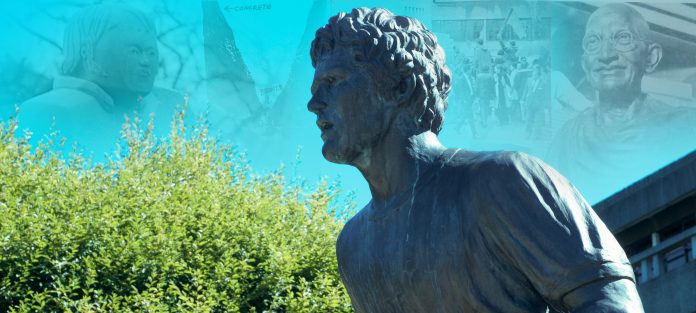
[dropcap]S[/dropcap]tanding at 3 metres high and weighing over 1,000 pounds, the Terry Fox statue has become the defining symbol of the Burnaby campus. Not only has SFU held a Terry Fox Day every year since and helped raise millions of dollars for cancer research, but the Terry Fox statue has taken on a second life as a figure in its own right.
Every winter, students dress him up in a toque and jacket, and everyone who has convocated since 2001 has been led through the mall by his forward-looking optimistic vision.
While Jack Harman may have believed that he had missed out on creating the defining statue when his Simon Fraser sculpture never got to see the light of day, his son has kept his legacy alive with this iconic statue. In fact, due to a misunderstanding as to who created the model, until being contacted by The Tartan, the SFU Art Gallery had Jack’s name in their database as the artist of Stephen’s sculpture.
Although Stephen may have studied at UBC, a campus which features several statues sculpted by his father and he may have gone on to also create the Terry Fox monument at BC Place which features four statues of the late hero — it is only at SFU where a Harman statue is beloved as if it were a friend.
“Terry is a very good representation,” Stephen believes to this day. “I would be honoured to have that as something representing me, as student or alumni.”
Thirty-four years after it first began, a Harman work became the symbol of our campus. It took lessons from bureaucracy, politics and even Gandhi to get there, but the long-promised monument to the greatness of Simon Fraser does exist, and it can be found in the Academic Quadrangle under the name Terry Fox.
When Simon Fraser University was being built in the summer of 1965, word spread about a new and exciting place full of possibilities on Burnaby Mountain. For many people, the new university was an opportunity not just for education, but for employment as well.
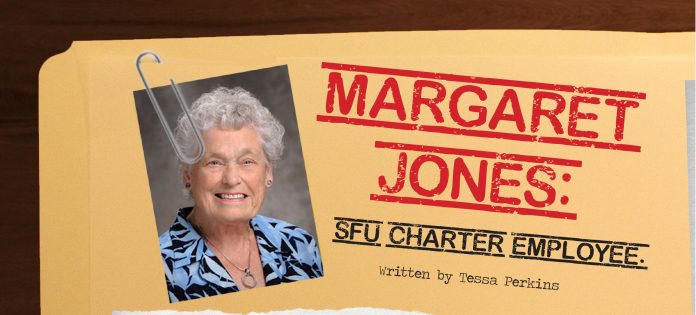
While many staff members at SFU spend their whole careers here, until earlier this year, Margaret Jones was one of the few current employees who had been here since the very beginning.
“I came [to SFU] because the university first opened and I wanted to get into the workforce,” Jones explained. She mentioned that she has been on a leave of absence due to some health concerns. She is unsure if she’ll return to work again, but her dedication saw her continuing to work even after retirement.
Jones noted that she was originally meant to begin her career in the Reading and Study Centre, helping with a non-credit course in reading and study skills. But the office wasn’t quite ready, so she worked for the registrar’s office registering students.
From there, she soon moved to Recreation and Athletics, where she stayed for the remainder of her career, helping set up new programs and finally becoming the Special Projects Coordinator.
With the energy of a place full of new employees, there was a strong sense that SFU was a place that could be shaped into what you wanted it to be — that was the appeal for many people.
“Since it opened, people had to work together and help one another — they were always looking towards where they could work well together,” Jones explained. “I met a lot of people up there. I didn’t find anyone complaining about things.”
She described the unique environment of open-mindedness that existed at the time — if you didn’t like something, you could always propose a better way of doing it, and people would consider it. Unlike some of the red tape and paperwork one might encounter today, in those days, Jones said, if you needed something done, you could call someone up and they’d come and do it.
There was also a strong sense of community on campus, and it had a small town atmosphere where everyone knew each other. Those who drove up the mountain were aware of the failings of the public transit system, and took pity on students.
“I drove up at the beginning, and I sometimes took people up. At the bottom of the hill, I would always stop and pick students up who were waiting for the bus. People would stop if there were people waiting there. I know I did.”
The early years at SFU were also known for radicalism, protests, and a great deal of student activism, but Jones said it was important to note that not everyone was involved, stating, “I didn’t find it overly radical.”
Decisions by the administration at SFU were often made without much discussion or debate in the early years, and Jones said she felt that the administration always seemed flexible and open to new ideas. Everyone had to work together to get the job done and make sure the university was running as smoothly as possible.
“We were making things up as we went,” she said. Things have changed, as Jones notes, “nothing stays stagnant all that time.” Just like any new venture, “it doesn’t necessarily stay the way it was intended.”
However, over the years, one thing has stayed the same — the attitude of fellow staff members. “People [at SFU] were the type that you could discuss things with, and there was never anyone saying ‘no you can’t do that.’”
One of Jones’ lasting legacies, and perhaps the one seen most by students, is the naming of our mascot, McFogg the Dog. “It was President Patrick McTaggart-Cowan’s nickname,” Jones explained, “and ‘McFog’ was what it was like at the university when you were in the clouds.”
McTaggart-Cowan, SFU’s first president who served from the school’s conception until 1968, earned the nickname while working as a meteorologist during World War II. He was in charge of determining whether or not the weather would allow aircrafts to fly safely, and the aviators dubbed him ‘McFog’ after repeated reports of bad weather. “I wrote a letter to him and asked if he would mind us using that name. He wrote back saying he’d be happy to have that be the name of the mascot,” said Jones.
It’s clear however that her legacy extends far beyond that of naming the mascot. Earlier this year, SFU Athletics added the Margaret Jones Lifetime Achievement Award to the Annual Clan Awards Banquet in honour of her service at SFU.
“I really have enjoyed it,” said Jones, when interviewed for the 40th anniversary by the SFU Retirees Association. “I think it’s just been great for me and seeing the dramatic changes from the hustle and the bustle and people not knowing what to do or where to go or what was happening at the very beginning to what it’s passed on to now. It’s just been wonderful.”
Although Jones may not return to work on the mountain, this August marked her 50th anniversary as a proud staff member. Her dedication and loyalty to SFU is consistent with the many stories of retired faculty members spending time on campus and retired staff members returning for contract work or remaining involved through volunteering or with the Retirees Association.
Whatever it was that kept her coming back to this mountain for 50 years is probably similar to what has a hold on so many people who come to SFU — the sense of community, the atmosphere of open-minded thinking, and the view of the mountains on a clear day.