Home Blog Page 988

Tea may be bland, but it’s an experience

0
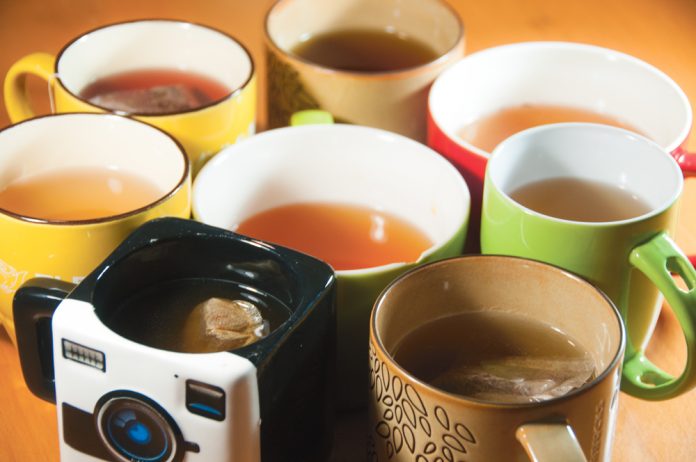
Photo Credit: Phoebe Lim

As a constant tea drinker and advocate, I know why I drink tea. I even joined the Tea Club here at SFU in order to share this love of tea with people who love it as much as I do. However, if you were to tell me that tea is just water flavoured with a bag of dried leaves, I would probably agree with you. Because that’s what it is. 

So why do I, and so many people, drink tea like it’s from heaven?

It’s because tea isn’t just a beverage that gives you a caffeine hit. Along with its colonial and medicinal history comes a unique experience that a tea-drinker won’t find with any other beverage in hand.

It is true that tea has been consumed as a beverage by people for centuries, since its origins as a medicinal drink from China during the Shang Dynasty. However, it was the British who popularized tea production as a business venture.

This drink has a history associated with being a tonic with medicinal properties, which holds true today, as it’s proven to be the best for your health and well-being. Green tea has antioxidants that may interfere with the growth of many cancers, and prevent neurological disorders. Black tea may help protect lungs from damage caused by cigarette smoke, and reduce the risk of strokes. Other teas like Oolong and Pu-erh are associated with lower fat and cholesterol, and healthy organs.

Now, with 21st century soft drinks like vitamin water and energy drinks, it doesn’t seem reasonable to drink tea anymore. It no longer just competes with coffee, but also with sugary cool drinks that sell for less. Why would anyone spend $3.25 for a cup of earl grey when you can easily buy two bottles of pop without waiting in line?

Economically, it doesn’t make sense for me to continue supporting tea makers, to buy tea brands like David’s Tea, or to drink tea as regularly as I do. Other tea lovers will argue that it is likely far less processed than the other drinks, that it already has a greater flavour variety compared to other drinks, or that it doesn’t contribute to excess sugars in your body. But I don’t drink it for any of those reasons, either. I am not a drink purist; I love myself a good sugary carbonated beverage once in a while, too.

But I have to drink tea. And there is one reason for that: the experience. I drink it for the feeling of relaxation and contentment, and I ask others to drink it so that they can relax with me too. In knowing that I’m downing a cup of something that’s been around for centuries, I feel like I contribute my piece in the continuation of the drink’s history. The satisfaction is more psychological or spiritual than it is physical. As a university student, who can deny a little historical relaxation in a cup?

Find a tea you like, let it heal your body, hurt your wallet a little, but ultimately soothe your soul.

Overheard at SFU

0
Photo Credit: Flickr

Student in hall: “He tries to make funny dad jokes, and they’re funny dad jokes that aren’t funny.”

__________________

Student in class: “Elmo was injured by falling debris.”

__________________

Student in class: “Bill was living out of the trunk of his car for 2 years.”

__________________

Student in hall: “I didn’t know the first Mad Max was set in a dystopian future. I thought that was just Australia!”

__________________

Prof lecturing: “Jazz was like the EDM of the 1930’s.”

__________________

Student outside: “Can I still listen to Michael Jackson if it’s June?”

__________________

Person 1: “World Literature is my life. I can’t even imagine being in something like English.”

Person 2: “Yeah, that’s because English sucks Moby Dick.”

__________________

Students on the bus: [speaking Chinese]

Girl: [Something something] Ed Sheeran!

Both: [loud giggles]

__________________

Student on the bus: “I hate the 135.”

Other student: “Yo, the 135 is my jaaaam.”

__________________

Student exiting bus: “Someone catcalled me on the street!”

Other student: “I’m not a big fan of catcalling.”

Point / Counterpoint

0
Photo Credit: Rachelle Tjahyana

Give it to me straight

By Max Hill

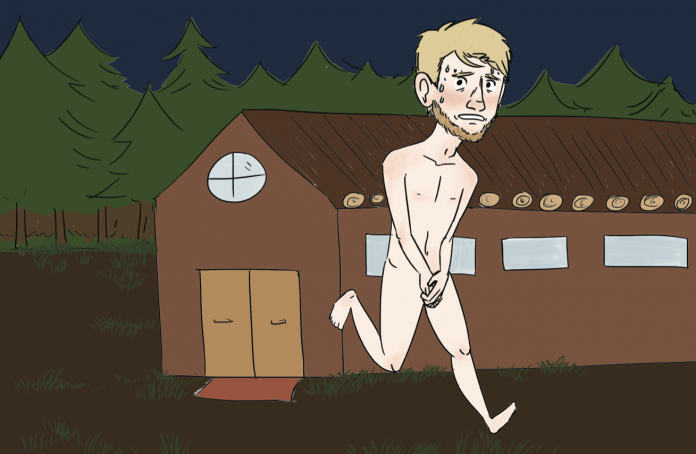
I’m butt naked, holding my privates in my cupped hands, running around a cabin in the woods at full speed.

There’s no cellphone reception and it’s well past midnight. I can barely see through the beads of sweat running down my face. Among me are my coworkers, half of whom are equally nude, the other half watching us with amusement. We are split by gender. The latter group — the clothed one — includes my boss. Later on in the night, I will have yogurt licked off of my chest by a man nearly ten years my senior. This man is also, in a way, my boss.

We are all very drunk, and we are playing truth or dare.

Most will tell you that picking truth over dare is lame or cowardly or a refuge for those unwilling or unable to party hard, and they may have a point. But as someone who has done his fair share of both, I can tell you this: you learn more about people from truth than from dare.

Truth gives us a chance to ask each other the probing, sometimes uncomfortable questions we’re all secretly dying to ask each other. It’s in these quiet, tense moments where you really start to understand someone: how they react under pressure, what they are willing to share about themselves with strangers or with friends. Pull back the safety blanket of politeness, add a healthy dose of alcohol, and it turns out you can learn a lot more about a person than you might imagine.

And you know what? I may cringe at some of the things I’ve admitted due to choosing truth, but I don’t regret them. That’s the name of the game — and frankly, the idea of a party game centred around getting to know each other better seems pretty progressive to me.

You may remember fondly, as I do, your most extraordinary dares. Your friends may mention them now and then, congratulating you on your exploits. But I can tell you with confidence that no one knew me any better the morning after seeing my naked ass.

Dare me

By Joel MacKenzie

So I was talked into a game of truth or dare. Or, more likely, the majority of those around me have collectively decided we’re playing.

Truth. Truth. Truth. The majority of the time, I chose to not be dared. With truth, I didn’t have to respond with complete honesty. I could hone my lying ability, give a half-answer, or give a yes/no response that only hints at the true truth. Every one of such choices was a chance to exercise my slick, fast-talking muscles that have never felt strong enough. Congratulations, Joel: you’re a better deceiver than you were moments earlier. Who was I fooling?

I’m a pretty honest person, but choosing truth allowed a different, sneakier form of dishonesty, too: there is an opportunity, albeit a small one, that I’ll be given a chance to air something that I’ve wanted to say, and haven’t had a reason to.

But how can I live my life this way? If passivity were personified, it would be me, there, sheepishly hoping to be handed an opportunity for self-expression, or to lie my way out of a tight spot, back into my sheltered reality.

There was a point in my life when I stopped playing the game like this, when I stopped preferring the weak, plain, instant coffee-equivalent of these two choices. The time came, eventually, when I chose bold. Full flavoured. Dark, double Americano. I chose to be dared.

In choosing this, I choose to be pushed. Make me do something I wouldn’t imagine doing otherwise. Dare my disgust for mayonnaise. Dare my fear of improvising a ballad about myself while I wear someone else’s clothes in front of an audience. Challenge me to give up something I hold dear, whether it’s as fickle as a favourite mug, or as monumental as my ego.

And if the dare is too much, I can only dare my way out of it. I don’t talk or persuade out, just use real, solid action.

I’m done with living scared. I need to show how I feel, and I need to push out from the comfortable, yet stale, dank hole I’ve curled myself into.

But I don’t always know how to do that. I need your help.

Dare me.

We need a gender mainstreamed Canada

0
Photo courtesy of Winnipeg Free Press

Many places in the United States and Europe are choosing to forego ancient gender norms by practicing what’s being called “gender mainstreaming.” This is a term established by the UN in 1995 as a global strategy to support gender equality. Though it has gained momentum over the last 20 years, we still have a long way to go, even in a place as influential as North America.

Europe is far more accepting of gender nonconformity than we are here. Many countries have adopted laws and policies to influence a more equal and accepting society, regardless of gender. In Canada, many people still have to fight for places like SFU to have gender-neutral washrooms, whereas places like Berlin now see this as a normal and expected establishment.

Language is an integral part of gender biases, and can be the deciding factor regarding whether or not people have equal access and rights in a country or area. Many languages have gendered words and tenses, associating certain things with femininity or masculinity. This often works to facilitate sexism and create a gender divide.

Sweden recently created a gender-neutral pronoun within their language, “hen.”

Many countries have recently been working to alter this. For example, Sweden recently created a gender-neutral pronoun within their language, “hen.” The German language is also being scrutinized, as it, along with other European languages, often uses pluralized words with masculine pronouns, regardless of whether or not females are within the group.

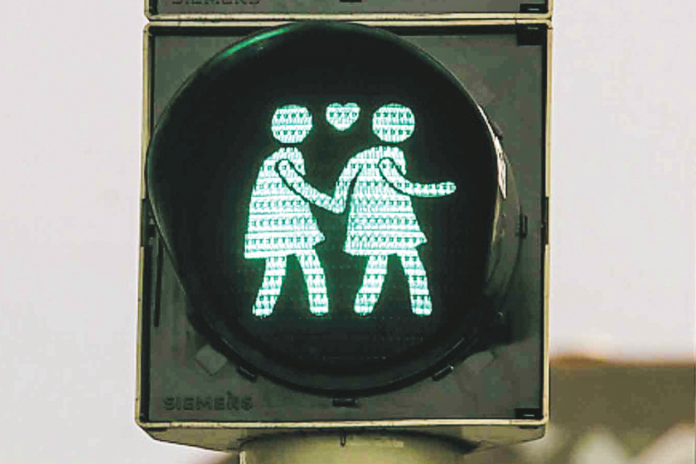
Cities in Germany and Austria have been going one step further, eliminating binary gender structures within their everyday society. Germany has converted many of its pedestrian stoplight signs from flashing images of men to those of women, and Austria has added some same-sex couples on theirs. Austria also adjusted its national anthem to celebrate both its “great daughters and sons,” rather than just sons.

Canada, however, is still far behind these progressive and inventive European countries. While for the most part, individuals here generally accept others, we still have a long way to go as a nation. We need policies to reflect our overarching mindsets of the time we are living in, rather than the mindsets of days far behind us. It’s great that we’ve come so far for women’s rights, but we still have a ways to go to make sure every citizen has equal rights, regardless of their gender.

SFU Women’s Centre hosts self-defence course

0
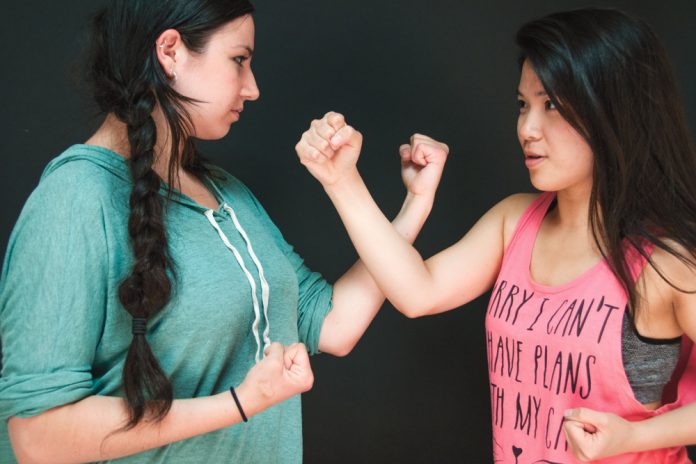
Participants will learn about “self-defence, awareness, conflict de-escalation, and on how to protect yourself in the event of an attack.” - Phoebe Lim

The SFU Women’s Centre is bringing back their popular women’s self-defence workshop series, WENLIDO, taught by Diane Jacobs. 

All self-identified women who are part of the SFU community are invited to take part in this workshop series, running now and for the next three weeks. The course is “pay what you can,” with a price range of $20 to $50.

Leah Horlick, the Women’s Centre coordinator, explained that the centre had been running these workshops each semester for years, and they have recently had a lot of requests to reinstate them.

The four weeks of workshops take place on Wednesday evenings from 6 to 9 p.m., having started on June 17, with the last of them on July 8 on SFU’s Burnaby campus. Horlick explained that over the course of 20 hours, participants will learn about “self-defence, awareness, conflict de-escalation, and on how to protect yourself in the event of an attack.”

As Horlick explained, “It’s incredibly important for women to feel empowered to go out at night and to own their space. We live in a world where the reality of violence against women is really an epidemic. Especially as young women, it’s important for us to hold that awareness, and hold it in our bodies, knowing how to protect ourselves.”

She spoke about the detrimental messaging women receive in regards to violence and where their responsibility in it lies. “The messaging we get about violence is that we shouldn’t wear short skirts or have our hair in a ponytail, so someone can grab it when we’re out for a walk at night.

“Really, the messages we should be receiving are don’t perpetrate violence, it’s important to respect one another and not to touch each other without consent,” she asserted. “I take issue with the kind of messaging we get about violence and prevention — that it’s all women’s responsibility and it’s about what we wear and what we do.”

Because of these negative messages that bombard women constantly, the Women’s Centre aims to counters them in these self-defence workshops, while also creating a safe space where women can feel both empowered and free of fear.

“The advantage of a program like this is that we break down the myths around slut-shaming and victim-blaming, around when violence happens. Regardless of when, or if, you encounter violence, you will have the skills to protect yourself. [These workshops] eliminate these myths we have about who receives violence or who deserves violence based on what they were doing or where they were,” Horlick elaborated.

The centre takes a strong stance that no one deserves violence regardless of where they are or what they are doing. Eliminating these stigmata is a goal of the self-defence workshops, along with providing the skills in case an incident does occur.

SFU expert speaks out against Bill C-24

3
Somayeh Brahami - SFU

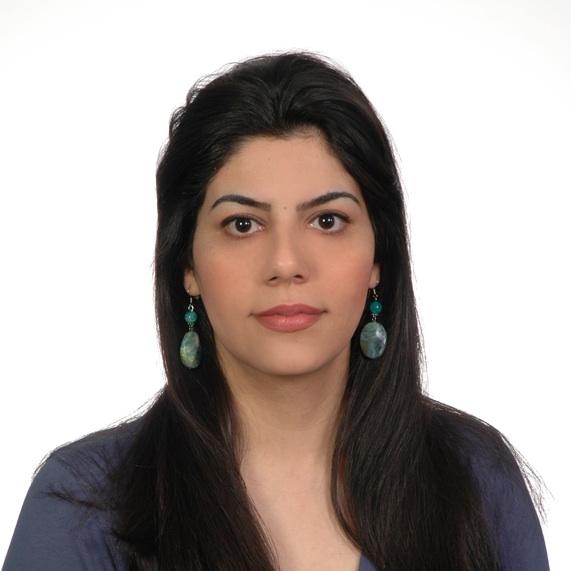
“It is unconstitutional, un-Canadian,” Somayeh Bahrami said of the implementation of Bill C-24, also know as the “Strengthening Canadian Citizenship Act.”

An MA graduate of the Department of Gender, Sexuality, & Women’s Studies currently pursuing her PhD degree at SFU, Brahami strongly believes that this new bill will not only affect all immigrants wishing to call Canada their home, but all Canadian citizens.

According to Citizenship and Immigration, Bill C-24 — which was passed as a law in the summer of 2014 and came into effect last week — will implement new amendments on the acquirement of citizenship for new Canadians. It will make citizenship tests and residency requirements more difficult to attain.

The bill also aims to make it easier for the government to revoke the citizenship of individuals that they suspect of terrorism or fraud. Citizenship could be revoked if it is believed to have been obtained by “false representation, fraud, or by knowingly concealing material circumstances.” It could be revoked from dual citizens for having been convicted of treason or terrorism in another country, or for having served in armed forces that have been in conflict with Canada.

Bahrami explained that the amendments also categorize Canadians as “first” and “second-class” citizens depending on their origin and if they happen to be a citizen of another country. This will affect the “second-class” citizens in that the government will have full control over their citizenship and can exercise power to revoke it for different matters.

“The government did not even integrate the [concerns of the citizens] about this bill,” Bahrami said.

“Bill C-24 has redefined narratives of citizenship and what it means to be Canadian, and what can be seen as an ‘exemplary’ Canadian,” she said. “No matter how long you live here, or if you call Canada home, you are still not Canadian enough, because you are a citizen of another country. Or, you could be eligible for another citizenship without you knowing.” 

Bahrami believes that the new amendments validate the negative rhetoric about immigrants and Canadians of dual citizenship, propagating the stereotype that they apply for Canadian citizenship for their own convenience and do not contribute to the Canadian society.

One of the concerning clauses of the new bill is that it could revoke one’s citizenship if they are convicted of terrorism charges in another country. “Terrorism is subjective in definition,” argued Bahrami. “The definition of ‘terrorist’ in one country could mean a recognized right in another.

“What is the possibility of an individual who happens to be a dual citizen of Canada would turn out to be a terrorist?” She asked. “There is an agreement on punishing whoever does any criminal activity, [. . .] but it is not right to punish them by revoking their citizenship.”

She believes that it is the responsibility of academia to reach out to the student body and be sure they are informed, are knowledgeable, and on board with what is going on. “We are all in this together,” Brahami insisted. “This bill affects us all in both the short and long term. [. . .] It is impacting the whole narrative of citizenship and identity.

“It is not just about citizenship — it is our basic human right of mobility, of being able to hold different citizenships, to be able to be seen as good individuals who would want to contribute the Canadian society, and to be viewed as equal Canadians,” she concluded.

Research suggests polarized groups process gender stereotypes differently

1
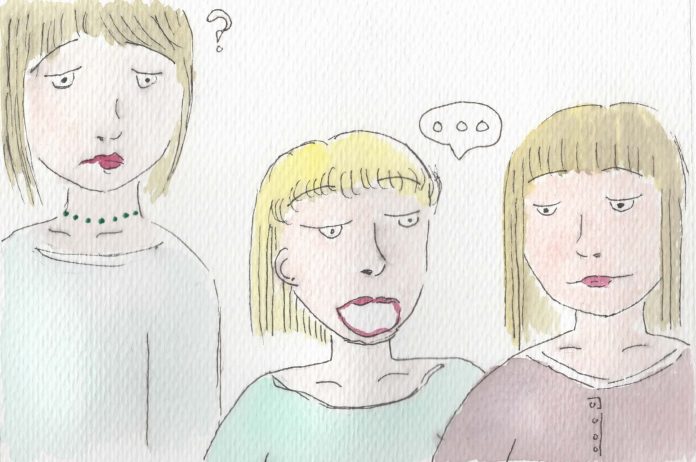
Ever wonder about implicit biases of those around you? - Momo Lin

SFU researcher and MA student Adam Baker is producing experimental research in psychology on stereotypes — partially due to his pursuit of an interdisciplinary degree in cognitive science and political science.

Using state-of-the-art neurological monitoring devices such as electroencephalography (EEG) recordings of electrical activity along the scalp, Baker monitors test subjects’ reactions to words that stereotype a certain group or gender. This is done to invoke an “implicit bias,” which Baker says “can be interpreted as the process in which the brain stores and retrieves semantic associations in memory.”

Baker began as a physics undergraduate at Vancouver Island University, later switching to psychology with a focus in neuroscience, and working as research assistant at the Universities of Victoria and Montreal.

He chose neuroscience partly due to his fascination and respect for the brain as “a resilient fighter,” an organ that might “[lose] its way [or] become injured, but it always tries its best to simply do its job.”

Now at SFU as a member of the Laboratory for Affective and Developmental Neuroscience, Baker conducts research on the reasons we stereotype. His focus is on groups of people separated by polarizing differences, such as those with differing religious beliefs or political affiliations, to determine whether they have tendencies to stereotype and conceal their biases more than control groups.

Baker’s current trials examine gender stereotypes among those with conservative or liberal political orientations. “Subjects were shown word pairs that consisted of a gender category followed by a target word or non-trait stereotypically associated with one of the gender categories,” explained Baker.

Target words like ‘nurturing,’ and ‘aggressive,’ or items like ‘cigar’ or ‘lipstick,’ were some of the words used for his gender stereotype study.

Although the data is far from conclusive, Baker has been able to draw associations between subjects “that had to exert greater cognitive effort to override these associations,” suggesting that some groups “reply on their gut responses, [whereas others may have conflicting] negativities suggesting more deliberate processing of semantic associations.”

The reactions revealed an implicit bias toward the word being presented to certain subjects. By identifying the existence of these implicit biases, and that groups separated by ideology, religion, or politics have fundamentally different biases, Baker can draw conclusions as to why opposite groups have difficulty with communication and compromising on contentious issues.

Baker is working to prove that the reason why long political debates, spanning decades between opposite sides of the spectru, resulting in no progress is not because of their conscious unwillingness for compromise, but because of different moral conclusions drawn due to their implicit biases. If his hypothesis is true, the need for “new methods of investigating discrimination and intergroup bias” will no longer be just a plan for the future, but a policy for the present.

He explained that this deeper understanding of the link between a group’s psychological biases and political opinions has the potential to increase “our effectiveness to raise public consciousness of social inequality and bias.”

University Briefs

0
Image courtesy of The Fulcrum

Alumni space opens at U of O

[OTTAWA] — Name a famous University of Ottawa alumnus. Who is: Alex Trebek?

The well-known Jeopardy! host spoke at the opening last week for U of O’s first dedicated alumni space on campus.

Funded in part by Trebek’s $2.4 million donation, along with contributions from the Alumni Association, Johnson, Inc., MBNA, Canada Life, and campus faculties, the Alex Trebek Alumni Hall will play host to the Alex Trebek Distinguished Lecture Series.

With files from The Fulcrum

Indigenous language programs expanded at U of S

[SASKATOON] — This fall, students at the University of Saskatchewan will have the opportunity to graduate with a certificate in Indigenous languages.

The two-year certificate program will include 10 courses to prepare students to teach Indigenous languages in a number of different environments.

The program intends to play a role in cultural preservation by putting an end to the loss of Indigenous languages.

With files from The Sheaf

UBC receives $1 million for medicinal marijuana research

[VANCOUVER] — National Green Biomed, a Richmond-based company, is funding the $1 million grant for a study to be conducted by the UBC Division of AIDS and the British Columbia Centre for Excellence in HIV/AIDS.

Head researcher M-J Milloy hopes the clinical trials enabled by the grant will help to “nail down the effects of marijuana on HIV, to figure out what is behind that mechanism, and to see if there might be clinical benefits.”
With files from The Ubyssey

Satellite Signals

0

WEB-woodwardWoodward’s

Woodward’s has got you covered this Thursday, June 25 with their Community Singers 2015 Workshop. This weekly community choir is hosted on a drop-in basis, kicking off each week at 9 p.m. at PHS Woodward’s on the 10th floor, and is open to all music lovers.

surreySurrey

Tuesday, June 23 will be a night to join together as a community over a Canadiana-themed meal at City Hall Plaza at 8pm. This dinner, “The Long, Long Table,” seeks to strengthen community ties of Surrey residents by engaging guests over a night of entertainment and lively conversation. Tickets are $35 at the Surrey BIA office for this gourmet feast and friendly company.

vancouverHarbour Centre

SFU’s “Danger Zones: The Changing Nature of Global Conflict” begins at 5 p.m. on June 24 and features special guest expert speakers from across the province who will share their insights on conflicts and the current global state of affairs. The event is free and will be held at SFU’s Harbour Centre campus in room 1400.

Steampunk silliness at Bard on the Beach

0
Photo courtesy of David Blue.

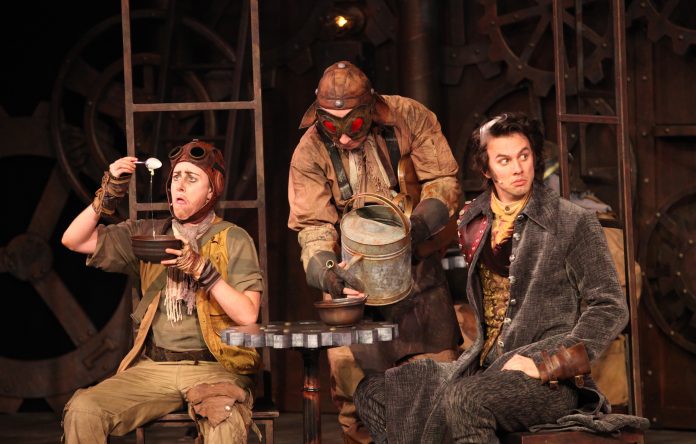
Steampunk is one of those things that is quite difficult to describe, but very easy to recognize. Essentially, it’s a sub-genre of science fiction that features steam-powered machinery rather than advanced technology. But it’s more complicated than that: it also tends to feature fantastical elements and references to the British Victorian era, and it has an aesthetic to match that period. Scott Bellis directs this version of The Comedy of Errors in a whimsical world full of turning cogs and hissing steam, and it’s a delight.

This audience favourite is Shakespeare’s shortest play, and is based on a very simple premise: twins separated early in life, both named Antipholus, end up in the same town, and they each have identical-looking servants named Dromio. As Antipholus of Syracuse (Ben Elliott) and Antipholus of Ephesus (Jay Hindle) cross paths with each other’s Dromio, plenty of communications are conveyed to the wrong recipient and these meetings full of mistaken identities lead to increasingly confusing events and silly situations.

Despite all this comedy, the story begins with the Duke of Ephesus threatening Egeon, an old merchant, with a death sentence for having broken the rule of forbidden travel between Syracuse and Ephesus. Egeon explains that he has come to Ephesus to find his wife and two sons. Egeon and his wife Emilia had each raised one of the twins separately after being separated in a terrible shipwreck, and now he is on a quest to reunite the family.

Unbeknownst to Antipholus and Dromio of Syracuse, they have finally found the home of their twins, and we are treated to some hilarious scenes caused by mislaid communication. One such scene involves Dromio of Ephesus (Dawn Petten) beckoning Antipholus of Syracuse to come home to have dinner with his wife. When he refuses, his brother’s wife is shocked at her husband’s behaviour and goes looking for him.

The shrill, angry “Hello!?” that emanated from Adriana (Sereana Malani) as she approached Antipholus of Syracuse, calmly eating by himself, was impeccable, and Antipholus met her with a befuddled, high pitched “Hello” to match, which of course increased her frustration and caused a roar of laughter from the audience.

Antipholus of Syracuse follows Adriana back to her house while trying to figure out how he all of a sudden has a wife he wasn’t aware of, and he ends up falling in love with her sister, Luciana (Lindsey Angell). At their house, we meet Nell, the grunting kitchen wench (Andrew McNee), and Maud (Daniel Doheny), a chambermaid who is constantly brushing everything with her feather duster. The slapstick comedy shines with these characters, and Luciana’s performance had the perfect amount of innocence and fragility.

The brilliant humour is in the dramatic irony of the entire intricately woven plot. We know there are these identical looking people with the same names causing all the confusion, but we love laughing at the mess on stage. We are just waiting for the moment when the characters figure out what we’ve known all along.

To top it off, the beautiful, intricate set full of cogs, pipes, and a clock centrepiece was the perfect backdrop, and the costumes were equally elaborate with a riveted executioner’s helmet, lace-trimmed dresses, long, dapper pleated coats for Antipholus, and goggles for Dromio.

While the show didn’t receive a standing ovation and doesn’t rank among my favourite Bard productions, it features strong performances, lots of laughs, and a killer steampunk aesthetic.

The Comedy of Errors is presented by Bard on the Beach from June 4 to September 26 at Vanier Park. For more information, visit bardonthebeach.org.