Home Blog Page 982

Woohoo, Boohoo, Eh?

1
Photo courtesy of Flickr

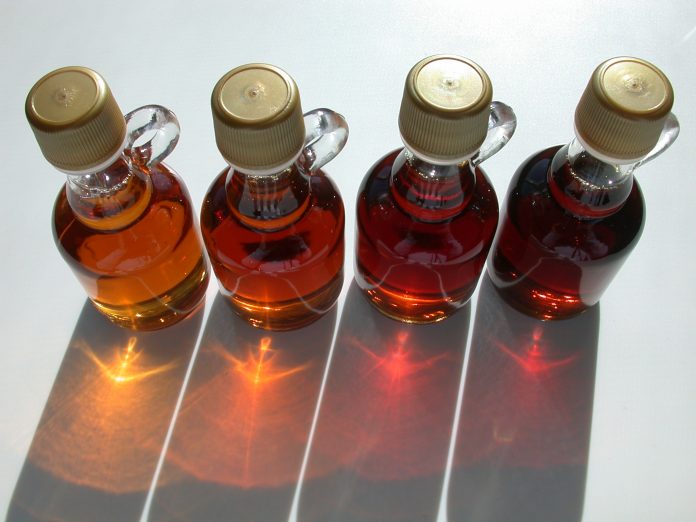
Woohoo: Maple Syrup

If there is any link that branches our cruel, unforgiving world with that of the divine, it is sweet Canadian maple trees.

Need proof? Well firstly, maple syrup literally goes with everything.

Baked yams? Yes. Oatmeal? Obviously. On ice cream? Duh. As a salad dressing? Of course.

There isn’t anything maple syrup can’t make better; it’s realistic to state that maple syrup is the food of all foods. Think about it, without maple syrup, pancakes are just bread. The purpose of pancakes is solely to deliver maple syrup into our mouths.

If the gentle but sweet taste of this dark and thick syrup doesn’t convince you that it’s truly a gift from a higher force, it’s worth noting how recent research suggests maple syrup is beneficial to our health, too!

If there is anyone out there who doesn’t agree that maple syrup is our connection to the Gods, then they simply aren’t human.

Boohoo: The Toronto Maple Leafs

Dear Toronto Maple Leafs, no one likes you.

Sure, Canucks fans trashed and set fire to their own city after losing a game, but at least we have passion.

I’ve never seen a team play with such apathy, and fans cheer so pretentiously. While you may be part of the original six teams to form the NHL, this doesn’t speak to your skill level. I’ve seen first graders skate with more grace.

Just because your team name pays homage to the beautiful maple trees of Canada, doesn’t mean you have to be as idle as them on the ice. Seriously, Disney on Ice has a better chance of making the playoffs.

Lastly, Leafs fans, have you ever considered why the Hockey Hall of Fame is located in Toronto? The answer is quite simple; it’s the only way you will ever get to see the Stanley Cup.

The cult of the NHL player

0
Momo Lin / The Peak

With the start of training camps around the corner for the National Hockey League, one could get the feeling that the league is relieved that its players are back to work and aren’t getting into trouble. Maybe it’s time we stopped trying to brush these problems under the rug.

It has been an offseason the NHL will want to forget, with many of its star players getting into trouble with the law, such as Patrick Kane of the Chicago Blackhawks being accused of sexual assault, and Ryan O’Reilly of the Buffalo Sabres crashing his truck due to drunk driving.

The Los Angeles Kings had the trifecta of now then-players Jarret Stoll, Mike Richards, and Slava Voynov become infamous due to charges of possession of a controlled substance, being arrested and investigated for possession of oxycodone after attempting to cross the border, and being sentenced to jail time for domestic abuse, respectively.

The NHL has had an increasing number of problems in the past few seasons, ranging from the aforementioned domestic abuse to its treatment of women as fans to its ongoing problem with rape and rape culture. Even with all that being the tip of the iceberg, articles are constantly being written trying to dismiss these actions, like this following lede from Pierre LeBrun, posted on ESPN.

“The NHL is not accustomed to headlines involving arrests and court dates,” says LeBrun, falsely. “That’s normally for other sports leagues.”

This sentiment has been prevalent around media and fans throughout this time, treated as a “Please like my sport!” attitude, trying to highlight a sport which is trying to separate itself from the other major sports in North America despite drawing nowhere near the same viewership.

Ari Yanover, the managing editor at Calgary Flames blog Matchsticks and Gasoline, believes that this attitude that the media promotes is downright wrong.

“Hockey journalism is a mess,” she said. “Of course, hockey itself is a mess, but all hockey journalism really does is contribute to it. It’s as if it only exists to serve its master, never to question it, which seems to be pretty much the opposite of what journalism is supposed to be.

“Hockey likes to present itself as this all-important, historic, mystic environment that’s beyond reproach, and it couldn’t be further from the truth.”

Yanover says that if the media allows the NHL to believe that it doesn’t have a problem, then it will never improve its standards.

Here at SFU, the men’s hockey program feels as though the team is capable of ensuring they represent themselves as athletes and the school as whole, and doesn’t have to actively ensure the students aren’t becoming a liability.

Hockey likes to present itself as [ . . .] beyond reproach, and it couldn’t be further from the truth.

“It’s not really about speeches before games,” said Chris Munshaw, director of hockey operations. “It’s more just that on a day-to-day basis on how they hold themselves [. . .] they understand that they’re in a privileged position to wear the logo and represent the brand of Simon Fraser University.”

To their credit, the team does have a meeting during the pre-season to go over expectations, and have the players go out and get involved in the community, mentoring at local schools and rinks.

It helps give the players a sense of who is out there watching them, and the effect they can have on their fans. To date, SFU hockey has never been involved in a major scandal.

However, that approach isn’t a viable option for the big leagues. These are men who are worshipped from as early as 15, and don’t always have to face up to the consequences of their actions. Yanover believes that if the NHL wants to have any chance of improving its players, it needs to take a look at a different North American sports league.

“Look towards the CFL, which has implemented league-wide policies for literally every aspect of league life, from staff to players to fans attending games,” she explained. “That’s a league that has taken steps to work with people who know what they’re doing in these fields, to ensure every single person involved with the CFL knows how to conduct themselves, and a league that will remove offending parties if determined necessary.

Of course, this has not completely eliminated the problem in the league. In 2013, receivers Taj Smith and Eron Riley, as well as defensive back Dwight Anderson, were all arrested on charges of aggravated assault.

Only time will tell if the National Hockey League can take a serious look at the charges and allegations facing its players lately, and work towards making serious change for the better. Until that happens, the cult of personality surrounding the NHL player is here to stay.

Adjective

0

Adjective

Get Involved as a Tartan Contributor

0

Interested in writing non-fiction features or creative fiction (short stories, fiction, etc.) for The Tartan magazine?

We’re accepting pitches for the non-fiction section until Thursday, October 15, 2015 and fiction submissions are open until Monday, November 9, 2015.

Please send all questions and queries to [email protected].

If you want to take photos or do illustrations, send us an e-mail and we can get you set up for that as well. Check out our FAQ (Frequently Asked Questions) to learn more.

FAQ about The Tartan

0

Are you looking to be a part of SFU’s new student-run magazine focused on long form journalism and creative writing? This guide is meant to serve as your introduction to The Tartan, a new bi-annual magazine created by the Peak Publications Society and should give you the low-down on how you can get involved.

What is The Tartan?

The Tartan is the name of a new subsidiary semesterly magazine to The Peak, Simon Fraser University’s Student Newspaper, which will focus on long-form journalism and creative fiction writing. It intends to be the home of both longer investigative and historical pieces which would have formerly been found in The Peak’s Features section and also be the place for SFU’s talented creative fiction writers to publish their short stories and poetry (or whatever else they might write). The Tartan’s purpose is to allow writers a chance to have their work published somewhere other than a weekly newspaper, which is not always the ideal location for all types of writing.

How can I get involved?

The best way to get involved is to send an e-mail to [email protected]. We can answer all your questions and you’ll be encouraged to join our mailing list so you can be the first to know everything we’re doing!

How do I submit creative writing (short stories, poetry, etc.)?

Send it to [email protected]! The deadline for the Spring Issue will be Monday, November 9, 2015 but you are encourage to send it in ASAP. The Tartan’s Associate Fiction Editor will review your submission and either let you know it will be published or give you notes on how you can get something published. It’s simple! There aren’t any real guidelines, if we like it, think it’s of artistic merit or think student will enjoy it, we’ll publish it.

How do I submit non-fiction?

From the start of the semester until Thursday, October 15, 2015 we will be accepting pitches for feature stories (historical investigations about SFU, current investigations about SFU, human-interest pieces related to SFU, etc.). For those on our mailing list and at our meetings we will also be pitching ideas to you that you can pick up if you’re interested.

What should I include in a pitch?

When sending us a pitch through email, you should briefly explain your idea, say why you think students will enjoy it. If you want to write the idea alone or in a team or and finally, include one or more pieces of writing that prove you can accomplish what you’re setting out to do. So, if you want to write a history of the Maggie Benston Centre, you might want to include an investigative article you’ve written in The Peak or for a class.

What if I don’t have any ideas?

If you’re looking to write non-fiction, don’t worry about it, just be sure to check your email frequently. Throughout the pitching process we’ll send out cool story ideas for anyone to pick up. Just let us know you want to write and again, send a writing sample to show you’re the strongest candidate for the assignment. If you want to write fiction though, you’re going to have to come up your own ideas, sorry.

When is the deadline for pitching ideas?

The deadline for submitting pitches is Thursday, October 15, 2015.

How do you decide which pitches make it in the magazine?

We will consider every submission equally and let the magazine’s collective decide what they want to see most in the magazine. Every acceptable pitch will be written on a board and discussed at a planning meeting on October 15 that everyone will be invited to attend. At the meeting we will go through all the ideas in as much detail as possible and determine what goes in the allotted spaces of the magazine and who will write them (you will have first dibs on your own pitches, don’t worry). You should definitely come to this meeting and explain your idea in person to make sure it makes the cut.

What if I’m not a writer? What if I like to draw or take photos instead?

That’s great! We will definitely will need illustrations and photographs. Just join our mailing list and we’ll be putting out calls to have contributors do illustrations, take photographs and even help lay out parts of the magazine if they want! Again, just like for writers, be sure to send in a sample of your work for a better chance at getting an assignment.

What types of fiction writing will you accept?

Anything that is great! Short stories, poetry, visual stuff… whatever you’ve got. Priority however will be given to work that best fits into the student experience and are relatable to SFU community members.

Can I make any money out of this?

You sure can! Writers for the magazine will be paid based on The Peak’s current contributor pay scale. This means you will have to have written a minimum of three articles for The Peak/The Tartan before you can get paid for a submission, but since it is highly encouraged you also write for the newspaper anyway, that shouldn’t be too much trouble. A long form non-fiction piece (2000-5000 words) will be worth $50-75. A long fiction piece (2000-5000 words) will also be worth $50-75. Short fiction and long poems (500-1500 words) will be worth $30 and short poems will be paid $10.

What if I have more questions?

That’s great! Please send us an email at [email protected] and we’ll be happy to answer anything!

Clan’s home opener ends with a loss

0
Austin Cozicar / The Peak

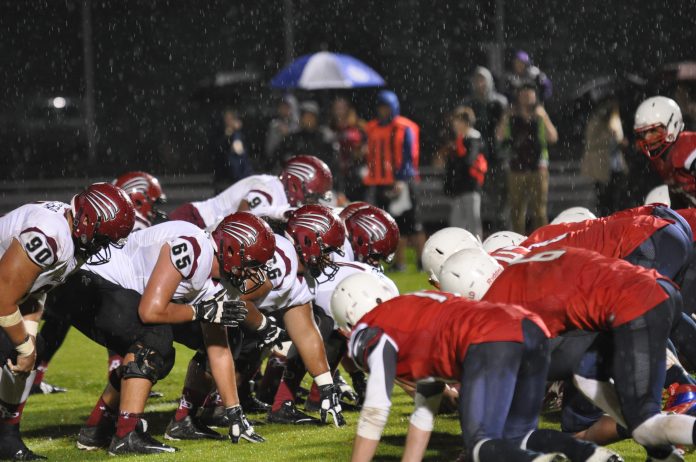
On a rainy Saturday night at Swangard Stadium in Burnaby, SFU’s football team (0–2) played a tight defensive game. Unfortunately, they weren’t able to translate that effort onto the offensive side of the ball as they dropped their home opener 16–10 to the visiting Azusa Pacific Falcons (2–1).

“I was very proud of the guys’ effort,” said head coach Kelly Bates after the game. “I’ll never question their effort [. . .] they stuck in there with the 17th-ranked Division II team before last week.

“Is the result what we want? No. But it’s a process right now. Everybody wants to win. But were also trying to lay a foundation, and I feel we’re starting to do that.”

SFU received the ball to start the game, but quickly went three and out. On APU’s opening drive, the defence appeared to bring down APU running back Kurt Scoby. But he was never ruled down by the officials and promptly got up and ran 85 yards down the field to score, giving the Falcons a quick 7–0 lead and stunning the crowd.

Another three and out for the Clan came after APU sacked Quarterback Ryan Stanford, which would become a common theme on the night. Later on in the quarter, SFU held APU to only a field goal. After a couple of false start penalties by SFU, the quarter ended 10–0 for APU.

The start of the second quarter was a terrific one for SFU. Stanford threw a bullet into double coverage, and redshirt freshman Sam Nadon hauled it in for the touchdown. “I heard the play being called, I was waiting for it [in the end zone],” said Nadon after the game. “Perfect ball by Stanford, and really good blocks by the guys. I’m very happy to get my first touchdown in the NCAA.”

Justin Buren later on in the quarter made a fantastic 44 yard catch with a defender draped all over him. That led to an SFU field goal, and the game was tied. Near the end of the quarter, Scoby led APU down the field and within field goal range. On the last play of the half, APU kicked the field goal but was blocked by SFU’s Jordan Herdman.

“Is the result what we want? No. But it’s a process right now.” – SFU head coach Kelly Bates

The opening of the second half was marked by an SFU interception, off a poorly executed fake kick from the Falcons. Unfortunately, any momentum the Clan seemed to gain from the play was short-lived. A pass intended for Justin Buren was tipped right into the hands of the waiting APU defensive back. APU marched the ball down to the SFU yard line, but went for it on fourth and goal and did not convert.

Buren once again made a huge reception to take the Clan within field goal range. But, like before, SFU shot themselves in the foot. Quarterback Stanford fumbled the ball, and an APU player quickly recovered it.

The big event of the fourth quarter was the winning touchdown for APU. Tight end Joriah Thropay was left wide open in the end zone to make an easy catch. However, the extra point was missed, so SFU had the opportunity to win the game if they could get a late touchdown.

They couldn’t get it done. The offense was forced to punt with around five minutes to go, and APU promptly marched down the field and killed at the time remaining on the clock. The final score was 16–10.

The main thing for the Clan to clean up while they continue in GNAC play is mental errors, particularly penalties. Too many times during the game, SFU’s drives stalled after a false start penalty, turning manageable third downs into tricky third and longs.

“You don’t ever pretend the problem isn’t there, you deal with it [. . .] We’ll address it in practice this week,” said Bates.

Another area to for the Clan to improve upon is the offensive line. SFU did not adequately protect their quarterback on the night, as Stanford was forced to scramble out of the pocket and take a few shots throughout the night. He finished with -23 yards on the night, an indicator of the amount of times he was sacked and taken down behind the line of scrimmage.

The “process,” as Kelly Bates likes to refer to, is now officially underway this season. Only time will tell if it ends in on-field success.

Why I’m voting ‘no’ to Build SFU

0
Photo Caption: Phoebe Lim

In 1965, SFU opened its doors for the first time and filled its lecture halls. Since then, the school has developed a reputation as being one of the leading comprehensive universities — notable politicians, artists, athletes, and researchers alike call this school their alma mater.

But SFU’s success has had its downsides. Unlike other universities such as UBC, SFU had to expand quite rapidly to accept more students as it grew in rank. As a result, many of our older buildings have gone by uncared for since we spent our funds on expansion plans.

And this brings me to why we need to vote ‘no’ to Build SFU.

With SFU’s poor maintenance, now we need to fix SFU.

In a deferred maintenance report released by the SFSS and the GSS, the total estimated replacement cost of the buildings at SFU Burnaby is approximately $1.8 billion.

As the SFSS suggests, and the GSS agrees with, “deferred maintenance refers to the routine repairs and upkeep required to keep buildings operating normally that have been postponed later than would be usually acceptable.” According to the same report, usually financial circumstances govern these kinds of decisions. If funding for general maintenance has been an issue, moving forward with the SUB seems very irresponsible.

We’ve all seen the work around campus that needs to be done. Even those who have just started their time here at SFU have probably noticed mould, poorly maintained infrastructure, and broken equipment.

So long as our campus is crumbling around us, we shouldn’t be going all-in on a new infrastructure endeavour. Our priority should be put on existing buildings that host SFU’s academics. The SUB is a project that does not align with this criteria. It goes as far as to include gaming rooms and karaoke.

The SUB’s focus on carnivalesque pleasure is a less than subtle reminder that this building is not actually a necessity. But our deferred maintenance is essential — as an institution, we cannot move forward until we’ve finished repairing the existing campuses.

So long as our campus is crumbling around us, we shouldn’t be going all-in on a new infrastructure endeavour.

Besides, deferred maintenance isn’t the only reason to vote this project down; it’s outside SFU students’ zone of affordability.

The SFSS has reported that by 2022, students would be paying an extra $90 a semester to help finance this project. Over the course of a degree, at that rate, this can cost any given student $1,000 or more. Speaking as a working student, I just can’t afford this, and I don’t think others can either. The added burden will result in more loans and more stress, and that’s just not what we students need.

Furthermore, I question whether SFU truly needs a SUB to foster students’ happiness. There are many more cost effective ways of developing a community on campus. The National Survey of Student Engagement (NSSE), earlier this year, found that 16 per cent of first-year students ranked SFU the way it currently is, without a SUB, as “excellent,” and 56 per cent ranked it as “good,” while senior-year students’ ranks had similar results. Which begs the question: do we genuinely need this?

The fact of the matter is that the Build SFU project is not the solution that students are looking for, but a luxury that the university and its students can’t afford.

Moreover, this is a very Burnaby-centric project that fails our satellite campuses and all the students unable to make it to the AGM. This vote could have been done online or via the spring referendum, but the SFSS has insisted that would be too expensive. This kind of voter suppression should set off red flags for all SFU students. If we are to go down the SUB path, we need to have a clear consensus that encompasses a much larger portion of the SFU student body.

While the SUB may provide fun, it won’t actually address the core maintenance, tuition, and democratic problems students face. We have developed a campus community and identity without a SUB, and that will continue to grow even if we vote this project down. The SFSS needs to adjust their priorities to reflect those of the student body, and you can remind them of that fact by attending the Annual General Meeting on September 22 and voting ‘no’ to this project.

Forget #BuildSFU. It’s time to #FixSFU.

Senate Report

0

University looks to the future of research and innovation

Senate announced at its September 14 meeting that plans are underway to develop an updated strategic research plan for the next five years. 

President Andrew Petter announced that, along with a university wide consultation, the SFU community is invited to engage in the process through online surveys and Twitter discussions on the plan, which will be discussed in an open forum later this fall.

Senate was also reminded that the new SFU innovation strategy will be unveiled formally on October 1, the same day a new incubator and accelerator will be opened at the Vancouver campus.

This incubator is the result of a $10.7 million grant from the federal government and will focus on digital technology.

Academic accommodation motion for SFSS AGM

One of the last items of the agenda was an academic accommodation motion for the Simon Fraser Student Society (SFSS) Annual General Meeting to take place on September 22.

The motion, moved by SFSS President and Senator Enoch Weng, “encourages all instructors to accommodate, without any academic penalty, any students who communicates in advance, their intent to participate in the Annual General Meeting.”

Senator Peter Tingling argued that if students wish to attend the AGM they should be prepared to accept the academic consequences. Said Tingling, “I think that it’s fundamentally wrong to encourage the idea that you can have your cake it and eat it too.”

Senator Brady Yano commented that the SFSS had looked into the logistics of hosting the AGM on SFU’s satellite campuses however the cost of the necessary conferencing technology would have been $40,000, which the board saw as prohibitive.

“[This] will be the final attempt of the SFSS board to move forward with the Build SFU project,” said Yano in response to concerns raised by Senator Tracey Leacock that more requests for accommodation for AGMs could come to Senate in the future.

The motion was supported by an overwhelming majority of the senators. However, it is worth mentioning that the wording of the motion encourages, but does not enforce, accommodation.