Home Blog Page 981

Satellite Signals

0

WoodwWEB-woodwardard’s

The LIVE Biennale event features an evening exploring transcultural art practices at the Djavad Mowafaghian Centre for the Arts this Tuesday, September 22 at 8 p.m. The artists presenting bring their perspectives from Gabon, Finland, and Germany as they discuss the cultural context of art.

Surreysurrey

Check out the Fairs week from September 21 to 25 at Surrey campus, where there will be career, graduate school, and volunteer booths for students to interact with a variety of organizations.

Harbour Centre

vancouverThe UnmaskED Project will be running from September 15 until October 5, featuring a photo exhibition profiling those living with eating disorders. The project is spearheaded by SFU’s own fourth year student Claire Sieffert.

The Revolving City launch party kicks off on September 23 at 5:45 p.m. in room 1400 of SFU’s Harbour Centre campus in honour of past authors who have participated in SFU’s Lunch Poems series. Hear readings from a great sampling of local authors, enjoy free cake, and more!

Board Shorts

0

GRID to revise mandate

The Greek Representation and Interest Development (GRID) group was further discussed at this week’s board meeting. Members of Greek organizations attended the meeting to participate in the dialogue, advocating for their respective groups. GRID’s Letter of Agreement with the society just expired, opening up question as to how the group will operate in the future.

While the current mandate is currently “to provide a forum for open discussion on matters pertaining to Greek societies,” members present expressed that they would like GRID to function as a “coordination mechanism” for all Greek societies. This would include representing their interests, being a source of information, and allowing groups to book society space through the club.

The board encouraged them to work with the society to revise the current Letter of Agreement to reflect any new goals.

Governance Model

The board of directors passed a motion to adopt a new governance model to better lay out society policies and guidelines for directors and staff. The model will be passed on to SFSS committees to fine tune some of its details.

“Even when we do get to those points of change were still going to be making some missteps along the way,” said Executive Director Martin Wyant, “That’s natural when you’re moving from one significant way of doing things to another — and one of the jobs of the governance committee is going to be making sure we’re staying on the straight and narrow.”

Inking the work industry

0
Photo Credit: Alfred Zhang

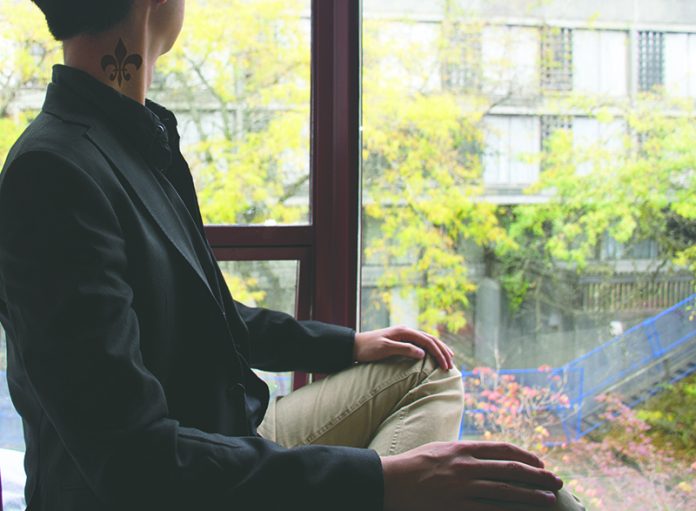
Recent reports show that an estimated one in five Americans, as well as Brits, have tattoos. Although these numbers have increased from previous years, the attitude towards tattooed people seems to have remained the same. According to a Harris poll, one quarter of American, non-tattooed respondents believe people with tattoos are “less intelligent” or “less healthy.” Likewise, almost 50 per cent of interviewees said inked people are “more rebellious.” Such thinking reinforces the idea that inked people are not suitable for most occupations.

Since the beginning of the human race, tribes throughout the world have marked their bodies to display power and accomplishments. When these practices began in the Western world, people were tattooed for similar reasons. Gang members, ex-convicts, and sailors wanted to show off their experiences by undergoing the painful process of marking their skin.

While history is filled with tattooed gents and ladies who weren’t the best apples, how many people do you know with tattoos? My guess is quite a few. Maybe you haven’t noticed the over-the-counter lady’s butterfly tattoo on her ankle, but that’s a tattoo, just like the ones Rick Genest, a.k.a. ‘Zombie Boy,’ has.

What some people fail to understand is that tattoos are no longer a radical body modification. The only difference between a tattoo you can and can’t see is its location and the motives behind it. While some might argue that a tattoo placed in a visible location could imply something bad, at least two formal studies suggest that tattooed people have virtually no difference in personality from non-tattooed people, other than a slightly increased need for harmless self-expression.

Therefore, the notion that inked people aren’t normal people trying to live their lives like you and me is not only false, but detrimental to those who made legal decisions to become more unique, to pay homage to someone, or just to stand out from the crowd.

Certainly, in recent years the focus on self-expression has become a recurring theme in generation Y’s agenda, and thus modern companies attempt to adapt their environment to fit their worker’s needs. The best example of a body art-friendly company is Google, which doesn’t hold a policy on tattoos in the workplace.

Although businesses are bound to become more ‘worker friendly,’ as it’s a well-known fact that a happy employee is more productive, minimum wage workers are excluded from the discussion on tattoo-friendly work environments.

The range of jobs for tattooed and unskilled workers is thus incredibly small, since a majority of minimum wage jobs require customer service. Employers often avoid hiring inked people for fear of negative repercussions from their clients, who maintain prejudiced views on tattoos.

While it’s true that one has to bear with the consequences of his or her actions, to ink your skin is far from illegal and shouldn’t be punishable by society. With the increased immersion of inked people in everyday jobs, customers will see beyond these stereotypes, and hopefully lessening the stigma of body art.

SFU researcher examines fossils of early human ancestor

0
Photo courtesy of Wikimedia Commons

Humankind can welcome a new member to their evolutionary family, thanks in part to the work of SFU researcher Mana Dembo.

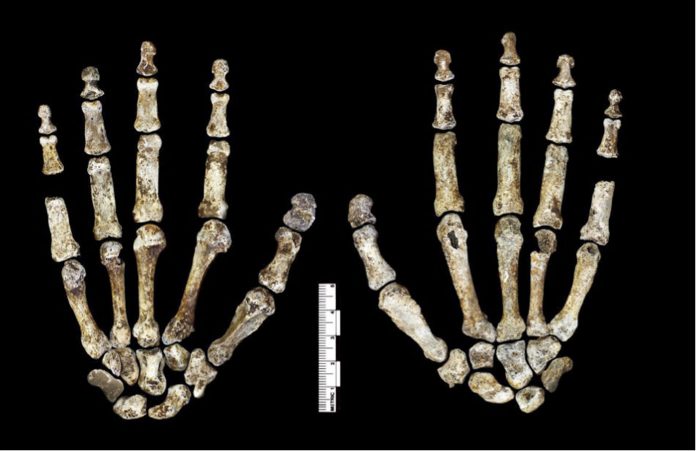
Dembo is a PhD student in the Department of Archaeology and was among the first select group of scientists who examined specimens of Homo naledi in South Africa.

Said Dembo, “What’s really significant about these fossils is [. . .] the sheer number — over 1500 specimens, representing at least 15 individuals. And we have fossils from infants, to adolescents, to adults, and even older adults.” She continued, “We’re lucky if we have a handful of [hominin] fossils from a site.”

SFU has been involved with this project from the beginning. In October of 2013, Marina Elliott, who recently completed her PhD in the Department of Archaeology, was one of 6 scientists chosen to excavate the fossils from a cave within the Cradle of Humankind, a UNESCO World Heritage Site outside of Johannesburg.

Dembo was among over 40 scientists who responded to a call in January of 2014 to travel to Johannesburg to study the fossils at the University of Witwatersrand. She thought her PhD work, using fossils to reconstruct evolutionary relationships, would prove useful.

The international team of scientists, who hailed from the US, Canada, and the UK, among other countries, were divided into teams, each given a different section of the body. Dembo worked on the cranial material.

Said Dembo, “We described [the fossils], we analyzed them, we compared them to other known species of hominins, and eventually came to the conclusion that we had a new species which was distinct from all other species that we know of.”

One challenge facing scientists is the inability to date the fossils, “which makes it difficult to sort of slot them into our understanding of human evolution,” explained Dembo. She remarked that since carbon dating requires destruction of parts of the sample it had not been attempted yet.

She added that “our understanding would change if it [we’re] 3 million years old or 30,000 years old.” Still, Dembo estimates that since Homo naledi is unlikely to be among the first members of the genus, it is most probably younger than 2.8 million years.

“It’s really a mosaic,” said Dembo of the entire body of the specimens. She described the cranial features of Homo naledi as “sort of a mish mash of primitive and derived features.” There are some features that liken it to Homo erectus while the upper and lower jaw look more primitive; these features are similar to Homo rudolfensis and australopithecus.

However, she added that “their foot looks quite modern. It looks like a modern human foot.” Dembo and her team of researchers believe that the species, which stood at a paltry 145 cm, is of the genus Homo, the same genus that human beings belong to.

She hopes that papers from the cranial researchers will be approved for publication “imminently,” however the naming of Homo naledi as a new species has been met with controversy in the scientific community. Tim White of The University of California told Reuters, “New species should not be created willy-nilly.”

White continued, “When you look across those [anatomical features] where it’s claimed to differ from [Homo erectus], you find that the portrayal of [Homo erectus] is often inaccurate. And only 13 of the 83 characters are even alleged to be different.”

Renowned paleontologist and project lead Lee Berger has responded to such criticisms. Berger told the same outlet that critics should not “shoot from the hip based on their pre-conceived ideas but look at these papers and give a thoughtful critique in the peer-reviewed literature.”

University Briefs

0
Photo courtesy of The Gateway

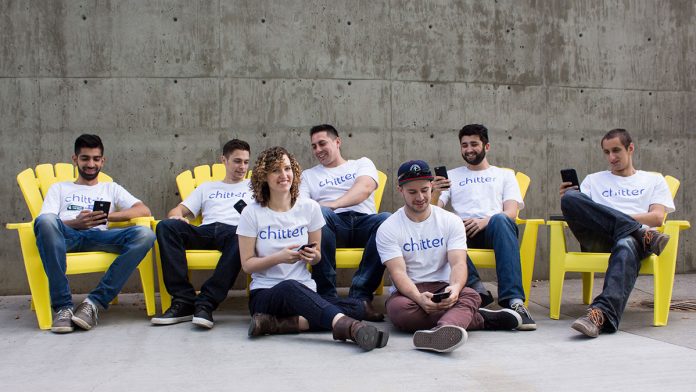
U of A students excited about Chitter

[EDMONTON] — A new board-based app, Chitter, has caught U of A by storm, with downloads at 200 times per day. The team of six U of A students and alumni started the project in May, releasing the app in the fall. On Chitter, students post to a board exclusive to the University of Alberta, with content ranging from photos to dirty jokes.

Users must register using their campus email, and may remain anonymous. Users can make comments, linked to Facebook rather than being anonymous as well. “[Chitter] is a way for shy people to connect with people who aren’t shy,” commented developer Mark Galloway.

With files from The Gateway

Queen’s students party too hard

[KINGSTON] — During a ‘homecoming’ street party earlier this month, Queen’s University students swarmed and rocked a car with the driver still inside, causing about $800 in damages. Incidents range from the vehicle’s spoiler being ripped off to a beer bottle being thrown at a police cruiser. Many tickets and arrests were made.

Students took it upon themselves to clean up the mess and have criticized the offenders on social media. They have also raised funds to cover the damage to the car. Principal Daniel Woolf, in an email, calls these incidents an “embarrassment” to both Queen’s University and the city of Kingston.

With files from The Journal

Alberta implements a tuition freeze

[ALBERTA] — Fulfilling their election promise, the NDP has frozen tuition fees for the next two years and promised an increase in funding in post-secondary institutions.

Navneet Khinda, the Students’ Union President at the University of Alberta, is happy with the move, commenting that she has “never seen such large changes come all at once” and is “delighted to see the results.” The freeze will last for the 2015–16 and 2016–17 school years.

With files from University of Alberta Students’ Union, and CTV News Calgary

McGill on unceded territory, is delivered notice of seizure

[MONTREAL] — Kahentinetha of the Bear Clan from the nearby Kahnawake Mohawk community sent a notice of seizure to McGill University, claiming there is “no evidence” that McGill had permission to build the university on the land.

One of the numerous allegations is the university was formed with a foreign royal charter rather than from the law of the land, and McGill is violating Kaia’nere:kowa (the law of Great Turtle Island)  “by staying on [their] land without [their] permission.” The notice also demands the school’s military programs are halted, and the university pays its debt $1.7 billion back to the Six Nations Trust Fund.

With files from The McGill Daily

My one and only failed Tinder date

0
Photo Credit: Lisa Dimyadi

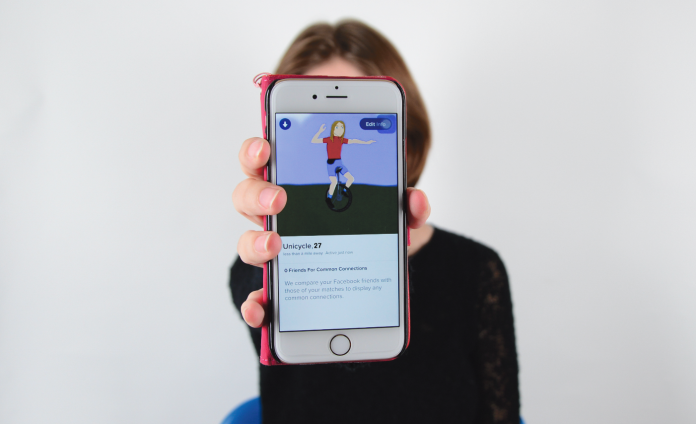
Earlier this summer I had my first and only Tinder experience. After swiping left and right for days, and having boring conversations with countless people, I eventually matched with him.  Age? 27. Name? We’ll call him “unicycle-guy” for this story. Appearance? His picture displayed him holding a pineapple next to his face with his blonde dreadlocks tied up to resemble the juicy fruit next to him. That’s basically all the information Tinder provides.

He messaged me and right away asked me out. Without even having one conversation with him, I agreed to meet up. His plan for our first date? Unicycling.

We planned to meet at the Seawall where I’d rollerblade and he’d unicycle. I was sitting on a bench waiting when I saw him ride up on his unicycle. He was wearing a spandex biking outfit, was quite tall, and still had the blonde dreadlocks. He stood out a bit.

The first date went well. We rode around and talked a bit about ourselves. He told me about his plans to either visit India or go to UBC in the fall. We smiled a lot, and he was a nice enough guy. After the short date, he rode me back to my volunteer job.

He then messaged me again the next day suggesting we go out to dinner. I was impressed by unicycle-guy’s planning skills; he seemed to be playing no games and just wanted to have a good time. The plan was for him to pick me up from work, so obviously everyone in the office soon found out about my Tinder date. While showing my coworkers his Facebook profile I noticed something odd written at the bottom — his stated age was incorrect.

He didn’t even have the guts to say he was 17, and that he had lied about his age on his profile.

I got in his car, and within five minutes of us driving to the restaurant I asked him what his actual age was. He responded with, “Oh, well, I’m turning 18.” He didn’t even have the guts to say he was 17, that he had literally just graduated high school, or that he had lied on his profile.

Now, I’m not opposed to people dating people of different ages (and I especially don’t like the stigma regarding older women dating younger men), but this guy was just too young for me. Two years isn’t a big difference in age when you are a bit older than I am, but when your date is still not considered an adult in the eyes of the law, it makes you reconsider things.

I felt bad because I knew this relationship wasn’t going to work out, but we still had plans to go to this semi-fancy restaurant. Once I knew his actual age, more of his immaturities began to surface. Though I still thought he was a real nice guy, I noticed he really didn’t have much of anything to say. At least the food was really good!

He drove me home, and somewhere out of my crazy singlehood mind I just wanted to be sure, so I kissed unicycle-guy.

I went in for just a peck, and got a lot more than I asked for. I jerked back, gave his blonde dreadlocks one last pat and went inside.

I knew this wasn’t for me and wanted to make that clear. I messaged him with the honest truth: that I thought he was a nice guy, but that I just didn’t think we’d work together. He then replied with a very long message explaining how that isn’t how I truly felt, and that kissing him meant I really did like him. He implied that I was a nervous person that was too scared to try new things, or get what I wanted. Needless to say, I never saw unicycle-guy again.

Though I sometimes wish I had sent one last message saying: FYI, in the post-high school world, it really isn’t cool to tell someone else how they feel.

Cyclists “Light Up the Night” for mental health

1
The ride began at Science World and took participants around the Stanley Park seawall. - Photos courtesy of Lauren Eadie

An SFU alumna’s initiative has spurred Vancouverites to get colourful to help benefit grey matter.

Lauren Eadie, a 2014 graduate, organized what she hopes to be the first of an annual event called Light Up the Night, where participants adorn their bicycles with glow sticks and ride through the night to raise awareness for mental illnesses.

Eadie, who was a kinesiology major, now works as a personal trainer and rehabilitator. She said the motivation for Light Up the Night came from earlier this year, when she was having patients referred to her by doctors who felt that physical training would be good for their mental health.

“It was the first time I had experienced people coming up with not physical disabilities, but mental illnesses,”explained Eadie.

“A lot of the time, doing these activities and exercises puts you in a meditative state of mind, a moving meditation that some people might need.”

The result was a 20 km bike ride held on Sept. 12 from Science World to Second Beach, a purposely flat route. Dozens of people showed up, ranging from riders in their early twenties to more than a few senior cyclists. Once they completed the ride, a glow yoga session was held at Second Beach.

Since Eadie was busy taking care of all the details of the night, she was not able to ride herself. She asked Dylan Martyn, a good friend she made in residence her first year at SFU, to lead the ride and maintain safety.

Martyn said it was easy for him to get involved when Eadie asked, and that his biking effort was partially for himself.

“I just care about talking about mental health to the Greater Vancouver area, because a lot of people — men in particular — have struggles talking about their mental issues,” he said.

“Our philosophy is that things like exercise can go a long way when it comes to dealing with your mental health issues.”

Eadie was main driving force behind the event, with support from friends, family, and sponsors. She added that she was going to participate in it even if only ten people she knew also did so. Now, she is looking towards capitalizing on the momentum of the event and using it moving forward.

“I hope to keep this event growing, and have it get bigger and bigger, and I hope that people talk about it,” she said. “I want to make this event something that everyone feels that they want to participate in.”

The next steps may include getting officially registered as a charity and growing this from one woman’s idea, taking the success of the inaugural event and using it to make next year even better.
In the meantime, Eadie will be doing her best to try and remove the stigma that surrounds people who suffer from mental health issues.

“These things are not forever,” she said. “It does not define a person.”

Board Gags

0
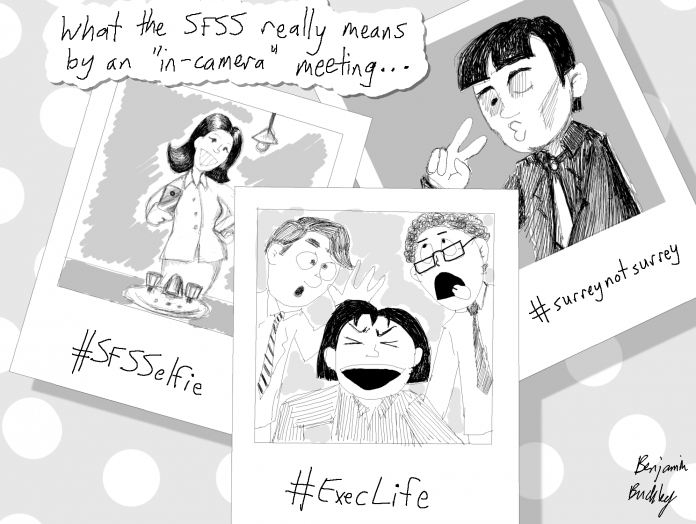
Photo Credit: Benjamin Buckley

Last week’s meeting featured a special “in-camera” session, meaning it was closed to the public.

Wolf pack fend off Clan in fourth quarter comeback

0
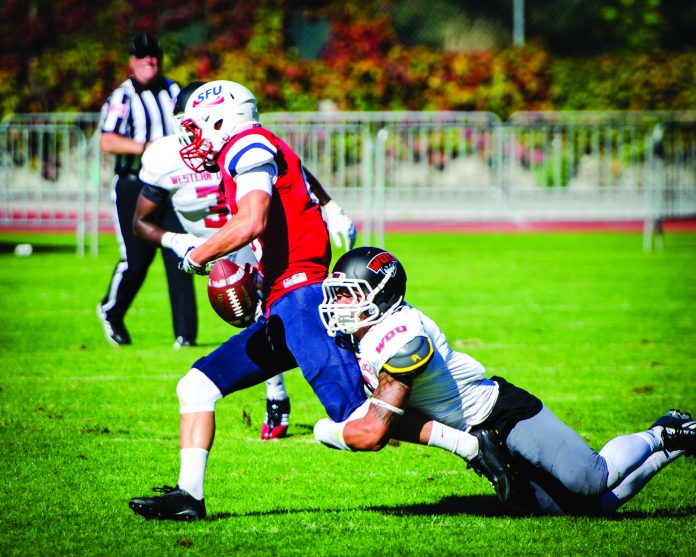
Hamed Yaghoubi Shahir / The Peak

SFU traveled down to Monmouth, Oregon to face GNAC conference rival Western Oregon University on September 12 in a non-conference game. The Clan opened up their season under new head coach Kelly Bates with a loss in which SFU seemed to outplay their opponents.

On the first drive of the game, senior quarterback Ryan Stanford was able to spread the ball around as he completed passes to running back Ante Milanovic-Litre and receivers Justin Buren and Earl Anderson. The effort helped move the chains on the first few drives; however, no points were scored and SFU was forced to punt.

The SFU defense, led by 2014 GNAC Defensive Player of the Year Jordan Herdman, looked sharp to start the game. Unfortunately, penalties hurt the defense as an interception by Jordan Herdman on second and 13 was cancelled due to a ‘roughing the passer’ call on defensive lineman Martin Duckhorn. 

Within the first minute of the second quarter, WOU was able to score on a fifty-three yard punt return by preseason All-American receiver Paul Revis. A missed extra point kept the score at 6–0 with 14:36 left to play in the first half.

Junior Josh Hayden helped the offense answer back on their first drive of the second quarter by catching a pass for forty yards and capping the drive off with a four yard rushing touchdown. Hayden would finish the game with 82 yards rushing on 20 carries and 82 yards receiving.

Quarterback Ryan Stanford was able to engineer a drive in the third quarter that featured a crucial 16 yard reception on third down by Buren and a stealthy touchdown pass to Hayden in the corner of the end zone to cap it off. The Wolves quickly answered back against the SFU defense, and within four plays WOU was in the end zone yet again.

Momentum was still in favor of the Clan, as Stanford connected with receiver Sam Swerhone for 39 yards in the final minutes of the third quarter. This positioned kicker Tiernan Docherty for a 48-yard field goal attempt that was blocked and returned by the Wolves to their own 40-yard line. The consequences of lacking position depth and experience seemed to finally catch up to the Clan as WOU scored two consecutive touchdowns in the fourth quarter to take the lead 25–14.

SFU rallied for a chance to bring the game within three points as Stanford connected with Buren for a 31-yard reception that helped position the offense for a first and ten on the Wolves own 16-yard line. Two plays later and the Wolves were celebrating a pick-six for a comfortable 17 point lead with 1:02 left in the game. Stanford finished the game with 333 passing yards while also throwing one touchdown and two interceptions.

“I loved the fight we had today, but we are not good enough yet to keep it going the entire game,” said Bates after his first game leading the Clan. “We competed hard and had our foot on their throats, but we couldn’t finish them off.” SFU finished the game leading in many statistical categories, but costly mistakes hurt them in the end.

The Clan will look to bounce back at home September 19, hosting the defending GNAC champion Azusa Pacific University Cougars.

Bullying all the way to the top

0
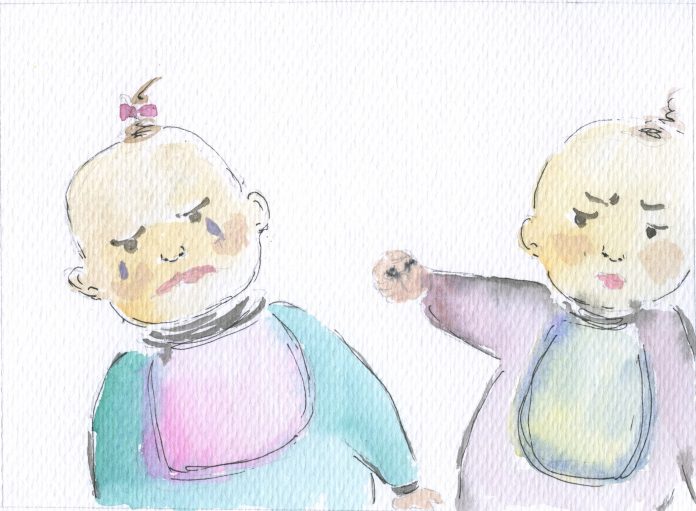
Bullying may be an evolutionary behaviour to gain advantage over peers. - Image by Momo Lin

A recent SFU study found that bullies have the lowest levels of depression, the highest levels of self-esteem, and the highest social status. 

The study counters what the researchers believe to be a commonly held view — that the source of bullies’ aggression is that they are victims themselves. Often their behaviour is theorized to stem from them being maladjusted, having low self-esteem, or coming from a dysfunctional family.

However, the study found that some bullies, whom researchers called “pure bullies,” were genetically inclined toward the behaviour, as it gained them advantages over their peers.

“We were testing the idea of evolutionary theory [and the] idea that bullies evolved to exhibit certain behaviours, because those behaviours increased their ability to survive and reproduce,” explained Jennifer Wong, associate professor in SFU’s School of Criminology.

Human aggression has been known to be instrumental to our ancient ancestors for survival — in order to defend their territory, protect their young, and to attract the most ideal mate.

The researchers posed the question: is bullying an evolutionary behaviour — and is it perhaps a contemporary version of a thousand year-old trend of aggression?

The pilot study surveyed a total of 135 students from a local Vancouver high school. More tests are needed to determine whether or not the results are consistent.

“[The research] is really there to help understand why bullying is occurring,” said Wong. Future plans to research bullying at SFU will include a larger and more diverse sample, hopefully across multiple schools, and possibly with an expanded questionnaire to look at the differences within the different types of bullying.

In an interview with Global News, Rob Frennette, from Bullying Canada, expressed concerns around how parents and victims of bullying were going to interpret the information, and worried about the possibility of bullies thinking that they cannot change because it is in their genetics.

Wong clarified that a bullying gene was not what the results of the study was suggesting, and neither that bullying was somehow okay because it may have evolutionary explanations. 

She added that if it was not possible to completely suppress the tendency to bully, perhaps those with bullying tendencies could be re-directed to something more productive and constructive.

Wong suggested that having more supervised competitive activities that will allow youth to “demonstrate their prowess and establish rank in a safer environment that doesn’t have victims.”

The more that can be understood about the causes for bullying, the better the researchers will be able to generate solutions and ways to intervene and prevent bullying from happening.