Home Blog Page 983

Passenger impresses with acoustic set

0
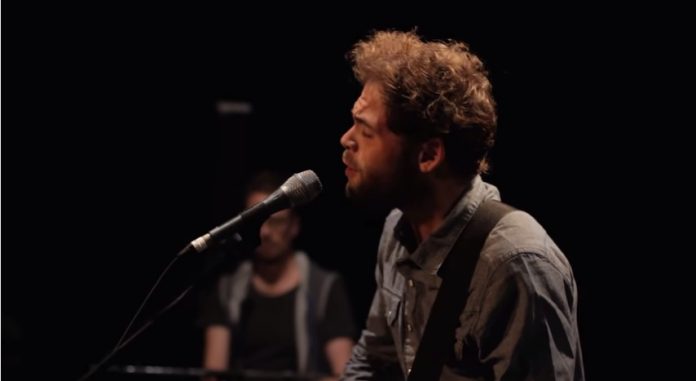
Photo courtesy of Vancity Buzz.

Plugged in acoustic music does not bring to mind the concerts that bring the house down, but, as proved in the Orpheum on September 9, it can be done. The performances of Passenger and opening act Gregory Alan Isakov were both masterfully done, and all the more impressive due to the fact that there was only one performer on stage with a plugged in acoustic guitar.

At the beginning of his set there were few people in the audience who were aware of Isakov, but by the end of his set there was a murmur throughout the crowd asking who had just performed. Isakov is by no means new to the music scene, having released five albums to date with another currently in the post-production phase.

This lack of audience knowledge seems to be more symptomatic of the indie-folk genre rather than being correlated to the volume of music that a single artist can produce. The commitment to the craft of songwriting and production is more important for these artists than commercial success, although, as Isakov pointed out, one of his songs was featured in a Christmas commercial for McDonald’s (“Big Black Car,” which was performed with virtually no distinction between the live and recorded versions).

He also managed to gain a significant amount of crowd support for admitting to never having eaten at a McDonald’s, studying organic farming, and donating all the proceeds from his commercial to supporting small organic farming initiatives.

The opportunity to meet him after the show also proved how grounded he is as a person. Isakov is easy to talk to and has a lot of love for his fans, and when asked what his favourite part about performing in Vancouver was, he responded with the venue, and how he felt lucky to be given the opportunity to perform in such a beautiful setting.   

Passenger’s set was equally wonderful, and the masterful weaving of storytelling throughout the set made the whole experience feel truly intimate. It also helped that the audience was there solely for the music. With the silence in the venue it felt like he was performing to just for you.

Passenger, however, ran into the same kind of widespread knowledge issues that befell Isakov, except that in Passenger’s case it was emphasized due the commercial success of “Let Her Go.” This, however, did not seem to phase Passenger as he had resigned himself early on in his career not to chase commercial success, but to make the music that he wanted to make.

So while there were many members of the audience who only knew “Let Her Go,” there was also the thrill of being in a room full of people who made the same musical discovery at the same time. If anyone in the room was not convinced about Passenger’s love of music, the stories that he told about the creation of some of his songs definitely changed their minds. The story that he told about the Australian man who he met in Denmark while busking was particularly moving and created a much deeper meaning to the song “Travelling Alone.”

Passenger and Gregory Alan Isakov are two artists who should not be missed live. The storytelling that they integrate into their sets, along with staying faithful to the indie-folk and singer-songwriter genres,  makes their performances intimate and highly nuanced.

Vincent River is an intense story of grief

0
Photo courtesy of Osimous Theatre.

Osimous Theatre, directed by Bob Frazer, creates theatre that plays with the traditional conventions of the form. For example, for their latest production, Vincent River, a different pair of actors takes the stage each night having never rehearsed together. The result, on the night I saw the show, was visceral and intense, raising the stakes and ensuring that the actors were completely absorbed in the story.

In the opening scene, Anita returns to her new apartment, unpacked boxes still scattered around, and leaves her door open to let Davey follow her inside. She has never met Davey, but has seen him outside her place and noticed him following her. You might think she’d try to avoid him, but that night she took pity on him with his black eye and told him to come inside.

What gradually surfaces as the night wears on about how the two characters are connected is full of suspense and tragedy. The two discussed the death of Anita’s son and Davey’s relationship to him, Anita’s past, and what all of it means.

At Little Mountain Gallery, which is small and reminiscent of an unfinished basement, the two actors filled the space with passionate performances and even managed to destroy a couple of the set pieces in their unbridled fits of anger.  

Through prying information out of each other, some strange sexual tension, and lots of gin, Anita and Davey came to terms with Vincent’s unnecessary death caused by bigotry and hate. As these two searched for answers and navigated their unique relationship, the power of this story permeated the audience and left the room speechless and teary eyed.

Vincent River is presented by Osimous Theatre at Little Mountain Gallery from September 9 to 20. For more information, visit osimous.com.


TSSU to vote on SFU’s package deal

1
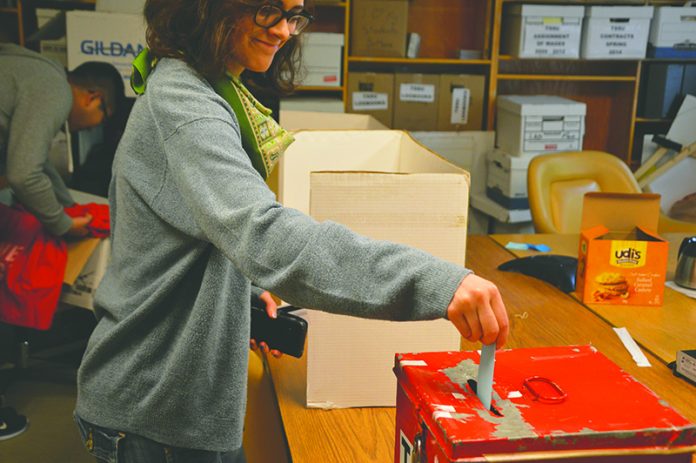
The union held an advanced poll on Friday. Results will be announced the night of the vote on Tuesday. - Photos by Jamal Dumas

After two days of bargaining and three days of mediation with experienced mediator Vince Ready, SFU and the Teaching Support Staff Union (TSSU) emerged still without a Collective Agreement.

According to the university, the union is withholding grades for approximately 10,000 students and over 800 students “may be denied the opportunity to graduate and for some students, job offers are being revoked.”

 Administration presented the unWEB-TSSU vote-Jamal Dumasion with a package deal, bundling together several proposals, all of which the TSSU could either accept or reject. The TSSU bargaining committee recommended refusal of the package to its members. At a Special General Meeting on Sept. 16, members debated the issue and the union authorized for members to vote on the final package. The vote is to take place on Tuesday, Sept. 22.

Upon reviewing the deal, the TSSU tabled it, determining that the package contained “a whole range of takeaways or cuts to the rights of our members,” they stated in a bargaining update.

The results of the package deal addressed many of the core issues that had been discussed during bargaining, but TSSU feels that the deal was lacking in certain respects, naming various “cuts” to union members’ rights.

Though monetary issues had not previously been brought to the bargaining table, SFU’s final package proposed wage increases in line with Public Sector Employers’ Council mandate, but also some decreases in certain members’ pay, which the TSSU claims will bring them below the mandate.

The TSSU stated that the packaged was particularly unfair to English Language and Culture/Interpretation and Translation Program (ELC/ITP) instructors. The union has requested access to SFU’s standard benefits package for continuing instructors and this has proven to be a sticking point between their bargaining committee and SFU administration.

SFU expressed in a labour update that “regrettably,” they were “unable to find common ground” on the issue of ELC/ITP benefits, “including the option of maintaining the current language,” and offering to set aside a fund for ELC/ITP instructors.

Another issue that the union has with the deal pertains to a particular proposal that would change the existing grievance process. Currently, issues that cannot be solved informally with the individuals involved are brought to the union and then there is the option of involving the department chair. The proposed change would require all grievances to go through Human Resources before contacting the chair.

TSSU spokesperson George Temple expressed that the majority of issues are settled informally, directly with the chairs. “SFU Administration’s proposal would undermine the autonomy of faculty and dismantle our informal problem solving process,” he continued, “TSSU is here to bargain a fair contract for our members, not collaborate with Human Resources’ surveillance of SFU Department Chairs.”

The TSSU did respond positively to the aspect of the deal regarding the Childcare Fund: “The only real improvement in the package is the fix to the Childcare Fund that would actually get money into the hands of children.”

SFU is offering to assign 50 per cent of all sessional appointments to prioritize graduate students, post-docs, or discretionary hires, with the other half of the appointments being open to external hires. The TSSU does not believe that the language SFU has proposed provides seniority to sessional instructors.

WEB-TSSU vote2-Jamal DumasOther topics of discussion at the table that made their way into the package include having work mail delivered to members on satellite campuses and not only Burnaby Campus, aswell as paying members who sit on health and safety committees, which is required by law in BC.

Despite being without a Collective Agreement with the TSSU for over a year, SFU cited other recent labour negotiations that have been resolved without any job action: “This lack of progress stands in stark contrast to the success SFU’s negotiating team has enjoyed recently when bargaining with our other employee groups.”

No future bargaining or mediation has been scheduled as of press time.

Fabulous Fringe: reviews from the Vancouver Fringe Festival

0
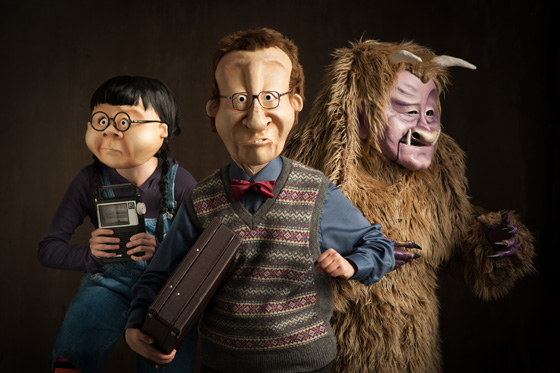
The Wonderheads' The Middle of Everywhere. Photo courtesy of Design Egg.

The Dudes of My Life

SFU alumna Christina Andreola has had many dudes come and go in her life. Most of them thanks to Tinder.

To start off her one-woman show and get the audience involved, she rapped her version of Montell Jordan’s classic “This is How We Do It,” retitled “This is How I Dude It.” Full of personal, sexual, and hilarious stories about her dating life, Andreola covered the highlights of first dates, second dates, awkward breakups, and her family’s involvement in it all.

As Andreola explained, she’s just looking for her dream man and hasn’t found him yet, but she admits that her mom has set the bar pretty high with her list of criteria. According to her mother, Andreola must find a man who is over six feet tall, has a full head of hair, a full wallet, and a dead mother — or, failing that, an ugly mother.

Her Italian family members love to get involved in her dating life, and although at 26 she’s beginning to feel the pressure to settle down, she explained that she’s enjoying the single life because it lets her do fun things, like watch Netflix alone.

While there was a good amount of movement around the stage, some sections felt a bit bland, such as Andreola’s monologue to the audience while she fiddled with the fake flowers on the table. Anyone who has used Tinder or been on a bad first date will relate to this show, and most everyone will find it entertaining.   

The Traveller

A traveller sees. A traveller knows to listen; a traveller knows to share. It matters less whether their stories are believed, but that they continue to exist through the words.

Follow the traveller in this beautiful and poetic monologue of one man’s tale. Witness the performance filled from the beginning to the end with the rhythmical and lonesome sounds of a guitar and a harmonica.

Daniel Morton, fourth year SFU student is the playwright, and Max Kashetsky is the unnamed traveller who gives an account of the journey into Central America, the story behind the reasons, and the answers that were found. Kashetsky, who changes harmonicas like a sniper changing bullets, is a one man show with a one man band.

The Traveller is presented at the Havana Theatre. The space is intimate, the stage shallow and wide. It is the perfect place for such a personal show. Right from the beginning the environment for the piece was set. The design of the space coloured the scenes beautifully and created an atmosphere that carries through for the rest of the performance.

The stage was laid out in three sections: a ladder with some blankets, a chair by a guitar stand, and a piece of wood laid down like a bench. Among them are a number of other objects and materials — some crows, a cage, a skull, a few candles, a book of some sort, and a polaroid camera.

At first these smaller objects seemed out of place, but it soon became clear that the objects fit, and that death and suffering is a part of everything. “Be careful what you look for, you just might find it,” the traveller warns.

The words speak the truth of what this play is about a journey, life, and death. This is a story that will take you on a voyage while bringing the remnants of the traveller’s to you. Amid the darkness and the flickering candlelight, the music begins and a tale is told by the fireside.

The Traveller is directed by Cecilia Davis and is at the Havana until September 20. For those who aren’t familiar with it, the theatre is a small space tucked behind and beneath the Havana Restaurant on Commercial Drive.

A Quiet Place

Have you ever wondered how it would feel to be confined in a place, where there was no outside light, no door, no way to escape, and no other stimulus except that of your own mind? What do you do when the weather is bad outside and you are forced to be content inside? It’s a simple premise, but has more depth than meets the eye.

Written by Brendan Gall, A Quiet Place is directed by SFU Theatre alumna Kaylin Metchie and stars Tosh Sutherland as Henry and Mark Manning as David.

The stage is set in the black room of the Cultch’s Culture Lab. A lenient space, for the most part, though it soon becomes an unforgiving one for the two entrapped characters. David is a big man who finds himself tied to a chair. At first glance he appears to be frightened, perhaps a bit angry, but otherwise normal. Henry, on the other hand, is something of an oddity. It is often hard to understand his motivations, but he is also very innocent at times.

The story is first presented in short bursts of movement, similar to tableaus. As the characters begin interacting, the perspective of the room shapes itself from their shifting proximity and a new space was created.

To say nothing of the play itself, the acting is believable in a way that it is almost uncomfortable. When the relationship of the characters changes, the actors take on the characters’ shifting states and their physicality continues to morph throughout the performance.

Even in witnessing the events unfold, there is no escape. There are moments of laughter; ridiculous moments; moments of tension and suspense; moments of jokes and games, dancing and singing; but mostly moments where it is hard to know what to feel anymore.

It was like watching someone spiral down a hole, seeing them descend, but being unable to prevent them from falling, being unable to save them from the despair that slowly settles in.

A Quiet Place might appear to be quiet on the surface, but it shows us that things are never truly quiet just notice what happens next time you try to fall asleep.

Mrs. Singh and Me

Sometimes showing how much you love someone requires drastic measures — like kidnapping their mother whom you’ve never met. This probably sounds like a crazy idea, but Raj (Munish Sharma) felt it was the only option he had left to convince Mrs. Singh (Nimet Kanji) to let him marry her daughter, Sonia. You see, Raj is Hindu and Sonia is Sikh, and Mrs. Singh can’t imagine her grandchildren growing up without the same Sikh traditions she had.

The play opens with the sounds of heavy breathing and bumping into the wall as if someone was moving a couch up a tricky flight of stairs. Then the stage lights come up and we see Raj stumble through the door with a woman in his arms, her arms and legs tied up and a gag in her mouth. Not the best first impression to give the woman you hope to be your future mother in law.

After sitting her down, taking the bag off her head and the gag out of her mouth — and explaining that she can’t scream — Raj offers Mrs. Singh some chai and cookies. “I’m not going to hurt you,” he says, “see, I brought chai and cookies; who does that?” As can be expected, Mrs. Singh isn’t having any of it; she slings threats and insults at Raj so fast his head spins. She begs him to explain why she’s in his dumpy apartment, and he tries to break the news to her that he’s in love with her daughter.

Eventually the two find some common ground and have a heart-to-heart, but not before a few hilarious exchanges that left audience members in stitches. Sharma and Kanji had great chemistry and timing, and I hope there is more of this type of show to come from the South Asian Arts Society.

The Middle of Everywhere

From Portland’s mask masters The Wonderheads comes their latest quirky show about an awkward academic, Winston (Emily Windler), and a little girl, Penny (Kate Braidwood). Winston and Penny find themselves waiting at the same bus stop one morning and awkwardly share a small bench. Under the bench is a portable radio that comes on suddenly, startling them.

With huge, full-head masks, the characters rely solely on gesture to tell their story. A voiceover (Louise Watson) described Winston in a way that reminded me of Will Ferrell in Stranger than Fiction: he’s a fastidious, obsessive character who uses his handkerchief to wipe down the bench and to throw trash in the bin.

Penny is a young girl who has decided to skip school and bring her beloved teddy bear, which her mother told her to throw away, on an adventure. With the magical radio they find, Winston and Penny travel to different places and times and learn a lot about themselves and each other along the way. They even meet a scary-looking creature named Angus (Andrew Phoenix) who becomes Penny’s new friend.

While the scenes were interesting and humorous, I found the lack of a strong narrative a bit distracting as we watched Winston and Penny randomly travel to different dimensions. I also found that the lengthy voiceover at the beginning and end that discussed ideas of our place in the universe didn’t quite fit with the rest of the show. But overall, the static masks that seem to convey dynamic expressions will be enough to hold your attention.

Titus: The Light and Delightful Comedy of Titus Andronicus

For any Shakespeare fan, this show is truly a delight. Shakespeare (Kazz Leskard) has decided that Titus Andronicus is too bloody and tragic for audiences, which is why it’s rarely staged; he decides to reinvent the play as a musical comedy. It doesn’t go quite as planned, however, and almost all of the characters still end up being violated or brutally murdered before the show is over.

This play is as self-aware as you can get. From Titus himself repeatedly coming onstage too early and being scolded by the Bard to characters repeatedly mentioning the token black character and his lack of lines, the jabs just keep coming. Lavinia, the main female in the play, is raped and has her tongue and hands brutally removed. In this new musical version, she still goes through this, but her subservience is questioned and somehow the events are turned into song and dance.

It doesn’t really sound like a good time, and perhaps it wouldn’t be if you’ve never seen Titus or don’t understand the references, but I thoroughly enjoyed this clever spin-off of one of Shakespeare’s much-maligned plays.  

For more information, visit vancouverfringe.com.

50 things to do at SFU

0

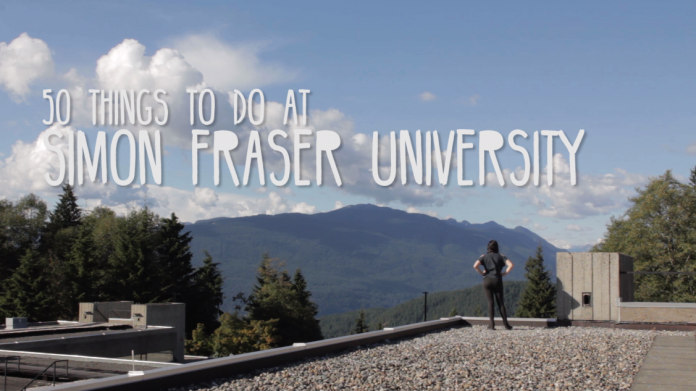
In celebration of Simon Fraser University turning 50 years old, here is a list of the top 50 must-dos while attending SFU.

Created by Paige Smith & Eric Smith

The Peak is Hiring for The Tartan Magazine!

0

Are you looking to be a part of SFU’s new semesterly student-run magazine focused on long-form journalism and creative writing?

We’re accepting applications  for an Associate Editor in charge of non-fiction content, an Associate Editor in charge of fiction content, and a designer! Links to the job descriptions are posted below. To apply for any position please send in a resume, a cover letter, and a portfolio of any editing, writing and/or design work which proves your skills to [email protected].

Associate Fiction Editor

Associate Non-Fiction Editor

Designer

Applications will close at 1pm on October 5, 2015 for all  positions.

For more information on The Tartan check out our section on The Peak‘s website or send an e-mail to [email protected]!

Peak Publications Society Board of Directors meeting

0

Peak Publications Society Board of Directors Meeting Agenda

September 17, 2015

The Peak offices

Chair: Max Hill

In Attendance:

  • Maia Odegaard (Board Secretary, non-voting)
  • Max Hill (Editor in Chief)
  • Tamara Connor (Collective Rep)
  • Melissa Roach (Collective Rep)
  • MuhammadQasim Dewji (Employee Rep)

Regrets:

  • Natalie Serafini (At-large Rep)
  • Call to Order
  • Approval of Agenda
  • Approval of past minutes from August 20, 2015
  • Financial update

Maia will present the finances from the spring semester and a budget proposal for the fall.

  • Approval of The Tartan for a second issue

Whereas the success of the pilot of The Tartan Magazine outlined in appendix A demonstrates a considerable interest in a subsidiary, sister publication under the control of the Peak Publications Society for readers, SFU community members and contributors, Whereas a second issue will serve as further experimentation and be followed by a hiatus in which its long-term future can be suitably investigated, Be it resolved to approve a second issue of  “The Peak Publications Society presents: The Tartan,” as detailed in appendix A. Be it resolved to reallocate $2,285 from short-term investments to the second issue budget.

  • Adjournment

Peak Publications Society Board of Directors Meeting Minutes

August 20, 2015 — Havana, Vancouver

In Attendance:

  • Maia Odegaard (Board Secretary, non-voting)
  • Max Hill (Editor in Chief)
  • Melissa Roach (Collective Rep)
  • Katherine Gillard (Employee Rep)
  • Natalie Serafini (At-large Rep)

Regrets:

  • Tamara Connor (Collective Rep)
  • Call to Order 6:03 p.m.
  • Approval of agenda

Add election of employee rep to replace Katherine, who is giving her two weeks notice, as item 8

Katherine / Natalie

All in favour

  •  Approval of past minutes from July 23, 2015
    Melissa / Katherine
    All in favour
  • Investment update

Maia presented the Society’s investment portfolio to date, noting that overall our investments are doing quite well.
No vote.

  • Financial update
    Maia reported that rent for the Peak offices has gone up from previous years and noted that he budget will be adjusted to reflect this increase going forward. The amount spent on wages by the end of July was relatively low as the new contributor invoicing system has allowed for only those contributors who want a pay cheque to be paid, cutting the number of cheques that end up stale dated.
    No vote
  • Peak newsstands
    Max and Maia summarized their meeting with Todd Gattinger or SFU Facilities Services regarding the current state of the newsstands on the Burnaby campus. They asked that we consider replacing the stands in honour of the upcoming 50th anniversary celebrations and the efforts to beautify the campus. However, we have an agreement with CJSF and the Tartan magazine, who will both be using other portions of our stands in the fall. As a compromise, Maia will reply to Todd and explain the agreements and offer to have a group do some cleaning of the stands, and request that facilities aid us in removing badly damaged stands/repositioning the existing stands to maximize placement of those in good condition.

No vote.

  • ACP conference in Austin, Texas
    BIRT the fall conference budget will be $11,000 to accommodate sending 7 individuals to the upcoming Associated Collegiate Press conference in Austin, Texas from October 28 to November 1, 2015.

Katherine / Natalie
All in favour

  •  Katherine Gillard’s resignation

Katherine is leaving the position of Promotions Coordinator effective September 3, and will also be leaving the position of Employee Representative on the Board. Maia will post the Promo position on the-peak.ca on Monday, August 24, with a deadline to apply of Sept. 2, in hopes that Katherine may be able to interview potential candidates with Maia and Max. Maia will meet with the only remaining employee, MuhammadQasim and discuss the board position available to him.
No vote.

  • Replacing broken chairs
    BIRT $300 will be used to purchase a minimum of four new office chairs and all those that are unsightly/broken will be disposed of.
    Katherine / Natalie

All in favour

  • Adjournment: 7:11 p.m.

Approved by_______________________  &  ___________________________ on _________________.

Appendix A: The Tartan Magazine Proposal for Second Issue

             September 17, 2015

Evaluation

1.1 Success of the pilot issue of The Tartan

The first issue of The Tartan enjoyed great success. From the very beginning, there was a lot of interest in both working for The Tartan, as well as contributing to it. There were 17 people who applied for the four editorial positions and 26 students had their work (writing, illustrations and photos) published in the magazine. There were also many additional contributors whose work either ended up not fitting into the pilot issue or were not completed in time. Many pieces, especially in the nonfiction section, are still being worked on for their inclusion in a future issue.

Two weeks following distribution, there are barely any of the 1,000 copies of The Tartan left on the stands. The Alumni Association was so impressed with the magazine that they requested extra copies to hand out to their members.

There were many compliments on the look of The Tartan during the Week of Welcome and at the Activity Fair for Orientation and it contributed to a very successful engagement of new students towards being involved in both the magazine as well as The Peak newspaper.

The online version of the magazine has also been a success in capturing the interest of students and other community members, especially for the Top 50 article which is one of the most viewed and liked articles published on The Peak’s Facebook page this semester. In addition, many students have expressed an interest in future issues both in terms of reading and becoming a contributor. The Tartan has also been solicited by groups expressing interest in being featured in the magazine. For example, the Univer City Public Art Society has contacted The Tartan in hopes of having an article about them published in the Spring edition.

1.2 Proposed vs. Actual Budget of Pilot Issue

The pilot issue of The Tartan cost $1,927.20 more than the original amount budgeted. This discrepancy is due largely to a lack of advertising, as well as additional costs to the printing fee due to previously unaccounted for taxes. With a successful issue now available to show advertisers and the fact that this issue will be produced in the fall instead of the summer, The Tartan should be able to receive our original projection of $2,000 worth of advertising. With more knowledge gained through the process of creating the pilot issue, adjustments can be made to ensure printing is done for under $7,000.

Proposed Pilot Budget

REVENUE
Features Editor Wages (summer + fall semesters) 7,215.00
Advertising 2,000.00
Other 0.00
TOTAL REVENUE 9,215.00
EXPENSES
Printing 7,000.00
Miscellaneous 0.00
Staff wages 4,400.00
Managing Editor 1,600.00
Associate Editor, non-fiction 800.00
Associate Editor, fiction 800.00
Designer 1,200.00
Contributor wages 700.00
Writers 500.00
Photographers/Illustrators 200.00
TOTAL EXPENSES 12,100.00
DIFFERENCE 2,885.00

Actual Pilot Budget

REVENUE
Features Editor Wages (fall semester) 3,900.00
Features Editor Wages (summer semester) 3,315.00
Advertising 80.00
Other 0.00
TOTAL REVENUE 7,295.00
EXPENSES
Printing 7,627.20
Miscellaneous 0.00
Staff wages 4,400.00
Managing Editor 1,600.00
Associate Editor, non-fiction 800.00
Associate Editor, fiction 800.00
Design Editor 1,200.00
Contributor wages 80.00
Writers 50.00
Photographers/Illustrators 30.00
TOTAL EXPENSES 12,107.20
DIFFERENCE 4,812.20

The Tartan renewal

2.1  Second Issue of The Tartan

It is proposed that the Peak Publications Society allow for the continuation of The Tartan in order to release an issue for the Spring 2016 semester. The focus will continue to be on long-form journalism, fiction writing and other content that does not necessarily fit into a weekly newspaper. The 50th Anniversary theme will continue, but the articles will not be exclusively on this theme. The content will once again depend on the writers’ interests. A number of articles that did not make it into the pilot issue are presently being researched and worked on for inclusion in this second issue.

2.2 Staff

Due to the time constraints of producing a second issue by the beginning of January, the proposal is that those staff members who were hired for the pilot issue (Managing Editor, Non-Fiction Editor, Fiction Editor, Designer) be given the opportunity to continue for one more semester.

If any of the previous editors and/or designer do not want to return to their positions or are unable to continue, their jobs will need to be posted and hiring will take place.

The hiring system will be the same as for the pilot issue. New applicants will be asked to send in a Resume, a cover letter explaining why they would like to be in the position and why they are the right fit for the job, and a portfolio of any editing, writing and design work which proves their skills for the particular position they are applying for.

2.3 Format and Distribution

The second issue of The Tartan will most likely continue to be 1,000 copies of a full colour 64-page magazine however for the 2nd issue, the binding may change to a saddle stitched spine. This could help make it easier to read near the centre spine and may also result in cost savings, as well as flexibility in the amount of copies and number of pages that can be printed. Distribution will be via Peak newsstands around the Burnaby/Surrey/Downtown campuses, as well as by request.

2.4 Costs

The printing cost of the magazine will be kept to approximately $7,000 no matter what particular style and length is ultimately decided on. The wages will remain the same for the staff.

2.5 Subsequent issues of The Tartan

It is proposed that after the release of the Spring 2016 issue of The Tartan, there be a one semester hiatus during the Spring semester as there are no plans for a Summer issue. During this time, a comprehensive plan will be developed to ensure the successful continuation of The Tartan, as a semesterly magazine, into the future. During this time, successes and failures of the first two issues will be explored, and in conjunction with a review of the Peak Publications Societies financial information, a plan will be established for how the project could work and fit into the budget in the long term.

Timeline

3.1 September 17, 2015: Commitment to a second issue of The Tartan magazine

On September 17, 2015, it is suggested that the Board of Directors agree to finance the second issue of The Tartan magazine and nominate a board representative for the hiring committee.

3.2 September 18, 2015: Reinstate previous staff and run ads to hire for open positions

Upon approval, staff members from the pilot issue should be contacted and, if they so choose, reinstated for the second issue. They will begin work immediately. If necessary, a call for applications for any position that is not re-filled will be made both online and in the newspaper for the next two weeks. The [email protected] email account should be used to receive applications.  

3.3 September 28, 2015: Welcome meeting

Following a week of preparation, the returning members of the editorial team will hold a welcome meeting for all interested contributors explaining the different types of content that will be accepted and making an initial call for submission pitches. They will be informed of this meeting through ads in The Peak both in print, online and through social media. This meeting, along with messages sent out through various other means, will also serve as a chance to collect emails for a mailing list of potential contributors. Potential contributors will have 2 weeks to pick up non-fiction pieces pitched at the meeting and subsequently online and five weeks to send in fiction and poetry submissions.

3.4 October 5, 2015: Hiring process begins

The interview process will begin for all applicants of any positions that were posted.

3.5 October 8, 2015: Replacement editors announced, second meeting

With the full editorial team decided, a second meeting will be held which will reiterate and expand on the introductory meeting. The collective will once again be informed of this meeting through ads in The Peak both in print, online and through social media, as well as direct emails to those who showed an interest during Welcome Week. This meeting, along with messages sent out through various other means, will also serve as a chance to collect emails for the mailing list of potential contributors.

3.6 October 12, 2015: Deadline for pitches, general issue planning meeting

After two weeks, the staff will have had time to sift through all the pitches and compile a list of acceptable potential writing. At a Thursday meeting, in which all potential Tartan collective members will be invited, all the pitches will be discussed and a basic outline of what will be in the magazine will be determined and writers to each piece will be confirmed. At this point, the staff will begin working with writers and set-up weekly to biweekly in-person meetups with contributors working on articles to keep track of the progress of all pieces. The designer will begin coming up with the basic look of the magazine and be communicating with the other editors on what sort of design elements will be required for the different pieces at this time. Two weeks will be allotted for editing and the following two weeks will be allotted for design work with a final deadline of  of November 9 for all content, and the beginning of production.

3.7 November 9, 2015: Deadline for all content, production begins

After a month of working closely with writers on their submissions, all content will officially be done and the major editing and design process will begin. After all content has been sent in, the editorial team will work together and separately on production work. The designer and managing editor will work on layout and the associate editors will work with the managing editor to perform copy editing. All production work done together will hopefully be done at The Peak offices at times when the staff is available, except for Fridays as to not interfere with the newspaper production.

3.8 November 30, 2015: Production ends, The Tartan ready for print

On December 9, 2015 the editorial team and designer will finish production the 2nd issue of The Tartan.

3.9 December 7, 2015: Approval from The Peak’s EIC and send off to printers

A week after production has been completed, the Managing Editor will take a last look over the magazine with The Peak’s EIC, and then send it to the printers.

3.10 January 4, 2016: Distribution of 2nd issue to all SFU campuses

The Managing Editor will coordinate the distribution of the magazine to stands at all SFU campuses.

Budget Items

4.1 Printing Expenses

After collecting numerous quotes for different styles of publishing for the pilot issue, there is confidence that the printing can be done for approximately $7,000.

4.2 Staff Expenses

The Managing Editor should receive $1600 per/issue (equivalent to $200 a week for 8 weeks), the Associate Editors should receive $800 per/issue and the Designer should receive $1200. In total this would be approximately a $4400 endeavor.

4.3 Contributor Pay

The Tartan will use The Peak’s current contributor pay scale, which requires three articles to be published in a Peak Publications Society publication before a writer can receive payment. For writers meeting this requirement, a long form nonfiction piece (2000-5000 words) will be worth $50-75. A long fiction piece (2000-5000 words) will also be worth $50-75. Short fiction and long poems (500-1500 words) will be worth $30 and short poems will be paid $10.

4.4 Savings

The elimination of the Features Editor position should save the Peak Publications Society $3900 for the fall semester and $3315 for the summer semester, with additional funds being saved due to shorter issues of The Peak newspaper.

4.5 Advertising Revenue

While the pilot issue of The Tartan did not feature very much advertising, because of its success and a hard copy available to show businesses, we hope to secure $2000 worth of advertising space in the 2nd issue with rates based on The Peak’s current model, with changes made based on the alternate size and scale of the magazine.  

4.6 Net cost

Based on the costs and savings projected above, this project should cost around $2,285.

4.7 Proposed Budget


REVENUE
Features Editor Wages (spring 2016 semester) 3,900.00
Features Editor Wages (summer 2016 semester) 3,315.00
Advertising 2,000.00
Other 0.00
TOTAL REVENUE 9,215.00
EXPENSES
Printing 7,000.00
Miscellaneous 0.00
Staff wages 4,400.00
Managing Editor 1,600.00
Associate Editor, non-fiction 800.00
Associate Editor, fiction 800.00
Design Editor 1,200.00
Contributor wages 100.00
Writers 50.00
Photographers/Illustrators 50.00
TOTAL EXPENSES 11,500.00
DIFFERENCE 2,285.00


Sango Niang joins professional basketball team Estudiantes Concordia

1
Hamed Yaghoubi Shahir /The Peak

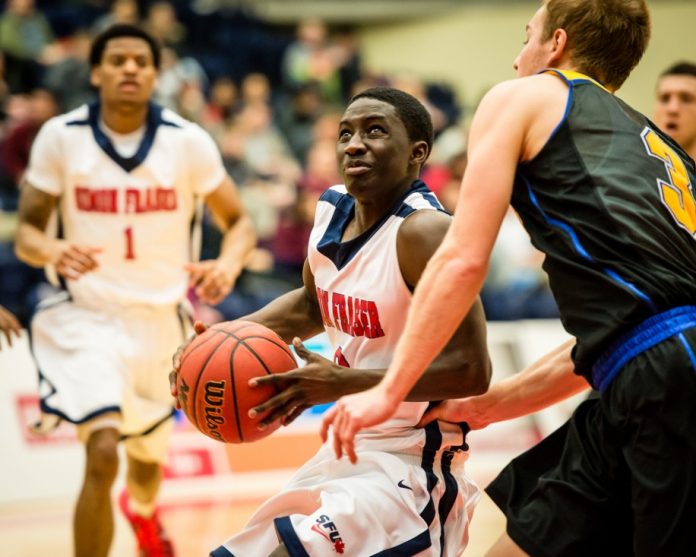
Former SFU men’s basketball guard Sango Niang has signed a professional contract with the Estudiantes Concordia of the Liga Nacional de Básquet (National Basketball League), the top Argentinian basketball league.

“It feels great, it’s everything I’ve been playing for, and I feel like all the hard work I put in was worth it,” said Niang over the phone. “It was a nerve-wracking experience, it was my first time being a free agent, which means you miss school. I got the text message at 3 a.m. telling me I got the offer, and from there it just all went uphill.”

Niang led the Great Northwest Conference (GNAC) in points scored last season with 587 points in 26 games for an average of 22.6 points per game. He also led the conference in assists, and notching the eighth-most assists in the entire NCAA Division II.

He spent two years at SFU, having transferred from Chaffey Community College in Rancho Cucamonga, CA.

Born in Paris, France, Niang was a late bloomer, having only started playing the sport in his freshman year in high school. Missing the cut in his sophomore year, Niang made the team his junior and senior years, but didn’t get much playing time. At Chaffey, he was initially told to redshirt; however, after a 27 point pre-season game, he was made a starting point guard.

Since then, Niang has proven himself as a top-tier player at the collegiate level, and has held his own against NBA stars in the Drew League.

Now, Niang will take his talents to Concordia, Argentina, a city of nearly 160,000 people on the Argentina-Uruguay border. Last year, the Estudiantes made the playoffs, but were eliminated before the finals. He is expected to be the team’s starting point guard, despite his youth and height.

“My role is to be the starting point guard, play 30-plus minutes, and they said I have a huge responsibility to get wins,” he said. “They said it’s a gamble [to take me] because I’m young, 21 years old, and our team’s average age is 29, our team’s average height is 6’7 [Niang is 6’0] all they said is that they are putting a lot of faith in me and they trust that I can get the program some wins.”

The team plays its first game Wednesday, September 23. Niang will be joining a team already midway through the preseason, leaving home to join them tomorrow.

“Training camp has already started,” he explained.

“Honestly, my goal is to improve from last year, get more wins, and put my foot in the door for professional basketball, and hopefully everything I did in college can translate and I will make a big impact on this team.”

Build SFU: Your questions answered

3
Image by Lisa Dimyadi & Phoebe Lim

The Simon Fraser Student Society’s (SFSS) Build SFU initiative has been a long time in the making. This is the largest student-led project in SFU history. The project, which involves the construction of a Student Union Building and Stadium on Burnaby Campus, has been halted for months, since the society did not garner enough undergraduate student votes to pursue the loan it will require before beginning construction.

The project has been embroiled in controversy, as several students have come forward in opposition, not just to the general concept of the project, but to how the process has unfolded over the years. They have even organized into an opposition campaign, No to Build SFU.

At the September 22 SFSS Annual General Meeting, the student society will once again put the question to its members. Though construction was unable to begin on schedule this summer, the SFSS has been at work making amendments to the motions and doing considerable outreach to educate students about Build SFU.

Perhaps the most noteworthy change in how the questions will be put to students this time around — the SUB and Stadium projects have been split into two different motions. This move was in response to student feedback that expressed a desire for the projects to be considered and voted upon separately.

What is the SUB?

The SUB is meant to be a hub of student activity, providing a space for students to call their own and building a greater sense of community for the student body.

The building is planned to be located between the Academic Quadrangle and Maggie Benston Centre, right in the heart of Burnaby Campus. A total of 10,015 square metres, the building will be home to new dining options, study space, lounge space, and more.

Why do we need a SUB?

An SFSS survey shows that 49 per cent of students spend more than six hours per day on Burnaby Campus outside of class. Most of that time is spent on the east side of campus.

“This didn’t come out of thin air,” said Larissa Chen, SFSS Health Sciences Representative.

The SFU Undergraduate Student Survey results from 2008 to 2014 reveal that students are primarily concerned with a need for improved student life and improved facilities. The SUB is the society’s answer to meeting both those needs at once. “There is always a constant battle for space,” expressed SFSS President Enoch Weng.

Business Representative Hangue Kim added that current students feel there is “no reason to stay on campus.”

What’s in the SUB?

Plans for space programming in the SUB include plenty of space for a range of student activities, including a nap room, a community kitchen, a dance room, rehearsal rooms, a rooftop garden, and a multipurpose room that could double as a rental venue for events.

According to the board, the finer details of what will actually be in the SUB are flexible and will be determined with further student consultation.

There is a considerable focus on ‘wellness’ in the SUB design, with ample natural lighting. The modern building design features open spaces, minimizes energy use, and pays particular attention to accessibility needs.

What is the Stadium?

The second prong to the Build SFU initiative, the Stadium, is to be built at Terry Fox Field. Seating 2500, the development intends to revamp our athletics facilities and provide a better viewing experience for SFU students and visitors to athletic events.

The hope is that this new Stadium will be a draw for other events. Build SFU explained that “Any revenues from ticket sales or sponsorship would be put back into maintaining the facility or reducing the construction cost for students.”

What will it cost?

The overall cost of these two projects is $65 million. The SUB is budgeted for $55 million, and the Stadium makes up the remaining $10 million.

In order to foot the bill, the SFSS needs to secure loans (or debentures) of approximately $41 million for the SUB and $10 million for the stadium. The loans are contingent on students’ approval and their vote to ensure the continuance of the Build SFU levy until the loans are repaid in full.

Other sources of funding include the sale of part of the SFSS’s space in MBC, as well as a portion of the society’s Space Expansion Fund. The board has also expressed its intent to seek external funding.

Build SFU has spent $4.7 million to date, less than originally expected. “Every phase of the project has come under budget,” said Chen.

The Levy System

Payments on the loan would be made over 25 to 30 years, funded by the student levy which is automatically tacked on to undergraduate student fees.

The levy works on a two-tiered system, charging part-time students half of the full-time fee. Currently, the fee is $20 for full-time students and $10 for students enrolled in three units or fewer. This will increase on a yearly basis, by $10 and $5 respectively until 2022, at which time it will be adjusted only to account for inflation.

The society has put a Build SFU bursary in place to relieve the financial burden of the levy on students, which they have doubled since the SGM in the spring.

The SFSS is not opposed to changing the levy based on how many credits a student is taking and which campus is their home base. Starting now, a student taking two full-time semesters per year over a four year degree would pay a total of $320 towards the project. A student would pay $450 over a five-year degree at the same rate.

The levy cannot be changed without going to referendum. The society assures that it will not default on the loan, since SFU regulates enrolment to hit certain targets.

Does SFU have a stake in the SUB?

SFU is leasing the structure to the SFSS for a total of 70 years. The lifespan of the original structure is 50 years, so around the 50-year mark, the building will need to undergo renovations.

The university has committed to a $12.5 million contribution to the building for operating costs. The board has also expressed its intent to seek external funding. “Students are the primary stakeholders,” asserted Weng.

Why now?

The last two attempts by the SFSS to be approved to pursue the loan were unsuccessful for different reasons. Last year’s AGM garnered a 93 per cent approval rate for the combined project, but due to limited space in the SFU Theatre, several voting members were left waiting outside, unable to exercise their democratic right.

In light of that outcome, the SFSS hosted a Special General Meeting (SGM) in the Spring 2015 semester to put the question to students once again. The meeting was held in the West Gym, the largest indoor venue on campus, to accommodate more of the society’s 26,000 plus members. Out of the 630 students in attendance, only 65 percent voted in favour of the debenture, falling short of the 75 per cent needed to go ahead with it.

What will happen at the AGM?

The SFSS encourages students to “arrive informed” to this year’s AGM, taking place on Sept. 22 in the West Gym. Doors will open at 2 p.m. and the meeting is scheduled to begin at 3 p.m. The SFSS explained that a vote by special resolution at an AGM is more preferable than an online vote, as it allows for students to voice their opinions and ask questions.

Students will vote on three different points:

  • The approval of a debenture for the SUB
  • The approval of a debenture for the Stadium
  • A bylaw addition that will assure the continuation of the Build SFU levy

If students vote in favour of the special resolutions that would allow the SFSS to pursue the debenture, construction will begin in Spring 2016 and last until Spring 2018.

If the special resolutions fail to pass, the SFSS plans to begin the process of revoking the levy and repaying $1.1 million to SFU that was a prepayment made for the sale of MBC.

The Opposition

No to Build SFU is a movement created by students that professes to be “dedicated to exposing Build SFU’s downsides.” Some of the chief concerns among students are the exclusion of students who are based at satellite campuses, the inaccessibility of the voting process, and a lack of accountability when it comes to responding to negative reactions to the project.

Colin Woodbury and Melissa Lee of No to Build SFU commented on the changes put into effect since the SGM, saying that the division of the SUB and Stadium projects was one of their original ideals.

“What I said at the SGM to the crowd was that [. . .] we can never get to the point of reform unless we said ‘No’ that day,” expressed Woodbury. Lee added that although some alterations have been made, “it’s reform, but not complete reform.”

Satellite Representation

One major issue, voiced time and time again, is that students who primarily attend class on satellite campuses will not have an equal use of the building, but will have to pay an equal share.

The SFSS is looking into restructuring the levy to reflect this disparity. One of the problems with this, recognized by both sides, is that there is no current system in place to determine who is a satellite student and who is not.

The board is also in the midst of looking into space expansion on satellite campuses.

Another concern is that those same students are less likely to be able to participate in the decision-making around the project, as all the voting up to now has taken place in-person on Burnaby Campus.

Voter Accessibility

Lee remarked that the SFSS was capable and is capable of conducting an online vote as opposed to an AGM or SGM vote. However they have chosen not to do so, to allow for dialogue and mitigate costs. The society estimates that the cost of holding an online referendum vote over several days would be approximately $10,000.

“You can’t have dialogue with 600 students,” said Lee.

Of the decision to hold the vote at an AGM, Lee remarked, “In my mind, it’s working towards their own goals; they know who’s going to show up that day. It’s the Burnaby students and the athletes who are all living here.”

Leading up to the SGM, No to Build SFU brought forward a petition to add two referendum questions to the agenda, to remove the Build SFU levy and to add a bylaw requiring a minimum of 10 per cent voter turnout and a 75 per cent majority vote for projects valued over $5,000,000. Having only 628 of the 1,000 signatures needed to force the questions, the board rejected both proposals.

SGM Reaction

Lee expressed dissatisfaction with Build SFU’s response to the failed SGM vote. Said Lee “Their idea was, ‘let’s just keep on going.’ I’m not sure if that was the best business plan.” She also noted that even if the special resolutions are not passed, it would not remove the existing levy. She suggested that maybe if they had waited long enough, they would be able to go ahead with the loan without the membership passing it by vote.

Lee went on to call for more reform prior to the vote: “If we can alter the levy structure, why not do it now rather than say, pass the loan and then we’ll do it?”

Power to the Students

Despite heavy campaigning on both sides, at the end of the day, everyone seems to agree that the most important thing is that the knowledge and power is in the hands of students to make the decision that is best for them.

Said Chen, “Just because we take the ‘Yes’ stance doesn’t mean we’re trying to force students to vote ‘Yes.’ We’re here for the students, not for our own agenda, so we want to make sure that students are well aware of all the facts.”

Timeline

1988/89: More space please

SFU students express a need for student space on campus via survey. Maggie Benston Centre (MBC), constructed in 1973, was originally meant to meet this need. It was deemed that student feedback reflected that MBC was insufficient in this respect.

2006: Exploration of SUB option

The SFSS board of directors initially look into the possibility of constructing a SUB.

2011: Working group identifies goals

A working group is formed to reassess the feasibility of the project. Three objectives came out of that process: develop a SUB, develop a new stadium, and develop a sense of community for SFU students.

2012: SFSS meets with SFU

The board begins to meet with SFU administration to work out the cost of the project as well as explore converting the Lorne Davies Complex into a SUB and stadium.

Spring 2012: Student consultation & project approval

The SFSS conducts consultations in the “Think Tank,” located adjacent to the society’s office in MBC. The combined Build SFU SUB and Stadium projects are passed by referendum in March, 2012.

Spring 2013: Architect selection and student consultation

The Think Tank reopens as the official headquarters for Build SFU. They meet with various potential architects, and solicit student feedback. In April, Perkins+Will is selected as the official architectural firm for the Build SFU projects.

June/July 2013:  Investigation of SUB sites

Possible sites for the SUB are looked into and Student Advisory Committee (SAC) holds its first meeting to provide feedback.

September 2013: Build SFU begins outreach

Consultation begins at all 3 SFU campuses to inform students and receive feedback on SUB location.

October 2013: Students respond to survey about SUB location

Over 4000 students answer a survey regarding where the SUB is to be located and what would be inside the new building.

December 2013: SUB Location is approved

It is decided that the “crossroads” area between the AQ and MBC will be the new SUB location.

dec. architects submitted report on space program

March 2014: SUB designs unveiled

Three early designs for the SUB are released to the public.

Spring/Summer 2014: Student consultation

Three student consulting workshops help inform goals around sustainability and accessibility. In addition students contribute ideas for art and interior design for SUB.

October 2014: AGM vote delayed

Attendance at SFSS AGM is over venue capacity meaning many students are unable to vote. Vote is postponed for a special general meeting later.

January 2015: SGM Vote Fails

At SGM students fall short of 75 per cent needed to obtain a loan for the project by voting 65 per cent in support.

March 2015: SUB design is completed

Feb-April 2015: Survey looks at students concerns

1,879 students respond to a survey, which identifies cost and sustainability as the primary concerns for students.

Summer 2015: Project Division

The SUB and Stadium projects are split into two separate entities.

September 2015: Students to vote on questions again at AGM

VIFF program highlights

0
Photo courtesy of Mongrel Media.

Film fans rejoice. The 34th annual Vancouver International Film Festival has unveiled their full program and will present over 250 films, via 550 public screenings, from 70 countries across the globe. Of the 238 feature films in that count, 32 will be world premieres, 33 North American premieres and 53 Canadian premieres. The Festival will be held from September 24 to October 9, during which time the spirit of film is sure to pulse through the city.

The opening Gala, scheduled for September 24, will showcase John Crowley’s Brooklyn, a romantic tale of immigration and longing, hinged on the life of Ellis (Saoirse Ronan), an Irish girl summoned across the sea by the American Dream. Bringing Nick Hornby’s adaptation of Colm Toíbín’s novel into a new light, Crowley’s drama will kick start the 16-day festival at the Centre For the Performing Arts with a screening on its remarkable 50-foot screen.

And that’s just the beginning.

Arabian Nights is described by VIFF as “the year’s most ambitious cinematic undertaking.” While this three-part production is inspired by the folk tales of the same name, director Miguel Gomes gives us insight into the current struggles of economically depressed Portugal through an assortment of tales.

Based on the best-selling Man Booker Prize-nominated novel by Irish-Canadian author Emma Donoghue, Lenny Abrahamson’s Room tells the story of five-year-old Jack, who is trapped in an 11-by-11-foot room with his mother.

VIFF is one of the largest showcases of Canadian cinema, and this year’s roster holds true to that reputation. Philippe Falardeau’s My Internship In Canada, is a lively political comedy hailing from Québec. It stars Patrick Huard as Steve Guibord, an independent member for Prescott-Makadew à Rapides-aux-Outardes who must decide if Canada will go to war in the Middle East.

Beeba Boys is a breakthrough for director Deepa Metha, as he tackles “adrenaline-charged crime cinema” with full force. The film features Jeet Johar (Randeep Hooda), a Sikh mobster loosely based on “Bindy” Johal, the drug trafficker who was murdered in a Vancouver nightclub. Filmed in our very own city, this rambunctious film brings us into the world of the Indo-Canadian community, stereotypes, culture clash, and crime.

Lewis Bennett’s The Sandwich Nazi tells the story of the hilariously vulgar Salam Kahil, a self-described “Arab Muslim Lebanese owner of a Scandinavian deli with a French name” who runs an unconventional deli in Surrey. After showing this film around the world, the team is “excited to share it with our home community.”

Canadian intellectual icon Naomi Klein is at the forefront of Avi Lewis’ This Changes Everything, a provoking film that builds Klein’s idea that we can seize the existential crisis of climate change to transform our failed economic system into something radically better.

Patricia Rozema’s Into The Forest, a BC Spotlight Awards Gala presentation, presents sisters Nell and Eva (Ellen Paige and Evan Rachel Wood) in a world stripped away from everything they know, from electricity to the solar system — except for each other.

Closure will come with I Saw the Light, Marc Abraham’s biopic starring Tom Hiddleston as Hank Williams. The film will take us through Hank’s rise to stardom and the tragedy of the loss of his career to substance abuse and complications from spina bifida.

Much of the festival’s power is cultivated from its major themes, which weave cohesive narratives throughout the sixteen days. This year’s themes include: Aboriginal, Deep Time, The Great Divide, VIFF Impact, Hidden Pasts, Digital Futures (in partnership with SFU), and On Comedy.

From film fanatics to those looking for something different from a Hollywood production, this year’s festival offers something for everyone.

For more information, visit viff.org.