Home Blog Page 973

Can’t Fly Without Gravity is beautifully disjointed

0
k-os' latest is messy but compelling.

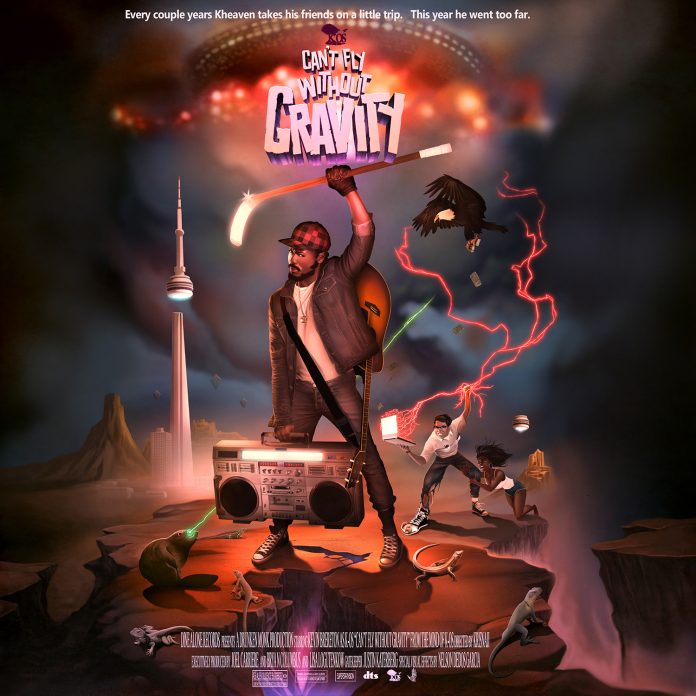
Alternative rapper k-os has always had a penchant for crafting distinctive tracks unlike anything heard in mainstream outlets. With no strict ties to any genre of music, this Toronto-based artist has never ceased to impress with a wide assortment of tracks. In his latest studio album, we see what we would expect from the artist with little to no deviation.

Can’t Fly Without Gravity is a blink-and-you-will-miss-it studio album with 13 well-produced songs. The total collection of tracks clock in at just over 40 minutes, leaving listeners with a succinct album that doesn’t overstay its welcome, a fact that will suit the average music listener fine, given that some songs are better than others.

The album begins with a rather disjointed and puzzling track called “Snapback,” which seems less like an underground jazz interlude and more like a freestyle with oddly timed dips in sound quality. Regardless, the tracks that follow make up for the album’s introductory stumble and more aptly set the tone for the experience to come.

The majority of the tracks on this album can be uniformly categorized as old-school and underground hip hop with the occasional detour into psychedelic soul (“Dance In Yo Car”) and alternative rock (“Turn Me Loose”).

Unfortunately, many of the album’s tracks are forgettable. While k-os is able to produce singles with expertly crafted rhythms, his lyrics are not always on target, and when they are, the references are rather dated and redundant — for instance “shooting on all the wack emcees on sight.”

That being said, k-os does highly impress at the tail end of his sixth album. “Spaceship” proves to be the shining gem of the collection with its thoughtful sing-along verses and serene instrumentals. As well, “Steel Sharpens Steel” turns it up with some kickass guitar that will melt your face off. The album concludes with “Another Shot,” and its lyrics are summative of the album as a whole: “It’s time to go, you’ve missed the boat.”

Can’t Fly Without Gravity has something for everybody, but is not something everyone will enjoy.

Trevor Noah takes over The Daily Show

6
Noah was confident and in control his first night in Jon Stewart's former chair.

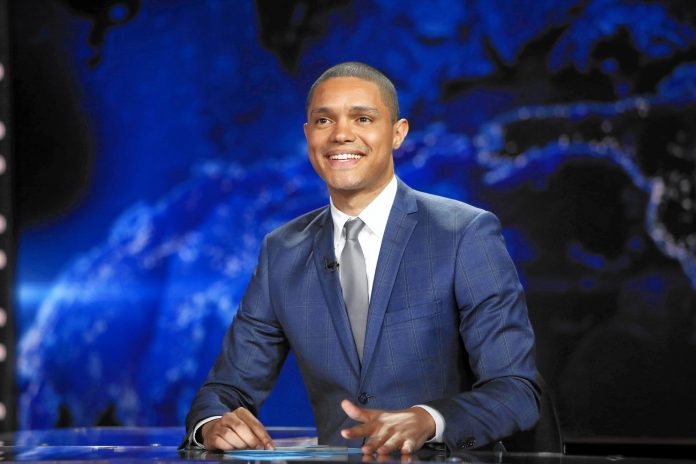
Trevor Noah, the South African-born comedian, made his debut as the new host of The Daily Show on Monday September 28 — or what Twitter called #TrevorDay. Noah is leading The Daily Show into a new era filled with more emphasis on social media and expanding further than cable news networks — as well as a more international perspective on current affairs.

In his opening monologue, Noah sent a clear message: although he is grateful to Stewart, he is not Uncle Jon. He said, “I can assume that this is as strange for you as it is for me. Jon Stewart was more than just a late-night host. He was often our voice, our refuge, and in many ways, our political dad. And it’s weird, because Dad has left. And now it feels like the family has a new stepdad — and he’s black. Which is not ideal.”

Noah made the usual casual stroll through the day’s topics by opting out of the obvious choice of covering Syria and instead going for coverage of the Pope’s visit to the USA. Next up, he lamented the resignation of John Boehner, Speaker of the United States House of Representatives, saying that he is leaving just as Trevor learned how to pronounce Boehner’s name. Lastly, he touched on the discovery of water on Mars, which Noah used to poke fun at California’s drought problems.

He’s young, attractive, funny, and not afraid to be honest, even if it unsettles his viewers a bit. Noah clearly did not play it safe and decided to point out one of America’s woes: “Once more a job Americans rejected is now being done by an immigrant,” he said.

Even though there will be naysayers who will tear him apart and deem him a failed replacement, I believe that Trevor Noah’s debut was successful. The essentials were all there, and the writing delivered the expected satirical outlook and thorough analysis on current affairs. One of my favourite bits was when Noah thanked Jon Stewart and promised he would try to not make Jon Stewart seem like a “crazy old dude who left his inheritance to some random kid from Africa.”

The structure of the new show is pretty much aligned with the old one. Apart from a new desk and set, Noah retained much of Stewart’s staff, the show’s theme music and its format, right down to closing with a moment of zen. It was refreshing to see him deliver the moment of zen standing up instead of in Stewart’s sit down style, as well, the subtle difference of including profanity is a change I welcome.

As host and executive producer of the show, Noah has a hand in writing and approving jokes and setting the tone. Through time, seasoned viewers of The Daily Show will learn of his comic point of view. Jon Stewart had 16 years to build The Daily Show into a sharp commentator of current affairs and a prestigious institution for journalism. We clearly can’t judge Noah too harshly during his debut.

Trevor Noah has the potential to bring a new edge to an already edgy television show — instead of feeding us a nostalgic recipe of exasperated social commentary, he can start giving us his renowned global take on current events.

Tom Wayman captures heart and soul of West Kootenay

0
Wayman's knowledge of his home region shows in this collection of stories.

Rarely does one come across an author who can authentically represent the place in which their stories are set. Tom Wayman is the exception to this rule. In his latest collection of short stories, The Shadows We Mistake For Love, Wayman stays true to not only the people of the West Kootenay area of British Columbia, but the place itself.

This region is beautiful — the mixture of mountains, forests, rivers, lakes, and the colour of the sky during a summer sunset combine to make this area otherworldly. Wayman is able to capture this perfectly with his descriptions of the area. Yet the region goes beyond just being another location for action within these stories: it becomes another character. This characterization comes through most clearly in the first and final stories of the collection, “Dwelling” and “Fenris.” Both of these center on the same nameless man and his experiences on his acreage, the magic of the region, the way it can pull a person in and change how they view the world around them or change their outlook on life. 

The other stories in the collection focus more on the people who inhabit the region. Even though we are only briefly introduced to each character, as readers we are able to empathize with them. They come off the page and inhabit not only the written version of the West Kootenay, but the physical one as well.

Each of the characters in the stories resemble the people who actually live in the region.

Having grown up in the East Kootenay and spending countless weekends in the West Kootenay region, I can attest to the fact that the characters in the stories resemble the real people in the region. The characters are also written in a way that makes them relatable to people who are unfamiliar with the area. While the stereotypical hippie commune comes into play in both the titular story and “The Three Jimmys,” the issues that all the characters face are relatable across geographic boundaries.

Age and gender are two other things that Wayman is able to handle masterfully throughout his stories. He can write from the perspective of a woman in her mid-twenties, a teenaged boy, or a middle-aged man with the same amount of care and lived experiences that make these characters realistic and relatable.

This collection of stories successfully captures the spirit of a region that few people visit, and even fewer understand. The West Kootenay is a region where the people are warm, friendly, and seem as if they are from a simpler time. Each story expertly blends the area and the characters in a manner that transports you to the world of the stories. These masterfully crafted stories should be read by anyone who has lived in the region or anyone who wants to be transported into the lives of the people who call the West Kootenay home.   

Dageraad down the mountain

1
A small bar and friendly staff make for an enjoyable brewery experience.

Commercial Drive is a pretty cool place. It’s a cultural hub near a vortex of antiseptic-unoccupied-city-of-glass-windowed-condos. For our purposes, let’s just say Commercial Drive is cool. The Drive is cool because despite our hyper-capitalist, hyper-consumer culture, the businesses there seem to do their best to flex their anti-establishment muscles. This allows your average hyper-consumer to consume stuff in a way that is often at odds with our present commercial culture.

Beer is a great frame through which to consider this. When one stops at a cafe, bar, or pub on The Drive, they’re unlikely to see someone sipping on a Bud, or a Kokanee (I will concede Cariboo is oft-quaffed, it seems to be more a question of funds than real choice). What are often had are artfully produced Belgian ales, especially at places like The Tangent Cafe or BierCraft.

But what if I told you some of the world-class ales weren’t produced in Belgium? What if I told you that they were produced very near to SFU’s Burnaby campus? Dageraad brews many of your favourite beers found at places like the Tangent Cafe. Those beers are in fact brewed less than two blocks from Production Way–University station, and appreciated as among the best examples of the style by people from Vancouver to Brussels.

I understand that if you are new to craft beer, it can often be intimidating to know where to start. Ben Coli, owner and Brewmaster at Dageraad, wants you to know that Belgian beers are very approachable compared to other popular craft styles such as the IPA. The Belgian style plays with softer, fruitier flavours rather than the harsh bitterness of these and many other craft beers.

Ben, who is a local but has spent many a day sampling the legends of Belgian beers on the Dageraadplaats (square) for which his brewery is named, laments that more students don’t stop by his cozy tasting room for a beer. I couldn’t agree with him more. In Ben and his brewery, we have a local craftsperson creating world-class beer, and many of us walk past the ambrosia-creating factory twice daily only to sip it in cafes miles away that same evening.

Of course no one can force you to come sit down and enjoy something amazing, but if none of this excites you, please also consider Ben’s wonderful table beer “Burnabarian,” a Belgian table beer with a slight fruity flavor and light body that make it an absolute crowd pleaser. On the other hand, if you are more of a beer geek, get ready for their Wet Hopped Blonde or, even more exciting, a Belgian Brune that’s been kettle soured.

So, SFU, hop on board with our local world-class brewer, or be doomed to share it with the hipsters of The Drive.

The history of The Peak in five issues

0
Let's all sing "happy birthday" to The Peak — after all, it's public domain now.

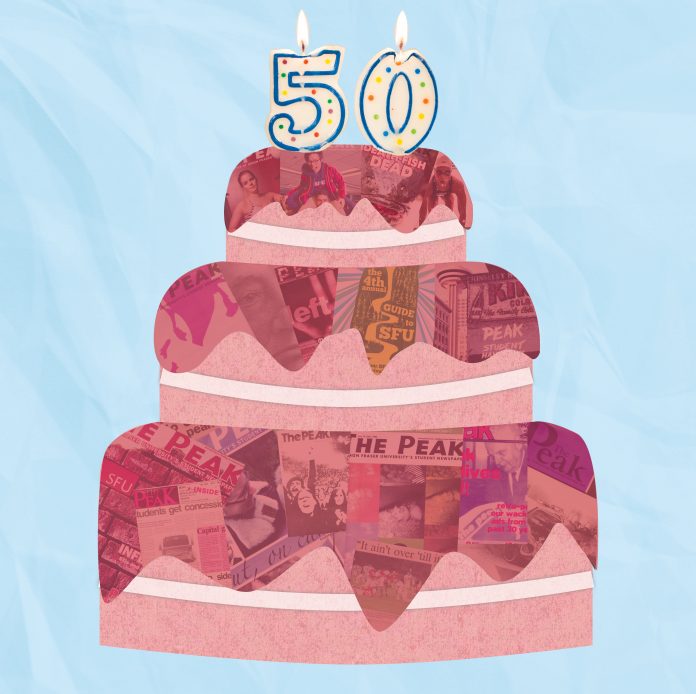
Yes, much like the school it covers, SFU’s student newspaper The Peak turns 50 this week. After over 150 semesters and almost 2,000 issues of student journalism, we can rest comfortably knowing we’ve fully outlived our glory days and will now be consigned to drunken, nostalgic musings until the day we finally call it a day and move the whole thing onto the Internet. But I digress.

In glorious Peak tradition of criticising anyone running the paper except ourselves, our editor reflects on 50 years of student journalism by picking apart five issues from our history ム our four previous anniversary issues, as well as (arguably) the very first Peak ever published.

October 13, 1965: Name Your Student Newspaper

Cover1Every student paper needs a good origin story, and The Peak’s is among the best and most mythologised of them all. Those of us who’ve remained at the newspaper for long enough will likely know the basics: two rival papers, The Tartan and The S.F. View, began at around the same time in SFU’s first semester in September of 1965, roughly 50 years ago today.

The former was established by Lorne Mallin, an ambitious UBC student and former writer for The Ubyssey who pieced together issues in the basement of the campus library. The latter was led by Rick McGrath, unwittingly elected editor of a paper that even its editorial board admitted was meant mostly to sink The Tartan. (The fact that you’re reading this right now is proof that their plan worked.)

That story has been told well enough elsewhere that I don’t plan on retelling it here. For those who are interested, I recommend Mike Hingston’s comprehensive take on the tale from the paper’s 40th anniversary edition in 2005, as well as Brad McLeod’s revealing feature on Don Pulsford from September’s special edition issue of The Tartan, which borrows its name from  one of these two pioneering papers.

In any case, perhaps because no one knew what a tartan was and The S.F. View is about the worst name for a student newspaper imaginable, the paper’s newly conglomerated editorial team decided to put aside their differences long enough to choose a new name. With the promise of a free case of beer and the chance to pick a name that would “last until ivy (heaven forbid) climbs these concrete walls,” the first and only issue of Name Your Student Newspaper was released.

It’s worth noting that, despite only running four pages of content, this nameless issue reads a whole lot better than either The Tartan or The S.F. View did. Having elected Sam Steenhuus as its new General Editor ム Mallin took on duties as campus editor, with McGrath handling sports ム the writing and layout show a marked improvement over previous efforts, and there’s even the beginnings of the smug, self-satisfied sense of humour that has become a defining factor of this newspaper ever since.

The editorial announcing the decision to merge the two papers even borders on the genuinely inspiring, noting that “it is encouraging to see that so many students were wholeheartedly in favour of establishing one single newspaper to be a vehicle for the views of the student body as a whole.”

Within a week, The Peak had published its first issue.The rest, as they say, is history.

October 8, 1975: “Happy birthday to us!”

Cover 2Like any 10-year-old celebrating their birthday, The Peak of 1975 is immature but energetic. The first thing modern readers would likely notice is the lack of photos ム this issue is wall-to-wall text, and it feels a bit like 24 pages of articles stuffed into a 16-page paper. As will quickly become tradition, the requisite origin story retells the Tale of Two Papers, though the staff at least have the modesty to reserve the majority of the article for page three.

Elsewhere, The Peak had already begun to look like its current self: there’s news articles, an area for editorials and letters to the editor, an arts and culture review, and a sports section. One can even see the hints of a features section in longer articles like the one describing the then-new University Centre Building (UCB). There are a few weird ads, including one for Bacardi, one for the Baha’i faith, and another for mail-order research essays (160 pages for one dollar!).

Despite its labyrinthine design and wealth of typoes, this is a fine issue that shows its age but never embarrassingly so. There’s an article arguing for gay students’ rights, several investigative pieces on the status of the administration and the student union, and an editorial by the SFSS president on lack of student engagement. This was a much more radical period in SFU’s history, the culmination of a politically active first decade that the university has yet to match since.

Clearly the big news at the time of this issue was the opening of the UCB, which has since become a nearly un-Googleable blip in SFU’s quintagenarian history; but upon closer inspection there are plenty of treats here, including an article from the then-new Women’s Centre on campus and several letters about a previously published piece titled ム and I’m not kidding ム “The Glory of Zion.” And they call us controversial.

In many ways, The Peak of 1975 is already wholly recognisable to most readers. The copy and layout reflect an editorial team that had outgrown the suit-wearing, pipe-smoking pretension of the paper’s first few years. There’s even a shout out from the Royal Bank of Canada on the back page, proving that annoying RBC salespeople are a more enduring SFU icon than McFogg the Dog.

Sure, most of the people in the photographs look like they just walked off the set of Boogie Nights, but the spirit of the paper is already alive and well in these pages.

October 10, 1985: It ain’t over ‘til it’s over

Cover 3Break out the puffy sleeves and the neon jumpsuits, because it’s 1985! Right from the start, this decade’s Peak is a little less narcissistic than in times past ム they even resist giving their own anniversary top billing on the cover, opting instead for a special 20th anniversary logo in the top left hand corner of the page. At 20 years old, the paper is finally old enough to actually attend the institute it covers, and boasts just the right amount of cynical humour and anti-establishment ethos to match its age.

The big stories in this issue are predominantly international: the Salvadoran Civil War and the United States’ involvement therein, humanitarian aid to Nicaragua, a youth conference held in Moscow. Given the focus on SFU both in past and future issues, The Peak of 1985 comes off as a bit of an anomaly, an underfunded student rag trying desperately to be equal parts National Geographic and National Guardian.

As far as design is concerned, there’s little change. This Peak still predates the personal computer era, and its cut-and-paste aesthetic is just as difficult to read as it was 10 years ago. In fact, the increased reliance on content from the Canadian University Press and relatively limited list of bylines seem to communicate a staff stretched thin, and without counting advertisements or events listings, the paper’s 24 pages drops down to 17. (There’s also a mention of the “Peak trailer,” a chilling reminder that our offices used to be even less accommodating.)

Equally unsettling is a feature in the middle spread about world famine, which the editor has bafflingly decided to obscure by printing Hunger in big, bold letters overtop the copy. Please stop me dead in my tracks if I ever think this is a good idea.

Still, there’s plenty to love about this paper. Its sense of humour is much more present than in the 1965 or 1975 issues, and a host of political cartoons and gags give the issue a sense of levity and personality that more than more than makes up for its shortcomings. The mercifully brief (sorry, guys) anniversary piece is about as tongue-in-cheek as you can get without pulling a muscle, idealising the hippie spirit of the 1960s while poking fun at the serious tone of both the decade and the paper itself.

Other highlights include a review of a Cure concert at the Commodore, an ad for a Peak get-together featuring “unmentionable” beverages, and probably one of the best sports headlines we’ve ever printed: “Wild Cats skinned.” Meow.

September 5, 1995: Peak outlives Dief

Cover 4Now that’s more like it! In 10 short years, The Peak has gone from being that stoned guy with dreadlocks who won’t stop talking in your philosophy tutorial to the suave SIAT student who teaches everyone else how to use InDesign and smells like freshly picked lavender. This issue might look about as 1995 as Britney Spears with a Jennifer Aniston haircut, but if loving that is wrong, I don’t want to be right.

In all seriousness, this issue looks good. Really good. Good enough that I’m taking notes for our current paper reading it. There’s a clear aesthetic throughout, the text is clean and readable, and the headlines are punchy without being inflammatory. A full six of the paper’s 28 pages ム continuing the trend of bigger papers every decade ム is devoted to a series of features, including a collection of The Peak’s strangest ads for its 30 year anniversary.

Now more than ever, the paper is looking like its current self. Arts editors from more modern eras will recognise the multiple pages devoted to Fringe Festival coverage, sports editors will froth at the mouth with the revelation that their section used to come before arts, and former features editors (myself included) will happily note the first appearance of the Last Word, which has been a Peak mainstay ever since.

There are, of course, plenty of dissimilarities, too. My libel radar goes haywire when I spot an op-ed in the news section, and what was probably a fascinating feature on computers at the time comes across now as little more than a charming anachronism. Even the humour of the paper’s ticker, “Peak outlives Dief,” is lost on most modern students who have little to know knowledge of our former prime minister John Diefenbaker. (Also, Dief died in 1979, making this reference even more confusing.)

But there’s no denying The Peak of 1995 looks and reads better than ever. The writing is snappy and direct without being overly serious, the photos and graphics ム though few and far between ム are solid, and the layout wouldn’t look too out of place in a modern student newspaper. Eat your heart out, 1965.

September 5, 2005: Happy 40th birthday, SFU!

Cover 5Coming full circle to our 40th anniversary issue, The Peak of 2005 arguably has more in common with its 1995 progenitor than it does with the paper today. Running a flabbergasting 44 pages ム seriously, how would you even hold this thing in your hands? ム this issue is nearly wall-to-wall advertisements and house ads with the occasional article thrown in for good measure.

Okay, okay. I’ll bite. This issue will easily be the most recognisable of the bunch to current Peak readers, and many of its features ム the photo attributions, the use of Utopia as the text font, the Editor’s Voice column, even the logo on the front page ム are still in use. For better or worse, this paper is the backbone of our current one, and despite our recent makeover, we’re not so different.

This is reflected as much by the design as it is by the content. There’s your Peak Speak asking students to give advice to first years, a news story about the SFSS making a controversial decision, a piece desperately assuring us that SFU students’ apathy is curable, a page full of illegible comics, a last word about a student’s struggles to write their thesis. Some things never change.

Of course, like any other issue in our archives, there are curiosities, such as a piece detailing SFU’s attempts to curtail vandalism on campus following pub nights at the Highland and a perplexing 50-word mini-article about Islamic terrorism and Hurricane Katrina.

And in the middle is Michael Hingston’s Peak retrospective, a charming account of the paper’s early years featuring interviews with both Rick McGrath and Lorne Mallin. Years later, Hingston would publish a novel based on his time at The Peak, leading many reviewers to commend his imagining of SFU’s “fictional” student newspaper.

As much as tradition compels me to dismiss the work of my forebearers as trash ム or at least to point out every typo and kerning error ム I have to hand it to The Peak of 2005. This issue still looks good 10 years later, and it’s a target for which we still aim.

Fifty years of student journalism is a lot to live up to.

And I don’t mean this article to imply that The Peak of today is any better or worse than those of the previous decades ム we still deal with many of the same issues and fall prey to many of the same pitfalls as our predecessors. We struggle with a transitory and largely disconnected student body. We struggle to balance deadlines with relationships and essays and late-night caffeine overloads. We struggle to make a paper people want to read, and to tell you the truth, we aren’t always successful.

But no matter what The Peak looks like 10, 20, 30 years down the road ム and how those future editors will reflect on our current era ム I know for sure that some things will never change. There will always be students on this campus who want to work with us. There will always be students who want to make a name for themselves, to get to know their university better, and to fight for what they believe in. And those students will always be greeted by equally passionate editors when they walk inside our office doors. With any hope, they’ll find a temporary home for the rest of their time at SFU.

Andrew Petter’s shame to fame

0
Petter is simply not the right choice for SFU.

Convocation is supposed to be about education. It’s supposed to celebrate hard work and vision, to reflect on themes of transition, opportunity, and loss. It’s about the process of not only finishing university, but leaving it behind.

When I walked across the Convo Mall stage over three years ago, none of these ideas were on display. The ceremony itself amounted to an excruciatingly long and undeserved self back-pat about the wonderful path the university was treading — little more than a commercial for one man’s vision of tomorrow’s engaged SFU.

The ceremony was irrelevant to the audience members, the vast majority of whom would never return to the school, narcissistically assuming they would care about the establishment’s goals and its progress toward them. The President’s main address said virtually nothing about learning, employment, success, or the value of an education. Having put in (far) more than four years schooling in a Canadian university, this whimper of an ending felt very inappropriate.

Andrew Petter took over as SFU’s President only shortly before I left the school, but even by then the impact of his style of governance was apparent. His predecessor, Michael Stevenson, had been a University Bureaucrat in the classical sense, doubling down on research and graduate studies and arguably downplaying the importance of undergraduate education in the overall university culture. Stevenson had been an academic for basically his entire life, and he had very particular ideas about the way a campus ought to be run.

My convocation was little more than a commercial for one man’s vision of tomorrow’s engaged SFU.

He also ruled mostly during a province-wide post-secondary tuition freeze, so undergrads couldn’t be farmed for dollars quite as easily as they are today.

At this time, though, Stevenson’s resistance to youth culture combined with a student population of disaffected commuters not only gave SFU a reputation as a decent place to take tests, but a terrible place to wrap up your adolescence. Draconian rules about things like alcohol and fraternities, and a Facilities Management team that almost explicitly hated the idea of events on the hill, meant that many talented students were choosing UBC or even more distant schools over languishing in Burnaby’s mountain-top prison of learning.

This lack of emphasis on undergraduate culture also meant that SFU was less able than most universities to culturally mask its swelling population of socially disconnected international students, whose numbers (and exorbitant tuition levels) were a source of growing controversy.

Then the university administration chose to move forward from Stevenson by hiring politician Andrew Petter. They needed someone who could handle the public as Stevenson never could, someone with an ability to change people’s perceptions and humanize otherwise opaque institutions. They didn’t need a ‘crack’ administrator, nor someone with a powerful vision for education — what they needed was to rebrand.

In my time, this mentality culminated in a PR campaign called Envision SFU, which featured major initiatives like buying ads on the side of city buses. Visibly striving for the ‘engaged’ university became an end unto itself — not an attribute of a good school or an emergent property of wise governance, but a means of attacking the public perception of the name Simon Fraser.

In Petter’s view, the real problem didn’t seem to be the lack of culture but the perception of that lack. Change the perception and, as far as they’re concerned, the problem is fixed.

This is what happens when a university staffs itself with an increasingly greater proportion of politicians and marketing types. It’s worth noting that Petter’s vapid, self-aggrandizing convocation speech was delivered without a hint of self-awareness; it’s not that he had so little respect for students that he didn’t care that he was making their convocation into an ad for his favorite committee-born action item, it’s that he and those like him are so addled by the administrative culture that they genuinely seemed to have no idea what was happening.

Say what you want about Michael Stevenson’s vision of the university’s relationship to education — at least he seemed to have one.

When it only affects a convocation ceremony, these are fairly minor points. But the mentality that was so aggressively on display that day lays behind the university’s thinking on much more important issues. Much as it has at most other universities, the change in thinking has bubbled up through labyrinthine boards and committees to affect everything from tutorial frequency, to faculty make-up, to bargaining goals with the ever-embattled TSSU.

It all leads almost unavoidably to a culture that puts a greater emphasis on aesthetics than substance — which can even be quantified by the several hundred million dollars in deferred maintenance of SFU’s decaying infrastructure.

In Petter’s view, the real problem didn’t seem to be the lack of culture but the perception of that lack.

The university is now so obsessed with hiring people well-positioned to liaise with public and private funding sources that administrators are molded by the priorities of other groups and institutions, more than by the needs of the university itself. A modern SFU President must be as concerned with the perceptions of wealthy real-estate developers and Chinese parents as with overall student satisfaction. This leads to more and more positions requiring skillsets less and less relevant to education or research.

The staff who just-so-happen to have such ‘interpersonal’ skillsets are the very same people who have ruined (or perhaps been ruined by) the corporate and political worlds. When a corporation loses institutional focus and begins frittering away resources on things indirectly related to its ‘goals,’ it’s the consumers and shareholders who lose out.

Most alarmingly, this has culminated in a salary crisis that now reaches beyond just TAs to affect a huge proportion of the university’s teaching corps. If you aren’t old enough to have coexisted with tenure and you want to teach rather than research, this and virtually all other university administration views you as a cheap and expendable resource.

You are not an extension of its reason for existing, not an opportunity to spend on the university’s core goals, but a line item to be minimized like all others. There is a dishonest implication that savings put toward non-education-relevant initiatives will eventually create an overall university prosperity that will eventually re-strengthen education once again — but that second part somehow never seems to materialize.

This is not what is supposed to happen when SFU’s current President emphasizes community engagement. Engagement is supposed to be in pursuit of something.

Andrew Petter certainly didn’t create any of the issues I’m talking about, but for his role in allowing them to utterly ruin that moment of convocation for so many people, he’ll be associated with them in my mind for the rest of my life.

Anti-choicers, leave our hashtags alone

0
The #ShoutYourAbortion movement is about empowering women faced with a difficult life choice.

Isn’t it annoying when people stick their noses in your business? How about a nose in your uterus?

Anti-choicers (‘pro-lifers’) have decidedly come to the conclusion that it’s their right to make decisions for other people. #ShoutYourAbortion is a Twitter hashtag created to encourage those who have had abortions to speak out and break free of the stigma that surrounds the procedure. As Twitter usually goes, the hashtag was quickly infiltrated by naysayers who aimed to shame and silence the people who dared to share their experiences. To the ‘antis,’ I say this: get out of our hashtag.

There is a time and a place for many things, but the negative attacks from those who hate the idea of a person with a uterus making firm, lifelong choices, do not belong in a hashtag centered around empowering women.

If ‘pro-lifers’ are so concerned about the rights of children, why are they inciting hate towards a positive hashtag rather than advocating for more affordable healthcare or childcare services, and raising awareness about the overwhelming problem of child poverty? They are focused on oppressing women and taking away rights to a medical procedure rather than actually doing anything good for the children and parents in the world who are currently struggling to get by.

Unfortunately, these hashtag infiltrators came out with new ideas: the hashtags #ShoutYourAdoption and #IKilledMyBabyAndImProudOfIt — and although to ‘shout your adoption’ would be a lovely sentiment, it is still focused on taking away the right to choose the future of your life through abortion. Many anti-choicers speak of ‘murder’ and ‘pride,’ when this is not the case.

Abortion is about escaping an impossible situation. It’s about starting a conversation we were never permitted to have before abortion was legalized not so long ago. It’s about choice.

#ShoutYourAbortion isn’t bragging or glorifying abortion, it’s instead removing the societal stigma and shame from an important medical procedure. I would say a majority of pregnancies in Canada that end in abortion are unintended. People do not have abortions because they want to; they have them because they need to to salvage their well-being and their futures.

People will continue to have abortions whether it’s legal or not. Criminalizing it results in unsafe abortion procedures that have the potential to put a woman who has conceived at risk of death. If ‘pro-lifers’ value human life so deeply, they should make sure women have access to a safe medical procedure.

Anti-choicers, #ShoutYourAbortion does not concern you. We understand that you value human life. Instead, please go picket a Stephen Harper speech — I’ve heard he’s planning to defund health care — and leave be a hashtag meant to empower women everywhere.

Ethnic clubs still discourage SFU’s sense of unity

1
Ethnic clubs encourage cultural exclusion.

Back in 2008, when I was Peak Opinions Editor, I wrote a popular article entitled “Enough with the ethnic clubs.” It denounced the still-common phenomenon of campus clubs and organizations that explicitly desire a narrow and particular ethnic membership. The Korean Students’ Society for whatever — that sort of thing.

It wasn’t really controversial. Aside from a few furious emails from the usual sorts, feedback from students of all backgrounds was overwhelmingly positive. Strangers-stopping-me-in-the-hallways positive. There was appreciation for stating bluntly something everyone already knew.

When SFU was founded, Canada’s entire visible minority population was around 300,000 — fewer than the number of ethnic Chinese who now live in Vancouver alone. Government policy over the last half century has brought incredible waves of immigration to this country, mostly from what anthropologist-types would call the “global south,” and the result has been a transformation of Canadian society in a way SFU’s first generation of grads could have barely anticipated when they crossed the stage in 1967.

Today SFU has become a vivid case study in the challenges brought by a nation that has pursued such rapid diversification.

Some anecdotes are encouraging — even inspiring. In the last decade, five visible minorities have served as president of the SFSS — more than in the previous 40 years combined. I was once in charge of SFSS elections, and in my 2007 report I recorded “no visible minorities were elected” to the board of directors. Today the majority of its members have names like Binesh, Sharma, and Chen.

Yet outside certain bubbles, many SFU students experience a campus that has not adapted to changing demographic realities with impressiveness or comfort. Any casual tour reveals informal segregation of the student body — in study groups, in cafeteria seating, in friendship cliques — remains the norm, with language and race serving as barriers of division and alienation. This is why the brazen shamelessness of ethnic clubs rub so many the wrong way: they celebrate exclusion and isolation on a campus that’s already has enough trouble with that.

The blame should be widely spread. Institutions of campus culture promoting a united student identity and purpose have either eroded with time, or merely become more conspicuous for never existing.

English, supposedly SFU’s official language of communication, seems to have been undermined by relaxed fluency standards for new students in the service of swelling enrollment — particularly among deep-pocketed foreigners.

Sports remain, as they have always been at SFU, the passion of a dedicated few. Perhaps a new stadium will change this, but a mountain-top university with few genuine townies will probably never have an American-style culture of Friday night lights.

Satellite campuses have encouraged geographic scattering of the student body, and reinforce the idea that SFU is less a place than a brand.

Respect for campus history and heritage is often sacrificed for political correctness. Crosses were erased from the university crest, artwork depicting the adventures of Simon Fraser have been taken down for being excessively ‘colonialist.’ New logos and slogans have been empty and corporate.

Unifying mediums of campus communication, such as this newspaper — are easily ignored in the online age.

Absent of the allure of traditional pillars of campus culture, temptation is strong for students to retreat into identities that do offer firmness or passion. Pride in race and nation will always deliver both.

In a diverse society containing ever-increasing of numbers first and second generation youth, the Canadian university can be a powerful institution to promote civic assimilation and a sense of common cause. Ethnic clubs remain a symptom of SFU’s failure to fulfill this important obligation to campus and country alike.

PowerPoint-based lectures are creating a generation of uncritical thinkers

1
PowerPoints tend to dumb down the classroom.

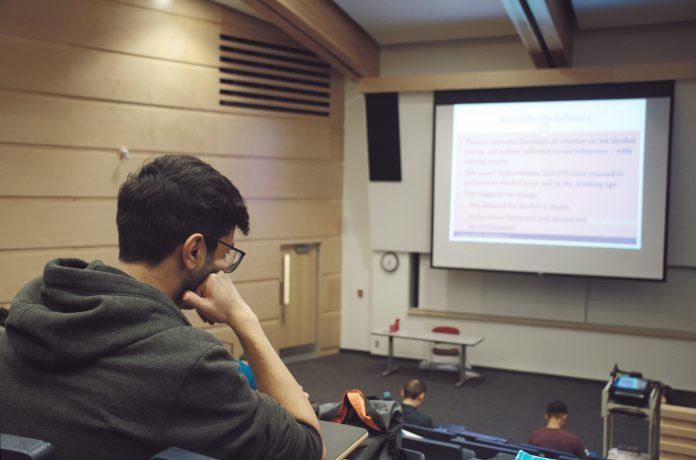
Andrew Smith recently published an editorial in The Guardian accusing PowerPoint of killing critical thought and engagement in classrooms. While I always advocated for this position as a student, as a sessional instructor I still couldn’t agree more.

In my first year at SFU, a sessional prof, Stephen Ogden, polled our English 150 class, asking if we’d like to have lecture slides posted online. The class used blogs as a means of out-of-class communication and for participation marks, something I argued against online, saying that learning to note-take is a skill and as students at a university, we should be competent in this.

This was not a popular opinion, so much so that one anonymous classmate proceeded to harass me online, posting responses like “I’m going to kill your whole family” on every subsequent post I made, but with poor grammar and spelling. I like to think that alone proved my point.

There are some profs who can use PowerPoint more successfully, as Smith notes, but they tend to only use them for purely visual accompaniments.

I become General Colin Powell, master of those in front of me when I use Powerpoints because I put a picture of a map of Canada beside the word ‘regionalism’ instead of writing it on the board. There’s no difference in my lecturing styles; frankly if I don’t have a PowerPoint, I often put more effort into my lecture notes than when I do have visual accompaniment. But for some reason, the visual medium pulls in students and convinces them I’m the expert in the room.

My students demand lecture slides be posted ahead of time, insisting they will use them to take notes, and then forget or don’t print them off. Instead, I watch them draw what the slides look like and then take notes off of those instead of just writing abbreviated thoughts down the page.

This could just be an example of visual learning, but I feel like an inability to piece together small concepts and visualize the connections between them is the opposite of what any teacher hopes for. I want them to infer headings and subheadings when I lecture, but there’s only so much one slide can contain.

Maybe programs like Prezi subvert this and use visuality to show those connections, but the effort on the instructor’s behalf to make something like that every week is huge, and again, shows content in a passive way rather than engaging students in a process of learning.

It’s being able to describe those networks and their significances that are key to critical thinking and higher learning, and if that ability isn’t being exercised, critical thinking skills don’t seem to be at play, at least in the context of humanities and social sciences.

This past week I gave in to my students’ demands and agreed to give them topics for their first (very short) essays. It kills me to do this after reminding them every week they need to think about what they could write with regards to any of the readings I give them.

Almost half of them have already come up with their own topics, but for the rest, I wish I knew how to convince them that they are all capable of having original thoughts and they are capable of writing a sustained argument about them.

Maybe I just need to incorporate more inspirational poster lecture slides.

S-Turing up social media controversy

0
We need to be careful with how we react to 'trending' issues on social media.

If you haven’t heard of “America’s most hated man” by now, his name is Martin Shkreli and he is the chief executive of Turing Pharmaceuticals. Earlier last week he raised the price of the drug Daraprim, used to treat patients with AIDS, by 5,000 per cent. It’s no surprise that public outrage on social media exploded, sending this story to the top of the trending list.

So, what if I suggested that this was the plan all along?

After all the outcry and controversy, Shkreli stated on ABC News, “We’ve agreed to lower the price on Daraprim to a point that is more affordable and is able to allow the company to make a profit, but a very small profit. [. . .] We think these changes will be welcomed.”

Turing Pharmaceuticals may just be using our own voice and medium against us by knowing and taking advantage of exactly how we respond to certain actions through social media. After the obvious shock and outrage against the incredibly unjustifiable price change from $13.50 to $750 a pill, they now plan to lower the price to an amount that still constitutes a considerable increase, which gives a sense of power to the public through network media while simultaneously projecting the company as one that listens and cares. If this was an illusionary sense, it would be an ugly marketing strategy.

Martin Shkreli might play an impossibly insufferable role in this. There is no way a big pharmaceutical company would let the 32-year-old be an actual detriment to big business on purpose. I’d say it’s reasonable to assume he’s playing a deliberate part to cause commotion.

Shkreli volunteers to be the face that people can direct their anger towards, as opposed to the corporation itself, when they realize that debt will come to those who can no longer afford the medication that their lives depend on.

If my theories are correct, then this act is business-genius. Shkreli even seemed to fuel the fire of controversy through Twitter by quoting rapper Eminem with, “and it seems like the media immediately points a finger at me. So I point one back at em, but not the index or pinky,” giving off the stinky cologne of a wannabee gangster K-Fed-type that is almost too easy to hate.

As the old adage goes, there’s no such thing as bad press.

If the controversy didn’t catch social media’s hook and cause the outrage that it did, or if they did intend to raise the price so exorbitantly, the company would still be left with the 5,000 per cent increase lining their already stuffed pockets. It’s a win-win-win situation.

In light of all this, I find that as our generation steps forth as masters of networking and social media, we need to be careful with issues that go ‘trending’ and how we perceive them. Twitter is still a relatively new platform that we can use to make change and promote new ideas, but it could be used with precise intention to shape and mould ideas that we think are ours — but may well be premeditated by big business.