Home Blog Page 972

A brief timeline of The Peak‘s first 50 years

0
This paper has been through a lot, and it's got quite a future ahead of it.

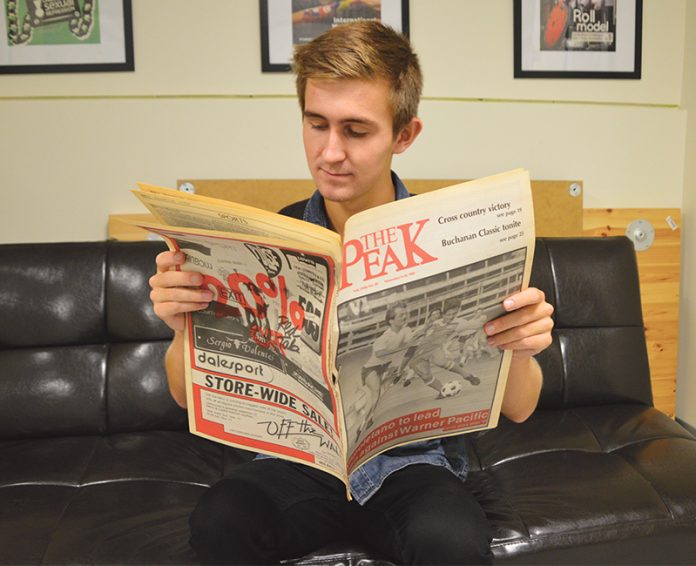
Can you believe your favourite student newspaper turns 50 this issue? To celebrate, we scoured the expansive archives and compiled some of the highs and lows of the last 50 years. We also took a stab at guessing some of the happenstances from the next 50, in an attempt to play God/predict the future.

September, 1965:  Simon Fraser University first opens its doors. Booooring. Let’s jump over to the good part where we talk about The Peak.

October, 1965: In an attempt to impress his female classmate, a senior at SFU begins a lie that he’s an editor for the school newspaper. Eventually it escalates to him having two options: come clean to his classmate and reveal that the school didn’t have a newspaper, or start one from scratch. Thus, The Peak was born.

February, 1978: The Peak staff travel back in time to ensure the initial group of editors meet/secure the newspaper’s existence in the future.

October, 1989: While taking a shower, The Peak discovers its first grey hair.

May, 1994: In an attempt to raise funds and financial autonomy for itself, The Peak editors host a carwash fundraiser to dismal results.

September, 1995: The Peak is officially accepted as a society on campus on the condition they never host a carwash or wear speedos on campus again.

November, 2008: Radio station CKBW-FM switches to call sign CKPK-FM and rebrands itself as The Peak, ensuring that no mention of The Peak newspaper would ever go without confusion over if someone is referring to the radio station or the publication. (Thanks, Peak.)

September, 2010: New kid/resident bad boy Andrew Petter rides a motorcycle onto Burnaby campus and straight into The Peak’s heart, igniting the greatest will-they-won’t-they love story of all time.

June, 2013: In an attempt to revisit SFU’s activist roots, The Peak changes its page name on Facebook to “The No Enbridge Peak.”

October, 2015: The Peak celebrates 50 years as one of the largest and boldest student newspapers in Canada. They commemorate the occasion with lots of cake that the Editor-in-Chief buys his staff after he finishes editing this article.

January, 2018: The Peak launches its first ever app, which allows the newspaper to be downloaded directly into your cerebral cortex, as well as access to exclusive binary code content.

August, 2035: The Peak editors travel back in time to 1978 to prevent the then-time travelling Peak editors from preventing The Peak from not being born. (Just trust us on this one.)

September, 2041: Humour becomes the first section to be run and edited by a robot. New Humour Editor Ziplex 3000 uses a special algorithm to perfect human humour, and also makes a mean listicle.

Women’s soccer wins 1–0

0
SFU already has more wins than the entire past season.

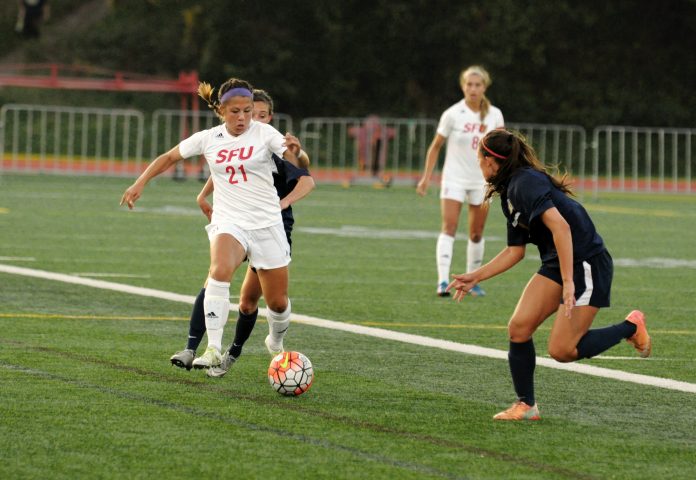
After an embarrassing 5–0 loss on Saturday, September 26, which saw the team surrender five goals in the first 15 minutes of the game, the Clan were happy to take a 1–0 victory against the Montana State University-Billings (MSUB) Yellowjackets Thursday night.

“I was looking forward to how they were going to bounce back, if that was going to affect them, and honestly this is the best football they’ve played all season,” said Head Coach Annie Hamel. “Again, it’s a young group and they didn’t let those 18 minutes [last game] define them, they just came back with a vengeance today and played smart and hard soccer. I was very proud of them.”

For much of the first half, SFU dominated the pace of play, with a number of clear chances to take the lead. Though possession belonged to the Clan for much of the half, it was thanks to a few key saves by Priya Sandhu — particularly a shot 13:40 into the game — that temporarily kept it a scoreless affair.

Moments later, in the 17th minute, SFU forward Olivia Aguiar netted the only goal of the match, with assists on the play from freshman forward Katelyn Erhardsen and sophomore defender Mikela Fong.

Despite a series of chances from both teams, neither team could get on the scoreboard for the rest of the match. The second half played like a highlight reel of quality chances for the Clan that just wouldn’t go in.

SFU did appear to have a second goal, however, it was waved off due to an offside. This meant the Clan had to close out the game with a nerve–wracking one goal lead. With 29 seconds left, SFU was called for a foul, and MSUB got a chance to tie up the game on a free kick, but was cleared by the Clan’s backline.

Goalkeeper Priya Sandhu was perfect, making three saves, and her fifth shutout of the season.

The Clan are now 4–1–2 overall and 2–1–1 in the conference, good for third place — impressive for a team that since 2010 hasn’t had more than two wins in a season. However, one issue that the team does face is an inability to convert chances into goals — having only scored more than one goal in a game once this season, in a total of seven games.

“I thought we possessed the ball very well, our movement of the ball was very good, our shape was very good, we created a lot of opportunities,” said Hamel. “But again the same story is we’re not finishing them, [in] these one goal games, our rate is not high enough in terms of the chances we create compared to the chances we put away, so that’s got to get better.

“We need to give the backline and Priya a cushion.”

Men’s soccer cruises to victory

0
Mamadi Camara scored two goals on the night.

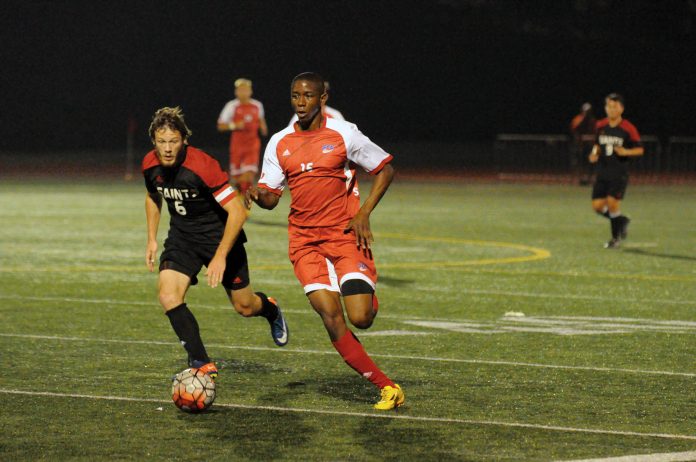
Thursday night at a late 7:30 kickoff, the men’s soccer team cruised to a 4–0 victory over the St. Martin Saints. After a poor start to the season by their lofty expectations, it was a breath of fresh air to see the team dominate for a full 90 minutes.

“We played well,” said Head Coach Clint Schneider after the game.  “We deserved to win the game by that margin. It’s good for our guys to get rewarded for playing well.

“We’ve had games this year, many of them where we played well, but we haven’t been rewarded, because we haven’t finished chances. We finished [those] chances tonight.”

SFU came out roaring out of the gates from the opening kickoff. In the sixth minute, forward Michael North hit the post, and the ensuing rebound was blocked. But the Clan was not to be denied. A few minutes later, midfielder Mamadi Camara calmly put the ball in the bottom corner to give his team an early lead. He was the obvious choice for MVP of the match, adding two goals and dominating the midfield throughout the game.

“We deserved to win the game by that [4–0] margin.”

Head coach Clint Schneider

SFU then started to exploit the flanks, with Calvin Opperman cutting inside to get a scoring chance and Adam Jones scoring from a cross which was ruled offside. Brandon Watson seemed to injure himself in the 21st minute, but carried on for the rest of the game and looked fine when keeping the clean sheet.

Camara’s second goal in the 37th was a brilliant individual effort; he darted through four Saint Martin defenders before burying the ball in the back of the net. He scored both goals to give SFU a 2–0 lead heading into halftime.

SFU picked up right where they left off when play resumed for the second half. Four minutes in, Michael North bolted down the left wing and calmly buried his chance, rolling the ball right through the opposing goalie’s legs. SFU added a fourth later on, with Kyle Jones finishing off a beautifully worked goal that featured many one-touch passes. Goalie Brandon Watson had to make a couple of nice saves in between the two Clan tallies.

With four goals on the board, this was an attempt by committee to try and replace the offensive output that was lost with the departure of Jovan Blagojevic.

“We’re never going to fill the hole that Jovan left,” said head coach Schneider. “I’m just glad we score goals in bunches. That’s the SFU way, that’s the way it’s always been even prior to Jovan scoring as many goals as he did.

“That’s the way we played, and when we made runs, that’s how we won games, by scoring in bunches.”

With a dominating performance under their belts, Schneider hopes this can be used as a “springboard game” for future success that fans of the team have come to expect.

Wildcats best Clan in Battle for the Border

0
SFU gave up 347 yards passing on the night.

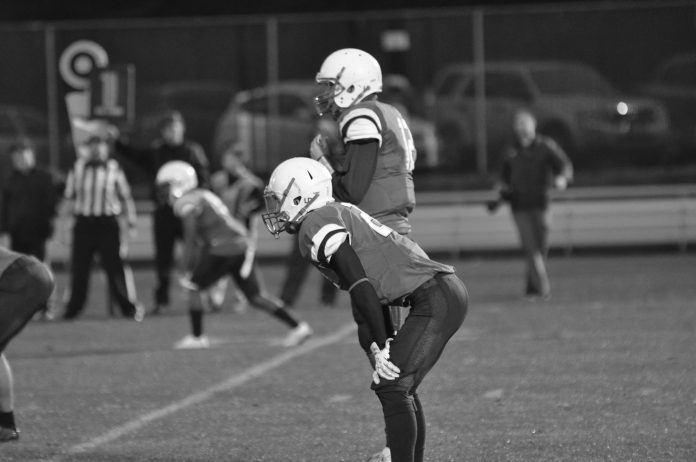
The Battle for the Border continued as a youthful Simon Fraser University football team (0–3) traveled down to Ellensburg, Washington to take on the Central Washington University Wildcats (2–2) in what would be a one sided matchup in favor of CWU.

Woes for the Clan started before the game even had a chance to begin: as key injuries to defensive backs Jordan Pugh and Cairo Messer-Barrow forced the coaching staff to start true freshmen Jake Tumblin and Josh Bayne against a fierce Wildcat offense. Starting running back Josh Hayden was also a scratch for the game after suffering a hamstring injury in practice earlier in the weak.

“We’ve had many injuries [. . .] key guys at corner, safety, linebacker, running backs, you name it there’s injuries,” said Head Coach Kelly Bates following their 40–7 loss.

The Clan opened the start of the game with a promising seven minute drive as quarterback Ryan Stanford moved the chains by connecting with receivers Sam Swerehorn and Earl ‘Swagup’ Anderson on separate pairs of catches. However, the drive ended in a missed 38-yard field goal attempt.

Big plays hurt the youthful Clan defense in the remain minutes of the first quarter as the Wildcats quickly put up 21 points, including an 80 yard touchdown pass on their first offensive play of the game.

Coach Bates addressed his young defenses performance by stating, “They saw some things [in the game] that they’ve seen in practice, but they just weren’t able to adjust to it quick enough [. . .] it really comes down to experience, and that’s what happened.

“We’ve got a lot of young guys right now that are playing, and gaining a lot of valuable experience,” Bates explained. “We’re very young, and we’re going to pay for that lack of experience right now, but it’s going to pay off down the line, and that’s really what you saw happen on the weekend.”

The Wildcats continued to dominate on offense, as they would score two more touchdowns to close out the half, putting the score to 35–0.

It was a tough rest of the game for the Clan offense as the Wildcat defense continued to sack the quarterback and hold the offense to fourth down. With Josh Hayden out of the game due to injury, freshmen David Lagou stepped up to take on the Clan’s rushing duties; however, he was only be able to amass 25 yards on 15 rushing attempts.

A commanding lead forced the Wildcats to play many of their second string players as the second half wore on. The young and injured Clan team would rally to win a second half point differential of 7–5, but would still claim a loss against a conference opponent.

Back-up quarterback Tyler Nickel was able to connect with the speedster Earl Anderson on a 55-yard touchdown pass early in the fourth quarter to keep the game from being a shutout.

SFU will take the week to heal their wounds and look to get their first win of the season at home on October 10 against Dixie State (1–3).

An ode to Andrea Pirlo

0
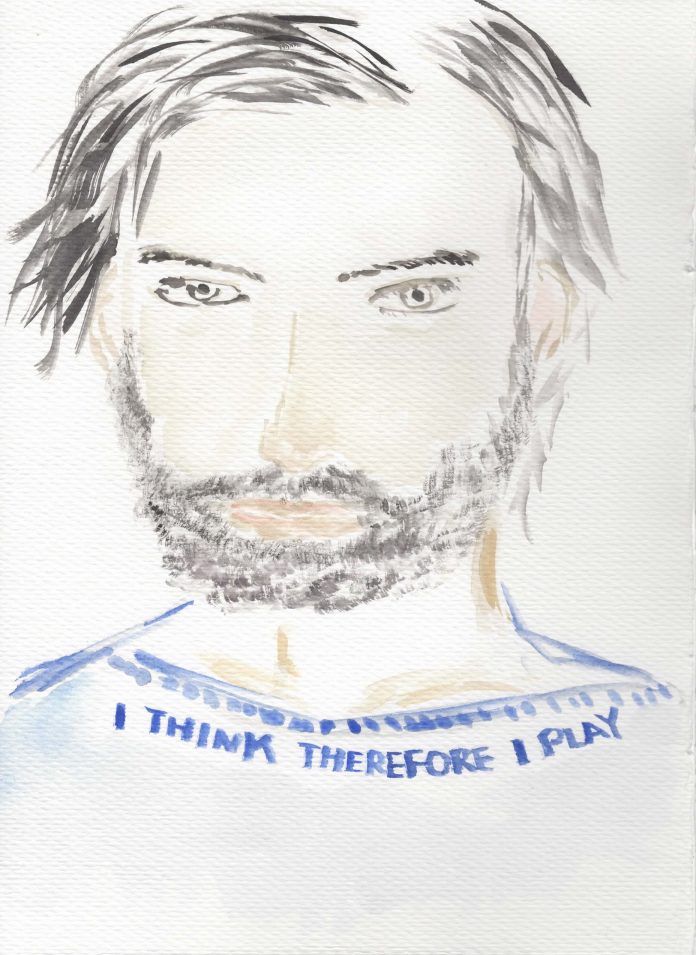
Andrea Pirlo has been amazing fans for years with his skill, and most recently, his beard.

After watching Andrea Pirlo play last Saturday against the Whitecaps, I was inspired to write this article on my thoughts on the legend himself. He is by far my favourite soccer player of all time, and I am entirely convinced there will never be another like him.

The numbers speak for themselves. Pirlo has won practically everything there is to win at the highest level. Alongside the six Italian league titles, he won two Champions League trophies with the great Milan sides of the 2000’s, and of course the 2006 World Cup, where he was named man of the match in the final, and turned this sports editor into a huge fan of his.

But that’s not what is most impressive about him. What is most impressive is that Pirlo is entirely different from every other soccer player out there. Ronaldo amazes you with his athleticism; he can do it all. Messi amazes you with his dribbling and his one-on-one skills. But Pirlo amazes you with his brain.

He always seems to be in open space, ready to deliver a perfect pass to a player higher up the pitch. In an era where soccer fans seemed to be only concerned with flashiness and highlight reel goals, Pirlo is a throwback. He’ll never have any amazing runs through five players like Messi, but he will place the perfect pass nearly every time. Even at the age of 36, he was still playing at the highest level, starting in the Champions League final for Juventus.

Pirlo will probably go down as one of, if not the greatest free kick specialist of all time. If he has a chance within 25 yards of the goal, nine times out of ten it’s in the back of the net. He can score them any way as well; whether it’s bending it away from the wall, or hitting it perfectly into a bottom corner, his right foot is as precise as a surgeon. To quote Pirlo from his autobiography, which is a terrifically written book: “I strike those dead balls Alla Pirlo. Each shot bears my name, and they’re all my children.”

His personality and look is unlike any other professional athlete. It oozes coolness and class. He owns his own vineyard. His book is entitled I Think Therefore I Play, a twist on the famous Descartes quote. I can’t imagine another athlete who would title their book after a quote from a 16th century French philosopher. He also has one of the sexiest beards in all of the world, only rivaled by our Copy Editor Joel MacKenzie’s.

Andrea Pirlo is like a Michelangelo sculpture; one of a kind. He is a playmaker the likes of which we may never see again. I speak for all soccer fans when I say I hope he continues on for a few more years.

Peak Sports throughout the years

0
As you might expect, our style has changed a lot in 50 years.

One of the things I never realised before I started working at The Peak is the great history that this paper has. It’s been going strong for 50 years now, and for all but one month, as long as SFU has been around, The Peak has been, too.

Going through the archives for this piece, it’s interesting to see fellow students who have been in my position comment on events with neutrality and facts, events which I have remembered through just emotions and memory. While you could probably write a whole feature on how The Peak covered big, world-changing news events, as Sports Editor, I decided to focus on how the paper covered sports, from way before I was even born up to the recent past.

In the previous SFU publication called The S.F. View, the sports section’s big focus was on Clansmen football, coached by the late Lorne Davies. The second game in their history was mentioned, a contest against Western Washington. It’s interesting that 50 years later, things have come full circle. Despite SFU playing in NAIA, then CIS, and now the NCAA, the Clan are now once again playing Western Washington on a regular basis.

The Canucks played their first ever game on October 9, but it wasn’t covered by The Peak.

The Canucks played their first ever game on October 9, and The Peak was. . . not on the scene. There was no mention of the team’s upcoming first game in the October 7 issue, and none in the October 19 issue. But in their defence, the issue on that day was solely focused on the enactment of the War Measures Act and the FLQ crisis, a pretty big issue at the time to say the least.

The Whitecaps first game was in May of 1974, and was not mentioned at all. The team’s run to the 1979 NASL championship, which I thought would have been covered extensively, again didn’t get any articles on the subject.

Same with the Canucks’ first ever appearance in the Stanley Cup Finals in 1982. No real mentions of it in any issues close to when it happened in May of 1982. It continues a trend in early issues where the focus is solely on SFU Athletics and even intramural sports, and not on any professional sports.

The 1985 BC Lions Grey Cup victory coverage was limited to one line. The writer, Jason Brown, mentioned that the SFU wrestling team was “motivated by the BC Lions’ victory at the Grey Cup game.” And that’s it.

Moving on to when I was alive (though only two months old), the most shocking omission is the lack of coverage on the 1994 Stanley Cup Finals. Though, in the “For Sale” section of the May 30th, 1994 issue there was a classified for someone selling a ticket to the final. So at least there’s that.

Now let’s go to the recent past. The Vancouver Grizzlies’ relocation got its own article in the February 19, 2001 issue of The Peak. In it, writer Conrad Au outlines the reasons for the Grizzlies’ move to Memphis, which includes owner Michael Heisley, the fact that they always sucked, and the “lack of support the community gave to the franchise.” He goes on to comment on the failure of an NBA franchise may affect Vancouver’s 2010 Olympics bid. In hindsight, this makes no sense at all. The Olympics are a prestigious international event with the best athletes in the world; the Grizzlies were a mediocre basketball team that never won more than 25 games in a season.

The 2005 NHL lockout officially ended the entire NHL season on February 16, 2005. In the September 27, 2004 issue of The Peak, Ross Prusakowski issued the prophetic statement that the lockout will “probably wipe out [the] entire season” and the less prophetic one that the CIS could fill the void of the NHL. CIS didn’t fill that void during the lockout — junior hockey did, particularly with Sidney Crosby tearing it up.

The November 8th, 2004 issue featured writer Graeme Ellis voicing his displeasure over the stubbornness of the NHL and the NHLPA. At the time, I remember it was quite frustrating that both sides refused to negotiate with each other. It was like a game of chicken between two sides, playing with the emotions of passionate fans. These sentiments would be repeated amongst hockey fans seven years later.

In an interesting twist, a rebuttal was written for the November 15 issue. Writer Mark-Daniel Hughes outlined the reasons behind his support for why he supported the NHL lockout. In it he outlined that the vast majority of NHL teams are losing money, and that a lockout would be the only way to solve these economic problems. His main argument was that it’s better to lose one year of hockey than lose it all together.

A lot of these issues were resolved because of the lockout, but this pro-owners stance certainly wasn’t very popular in the day.

Finally, to the 2011 Stanley Cup Final. The May 30 issue featured a cover declaring Vancouver a “Canucks City,” and it truly was. Canucks car flags were everywhere, and everyone seemed to be wearing Canucks swag. I don’t think I took off my jersey for the whole final.

The Peak finally got it right with the Canucks’ third trip to the final. Pages 18 and 19 were dedicated to covering it, with a “panel” segment on page 19. Peak Associate Ronil Desai, when asked if we’d seen the last of Roberto Luongo and the soft goals, said “No, however I do believe they will be far less frequent, particularly during clutch situations.” If only we knew.

I could go on for a lot longer about how The Peak covered various other sporting events. The point is, The Peak has covered a wide variety of sports in a wide variety of ways. Sometimes we’ve missed the big events, but it’s indicative of the history of this paper to try things differently, and I hope that continues well into the future.


Combating fall and winter woes with soup

0
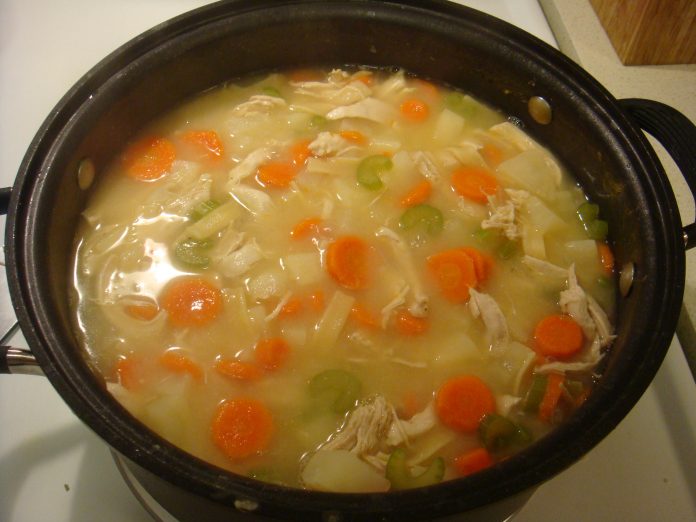
Chicken soup for the soul — and the stomach.

Cold and flu season is fast approaching, along with a whole host of other things that we would rather not think about [cough] mid-terms [cough]. One of the easiest ways to combat feeling under the weather in the fall and winter — other than crawling into a hole and not reemerging until spring — is to make chicken noodle soup. Science might not be able to conclusively prove the effectiveness of this soup in fighting the common cold, but if your grandma says that it works, then why not give it a shot?

My chicken noodle soup recipe is relatively straightforward, but, that being said, there are a few things I would like to point out before getting into the nitty-gritty of things:

Unless you burn your vegetables or add way too many noodles, you can’t mess this recipe up. It is one of the beautiful things about the soup.

Make sure that you have equal amounts of the vegetables — this will give the soup a richer, more balanced flavour; don’t be afraid to add more carrots if yours are a little on the small side.

Chicken Noodle Soup

2 small onions

2–3 stalks celery

3 medium carrots

4–5 cloves of garlic

1–2 tablespoons light flavoured oil (canola or vegetable)

The cooked meat from either 2 chicken legs or 1 breast and 1 leg

1 tablespoon thyme

1 tablespoon sage

1 tablespoon rosemary

1 tablespoon pepper

2 cartons of chicken stock

1½ cups soup noodles (the tiny ones) or half of a bag of egg noodles

Salt to taste

Optional: a peeled 1-inch piece of ginger

1. Begin by peeling the onions and carrots and trimming and washing the celery. Dice the onions and chop the carrots and celery into bite-sized pieces.

2. In a large pot, preferably a Dutch oven, heat the oil over medium heat and add the onion, carrots, and celery. Stir occasionally, cooking for 10–15 minutes. If you are concerned about the vegetables burning, you can turn the heat to low and cook for a longer amount of time.

3. While the vegetables are cooking, finely chop the garlic and slice the ginger (if applicable) and set them aside. Separate the chicken from the bones and skin, discard whatever is not meat, and chop into small or medium sized pieces.

4. Add the chicken to the veggies and cook until warmed through. Once warmed, add the garlic and cook for about three minutes. If you lowered your heat, now would be the time to raise it back to medium.

5. Pour both cartons of chicken stock into the pot with the vegetables and the chicken.

6. Unless you are using ground herbs, take a tea ball or a coffee filter and place the thyme, sage, rosemary, and ginger (if using) inside. Close the tea ball or tie the coffee filter shut with a piece of string and drop into the pot. Add the pepper and taste before adding any salt to the pot.

7. Cover the pot with a lid and bring to a simmer over medium heat for about 10 minutes then reduce the heat. Leave the pot on low for a minimum of 30 minutes and up to a maximum of an hour.

8. Increase the heat to high and add the noodles, cook them to your desired tenderness.

9. Ladle into bowls and enjoy!

Any leftovers will keep in the fridge for about a week, or you can freeze them for up to six months. 

Ryan Adams puts his own spin on 1989

0
I've got a blank space, Ryan Adams, and I'll write your name.

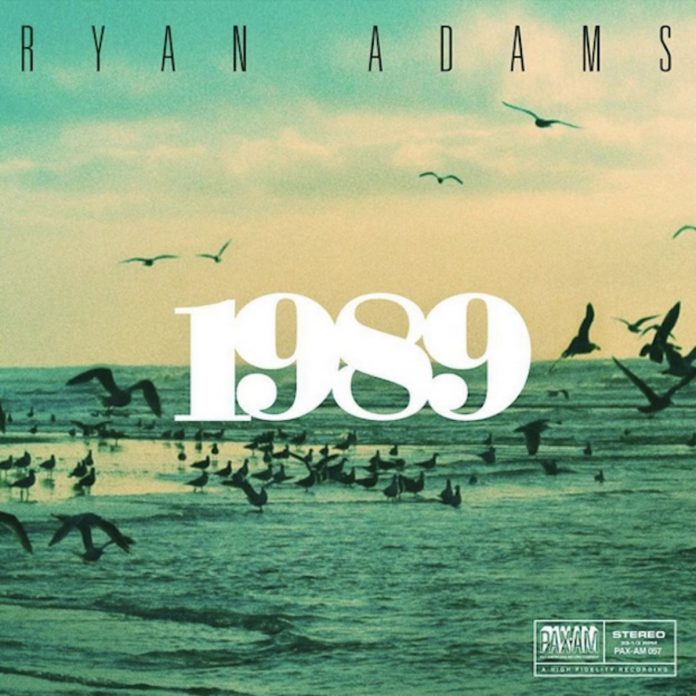
Ryan Adams, in all his alternative rock glory, covered the entirety of Taylor Swift’s pop album 1989 and everybody freaked out — including Taylor Swift, her army of fans, and me. Immediately following its release on September 21, I listened to the album and full on lost myself in the artistry of it.

Ryan Adams stripped down the songs and characterized them in a whole new way that not only showcases his incredible talent, but also draws extra attention to Swift’s lyrical genius. Swift insisted in an interview that, rather than cover songs, the tracks are “re-imaginings” of the originals with different emotions attached to them. It’s a bittersweet reflective album about love and regret — the instrumentals sweep you away and make you feel as though you are getting introduced to 1989 all over again.

Taylor Swift expressed her excitement through many posts on her social media and described the event as “surreal and dreamlike” to have an artist who has long influenced her songwriting to be covering her record.

The album is hard to place in one genre, as each song is so unique. If I had to, I would call it indie rock — but some of the songs have gothic and folk touches in them.

Onto my favorites. “All You Had to Do Was Stay” is a regretful heartbreaker with a baseline and a muted beat replaces the chaotic, greatly underrated, pop anthem. “I Know Places” represents old school gothic rock that chills you. “Style” is my number one pick for sure, because Adams made it into a rock song — just when you thought the song couldn’t get better, Adams swoops in and pays respects to Sonic Youth by changing the original lyric “James Dean daydream look in your eye” to “Daydream Nation look in your eye” and “red lip classic thing” to “pent up love thing.” I almost fainted, the true-to-form rock fangirl I am.

“Wildest Dreams” remains not too altered but a beautiful track on the cover album, and something I would love to see them sing together. And, finally, “Blank Space” is morphed into a chilling ballad, just Adams’ voice and the delicate fingerpicking of acoustic strings.

Even if you didn’t like the pop princess’ original hit record, Ryan Adams’ is a different sound and story that is worth a Spotify shuffle or an iTunes purchase. Try not to feel overwhelmed with feelings at some point — it’s almost impossible. When an exquisite set of renditions like this gets deposited to the public music world, it demands to be heard.

Comic Connoisseur: The Rat Queens lose their magic in second story arc

0
These ladies are ready to rock and roll.

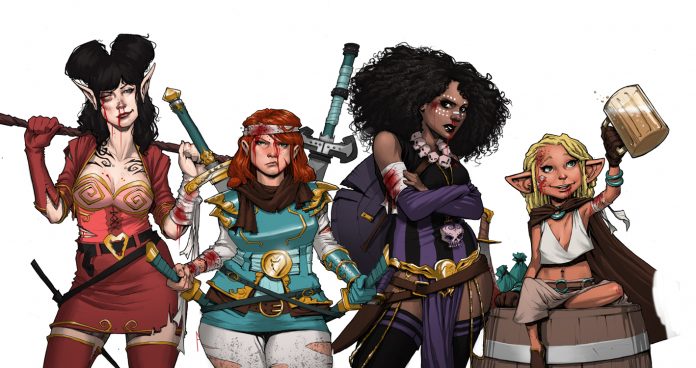
Since their debut in 2013, The Rat Queens have enjoyed a cozy status as one of the more popular mainstream fantasies on comic newsstands. Filled with a spunky cast of well-characterized leading ladies, and enough sex and violence to make a Catholic nun blush, it’s really all you could ever ask for in a series (especially when it comes to filling the void between new Game of Thrones episodes). Unfortunately, The Rat Queens: The Far Reaching Tentacles of N’Rygoth loses momentum with a poorly paced and uninteresting tale in only its second volume.

After saving the city of Palisade from an invasion, the Rat Queens awake from a celebratory night of sex, drugs, and alcohol to pick up the pieces from the night before. However, before the Queens can finish breakfast, an evil rises from the depths of the past. When a crazed widower obtains a mystic artifact, the warrior maidens must hatch a plan to stop the evildoer before all is lost.

While this volume is a step backwards from the successful and hugely entertaining first story arc, this Rat Queens is not without its strong qualities. Roc Upchurch and Stjepan Sejic render the underwhelming arc with fantastically vibrant artwork; the best of the whole series so far. Fight scenes, which were a strong element of past issues, continue to be a gory spectacle of violence. 

Unfortunately, the second volume in the series suffers from a disjointed storyline that places too much of an emphasis on the pasts of its characters. Kurtis J. Wiebe bites off more than he can chew trying to juggle the main plot with complex character origins. If he had chosen to focus on one over the other, the story likely would have come together more cohesively.

Arguably the weakest aspect of the story is its antagonist. The main villain is dull, uninteresting, and hardly present. On a scale of bank robber to intergalactic overlord, this villain rates as an irate Donald Duck having a bad Monday morning. In a 136-page graphic novel, this mundane malefactor has the gall to show up for only 13 pages. Worse still, the fearsome squid demons he summons are about as frightening as a plate of calamari.

In the end, Rat Queens: The Far Reaching Tentacles of N’Rygoth is a fun but unmemorable read that will lead to you forgetting everything you read within an hour. 

Cinephilia: Moving from cynicism to optimism in The Walk

0
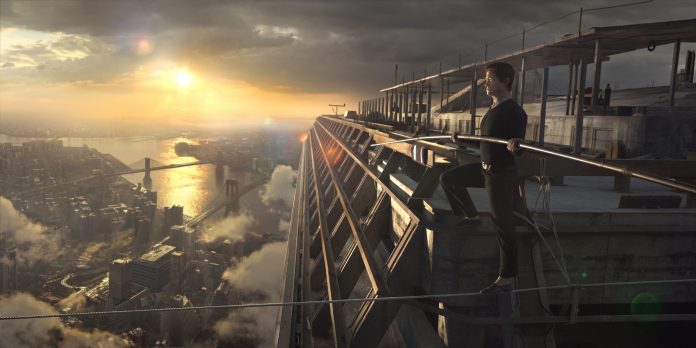
Joseph Gordon-Levitt shines in this exciting film.

For the final 40 minutes of Robert Zemeckis’ The Walk, a playful caper adapted from the true story of Philippe Petit, a high-wire artist that walked between the Twin Towers in New York, we held our breath and only exhaled to yell instructions at the screen: “No, don’t do it!”

Awe-inspiring, spellbinding, mesmerizing, enthralling, entrancing, and many more of these “ings,” The Walk, like Gravity before it, is a technical achievement that must be seen on the biggest screen with the best sound, and oh, that’s only if you’re comfortable with heights  — around 1,350 feet, to be exact.

Based on the same story as James Marsh’s acclaimed documentary Man On Wire, we trace Petit’s early life like a conventional biopic (this is the least inspired portion of the film), but the film mostly takes place leading up to his “artistic coup.”

Through meticulously composed shots, breathtaking visual effects, and a confident performance by Joseph Gordon-Levitt, Zemeckis recreates Petit’s three-hour tightrope walk with poetic tension. Devoid of explosions or cynicism, this is one of the best popcorn movies of the year, and one of the most exuberant and exciting cinematic experiences of my life.

While most of my favorite films of the year come from the art-house circuit, The Walk is the only recent movie that has given me a singular sensation — the movie magic we used to feel as kids and the excitement of being transported by a filmmaker’s rapturous imagination. So far removed from the darkness that has plagued mainstream films in our post-9/11 age, the gleeful optimism in The Walk nearly brought me to tears, even as Petit walks between the two signifiers of human accomplishment that will eventually come crashing down.

But this is precisely the point: The Walk isn’t just marvelous entertainment, it’s also a restoration of our desire to climb higher, to build bigger, and to aspire to do anything we can imagine. It’s an act of mourning with the inspiration to finally move past the fear and the darkness.

Recent efforts like Interstellar and Tomorrowland have tried to convey a similar message, yet both of those films lacked The Walk’s clear-eyed fun. With its unabashed warmth and love, the only recent film it can be compared to is Martin Scorsese’s Hugo. Except, where Scorsese’s love was for the cinema, Zemeckis’ is for humanity.

In the final stretch of The Walk, after Petit has completed his “artistic coup” with his “accomplices,” the tightrope artist is given a “lifetime” pass to the tops of the World Trade Center. Of course, to everyone in the audience, they know this is tragically false. The Walk takes place in 1974, but so many moments of the film are about what would happen close to forty years later. The most eerie shot of the film is not when Petit lays down on a wire almost half a kilometer in the air, but the final shot which fades out on the Twin Towers — a hint of what was to come.

The symbol of human accomplishment may have fallen to fanaticism and hatred, but Zemeckis is trying to resurrect it. Standing on the symbolic Statue of Liberty — emblematic of Western values — Petit narrates his story without ever attributing any motive or reason for his walk. He becomes a broad symbol of human capability.

The Walk may be one of the most exciting and jaw-dropping films of 2015, but it’s also a delicate one that invites us to walk across its tightrope to a world built on optimism and ambition, not fear or cynicism.