Home Blog Page 970

SFU students launch divestment campaign

0
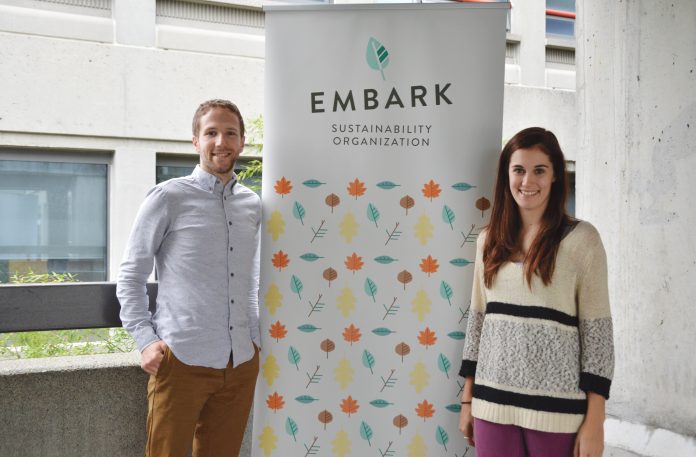
Embark is among three student groups pushing SFU to divest from fossil fuels.

In light of SFU’s 50th anniversary, Embark (formerly Sustainable SFU), SFU 350, and Divest SFU believe it is the perfect time for the university to become a leader in the climate justice movement, starting with a divestment from the fossil fuel industry.

The groups are collaborating to launch a divestment campaign this fall that will see various actions and events in the months to come.

The extraction and consumption of fossil fuels account for the greatest level of carbon emissions by humans, and are thus the greatest threat to the climate.

A report from the UN’s International Panel on Climate Change last year indicates that if carbon emissions are not drastically reduced by 2017, and global temperatures rise by just two degrees celsius, the effects of climate change would be irreversible.

As fourth-year environmental science student and Divest SFU campaigner Tessica Truong pointed out, the impacts of climate change are already being felt in the global south.

Sea levels and temperatures are rising, land is disappearing, drought is causing food insecurity, and the occurrence and severity of natural disasters is increasing, all of which are causing displacement and creating climate refugees.

Truong stated, “It is unethical to be profiting from fossil fuels as an educational institution, when the effects of fossil fuels on the climate are being paid for by others around the world.”

Started in 2013, the Divest SFU campaign was created to petition the SFU Board of Governors to take their endowment fund investments out of the fossil fuel industry in an effort to limit the growth of the industry.

They approached the board in the spring of 2014 with the backing of student groups on campus as well as many faculty members, some showing their support by signing off on an open letter to administration.

The university consequently adopted the United Nations’ Principles for Responsible Investment and also created the Responsible Investment Committee in 2014, the latter of which aims to “review and make recommendations related to responsible investment proposals,” among other responsibilities.

Following the presentation, SFU released this statement from former VP Finance and Administration Pat Hibbitts: “The Divest SFU students made a compelling case about the role of investment in economic policy and we considered their request seriously.” She continued. “This new policy provides for governance of our investment strategy consistent with the UN PRI and our investment objectives.”

However, as Divest SFU sees it, no definitive action has been taken toward divestment, and the campaign continues.

Divestment from fossil fuel campaigns have been taking off in universities across Canada, the United States, and Europe. Stanford University, for instance, has been successful in convincing their board of governors to divest from the coal industry, and is now working toward divestment from all fossil fuels.

At McGill University, students set up a tent city on campus to protest the university’s fossil fuel investment. UBC350 held a referendum in which 77 per cent of students and 62 per cent of faculty voted in favour of divestment. Other institutions, such as Vancity credit union, proudly state that they are not invested in the fossil fuel industry.

One of the main arguments against divestment is that with the world’s already heavy reliance on fossil fuels, it won’t change anything.

Truong acknowledged that “SFU alone will not stop fossil fuel industries, but we do have the power to change the direction, and show leadership.”
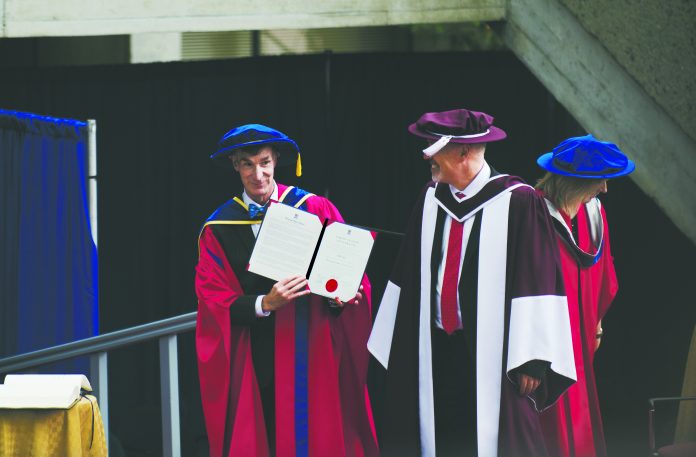

Bill Nye challenges SFU grads to “Change the world!”

0
Bill Nye accepts honorary degree as crowd chants, "Bill! Bill! Bill!"

Bill Nye, more fondly known by many as the “Science Guy,” graced the stage at SFU’s fall convocation as he received an honorary degree in his signature bow tie and SFU regalia. “I don’t normally wear this,” he quipped.

SFU graduates of today would have been Nye’s target audience for his well-loved educational children’s show Bill Nye the Science Guy, which ran on PBS for five seasons from 1993–98.

In Nye’s convocation address, graduands and guests were invited to “consider the following” once again as he spoke to the dangers of climate change, the importance of investing in renewable energy sources, and the power of young people to effect change — all prefaced with a reassuring, “You can trust me, I’m a doctor.”

“Climate change is going to be absolutely the biggest challenge that you face.”

– Bill Nye,
Science Guy

Since his days of teaching scientific concepts to youngsters with a healthy dose of humour, Nye has continued to be a public figure and become a climate change activist.

“Climate change is going to be absolutely the biggest challenge that you face,” he told graduates.

Nye marvelled at how the global population has more than doubled in his own lifetime. That, combined with how thin our atmosphere is, has made it possible for us to affect the earth’s climate.

Space is a lot closer that you would think. “If you could drive straight up at regular highway speeds [. . .] you’d be in outer space in an hour. You’d be above the breathable part of the world’s atmosphere in five minutes,” explained Nye.

Despite the magnitude of the issue of climate change, Nye remains optimistic. “You’re living in an extraordinary time [. . .] when there are this many brains applied to the world’s problems.”

Nye also spoke to the importance of educating women around the globe and adding even more brainpower to finding solutions to world issues.

According to Nye, the solution is renewable energy sources. He added that there is enough wind power in Manitoba and Saskatchewan combined to provide electricity for the whole of North America several times over.

“The key will be to embrace these technologies, or something better, soon enough.”

Nye’s recent visit to the Alberta tar sands has only solidified his position. “When I see the tar sands in Alberta, to me, it doesn’t look like Canada. It looks like an apocalyptic moonscape.

“It is keeping Canada from participating on the world stage in the same way that other countries are stepping up to reduce their global [. . .] greenhouse gas emissions.”

He then brought the audience’s attention to the upcoming federal election, encouraging people to exercise their democratic rights to affect Canada’s impact on the environment. “For those of you who don’t want to vote, would you just shut up and let the rest of us run things?”

On a lighter note, Nye also expressed some of the unabashed love for science for which he is known.

He commented on the wonders of space and the origins of his fascination with the universe. As a young child, he learned that there are more stars in space than there are grains of sand on earth.

He shared an anecdote: “I remember standing on the beach in the US state of Delaware and thinking, ‘I’m pretty insignificant. [. . .] I’m a grain of sand.’

“‘I am nothing! I don’t matter at all!’”

He then reflected on how amazing it is that he, with his human brain, could imagine the expanse of the universe. “With your brain, you can know the cosmos and your place in space. And with your brains, graduates, you can, dare I say it, change the world!”

Laugh Track: Dan Code from Shit Harper Did

0
Dan Code has produced several of Shit Harper Did's videos, as well as their upcoming documentary.

Back in 2011, a website called Shit Harper Did (SHD) launched with a simple premise of presenting Harper- and Conservative-related facts, paired with one-off jokes. As we can all remember, Harper still won that election, but SHD is back and more active than ever this election season with a new website, more videos, and a documentary titled Whoa Canada set for release this month. The Peak caught up with Dan Code, producer for Whoa Canada and many of SHD’s comedy videos, to discuss his comedic beginnings, how people can get involved with the website, and if there’s still a place for SHD in a Harperless Canada.

What are some of the ways you are/have been involved with the Vancouver comedy scene?

Around 2006, I was sort of thrown into the Vancouver comedy scene by necessity. I was working on being a filmmaker and just wanted to shoot as much as possible; in doing so, I met a very funny comedian named Cameron Macleod. Our zero-budget productions often had actors drop out on short notice, so I had to fill in as the other actor. Eventually I was doing live stuff and I spent the next four years performing onstage and shooting videos with Cam and another musician/comedian Steve Nelson in a group called Manhussy. From there I met and performed with a number of different comedy peeps around town, eventually bumping into founder and creator of Shit Harper Did, Sean Devlin.

What inspired you to move from performing live comedy — something very spotlight-heavy — to a more behind-the-scenes field like video production?

I felt I needed to focus more on my film career and less on my comedy career, so I scrapped comedy for a while. The stage also freaked me out a bit, because I was never much of a live performer. I eventually finished a broadcasting program at BCIT and got into shooting reality TV, a.k.a. factory TV. The monotony of it pushed me to start writing and doing my own work again. I started a small company with two other people called Anthem Jackson and we pushed out a bunch of music videos and commercial projects to build our careers. Eventually I connected with Sean to start doing social justice work. It was a natural transition with SHD for me, since I had a background in both news broadcast and comedy. A lot of the political stuff I had to learn very quickly.

What makes comedy an effective way to create a dialogue surrounding politics?

It’s a hook, really. People tend to turn towards comedy when they’re under stress. We all need a laugh and, at the end of the day, not a lot people really want to turn on the news and listen to more disparity. But we still want to know what’s happening and be entertained, but we don’t want it stuffed down our throats. [. . .] They don’t want to see the politician getting yelled out by a crowd; they want to see the politician with their pants around their ankles, red-assed and embarrassed in front of a whole laughing crowd — or in some cases, a flying a dildo disrupting one of their conferences.

What is Shit Harper Did doing differently this election than the one in 2011?

Pushing people to create and get involved. In 2011, it was “Hey, look what we’re doing. Look at what Harper did.” In 2015, it’s “Hey, look what we did and look what you can do too.” We’re trying to get people involved at every level with direct action, which means going face-to-face with your target political figure and making sure they know you’re there and not just a Facebook comment. It means going to their offices or conferences or sneaking into their dinners to discuss your concerns or embarrass them. It means pushing them off of their high horse to a human level. Politicians have a speech they learn and when they’re pushed to answer questions they don’t know how to answer, they embarrass themselves and look like big dorks. Sorry if I’ve offended any dorks.

Is there still a place for Shit Harper Did in a world where the Conservatives are no longer in power? How would it change?

There are still going to be issues. Bills like C-51 and C-24 are not going to disappear; they’re just going to change into something different. Environmental issue such as tar sands and displacing of indigenous people is not going to stop all of a sudden. Racism, corruption, and environmental degradation has happened long before Harper took power and will continue long after he’s dethroned as well. The issue really is that he’s basically created the most problems out of all Canadian PMs. SHD was created to stop this.

If he’s removed, I hope that all the people involved with SHD will continue to fight the good fight in whatever capacity. For me, I’d like to see the dozens of comedians and filmmakers involved move on to a broader, non-partisan platform similar to The Onion. The amazing thing about the last four years is that SHD has built a team of hardworking and amazing people. The website has a lot of users that will still want to be informed and entertained. We have huge collective of comedy writers and filmmakers that will need a place to go. I hope they will want to continue work on something innovative in Canadian comedy.

What can you tell us about the “hard-hitting documentary” that you recently did crowdfunding for?

It’s going to be crazy, almost illegal crazy. There were points during shooting where I had to question if I was going to be added to a no-fly list or something. There were times where we were afraid to discuss our next filming actions over the phone or email. It comes out next week after Thanksgiving and we hope it’s going to burst this giant “I AM CANADIAN” bubble of Canada’s image being squeaky clean. Most importantly, it’s funny. It’s very ridiculous. It took two-and-a-half years to shoot and a ton of people to get this thing done. We are very happy with it.

Many of our readers are eligible to vote in the upcoming election. Do you have any closing words for them?

I really wanted to make a paragraph that just consisted of the work “vote” 300 times, but that’s me just yelling at people. Take from now until the 19th to find everyone you know and make them vote. That’s all. Take three hours from your tablets and your Facebook and your homework and go vote. You even get a half-day off work and school to go do it, so there’s no excuse. If you think that you don’t matter, that’s crazy. You’re letting 61 per cent of the population determine if you can have clean drinking water, beautiful oceans, powerful and diverse communities, freedom of speech, a healthy environment, basic access to childcare and education, affordable healthcare and housing. If you don’t want that, then don’t vote. Let the Conservatives decide that for you.

To learn more about Shit Harper Did or watch some of Code’s videos, visit www.shd.ca.

Dickson’s marvelous hat trick

0
Dickson now leads the team with six goals.

On Thursday night, Saint Martin’s University rolled into town, and it looked like it could be the perfect medicine for an ailing Clan side. Saint Martin’s was the worst defensive team in the GNAC, conceding 19 goals in eight games while SFU has scored only seven goals in the same time period coming into tonight. Needless to say, the Clan got their fix of goals, as they won 5–0.

But the story by the end of the night was Christina Dickson. With the score 2–0 in the 80th minute, she proceeded to score three goals in the span of nine minutes, stunning the crowd in attendance.

“It was a really good team effort,” said Dickson on her performance after the match. “Coming from 2–0 at halftime, we just talked about how we really just had to go out and seal it here, especially at home. It took us a little while but we got there.”

Christina Dickson’s hat trick is an unofficial school record.

While there are no records to indicate if these are among the fastest three goals in women’s soccer history, it is still one incredible achievement. “It feels really good,” said Christina Dickson on her unofficial SFU record. “Especially to come on and just do my job here.”

SFU got off to a fantastic start. Six minutes in, Olivia Aguiar made a powerful run off the left side, cut in, and scored on a hard, high shot to get SFU off to an early lead. They added a second in the 19th minute, when Katelyn Richardson cut through two players and buried the ball into the bottom left corner. The Clan could have had a few more, with Sierra Leung and Devon Kollymer having great chances to find the back of the net.

In the second half, SFU was content to retain possession, forcing Saint Martin’s to attack on the counter. But then Christina Dickson produced her magic. Her first came in the 80th minute, a great shot near the goal line that sailed over the opposing keepers head. Her second came six minutes later, with a hard shot outside the penalty box that the goalie could not clear off the line in time. Then, three minutes later, she completed the hat trick off a rebound.

“I thought we had a slow first half,” said head coach Annie Hamel after the match. “Honestly, the message at halftime was pick up the tempo, pick up the level. I felt like we played down to their level a little bit. As a staff, we were unhappy about that. But I thought the team responded well.

“Finally, we scored more than one goal. It’s a nice confidence builder.”

Coach Hamel was, needless to say, extremely happy with Dickson’s play on the night. “What a performance,” said Hamel on Dickson. “It feels good to finish. I’m glad she had the confidence to do what she did, but I still like to see my strikers a bit more polished. Because in different games, you may not get the second or third chance.”

New bubble tea and waffle cafe opens in New Westminister

0
Innovative waffle toppings and bubble tea flavours make this cafe worth a visit.

Bobacabana, located right in the heart of New Westminster Skytrain Station, is your new favourite local bubble tea and waffle cafe. You’re welcome.

This new innovative business boasts a warm and sophisticated interior design with a mixture of white stone and polished wood furnishings, service that is not short on the utmost sincerity, and dedicated owners who are passionate about bringing you authentic, quality products that they are proud to serve.

The quality and creativity of their menu is astonishing and admirable. The owners of Bobacabana, siblings Chaerean and Shinyu Kim, pride themselves on supporting local and naturally sourced ingredients. “There is a misconception that bubble tea always has to be artificial,” the Kims said. “We want to prioritize quality by keeping our products fresh, artificial-free, and local real fruits and veggies, no sugar added, and vegan options available whenever possible.”

They told me that they make their sweetener and syrups in store, along with their red bean and Speculoos cookie butter (vegan! Coconut milk base. . . What? Am I in heaven?). Some of the local businesses they support include Island Farms in Chilliwack (creamer and milk) and Connected Minds Coffee (micro-roasted coffee beans). Additionally, they get their fruit from a local import company from the Philippines, and mochi (Japanese rice cake) from a local Korean supplier that makes it fresh daily.

What caught my attention initially was that this bubble tea cafe offers what most do not — vegan and dairy-free drink options, along with a beautiful selection of unique waffle creations, both sweet and savoury. My favorite products would have to be their fresh taro milk tea, cold brew coffee, or jasmine milk tea with half vegan creamer and half almond milk; sometimes I opt to keep it simple and traditional with a hot cup of half sweet yuzu citrus honey tea. They also offer delicious and healthy smoothies with tons of real fruits and veggies, no sugar added, and vegan options available.

Although their waffles are not vegan, I took a bite for the team and I hereby announce that they are the perfect texture: crispy on the outside, chewy on the inside, and not invasively sweet. The Speculoos cookie butter is something I recommend through and through, whether in your shake or on your waffle — it’s to die for.

“We just saw a business opportunity and took it — it’s great because you get to be your own boss and create your own recipes,” explained the Kims. “It’s easy to stay motivated because we’re passionate about our business, but the difficult part is timing everything and doing everything we’re not so passionate about to get to our dream.”

If you’re looking for a new community-based hub to hang out in (with very decent prices), Bobacabana is this season’s new local foodie favorite.

Stan Douglas at SFU Woodward’s

0
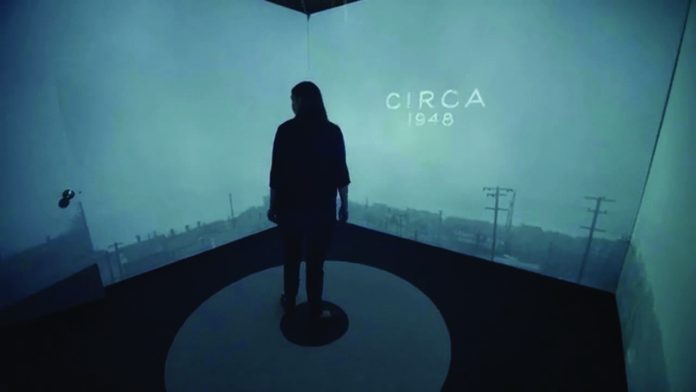
Circa 1948 lets viewers explore postwar Vancouver.

Anyone who has passed by the atrium at Woodward’s is familiar with Stan Douglas, as his work Abbott & Cordova, 7 August 1971 forms an imposing part of the space. In the past couple of weeks, however, there was a lot more of Stan Douglas around Vancouver.

Currently occupying the Woodward’s atrium is a nondescript, grey cube. A collaborative piece with the National Film Board (NFB), Circa 1948 is an interactive, immersive experience that transports a single viewer at a time to either the previous Hotel Vancouver or Hogan’s Alley in postwar Vancouver and allows them to walk around their chosen environment.

Meanwhile, the Vancouver Art Gallery’s recently closed exhibit, the Persistence of the Real, included his work Luanda-Khinsasa, a six hour-long film of a period recording studio jazz jam. This was followed up by a very well-attended artist’s talk and Q&A period at SFU Woodward’s on September 24.

At Woodward’s, Douglas fielded questions from students on his artistic process, subject matter, collaboration with the NFB, and the socio-political relationships that surrounded his work. Facing question after question from a highly interested and informed crowd, the Q&A resembled more of a collective group interview than anything else.

An important part of the talk was a conversation about artistic accessibility. An organization like the NFB has a mandate that is focused on creating work that is accessible to Canadians. According to Douglas, this conversation around accessibility changed how the work developed into its final form. An initial direction was for the viewer to physically occupy the spaces explored by Circa 1948, and listen to the past in an open-ended manner. However, concerns over accessibility drew it into the realm of an app and an immersive experience which bears much similarity to a video game.

However, the collaboration went both ways: for instance, Douglas described his input and focus on the creation of the environments as distinctly photographic, more on “the effects of light as you move through space” than on the trees, or the smoke of the chimneys in the environments they rendered.

Douglas utilizes art to project and explore how historical events relate to the present. The locations chosen for Circa 1948 are troubled by recession, conflict over space, and socioeconomic inequalities — circumstances familiar to us today. Meanwhile, through the mixture of music and smooth, seemingly endless visual imagery, Luanda-Kinshasa presents a utopian, idealistic representation of how the world could be; one that is more in line with early science fiction than current views. Its utopian idealism contrasts with contemporary social pressures and popular narratives of dystopic and dysfunctional futures.

This focus on space which Douglas framed was in asking “how did it get to be this way?” This question is a focus in many of his works, Abbott & Cordova included. Douglas’ focus on class, spaces of contention, and inequality that we might rather ignore and forget places his practice at odds with typical historical narratives.

I found myself more curious about the circumstances and history of the space I was exploring than I necessarily would have been through a traditional film. This kind of work, which looks at our contested spaces, might have an important role in filling in the gaps in our historical narratives. Circa 1948 will soon wrap up in Vancouver to go on a cross-Canada tour, beyond that who knows where its home will be. Perhaps we should take a moment to look at the future of these narratives, and ask ourselves: how did we get here?

Studio 58 reimagines Romeo & Juliet

0
The Capulet-Montague feud doesn't stop Romeo and Juliet from falling in love.

The classic Shakespearean play Romeo & Juliet is widely known for the tragic plight of its titular star-crossed lovers. The decade of the 1960s, nearly 400 years after the original play was written, was a time of partying and big hair, embracing peace, and social change. Nobody would think that these two subjects could be combined into an innovative theatre production, but the students from Langara College’s Studio 58 have done just that. Somehow, it works.

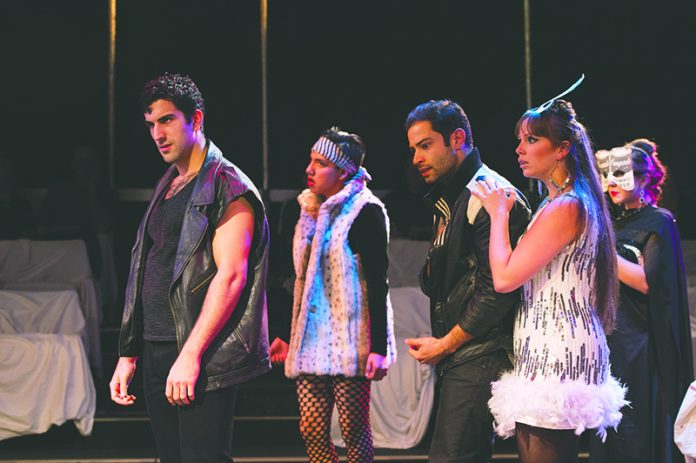
The story is set in 1965, and opens during one of artist Andy Warhol’s famous Factory parties, where members of the feuding families of Capulet and Montague are in attendance. It is there that Juliet Capulet first catches Romeo Montague’s eye, and they begin a passionate love affair despite the hatred between their two families, with Warhol filming every step of their relationship along the way.

This adaptation of Romeo & Juliet creatively reinterprets several aspects of the original story. Aside from Warhol’s initial Factory party, several ’60s songs are played or performed by members of the cast to accentuate the mood of the transpiring scene. Some scenes are even devoid of dialogue completely, only narrating the events that are unfolding with an artful soundtrack and purposeful blocking of cast members’ movements. Every move and set decision was executed with intention and precision. In fact, they had to be, as the set and choreography were essentially what made re-enacting the story of Romeo & Juliet in the ’60s seem natural and effortless.

Interesting decisions were also made on the part of portraying the play’s original cast members. For instance, the originally pious Friar Laurence (here simply Laurence, played by Brandon Bragg) that marries the couple is hilariously portrayed as a weed gathering hippie, and Juliet’s nurse is instead her sassy, outspoken, and flirtatious cousin Nance (Samantha Pawliuk). Lastly, the main role of Romeo is portrayed as a woman (Camille Legg), as other characters refer to her using feminine pronouns consistently throughout the play.

Bragg and Pawliuk both brought humour and wit to their roles that brought out a few laughs from the audience. Legg brought an emotional depth to Romeo as well as a strong willfulness. Her lady love Juliet (Adelleh Furseth) was also fierce and passionate, delivering Shakespearean verse with a quick and quirky tongue. Another standout performance came from Conor Stinson-O’Gorman, who played Romeo’s outspoken friend Mercutio, as he delivered each line with a profound commitment to his character’s loud (and sometimes crass) personality.

Studio 58’s adaptation of Romeo & Juliet uses the pop art of Andy Warhol to paint the Shakespearean classic with fresh colours. Whether depicting a rocking Factory party or an intense feud between families, this eclectic production about the famous star-crossed lovers is worth seeing.

My Internship in Canada is a rare blend of art and politics

0
Sovereign Pascal arrives from Haiti to assist an independent MP in rural Quebec.

We don’t do art and politics. Here in Canada, there’s an unspoken understanding that our politics aren’t interesting, entertaining, or worth our attention. Look south of the 49th parallel, or across the pond to Great Britain, and there exists a long-standing tradition of combining the two. From satire in Yes Minister and Veep to political thrillers like Scandal and the countless action movies involving the President of the United States either saving the world or being kidnapped — there are many to choose from.

Here at home, not so much. While we will probably never have the same level of political or cultural clout as our neighbours, Canadian history and politics are nevertheless rife with disbelief, absurdity, and questionable ethics. After all, the great white north is the land of Louis Riel, residential schools, the Alberta eugenics board, the FLQ, the Oka Crisis, fastcat fiasco, sponsorship scandal, Mike Duffy, and countless others that don’t jive with the innocent hockey playing, red-uniformed, constantly apologizing Mountie image.

Fortunately, this year’s Vancouver International Film Festival included a rare product of the marriage of art and Canadian politics, in Philippe Falardeau’s My Internship in Canada. The Quebecois director’s film follows Sovereign Pascal, an idealistic Haitian who travels to rural Quebec to work for the local independent Member of Parliament, Steve Guibord. It is an endearingly witty satire of both our parliamentary politics and what it means to be Canadian.

As the two travel around the riding in preparation for a parliamentary war vote, Falardeau deftly combines the conflicting interests of our diverse country, while referencing our Canadian past and present. They meet a large ensemble of characters all focused on their personal and immediate needs rather than the national issues at hand.

This ensemble covers a wide breadth of Canadian diversity from local politicians, to the Algonquin First Nations, middle class pacifists, and a politically disinterested teenager who doesn’t care for politics. Falardeau also utilizes the vastness of the Canadian landscape as both an agent in the story and as a poetic piece in true Canadian form. Supported by strong performances, the film excels by representing a great variety of Canadians while satirically skewering just about everyone on the political spectrum in equal measure.

The film also benefits from Pascal’s outside perspective as he reconciles his extreme interest and naivete about Canada with his first-hand experience on the ground. As the film progresses, he relays his experiences to his family back in Haiti to ever larger and more curious crowds; we viewers form part of the same audience, looking at Canada from a detached perspective where we can laugh at ourselves.

This structure helps highlight the absurdity of the events that transpire in the film, and reminds us to have some perspective when considering our own status on the international stage. For all the chaos that transpires in this slice of rural Quebec, the outside perspective remains upbeat. For as much as the volume turns up on the conversation around our shifting and declining reputation, it’s easy to forget that Canada is still the amongst the most respected nations in the world by just about anyone who isn’t a diplomat or academic.

With so much of it revolving around uniquely Canadian circumstances, My Internship in Canada will probably have limited success abroad. Here at home, though, it fits into a tradition of art that focuses on our shared identity and what it means to be Canadian, even when it can sometimes look and sound like a farcical stereotype to outsiders.

In doing so, the film joins the likes of Canadassimo at this year’s Venice Biennale, Douglas Coupland’s book Souvenir of Canada, and the Secret Handshake portion of last year’s Coupland retrospective at the Vancouver Art Gallery.

Examining what it means to be Canadian is a fluid concept, but important to consider in order to come to terms with our past and our present. On October 19, Canadians will go to the polls. Behind stability, change, the Syrian refugee crisis, and the niqab controversy lies an open question about our identity and direction as a nation.

Confessions of an uninformed voter

1
Photo Credit: Momo Lin

We all know that one guy who seems to know nothing about politics; he’s also that guy who didn’t know that the Bloc Quebecois was a thing. Let’s face it, folks: uninformed voters infiltrate SFU’s halls. I am one of those people.

When asked who I’m voting for, I typically respond with: “Not Harper, that’s for sure!” Why not, though?

If you’re able to answer this question, then mega props to you. However, if you’re anything like me, you rebut with a quick “[insert non-Conservative party leader name] would be better.” Of course, here you’re able to get away with not answering the actual question, and then chime in a few facts you read off Vancity Buzz while waiting for your buddy’s Dubsmash video to load.

I couldn’t tell you why not to vote Conservative, except for all the money being put towards the military, too much unnecessary international involvement, Bill C-51, their position on climate change, Harper’s weird face, et cetera. If you’re still not convinced, I just discovered WhyNotHarper.ca, so do be sure to check that out.

Since I wouldn’t be voting for either Conservative (because, well, duh) or Green (because I want my vote to matter), I looked up the NDP and Liberal parties. My political leanings were initially 50/50, since political stance websites told me I was between both parties.

I applied to volunteer for both the NDP and Liberals. What I got from the NDP was a series of daily emails which stated things like, “the next 20 days will decide if we send Tom Mulcair to Ottawa as our next prime minister or if we’re stuck with another four years of Stephen Harper,” “we’ve got 19 days to go to defeat Stephen Harper,” and “our priority is to defeat Stephen Harper.”

Trudeau’s largest influence for me, though, is definitely his flowing flowing hair — [cough] I mean, his stances.

The countless emails I receive each day are not fun to read. Bro, like, here I am looking to volunteer my time, and here you are bashing my head in with these harsh vibes. Rather than focusing on what’s wrong with other parties, remind voters why they should be voting for you.

This reminds me of Mulcair’s nickname he earned as an MP: the Pitbull. I don’t want a Pitbull serving as my PM, thank you very much. Rapper Pitbull, on the other hand, with those stunner shades and bald head of his, would make an amazing leader. He is referred to as Mr. International, so we know he’ll implement excellent worldwide policies. Free booze for all — holla!

While my inbox floods itself with angry NDP mail, it smiles contentedly at the sole email received from Trudeau’s party. They simply thanked me for volunteering my time through an automated message. Then, I got a call the following day asking when I was able to meet my riding’s leader and what positions I could take.

This kind, relaxed approach was refreshing to see. Trudeau’s largest influence for me, though, is definitely his flowing flowing hair — [cough] I mean, his stances. He’s vowed to create more student jobs, to teach the youth of Canada about politics and voting, to amend Bill C-51, and to fund transit systems all across Canada.

So now, when I’m asked who I’ll vote for, I stand proud and respond bravely with: Justin Trudeau.

He’s a good man with kind eyes, I might add. He truly believes in Canada and its ability to develop where it needs to, and to sustain what’s already golden. I believe him when he says that he knows how to improve Canada by enacting real change. He seems realistic. He seems goal-oriented. He’s just, you know, ready.

Woohoo, Boohoo

1

Boohoo: The Rhinoceros Party

In an already-cluttered sea of stupid and untrustworthy Canadian political parties, for the love of God, do not place your trust with the dimwitted hosers in the Rhinoceros Party. Tick the ballot box on literally anything else this fall, and rid the Great White North of the most worthless group of individuals since Nickelback.

These buffoons wanted to repeal the law of gravity, and ban guns, horrible winters, and butter. You can expect to place your faith in a group of politicians whom were willing to declare war on Belgium when the fictitious icon Tintin killed some insignificant rhino. Or in a party that once proposed to make the Trans-Canada Highway a one-way road, and to abolish all crime in Canada by simply getting rid of all laws. Hell, voting Pirate Party of Canada makes more bloody sense.

Woohoo: A Swinger’s party

Still feeling jilted by your rejection into a SFU fraternity or sorority? Well, put down your Ben & Jerry’s Cherry Garcia, and toss your car keys in the bowl, sailor: take a walk on the wild side and come join in on the fun of a swinger’s party.

Jam packed with discreet hideouts, coded speech and super secret lingo, why kick it like a vanilla* when you could be getting your rocks off with the progressively avant-garde. Practice your horizontal mambo with an array of different lovers, and keep your sex life positively energized and diverse.

It’s been said that being a swinger increases the quality, quantity and frequency of sexual activity (and who doesn’t want that?). So keep your eyes peeled for the ceramic hedgehog* in your community, because chances are behind closed doors the ‘70s live on.

*term for non-swinger.