Home Blog Page 909

Dont kiss this bug!

0
Kissing bugs transmit Chagas by biting people’s faces and defecating into the wound. - Illustration by Christina Kruger-Woodrow

[dropcap]S[/dropcap]FU researchers have teamed up with scientists around the world to deliver a report on the disease-carrying ‘kissing bug.’

More formally known as the Rhodnius prolixus, kissing bugs feed on the blood of mammals, birds, and reptiles.

They transmit Chagas disease when they simultaneously ‘kiss,’ a much more romantic way to say bite, a person’s face and defecate. Transmission occurs when the feces gets rubbed into the bite wound or another entrance to the body, such as an eye or mouth.

The group of researchers is made up of scientists from Guatemala, Colombia, Brazil, Argentina, Mexico, the United States. Their goal is to further the development of insect control methods in order to reduce the impact that Chagas disease has on certain impoverished areas of Latin America. Their report contains new information on the insect’s evolution and biology.

Chagas disease, discovered in 1909 by Carlos Chagas, affects roughly 7–10 million people worldwide, according to the Centers for Disease Control and Prevention. While only affecting approximately 300,000 people in the United States and around 5,000 to 10,000 in Canada, most of whom are immigrants from Latin America, an overwhelming majority of those diagnosed are currently living throughout Mexico, as well as Central and South America.

The leading cause of cardiac disease in Latin America, the disease disproportionately affects those living in poverty. This is because the kissing bugs that transmit the disease are often found residing in the cracks and holes of substandard housing.

Transmission can occur from contaminated blood transfusions, infected organ transplants, from mother to child, and most rarely, contaminated food or drink; however, the most common method of transmission is from kissing bugs, of which there are over 100 species.

SFU Biology Professor Carl Lowenberger, one of the authors of the report, explained that “understanding the molecular biology can allow researchers to more easily identify kissing bug-specific genes or processes that can serve as targets for new transmission reducing drugs or insecticides.”


App that tracks the homeless is simply dehumanizing

1

[dropcap]W[/dropcap]hoever first claimed that all publicity is good publicity had either lived a very charmed life until that point or invested in a very large bottle of vodka that night. Depending on the circumstances, naively placing someone under an unsolicited spotlight can be downright cruel, no matter your intentions. Right now, nobody knows that better than the homeless population of New York City.

Recently, residents of the metropolis have taken to social media in an attempt to address the prominent issue of homelessness in their city, where over 57,700 people live in shelters, and many more have nowhere but the cold streets to call their own. Their goal is allegedly to draw the city’s attention to the problem of homelessness and push them to address it.

For instance, Facebook group Third & 33rd was created as a space where people could “share photos of disturbing things they see [in the streets] and push collectively for change,” according to group admin Lauren Pohl. Meanwhile, smartphone application Map the Homeless, developed by Murray Hill resident David Fox, allows users to upload photos of homeless people to identify which areas have the densest homeless populations. Photos can be submitted with accompanying hashtags like #NeedsMedicalAid or #PassedOut, to alert people to the plights of the subjects.

Fortunately, the majority of New York’s participating citizens appear to be morally sound in their motives — helping both the disadvantaged and the city. Unfortunately, the relative privilege of your average New York citizen has blinded them to the idea that they may not, in fact, know how best to handle this issue.

These photos paint people in a humiliating light, framing them as a problem to be solved.

None of these “activists” appear to have actually consulted members of the homeless popular on what kinds of aid they would benefit them most. Rather, they’ve decided for themselves what the ideal action plan would be. Never mind that the vast majority have neither experience with homelessness nor any other notable qualifications for taking charge of this situation.

It’s a very condescending way to offer assistance. They may be trying to help, but ultimately they’re treating homeless populations not as equals in need of aid but as children who don’t know what they’re doing and who aren’t in a position to understand these people’s  needs.

Frankly, being showcased on the Internet in this manner might be the very last thing the homeless in New York need right now. These photos paint them in a humiliating light, framing them as a problem to be solved rather than as disadvantaged individuals who deserve better.

When selecting hashtags, how often do you suppose the average user of Map the Homeless asks for a person’s name? Their story? What they want, what they need? How often do you think people so much as stop to ask for permission to post that photo they just took?

Probably not often, if at all. That’s really dehumanizing.

New York City cannot magically end homelessness and poverty overnight, no matter how much its citizens complain about it. Raising awareness sounds nice, but at the end of the day, if the city had a method to alleviate the issue, they would have to be truly monstrous not to have implemented it by now.

If people really want to help the homeless, perhaps they should take action themselves rather than complain to others on social media. One thing that any disadvantaged person can agree on is the value of a meal, or clean water, or shelter. There are volunteer and charity opportunities, and so many other ways to provide aid; methods that don’t compromise people’s privacy, and allow them to retain their dignity.

SFU White Student Union is an opportunity for dialogue, not anger

0

[dropcap]O[/dropcap]n Tuesday November 24, a group called the SFU White Student Union surfaced on Facebook, bringing the issue of white privilege and ignorance to the forefront of discussion on campus. Unsurprising in the least, student responses to the page have been heated and volatile since the page’s activation, with many immediately calling for its removal.

While the cries for the group’s banishment are justified, a majority of students are squandering an opportunity to open the gates of meaningful discussion on the grounds that they’d rather throw a fit on social media than talk productively with the other party.

Am I fan of a white student union? Not in the least. But, others tend to think otherwise, and the very least we could do is hear what they have to say about it. Whether they’re right or wrong is honestly unsubstantial — what is important is that we have the discussion in the first place. Respectfully listening to each party’s thoughts on the matter and engaging in worthwhile discussion could lead to both parties considering alternative perspectives in a critical manner.

Instead, however, we have grown adults throwing tantrums on message boards. This is frankly as embarrassing as it is disheartening, given our status as university students. As the leaders of tomorrow, we should be held to a higher standard of practice. We should facilitate meaningful debate as opposed to an abrasive assault on the part of students with ignorant tendencies. After all, we came to university to learn and to become better people, not to tar and feather those in need of a reality check.

Sarcastic online comments are comparable to a one-page cheat-sheet in a first year Earth Science course.

The fact of the matter is that people like being called racist just as much as they like being called stupid. It shouldn’t be a surprise to anyone why someone would be less inclined to gravitate towards discussion when they’ve just been compared to Hitler.

At the end of the day, a cheeky meme or angry criticism on a message board is about as unproductive as the creation of a white student union. Sarcastic comments on social media are comparable to a one-page cheat sheet in a first-year Earth Science course. If you think it’s going to be helpful, you’re sadly, sadly mistaken.

Part of the problem lies in how students present their arguments towards those in favour of something like such a union. Too often, educated individuals choose to impart knowledgeable insights to those with deficit with the tactful exuberance of Shylock collecting debts with a Louisville slugger. If people actually took the time to talk candidly and, dare I say, with some compassion, we might see some worthwhile results for a change.

Now, it’s worth taking into account that, recently, CBC and other news outlets report the rise of similar “White Student Union” Facebook pages in response to recent posts made by white supremacists on the Internet. This still doesn’t make it any less of an important topic to discuss. As we speak, White Student Union Facebook groups are sprouting up across the US as well as in Canada. This is reason alone to push away from our keyboards and begin to do something a touch more productive than posting a meme of Gene Wilder smirking.

Geekenders present “nerdlesque” Jurassic Parody

0

Dinosaurs roamed the earth 65.5 million years ago. For those of us who were not alive back then, Jurassic Parody brings these amazing creatures back to life. Through some DNA splicing, this jukebox musical filled up the York Theatre from November 17–21. Brought to us by the “nerdlesque” group Geekenders, the show was a true parody, full of clowning and caricature.

The costumes were absolutely gorgeous. The sparkly green dinosaurs stood out on the stage, with brilliantly clever headpieces to denote the types of dinosaurs represented. The rest of the cast was bedecked in acutely accurate costumes to their film counterparts, helping the audience identify all the iconic characters.

Brilliant acting choices studded the performance, especially in portrayals of the main characters. Standouts on this front were Stephan Blakley (Dr. Alan Grant), Rob Gillespie (John Hammond), Ryan Caron (Tim Murphy), and Graeme Thompson (Dr. Ian Malcolm). An especially hilarious and excellently delivered Old Spice commercial-inspired monologue from Thompson was one of the highlights of the show.

There were some great moments from the chorus of dinosaurs. Numbers such as “Toxic Love” and “Eating All the Kids” both boasted clever choreography and great vocals. The physicality of the sickly triceratops was exceedingly excellent, as was every number Alison Jenkins (Tyrannosaurus Rex) performed. Jenkins’ voice and stage presence, as well as the vocal talents from Caitlin Carhoun (Lex Murphy) and Jesse Alvarez (Mr. DNA, Dr. Wu, Dodgson, park guide), were high point of the show, as was her incredible stage presence.

The all-ages friendly performance also had great lighting design, with an effective use of gels and gobos (colours and shapes) to set each scene. The electric fence used throughout the performance was a genius idea cleverly implemented.

Unfortunately, some mic issues marred the show, as well as a few memorization stumbles. Additionally, the performance of “Putting It Together,” as well as some larger group numbers, were regrettably confused and off-key. Yet, despite these issues, the performance overall was enjoyable and entertaining.

But why Jurassic Park? Fairlith Harvey, writer of the musical and artistic director of Geekenders, says that “people who see that film love that film.” Stephen Blakley added, “I don’t think any movie I’ve ever seen captures that feeling of wonderment” in the same way as Jurassic Park.

Known for performing original pieces often based on iconic works, Ryan Caron said that the Geekenders love “telling stories in different ways.” The balance that must be maintained, says Harvey, is “making the performance accessible while still giving it layers.”

Jurassic Parody was certainly a spirited performance, full of stellar moments and memorable numbers. It was a hilarious romp into the land of the dinosaurs, and one I would gladly watch again.

The five best albums of 2015

0

Adele – 25

Released November 20

Step one: pile your car up with your closest of friends and several blankets. Step two: drive in silence to a beautiful, scenic park — one in which you can star-gaze (perhaps up on top of the mountain). Step three: plug Adele’s latest album into your CD player. Step four: hit play, crank the sound up real loud, and lay on the your blanket while staring at the sky. Oh, and don’t worry about getting cold — your tears will warm you right up. You will feel things that never seemed real. Adele’s 25 presents an out-of-body experience, one that will you will never forget.

WEB-Big Grams-Epic Records

Big Grams – Big Grams (EP)

Released September 25

When a rapper and an electronic rocker announce an EP together, it’s hard to predict just how well they will pair. It could either turn out like Triple O’s questionable peanut butter and jalapeno burger, or it could become a 21st century classic like Netflix and chill. Just like the latter, Phantogram and Big Boi’s debut EP killed it. In my eyes, their album is not merely one of the best of 2015, but of all time. Each of the seven tracks belonging to this black and gold album is crafted meticulously to get you to feel things. Personally, I feel like jamming out. You can’t not — I dare you.

WEB-Kendrick Lamar-Top Dawg Entertainment and Aftermath Entertainment, Interscope Records

Kendrick Lamar – To Pimp a Butterfly

Released March 15

In 2008, he blew us away with Section.80. In 2012, it was Good Kid, M.A.A.D City, and this year, it was To Pimp A Butterfly. Beginning with the early release of his track “i,” audiences worldwide could already tell that Kendrick Lamar had something incredible in store, and boy, did he ever. Aside from winning a whole bunch of Grammys over the past several years, there’s something about Kendrick that most of other rappers lack. To Pimp A Butterfly remains a unique, creative, and passionate experience. My favourite tracks on the album are “Alright,” “King Kunta,” and “Wesley’s Theory.”

WEB-Lianne-La-Havas-Warner Bros Records

Lianne La Havas – Blood

Released July 31

Singer/songwriter Lianne Charlotte Barnes is a British-born star. Her very first album won her iTunes’ album of the year back in 2012. Her second album, Blood, is just as good, if not better. Havas’ vocals are authentic, like Adele’s but in a different genre. She is more a combination of soul, folk, and R&B, and her voice is so, so beautiful. I recommend this album when you’re feeling good, or even not so good. I recommend it when you’re driving, when you’re crying, when you’re showering — this album is so distinct in its genre and yet fits every occasion perfectly.

WEB-ZHU – Genesis Series-Columbia Records

ZHU – Genesis Series (EP)

Released November 6

I think I’m slowly discovering that I am no longer a concert person. But, when it comes to ZHU, I would hop on a boat, a plane, a train — anything, really — to see him perform. ZHU doesn’t just give you EDM served on a platter. With him, you’re in for a 10-course meal, ranging from reggae to jazz. On this latest EP, one which he deviously released a track at a time over several weeks, he produces sounds so smoothly and uniquely you’ll find each one of his six songs at the top of your Most Played playlist. Fun fact: every single song on the EP is a single. If that doesn’t make you realize that this is easily one of the best EPs of all time, I’m not sure what will.


Shout-outs

These albums were pretty great, but didn’t make the final cut.

The Weeknd’s Beauty Behind The Madness, Snoop Dogg’s Bush, Major Lazer’s Peace is the Mission, Tame Impala’s Currents, Ratatat’s Magnifique, Bryson Tiller’s T R A P S O U L, A$AP Rocky’s At.Long.Last.A$AP, Mick Jenkins’ Wave[s], Nate Ruess’ Grand Romantic, and Justin Bieber’s Purpose.

Comic Connoisseur: Hobo Mom will leave you heartbroken and wanting more

0

At a slim 66 pages, Hobo Mom can seem a little underwhelming as a graphic novel, given that most mainstream comics are about twice the size. However, as the old adage goes, one should never judge a book by its cover — or, in this case, its thickness. Sure, it’s cliche, but that is beside the point. In a fraction of the pages of a typical graphic novel, this story packs an unquestionable emotional wallop leaving its readers with one contextually complex story of heartache. 

Hobo Mom follows the story of Natasha, a homeless mother who returns home to her estranged family. After many years apart, the wayward matriarch seeks to mend the past with her embittered husband and rekindle a relationship with her daughter, Sissy. Disguised as a friend of the family, Natasha begins to fashion a strong bond with her young child, much to the displeasure of her spouse, who still harbours a chip on his shoulder. However, as the family begins to come together as it once was, Natasha cannot help but feel drawn to escape the life she has just returned to.

The strength of the narrative rests not on what is provided in the story, but on what is missing from it. While a lack of exposition can in many situations contribute to confusion on the part of the audience, it works to the strength of Hobo Mom, enriching the overall experience for its readers. Part of what enlivens the tale is coming up with your own theories and ideas surrounding the origins and motives of each of the story’s characters.

Another one of its strengths lies in its three main characters, all of whom help make the reading experience both balanced and captivating. We can enjoy different levels of perspicacity as they focus on each character’s story arc coming full circle. Interactions between the story’s leads are poignant and tender, serving as a strong reason for the comic’s success.

Most engrossing of all, Hobo Mom explores the implication surrounding the right for all of us to be happy, and how this concept is inherently problematic. Through its pages, we can see firsthand the proof that happiness comes at great personal sacrifice — a price not as easily paid as some would have you believe.


It’s short and bittersweet; Charles Forsman and Max de Radigues have put together an engrossing and emotionally draining masterstroke of fiction. Chalk full of near-infinite depth and complexity, Hobo Mom might look like a graphic novel to pass up, when in actuality it is worthy of remembrance well after its final page.

Cinephilia: Victor Frankenstein fails to breathe life into a classic tale

0

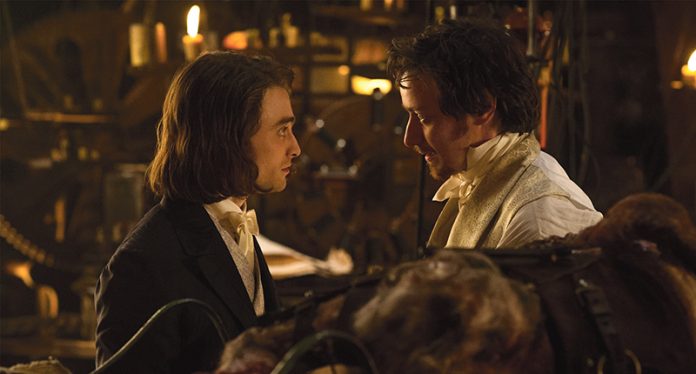
Do you prefer your Franken-shteene or -shtine? I’m more a “shteener” than a “shtiner,” but Paul McGuigan’s confused Victor Frankenstein is neither Mel Brooks parody nor classic gothic horror. The film shifts between tones without satisfying either connotation of these genres.

Victor Frankenstein is an origin story to Mary Shelley’s classic novel and the Universal monster flicks that it inspired. A hunchback (Daniel Radcliffe) is enslaved in a circus but freed by a local medical doctor, Victor Frankenstein (James McAvoy), in order to become an assistant in an ominous experiment.

Victor, a mad scientist with a nefarious laugh and all, names him Igor (not I-gor) after draining fluid from his hunchback and straightening his posture. Later, despite some mild tentativeness on Igor’s part, he helps his new master create life, and eventually, a violent, undead monster. Meanwhile, a local detective and religious fanatic tries to arrest Frankenstein, a proto-scientist, for playing God and trying to create life.

At the lifeless heart of the film is a clash between science and religion, dogma and observable research. Victor Frankenstein is a scientist with a god complex, a man trying to create life “in his own image” who is surrounded by modernist technologies with clocks, spindles, and gizmos. Frankenstein is a contemporary deity — at one point he even asks Igor to “believe in him.” The detective, on the other hand, is a devout Christian who thinks Frankenstein’s secular worldview must be squashed in his rosary-clenching palm.

But, in a foray of campy dialogue, half-rendered CGI, and bonkers performances, the themes from Max Landis’ screenplay bog down what could be a potentially fun B-movie, and point to a deep-rooted tension between Shelley’s original text and Landis’ revisionist tendencies. Where the original story cautioned against playing God, the message in Victor Frankenstein condescends the Christian detective, viewing them as an illogical fanatic in order to pander towards a more current and scientifically-inclined audience.

It’s not a thoughtful or scary Frankenstein, but it’s hardly a fun “Frankenshteen” flick, either. Paul McGuigan begins the film with steam-punk bravado, evoking a never-made Guy Ritchie Frankenstein, but he almost never finds an interesting style or perspective for this story. The monsters suck! The action is too sanitized while the film unabashedly boring. For a story rooted in gothic lore, modernist invention, and expressionist imagery, McGuigan’s direction of the visuals is barely functional.

McAvoy and Radcliffe do their best in poorly-written roles to defibrillate this corpse of a film, which is long dead, but the rough editing that covers the violence like a parent’s overprotective hand certainly doesn’t help find any pulse either.

Victor Frankenstein isn’t imaginative enough, scary enough, or crazy enough. When one character calls the mad scientist “Frankensteen,” calling back to the running gag in Mel Brooks’ The Young Frankenstein, it’s already clear this film isn’t witty parody, entertaining camp, or thoughtful horror. Neither a “shteener” nor a “shtiner,” this film is a “shtinker.”

SFU’s new Chamber Choir prepares for debut performance

0

One of SFU’s newest performing arts groups is set to make its debut, helping add to the evolving culture scene on campus. The brand-new SFU Chamber Choir will be joining the SFU Choir at their upcoming Winter Winds concert on December 5, with artistic director Melissa Ratcliff at the helm for both groups.

In a first for the SFU Choir, they will be performing a baroque piece in Carl Philipp Emanuel Bach’s Magnificat. The Chamber Choir will complement the concert by performing the Western Winds Mass by John Tavener, a five-movement composition that was reportedly written by Henry VIII, although Ratcliff herself seems doubtful.      

Ratcliff has been the driving force behind SFU Choir for a number of years now, and believes it is “a hidden gem in Vancouver,” comprised entirely of non-music students who simply have a passion for song. Even when she talks about her hopes for the new group, she prioritizes inspiring new members among the SFU student body.

“I’d love for the concert to be really successful and obviously sell a lot of tickets, but I’d really like to interest more of the music community at SFU and the area to come on out,” said Ratcliff. “I’d like to get more of the local talent who is interested in chamber music to come on out and audition for the choir. I’d love to have a longer roster of names.”

Now she’s expanded that goal to the Chamber Choir, a smaller group with whom she hopes to tackle a laundry list of pieces that weren’t suited to the larger ensemble.

“I kept getting requests to do [music] that was more challenging, more modern,” said Ratcliff. “The problem with some of those pieces is that they don’t work in a group of 100. It’s just too complex and ornate.”

The choirs will go as far as Ratcliff takes them, and the choristers themselves feel the same way. Holly Steinson is a part of the new Chamber Choir, but has been with the SFU Choir since 2011. She wasn’t taking classes at SFU when she first started, but was brought to a rehearsal by her brother and hasn’t looked back since.

Steinson acknowledges that so far, the Chamber Choir has been a bit of a trial run, as the group is still in their first semester and are suffering the growing pains one might expect from a new group. However, she’s confident that their first performance will captivate the audience, in part due to Ratcliff’s leadership.

“Nobody is as close as the choir and their audience during performance [as Ratcliff],” according to Steinson. “Groups are only as good as the conductor, which means the sky’s the limit. Our conductor is relatable, reliable, and knows her stuff.”  

The mostly-student choirs won’t be the only local artists on display, as each of the soloists performing during Magnificat are up-and-comers in the Vancouver arts scene, mostly in the operatic world. The audience will be treated to Nancy Hasiuk, Erikka Griffiths-Keam, William George, and Andrew Greenwood as the soprano, alto, tenor, and baritone soloists, respectively.

If you are interested in attending the Winter Winds concert on December 5, tickets are available at the Brown Paper Tickets website, or at the door at Ryerson United Church.

IF the Poet is a documentary tour de force

0

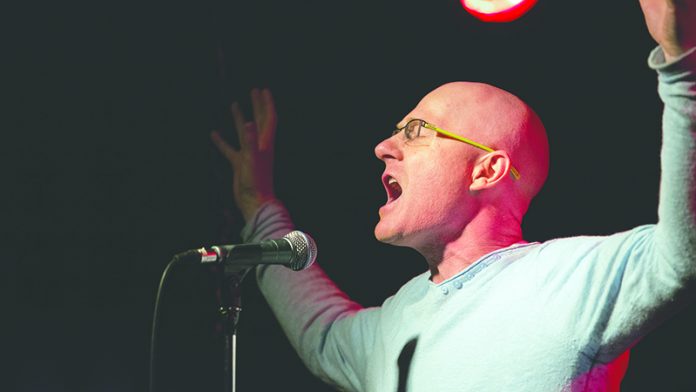
IF the Poet follows Canadian slam poet IF (Ian French) on his journey to the 2014 Canadian Individual Poetry Slam Championship and through to the World Cup of Slam Poetry in Paris.

This documentary is a unique portrait of an aging artist on a scene dominated by younger and angrier poets. What makes IF stand out among these younger poets is his passion for the craft. As mentor and fellow slam poet Ian Keteku says in the film, “he works the hardest that I’ve ever seen a poet work.”  

That is not to say that there is no passion in his competitors. The documentary also spoke with Porsha O. from the United States, and Catherine Belleau-Arsenault from Quebec. Both of these women have drive that is equal to IF’s, but they convey it differently. The brief shift in focus from IF to his competitors did not diminish the documentary’s power, and complemented contrasting the poets.   

Aside from following the path IF took to the World Cup, the film also documents the evolution of a friendship between IF and Keteku. Early in the documentary their relationship is one between mentor and mentee, but after the Canadian Championships their relationship transforms into one of friendship and balance.

IF the Poet also manages to capture the feeling of spoken word and the importance of performance. When hearing the first lines of poetry IF speaks in the documentary, I was instantly covered in goosebumps, and in this moment I was taken back to the feeling when I first heard Allen Ginsberg read “Howl” — I needed to hear more.

This is what the documentary does expertly: it makes you want to hear more; not only of IF’s work, but also the work of the other poets that were briefly featured alongside him.

My initial reaction was that this film could have been longer, but thinking back to certain documentaries I have watched, I realized that I was mistaken. The pacing was perfect for the runtime; it was engaging, and even did what most films don’t — it quit while it was ahead. This kind of engagement left me wanting just enough that I was willing to seek out more of IF’s poetry.

IF the Poet is one of the best documentaries I have seen in a while, and I highly recommend it. While it might not dig deep enough for a hardcore follower of slam poetry competitions, for the majority of people it digs plenty, and may encourage some — like me — to dig deeper on their own.

Sports Briefs

0

Men’s Golf

Surrey native Sy Lovan has signed a national letter of intent to play for SFU. Lovan won double gold medals at the 2014 BC Summer Games, placing in both the individual and team category. He also finished 4th at the 2015 Eddie Hogan Cup, a competition featuring players from both the Western United States and Canada.

Volleyball

SFU libero Alison McKay has won the GNAC Defensive Player of the Year. The Port Moody native was also named to the First-Team All Conference. She finished second in the GNAC with an average of 6.09, and finished ninth in all of Division II. This is the first major award for the Volleyball program since their start playing in the NCAA.

Men’s Wrestling

Cruz Velasquez has been named NCAA Division II Super Region 3 Wrestler of the Week. He won all seven matches he competed in during the week, and has a success tally of 17–1 to start the season. He recently won the 133 pound weight class at the Spokane Open, going undefeated during the tournament.

Cross Country

The SFU men’s cross country team finished 12th at the NCAA Division II nationals, their best finish ever. Sophomore Oliver Jorgensen was the highest placing member of the Clan, finishing 48th, just outside the top 40 needed to earn NCAA All-American honours. Last year, the team finished 20th.