Home Blog Page 831

Video games do not cause real-world aggression

0

By: Vincent Justin Mitra, Peak Associate

Video games have gone from being spoken of in the same breath as pocket protectors and thick glasses to becoming a pastime enjoyed shamelessly by much of the modern world. However, they still face a lot of vocal opposition, primarily on the topic of violence. So, do violent video games cause real-world aggression and teach gunplay to children?

No. They don’t.

One concern is that violent video games will cause players to confuse the video game world with reality, due to how realistic games now look. Applying this argument to, for example, driving a car, reveals its absurdity. Both have you sitting, holding a controller, viewing through a screen displaying numbers and data, and being much more capable and powerful than you otherwise would be. Plus, when you’re driving a car, the world you see looks really, really lifelike. Yet there is no widespread concern of people sprinting down the highway after confusing the realistic ‘graphics’ of driving a car with the real pedestrian world.

I imagine those likely to truly confuse video games and reality are generally those who have existing mental conditions or face other external factors that might lead them to confuse reality with any number of other things anyways.

The other major concern is that violent video games train children to kill. This is contradicted by the 2012 independent game Receiver. Rather than the standard point-and-click to shoot, and pressing ‘R’ to reload, the game tasks the player with manually pressing one button to eject the magazine, another button to load a bullet, another to turn the safety on or off, and so on.

Many players, upon facing the difficulty involved in actually performing the steps required to reload a gun (something most other games do automatically), were immediately turned off by the game and chose to play something else. Games don’t train children to kill. They train children to click.

Playing Call of Duty does not transform someone into a dangerous super-soldier, any more than Sonic Adventure 2 makes me good at track and field. A recent study published by the American Psychological Association (APA) sought to research the validity of previous tests on violent video games and the believed increase in aggressive behaviour.

Institute researchers found that earlier studies used complex, twitchy, tactical games for the ‘violent game’ test, while the games used for the control group were short, two-dimensional games with a slower pace and simple controls. Due to the multiple differences between the games played by the test group and control group, the tests were found by researchers to be unequal and more or less invalid.

In their own tests, the APA had each group play identical games with only the level of violence and gore throttled up or down. They found that it was not the level of violence in the games that was creating the greater aggression found in the early experiments, but rather the level of frustration caused by the games.

In the early experiments, it was found in both the test and control groups that those who were familiar with complex video games were found to be calmer, while those less familiar with video games were found to be more frustrated and aggressive.

The level of fear and anger directed at video games is the same fear and anger that, in the past, was directed at other dangers to society, such as television, movies, rock and roll music, Shakespeare, Beethoven, books, and the printing press, before each were vindicated by the passing of time.

I don’t know what we’ll be angry and afraid of next, but I’m sure all the cool kids will be super into it.


Top picks for song of the summer

0

By: Tamara Connor, Jamal Dumas, Max James Hill, Courtney Miller, Nathan Ross, and Jessica Whitesel

When that gentle breeze rolls through Vancouver and you find yourself on the beach surrounded by people with sun-kissed skin, or on a patio with friends sipping fruity cocktails through curly straws, you know that it’s finally summer. And of course, with every summer comes a song of the summer.

You know, that one soundtrack that captures your whole summer within four minutes? Well, if you haven’t found your summer song yet, do not fret! We at The Peak have created a playlist of the songs we feel best capture summer 2016.

“Good Grief” – Bastille
Jessica Whitesel, Arts Editor

A good song of the summer needs to be good for the three “B”s: beer, brunches, and beaches. This song can do that. The fun and updated ’80s sound is perfect for brunch: it’s uptempo enough that it can get you excited and put a mimosa in your hand, but not so excited that you get up and ask who’s down for some shots. That’s what also makes it good for backyard beer and chilling on the beach. It’s catchy enough that you can even pick up the lyrics quickly and belt it out in the car on your next road trip. I’ve already lost count of how many times I’ve listened to this song since it was released mid-June. It’s that good.  

“Too Good” – Drake feat. Rihanna
Jamal Dumas, Print News Editor

Pop music comes and goes just as fast as the summer sun, but if one song has stuck with me, it’s “Too Good.” Drake’s latest features none other than Rihanna. Following their fire duet on “Work,” the pair explores the unspoken tensions between them over a pulsating tropical beat. If done by less versatile artists, this track would be a bore, but the production infuses it with a boundless energy that will make those scorching restless summer days perfect. It feels like a retread of Drake’s 2011 masterpiece “Take Care,” but instead of the haunting melody there, “Too Good” finds the optimism in difficult emotional terrain.

“Send My Love (To Your New Lover)” – Adele
Tamara Connor, Features Editor

For a song to be the song of the summer, it has to be something that makes you want to belt it out as you zoom down the highway to the beach. It has to be a song that soundtracks everything you want your summer to be. Adele’s latest does just that. “Send My Love (To Your New Lover)” is about letting go of the past, wishing those who have wronged you nothing but the best, and letting yourself be free. As a recent survivor of a messy breakup, Adele’s song is what I’m jamming to this summer as I dance with my new bae, drink cocktails, and watch the sunset from the beach.

“Sad But True” – David Vertesi
Nathan Ross, Web News Editor

Just because it’s summer and the sun is out doesn’t mean that every day is meant for living it up. If you’re anything like me, David Vertesi’s new album Sad Dad Cruise Ship perfectly sums up what you’re about. Bounce along to the catchy beat underneath some heartbreaking lyrics on the track “Sad But True,” and remember that sometimes it’s just as acceptable to boogie into the abyss as it is to just stare into it. The upbeat guitar chords really help save face when, just like Vertesi, you just gotta pour yourself a drink.

“T-Shirt” – Thomas Rhett
Courtney Miller, Peak Associate

I dare you to find a more summery theme than hanging out on a patio with someone and getting laid. Add in that other person looking sexy in your T-shirt — a killer visual and the perfect conception of summer madness. Some people will be turned off by the “country” tag, but you know what? Aside from a little twang in Rhett’s voice, this track would not be out of place on top 40 radio. It’s upbeat, great for dancing, amazing to sing along with — it’s an ultimate summertime tune. That’s what makes it the perfect song of the summer.

“Sorry” – Beyoncé
Max James Hill, Editor-in-Chief

This year, my summer is all about self-love, and no one does self-love better than Bey. “Sorry” is both a perfect kiss-off to the haters and a powerful commitment to enjoying life in spite of adversity — everything that makes Lemonade the best pop album of the year is on full display here, from the technicolor beats to the effortless delivery to the endlessly quotable verses. It’s fierce and it’s fabulous, just like you. So for all those who want to make your summer a bummer: middle fingers up, put ’em hands high.

Songs of the summer!

Fitness goals you’re likely to achieve this summer

0


Pay $99.99 a month to work out in a gym clouded by a mist of other people’s sweat.

fitness-coloured-02

Take a yoga class where you are instructed to perform acts that are actually impossible.

fitness-coloured-03

Play some League of Legends. . . Hey, it’s a sport now!

fitness-coloured-04

Become a fucking Power Ranger!


Peak Comics: Peers

0

The best and worst washrooms of SFU Burnaby and Vancouver

0

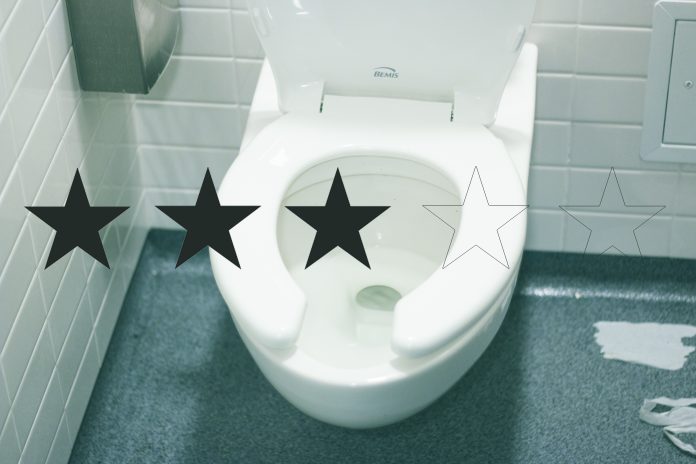
SFU Burnaby and Vancouver have a diverse selection of vicinities for ladies to do the ol’ one and two. Between the surprising number of seemingly un-potty-trained students and explosive water pressures, choosing a bathroom that’s the right fit for you can be tough.

As an experienced explorer of the SFU bathroom landscape, it is my duty to bestow unto you my knowledge of how to best answer the call of nature. You can find the merit of each bathroom expressed as a clear, concise numerical value at the end of each review.

Blusson Hall 9000 and 10000 levels

These rooms are dimly lit, exuding a relaxing and at times romantic atmosphere. Unfortunately, it takes too much muscle power to flush the toilets, and the sinks’ splash-zone radius reaches at least five miles in all directions.

67/100

West Mall Centre women’s multi-stall

There’s a slightly retro vibe at work here, and the bright lighting makes this a great place to touch up your makeup, work on homework, or find salvation. The stalls can be a little squishy, though.

78.3/100

West Mall Centre individual washroom

The ‘60s mod aesthetic of this room is both fun and a little scary. It’s very spacious, but you may get dizzy from the black and white checkered tile design. Pro tip: Do not make this the venue for your next acid trip. It will probably go very wrong.

87.7809/100

AQ 3000 level multi-stall

With this bathroom’s seafoam colour pallette and modern aesthetic, it is definitely in the running for SFU’s best-designed bathroom. Additionally, the rooms are spacious and provide users with excellent acoustics — a very fitting space for jam sessions or choir concerts.

906/100

Harbour Centre 1000 level near-the-study-area multi-stall

Don’t let its normal appearance fool you: this washroom has an average toilet seat splatter-to-non-splatter ratio of 4:2 and faucets that are liable to induce third-degree burns. Its prime location means it is prone to heavy traffic. It is best to abstain from these stalls during rush times — the 20–30 minute mark of every hour — to avoid lineups, accidents, and slippery conditions.

-18/100

Harbour Centre 1000 level near-the-study-area individual washroom

Is there a secret stash of meth hidden within the walls of this room? I’m not sure, but I definitely wouldn’t rule out the possibility. This single room is vaguely reminiscent of the setting of the first Saw movie. Though I wouldn’t recommend it for regular use due to its tense atmosphere, if you’re finding your menstrual cycle to be particularly painful one day and need somewhere to go die slowly on the floor, this place will keep you out of the way of other people.

(-4)(8) + 14×5 + -(7×4)42/100

Harbour Centre 2000 level multi-stall

This one is all white. Rest assured that you haven’t suddenly entered heaven or that white room from 2001: A Space Odyssey, it’s just a really white bathroom. Though there isn’t anything wrong about this one, there isn’t anything right about it either — it completely lacks personality and pizzazz. One might say it’s the plain oatmeal of SFU washrooms.

40π72/100

Maggie Benston down from Higher Grounds multi-stall

This squishy mouse hole can be tough to find and tough to use. I do not recommend it to anyone whose body circumference exceeds seven inches. Do not use unless absolutely necessary.

-6(e)/100

Maggie Benston across from SFU Bookstore multi-stall

Is this washroom even open? I don’t know, but I do know that it wasn’t there for me when I needed it the most, and can therefore deduce that it is unreliable. There is enough room to practice cartwheeling in there, though.

φ/100

If SFU was more like Hogwarts . . .

0

Harry Potter 4

Taking the stairs to class would be far more forgiving on your knees.

Harry Potter 3

Participation marks would suddenly become the most entertaining part of class.

Harry Potter 2

School administration might actually work to ensure the safety of their students from predators.

Harry Potter 1

The Peak newspaper would actually be cool to look at.


Top three things about the Tim Hortons that will grind your gears

0

1) Choosing the wrong line

At peak hours, choosing the correct lineup at Tim Hortons is an exercise in economic game theory. There are multiple things to consider: who’s at the till, how many people are in line, how many of said people are in groups, and the lunar orbit. There is nothing more frustrating than standing in line desperate for that double-double while the line beside you zips by to get their sugary snacks.

2) Getting passed over while waiting for your food

I’m sure we’ve all experienced this. You’ve ordered your chicken chipotle melt, or whatever weird new concoction they’ve decided to push this month. You get your slip of paper, and find out you’re number 100. Then you’re told to wait to the side and stand there until your number is called. You’d expect the numbers to follow some sort of chronological order, but you would be dead wrong. After a while, every number from 101 to 150 is called, and you’re left standing there silently judging every person who decided to order chilli, feeling like the last kid picked in gym class.

3) Not getting a sleeve with your coffee

Ultimately, the most egregious error made by Tim Hortons employees is the fact that they don’t just give you a sleeve with your coffee. This is not a difficult concept to grasp. Coffee is hot. I need something to shield my hands so I don’t get third-degree burns walking to class. I shouldn’t have to ask for a sleeve. It’s my God-given right to have a sleeve with my coffee.

SFU needs to update its architecture to accommodate the rainy season

0

[dropcap]T[/dropcap]he SFU Burnaby campus has a lot of green spaces, courtyards, fountains, and a triumphant aesthetic when the brilliant sunlight strikes the brutalist concrete. But our school becomes very gloomy during the rainy season, which can affect mood and overall enjoyment of being on campus.

It’s time we implement a few changes here and there to make Burnaby campus a cheerful place all year round, such as designs that would be enhanced by the presence of rain.

Currently, the AQ garden is delightful in the summer, but becomes completely abandoned and desolate when it rains. This inefficient use of space could be stopped by building a gazebo on the hill and adding rain shelters around the area, so people at SFU can enjoy the fresh air and tranquil rain without getting wet — something I’m sure most people would find soothing, potentially romantic, and possibly cathartic. It could also help provide some seclusion and solitude for introverts.

SFU could also replace useless features, such as the pyramid and the avocado, with ones that are accessible and attractive when it’s gloomy out. Perhaps kinetic art installations that move and transform as it rains, or machines that can generate rainbows? Other replacements could include outdoor table tennis or outdoor exercise equipment, which would need protection from the rain.

The campus could also be improved by using thermochromic paint to create colourful designs that only appear in the rain. This innovative application of technology was popularized by the designers of Project Monsoon, who plan to replace the dreary concrete and pavement on the streets of Seoul with colourful rivers inhabited by sea creatures.

SFU could also look to imitate the success of Rainworks, a project that uses hydrophobic paint to create colourless, rain-activated art along sidewalks. This has primarily been used to spread positive messages in community spaces, but it could also be used to create mysterious clues, riddles, puzzles, and other things that would give the public something to look forward to when it’s wet outside.

Furthermore, decorating the bland concrete around the campus with more public art, colourful designs, or plant life could make a small but impactful difference.

For example, the floor of the corridor from the AQ to the end of Blusson Hall could be redesigned by SFU students in our fine arts and/or interactive arts and technology programs. In addition, SFU could also replace the bland flooring around the Burnaby campus, such as in the WMC, the AQ, and other major corridors, with something aesthetically stunning, cheerful, and even multiculturally significant, such as aboriginal artwork.

By carefully executing innovative and beautiful designs that take advantage of rainy conditions, SFU could become an excellent example for other rain-stricken institutions and municipalities around the world, as well as a hotspot for tourism. But most importantly, it would create a campus that members of the SFU community could enjoy during those rainy Vancouver days.

Humans of SFU: Residence edition

0

[dropcap]A[/dropcap]ll over the world, and right here at SFU, this Humans-of-Somewhere style of storytelling has appeared, and made big waves in the way we look at people around us. Last week we went around talking to, and photographing, some of the students who form the residence community on the Burnaby campus — paying homage to the popular Humans of SFU Facebook groups. We are all just people. All too often we put ourselves down, and say that we’re not ‘interesting’ enough, ‘smart’ enough, ‘cool’ enough — but everyone has a story to tell. And there are some great ones right here at SFU.


FEATCH1_RGBPeter is a computer science major, who stayed in homestay before residence. He never really felt like he fit in, though. Originally from China, Peter moved to residence last semester after leaving his homestay arrangement. He says homestay gave a false sense of family: “It’s not ‘your’ family; it is a family but not yours.”

He currently lives in the townhouses at SFU residence. Although he is far from his family in China, he gets to make a new family here. He has made many friends in his time at SFU, mostly within the residence community.

One aspect of living in residence that he has enjoyed is the opportunity to meet people from around the world. He made friends with his roommates, who are from Pakistan and Zimbabwe. Although he has had some issues adjusting to the new rainy climate, he says he welcomes the change. He loves the freedom living on residence grants him, and really enjoys summertime: “The temperature and weather is fantastic,” he says.


FEATCH3_RGBMide is originally from Nigeria. This move could have been tough to get used to, but luckily for Mide, he usually travels a lot, so adjusting to Vancouver wasn’t a complete change of pace: “It’s not like a new environment completely,” he says.

This is Mide’s third semester living in residence. He still enjoys every bit of it. For Mide, residence allows him to remain active, mentioning tennis and partying as some of his favourite pastimes on campus.

Originally, Mide moved into residence to be closer to classes, but he says being here has shown more benefits. Most of his friends already lived in SFU residence when he moved in, but he says that he has made many more friends from the residence community after moving in. “Living with people from different places” is one of the best parts about being here, according to him.

Before living on campus, he says his exposure to other cultures was limited. Being here gives him the opportunity to create bonds with all kinds of people, which he says has made him a better person: “They all have different views and it’s really cool to listen [to] what everybody else has to say.”


Originally from Zimbabwe, Bono has been staying in SFU residence ever since he came to Vancouver two semesters ago. He has made a lot of friends in his time here, a fact that sometimes overwhelms him, but he is learning to manage social obligations alongside personal care. He moved to Pauline Jewett House this semester and is hoping to transition to the townhouses next semester.

BONO_RGBBono says that his life has changed a lot since moving to Vancouver. Although climate is one of the main changes, it’s not the only one — for him, life here is very fast, unlike back home. Despite this change in pace, he believes that he has successfully adjusted in the past eight months. He credits the community on campus for helping him adjust to all the change.

Bono says he likes kicking back with friends on residence, mentioning common areas like the Madge Hogarth House as good places to relax. Although he would prefer to see more events and activities in residence, he is happy to be here. The Dining Hall, the convenience, and the community are reasons he loves living on Burnaby Mountain. Despite a few flaws, Bono doesn’t see himself living anywhere else while pursuing his studies.


Cory is a local who has lived in residence since the fall of 2014. Although she was a little hesitant to move onto the campus at first, her cousin, who is a past student, shared positive experiences with her. This ultimately gave Cory the push she needed to make the move. FEATCH4_RGB

Entering the world of university seemed a little scary to Cory, but the orientation — both to the university and also to residence — helped her feel more at home. Soon after that, she started volunteering with the Residence Hall Association, represented Shadbolt House, and helped with organizing events. Later on she took on the role of vice-president of communication, which was a big step up and a great experience for her.

Now Cory works with the Residence and Housing office, sorting out accommodations and organizing events. Although she will move out in the fall for nine months while she is on exchange in Northwest France, she hopes to move back in when she returns. For her, SFU residence has become more about the community than the convenience.


FEATCH2_RGBVicky, who is originally from China, has lived in residence for about a year. Being an international student has been hard for her: “I feel lonely here,” she confesses.

Although she saw her parents in May this year, she still misses them and can’t wait to see them again. While she says that the experience is a challenging one, being in residence with her friends has helped buffer some of the homesickness. She loves swimming and tries to go to the pool with friends as often as possible, but her busy schedule can make it tough.

She also says she loves events like the Spring Formal, which are accessible to all residents.


Catherine is from China, and is relatively new to both residence and the SFU community, having been here for about a month. She is fascinated by the Canadian education system, and loves the fact that you can take as little as one class each day, unlike at home where she had to take classes all day long. FEACTH5_rgb

She also enjoys living in residence and having a private room all to herself in comparison to China, where she had to share her residence with at least four other people. “Here I have my own room, and there is a refrigerator here. I like that very much,” she says. For Catherine, the 10-hour long flight has been worth the experience so far.

LETTER TO THE EDITOR: The Graduate Student Society at SFU is failing its membership

0

Dear Editor,

In 2007, the graduate students at SFU formally created a new, independent student society to represent themselves and their interests at the university. In response to a number of controversial decisions and actions undertaken on their behalf, and without a true democratic voice in the process purportedly created to represent them, grad students separated from the SFSS, and began a project to ensure that their interests, issues, and goals could be more effectively and democratically represented and pursued. As a result of the hard work of many volunteers and a handful of elected representatives, the GSS was born.

And, for some time, [. . .] the possibility of an organization devoted to advocating on behalf of graduate students’ interests started coming to fruition.

Today, this is no longer the case. With the exception of creating a position to specifically advocate on behalf of graduate students at the university (i.e., in appeals cases, in dealing with supervisory issues, etc.), and mounting a campaign to draw attention to the dismal state of the deteriorating infrastructure at SFU, the GSS has little that it can point to by way of justifying the fees which it collects semesterly from all students enrolled in graduate programs or courses at SFU.

Take the recent and still developing controversy concerning rape allegations on campus, and the response of SFU’s administration. While this situation has received media coverage from a number of different sources, and has elicited responses from both the SFSS and the TSSU, the GSS has remained conspicuously silent. Should graduate students not also be concerned about these allegations, and about the perceived response, or lack thereof, from the university’s administration? 

And yet, no statement, no communication, no apparent interest [. . .] on the part of the organization whose role it is to represent graduate student interests at SFU on this important issue that undoubtedly has repercussions across the university community.

Or, take the slough of recent and upcoming administrative hires that are occurring at SFU. A number of high profile positions have been newly filled, and more are coming. In the midst of these deeply impactful decisions being made at the university, and in spite of having the opportunity to be present and represent graduate student issues in these decisions, there has been virtually no communication, consultation, participation, or representation of graduate students in these processes. 

If the GSS exists to ensure that the issues and interests of graduate students are truly represented at the university, why has the organization been so strikingly absent from these discussions? Why have they not communicated these processes to their membership?

In fact, it seems that the GSS has done little, if anything, of late when perusing its website. Meeting minutes and reports are not made readily available, and seem to go months, even a whole semester, before they’re updated. Their “News & Events” seem mostly comprised of socials, contests, and coupons. No new services, initiatives, or projects have been undertaken in what appears to be years now. It’s little wonder that their AGM this year failed to meet quorum, or that the organization keeps trying to (and has done in the past) lower the required attendance for quorum.

For an organization created to ensure the democratic representation of graduate students in the university community, whose stated existence is to work for and on behalf of the interests and issues of graduate students, into which graduate students pay mandatory fees, there is little evidence of the GSS being much more than an expensive social club populated by resumé-padding “representatives.”

Sincerely,

Robert Eaves