Home Blog Page 811

SFU at the Olympics

0
Helen Maroulis, who last participated for the Clan in 2014, became the first American female to win gold in women’s wrestling

The Olympics ended on August 21, and while Canada fell in love with Penny Oleksiak and Andre De Grasse, a number of current and former members of the SFU community achieved great things at the Rio Olympics. Here are some of the notable highlights.

Bronze for Glaesser

The 24-year-old computing science student, Jasmin Glaesser, won bronze in women’s team cycling. It’s her second bronze medal, after winning one at the 2012 Olympics in London in the same event. “I’m proud to have won another bronze here in Rio, four years after stepping on the podium in London,” Glaesser told SFU News. “Our medal four years ago came as a surprise but this time around it represents four years of hard work, dedication, and commitment.” Glaesser is also the daughter of Uwe Glaesser, a professor in the computing science department at SFU.

Nayo and the women’s basketball team

SFU had a representative on one of the Olympics’ biggest stages, with Nayo Raincock-Ekunwe on the Canadian women’s Olympic basketball team. During her time at SFU, Raincock-Ekunwe was a standout on the women’s basketball team: she was named GNAC Player of the Year in 2013, and averaged 16.8 points and 12.4 rebounds. Despite a heartbreaking loss to France in the quarterfinals, she had a pretty good tournament. She averaged 7.7 points and six rebounds per game, and 22.5 minutes of action per game. Her tournament-high was 10 points against France, but her biggest moment came against Serbia in group play. With less than a minute to go, she converted a crucial three-point play, giving Canada an important win.

Helen Maroulis: America’s golden girl

Arguably the biggest highlight from an SFU perspective was Helen Maroulis’ Olympic experience. Maroulis became the very first American to win gold in women’s wrestling, winning in the 53kg division. What made this achievement even more remarkable was that she defeated Saori Yoshida, considered a legend in the sport because she was the 13-time world champion and three-time reigning Olympic champion heading into the match. “I’ve been dreaming about wrestling Saori for so long,” Maroulis said to NBC afterwards. “She’s a hero. She’s the most decorated wrestler in the sport. It’s such an honour to wrestle her.” Maroulis went undefeated during her time at SFU, winning four WCWA championships in the process. She’s also indicated that she is “open” to a career in MMA. Could we be seeing her in the octagon sooner rather than later?
SFU women’s soccer draw 1–1 with UBC

0
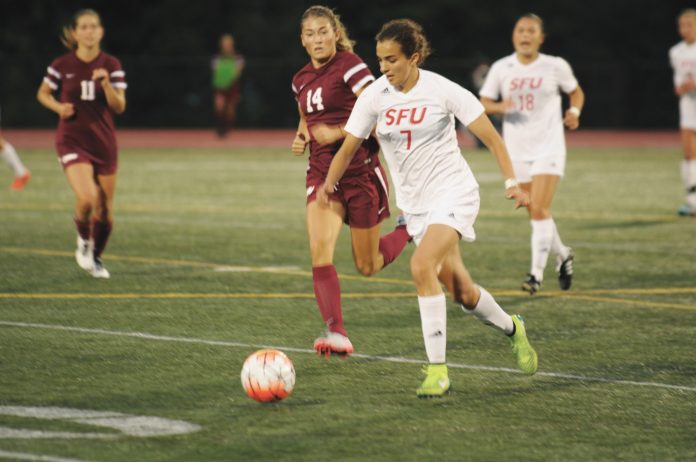
Olivia Aguiar, seen here in action last season, scored the first goal of the match to give SFU the lead.

If Saturday’s result was any indication, the women’s soccer team is poised for another competitive season. The Clan tied their crosstown rivals 1–1 in their first game against each other in eight years. UBC are currently the defending CIS champs in women’s soccer, whereas in two years prior to last season, SFU only managed a combined total of three wins, making this an impressive performance for the team.

“I thought the girls fought hard,” said Head Coach Annie Hamel after the match. “It’s good for us to play a good opponent to see where we are at and see what we need to work on. I’m just glad that we were injury free.”

The game started off poorly for the Clan. For the opening minutes, UBC had the clear advantage in both possession and chances on goal. In fact, the Thunderbirds had a goal ruled offside just seven minutes into the game. But by the end of the half, SFU found their footing. Allyson Dickson made a great pass to Kaely Biring who couldn’t finish, and Emma Lobo had a chance at the side of the net that was caught by UBC goalkeeper Hannah Boshari.

The second half when the Clan reached the same level as the visitors. Emma Pringle, the new signee from North Vancouver, had a glorious chance to give her team the lead. Sent in all by herself, she mishandled the ball, leaving it to harmlessly dribble to the UBC goalkeeper. A few minutes later, SFU opened the scoring. Off a corner, redshirt senior Olivia Aguiar drove a powerful header right through the goalkeeper’s hands to give the Clan a 1–0 lead.

From there, it was just a matter of SFU trying to hold onto the win. UBC played with a sense of urgency once there was less than 10 minutes to go, and they got their wish. Off of a mistake by Dickson in the box, UBC forward Sydney Jennings calmly side-footed it into the bottom left corner, tying the game up at one.

Afterwards, coach Hamel expressed pride in her side’s performance. “I take from the game that I’ve got a good squad and I have depth. That’s what I found out today, I can rely on all my players. Everybody played today, everybody that was not injured, and we had success whoever was on the field.”

Hamel noted that she “still doesn’t know what her starting 11 will look like,” but stressed that everyone who played during the game impressed her enough to be considered. 

SFU’s next game is their home opener, when they play Academy of Art this Friday at 4:30pm.

Student athletes storm SFSS board meeting to protest stadium cancellation

2

On Wednesday, executives from the Simon Fraser Student Society (SFSS) Board of Directors told Ryan Yewchin that he “was quite frankly the only student who had expressed any displeasure” with the stadium aspect of Build SFU being cancelled.

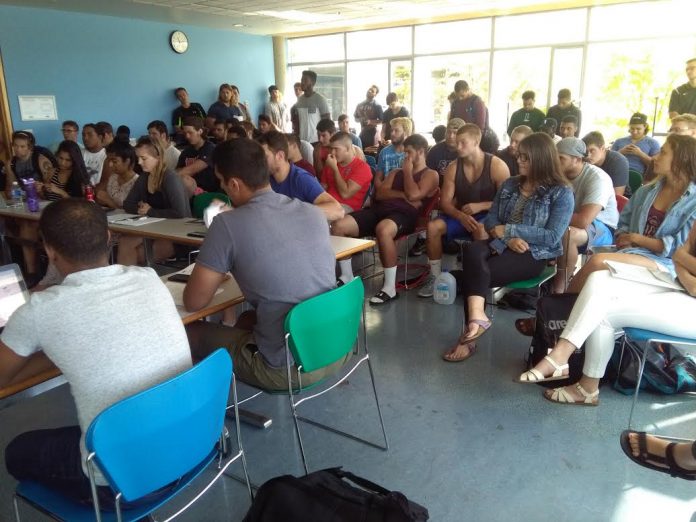
During Thursday’s SFSS board meeting, Yewchin and a horde of student athletes attended to show that wasn’t the case.

Yewchin, a former member of SFU’s wrestling team and a part of the the Student Athlete Advisory Committee (SAAC), wanted the SFSS to know that their quick decision to scrap the stadium aspect of Build SFU didn’t go unnoticed.

“I think we showed that we made a clear, physical statement to board that there is a great deal of passion surrounding this project and that what they’ve done isn’t OK,” he said. “Their membership does not agree with their decision.”

Athletes from the football, wrestling, and women’s swimming teams, among others, were present in the crowd. Teams such as men’s and women’s soccer expressed their regrets, as they were unable to attend due to training camps.

“[…] what they’ve done isn’t OK. Their membership does not agree with their decision.”

– Ryan Yechin, former SFU wrestler

The athletes filed in at the start of the meeting, which prompted the board to add a discussion item to the agenda about the stadium cancellation. The discussion had been left off the meeting’s agenda following the decision to cancel the multi-million dollar project.

The spokesperson for the group was SFU football player Ante Milanovic-Litre. Milanovic-Litre read a letter on behalf of Olivia Aguiar, the president of SAAC, who was unable to attend the meeting.

In her letter, Aguiar accused the SFSS of “[using student athletes] as a fulcrum to pass the Build projects, to only take the stadium away.” Aguiar’s rationale was that, with the number of students composing the 546 who voted in the 2015 AGM, the student athletes who voted ‘yes’ were what pushed the vote to over 81 percent. The vote needed a 75 percent approval to pass.

Currently, the financials of the the project are not clear, with SFSS and SAAC presenting different information on how much money is or was available, as well as SFU’s role in the discussion. SAAC members wanted to know why the project is being cancelled, rather than renegotiated, as the newly projected $30-million cost is three times higher than the original estimate. This increase in cost reportedly led to the project’s cancellation.

The transparency and communication of the board came under fire repeatedly throughout the discussion. Many athletes in the room said they found out about the cancellation from Facebook, rather than through any direct communication from the SFSS.

“For them to have this lack of transparency regarding issues surrounding the project leading up [to] their decision to cancel it — especially with not a full board, an interim president, it’s cancelled in the dead of summer when people are in August exams or away — it’s just a horrible time for us to try and engage with them,” said Yewchin.  

At one point during the meeting, Build SFU general manager Marc Fontaine was asked if a stadium could be built for the $10 million that was originally allotted. His response was “probably, but it would be a really bad stadium.”

For Milanovic-Litre though, the value is in having a place to play in front of the SFU community.

“We want our families to be at our home. This is where we study, this is where we play, this is who we play for,” said Milanovic-Litre. “When I go to BC Place, the seats aren’t that comfortable for me. When they are saying [that] we’ve got to build comfortable seating — no one is spending the night at the stadium.

“It doesn’t matter what the occasion is, a sporting event usually lasts about three hours. We’re not looking for leather seats.”

He also pointed to the press boxes and the roof as aspects that could be downsized in order for a stadium to be built on a budget.

The SAAC will likely have a presence at the next board meeting on September 1, since the board is aware that they will be attending and can prepare for further discussion.

Board of Directors meeting | 24 August 2016

0

Peak Publications Society Board of Directors Meeting Agenda

August 24, 2016

The Wallflower Modern Diner

Chair: Max Hill

In Attendance:

  • Maia Odegaard (Board Secretary, non-voting)
  • Max Hill (Editor-in-Chief)
  • Paige Smith (Collective Rep)
  • Kevin Rey (Collective Rep)
  • MuhammadQasim Dewji (Employee Rep)


  • Call to Order


  • Approval of Agenda


  • Approval of past minutes from July 28, 2015


  • Financial update


Maia to present the state of the Society’s finances through June 2016, including update on our investment portfolio.


  • Investment update


Maia to present the state of the Society’s finances through June 2016, including update on our investment portfolio.


  • Meeting time for the fall semester


The board to decide upon a regular meeting time for the fall semester.


  • ACP National College Media Convention


Maia to present proposal for travel and accommodation budget to take a small group of students to the ACP conference in Washington, DC.
Adjournment


The Peak offices

Chair: Max Hill

In Attendance:

  • Maia Odegaard (Board Secretary, non-voting)
  • Max Hill (Editor-in-Chief)
  • Paige Smith (Collective Rep)
  • Kevin Rey (Collective Rep)
  • MuhammadQasim Dewji (Employee Rep)


  • Call to Order: p.m.


  • Approval of Agenda


  • Approval of past minutes from June 23, 2015


  • Financial update


Maia to present the state of the Society’s finances through June 2016, including update on our investment portfolio.


  • Investment update


Maia to present the state of the Society’s finances through June 2016, including update on our investment portfolio.


  • Pay scale for volunteer proofreaders


Paige to present Natalie’s proposal that we set up a system for paying our volunteer proofreaders.


  • Election of board member for hiring panel


Max will lead the election of a board member to serve on the hiring board to decide the paper’s staff

for the Fall 2016 semester.


  • Adjournment p.m.

Approved by _______________________________________ & ________________________________________ on July 28, 2016.

SFSS scraps Build SFU Stadium

2
Captio

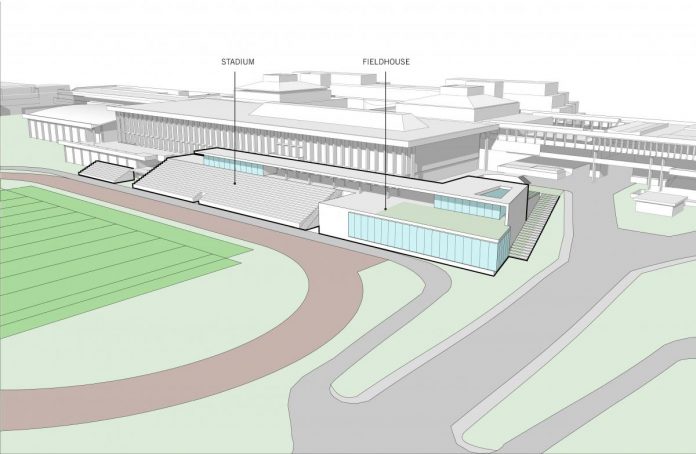
As announced last week by the Simon Fraser Student Society, the Stadium portion of the Build SFU project has been terminated before ground had even been broken on the project.

After estimates predicted that the project would likely cost  three times as much as the projected ten million dollar price tag, the SFSS Board of Directors decided to terminate the project at their last board meeting on August 11.

“On July 5, we got the cost estimates from the architects, and it was a $22 million hard cost,” said Arr Farah, VP University Relations for the SFSS. “After you add in the soft cost, it was around $30 million.” The hard cost refers to the cost of construction itself, whereas the soft cost includes such expenses as legal, architectural, and engineering fees.

“Our budget was only 10 million — that’s all students approved,” Farah added. “So it was safe to say we just couldn’t afford this project anymore.”

The development comes while construction of the Student Union Building (SUB) has been underway for months.

“It’s a difficult decision, but when you think about all the other students in the school in its entirety, you really do comfort yourself saying it is the better decision for all the students”
– Larissa Chen, Interim President of the SFSS

It wasn’t an easy call to make for the Board, especially for members like Farah and Interim President Larissa Chen. Both were members of last year’s Board of Directors, who were the ones to approve the Build SFU project in the first place.

“It was a very difficult decision,” said Farah. “I know for Larissa and I, we were on the board last year, we were part of the push to get the vote for both the SUB and the stadium project. I think there’s a lot of emotional attachment to this project.

“It’s just not feasible,” he continued. “The real responsible decision is just to cease the project and that’s what’s in the best interest of student who are paying today and in the future.”

In regards to student payments, the Board guaranteed that there won’t be any increases to the levy due to anything like cancellation fees, which was a fear expressed by students online. As it currently stands, the levy will remain the same, though there is a chance it could be decreased, according to Farah and Chen.

“I think in terms of [a levy decrease], it depends on the conversation we have with SFU and Scotiabank,” said Chen. “We don’t want to give any false promises in advance, but we’re definitely going to be taking into consideration that the Stadium project will not be moving forward and continue to choose what’s best for all students.”

Those conversations will likely happen during the upcoming fall semester, and Farah indicated they are the biggest priority right now for the SFSS.

For the foreseeable future, the Terry Fox Field will remain the same as it is now.

The decision comes weeks before the start of the semester, which will also see a by-election for a new SFSS president and Environment Faculty representative. The choice to discontinue the Stadium project will likely be one of the last that Chen has to oversee as interim president, and one which she said was very challenging.

“It’s a difficult decision, but when you think about all the other students in the school in its entirety, you really do comfort yourself saying it is the better decision for all the students,” she said. “The onus isn’t on anyone, it’s just that it’s not possible.

“The decision was very, very hard because I was on board last year and we definitely did push for both the Stadium and the SUB and we really believed in it. We really wanted to see it pass and be successfully completed.”  

When asked about how this might affect the SFSS’ relationship with SFU Athletics, Chen hoped that they would be able to see that the project wasn’t feasible.

“I think that in terms of our relationship with SFU Athletics, there’s really not much we can do to control how they perceive the situation. All we can do is provide them with the facts and the cost estimate as it stands right now which is very much outside of our scope,” she said.

Farah agreed, adding that there is a difference between SFU Athletics and the student athletes whom the SFSS represents.

“Our relation with the athletics department is [the same] it’s always been. [There is that element that] they always want us to work together and collaborate on different things,” he said. “But when it comes specifically to student athletes, I think it’s important to note that the SFSS has been in support of, the Board has been in support of — we really pushed to get this vote.

“We need to do, as Larissa said, what’s in the best interest for all our students.”

Peak Speak: How Much Does SFU’s President Make In A Year?

0

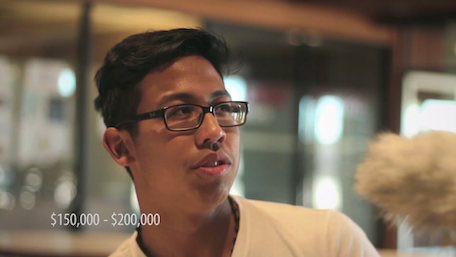
In this week’s issue, The Peak featured the 2016 salaries of SFU’s Administrators. So in this episode of Peak Speak, we ask students how much they think president Andrew Petter makes in a year and what they think about the actual figure.

Special Thanks to Zach Siddiqui

COLUMN | LIST BITCH: Phrases that desperately need to die (like, yesterday)

0

“No Homo.”

Nothing says “my masculinity is as fragile as a newborn child” quite as clearly as “no homo.” Seriously, if you have to disclaim your sexuality every time you express a positive thought about the same sex, you have a deep problem. You look insecure at best, and homophobic at worst. Please disintegrate.


“I’m not that kind of girl.”

I hear this most often from fellow females justifying their actions (I’m looking at you, internalized misogyny). “I’m not that type of girl to do this, or say that.” This phrase seems to imply that women can’t be multifaceted creatures, when in reality we all are. Go ahead and be anytype’ of girl whenever you want, and remember not to apologize or explain yourself to anyone.


“That *insert meaningless video game here* totally raped me.”

No. It. Didn’t. Don’t you dare trivialize a traumatic event that happens to thousands of women. Not cool.


The “crazy girlfriend” (or boyfriend).

I have yet to meet a nice guy who constantly complains about their ex being “crazy.” More often than not, that girl is “crazy” for having legitimate feelings, thoughts, or opinions and expressing them (God forbid!). Take this stereotype as a gigantic flashing sign that says “I’m a mildly sexist prick.”


“Excuse me while I go kill myself.”

An overdramatic, inconsiderate response to everyday, mundanely unfortunate events. I’m not sure when this expression came into play, but I’m over it. We both know you’re not going to kill yourself over your makeup smearing, or the Starbucks line being a tad longer than usual. Suicide is not funny. It will never be funny. You sound like an asshole.


“That’s retarded” and “That’s so gay!”

I feel silly even including this, because using a minority as an adjective, and a negative one at that, is so blatantly wrong. It may seem harmless at the time, but it contributes to a larger cultural problem. Many of us harbour hate or ignorance subconsciously, and language like this allows those thoughts to breed. Check your rhetoric before you wreck yourself (ha).

COLUMN | TIM’S BIT: I’m back from my exchange — now where is my life headed?

0

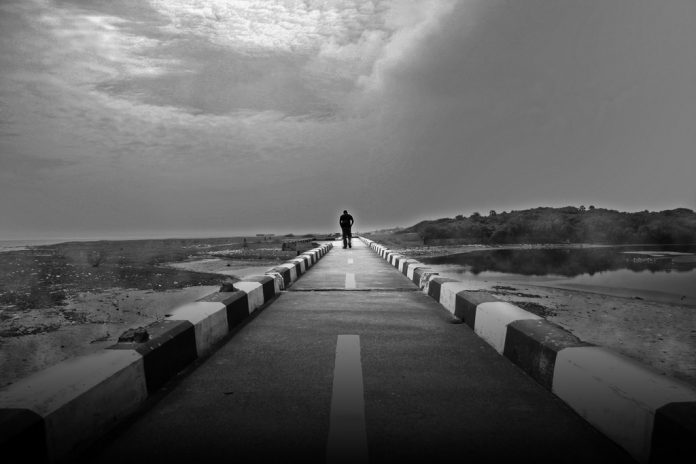
[dropcap]W[/dropcap]e all walk separate paths. Sometimes those paths meet up with other people and you travel together; sometimes you travel on your own; sometimes you see people for a short time; and sometimes you lose your way.

Ever since I got back from exchange in Australia, I have been trying to find the path I was on before I left. I can’t find it, at least not yet. I know I will. I am a stubborn person and quite strong-willed when I want to be. Lately though, I have not wanted to be strong. I’ve not wanted to be anything, and that’s not great.

It’s a strange thing to come back to your home after being away for a long time. When you’re gone for months at a time, you change independently from the people who you were around before you left. You miss birthdays, breakups, couplings, and graduations. You make new friends, you see new places, you get back and want to share those experiences with people around you.

You just don’t always have the words to articulate what it meant to swim under a waterfall, or hike to a mountaintop and see the vastness of a country in front of you. To make friendships becomes something more, like being considered family by people who are on the same path as you.

You try, you meet, you smile, and tell the stories. Your friends to whom you’ve returned laugh and smile as they see the joy you express while you do your best to share the experiences with them. Except you’ve changed, and so have your friends. You see, as you have followed your path while away, they followed their path without you.

Since I got back I have been struggling to find my path here again. I have been doing my best to push through the brambles and undergrowth, yet they seem to be thicker this time. I am seeing fragments of it as I pick up my old passions. I’m slowly getting back into gaming and old projects that I had to shelve while I was away, yet picking them up this time feels different — not bad, just different.

I want to make it clear: I’m not depressed and I’m not sad — I’m just confused. I don’t really know what to do and I can’t seem to jumpstart my ambitions again. I have them, they just feel like they are asleep. Maybe it’s time to ring the alarm clock.

My mum used to tell me, when you are lost in life and don’t know where to go, pick a direction and follow it to its end. On the way, you’ll find other paths that may extend the journey. When you get to the end and you need more, it’s satisfying to know that you’ve at least accomplished that much. So now, simply keep going.

That is what I plan on doing: I am going to stop trying to find my old path and start carving a new one. The brambles in the way are only there for a short time and simply going in circles will only get me tangled, until I pick a direction and just go. Before I know it I will be making my own path again.
Who knows — maybe I will find something that will extend the journey that I can’t think of, sitting in my apartment waiting for life to happen like it used to.

SFU archaeology studies 2,000-year-old artefacts found in Comox Valley

0
The latest find is one of the few "well-preserved" archaeological sites in the Comox Valley area.

The K’ómoks First Nations got more than they bargained for while holding a barbecue in the Comox Valley last year.
A midden containing ancient artefacts was discovered at the site, leading SFU archaeology professor Dr. Robert Muir to oversee a six-week field school excavating the area. During the excavation, Muir and his students discovered around 80 stone tablets, some as small as pebbles, estimated to be roughly 2,000 years old.
The field school, led by Muir, involved 21 third- and fourth-year students excavating a 100m by 120m exploration site on the K’ómoks First Nations’ traditional territory, and studying their findings. The excavation was conducted at the Puntledge RV Campground on Vancouver Island.
They have uncovered myriad artefacts: herring rakes; deer, dog, and elk bones; harpoon points; bone fishing needles; and, perhaps most excitingly, the flat stone tablets, each marked by symbols on one side.
According to an interview with Muir by the Comox Valley Record, the markings on the tablets could be seen as symbols for trees, feathers, or fertility. In the interview, he described the site as “very unusual,” referring to the tablets as “a little mystifying.”
The site was first discovered in 2015 when a group of the K’ómoks First Nations were digging a roasting pit for a celebratory barbecue.
During the celebration they uncovered an accumulation of shells, finding later that it was a midden containing numerous animal bones as well as other miscellaneous deposits.
According to Muir’s interview with the Record, “[the discoverers] thought, ‘Uh -oh, there’s a site here,’ and we figured out how large it really is.”
He claimed that in over 30 years as an archaeologist, he’s never studied a site like this.
He described the area as “well-preserved and pristine.” It’s one of only a few spots where these artefacts have been discovered in the Comox Valley.
The artefacts found in the excavation site are being taken to SFU to be photographed and studied. The students are currently helping with the analysis of these artefacts, after which Muir will take extra time to study them before returning them to the K’ómoks band.
The K’ómoks First Nations are an indigenous band from the eastern coast of Vancouver Island. They are currently comprised of around 330 individuals, including people of Puntledge, Ieeksun, Sathloot, Tat’poos, Cha’chae, and Sasitla ancestry.
Having suffered greatly because of European settlers, including the loss of over half their population due to a smallpox outbreak in 1862, the K’omoks people have worked hard to maintain their community. They are comprised of four reserves on the island, and regularly hold events and take part in business ventures and partnerships.

Amendment to divestment policy a “step backward”: student groups

0

Student groups advocating for Simon Fraser University to divest from fossil fuel companies are reeling after the university posted a draft to its divestment policy.

Called a “significant step backward” in a media release posted on the Embark website, the policy outlines ‘guidelines’ that the Responsible Investment Committee (RIC) will use to consider divesting from that company.

Those guidelines are based on:

  1. The extent to which SFU is invested in that entity
  2. If the entity derives more than 10 percent of its revenue from activities that cause social injury
  3. Evidence that divestment will produce a favourable outcome
  4. Impact on the university’s “fiduciary duty [. . .] to maximize return on its investments”

This draft policy comes after three years of the Divest SFU campaign pressuring the university to rethink its stance on fossil fuels. A joint venture between SFU350 and Embark, the campaign calls on SFU to “immediately freeze any new investment in fossil fuel companies, and to divest within five years from direct ownership” in order to address climate change. Josh Cairns, executive director of Embark, conceded in the release that until now “the university has made considerable progress regarding its stance on divestment.”

However, Cairns elaborated on the Embark website that this policy draft isn’t quite up to snuff. He argued that “the policy revision, if it is adopted in its current form, creates an unjust test for the university’s investments that ensure divestment will not occur.”

This is in line with the trend of Canadian universities rejecting divestment. Earlier this year, McGill, UBC, and the University of Toronto have all rejected calls to divest from fossil fuels. However, Cairns explained that SFU should look to the “University of Ottawa, which recently committed to decarbonizing its investments in accordance with Canada’s emission reduction commitments.”

Cairns said in a separate media release that “The revision suggests that the university is comfortable investing in an entity that profits from harming people or the environment — as long as the entity’s revenue from harmful activity is below an arbitrary 10 percent threshold, and as long others are also investing in the entity.”

The same media release noted that under the new conditions it might be “all but impossible” for divestment to occur at SFU.

The issue of divestment at SFU touches on a local conflict that has been playing out over the past few years.

Kinder Morgan is seeking to expand the existing Trans Mountain Pipeline that transports tar sands products from Edmonton to Burnaby. This project has elicited controversy due to environmental and safety concerns. The proposed expansion would triple its capacity, but critics argue that the economic benefit to the province is marginal, especially given the environmental risks.

Earlier this month, MP for Burnaby North-Seymour Terry Beech held a consultation meeting to address Canada’s Climate Change Action Plan, and to continue the discussion about the proposed Trans Mountain Pipeline expansion. The event is the first in a series taking place over the summer.

As for what will happen if SFU rejects divestment outright, SFU350 has been collecting students’ signatures, pledging “direct action.” A similar situation unfolded after McGill rejected divestment this March: students staged a sit-in at the vice chancellor’s office for days, while supporters camped outside.

Cairns finished his statement by putting the issue in no uncertain terms. He spoke to the fact that SFU is a signatory of the Paris Pledge for Action, a document that acknowledges the gravity of climate change, and commits to limiting global warming to 2 C above pre-industrial levels. “SFU should ensure its actions align with the just future it has publicly committed to,” he argued.

The RIC is currently accepting emailed comments on its draft policy until August 7, and will review in September.