Home Blog Page 7

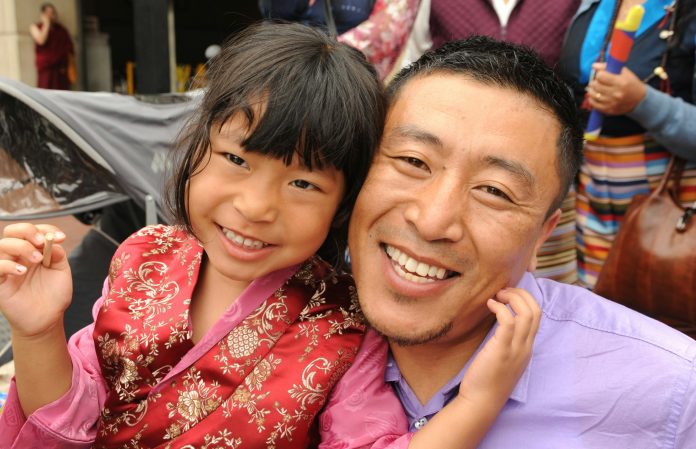
Fathers are caretakers too

0
Wonderlane Boiz / Unsplash

By: Michelle Young, Copy Editor

There’s lots to be said about how mothers and women take on extra caretaking: from women’s recent entry into a paid workforce, gendered expectations, to the misconception that women are “naturally” better caretakers than men. However, there’s little evidence that this is true. On a biological level, men respond just as well as women when it comes to caretaking.

It’s time we set aside our preconceived notions: men are competent caretakers, and acknowledging this helps everyone. 

When women are assumed to be better caretakers than men, what message does that send to single fathers raising their kids? That they aren’t as good as mothers who may not be present? What about gay men raising a child in a loving environment? It’s harmful to suggest that one person is better suited to care for another based on pseudoscientific ideas of biology. Maternal instinct, for example, is an exaggerated concept, and viewed as “largely a myth,” with studies showing that it can take weeks or months for mothers to feel affection for their babies. So, when women are viewed as more capable caretakers than men, what message does it send to women who struggle to care for their children?  

My parents are divorced, and I grew up between the hands of my mother, father, and stepfather. Their behaviour was not determined by biology. Though my mom got her fair share of taking care of me as a child, there were times where I was left with my father or stepfather while she worked. It’s in these moments that the absurdity of biological determinism is revealed: my fathers were never neglectful, they played dolls with me, cleaned up my wounds when I fell at the park, and comforted me when I had nightmares. My mother may have the ability to create countless meals out of a few ingredients, but this is not because she is a woman — it’s because she’s had the time and experience to hone her cooking skills. I am extremely grateful to have this network of people who love me, and I can confidently say that no parent is lesser than the other. Everyone is unique. 

Men have the ability to step up. Many of them do and are good at it! Caretaking can take many forms: staying at home, cooking, cleaning, driving, or other daily tasks that support a family or another person. According to Statistics Canada, men are being more involved with their loved ones. Not only should the streak continue, but we should strive for a society that increasingly accepts men as caretakers.

The positive impact of healthy models of masculinity

0
PHOTO: Courtesy of Kelly Sikkema / Unsplash

By: Ashra Proctor, SFU Student

Content warnings: brief descriptions of parental emotional abuse. 

Whether you’re grieving the death of a father, a grandfather, or an uncle (or grieving a healthy relationship with one), Father’s Day may have brought complicated feelings for many. My brother and I bond by exchanging relatable posts about neglectful dads. While ours was physically present up until adulthood, he was not present emotionally. He wielded rage and projection like weapons to combat feeling or displaying emotional vulnerability.

This time of year is also difficult because August 3 will mark my opa’s third birthday since he passed away. I never had trouble expressing affection for my opa (Dutch for grandpa), by writing him wordy cards, spending quality time together, and giving him physical affection like hugs. It was because he made me feel safe to be myself, showing me that he cared about my thoughts and feelings. This may not seem very revolutionary if you grew up in a supportive and safe household, but for me, it meant the world. My opa was a positive masculine role model, something that was important for my brother, in probably an even more crucial way — by offering some respite from the toxic version of masculinity my dad modelled.

My grandparents on my mom’s side settled here from the Netherlands, and my oma (Dutch for grandma) and opa got married in their early twenties. They had a traditional marriage, where my oma kept the house and raised their daughters while my opa worked. She didn’t receive a proper education due to the overwhelming sexism of the time, which had meant marrying her off was seen as far more important. She put everything into being a mother, keeping a house, and keeping company. Being connected especially within the tight-knit Dutch community they immigrated here with, and their large families, was very important. My opa never took her role for granted, and showed us what a loving and affectionate husband looks like.

My opa didn’t hold back showing his emotions. My family lived overseas for many years and would visit every summer. Oma and opa always drove me and my siblings to the airport. Every year, my opa would bring himself to tears by playing or even singing acapella to the words of “Leaving on a Jet Plane” by John Denver, and we would join in unison. Instead of avoiding the pain of having to say goodbye to his grandkids for another year, he’d let us know that he was sad, and showed us it was okay to cry and express grief. It was a safe space to feel emotion.

He had a saying: “Don’t sell yourself short!” This saying now lives on. My family will often say it to each other now in his absence, keeping his encouragement alive in our lives. 

I’ve been reading the will to change: men, masculinity, and love by the late feminist author bell hooks, who uses lowercase in order to make her ideas the main focus of her work. In this book, hooks reframed the way some feminists have portrayed men as inherently power-hungry, and the idea that we should abandon them altogether rather than recognize their desire to change. More than 20 years after the book was published, it feels there is a similar feeling of hopelessness towards men. Online spaces can feel like cesspools that magnify a terrifying culture of misogyny. From the 4B movement which started in South Korea to the trend of decentring men, these are understandable responses to the way men continue to threaten women, and how patriarchy dictates our lives.

hooks explained that men who have internalized toxic masculinity are deeply hurt. The patriarchy teaches people that men are “more manly if they do not feel,” and the “only manly response” to hurt feelings is to push them away. hooks expressed that men who are controlled by toxic masculinity often turn to violence and rage because they are aware that they are “acting out a lie,” as worded by author Barbara Deming.

I can already hear my dad’s voice in my head scoffing at the term “toxic masculinity.” Even though a ridiculous deflection,

it shows how deep of an imprint a father can have on their kids’ brains — I sometimes find myself arguing with an internalized ghost of his perspective.

hooks wrote about how patriarchal culture teaches children to crave a father’s love and approval more than a mother’s. She cites author Jan Waldron: “The value goes up because of its scarcity.” 

My brother recently reflected to me, “You figured dad out way before I did.” By the time I was 16, I mostly avoided him and learned to grey rock, a tactic that involves withdrawing energy from someone seeking to offend or hurt you. However, the need for his approval can linger in unexpected ways. I was never allowed to argue against his opinions, and if I did, I was met with hostility and ridicule. Even now, voicing my opinion when I disagree, especially when it’s with a man, sends me into fight-or-flight. Meanwhile, my brother would often laugh and join in on the jokes he made at the expense of minorities or other peoples’ insecurities, abandoning his sense of empathy for the rare chance of bonding with his dad. Only crying in front of me or my mom. Like any child, he just wanted to be seen and acknowledged by his father, something that might have been even more important for his identity as a boy — but unfortunately, for my dad, that meant stooping to his level and inflating his ego.

As the eldest daughter in my family (the front pea in a pod of two, my opa would always say), I often internalize and take responsibility for other peoples’ feelings, minimizing my own. It’s something I’ve been working on, also recognizing that a lot of the negative self-talk I project onto myself is actually his lingering judgmental voice in my head. The discomfort around emotions and intimacy peddled by the patriarchy doesn’t just affect men — I struggle opening up. Having been raised by my opa, it’s understandable that my mom has always been comfortable openly expressing her feelings. However, more often than not, I was made to feel ashamed of my feelings and self expression, something I’m working on overcoming. I imagine this would be even more difficult to overcome if I was socialized as a man and expected to be stoic all the time.

So while Father’s Day can often elicit complex feelings of grief, resentment, and longing, I am grateful that I have the opportunity to choose the men I accept in my life now. I’m grateful for emotionally vulnerable men like my brother, my partner, and my opa’s lasting legacy. His words of encouragement are preserved in his memory, the messages in the songs he would play, and the heartfelt letters he wrote to me every birthday. 

To read the will to change: men, masculinity, and love by bell hooks, which provides an empathetic perspective for men to connect with their emotions and identity, purchase it from Iron Dog Books, or borrow it from the SFU Library or your local library.

Digital photovoice and healthy masculinity

0
IMAGE: Courtesy of Intima Team (CDM) and UBC Men's Health Research Team

By: Maya Barillas Mohan, Staff Writer

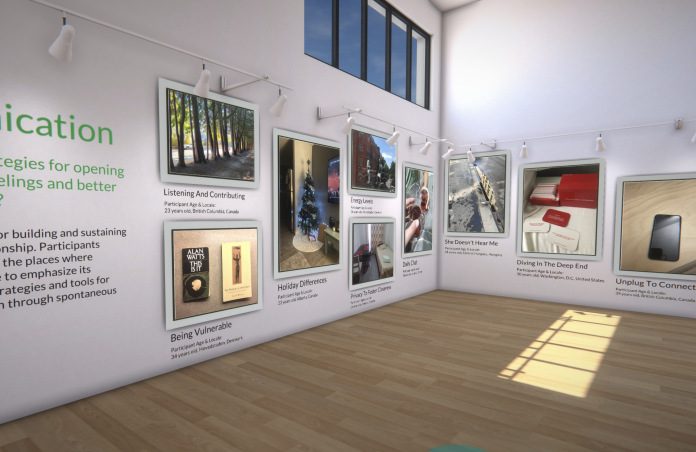
Due to toxic masculinity, a taboo still exists around conversations about men’s mental health struggles or their ability to sustain healthy relationships. This mirrors the relative inaccessibility of arts spaces for many communities, due to both physical constraints and financial costs. A newly-developed digital photo exhibition by the Men’s Health Research program at UBC brings a fully-rendered gallery directly to you at your desktop computer. The program’s Men Building Intimate Partner Relationships project intended to “chronicle the connections between masculinities and men’s intimate partner relationships with an emphasis on equitable and sustainable partnerships.”

The exhibit resembles a traditional gallery from the graphics: digitally designed to look like laminate hardwood flooring. There are pillars “supporting” the second floor, and a flight of stairs to click your way up. You can pause in the middle of the stairs and check in on the gallery from an elevated vantage point. Underneath each picture lies a short caption with a title, participant age, and where the photo came from. Clicking on the image brings forward a brief blurb about the story captured inside. 

The first floor of the exhibition’s 3D rendering is dedicated to topics like domestic work and honouring sentimental partnerships. Many of the photos tell stories about how relationships require collaboration in domestic duties to foster the feeling of connection; several entries describe the way cooking responsibilities are shared. Some of my favourite photovoice entries go beyond domestic life and branch into the larger world. One tells about how a more outgoing partner encourages “coming out of [his] shell,” and another couple of participants from Ontario write about a ritual of taking turns picking out pastries from a stretch of cafés along a street. A shared pastry parade seems to perfectly embody the research group’s goal of describing sustainable and equitable partnerships and their importance for men’s mental and physical health.

Browsing the gallery felt like going through a camera roll. Each photo was spontaneous and casual, without the usual posture “professional” photographers apply. I think there is something very comforting about how this project incises into the daily lives of men in situations any viewer is likely familiar with too; one entry attaches the meaning of perseverance over hardship to a set of concrete stairs, and another uses a photo of a restaurant cheque case to explain that money isn’t everything, rejecting a trope in toxic masculinity that men are breadwinners of a household. My favourite picture is one in the “top 30” gallery with a message of how deviations in routine break monotony and add colour to the tedium. Most of the entries in this gallery are classically picturesque, but I am drawn to this image of a cracked cement block imbued with coloured tiles as mortar because it shows fragility within brutalism (an architectural style that emphasizes minimalism and texture over design). “Perfection” is a moving goalpost, so embracing deviations from the plan is a valuable skill to have and even more important to be able to share.   

Musing through the variety of forms a healthy relationship can take is inspiring because it proves that gender hierarchies are not only dissolving around the world, but that the barrier of candid dialogue is being lowered too. By verbalizing and visualizing strategies for sustainable relationships, 

this digital gallery rests at a very important precipice for nurturing a culture of compassion and tenderness. 

Visit the Men Building Intimate Partner Relationships photo exhibition using the Men’s Health Research Program’s website.

Nutritious Nibbles: Chana chaat

0
PHOTO: Miansari66 / Wikimedia Commons

By: Rehma Adnan, SFU Student

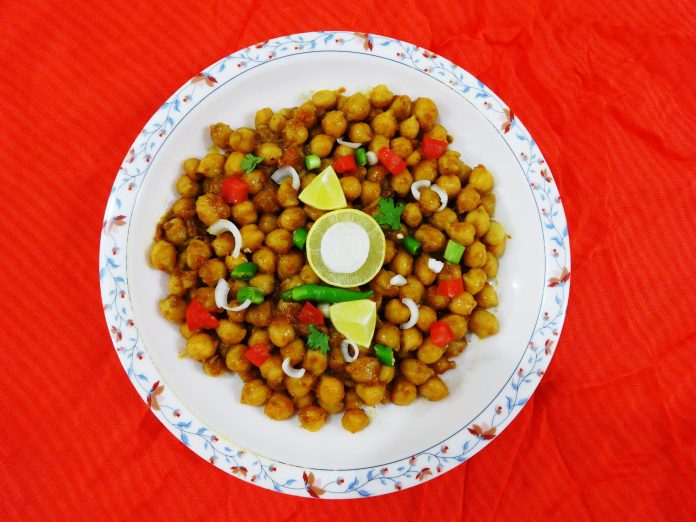
Looking for the perfect meal-prep salad? Here’s my family recipe of a fresh and flavourful fibre-loaded Pakistani salad called chana (chickpea) chaat.

This salad is the most low-effort and high-reward you can get in the kitchen. Made with staple kitchen ingredients like canned chickpeas and potatoes, while opening you up to an entire new palette with a specialty South Asian spice called chaat masala. This masala mix is made of spices like cumin and coriander, adding a tart and tangy flavour to your dish of choice. Another South Asian ingredient, imli (tamarind) sauce is also an important element of this dish. The sweet sauce cuts through the flavour of the chaat masala, creating a unique sweet-salty-sour flavour profile. These distinct ingredients can be found in South Asian specialty stores or the international section of big supermarkets. The best part of this dish; it marinates itself overtime in the fridge, tasting even better as the week goes on!

Ingredients:

  • 1–2 large russet potatoes
  • 1 can of chickpeas
  • 1 red onion
  • 2 tomatoes
  • 2 green chillies
  • Green coriander
  • Imli sauce
  • Chaat masala seasoning blend 
  • Salt 
  • Red chilli powder 

Instructions:

  1. Peel and cut the potatoes into bite-sized cubes.
  2. Boil potatoes in a pot of hot water until tender (around 10–15 minutes).
  3. Rinse and drain the can of chickpeas.
  4. Chop the onion and tomatoes into bite-sized pieces.
  5. Mix together the boiled potatoes and chickpeas along with the chopped onion and tomato.
  6. Add 1 tsp red chilli powder. 
  7. Add 1 tsp salt.
  8. Add chaat masala to taste (starting with 1 tbsp, and building up to your spice tolerance).
  9. Add 2 tbsp of imli (tamarind) sauce.
  10. Give a big mix to salad.
  11. Finely chop green chillies and coriander and add them as garnish.
  12. Drizzle on some extra tamarind sauce to decorate.
  13. Enjoy! Or store in an airtight container in the fridge as your new favourite meal-prepped salad. 


Reservation Dogs is the perfect summer watch

0
IMAGE: Courtesy of Waititi, Crazy Eagle Media, Dive, and FXP

By: Sia Garg, SFU Student

While June is National Indigenous History Month in the north of Turtle Island (Canada), reflection on the history of dispossession, resilience, and ongoing reconciliation should not be limited to a month alone. If you’re looking for a way to honour and promote such efforts from home, I believe the most accessible place to start is through cinema, and what better piece to start with than a good-humoured, scrappy comedy about four teenagers living on the Muscogee Nation reserve in Oklahoma?

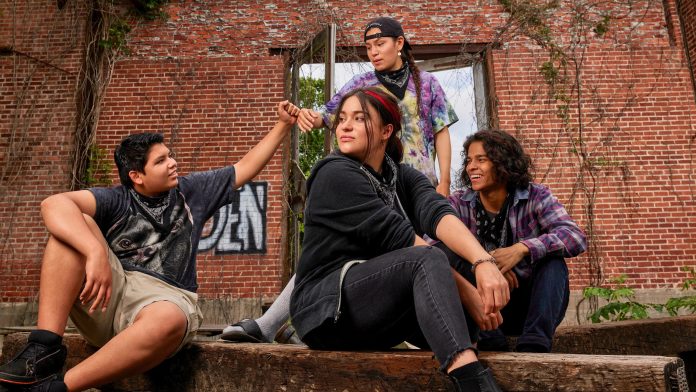
Reservation Dogs, created by Sterlin Harjo and Taika Waititi, ran for three seasons, and is available to stream for free right now on CBC Gem. It follows four Indigenous teenagers, Elora Danan, Willie Jack, Bear Smallhill, and Cheese as they steal, scheme, and dream their way towards California, a place they have mythologized as an escape from a life that feels like it’s closing in. Hovering over their plans is the absence of a fifth member, Daniel, whose death before the show’s start continues to haunt the narrative.

The show is first and foremost funny and lighthearted. It possesses a weird, specific humour that only comes from people telling stories about their own tightly-knit communities. Harjo, who grew up in Holdenville, Oklahoma, spent years making films about the world he knew. When you watch Reservation Dogs, you can feel the lived-in specificity in every scene: the particular rhythm of bored teenagers who are killing time, while also perhaps creating just a little bit of mischief around the reserve, the texture of family relationships spanning across generations, and the gallows humour that emerges in communities that have had to find ways to survive.

This series marks a massive milestone for Indigenous representation, as Reservation Dogs was the first American TV series to have an entirely Indigenous cast and crew. As Harjo put it at the Film Independent Spirit Awards, “We told stories about home and they were all funny, and there was nothing on TV that was funny that had Natives in it.” Reservation Dogs fills that gap seamlessly and without apology.

Reservation Dogs was not created to fill the role of a guide on the lives of Indigenous communities in the US, instead, it occupies its world with what The Hollywood Reporter has described as “lived-in charm,” trusting viewers to keep up. The Elders are hilarious, and the spirit guide, played by the Dakota environmental activist Dallad Goldtooth, is a sarcastic, swearing spirit of a warrior who upends just about every tiring “mystical Indigenous ancestor trope” that continues to plague the cinematic world.

The show has been positively remarked upon by Indigenous viewers who have greatly enjoyed seeing their lives on screen as opposed to an overly romanticized or tragic caricature.

Reservation Dogs offers something much more mundane and much more true to life; teenagers arguing about everyday things, bad plans going worse, and moments of unexpected warmth between people who know each other too well to pretend.

The episodes run about 25 minutes each and I have found it’s an easy watch; I can think of no better way to spend a few relaxing evenings this summer and beyond.

Three strange movies I watched on my transatlantic flight

0
PHOTO: Alev Takil / Unsplash

By: Mason Mattu, Humour Editor

Recently, aboard a flight from Istanbul to Vancouver, I had the utter pleasure of perusing through a very extensive in-flight entertainment catalogue. Before you transatlantic raw doggers bother me about watching a movie — what else was I supposed to do for 15 hours? Twiddle my thumbs? Chew on my musty blanket?  

Naturally, I chose to partake in cinema. Here are some of the highlights of my interesting cinematic escapade. 

British Lady and Turkish Man 

This charming documentary tells the story of Worcesterette, a British émigré who moved to Turkey because of the high cost of goat milk back home, and Emir, a goat herder from the northern part of the country. “I never expected to live in Turkey,” Worcesterette told the filmmaker at one point. “Now, because I married Emir and moved to Turkey, I can have over a dozen goats produce all the milk I could dream of.” The documentary captures her wandering the village, expecting people to speak English, and demanding free goat milk. 

Worcesterette has earned the nickname beyaz kadın by villagers, a phrase she reckons is connected to Turkic Mythology. Honestly, what a bop of a film. I just hoped Emir escapes that toxic relationship for his own mental health — a man’s goat milk is his prized possession . . . until I saw a post-credit scene that explained how Emir had lied about his goat breed being superior in order to convince Worcesterette to marry him instead of his neighbour. Shame on both of them, I guess. 

A 3-hour hair transplant infomercial 

Do you have a layover in Istanbul with absolutely nothing to do? According to the propaganda I was forced to watch, you should consider a hair transplant surgery! Mind you, I have no idea why they would be playing this infomercial on the way back from Istanbul. 

Before you flame me for watching this, please note that the whole airplane had this infomercial pop up as an ad. About halfway through the “film,” I heard buzzing noises coming from aisles behind me . . . I had to cover my head in fear that my beautiful, luscious hair was about to become a victim of capitalism. Hopefully the flight attendants are making a commission off of sales for the future hair transplant procedures. 

To all the men aboard that flight — you don’t need hair transplants. Don’t fall for the propaganda. Your head is beautiful the way it is. Don’t be chopped because some influencer in the manosphere gave you an affiliate link to a sketchy Turkish hair surgery clinic. 

50 Shades of Blue 

In this avant-garde film (by what I presume to be a French nepo baby), the audience is exposed to 50 shades of still-shot blue objects. Such objects ranged from paper clips, to hair brushes, to a whip-shaped ice cream cone (still not sure how they figured out the physics to make it in this shape) — most likely to pay homage to its namesake. 

I put on this film about 30 minutes before we landed, I was really in my feels and reflecting on my incredible experience. My five-star Letterboxd rating might not reflect the actual quality of the film. 

So, long story short, it was a very interesting plane ride. However, the most interesting part came upon landing in Vancouver. As I lined up at customs, I heard the most strange pattering sound emerge from behind me. Funnily enough, it was beyaz kadın herself. “Worcesterette?” I said. “Aren’t you from that documentary?”


Nestled against the bridge of her nose were a pair of sunglasses. She was laved with a trench coat. “Please . . . the Turkish paparazzi can’t follow me home. I’m here on a layover,” she said. “My husband threatened to start charging me for his shite goat milk, the villagers all hate me, and I missed my mother’s Cockney accent. So I left.”

And that, kids, is how I met your mother. Just kidding. I have no quality goat milk to offer. 


I just want some flowers, please

0
ILLUSTRATION: Cliff Ebora / The Peak

By: Mason Mattu, Humour Editor 

When I was in grade school, I used to do a lot of musical theatre. You may think, lots of shows means lots of flowers from your family, no? 

No. You’re wrong. 

You know the saying that men will only get flowers at their funeral? I think that’s 100% true given the horrors I’ve been gifted over the years. The closest thing I’ve ever been given to flowers after a show was a type of cactus called “roadkill cactus” by my friends. Never from my family. Warning: this piece contains some harsh realities of what it’s like to be a man. Welcome to our dull lives. 

A bouquet of socks

In 2019, after my production of Grease, I walked out of the greenroom with a smile on my face. My mom gave me a giant hug and congratulated me on my job well done. 

“We wanted to give you something that rewards how well you did,” my mom said with a grin on her face. Oh no. 

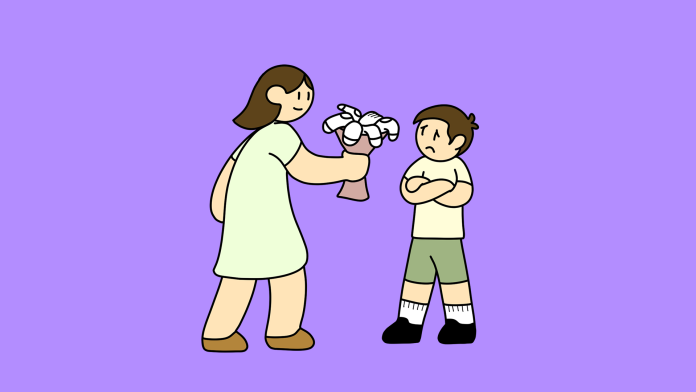
Out from behind her back emerged a bouquet — of socks. Tied with a piece of twine and wrapped in gently-used underwear, I was genuinely ready to burst into tears. What the fuck was my life, man? “Your sweat during your rehearsals probably ruined all of your socks, so I thought I’d buy you some. And I got half-off underwear, too.” 

A shovel 

What a performance to remember. Back in 2020, I was casted as Link, the lead of the play Hairspray. As I looked around and saw my women co-stars greeting their family with beautiful flowers. Chocolates. Cards. I sighed as I waited to see what I would be receiving this time. 

“Here’s a shovel,” my father told me, laying it in my hands. “Now that you’ve got more free time, you can do some yardwork. What do you say, bud?” Nothing says “I’m proud of you” before you even take your costume off. 

Honestly, that one wasn’t even that bad. After consulting with my other guy castmates, I found out that some other gifts included garden gloves, a pair of used socks, and an air freshener (supposedly for the socks). Seriously, what’s the obsession with socks??

A chainsaw

Before my part in Mama Mia! in 2023, I had specifically mentioned to my parents how badly I wanted some flowers. Even if it was just one singular flower that I could put in a vase in my room. 

Which is why I was elated when I saw my mother holding flowers outside of my greenroom after my performance. As I reached to grab the bouquet, my dad popped out of nowhere. 

With a chainsaw.

“RAWWRRRRR MOTHERFUCKER!” 

I tilted my head down, hearing just the sounds of my dad laughing. As I looked up, my mother handed me the stems of the flowers. Like what the actual fuck? Who’s against giving men flowers so much that they’d send a message like that? 

Well, at least I have some stems in my scrapbook now. Such is the life of a theatre boy.

How to trick your father into getting a physical

0
PHOTO: Stockking / Magnific EDIT: Mason Mattu / The Peak

By: Dr. Tomos Land, Trainee Father-o-trician

When growing up, it’s pretty common to think of your dad as the strongest man in the universe. If your dad is anything like mine, his viking beard, shiny bald head, and gigantic frame are enough to convince you pretty quickly that if anyone gets a pass on their yearly physical (and a tab opened automatically at Home Depot), it’s probably this guy. As you get older, and start to notice how he groans every time he sits down, or wakes the entire house up with his signature morning cough — his mortality slowly dawns on you. Still, he puts off every doctor’s visit, until finally, one day, you find out why — he’s never had anyone tell him it’s OK to look after his health!

Now, realizing that he is not in fact invincible and that I’m actually dealing with a sensitive soul hiding inside the body of a bricklayer, things feel different. Getting my dad and the millions of other health-phobic fathers out of the bathroom and into a health clinic is now my life’s work. Getting the old boy into a doctor’s office is akin to pulling teeth, and please don’t even get me started on scheduling dental visits. As a result, I have compiled a short overview of my tried and tested techniques for tricking (some may call it manipulating), the most stubborn man you know into seeing the doctor. 

The first tactic is to lull him into a false sense of security. Find out what his favourite pastime is and go from there. For instance, subtly mention that you are just heading out to do some a bit of yardwork for an elderly neighbour. After piquing his interest, put your phone on do not disturb, find the most hideously botched lawnmowing job you can get from Google, then send it to him an hour later with the simple message, “Does this look good to you?”

Then sit back and let the chaos ensue. When he arrives at the location you have shared, unable to resist an opportunity to fix your mistakes, he conveniently finds himself walking through the back door of the family doctor’s office, unwittingly and unconsciously resigning himself to a fate he has for so long been trying to avoid. 

If unsuccessful in tactic number one, turn instead to a foolproof second option — bribery. The blood bank had it right when they started offering biscuits to donors, and this is the type of energy you have to tap into. Find his weakness, and exploit it. He likes sports? Tell him an ex-pro is now training to be a family doctor at your clinic. Does he like model train sets? Then he better know Francis Bourgeois is now training to be a family doctor at your clinic. Is he a sucker for a drink? Tell him that your local walk-in clinic is also a sports bar. You get the point. Lie, lie, and lie again. Anything to get him to realize that going to the doctor is a HEALTHY thing to do as a man!!

Finally, my third and favourite method is the secret barbecue. I tell my dad I’m coming home for the weekend, that the weather is nice, and that all my friends have heard what a magician he is on the grill. Simultaneously, I plaster flyers around SFU offering free food to the new med students willing to diagnose Big Papa. Inevitably, the weekend ends with my dad chilling in a loose robe, just not the kind he originally had in mind. 

All this is say that — to all the fathers out there — going to the doctor is OK. 


SFU rejoins U SPORTS’ Canada West in 2027

0
Red and white SFU and Canada West logo on a marbled grey background with a thin vertical line separating them
X / Canada West

By: Jonah Lazar, Staff Writer

Following SFU’s decision last September to leave the National Collegiate Athletic Association (NCAA), the US’ premier collegiate sports governing body, the university is set to begin competing in Canada’s collegiate sports governing body, U SPORTS, starting in the fall of 2027.

On May 7, SFU was accepted into Canada West, U SPORTS’ western division, as a probationary member. SFU received probationary membership from U SPORTS at the U SPORTS annual meeting at the beginning of June

In U SPORTS, SFU will compete in the Canada West conference against 17 other universities in Western Canada, including UBC, UVIC, and other universities in BC, Manitoba, Alberta, and Saskatchewan.

SFU’s decision to leave the NCAA championships last September was largely due to budgetary concerns. The university estimates they will save over a million dollars annually in fees and wages from the change in competitions. This is mostly due to softball, golf, and outdoor track and field being cut, as U SPORTS does not offer these sports. These teams will begin to gear up for what will be their last season in action.

After this announcement, SFU’s Student-Athlete Advisory Committee published an open letter opposing SFU’s decision to leave the NCAA. They stated that leaving the NCAA championships will “affect students, alumni, staff, recruitment, institutional reputation, global partnerships, and the student experience at SFU.” They continued, “SFU has created a rare environment where Canadians and international students can access elite sports competition while obtaining a Canadian degree. That is something worth preserving.” This change will also affect scholarships for some, as SFU will determine their athlete scholarship budget on a departmental basis.

Some users on r/simonfraser echoed the letter’s sentiment. u/BeffBezos shared, “NCAA inclusion was one of the only things SFU had going for it.” Others had more mixed opinions. u/canadahuntsYOU shared, “Makes sense, unfortunately. Definitely shit news for the NCAA students but constant cross-border travel and fees associated with that is an obvious choice for slashing. At least now we’ll see SFU regularly play UBC again?”

SFU will continue to compete in the NCAA championships for the 2026/27 academic year before leaving the competition. Prior to this withdrawal, SFU was Canada’s only NCAA university in an otherwise American program. 

According to SFU’s media release, SFU believes that their admission into Canada West will “ensure long-term sustainability of varsity sport.” The university also believes that “competing against local Canadian universities will enhance natural rivalries and the fan experience on campus for all SFU students, leading to a deeper sense of SFU community.”

The move to U SPORTS means policy for trans athletes will change. As of 2025, the NCAA banned trans women from competing in women’s sports. Under U SPORTS, trans athletes may practice and compete on the team that aligns with their gender. However, this doesn’t guarantee trans inclusivity for athletes. The Student-Athlete Advisory Committee’s letter stated, “Transgender women are barred from participating in female competitions in Alberta. Teams in Canada West routinely compete against institutions located in Alberta.” Overall, the change means that trans athletes will lose the option to compete in the widely acclaimed NCAA.

As reported by SFU News, Canada West president Ben Matchett stated:

We are pleased to welcome SFU back into the fold

Ben Matchett, Canada West president

“We were impressed by the commitment of SFU’s institutional and athletic leadership to this process, and we look forward to working with them on the transition process as we prepare for the Red Leafs to join competition in the fall of 2027.”

The Peak reached out to the Student-Athlete Advisory Committee, however did not get a response by the publication deadline. 

Low income transit pass moved by councillor Sean Orr

0
Photo of a person’s hand tapping a compass card at a service machine

By: Maya Barillas Mohan, Staff Writer 

On June 3, councillor Sean Orr of the Coalition of Progressive Electors introduced a motion to create a low income transit pass to assist “those earning less than $40,000 a year” in Metro Vancouver, as stated in the motion. As a result, the City will engage in conversation with TransLink to figure out the feasibility of the pass. Additionally, the City and TransLink will lobby for funding from the provincial government. The Peak reached out to Orr to learn more.

Orr shared that the $40,000 figure came up repeatedly in his research. In Vancouver, “the median individual income is $46,000. So that’s why I choose it, because it’s the median: not the average, but the median,” said Orr. The median figure means half Vancouverites earn less than $46,000, while the other half earn more. In Vancouver, full-time hours at minimum wage comes in at less than $38,000 a year.  

Orr said, although “a lot of people take transit already in Vancouver,” reducing transit prices forms a positive dual impact: it gives people more choice in how they commute, and it has environmental benefits. “Anytime we can get people out of cars and onto transit, it’s good for the climate,” he said.

Posters organized by Movement YVR around the city advertise petitions for the low income transit pass. According to their website, they are an advocacy group focused on unifying transit riders’ voices to “advocate for better, more equitable transit across Metro Vancouver.” The group is petitioning for the low income transit pass to be implemented before TransLink’s next fare increase. They state, “No one should be denied transit because they can’t afford it.” 

Transit fare increased 4% in 2025, and will experience another increase as of July 1. The Peak reached out to TransLink directly for a statement. They shared, “Transit fares will increase [ . . . ] on July 1 to help expand transit services throughout Metro Vancouver,” like bus service, new routes, and infrastructure. The increase will “help our revenues catch up, after fare increases were capped under the rate of inflation for five years.” 

The company has faced financial challenges in previous years, due to issues in their financial structure. The company announced a $72 million deficit in their 2025 budget. As reported by Vancouver Sun, they warned that bus services would experience a “50% reduction in bus service and 30% cut in SkyTrain and West Coast Express service” without emergency government funding. Ultimately, in May 2026, the federal government gave TransLink $1.5 billion for 10 years of operations and developments.   

Despite these challenges, Orr’s motion states, “Affordable transportation is linked to better social well-being and health outcomes.” Currently, transportation costs are rising and reduced fares are only available for some: people with disabilities or seniors aged 65 and older. 

“The fact we don’t have a low-income transit pass, but cities like Calgary, Edmonton, Halifax, New York, LA, Denver, the list goes on. It’s really frustrating. It’s something we absolutely need to be on par with those cities about.”

— Sean Orr, COPE City Councillor

“We can have it so that people aren’t choosing groceries over taking transit or they’re not missing job interviews or missing hospital visits with loved ones because they can’t afford transit. So, I really think it’s just a matter of political will and really committing to affordability across this province.”