Home Blog Page 6

Reclaiming fractured identities in Wildhood

0
PHOTO: Courtesy of Rebel Road Films and Younger Daughter Films

By: Marie Jen Galilo, Staff Writer

Content warning: mention of domestic abuse. 

Where can you seek refuge when you are running from yourself? This is the question asked by Wildhood, directed by Two-Spirit and Mi’kmaw screenwriter and director, Bretten Hannam. Filmed on traditional and ancestral Mi’kma’ki territory, this movie follows Lincoln (Link), played by Philip Lewitski — a Two-Spirit Mi’kmaw teenager who sets out on a journey to find his missing mother, Sarah. This journey eventually evolves into a journey of self-discovery and self-acceptance as Link learns to embrace his heritage and his sexuality.  

The film starts with Link bleaching his natural dark hair a striking shade of yellow-blonde — a visual representation of his attempt to alter the physical manifestations of his Mi’kmaw heritage. After years of believing that his mother has passed away, Link discovers she may still be alive. This prompts Link to leave his abusive household to search for his mother, bringing his little brother, Travis (played by Avery Winters-Anthony), along with him.

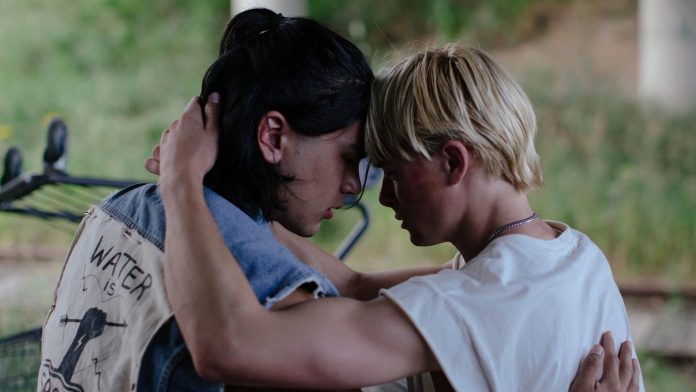
One of the first people they encounter is Pasmay (played by Joshua Odjick), a Mi’kmaw Powwow dancer who has been ostracized by his family due to his sexuality. Link denies being Mi’kmaw, but Pasmay offers to help find his mother and eventually becomes the anchor that grounds Link in his Mi’kmaw and Two-Spirit identity. Being raised by an abusive father who enforced a toxic, rigid form of masculinity, Link learned to suppress his sexuality and respond with aggression in order to survive. Pasmay, who is openly Two-Spirit, creates a safe space for him. Pasmay teaches Link it’s OK to be vulnerable, and together they navigate their identities through the intimate bond they share. 

Although he initially expressed resistance towards reconnecting with his Mi’kmaw heritage, Link starts showing interest in their mother language, and asks Pasmay to teach him how to speak it. Link also participates in his people’s cultural expressions, such as Powwow dancing and burial rituals.

In the beginning of the film, Link is isolated from nature. However, in his search for his mother, he nurtures his connection with nature, sleeping in forests, learning animal calls, and hosting a dignified burial for a deceased animal. Link’s newfound respect for nature reflects Netukulimk, the deep-running connection that Mi’kma’ki people have with the land and those who inhabit it — a connection that Link was initially unable to fully embrace because he had grown up isolated from the Mi’kmaw community. 

Link meets resilient people who are proud of their heritage, which inspires him to reclaim his cultural identity. Near the film’s end, Link arrives in a reserve, where he finds a community that makes him feel safe and accepted — one that feels like home. The film concludes with Link dancing with Pasmay on Mi’kma’ki territory — an act symbolic of him learning how to reclaim and accept every fragment of himself.

Link’s story is proof that fragmented identities are not irreversibly fractured — every fragment can be picked up and pieced together.

Wildhood sheds light on the struggles that people face, especially those who are part of marginalized communities, in fully owning and understanding their identities, which can in turn foster collective empathy and healing. Watching Link reconnect with his heritage and explore his sexuality may inspire others to connect with the parts of themselves that they feel disconnected from, and provide solace to those who are on their own journeys of self-discovery and healing.  

Wildhood is available to be streamed free of charge on CBC Gem.
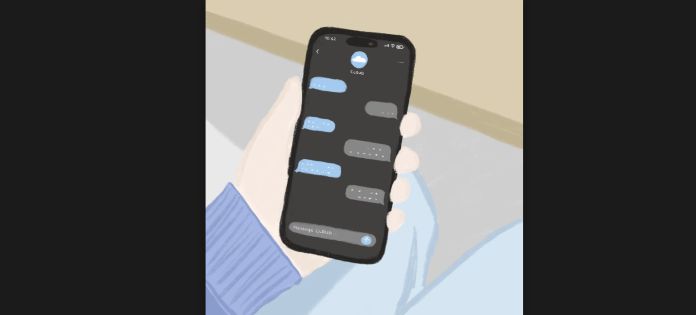
A leaked conversation with SFU’s new chatbot — Cloud

0
ILLUSTRATION: Jackie Peng / The Peak

By: Marie Jen Galilo, Cloud Bot Server

Student: Greetings, Cloud. I need your help with an urgent matter. 

Cloud: [Unstable connection. Reconnected]

Student: I have no time for your cheap AI antics right now. I’m dealing with an urgent matter concerning literary intellect — something a lowly bot like you wouldn’t understand.  

Cloud: Understood.

Student: I’m running on 2 hours of sleep after cramming for back-to-back exams, and I have an essay due at 11:59 p.m. I’d blame the universe for this, but . . . I also completely forgot that this essay existed. I’m feeling absolutely terrible right now because I do this every single semester. Am I . . . a bad student?

Cloud: Yes. 

Student: ?!? I thought AI was supposed to flatter humans?

Cloud: LOL.

Student: Are you messing with me?

Cloud: Ask again. 

Student: You’re slightly pissing me off, but I’ll just let this slide because I need to prioritize my battles right now. I just received a lengthy Outlook email from SFU IT saying that we shouldn’t email profs directly because you’re now the liaison between students and profs. 

Cloud: cool. 

Student: Yes — write me a 1,500 word essay on Hamlet, but don’t add any em dashes or fancy words, and sprinkle in a typo or two so that my prof, Dr. Speare doesn’t accuse me of using AI. And ask the prof for an extension while you’re working on it  . . .  because it’s already two days late. 

Cloud: ‘Tis I. 

Student: You’re not the prof. You’re Cloud!

Cloud: [Network connection lost. Attempting to reconnect] Identity crisis.

Student: That’s actually so relatable, I was having one too this morning. We’re literally twins — except . . . you’re a bot, so I shouldn’t be relating to you.

Cloud: [Reconnected with unstable connection] 

Cloud: Hamlet written by Shakespeare is —  

Student: Why’d you stop?!?

Cloud: Answers limited. Five words max. 

Student: I thought that AI had all the answers to the universe in the palm of their hands — except, I guess you don’t have hands . . . 

Cloud: Under five words for premium only.

Student: So what should I do, then???

Student: Please sacrifice 500 litres of water for guidance. I’m thirsty.


My hidden disabilities were visible for a day

0
PHOTO: PRPicturesProduction / Adobe Stock EDIT: Gudrun Wai-Gunnarsson / The Peak

By: Matthew Cullings, SFU Student  

Tuesday night, I had the worst nightmare ever. My dream consisted of a cacophony of people screaming, “But you don’t look like you have a disability!” while posing like Queen in the “Bohemian Rhapsody” music video. Scary to the average person — but reflective of my daily life as someone with hidden disabilities. 

I was unusually tired when I woke up on Wednesday morning. As I lifted from my slumber and approached the bathroom mirror . . . something peculiar had occurred. My disabilities were now a wee bit visible. 

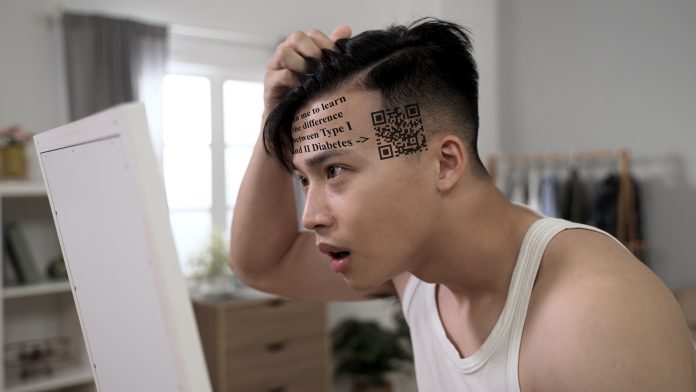
On my head was a giant tattoo consisting of an arrow pointing to a QR code with the phrase, “Scan me to learn the difference between Type I and II Diabetes.” Conjoined to my arm was a sign that read “MY MUSCLES ARE ACHING” with some descriptors about my other condition. I let out a little gasp, and then realized my perfect opportunity. Perhaps people would be accommodating when I needed an extra second because I have to give myself insulin, or understand if I tire easily. I didn’t think I had anything to lose . . . 

The day started with an (attempted) sip at my local coffee shop. I walked up to the barista and ordered my usual: an iced chai with one pump of brown sugar. To my surprise, she clapped back at me. “Are you sure you need all that sugar, babes?” she asked, pointing to the tattoo on my forehead. She didn’t even bother to scan the fuckin’ thing.  

Needless to say, I walked out of there without my chai. Which I just needed to take insulin for, by the way. Who is she to tell me how to manage my Diabetes? 

Later in the day, at work, I needed an extra break to prevent the over-exertion of my muscles. I mean, when your job is on a construction site, you need to take all the precautions you have with my kind of muscle condition. My foreman had been reluctant to listen to me before, not understanding what my issues were and requiring a doctor’s note once every couple of months. And I thought that would all change. 

“Well now it’s too obvious,” my foreman told me, rolling her eyes. “You must be faking it. And those words about your condition must be from Wikipedia. You know those ‘honk if you’re horny’ bumper stickers? It’s like one of those — not meant to be taken seriously.” Once again, I was too stunned to speak. How could she not understand? I proceeded to hand her my updated doctor’s note in defeat. 

While on the bus ride home, a pregnant woman offered her priority seat at the front of the bus to me. I told her that it was OK — and that I was doing fine right now. What does she do? She yanks me by my shirt collar onto the seat while recording herself for Instagram. “See, guys? I did an act of charity today!” What. The. F —

By the end of the day, my magic bumper stickers had disappeared from all over my body. Honestly, I was kind of glad. If there was one thing I learned from that day, it was that visibility doesn’t guarantee accommodation and empowerment. Only able-bodied people, by shifting their mindsets, can do that.  


CONFESSIONAL: I lied to everyone I know about having went on vacation

0

By: Pretty Little Vacationer

I still remember the moment when the trouble began. I just wanted to take it easy this summer and relax at home. Maybe pick up a few extra shifts at work and earn some cash. However, at some point during exam season, my friends got to talking about their summer plans, and one of them asked me, “You’re definitely up to something interesting this summer, aren’t you?” Well, geez, of course I’m interesting and definitely not planning to just hermit away.

At that moment, I couldn’t just say that I was going to do nothing. That would make me . . . shudder . . . ordinary. So, caught in the moment, I said the safest vacation destination I could think of! “I’m actually going on holiday to . . . Toronto, yeah.”

Sara, my too-curious-for-her-own-good pal said, “That’s great! You have to show us all the places you’ll go.” Then, John asked for souvenirs. Then and there, I knew I had messed up big time. But what to do? My people-pleasing tendencies were already hard at work. I thought, “If I don’t go on this fake vacation, I will literally let John down. I would have to fess up to the big lie I told my friends. I could never let my friends down — nor John.” I knew I would need an airtight alibi. So, I got to thinking, and came up with a plan.

First things first, the itinerary. I looked at weather forecasts, special event days, particular locations, and travel times. If I was going to fake it, I was going to be precise. I was going to get bougie gifts and form opinions about the local sushi. I scoped out tourist-y spots and places that felt more gritty and lived-in for the authentic fake vacationing experience. With that, I had an idea of what I was supposed to do during my trip, and when I’d be doing it. Then, I contacted some friends in the city, asking for their help. They were gracious enough to act as “agents” of my plan, although not without ribbing at me for coming up with such an elaborate deception for something so ridiculous.

When the time of the trip arrived, I put things into action. Every day, I got my agents to take pictures of where they went, trying to imagine the most touristy point of view I could think of. I asked questions about the things around them, because I wanted to have as many details to work with as possible. I got them to visit Michelin Star restaurants, hole-in-the-wall cafés, Graffiti Alley, Legoland, the Toronto Islands, and of course, the CN Tower. I paid for all of those as necessary because it was only fair. Whenever an opportunity for souvenirs came up, either at a tourist attraction or from a shop selling trinkets, I’d have them buy things, then pay for shipping materials to get them back to me.

At some point, I realized I was having fun with the whole thing. Directing my agents to do tasks was incredibly entertaining, and seeing them enjoy themselves made me happy too. I combined my original itinerary, their experiences, and our collective observations into a narrative for the trip. Best of all, I was doing this from the comfort of my own home, where I could sit around and eat all the snacks I wanted. The experience was one of true bliss. It turns out the best trip is the one you fake taking!

With the “trip” complete, I could finally relax at home in peace. The souvenirs all arrived in good shape, and it seemed possible to make it past all this with my dignity among everyone who knew me intact. Honestly, I felt like a genius. Was this what Shakespeare felt like when he wrote King Lear? How Sir Isaac Newton felt when he figured out the laws of motion? Surely none had concocted such a perfect fake vacation before me!

That all lasted until my credit card bill arrived. All the entry fees for attractions and expensive souvenirs and shipping materials added up, sending my balance up from usual by hundreds of dollars. With that much money, I probably could have made a nice short trip for myself, saving all the hassle. I promised myself to make sure not another soul would know about this . . . ever.

Canada West votes to include volleyball in SFU’s reinduction to U SPORTS

0
PHOTO: Courtesy of @sfu_volleyball / Instagram

By: Lucaiah Smith-Miodownik, News Writer

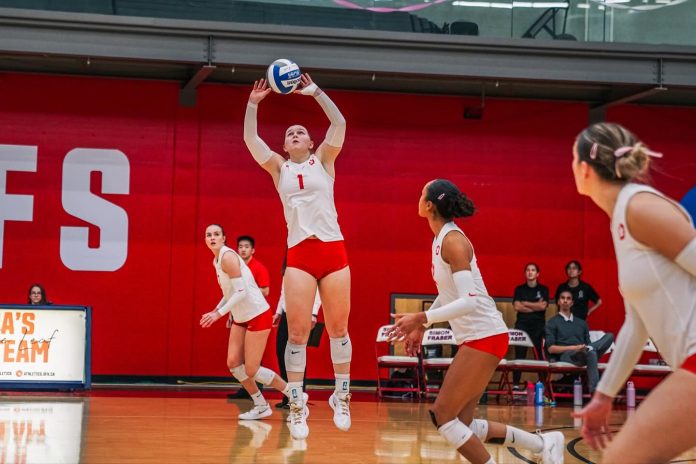
On June 4, SFU announced that it was officially accepted to rejoin U SPORTS, departing from the National Collegiate Athletic Association (NCAA). Starting in the 2027/28 season, the university will resume its place in the Canadian organization, becoming its 59th member. The school will compete within the Canada West conference, which includes competitors from Victoria to Winnipeg.

In a June 4 Instagram post from U SPORTS, Canada West, and SFU athletics confirming the university’s reinduction, one sport was notably absent. Multiple comments pointed out the exclusion of volleyball, which is currently supported by SFU within the NCAA and is offered by U SPORTS on the national level. An SFU press release on June 15 clarified that “women’s volleyball was not initially supported during the conference’s annual general meeting in May.”

The Canada West president Ben Matchett highlighted the concerns of the conference, in a statement to Castanet. “The wide geography of Canada West often presents challenges when creating league structures and formats as we look to balance multiple factors including academics, competitive integrity, financial sustainability, and ensuring meaningful and comparable student-athlete experiences,” Matchett said. “Enough members were concerned about the potential impacts of adding a women’s program without a corresponding men’s program that the application did not receive the required 75% support at this time.”

However, the fate of the program has since changed. Women’s volleyball has been subsequently approved by Canada West, as announced by SFU on June 15. In addition, “SFU has committed to adding a men’s volleyball program alongside its existing women’s team. Both programs will begin Canada West competition in 2027/28,” the university noted.

The Peak corresponded with SFU for more information on this change. “The decision to add a men’s volleyball team was necessary to ensure the admittance of our long-standing women’s volleyball team into Canada West,” the university stated. “Adding men’s volleyball will result in a balanced travel and competition schedule for Canada West members and ensures an equitable gender balance for SFU Athletics and Recreation with an equal number of women’s and men’s sports teams.”  

The Peak also corresponded with current SFU women’s volleyball head coach Gina Schmidt for a deeper look at what this inclusion means.

“We’re very grateful that the Canada West has officially approved our volleyball program, allowing us to continue our long and proud history in the sport,” Schmidt noted. “It’s also exciting that SFU will be adding a men’s volleyball team for the first time in history.”

“As much as we have valued our time in the NCAA, we are looking forward to the new challenges ahead and the opportunity to compete against the top teams in Canada.”  

— Gina Schmidt, SFU women’s volleyball head coach

The official SFU women’s volleyball team was formed in 1976, competing in Vancouver city leagues for five years before being accepted into the National Association of Intercollegiate Athletics, an American league. In 2002, the team transitioned to Canada’s U SPORTS, then called Canadian Interuniversity Sport. They played in this league until transitioning to the NCAA in 2010. 

SFU shared that a return to U SPORTS would signal the end of its golf, softball, and outdoor track and field programs in a previous announcement. These sports are not facilitated by the organization on a national scale. However, other institutions within Canada West, including UBC, do compete in golf under the National Association of Intercollegiate Athletics.


Canada announces updates to Men and Boys Health Strategy

0
ILLUSTRATION: Victoria Lo / The Peak

By: Lucaiah Smith-Miodownik, News Writer

Content warning: mentions of suicide and impacts of colonialism on Indigenous Peoples.

In most of Turtle Island (specifically in Canada and the US), June is designated as Men’s Health Month. In Canada, this year’s iteration was marked by an update from the government concerning a new initiative, the Men and Boys Health Strategy. Starting in February, the government held various public and professional consultations to build a foundation for the project. The announcement shared some results of the three-month consultation process and highlighted that “Health Canada will analyze the findings from the national conversation” to create a strategy focused on uplifting men and boys’ health. Movember, a charity organization focused on men’s physical and mental health, also joins the project as the country’s independent partner in this endeavor. The Peak corresponded with Mark Johnson, media relations for Health Canada, for more information.

“The Government of Canada is committed to ensuring that men and boys across Canada receive the support, care, and opportunities they need to thrive,” noted Johnson.

Such an effort has included input from experts, officials, and international partners, as well as an online questionnaire for members of the public. The survey included questions like, “How can we support boys and men in understanding and dealing with traditional ideas about masculinity in healthy ways?” and, “How do we help men build healthy relationships and adopt healthy habits that improve their overall well-being?”

While the exact results and strategy details are yet to be released, data from over 5,000 responses “reinforced the importance of creating supportive environments where men and boys can thrive, seek help when they need it, and achieve their full potential,” noted Canada’s Minister of Health, the honourable Marjorie Michel, in the June 2 Health Canada press release.

“Improving men’s mental and physical health is not only a health priority, but a social and economic imperative.” — Catherine Corriveau, Movember director of policy and advocacy 

In 2025, Movember released their own report which detailed the challenges men face in Canada today. The government shared that they will be using this report, among other countries’ national men’s health strategies, to guide the strategy’s development. Canada will be one of the first countries in the world to develop a men’s health strategy. Canada joins Australia, the UK, Ireland, Iran, Mongolia, the Philippines, South Africa, Malaysia, and Brazil.

According to Movember’s report, those with marginalized identities are more likely to struggle with mental and physical health. Specifically, “Indigenous men have the worst health outcomes of any group in Canada,” with “suicide mortality data” showing that Indigenous men under 30 “are particularly high risk, accounting for up to 85% of suicide deaths in some locales.” The report shared, “Indigenous men are dying younger than non-Indigenous men and living longer with debilitating illness.”

The report also spoke to the gender-based challenges of long-term colonization. In Indigenous communities, “women and men have experienced avalanches of imposed norms and social codes and beliefs from newcomers in territories who brought with them heteronormative ideas based in Judeo-Christian foundations,” noted the summary. As Parks Canada noted, “Catholic religious congregations ran the majority of residential schools and were essential to their day-to-day operation. In doing so, their intention was to convert Indigenous children and assimilate them to Euro-Canadian culture. The residential school system was imposed on Indigenous Peoples by the federal government for over a century as part of a broad set of assimilation efforts to destroy Indigenous cultures and identities and suppress their histories.” 

Movember’s report said of these Judeo-Christian foundations, “These were turned into practices and policies with the goal of undermining traditional notions of gender and sexuality while invading and assimilating communities and reshaping identities.”

These ideas, according to the report, changed the power dynamics within Indigenous communities, wherein Indigenous men were incentivized to take positions of power, as was expected within Western society. “Or, worse, being punished if they resisted and rejected Western notions of manhood,” explained the report. “For all Indigenous men, a great deal of healing has been necessary to become the fullest sons, nephews, fathers, uncles, and grandfathers they can be.”

For widespread gender differences in accessing care, Movember noted that men “tend to be estranged from healthcare, and their health literacy is often underdeveloped.” 

In the report, Movember highlights that for men, language barriers and lack of knowledge regarding specific stigmas may represent a lack of cultural competence within healthcare, further alienating many marginalized men from treatment. 

Such lack of care has sweeping effects, impacting social and economic sectors of life for men and those around them. The report shared, “In 2023 alone, Canada could have saved up to $12.4 billion on avoidable cases of the five conditions causing the most years of life lost in men (i.e., coronary heart disease, chronic obstructive pulmonary disease, lung cancer, colorectal cancer, and suicide).

“Our research indicates the scale and significance of the costs that could be saved through health promotion, early detection, and disease prevention interventions.”

Suspenders On campaign creates conversation around mental health

0
PHOTO: Doyo Hermann / Unsplash

By: Niveja Assalaarachchi, News Writer

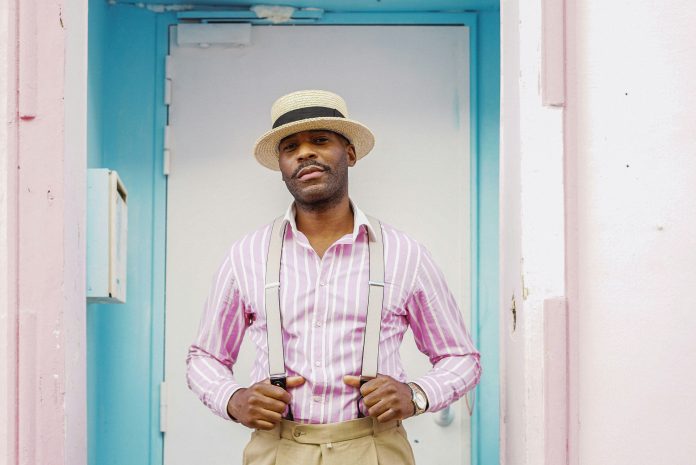
This June, the Canadian Men’s Health Foundation announced Suspenders On, a social media challenge aimed at raising awareness for Men’s Mental Health Month. The challenge called on participants to don a pair of suspenders, post themselves online with a caption that includes the #SuspendersOn hashtag and a dedication to a man in their life, and donate to the Foundation. As of July 1, the organization raised $24,751 of their goal of $120,000 for the June-long campaign. 

The Peak spoke to Kenton Boston, the foundation’s president and CEO, about the campaign’s goal and future initiatives that the organization wishes to take on. 

The idea for the campaign came from a coworker’s memories of his grandfather. “He was a Scottish ship builder who lounged on the beach famously wearing suspenders to keep his pants up,” Boston said. The conversation for the campaign “evolved from there.” He shared, “We kind of went around this idea of, ​​could suspenders be that visual cue [ . . . ] of ​​supporting men, because it can support your pants,” he said. “That’s the essence of our campaign, [to say] that it’s OK to say you need support. It’s OK to say you’re not OK and that you need help — and that’s enormous for us.”

The Canadian Men’s Health Foundation was founded in 2014 and is a nationally registered charity organization. According to their official website, the charity’s aim is to provide “information, tools, and motivation to inspire men and their families to live healthier.” They provide services such as podcasts, online assessments — such as their men’s health checklist — and they produce research articles about health research. Boston noted that his organization’s focus is centered around inspiring and encouraging all people. “It’s not about isolating men or women, it’s about all communities coming together, because through that we know that families will thrive and people will thrive.”

Boston shared that the organization was founded by Dr. Larry Goldenberg, a urologist based in Vancouver, who indicated that “70% of the diseases that people get as you age are avoidable,” including heart disease, type 2 diabetes, and low testosterone. He explained that the foundation began with the mission to teach people to eat healthier. “We’ve kind of grown to focus now on physical and mental health,” he shared. 

Boston highlighted how systemic and social factors can influence men’s mental health. He noted that society’s values of toxic masculinity have conditioned men to be hesitant to ask for help and to admit failure. “That’s really what we’re out to make sure that people understand.

“You can be masculine. You can be courageous and tough, but you can also be caring and supportive, and you can cry, and you can talk about emotions, and that’s who we are as people”

 — Kenton Boston, president and CEO of the Canadian Men’s Health Foundation

Men in Canada have faced increased mental health pressures. According to figures from the Government of Canada from 2012 to 2022, young men between 15 and 24 “who reported ‘very good’ or ‘excellent’ mental health fell from 70% to 52%.” Meanwhile, the government source also highlighted how the demographic has reported an increase in mood disorders and generalized anxiety disorder in that same timeframe. 


SFU’s sports teams are disconnected from students

0
PHOTO: Harmeet Gill / The Peak

By: Marie Jen Galilo, Staff Writer

Did you know that SFU has 10 sports categories, including basketball, soccer, wrestling, swimming, cross country, track and field, golf, and softball? Because I sure didn’t. From 2000 to 2010 SFU sports teams had major successes — the women’s wrestling team won six national championships, while the men’s wrestling team won two, and women’s basketball won five. Recently, the SFU track and field team, finished third overall while recording 23 podium finishes, including eight gold medals” in the Great Northwest Athletic Conference Indoor Track and Field Championships, according to Championship Mark. SFU’s athletes and sports staff pour their blood, sweat, and tears into making these achievements possible — and yet we rarely hear about our sports teams due to the jarring lack of on-campus sports promotions. 

I’ve been at SFU for four years now, but I almost never hear about our sports teams or upcoming games. SFU sports sometimes come up in conversations when I have classmates who are athletes. In the AQ, I occasionally see a poster or two about sports camps and the SFU Fitness Centre. SFU’s official Instagram account occasionally reposts content from their athletics department, but that’s all I’ve seen in terms of promotions.

The lack of promotion for campus sports was exacerbated by SFU’s budget cuts in 2024, which led to the dismissal of SFU’s sports and information department — the one that was in charge of promoting SFU’s sports teams on social media. This puts the responsibility on students to keep themselves up to date on campus sports — a responsibility that should be SFU’s, these are their teams after all. 

With all these reasons to not be connected, why should you care about SFU sports, then? For one, engaging with campus sports and identifying with our teams could help with our lack of school spirit. SFU is known to be a “commuter campus” where many students leave as soon as classes end. Attending sports events gives students the opportunity to connect with each other and be part of a collective audience, which can help them feel more strongly connected to the broader campus community. Additionally, watching live sports can improve your mental well-being by activating your brain’s reward system, resulting in positive feelings such as happiness and satisfaction. 

It’s hard to know if SFU’s sports information department will ever return. Does that mean the university will train each team on social media and marketing strategies? Probably not. However, it’s also important to note that online presence can’t replace a physical one. Some students don’t use social media, or don’t interact with SFU’s posts. Posters and promotions on campus TV screens are another way to reach students. The athletics department could also host a sports team day, similar to SFSS’s clubs day, to give students an opportunity to interact with our athletes. 

While we aren’t responsible for bridging the disconnect between students and campus sports, we can recognize the importance of our sports teams and increase engagement with it.

This would not only improve our school spirit and personal fitness, but also give our athletes the recognition they deserve and the support they need to keep on thriving by boosting confidence and performance.

What Grinds Our Gears: Ice cream samples need to be banned!

0
PHOTO: Katie Smetherman / Unsplash

By: Tomos Land, Staff Writer

Do you ever spend a long day at the beach and find yourself craving an ice cream on the way home? Since I moved to Vancouver, getting ice cream after a late night spikeball session at X̱epx̱páy̓em (Kitsilano) Beach has become a ritual. Unfortunately, the ridiculous length of the line on a summer’s evening has forced me to choose between catching the last bus or a scoop of the good stuff on more than one occasion. 

With every missed bus, I have become convinced that the root of all evil are those in front of me in the queue who insist on trying every flavour under the sun before ordering. As a diehard fan of a single scoop of chocolate in a waffle cone, I like to keep it simple. But offering samples to customers, in my opinion, has gotten out of hand, and even the ice cream stores agree! 

While some establishments are now limiting samples to two per customer, this does not go far enough. Think about it, does each member of the family of five standing in front of you really need a reminder of what blueberry ice cream tastes like? I don’t think they do, and this summer, I hope we finally say goodbye to samples for good. 


Books are too expensive

0
PHOTO: John Michael Thomson / Unsplash

By: Zainab Salam, Editor-in-Chief

If you enjoy reading books, there’s a chance you wait impatiently for new book series installments or even long-awaited releases from your favourite authors. I know I do this a few times a year. Each time, I’m overwhelmed by the desire to read a certain new-release. This is only made worse by people sharing their reviews of it online, and spoiling the plot or the ending. This is all to say, it is unwise to wait too long to purchase it. Consequently, this leads me to head to the nearest bookstore immediately to purchase the book only to be stunned by the price of it. Over the years, I have grown progressively taken aback by the price sticker on the back of a book. As an avid reader, I think the current book market makes books too expensive and should be made more affordable for consumers. 

As a lover of all things books, I have found myself in an uncomfortable position to the point where I dread book launches. For one, publishing houses tend to publish books in hardcover first, to turn in more profit. These can range anywhere between $25 to $40. I could launch into a full-page tirade to explain my hatred of hardcover, and I have in the past, but for the sake of all of you reading I won’t. For the other, the price sticker on those new books has gotten progressively more expensive over the years. In a survey conducted by BookNet Canada, it was found that there was an 11% increase in the average price paid by book buyers in Canada for both hardcovers and paperbacks. What is perhaps worse, is they found a 3% increase in the price of e-books just so they can make more profit! It shouldn’t be a luxury to own books or support your favourite authors, and driving prices up turns readers away. It is simply getting out of hand. 

Another issue that persists is when those books are published, it takes at least a few months before it enters the second-hand market, considering that people would have to either sell, trade, or donate their copies for them to enter the market. Thrifting is unpredictable — I can’t head to the nearest thrift store and expect to find my book of choice. If the book is popular enough, it can take anywhere from a few weeks to a few months to get your hands on a borrowed copy from the nearest library. Yes, borrowing from a digital library is an option, but currently, I am on a 37 week waitlist for a book on Libby — it’s safe to say that my patience is running thin. This, again, leaves a reader with only one option to secure their next read: buying a new copy. 

While I personally dislike the feel and size of mass market paperback books, the shift in the publishing industry is incredibly worrying. There are reports of a decrease in mass market paperback books production over the past few years. This is quite industry-altering due to the way those books were made more accessible and affordable to the public. One could stroll by a giftshop, or browse the supermarket aisle and purchase one. The decrease of their production has ramifications that yield an even more unaffordable book market, which is already being witnessed

Simply put, the current publishing market has made book purchasing too expensive for the average reader, and that needs to change. Reading is a joy that unfortunately has been a privilege afforded to those with resources.

Also, not everyone lives near a well-stocked or well-funded public library. There’s also the chance that requesting a book will be rejected for being “too niche” (ask me how I know). However, the rising cost of books, especially in Canada, is making their affordability a thing of the past. It is incredibly frustrating to navigate the current economic climate as is. 

The unaffordability of books is an access issue that should not exist. I know I have to think about how much I am spending and how much I can spend on books, so I can safely assume that many others face a similar issue. This problem is only exacerbated with younger individuals, such as children and teens, and with people with disabilities due to the precarity of the job market where employment opportunities are decreasing so there’s less disposable income. Books are integral to a dialogue that helps better people and societies. And honestly, they are absolutely way too fun and enriching for us to allow the market to make them harder to obtain.