Home Blog Page 641

New Music Friday

0
(Linda Shu / The Peak)

By: Lyz Boyd, Danielle Davie, Neil MacAlister, Courtney Miller, and Natasha Tar 

“In My Blood” – Shawn Mendes

Danielle Davie: Incredibly generic, but he does have a nice voice . . .

Neil MacAlister: Honestly, I can’t hate Shawn Mendes. For cookie-cutter pop, this isn’t bad.

Natasha Tar: It took a while to get started, but once it did, it wasn’t bad. Not the best song ever, but bearable.

Courtney Miller: I like that it’s not super monotonous, but like honestly, does anyone hate Shawn Mendes? It’s like OneRepublic . . . no one really hates ‘em, but no one super loves ‘em either. It’s fine.

Lyz Boyd: The chill opening makes me want to curl up on a rainy day with a book and my beautiful girlfriend, Courtney. Towards the end it gets super repetitive.

“Flames” – David Guetta, Sia

DD: The second generic pop song in a row. Yay.

NM: Sia could really benefit from experimenting more, her vocals never disappoint but the songs she jump on all sound the same.

NT: More of the same from Sia, whoop-dee-doo.

CM: Yeah, I mean, vocally Sia’s great, but nothing will top the best Guetta-Sia collab: “Titanium.” Also, this sounds like it was meant to exist in like the early ‘80s.

LB: It’s pretty generic, but I don’t hate it.

“Say Amen (Saturday Night)” – Panic! At The Disco

DD: This song sounds like it was meant to come out in 2013.

NM: Panic! have always stuck to a typical sound, but at least they used to be fun. They’re eternally stuck in the same boring pop phase as modern Fall Out Boy. It’s a shame.

NT: I like this! Makes me look forward to their upcoming concert.

CM: Panic! is fantastic. This is not their best song, but anything Brendon Urie does is an ace, because the many is so talented it just drips out of him 24/7. Fuck, that high note is a fucking experience.

LB: I agree with Courtney, definitely not their best, but as a big fan of recent Panic!, this song makes me want to scream, “OH, IT’S SATURDAY NIGHT!”

“Pain and Pleasure” – Black Atlass

DD: I was trying to think of what song this sounds like, so I did some Googling. It turns out Black Atlass is signed to the Weeknd’s record label. Black Atlass sounds exactly like the Weeknd.

NM: I’m going to respectfully disagree here and say Black Atlass doesn’t sound anything like the Weeknd. He’s part of that whole Toronto R&B wave right now, and I’ve been enjoying his features. This song doesn’t do a ton for me but I feel like he has places to go.

NT: It’s so quiet that it’s as if they’re trying to hide the fact they’re making music. Sleep-inducing.

CM: This is only about two boring steps away from being boring elevator muzak, but the kind where you will murder whoever’s in the elevator with you because it’s so . . . boring.

LB: Really boring. I almost forgot I was listening to music.

“Malheur, malheur” – Maître Gims

DD: This is my favorite song on the playlist so far. It probably helps that I don’t know what he’s saying. It’s quite repetitive.

NM: This is enjoyable, pretty mellow. I feel like I compare most French artists to Stromae but they’ve got a similar thing going on.

NT: It sounds pretty, but it’s not very exciting.

CM: I mean it’s fine, but it’s a chill kind of fine.

LB: Not super exciting, but it can join Shawn Mendes on my theoretical rainy morning reading playlist.

“Lemon  (Drake Remix)” – N.E.R.D., Rihanna, Drake

DD: This song is bad. I only made it halfway through. Since when does Rihanna rap?

NM: There was no reason for Drake to hop on this, the original was already perfect, and Drizzy’s verse feels totally phoned in. Rihanna already bodied this track. I’m still waiting on her to make a rap album.

NT: This is burning hot garbage. Sorry Drake.

CM: This isn’t even hot trash, this is just trash. The Canadian Disappointment strikes again.

LB: This is terrible.

“Shotgun” – George Ezra

DD: Have you ever seen a video of George Ezra? He doesn’t look like his voice is actually coming out of his mouth. It’s nothing special, but it is refreshing, especially after the last track.

NM: I was really excited for this new George Ezra album. He took four years off between albums, and I was kind of expecting him to change his sound up a little after all that time off, but to be honest he doesn’t have to. This is really enjoyable.

NT: It has a good beat. I don’t think I’d listen to it again, though.

CM: I’d say this is a bop.

LB: George Ezra has such a solid voice. So far, I’ve enjoyed everything I’ve heard from him and this is no exception.

“BAP” – Yizzy

DD: When I read the title I guessed that it wouldn’t be good. I was correct. Yet, for some reason I find British rappers amusing so I don’t hate it.

NM: Ooooh, this is sick, that Maniac production is raucous. Yizzy has been blowing up in the grime scene and I see why, there’s so much unbridled energy here. I’m stoked for his EP.

NT: Neil, I’m glad you can find something good in these songs. I really don’t know how you do it.

CM: Nope. OK, I’m gonna amend it to say that the flow is dynamite, but everything else is a pass.

LB: “LAFAYETTE!” But, you know, not good.

“Color Blind” – Diplo, Lil Xan

DD: The production is good, which isn’t a surprise because it is Diplo. This is my new favourite song on here. I like it a lot more than I thought I would. The synths are really cool, especially around 2:15.

NM: Lil Xan rubs me the wrong way. He’s had a couple of decent hits but I’ve been expecting more than what he’s been providing. It’s not a bad song but there’s better tracks on this EP.

NT: I think it’s fun! I’m not a huge fan of the vocals, but the main beat thing is good.

CM: Not as trash as other stuff, but I’m still tapping out.

LB: I’m not yet reaching for the skip button, but the beat is really generic.

“Kansas City” – The Mowgli’s

DD: It’s not terrible, but this is nothing new.

NM: This is so typical. Entirely formulaic pop anthem fare. People still haven’t moved past the Maroon 5/Hedley/etc. stage of pop music and it’s just so boring.

NT: The only thing I know about the Mowgli’s is that I mix them up with Mowgli, and I don’t like either of them.

CM: . . . The Mowgli’s found an extraneous apostrophe when they should’ve looked for a unique sound instead.

LB: I don’t hate it, but I used to genuinely like the Mowgli’s and I don’t think I can say that anymore. Any uniqueness their sound had seems to be completely gone.

“Coming Home” – Keith Urban, Julia Michaels

DD: When this started, it was not at all what I expected a Keith Urban song to sound like. Country generally isn’t my thing, but I kind of dig this song.

NM: There’s a lot to hate here. I don’t like country music at the best of times but this is just sad, and I have no idea what Urban thought he was doing with this instrumental.

NT: It started out like something out of Spongebob, and then it went trippy country. I’m confused.

CM: Keith, wtf are you doing, man? The guitar is pretty chill, as always, but the rest I’m not super into. The guitar line doesn’t fit the song well, even though on its own it’d sound cool-ish. Julia Michaels lifts this to something better, but still not great.

LB: I was expecting this to sound more like country and it’s totally throwing me off.

“Sultan-ı Yegah” –  Mor ve Ötesi

DD: Meh. This doesn’t do anything for me. It reminds me of an angsty middle school rock band.

NM: Fairly typical alt-rock, nothing too exciting. The guitar work is really, really generic.

NT: I don’t even remember the song lol.

CM: Yeah fairly generic alt-rock. Others do it better.

LB: Yup, it’s standard alt-rock, but it was a somewhat refreshing contrast to the other songs on this playlist.

Want to book a room? Too bad

0
OLYMPUS DIGITAL CAMERA

Written by Maxwell Gawlick, Peak Associate

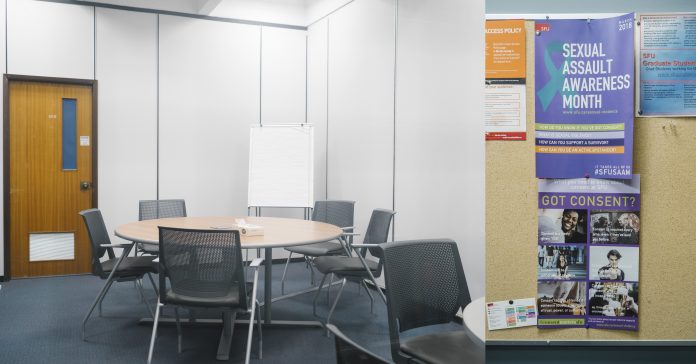
I took me over three months to book a room through the SFSS. When I finally managed it, it was only barely worth it.

If you want to book a room for a study group one week, it’s easy enough. You have to head to the SFU Library’s “Book a study room” page, choose your campus, select a time slot, and enter a name for the group. Done!

However, there are plenty of drawbacks. Each time slot is limited to a two-hour maximum. You can’t book more than two weeks in advance. The rooms themselves close once the library or campus closes, so if your group runs late or campuses close unexpectedly — for example, with the snow we had a few weeks ago — your group is also cancelled.

I found that, for an evening gaming group, these drawbacks make the rooms impractical. I’m sure we’re not the only kind of student group that faces that impracticality.

After digging, I learned I could book a room through a club. I was told of Alternate Reality Club (ARC) and figured their gaming focus would be the best fit for my group. I had to wait until January for the SFSS to re-open and assess the request. Then, I didn’t hear back for about two weeks. Even then, it was only because I reached out to the ARC executives, who said they apparently were having trouble discussing things with the SFSS.

I later learned there was some miscommunication and telephone-tag between the SFSS and the ARC executives. Though I can’t blame this entirely on the SFSS, they were certainly partially responsible. The lack of proper communication from their corner, regarding a service that they offer students, was disappointing.

As January and February passed by, I still hadn’t received a definitive answer. I gave up and decided to try and book the room myself. I went to the Student Services Centre in Maggie Benston Centre (MBC) and was thoroughly disappointed. The rooms they offered me were the conference rooms in MBC behind Student Services. When I booked one of those, the SFSS forgot to send me email confirmation and I wasn’t sure if the room was even mine to use. Once again: miscommunication.

I’m happy to finally have a room, but it is not without its problems. There are only four of them, and the divider between the third and fourth is damaged, so there are really only three. The rooms are big and echoey, and there is no soundproofing, so noise from outside or from groups next door has proven to be too loud for my group to be able to speak at a reasonable volume. I can’t book more than three weeks in advance, and so I’m often forced to relocate our group’s activities anyway. Each time I do renew my booking, I have to re-submit all my paperwork.

I also had to drop a $60 security deposit which the SFSS won’t return until I no longer need the room. They also threaten to keep it if I forget to push the tables and chairs back into alignment or open the blinds. Otherwise, I could book rooms as if I weren’t a student or a club or a member of SFU, at exorbitant rates. The cheapest room I could find on Vancouver campus was a seminar room that went for $125 per hour, or $165 per day. As a poor student, these sorts of costs don’t work for me.

After pressing a little bit, I discovered there were dozens of unused rooms in the AQ and other buildings, as well as on other campuses, that can only be reserved by executives of clubs — hence why I was advised to go through them in the first place.

I was tempted to start my own club just to get a decent room. . . but there were holes in that plan. The group must have a minimum of ten members to start, which mine simply does not. I need to name a minimum of two executives to manage the group. I also can’t overlap with another club, as my request is reviewed by the SFSS — in my case, I figured I’d look too similar to ARC or other groups.

Plus, there seemed to be no end to the paperwork required; the SFU Clubs page says I need to submit a “new club proposal” and “include information such as Club Name, Club Mandate, Semester Vision, Proposed Activities, and indicate if there are any connections to third parties.” I’ll then have to book a “club intake meeting” if my request isn’t denied outright, where I have to successfully pitch my club, and then perhaps sit through an information session where I learn how to run my club. If I’m successful, the members have to individually confirm all the above info. So even if I met the initial requirements, it seems like an awful amount of work just to book a room.

I’m not the only person with these problems. For the two months we played in the Rotunda, we did so across from another group who were also unable to get a room.

SFU makes it unreasonably difficult to book a room as a student. You can’t get decent rooms, or book a room on a regular basis, unless you are a club executive. You’re constantly at risk of losing your room to another group, or not being able to hear yourself think when that group instead takes the room next to you.

Not only should SFU streamline the process to make it easier and more accessible to students, they should also work on their communication. Information about rooms needs to be readily available and students don’t have to go back and forth for a simple answer or confirmation.

Why you’re paying so much for textbooks: Part 2 ⁄ 2

0
Image credit to Tiffany Chan, Staff Illustrator

By: Alexander Kenny, Peak Associate 

When students discuss the topic of textbook prices, it is almost unanimous amongst them that prices are too high. Last week, we discovered that textbook prices arose from a complex network of reasons. University bookstores were just the tip of the iceberg.

Students aren’t entirely wrong to assume that prices will never drop because the main players of the industry seek to make profits. However, when The Peak sat down with Mark McLaughlin, chief commercial services officer at SFU’s bookstore, solutions were a popular topic. As it turns out, SFU is at the centre of the effort to reduce cost. It’s possible that in pointing the finger of blame, SFU students are often shooting the messenger.


The potential of used textbooks

During our interview, McLaughlin mentioned that “we would prefer to sell used textbooks to students because they’re more affordable . . . [But] we can’t get our hands on enough used textbooks.” He noted, “The challenge is, the price we’re offering students . . . [for textbook buybacks] is less [than other selling platforms]. Also, sometimes, the professor doesn’t tell us what textbook is required the following semester. If we find out what textbook is required for the following semester too late, we don’t have a chance to buy them back. So we’re trying to work with professors to let us know, well in advance, what textbook is required.”

He then explained that selling more used textbooks would decrease the costs involved in shipping and returning textbooks, further lowering costs. In a system that McLaughlin describes as inefficient, he suggests some simple solutions tied to communication between professors and the bookstore, saying “We’re trying to work with professors to let us know as soon as they can. One of the things that’s going to drive down the price of textbooks is professors ordering early.”


Open-source textbooks

Looking to the future, and considering more universal solutions, McLaughlin says the bookstore has been pushing professors for the use of open-source textbooks, something that he encourages students to mention to professors as well. He points to the province, saying: “The BC province is the leader in Canada, in North America really, in promoting open-source textbooks. There’s a slew of them that are available through BCcampus that government has made available.”

Open-source textbooks are free, and considered to be of comparable quality and just as peer-reviewed as buyable books. He later explained that organizations such as BCcampus gather materials which have been released for free, either by their authors or by organizations that have purchased their copyrights, such as the Bill & Melinda Gates Foundation.

One such organization is BCcampus, an association funded by the Ministry of Advanced Education, Skills and Training, with administrative support from SFU. BCcampus amasses content and makes it publicly available at no charge to the province’s students, and even commissions authors when need be. According to McLaughlin, the SFSS has also worked with BCcampus.

Further, McLaughlin encourages students to request that their professors look into using open-source textbooks and “to be conscious of the prices students are paying, because sometimes professors aren’t aware of the actual cost. They don’t think about that, they think about learning material, but there are different options out there.” McLaughlin believes strongly that this is the approach that has to be taken to fix the textbook market. He also sees new players in the market playing a role, saying that “publishers have taken advantage of their monopoly, have driven up the prices, and they’re kind of paying for that position now. There’s a lot more disruption, [and] new players — Google, Amazon are into the textbook delivery and distribution . . . Publishers are scrambling and they’re realizing that textbooks are overpriced. It’s driving the used textbook market, and it’s driving [BCcampus].”

McLaughlin said that with the direction of the industry, “there’s tremendous opportunity for digital learning resources . . . which can be much cheaper.” He also noted that with the aforementioned options, the bookstore is also pushing for the use of custom course packs, to reduce the need for textbooks where only a few chapters are used in the entire book, something that has arisen in student discussions as a main reason for an unnecessary purchase of a book. McLaughlin commented that custom packs can be printed at the bookstore, which avoids many inefficiencies such as extra fees and shipping costs. He also noted that publishers have given the bookstore the copyright to do that, so it could be far more efficient.


Price-matching at the bookstore

The attempts to lower costs haven’t ended there, according to McLaughlin, who was pleased to say that SFU has begun matching the prices of new textbooks on Amazon.ca, if it’s in stock on Amazon. This is a clear step by the bookstore in an attempt to keep pace with the new players in the textbook distribution industry. McLaughlin said, “It’s hard to compete against Amazon or Google, but we’ve taken a stance this past semester.”

He also mentioned that the bookstore will be trying a new locker system, which will allow students to pick up their textbook orders 24/7 at a locker, instead of having to come within bookstore hours, in an attempt to further make the system more efficient.


Textbooks: there’s an app for that

If this isn’t enough, McLaughlin says that the SFU Bookstore has considered the possibility of creating an app to help make the used textbook market more efficient, and thinks the university can help make the process of buying and selling easier.

McLaughlin envisions an app that could match students who want to get rid of old textbooks with students looking for them, and facilitate payment through PayPal or credit cards- that way students wouldn’t have to arrange meetups and carry cash. The SFU bookstore would simply facilitate exchange and provide a safe drop-off point and pick-up point for students.

He sees this as possible, since it was SFU computing science and engineering students that were used to create the now-widespread SFU Vault app.


Digital education

McLaughlin believes that there are pros and cons to selling ebook copies of textbooks, saying that these ebooks “have to be more than PDF versions of textbooks, that’s where the whole digital resource world comes into play. An ebook would probably have embedded quizzes, animations, videos. Then there’s value added. Unfortunately, some publishers will sell an e-code, but they’ll bundle it with a textbook, so it’s just a way to drive up the price. So that’s not going to be successful in the long run.”


Cooperation as key

One of the biggest solutions that McLaughlin discussed, however, was a coalition that the bookstore is working to form with other institutions. He said that they’re trying to look at the digital learning resource model to come up with a unified model for the entire province, saying that “[when] we have purchasing power, then we can really drive down the price. Then we can say to these publishers, ‘if you want to play ball with us, here are the conditions that the province of BC, the institutions, are willing to play ball.’” Examples of these conditions include price cuts and price increases “capped to inflation.” McLaughlin describes pricing caps as crucial, so that prices cannot continue to rise at significantly higher than inflation rates.

He also mentioned the possibility of something like a “U-Pass model,” in which students would pay a subscription fee, as they do for transit, allowing students to access all their necessary course material at a fraction of the retail cost.

McLaughlin continued to stress the need to fix inefficiencies throughout the system, while explaining the initiatives that the bookstore is pushing in order to help fix them. He made it clear, though, that he sees the most permanent solutions being in digital learning resources, either a unified coalition of purchasing power, a subscription access model similar to the U-Pass system, and a shift towards professors using open-source materials, provided by organizations such as BCcampus.

Clearly, while the system appears imperfect, and students are skeptical of any possible solution, the SFU Bookstore and Mark McLaughlin are working on a variety of solutions to try and alleviate the problem. Despite what many think, McLaughlin and the bookstore might be one of the closest allies in the fight to fix the system that SFU students have.

Whether it’s students encouraging their professors and departments to look into open-source textbooks or professors liaising with the bookstore, McLaughlin stressed the need for the topic of textbooks to become a larger debate. He urges the need for the post-secondary community to take charge, saying: “If we don’t play a leadership role, the market will dictate where all this goes, and the market’s ugly . . . It’s complex, [there are] a lot of different players, [and there are] a lot of market forces and competitive forces at work.”

SASSY DRAG NAMES FOR YOUR SASSY SELF

1

By:  Janis McMath, Rosie Grayson, Gabrielle McLaren, Alex Bloom

If drag culture hasn’t already consumed your soul, your sanity, and all your free time, consider hopping onto the glamorous bandwagon now. Drag is art meshed with blurring gender lines and has a community filled with beauty and inclusivity that you should become a part of ASAP.  Even if you aren’t a queen in this life, you may be in your next — so you should start planning your drag name NOW. Here are a few ridiculous drag name suggestions we, The United Committee of Kinda Experts in Drag (T.U.C.K.E.D.), have brainstormed for you.

Gloria Hole

For the queen who is a sweet suburban mom in the streets and an anonymous penis expert in the stalls of truck stops.  With a name like this, you’d literally be gagging!

Drag queens in The House Of Hole

Tess Tickles

For the queen that keeps getting stuck to your leg in the summer.

Anna Conda
For the queen who don’t want none unless you got buns, hun.

Chloe Mydia
For the queen that is most common among women 15 to 24 years old.

Cleo Torres
For the queen who is impossible to find.

Missy Onary Style
For the vanilla queen.

Tess-Toss Der’on
For the queen that knows all about regulating the male sex.

Estrogennifer
For the queen that knows all about regulating the female sex.

Sarah Vix
For the queen who provides the passage that literally gives us life, hunty.

Mistress O’Vary
For the queen who likes to cause pain.

Gina Cologist
For the queen that cares about the health of boobs.

“Insert Dick Joke”
For the meta queen.

Ashtray Simpson

For the queen who smells just as bad as you thought she would. We’re pretty sure this is Ashlee Simpson’s legal birth name, but now that she isn’t famous and isn’t married to Pete Wentz, you can rip off her name without a problem.

Drag queens in The House of Dumb Celebrity Name Puns

Yoko Oh NO Honey
For the queen who broke the band up.

Clit Eastwood
For the queen who can’t remember if she rubbed it out six times or only five.

Petty Labelle
For the queen who serves pies pies pies — and shade.

Scarlett Johannesburg
For the queen who is South Africa’s biggest city.

50 Scents
For the queen who you can find in da club, bottle full of essential oils.

Ringo Brownstarr
For the queen who is the drummer in the back.

Samuel Jackoff
For the queen who is tired of all these snakes on this motherfucking plane — but isn’t tired of charming his snake.

Vladmir Put-in My Ass
For the queen who meddled with the United States 2018 presidential erection.

Rude Paul
For the queen who unjustly excludes trans people from the community of drag.

Gal GaDon’t Come For Me
For the queen who suggests that you check your lipstick and your indestructible bracelets before you come for her.

Elijah Morning Wood
For the queen that finds that taking the ring to mordor is easier than peeing.

Robert Going Down On You Jr.
For the queen that knows how to make a man hard as iron.

Mariah I Don’t Care-y
For the queen that has only one thing she needs this Christmas: for you to understand how few fucks she gives.

Miss Direction

For the queen that doesn’t know where the fuck she’s going, how the fuck she’s going to get there, and what the fuck she’s going to do with her useless degree.

Drag queens in The House Of Unrelated Names

Nora Man Nora Woman
For the queen who’s aesthetic is the idea that gender is a construct.

Masculina Fragila
For the queen that has to aggressively state “no homo bro” to disguise the fact that he’s actually extremely curious about what it would be like to suck a dick.

Helen is Troy
For the queen that is the most beautiful woman AND man that ever lived.

Nefertitties
For the queen that wants to start a religious revolution with her holy bust.

Shay D.
For the queen who is full of insults.

Cal De Sack
For the queen with no filter and no exit.

June Julyaugust
For the queen of the summer.

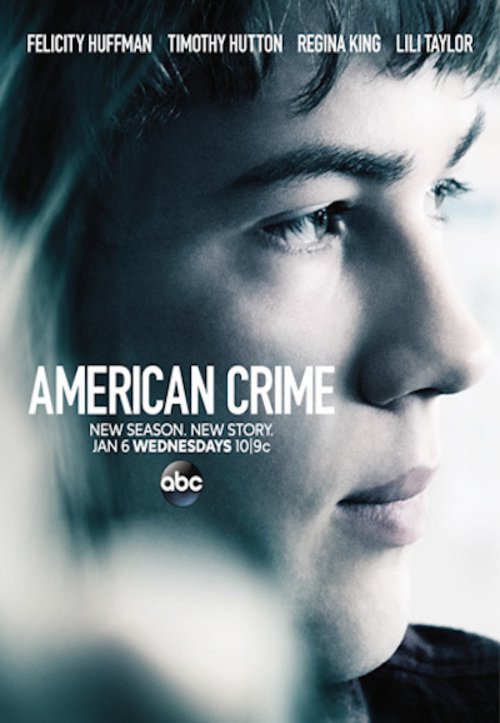
American Crime uses packed visuals to describe nuanced storylines

0
(Photo courtesy of ABC)

By: Zach Siddiqui

American Crime is a show that focuses on deconstructing and analyzing various social issues through esoteric lenses. The first season starts with the murder of a war veteran in California, and it uses the ongoing investigation and trial to explore gender, race, and class conflicts; the third season, set in North Carolina, explores immigration and poverty through the story of a Mexican immigrant who ends up trapped in a slavish labour job which essentially goes unpaid.

     Because each season operates as a self-contained story — although many of the actors return as new characters — you can pick a season and watch it standalone. For that reason, I started off watching the second season, which was haunting enough on its own.

     Set in Indianapolis, season 2 follows the story of Taylor Blaine, a financial-aid student at the exorbitantly ritzy Leyland School. After compromising photos of Taylor half-naked and blackout intoxicated at a notorious annual house party, the Captains’ Party, end up online, Leyland suspends him for failing to meet their public-facing standards. When pressed by his mother, Taylor reveals why he didn’t tell her sooner: he might have been sexually assaulted that night.

     The show does an excellent job exploring the issues that surround sexual violence against men. Much of the town is in disbelief that a high school boy could be targeted — especially by another high school boy. When Taylor’s queer sexuality is revealed, the additional layer of “you wanted it” pervades the case. Most frighteningly, you soon realize that everyone — the principal at Leland, the other students, the parents — is so out to protect their reputations in the midst of the allegations that they really couldn’t care less about what actually happened to Taylor.

     As details on what happened that night come out through investigation, it becomes clear that the case is not so open-shut. The show forces the audience to reassess their own understanding of what consent means. It manages to humanize both Taylor and Eric Tanner, the eventual accused, while condemning neither of them, yet it does so without ever once discounting the gravity of sexual violence or descending into a victim-blaming message. By the end of the season, the narration never confirms which boy was telling the truth, nor what happens to either of them going forward.

     Even while covering such heavy material, the show explores several side-plots and secondary themes. A miniature race war erupts at the public school Taylor transfers to, between the Black and Hispanic students. The LaCroix family, whose son Kevin helped host the Captains’ Party, are passionate in denouncing racism even as they discriminate against various other characters for other things, like Kevin’s girlfriend for being less rich or Taylor’s mother for her mental health struggles. Evy, Taylor’s girlfriend, finds herself used and denied agency by nearly every adult and every guy in her life.

     Yet, the overall minimalism of the show means that it can get away with covering so much ground. The show does nothing better than economy of storytelling, communicating high volumes of ideas in petite packages: single lines, single images, brief exchanges. The visuals of the show are experimental and beautiful, adding a coldly surreal element to the otherwise very grounded-in-reality narrative, and every shot means something.

The show was cancelled after its third season, but it’s still available on Netflix. If you want something psychological and insightful without being anvilicious, I very much recommend it.

SFU researchers examine the effects of nuclear accident and heart medication

0
The 2011 Fukushima nuclear accident has had a minimal environmental impact on BC’s coast. (Photo courtesy of Destination BC)

By: Nathaniel Tok, Peak Associate 


No harmful effects on BC’s coast remain from Fukushima accident

A study led by SFU associate professor Krzysztof Starosta has found no negative impact of the 2011 Fukushima nuclear accident on BC’s coast.

     Starosta’s team investigated the fish populations and coastal soil in BC using high-resolution gamma-ray spectroscopy in search of the radioactive isotopes cesium-134 and -137. Starosta chose these isotopes due to the fact that they are not naturally occurring, and their presence in natural environments is considered a direct result of nuclear reactions.

     Cesium-134 was not found in any salmon samples although cesium-137 was found in Chinook salmon samples. Both cesium-134 and -137 were found in soil samples.

     According to Starosta, the cesium levels confirmed are not an issue and the environmental impact of the Fukushima accident was minimal as “the levels found in both the salmon and soil samples remained below Canada’s safety guidelines, posing minimal health risk to BC’s salmon and human populations.”

     Starosta also said that the study helped the scientific community to understand more about the movement and the bioaccumulation of radionuclides. The team believes most of the cesium-137 came from 1960s era nuclear weapons testing.

     The paper, Starosta’s third on the topic, won the Canadian Journal of Chemistry’s 2018 Best Paper Award.


Exercise may lessen effect of heart drug

SFU professor Peter Ruben and his research team are looking into what causes the sudden deaths that sometimes occur when healthy patients with inherited cardiac arrhythmias engage in exercise.

     In a study published in the journal Scientific Reports, the team’s research has shown that exercise creates a perfect combination of increased heart rate, body temperature, and blood acid level which can trigger arrhythmia.

     These physiological changes might lower the effectiveness of Ranolazine, a medication which helps the heart function more effectively during exercise, for those with inherited arrhythmias. Decreased effectiveness of the drug leaves the patients vulnerable to catastrophic arrhythmia.

     Ranolazine is a commonly prescribed therapeutic agent and has been proven effective in treating patients with certain forms of inherited arrhythmias. However, Ruben’s study demonstrates that even if the drug is effective for patients during rest, it may not work for those same patients during exercise.

     This information is crucial to doctors who prescribe this drug and patients who take Ranolazine for this form of inherited arrhythmia as “Ranolazine could not be expected to control the arrhythmia in those patients during exercise,” said Ruben.

West Coast LEAF brings consent and sexual assault workshop to SFU

0
The workshop held at SFU is part of a series of workshops being presented to post-secondary students across BC. (Chris Ho / The Peak)

On Wednesday, March 14, Simon Fraser University welcomed Alana Prochuk, the manager of public legal education at West Coast Legal Education and Action Fund (LEAF), to give a workshop titled Only Yes Means Yes, which focuses on consent and sexual assault. The workshop is being presented at post-secondary institutions across BC and aims to educate students on how the criminal justice system defines and handles consent and sexual assault. It has only been running for a month but, according to Prochuk, response from students have been extremely positive so far.

     Since 1999, West Coast LEAF has been running a similar workshop for students aged 10 to 15 (grades five to nine) called No Means No. The workshop focuses on consent and sexual assault/harassment in relationships and the ways gender, power, stereotypes, and discrimination can play a role. This workshop was developed because the staff at West Coast LEAF want young people who might be thinking about sexual activity to gain an understanding of consent.

     The workshop for post-secondary students was developed due to requests from people to bring a similar program to older students. However, Prochuk didn’t just want to present what the law says about consent and sexual assault, but to also bring a critical lense to it. She thinks it’s important to teach people to make informed decisions about their own lives and emphasize the responsibility for each person to get consent, rather than refuse consent.

     The name of the workshop was changed from No Means No to Only Yes Means Yes because Prochuk wanted to dispel the myth that silence equals consent. At the beginning of the workshop, she reminded participants that the only form of affirmation is an enthusiastic yes. The Supreme Court of Canada has ruled that silence does not equal consent. “It is the responsibility of anyone initiating sexual contact to take steps to make sure that the other person is consenting in a clear, free, and ongoing way,” emphasized Prochuck.

     The workshop held in the library on Wednesday was split into three main parts. After introductions, the first part focused on learning the legal definition of consent and sexual assault. Prochuk also led participants through situations where a person cannot give consent, such as when they’re being forced to engage in sexual activity, they are afraid of the other person, and when they’re incapable of giving consent (such as when one is drunk, asleep, or too young to be able to consent). During the second part of the workshop, participants were given hypothetical real life scenarios and discussed with others whether they were consensual or not. Lastly, there was discussion of three case studies regarding sexual assault, two of which West Coast LEAF was directly involved in.

     After the workshop, The Peak had the opportunity to ask Prochuk how student reception has been in the current era of #MeToo and Time’s Up. In response, Prochuck commented that there is a lot more awareness from people who don’t have lived experience of the prevalence of the issue. She hopes that there is more conversation about sexual assault as it’s such a gendered and common experience.

“These movements are part of an important cultural moment when there’s recognition that the vast majority of women, girls, non-binary, and transgender people can say ‘Me Too.’” – Alana Prochuk, Manager of Public Legal Education at West Coast LEAF

     On the topic of reception, Prochuk said people have been commending the workshop and believes it should be mandatory for all post-secondary students. Over the past month, the program has been doing well, with open registration numbers being as high as 20 people per workshop.

     In regards to the future, West Coast LEAF is partnering with the Young Women’s Christian Association Metro Vancouver to work on a project called Dismantling the Barriers, which includes developing a report with policy recommendations based on the first-hand experiences of sexual assault survivors.

Around the circumpolar world in 180 days

0
(Image courtesy of Conundrum Press)

By: Natasha Tar

Let’s say you just had a baby. Would your first thoughts be “cool, now I should plan a 180-day trip to different artist residencies in the circumpolar north in the dead of winter”? Probably not, but that’s exactly what Alison McCreesh, writer and artist of Norths, decided to do.

     If you need a break from hefty novels and have a soft spot for postcards, Norths is the book for you. It’s a collection of postcards that chronicle McCreesh’s adventures through seven of the world’s eight northernmost countries; according to her intro, she “just couldn’t work in Alaska, USA.” She asked artist residencies to host her as she traveled, promising exhibitions, workshops, and other artistic feats to whoever would. Deals were made, and with her partner and her 18-month-old son in tow, they set off for Lapua, Finland in November 2016. Every day, McCreesh would illustrate and write a postcard on the day’s happenings, and send it to one of her many supporters for $20.

     The book’s appearance immediately reminded me of another postcard book, PostSecret, but I soon realized the only thing they had in common were the postcards. Norths focuses on silly travel anecdotes that easily fit on the back of a postcard. These include McCreesh’s struggle to decipher Cyrillic script in Petrozavodsk, Russia and her attempt to use a Finnish washing machine.

     While I do appreciate Norths’ coverage of places in the world I don’t usually think of, I don’t find the way they are portrayed very thought-provoking. All of the postcards McCreesh painted are completely grey and most of them are scenes of empty landscapes. This seems to confirm the stereotypes I’ve encountered that the north is boring and desolate. Whether or not this was her intention, I still thoroughly enjoyed her art and wit, which improved throughout the book.

Out on Campus reopens its doors and welcomes new coordinator

0
OLYMPUS DIGITAL CAMERA

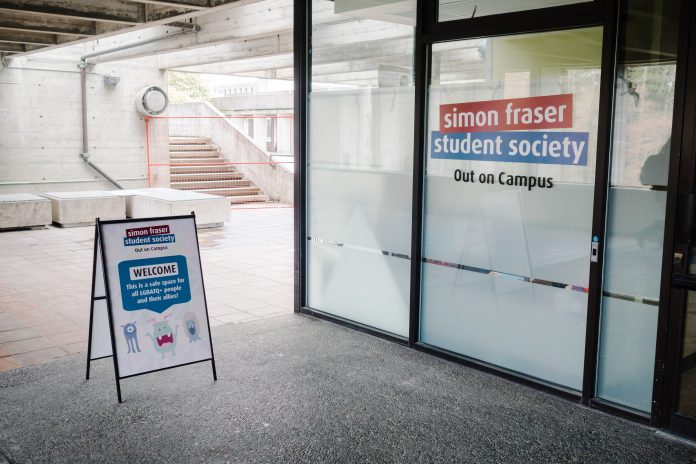
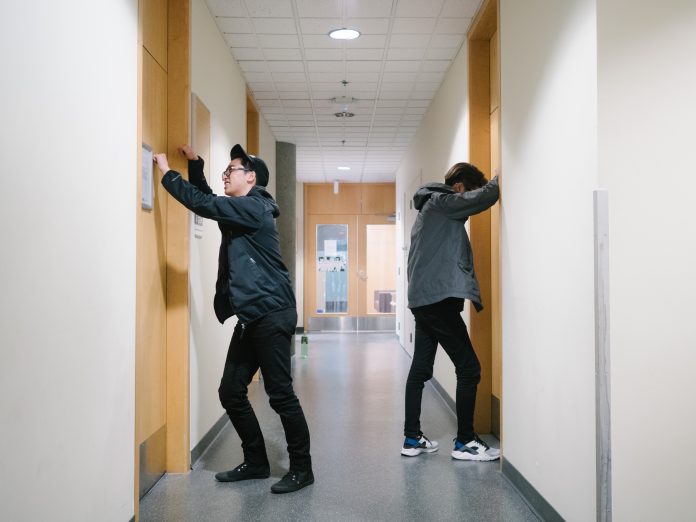
Earlier this semester, Simon Fraser Student Society’s Out on Campus (OOC) — a centre that provides support services and learning space for LGBTQ+ individuals — had to temporarily halt its activities because its previous volunteer and program coordinator, Kyle McCloy, decided to part ways with the program. After a month of inactivity, OOC reopened its doors last week for the university community to access its services.

     From February 7 to March 12, 2018, Simon Fraser University students, faculty, and staff were unable to access the OOC office because the centre didn’t have its volunteer and program coordinator to organize and manage its programming and volunteers.

     After a rigorous and extensive hiring process, Dani McNeil-Willmott, who uses the pronouns they/them/their, was appointed as the new volunteer and program coordinator for OOC.

     McNeil-Willmott noted that, during this period of closure, OOC’s assistant coordinator remained diligent in replying to all of the centre’s emails as well as communicating with its frequent visitors, and the SFU community.

     “The Out on Campus space was closed, but [the assistant coordinator] was situated in the all genders resource area of the Women’s Centre for that period. She was present to maintain email communication, social media, and ad hoc volunteer opportunities,” said McNeil-Willmott.

     McNeil-Willmott also explained that the OOC office was closed for a month to ensure that the ideal candidate for the coordinator position would be found. “Time was taken in order to ensure that there was an ideal fit for the position so that Out on Campus can have a period of stability and work towards building a really solid program for students at SFU,” they stated.

     Moreover, McNeil-Willmott also noted that this abrupt closure of the OOC office did definitely impact the lives of LGBTQ+ students on campus.

     “While the all genders resource centre of the Women’s Centre was open and available for access, not having a specifically designated space for these students has been disorienting and confusing,” said McNeil-Willmott. “There is a clear need for the SFSS Out on Campus space, and so not having the centre present leaves a clear gap in resource services for students.”

     With their new role as coordinator, McNeil-Willmott expressed that they would like to foster a stronger and inclusive campus culture through initiatives such as educating the university community about queer and trans*-related issues, as well as implementing accessible spaces for LGBTQ+ students on campus.

     “Out on Campus is first and foremost a service for students, that’s why I am committed to hearing what folks have to say in terms of what they want to see the centre look like moving forward . . . I’m coming into a position that requires a lot of love and healing, so I realize that it’s going to take some time to gain [students’] trust that I have their best interests and the centre’s best interests at heart,” said McNeil-Willmott.

     In addition, McNeil-Willmott emphasized that although they have a lot of exciting new programs and projects that they would like to bring to OOC, it is ultimately the students whose feedback will give them a better understanding of what needs to be changed and what needs to be prioritized in order to make OOC a comfortable and safe space for everyone.

     “Out on Campus needs to be revamped and relaunched, but I don’t want to be the sole voice of that moving forward. I want to get people involved and excited about being [a part] of the centre . . . I know there [have] been comments in the past about how the space hasn’t been the most comfortable for certain groups of folks, but I want to work really hard to undo that,” they concluded.


Generation Screwed SFU hosts audit on SFSS spending

0
The audit brought together leaders of various SFU political clubs to examine SFSS practices. (Photo courtesy of Canadian Taxpayers Federation)

By: Gabrielle McLaren, Features Editor


On Thursday, March 15, the SFU chapter of Generation Screwed hosted an audit examining SFSS spending, titled “The Sad State of the SFSS: Students have had enough. The event promised to gather experienced student leaders from across campus to discuss the successes and failures of SFU’s student government.

     The event was organized by Generation Screwed’s regional coordinator for British Columbia and the leader of the SFU chapter, Ben Lawson. According to the organization’s website, Generation Screwed is “a project initiated by the Canadian Taxpayers Federation in 2013 to inform and mobilize young Canadians who want to save their economic future.”

      “The point of the event is that a lot of our politicians at the student level, they get elected and they serve their one-year term. But during their government . . . there’s very rarely any questioning,” Lawson told The Peak.

     Lawson began the event by reading figures relating to the SFSS’s budget, and discussing the difficulties faced by the clubs who have to cooperate with the SFSS. When asked by The Peak about his sources, Lawson cited that he had used all of the financial statements posted on the SFSS website” including a number that was a “rough halving” and “what I heard from multiple sources.”

     The event featured a panel of student leaders: president of SFU NDP Robert Hanson, vice-president of SFU BC Young Liberals Ryan Vandespyker, and president of SFU Conservatives Seth Scott. The candidates participated in a discussion about what kinds of difficulties clubs faced while interacting with the SFSS. Topics included the room-booking system and difficulties faced while reviving clubs. However, as neither the moderator nor the panelists presented their sources, The Peak cannot further comment on the content of the debate or the validity of the facts presented.

     Towards the end of the debate, Scott suggested that student apathy might be the reason for lack of engagement on campus.

“I don’t think any more spending on referendums is going to increase [student engagement], it’s up to the students to come out and say we don’t want this to happen.” – Seth Scott, president of SFU Conservatives

     Lawson plans on hosting similar events in the future and on sharing his findings in a report.


With files from Alex Bloom, and Zach Siddiqui.