Home Blog Page 581

SFU public square lecture takes on the idea of a “Brown New World”

0
(Kitty Cheung / The Peak)

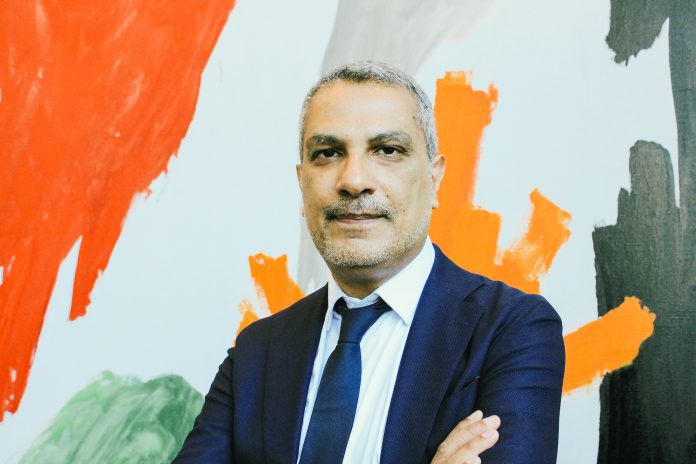
As a means of exploring the brown perspective, Kamal Al-Solaylee presented the 2018 Milton K. Wong Multiculturalism Lecture titled “It’s a Brown New World. Now What?” on Wednesday, July 27 at the BMO Theatre Centre in downtown Vancouver. This event was hosted by SFU Public Square in partnership with the Laurier Institution, CBC Ideas, and the SFU Morris J. Wosk Centre for Dialogue, with support from Parc Retirement Living.

     Al-Solaylee, a Toronto-based journalist, author and professor of journalism at Ryerson University, began his lecture with chilling cases of anti-brown sentiment.

     “As many as 2500 children, some as young as three months old, separated from their parents, possibly forever, at the Mexico-US border and housed in cages and camps. A young student who spent hours, days perhaps, reading websites and posts by far-right nationalist leaders, storms into a mosque in Quebec City, and fires indiscriminately, killing six men and injuring many others,” he began.

     Al-Solaylee, a Toronto-based journalist, author, and professor of journalism at Ryerson University, recited his definition of brown as “a continuum, a grouping, a metaphor even, for the millions of darker-skinned people who, in broader historical terms, have missed out on the economic and political gains of the post-industrial world, who are now clamouring for their fair share of social nobility, equality, and freedom.”

     This lecture focused on revealing the narrative on how we are living race-wise today, what it means to be brown, and why being brown matters, especially in a world where immigrants and asylum seekers are dehumanized by US and UK political leaders. 

     Al-Solaylee presented research from his book, Brown: What Being Brown in the World Today Means (to Everyone), a collection of interviews conducted with brown immigrants and workers, as well as personal accounts of his experience growing up as a gay man in Yemen. He focused on two aspects of anti-brownness in particular: how “brown has become the source of cheap labour,” and “the colourization of Islam as a brown menace in the post-911 world.”

     The lecture was followed by a dialogue moderated by Michelle Eliot, a journalist with CBC Radio One. Audience members had the opportunity to ask questions as volunteers passed microphones around the room.  

     The term “brown” is a racial identity encompassing a plethora of individual cultures and countries. When asked about the value of coming together as brown, Al-Solaylee discussed identifying with brownness as a way of developing solidarity, creating a common narrative of labour and exploitation, and destabilizing the concept of a model minority.

     In response to the question of what the role of white allyship is in supporting brown communities, Al-Solaylee stressed the importance of everyone being vocal.

“Something I’m really tired of doing is — and every person of colour is tired — that they’re the only ones who are vocal about issues of discrimination and race [. . .] I need everyone here [. . .] to be the ones who are vocal about race and racism.” – Kamal Al-Solaylee, journalist and author 

     “My ideal sort of scenario is not to be the person always writing about race. I started as a journalist, as an arts writer [. . .] I was a theatre critic and I sometimes long for those days when all I did was just go and write about a performance, about some one-man show and not have to constantly perform my skin colour, constantly tell you, constantly have to convince you that you need to step up and you need to prevent the kind of violence that might lead to a genocide,” he said.

     The final audience question of the night had to do with being tokenized as a brown-skinned person, with Al-Solaylee responding to “What can we do?”

     Al-Solaylee commented that he didn’t feel his role as an author was “to provide solutions, but [rather] to tell stories, to expose the narrative or to just kind of say this is going on and then I leave it to policy makers and people who are working in the field to strategize.” He continued, ”I have found more recently that I need to be more activist [. . .] I need to lend my voice to issues.

     “The experience of racialization is not necessarily going to change in a generation or two.”


With files from The Star and The Globe and Mail.


How to pick up girls in the gym

0
Illustrated by Emma Wu
  1.      Dress for success. Rip the sleeves off your T-shirt, and pair some oversized basketball shorts with overpriced basketball sneakers (even though you haven’t picked up a basketball since grade 10 gym class).
  2.      Once in the gym, pick a target — yes, we refer to girls as “targets” now. You’re going to want to pick a girl — I mean, target — who’s alone, because if she has too many friends, she won’t have any time to hang out with you, y’know? Also, pick a girl that looks really busy. Girls — I mean targets — love being interrupted when they’re doing stuff because it makes you look really bold. Like, look at this guy who came over and interrupted me working out. He must have something really important to say.
  3.      Show off around her. A good way to get a girl’s attention is to lift weights in her general area and make lots of “I’m working really hard; this weight is heavy” sounds. When you grunt like a pig in heat, an animalistic part of her brain will respond and be super turned on. Bonus if you’re sweating profusely and releasing pheromones.
  4.      Lead with a strong opening line. My personal favourite is grunting “Snapchat” and gesturing towards her phone. Long, eloquent, and clever pick-up lines are for guys who don’t have any game.
  5.      If she doesn’t respond to your opening line, get all up in her business. She’s probably stunned that you — you god, you — would actually speak to her, so take this opportunity to show off how big you are in relation to her petite stature. Flex your biceps or something. When people get really close together, they kiss, right? So, if you get up in her personal space, she’ll start thinking about kissing.
  6.      If she’s still too stunned to respond, try playfully taking away her phone. You can create a little game of “keep away.” Girls love having their valuables taken away and tossed around carelessly. It sends the message that you’re a risk-taker — a man on the edge.
  7.      Now, at this point you’ve either sealed the deal or there’s a tiny chance you may be rejected. If rejected, you have two options: write her off as dumb, ugly, and fat, or try even harder. Targets — ahem, girls — love playing hard to get, so there’s a 99% chance her rejection is just an invitation for you to try again, and again, and again. Why wouldn’t anyone want you, you handsome beast?
  8.      If everyone is staring at you in the gym, remember it’s because they’re either jealous, interested or observing your smooth moves.
  9.      If she has a friend, repeat your technique with the friend in front of the first girl. She’ll probably get jealous and want you back.
  10.  Use your entire workout time staring at and hitting on girls, then lift a five-pound weight a few times and leave. If you didn’t get any phone numbers, there’s always tomorrow. You got this, tiger.


Director’s Spotlight: Lynne Ramsay

0
Photo courtesy of Andreas Rentz

I know what you’re probably thinking: who?

     With her most recent feature You Were Never Really Here (2017) opening in limited theatres, conversation on writer-director Lynne Ramsay’s impressive filmography remains woefully meager. Amidst the cultural phenomenon that is Avengers: Infinity War, allow me to push up my horn-rimmed glasses to discuss the acclaimed Glaswegian filmmaker.

     There lies a very basic divide between movie genres: prestigious interpretivism and escapist blockbuster. Despite the pretension and exclusivity associated with art-house works, the centre of humanity in all of Ramsay’s films is invaluable. Ramsay’s cinematic style centres around two aspects which grant it provocative timelessness: detail and specificity. Her films rarely focus on plot, thereby achieving an incredible balancing act between complexity and restraint. Her characters are enriched by her details and the incredible performances she elicits from her actors.

     We Need to Talk About Kevin, her most well-known work about a mother and her sociopathic son, illustrates this. Her affinity for tight frames and unsettling symmetrical composition effectively balances Eva Khatchadourian’s (Tilda Swinton’s) neutral expression of dread. This achieves a lasting feeling of voyeurism from both other characters and the audience, building a sense of discomfort and tension leading up to its horrifying climax. In every instance, she focuses on details and relies on them to tell the story, rather than relying on exposition.

      She uses a similar technique throughout her short films, such as Small Deaths (1996) and Gasman (1998). In fact, their condensed nature makes the effect all the more salient. In the world of Ramsay, a flick of the wrist or a can of tomato soup can reveal the entire being of a character. By watching her work, you are invited to ponder, digest, and most importantly, observe. What do you see? How does that make you feel?

The retirement of Supreme Court Justice Anthony Kennedy jeopardizes the future of progressive America

0
Image courtesy of Eric Thayer/Getty Images

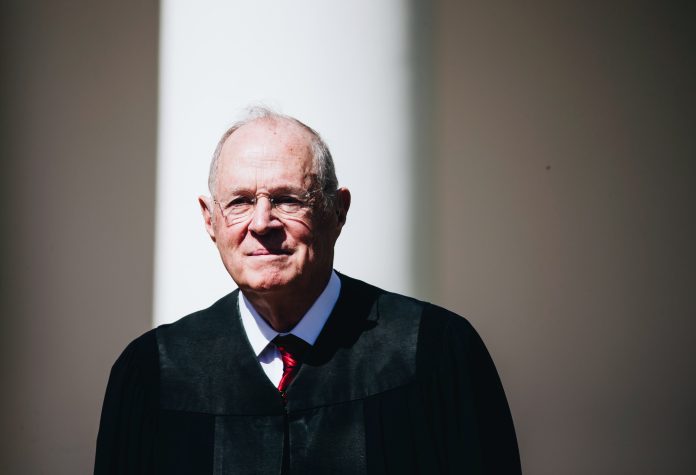
Senior Associate Justice of the Supreme Court of the United States (SCOTUS) Anthony Kennedy, 81, will be retiring on July 31, after 30 years. Although he is a Republican appointed by former president Ronald Reagan, and was unreliable on many issues, he did hold more liberal views regarding some things, including abortion, LGBTQ+ rights, and Obamacare. His retirement could possibly end progressive America as we know it.

In the 1992 case of Planned Parenthood v. Casey, Kennedy cast the swing vote needed to uphold the clauses affirmed by Roe v. Wade (1973), which gave women full autonomy during the first trimester of the pregnancy. This allowed the right to abortion to be protected under the Fourteenth Amendment. If Kennedy hadn’t been there to save the day, married women would have needed their husbands’ approval to obtain abortions.

Kennedy believed that the right to marry should be held as a fundamental liberty for everyone and was one of the only conservatives in SCOTUS to wholeheartedly support and champion gay marriage. He authored the majority ruling for landmark LGBTQ+ rulings Romer v. Evans (1996), Lawrence v. Texas (2003), Windsor v. the United States (2013), and the 2015 case Obergefell v. Hodges to legalize gay marriage. In the issued ruling on Obergefell v. Hodges, he said:

“It would misunderstand these men and women to say they disrespect the idea of marriage. Their plea is that they do respect it, respect it so deeply that they seek to find its fulfillment for themselves . . . They ask for equal dignity in the eyes of the law. The Constitution grants them that right.”

Without a doubt, this is his greatest legacy. Without him, Americans would still be fighting for the right to marry who they love.

In June of 2012, Kennedy graced the cover of TIME, aptly named on the cover as “The Decider,” as he often broke the 4–4 tie reached by the other eight justices.

In the wake of Kennedy’s impending retirement, President Donald Trump is promising “to pick one that’s going to be there for 40 years, 45 years.” If his previous SCOTUS pick Neil Gorsuch is anything to judge by, America is going to be in deep shit. During his confirmation hearing, he was unable to provide sufficient answers to any of the questions posed by US Senators. Nevertheless, he was voted in 54–45. In true conservative fashion, Gorsuch has voted for the Muslim ban, in favour of the homophobic Colorado baker, against abortion rights, and against union fees. 

Americans should definitely be scared for the future, especially if Trump’s SCOTUS pick gets voted into the empty seat by Senate. If Mitch McConnell keeps the promise he made in 2016 to delay the vote until after the midterm elections in November, then we might not have to be as afraid. If not, then we can expect a 5–4 conservative to liberal ruling on cases regarding LGBTQ+ rights, abortions, challenges to capital punishment, and race-based affirmative action.

If Trump’s next SCOTUS pick is confirmed into office, then Americans should start shining their battle armour. The United States will no longer have Kennedy to cast swing votes, which could very well mean the end of Roe v. Wade in the next year or two.

One of Trump’s campaign promises was to overturn the ruling. Once overturned, women in 22 states will lose their right to an abortion. That’s the worst-case scenario. The best-case scenario would be for every state to legalize “no questions asked” abortion, but this is Trump’s America we’re talking about. The most likely scenario, as Huffington Post points out, is that Republicans probably won’t overturn Roe v. Wade entirely, but may pass a 20-week ban in all states.

We can also expect future rulings to favour religious freedom over the well-being of the LGBTQ+ community. Down the line, homophobic bakers might become the least of our worries.

If Senate approves Trump’s next SCOTUS pick after the untimely retirement of Anthony Kennedy, then the lives of American citizens will be put in danger — especially women, incarcerated populations, and those in the LGBTQ+ community — and progressiveness will only exist as a minority in the Supreme Court for decades to come.

Police warn residents in and around Vancouver about Canadian Revenue Agency scammers

0
(Chris Ho / The Peak)

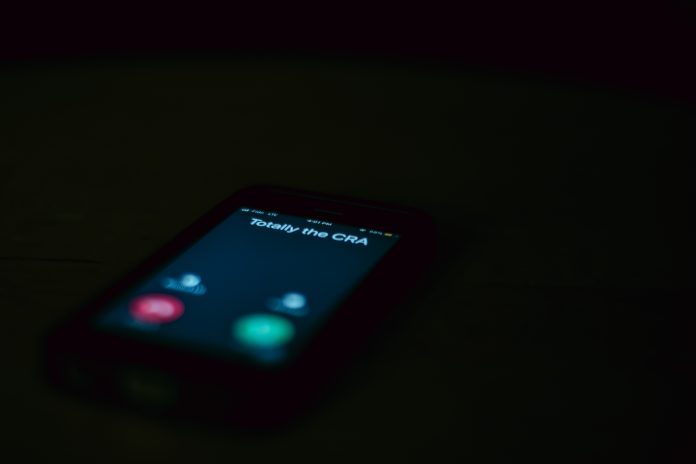
Residents of Metro Vancouver and adjoining areas, including SFU students, are being warned by police forces about Canada Revenue Agency (CRA) scams as people in different cities are being targeted. Earlier this month, an individual from Vancouver got duped into paying $2,000, and there have been similar reports from Surrey and neighboring areas.

     An individual from Surrey who fell victim to the scam lost $18,000. The individual is described to have received a telephone call from a male and female scammer, telling the victim that there was an arrest warrant against them, which could be settled only if the victim paid. The victim reportedly, frightened by the threat of arrest, bought Bitcoins and sent them to the con artists.

     Earlier in June, Vancouverite Kelly Loden was defrauded out of $2,000. Loden was told he was being audited.

     “They had financial information against me that made me believe them,” said Loden. “They knew what years I’d filed taxes personally, versus with an accountant.”

     The con artists also posed as officers from the Vancouver Police Department and gave him a name, rank, and badge number, informing him that a warrant had been issued in his name.

     “My self-guilt of just owing tax money to CRA let me be led astray and scammed. I’d already been ignoring it for two years.”

     While Loden accepted that his own guilt of owing taxes made him more vulnerable to the scam, RCMP authorities said that lack of awareness about CRA protocols and tax collection procedures make people easily targetable.

    The International Students Services of SFU provides monthly reminders to SFU students to beware of similar scams. Some members of the student community told The Peak that they have received multiple calls of similar nature, over the last few months.

     Mehvish Saleem, an SFU student studying for a master’s degree in Big Data, joined SFU as an international student only a few short months ago. Saleem told The Peak that “scared by the sudden and threatening nature of the call, and unaware of tax collection procedures in Canada, I almost fell prey to the fraud.” It was because her call connection was lost suddenly, and once she called back she heard the exact same message being played to her again from the start, that she realized it was a scam.

     “People can be vulnerable to this type of scam when they are unsure of how taxes are collected in Canada,” said corporal Elenore Sturko of Surrey RCMP. “We want to share important information about tax collection and to assure the public that they will not be threatened as part of the tax collection process.”

     A step-by-step guide to the different ways the scammers try to deceive people, have been included in the Government of Canada website, under the tab of Canada Revenue Agency’s Security option. Police forces and RCMP have informed the public that CRA will not contact them via phone for any reason or send officers to arrest them at their doors.

With files from CBC News.

Here’s the lowdown on a lesser-known sexual orientation: asexuality

1
Image courtesy of Caitlyn Sampley via Aggie

Sex usually is directly associated with romance and intimate relationships, but what if you love someone and you still don’t feel sexual attraction towards them? Experiencing this without understanding it can often lead a person to feel inadequate, rejected, and isolated. To make it worse, there are many myths about asexuality and not enough information to go around.

Well, today is your lucky day. Here’s some of the most essential information regarding asexuality.

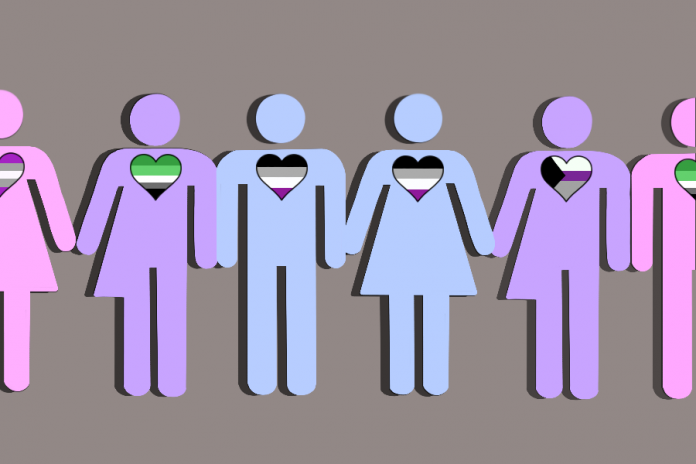
Asexuality, just like other sexualities — and almost everything — is on a spectrum. One end is a complete lack of sexual attraction and the other end is total sexual attraction. There are multiple sexual and romantic identities that are in-between, such as:

Demisexual: sexual attraction contingent on romantic attraction and a connection to the
other person.

Grey-A: the grey area between sexuality and asexuality.

Aromantic: people who experience little to no romantic attraction to others, and can be content with non-romantic partners
or friends.

Being a person who identifies as asexual doesn’t mean that you hate sexual intimacy; it only means that this particular form of intimacy is not necessary for you to have a fulfilling relationship. Just like how people who identify as heterosexual don’t feel sexual attraction towards people of same gender. Your romantic attraction is different than sexual attraction, and is treated as such. You could be asexual and still only feel romantic attraction towards people of the same gender, or of
different genders.

Although many who identify as asexual do not experience sexual attraction, you can be asexual and still experience other forms of attraction. Some commonly mentioned categories include romantic attraction, aesthetic attraction, and sensual attraction. Aesthetic attraction is when you are attracted only to a person’s looks and how they present themselves. You appreciate their beauty. That doesn’t mean you either want to fall in love with them or have sex with them. Sensual attraction is when you have a desire to engage physically with another person while remaining nonsexual. You might want to platonically sniff, hug, kiss, or cuddle them. 

Asexuality is not made up. It is not an excuse to not have
sex with you. This cannot be
said enough.

Asexuality is not the same thing as celibacy. Being celibate is a choice, regardless of whether it’s for religious or personal reasons. Asexuality isn’t a choice; it’s just who you are. If a person on the asexual spectrum feels sexual arousal, it is very specific to
that person and where they are on the spectrum.

Asexuality is also not the same as impotence. Impotency implies that one is unable to perform sexually, and has nothing to do with willingness to do so. Asexual people can perform sexual acts, but would not necessarily want to do so. It does not mean there is something wrong with them or with their significant other, but just that sexual attraction isn’t the defining trait for them. Just because asexual people may not want to have sex with others, doesn’t mean that they don’t masturbate or have sexual fantasies. They can think about others in sexual connotations, but would not want those fantasies to become reality.

Asexuality is not a medical or mental health condition. It’s a sexual orientation, just like heterosexuality and homosexuality — it is just not widely known. The “A” in LGBTQIA doesn’t stand for ally; A is for the people who identify as asexual. But asexuality needs to be just as visible as the other parts of the acronym LGBTQIA, as the lack of information and visibility means that people of this orientation are left to feel like there is something wrong
with them.

In summary, sexuality is different from person to person, and everyone falls on the spectrum between a lack of sexual attraction and complete sexual attraction. Some still feel romantic attraction, and they are capable of sexual intimacy. They just don’t feel the need for it, and their relations aren’t contingent on them. The best way to interact with asexuals is exactly the same as with members of other sexual orientations: just be respectful
and kind.

Just remember, if you are asexual, there is nothing wrong with you — regardless of what others might say.

SFU washroom reviews

0
Illustrated by Cora Fu

Towers, SFU Residence (2/5 stars)

Ah, dorm life at SFU. While it has become a popular opinion that SFU isn’t much of a party school, the vomit in the sink says otherwise. While I do love the toothbrush conversations that I’ve had with floor-mates while living in residence, I don’t miss the shower drain floods and finicky locks on the stall doors.

Bennett Library, third-floor (3/5 stars)

Relatively clean, but they do get busy throughout the day. Pro-tip while hand-washing: the small raised platform between the two sinks is the optimal spot to place the textbooks you plan on selling later to avoid the germy water of the countertop. Also, the automatic toilets may flush before you are ready to go, so beware of splashies!

Maggie Benston Centre (3/5 stars)

To avoid congestion during the peak washroom-use hours, I recommend the MBC washrooms (if one can actually find them). Washrooms in the AQ, West Mall, and other buildings which hold lectures tend to be busy during the breaks between classes. MBC provides a more secluded option with a large quantity of stalls, so you can be in and out of there quickly without having to potty-dance in line.

Academic Quadrangle, fifth-floor (4/5 stars)

For the fifth floor of the AQ, I recommend the stall closest to the window. As you sit upon your porcelain throne, you have the opportunity to glance outside at the beautiful urban landscaping of the AQ. While these washrooms can get busy, the scenic view is particularly intriguing at this time of year: convocation. You can just feel the desperate energy of graduates taking self-important photos by the pond for what may be the last time. And if you look closely, even the koi are quivering with nervousness under the stone pathway.

Once you get to hand-washing, you are greeted by an infinite number of reflected images of your sorry-ass self due to the double-mirrors facing each other. The natural lighting provided by the large windows also brings out the heavy rings around the eyes from late-night studying — a true sign of hard work for the healthy and hygienic student.

Behind Studio A in SIAT area (women’s) (5/5 stars!!!)

To all self-identified ladies, get ready for your new favourite lounge spot. With its spacious interior design and floor-to-ceiling windows (with translucent patterns to give you that much-needed privacy), this washroom behind Studio A is truly the hidden gem of Surrey campus. Its most striking feature is the luxurious couch in the far corner of the room overlooking Surrey. Yes — a COUCH in the washroom! There, one can lie down, catch up on readings, review lecture notes, eat lunch, watch the sunset, and nap to the relaxing murmur of running water and hand-dryers.

Your queerness is valid whether or not you have figured out your identity

0
Image courtesy of Newscult

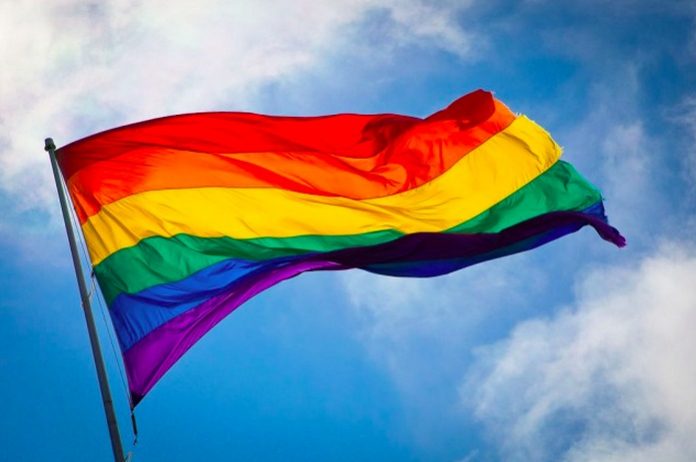
With Pride month in full swing, people are showcasing their sexual identities all over social media: bisexuality, asexuality, homosexuality, and every other part of the rainbow. Their multi-coloured flags show that they are out and proud of it.

Over the past few months, I’ve come to realize that I’m also somewhere on the rainbow. I’ve also realized that I have no idea what that means for me. I don’t feel like any of the more well-known labels fit me; this is exacerbated by the fact that I don’t really know what or who I am attracted to.

I have only had one romantic relationship with a man, and I’ve recently realized that I am not straight. But as I am in a committed monogamous relationship, the idea of trying to explore and figure this out is confusing and frustrating. I have no desire to be in an open relationship; I just want to know what to call my sexuality. I’m not straight, but I don’t think I’m bisexual or any of the other sexualities I’ve come across. It feels like there are hundreds of labels, but none of them resonate with me.

This confusion and lack of a label has made me feel very insecure about my sexuality. I feel like an imposter in the LGBTQ+ community. I simply don’t feel “gay enough.” I worry that the legitimacy of my feelings will be called into question, and that until I can label myself, I should keep quiet.

I’m lucky enough to be surrounded by a supportive social network in a city where it is safe for me to go to pride events and seek out LGBTQ+ resources. Yet, I feel unease and dread because I don’t have a straight (or gay) answer for myself concerning my identity and have no idea how to go about getting one.

There are so many stories of people realizing their sexual or gender identities from a very young age, so finding out that I am part of the LGBTQ+ community in my third year of university felt even more confusing. Coming to understand that sexuality is a spectrum and is fluid has helped me recognize that it is OK to change how you feel about your sexuality. Looking back, I would describe my 16-year-old self as aro/ace, my 17-year-old self as straight, and current 20-year-old self as a big ol’ rainbow question mark. Accepting that things change as you explore yourself and the world around you has been a huge hurdle for me.

It’s taken me a long time to realize that the labels don’t matter. If you find a word that you identify with, then use it. If you don’t, that’s OK. LGBTQ+ is a community with dozens of different sexualities and romantic orientations. It doesn’t matter which labels you choose, or if you use them at all.

Pride month is a time for us to be proud of who we are and express ourselves however we want. It is for everyone, regardless of their gender, sexuality, or romantic orientations. So this is to all of you who are confused, questioning, or curious and to those of you who have a label or choose to remain undefined. We are all valid, and we are all allowed to stand with pride.

The Moment is a beautifully written, heart-wrenching woman-loving-woman novel

0
Image courtesy of T. C. Anderson

Don’t let the cover fool you; if you’re expecting a cliché young adult romance, look elsewhere. The Moment is one book that I return to year after year because the way T. C. Anderson weaves words is artistry that deserves revisiting.

     You might mistake this book for a trope-filled storyline, but it’s so much more than that. For starters, it’s told in second person, immediately placing you within the context of the story, forcing you to experience the story as the characters live it.

     It’s also queer. Mia, adopted by rich parents, is a genius with few social skills and no friends. Jessie is superficially everything Mia isn’t: a poor C-average student with one good friend. They get partnered for a science project and their lives change. Jessie shows Mia how to have a childhood and Mia helps Jessie escape a man who purchased her from her mother.

      This is not your average love story. This is a story of class differences, learning to accept help, finding ways to stand on your own, and love that is beautiful and strong in whatever way. It’s about how one girl can impact everyone around her and fall down fighting, only to get right back up and fight some more. It’s about struggle, work, and recognizing that there are beautiful things and people in the world, even when the people closest to you perform the worst betrayals.

     I don’t have enough space to tell you everything I want to about why you should read this book, but I hope you give it a shot. I’m an English major. I’ve read a lot of books. And this might be the best one I’ve ever had the pleasure of discovering and opening my heart to.

     Note: There are some grammatical errors in the Amazon e-book. It’s an independently published book, so be kind. There are some trigger warnings for the novel: physical abuse, rape, child abuse, and other similar themes.

Moments of SFU’s history with the Indigenous community

0
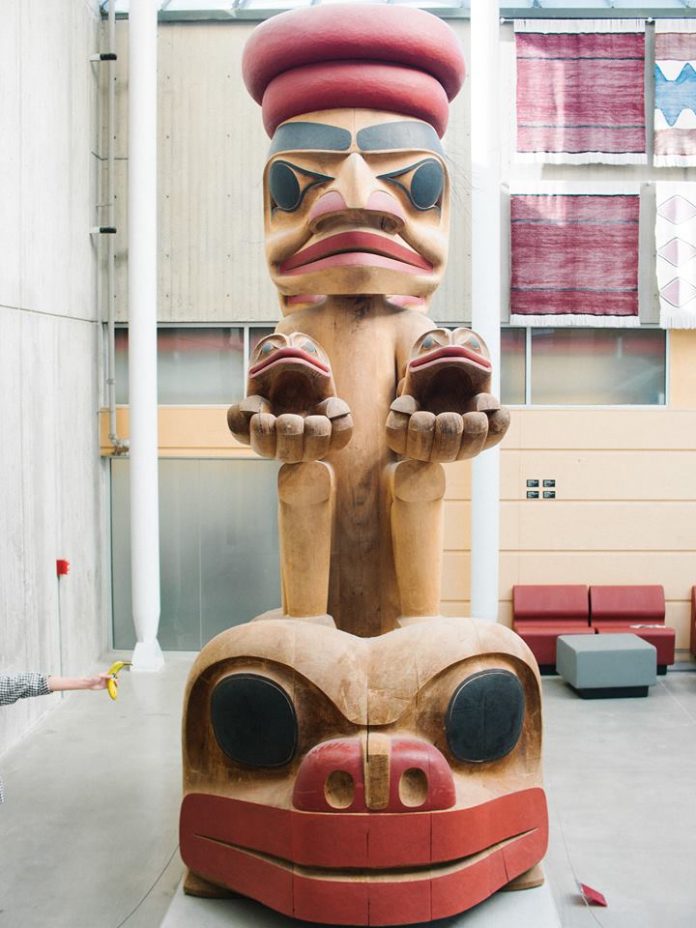
Frog Constellation, courtesy of Chris Ho.

In the 1960s, First Nations were never included in discussions to construct SFU on Burnaby Mountain. To this day, relationships between the university and First Nations communities are still imperfect. In 2017, Sarah Guraliuk wrote for The Peak about the reality of authenticating her heritage with “acceptable proof” before accessing financial aid meant for Indigenous students. While the following events are not an exhaustive list, here are some pieces of the past that illustrate the intricate relationship between SFU and the Indigenous Community.

Editor’s note: If you have any questions, concerns, or feedback about this piece, please email The Peak at [email protected]  


Building the university on unceded territory

As you have heard from the land acknowledgements at the start of any university event, SFU’s campuses are located on the unceded territories of xʷməθkʷəy̓əm (Musqueam), Sḵwx̱wú7mesh (Squamish),  Sel̓íl̓witulh (Tsleil-Waututh), and Kwikwəƛ̓ əm (Kwikwetlem) Nations. What’s more, the university is named after an explorer who supposedly discovered the land on which these nations had been living. Within the university’s first five years, SFU students were already campaigning to rename the school “Louis Riel University” in honour of the Métis leader of the 1860s (a proposition which eventually lost support and never took off).  


Opening the ISCH

The Indigenous Student Cultural House (ISCH) was created by the Indigenous Student Centre and SFU Residence and Housing on the Burnaby campus to provide a community space for Indigenous students. Since its inception in September 2016, the ISCH has provided a supportive environment for Indigenous students to live on campus, and made possible opportunities to partake in drum making, beading, and other cultural art forms, as well as develop leadership skills. Students can learn more about the program and eligibility on the ISCH’s website.


The First Nation Studies’ small size

SFU’s Senate expressed concerns about the First Nations studies’ shockingly small 3.5 member faculty during a meeting in early February 2018. The Senate was surprised not only by FNS’s smaller staff, but also by the fact that FNS received no support to develop further following FNS’s status update as a department. SFU Senate reached a shared consensus of increasing Indigenous faculty for FNS, especially since FNS’s low numbers hindered their chances of implementing a graduate program for their department and expanding their Indigenous presence at the school.

Back in 2012, First Nations Studies (FNS) was finally recognized by the SFU Senate as a department. According to associate professor Eldon Yellowhorn, FNS had to steadily grow and expand before becoming a department. Starting only with First Nations Studies courses, FNS eventually created other programs, such as joint majors, eventually garnering much student interest. The hope was to one day create a Graduate Studies program.

Other than educating catering to their own students, FNS plays an important part in public education. In 2015, Dr Marianne Ignace gave a lecture at the SFU Vancouver campus about how First Nations dialects have become endangered languages and about their effects on society — historically, culturally, socially, and even cognitively. As part of SFU’s President’s Faculty Lecture Series, Ignace’s lecture elaborated on the importance of understanding how deeply rooted they are within our own complex world.


First Nations Students’ Association educational and cultural activities

The First Nations Students’ Association has been active since the 1990s, offering personal, academic and cultural support to Indigenous students as well as education to the larger SFU community. They have a common room in the Rotunda.

In February 2018, the First Nations Student Association organized a march on Burnaby campus to pay respects to Canada’s 4000 missing and murdered Indigenous women and girls. During this march, many members of the SFU Community united in solidarity, congregating at the AQ and the Convocation Mall to hold a solemn vigil. In addition, the First Nations Student Association expressed how touched they were at the impressive turnout of community members that came to support the march, and disappointment that prayer ties hung around campus as an offering to the missing and murdered women were moved by the campus’ population. The march itself brought attention to issues about injustices against Indigenous women and girls that remain a growing concern today.

The First Nations Student Association also hosts Indigenous Day at Convocation Mall: an annual event started in 2013. Last year, the event not only gave Indigenous students the chance to assert their presence within the SFU Community, but also gave the opportunity for non-Indigenous students to enjoy the festivities and educate themselves. Many artists honoured the event with performances celebrating Indigenous heritage and traditions.

In 2013, FNSA organized a peaceful protest at Convocation Mall for the Idle No More Movement. The event was organized thanks to other partners within the SFU community such as SFPIRG and guest speakers. Idle No More is a mass movement within Canada, born in Saskatchewan, educating and recruiting support in regards to neocolonialism and the sociopolitical landscape faced by Indigenous people. The peaceful protest became so impactful to the community that it drew attention from Global TV News and other local media outlets.


Cancelling the Aboriginal University Transition Program

In April 2017, SFU cancelled the Aboriginal University Transition Program, which was designed to help Indigenous students adapt to university, citing low enrollment numbers. However, many faculty and staff advocated for the program by organizing a petition consisting of an overwhelming 885 signatures. Despite the school bringing back this program, SFU received much backlash from staff and other community members, especially since the school failed to consult Indigenous students regarding the change, and the program itself remains imperfect.

It was revived as the Aboriginal University Preparation Program, under the care of the Faculty of Arts and Social Science. The program is still imperfect: costs still remain a prevalent concern, affecting Indigenous students’ choices and ability to enroll in this transition initiative, as well as some Indigenous students’ lingering wariness about attending a Canadian institution period given the interwoven histories of residential schools, colonialism, and the education system.


2017 Witnessing Ceremony : Keeping SFU accountable to the Walk this Path with Us report

Convocation Mall became the venue for a Kwis Ns7eyx̱, or witnessing ceremony led by elders of the Coast Salish First Nations. This event was organized to make public SFU’s promise to honour the Aboriginal Reconciliation Council, or ARC’s, Walk this Path With Us report public, and keep the university accountable.

The ARC report outlines 33 calls to action that will overlook the use of $9 million in funding for community spaces and other necessities for Indigenous students at SFU. Some of these calls include: acknowledging that SFU stands on unceded territories through art and signage, investing in safe and culturally appropriate spaces as well as ceremonial spaces, providing funds for teachers who seek to indigenize their courses, and being mindful of repatriation and culturally appropriate ways to acquire Indigenous items for ceremonial or aesthetic purposes.  


Plans to include Indigenous studies course as a graduation requirement

2016 saw the SFSS and various First Nations groups, such as the Office of Aboriginal Affairs, develop plans to implement an Indigenous Studies course as a new graduation requirement. The course was among three potential avenues to incorporate Indigenous Studies into the school’s curriculum, aiming to be finalized for the upcoming Fall 2018 semester. With the course endorsed by the SFSS (whose board of directors voted unanimously on the subject), it represents a step forward to reconciliation.


Using Summer camps to empower Indigenous youth

In 2014, SFU and the Vancouver Aboriginal Friendship Centre (VAFC) collaborated together to provide Indigenous youth with a week-long experience at SFU Summer Camp. During this time, participants were able to have fun exploring university life, partaking in sports, mini-courses, hikes, and other activities. Aside from Summer Camp, SFU also organized other community events, such as the Math Catcher project that used Indigenous culture to help Indigenous children learn math.

With files from The Peak, SFU News, and more.