Home Blog Page 576

Are you SFU-ready? 2: Packing for residences

0
Image courtesy of SFU

Whether you’re coming straight from your parents’ house or you’ve rented in Vancouver before, moving into residence can be nerve-racking. Luckily, I’ve been there and have some wisdom to share:

Make sure to pack:

1) A mattress topper and other bedding

A few words I would NOT use to describe the mattresses in dorms: fluffy, luxurious, soft, inviting. A mattress topper — which is essentially a few extra inches of foam you can place on top of your dorm mattress — may be expensive, but it’s a great investment to make your bed a little comfier. You’ll also want to bring a few pillows, sheets, and a comforter, as you’re only provided with a mattress.

2) A lamp, or some type of extra lighting

Many of the dorm rooms I’ve been in have two lights: a light above the bed, and a brighter light above or near the desk. These are great during the day, but you may want more lighting when the sun sets. Fairy lights, a tall lamp, or a small light-up make-up mirror can make great additions to your dorm and give it a more comfortable, well-lit feel.

3) A full-length mirror

You don’t want to be running back and forth between the mirror in the bathroom and your closet in your dorm room when trying to pick an outfit. Bonus: good for taking dorm-room mirror selfies and making the room look bigger.

4) A cheap printer

Printing on-campus can be expensive and stressful (especially when you’re doing it last-minute because you found a spelling error on your title page that wasn’t there twelve seconds ago when you looked your paper over). Paying to print at the library is fine once or twice, but if your classes have multiple essays and assignments, consider investing in your own printer.

5) A power strip

The last dorm room I was in had exactly three outlets. One was behind the fridge, one was right above the middle of my bed, and one’s sole purpose was to keep my Wi-Fi on. This left very few places to charge my phone or laptop overnight, or plug in my lamp in the evenings. I often had to pick and choose which item was a priority: do I want to charge my phone? Do I want to keep the Wi-Fi on? Do I want extra light to read by? Investing in a power strip resolves these issues by upping the number of available outlets in your living space.

6) A pair of flip-flops and a shower caddy

If you’re sharing a bathroom with other residents, a good, sturdy pair of flip-flops and a shower caddy to keep everything in one place and organized will be helpful.

7) An umbrella

For rain, of course.

8) Extra towels

Picture this: you’ve just gotten out of the shower, and you see that your towel has fallen off the rack. Now it’s laying on the damp, dirty bathroom floor. Who knows when that floor was last cleaned properly? It’s always a good idea to have an extra towel or two so you’re not rushing to the laundry room in situations like this.

9) A sleeping bag

You’ll most likely have guests staying the night at your place, and a sleeping bag is a space-efficient alternative to having spare blankets and a foam mattress.

10) Some mementos from home

For homesickness…


Leave behind: 

1) Scented candles

Most residences do not allow candles, incense, or anything else that could be a fire hazard in the rooms. A good alternative to keep your room smelling fresh is a steam essential oil diffuser.

2) Mini fridge, desk chair, a Wi-Fi router, etc.

These items are already provided in most residence rooms. You can check online to see a complete list of the furniture and amenities provided in each room of each different house.

3) Anything illegal

Note that this includes alcohol (if you’re under the legal drinking age), drugs, and weapons.

4) A TV or big video game consoles

Your room is going to be smaller than you think, and you’re not going to have space to keep large electronics – never mind a functional space to keep them in so that you can use them. Your laptop with a Netflix account is a better alternative.

5) Non-essential clothing

Be realistic about what you’re going to end up wearing most days. For many students, that’s T-shirts, leggings, sweatpants, jeans, hoodies, sweaters, runners, and flip-flops. Bring one or two fancy-dress items, for special occasions, and one or two workout sets. That’s all you really need. If you don’t wear fully-coordinated, high-fashion outfits to class now, you won’t miraculously begin when you start living in residence.

6) Stuffed animals

I’ll admit: I did this. I had an entire shelf of stuffed animals from my boyfriend or parents that I thought were super cute, but I’m sure my neighbours thought were… kind of weird. Besides that, you don’t actually need them. Stuffed animals are bulky and inconvenient to pack and will mostly just sit on your shelf collecting dust.

7) Your entire book collection

Like stuffed animals and clothing, we tend to overestimate how much we think we’ll need. I’m an avid fiction reader, but during the semester I only read a handful of books. After hundreds of pages of readings for class, you’ll probably be more interested in watching Netflix, so pack three or four of your favourite books, or make use of the SFU Library’s fiction section.

8) A million decorative throw pillows

I know Pinterest dorm room inspiration has got you thinking you need a fancy headboard and 600 decorative pillows, but after a few weeks, these pillows will become an inconvenience, and you’ll probably just shove them under your bed until you move out.  

9) Getting to residence in the first place

When you’re moving in, also avoid huge packing bins and boxes. You know what I’m talking about: those giant, plastic blue bins. They’ll seem great when you’re leaving your parent’s house — all your stuff organized in one place! Upon arrival, and once you unpack, you’ll realize you have nowhere to store these hulks and they’ll spend the next few months getting in your way. Disposable cardboard boxes or reusable bags that can be folded up and put away are much better.


 

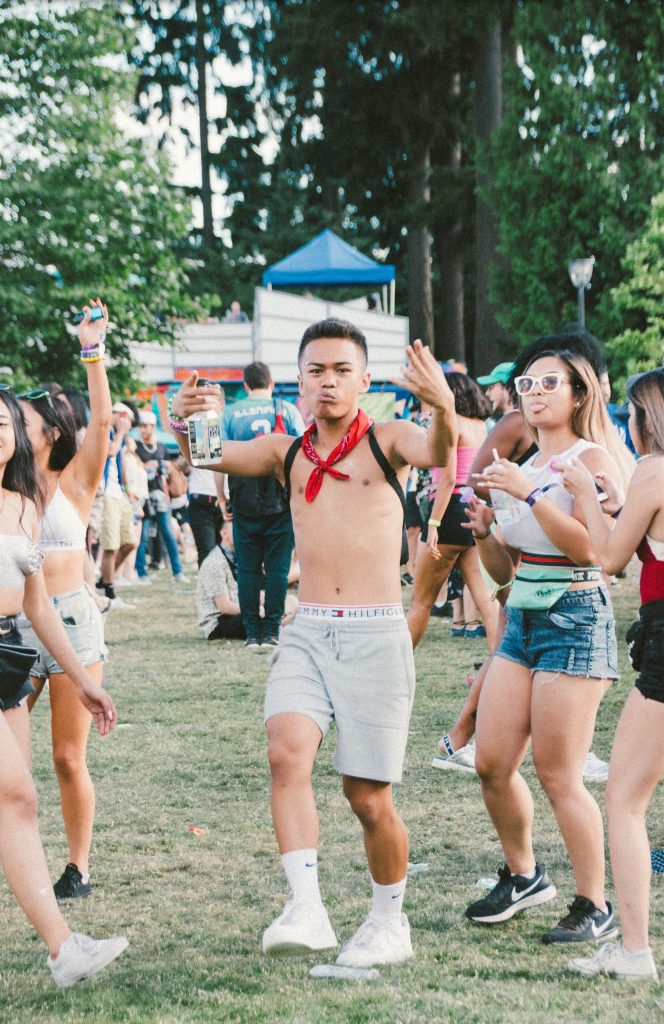
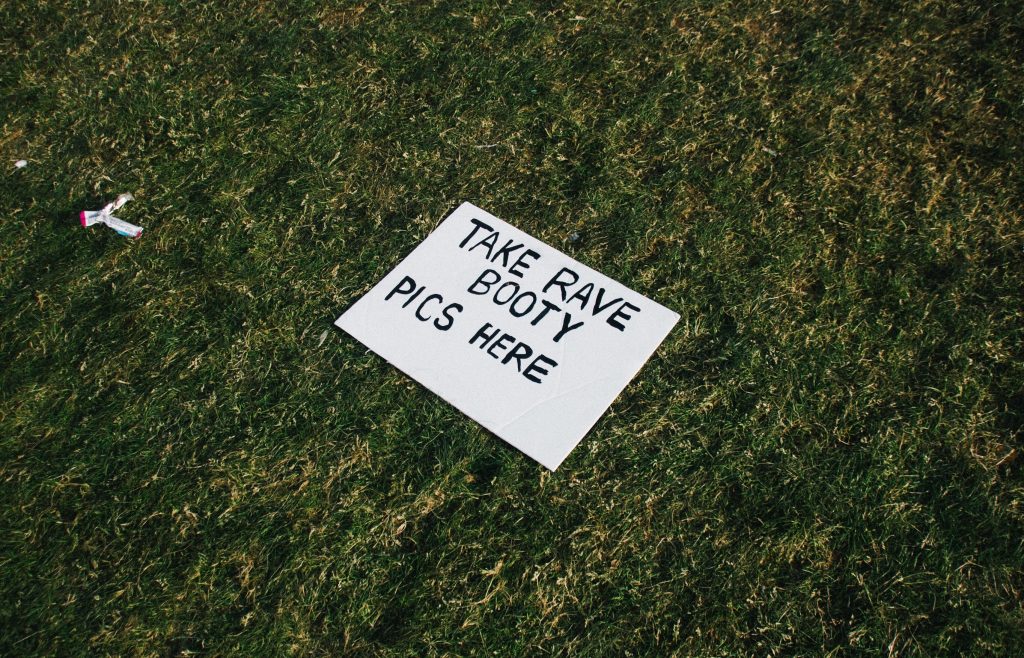
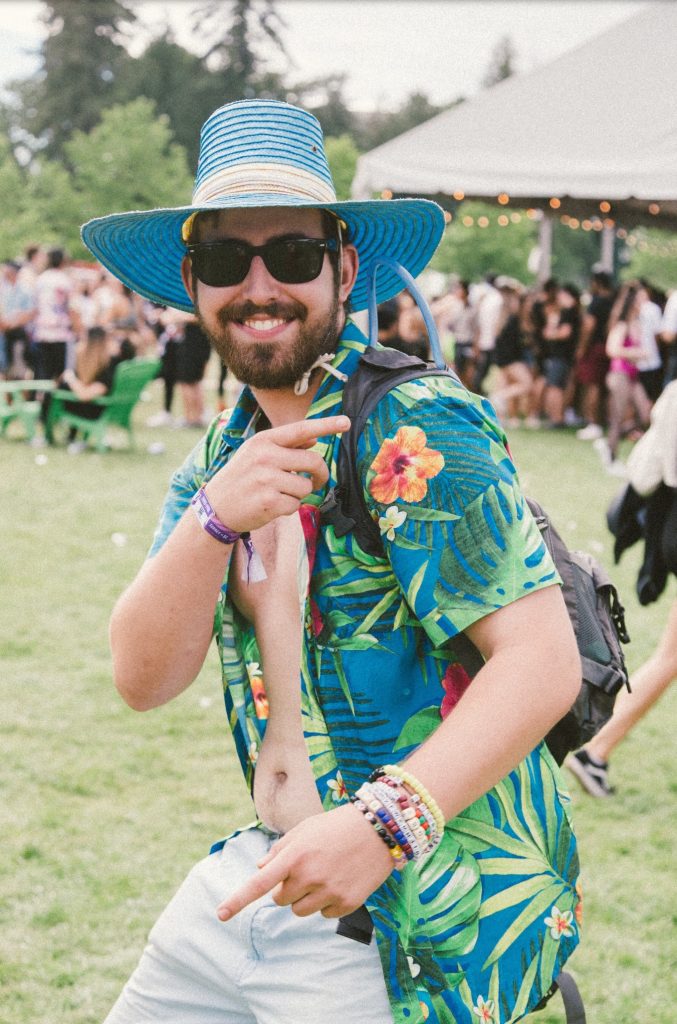
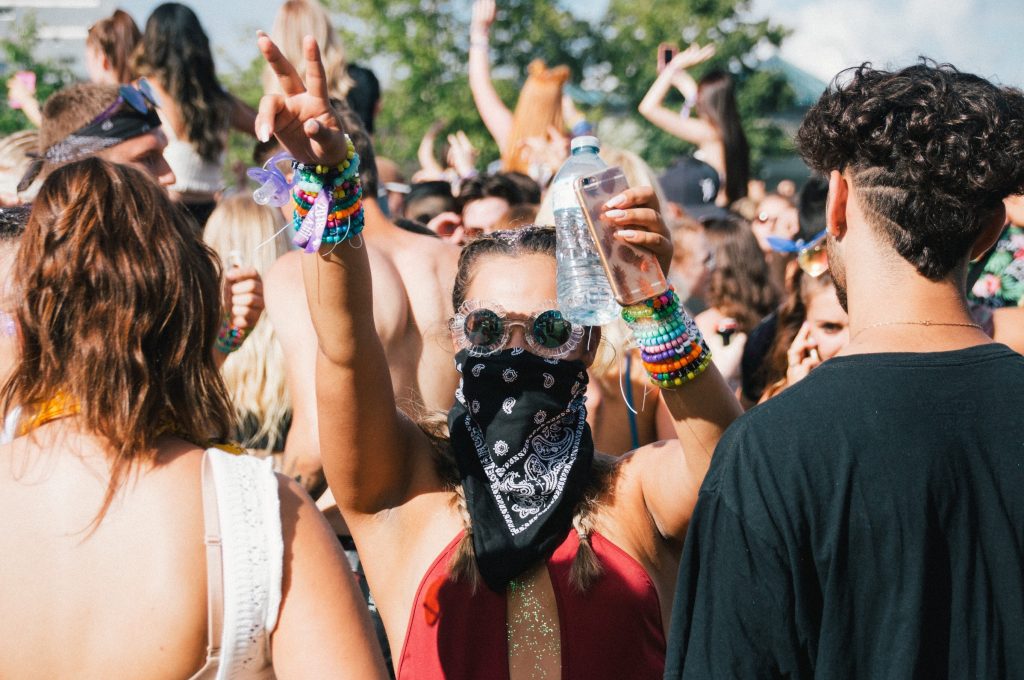
FVDED in the Park photo gallery

0
Chris Ho and Alexa Tarrayo / The Peak

Photographed by: Chris Ho and Alexa Tarrayo


Transit passengers in awe as local man heroically thanks bus driver

0
Illustrated by Emma Wu

VANCOUVER, BC – Eyewitness testimony reports that a miraculous and heroic deed occurred earlier today on the 95 B-Line. As Nick Grinton, 23, exited the bus, he turned, waved, and said thank you to the driver of the bus. Naturally, the passengers on the bus near him were struck with shock and awed at the kindness and generosity exhibited by this young man.

Delores, 32, single mother of three, reported that this was the single most inspirational act she had witnessed since her father ran and pulled her out of traffic as a child.

James Knowle, WWII veteran who lost his left arm pulling civilians out of a burning building, mentioned to reporters that the sight of this young man’s selflessness restored his faith in humanity. “I sleep better at night knowing that he is out there watching over us, doing his part.”

After Grinton exited the bus, those who had witnessed this great deed sat there in silence to contemplate their own lives, and what they were doing themselves to contribute to society. Nick himself, like any true hero, refused to comment in any great depth on the story. When asked why he did it, he simply responded that he was “just doing [his] civic duty.”

Jaime, age 9, stated that she hoped to be the kind of person capable of such benevolence one day. “I’m glad she was here to see it,” her father, firefighter aged 44, told reporters. “As a parent, if you pay attention, you can spot moments that will someday be significant in your child’s life. I remember that when I was a child, my neighbour once thanked the garbage man. It’s a moment I’ll never forget, and I know that what she witnessed here today will be the same for her.”

Joyce, 45, said that this act was so full of kindness, human decency, and care for the fellow man that she was forced to put down her copy of Chicken Soup for the Soul to properly process and appreciate what she had just witnessed.

At first it was difficult for The Peak to locate the bus driver who had been the recipient of this great deed of heroism. Reporters struggled to get details out of any of the witnesses, as none of them noticed the bus driver’s age, gender, or race, nor any other identifying feature.

When the driver was finally contacted, she told reporters that she was entirely unaware that a passenger had taken the time out of their day to thank her. This was seemingly due to the fact that the bus was full, and Grinton had expressed his gratitude in a voice barely above a whisper.

Despite not experiencing this great act of selflessness first-hand, upon hearing of its occurrence, she fell to her knees and began to cry, asking for Grinton’s name so that she could thank him in return.

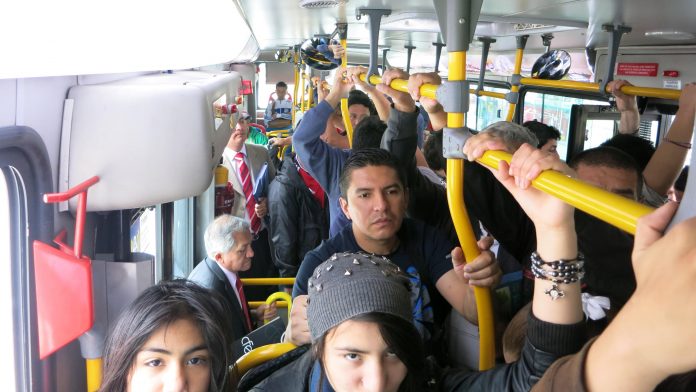
Bus drivers who spam the “please move to the rear of the bus” button

0
Photo by Jason Margolis

I have a lot of respect for bus drivers. They have to deal with some of the scummiest people out there, such as those who get in the way of the wheelchair ramp, or those who stand ahead of the yellow line for no reason.

However, when they incessantly press the “please move to the rear of the bus” button when a blockage happens, it becomes the rare occasion where I seethe at them.

This button is the most passive-aggressive and stressful thing to hear on the bus. It usually only happens when one person settles too early in the hallway, but apparently we all need to hear it a million times as if we can do something about it. Do you expect us to stampede? Or punch fellow passengers until they learn human decency? I have enough to cry about on the bus without having to care about my co-passengers’ incompetence.

I agree, the people who aren’t moving to the back of the bus are monsters who deserve to be thrown out the window. But drivers, please call them out personally and stop using this button. If they don’t respond the first time, another 50 presses ain’t gonna cure their lack of basic transit etiquette.

Research Roundup

0
(Photo courtesy of NNTLIFTCo)

Customer satisfaction affected by use of pronouns

SFU Business professor Brent McFerran believes that customer service training is teaching staff the wrong way to address customers.

     McFerran’s study, published in the Journal of Marketing Research, with data from lab experiments and companies, analyzes the use of pronouns in affecting customer perception of customer service interactions. The study finds that customer services representatives (CSRs) who use “I” instead of “we” lead customers to feel that the CSR understands them and is helping them.

     In contrast, current practices have CSRs talking to customers using terms such as “we” (the company) serve “you” (the customer), leaving out the “I” (the CSR).

     A customer service interaction which incorporated the use of a more personal “I” resulted in higher reported satisfaction from the customer, which then led to higher purchase intent, and actual purchases. On the other hand, the use of “you” by CSRs might have less-than-positive results on customer satisfaction.

     McFerran believes that his results indicate that companies should retrain CSRs, especially when doing business online. “As more businesses make the shift to an online store presence, the more important it is to consider how their CSRs are communicating with their customers,” says McFerran.


SFU mechatronics working on creating sensors for early earthquake warning

SFU Mechatronics professor Behraad Bahreyni and his team at the Intelligent Sensing lab are working with microsystems like ultra-sensitive accelerometers, which help detect examples of significant seismic activity before they happen.

     The lab first started working with accelerometers to create cheaper and more compact sonars. Bahreyni saw the potential of accelerometers to detect sound waves, such as seismic pressure signals from earthquakes or high frequency vibrations along pipelines as a result of potential gas leaks, making the technology applicable to earthquake-related scenarios.

     The accelerometers work by measuring “seismic mass” displacement from vibrations to detect seismic pressure waves coming from earthquakes. The accelerometers have a noise level and bandwidth many times better than the current devices on the market.

     Bahreyni’s technology provides an alternative to the currently-available seismic sensors, which cannot be used widely due to their high price.

     The professor believes that having more sensors can help in the event of an earthquake, stating that “a few seconds to minutes of heads-up warning to the public could drastically reduce the negative impact of an earthquake.”

     According to Bahreyni, the engineering and design skills of his students were essential, noting that they had to create “new methods, just to test the devices.”

     The work has resulted in the startup axSense Technologies.


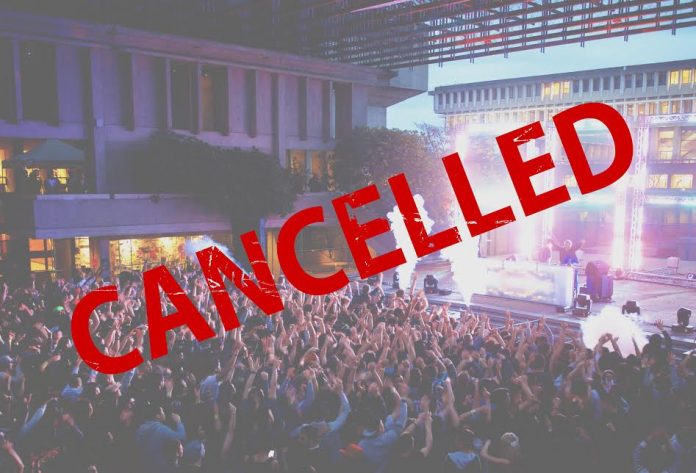
Updated: SFSS announces cancellation of 2018 Fall Kickoff concert, replacement barbeque

4
(Image assets courtesy of Simon Fraser Student Society and UAW Local 2322, art by Chris Ho/The Peak)

This story has been updated as of July 20 to reflect the comments of the vice-provost students and international Nancy Johnston on behalf of SFU, and AMS.


The Simon Fraser Student Society (SFSS) has announced that the annual Fall Kickoff concert will not be held on Burnaby campus this upcoming fall.

     In a press release, the SFSS board of directors reported that the student society “ran into considerable challenges in our conversations with SFU” which revolved around determining the date that the concert would be held.

     The SFSS originally requested the date of Friday, September 21 to hold the concert in Convocation Mall. After this request was made on June 7, the board was reportedly “given notice that our request for the date of the concert – Friday, September 21st – had been ‘pencilled in’.” However, they were informed on July 9 by SFU that the university had already booked the space for another event.

     “We sincerely hope that the event that SFU has planned on September 21st that ‘conflicts’ with the concert brings the same type of student engagement that we know the concert would have provided,” reads the student society’s statement.

     The SFSS followed up, asking to hold the concert on Friday, September 29, but SFU reportedly denied them that date as well. SFU offered two alternative dates: Friday, September 14, and Thursday, September 20. However, these dates were not deemed suitable by the SFSS, ultimately resulting in the event’s cancellation.


The board of directors discusses negotiations leading up to the decision

A discussion regarding the state of negotiations between SFU and the SFSS over the concert date took place during the board meeting held on July 6.

     As previously reported by The Peak, the board of directors expressed concerns over holding the concert on September 14, as UBC was reportedly holding their annual fall concert on the same date.

     Holding the concert on Thursday was also ruled out as a viable option due to the possibility of lower attendance, which would lead to a greater deficit than the SFSS had originally anticipated.

     According to vice-president university relations Jackson Freedman at the Board meeting, holding the event on either September 14 or September 20 would “cost too much money to the student society.” Vice-president student life Tawanda Masawi agreed with Freedman, stating that “the thing we need to focus on is that if we look at the Events Committee Budget, we won’t be able to host any other events throughout the year if we assume this deficit.”

     Masawi reported that, in a meeting held between the SFSS and SFU on June 7, the SFSS was notified that there was another event SFU had booked for the September 21 date. “The problem there is that when we checked the booking schedule, the only event that’s going on now is a job fair,” said Masawi. “So based on that — I haven’t confirmed it — but I think the only event they’re afraid of us colliding at the same time with are a job fair. [sic]”

     Masawi supported the SFSS taking a strong stance when negotiating with SFU, where the SFSS would move to “push SFU and send them an ultimatum telling them that, ‘Hey, we want the event on the 21st. We booked this date, you guys owe us this date. We told you this date and you decided to book an event knowing that we’re going to host Fall Kick-off. We’ve hosted it for the last four years.”

     “We have to be prepared to walk away,” cautioned Masawi in the event that SFU did not agree to the September 21 date.


SFU comments on event cancellation

“SFU was very supportive of the 2018 fall concert and specifically hired the previous fall concert coordinator to work with the SFSS to ensure a successful event for all students,” said vice provost students and international Nancy Johnston in an interview with The Peak.

     “We were very disappointed to learn that the first choice date was not possible — and by we I mean the people at the student services that are working with the SFSS — and later we were disappointed that none of the alternate dates for Convo Mall were deemed acceptable by the SFSS who then chose to move the event off campus.”

     According to Johnston, the original “pencilling-in” of the September 21 date that the SFSS press release referred to was prior to an official proposal being submitted on behalf of the SFSS. “That’s completely separate to the process of approving a large-scale event,” said Johnston. “There are many things that get considered when you’re doing these large scale events: one is whether the venue is available, another is whether something else is going on at the same time, the simple availability of certain services at the time.

     “That process of looking at the larger picture doesn’t start until you get the proposal and you look at what’s proposed.”

     While the exact details of the nature of the event that has been booked on the 21 in unknown to Johnston, she was able to confirm that the conflicting event was an independent Meeting, Events, and Conference Services (MECS) event being held adjacent to Convocation Mall.

     “I know that the MECS event is not happening at Convo Mall. That’s why it would not have shown up when they opened up the MECS planner. It didn’t get known until the consultation process started,” said Johnston.

     As far as Johnston is aware, it was MECS and Safety and Risk Services that made the assessment that the large Fall Kickoff event would not be possible to host at the same time as the MECS event.

     Johnston mentioned that SFU had also offered a couple of Saturdays for hosting the Fall Kickoff, but the SFSS had expressed that they did not feel enough students would attend the event if it were held on a Saturday.

     Johnston commented that this experience could be taken as a learning opportunity the next SFSS board. “If you know you want [an event] for the third Friday of September, then [the previous board] should pencil it in and make sure the next board knows that, ‘hey, plan one is to sit with the event planning folks and get that going April and not June or early July.’”

     She acknowledged that “it is a difficult thing to plan a fall event when the new board just starts and just only gets its feet wet [. . .] but that would probably be one kind of learning we could take away so the next board is not in the same position.”

     A change.org petition titled “Bring Back Fall Kickoff 2018” has been started by SFU student Junho Kim and addressed to SFU and the SFSS. At the time of publication, the petition had garnered 163 signatures.


SFSS partners with AMS Events for Welcome Back BBQ

Following the announcement of the Fall Kickoff cancellation, the SFSS made public a second press release announcing that the student society is planning to partner with the Alma Mater Society (AMS) of UBC to host AMS’s Welcome Back BBQ.

     The barbecue will be held on September 14 at the AMS Nest Plaza on UBC’s Vancouver campus.

     The statement acknowledged that, while “this event is not the same as the concert experience we could provide here on Burnaby campus, this partnership was the best alternative for our members given the circumstances.”

     In an interview with The Ubyssey, UBC’s student newspaper, AMS programming and events manager Asad Ali has stated that UBC “will still manage pretty much the whole event itself. It’s just a partnership collaborating [. . .] bringing more people out to the event.”

     The new development will result in an increased number of tickets being sold for the Welcome Back BBQ, with the original ticket cap of 5,000 being increased to 6,500 and some tickets being reserved for SFU students.  

     The ticket price for SFU students is expected to be higher than the price for their UBC counterparts, which is subsidized by AMS Events. Prices are still being negotiated, but Ali estimates tickets for SFU students will be sold at $37 for general tier and $45 for final tier.

     Ali stated that he views this collaboration between the student unions as first step to “an overarching goal if we ever want to do a Block Party or Welcome Back for 10,000 people.”

     “This is a great example and the first push to ensure that we can make something like that [sic] happens,” he said.

     The SFSS echoed this positive outlook on the collaboration in their statement, reading that “we look forward to this great opportunity to work with AMS Events and are excited that we can still offer a fantastic concert experience to students this coming fall.”

The top five courses SFU really should offer

0
Illustrated by Reslus

It’s that hectic time of year again, when you struggle through the seemingly endless lists of courses at SFU trying to pick your poison. You bombard academic advisors with question after question as you slowly spiral into an existential crisis: there are about a hundred other courses you’d rather be taking than the ones in your course cart, and none of them you are taking will actually provide you with any relevant skills for the real world. So without further ado, here are the top five courses SFU should really offer.

SHOP 101: Introduction to Groceries
You thought you had the hang of it. You followed your mom around Costco enough to believe you had grocery shopping down. But the moment you’re out on your own, you suddenly start drowning in the various brands of milk and assorted kinds of potatoes you didn’t know existed. You glance to your right and there’s a guy spanking a watermelon — to your left, a woman combing through identical packages of spaghetti. A course helping you to navigate this terrifying minefield would really be more useful than calculus at this point.

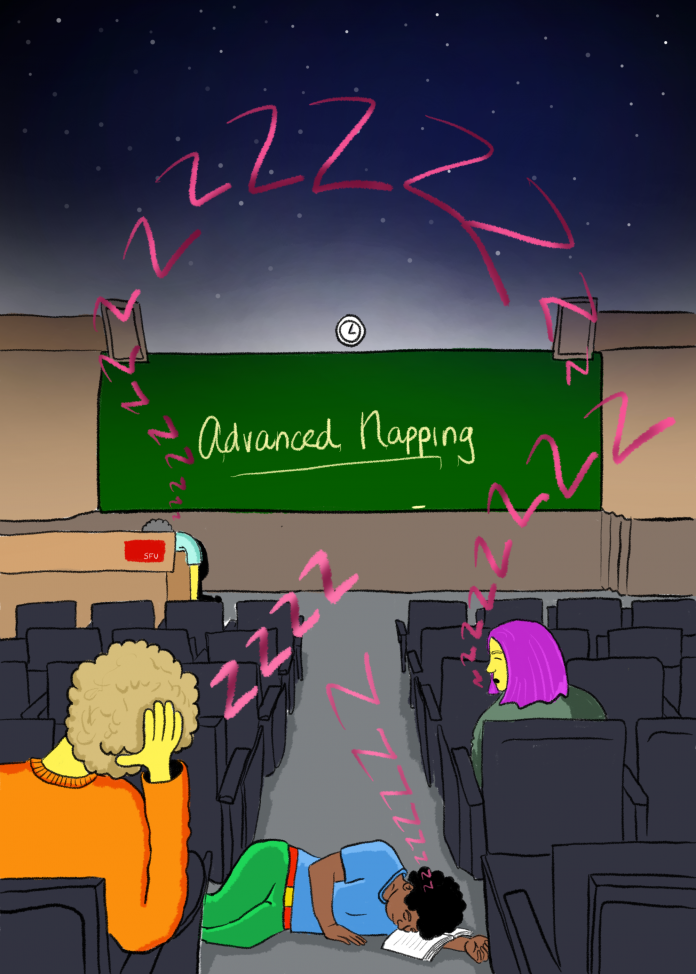
NAPP 322: Advanced Napping
Ah, to finally have a course where falling asleep to the monotonous sounds of your prof lecturing would earn you an “A” rather than an embarrassing introduction to the rest of the class . . . Students have busy schedules and pulling all-nighters doesn’t really help us get the recommended eight hours of sleep. Having a course where sleep is encouraged would be an absolute dream. Besides, getting enough sleep is linked to longer lifespans, mental and physical health, and improved learning and creative capacities. So, it’s technically still educationally significant . . . right?  

SCTY 267: Socializing in the modern world
In the Victorian era, people used instruction manuals for advice on the proper rules of conduct in society. While it was complex before, it has become almost impossible to figure out now! Are handshakes still a thing? Is “sup?” still an appropriate greeting or have we transitioned to using memes to begin conversations? With all the new rules of social media, dating apps and the growing divide between the political right and left, it feels terrifying to speak to anyone lest you insult them, scare them or turn the entire situation into a cringe-worthy moment that will haunt you every time you close your eyes . . . in other words, I’d feel a lot better if this course existed.  

MON 425: Taxes and Money Management
Taxes, finances, T-4’s, student loans . . . it’s enough to give anyone a headache. No one’s ever really taught you what they are, but everyone pretends to know what’s happening in April when you’re desperately Googling every other word you see on the government forms . . .

BASC 118: Survival Skills
I’m not saying that I’m ungrateful for my knowledge of balancing chemical equations and understanding how to use the quadratic formula. But if I were stranded on a desert island, I don’t think those skills would be as handy as knowing how to start a fire or maybe build a shelter. We, students, subsist off a diet of instant noodles and coffee, so unless there is a tree that grows pumpkin spice lattes and ramen, we may not survive.


VAR in the 2018 World Cup has its pros and cons

0
Photo courtesy of Reuters

The FIFA World Cup this year has been filled with many unexpected turns. From Germany failing to advance from the group stages to Russia unexpectedly making it all the way to the quarter-finals, I can safely say that this is the most unpredictable international tournament that I have ever watched. But another one of the most interesting inclusions that makes this world cup different from its predecessors is the debut of video assistant referees (VAR).

          The International Football Association Board in Zurich approved the use of technology in the World Cup in Russia to assist referees in reviewing calls through the incorporation of video assistant referees (VAR). However, this technology is something that officials, players, and fans are not used to, and therefore it was bound to spark a controversial debate regarding its usage.

           Let’s start by explaining what exactly VAR technology is. Think of VAR as an instant replay service looking closely at each play in real time throughout the game. The VAR team is made up of 4 FIFA match officials at a given time, with one being dubbed the video assistant referee (VAR) and the other three assistant video assistant referees (AVARs). The team works in a booth that has access to 33 broadcast cameras which include slow motion, super slow motion, and offside cameras.

The job of the VAR team is to watch the game closely and assist the match referee in making calls that he may not have had a clear view of. The video assistant referee communicates with the match referee on the field through an earpiece, letting him know if there is a possible call that should be reviewed. The match referee then decides whether or not to review the call on a screen located on field and possibly retract his initial decision.

What’s important to note here is that the match referee makes all the final decisions. The VAR team simply assists him, but has no final say in the call.  

Since VAR reviews take time out of the game, the technology only serves to review a select amount of substantial calls. These calls include goals and offences leading up to a goal, penalty decisions (not to be confused with fouls – these are penalties awarded specifically inside the penalty area), direct red card incidents, and mistaken identity of players.

Before VAR, calls within matches relied solely on the referee and his assistants on the field; if the referee didn’t see it, play continued and the infraction went unnoticed. VAR technology has changed the game of soccer, with teams now becoming more afraid to commit fouls within the penalty areas or cheat their way to a win, as everything that players do is now recorded and being watched from multiple angles.

With the incorporation of VAR in the current tournament, it has been reported that teams have committed less fouls, been given fewer red cards, and scored more goals in the final minutes of a game in the group stage during this world cup than those before it. No one can argue that this technology hasn’t improved the accuracy of calls, and personally, I have enjoyed the lack of bullshit from players trying to sneak their way to the top that I’ve seen in previous tournaments.

However, the incorporation of VAR technology also comes with its negatives. A large complaint surrounding VAR is the disruption of gameplay that it presents, as it can take minutes for a referee to review a call. But this isn’t my biggest problem with it.

I love the concept of VAR. Other sports, like hockey and American football, have already been using instant replay technology, and it was about time that soccer did too. I was sick of all the penalties that were being missed and all the goals that shouldn’t have counted being awarded because the referee didn’t have a clear view of the play. Teams shouldn’t have the advantage or disadvantage of playing to the referees’ eyes; the game should be played according to its rules and VAR helps to enforce that.

However, the problem with this new technology right now is that it’s very inconsistent. Too much is still left to the discretion of the referee on the field, even though the officials in the VAR booth have the best view of the game.

The biggest example of inconsistency I can think of was in the penalty reviews in the Portugal versus Iran and Nigeria versus Argentina games in the group stage. After VAR review, Iran was given a penalty shot for what was arguably a very unintentional graze from the arm to the ball in the penalty area from Portugal. Similarly, a clear handball in the box from Argentina was reviewed, but the penalty was not awarded because the foul was deemed unintentional. Both cases presented very similar circumstances, yet the calls remained different even with VAR.

Maybe I hold a bias towards my team, Portugal, but these instances showcased that too much power is still given to the match referees who arguably do not have the best view of the game. VAR decisions should be more regulated and more final. The whole system is excellent, and I’m glad FIFA is finally using technology to review calls, but I believe referees should be overruled when VAR reviews are used.

Referees may hold bias, and like any other human being, they may also feel pride towards their abilities on field. But this should not be allowed to interfere with the game.

As for the interference of play, I think that VAR is handling that well in that the technology is only used to review significant decisions. Extra time is always added at the end of the half, and time wasted in reviews can always be made up then. I believe in fair play, and VAR is just the next step in improving accuracy and fairness within this sport that I love so much. While it has its issues, I believe we’ll soon be seeing this technology improved and changing the way that soccer is played for the better.
Movie versus movie: Camp Rock and High School Musical

0
Image courtesy of Disney Channel

Camp Rock (2008)

Camp Rock is here to remind us that Demi Lovato once had bangs and that the Jonas Brothers were real. It follows Mitchie, a girl who dreams of stardom, but can only attend the prestigious summer camp for budding teen musicians when her mother is hired as a caterer.

     Mitchie’s story is centred on self-love. She makes important friendships with other campers, learns to be confident in her own voice, and stops hiding her family’s status — hence Disney’s role in introducing tweens to classism, whether they knew it or not.

     On top of that, the set and filming locations for the camp are beautiful and its setting is fairly unique. It’s also nice to show talented people working to improve their talents or studying for school, instead of becoming talented through miasmas or pure luck or whatnot.

Image courtesy of Disney Channel

High School Musical (2006)

Let’s be real: all of your true bops are from this film, and your first ideas of what the true meaning of love was were based on Troy and Gabriella’s love story.

     You were probably a tween when this movie came out, so you also thought that high school was going to be a lot more stratified and intense than it actually was because of this film. You probably thought you’d look taller, fitter, and cooler, and that you wouldn’t have acne. You were disappointed, because you were not Zac Efron by the age of 14.

     Still, the movie had a wide range of characters (though they were mostly caricatures themselves) and a couple of intermingling storylines to keep things interesting. Bonus: the sequel movies to High School Musical were subpar disappointments, but what even happened in Camp Rock 2? (Oh yeah, there was a Camp Rock sequel. You didn’t know?) Exactly.   

Verdict

It’s going to have to go to High School Musical, and not just because of the ensemble finale number. Sure, it has its issues: it wildly misrepresents what high school is actually like and what high schoolers look and act like. Then again, what Disney product doesn’t?

     This movie has a bit of an edge in the realm of Disney-Channel-made-for-TV-musical movies because its soundtrack is more intelligently used. Put simply, the songs advance the plot and build up the storyworld instead of simply creating an ambiance or telling you how the character’s doing.

     Also, let’s face it, they are so catchy that the second you hear them again, every word comes pouring out of your mouth. They make for some great karaoke tunes. If you’re going to be a musical, be a musical.

Hundreds of international scientists call for urgent action to protect B.C’s rainforests

0
(Photo courtesy of Protect BC)

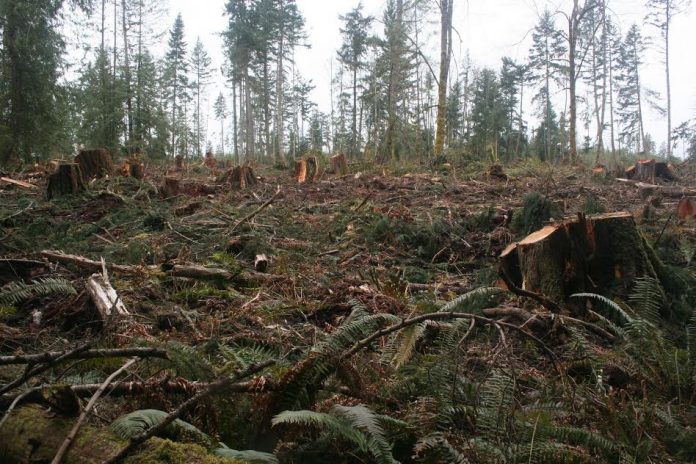
On June 28, 223 international scientists called on the British Columbia government to stop the incessant logging of temperate rainforests in the province. The scientists addressed their concerns in a letter titled “International Scientists’ Call for Action to Protect Endangered Temperate Rainforests of British Columbia, Canada.”

     The letter was organized by Dr. Dominick DellaSala, chief scientist at the Geos Institute in Ashland, Oregon. In a press release announcing the release of the letter, DellaSala highlighted the significance of BC’s forests and discussed how rare they are.

     DellaSala stated, “BC’s temperate rainforests are globally rare, they offer habitat for many imperiled species and globally the vast majority of these unique rainforests has already [sic] been logged.” He further explained that B.C’s coastal rainforests and rainforests further inland are unlike anywhere else on Earth and play a significant part in the protection of biodiversity and resisting climate change.

    DellaSala said, “Conservation of remaining intact tracts of these carbon-rich, climate saving forests is a global responsibility and can help Canada to contribute to the 2020 UN biodiversity targets and the Paris Climate Agreement.”

     BC forest ecologist and adjunct professor in SFU’s environmental and resource management department Andy MacKinnon remarked on conservation solutions in Haida Gwaii and the Great Bear Rainforest stating that “the province should take similar action to safeguard what remains of these globally outstanding ancient forests in other parts of the province.”

     The Peak contacted Julie Nielsen, forest ecologist and PhD candidate at SFU, for her comments on the issue. Nielsen is currently researching in collaboration with six First Nations whose traditional territories cover eastern portions of Vancouver Island and the adjacent islands and mainland of the Great Bear Rainforest.

     “This Call for Action is a catalyst for the Province — a ‘wake-up call’ to show BC that industrial logging continuing as ‘business-as-usual’, is a grave concern of not just ENGOs and the citizens of BC who support the protection of endangered ecosystems, but of several international scientists and experts,” wrote Nielsen.

     She added, “I applaud Dominick DellaSala and the scientists behind this Call for Action letter, who have taken the initiative to bring the issue of unsustainable harvesting of old-growth temperate rainforests in BC to the attention of the Province and people world-wide.”

     Referring to government inaction, Nielsen stated, “It appears the BC Provincial Government will only make changes to legislation governing harvesting operations when pressured by various stakeholders (including the public, scientific experts, First Nations, forest licensees and [environmental non-governmental organizations]), as evidenced by the Clayoquot Sound, Haida Gwaii and Great Bear Rainforest proceedings.”

     Nielsen continued, “This Call for Action, perhaps along with global public pressure (or, dare I say, a global boycott of old-growth wood products), First Nations’ support and a substantial increase to monitoring and enforcement efforts from the BC Forest Practices Board, may just be the steps required on the pathway to improving the management of second and third-growth forests and protecting the remnants of old-growth rainforest left in BC.”

     Nielsen highlighted the significance of the issue: “Once contiguous tracts of old-growth forest are harvested, the biodiversity, biomass, cultural values and ecosystem services that these landscapes possess, to name but just a few attributes that contribute to their global significance, will be gone forever.

“The benefits of protecting these forests reach far beyond this human generation, but the economic cost of preserving these now scarce, forested ecosystems are left for this generation (and this government) to bear.” – Julie Nielsen, SFU PhD candidate

     Nielsen commented that “It seems the only avenue available to scientists, academics, and experts alike to break the cycle of old-growth liquidation, is to inform and urge the Government of BC through a Call to Action.” She continued “I have hope the Provincial Government will take an evidence-based scientific approach to begin the steps required to conserve the remaining tracts of old-growth forest in BC.”


With files from Forest Legacies and CBC News