Home Blog Page 566

TransLink’s publicity move with Seth Rogen feels hollow and deceptive

0
Photo by Maxwell Gawlick/The Peak

This summer, Visa cancelled a deal they had with TransLink to temporarily swap prerecorded transit voices with audio clips from Morgan Freeman, who had news of sexual harassment allegations very close to the announcement. Once this fell through, comedy actor Seth Rogen ended up agreeing over Twitter to voice the various transit etiquette tips that play regularly in trains and stations. You can also apparently ask a bus driver to play it on the bus, if you feel brave enough to make such a request.

Opinions on TransLink definitely vary with students, with stances in just The Peak ranging from frustration with its goals to finding it underappreciated. But regardless of your judgement of how well it performs, its necessity is the key factor that people need to recognize.

This becomes harder and harder, though, as TransLink often works hard to mask the tremendous weight they carry. While this publicity move with Seth Rogen is meant to make Translink look fun, Vancouver’s transit system is inherently unable to take on a fun persona.

Right out the gate, it’s important to have context about just how large Translink’s weight is. Back in 2001, around 3,400 workers for Greater Vancouver public transit company Translink completed a 123-day strike. Stopping transit in most places and rendering vehicles unable to have maintenance done, it resulted in the company pursuing financial aid from the provincial government to increase its employees’ wages.

This strike had an intense impact. Many people had to quit their jobs or were laid off, simply because the city was crippled by its lack of transportation for workers and customers. If you ride transit daily and see the crowds who rely on it today, you understand how likely this outcome would be. This has become even more predictable since 2001, as the system has greatly expanded over the years, and can thus lead to even more immense tragedy when it fails.

With those sorts of risks in mind, Seth Rogen coming in to talk about how people should keep their feet off the seats feels hard to appreciate. There’s nothing wrong with a more creative way to inform riders of transit etiquette. But the use of a movie star famous for weed-based comedy is a move that feels very oriented towards giving the company a better public image, rather than towards improving the environment of a train car.

This focus on public image rather than utility is the ongoing problem with TransLink. Even its social media has slurries of fun posts where they parody song lyrics, while their mentions and replies are entirely made up of dry corporate responses to serious urgent questions. It keeps a huge divide between Translink’s characterization and the experience people have utilizing it.

So, is there a solution? The best suggestion I could think of would be for moves like this to entwine utility with the fun. With a memorable character like Seth Rogen’s, there’s potential to use these voice clips to advertise a better PA system, since it’s impossible to hear things on a train most of the time anyway. Alternately, it could be used as a starter to introduce clearer voice clips for announcing stations. Bringing in a friendly, popular movie star shouldn’t be the full benefit in and of itself — at least, not with a service that’s responsible for so much of the city’s ability to function.

Rogen and improved train etiquette aren’t the problem. The problem is that the publicity movements need to be more than just TransLink trying to look pretty. We don’t need it to be bland or to act like an ambulance, but it’s frustrating to look at how Translink behaves when it’s so dissociated from its necessity. Transit’s personality is incapable of being more than a utility in this city, and so these publicity moves just feel like a full mistake.

So how does the SFSS work anyways?

0
Image courtesy of SecurityRoundtable.org

When you open the SFSS’s website, their “about” page seems pretty straightforward: “The Simon Fraser Student Society is a student-led organization that represents and advocates for the interests of the 25,000+ undergraduate students at SFU. As an undergraduate student, YOU are a member of the SFSS and benefit from all the services and opportunities we offer.”

Great. But what does this actually mean and how does the SFSS do this? Since the society has been in the news recently, and since chances are (if you’re reading this) that you are, after all, one of the society’s owners, it’s worth taking the time to actually understand the SFSS.

The first thing you need to know is that the SFSS is a Society, according to the BC Societies Act. They’re governed by a constitution, which you can find online, that acts as their compass. Let’s have a look at the SFSS’s more specific composition and at some terminology you’ll often seen thrown around in relation to the SFSS.


The board of directors

Online, capitalized baby-blue letters yell at you that “THE BOARD [sic] OR DIRECTORS ENSURES THAT THE DIVERSE VIEWS OF THE STUDENT POPULATION ARE REPRESENTED.”

The SFSS’s governance system is called the Policy Governance Model or the Carver System. According to its website, “The model enables the board to focus on the larger issues, to delegate with clarity, to control management’s job without meddling, to rigorously evaluate the accomplishment of the organization; to truly lead its organization. In contrast to the approaches typically used by boards, Policy Governance separates issues of organizational purpose (ENDS) from all other organizational issues (MEANS), placing primary importance on those Ends.”

Every spring, the student body elects 16 directors. These 16 students head the SFSS and help to shape and direct the society. According to the board of directors’ webpage, “Each Director has the responsibility to make decisions in the best interests of all SFU students, and also will take lead on many school-wide projects and events.”

You can further break down the board into six executive officers, eight faculty representatives, whose responsibilities are all outlined in SFSS by-law 4, and two at-Large undergraduate students. According to by-law 5, all of them are expected to be registered at SFU for at least two terms during their tenure, and they receive a stipend for their work. All positions on the SFSS board are paid positions, as noted on the SFSS’s website, but the exact stipend for each director is not publicly posted online.  


President (currently: Jas Randhawa)

Job: Represent the society on all formal occasions, convene board meetings, be a voting member on all SFSS boards and committees, liaison between the board and its employees, ensure that all policies, collective agreements, and employment contracts are being adhered to, and do whatever else has to be done to keep things running.


Vice-president student services (currently: Samer Rihani)

Job: Organize activities and events for the SFSS’s membership, coordinate services for SFU students, compile the annual report of the board of directors for the AGM, take on any other duties delegated to them by the board, take on the SFSS presidency should he resign, be impeached, or abandon office.


Vice-president external relations (currently: Jasdeep Gill)

Job: Act as a liaison between the board and other student unions and societies, represent the society in events (such as conferences) outside the university community, and keep the board informed of any events, plans, or actions that external organisations might have that could affect the society or its members.


Vice-president student life (currently: Tawanda Masawi)

Job: Act as a liaison between the SFSS’s board or council and other student groups on campus, oversee the activities of faculty and departmental student unions, and liaison between them and the board.


Vice-president finance (currently: Matthew Chow)

Job: Keep track of the money received and distributed by the society, respect all by-laws and regulations related to funds, ensure that funds are properly deposited, deliver a report of the society’s financial affairs at the board’s request and one for the annual general meeting,  Gabriand coordinate the society’s budget and its legal and commercial affairs.


Vice-president university relations (currently: Jackson Freedman)

Job: Liaison between the board and the university, organize student representation on all university committees, community affairs, and activities.

Faculty representatives:

Job: Act as a bridge and spokesperson between board and the students and student groups of the faculty that they represent. When voting on board, they must give special attention to students of their faculty but vote in the best interests of the student body as a whole.

At-large representatives (currently: Mohammed Ali, other seat is vacant)

Job: No job description is provided on the SFSS’ board of directors’ members page.

The powers, duties and obligations of the board as a whole are all outlined in by-law 6, if you’re interested in more.


Staff

The SFSS is powered by a diverse staff of workers who put in all the administrative and coordinative work to make the society run. They cover everything from finance to communications to member services, and the Copy Centre. You can consult the full list of staff online, but here are a few you might hear about in the news or touch bases with on a more routine basis.

  • Chief Executive Officer (currently: Martin Wyant)

There is no job description provided for the CEO on the profile you can find on the SFSS’s website. According to the Board Candidate Orientation Manual, the SFSS’s activities can be divided into governance (deciding what the SFSS will do and how it will do it, which the board does) and operations (actually getting that done, which the staff takes care of).

The CEO oversees the board’s operations. He is in this way the society’s manager. The CEO is responsible for establishing board-established goals and accountable for their enactment. According to the manual, “With a strong Chief Executive Officer, the Board can expect the delivery of regular, timely, and quality reports on the performance of staff, as well as Society finances, projects, and programs.”

Every year, the CEO is evaluated by the president and two other board members to examine job performance and recommend his salary. According to the principles of the Carver system, “Furthermore, boards that decide to utilize a CEO function are able to hold this one position exclusively accountable.”

  • Build SFU general manager (currently: Marc Fontaine)

You know that ongoing construction project going on outside Maggie Benston Centre? Yeah, Marc Fontaine is the one supervising the construction of the Student Union Building. According to his Linkedin, he oversaw the initial consultation of SFSS membership to design the SUB, managed its creation from within the SFSS, and was essentially the head honcho of the whole thing.

  • Out on Campus coordinator (currently: Dani McNeil-Willmott)

Dani is responsible for Out on Campus, SFU’s Pride centre. They’re responsible for creating a safe space on campus for members of the LGBTQ+ community. They have previous experience working at the Cape Breton University Pride and Ally Centre, facilitating talks with medical professionals about queer and trans health, among other things.  

  • Women’s Centre coordinator (currently: Paola Quiros)

The Women’s Centre coordinator, like the OOC coordinator, is responsible for keeping the centre up-and-running and responding to members’ needs. In Paola’s case, that’s all self-identified women on campus. This includes supporting students in distress, referring everyone to appropriate support services, makng sure that snacks and other free resources are available, and helping other branches of SFU support their students to the best of their abilities.


SFSS Glossary

  • Abandonment (of a position) : According to by-law 17, a member of the board or the student council (see Glossary) is deemed to have abandoned their position if they are absent from two consecutive meetings without being authorized to do so by the board or council. Their position becomes vacant and must be filled in a by-election.
  • Annual general meeting (AGM): A meeting that must be held before October 31 every fall term for all members of the SFSS. All members are eligible to vote at the AGM on business proposed by the board (for example: amendments to the SFSS’s constitution or to any by-laws). This is where the annual report of the board, the vice-president finance’s report, and the auditor’s report will be received. For more information, see by-law 11. The next AGM will be on September 24 at 1 p.m. at the Leslie & Gordon Diamond Family Auditorium.
  • Auditor: Person who can access all documents and property from the society, board, employees, and members to audit the SFSS’ fiscal year and report their findings at the AGM. Think of them as the society’s outsider financial watchdog. They are appointed at every AGM.   
  • By-election : An election called by the board to fill a vacant position. These can only be held once a year, in the fall (unless enough positions are vacant to affect quorum). They are also run according to their own set of election procedures.
  • Constituency group: According to the SFSS’s website: “Elected, student-run bodies that represent undergraduate students that share an experience of oppression, systematic discrimination and/or barriers.” They are each represented at the student council by a councillor. Examples include the First Nations Student Association, Students United for Disability Support, or the Women’s Centre Collective.  
  • Council (also known as ‘Student Council’ or ‘SFSS Council’): Council is a group of students who meet at least once per semester. According to by-law 8, they are “the primary medium for discussion of: a) Issues of importance to members in different faculties, departments, or schools at the University. b) Advocacy and other such matters of general interest to members of the Society.” You can think of the council as the SFSS’s ears and eyes within the student body, who help them figure out what their membership wants and needs. The councillors you’ll find in student council are representatives from constituency groups, faculty/departmental student union representatives, and honourary members of the council (including SFSS directors) who may speak and attend meetings but who cannot vote and whose presence does not go towards quorum.
  • Department student union: As detailed in by-law 10, groups who “represent undergraduate students within the University Departments.” They must meet regularly and have a written constitution and by-laws approved by the council.  
  • Faculty student union: According to by-law 9: a group of students whose goal it is to represent undergraduate students within a faculty. They are overseen by the board of directors.
  • Member in good standing of the Society/of the SFSS: According to by-law 1, “a person who satisfies the requirements of by-law 2 and has paid all fees, fines and penalties levied in accordance with these By-Laws or the Society’s regulations.”
  • Resignation: According to by-law 17, a resignation is one way that a position on the board or the council can become vacant. A member of the board or the council is also considered to have resigned if they cease to be a member in good standing of the SFSS.
  • Special general meeting: Similar to AGMs, but they are only held if a petition signed by at least 5% of the board’s membership is presented to the president or if two thirds of the board or the council agree to it.


SFSS president petitions to bring forward new motions for a SGM

0


With the vote to decide his impeachment nearing, SFSS president Jas Randhawa has come forth with his own motions for the student body to vote on in a special general meeting (SGM).

Randhawa is bringing forward four special resolutions to impeach vice-president university relations Jackson Freedman, vice-president student services Samer Rihani, vice-president finance Matthew Chow, and applied sciences representative Kia Mirsalehi.

On the same petition, Randhawa is bringing forward four ordinary resolutions to impeach CEO Martin Wyant, and allocate space in the new Student Union Building (SUB) to the First Nations Student Association (FSNA), the Simon Fraser Public Interest Research Group (SFPIRG), and the Students of Caribbean and African Ancestry (SOCA).


Original plans to add motions onto AGM proved unsuccessful

As discussed in a previous Board of Directors meeting, for a SFSS member — any SFU undergraduate student — to add a motion to the agenda of an annual general meeting (AGM) or SGM, the motion must be approved by the board, council, or at least five percent of SFSS members via a petition. Accordingly, Randhawa is proposing his motions in the form of a petition and seeking signatures from the student body.

Randhawa originally commented to The Peak that he intended to add his motions to the agenda of the AGM taking place on September 24. However, according to Rihani, Freedman, and Mirsalehi, the board’s legal professionals determined that Randhawa had missed the deadline to add motions onto the AGM as per the SFSS Bylaws and the BC Societies Act.

SFSS by-law 11 (2) states that the notice of an AGM or SGM must be given at least 21 days before the meeting.

Section 78 of the BC Societies Act states that “notice of a general meeting must include the text of any special resolution to be submitted to the meeting.”

Section 81 (4) of the BC Societies Act states that a proposal which is submitted to a society more than seven days before notice of the AGM is sent must include the proposal on the agenda sent out along with the meeting’s notice.

Randhawa commented that he does not agree with the board’s legal professionals on the matter of whether his motions may be added to the AGM agenda. “Since we have the scenario of what happens if a member’s proposal is submitted between the 21-day notice and the seven-day “window” before it — the proposal would still be received as there was a notice of submission,” wrote Randhawa in an email interview.

“I’m not sure as to whether the SFSS lawyer was called for follow-up, but he is not someone neutral on the ongoing issues, so we should not be requesting this information from him,” added Randhawa.

“My belief is still that member proposals should not be controlled or rejected by board members.” – Jas Randhawa, SFSS president

Anticipating that his AGM proposal would be rejected by the board of directors, Randhawa then amended his original intention and stated that he would move forward to call a SGM with the petition.

According to SFSS by-law 11 (8), the president must convene a SGM upon receiving a petition signed by five percent of members.


Responses to the motions

Randhawa commented on his exclusion of vice-president external relations Jasdeep Gill and vice-president student life Tawanda Masawi from his proposed motions to impeach as he does “not currently see any professional nor conduct related concerns for them to be removed as directors.”

Randhawa alleged issues of miscommunication and “being easily persuaded [by Wyant]” lead him to propose to impeach Rihani and Freedman. He also commented that Freedman and Wyant both refused to be flexible on their preferred date to hold the Fall Kick-off, ultimately leading to the cancellation of the event.

“I’m confident in my ability to come to my own decisions,” wrote Freedman in response. “While I greatly respect Martin’s expertise and role in our organization, I have made every decision at the board table this year of my own accord.”

Freedman went on to write that Randhawa himself was strongly and openly opposed to negotiating on the concern date.

The Peak reached out to Rihani regarding Randhawa’s allegations. “With such strange and invalid allegations being thrown around, I’d like to point out that along with the points made about the directors Jas is fighting against, he is not noting any single items or times that are examples of what he’s said,” commented Rihani.

“Matthew on the other hand has not lived up to the standards and requirements as stated in the policy for his role,” wrote Randhawa. He referred to Chow’s support in the alleged lengthy paid vacations taken by executive directors “without having developed an appropriate policy within the Finance and Audit Committee as he stated he would” as an example.

In response, Chow explained that the policy regarding vacation time had not yet been developed by the board due to the current lack of defined job descriptions for SFSS directors. “This issue was noted quite early on, so the Governance Committee and the Finance and Audit Committee both have it in our year plans to define director job descriptions and key performance indicators and to link to direction compensation and, thus, benefits,” wrote Chow in an email interview.

“It seems more reasonable to wait for reasonable justification as to how director compensation should work rather than create policy at the whims of a president who doesn’t understand the importance of internal controls,” added Chow. “If Jas had taken the time to understand policy holistically rather than cherry picking, he would be aware that I am acting in accordance with the principles behind my role, that is, fiscal responsibility and ethical disbursement of funds.”

Chow commented that, in the interim, he has been following the precedent set by previous years, which means allocating board members an average of 10 business days for the year.

Randhawa also alleged that Mirsalehi “has done very little work during his time on board,” and commented that he had often witnessed Mirsalehi “horseplay, drink alcohol in the board office, and constantly find ways to try and upset the team dynamic on board.”

In response, Mirsalehi stated that Randhawa had previously both critiqued Mirsalehi for his extensive involvement in board initiatives and specifically reached out to Mirsalehi for help in research due to his experience in researching.

“I find it appalling that Jas who has been trying to discredit my criticisms of him and my initiatives by claiming that I simply want to be involved with everything and do all the work, is now trying to claim that I have done very little work,” he wrote in an email interview.

“If Jas truly thinks horseplay is grounds for impeachment, then how is it that he somehow finds hitting another board member acceptable?” commented Mirsalehi.

Randhawa stated that, while he had been working and attempting to find resolutions to the SUB space negotiations between the SFSS and SFPIRG, FNSA, and SOCA, Wyant had persuaded directors “to speak out against providing these groups space.”

“I soon came to realize that I was no longer okay with Martin drafting all of my responses to student groups as they were upsetting a lot of people on campus,” wrote Randhawa.

Rihani responded to Randhawa’s allegations on behalf of Wyant. “All options agreed upon by the board are voted by the majority,” wrote Rihani. “Even during that period, Jas and I would agree almost unanimously on all decisions regarding space.”

“It’s clear that Jas and Martin actually had a great relationship,” added Rihani. “For Jas to be our main liaison and be in charge of communicating issues to our team, yet never raise a single concern about ANY of the mentioned parties until he was pressured during the impeachment process? This tells the board that his decision against Martin isn’t because he genuinely believes Martin has caused harm to our board in space negotiation, but rather a politically driven move to appear as though he has been advocating for these groups since the beginning of his term.”

“I find the motion emotionally motivated, and lacking justification,” wrote Freedman in an email interview responding to Randhawa’s proposed motion to impeach him.

“[Randhawa’s] interpretation [of society by-laws] has been incorrect on a number of occasions, and I have acted in accordance with society by-laws in every aspect of my position and throughout this difficult impeachment process,” Freedman continued.

Freedman commented that Randhawa’s allegations were “particularly interesting [. . .] considering a number of incidents throughout the first part of the semester involving his failure to consult the board of directors before spending student dollars unnecessarily.” Freedman referred to an incident in which Randhawa failed to consult the board before spending $1,125 on a Vantage Point board development session.

“The board votes on passing money via majority,” wrote Rihani.

“If [Randhawa] had a concern with the spending of student dollars via the board… he’d have to try and impeach all of us, himself included.” – Samer Rihani, VP student services

Rihani has since commented that the SFSS is currently in talks with the groups mentioned in Randhawa’s motions to “clear up some of the confusion between our President and the rest of the board.”

“Making petitions that promise space to groups that don’t even fall under the jurisdiction of a single board member is not only using these groups to individual advantage, but it’s disrespecting their ability to work out proper and fair deals with the SFSS,” wrote Rihani.

FNSA and SFPIRG declined to comment on Randhawa’s motions as they pertained to the organizations. SOCA confirmed that they were still seeking space in the SUB.


Questions raised regarding petition legitimacy

Mirsalehi alleged that some of the signatures Randhawa has been obtaining for his petition were being gathered illegally.

Mirsalehi provided screenshots to The Peak, showing text message conversations in which Randhawa had offered to sign individuals’ initials onto the petition, as evidence that student signatures onto the petition were being forged.

“If the pictures attached are truly indicative of how support is being gathered, than not only is the petition invalid, but also raises further questions of how far Jas and/or his supporters are willing to go to keep power and questions the validity of any of their actions,” wrote Mirsalehi.

Randhawa responded that all students that he had asked to sign the petition were informed on the contents of the document. “It is perfectly legal to initial someone else’s name onto the petition, with consent and permission. [. . .] Forgery is a crime if the signing is with intent to defraud,” he wrote.


 

Homesickness? We’ve all been there.

Image courtesy of Enjoymedia

When my parents helped me move into residence, I didn’t want them to leave. I talked to them

every day, but that only made me miss them more. Going home for Thanksgiving made it worse; I cried when I arrived, and cried even harder when I left. The homesickness made my heart ache.

I soon discovered that the best way to beat homesickness was to give myself a reason to want to be here. I made friends and we explored the city and went on adventures together. Making memories in my new home helped me feel less homesick for my old one.

– Tessa Earnshaw


This time last year, I was boarding a flight and heading to Spain for a semester abroad — my first time ever living outside of Vancouver. Not only was I living away from home for the first time, but I went completely alone.

My first two weeks surprised me in the sense that I did not feel homesick at all; I was meeting new friends, getting to know Barcelona, and making fun plans every day. But after the initial excitement, the homesickness settled in and I missed my friends, my family, and the delicious mountain water that I had always taken for granted.

The main thing that I found helped me was talking about my homesickness with my new friends from abroad, who were going through the exact same thing. Calling my friends and family was also a great way to keep in touch and remind myself of home. The feeling passed after my first month abroad; by the end of my exchange, I was extremely sad to leave and wished I could stay longer.

To other students struggling with homesickness: it will pass and you will wish that you had spent more energy enjoying your time in your new home rather than missing your old one.

-Michelle Gomez


I picked up my life to come to Vancouver quite willingly, without ever having seen the city before or knowing a single person here, except this long-lost cousin I’ve yet to touch bases with but who I might apparently recognize from a commercial he was in. Maybe this was stupid, but I was looking for an adventure.

I got one, and I’ve fallen in love with the city, the mountains, and the ocean, but homesickness inevitably struck (and will undoubtedly strike again). This was especially when things weren’t going well — when I could use a ride, when I was lonely, when I was stuck trying to figure out something my Mom could do in an instant, when nobody had spoken French to me in a while — that kind of thing.

My advice? Screw homesickness, and build a new home. It doesn’t have to be the same as home, but it should be a home. Build yourself a support system. You can’t miss the way your parents were always there to lend a hand if two of your friends are sitting on your floor and helping you build IKEA furniture while shouting double-entendres about the allen wrench.

Build new traditions for yourself to make home home; that way, when you do get home, you miss the fresh Poké you had at every study session with so-and-so. Do something you couldn’t do back home but can now; mine was having plants to water, care for, and look at in my bedroom. The best way to fight homesickness, for me, was by plunging myself even more into Vancouver’s beat when the homesickness hit.

-Gabrielle McLaren  


There’s two ways to deal with homesickness: positively, and poorly. So if you want to remedy your homesickness properly, I recommend dealing with it positively.

First up, food — use the opportunity of moving to explore the city for familiar comfort foods. It may taste different, but it helps you feel a bit closer to home.

Second, messaging apps are your friend. Long distance relationships of any kind are always hard to maintain, so work hard at maintaining them.

Finally, know that you don’t need to love Vancouver/Burnaby/Surrey/wherever you are. Even if this is a permanent or temporary place for you, remember that it will never be your home country/city/town. And that’s OK. Accept where you are as it is, and begin from there. Once you accept it, living with homesickness will just be the slightest bit easier.

-Winona Young

SFU volleyball falls to Seattle Pacific three sets to one

0
The Clan will now hit the road to face Central Washington University on September 13. (Photo courtesy of SFU Athletics)

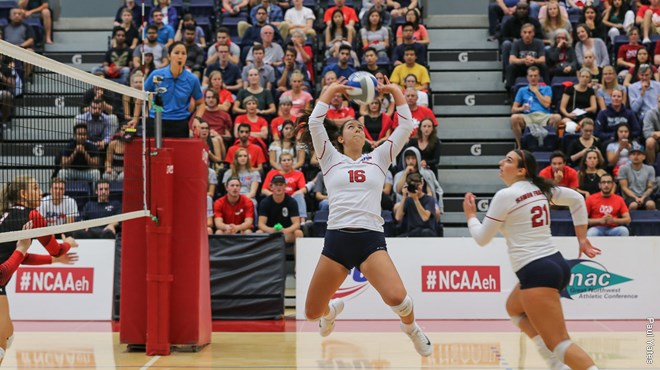
On Saturday night, the Simon Fraser volleyball team lost their first game of the Great Northwest Athletic Conference (GNAC) season to Seattle Pacific by a score of three sets to one. After a fantastic first set, the Clan seemed to lose all momentum, losing the next three sets on their way to their first loss of the season.

A tight first set went to the home team, as SFU broke away from SPU to win 25–20. Betsie de Beer came up huge in the set, getting the last three kills (and points) for her team. At this point, things were looking great for the Clan, but they weren’t able to keep the momentum going into the second set.

SFU would go on to lose the next three sets 25–21, 25–18, and 28–26. The fourth set in particular was especially heartbreaking, as SFU had multiple chances to win the set before SPU got the win.

But what changed? This is what head coach Gina Schmidt had to say when interviewed by The Peak post-game:

“After we got blocked a few times we got a bit tentative. After the first set we were scoring well and they made some adjustments — their libero played great — and we didn’t find enough ways to score.” She added, “I think we let up on our serving and let them get into a rhythm offensively. They also started to serve tougher and our passing wasn’t where it needed to be and that made it harder for us to run our offense.”

Every loss is disappointing, but this one hurts especially because the Clan were favourited and had home court advantage. Coming into the season, SFU was predicted to finish third in the GNAC, while SPU was predicted to finish sixth.

As per usual, the crowd was great for the team, constantly cheering and bantering for their side.

“We love playing at home, and I know our team gets energy from the crowd [ . . . ] I just wish we could’ve given them a win,” said Schmidt.  

Peak player of the game: Tessa May

May had a fantastic game in this one, leading the Clan and tying for first with 15 kills on an incredible .462 percentage. She also added in one individual block and two block assists, finishing the match with 17 points.

What’s next:

SFU will now hit the road and face Central Washington University in Ellensburg, Washington on September 13. It will be a tough match for the Clan, as Central Washington has gotten off to a hot start: they are 2–0 in the GNAC and 8–1 overall. The game starts at 7 p.m.  

World News Beats

0


“Scallop War” breaks out between France and the UK

An incident in which 35 French fishing boats chased five UK ones out of the Baie de Seine has been dubbed the “Scallop War.”

Following the incident which occurred on August 28, the English boats then proceeded to call on the Royal Navy to back them in an escalating conflict.

The conflict was sparked over fishing for scallops in the area. French fishermen argued that the British were depleting the stock in the area before France had a chance to fish there.

Since then, ministers of both countries have agreed to begin discussions this week in order to avoid any future incidents.

With files from The New York Times and BBC News.


United States removes aid from Pakistan

The United States has withdrawn $300 million in aid to Pakistan. This is the second time that the United States has withdrawn aid from them, having cancelled $500 million in aid earlier in the year.

The United States claimed that Pakistan has not done enough to meet conditions of the aid. The United States has alleged that, instead of expelling militants out of the country, Pakistan has instead become a “safe haven” for them.

Pakistan denies the accusations.

With files from Global News and The Guardian.


United States and Mexico confirm trade deal

U.S. President Donald Trump announced that the United States and Mexico had reached a preliminary trade deal.

The president then announced that he had given Canada a deadline of August 31 to reach a trade deal with the U.S. or risk being ousted from a revamped North American Free Trade Agreement. However, trade discussions were difficult with many points of contention and ended early on the day of the deadline.

The talks are expected to begin again shortly, leading to speculations that the deadline created was only a political threat.

With files from CBC News and Vox.


United Nations speaks to to violence in Myanmar

The United Nations Human Rights Council released their final report on the violence in Myanmar.

The report estimates that 10,000 people were killed and 700,000 forced to flee to Bangladesh. Furthermore, the report calls the violence an act of genocide.

This report is the most significant international response to the violence since it began in August of 2017.

The report also calls for the Myanmar military generals to be prosecuted for their crimes of war and crimes against humanity. Despite the report’s findings, Myanmar officials refuse to cooperate and are defending their military.

With files from The Washington Post and The Independent.

Everything you need to know about SFU Streetfest

0


The Peak: In your own words as the co-chair of Streetfest, can you please describe what SFU Streetfest is?

Mark McLaughlin: The SFU Streetfest at UniverCity that we’re going to be holding September 14 is really an occasion for us to bring the whole mountain together in one stop, just to celebrate the new school year. It’s all about celebrating the mountain, the community, and it’s really the first time SFU reaches out into UniverCity to hold a joint event [of this size].

P: Can you please explain what the impetus to create this event was?

         MM: It’s a culmination of a few things. It has to do with the timing and the development at the UniverCity, so the community is growing. One of our main goals over the next little while is building community on the campus, and really, on the mountain. Our community stretches from the residences on the west side of this mountain, to the UniverCity on the east side — because we’re focusing on creating this community, and a student experience, we thought this would be a great project. And that timing is great because, as I said, that development is somewhat nearing completion. There’s probably five or six thousand folks that live over there at UniverCity.

P: Would you say the impetus was to build a community within SFU and within the mountain?

       MM: Absolutely. It’s about bringing people together, to build that community, bringing folks together who have never really interacted with each other. The families will be able to meet students, students will be able to UniverCity vendors [sic], speak to the owners, speak to the families, the schoolchildren will be down for the day . . . so it’s bringing everyone who’s on the mountain together in one festive event.

P: Could you tell what are some of the highlights that students can expect at Streetfest?

      MM: There will be all kinds of activities — there will be a music stage where we’re going to have SFU dance clubs performing, we’re going to have buskers with music. We have a whole kids zone planned with a bouncy castle and face painting, and there’s going to be street performers that day, and many of the various community groups, our community partners, will be on the street. We have folks from the BC Lions [and the] Vancouver Whitecaps coming. We have the Burnaby fire department — they’re gonna be bringing up a vintage truck.

      It’s going to be a fun community event. In addition to the High Street, there’s gonna be a beverage garden set up in the parking lot below for 250 people, and that beverage garden will be running from noon to [9 p.m]. So even though the streets close until 7 [p.m]., we’ll be opening up the street, the beverage garden will [continue] until nine o’clock. And we’re going to be bringing in some DJs for some electronic dance music, a couple of DJs — can’t just confirm who they are — well-known DJs in the Vancouver scene, and they’ll be playing till nine o’clock as well. We’ll really hoping it’ll be great weather, but the party will go on rain or shine.

P: Will there be a dance floor?

     MM: There will be a dance floor. The dance floor is going to be set out in that Town & Gown square, so right outside the beverage garden. We’ve got some some inflatable games for students, and for kids as well, and that’s all going to be right in that area.

P: What would you say are your hopes for Streetfest?

      MM: Our hope is that we’ll have a great turnout, [and] that the weather will be great. Hopefully this will be the first of many Street Festivals we’re gonna have on High Street.

P: You actually answered my last question! Will this be an annual event?

      MM: We’ll see if it becomes an annual affair. That is the idea: that [at] the start of the school year we create an annual event, and there’s a lot of going on in week of welcome, with residence move-in, but this is really a celebration of the entire community.

       We have our friends from FIC (Fraser National College) that’ll be here, students from the Highland School will be coming down, and we also have the children from the childcare, SFU Childcare, that will be participating in the event. People will be fascinated by the mix and the breadth of our community up here on the mountain, and it’s a great opportunity to see the full SFU on display.


SFU Streetfest will be held on UniverCity on September 14, 2018. The street will be closed from 10am to 8pm, and the buses from the bus loop will be detoured to the transportation center. The street activities will be held from noon to 7pm, whereas the beverage garden will be open from noon to 9pm.


Boost your strength and skills with SFU Police Judo

0
Police Judo has 300 official members and has proudly trained thousands of people. (Photo courtesy of SFU Police Judo)

For those who are looking to get a workout while developing their combative skills, SFU Police Judo offers an opportunity to learn law-enforcement-ready techniques while developing your body and ability to defend yourself. Police Judo at SFU aims to offer a fun and safe environment, allowing you to work with well-experienced instructors with a variety of law enforcement backgrounds and comprehensive judo training.

Police Judo opened up at SFU in 2010, now has 300 official members, and has proudly trained thousands of people — a practice created “for the police and by the police,” as instructor Al Arsenault likes to call it.

While the program has enjoyed its successes, it did not get to where it is now overnight for program creators Tim Ladler and Brian Shipper. “Randori” (code for one-on-one sparring sessions) gave many new members injuries when the club first began. After weighing the risk/reward, Ladler and Shipper began to make some changes.

“The classes now provide a safe environment and are open to everyone, even for those with no experience, under the guidance of instructors and referee,” as instructor Arsenault stated in a message to The Peak.

Judo-specific workouts involve strength training which gives students an opportunity to build strength while enjoying martial arts. Police Judo not only expects its students to adhere to the physical aspect of training, but also, to the mentality and ethics of being a disciplined person. Hinton, from his past experience, spoke about the importance of being ethical: “Not everybody’s going to be cooperative, easy to deal with, or rational, but we have to figure out the most ethical way to deal with that given we have a job to do.”

Today, with the aim of creating a safe and supportive environment, Police Judo is established as a safe skill to practice when done properly, and is not dependent on skill level. Police Judo adheres to the same belt ranking system as traditional judo, which starts from white belt, and moves on through yellow, orange, green, blue, brown and finally black belt.

Police Judo offers a perfect blend of training for those who are interested in law enforcement, being relevant to job demands and authorized under National Use of Force model. Police Judo is also proud of its representation, as it welcomes people of all races, genders, and ages. It    follows the philosophies of traditional judo, “taking care of one’s partner” along with “mutual benefit and welfare.”

Juniors, not just adults, can be a part of Police Judo, through what is called “SFU Police Judo Juniors.” It is a great opportunity for juniors to have a headstart, which will help them gain strength and endurance for future Police Judo.

Launa Hinton, 17 years old, is the first junior from the Police Judo Junior program to pass her black belt Shodan exam. Arsenault proudly talks about her journey, as Launa started her judo practice at the age of three years old at the old Vancouver Police Department gym, and went on to compete in local, provincial, national, and U.S. competitions consistently throughout the last four years.

Exciting news for enthusiasts of Police Judo: the team is currently working to develop an online store for Police Judo merchandise. As Sergeant Hilton mentioned that “some people may not think this is real-life police work because of the judo outfits,” the outfit represents the spirit and confidence of participants which has forever played an important role in the life inside and outside of Judo.

For those interested in checking out Police Judo, the instructors provide sessions every Tuesday and Thursday, from 7:30 p.m. to 9:30 p.m. at the SFU Central Gym.

Men and women should be able to be platonic friends, but can’t always

1
It’s stupid that people can be averse to opposite-sex friendships, but it’s not fully irrational (The Peak / Chris Ho)

During the end of the summer, a popular video game streamer named Ninja had an interview where he discussed how he avoids streaming with female players in order to avoid things like rumours and attention. This extended surprisingly far, leading to a few discussions and posts on social media about how men and women should be able to be platonic friends without questions of sex or relationships between them, and how dumb it was that people can’t manage it.

In post-secondary, while aversion to opposite-sex friendships can be a common and fairly stupid phenomenon, it isn’t always unreasonable or illogical.

This isn’t to say that it’s not a maddening issue. As one tweet put it, there’s something very hypocritical about straight people having this issue when many LGBTQ+ people make friends constantly with people they’re oriented to. It’s absolutely a problem made entirely by straight people and by heteronormativity, and by most reasonable accounts, it’s nonsensical. Men should be able to be friends with women (and vice-versa) without raising questions of sex and romance every time a new acquaintance is made.

In practice though, there can be a lot of cases where it’s hard to treat this as something dumb and obvious, as dating and sex are deeply ingrained into a lot of student culture. Our movies and friends tell us how a project partner or a coffee shop encounter may lead to true love, making it always conscious in our daily life.

At the same time, we’re enamoured with brief and casual ways to socialize in post-secondary like social apps, clubs, and giant Facebook events. These sorts of quick and regular modes of interaction have gained traction — at the same time, friendships are becoming much more intimate and constant, since we’re expected to maintain them through social media and other methods of instant communication and connection.

With all the cultural influences on us to look for romance, and the intensive ways that friendships can be, the question of sex and/or romance will naturally come up from time to time. Sometimes this can be an internal question of what each person wants from the relationship. It’s normal and fair to abandon a friendship when you can’t change your feelings or opinion of the other.

Other times, it’s because the other party can’t do this — it’s absolutely common to find a person you tried to befriend is solely focused on sex or romance. This situation often happens with men refusing to have a platonic relationship with women, and there’s an unfair amount of pressure (and often danger) that comes with such instances. With risks of opposite-sex friendships leading to anything from tension to extreme concern, it’s hard for me to disagree with someone saying “I can’t do friendships with the opposite sex.” Nobody deserves to spend time with people that may often have only one type of relationship in mind.

Men and women can and should be able to be platonic friends without sex or dating. A lot of the time though, it just can’t or doesn’t happen. There are a lot of ludicrous reasons that some people (like Ninja) avoid them, and it’s important to call out how stupid this aversion is. But there’s a lot of rational reasons people have for it, and it’s important to realize that the reasons that some people avoid opposite-sex relationships don’t all come from an unreasonable place.

Kaepernick “did it” with Nike endorsement

0
Colin Kaepernick hasn't played a NFL game since 2016. (Photo courtesy of Mike Morbeck via Flickr)

In the world of sports, some athletes become widely recognized and celebrated for things far greater than the game. Colin Kaepernick, former NFL quarterback for the San Francisco 49ers, is a prime embodiment of this truth.

While in the NFL, Kaepernick dedicated his time and platform to something far greater and significant than any Super Bowl ring. Outraged at the relentless injustice of police officers shooting and killing unarmed Black civilians, Kaepernick, at the beginning of each game, peacefully protested by taking a knee during the singing of the American national anthem.

Although this courageous act of solidarity to his community was appreciated and supported by those well educated on the horrors of police brutality, others became increasingly outraged. As a result of the uninformed anger directed towards his peaceful protesting, Kaepernick was shunned by the NFL, leaving him without a team to play on.

It’s been two years since he was shut out from the NFL. However, Kaepernick has refused to remain idle. Through his implemented Know Your Rights campaign, Kaepernick has provided Black youth across America with vital information regarding police misconduct and systematic corruption in the criminal justice system.

Moreover, in recognition of his bravery and his resilient persona, Nike recently revealed that they’ve selected Kaepernick to be the face of the 30th anniversary of their Just Do It campaign. On Monday, September 3, Kaepernick tweeted Nike’s promotional campaign and, instantly, Twitter erupted. Emblazoned over a black-and-white photo of his face Nike donned the caption, “Believe in something. Even if it means sacrificing everything. Just Do It.”

At first, there seemed to be a sincere consensus regarding the praise and approval of both Kaepernick and Nike. People were thrilled that the years of sacrifice and integrity Kaepernick presented was being acknowledged by the very brand that endorses the league he was kicked out of. Nevertheless, as with almost every other instance on the internet, the positivity didn’t last very long.

Shortly after Nike’s image was released, a plethora of conservatives and Trump supporters expressed their rancid disgust with Nike, lambasting the company for endorsing a figure who “disrespects the American flag and national anthem.”

Taking it one step further, these very individuals took to Twitter and Instagram to post videos of themselves dousing their Nike shoes in gasoline and proceeding to ignite them on fire. Additionally, this same group posted images of themselves wearing socks with large holes in them, stating that they had cut off the Nike logo.

What serves as the greatest vexation in the debacle manifested from Nike’s backlash is that people truly don’t understand the injustice Kaepernick is addressing through peaceful protest. According to mappingpoliceviolence.org, police killed 1,147 Americans in 2017. In spite of making up only 13% of the American population, 25% of these 1,147 individuals were African-American, which, in turn, highlights the disproportionate rate at which police kill Black folk.

At no point did Kaepernick ever decide to kneel during the game’s singing of the national anthem in order to disrespect the USA. Rather, the sole incentive why Kaepernick has ever taken a knee was to inform white America of the horrors Black folk face every day, as well as the tremendous amount of distrust and pain that they’ve been experiencing from the hands of those sworn to protect them.

The notion that is most infuriating, however, comes from thinking critically of the performative outrage that conservatives keep posting on social media. When Kaepernick first knelt at the beginning of a game, they complained. Afterwards, Kaepernick made sure to explicitly state that police brutality was the only thing he was protesting. When Kaepernick was kicked out of the NFL and continued to articulate his motive for kneeling, he made sure to clearly list police misconduct as his sole reason. Now, as Nike has listed him as their latest spokesperson, right-wing ideologists continue to fume over Kaepernick’s legacy.

Upon close analysis, perhaps the “protection and preservation of America’s national anthem” isn’t the reason behind Kaepernick’s consistent backlash. I mean, after continuously explaining that police brutality is his only reason for kneeling, maybe these angered individuals know very well that the American flag and anthem were never threatened within Kaepernick’s peaceful protesting.

Maybe . . . just maybe . . . those on the right who are “angered” by Kaepernick’s actions are really intimidated by the plausibility that the goal of gaining acknowledgement and justice will become that much closer to the Afrocentric community in their constant struggle with abusive police forces.

The fear that racists felt when they saw Dr. King march or heard Angela Davis speak is the same fear we witness when individuals express anger over Colin Kaepernick kneeling.