Home Blog Page 561

Hunt for the Best: Coffee at Burnaby Campus

0
Image courtesy of Natasha Tar for The Peak

By: Natasha Tar, Peak Associate

Coffee is a university must, but answer me honestly: have you been anywhere but Tim Hortons and Starbucks for your pre-class hot bean water? If you’re as busy as me, probably not. However, I decided to challenge myself to find coffee providers that you might not know about. Here are the four locations I gave a shot.

Nature’s Garden

Hours: Monday–Friday 7:30 a.m.–5 p.m.; Closed Saturday and Sunday

Location: Cornerstone

Nature’s Garden is a quiet café tucked into Cornerstone. When I stopped by at 9:30 a.m., there were only a couple of people sipping coffees among the many available seats.

There’s a fair selection of food and drink, though the food prices are a little steep. The combination of wood flooring, brick walls, reruns of The French Chef, and boring photography of popular travel destinations made for a standard yet somewhat quirky cafe vibe.

I ordered a Marley brand medium-sized, medium-roast coffee, which cost me a mere $2. It was mild, smooth, and not overly bitter — nothing to rave about, but overall a solid cup. Also, if you’re into stamp cards, there are a variety at the checkout counter for different purchases.

The overall ambience complimented my coffee experience so well that I’ll definitely be back to try their mixed drinks!

Rating: 4.5/5 coffee beans

Renaissance Coffee

Hours: Monday–Thursday 6 a.m.–7:30 p.m.; Friday 6 a.m.–5:30 p.m.; Closed Saturday and Sunday  

Locations: One each in the Maggie Benston Centre, the Applied Sciences Building, and the Academic Quadrangle

During a quick break in my evening class at 6:30 p.m., I sprinted to SFU’s signature caffeine provider, Renaissance Coffee. You’ve probably been to Renaissance before, but if not, I highly recommend it. I once again got a medium coffee, this time for $2.05. I was also tempted to pick up one of their incredible Nanaimo bars, but I resisted.

The nice thing about Renaissance is that you can mix and match whichever coffee flavours you want from a selection. I made myself a half hazelnut/half French Vanilla coffee; it was strong and slightly nutty. There are little blurbs about each coffee’s flavour profile and origins, but I don’t think I’ll ever find the time to read them. I also like how instead of sleeves, they have fuzzy, compostable cups.

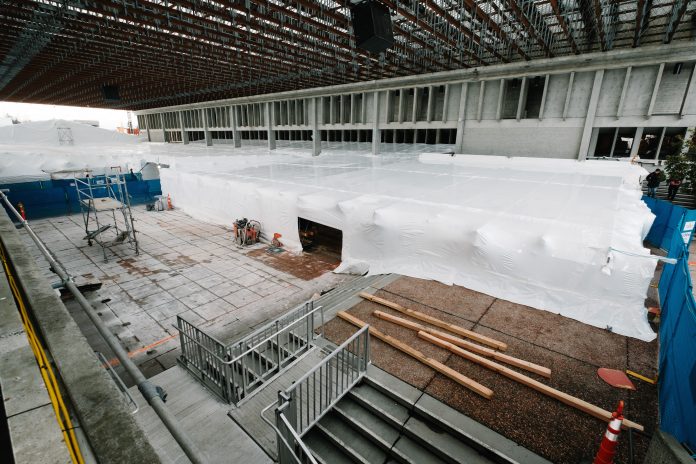
Renaissance was dead at the time I went, but it’s usually insanely busy, especially at the AQ location. I suggest heading to MBC if you want a quicker coffee (though good luck navigating that Convo Mall construction…)

Rating: 4/5 coffee beans

Residence Dining Hall

Hours: Open 24 hours, but entry fee depends on when you go.

  • Breakfast: 6 a.m.–10:30 a.m., student entry fee is $6.50;
  • Lunch and overnight: 10:30 a.m.–5 p.m. and 10 p.m.–6 a.m., student entry fee is $10;
  • Dinner: 5 p.m.–10 p.m., student entry fee is $11.

Location: Just past the Lorne Davies Complex, towards Shell House

I wasn’t expecting to make this stop, but, like Denny’s, the Dining Hall is somewhere you end up at unexpected times in your life. This coffee is not worth it if you’re going for it alone, but if you’re there for breakfast or lunch, there’s no reason not to have a couple of mugs and then sneakily fill up your tumbler. You can also get a coffee-to-go for $1.85.

I attempted to make myself an affogato with the soft-serve machine and the medium roast, but instead made something I’d rather not talk about. Their coffee is Ethical Bean brand and, like at Renaissance, you can mix and match a bit. The medium roast was very weak, and the dark roast tasted burnt and sad. Disappointed, I tried the Carnation brand drink-maker for a French Vanilla. After a puff of powder and a lot of weak grinding noises, I got a drink that Tim Hortons would scoff at.

Unfortunately, the Hall’s ambience (if you can call it that) doesn’t make up for the weak coffee, and at 1 p.m. it was loud and busy. Unless I’m freezing or I find a way to make better affogato, I probably won’t go for the coffee again.

Rating: 2/5 coffee beans

Mackenzie Café

Hours: Monday–Thursday 7:30 a.m.–8 p.m.; Friday 7:30 a.m.–6 p.m.; Closed Saturday and Sunday  

Location: Part of the AQ

I hadn’t been to Mackenzie many times before, so as I entered, I was immediately disoriented. Where’s the coffee? I wondered, walking around somewhat aimlessly until I found it just past the Subway.

They have a little chart on the wall stating prices, and I found that a medium coffee would cost me $2.20, making it the most expensive cup on this journey. That said, I was happy to find out that the medium size was larger than previously encountered cups, but then immediately saddened that the coffee served was my newfound enemy Ethical Bean. I once again went for the medium roast, half-hoping that it would be better than the Dining Hall stuff.

After filling my cup, I wasn’t sure where to take it. There were checkout counters, but at 9:30 a.m., there seemed to be no one at them. I was tempted to just walk out with my coffee, but someone noticed me and rung it up.

The café seemed like a chill place to hang out and the service was friendly, but at lunch it gets pretty busy. As for the coffee, it was hot, but tasted like nothing more than mild, slightly bitter water. It was somehow worse than my affogato disaster at the Dining Hall. I felt ripped off.

I have nothing against ethical coffee, but if you can help it, avoid Ethical Bean. Check out Mackenzie for comfy seating, but maybe not coffee.

Rating: 2.5/5 coffee beans

I went clubbing to a Vancouver goth club and those goths know how to party

0
Image courtesy of Zemekiss Photography via Coffin Club Facebook page

By: Winona Young, Arts Editor

The line is a sea of fetish wear, messy black eyeshadow and even messier hair — this seemed to be the unofficial dress code to get into Vancouver’s newest clubbing event, the Coffin Club at Astoria Hastings. Opening on January 18, 2019, the Coffin Club stands as a new hub for the goth and glamorous who are looking for somewhere to turn up.

Admittedly, the most goth/metal I’ve ever listened to was Good Charlotte and Green Day. Walking in with my date, I prepared for the night to be the weirdest and perhaps scariest night of clubbing I’ve ever experienced; but what I found out was — damn, these goths know how to fuckin’ party.

THE SPACE

Walking in at around 11:30 p.m., the music was bumping and (no surprise) was decked in all black. However, it is still Vancouver, so along with the slightly grimy atmosphere, various retro pinball machines were on display by the wall which definitely helped me feel more at ease.

Decked out with a long bar, ten or so tables, two pool tables and a dancefloor, as far as clubs go, the place was well equipped! There was a projector screen that played Rocky Horror Picture Show, while televisions showed old music videos (some gory, some as regular as David Bowie).The bar was modestly priced — it had three bartenders manning the station with highballs at $7, doubles at $11.

As far as accessibility, while there were only male and female bathrooms available, the place was wheelchair-accessible. Looking at the patrons, the pool table was at a wheelchair-friendly height too.

THE CROWD

After waiting in line for half an hour and entering the space, I could understand why. There were around 100 to 150 people in there, According to the photographer, it was that hype and that full since 9:30 p.m. when the club opened.

It was a sea of black leather, black eyeshadow, and wild hair (all genders — all looked equally unkempt). Doc Martens could have sponsored this event. But despite the fact that a lot of party goers went big with their outfits, everyone was both polite and respectful. I distinctly remember a person in a neon fetish mask politely nudging me aside to get to his drink, and before he walked way, he turned to my date and I, pointed between us and then made a heart sign with his hands before going on his way.

There were definitely other notable guests: I did see a man walking with (I’m assuming) his partner on a leash, clad in a leather fetish-wear mask. To me, the place felt somewhat like a kink-friendly Twilight Zone — just as spooky, but covered in black leather and with nicer music.

Something I did notice was that I met just a tad fewer fellow POC in the crowd that night than I usually see in the Vancouver club scene. Despite this, I want to emphasize that the place was both very inclusive and comfortable. In terms of age, it was a very wide cast; I saw people from age 19 to at least their early 60s.

Towards the end of the night, I felt genuinely safe and welcome in the space. Hard metal aside, probably the most traumatizing thing I saw there was a guy in a Family Guy t-shirt.  

THE DANCE FLOOR

Now the dance floor is what I was most looking forward to. The Club music was loud — raucous, but not more or less annoying than regular club music honestly. And the setlist? When DJ Sean Reveron went onstage, while yes, there was some heavy metal, there was also . . . Depeche Mode’s “Personal Jesus”? And The Cure? The setlist was less a Satanist party mix and more a thotty goth friend’s “Edgy Playlist.”

The actual dance floor itself had a black-and-white checkerboard print, but it was relatively clean. The folks dancing all had equally eclectic fashion and an equally carefree vibe. Now don’t get me wrong, these people couldn’t dance to save their lives, but God, I’d be lying if I didn’t feel 100% comfortable and safe around them. Everyone kept to their personal space pretty well — no shoving, no people getting in each other’s business or unwelcome physical contact of any kind on the dance floor, which, as someone who’s been partying all over the world, is a major plus in my book.

LAST WORDS FOR THE COFFIN CLUB

All in all, I did not expect the Coffin Club would make for a solid date night, let alone, a place for clubbing for a normie like me. While the place isn’t for the faint of heart, anyone with an open mind and just enough curiosity, should get their monster mash on and party it up.

Othniel Spence talks basketball, faith, and identity

1
Spence is currently averaging 14.4 points per game while shooting .432 percent from three. (Chris Ho / The Peak)

If it weren’t for a fractured left fifth metatarsal in his senior year of high school, Othniel Spence would likely not be playing basketball for SFU. He was being recruited by mid-major schools in the states, as well as schools across Canada, before Spence “fell off the face of the basketball planet,” as he put it. What remained were two offers, one from Queens University, and the other from SFU.

“I knew what was coming for me at Queens, I knew how I was going to play, I knew how good the team was going to be, but one thing that interested me about Simon Fraser was that there wasn’t much knowing,” said Spence when interviewed by The Peak. Another major factor in his decision was that SFU plays in the NCAA.  

Well, the decision seems to have paid off. Not only is Spence one of the leading scorers and on-ball defenders on this season’s Clan, but he has also grown into a leader on and off the court. We talked to Spence about his time playing for SFU basketball, his faith, and not rooting your identity in your performance.

The Peak: What’s your favourite thing about playing here at SFU?

Othniel Spence: “My favourite thing is just community. Something I’ve realized in Vancouver is that the basketball world is really big over here, and it’s really interconnected. I didn’t know the impact that I would have on the community and the people around me by being the person I am, being a person of faith, being a leader on the court, being a leader off the court.

[ . . . ] I’m grateful just to have this position, just to show others how to work and exercise my faith as a Christian athlete towards the community here in Vancouver and the basketball world.”

P: How does being a person of faith affect you in your day-to-day life going to a secular university?

OS: “It gives me a lot of perspective being here at SFU, being at a secular university, from people coming from all walks of life. Something I’ve realized just being here is that my identity is not rooted in my performance. My identity is not rooted in whether our team wins or loses, whether I play well or I don’t.

I will always be valued and respected, and [identifying] as a follower of Christ first [ . . . ] Just bringing that mindset and bringing who I am towards the community and my friends, teammates, and just trying to find that consistency in being a loving person that’s open towards anyone and everyone.”

P: Obviously your role on the basketball team has grown during your time here. How do you think you’ve grown outside of basketball during your time here, and how playing for SFU basketball has inspired you to grow?

OS: “This is a quote I heard: “Not to let successes get to your head, and don’t let failures get to your heart.” [ . . . ] Just learning what my circumstances are, obviously enjoying it — taking in the joy of being a basketball player, being grateful to play in the NCAA, being grateful to be a student athlete here at SFU, to be successful in my studies — but not believing in the hype of my successes, or not believing in my failures and putting myself in a downwards spiral.”


P: Moving a bit back to basketball. With Kedar [Salam] leaving after last season, you’ve really grown into a new role of being one of the leading scorers. How do you think you’ve adapted into this new role?

OS: “I think it’s still a process. Something I’ve learnt just over this year alone is that I can impact the game so much more than just scoring, and I don’t want to be one-dimensional in that. A lot of people think it’s just about the points, but most of the time, it’s those things that don’t appear on the stat sheet, the things that you do in the game, that can really impact your team and lead them to a win.

If I’m not playing well, I’m going to encourage my teammates, I’m going to look for them, I’m going to create for them, and I’m still going to be that guy on the court that’s going to be a leader.”

P: Who are some of your basketball inspirations, players you try to model your game after if you have any?

OS: “I really like Damian Lillard. [ . . . ] I like his tenacity, I like his attitude, he seems like a humble guy. He likes to shoot the three a lot and I find that I do the same. We’re both – well, he’s way more athletic than me – but we’re both slashers, defensive lockdowns, we both do our jobs, both leaders. So I try to model my game after him right now.”

P: Who do you think is the funniest guy in the locker room?

OS: “I think it’s Dom[inic] Postel, he’s a freshman, and he is by far the most caring person but he can be so funny — just the way he delivers his jokes, or just the way he talks. He brought this term from Washington, he calls it scoop, so anything we do that’s good is like, ‘Oh, that’s your scoop’. He’ll say it like an accent like ‘schooooop’, like weirdly. It’s actually really cool having him on the team; he really lightens up the locker room with his attitude and just who he is.”

Athlete’s corner:

“Whatever situation you’re in, just know that your identity isn’t rooted in your performance. Something I’ve seen here at SFU is a lot of people take a lot of stress during midterms, exams, whatever it is, and that determines who they are. They think that because their parents might judge them differently, or that they may not pass a class, or they may just obviously be disappointed in themselves if they don’t do well.

But something that I’ve seen, even after having losing seasons with SFU, is that your identity doesn’t change before or after the event. Whatever happens, your identity can’t be rooted in your performance, because that’s when you start valuing yourself in only your successes and devaluing yourself in your failures.

[ . . . ] Discover what your identity is, discover where you find yourself, what makes you you, and don’t use results to determine that.”

What if . . . all lectures were recorded and uploaded online

0
Photo by Chris Ho / The Peak

Written by: Gene Cole, Opinions Editor

Imagine a lecture with less than 10 students inside. Students still sit in the back rows, forcing the lecturer to unnecessarily raise their voice. One student is eagerly sitting in the front, prepared to share anecdotes whenever the floor opens to questions. Another is fast asleep, being judged by the other eight students who are just copying the PowerPoint slides.

This might just be a regular 8:30 a.m. class in the middle of the AQ. But, with perfectly and consistently recorded lectures, this uncomfortable ghost town could be the new normal for nearly every lecture. If people could treat every lecture like a podcast, it would be way too hard for most students to justify their journey to campus.

On the plus side, this would make things somewhat nicer in lectures themselves. Missing half the lecture because of a broken bus wouldn’t require an awkward email to the Canvas page asking someone for notes. Students who attend them live would get a calmer experience, while the distracting students would just stay in bed to watch the lecture with dinner.
But it would come at the expense of every tutorial, something that cannot be just as helpful in an online/recorded form. People would be watching their lectures on their own schedule, meaning there would barely be any students — even compared to now — who come ready to talk about that week’s material. Without an hour or two for everyone to even just loosely listen to the prof, there would be an hour of exceptionally more awkward silence soon to come.

Opinions of the Hour

0

Written by: Gene Cole, Opinions Editor

A sobering amendment – Meera Ulysses, The Varsity

Back in December, Canada’s impaired driving laws changed to let officers give breathalyzer tests more liberally, fines for being overly intoxicated within two hours of driving, and higher maximum penalties. Meera’s piece goes into detail about the likelihood of this being used to target visible minority groups, but she also goes into detail about how this is also likely to particularly target post-secondary students.

SEE MORE: “Advocacy groups contest Canada’s new impaired driving laws.”

Studies have consistently found heavy episodic drinking and higher instances of drinking and driving among young adults,” Ulysses cites as a main reason for most post-secondary students to be concerned. “By operating under a presumption of guilt when encountering us, and now, being able to exercise their power without requiring a reason, officers can interrupt our lives at any time.”

This change in the law has a lot of potential to cause extreme harm, and has come in a culture where there’s already plenty of mistrust towards the police. Even if you don’t drive, this law change sets a dangerous precedent of how the police can treat us, and should be everyone’s concern.

~~~~~~~~~~~~~~~~~~~~~~~~~~~~~~~~~~~~~~~~~~~~~~~~~~~~~~~~~~~~~~~~

To combat Holocaust ignorance, we must empower teachers – Naomi Azrieli, Globe and Mail

Azrieli’s article branches off of a survey done on behalf of The Azrieli Foundation and the Conference on Jewish Material Claims Against Germany. The core finding was that while most people knew of Hitler and the Holocaust, many of them couldn’t name a concentration camp, and many didn’t believe or didn’t know that six million Jews were murdered.

She goes on to emphasize the importance of this knowledge, saying how this knowledge will “fundamentally combat the increase in neo-Nazism and anti-Semitism we are seeing.” Learning these things is how we stop hateful and misunderstood beliefs from becoming further normalized.

SEE MORE: “The Pittsburgh shooting is a symptom of normalized anti-Semitism in social media.

Her key solution, as per the title, is that teachers have the power to change this, which is a valuable point. It’s plenty common for schools to treat the history of marginalized groups as merely a bonus mention in textbooks and classes. Devoted classes and more reading content are things that Azrieli makes a compelling case for; one that’s evidently needed considering how little people know about an atrocity that happened less than a hundred years ago.

How to: Study abroad

0
Prague / Photo industry of National Geographic

By: Melanie Hiepler, Peak Associate

Question: Should you spend a semester or more studying abroad?

Answer: Why is that even a question? Yes! Get out there, have some adventures, find your travel feet, and diversify your academic resume. Travel builds character, and goodness knows most of us could do with a little extra character.

A few summers ago, I spent a semester at Charles University in Prague, the Czech Republic’s capital. I tacked on some solo travel to either end of my semester, made a grand adventure out of it, and earned my backpacking stripes along the way. Three years later, it’s still my favourite thing to talk about.

So, I’ve cobbled together some tips for anyone who is preparing to go abroad, whether for study purposes or just to travel. These tips are general, so they’ll be applicable regardless of your destination. Read on!

  1. Don’t let funding be a reason not to go abroad.

So many scholarships, awards, and bursaries are out there waiting to send students on amazing exchange experiences! SFU’s Study Abroad office has excellent information on financial resources specifically intended to fund students’ exchange experiences.

2. Jet lag is a beast. Arrive a few days early.

It took me a full week to recover from jet lag, but I had the privilege of having arrived in my destination’s time zone a month before my program started. My classmates were less lucky and had to struggle through the first week of classes while totally discombobulated. It didn’t look fun.

3. Pack a full change of clothes and toothpaste in your carry-on.

That way, if your luggage gets lost or delayed, you’ll at least have a fresh change of clothes and clean breath for your first day of classes. #firstimpressions

4. Homesickness 101

It’s not fun, but it is a part of travelling. Chances are pretty good, though, that your fellow exchange students are experiencing the same thing. Talk to someone about it. You might find that’s what it takes to start making friends.

Don’t be too hard on yourself when the homesickness hits. Make sure to give yourself time to adjust to your new home away from home. Immerse yourself in your new cultural context, but don’t lose yourself in it. Stay in touch with your family and friends, read a favourite book, watch some Netflix, get some exercise, cook something familiar… Do what you need to do to stay grounded.

By the same token, don’t spend too much time indulging in familiarities from home. That’s just going to prolong the agony. Find a happy balance between the new and the familiar.

5. Get out and explore!

You’re here to learn, yes, but at the same time, you did not travel several thousand miles and conquer jet lag just to bury yourself in textbooks. Go hop on a tram or a bus and see where it takes you!

6. …that said, allow yourself down time.

Just like at home, a night in once in a while is healthy, both physically and mentally. It will allow you to rest and help you avoid getting sick, and it will give you time to process your adventures abroad.

7. For the love of everything remotely classy, don’t drink your face off the whole time.

Alcohol is often cheaper than water in Europe and the drinking ages are lower, so some of my classmates spent most of their time frequenting local watering holes. By all means, try the local ales, but you’re not there to get chronically sloshed. You’re there to learn and expand your horizons. Be a responsible adult and have some class.

8. Journal. Even if you’re not really into journaling.

Journaling will help you adjust to the new cultures and situations you find yourself in. I found that there was so much to process during my semester abroad that writing about it helped me experience it better. Journaling will also help you remember your experiences years later. If you’re not into journaling, vlog, blog, or draw or do whatever you need to do to help you process your experiences. Your older self will thank you later.

9. Take transit and walk.

No better way to get to know a city!

10. Bring good walking shoes.

Save your feet. Birkenstocks are lovely, but at some point you’re going to need something that will let you move around town with a little more finesse and efficiency.

11. Cook your own food

It can be tempting to eat out all the time, especially if the exchange rate of a given country works in your favour. But, just like at home, cooking your own food helps keep costs down, and it can help with homesickness, too.

12. Learn to say “Hello,” “Thank you,” and “You’re welcome” in the language of your host country.

These simple phrases will open doors for you. Want better service at your local café? Greet your waiter with a customary greeting before switching to English. Chances are that everyone will speak excellent English in the big cities, but by greeting them in their own language, you show that you’re taking a genuine interest in their culture and making an effort to learn.

(Also, it’s just polite).

13. If you’re still reading this, that tells me you’re seriously considering studying abroad.

My last, and strongest, recommendation is that you just apply already! And then go invest in a good backpack or suitcase.

A Guide to Dropping Classes

0
Alisha Lees / The Peak

Written by: Trevor Roberts, Peak Associate

First-year students, academic underachievers, and those experiencing memory loss related to the trauma of last semester are especially prone to be lulled into a false sense of security after a week free from tutorials, homework, or soul-crushing monotony.

If this sounds like you, or if you are a member of the not-so-small minority of students guilty of drunk-enrolling, you may find that the schedule you have “chosen” (read: desperately scrounged together thanks to your shitty enrollment date) is simply too overwhelming to undertake.

Luckily, we at The Peak have prepared this handy guide for choosing which class you should drop!

  • The fun elective
  • Why to keep: Have something you always wanted to learn about but never got the chance in high school? Well, now you have the opportunity to pay a ridiculous amount of money to have that subject or skill ruined for you by learning in a university setting.
  • Why to drop: Today, you’re putting off a required course to take an elective. Tomorrow, you’re in your fourth, fifth, or sixth year, still needing 50 more credits to graduate. Inevitably, you’ll realize that everybody in this class who majors in the subject is better than you — not just as a student, but as a person with intrinsic worth — and that there’s nothing you can do to change that.  You’ll then return to your own major, where your need for acceptance will lead you to a future of Stockholm Syndrome.
  • The GPA booster
    • Why to keep: When exams end and those disappointing emails from uRecords have you worrying about whether you’re still allowed to drink on academic probation, you are going to want that guaranteed A- (like you’ll actually try for an A, come on) so that your parents don’t disown you. Also, if that cute fellow student you sit with is desperate enough to take this class, maybe they’d lower their personal standards for you, too.
    • Why to drop: You still gotta get the work done. Also, everyone has painstakingly researched which classes are GPA boosters, so you risk withstanding judgement from those forced to take a real schedule.
  • The boring major requirement
    • Why to keep: Don’t let today be the yesterday where you said tomorrow; just do it! This course is standing between you and your degree; there is no way around it. Everyone who goes through your program has to withstand this snore fest on methods or writing or whatever, so you might as well tough it out and get it over with.

Why to drop: There has to be some way out. Maybe the department will change the required courses; maybe a new prof will take over and make it not such a terrible class. You could intentionally get hit by a car and apply for a compassionate pass, or just cross your fingers and hope that the collapse of human society occurs in the next three months. And you can always switch majors, right?

SFU men’s basketball struggles against Alaska Anchorage

0
Julian Roche had a 13 point, 10 rebound double-double. (Photo courtesy of SFU Athletics)

Missing one of their leading scorers in Othniel Spence, who is recovering from an ankle injury, the Clan faced an uphill battle Thursday night against a defensively solid Alaska Anchorage squad. They were unable to rise to the occasion. While the final score is a bit harsh, SFU simply couldn’t match the intensity of their opponents, and ultimately paid the price.

Despite this, there were a few positives. Sophomore center Julian Roche continued to show his importance to the team, coming up with a 13 points, 10 rebound double-double in 25 minutes. One of the highlights of the game came from Roche in the first half, when he came up with a huge block on a layup attempt from Seawolves guard Tobin Karlberg eight minutes in.

Soon after, however, the Tyler Brimhall show began to take over the gym, as the Alaska Anchorage player went off for 21 points in the first half, including five threes.  

The Clan, who managed only 25 points in the half as a team, were unable to keep up. They shot 10–32 (31.3%) from the field, 2–13 (15.4%) from three, and did not do enough on the defensive end to avoid going into the break down 12, 37–25.

While there was a brief moment in the second half where SFU looked like they could get back into the game, it was short-lived. A Wilfried Balata three-pointer brought the deficit down to eight with 4:36 left, but the Seawolves managed to pull away as the game reached its end. A Brimhall dunk with 2:23 left in the game gave the visitors a 14-point lead, and they would cruise from there for a 74–53 win.

Shooting was a major area of struggle for the Clan on the evening. They ended the game shooting 21–60 (35%) from the field, including a dreadful 4–22 from behind the arc.

“We match up well talent-wise,” said head coach Steve Hanson to The Peak after the game. “I thought our defensive energy was subpar tonight, and it reflected in our offence. We didn’t run our stuff with the pace that we need to.”

Peak player of the game: Michael Hannan

While Spence’s absence was felt, one player that benefited from it was guard Michael Hannan, who provided a spark off the bench throughout the game. He scored seven points and brought in three rebounds, but also did all the little things that don’t show up in the box score. After the game, Hanson had this to say about Hannan’s play:

“Hannan gives us great energy every night, and it’s really obvious when the guys ahead of him aren’t bringing that energy, because he comes in and affects the game in so many ways. He’s got to play more for us.”  

What’s next:

The Clan will host the other Alaska on Saturday, when they play the University of Alaska in the West Gym. The Nanooks are currently 1–7 in the GNAC this season. Tipoff is at 7:30 p.m.

SFU women’s basketball win fourth straight game behind Ozioma Nwabuko’s career night

0
Nwabuko was a perfect 7–7 from the field and 4–4 from the free throw line in the second half. (Photo courtesy of SFU Athletics)

After a slow start to the GNAC season, the Clan are firing on all cylinders, winning their fourth straight game on Thursday night when they hosted the Central Washington Wildcats. Ozioma Nwabuko was a big part of that, but overall, the team played well.

Despite the double-figure victory, the teams were neck and neck throughout the contest. Jessica Jones got the ball rolling with a three-pointer on the games first possession, but no matter what the Clan did, the Wildcats kept battling back. A layup from Kendall Sands in the final minute of the quarter gave SFU a 19–18 lead, and it would stay that way heading into the second.

Central Washington led for most of the second quarter, where the Clan offence stalled a bit. By the end of the half, the Wildcats held a 34–32 lead, and everyone in the gym knew that it was anyone’s game.  

Sands led all scorers in the half with 10 points off of the bench, including scoring a three-pointer and hitting all three free-throw attempts after being fouled while attempting a three. At this point Nwabuko hadn’t broken out yet, scoring six points in 14 minutes in the half.

In the second half, the Nwabuko show got on its way.

Everything she attempted in the second half worked its way into the basket. She went 7–7 from the field, 4–4 from the free-throw line, grabbed nine rebounds and played all 20 minutes in the second half. Her energy on both sides of the court got the Clan out to a seven-point lead in the third quarter after she capped off an and-one layup with a made free throw.

Fast forward to the end of the fourth quarter, and clutch free throw shooting down the stretch allowed the Clan to pull of the victory. Sands, Tayler Drynan, and Sophie Swant all hit there free throws in the final minute, and SFU would eventually win 79–69.

The team is now 6–3 in the GNAC this season, tied for third overall with Central Washington in the conference. SFU is 10–6 overall on the season.

Peak player of the game: Ozioma Nwabuko

The clear choice, Nwabuko did not put a foot wrong in the second half and was a huge part of the Clan’s success. Finishing the game with a 24-point, 11-rebound double-double, she looks like she has recovered from her injury suffered last season quite well.

What’s next:  

SFU will now host the top team in the GNAC in the Northwest Nazarene Nighthawks. The Nighthawks are undefeated so far this season with a perfect 9–0 record in the GNAC and 17–0 record overall, but the Clan are rolling right now as well. This should be a good one.

Tipoff is at 5:15 p.m.

School Supply Scrounge

0

Written by: Hannah Davis

Everyone knows that you, as a broke student, are too broke to spend money on useless school supplies like pens, and notebooks (scoff!). So please make use of these helpful and straightforward tips for finding and making your own school supplies for free.

Harry Potter-Style Blood Pen

This is a fun DIY project ensuring you a free pen for the entire semester. Simply find an old pen either in the garbage or on the floor somewhere. You’ll want to cast a spell on the writing utensil, so that whenever you write, the pen magically uses the blood from your arm as ink.

Try a spell like: “ink-o, arm-o,” or “blood-iosis, ink-iosis,” or “Help! School is putting me into horrible debt and forcing me to turn to desperate measures to save money.” Any of these spells will work just fine! When successful, your blood will magically become the ink for the pen whenever you write with it, and now all your notes will be written in a beautiful crimson colour, Harry Potter-style.

Raccoon minions

For this DIY project, you’ll need to become the leader of a gang of raccoons, who you will then train to hustle unsuspecting students for their school supplies. Teach the raccoons to say things like, “Hey, you, gimme all your school supplies,” and equip them with small messenger bags where they can store their stolen pens, notebooks, and the like.

To make them even more intimidating, give all your hench-raccoons tiny leather jackets. They will return to you, their leader, at the end of every night with bags full of academic supplies, and you will never have to buy another binder or pencil ever again.

Giant net

This one is pretty self-explanatory. Fashion yourself a huge wearable net, which will circle around your feet and catch falling school supplies, among other things.

Designed like a hoop skirt from the Victorian era, your net skirt will be the envy of the university, as it allows you to discreetly and efficiently catch falling school supplies, as well as scoop them off the floor and carry them with you fashionably and effectively.  

Deceit

For this DIY craft, all you need to do is deceive the public by tricking them into donating school supplies to your cause.

Pretend to be an entire elementary school who is in need of supplies. Bring a donation bin up to the university, and leave it somewhere where there is high-volume pedestrian traffic. Write a heartfelt letter about your school and post it to the bin. To really seal the deal, draw about 40 pictures to decorate the bin with, and make sure each illustration looks like they were drawn by a different child.

The guilt at this point may begin creep its icy fingers up your back, but don’t worry: you won’t feel bad about lying to the public once you’re rolling in school supplies and savings.