Home Blog Page 501

SFU alumni showcase the diversity of dance with Conduit

0
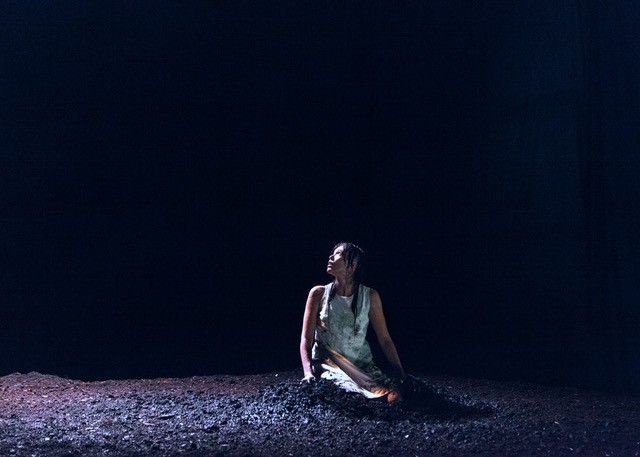
The Body Orchestra is a seven-person dance troupe, five of which are SFU alumni. Image courtesy of Jenn Edwards / Conduit.

By: Carter Hemion, Staff Writer 

Shown at this year’s Vancouver Fringe Festival, Conduit is a series of three dances performed by members of local dance troupe The Body Orchestra. Choreographer Jenn Edwards, an SFU alumna, did fantastic work in creating a visually engaging series of pieces that exceeded my expectations for the night. Each dancer took their performances beyond the choreography given to them and added their own unique spin to their dancing. I was impressed not only with their strengths as individual dancers, but also with their level of comfort and trust in each other while moving together. 

Growing up, I have always loved dancing, so naturally I jumped at the opportunity to see The Body Orchestra perform Conduit as part of this year’s Fringe Festival. Learning that five of the seven dancers are SFU alumni from our contemporary arts program only added to my excitement, and I was definitely not disappointed. I attended the first performance of Conduit on September 6 at The Cultch Theatre.

Opening with Imposter Syndrome, the dancers moved with clear skill and were certainly well prepared for opening night. Initially eclectic and moving towards togetherness, the types of movement were intentional and channelled the frustration and anxiety that comes with imposter syndrome (the fear of being exposed as a “fraud” in one’s field of work) in an engaging performance.

The next segment, Other Creatures, was a dystopian piece that opened with an enthralling duet of curiosity, possession, and infatuation and kept my attention through all segments. In particular, the costuming and use of lighting in this one stood out to me. The blend of feral energy and themes of nonconformity with a shift to lighter wonder towards the end of the dance made it a stunning work of art.

However, I have to say that Conduit was the dance of the three that stuck with me the most. Composer Mary Jane Paquette’s work was most evident here, and it was particularly striking in quieter moments that allowed for the sounds of the dancers’ own movement, counting, and humming to be a part of the performance. It felt familiar to me from my own time in dance studios in displaying a look at the relationship between the different kinds of artists necessary to create works like these.

Overall, Conduit was an engaging performance that is inviting to its audience regardless of whether its members have any experience as dancers. The three dances were diverse in their messages, and I found that I enjoyed each one even more than the last. Additionally, the dancers were exceptionally talented at their craft and it was evident that they really know how to work well as a team — that was what truly brought the performance together for me.

Robotic Soccer is probably the coolest sport on campus

0
Robots . . . playing soccer? - Photo credit / Robo Hub

By: Marco Ovies, Staff Writer

I don’t know anything about robots, and I definitely don’t know anything about soccer, so, naturally, I am the best person to tell you about SFU’s Robotic Soccer Club. The club is a year old and members are already building a whole team of soccer playing robots to enter in the 2021 RoboCup International competition. This is the perfect club for someone who is not so athletically inclined but still wants to experience the thrill of being a part of a soccer team. 

The club was founded by Arvin Amini, a fourth year majoring in Biomedical Engineering. Arvin is super passionate about the sport. 

“I’m originally from Iran and robotics competition in high-school and university level is taken seriously,” he said. “RoboCup as an international competition is one of the most important competitions in Iran. I was surprised that at SFU, and in Canada in general, such programs are not taken as seriously! Knowing the great impacts of such robotic teams and competitions, I decided to start the SFU Robot Soccer Club with the help of my friends.” 

The team has managed to finish their first prototype and are currently forming a fully functioning team of robots. But the most interesting part of building these robots is actually training them to play soccer. Just like a team of people, these robots will need time to practice, train, and learn the sport in order to get ready to compete. With all this work, the club has split into three different sections: the electronics group, the mechanics group, and the software group. Each one of these plays a vital part in creating these sophisticated pieces of machinery. 

The club has also played a large role in the community to help children develop a love for the sciences. In April and June 2019, SFU Robotic Soccer held a camp for kids from grades 5–7 where participants had to design a mechanism to kick a ball and lift a marshmallow as high as possible.

“Robots are cool, and arguably soccer is the most interesting sport for the majority of people,” said Amini. “Why not combine them and enjoy a game of soccer looking at our robots play against each other?” 

If this sounds like your kind of sport, feel free to sign up through the SFSS portal or by sending an email to [email protected]. SFU Robotic Soccer is open to students from all programs who have a passion for robots, artificial intelligence, and teamwork. 

Even if you’re not interested in joining, be sure to keep an eye out for the team at the 2021 RobotCup International. 

Ryan Sandrin moves from the crease to the front office as SFU Hockey’s new Director of Player Experience

1
Sandrin will leave the ice, but not the program, in his new role as Director of Player Experience - Photo credit / SFU Hockey

By: Michael Lenko, Peak Associate

Ryan Sandrin has joined the SFU men’s hockey program as the Director of Player Experience and Education. This will not be Sandrin’s first involvement with the Clan as he spent three seasons (2016–2019) as a goaltender for the team. This experience will likely bring valuable insight to the front office staff given the rarity of a recent graduate stepping into such an important role. Additionally, this role was just created. 

According to Sandrin, the aim of this position is to help better support the players outside of the rink by providing resources and attention to the school side of student-athlete life. The position will also require Sandrin to act as a liaison between the players and team management — mainly to allow for a smoother transfer of ideas to better the program. Sandrin will also work with the marketing team to increase the program’s exposure on campus, as well as in the community beyond the university. 

The Peak was able to sit down with Sandrin to discuss his new role with the team.

The Peak: What are the reasons for you deciding to continue your involvement with the SFU men’s hockey program after graduating?

Ryan: I saw changes throughout my undergrad when I played: good changes and bad changes, tendencies with player retention and some of our academic endeavours that I felt I could contribute to. I want to continue to help the veterans and new recruits in attaining the best possible experience, both from an academic perspective and on the ice, to combine with the best collegiate experience as a whole for our student athletes.

P: How do you think your role is going to positively impact SFU hockey players?

R: I think I’m going to provide not only the academic checks and balances that are ultimately required of any program at an institution such as SFU, but I will also serve as a line of communication between the management and players. I hope I can help provide transparency, direction, and better oversight.

P: What are some changes you are hoping to institute to help the program grow?

R: I think, overarchingly, I want to provide academic wellness and health checks, oversee [their] success, to better provide them with tutoring and guidance. Just to see what we have now and what we can change on game nights to create a better collegiate atmosphere, creating the most comprehensive experience we can.

According to the team’s Director of Operations, Chris Munshaw, the team is excited to have Ryan on board for the coming season. Munshaw shared his thoughts with The Peak, stating that, “We’ve got a good support group now around the team, a little more focus on academic success and supporting the players by having Ryan involved.” 

Further, Munshaw believes that additions like Sandrin to the front office staff will help better the student-athlete experience the team can offer. 

“We want to provide a valuable experience for the players on the team and we want them to get the most out of playing for SFU. We also want to run a successful program that represents SFU to the highest degree possible, representing what it means to be an SFU student and to be involved with the university.”

Now that most of the vacancies in the front office have been filled, the Clan will look to fill other vacancies within its coaching staff to run the bench alongside head coach Mark Coletta. 

TRANSMISSIONS is an immersive exploration of futurism and Indigenous languages

1
TRANSMISSIONS is on display at SFU’s Goldcorp Centre for the Arts this September. Image courtesy of Yuula Benivolski / The Tyee.

By: Kim Regala, Peak Associate 

Lisa Jackson, an Anishinaabe artist and filmmaker, received much praise (and many awards) when she released her virtual reality film Biidaaban: First Light (2018). Exploring themes of Indigenous futurism, the film immerses viewers into a new experience of seeing our urban landscape through the lenses of the natural landscape and Indigenous language. Now, she returns to offer us a similarly praise-deserving experience with TRANSMISSIONS. The 6,000 square foot installation is a stunning three-part structure that yet again explores these futuristic perceptions of reality. Each part welcomes us to reflect upon the ways we have come to gain knowledge and understand our relationship with the world around us.

Welcoming us into Jackson’s curated space is a tunnel-like pathway encapsulated by wall-to-ceiling projections. These projections show two distinct places in alternating succession: a particular street in Downtown Vancouver followed by forest scenery with tall trees that reach the sky. These contrasting landscapes — one representing the urban and the other representing the natural — are a fitting introduction to Jackson’s intent for her installation. They allow us to recognize our presence within the real-life counterparts of the projected landscapes and how they have come to shape our view of the world. As each individual may have different ways of constructing meaning from their surroundings, the experience felt within TRANSMISSIONS will likewise be different for everybody. In this way, Jackson is able to contrast various knowledge systems while simultaneously merging them into one space.

The next part of the installation pays homage to Biidaaban: First Light as the theme of Indigenous futurism is explored further. A projection fills the entire wall, closely resembling a scene from Jackson’s film wherein a woman is sitting on the ground digging into the soil. This imagery is paired with the tall shadows of rectangular prisms refracted onto the other walls, resembling the high-rise buildings and skyscrapers of a cityscape. The prisms that sit at the center of the room are themselves visually striking, but the shadows they create heighten this feeling of immersion. While all we see are silhouette-like figures of the urban landscape, the shadows replicate the same feeling as when you are situated in the center of a busy street, looking up at the tall buildings that tower over you.

Fully stimulating our senses, from sight and hearing to smell and touch, the final part of TRANSMISSIONS transports us into a whole new world that Jackson has created — one that feels intimate and familiar, yet still distant and foreign to us. Immediately, a sweet, earthy scent welcomes you upon walking into the space. At the centre lie two connected domes — otherwise known as wigwams — which are semi-permanent shelters used by some First Nations. They are surrounded by darkness, with the exception of cherry blossom-like trees illuminated to resemble the stars in the sky. Inside the domes, sitting logs are placed at its perimeter so that viewers may further immerse themselves by listening to Musqueam Elder Larry Grant relay his thoughts on how language and knowledge itself are created. His insightful perspective, experienced within this simulated environment, brings the piece to a harmonious conclusion that allows us to continue reflecting upon our relationship with the world.

TRANSMISSIONS is open until September 28 in the Fei & Milton Wong Experimental Theatre at SFU’s Goldcorp Centre for the Arts. Free public tours are offered Tuesday through Sunday — reservations are available from 1–3 p.m. and walk-ins are accepted outside of these hours.

SFSS throws semesterly Club Days event in Convocation Mall

0

By: Lubaba Mahmud, Staff Writer

From drones to choir, SFU offers an impressive variety of clubs for its students. Whether you want to unwind and relax, learn valuable life skills or meet like-minded people, there’s a club for you!

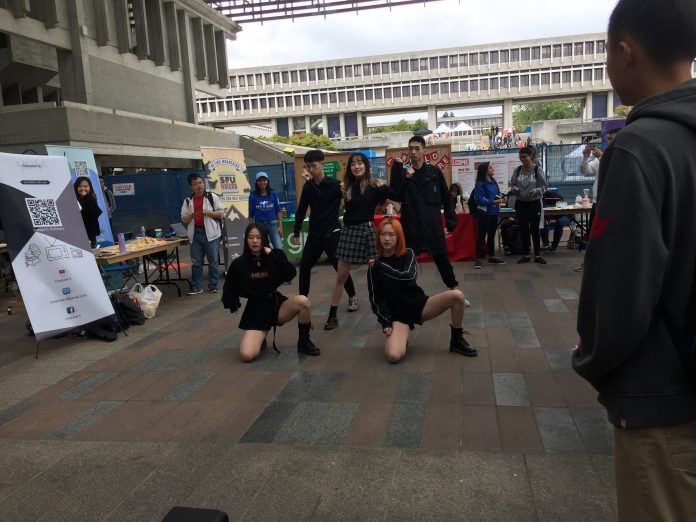
The 2019 SFSS Fall Club Days were held September 10–12 on Burnaby Campus. Convocation Mall was abuzz with music and lively chatter as the festive event took place. Club representatives eagerly welcomed students to their respective tables with warm smiles and enticing sweet treats. From 11 a.m.–3 p.m. over 100 club representatives were present each day of the event to inform students about their club’s activities and aims. 

Many curious students listened to club pitches intently as they discovered exciting new opportunities. As students lined up to join the clubs, club executives’ smiles seemed to become wider with each new addition to the sign-up sheet. Small crowds strolled from table to table looking for clubs that aligned with their interest. Each table was decorated with colorful banners, leaflets, bag pins, freebies, award crests, or jerseys — anything to captivate students as they passed by. 

There were quite a few unique clubs present in the event. For example, Musician Impact Network Society is comprised of SFU students who volunteer to go to health care facilities, such as senior homes, in Metro Vancouver to give musical performances. Another interesting club is Team Guardian, which designs, builds, and sends drones meant to solve “urgent, everyday issues,” like monitoring animal populations, according to an article on SFU’s website. Club representative Nipun says “Students should join our club to get the hands-on experience of not just software and hardware [of drones] but also of talking to companies [to negotiate contracts].” 

James Thomson of the * Sports Analytics Club, a club that looks at the math and data analysis associated with sports (think the Brad Pitt movie Moneyball), states “[To join], you just have to have an interest in sports and a question you want to ask.” 

When asked about their experience of visiting Club Days, students had nothing but positive things to say in regards to the liveliness and amount of people.  Amanda, a first year student, said that she had never been in an environment like this before, so it was a very interesting experience for her — she intends to join a number of clubs. 

Clubs showcased many types of talents during the event. Channel II, a K-pop dance club, gave a spectacular performance on the second day of the event. Clad in all black, a group of five dancers attracted a large crowd as they danced to the song ‘Snapping’ by Chung Ha. Members of Peak Frequency, a long-time music-oriented club, performed solo musical numbers as onlookers were seen excitedly snapchatting the song.

Overall, visiting Club Days was a great way for students to expand their co-curricular interests and interact with each other. The event was a good reminder that SFU has much more to offer than a degree, namely the chance for students to follow their passion outside of academics.


Clubs Day, but shorter: a semi-comprehensive guide on SFU’s student clubs

0

Compiled by Winona Young, Features Editor

If you didn’t have time to drop by Burnaby campus’ clubs days last week, don’t worry. The Peak has compiled a series of blurbs submitted by various clubs execs (on a first come, first serve basis).  


SFU Anime Club 

“The SFU Anime Club is one of SFU’s largest clubs! Every month we host a major event, and every week we host a screening. In July 2020, we’ll be hosting our 10th annual Summer Festival, which drew nearly 2000 [attendees] last year! We welcome all anime fans, from casual to hardcore.” — Patrick Devota, club president 


The Behavioural Neuroscience Student Society 

“The Behavioural Neuroscience Student Society aspires to integrate BPK, PSYC, and BNEU students into the academic community and student life through engaging networking nights, lecture series, game/movie nights, and outdoor activities. Come to one of our meetings (Thursdays at 12:30p.m. in AQ3127) and get involved!” — Aaron Siebenga, club president 


Better Life

“Better Life provides students with the opportunity to get involved with various community services through our one club. Using the momentum from our summer food drive event, in collaboration with the SFSS and the Greater Vancouver Food Bank, we look forward to tackling different social and environmental issues each semester.” — Nima Tehrani, executive of operations


SFU Burnaby Mountain Toastmasters

“Burnaby Mountain Toastmasters is committed to helping students improve their public speaking and leadership skills. Whether you are a beginner or a veteran speaker, we have something to offer. Join us on September 24 for our icebreaker meeting to enjoy free food, to meet new friends, and to learn more about Toastmasters!” — Richard Wan, vice president membership


Change SFU 

“Change SFU club members have one goal: to change SFU in positive ways. This semester, our focus is on climate change, reducing single-use plastics, AND any other cool initiatives club members are passionate about. If you are an individual who cares about these issues or knows of a way that we can make SFU a better university, we want to hear from you!” — Mariah Mund, club co-president 


SFU Disability and Neurodiversity Alliance

“The SFU Disability and Neurodiversity Alliance is a student-led group open to anyone who identifies as disabled, autistic, neurodivergent, deaf, mad, having a chronic illness, long-term condition [sic], mental illness, and allies. We work together to create campus change, address ableism, and promote disability justice while opposing oppression in all forms.” — Serena Bains, social media executive 


The Engineering Science Student Society

“The Engineering Science Student Society (ESSS) provides academic, social, and networking support for ENSC students. Prove to your friends and family that SFU Engineering is the greatest experience ever by joining ESSS! (I also want more friends.)” — Alvin David, club president 


The Gender, Sexuality, and Women’s Studies Student Union 

“The GSWS Student Union plans events to bring the department, its faculty, and students together in order to bring connection, inclusivity, and representation to marginalized groups in a safe space. GSWS students and other students should join to create a difference in the SFU community, make new friends, and have fun!” — Madeleine Chan, social media and communications executive


SFU Grappling Club 

“Learn one of the most effective self-defence martial arts, Brazilian Jiu Jitsu. Whether you are a beginner or a veteran BJJ practitioner, the SFU Grappling Club provides students with the opportunity to learn one of the most valued martial arts in hand to hand combat while creating friendships with other students!” — Khaled Bayyari, club vice president


Impact SFU

“Impact SFU focuses on increasing student engagement and personal development within the SFU Surrey community. Our mission is to give back through our fundraisers to Beautiful World Canada Foundation (BWCF) to provide women in sub-Saharan Africa with the opportunity to further their education. Want to get involved? Come check us out, everyone’s welcome!” — Sarah Qiu, vice president of marketing


SFU Optimist Club

“If you have a desire to help and support children in the community through fundraising and event activities, then look no further, the Optimist Club is for you. Get to know more from me, Olivia Tryon, president of the Optimist Club, and our other amazing members!” — Olivia Tyron, club president


SFU Orchestra

“SFU has an orchestra?! The SFU Concert Orchestra is a group of student and community musicians of all skill levels brought together by a passion for music. We play a range of repertoire from refined classics to your favourite movie/musical scores. We hold rehearsals on Sundays at 4:30p.m. – 7:30p.m. in the Forum Chambers to practice for our semester-end concert, so if you love playing music, consider joining!” — Michelle Kurtagich, club co-president


Pakistani Students Association (PSA) 

“The Pakistani Students Association (PSA) is a club that celebrates Pakistani culture. We encourage multicultural engagement by students from different backgrounds and ethnicities to understand and celebrate what Pakistan truly is. All SFU students, no matter where they are from, are encouraged to become a member of PSA!” — Zoha Shoaib, vice president of marketing


The Punjabi Students Association

“The Punjabi Students Association is having an icebreaker on the 22nd of September. Come out to have fun, make friends,  and make a difference in the community all while connecting to Punjabi roots and culture. Follow us on Instagram @sfupsa for more information” — Gurpreet Sandhu, club president 


SFU Rowing Club 

“Friendships that function at 5 a.m. are the best kind. If you’re looking for a group of competitive athletes who do more than the average person does before an 8:30a.m. class, SFU Rowing is the club for you. Be ready to train hard and get some amazing sunrise pictures for Instagram!” — Katinka Neumann, club president


UNICEF SFU

“UNICEF SFU is one of the largest humanitarian student-run campus clubs at SFU. We work with UNICEF Canada by hosting several events each semester to educate students on how they can support children around the world. Come to our icebreaker for information on leadership opportunities!” — Jennifer Yi, club president 


SFUnison 

“Love to sing? Come join SFU’s official a cappella club, SFUnison! At SFUnison, we make covers of all your favourite hits. Rehearsals are every Monday from 2:30–5:30 p.m. in Forum Chambers. All levels of experience are welcome.” — Sharlyn Monillas, events coordinator


SFU Surge

“At SFU Surge, our goal is simple: to provide a welcoming space that promotes curiosity and excitement for a future in technology, while empowering students on their paths to career success. Join our upcoming events where you can learn and develop new skills, connect with programmers and designers, or better yet, compete in a large-scale hackathon!” — Kim Regala, social media director

 

Carly Rae Jepsen’s Dedicated tour brings the party to the Commodore Ballroom

0
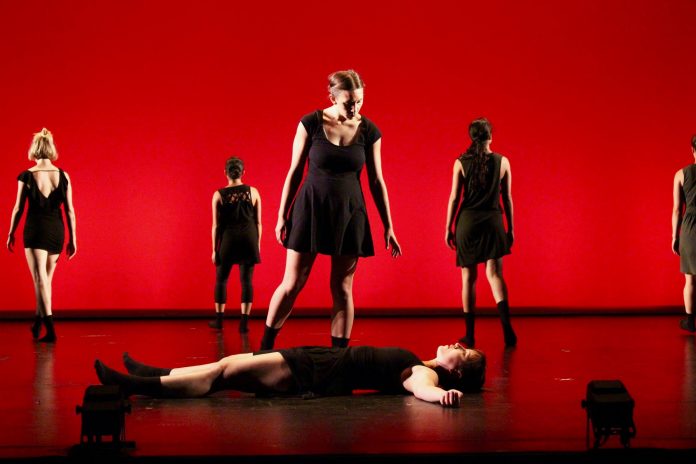
Jepsen has released two records since she gained worldwide recognition for her 2012 single “Call Me Maybe.” Image courtesy of Strut Entertainment / Vancouver Is Awesome.

By: Kelly Chia, Staff Writer 

Let me take a deep breath . . . Where do I start? Carly Rae Jepsen recently performed in Vancouver to promote her newest album Dedicated on August 28 and 29. I had the pleasure of going to her concert one fine Wednesday night, and I am now a changed woman.

I’ve been upfront about my feelings towards Jepsen before, culminating into one overarching sentiment: I just had to see this goddess in person. And so, on the evening of August 28, I went to the Commodore Ballroom where the concert was held. I haven’t been to many concerts, much less a concert venue that included a floor where people could stand. My friends and I got seats, but as soon as Jepsen showed up, those seats became null. We knew that all we were going to be doing for the rest of the night was belting out lyrics and dancing.

Starting off the night was the opening act, RALPH. RALPH, also known as Raffaela Weyman, is a Canadian singer and songwriter. Her music tends to be in the synth-pop/disco genre, similar to Jepsen’s music. I had never listened to her music before, but it was evident why she was on this tour with Jepsen. Ralph’s voice is silky smooth, the vocal equivalent of buttery-sweet candy. Of the songs that she performed, I loved “Gimme” the most. It’s playful, incredibly catchy, and has that soft disco sound reminiscent of Jepsen’s Emotion album. RALPH was a lovely performer, and a pleasant musical surprise.

After RALPH geared the audience up for a party, Jepsen took the stage in a sparkly getup and I was absolutely floored. She started the night out with my personal favourite song from her Dedicated album, “No Drug Like Me,” and she was immediately everything that I had expected. The sultry bass line came in, and all 4’11 of me reveled in the glances I managed to steal of her performance. Jepsen’s characteristically raspy, fluid voice rang in my ears like a siren’s. I’d never been happier to be swelteringly hot and sweaty with a group of people. Jepsen had great chemistry with the audience, constantly interacting with us and giving us opportunities to scream the lyrics. 

Next, she performed “Emotion,” which was an expected crowd pleaser. The 80s vibes of the single sent people (read: me) into hysterics on the dance floor. For about an hour and a half, the show went on like this, with Jepsen switching between numbers from her Emotion and Dedicated albums. She also performed the song that propelled her to pop princess status, “Call Me Maybe.” 

Toward the end of the concert, I was definitely tired from screaming, but to my continual astonishment with live performers, Jepsen did not slow down for a beat. Her vocals remained consistent for the night, and when she performed her final song of the night, “Cut to the Feeling,” I definitely felt my soul transcend outside of my exhausted body. No other pop song has had quite that evocative a feeling for me — “Cut to the Feeling” goes so hard and is incredibly contagious. Watching Jepsen perform it live was, in short, euphoric, and I am so grateful for the experience. At one point in the song, she brought out a sword, and that was an impressive addition to her performance, too.

I had an immeasurably good time at Jepsen’s concert, which felt like a nonstop party. I appreciated how much she connected with the audience, creating a cohesive, crazy energy that was so fun to be a part of. 

Claypot rice in cramped apartments: Reflecting on my cultural identity in Hong Kong

0
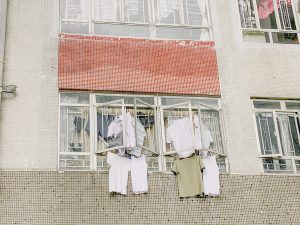
Cheung's grandmother in her Sha Tin apartment, waiting to play Candy Crush | Photo: Kitty Cheung / The Peak

By: Kitty Cheung, Peak Associate

“I wanted to soak up and bring back as much of Hong Kong as I possibly could.”

The first time I was called a “CBC,” I was having a conversation with my university Chinese instructor — the term stands for “Canadian Born Chinese.” I was taking CHIN 100: Mandarin Chinese I in an attempt to learn spoken Mandarin, improve my Chinese literacy, and, ultimately, get closer to my heritage. I remember feeling taken aback by my instructor’s comment. Even though it was true, somehow it made me feel like even more of an outsider to Mama China. 

I grew up in Vancouvers’ Chinatown — a neighbourhood rich with Cantonese culture. I used to visit produce markets with my mom, holding her hand as she greeted friends in her native dialect. When my family moved away to suburban Surrey, I felt like I lost a precious connection to that culture. Since then, I’ve been trying to reconnect with my Guangdong roots, achieving only glimpses with the taste of dim sum or the odd Cantonese conversation overheard on public transit.

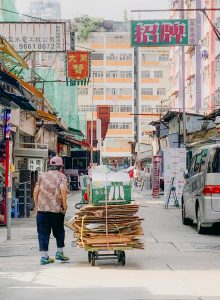
Photo: Kitty Cheung / The Peak

This summer, I had the opportunity to travel to Hong Kong. Prior to the trip, I was filled with a nervous mix of excitement and terror. This trip would be the closest I’d ever been to the “homeland,” as my mom had immigrated from Guangzhou, a city that shares a similar culture and language of Cantonese to Hong Kong.

It would be my first time leaving North America. I remember the panic that filled my body during the plane ride. The thoughts circulating in my head ranged from “What if this plane crashes?” to “What if I get robbed? Kidnapped? Caught in the protests?”

Once I touched down onto Hong Kong soil, however, I felt strangely serene. As the flight attendants welcomed us in both Cantonese and English, I remembered how much I couldn’t wait to be immersed in Cantonese culture and suck the short rib marrow out of this experience. 

Photo: Kitty Cheung / The Peak

It was July. Hong Kong was stiflingly humid. I initially came to visit the Hong Kong Polytechnic University to represent SFU at a youth summit, but I knew there was something deeper drawing me here. On my first day, I was thrilled to hear my family’s language being spoken in the streets, in restaurants, public transportation, everywhere! This trip would be about identity about reconnecting with my roots.

First things first; food. Having grown up enjoying Cantonese cuisine such as dim sum, bakery buns, and claypot rice, I knew I had to try the homegrown, “authentic” versions of these foods. I was surprised to learn that I actually prefer Vancouver dim sum to Hong Kong. Portions are larger back home and food prepared by the diaspora is just as authentic. I even discovered and fell in love with new dishes, such as the culturally iconic cart noodles. 

I grew up visiting Vancouver’s Chinatown Night Market on summer nights with my family. I watched in amazement as street vendors prepared bubble waffles, stir-fried rice rolls, and dim sum on sticks. A new friend who I met in Hong Kong guided me through the Ladies’ Market in the shopping district of Mong Kok. My Cantonese grammar is terrible, but haggling with merchants became the ultimate test of my language skills.

Photo: Kitty Cheung / The Peak

 I spent that first week in Ho Man Tin and Hung Hom attending the summit with fellow university students from around the world. Our schedule was pretty lenient, meaning we had free time in the evenings to sightsee. We navigated the MTR transit system, rode the Hong Kong Observation Wheel, and crossed Victoria Harbour in a Star Ferry. We ate giant fish balls on Cheung Chau island, shopped at the Temple Street Night Market, and pre-gamed at 7-Eleven before bumbling down the clubbing street of Lan Kwai Fong. I remember venturing into grimy restaurants with wet cardboard as flooring just for a good bowl of claypot rice. Hell, I even got my sister a postcard featuring the Cheung Chau Bun Festival. I wanted to soak up and bring back as much of Hong Kong as I possibly could.

I extended my trip by a few days to visit my aunt and her daughter in Sha Tin. These were family members who I hadn’t seen since they visited Canada almost a decade ago. I’ve remained Facebook friends with my cousin this whole time, but it was still a shock to see this childhood friend now gearing up to pursue her Master’s. 

The day that I met with my aunt, she took me grocery shopping. She asked what all of my favourite ingredients were. I pointed out the fish paste, tofu, enoki mushrooms, and cloud ear fungus that I saw in the market. The next day, she made dinner incorporating all of those ingredients. There was no better way to make me feel welcome and warm than that family dinner that she prepared.

Photo: Kitty Cheung / The Peak

That weekend, my cousin invited me to a boat party. I had no idea what that entailed, but I was down to party with Hong Kong’s youth. Who knew I’d get to go wakeboarding during a thunderstorm? My social anxiety was exacerbated by both fear of the language barrier and the knowledge that my cousin was my only connection to the party. This dread eventually melted away as I ended up sipping chrysanthemum tea with women who had been educated in the United Kingdom or the United States and whose English fluency was on the same level as mine.

Upon talking to more party guests, I realized we were all in the same boat — not just literally. Most of the people who I spoke with also only knew one or two other attendees. Another positive was that whenever my wallflower instincts kicked in, I could just jump off the boat and go for a swim in soothingly warm waters. I couldn’t open my eyes in that water because it stung like all Hell, whether due to salt or pollution. Still, floating around in those waters filled me with a soothing happiness, a deep-set gratitude for this experience.

During my conversations at the boat party, I was open about being a visitor from Canada. The Hongkongers, most in their early twenties, seemed impressed by my Cantonese. Back home, my Cantonese proficiency (or lack thereof) would only draw out disappointed lectures from immigrant elders, so this was a refreshing boost to my complicated relationship with language.

Photo: Kitty Cheung / The Peak

On my last night in Hong Kong, I remember watching video clips of the attacks at Yuen Long Station from my cousin’s phone. These videos came from her friends’ Instagram stories. Illuminated in blue light, I stared in horror at masked men in white as they beat protestors and commuters alike. 

We remained safe at home. With her characteristic dark humour, my aunt was laughing from the dining table. “Hong Kong’s gone insane,” she cackled in Cantonese. “Good thing you’re leaving tomorrow, eh?”

 In light of the ongoing political turmoil in Hong Kong, I am extremely grateful for the safe trip that I experienced. On my last day, I ate beef noodle soup with my aunt, paid her back for the Octopus Card*, and set out to fly back across the Pacific, having satisfied a cultural longing that I had been nursing since childhood.


*the Hong Kong equivalent of a Compass Card, only on steroids 

The extended cut of Spider-Man: Far From Home is far from necessary to the franchise

0
The additional footage in the latest Spider-Man film wasn’t enough to justify a second theatrical release. Image courtesy of Sony Pictures.

By: Marco Ovies, Staff Writer

After numerous reboots in the last twenty years, Spider-Man seems to finally have found its footing in Spider-Man: Far From Home. The latest iteration is an incredibly enjoyable film that features Tom Holland portraying the famous web-slinger perfectly. He swings across the screen effortlessly and it’s difficult to picture anyone who would be a better fit for the role. Naturally, when Sony Pictures released an extended cut for the film in August, I booked it to my local theatre. I was expecting mind-blowing additions that would turn this already fun movie into an even better one. 

To my disappointment, I was treated to a lousy four minutes of bonus footage, all of which occurred within the first ten minutes of the film. It happened so early on that by the time the movie had ended, I had forgotten about the new footage and felt totally ripped off. I had paid full price to see pretty much the exact same movie twice. 

The new scenes in question feature Peter Parker running errands, none of which are vital to the film’s plot. First he hits up the passport office, followed by a pawn shop. Then we see an extended scene of Spidie fighting off some bad guys. It was a promising start to the movie and had me excited to see what other additions would be added to the film. But that ended up being the extent of the new footage, and the rest of the movie proceeded without a single change. What was the point of releasing a film that was nearly identical to the original version? More importantly, why did I fall for this money-grabbing scheme like a sucker?

This follows closely on the heels of the Avengers: Endgame extended cut, which also left fans very disappointed by only adding six minutes of extra footage. Most of this footage was a sneak peek at Spider-Man: Far From Home, plus a half-rendered intro scene featuring The Hulk. This was yet another money grab from the studio that pushed Endgame to be the highest grossing movie of all time

Theatres are being flooded with these unnecessary sequels, remakes, and extended cuts of movies, and this trend raises some important questions. Will directors purposefully leave out scenes from their movies for the purpose of releasing an extended cut? Further, what does this trend say about the original movie? Are we watching a half-finished movie? What’s the point in lining up on opening weekend if we know there will be an extended cut released in theatres later?

Spider-Man: Far From Home is one of the first examples of a disappointing extended cut of a film, and we should unfortunately only expect to see more of these in the future. In this case, an extended cut was not worth it and the content shown should have just been included in the original movie, or, alternatively, added to the BluRay as a bonus feature. My verdict is: don’t waste your money on the extended cut of Spider-Man. Instead, save it for a movie that’s actually worth your time — like the new Joker origin film starring Joaquin Phoenix, out October 4.