Home Blog Page 499

SFSS talks “conversion therapy” in Canada

0
Image courtesy of sfss.ca

By: Carter Hemion, Staff Writer

In June 2018, Vancouver became the first Canadian city to ban “conversion therapy.” Now, SFU’s Out On Campus is pushing for more: a complete ban on “conversion therapy” throughout Canada. The Simon Fraser Student Society, with a push from Ashley Brooks of Out on Campus, put out a statement calling for a nation-wide ban on conversion therapy in August of 2019. As reported previously by The Peak, the SFSS board discussed taking this step in July 2019. Notably, there has recently been a wave of public support for this kind of ban, including a petition on change.org 

What is “conversion therapy”?

Conversion therapy,” sometimes known as “reparative therapy” or “the ex-gay movement,” refers to methods employed in order to try to change a person’s sexual orientation or gender identity. Historically, conversion therapy has included a myriad of pseudoscientific approaches to changing individuals’ identities, including lobotomies, electroshock aversion therapy, and chemical castration. Today, even though it is not backed by any major science or health professionals, practices may involve encouraging victims to engage only in traditionally gendered activities, one-on-one counselling, spiritual intervention, or aversion therapy, in which the person is subject to the ‘unwanted’ stimulus while being subject to some kind of discomfort simultaneously, among other means. 

Studies have shown that conversion therapy is evidently detrimental to its victims. Young survivors are at significantly higher risk of depression, suicide attempts, substance abuse, and contraction of STIs. In a Beyond Ex-Gay survey, 84% of survivors reported that they are “still affected by the harm” caused by conversion therapy.

Conversion therapy discussion at SFU

Though the practice is banned in Manitoba, and in Ontario and Nova Scotia for minors, the current Criminal Code of Canada does not address the practice of conversion therapy as a federal crime, leaving many LGBTQ2+ youth vulnerable across the nation. In early August, the BC Ministry of Health called on Canada’s minister of justice to make conversion therapy illegal federally. This letter is part of a larger movement to end the harm caused by often traumatizing practices.

Days after this letter was released, on August 8 Ashley Brooks, Out On Campus coordinator, brought a statement to the SFSS board of directors meeting. The SFSS board passed a motion at this meeting to make a public statement advocating for a nationwide ban on conversion therapy.

One thing stressed by Brooks is that it is important to bring awareness to this issue, because it often goes unreported. He pointed out that the difficulty in bringing awareness of conversion therapy to SFU is that it continues to be “a largely underground practice inflicted on often invisible communities.” It is a widespread movement to stifle a range of non-heterosexual, transgender, and non-binary identities. This then becomes a problem for scientific researchers, as LGBTQ2+ people can be difficult to find due to a lack of disclosure. 

The practice of conversion therapy often works to isolate LGBTQ2+ young people from people like them. In talking with Brooks, he suggested that the “best way you can resist this is to embed yourself in your chosen queer family who will love and value you for who you are.”  

Out On Campus is a safe space for all LGBTQ2+ people, and can be found in TC 314-N from 10 a..m – 4 p.m. Monday through Friday, or contacted at [email protected].
 

Hungry? Try SFU’s Newest Eatery: Vij’s Indian Cuisine

3
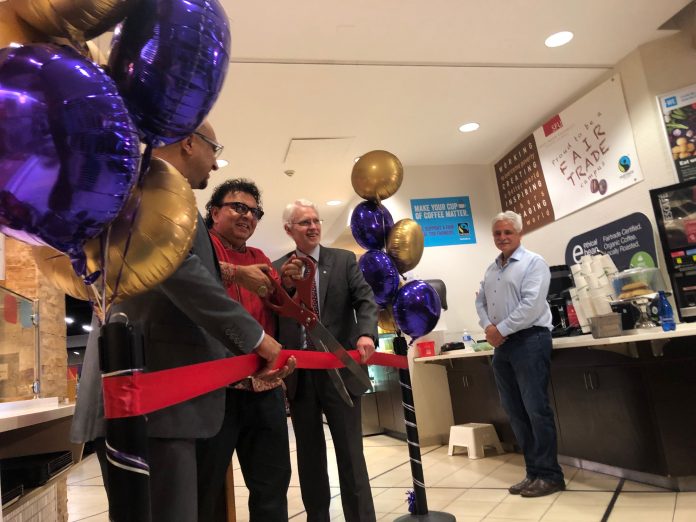
Celebrity Chef, Vikram Vij cutting the ribbon alongside SFU President Andrew Petter

By: Jess Dela Cruz

It’s 12:30 in the afternoon and your three hour lecture just finished. You knew from experience that the 145 was going to be late this morning and didn’t have time to pack food for your six hour long school day. Either Cornerstone is too far, you’ve already had Tim Hortons every day this week, or the construction will just add time to your 50 minute window to find another place to eat. At this moment, you’d want something that is warm, filling and flavourful.

Mackenzie Café had a busy morning on Friday September 13, with crowds of media, cameras, lights, and excited guests. Chef Vikram Vij opened up his new restaurant, Vij’s Indian Cuisine, this past week at SFU’s Mackenzie Café with a big celebration that included a ribbon cutting ceremony, Bollywood-style dancing, free henna, televised interviews, and an appearance from SFU President Andrew Petter. Vij has restaurants in Vancouver, South Surrey, and Vancouver Island. He also has written cookbooks and made multiple appearances on TV — one of which was Dragon’s Den. 

The renowned chef’s career successes were highlighted amongst various speakers. President Petter stated that “food is a very important component of campus life” and Vij’s food “is worth lining up for.”  

Vij also made a speech to highlight the purpose and vision of his food, but more importantly, how food in general affects student life on campus. He noted that students from all over the world leave behind their parents, siblings, partners, and friends to study at SFU. In an interview with The Peak, Vij said, “universities that embrace that culture of breaking bread together with people from different cultures actually embrace diversity.” He continues, “As an immigrant, I know it’s not easy [ . . . ] to fly away to a foriegn land without [knowing the] language.” 

Through his food, Vij wants to bring a similar feeling of home to students for co

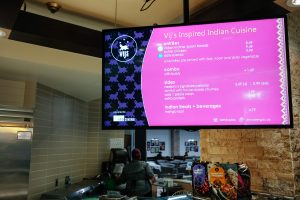
The menu at Vij’s Indian Cuisine

mfort. He adds, “I wanted to serve home cooked meals [to students] who are either missing their homes or [ . . . ] want to try something different so they feel they are apart of this beautiful country.” 

Another main focus for Vij and SFU is sustainability. To this end, Vij’s restaurant offers Eco-Box, a reusable container to package food. 

Vij and SFU have had quite the relationship over the past few years. He tells The Peak, “SFU has always had a special place for me because I am actually not even a graduate from India. SFU is the first one to recognize the hard work that I put in and then they gave me an honorary degree. . . It was so overwhelming and touching for me.” 


He also touched on the impact his mother had on him with the food she cooked. Vij recalls how his mother would make chicken curry at home, cover the pot with a plastic bag, and deliver it to her son’s restaurant by bus — which, as he notes, made the whole bus smell of Indian food.  

“For twenty years, she never told me that everyone made fun of her on the bus,” Vij remarks. “That love of a mother is what made [sic] me so touched. And all these students are away from their mothers, and their fathers, and their families. So why not give them that comfort of home, of the spices [ . . . ] The food is meant to bring you comfort.” 

Vij notes that diversity is a core mission of SFU, and that it’s an important ingredient in his cuisine too – “diverse, deep in tradition, respectful of everybody else, and most importantly [allows] people to have food from different parts of the world,” said Vij.

“When you break bread with people you are sitting with, you build tolerance towards each other [and] you learn to respect each other.” 

Vij’s Indian Cuisine is now open in SFU’s Mackenzie Café on the Burnaby Campus. The menu has items such as butter chicken, ‘daily special entree,’ pakoras, and mango lassi, with the highest price menu item being $9.99. The Mackenzie Café is open from Monday to Thursday 7:30 a.m.– 8 p.m. and Friday 7:30 – 6 p.m.

Molé, wiener schnitzel, and me: what it means to be biracial 

1
ILLUSTRATION: Danielle Ragas / The Peak

By: Marco Ovies, Staff Writer


I was in high school and coming back from Europe. My family planned to pick me up at baggage claim, excited to hear all the stories from my two weeks abroad. I walked out of the terminal with my friend — someone who I had known for years and traveled with many times. When my family finally arrived, my friend asked me, “Where is your dad?” I remember squinting my eyes at him, annoyed. 

“He’s right beside my mom,” I said, sarcasm dripping from my voice. I pointed over to where my parents were. My mom looked just like me, the same dark curly hair and pale complexion. My dad, on the other hand, had similar curly hair but was very tanned; slap on a cheesy Mexican moustache and a sombrero, he could be in a stereotyped advertisement for Taco Bell. 

There was an awkward pause as my classmate put two and two together, and realised that my father was definitely not white. “Oh, that’s different,” was all they said to me before running off to their family. All this time my classmates thought I was white because of my pale complexion. But really, I was half-Mexican. 

Back then, any time someone asked if I was white, I would just agree. Telling people that I was half-Mexican made things so much more complicated and made me feel out of place. I just wanted to be like all of my friends, and I don’t think they wanted me to be different from them either. People struggled to understand my mixed heritage for as long as I can remember, but it never seemed to be an issue for myself growing up. As a kid, it just seemed normal. The combination of both these cultures didn’t seem foreign or weird; it seemed normal to celebrate Cinco de Mayo and Oktoberfest (which was always disappointing since I could not partake in the beer drinking). I would wait for Dia de los Reyes Magos, checking my shoes for candy that the Three Wise Men would leave while my mother spoke German on the phone. This was just normal life to me. 

The thing is, I don’t look look like my father all too much. I inherited his curly hair and the awful sense of humour that all dads seem to have, but our resemblance ends there. At a surface level, I’m white just like my mom. Of course, I can’t ignore the incredible amount of privilege I have received being white passing, but just because I look white does not mean that I am white. 

At home, my world consisted of molé and weiner schnitzel for dinner — from celebrating my namenstag to being disappointed that boys typically do not celebrate quinceñeras. But the second I stepped outside the confines of my own house, all of my fond cultural traditions would disappear. 

Explaining what I did on the weekends would be accompanied by a short history lesson of my heritage. I felt the constant need to prove that I was in fact Mexican. The worst part was the countless questions people would bombard me with, asking me to prove my Mexicanness. 

“Do you speak Spanish? Say something in Spanish! Have you been to Mexico? What’s your favourite Mexican food?” It felt like I was at the circus and the crowds were yelling, “Dance, monkey, dance!” Why did I need to prove myself to these people? It was like being one thing or the other was okay, but being both was unthinkable. 

The problem is that I never felt fully included in either of my cultures to begin with. I had pieces to two different puzzles — enough to create some sort of vague image of what my culture was but not enough to understand it.  Culture is often a large part of how people identify themselves, and it felt very alienating not having just one to fully call my own. Somehow this opened the door for others to identify me in their own view, people telling me, “You don’t look very Mexican,” or “Nah, you’re just white.” Comments like these made me feel so alone. 

This mindset didn’t just include my peers, but my extended family, too. I would dread holiday dinners with them. All of them spoke Spanish and made no attempt to include me in their conversations. My family knew my Spanish was not as good as theirs, and that I should learn it if I really was “Mexican.” The same thing happened with my German family too. I would be shamed for not knowing the traditions and ignored while they had conversations in foreign languages that flew over my head. I would try to reach up and latch on to the few words I knew, trying to grab any sliver of conversation. But words would pass by in the blink of an eye and I’d feel even more alone than before. 

Coming into university I was anxious as to how my peers would react to my mixed heritage. There’s no club for Mexican-German kids, no cool Mexican-German fusion food trucks to normalize this mix, and no real term to neatly describe me either. “Mixed” is an umbrella term that others use to describe me, but it doesn’t feel quite right. I’m not some chocolate vanilla swirl ice cream cone — I’m just me. It really shouldn’t be this difficult but I keep finding myself facing the problem over and over again. I am half-Mexican and half-German. While I may appear to have my foot in both doors and not be fully immersed in the culture, I have every right to be involved like anyone else who is Mexican or German. I still don’t know how to refer to myself at the end of the day. If “mixed” isn’t the right word, then what is? But trying to figure out a better word has me more confused than ever. 

But over the years, I began to feel more comfortable in my confusion. I’ve started correcting people and saying that I’m two different races. More importantly, I’ve started loving the fact that I get to experience twice the amount of cultural holidays, twice the home cooked national dishes, twice of everything than other people around me ever will. At the end of the day, I’m the product of the kind of love that sees passed racial boundaries — I’m me, and that’s all there is to it.

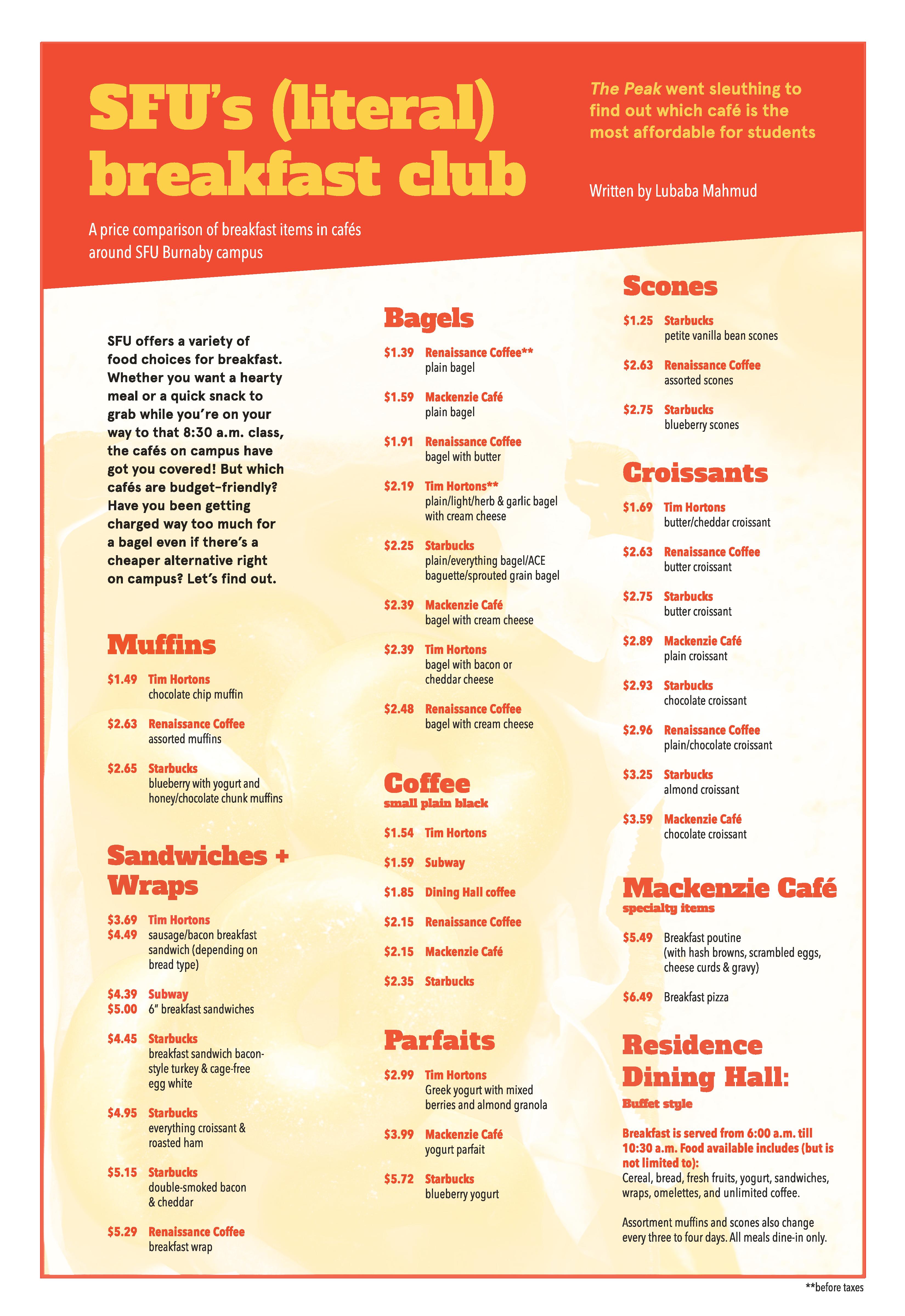
SFU’s (literal) breakfast club

0
Photo by Heather Ford / Unsplash

International studies student drops out because he only knows the names of countries he’s vacationed in

0

Written by Ben McGuinness, Peak Associate

SFU international studies (IS) student Blake Farther dropped out of his program as the latest victim of a common downfall: he can only name countries that he has vacationed in.

Like many students of the best breeding, Farther was shown the wonders of the world from a young age by his worldly parents. As a child, he saw such exotic places as Disneyland and Hawaiian resorts. During his teen years, he spent two summers in Europe. After graduating, Farther used his humble trust-fund earnings to explore Southeast Asia and South America. 

Having seen so many countries, however, he was under the impression he had been acquainted with most of them — or at least, “the ones that mattered.”

“I don’t really get where those other ones came from,” he said after we showed him a list of countries he had not posted about on Instagram, such as Myanmar and Bolivia. “No one in the hostels mentioned them at all. I think their search engine optimization must be terrible.” 

Farther had believed his breadth of knowledge would suffice for his academic career. But he tells us that his professors were concerned about the limitations of his preferred approach: studying the political economy of only First World countries and developing countries with beach resorts. 

“I wanted to write about the relationship of, like, the beaches of Vietnam, Brazil, and Spain. Like, how are the beaches connected? I bet there’s so much to learn from them.”

IS students concerned about situations like Farther’s have offered the department several proposals, including a pitched collaboration with Expedia.ca to help identify the countries most relevant for discussion or organize trips to see other countries before discussing them.

“My family owns properties in eight countries, but somehow my knowledge of the world is ‘still too limited’ — how is that even possible?” says Ryan, an IS student speaking under alias who believes himself to be at risk of being “pushed out” like Farther. “But collabing with Expedia would help so much. For one thing, I think if our professors actually visited these alleged . . . ‘other countries,’ they would take them off the syllabus for sure. ”

Farther also expressed support for the Expedia proposal.

“Yeah, that would only be fair,” he commented. “If we can all pay $10,000 or something to tour the more confusing places, that would make the discussions more accessible for everyone. SFU needs to make sure all students have a fair chance to participate.”

Farther’s situation joins an ongoing conversation about fairness and accessibility at SFU.

Willow brings new music and a high energy performance to the Rio Theatre

0
Willow has taken her music in a different direction since her first single “Whip My Hair.” Image courtesy of Getty Images.

By: Harvin Bhathal, SFU Student 

I invite any skeptics of singer-songwriter Willow due to her connection to the dynastic Smith family to attend one of her concerts and experience her musical talents live. It is in a live show that the intricacies of her vocal range became truly apparent. Her voice is not a manufactured, artificial creation; rather, it is tangible and ever-present. Willow sings with the vigor and grace of someone far more experienced than she really is — one would never guess that she is only 18 years old.

Having a show at a theatre that’s not necessarily designed for concerts can be a tough task for performers to navigate through, but Willow and her opening act, Tyler Cole, did not let that get in their way. Their show was at the Rio Theatre, a multidisciplinary art house near the Commercial-Broadway Skytrain station in Vancouver, known for housing films, comedy acts, theatrical productions, and other performances. Despite the seated setup of the venue, which is mostly conducive to the film showings that the Rio is best known for, Tyler Cole started the night off right by trying to rouse the audience from their seats.

Cole battled against the unconventional setup of the Rio by performing through the entire theatre, walking through the aisles, to the front of the entrance, and, eventually, performing from the balcony itself. Even though half of the audience got up from their seats to be near the stage, there was still a lack of energy in the crowd due to the setup of the venue. Despite these challenges, Cole accomplished what he was there to do through performing songs such as “Sydney Poitier,” “Love at First Fight,” and a psychedelic surf rock version of “Bones.”

Willow’s arrival on stage caused everyone to rise up from their seats and to get as close to the stage as possible. For the layout of the venue, the level of energy in the theatre was exceptional. Most of the attendees seemed to be fans who have seen Willow grow through her music, and that feeling of devotion to her art was tangible. It was a symbiotic relationship where the audience fed off of her passion and vice versa.

Beginning with “Like a Bird,” the audience embraced the trance that the song placed them in. That feeling continued with songs such as “Female Energy, Part 2” and “Time Machine.” Her latest album showcases her growth as a musician with its sublime evocation, but its lyrics show that Willow is honing in on who she is as an artist. She has spoken about the troubling nature of her first foray into the music industry with the chart-topping single “Whip My Hair,” and the subsequent struggles of a young girl balancing a music career while retaining her childhood. Willow’s self-titled album, which was produced by Cole, is her transition into the next stage of her being. Much like in her own identity, the trance changed its form when she performed “Pretty Girlz” as, near the end of the song, it evolves into a fury of rolling synths, powerful drums, and incensing electric guitar. It is the fluid nature of her music that is so unique — energies that seem so different apart but, when put together, produce a transcending wave of emotions.

Willow played a few more songs from her discography and, although the concert was relatively short, she came back after a raucous call for an encore and performed “Wait a Minute!”, a song from her first album, Ardipithecus. The audience was left in a state of wonderment, not just from the energy of the song but from the concert as a whole. While Willow may never become a mainstream artist to the extent that she could have with her earlier music, her new music speaks to a generation searching for a voice to help guide them.

Political Corner: Boris Johnson’s no-deal Brexit strategy isn’t optimal for anyone

0
Canada’s current trade agreements are with the EU, not with the UK separately. Photo: Christopher Furlong/AFP/Getty Images

By: Kelly Grounds, Peak Associate

Boris Johnson has been prime minister of the United Kingdom for less than two months and things are already going terribly. With the current Brexit deadline of October 31 swiftly approaching, there does not appear to be a possibility of things improving for the country.

The problem with Johnson’s plans for the UK and Brexit is his claim that he has no intentions of seeking a third extension of the deadline, meaning that a no-deal Brexit is beginning to be a possibility. This would mean that instead of having 21 months to slowly transition out of the European Union (EU), as has been previously proposed, the UK would find themselves suddenly and completely out of the EU on November 1, without any renegotiated trade agreements with the remaining EU countries. Subsequently, shortages of essentials like medicine, massive standstills in trade, and a potential recession could be a very real possibility. This is not an ideal scenario.

Johnson reportedly has a withdrawal agreement that could avoid the chaos of the previously proposed Brexit deals. However, in an attempt to avoid having the deal attacked in Parliament — a difficulty faced by his predecessor Theresa May — Johnson suspended Parliament until October 14. In theory, this move would put pressure on all MPs to work with Johnson’s deal rather than allowing for lengthy challenges, giving the UK a better shot at an orderly exit.

The immediate aftermath was anything but orderly, however, as MPs immediately pushed forward a bill that would force Johnson to not allow the UK to leave without a deal. In response, Johnson suspended the 21 members who had voted for the bill from his Conservative party. Since then, several other members have left the party, including Johnson’s own brother, Jo Johnson.

In all of the Brexit chaos, we cannot forget that Canada also has a stake in this. The UK is Canada’s third largest trading partner. Their partnership was strengthened under the Comprehensive Economic and Trade Agreement (CETA) between Canada and the EU. This means that come October 31, the UK will be removed from both the EU and CETA. This would cause Canada to lose access to their existing UK partnership should a no-deal Brexit come to pass. In that case, unless Canada could quickly renegotiate trade deals with what would almost certainly be a UK in chaos, Canadian consumers would be hit hard.

Monday Music: Are cover songs considered academic dishonesty?

0
"Monday Music" in giant yellow block letters with a red background
Monday Music: your weekly themed playlist. Image courtesy of The Peak.

By: Andrea Renney, Arts Editor 

I’m not sure if this is specific to the computing science department, but my course syllabi always include an exhaustive section detailing SFU’s Academic Dishonesty policies. On top of that, my first year professors absolutely drilled the threat of being caught cheating into our impressionable little brains. As such, the fear of plagiarizing has become so deeply ingrained in me that it’s even seeping into this week’s edition of Monday Music. Could a cover of a song be considered plagiarism? Would SFU determine that a cover violates the Student Academic Integrity Policy, giving the covering band a grade of FD — “Failure with Academic Discipline”? These are the types of questions that keep me up at night.

We’ll probably never know where SFU officially stands on the issue of cover songs, but here are three of my all-time favorite covers for you to listen to as you check your sources and embed your MLA-style citations.

“It Won’t Be Long” – Black Lips:

“It Won’t Be Long” is the opening track on the Beatles’ 1963 record With the Beatles. Legendary Atlanta garage rockers Black Lips included a cover of the song on their eighth record, Satan’s Graffiti or God’s Art?, in 2017. However, their version comprises a sinister-sounding, stalker-esque warning rather than a happy-go-lucky, romantic ode to a far away lover. Black Lips covering a Beatles song was so unexpected for me that when I first heard their version of “It Won’t Be Long,” I worried that they were ripping off the Beatles and would be drowning in lawsuits until the end of time. Then I remembered that covers are a thing and that John Lennon’s son, Sean Ono Lennon, had produced SGoGA?. With my litigious concerns alleviated, “It Won’t Be Long” became one of my favorite tracks on the record.

La Bamba” – The Buttertones:

“La Bamba” is actually a traditional folk song from the Mexican state of Veracruz. It first rose to popularity when it was covered by Ritchie Valens, who released a rock and roll version of the song in 1958. Valens’ version of “La Bamba” was such a banger that it was even included on Rolling Stone’s 500 Greatest Songs of All Time, at #354. In 2015, Los Angeles-based band The Buttertones released a cover of “La Bamba” on their four-song EP For the Head and for the Feet. The Buttertones are known for their soulful crooning and smooth, retro sounding tunes, but “La Bamba” is perhaps the most raucous, lively track they’ve released. The recording is fuzzy and reverberant, evoking feelings of messy house shows and spilled drinks.

When It Comes To You” – Hinds:

“When It Comes To You” is the opening track on Vancouver garage rock band Dead Ghosts’ debut record S/T. My favorite Dead Ghosts song, it’s upbeat and fun — probably the band’s most danceable. In 2016, Madrid-based indie/garage girl group (hell yeah, female representation) Hinds released their cover of the song, taking it in a more heartfelt direction. The melody and lyrics might be the same as the original’s, but Hinds slow the song down considerably to really highlight founding members Carlotta Cosials’ and Ana Perrote’s vocals. No longer a song to jump around to at the sweaty Biltmore Cabaret, Hinds transforms “When It Comes To You” into a song for slow dancing under the moonlight.

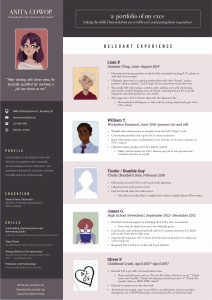
A portfolio of my exes

0

Student withdraws emotionally from classes, is refunded only 50% of their emotions

0

Written by Zach Siddiqui, Humour Editor

After three weeks of struggling to love education, an SFU student withdrew emotionally from all their courses on Friday morning, choosing to not care at all for their academic performance this semester. Unfortunately, due to SFU policy on refunds for course withdrawals, the student was only reimbursed 50% of their emotions.

“I used to have such a wide emotional range,” drones Catherine Venison, a fourth year sociology honours student. “Happy. Sad. Scared. Pissed off. I had it all. But three weeks into fall, I just don’t feel much anymore.

“My smiles when CTRL + F finds me the answers to seminar questions aren’t even that smug or narcissistic these days.”

Venison’s friends and family report that Venison had previously been quite emotive. Camille Ford, Venison’s long-time roommate, related to The Peak that even after several semesters of gradual disenfranchisement with the school she’d loved so much back in 2014, Venison had remained something of a “firestarter.” Reportedly, near the end of her hot-blooded days, Venison replied to an “outrageously unhelpful ‘Sent from my iPhone’ email” from her honours supervisor with a full, condemnatory nine-dot ellipsis (“. . . . . . . . . ”). 

However, this semester’s 18-credit course load rapidly drained what was left of her feelings. Left high and dry in mid-September, unwilling to actually withdraw from her classes for fear of missing her chance to convocate, Venison says she reviewed her options “carefully and with conveniently calmed judgment.” 

Her final decision to emotionally withdraw came after she realized that this way, at least some of her feelings would return, like her indignation at goSFU’s horrid user interface.

Venison says she expects her emotional range to replenish over the course of the Fall 2019 semester, provided that she is frugal with the damns, shits, and fucks she has to give.

“But I think it will all be gone again by February,” she tells The Peak. “By then, I’ll be spending all my emotional energy on my honours thesis. At least,  that’s what I tell myself, whenever I have enough juice saved up for a few minutes of false optimism.”