Home Blog Page 441

Feel Good Hour: People are helping each other through COVID-19 and we should celebrate that

0
We're all in this together. Photo: Branimir Balogović/Unsplash

By: Madeleine Chan, Staff Writer

Look, I know our current situation seems grim. A global pandemic isn’t something that we should be happy about. But we also shouldn’t be blind to the kindness and compassion sprouting from these difficult circumstances. They have the ability to lift us up when we need it the most. 

Social media is ripe with examples of the generosity of the human spirit. Take my neighbourhood’s Facebook group (yes, they somehow still exist). What is usually a page where middle-aged, nuclear-family parents complain about how “the homeless are taking over” is now a space where communal help is found in spades. People in the group are making themselves available to go out and get supplies for older or immunocompromised folks, for example.

This selfless behaviour is not just relegated to our corner of the world, either. I’ve seen countless videos of people lightening the mood in quarantine by singing and playing instruments from their balconies, restaurants giving away free food, and even breweries around the world taking the time to help alleviate the hand sanitizer shortage. This trend of “caremongering”  — organized acts of kindness and generosity — is almost as infectious as the actual virus. Dispelling fear and bringing people together through the power of compassion is something that is sorely needed right now to focus and to break through the existential panic of the pandemic. 

Sure, there are also people who’ve had not so great reactions to this crisis — people like toilet paper hoarders and resellers, ignorant, rich celebrities, and people going outside acting like nothing is happening. But these people are a small blip in the population. The majority of people are finding ways to connect and care for one another in seemingly impossible conditions. It’s almost as if humans aren’t as inherently horrible as we think. Like we’re beings who want to help each other, to care, and to love one another. Who would have thought?

I hope these words give you some comfort in these uncertain times, and that you and your families are safe. As the 2008 graduating class of Albuquerque High once said, “We’re all in this together,” and once people recognize and embrace this wholesome and connective fact, then our time indoors will surely seem a bit less lonely.


How SFU and representatives of the disability community came together to improve the Re-use for Good initiative

0
Photo: Chris Ho / The Peak

Written by: Paige Riding, News Writer

In the Fall 2019 semester, SFU rolled out the Re-use for Good initiative across its three campuses. The initiative focuses on reducing single-use plastics in various areas, including dining locations and the SFU Bookstore. Its ultimate goal is “To implement and promote reusable alternatives to single-use plastics and disposable products (SUPPs),” according to their website. The Peak previously covered this initiative in the fall. 

As stated in previous coverage,  although a representative of SFU’s Sustainability Office advised that those requesting straws and other tools do not have to justify their requests, some students scrutinized this approach. They questioned whether these plastic products are truly accessible if they must be requested rather than just being readily available. Secondly, they asked how students with disabilities could be involved in the decision-making, to avoid unknowingly harming or segregating those who depend on these products for their daily lives. Since the fall semester, there have been changes made to the approach of the Reuse for Good campaign.


Single-Use Plastics around Canada

Under the Canadian Environmental Protection Act, the Government of Canada is seeking to ban “harmful single-use plastics” by 2021. According to the Prime Minister’s website, the Act will work to ban single-use plastics that are considered detrimental to the overall health of the human population and the environment. The page mentions that all plastic bans will only occur following extensive research. This research includes socio-economic considerations and public consultations. Examples of these plastics include, but are not limited to: plastic bags, cutlery, straws, and stir sticks. 

On a wider scope, the City of Vancouver continues to roll out its Single-Use Item Reduction Strategy in 2020. Beginning with foam containers and progressing to banning straws, disposable utensils, and plastic bags in the future, the program mentions an “accessibility requirement” for vendors to provide SUPPs such as straws and utensils. The website notes that “Anyone who asks for a flexible plastic straw, individually wrapped in paper, should receive one. People are not required, and should not be asked, to provide any medical information to prove their need.”

SFU is not the only university reducing their SUPPs. The University of British Columbia began charging students for single-use coffee cups with the minimum price at 25 cents. The university swapped out plastic straws for compostable, bendable ones for accessibility purposes — available upon request.


Re-use for Good Phase One outcome

While the initiative continues at SFU with environmental impact in mind, for students like Sanam Prasad, a fourth-year history major at SFU, such actions can be harmful if proper training is not provided for staff.

“I had a severe allergic reaction to one of the biodegradable straws that the Re-use for Good Initiative replaced the plastic straws with [ . . . ] I became extremely paranoid of the biodegradable products that have been put in, particularly since I have been told by my doctor that it is likely that I might go into anaphylactic shock the next time I have a reaction like that,” Prasad noted in an emailed interview with The Peak. Prasad requires straws due to severe hand pain and other concerns that compromise her ability to drink. 

“Personally, I just started trying to get plastic straws from other places because it’s far easier for me to do that rather than have to deal with that constant worry,” she continued. “I do wish that they had listened to us when we stated that training of staff should happen before this initiative is rolled out because it would have likely prevented me from experiencing that particular medical emergency.” 

Prasad’s experience led the Re-use committee to reconsider their approaches to accessibility. Kayla Blok, Manager of Campus Sustainability noted that, “Since the launch of the first phase, there were some challenges that we faced in terms of communication around accessibility [ . . . ] What we wanted to do right away was listen and chime in, hear what students had to say: what are the concerns, what are we missing?” 

She noted that the task force listened to recommendations from the Disability and Neurodiversity Alliance (DNA) and the SFSS Accessibility Committee. Representatives of the initiative tabled at StreetFest, a street festival held at UniverCity, and in Convocation Mall in an attempt to get student feedback. SFU’s Sustainability’s website also lists an email that students can provide feedback to as well, include accessibility concerns.

The Re-use for Good task force also hired Serena Bains as a paid student employee. Bains acts as a liaison between the Re-use for Good initiative and both neurodiverse students and students with disabilities on campus. Blok stated that one of Bains’ main tasks is ensuring appropriate, inclusive language is used throughout all advertising and messaging of the campaign. In this way, Bains is working to close the gap between the task force and the students with disabilities on campus. 

“A big piece of that really has been around the training with Chartwell staff,” said Blok. She added that Bains helped to train the Chartwells staff, including explaining how it may impact a person with a disability if they are unable to get the required straw.  

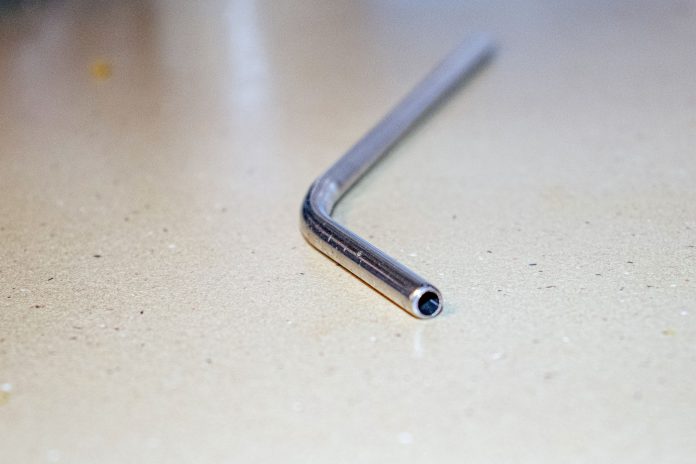
Blok stated that the task force took suggestions for what should be used to replace plastic straws as the primary option. As recommended by the DNA, a toolkit with utensils, a medical-grade silicone-tipped metal straw, and a foldable straw are available at SFPIRG, the SFSS office on Burnaby, and the Centre for Accessible Learning. According to Blok, the kits will become available at the Surrey and Vancouver campuses in the future.

While Prasad believes that a better training procedure may have helped to avoid her situation, she wrote, “I personally think that the instigators of the initiative have been at least been trying to speak [to] the disability community more [ . . . ] I have personally met with the people involved in the initiative and I do think that they are trying, as they seem to be receptive to the suggestions and ideas of SFU’s disability community.”

Bains mentioned that the feedback for the initiative thus far has been “mostly positive” from those who contacted her during Phase One, other than with matters around training concerns and the initiative’s fast-paced rollout. She noted that training for this initiative should occur “at a speed where it’s not too fast where everything’s being taken away, but also at a speed where people aren’t being injured or having their needs not met.”


Phase Two of the initiative: what’s to come

According to Blok, SFU will be holding an open forum in the spring semester about the Re-use for Good initiative. “It’ll kind of be like a ‘lunch and learn,’ so [students] can find out more about the project,” Blok explained when asked about the future for the initiative.

She adds, “We want to learn from any mistakes that we’ve made and make improvements going forward, particularly on the accessibility side of things. And the big one for that really is the training that Serena mentioned.” She further emphasized that training for staff will be a key focus of the initiative in the future.

There is a survey available online for SFU patrons to provide feedback on the initiative and its future directions.

Bains touched on training as a matter to consider in the future efforts, as well.

“Once you get the point across that straws are needs [for some] to be able to live and it’s a necessity, most people are understanding. And it’s just about educating and training the staff appropriately,” Bains said.

“Moving towards the future, I think the difference between Phase One and Phase Two will be that instead of being reactive, we’ll be proactive — especially with the plastic bottles on campus,” she said. “

“I’ve given Kayla and the team some notes about any concerns or what we should look out for in the future to avoid what happened with the straw ban, and to renew the culture at SFU where disabled and neurodiverse people have a voice at the table.”

Love is Blind is semi-entertaining watch but has zero substance

0
Courtesy of Netflix

by Meera Eragoda, Staff Writer

“Will you form an emotional connection or will you walk away from each other forever?” These are the often repeated words of Netflix’s newest reality TV show Love is Blind. The premise of this show is that people are divided and placed into pods where they have to try and find someone to marry without ever having seen them. This is all done as an “experiment” to judge whether love is blind and unaffected by race, class, age, etc.

Reality shows are not usually my thing. I have nothing against them and actually think it’s ridiculous that they are usually trashed because they’re consumed mainly by women. But the show seemed to want to explore some real issues, so I ended up jumping in — it was a wild ride.

Courtesy of Netflix

The show really drags out the first half of the season and I found it incredibly unnecessary. The amount of repetition of the phrases “emotional connection” and “is love blind” is . . well, let’s just say . . . if you were to play a drinking game where you took a sip for every time they were uttered, you would be sloshed in the first 15 minutes. But these phrases end up being empty words as the show never shows us anything of real substance to base the couples “emotional connections” on.

The second half of the show takes place after the couples have met each other face to face and this is where things get much more entertaining. They are all sent off to a resort in Mexico where they have some time to get to know each other, and then back to the real world to meet friends and families. The second half is where the show gives us a little more depth. Of course, this is done in the form of the dysfunctional interactions couples have with each other, with drama-free couples getting much less screen time. 

This show had the potential to explore some really interesting ideas. They present it as an experiment to see how much race, age, class, etc impacts someone’s dating choice. Overlooking the fact that sometimes you can tell all of these things by the way someone sounds, I really wished they had actually explored these issues. The reunion episode would have been the perfect episode to do that in but they missed that opportunity.

Courtesy of Netflix

SPOILER ALERT:

Carlton, a Black bisexual man, is on the show specifically to find a wife. I cannot think of an example of a show where a Black bisexual man was positively represented but it definitely was not on Love is Blind. Diamond (the woman he proposes to) does not handle Carlton’s coming out in the best way, something she addresses in the reunion episode. However, Carlton’s internalized homophobia and his misogyny are apparent, but the show does more to reinforce these views than to challenge or address them.

As well, Lauren (a Black woman) after getting engaged to Cameron (a white man), reveals to us that the Black struggle is important to her and she hopes he’s OK with that. With both of these couples, could they not have talked about it in the pods? They didn’t need to reveal their identities to ask questions about how they each feel about issues of equality. Or did they and the show just never revealed it to us?

All in all, this show could have done new things with the reality TV format. It could have actually explored how much of our desires are politically constructed, but instead it remained very flat. Compared to other reality shows I’ve seen in passing, I don’t even think I can say it’s that entertaining. All this show does is repeat key phrases over and over and over. I guess it’s good for a drinking game?

Courtesy of Netflix

Pixar’s latest film Onward holds a strong message about sibling love and personal growth

0
Courtesy of Disney

by Kim Regala, Staff Writer

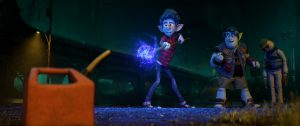
On his sixteenth birthday, shy and unconfident Ian Lightfoot (voiced by Tom Holland) receives a gift that gives him the magical ability to bring his deceased father back to life for a day. Determined to do so, Ian casts the spell, but only succeeds at restoring half of his dad’s body. With his bold and adventurous brother Barley (voiced by Chris Pratt) keeping him company, the two must embark on the journey of a lifetime to bring back the rest of their dad with only 24 hours on the clock.

This is Onward, Pixar’s latest addition to their collection of tear-inducing films. Despite being a children’s movie, the film manages to capture a strong message regarding the changes in our technology-infused world. All the while, it maintains the same sentiments of family love and personal growth — a few staples in Pixar’s works that leave us in awe every time.

Courtesy of Disney

The story is set in a mythical world filled with magic. Mythical creatures, from centaurs to manticores, wandered all around with powerful capabilities  — that is, until technology came into the picture and its efficiency replaced casting fire spells with flicking on light bulbs instead. While plenty of films explore the impact of technological advancements, Onward manages to do so in a way that is both lighthearted and impactful. Its likeable characters offer a sense of humour that make for an enjoyable viewing. All the while, the changes from these technological advancements are well played out and reflected onto the characters and their own surroundings.

Courtesy of Disney

While the message regarding technology is strong, perhaps the strongest sentiment in the film is its take on brotherly love and personal growth. The film revolves around Ian’s quest to bring his father — and all of his parts — back to life. The whole time, the story draws us towards Ian’s desire to have the bonding moments that he never got to experience with his father. However, through the journey, we witness the brothers’ relationship blossom as they face various challenges and obstacles. This becomes the main narrative of the film, as we watch the two grow closer from their experiences together. Speaking as someone with a sibling, I definitely resonated with many of the scenes where Ian and Barley created their own bonding moments.

Ian’s personal growth is also a captivating narrative, and one that appears subtly throughout the film. In the beginning, he is perceived as the weaker and less capable sibling, even by his mother. His older brother Barley, on the other hand, comes off as courageous and tough. As the film progresses, however, we are able to recognize the dynamic of these two characters and how they have managed to evolve both together and on their own.

Courtesy of Disney

While I don’t want to spoil the end, I can say that I felt quite teary-eyed at the film’s final moments. It truly holds a strong sentiment towards the value and importance of family, sibling love, and personal growth, and will likely leave you shedding a tear or two yourself. 

With the recent closure of theatres across Canada, you can watch Onward on Disney+ starting April 3, 2020. 

Courtesy of Disney

Extreme Ironing: household chores gone wild

0
Many extreme ironing competitions include a rocky, water, and forest section. — Photo: Thefactsite

By: Ahmed Ali, Peak Associate

I, like many of my fellow students, dislike any kind of activity that can even remotely be defined as chores. Having said that, it’s a little ironic that I now find myself engrossed in extreme ironing: the only sport (sorry, extreme sport) in which people iron clothes, competitively, in all kinds of unconventional locations. From mountain tops to the sides of cliffs, to highways, forests, and underwater locations, extreme ironing is driven by the extremity of its fields of play. Some extreme ironing competitions have even taken place during go-kart races or skydiving

The sport can be played either solo or in groups and the requirements to participate in extreme ironing are to have “a full-sized board, a real iron, a garment larger than a tea towel, and footage of the extreme ironing experience.” Winners of Extreme Ironing competitions are judged on the quality of their ironing job on a given garment, the swiftness of completion, as well as on the perceived extremity of the location the garment was ironed in. 

Extreme ironing had a humble origin, and there are multiple conflicting claims to its origin. The earliest claim comes from 1980 when Tony Hiam, while living in England, was inspired by his brother-in-law, who ironed his clothes even when camping in a tent. Hiam’s response, in an effort to point out the absurdity of his in-law’s efforts to maintain a crisp shirt even while camping, was to start ironing in all kinds of even more unusual places, like mountain-lookouts, crowded airport departure lounges, and on top of telephone kiosks. Hiam and other pioneers, such as Phil Shaw, kept this absurd commitment to completing their chores in extreme places well into the 90s, during which the activity started to catch on and inspire international tours. In turn, this dispersion of videos of extreme ironing in its infancy inspired multiple documentaries from British media and National Geographic, which thrust the sport into further international prominence. It’s kind of funny that, in his quest to poke fun at unnecessary ironing, Thiam ended up turning it into a popular sport. Now, the renown of Extreme Ironing has even spawned and inspired many other sports, such as extreme cello playing and extreme vacuuming.

Thanks to extreme ironing, I now enjoy watching chores being completed, though I still am personally opposed to having to do any myself. Maybe it’s something about other people risking their lives to do something so mundane that makes it intriguing. Or maybe, I’m just looking for another thing to distract me while I procrastinate on my ever-growing list of chores. 

CONFESSIONALS: I finally found myself, and everything I found horrified me

0
Illustration of a closed envelope, with the text, “Confessionals”
ILLUSTRATION: Marissa Ouyang /The Peak

By: Zach Siddiqui, Humour Editor

With my $40 trip to Greece abruptly cancelled, I wasn’t going to give up on self-discovery. And that, really, was my downfall.

Ever since my brief stint as a volleyball player in middle school, I’ve felt a pull towards . . . ascertaining who I am, if you will. Mapping my mental expanses. How to put it in a way you’d understand . . . I needed to find myself. And I was sure as hell going to do it. 

I was so excited to meet myself. We would take pictures together, and travel together, and memorize my social insurance number together. You know, all those things they say are better to do with a friend. Of course to the outside world it would look like I was doing them by myself. But I and I would know. 

And if I wasn’t going to get to find myself in Greece, I was just going to have to find me here at home. 

Stupid, I was, invoking the magic of a binding vow like that. Enchantment like that, it settles over your residence, over your bones.

In the end, I came across it on a Tuesday, gently wedged between my washroom mirror and my turbulent-at-best sense of self.

It stared at me like I was nothing.

I’d found myself. 

Wretched, the other “me” was. In these eldritch conditions I could see past veneers to the truest quality of this counterpart. Thousands of terrible eyes like voids — wait, I think most of those are just pores — self-sabotage scrawled across skin, no sense of timeliness to speak of. All these things radiated through its body like light. No: this creature has never known light.

I fled into the darkness of my refrigerator, to no avail.

From then on the apparition emerged in all sorts of places. On Wednesday I found myself buzzing and suckling from an empty San Pellegrino. I looked at myself, and I saw things, terrible things: I saw that I complain about no one texting me first as a defense mechanism to avoid acknowledging that I’m the one who doesn’t text anyone first.

Thursday came and I manifested under my desk. Fleetingly I registered a cozy sweater, the kind you get at Value Village, and a fresh obsession with the #quarantinecouture hashtag. Looking down on myself,  I found that I vocalize criticism of power structures not to pose actual opposition but to absolve myself of responsibility for my complacency within those power structures.

Just this morning I found myself shuffling around on my dining room table, all pretense of subtle haunting dropped. Upon my table I discovered it as it stress-snacked and recoiled, discovered that fact that when I say “self-care,” I mean “I guess my roommate can pay my credit card bill this month.” Ghastly, truly ghastly.

Tomorrow I will likely find myself at the bottom of a wine glass, and I’ll realize that my next flaw to unpack is my chronic oversharing problem. But, you might be thinking, if you already know what’s wrong with you, why wait until tomorrow to deal with it?

Because, little classmates, I know now that confronting your problems head-on is the darkest art of all. Better by far to swim in the light of bliss, unaware of your own identity, believing you’ve never done wrong at all.

Animal Crossing: New Horizons is a nostalgic and escapist treat

0
My character from Animal Crossing enjoying a nice needed break on the beach. Courtesy of Nintendo

by Madeleine Chan, Staff Writer

The return of Animal Crossing has finally come, and it was well worth the wait. The cute and colourful life-simulator is taking us to new horizons with this fourth installment in the beloved series from Nintendo.

Years before this game was even announced, I had been eagerly awaiting its arrival — even more so recently, wanting to quell my quarantine worries. This series was a pivotal part of my childhood and I was hankering for some of that good nostalgia to remedy my existential fears. And boy did it deliver.

I love that all the same essential game mechanics and quirks are still there like fishing, hitting rocks for bells (the game’s main currency), and picking fruit. Though, what makes this game so smart is the inclusion of many new and fresh features. Notable ones include a highly malleable landscape, an achievement menu, DIY crafting, and greater avatar customizability. These only serve to add to and expand previous iterations’ genius features, not to take away from them. 

Courtesy of Nintendo

I am, however, a bit mixed on the achievement menu because it is tied to the new Nook Miles currency system. This system essentially rewards players for continuing to play the game by completing tasks like planting trees and visiting others’ islands. But, it also feels like it borders on the game mechanics from those mobile “freemium” games that entice you to keep playing everyday by rewarding you with digital capital. Tom Nook’s capitalist tendencies have almost gone too far this time. 

Something that I am also not too fond of is the heavy use and reliance on your character’s phone for essential game progression. I sit in front of my Switch for hours on end to be able to escape the numbing and vortex-like qualities of social media, not replicate it. But for real, considering the “island getaway” theme, I would expect the place to be a little less digitally connected. A simple menu to house these features like previous games have, I think, would have sufficed. 

Courtesy of Nintendo

However, what it suffers from in trying to be too modern, it makes up in sheer serotonin. The simple atmospheric lushness that the relaxing music, tingly sound effects, and crisp, colourful visuals provide is enough to erase those concerns completely. I think that my boomer-like apprehension towards modern technology is simply out of my desire to go back to a world where we have no cares or concerns, where we roam free in construction-free landscapes, and lounge by a campfire at the seaside to be calmed by the consonant curl of the waves. A world, in fact, that is reproduced exactly in this game. Oh, how I wish I could simply gather things like fish and fruit and sell them to be able to pay off a mortgage.

Anyway, another great new aspect that has me hooked is the additions to the multiplayer function. Previous versions of the game allowed villagers to visit each other’s islands, but now up to eight people can be on one island at once, making for an amazing alternative to an in-person social gathering. There’s also the addition of same-console multiplayer, meaning you and your family can enjoy duking it out for the daily money rock. Being stuck in your house never seemed so fun, huh?

Whether you think Tom Nook is a money-hungry capitalist, a benevolent socialist, or some other horrid hybrid entirely, this game really is worth the money. Take a break from your life’s troubles and go on a trip with this simple, yet endlessly entertaining experience.

Animal Crossing: New Horizons is available now in stores or digitally on the Nintendo eShop.

Courtesy of Nintendo

Preserving routines can help students avoid the pitfalls of self-isolation

0
Transitioning to online classes is rough, but it doesn’t have to be. Photo: Chris Ho/The Peak

By: Harvin Bhathal, News Writer

The outbreak of COVID-19 is a troubling time for all of us, filled with more questions than there are answers. However, the transition to online classes during this pandemic is not permission to transition into a state of disarray. It’s more important than ever for students to maintain the routines they already have in place, or create new ones if they haven’t already. We have to ask, how do we not let this situation overwhelm us? How do students balance the fear (deserved and undeserved) and potential danger of a global pandemic with the existing stress of their final exams and projects?

I have to believe that routines are the answer. Routines have always helped provide me with the structure I need to balance life’s responsibilities. I’m sure I’m not the only one, either. In an educational environment, routines can help students to maintain focus and persevere through years of hard work that changes semester to semester. 

Over the years, students come to be conditioned to view the physical space of classrooms as a place for working hard — or at least a place nearly exclusive for learning. Adjusting to the transition to working from home when the work/home divide is no longer available for the foreseeable future is difficult. When we’re home, our brains tend to be at ease. Priorities change, evolving to fit the needs of an entirely different type of space. 

While I’ve had my fair share of struggles adapting to this new situation, I have found a strategy that works for me — creating metaphorical distinctions in my home life that parallel my school life of just a couple weeks ago. Students should do all that they can to likewise mimic their previous schedules to keep their mood up or losing the motivation to finish the semester.

To start with, designating an area of your home as a work space will go a long way. We all have different living situations and this may be easier to do in some homes than others, but dedicate a space to working, whether it’s a desk, your dinner table, a comfortable spot on a couch, or on the patio. If you work well around others, then this is much easier, but if the distractions are too much, try to create a space just for yourself, and let others know when you need time to concentrate. For those who work better alone and are struggling to do so at home, try using headphones or earplugs to create the school environment in your head. 

Keeping formal work times is also important. Follow the routines that were already in place before we all had to start working from home. If a lecture or tutorial began at a certain time, such as in the morning, keep “attending” it — block out that same amount of time at home to work on something from that class. Morning classes are the bane of our existence, but configuring your daily life at home to continue following that schedule will help you maintain discipline. So get out of bed for that 8:30 a.m. class, just as you normally would.

Likewise, be disciplined by working hard during the scheduled hours of lecture and tutorial. Put your phone on silent and stay in that mental space for as long as class usually lasts. Follow along and take notes in online classes, participate and do your part to facilitate learning in others as well. 

Without the cushion that routines can provide, there is a serious chance that online classes, social distancing, and in some cases, extreme self-isolation will worsen the bad habits students may already have. If we don’t put the effort in to set some form of routine during this difficult time, the last few weeks of this semester are going to be rough.


Research Roundup: March 2020

0
SFU researchers are involved in developing a Coronavirus testing kit

By: Paige Riding, News Writer

SFU researchers have been contributing to the research efforts related to the COVID-19 virus. The researchers mentioned in this piece responded to a funding opportunity announced by the Canadian Institutes of Health Research (CIHR) earlier this year. The opportunity originally provided 47 grants and $52.6 million in total investments. As of March 19, Canada’s Minister of Health, Patty Hajdu, announced a further $25 million allocated to research on the virus (enough for 49 more grants, for a total of 96 grants). This funding is a portion of the Canadian government’s $275 million allocated funds to coronavirus research.

SFU researchers are developing COVID-19 testing kits

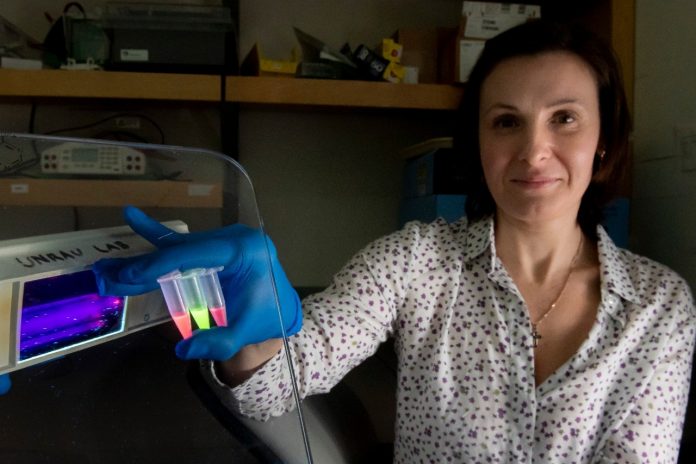
One would not think to thank a “mango” for helping to cure the worldwide pandemic that is ongoing. However, SFU researchers have been using Ribonucleic Acid (RNA) imaging technology, nicknamed Mango for its colour, to aid in the effort of developing testing kits for COVID-19. Dr. Lena Dolgosheina and microbiology/biochemistry professor Peter Unrau head a small group of researchers looking at RNA molecules within a living cell to better detect viruses.

On SFU’s website, Unrau explained, “We are using the Mango system as a catalyst, to allow us to not only extend fundamental research questions but also to detect pathogens like the coronavirus, faster and more efficiently.” 

With their grant from the Canadian government, the research team is developing a testing tool known as “Mango NABSA (nucleic acid sequence-based amplification),” according to SFU News. These tools may be used to test for things such as the coronavirus. 

“Mango technology is state of the art and the development of effective cures for cancer and other diseases demand better imaging methodologies to rapidly learn how cells work in detail,” said Unrau. 

New study examines the impact of COVID-19 on gender

SFU health sciences researcher Julia Smith is leading an international team in researching gender-related effects of COVID-19 and other diseases. Their efforts focus on gaps in preparation and response as it relates to gender around the world. The team is also developing an online Gender Toolkit to encourage consideration of gender issues during policy development and preparation.

According to SFU’s website, the team, which includes members from the United States, Australia, the United Kingdom, and Hong Kong, will provide recommendations for policy makers in the midst of the pandemic. They will examine data on infections and mortalities to assist responses for the public. 

Smith noted, “Our findings will contribute to the global response of COVID-19 through strengthening understanding of how individuals and communities understand and react to the disease.”

“The sex and gendered dynamics of the COVID-19 outbreak so far are anecdotal, but the consequences of sidelining these can limit equitable, effective responses in affected regions, as well as global prevention and preparedness efforts.”


SFSS to offer $30,000 emergency bursary fund

0
The SFSS will be offering emergency financial aid to students

By: Gurpreet Kambo, News Editor

According to a post by current Simon Fraser Student Society (SFSS) President Giovanni HoSang on his Facebook page on Wednesday March 25, the SFSS will be distributing an emergency bursary to students who are affected by the COVID-19 pandemic. 

As stated on the post, the Executive Committee of the SFSS, which consists of the president and vice-presidents, passed a motion mandating the Executive Director of the SFSS, Sylvia Ceacero, to distribute $30,000 of emergency funding “through the most effective means, to assist students dealing with emergencies.”

In response to a question on Facebook about where this money was coming from, HoSang responded that the SFSS is in a “healthy financial position,” and linked to the minutes from a Board of Directors meeting from January 8 that had a financial report from the Vice-President Finance. That report states that as of October 31, which is halfway through the fiscal year, the SFSS had a surplus of $164,000.

Further details will be forthcoming, and this post will be updated accordingly.