Home Blog Page 44

SFU installs naloxone cabinets around all campuses

0
This is a photo of a naloxone kit cabinet with a sign saying “Overdose Emergency Kit / Naloxone” above it and an AED kit on the left.
PHOTO: Emily Le / The Peak

By: Corbett Gildersleve, News Writer

On March 11, SFU announced that naloxone kit cabinets are now available across the Burnaby, Surrey, and Vancouver campuses. Naloxone is a medication that works within two minutes to “temporarily reverse the effects of an opioid overdose, also called an opioid poisoning.” These cabinets have been installed near emergency phones and/or Automatic External Defibrillator locations, including instructions on how to use naloxone. Maps of these locations are available on the SFU Safety & Risk Services website and SFU Safe app via the “First Aid” tab. The Peak reached out to Sarah McKay, director of Campus Public Safety (CPS), and was forwarded to the Office of Student Support, Rights & Responsibilities for more information, but did not receive a response by the publication deadline.

The provincial government required the installation of naloxone kits as part of an early action report from their Post-Secondary Overdose Prevention and Response Steering Committee. This committee was formed in late May 2024 by the minister of post-secondary education and future skills, Lisa Beare. The committee was tasked with “developing overdose prevention and response actions for public post-secondary schools” for the fall 2024 term. The committee recommended a series of early actions by July 2024. These actions included prioritizing calling 911 first over campus security when there’s a medical emergency and having post-secondary institutions sign up for toxic drug awareness services like Toward the Heart

It was also recommended that access to naloxone be improved in student housing and on campus in conjunction with awareness of overdose prevention. The committee developed a 10-page guide for post-secondary institutions which built on the early action recommendations with additional actions. Notably, these guidelines recommend working closely with First Nations “to develop overdose response plans.” This involves recognizing them as “another level of government” and following through with “Declaration on the Rights of Indigenous Peoples Act, the Truth and Reconciliation Commission Calls to Action, and the broader commitments of the province to First Nations.” The guidelines also include considerations toward additional training around “cultural safety and anti-Indigenous racism practices.” 

Maps of these locations are available on the SFU Safety & Risk Services website and SFU Safe app via the “First Aid” tab.

SFU stated in its announcement that many of these recommendations were already being followed before the report was released, with the university now making improvements. SFU added nasal naloxone to their first aid kits in 2017, and CPS staff have carried naloxone pouches since 2019. In 2021, CPS added “naloxone training to their basic first aid courses taught to students, faculty, and staff.” Additionally, “all CPS staff have mandatory Occupational First Aid 1, 2, or 3 training, Mental Health First Aid Canada, and SafeTalk suicide intervention, prevention and response certifications.” New training measures at SFU include CPS staff working with Fraser Health to obtain a refresher on toxic-drug poisoning response

The Peak reached out to SFU for a statement on their engagement with the Indigenous-related recommendations: “The university has worked to include Indigenous leaders and staff at the SFU Indigenous Student Centre in training and harm-reduction education sessions.” They also noted they are “in communication with the First Nations Health Authority to support integration of their Not Just Naloxone train-the-trainer program to support further development of SFU community member-led training and education. This work is still ongoing and will be integrated into planning for new student orientation, as well as more training and workshop offerings this fall.

“Collaboration with Indigenous leadership is also ongoing to ensure that nasal naloxone, an AED, and emergency phone with accessibility features are included within the new First Peoples’ Gathering House,” now expected to be completed sometime this year.

Relying on GenAI to write is a shortcut that sacrifices authenticity

0
An illustration of a head divided down the middle and text above it that says “AI”. The illustration is an ad for a “self writing book” and text reads “No brain needed!” and “Batteries not included. Terms and conditions apply.”
ILLUSTRATION: Angelina Tran / The Peak

By: Zainab Salam, Staff Writer

As a university student, the past few years have been odd. When I began my university career, the concept of generative artificial intelligence (GenAI) felt like a futuristic thing that someone like me, who doesn’t like using technology much, wouldn’t have to deal with for decades. In the past year or so, there was a shift in how the syllabus began to be presented to us. Suddenly, professors were warning us against plagiarism through AI use. Some universities even began to enforce strict GenAI rules. At SFU, the policies surrounding the use of GenAI are at the instructor’s discretion. Ironically, I wouldn’t have even considered that GenAI tools could be used for educational purposes if it weren’t for the unintentional marketing through professors — mostly through banning us from using it.  

That being said, we are running into a dilemma. With the increase in AI combatting regulations, we are seeing an increase in the complexity of assignments. Ironically, that increase in complexity is assisted by AI software and encouraged by higher education institutions. Considering that students need to remain in good academic standing, the worth of the grade is estimated at a higher value than the benefit of learning. For the average student, an important question arises: do I work more hours to provide for myself, or do I spend more time studying when the benefits are in the future? The answer to this question is quite simple: when there is an option to help attain higher grades while keeping a roof over your head, you are more likely to take it. It quickly becomes apparent that the overall benefit for our minds takes a backseat to the need of the moment. 

Online, it’s been another deal altogether. GenAI and its array of writing tools are often marketed to streamline the writing process. However, with time, it’s become clear that reality is more complex. At its core, writing is both an art and a form of communication, a human process rooted in individuality. Relying on GenAI to write is not just a shortcut; it’s a compromise of authenticity and meaning. 

A glaring flaw in AI-generated writing is its illusion of objectivity. While GenAI systems are programmed to produce text that appears neutral or unbiased, this is misleading. The data that GenAI pulls from is riddled with bias stemming from the bias of its sources. So, the outputs may inadvertently reflect stereotypes, outdated perspectives, or cultural insensitivity. For instance, GenAI translation tools may struggle with non-western languages that have complex grammatical structures or idiomatic expressions, resulting in oversimplifications or misrepresentations. This not only can be offensive, but also contributes to cultural homogenization by prioritizing dominant cultural values over those of minority cultures. 

“Ultimately, writing is more than just stringing words together; it’s about conveying one’s unique perspective and crafting a message that only a human mind can fully conceive. GenAI cannot encapsulate the creative force or personal depth that comes from writing with intention and heart.”

On the other hand, human writing can embrace both objectivity and subjectivity, depending on our writing needs. Our words are shaped by personal experiences, cultural backgrounds, and diverse ways of thinking. This makes every piece of human writing unique. In contrast, AI-generated text often comes across as generic or hollow because it universalizes inherently personal and varied concepts. 

One of the fundamental issues with AI-generated text is that it lacks the personal touch essential to genuine writing. Programs like ChatGPT don’t create from experience. Instead, they generate content by analyzing patterns in vast datasets, essentially reforming existing information. While this may be useful for simple prompts or checking grammar, it cannot substitute for the creative and personal process that human writing entails. Writing is a skill that requires consistent practice to develop. Using GenAI to complete writing tasks robs individuals of the opportunity to refine their voice and storytelling ability. If the words aren’t coming from you, are you saying anything at all? 

As of late, GenAI has been converging with our lives. Even credible sources are promoting its use in professional settings in the name of enhancing productivity. However, should productivity be the end goal for all our professional endeavours? Should I aspire to work in a company if GenAI can be and is preferred over me? This sentiment does not extend to cases where GenAI can decrease the level of danger that workers face in physical labour jobs. In that case, the well-being of the person is of the utmost importance. 

As a species, we are not the strongest, fastest, or most adaptable in the physical sense. However, we are intellectual. Our communication skills are what make us stand apart from the rest of the living creatures. Language is one type of communication that humans can use. Words are one of our superpowers. Writing has enabled us to articulate ideas, preserve knowledge, and inspire change throughout history. Writing is not just a skill; it’s the expression of our shared humanity. This superpower is as strong as its wielder. When we rely on GenAI to write for us, we are not merely outsourcing a task, we are diluting our ability. 

In reality, GenAI falls short when it comes to creating meaningful work. The power of storytelling, which in many ways is relevant even in academic texts, lies in its ability to connect and resonate on an insightful level. Writing is an extension of the writer; their ideas, feelings, and influences are transcribed through their words. Ultimately, writing is more than just stringing words together; it’s about conveying one’s unique perspective and crafting a message that only a human mind can fully conceive. GenAI cannot encapsulate the creative force or personal depth that comes from writing with intention and heart. When it comes to telling your story, the best voice will always be your own.

SFU’s artistic history comes to life in A Magical Time

0
PHOTO: Phone Min Thant / The Peak

By: Kyla Wane, SFU Student

One step onto SFU’s Burnaby campus, and the word “prison” comes to mind. However, the campus’ grey walls and bleak buildings hold a rich cultural history. A Magical Time: The Early Days of the Arts at Simon Fraser University is a publication multi-authored by writers affiliated with the university. Filled with information and illustrations to show the dawn of SFU’s artistic period, it explores the decade following the university’s establishment in 1965.

As SFU celebrates its 60th anniversary in September, A Magical Time pays tribute to and captures the early years of its vibrant campus community. From the challenges of physically building the university in two years and establishing a new, multidisciplinary academic structure, this book reveals that from the start, creativity, activism, and experimentation have been at the heart of SFU’s culture. For instance, thinking about SFU today, it is hard to imagine the energy of the noon shows — lunchtime entertainment performances ranging from dramatic plays to comedy shows — that helped spark connectivity and student expression on campus.

From the start, creativity, activism, and experimentation, was the heart of SFU’s culture

What stood out to me the most in A Magical Time are the illustrations and photographs that capture the vibrancy and vividity of the stories being told to the audience. One instance from the book that stayed with me was the description of long-gone lunchtime programs and performances, a reality that is hard to imagine now — personally, the campus feels like a ghost town during the summer months. It also reminds me how much society evolves as time passes by, including The Peak. As the book mentioned, “The Peak was both the conscience and the megaphone,” an evolving outlet for students to have their voices heard. Seeing digital files of The Peak’s first newspapers, it was very interesting to see student expressions adapt through time. 

A Magical Time offers more than a description of SFU’s artistic debut, it is a legacy that carries on and shares the importance of its roots — roots that still bear an imprint on students today to engage in education, community and creativity.

Whether you are a student in arts, sciences, or business, the stories in the book are powerful reflections of SFU’s culture that we are part of today. I recommend checking out the book not only to satisfy your curiosity but also to have a better understanding of the place you are graduating from and give meaning to your time at SFU after graduation. In other words, become an alumnus that carries the university’s story with pride.

The official book launch will take place on Tuesday, June 3 at SFU School for the Contemporary Arts. If you are free, drop by and experience this great opportunity to celebrate SFU’s legacy.

SFU student versus campus construction: Installment 1

0
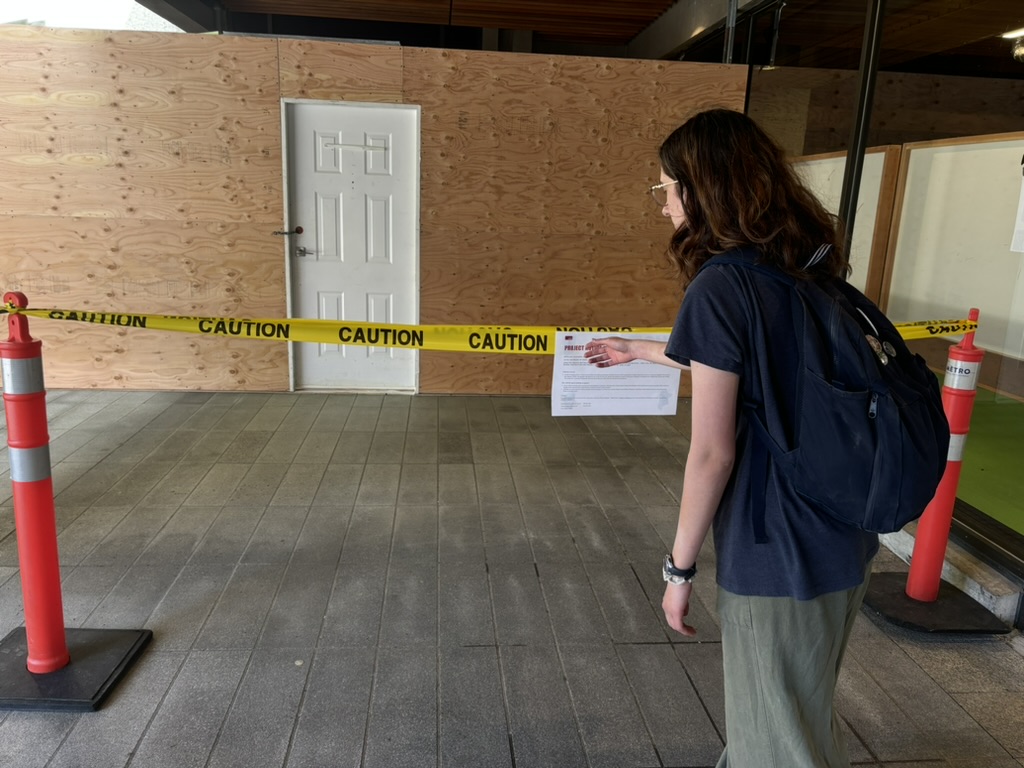
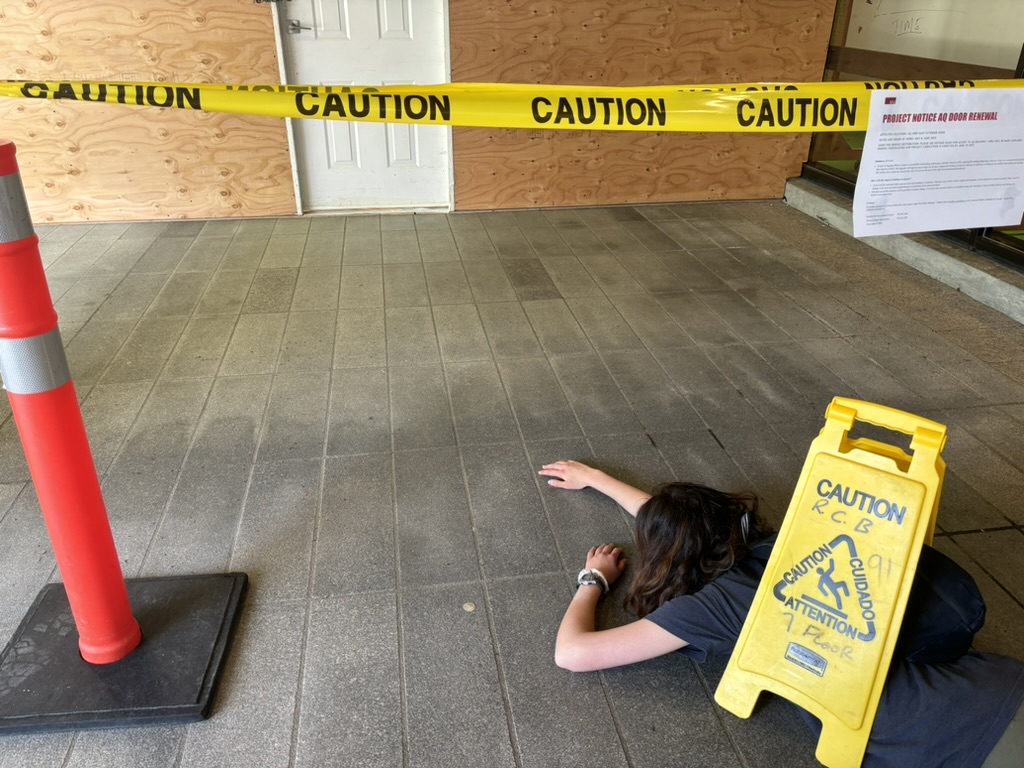
ILLUSTRATIONS: Small illustrations of traffic cones (two variations) and construction workers to place around the borders of the photos.
ILLUSTRATION: Noah Jozic / The Peak
PHOTO: Mason Mattu / The Peak

Peak Speaks

0
Photo of a fictional SFU student
PHOTO: Anastasiya Gepp / Pexels

By: Mason Mattu, Humour Editor

Q: Who inspires you?

Matt Gordon (first year applied mathematics): “Those folks who write WikiHow articles. Thanks to them, I know how to give someone a hickey. That’s some inspiring and life-changing shit. I’m sure my non-existent girlfriend will love it.”

Katherine Xie (third year world literature): “Kim Kardashian. She once told the masses to “get your fucking ass up and work,” and I wholeheartedly agree. She’s a self-made billionaire (with a bit of her famous daddy’s help), a fashion icon, and a working-class woman. I betcha Kardashian works 9:00 a.m. to 5:00 p.m. just so she can feel pity for us underlings . . . Honestly, if hustle culture had a plastic face, it would be 40% hard work, 20% motivation, and 100% Kim Kardashian.”

Christopher Brodzki (fourth year Communication): “Whoever does SFU media relations work. They deserve a cookie after defending the undefendables.”

Dominik Green (third year Beedie): “That guy who like invented those like beer sleeves that are designed for like pop drinks. Like, truly inspiring work. That way the like frat party doesn’t like . . . you know . . . stop in lecture!” (takes a sip of “Diet Coke”

Sally Gord (second year physics): Susan Boyle. She made it socially acceptable to peak after your 40s, which gives me a little bit of hope. Too bad I don’t sing.” 

Five things to replace the SFU sign with

0
ILLUSTRATION: A drawing of the SFU sign with a giant X through it. Around it, scatter the words: uninspired, boring, cliché, butt ugly.
ILLUSTRATION: Abigail Streifel / The Peak

By: Ashima Shukla, Postmodernist-in-Residence

In a shocking yet unsurprising twist, SFU was recently robbed of its soul. No, not our collective conscience! The logo on the SFU welcome sign at the foot of the campus. The beloved red symbol of caffeine dependency (foreshadowing your search for a free parking spot on campus) went missing. 

But fret not, dearest students, for the logo has since returned. And yet, in a totally credible Fraser Institute study, 110% of SFU students have now proclaimed the welcome sign “butt ugly.” 

Perhaps it’s time for a redesign that better reflects the SFU experience in its full glory. With zero budget, minimal artistic expertise, and a heavy dose of metaphor, enter: our top five visionary contenders for replacing our #boringsign. 

1. A giant clock that shows you’re always early (for the next class) 

Nothing says “welcome” like a friendly reminder that time is an illusion and your schedule is a self-made prison. This oversized clock isn’t broken — it’s just set to a mystical time zone known only to course schedulers, mountain ghosts, and the R5 bus drivers. Running late again? Don’t worry! According to this tasteful installation, you’re just very early for your next class. It’s not lying, it’s optimism! Even if time is fake, your efforts (and panic) are very real. So, enjoy this reminder that you’re way ahead of the game (even if not the one you’re currently in). 

2. An introvert’s nightmare: an interactive absurdist performance  

Bringing Beckett to Burnaby, picture this: an immersive installation that invites you to stand at its centre while four figures walk around you in a repeating but nonsensical pattern. No one makes eye contact. No one leaves. All you hear is the haunting rhythm of footsteps and small talk. Inspired by Samuel Beckett’s Quad, this piece welcomes you to SFU’s hypersocial yet deeply isolating university life. Are you the main character in a tragicomedy or just heading to the AQ? Come find out! 

And yes — the performance never ends. 

3. A “not UBC” sign 

Minimalist. Iconic. Proudly contrarian. Perfect for when visitors need clarity and students need closure. The sign isn’t competitive — it’s just setting the record straight. No, we don’t have a nude beach or heritage ivy. But we do have racoons. And fog. And don’t you dare forget our brutalist concrete that builds character (and strong calves). 

4. A goSFU MySchedule simulation that rearranges itself when you look away 

This cursed display shows you a perfect schedule as you drive up the mountain — until you blink. Then, you’ve suddenly got two overlapping seminars, a lab in Surrey, and a 3:00 a.m. tutorial for another faculty that you cannot drop. Bonus points if you catch it glitch, showing a waitlisted course from 2020. Why? Because chaos is free, unlike your tuition. 

5. A giant red splotch of red paint 

This bold and provocative piece of abstract art is titled, “The Cost of Knowledge: A Generous Donation.” Whether it’s the emotional toll of a degree with job prospects TBD or the lack of funding no one wants to talk about, this vivid splash of red fosters the kind of critical thinking the administration just loves. English students can debate its meaning, engineering students calculate the structural integrity of the metaphor. Either way, it’s Rothko meets capitalism

In the end, maybe our SFU logo isn’t as much a welcome as an ask. Like looking into a mirror, it offers a moment of introspection to consider, “Are you sure? Are you ready?” As the mountain swallows your cell signal, the wind gently murmurs a reply, “No. But you’re here anyway.” Because that is the SFU spirit — uncertain but committed. And hauntingly self-aware. 

Resisting and rebuilding, one delicious Burmese Plate at a time

0
photo of of halal danbauk, a Burmese take on the South Asian dish chicken biryani.
PHOTO: Courtesy of Burmese Plate YVR

By: Petra Chase, Peak Associate

Content warning: brief mention of genocide. 

In Burma, April is a time for celebrating a new year. During the five-day festival called Thingyan, people pour and throw water on each other on every street, a symbolic cleansing of past sins. Padauk, the national flower, blooms under the summer sun, framing faces and illuminating scenes with golden yellow.

This year, however, Burmese people came together to respond to a devastating 7.7 magnitude earthquake that struck on March 28. Over 4,000 people have been reported dead, almost 4,800 injured, and 129 missing. These numbers are likely a lot larger. 

A natural disaster is tragic enough. Under a corrupt and genocidal military dictatorship, it’s even more horrifying. The military has continued to attack ethnic minorities by keeping on its airstrikes on unarmed settlements. When it comes to rescue efforts, civilians are mostly left to their own devices. Since the military seized power in 2021 and set the country’s democratic progress back, mutual aid and resistance have been the norm for Burmese people in the country and abroad.

Less than a week after the earthquake, Burmese SFU students co-organized a fundraiser to support rescue and relief efforts. Along with students from UBC, they worked with Burmese Plate, a local catering company, to sell 100 orders of halal danbauk, a Burmese take on the South Asian dish chicken biryani

Burmese Plate is a home kitchen that sells and delivers Burmese food around Metro Vancouver. Their mission is “to share our Burmese culture with the communities here, and also to help the communities back there in Burma.” To learn more about their initiative, I interviewed Aung Thu, owner and chef, and Jessica Aung, marketing and operations manager. “I like to cook, and I started to help the community in Burma who needed help,” said Thu.

Having lived in Burma myself, I related to them about missing the staple dishes that are hard to come by in this part of the world. “Most people don’t know where’s Myanmar,” said Thu. Aung added, translating, “It’s very rich in culture with so many different ethnicities [ . . . ] and we want to showcase that culture.”

With over 135 distinct ethnic groups and a melting pot of influences from their regional neighbours, the country’s cuisine ranges from variations on the Hokkien lor mee (braised noodles simmered in a thick, gravy-like soup made of cornstarch and eggs) to fragrant, spicy curries, including ingredients like chickpeas and tea leaves, and various fermented foods. Burmese Plate first brought some of these flavours to new taste buds when they began with a stall at Richmond Night Market two years ago.

Their current fundraising efforts have focused on two main dishes that are very different, but similarly sentimental. There’s the aforementioned danbauk, which uses South Asian-inspired spices, but with the addition of raisins for a punch of sweetness. “Danbauk, for me, is more of a nostalgic dish because when we were younger, we had it a lot at events,” said Aung. “I’m so glad that [Thu] decided to cook here, then I get to try danbauk right here,” she added.

Kyay oh si chet, garlic oil pork noodles, is Thu’s other specialty. It’s a dry vermicelli noodle dish with a Chinese inspiration, and in Burma, entire restaurants revolve around it.

Aung explained, “When the earthquake happened, at first he started contacting his friends in Yangon and then they started organizing a small fundraiser.” She added, “Then he realized that the Burmese communities suffering from the earthquake [are] much greater than we thought.” 

Thu said their collaboration with SFU and UBC was “to let the communities know through the students clubs what’s happening in Burma right now, and also with the intention that our efforts are at least contributing to lessen the suffering in Burma.” SFU does not have an official Burmese student club, although students plan on starting one. 

A coalition of students from Canadian universities, including SFU, have raised $4,762 so far for Better Burma, an organization they say have “consistently supported communities in need and have the connections to ensure funds reach those directly affected by the earthquake.” Donating directly to people on the ground is important, as the military is known to pocket foreign aid. 

I also reached out to a Burmese international SFU student whose family lives in Mandalay, close to the epicenter of the earthquake. “For a while, I couldn’t reach them through any communication platform — not even international calls,” he said. “Not knowing whether they were safe or not made me feel helpless, and my thoughts were racing. Thankfully, I was eventually able to get in touch with them through my distant cousin, who lives on the outskirts of the city and went in to check on my family. While I was relieved to hear they were OK, the emotional toll of that uncertainty still lingers.” 

The student said SFU reaching out during the earthquake was a reminder that “we’re not alone.” He said the Burmese community appreciates check-ins, mental health resources, and spaces for connection and solidarity. “It’s time for an official Burmese club at SFU. Having a dedicated space where we can support each other, celebrate our culture, and come together during difficult times would be incredibly meaningful.”

In an interview with The Diplomat, another concerned Burmese citizen abroad, Julie, explained how the diaspora “have more power to do campaigns more freely abroad than people [inside] Myanmar.” She added, “Even if we contribute only a little, it means a lot in Myanmar.”

Burmese Plate plans on hosting more fundraisers for these dishes, typically with delivery and pickup in Richmond, Vancouver, and Burnaby. They hope to someday open a restaurant, which would make it the third Burmese-owned restaurant in the Vancouver area. But until then, you can find out about upcoming fundraisers and try Burmese food by following them on Instagram, @Burmeseplate.yvr and Facebook

If you want to support Burmese Plate’s partner initiative on the ground, you can also donate at gofundme.com/f/npbt7-support-earthquake-relief-in-myanmar.

Self-checkout makes grocery shopping worse

0
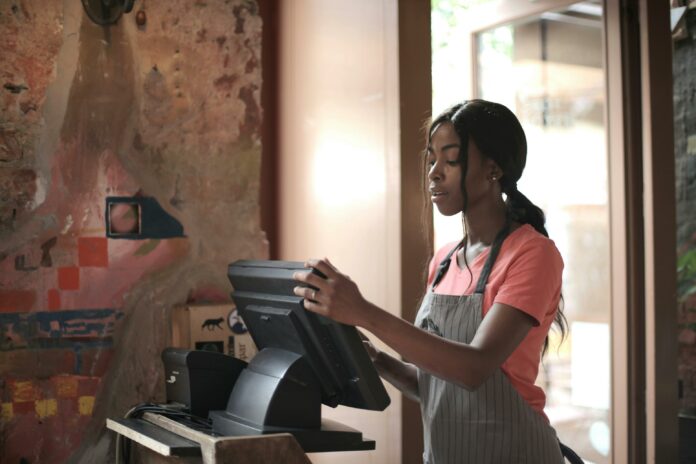
A person standing behind a cash register.
PHOTO: Andrea Piacquadio / Pexels

By: Manal Kashif, SFU Student

People use self-checkout during their grocery hauls for various reasons, including saving time. Self-checkouts became popular around a decade ago to promote efficiency in the checkout process. However, it’s now being brought to light that this cost-cutting method fails to lead to better experiences for customers, especially when it’s the only option available.

Many Canadians prefer regular checkouts over self-checkout because of the ease of having someone else scan their groceries. Engaging in friendly conversation can also be a highlight during a busy day of errands. For disabled customers like Linda Hause, the lack of cashiers at chains like Walmart can mean it’s difficult to receive assistance. CBC reported on her experience. When all the cashier lanes were closed, Hause asked the self-checkout attendant to scan her items. When they refused, she was forced to get out of her mobility scooter to do it herself. Of course, this isn’t the case at all stores, but this example shows how disabled people get left behind in the name of efficiency. 

Many self-checkouts also aren’t suited for blind or visually impaired shoppers, as they don’t have audio guidance, according to Canadian Affairs. A study in the Journal of Business Research found the rise of self-checkoutshifts the work to customers, [making] them feel less rewarded,” and eventually, less likely to visit stores with more self-checkouts

A small conversation in the rush of everyday life or even a smile can go a long way.

Trying to make the grocery shopping experience “self-sufficient” is not only bad for business, but also isolating. The type of conversations people have with their cashiers are known as low-stakes interactions.” While they might seem insignificant in the moment, University of Michigan professor Toni Antonucci claims they’re “a critical tool for maintaining emotional well-being later in life as social circles shrink.” In a world where online shopping has quickly taken over, implementing machines like self-checkouts in public places is the nail in the coffin. By walking away from regular checkout, we are further falling into the hole of less communication and more individual experiences, contributing to a rise in isolation. 

Speed becomes the overall goal and is most imminent in Gen Z shoppers, who tend to prefer self-checkout. A study showed that those aged 18 to 34 prefer self-checkout over cashier interaction, but the opposite is true for folks aged 55 or older. The appeal seems to decline as there’s an increase in age groups. Still, that does not mean self-checkout is the future, as many stores have started ditching self-checkout options due to technical issues, customer feedback, and theft.

As someone who almost always uses a regular checkout, I find the interaction between the cashiers and I to be part of what makes us all functioning members of a society. A small conversation in the rush of everyday life or even a smile can go a long way. Humans shouldn’t function like robots or AI; we should engage meaningfully with each other in the pursuit of our daily activities. 

Embark’s community garden has a new home behind Maggie Benston Center

0
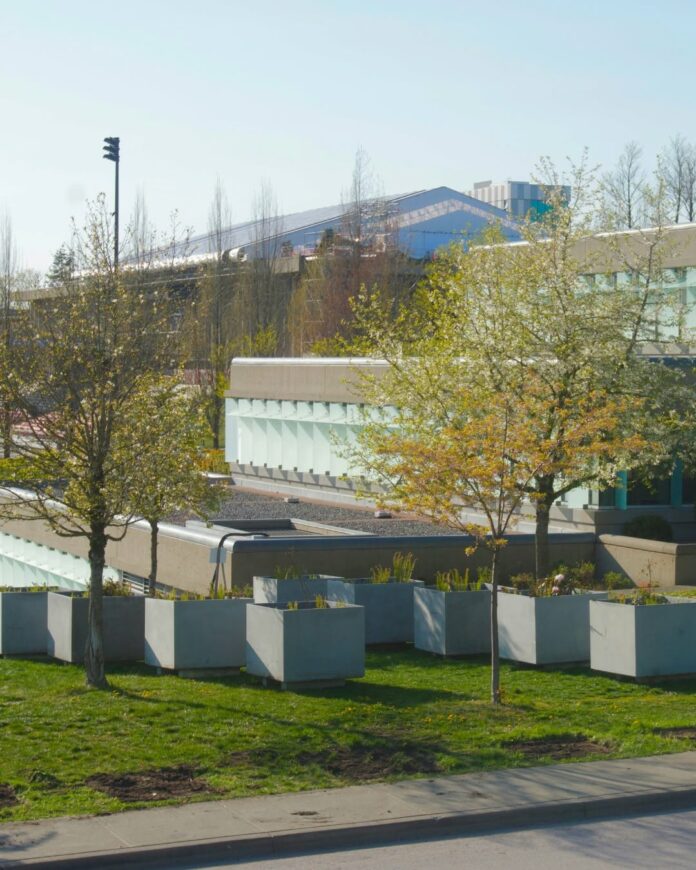
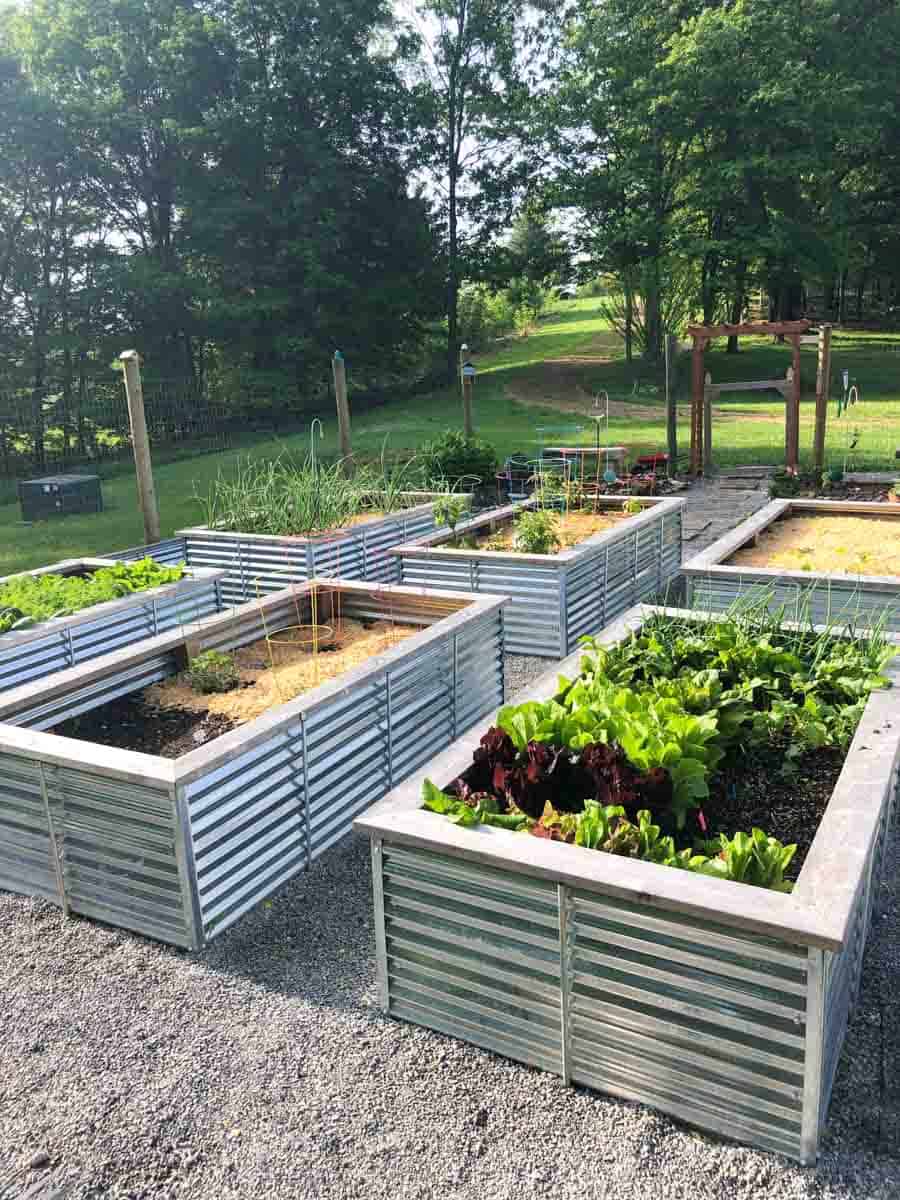
This is a photo of garden plots, which look like big, tall aluminum cubes, on a sunny day with small trees in front of the plots.
PHOTO: Courtesy of @embarksustainability / Instagram

By: Corbett Gildersleve, News Writer and Hannah Fraser, News Editor

Embark Sustainability’s community Burnaby Learning Garden is moving from outside the Technology and Science Complex (TASC) 1 to the field behind the Maggie Benston Center (MBC). They will transition over the next few years as they break down the current wood plots at TASC 1, buy longer-lasting aluminum plots, and move the soil. The Peak spoke with Marie Haddad, director of engagement, and Pablo Vimos, gardens manager, to learn more about the move and Embark’s gardening cohort program. 

In 2023, Embark celebrated the garden’s 10th anniversary. “All the garden beds are made of wood with a long life of 5–6 years, pushing. But we’ll be extending it by repairing/rebuilding the garden beds,” Vimos said. He noted that lumber became expensive due to COVID-19, making the old beds “not sustainable to keep repairing.” After discussing the gardens with SFU Facilities, they decided to move to permanent garden beds — such as the aluminum ones for their separate Student Union Building Learning Garden — as they would last longer. While rebuilding the wooden beds every three years costs about $950 in materials and labour costs, Vimos noted the aluminum beds cost $1,800 with a “lifespan of over 20 years.”

Vimos explained that the original garden at TASC 1 has 60 garden beds, but Embark will not move all of them, given that the aluminum garden beds are still expensive. The not-for-profit will shrink the number of beds down to 30, with Haddad noting that 10 beds have already been moved to MBC. Embark is waiting on 20 more aluminum beds to transition the rest of the old beds. When asked how long they will be in the MBC field, Vimos said, “with Facilities, we have a three-year lease agreement,” with the lease having to be renewed. 

“The garden cohort programs or any of our other programs are never only for students who are learning about environmental science majors or climate majors; they’re really for anyone.” — Marie Haddad, director of engagement, Embark Sustainability

Embark uses the garden plots to run their learning garden programs. Last year, the program had 25 garden graduates, training up to 12 students per semester. The garden cohort meets once a week for 1.5 hours, with the first 30 minutes having a “teaching element” and the remaining hour being for hands-on experience, according to Vimos. Haddad added that “students learn this practice of sharing. You grow your food, you share it with your own family, you share it with your friends, your cohort members, and then a lot of the harvest also goes to the Food Rescue Program.” This program rescues healthy food that doesn’t meet store criteria for sale, thus distributing the food to students at SFU. Last year, 945 kg of food was rescued from Nester’s Market, providing 1,700 meals according to Embark’s annual report

When asked what’s next for the Burnaby Learning Garden program, Vimos said, considering student interest was low for the summer cohort, Embark will be changing the cohort into a gardening stewardship where teaching is more informal. He explained that the gardening stewardship will happen at students’ available time: “They can come anytime, any day of the week [ . . . ] as long as the garden is being maintained.” Haddad added that while students learn from Pablo, “there’s also some new members who are going to help out,” allowing for a “students-teaching-students moment.” 

She also shared, “The garden cohort programs or any of our other programs are never only for students who are learning about environmental science majors or climate majors; they’re really for anyone.”

Organizations raise concerns on lack of rent supplements

0
This is a photo of a totebag, beanie, socks, and chapstick branded by SAJE that are laid out on a greyish wood surface.
PHOTO: Courtesy of the Ministry of Children and Family Development

By: Lucaiah Smith-Miodownik, News Writer

At the end of last year, the BC Ministry of Children and Family Development reported 4,843 children and youth “in care.” These are children 19 and younger whose “custody is with the ministry or with a Delegated Aboriginal Agency.” Of this number, about 68% of youth were Indigenous. According to their website, the ministry’s focus is to aid BC youth in relationships with their families, communities, and culture. As a part of this mission, they support various programs and services designed to help those with current or past experience in the foster care system. Foster care looks after those “who must be away from their own families.”

The ministry also supports former foster care youth over 19. One initiative designed to do so is Strengthening Abilities and Journeys of Empowerment (SAJE), for ages 19–26, which lists benefits like “planning for [the] future, income and housing supports, mental health benefits, and training and cultural connections.” More specifically, SAJE states it can provide rent supplements designed to support youth formerly in foster care with up to $600 per month for up to two years. The program claims that “50% of the rent supplements are first available to Indigenous young adults” as they assess applications.

However, these supplements have recently fallen under scrutiny. IndigiNews reported in late March that they have not been distributed in over a year. The Peak corresponded with the ministry and the Indigenous Child & Family Services Directors Our Children Our Way Society (OCOW) to learn more. OCOW represents 25 Indigenous Child and Family Service Agencies and focuses on “self-government pertaining to the well-being of [Indigenous] children and youth.”

“Youth aging out of government care have had to deal with higher rates of homelessness and mental health concerns,” minister of children and family development Jodie Wickens said. “SAJE offers services like income support of up to $1,250 a month” to cover living expenses, she added. This is separate from the rent supplement program.

“Since the very first contact between settlers and Indigenous Peoples, paternalistic colonial child welfare practices have had destructive impacts on the well-being of our children and families.” — Indigenous Child and Family Services Directors Our Children Our Way Society

As reported by IndigiNews, an individual under the pseudonym Jamal has made three unsuccessful rent supplement applications since February 2024 and highlighted that $1,250 in income support would “barely cover” his rent. 

While The Peak asked for confirmation on this lack of payment, Wickens did not address the question. “Over 1,800 young adults from care received rent supplements since the introduction of the program in fall 2022,” she said. If demand for the supplements exceeds funding, SAJE “would work closely with frontline staff and our colleagues in other ministries to explore alternatives so that the greatest number of young people are covered.” 

OCOW also emphasizes that these welfare systems are essential to Indigenous self-determination, yet the government has failed to adequately support them, particularly in ways that are culturally grounded. “Since the very first contact between settlers and Indigenous Peoples,” the organization’s site reads, “paternalistic colonial child welfare practices have had destructive impacts on the well-being of our children and families.” OCOW added, “It’s time for that to change.” The Indian Act, “first proclaimed in 1876, gave the federal government control over most aspects of Indigenous people’s lives,” OCOW writes. “In 1951, the federal government amended the Indian Act to include Section 88, which gave provinces the power to enforce their child welfare laws on-reserve.” 

Tracy Lavin, OCOW manager of policy, research, and engagement presented some potential insight into SAJE’s struggles. For services off-reserve, she explained that Indigenous Child and Family Service Agencies are funded through the ministry. “Those services are desperately underfunded and do not support the delivery of prevention/least disruptive measures,” said Lavin. Regarding SAJE specifically, “OCOW has repeatedly articulated numerous concerns about the SAJE program raised by the Indigenous Child and Family Service Agencies,” however, there has been “very little response from the ministry.”