Home Blog Page 432

What Grinds Our Gears: Could I get a little content to go with all these ads?

0
What did I come here for again? Illustration: Michelle Chiang/The Peak

By: Nicole Magas, Opinions Editor

Unprecedented times call for unprecedented media consumption. News articles, blogs, opinions pieces, factoids — like the borderline manic hypochondriac my mother always knew I’d grow up to be, I’m reading all of it. Or, at least, I’m trying to.

It’s a little hard to read anything when a split-second after I click a link my screen is flooded with 14 different ads and three invitations to sign up to receive more of this same visual cacophony in my inbox on an hourly basis. 

As I’m trying to read past the click-baity headline, the images on my screen are jumping around like a toddler on Pixy Stix while my computer labours to load the flood of information all at once. Christ, is that a seizure coming on? No, just a ton of dazzling Flash images desperately trying to make me part with what’s left in my bank account.

And yeah, I get it, ad revenue pays for creators and outlets blah, blah, capitalism. I know. But content should not be made to be a delivery system for advertisements, like it’s the white bread of the world’s least-in-demand crap sandwich.

If it takes me a full minute to dodge pop-ups, stop automatic videos from playing, and wait until all the first-priority ads have finished loading, then why are you even posting content to begin with? Just make the entire page ads and stop pretending like you’ve got anything else to say.

The very least you could do is cut it all back a bit — only until I find another ad-blocker that gets around my browser’s current controls. Then you’re free to flood the internet again with your bullshit consumerism to your hearts’ content. I promise I won’t mind at all.


Never Have I Ever watched a show that depicts Indian representation this cleverly

0

By: Harvin Bhathal, Peak Associate

As an Indian myself, I appreciated Never Have I Ever for what it provided for me. Broadly speaking (as there are a multitude of cultures in India), socially progressive Indian representation in Western television and film is non-existent. Most of the representation that does exist either relies on recycled stereotypes or minimizes Indian identity.

The show centres around the life of Devi Vishwakumar (played by Maitreyi Ramakrishnan), a 15-year-old Tamil Indian-American girl from Sherman Oaks, California. The overarching storyline involving Devi is the tumultuous relationship with her mother, Nalini, and the death of her father, Mohan — which happens prior to the first season commencing. After losing the use of her legs for three months due to the emotional trauma she experienced, the story follows her attempt to navigate her sophomore year of high school, all while dealing with grief and her Indian identity.

Whether here in Canada, the United States, the United Kingdom or elsewhere, many first-generation and migrant Indian children can identify with struggling with their Indian identity. On one hand, your family expects you to maintain the traditions and practices from their homeland, while also wanting the most for your life. In many cases, that’s the primary reason they migrated: to give you a better life.

But that dichotomy is a contradiction in and of itself.

Devi personifies this struggle through her family attending the Ganesh Puja celebration held at her high school. Dressed in the traditional wear of her culture, she feels out of place. While waiting in line for coffee and being asked to be in a photo in order to make a white person’s Instagram appear “cultural”, she feels out of place. In attempting to make conversation with other Indians at the celebration, she feels out of place. Not to mention the Indian aunties. 

John McEnroe, one of the narrators and an accomplished tennis player (long story), says in the show, “Aunties are older Indian women who have no blood relationship to you, but are allowed to have opinions about your life and all your shortcomings. You have to be nice to them because you’re Indian.”

Every Indian, regardless of age, has come across aunties, and it is almost always a dreaded experience. 

But this isn’t the only dreaded experience the show covers. Kamala is Devi’s cousin from India who is living with her family to finish her studies. Arranged marriages are a tradition across Indian cultures, where the trust is in parents and the family to arrange a marriage for their daughter (or son). But nowadays, although arranged marriages still happen, they are not as commonplace as they used to be. Still, Kamala’s marriage is arranged in the first episode and throughout the first season, the viewers are shown the many complexities of arranged marriages.

Never Have I Ever covered many aspects of Indian culture that aren’t always understood by people that aren’t exposed to it.

What is especially amazing about this show is that not only is it a watershed moment for Indian representation in television and/or cinema in Hollywood, it checks the boxes for representation across the board. This show has something for everyone, covering LGBTQ+ identity, grief, overbearing parents, disability, absentee parents, bullying, and more.

Never Have I Ever is the most realistic representation in Hollywood of the struggle to find your place in both Western culture and Indian culture, and is now available to stream on Netflix.

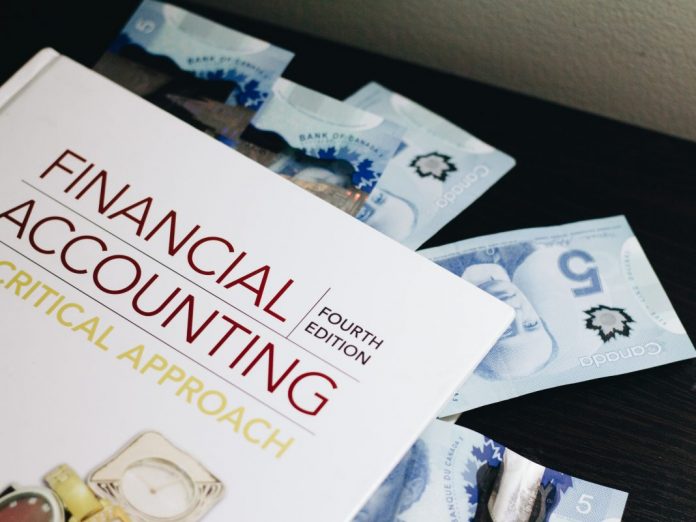
It’s too early to determine whether tuition needs to be adjusted

0
Paying the full cost of tuition right now is frustrating, but it’s funding valuable services. Photo: Andres Chavarriaga/The Peak

By: Nicole Magas, Opinions Editor

In late April, before summer classes had even begun, many students across Canada began to express their frustration that universities would be charging them the same tuition fees, despite classes moving to an online format. While I understand the financial frustration that comes from being a student, and I can most certainly empathise with the sentiment that online classes are a much bigger pain than in-person classes, it’s too early to be demanding that tuition be reduced for the duration of enforced remote learning — at least, not until students have a better idea of what, exactly, they are getting (or not getting) out of this semester.

I will be the first champion of the idea that online classes, as a rule, suck. Without a physical lecture, and with limited access to a professor or a tutor marker (TM), students mostly have to rely on their ability to teach themselves the material that is, at best, guided in a series of modules and textbook chapters. But we should be clear that what SFU students are experiencing now is not traditional online or distance education that has been offered in the past by the Centre for Online and Distance Education (CODE). CODE classes are premade and packaged to be run by TMs, rather than faculty, and are meant to be completed within a pre-set time on the student’s own schedule.

The remote learning that students of the summer (and now fall) semesters are going to be participating in is different. Remote classes are still taught and directed by faculty in a fixed class time, just as if they were in person. The difference is that they are delivered in an online format. While this may seem like a relatively small difference for students who are stuck at home trying to listen to a lecture while younger siblings scream in the background, it makes a big difference in the reason why students shouldn’t jump the gun on demanding reduced tuition.

To start, there’s no real way to predict which classes are going to be better or worse off in this situation until they’ve had a chance to run. This also applies to the technological capabilities of individual instructors and students. A blanket tuition decrease where it might not even be needed is going to severely restrict the kinds of resources and technological investments that might prove necessary or incredibly useful in future remote learning environments. 

The reality is that we need some way to objectively assess whether or not students have been negatively affected by remote learning, and that is unfortunately going to require classes to run their course, and to weigh the outcomes of this semester against previous ones. 

To that end, a far more effective branch of advocacy would be to demand that universities are both actively collecting objective and subjective data, and are transparent in how they intend to assess the success or failure of this new remote system. As an example, will students have access to course and instructor evaluations this semester? And how will these evaluations be used in the decision-making for future semesters or, if necessary, retroactive tuition readjustments?

It’s really important that student activism in this matter is proactively focused in the right direction. It is not only the financial well-being of students that is affected by this pandemic, but also that of faculty, teaching staff, administrative staff, and all of the other ongoing services that are still available to students, albeit at a distance. Students have to keep in mind that these vital roles have not disappeared just because learning is remote, nor have they been intentionally reduced as in CODE classes.

There has been some good work done already that reduces the overall costs to students by addressing actual services that are no longer in use. The suspension of the U-pass fee is one such victory. Whether or not other services and fees are deemed to be redundant in a remote learning environment remains to be seen. Until then, concerned students ought to be diligent and mindful as they always are, and be prepared with a list of evidence and proposals at the end of the semester, if the collective learning experience does in fact go belly-up.


Remote learning is not an open invitation to cheat

0
Don’t be tempted by what looks like an easy way into a good grade. Photo: Maxwell Gawlick/The Peak

By: Michelle Young, Staff Writer

As of March, in-person classes have been adapted into online courses. This has brought numerous changes to students’ learning experiences, such as asynchronous lectures and remote finals. The switch has also exposed a potential abuse of remote learning: cheating. 

As one could imagine, it’s much easier to Google answers, refer to textbooks, or review Canvas slides when writing a take-home test. But cheating isn’t only harmful to the individual engaged in cheating — in a remote environment, it creates unnecessary hardship for everyone involved, from professors down to students taking the exam honestly. 

Let’s first consider what goes into discouraging cheating in an online environment. Professors and TAs have had to implement new, additional measures to try and ensure their students don’t cheat. This has involved asking students to turn on their webcams or microphones, or prohibiting them from coming into any form of contact with anyone else during the exam. Professors have also implemented time-limits to limit when students can access their exams, mimicking the restraints of being in-person. 

This is already an extra strain on faculty who then have to monitor dozens of students’ individual computers from a distance and record anything that may look like cheating. Aside from the gross invasion of privacy this entails, consider also the number of grey areas that could occur with technological limits or other unique circumstances of students each taking an exam in a different environment. 

What if students get an emergency phone call or need to contact someone due to technical difficulties? Additionally, students may not have access to a webcam, nor are they guaranteed to have laptops that have the capacity to use a webcam simultaneously paired with taking the online exam. If webcams or internet connections fail and students have near-identical answers, how can professors determine whether it was because of cheating? It’s not unreasonable to assume that remote exams have heightened instructors’ vigilance against cheaters. Students who are rightfully caught cheating will only increase the need to strengthen checks for academic integrity and increase the number of honest students who may be exposed to the stress of an accusation of academic dishonesty. 

SEE ALSO: SFU community group formed to advocate for student and staff during COVID-19

And let’s not forget that cheaters miss out on learning the material they’ve paid good money for. Plus, students who get caught face a series of penalties which may include suspension or the cancellation of their degree. No matter how easy it may look like to get away with it now that we’re all learning remotely, the fact remains that faculty still know what to look for and cheaters will ultimately get caught. The effort spent figuring out how to cheat the new online system could much more easily be spent actually learning the material, at no risk to the students involved.

There are of course still going to be students who are tempted to cheat behind the safety of their screens — however, it ultimately isn’t worth it. Academic dishonesty isn’t only a disservice to the cheater, but also to their peers and the staff who have to deal with the aftermath. It’s not fair to those who have good intentions to either be accused of academic dishonesty due to some arbitrary new policy, or to put effort into studying for their grades when others are too lazy to do so for the same result. 

Students are trying as frantically as professors to adapt to our new online environment. No one needs the additional stress of adjusting and readjusting the way we learn because some cheaters thought they could get away with it.

The use of digital proctor software at SFU and the potential for academic dishonesty in a remote learning environment is an ongoing story. Stay informed with future Peak articles on this subject.


Olo Radio attempts to reinvent the experience of listening to music

0
Photo courtesy of SFU News

Written by: Harvin Bhathal, Peak Associate

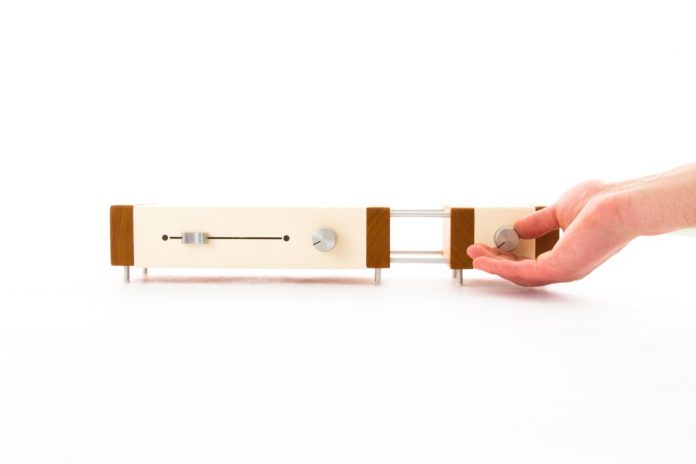
School of Interactive Arts and Technology professor William Odom has designed a physical device that compiles data on the user’s music listening history. 

The device, called Olo Radio, links to the user’s Last.fm account to gather the data. Last.fm is a music data aggregator that collects information on the music that an individual listens to, whether through Spotify, Apple Music, YouTube, CDs, etc., and stores the information. Olo Radio brings Last.fm’s service to a physical object that can be interacted with. 

In an interview with The Peak, Odom explained that the device consists of a motorized slider, timeframe knob, and a volume knob. The timeframe knob can be set to “day,” “year,” or “life,” and then the user can choose a point within that timeframe by moving the slider. 

According to Odom, Olo Radio presents an opportunity for self-reflection, and to consider one’s change and growth over time. It allows the listener to access the music of their past, and acts as a compilation of a lifetime’s worth of music. Odom noted that, “we’re really trying to create things [ . . . ] that can be a part of your life over a long period of time.” 

“One of the bigger agendas here is to try to change [the] design… of consumer electronics and the way in which we design and [think].”

Odom drew inspiration from Finnish designer Alvar Aalto and his mid-century works with the use of wood tones and steel. He described the design as Scandinavian and Japanese, and stated that the appearance of the device suggests a physical and mental balance. 

The human-computer interaction is an important part of Olo Radio; Odom intended it to emphasize “human agency and creativity within the person as opposed to the machine.” 

Tijs Duel, an intern of Odom’s, was a collaborator on the project. 

In an email interview with The Peak, Duel said: “I see reminiscing and reflection essential in the development of the self. These activities can be triggered and supported through mementos and media.”

He noted that Olo Radio provides “new and meaningful ways to explore our digital collections to get the most out of them.” 

Currently, there are five custom-designed Olo Radio’s that have been installed in homes in the greater Vancouver area to get a feel of the experience over time. 

When asked what the first song he heard when first using Olo Radio, Odom laughed as he reminisced on a song from JPEGMafia’s Veteran album.

In terms of future applications for Olo Radio, Odom stated that “one of the bigger agendas here is to try to change [the] design [ . . . ] of consumer electronics and the way in which we design and [think].”

The Peak Plays JackBox

0

Good Things To Do offers a spark of hope in a time of fear

0
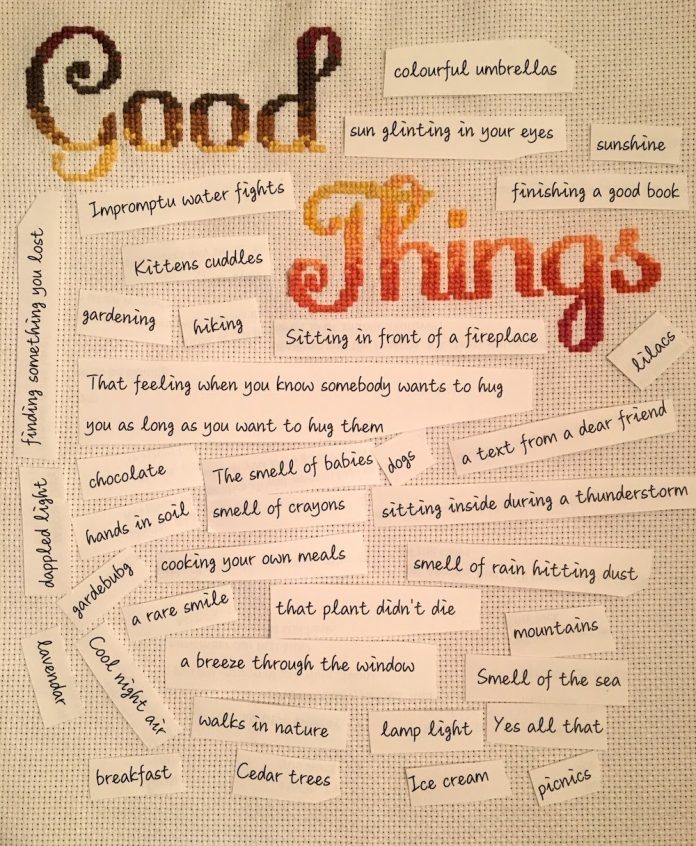
A collection of good things described by participants. Courtesy of The Good Things Collective.

By: Madeleine Chan, Staff Writer

Skeptical was the best word you could have used to describe my feelings prior to attending this performance. The description for Good Things to Do, presented by The Good Things Collective of Vancouver’s Rumble Theatre, was vague at best, using words like “dreamscape,” “immersive” to describe its digital non-performance performance. Nevertheless, I was intrigued. 

After a $5 ticket, I was emailed instructions that called for a comfortable atmosphere to sit in for my “solo journey.” So, at my designated time, I hunkered down in the darkest corner of my room, turned off the lights, and waited.

Sitting there in the near-dark with the soft rainfall they had playing, I was more confused than ever. I truly did not know what to expect. But when the performance began, it was immediately interesting. It was mainly text-based, with words being typed out “Shall we play a game?” style, the faceless sentience trying to get to know me only through letters. Despite feeling slightly creeped out and having flashbacks to all dystopian A.I. media ever, staring at the calming teal sea covering the screen, I felt a slow pull into its world.

A violinist’s lulling strings began the piece, letting me really sink into it. Then, from the perspective of possibly a lost friend, an old lover, or a simple stranger I couldn’t quite tell and it was never explicitly stated a recollection of a fantastical dream was detailed. The text-based narrator was talking to me as if they had known me forever, taking me through their dream-based journey with me as its star. Sounds of wading through water and distant wildlife accompanied the story and were like a flood of pacification that reminded me of good times outdoors. It was almost like a narrative poem with how overarching and grand it felt.

Once the story of the dream was told we, as the audience, got to type out some of our own favourite good things. It was incredible, seeing others’ words surge onto the screen like electricity firing in a brain, memories of better times and nicer feelings very apparent in their choices. As I added examples like “cool night air” and “a rare smile,” I couldn’t help but reminisce.

And just like that, it was done. I couldn’t believe it. How could 45 minutes pass so fast? I felt myself yearning for more, for the blissful story to continue so I wouldn’t have to let go of this airy feeling. But I think that’s what the performance was getting at: hold onto the good things, know that they are always there and that you will return to them.

What topped it all off was that the day after the performance I got one last email containing a photo with all the good things we had listed, handwritten and arranged on a needlepoint canvas. The photo itself felt like another good thing to add to the list.

Co-creators Christine Quintana and Molly MacKinnon did a great job of adapting a performance conceived in the tumultuous times of 2016, for the digital realities of our present. It was a beautiful blend of text and sound that created a serene and healing environment. 

Phenomenal poetic description brought me back to a time of unforced smiles and unscheduled days, of toes in the sand and hands in the air. The run has unfortunately come to an end, but they plan on bringing it to the physical world sometime in the future. For now, I suggest you check out Rumble Theatre’s other digital events. It seems like a very good thing to do.

Five fiction books to satiate your traveling instincts this summer

0

By: Anna Kazi, SFU Student

It’s a no-brainer that many people are disappointed with how this summer has turned out. There are none of the usual perks of summer-living with traveling or enjoying worry-free beach hangs being out of the question. Physical-distance restrictions might have brought up many questions for you. How do you enjoy the sun without catching COVID-19? What do you do when you can’t hit the road whenever you want? The answers have been silently surrounding us all along. Books have come to the rescue! You can still experience the breathtaking summers of the Tuscan Villa of Italy and feel the winds of the imaginary Marshland through these five compelling reads.

 The House By The Sea by Santa Montefiore

Courtesy of Random House Children’s Books.

Picture this: you are in a beautiful garden in Italy. You turn around to see a gorgeous villa surrounded by trees and roses, and are awe-struck by its beauty. Then, you suddenly find yourself on the English coastline. Sand and warm water graze your feet, and beside you, a dramatic cave. Precisely. This book will make you feel confused, in love, and captivated.  Narrated in dual timelines (the past and the present), the book tells the story of a character named Floriana, an orphan who falls in love with the owner of the Tuscany villa, and Marianna, who runs a hotel with her husband but suddenly finds herself in love with an impressive but dangerous man. A light romantic read, it’ll keep you enthralled with descriptions of the English coastline and Italian villas.

 Camino Winds by John Grisham

Courtesy of Knopf Doubleday Publishing Group.

Imagine the Floridian sun shining on your face on the way to the beach, when it occurs to you that you have forgotten your sunscreen. Back at your hotel, your eyes fall on a strange man who is surrounded by some dead bodies. Scared, you want to run but your legs can’t move. Camino Winds is a sequel to Grisham’s Camino Island, and furthers the story of Bruce, a strange book dealer, and his friend Nelson. One stormy evening, Bruce finds Nelson murdered. A compelling read, join Bruce as he uncovers haunting secrets set to the backdrop of the Floridian beaches.

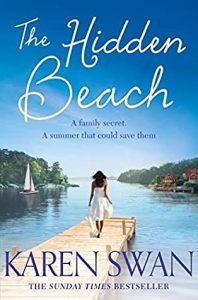
The Hidden Beach by Karen Swan

Courtesy of Pan Macmillan.

Sightseeing in Stockholm on a boat shuttle, your eyes are fixed on the historical museums and the seawater. You reckon life cannot get any more beautiful than this. Suddenly, you receive a life-changing message. The Hidden Beach is situated in Sweden and tells a heartbreaking story of a babysitter named Bell, who babysits for a couple, Hanna and Max, for two years. One day, Bell gets a call from Hanna’s doctor saying that Hanna’s first husband has awoken from a coma, after seven years. This call changes the life of both Bell and the family, forever.

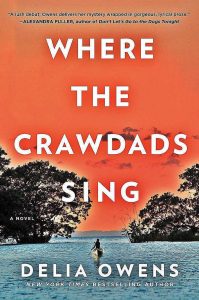
 Where The Crawdads Sing by Delia Owens

Courtesy of Diversified Publishing.

Written in lyrical prose, the tale of Kya is full of sorrow and mystery. Abandoned by her family and society, Kya is brought-up by nature. Her character is brought to spotlight when she is accused by the Marshland locals for murdering a handsome officer. Alternating themes of love and hatred, and the description of the Marshland’s sunny weather, rain, and lakes is guaranteed to keep you entranced. ​​​​​​​​​​​​​​

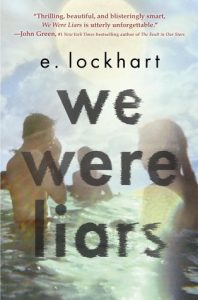
We Were Liars by E. Lockhart

Courtesy of Random House Children’s Books.

Want to set out for a private island with a wooden beach house, white sand, and turquoise water? Per tradition, 18 year-old Cadence arrives at a private island to spend the summer with her family and a man named Gat. As the trip unfolds, many family feuds take place. As Cadence reflects on the trauma of a previous summer, the plan that toppled their lives is revealed. How far can an apple fall from its tree? How much can you forgive your blood relations?


SFU engineering students use personal 3D printers to help frontline workers

0
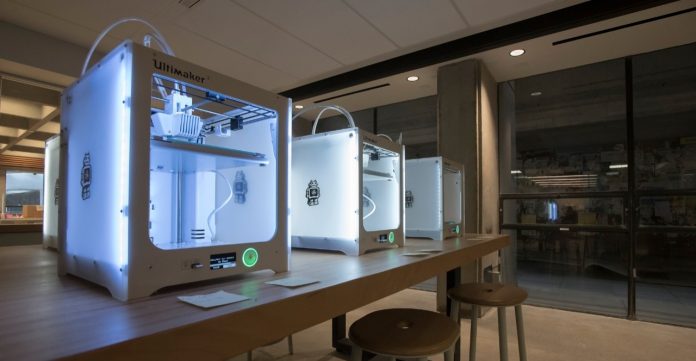
Five 3D printers are available to SFU students in the Media and Maker Commons. Photo courtesy of SFU

Written by: Paige Riding, News Writer

How would you react if you were told you could help frontline workers during the COVID-19 pandemic, all while earning class credit?

For Mechatronic Systems Engineering (MSE) students at SFU, this scenario is their reality. Organized by MSE professor Dr. Woo Soo Kim, this initiative involves engineering students using their own personal 3D printers to produce supplies for frontline workers. 

In an email interview with The Peak, Dr. Kim elaborated on the efforts of the MSE program known as the 3D Designed PPE Initiative.

Dr. Kim stated that he began the initiative in mid-March. Collaborators of the professor, Dr. Lillian Hung from the University of British Columbia and Stephen Wu from the City of Surrey, contacted the 3D printing expert, hoping such skills would help in the wake of the pandemic.

“At that time all the University labs were closed. So I sent emails to all 50 3D Designed PPE Initiative students. And 6 students raised hands that they have 3D printers at home.” 

According to Dr. Kim, these six undergraduate students have already made 500 medical mask ear-savers using their own personal 3D printers. Ear-savers help eliminate the discomfort felt by those wearing face masks for hours on end. He also noted that the students have made around 50 door handles. According to SFU News, these door handles will allow people to open a door without using their hands. 

From there, Dr. Kim gathered the products and delivered them to Vancouver General Hospital and the City of Surrey for their frontline workers.

According to SFU News, the students involved “determined a way to cut down the time it takes to print the mask straps, from 33 minutes to nine.”

The story further notes that these students can later apply their efforts to a directed study course for class credit.

Dr. Kim stated that 3D printing is a method of “sustainable manufacturing.” This approach to creating usable objects is enjoyed by many MSE students in their own home, and is therefore doable even with campus closures.

Those involved in the initiative have further plans to help those around them.

3D Designed PPE Initiative students will be working on their novel designs of ventilators in the summer, according to Dr. Kim. This will be imperative for anticipating another virus-surge similar to that of COVID-19.

“I always [tell] my students that engineers need to give back to our community and society.”

SFU community group formed to advocate for student and staff during COVID-19

1
Image courtesy SFU C19 Coalition via Facebook

Written by: Michelle Gomez, News Editor

In light of COVID-19, members of the SFU community have come together in support of one another through a group known as the SFU C19 Coalition. Formed in March of 2020, the SFU C19 Coalition consists of a combination of SFU students and employees. 

According to their demands to the university, the Coalition is advocating for more consultation with students and staff, a variety of academic accommodations for students and teaching staff, and better financial assistance to all students⁠—including international students. 

In a statement to The Peak, Ed Graham, an organizer at the Coalition, said that the movement was started due to the disproportionate impact that COVID-19 was having on international students and employees. 

“We hope the coalition will bring the financial and academic demands of internationals to the attention of SFU and beyond. We hope to see steps to ensure concrete measures are taken,” wrote Graham. 

President of the Simon Fraser Student Society (SFSS) and C19 Coalition Liaison to the SFSS Osob Mohamed talked more about the Coalition in an interview with The Peak. 

So far, Mohamed explained, the Coalition has been involved in online outreach, including an online petition. On the Coalition’s website, they also have listed a number of advocacy initiatives that students can get involved in. 

With regard to lowering tuition fees, the Coalition is pushing for SFU to implement some sort of tuition waiver for the Summer and Fall semesters. “The quality of education when you’re receiving it remotely is simply not the same as it is when you’re receiving it in person,” said Mohamed. 

Another key demand of the Coalition is that the university must provide clear guidelines to instructors with regard to remote teaching. 

“Nothing has been mandated to instructors as to what they’re allowed to and not allowed to do,” Mohamed stated. 

“We’re hoping to get some more clear guidelines across the board for instructors on how they’re allowed to conduct exams,” said Mohamed. She added that they will continue to push for the prohibition of proctoring software and room scans during exams. 

She also noted that the Coalition is pushing to give students free access to any software that might be required for a class, including SPSS and Adobe Creative Suite. Moreover, they would like to see professor’s recording lectures for the benefit of students who are in different time zones. 

“International students are getting the short end of the straw again,” remarked Mohamed. She noted that some of the added burdens on international students include paying higher tuition rates, experiencing difficulty returning home, having a limit to the number of hours they can work, and not being eligible for the Canadian Emergency Student Benefit. 

Mohamed explained that since the SFSS has officially endorsed the Coalition, they are hoping to bring their demands to coming meetings with university administrators and the president himself. 

“We fully support the work being done by the Coalition, we will continue to work with them to [ . . . ] make sure our students are getting the best outcomes that they possibly can during these rough times.” 

In addition to being endorsed by the SFSS, the Coalition has also been endorsed by the Graduate Student Society), the Teaching and Support Staff Union, and the Simon Fraser Public Interest Research Group.