Home Blog Page 416

Mixing things up with mixology: my journey into cocktail making

0
Photo: Meera Eragoda / The Peak

By: Meera Eragoda, Arts and Culture Editor

During the height of social distancing restrictions, my partner had his birthday. In celebration, one of his friends made a contactless dropoff of a whiskey sour in a mason jar. He split this with me and my tastebuds genuinely went wild. I had never had a whiskey sour before — cocktails are expensive and never really seem worth it so I usually stick with beer — and there was something about the lemony sweetness that was reminiscent of a lemonade, but better. The whiskey and thickness of the simple syrup gave it depth and fullness of flavour that lemonade lacks. The taste lingered in my mouth for days, and since at the time, I couldn’t seek out the nearest cocktail bar, I decided to make my own. And so began my journey into cocktail making. As someone who doesn’t drink much, I think cocktails are the perfect way to enjoy drinks without drinking to get drunk — though of course, no judgement if you prefer the latter!

Here are some of the tips I’d like to share with you from my (admittedly) short journey:

  1. Pick one cocktail and make it until you master it. This will save you money because you won’t be trying to get all the ingredients for all the cocktails which will get pricey, fast.
  2. Don’t be afraid to be cheap. There are a lot of bartending snobs who will tell you that you need freshly squeezed juice or the exact ingredients that a drink calls for. While I do agree things taste better with freshly squeezed juice, I’ve used lemon concentrate in whiskey sours and they’ve still been delicious. 

Same goes for the type of glasses you use. You can be fancy and use the specific glasses various cocktails call for but within reason (I don’t think you should try and drink an old-fashioned out of a martini glass), I’ve not noticed any difference in taste or ability to drink using whatever I have on hand. And same with the alcohol. Especially if you’re experimenting and are going to go through a lot, start cheap and build from there.

  1. Thrift shops are a great place to buy bartending gear. I bought most of my starter gear new from Gourmet Warehouse and the Modern Bartender before I realized this — but I did manage to snag a pair of glass for $2 each.
  2. Know when to shake vs. when to stir. Basically, if you’re just using liquor or spirits in your drinks (AKA the already alcoholic ingredients), you just stir. If you are adding things like citrus juice, egg whites or non-alcoholic ingredients (with the exception of simple syrup), shake. This is so the ingredients actually combine.
  3. YouTube is very helpful for both recipes and tips on shaking, stirring with a bar spoon, separating egg whites, etc. Two of my favourite recipe accounts have been How To Drink and The Educated Barfly.


The essentials:

  • A cocktail shaker with a built-in strainer — this will save you the cost of an additional strainer. I got mine for $16.99 and that’s usually the starting point.
  • Jigger with the ounces marked on the inside — mine is way too expensive and weighted but most start at around $7.99.
  • Bar spoon — I didn’t get this at first because I thought a regular spoon would suffice but the shape and the handle make life so much easier. I got mine for $2 so it was a pretty good purchase.


Optional but helpful:

  • A second mixing glass. It’s easier to shake with two and I find it easier to use. 
  • Cocktail strainer and/or julep strainer to take out the ice shards and pulp from citrus juices. Each is about $10.
  • Muddler. These start at around $5 but if you have a pestle in the house, this can be used instead. Though if it’s a stone one, I wouldn’t recommend it.

As you can already tell, this can get expensive quickly, which is why I would start with the bare minimum and slowly add to your collection. And again remember, thrift shops are good options.

Common non-alcoholic ingredients:

  • Simple syrup —  this is one of the most common ingredients in cocktails and it lives up to its name. It’s a 1:1 ratio of sugar and water. Heat it on a low temperature until the sugar dissolves and then let it cool. You can make infused syrup very easily too using ingredients like cardamom or mint or a million other things.
  • Lemon/lime juice —  if you use fresh fruit, you can use the peels as garnish but concentrate will save you time and money.
  • Tonic/soda water  — any kind you want will do.
  • Angostura bitters — these will run you about $12 but they’re so good and they’ll last a long time. They remind me of cherries and mulled wine spices.

I’ve really enjoyed experimenting with different tastes and making cocktails for my partner and housemates and I hope you get some joy out of this as well.

Here are some recipes to help you get started on your journey!


Recipes:
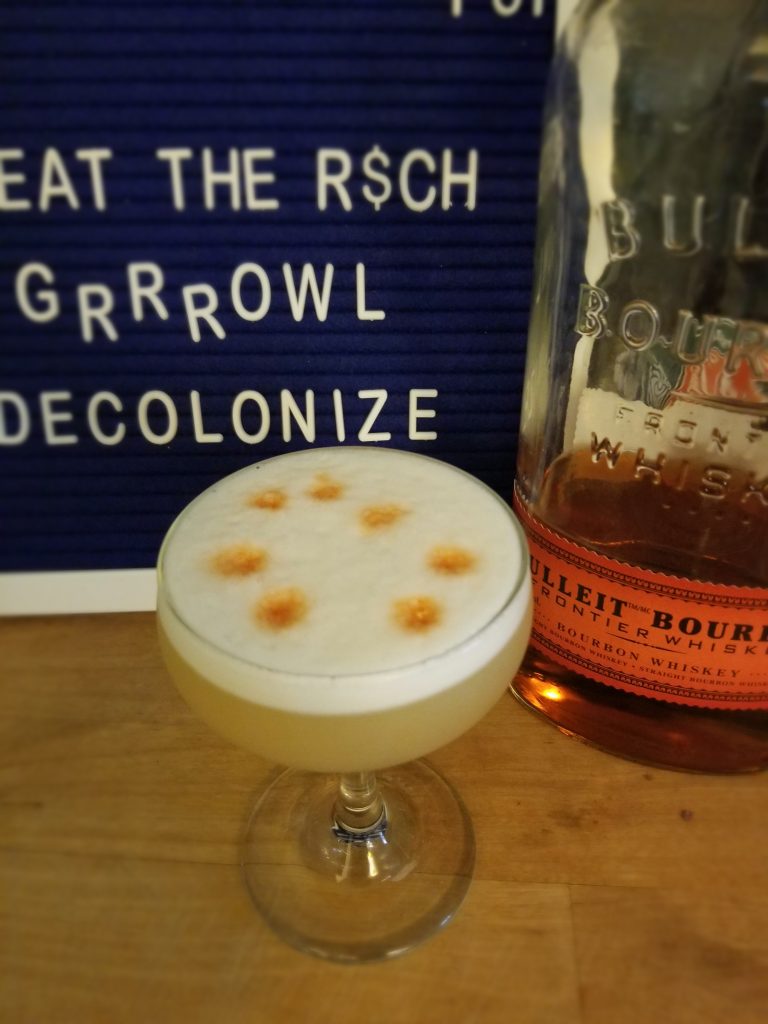
Photo: Meera Eragoda / The Peak

Whiskey Sour

Having made a few different cocktails now, I’ve come to the conclusion that once you master the whiskey sour, many of the other basic cocktails become a breeze to make.

1 egg white (optional) 

¾ oz simple syrup

¾ oz lemon juice

1.5 oz whiskey of your choosing (I’ve been using bourbon*)

4 – 8 dashes angostura bitters (optional but delicious)

Feel free to adjust the measurements to your liking. Also feel free to substitute maple syrup for simple syrup but if you do, remember it’s sweeter so you might want to use a little less. If you choose to make this with the egg white, it makes a huge difference to dry shake (no ice) it on its own before adding the rest of the ingredients. Do this for about 30 seconds. This will make it very nice and foamy and give it a creamier taste. And I promise it won’t taste like egg. 

Once this looks frothy, add the simple syrup, lemon juice, and whiskey and do a second dry shake for another 20 seconds. Then add the ice (use recently-made ice or the old fridge taste will ruin your drink) and give it a final shake for about 15 seconds. If you have a cocktail strainer, use that to pour into a coupe glass (ideally) or any other glass you have around. For a final touch, add a few dashes of the bitters on top for an aromatic experience.

*Bourbon vs. Scotch vs. Rye vs. Whiskey (the oversimplified answer)

Bourbon, scotch, and rye are all whiskey. Scotch is made in Scotland, bourbon in the US (originating in Kentucky). Scotch has to be aged for a minimum of three years and made with barley while bourbon is aged in charred oak barrels and is made with corn. Rye is made in North America with rye wheat.
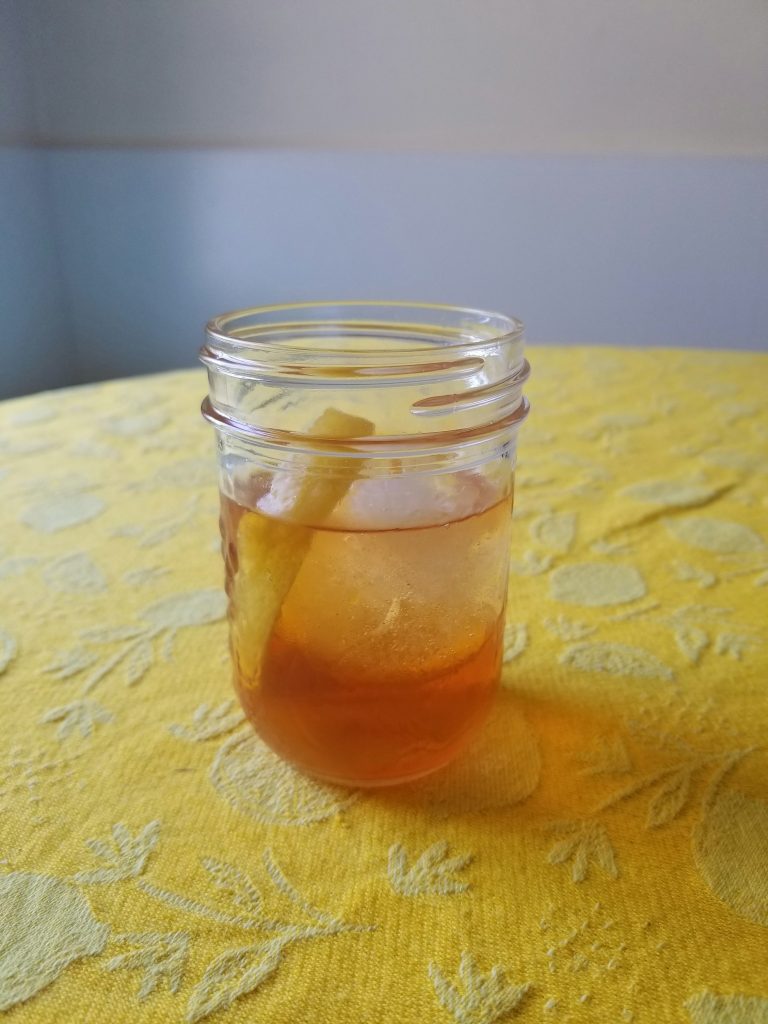
Photo: Meera Eragoda / The Peak

Old-fashioned

I started making this since I had bourbon on hand. This is another whiskey drink but quite a bit stronger than the sour. As many YouTube videos informed me, this is an evolving drink. I thought this sounded quite pretentious but it actually does evolve so they weren’t wrong. It just means that it gets both sweeter and more diluted the longer you have it. This drink also typically uses large ice cubes to prevent it from dissolving as quickly and I got myself a large round ice cube mold but there’s nothing wrong with using regular cubes. Just keep in mind that they will melt quicker. You can also use chilling stones if you have them.

1 sugar cube (or ¼ oz maple syrup or ½ oz simple syrup)

4-8 dashes angostura bitters

2 oz whiskey

Orange or lemon peel

This is a drink that is made in the glass. Add your sugar cube in and then add a few dashes of bitters to soak the cube. In case it isn’t obvious, I really enjoy the taste of bitters so I add in about eight to ten dashes but start with about five or six and go from there. Once you’re done, add in your ice cube(s), pour in the whiskey and stir with the bar spoon so the sugar somewhat dissolves. Then grab a lemon or orange peel of about two to three inches and lightly twist so the juices express (aka fancy bartender-speak for spray) into the drink. You’re likely not going to be able to see the spray coming out, but trust me, it does. Then just wipe the peel around the glass and place it inside. After looking at multiple videos and pictures, I’ve come to the conclusion that there’s no way to make the presentation of this that nice. People try (I’ve tried) and it just doesn’t look that good. Luckily, it tastes delicious and strong.
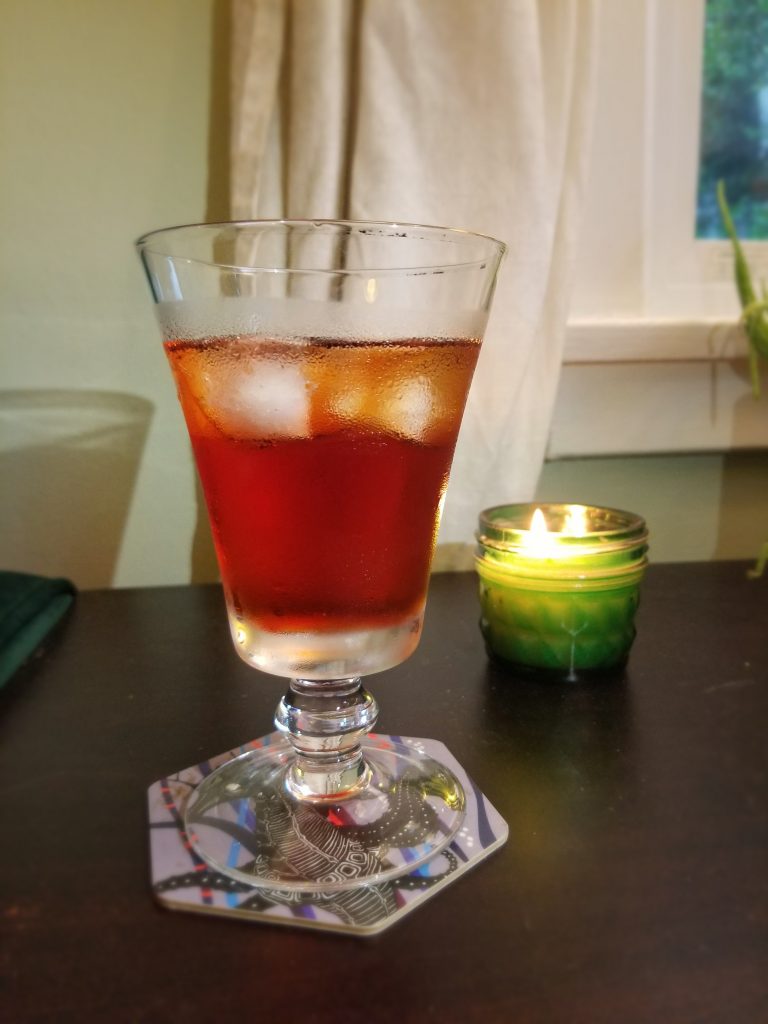
 

Photo: Meera Eragoda / The Peak

Negroni (and Boulevardier)

The negroni is very simple to make but tastes stronger than an old-fashioned, not because of the alcohol but because of the campari and vermouth. This drink is both bitter and sweet — some might even say bittersweet heh — and might not be for everyone. Unlike the angostura bitters which aren’t actually all that bitter, the campari definitely is.

1.5 oz campari

1.5 oz sweet vermouth (the red kind)

2 oz gin for a negroni OR 1 oz bourbon for a boulevardier

This one is real easy. Pour into a mixing glass, add ice, stir with a bar spoon, then strain into a drinking glass filled with ice. Or do what I do when I’m feeling lazy and just make it directly in the drinking glass. This also tastes good with tonic/soda water and it helps cut the strongness so feel free to add however much your heart desires.
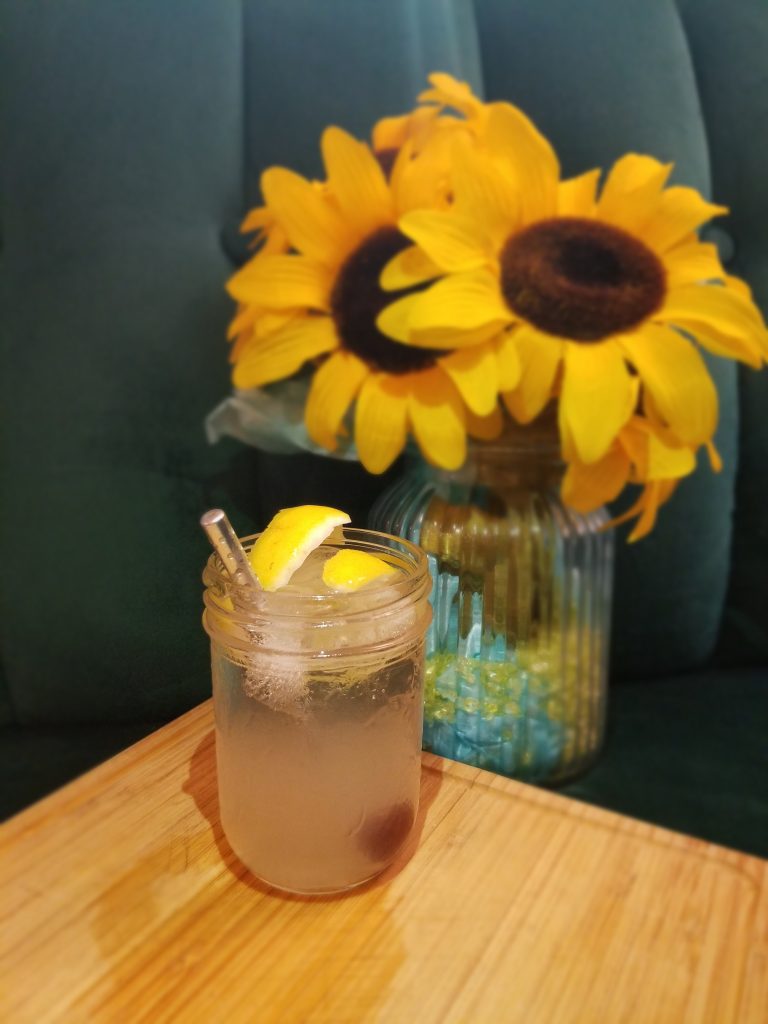
Photo: Meera Eragoda / The Peak

Tom Collins aka Gin Fizz

Apparently the name Tom Collins sprung out of a 19th century joke which will take too long to explain and isn’t all that funny but google it if you want to know anyway. 

½ oz simple syrup

¾ oz lemon juice (or if you want to get real fancy, ½ oz limoncello)

2 oz gin

tonic/soda water (to what your heart desires, I’m not here to constrain you)

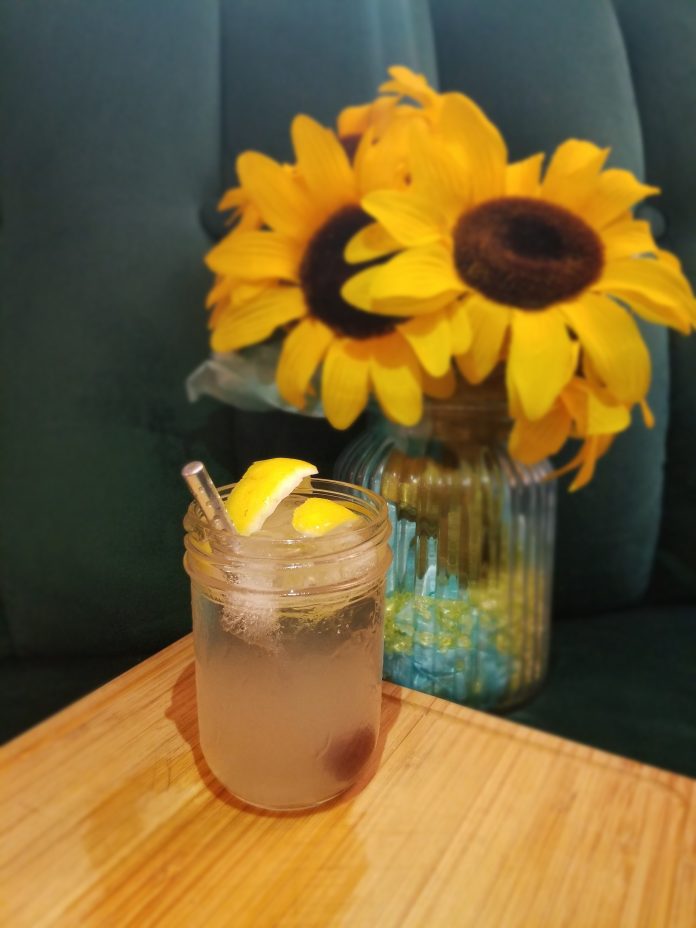
Add some ice to a drinking glass. Combine all ingredients except the tonic water into a shaker with ice and well, shake until combined. Then strain into the drinking glass, add the tonic water in, and serve with a stirring spoon. Garnish however you want. I went with a lemon peel and a liquor-soaked cherry here but these are all completely optional.

Photo: Meera Eragoda / The Peak

Daiquiri

Ending with a new favourite. 

¾ oz simple syrup

2 oz light rum (I used spice rum because that’s all I had. It was delicious. No regrets!)

1 oz lime juice (I also didn’t have any lime so I used lemon but I would try and have the limes next time)

Combine in the shaker with ice. Shake. Strain into martini glass or any other glass. Then kick your feet back and dream that you’re in Cuba — where it was invented.

Hopefully, this will get you started in the world of cocktails. There are millions out there so if you prefer vodka or tequila, or don’t love all these citrusy drinks, there are definitely a ton of options for you. Go forth and shake up a storm.


Dimension 20’s A Crown of Candy shows the sweet and sour sides of nobility

0
Heavy is the head that wears the crown of candy (and heavier is the conflict). Courtesy of Dropout

By: Juztin Bello, Copy Editor

OK, imagine this: Game of Thrones as a Dungeons & Dragons (D&D) campaign, except it’s coated with Candy Land-inspired main characters and a food-based setting. Well, you don’t have to imagine it, because this is an actual thing.

Dimension 20, a D&D-based show, is currently airing its fifth season: A Crown of Candy (ACOC). The story is set in the world of Calorum, and follows House Rocks from the Kingdom of Candia as they deal with the bitter realities of war, politics, and family conflict. 

Led by Dungeon Master (DM) Brennan Lee Mulligan, ACOC follows the simultaneous improv/tabletop role-playing talents of Emily Axford, Ally Beardsley, Brian Murphy, Zac Oyama, Siobhan Thompson, and Lou Wilson. As a cast that I’ve followed since season one and their CollegeHumor days, I knew going into ACOC to expect tasty jokes, the sweetness of jam-packed action, fully fleshed out and meaty stories/characters, and, of course, a delectable amount of strategic combat. 

The season begins with the Saints Day (birthday) of licorice twin princesses Jet and Ruby Rocks, played by Axford and Thompson, respectively. Kept under the watchful eye of their chocolate bunny tutor Chancellor Lapin Cadbury (Oyama) and the right-hand-gummy bear Lord Commander Sir Theobald Gumbar (Murphy), the princesses are introduced to the harsh realities of political struggle while handling the petty hardship of wishing for a royalty-free life. Rounding up the party is the princess’ father/Pop Rocks man King Amethar (Wilson) and peppermint ward Liam Wilhelmina (Beardsley) with his pig companion Peppermint Preston. 

Creating an entire lore based around the conflicts of food illustrates high-level creativity that only a DM like Mulligan could muster. While the player characters (PCs) are quite literally chocolate or candy, their interpersonal relationships, issues, and off-the-cuff thinking make them feel completely organic. With themes such as family, trust, religion, and politics, ACOC sees a multitude of dynamics which act as ingredients for an absolutely mouthwatering season. 

From the princesses refusing their royal responsibilities, the realities of Liam’s presence in the Candian Kingdom as a political prisoner, Lapin’s relationship with the Bulbian church, Theobald’s secrecy and adherence to hierarchy, and Amethar’s insecurity as both an ill-fit king and father, the characters — and as an extension, the cast — do not hold back from delving into the realities each of their characters must confront and overcome. 

As well, what’s stressful about this season is that just like in Game of Thrones, important characters are set to die. With but one healer in the party (Lapin) and a whole lore about the taboo usage of magic, players were told to prepare back-up characters to anticipate full character death at the likelihood of not being able to be revived — something yet to be seen or established on any season of Dimension 20. Is this stressful as a viewer? Yes. Does it make the show that much more intriguing? You better believe it. 

Siobhan Thompson, Lou Wilson, and Zac Oyama in Season 5 Episode 3, “Keep Sharp.” Screenshot courtesy of Dropout

The cast’s chemistry is ever apparent, and their ability to play off of one another drives the story in ways that shocks and entices both viewers and the DM, much to his chagrin. You’ll catch on fast that Mulligan simultaneously loves and loathes the chaos created by the PCs — and the infectious taste of PCs and DM “whomping” (besting) one another with nonchalant delight is ever so sweet to watch.

Viewers are also provided with a helping of incredible visuals, consisting of artwork, set pieces, character minis, comedic object work, and more. With character art provided by artist Samir Barrett and sets/minis created by a team led by art director Rick Perry, the entire story is brought to life before the audience’s eyes. A mixture of incredible acting and the completed settings in narrative and combat episodes is the perfect recipe for visual delight. I have definitely spent moments gripped with utmost anxiety/excitement being able perfectly visualize highly emotive scenes. 

In addition to the phenomenal storytelling, the entirety of Dimension 20 excels in its unwavering ability to represent identity spectrums across the board, without coming across as unnatural or showing a lack of research. With a highly diverse and open-minded cast, Dimension 20 manages to feel like a safe space that encourages all identities to feel simultaneously represented while enthralled in the world of D&D. ACOC includes polyamorous House Jawbreaker (Liam’s family), POC-coded characters such as the entire Rocks family, usage of non-binary pronouns, amongst several other respectful choices. 

Other seasons included NPCs (non-player characters) Ayda Aguefort, a Black half-phoenix who is autistic and non-heterosexual, and Lydia Barkrock, a half-orc wheelchair user. The cast themselves have also well-represented various identities through characters they’ve played. This includes Thompson’s character in Fantasy High, Adaine Abernant, who has several tear-inducing conversations about her anxiety and makes rolls in the first season to see if she can maintain her panic attacks, as well as Beardsley’s character in The Unsleeping City, Pete the Plug, whose identity as a trans man is not pigeonholed as his primary character trait or contextualized as his main story arc. 

While the D&D community has currently been reworking the character creation systems and lore to better recognize and dispel racism, Dimension 20 exemplifies the much needed mindset necessary for steps in the right direction for improved, D&D-based equity. Ultimately, Mulligan and the entire cast do not shy away from making efforts towards better representation or touching on the very real issues such as racism, capitalism, and toxic relationships — something I think is significant for myself and other viewers to see normalized. Don’t forget, however, that this entire cast is made up of great comedians. So while these types of conversations are important and included seamlessly into Mulligan’s narratives with the cast, there are plenty of goofs and bits to be had.

My advice to viewers: trust no one, be prepared to fall in love with a food person, and get ready to eat this show up. 

If you’re interested in watching ACOC, the show premiers every Wednesday at 4 p.m. on the Dimension 20 YouTube channel, but is removed after airing. Following every episode, the cast also does a talk-back to reflect on the respective episode at 7 p.m., known as Dimension 20’s: Adventuring Party. Although other seasons of the show are found in parts on the YouTube channel as well, all full seasons (which include the two “Side Quest” seasons of Escape from the Bloodkeep and Tiny Heist) can be found by subscribing to Dropout — CollegeHumor’s streaming service. Since content is typically uploaded to Dropout first, remain on Dropout, includes several other shows, and is as cheap as $6.56 CAD a month, I would highly recommend simply subscribing to Dropout to support the cast as well as other genius creators. 

Political Corner: Trump’s inaction on the Russian bounties should not be allowed to fall out of the news cycle

0
Russia is alleged to have offered militants bounties to kill coalition troops. Image: via Wikimedia Commons

By: Kelly Grounds, Peak Associate

On June 26, 2020, the New York Times released a report that claimed American intelligence had determined that a Russian military intelligence unit had offered bounties to militants to kill Afghanistan coalition forces. The disturbing part of the report was that it appeared that the United States’ president had been briefed at the beginning of last year, and again in 2020 about the plot. Despite this, he had not taken any actions to stop it, nor to immediately inform American coalition allies. 

Following the release of the report in the New York Times, the Whitehouse denied that the President had ever been briefed on the intelligence because it had never been verified. However, members of the intelligence community said that this was not true and that the intelligence had in fact been included in the daily intelligence briefings that were given to the President. This claim was later corroborated by the Associated Press who confirmed that the President had been briefed in March 2019. President Trump did not follow up on the report.

Even if the initial briefing contained intelligence that may not have been viewed as credible at the time, the same cannot be said about the briefing in 2020. The second briefing was backed up by the discovery of $500,000 USD in a Taliban outpost, an extremely high amount of foreign currency for the group to possess, that confirmed suspicions and led the CIA to believe that the entire plot was credible. In March 2020, approximately one year after the first briefing, the President was briefed again with the update. 

So why was nothing done at any point to stop the Russian plot and protect US and coalition troops? One explanation could be that it is an election year and ending the war in Afghanistan has been a key pillar in the President’s reelection campaign. To tout Afghanistan as a success of his first term, the President needs two things: a complete withdrawal of troops from the country by election day, and a peace deal with the Taliban. Unsurprisingly, the announcement of a plot to pay off Taliban militia to kill US troops would make achieving these goals very difficult and could potentially lead to greater involvement in the conflict.

It could also be that President Trump just wasn’t paying attention to the intelligence. Various personnel within the White House have reported that the President is rarely briefed on intelligence by experts and when he is, the information is not processed. It could also be that the President did not want to harm his relationship with Russia. In May 2020, two months after the second briefing, the President made an appeal to have Russia rejoin the G7 (they were removed from the G8 following the invasion of Crimea in 2014). 

This has the potential to be downplayed by the media as part of the ongoing collusion message that has been present since the beginning of the President’s term, but it shouldn’t be. At its heart, this incident was a major slight against the core of the President’s base, which tends to draw stronger support from veterans. With his inaction, the President is essentially telling his base that they are less important than a yet unknown motivator. This should not be downplayed but instead be given the full attention and scrutiny that it deserves, especially as the US draws nearer to its November election.


It’s time that we rethink the necessity of exams in classrooms

0
Three students at a table writing an exam. The student on the left and right are campy writing while the student in the middle has stood up onto the table and lit their exam on fire.
Midterms aren’t as scary as you think. Illustration: Maple Sukontasukkul/The Peak

By: Madeleine Chan, Staff Writer

SFU recently announced that the final exam schedule for all classes will be released in October, rather than at enrollment. The change hopes to reduce course conflicts, back-to-back exams, and same-day exams. However, it also adds to student stress about asynchronous scheduling, non-school-related plans, and an overall uncertain future. Growing concerns around proctor software and cheating show that there is no easy solution for remote-learning examinations. Even SFU is saying that they prefer other methods of assessment over proctored exams. So, why do we still have them if they are such a burden? The fact that there are viable alternatives to timed, closed-book examinations shows why exams should no longer be given at all.

The point of exams is to test students’ knowledge and information retention. But are students really showcasing their best abilities when they are faced with such anxiety inducing situations? I cannot tell you a single thing about the last exam I took, because all I remember is being under incredible pressure to study hard for it, to manage my time wisely in the exam, to have the right answers, and to not be the last one out of the class. Not to mention the Sauron-like eye of the teacher beaming down on me, ready to “catch” me for any potential misstep. Something that produces such overwhelming stress and fractured focus seems like a fundamentally flawed way to assess students. Just the very idea of the recurring dreaded melancholy around exam season should be enough to see that exams are a detriment to our mental health.

Exams are also a hollow way of ensuring that students actually comprehend the materials they are learning about. Students don’t need to be regurgitating information, they need to be able to actually comprehend the subject matter and be able to apply it in an at-large context. The binary idea of answers either being right or wrong limits students’ creativity and thinking skills. In addition, the idea that exams are a way to measure students against each other is just a meritocratic ideal that sees learning as a way to get a job, not a complex process of engaging with themselves, the world, and others. We shouldn’t be insisting on assessments that promote these ideas if we want our quality of learning to be at its best.

Exams do have the potential to instill skills like time management and discipline, but this is not the case for all students. People with anxiety and attention difficulties can’t simply “learn” to focus or keep calm in a stressful situation. Even students who don’t struggle with these issues can still feel an immense amount of strenuous pressure while managing their focus and time effectively. This necessarily syphons mental energy away from course materials and produces results that don’t accurately reflect student knowledge or ability.

Exams are particularly harmful now with all learning done online. There are added stressors of unreliable technology, video call anxieties, changing physical environments, and surveillance software that have changed how students interact with learning. Instructors cannot expect to deliver examinations in the same way if students cannot react to them in the same way as before. Remote learning has only highlighted the fact that exams are more trouble than they are worth.

I agree that with academia’s current credentialist system there has to be some way of testing student knowledge, but that could take shape in so many other ways than an hours-long stress bath with your classmates. Assignments like untimed essays, final projects, and even papers can be less stressful and more pleasant than exams. Creative projects, for example a video, or a zine, in particular are a great way to creatively and interestingly engage with course materials. I remember a final assessment that I had over a year ago, where I had fun making a 3D collage that explored the course’s themes. I still remember that project and its material today.

Not every course can just assign one of these alternatives though, and there is no one-size-fits-all replacement. But we have to at least consider alternatives to testing students’ knowledge so that learning and assessing can be something interesting to engage with, effective and comprehensive, and not a burden for students to stress over.

We cannot risk becoming complacent with the presence of COVID-19 in our lives

0
Fighting COVID-19 requires us all to make sound decisions as a community. Photo: pixpoetry/Unsplash

By: Nicole Magas, Opinions Editor

In a July 6 open letter to both the federal and provincial governments, several current and former health experts pleaded for a more rapid and relaxed reopening plan that would resume in-person classes, allow for more international air travel, and pick the economy back up. The basis of their argument comes down to the idea that since we can’t eliminate COVID-19 in Canada at present, we might as well just accept it and get on with our lives. 

Although the letter recognizes the severity of COVID-19 and makes several mentions to risk-based pandemic response measures, it stops just short of outright saying that many more people are going to die, and we should, as a society, give up on those people and focus on getting as closely back to “normal” as possible. The thought process leading up to this conclusion, no matter how well-intentioned, doesn’t adequately account for the difficulties health officials and politicians continue to have in communicating the nuances of COVID-19 prevention to the general public. 

But more than that, this idea, in very defeatist terms, simply accepts that people are going to die. No loss of life should be an acceptable loss of life in a civilized society, and as long as there are steps that could be taken to prevent losing more people to this virus, those steps should be taken to the point of utter exhaustion of all other options.

The open letter calls on politicians to consider the harm that strict and prolonged quarantine measures are doing to children and marginalized communities. However, the fundamental rhetoric of both the letter and the statement published alongside it is alarmingly similar to that of plutocratic Republicans in the US. Lieutenant Governor Dan Patrick infamously told Fox News that the elderly should be prepared to sacrifice themselves in order to save the economy. This sentiment is echoed in the open letter which states, “ [ . . . ] in overall population health terms COVID-19’s direct impact on premature mortality is small. While those under the age of 60 account for 65% of cases, they represent just 3% of deaths. With ready access to health services, severe outcomes can be averted in those who do not have pre-existing risk factors.” 

In other words, young, healthy people don’t need to worry so much because their risk of death is much lower than that of the elderly or those with underlying health conditions. Setting aside for a moment that this language seems to accept that the larger risk of COVID-19 deaths amongst certain populations is acceptable, this language abstracts that 3% of deaths from living, breathing humans into a statistical number. This is unacceptable

The letter does make reference to the incredible disparities that have been highlighted and exacerbated because of the necessary lock-down measures implemented to curb the spread of COVID-19. “The societal costs of maintaining these public health measures, even with some gradual relaxation, are too high,” the statement reads. “Canadians are missing scheduled medical appointments and surgeries, which will lead to increased deaths. There are significant challenges for our young with impact on early childhood development, one of the strongest predictors of life-long health and social outcomes.  Education is compromised. There are increases in domestic violence, alcohol and drug intake, and food insecurity.” And of course: “The economic consequences are huge.” 

The open letter also specifically mentions the marginalized communities that are at greater economic risk during lock-down, saying, “The current and proposed measures for reopening will continue to disproportionately impact lower income groups, Black and other racialized groups, recent immigrants to Canada, Indigenous peoples and other populations.”

To its credit, the statement released with the open letter does include recommendations that are meant to address both a more relaxed opening plan, and protections for the most vulnerable in society. The problem with these recommendations comes down to structural stagnation and human behaviour.

Our marginalized communities weren’t well-sheltered from the negative impacts of the social determinants of health to begin with — those circumstances won’t change whether or not our immediate reopening is less cautious or restrictive. These communities will still be in a situation of few choices, especially where it comes to access to healthcare, community resources, and risk-reduced employment. 

Any relaxed reopening plan that wishes to both shelter the marginalized as well as return life to normal would need a huge draw of capital and resources to allow those at risk to avoid dangerous situations, as well as to enforce safe, equitable environments in both the public and the private sectors. Expecting that governments will be willing and able to universally respond to long-standing structural inequalities with the rapidity necessary to meet the reopening speed the open letter seems to be pushing for is ridiculously optimistic. A more relaxed reopening schedule, without increased structural supports, would do little more for those at the margins than throw them from the frying pan into the fire. 

As for human behaviour, if the last four months have shown us nothing else, it’s that as a society we are anything but unified in how we should conduct ourselves during a pandemic. “COVID parties” amongst those who don’t believe the disease exists or, if they do, don’t believe it is that serious, are a growing problem, not only in the US, but in Canada as well. In BC, possible exposure to the virus has already been identified in bars, strip clubs, fitness clubs, and resorts. Unwillingness to wear a mask also remains a problem in Canada, despite the statement’s assertion that Canadians are too scared to resume normal activities with current government rhetoric about the virus. 

A public policy change that recommends people shouldn’t be as concerned as they are now about the virus would almost certainly have negative consequences. Not only will virus-deniers be vindicated, but it could kick off wide-spread belief that all danger has passed, and that further “balanced” health measures as suggested in the open letter, are no longer necessary. Don’t believe me? Take a look at your social media feed and tell me that everyone is going to collectively agree to suddenly make responsible choices if they’re told that it’s fine to stop being so scared of this virus.

What is more than clear is that any solution out of this pandemic cannot be one-size-fits-all. The open letter also recognizes this fact. However, it is foolish to push for a more relaxed, rapid reopening without thoroughly considering the consequences of doing so. There are many options available to us in how we combat this virus going forward. And in every choice we make we have to consider that human lives are the consequence. 

We might be in for a marathon with COVID-19, but we shouldn’t look at how far behind we are and conclude that it’s not worth the effort to run anymore.


Romanticizing bad habits only makes them worse

0
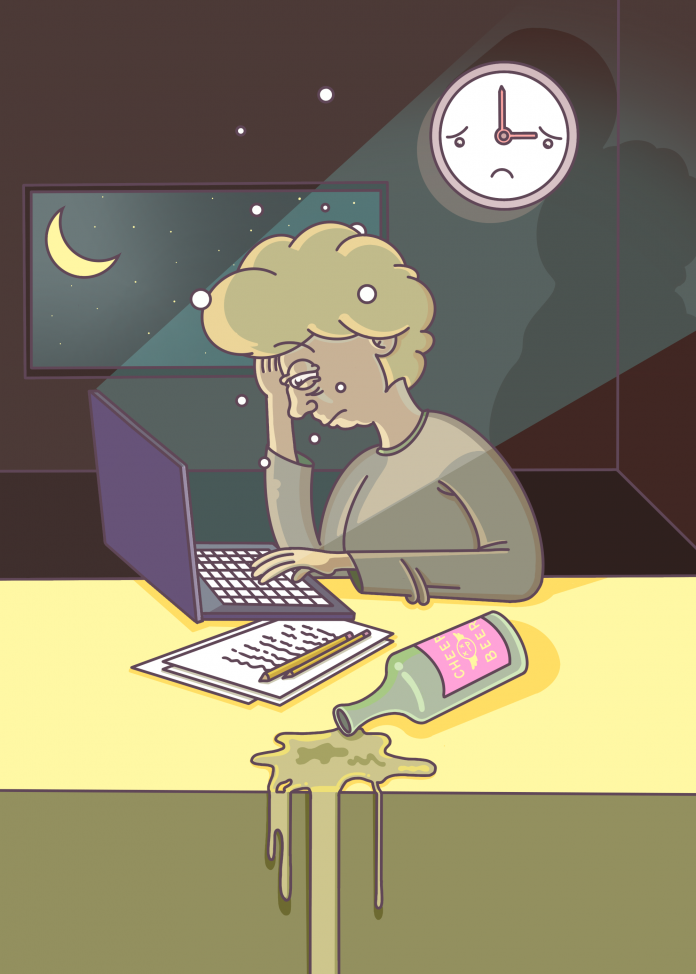
There are better ways to be a student than what is normalized in the media. Illustration by Reslus/The Peak

By: Madeleine Chan, Staff Writer

Ah yes, the stereotypical university student: eating ramen from the bag, macaroni and cheese from the box, pulling all-nighters every night, drinking ‘till dawn, glorifying sadness. Ain’t it the life? No, it’s not. Far from it actually. In fact, the potential long-term consequences like chronic disease show that we shouldn’t be positioning this “lifestyle” as anything but a detriment to our well-being. 

As a kid, staying up late was always the “cool” thing to do. It was an exclusive privilege that only adults and older kids got to have. Now, having multiple issues with sleep and focus, it’s not so cool. Sure, I get a laugh from calling it “sleepy bitch disease,” but that doesn’t mean I should.

Things like going to bed late, eating irregularly, and excessive drinking are just a few bad university habits I can name. These types of bad habits shouldn’t be idealized as normal because of their potential long-term effects. According to the Canadian Centre on Substance Use and Addiction, heavy drinking amongst university students can lead to “significant cognitive, structural and functional brain changes” on top of “potential health issues such as liver disease or cancer.” Other studies show that bad eating habits in university can “persist throughout adulthood” — even something as simple as skipping breakfast could have negative consequences. Plus, low-quality sleep increases the risk of mental health issues and can hinder biological development.

This concept of the university student who prioritizes the demands of school or social life over well-being is quite frankly, wack. For example, the notion that an all-nighter is necessary in university to succeed is so out of line with what our bodies and minds actually need to thrive in school. Social and entertainment media have led students to believe that this is how they should behave. By glamourising these habits with moody vibes, baggy eyes, and coffee grinds, students also push the idea that these things are actually desired. However, they really should not be if the consequences are mental and physical degradation.

University students should instead be idealizing good habits, like getting adequate sleep, confronting unpleasant emotions, and eating what their bodies need, when they need it. By getting in the habit of seeing good habits as good, students focus on the positives of well-being rather than the “glory” of harmful habits. Imagine rewarding yourself with actual positivity instead of highlighting the negatives of a destructive routine.

I’m not trying to be your parent and chastise you for not going to bed on time, but thinking that these bad habits are somehow ideal is actually far from it. Positioning suffering as an aesthetic only keeps it from being resolved, making it an internal battle. It also invalidates the fight against these bad habits and keeps people in a state of struggle by making them a part of one’s personality, vocabulary, and just the overall self. Brushing off any confrontation of this inner conflict with nonchalance (like I often do with a vague gesture and a noncommittal noise) only serves to avoid addressing this inner conflict by dismissing potential resolution. It’s okay to laugh at yourself, but something as important as the continued disfunction of your life isn’t funny. We can’t romanticize avoiding reality, no matter how hard it is.


House of Rice: In Rice-olation illuminates the intersectional and political scope of digital drag

0
Set to the tune of Rina Sawayama, House of Rice performed with a strong anti-racism message. Courtesy of Up in the Air Theatre

By: Kitty Cheung, Peak Associate

Intrigued by the idea of digital drag, I saw House of Rice: In Rice-olation on June 27 as part of rEvolver’s online performance festival, e-Volver. The rEvolver Festival is a theatre and performing arts festival which takes place annually in Vancouver. While the 2020 festival was cancelled due to COVID-19, the e-Volver Festival sprang up as a digital alternative featuring a variety of media performances, including House of Rice: In Rice-olation

Advertised as a “drag and multi-media installation performance exhibiting the intersectionality of queer, Asian artists in Vancouver,” I was initially skeptical about how much the performers would be able to shine through a digital platform. Having attended live drag shows in a pre-quarantine world, I figured the experience of being physically present in an intimate venue, where you can hear the cheers of fellow audience members and feel the collective energy of the crowd, would be difficult to embody through a computer.

Streamed on Twitch, the show featured a variety of media art by members of the House of Rice, an all-Asian drag family based in Vancouver. Most artists filmed from their own homes and neighbourhoods to stay safe during this global pandemic, with drag mother Shay Dior and fellow artist Maiden China performing together from a theatre.

What amazed me about In Rice-olation was the thoughtfulness and attention to detail that went into its curation. Each creative decision, from the music choices to the makeup to the costumes to the video editing, were done with intention. For example, rather than featuring a variety of musical artists as is customary for drag shows, the House of Rice performed music solely from queer pop icon Rina Sawayama. The Twitch stream started off with a land acknowledgement before launching into Sawayama’s “Dynasty,” a powerful track about intergenerational trauma. I found it suiting to start off with this song since inherited pain can be a significant part of the diasporic family experience, and Sawayama’s lyrics focus on fighting to “break the chain” of this pain. 

It was also lovely to see how In Rice-olation demonstrated the vast creative possibilities within Asian drag. From Rina’s upbeat pop song “Cherry” to her raging metal track “STFU!”, this show featured a variety of performances each tailored to a specific aspect of the queer Asian experience. 

Musical performances were cut between clips of artists sharing their thoughts and personal experiences. These artists, who were primarily of East and Southeast Asian heritage,  spoke about coming out to their families, dealing with fetishization and emasculation, combatting Eurocentric and patriarchal beauty ideals to achieve self-love, and so much more. 

My favourite performance of the night came from Maiden China, who prefaced her rendition of Sawayama’s hard rock thrasher “Who’s Gonna Save U Now?” with a speech. With the flood of sinophobic racism fuelled by COVID-19 earlier in 2020, it was important to address these issues while still holding space and focusing support towards the Black Lives Matter movement. 

Maiden China explained that despite the intricately different struggles of our respective racialized communities, the white supremacist structures which harm the Asian community are the same institutions which inflict violence upon Black and Indigenous folks. After offering a content warning for images of violence, she began a multimedia lip-sync performance which included footage of police brutality layered with bold typography featuring Rina’s lyrics and the “ACAB” slogan. This performance was a prime example of drag as a medium for radical activism.

The overlapping identities of being queer and Asian can be ferociously difficult to navigate. During a time when COVID-19 forces us to be physically distant from our communities, the House of Rice created a digital space for those isolated in the queer Asian community to find visibility and inspiration. Throughout the show, the Twitch chat box was generously flooded with rainbow heart emojis and supportive words from audience members and artists alike. In Rice-olation highlighted the importance of queer family and community support, while also illuminating the political power of drag.

Three locally made beverages to drink for the weather you want, not the weather you always get

0
Summer living made easier with refreshing beverages. ILLUSTRATION: Tiffany Chan / The Peak

By: Sara Wong, Peak Associate

It’s officially summer, which means it should be time to cut up some watermelon and bring out the lemonade — though Mother Nature doesn’t always appear to have gotten the memo. However, the rare sunny days she does grace us with can be enjoyed even more with these three new, locally-made drinks!

Dickie’s Ginger ginger beer

I have a confession to make: I generally dislike carbonated drinks. However, the ginger beer from Dickie’s Ginger is so good it transcends this dislike. My first taste of Dickie’s Ginger was incredibly special. After interviewing Vincent Garcia about Kasama Chocolate, he offered me a tour of their workshop. 

SEE MORE: SFU grad’s business venture is a delightful culmination of chocolate and friendship

I happily accepted, and while I was there, I discovered Dickie’s workspace just around the corner from Kasama’s. An employee showed me how they make their ginger beer and gave me a sample. I learned that the ginger beer was made with four simple ingredients: water, ginger, lemons, and organic cane sugar. This simplicity makes it taste refreshing — perfect for hot days. Additionally, the process and ingredients Dickie’s Ginger uses are instrumental in making the flavour of the ginger prominent. Their ginger beer stands out for multiple reasons: it’s real ginger and not an extract, it’s put through a cold press juicer, and it’s unpasteurized, preserving the flavour for longer. However, this dedication to freshness means that the product has to be refrigerated. 

A four pack of the original ginger beer is offered for $16 or can be purchased in single, 1L bottles for $12. 

Dickie’s Ginger ginger beer can be found at select retailers across Metro Vancouver (see their website), at the Trout Lake and Kitsilano Farmer’s Markets, or online at BeerVan  — where you can have it delivered to you at home! Besides the original flavour, they also currently sell strawberry and raspberry varieties.

Taps & Tacos margarita kits

Remember when quarantinis were a thing? It’s in this spirit that Taps & Tacos came up with the genius idea of selling margarita kits. I purchased the coconut-flavoured kit for myself and loved how affordable it was and how easy the margaritas were to make. Aside from coconut, the other core flavours offered are lime and jalapeño. Additionally, they have feature flavours like mango and spicy watermelon — you have to keep up with them on social media to find out what flavours will be featured and when.

Each kit comes with the margarita mix (which is made in-house using real fruit and no preservatives), a package of dehydrated limes, and a cute little recipe card. The tequila is not provided, but they sell some on the side. A small kit costs $6 and makes three single margaritas, while a large costs $11 and makes six. I enjoyed that the coconut flavour was tangy as opposed to sweet — it tasted more refreshing that way. If I order another kit, I would probably select a more fruit-forward flavour.

Taps & Tacos margarita kits are available at their restaurant, food truck, Port Moody Farmer’s Market, and Coquitlam Farmer’s Market. They currently only allow pre-orders but a delivery service is in the works too, so stay tuned for further announcements on their Instagram at @tapsandtacos and Facebook at Taps & Tacos.

Teaspoons & Co five-minute bubble tea kits

Okay, so bubble tea is more of a year-round (rather than a seasonal) drink, but with people spending more time at home, DIY bubble tea has become increasingly more popular. Passion Tearoom was the first shop to sell bubble tea kits in Metro Vancouver and now they’re defending their trendsetter status with their new outpost, Teaspoons & Co. This online store sells all your bubble tea essentials —  teas, flavour powders (for taro and coconut), syrups, creamers, jelly toppings, and accessories like metal straws.

And of course, the pearls. 

These are what make Teaspoons & Co the place to shop at. Traditionally, tapioca pearls take about 40 minutes to cook, but Teaspoons & Co has created packages of pearls that are ready in just five minutes. I tried out one of their packs and can confirm that the pearls are done cooking in five minutes, and they taste as soft and chewy as the regular ones I had purchased previously! Their standard bubble tea kit is $23 and makes ten servings. If you want the five minute pearls in your bubble tea kit, it will cost an extra $3.

Teaspoons & Co is an online shop. They deliver across Metro Vancouver, but there’s a delivery fee involved unless you spend over $35 and live in Burnaby, Port Moody, Coquitlam, Port Coquitlam, Vancouver, North Vancouver, New West, or Richmond. A more cost-effective way to eliminate a delivery fee is to select pickup at checkout, but that means you will have to make a trip downtown to Passion Tearoom. 

Peak Speaks Podcast – SFU Trivia

0

Listen here: https://pod.link/1464226637

Two SFU professors receive $300,000 grants from Innovate BC

1
Photo courtesy of Innovate BC

Written by: Zach Siddiqui, Humour Editor

Two SFU professors have been awarded $300,000 each in grant money through Innovate BC’s Ignite Program, out of four total winners.

Dr. Martin Ester, a computing science professor, won the award for his collaboration with Terramera on a new computer platform to design greener, more efficient treatments for crop disease. In an email interview with The Peak, Ester stated that through his project, Canada could achieve better farming productivity while remaining environmentally friendly — an effect that could ripple globally. 

“We will develop machine learning methods that learn from data about the effectiveness of candidate pesticides observed in the lab,” Ester explained. He added that this data is normally expensive to obtain and therefore limited. 

The professor plans for the award money to fund the graduate students who are to spearhead the ongoing research, along with travel expenses and equipment.

Dr. Edward Park, a mechatronics professor, received the award for his work on Exomotion. With his industry partner, Human in Motion Robotics Inc., Park is developing a mechanical “exoskeleton” that wheelchair users could wear and use for “full legged mobility,” according to Innovate BC’s website.

Innovate BC is a Crown Agency whose mandate is to support technological development in British Columbia, particularly by connecting innovators with sources of funding. The Ignite Program in particular focuses on innovation in natural resources, applied science, and engineering.

“Despite the ongoing global uncertainty, it’s extremely encouraging to see our local tech companies and researchers continuing to change the world with homegrown innovation,” wrote Raghwa Gopal, Innovate BC President and CEO, in the company’s official statement on this year’s winners. “Since 2016, the Ignite Program has been a catalyst to help B.C.-based research projects access funding, accelerate commercialization, and transform industries.”

The Ignite Program awarded a total of $1.2 million this year. Other recipients included Dr. Dominik Roeser of UBC, for his work on a topography platform to plot wood harvesting trips, and Dr. Jeremy Wulff of UVIC, for his work on a universal polymer adhesive.